Archive for June 9, 2017

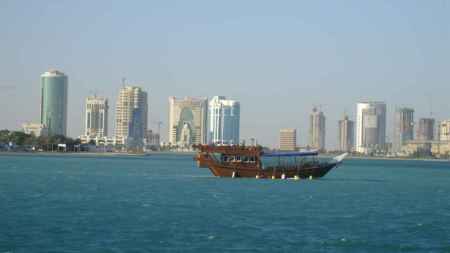
Qatar, Trump and Double Games

June 9, 2017

Qatar, Trump and Double Games, Front Page MagazineCaroline Glick, June 9, 2017

Originally published by the Jerusalem Post

Ahead of the 2016 US elections, WikiLeaks published documents which disclosed that the emir of Qatar presented Bill Clinton with a $1 million check for the Clinton Foundation as a gift for his 65th birthday. During Hillary Clinton’s tenure as secretary of state, Qatar reportedly contributed some $6m. to the Clinton Foundation.

Clinton, for her part, was deeply supportive of the regime and of Al Jazeera. For instance, in testimony before the Senate Foreign Relations Committee in 2011, Clinton praised Al Jazeera for its leading role in fomenting and expanding the protests in Egypt that brought down Mubarak.

Clinton wasn’t the only one that Qatar singled out for generosity. Since the 1990s, Qatar has invested hundreds of millions of dollars in US universities. Six major US universities have campuses in Doha.

Then there is the Brookings Institution. The premier US think tank had a revolving door relationship with the Obama and Clinton administrations.

**********************************

US President Donald Trump has been attacked by his ubiquitous critics for his apparent about-face on the crisis surrounding Qatar.

In a Twitter post on Tuesday, Trump sided firmly with Saudi Arabia, Egypt, the United Arab Emirates and the other Sunni states that cut diplomatic ties with Qatar and instituted an air and land blockade of the sheikhdom on Monday.

On Wednesday, Trump said that he hopes to mediate the dispute, more or less parroting the lines adopted by the State Department and the Pentagon which his Twitter posts disputed the day before.

To understand the apparent turnaround and why it is both understandable and probably not an about-face, it is important to understand the forces at play and the stakes involved in the Sunni Arab world’s showdown with Doha.

Arguably, Qatar’s role in undermining the stability of the Islamic world has been second only to Iran’s.

Beginning in the 1995, after the Pars gas field was discovered and quickly rendered Qatar the wealthiest state in the world, the Qatari regime set about undermining the Sunni regimes of the Arab world by among other things, waging a propaganda war against them and against their US ally and by massively funding terrorism.

The Qatari regime established Al Jazeera in 1996.

Despite its frequent denials, the regime has kept tight control on Al Jazeera’s messaging. That messaging has been unchanging since the network’s founding. The pan-Arab satellite station which reaches hundreds of millions of households in the region and worldwide, opposes the US’s allies in the Sunni Arab world. It supports the Muslim Brotherhood and every terrorist group spawned by it. It supports Iran and Hezbollah.

Al Jazeera is viciously anti-Israel and anti-Jewish.

It serves as a propaganda arm not only of al-Qaida and Hezbollah but of Hamas, Islamic Jihad and any other group that attacks the US, Israel, Europe and other Western targets.

Al Jazeera’s reporters have accompanied Hamas and Taliban forces in their wars against Israel and the US. After Israel released Hezbollah arch-terrorist Samir Kuntar from prison in exchange for the bodies of two IDF reservists, Al Jazeera’s Beirut bureau hosted an on-air party in his honor.

Al Jazeera was at the forefront of the propaganda campaign inciting against then-Egyptian president Hosni Mubarak in 2011 and against Libyan leader Muammar Gaddafi in 2012. Its operations were widely credited with inciting their overthrow and installing in their places regimes controlled by the Muslim Brotherhood and other jihadist groups.

As for the regime itself, it has massively financed jihadist groups for more than 20 years. Qatar is a major bankroller not only of al-Qaida and Hamas but of militias associated with ISIS in Iraq and Syria. In a State Department cable from 2009 published by WikiLeaks, US diplomats referred to Qatar as the largest funder of terrorism in the world.

According to the Financial Times, the straw that broke the camel’s back for the Saudis and their allies was their discovery that in April, Qatar paid Iran, its Iraqi militias and al-Qaida forces in Syria up to a billion dollars to free members of the royal family held captive in southern Iraq and 50 terrorists held captive in Syria.

Given Qatar’s destabilizing and pernicious role in the region and worldwide in everything related to terrorism funding and incitement, Trump’s statement on Tuesday in support of the Sunnis against Qatar was entirely reasonable. What can the US do other than stand by its allies as they seek to coerce Qatar to end its destabilizing and dangerous practices? The case for supporting the Saudis, Egyptians, the UAE and the others against Qatar becomes all the more overwhelming given their demands.

The Sunnis are demanding that Qatar ditch its strategic alliance with Iran. They demand that Qatar end its financial support for terrorist groups and they demand that Qatar expel terrorists from its territory.

If Qatar is forced to abide by these demands, its abandonment of Iran in particular will constitute the single largest blow the regime in Tehran has absorbed in recent memory. Among other things, Qatar serves as Iran’s banker and diplomatic proxy.

If the story began and ended here, then Trump’s anti-Qatari stance would have been the obvious and only move. Beyond being the right thing to do, if Qatar’s regime is overthrown or emasculated, the development would mark the most significant achievement to date against the Iranian axis of jihad.

Unfortunately, the situation is not at all simple.

First there is the problem of Doha’s relations with key Americans and American institutions.

Ahead of the 2016 US elections, WikiLeaks published documents which disclosed that the emir of Qatar presented Bill Clinton with a $1 million check for the Clinton Foundation as a gift for his 65th birthday. During Hillary Clinton’s tenure as secretary of state, Qatar reportedly contributed some $6m. to the Clinton Foundation.

Clinton, for her part, was deeply supportive of the regime and of Al Jazeera. For instance, in testimony before the Senate Foreign Relations Committee in 2011, Clinton praised Al Jazeera for its leading role in fomenting and expanding the protests in Egypt that brought down Mubarak.

Clinton wasn’t the only one that Qatar singled out for generosity. Since the 1990s, Qatar has invested hundreds of millions of dollars in US universities. Six major US universities have campuses in Doha.

Then there is the Brookings Institution. The premier US think tank had a revolving door relationship with the Obama and Clinton administrations.

In 2014, The New York Times reported that Brookings, which opened a branch in Doha in 2002, had received millions of dollars in contributions from Qatar. In 2013 alone, the Qatari regime contributed $14.8 million to Brookings.

Not surprisingly, Brookings’ scholars supported the overthrow of Mubarak, and supported the Muslim Brotherhood regime during its year in power. Brookings scholars urged the Obama administration to cut off military assistance to Egypt after the military overthrew the Muslim Brotherhood in 2013.

Brookings scholars have similarly written sympathetically of Qatar and its ally Turkey. As the Investigative Project on Terrorism revealed in a four-part series on Brookings’ relations with Qatar in 2014, Brookings’ scholars ignored human rights abuses by Qatar and praised Turkey’s Erdogan regime as behaving like the US in enabling religion to have a role in public life.

It is likely that given then-president Barack Obama’s strategic goal of reorienting US Middle East policy away from its traditional Sunni allies and Israel toward Iran and its allies in Qatar and Turkey, that Brookings, Clinton and other beneficiaries of Qatar’s generosity were simply knocking on an open door. Indeed, in 2014, during Operation Protective Edge, the Obama administration’s alliance with Qatar, Turkey and Iran against Sunnis and Israel came out of the shadows.

During the Hamas war with Israel, Obama sought to dislodge Egypt from its traditional role as mediator between Israel and Hamas and replace it with Qatar and Turkey. For their part, both regimes, which fund and support Hamas, accepted all of Hamas’s cease-fire demands against Israel and Egypt. As their partner, the Obama administration also supported Hamas’s demands.

Had Egypt and Israel bowed to those demands, Hamas would have achieved a strategic victory in its war against Israel and Egypt. To avoid buckling to US pressure, Egypt built a coalition with the same states that are now leading the charge against Qatar – Saudi Arabia and the UAE – and openly supported Israel.

In the end, the standoff between the two sides caused the war to end in a draw. Hamas was not dismantled, but it failed to secure Israeli or Egyptian acceptance of any of its demands for open borders and access to the international banking system.

Given that Trump is not aligned with Brookings, the Clinton Foundation or US academia, it could be argued that he is not beholden to Qatari money in any way.

But unfortunately, they are not the only beneficiaries of Qatari largesse.

There is also the Pentagon.

In the 1990s, Qatar spent more than $1b. constructing the Al Udeid Air Base outside of Doha.

It is the most sophisticated air force base in the region. In 2003, the base replaced Saudi Arabia’s Prince Sultan Air Base as headquarters for the US military’s Central Command. Since 2003, all US operations in Iraq, Afghanistan and Syria are controlled from the base.

Following Trump’s Twitter postings, the Pentagon was quick to say that operations at Al Udeid base had not been influenced by the crisis between Qatar and its neighbors. The Pentagon spokesman refused to say whether or not Qatar sponsors terrorism.

Instead, Capt. Chris Davis stated, “I consider them a host to our very important base at Al Udeid.” He commended Qatar for hosting US forces and for its “enduring commitment to regional security.”

Also on Tuesday, according to the Egyptian media, Iran deployed Revolutionary Guard Corps forces to Doha to protect the emir and his palace.

On Wednesday, Turkey’s parliament voted to empower Erdogan to deploy forces to Qatar to protect the regime.

The moves by Qatar’s allies Iran and Turkey significantly raise the stakes in the contest of wills now at play between Qatar and its Sunni neighbors and adversaries.

With Iranian forces guarding the palace and the emir, the possibility of a bloodless coup inside the Al Thani family has been significantly diminished.

Any move against the emir will raise the prospect of an open war with Iran.

So, too, if Egypt and Saudi Arabia invade or otherwise attack Qatar, with or without US support, the US risks seeing its Arab allies at war with its NATO ally Turkey.

Under the circumstances, Trump’s refusal to endorse Article 5 of the NATO treaty during his speech in Brussels appears wise and well-considered.

Article 5 states that an attack against one NATO ally represents an attack against all NATO allies.

With the Pentagon dependent on the Qatari base, and with no clear path for unseating the emir through war or coup without risking a much larger and more dangerous conflict, the only clear option is a negotiated resolution.

Under the circumstances, the best the US can probably work toward openly is a diminishment of Qatar’s regional profile and financial support for Iran and its terrorist allies and proxies. Hence, Trump’s announcement on Wednesday that he will mediate the conflict.

However, in the medium and long term, Trump’s statement on Twitter made clear his ultimate goal.

Former Official: Obama Admin ‘Systematically Disbanded’ Units Investigating Iran’s Terrorism Financing Networks

June 9, 2017

Former Official: Obama Admin ‘Systematically Disbanded’ Units Investigating Iran’s Terrorism Financing Networks, Washinton Free Beacon, , June 8, 2017

US President Barack Obama meets with veterans and Gold Star Mothers to discuss the Iran nuclear deal on September 10, 2015 in the Roosevelt Room of the White House in Washington, DC. AFP PHOTO/MANDEL NGAN (Photo credit should read MANDEL NGAN/AFP/Getty Images)

“We had operations that were denied overseas. We had funding that was cut,” he said. “People were making decisions that the counter-terrorism mission and the Iran nuclear deal was a central and all-important element whereas containing Iran’s malevolent forces was less important.”

******************************

The Obama administration “systematically disbanded” law enforcement investigative units across the federal government focused on disrupting Iranian, Syrian, and Venezuelan terrorism financing networks out of concern the work could cause friction with Iranian officials and scuttle the nuclear deal with Iran, according to a former U.S. official who spent decades dismantling terrorist financial networks.

David Asher, who previously served as an adviser to Gen. John Allen at the Defense and State Departments, told the House Foreign Affairs Committee Thursday that top officials across several key law enforcement and intelligence agencies in the Obama administration “systematically disbanded” law enforcement activities targeting the terrorism financing operations of Iran, Hezbollah, and Venezuela in the lead-up to and during the nuclear negotiations with Tehran.

“Senior leadership, presiding, directing, and overseeing various sections [of these agencies] and portions of the U.S. intelligence community systematically disbanded any internal or external stakeholder action that threatened to derail the administration’s policy agenda focused on Iran,” he testified.

Asher now serves on the board of directors of the Foundation for Defense of Democracies’ Center on Illicit Finance and is an adjunct fellow at the Center for New American Security, two national security think tanks.

He attributed the motivation for decisions to dismantle the investigative units to “concerns about interfering with the Iran deal,” a reference to the nuclear deal forged between the U.S., five other world powers, and Iran during the final years of the Obama administration.

As a result, “several top cops” retired and the U.S. government lost their years of expertise.

The United States squandered the chance “at a very low financial cost” to take apart Hezbollah’s finances, its global organization, and the Iran proxy’s ability to “readily terrorize us, victimize us, and run a criminal network through our shores, inside our banking systems—and in partnership with the world’s foremost drug cartels—target our state and society,” he said.

“We lost much of the altitude we had gained in our global effort, and many aspects including key personnel, who were reassigned, budgets that were slashed—many key elements of the investigations that were underway were undermined,” he said.

“Today we have to deal with the legacy of that and how we rebuild this capability—knowing that you can have a nuclear deal with Iran and you can contain and disrupt their illicit activities,” he continued.

The decision was a “mix of tragedy and travesty combined with a seriously misguided turn of policy that resulted in no strategic gain and a serious miscarriage of justice,” he said.

“Instead, in narrow pursuit of the [nuclear agreement], the administration failed to realize the lasting effect on U.S. law enforcement collaborative efforts and actively mitigated investigations and prosecutions needed to effectively dismantle Hezbollah and the Iran ‘Action Network,'” he said.

Asher defined the Iran “Action Network” to include groups and governments involved in crafting covert elements of Iran’s foreign policy, including terrorism, illicit finance, weapons and narcotics trafficking, and nuclear procurement and proliferation.

“The level of cooperation between the government of Venezuela, the government of Syria, and Lebanese Hezbollah that we observed in our operations—that we personally were involved with—including people in this room—was actually astonishing,” he said. “The evidentiary base to take down this entire global network exists. The facts are clear.”

Before the administration dismantled them, the collaboration between a small group of U.S. agencies was making great strides in targeting terrorist financial networks, Asher said.

“This combination of law enforcement’s criminal, civil, and regulatory authorities led to actions that provided a framework to deter, disrupt, and publicly illuminate Hezbollah’s global illicit network,” he said. “The result was the most successful path taken against Hezbollah to date after many years of inaction.”

The decision to dismantle the investigative units undermined the U.S. government’s success just as it was beginning, “perhaps because of fear of the consequences,” he said.

House Foreign Affairs Committee Chairman Ed Royce (R., Calif.) plans to introduce additional sanctions aimed at Hezbollah as soon as next week, according to a congressional aide.

After Asher’s testimony, Royce called the scenario a “striking lesson in life, which is the zeal for the deal, which becomes a deal for any cost, and people get caught up in that.”

The dismantling of these investigative units is just one of many aspects of the nuclear deal and its impact on U.S. Iran policy receiving new scrutiny in recent months.

Royce referred to the Obama administration’s release of seven Iranian-born prisoners in U.S. custody last year as part of a prisoner swap for dual U.S.-Iranian citizens. A Politico article in April detailed how several of the seven freed individuals were accused by the Obama administration’s own Justice Department of posing threats to national security.

Citing unpublicized court filings, the report said the Justice Department dropped charges and international arrest warrants against 14 other men.

Critics this week also are questioning why the administration never publicly disclosed an Iranian cyber-attack on the State Department in late September of 2015 that sent shockwaves through the department and private-contractor community. The Washington Free Beacon reported new details about the hacking Wednesday.

David Albright, a former U.N. weapons inspector who now runs the Institute for Science International Security, testified to the same panel recently that out of a “misplaced” fear of disrupting the nuclear deal, the Obama administration also interfered with U.S. law enforcement efforts against Iran’s terrorist network.

Royce asked Asher about some of his similar assertions—that the Obama administration aborted law enforcement operations against Iran’s terrorism network.

“There are many holes in this cheese and law enforcement didn’t need to be one of them,” Asher said.

Asher said the late-March Justice Department arrest of Kassim Tajideen, who he called a “super-facilitator” financier of Hezbollah, rattled the regime.

“The fact that we’ve got him in prison and he might cooperate—I’m sure that’s gotten their attention,” he said. “We had many more that we were prohibited from acting on for political reasons.”

“We had operations that were denied overseas. We had funding that was cut,” he said. “People were making decisions that the counter-terrorism mission and the Iran nuclear deal was a central and all-important element whereas containing Iran’s malevolent forces was less important.”

“I think you can do both—and we have to do both,” he said.

Asher also recalled a similar scenario during the Bush administration when it stripped the Justice Department of its authorities to indict the government of North Korea in order not to derail the proposed North Korea nuclear deal.

“I think this is a bipartisan syndrome—this is not blame the Obama administration, blame the Bush administration,” he said. “There’s something about people wanting a deal at any cost.”

Islamist Terror Attack in Canada All But Ignored by Media, Police

June 9, 2017

Islamist Terror Attack in Canada All But Ignored by Media, Police, Clarion ProjectJohn Goddard, June 8, 2017

The Canadian Tire Store where the attack occurred (Photo: Google Maps)

Toronto police said nothing on Saturday about the attack. Three days later, on Tuesday afternoon, after the Sun got wind of what happened, police issued a skeleton news release saying nothing about the niqab, the ISIS bandana or the common jihadi cry of “Allahu Akbar.”

“There is no need for the public to be concerned about safety in any way, shape or form,” Toronto Police Chief Mark Saunders said late Tuesday. “It was a very isolated situation.”

*********************

An Islamist terrorist attack in Toronto is going all but ignored by city police and most Canadian news outlets.

A woman wearing the full-face Islamic veil and an Islamic State-type flag as a bandana shouted “Allahu Akbar” and began swinging a golf club at employees and a customer late Saturday afternoon at a Canadian Tire big-box hardware store. She also shouted death threats and support for the Islamic State.

When employees and customers tried to restrain her, the woman pulled a large knife from her clothing. “The store employee [who wrestled the knife out of her hand] sustained non-life-threatening injuries,” police later said.

In court Tuesday, the woman again appeared in a niqab (face veil) and pledged allegiance to the Islamic State (ISIS/ISIL). When asked her name, she said through an Arabic interpreter, “ISIS — I pledge to the leader of the believers, Abu Bakr al-Baghdadi.”

The woman, whose name is actually Rahab Dughmosh, was charged with two counts of assault with a weapon, uttering death threats and weapons offenses.

Earlier Saturday afternoon, Dughmosh, 32 and from Toronto, stopped at a neighbor’s apartment to drop off a parcel, the Toronto Sun reported.

“Five Qurans with a sealed letter inside one,” the neighbor, Noshaba Raheel, said. Dughmosh asked Raheel to “hold on to them” and said she “would be back soon.”

Dughmosh’s husband and their two small children left the house with luggage the next day, Raheel also told the paper.

Toronto police said nothing on Saturday about the attack. Three days later, on Tuesday afternoon, after the Sun got wind of what happened, police issued a skeleton news release saying nothing about the niqab, the ISIS bandana or the common jihadi cry of “Allahu Akbar.”

“There is no need for the public to be concerned about safety in any way, shape or form,” Toronto Police Chief Mark Saunders said late Tuesday. “It was a very isolated situation.”

Canada’s joint terrorism task force, the Integrated National Security Enforcement Team, seems to be taking the matter more seriously.

“When somebody is wearing ISIS markings and yelling ‘Allahu Akbar’ while swinging a golf club… you have to do everything necessary and treat it as a terror attack,” a source close to the team told the Sun.

“No stone will be left unturned in her life,” an unnamed officer from the team also said, “her family, her computer and phone, the state of her mental health, where she worships and her past travel.”

Canada’s two Toronto-based national newspapers, The Globe and Mail and National Post, carried stories on a man wielding a hammer Tuesday at Notre Dame Cathedral in Paris. The man shouted, “This is for Syria!” On the Toronto attack, The Globe and Mail has said nothing. The National Post ran three paragraphs, lifted from its sister publication the Sun.

Similarly, CBC television and radio have remained silent on the attack, although the CBC’s website covered the court appearance.

The Toronto Star carried a brief story with the headline, “Toronto woman charged with assault at Scarborough mall.” (The attack took place at Cedarbrae Mall in the city’s east end.)

The Star suppressed all references to ISIS, including Dughmosh’s court statement. “When asked to identify herself for the record, she instead made reference in Arabic to ‘the leader of the believers,’” the paper said.

Almost all details reaching the public come from the Toronto Sun, but even in its coverage, with the exception of the neighbor, only nameless, faceless “sources” appear.

Where Dughmosh is from, who she knew, where she prayed, who her husband is, where she lives, who the injured person is and how badly the person is hurt — none of the usual questions are answered.

The judge issued a publication ban on most of the details of her court appearance. Exceptions included Dughmosh’s decision to waive her right to a bail hearing and the fact that until her case is dealt with, she elected to stay in jail.