Chris Farrell on Trump/Russia Probe: “There are two sides” to Fmr. FBI Director Robert Mueller, Judicial Watch via YouTube, May 18, 2017
The President Goes to Israel, American Thinker, Shoshana Bryen, May 18, 2017
It is worth getting out of the weeds of Washington on occasion and looking at the big picture. This is one of those occasions.
President Trump is going to Israel, visiting the one stable, prosperous, multiethnic, multicultural, democratic ally the United States has in a region marked by war, repression, and corruption. When he visits the Western Wall, he will be the first sitting president to do so — Barack Obama came as a candidate, George W. Bush as governor of Texas, George H.W. Bush as vice president, and Bill Clinton both before and after his presidency.
The fact that he will visit during the week of the 50th anniversary of the reunification of Jerusalem is a potent symbol of American support for Israel’s determination to keep the city open to all religious faiths – and specifically open to Jewish worship. There is no forgetting that only for the past 50 years, only under Israeli control, have Jews been able to study, visit, and pray at Judaism’s holiest sites. During Jordanian occupation of the eastern side of the city, and for the 500 years of Ottoman rule before that, Jews were restricted or banned entirely from their heritage.
The President’s visit to the holiest site in the Jewish world — accessible to Jews for less than his lifetime – is an exclamation point.
The reunification of Jerusalem was, of course, accomplished in the context of the Six-Day War, and the presidential visit comes in that context as well. The war was waged by Arab States unreconciled to Jewish sovereignty in any part of the historic Jewish homeland. Visiting on the eve of the commemoration of Israel’s defense of its place and defense of its rights, Mr. Trump has chosen a time ripe with symbolism to assert America’s longstanding — and newly recovered — shoulder-to-shoulder defense of Israel’s legitimacy and right to sovereign security.
Mr. Trump was preceded in Israel by Defense Secretary James Mattis and Chairman of the Joint Chiefs of Staff Joseph Dunford. Their visits were aimed at deepening U.S.-Israeli security cooperation and reversing the previous administration’s plan to enhance the role of Iran in the region and decrease American influence. Mr. Trump can be expected to praise the first and find additional ways to work with Israel to constrain Iran’s freedom of action in both missile and nuclear development, and in military activity in Syria, Yemen and the Persian Gulf.
The President will visit with Arab leadership in the Gulf before arriving in Israel. The Sunni Arab world knows Iranian aggression and radical Islam are its fundamental security problems, not Israel. They are thrilled with the administration’s harder line on Iran, and the understanding that American influence and American presence matters. They want to be on Mr. Trump’s “good side,” and that’s helpful. Responding to his interest in Israeli-Palestinian talks, a new incarnation of an “Arab Peace Plan” has been floated. Trying to appear reasonable, the Arabs say Israel has only to “stop building settlements in the West Bank and ease trade restrictions in the Gaza Strip.” In exchange, they will allow Israel access to Gulf State airspace and enable direct communications with Israel.
The good news is that the plan doesn’t appear to try to settle the whole problem in a grand gesture. It does get closer to reality — the prior “Arab Peace Plan” in 2002 required that Israel withdraw from all the territory acquired in the 1967 war, including Jerusalem, before the Arab States would consider — consider, mind you — ending their state of war with Israel. As things go, this is an improvement and an affirmation of the points made by Mr. Trump and Prime Minister Netanyahu made in their joint press conference in February that progress on Palestinian-Israeli accommodation might be accomplished in a regional context.
The Palestinians, it appears, took the possibility that they will be sidelined to heart and went one better than the Arab States, dropping their eight-year insistence on an Israeli building freeze as a precondition to negotiations. U.S. Ambassador to Israel David Friedman put a nail in the coffin of “settlement freezes,” saying, “The U.S. won’t dictate how you should live together, that is something you will have to decide on your own.” Having lost the battle on that issue, the Palestinians will have to be content with the President’s visit to the Church of the Nativity in Bethlehem.
Are there glitches? Yes. There is a long way to go before the Arab States meet their UN-mandated obligation to provide Israel with “termination of all states of belligerency and respect for the sovereignty, territorial integrity and political independence of all States in the region.” The Palestinians aren’t likely to do it before their political and financial masters do. And Americans David Berns and Jonathan Schrier, working in the U.S. Consulate in Jerusalem — which sees itself as an embassy to the fictitious State of Palestine — tried to create a firestorm over an issue of sovereignty. It was more like a paper fire in a wastebasket, embarrassing the President, but doing no damage.
But those are points that can be left for later.
When the President of the United States arrives in Israel as Israel prepares to commemorate 50 years of the Six-Day War and the reunification of Jerusalem, Americans should be pleased and proud that President Trump chose this time and this place to cement relations with Israel — our ally and friend.
The Anonymous Sources of Washington Post and CNN Fake News, Front Page Magazine, Daniel Greenfield, May 18, 2017
Media fake news is everywhere.
No, the new health care bill does not treat rape as a pre-existing condition and Republicans did not celebrate its passage with beer.
The latest media outrage is driven by a Washington Post story about intelligence disclosures based on claims by anonymous sources. The Post’s big hit pieces are mainly based on anonymous sources.
Its latest hit piece runs a quote from, “a former senior U.S. official who is close to current administration officials.” That’s an anonymous source quoting hearsay from other anonymous sources.
This isn’t journalism. It’s a joke.
Last week, the Washington Post unveiled a story based on “the private accounts of more than 30 officials at the White House.” The fake news story falsely claimed that Deputy Attorney General Rod Rosenstein threatened to resign.
Rod had a simple answer when asked about that piece of fake news. “No.”
So much for 30 anonymous sources and for the Washington Post’s credibility. But the media keeps shoveling out pieces based on anonymous sources and confirmed by anonymous sources while ignoring the disavowals by those public officials who are willing to go on the record.
The Comey memo story is based on, according to the New York Times, “two people who read the memo.” And then “one of Mr. Comey’s associates read parts of it to a Times reporter.”
And his dog.
The supposed memo contradicts Comey’s own testimony to Congress under oath.
The Times hasn’t seen the memo. No one has seen the memo except the anonymous sources that may or may not exist. The media’s fake news infrastructure relies heavily on anonymous sources. And anonymous sources are the media’s way of saying, “Just trust us.”
The question is why would anyone trust the media?
Comey fake news is popular on the left because it is convinced that he is the key to reversing their election defeat. Recently CNN got its fake news fingers burned with a story claiming that the former FBI Director had asked for more resources for the Russia investigation before he was fired.
Where did CNN get its story from? Anonymous sources. Or, as the story put it, “two sources familiar with the discussion.”
Sources “familiar with the discussion” is up there with “a former senior U.S. official who is close to current administration officials.” And their neighbor’s dog who barks exclusively to CNN.
Rod Rosenstein and Acting FBI Director Andrew McCabe both shot down CNN’s fake news. CNN’s headline was, “New Acting FBI Director Contradicts White House on Comey.” Its fake news was referenced only as, “Amid reports that Comey had asked for more resources for the Russia investigation, McCabe testified that he believed the bureau had adequate resources to complete the job.”
CNN did not acknowledge that the fake reports had come from it. It phrased it in passive and vague language. And it left out a crucial part of McCabe’s response. “When we need resources, we make those requests here. So I’m not aware of that request and it’s not consistent with my understanding of how we request additional resources. That said, we don’t typically request resources for an individual case. And as I mentioned, I strongly believe that the Russian investigation is adequately resourced.”
CNN didn’t just push fake news. It covered up its crime. And it’s the cover-up that proves the crime.
Media outlets like CNN and the Washington Post often knows that they’re pushing lies. WaPo’s fact checkers shot down the claim that rape is a pre-existing condition. But the paper ran a piece titled, “I Was Raped. Thanks to Republicans, I Could Be Denied Insurance.” The editors know quite well which of these pieces will have more of an impact.
But the Post has a dozen stories mentioning the Comey resources fake news.
The Washington Post isn’t in the news business. After its takeover by Amazon boss Jeff Bezos, it’s in the business of manufacturing viral Trump hit pieces. It got a viral fake news hit with its lie that Press Secretary Sean Spicer was hiding in the bushes to avoid them. There was an equally snarky correction issued that was largely irrelevant. Having manufactured a piece of fake news fit for a Saturday Night Live skit, the Post then dutifully reported on the Saturday Night Live skit featuring its fake news item.
In the past there would have been a world of difference between the Washington Post and Saturday Night Live. Today they are part of the same lefty echo chamber. The media, all the various parts of it, is now one big influence operation. The machine works by developing and taking fake news attacks viral. WaPo and SNL are in the same business. There isn’t even much of a stylistic difference.
The Washington Post’s “Trump fired Comey because he’s taller” could easily have come from Saturday Night Live, The Onion or the Daily Show.
The truly damning epitaph of American journalism is that there isn’t much of a difference. Saturday Night Live isn’t doing comedy and the Washington Post isn’t doing journalism. They’re both manufacturing viral Trump attacks.
Getting your news from the Washington Post is as worthless as getting it from Saturday Night Live.
While more respectable papers like the Post and the Times occupy the top rung of the fake news ladder, CNN has become the National Enquirer of Trump bashing. No story is too petty or fake to get airtime or site space. Recent examples that have gone viral include, “Is the President Afraid of Stairs” and “President Gets 2 Scoops of Ice Cream, Everyone Else 1.”
CNN’s fake news is constantly being shot down by the facts. But it just doubles down on its lies.
“We will not insult your intelligence by pretending it’s legitimate. Nor will we aid and abet the people trying to misinform you,” CNN’s Don Lemon had blustered when trying to suppress the Rice spying story.
CNN insults the intelligence of its viewers every minute that they watch it. It offers up a stream of misinformation while trying to suppress legitimate news. Much of this misinformation takes the form of spreading lefty fake news memes whether it’s rape as a preexisting condition or Republican beer.
And even when corrections appear, they exist only for the purpose of plausible deniability. The original fake news gets rolled into multiple news stories, blog posts and editorials that never get updated or corrected.
And even if they were to be, the damage would be done. That’s the way fake news works.
CNN and the Washington Post are throwing mud and assuming that some of it will stick. And even when it’s officially corrected, it still sticks around. Months later, the Post site still carries an uncorrected reference to the AP fake news story which claimed that Trump had threatened to invade Mexico even after it had been denied by both governments and had been pulled for being unverifiable.
It’s a safe bet that rape as a preexisting condition and Comey’s Russian resources will also stick around.
“Applying the fake news label is an attack on the truth. It’s reckless and corrosive to democracy, and elected officials attempt to deliberately and systematically erode the credibility of news organizations because they object to factually accurate reporting,” the CEO of the Washington Post insisted last month.
But it’s the media that is reckless and corrosive to democracy. It has eroded its credibility with fake news. Factually accurate reporting has become too difficult and unrewarding. The idea of waiting months or years for an investigation to pay off is alien to the nanosecond news cycle. That’s why every fake Trump scandal is the new Watergate. And fake news is constantly being manufactured.
News organizations are throwing away their credibility to reverse the results of a democratic election. And it’s not only their own credibility that they are throwing away. The marketplace of ideas was based on reason and objectivity. Without them, there was no longer a public square we could all live in.
Media bias began to corrupt the marketplace. But bias meant the selective reporting of facts. Falsehoods could creep in. But generally the media would not just casually run stories that were completely false. It would happen from time to time. But it wouldn’t be a constant practice.
And then a tipping point was reached.
Historians of journalism will argue over when the dam broke. Was it the age of Obama or of Trump? But the day arrived. The sun rose over the CNN Center in Atlanta, the K Street digs of the Washington Post and the offices of other media organizations. And it was no longer a question of selective reporting. We were no longer arguing about the injection of opinion into news stories or journalistic double standards.
The age of fake news had arrived. We no longer have a free press. All we have is a fake press.
Source: Trump’s Pivot To The Middle East Has Already Begun | The Daily Call
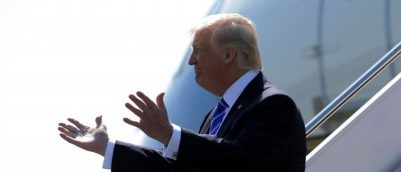
Trump has already begun his first trip to the Middle East without leaving the White House. This week President Trump met with Sheikh Mohammed Bin Zayed, the crown prince of Abu Dhaibi. That meeting was potentially just as important as Trump’s meetings later this month when he travels to Israel and the Saudi Arabia.
Trump is embracing the strongest opponent of his predecessor’s signature accomplishment in the Middle East: The Iran deal.
The UAE, Israel, and Saudi Arabia — Two Muslim majority monarchies and the Jewish state — all opposed the Iran deal. They all are fearful of the Iranian role in the region and worried about the threat posed by the Muslim Brotherhood, an Islamist organization active throughout the region and funded by Qatar.
Trump and his administration share their concern. Secretary of Defense James Mattis has called Iran “the biggest destabilising force in the Middle East” and the United States is happy to have allies in the war in terror. As the Emirati paper Gulf News noted Zayed addressed concerns regarding “Al Qaida in the Arabian Peninsula, Al Shabab, Daesh and other terrorist groups in the region.”
The UAE is part of the Saudi-led campaign against Iranian supported Houthi rebels in Yemen. The rebels have launched thousands of rockets and missiles at Saudi Arabia. Some of these have not only been targeted at towns and oil infrastructure but also the Holy City of Mecca.
Saudi Arabia’s clout in the Muslim world is unique as the home of two of Islam’s holiest sites. The draw of Saudi Arabia is demonstrated by the Saudi King’s ability to convene a major group of Muslim leaders to meet with President Trump during his first trip abroad. Saudi Arabia has also been able to pull together a diverse group of nations.
Airforce one is still thousands of miles from Riyadh but, it’s also clear where the problems lie. While the UAE and Saudi Arabia have been working closely to ensure Trump’s trip is a success other allies seem to be playing a more cynical game.
Take Qatar, a nominal U.S. ally which is home to the Al Udeid Airforce base. Last month at the Doha Four Seasons, Qatar allowed Hamas to hold a press-conference. Qatar has yet to designate a single organization a terrorist organization.
Not ISIS, Not Al Qaeda and certainly not the Muslim Brotherhood. Qatar is one of the largest state sponsors of the Muslim Brotherhood.
U.S. Muslim allies, such as the UAE, realize that President Trump’s trip to Saudi Arabia and Zayed’s trip to the United States are expressions of thanks. Allies like the UAE and Saudi Arabia deserve U.S. support in the war on terror much more than do cynical allies like Qatar and Pakistan which express a commitment to fighting terror but, behind closed doors pursue a different policy.
For Trump’s trip to be a success he should remember who America’s allies in the region are.
Source: Israel hopes Iran’s next president is the lesser of two evils – Middle East – Jerusalem Post
On May 19, Iranians will go to the polls to elect their president.
The elections are arguably the most important in Iran this century, coming as they do after the nuclear deal, the so-called Joint Comprehensive Plan of Action (JCPOA) between Iran and the P5+1 (the five UN Security Council powers plus Germany), which, in essence lifted financial sanctions worth billions of dollars on Iran in exchange for severe curbs on its nuclear program, theoretically making an Iranian dash for “the bomb” almost impossible without early detection.
The deal can be deemed – without fear of hyperbole – to be historic. The months leading up to its signing saw Iran and the US negotiate face to face for the first time since the 1979-1981 hostage crisis in which a militant Iranian student group stormed the US Embassy in Tehran and held captive all the diplomats and staff inside for more than a year. An enraged US broke off all relations with Iran and froze billions of dollars of Iranian assets abroad.
The deal was not without controversy in both the US and Iran – with hardliners on both sides seeing it as a form of “capitulation” to the “enemy.”
On the sidelines, of course, was Israel, with Benjamin Netanyahu voicing consistent opposition to any sort of compromise over Tehran’s nuclear program and repeatedly describing the prospect of a nuclear- armed Iran as an “existential threat” to the State of Israel. In his eyes, the nuclear deal was a “historic mistake.”
The May 19 elections are about far more than just electing a president; they are about differing visions of the Islamic Republic and the future path it should take. Added to this, the country is fighting proxy wars in Yemen, Iraq and, most importantly, Syria (where its desire to keep President Bashar Assad in power to maintain its land bridge to Hezbollah has cost it billions). Whoever emerges as winner will play a large role in shaping events in the region that will inescapably affect Israel as well. The question is: How? The first step to answering this question is understanding the relevant candidates, both in terms of their respective platforms and the position they occupy within the broader spectrum of Iranian politics. Many hopefuls registered their candidacy (including former president Mahmoud Ahmadinejad), but Iran’s Guardian Council, which vets all candidates, struck down most of the applications, rejecting those it deemed incompatible with the values of the state.
Of those that remain, two are most relevant.
The first is the incumbent, the pragmatist Hassan Rouhani (often mistakenly called a reformer in the West) who took power in 2013 and is seeking a second term.
The second is Ebrahim Raisi, a member of the group known as principlists or hardliners, the Osul-Garayan, that congregates around the supreme leader, currently Ayatollah Ali Khamenei. Rouhani is a pragmatist, open to greater economic and political ties to the West.
While remaining at the heart of the Islamic Republic’s establishment, he has found himself at odds with Iran’s hardliners, who fear that a more open Iran could pose an existential threat to the Islamic Republic – a perennial fear from Iranian conservatives since the republic’s founding in the aftermath of the 1979 Islamic Revolution.
Ever since, timing has played a central role in relations between Iran and the West – notably the US. Former Iranian president, the reformist-minded Mohammad Khatami, offered an olive branch to the US with his “Dialogue Among Civilizations” speech in 2001 but was rebuffed by a Bill Clinton administration that had introduced the 1996 Iran-Libya Sanctions Act and was determined to get tough on the country.
In 2008, Barack Obama came to power and, during his inauguration speech, unequivocally stated that “if countries like Iran are willing to unclench their fist, they will find an extended hand from us.” His overtures were, however, met with Iran’s then-president, the hard-line Ahmadinejad’s response that the US should apologize for its actions toward Iran over the previous 60 years.
THE 2013 election of Rouhani, who campaigned on a more open attitude toward the country’s international relations and, crucially, a resolution to the nuclear crisis that had dragged on since 2002 when an Iranian opposition group, the Mojahedin-e-Khalq (MKO) (People’s Mujahedin of Iran), revealed details of nuclear activities that Iran had been conducting clandestinely. Officially, the revelations came from MKO sources in Iran but ‒ as was revealed to me ‒ the real source was entirely different: Israel.
For once, however, timing proved fortuitous.
The presidents of both countries appeared to want some sort of détente – especially in the nuclear sphere – at the same time. On September 23, 2013, just over a month after he took office, Rouhani spoke to Obama over the phone. It was the first time a US and Iranian president had spoken directly in more than 30 years.
Rouhani remains the favorite to win. He delivered on his promise to the Iranian people to resolve the nuclear deal and improve the country’s international relations.
Then there are the financial and commercial benefits it brought. Iran received around $100 billion in unfrozen assets and, perhaps more importantly, signed deals with the French company Airbus to buy 100 passenger aircraft shortly after agreeing to buy 80 aircraft from the US company Boeing.
In addition to overhauling Iran’s badly out of date commercial airliner sector, which had suffered from decades of sanctions, he opened up commercial channels to some of the world’s premier companies.
Rouhani has shown he can bring stability to the political system and has popular support among the upper-middle class and the most educated segments of the population.
His constituency is based on what the hardliners call “Westernized” Iranian citizens.
He does have weaknesses. His inability to reduce unemployment and the introduction of neoliberal policies that have produced greater economic inequality among the population have proved unpopular. The election of Donald Trump to the presidency of the United States will also hurt him given that his narrative of positive dialogue with the United States – which the hardliners have consistently contested ‒ is far less appealing, given the early anti-Iranian rhetoric coming out of the White House.
His reelection, as Clement Therme, a research fellow for Iran at the International Institute for Strategic Studies [IISS], observes, will depend mainly on the turnout.
A high turnout will likely indicate that Iranians are willing to get out and vote for who they believe to be the least-worst candidate.
Lower turnout, which indicates greater voter apathy, is likely to favor his main challenger, Raisi. According to Therme, he is the “candidate of the Iranian deep state.” What this means is that he is deeply embedded – both politically and ideologically ‒ within the unelected institutions of the Islamic Republic: notably the judiciary and the supreme leader and those around him. He is also a senior cleric (indeed, some tout him as a successor to Khamenei) and chairman of the Astan Quds Razavi, the organization that manages several of Iran’s holiest sites. As Therme points out, “In a theocratic system, this can be a significant asset because he can potentially bridge the divide between the non-elected and the elected institutions of the Islamic Republic.”
Equally, as Therme further points out, in stark contrast to Rouhani’s economic views, he is “closer to the [founder of the Islamic Republic Ayatollah Ruhollah] Khomeini doctrine of the “Islamic Economy,” which prioritizes giving Iran’s oil money away to the poorest of the country’s population. He rails against neoliberalism and the recommendations of the International Monetary Fund but, in practice, he is a religious businessman who plays by the rules of the liberal economy.”
In a country as vociferously anti-Israel as Iran, it is hard to detect obvious differences among the candidates toward the Jewish state. Nonetheless, on key issues, such as the nuclear deal, the terrorist group Hezbollah and the Syrian conflict that is fracturing the Middle East, subtle differences, which have the potential to affect both Israel and the wider region, are clearly discernible.
Regarding attitudes toward Israel, Raisi, as a staunch principlist, represents the traditional far-right wing of the clergy. He would almost certainly be the most vocally anti-Israel Iranian president and a Raisi victory would likely see a return to Ahmadinejad- like rhetoric against Jerusalem.
The Islamic Republic’s deep state is deeply anti Zionist. This impulse was at the center of their many attacks on Mohammad Reza Pahlavi, the Shah of Iran overthrown in 1979. For Raisi’s brand of theocratic politics, the destruction of the State of Israel is a religious duty.
ROUHANI, MEANWHILE, is a centrist mullah. He is, of course, anti-Zionist, too, but Therme argues, “thinks that the Islamic Republic needs popular support to survive.”
Therefore, he prefers to focus on economic development over empty revolutionary slogans such as “Death to Israel.” He has criticized his conservative competitors’ use of anti-Zionist slogans and the Iranian missile program to disrupt the conclusion of the nuclear deal with the West. He will probably follow Khatami’s strategy on Israel: ‘Iran cannot be more Palestinian than the Palestinians themselves.’”
But differences lie in the principles that undergird it. Rouhani wants to apply the JCPOA diplomatic model to every problem: dealing with OPEC and the tensions with other Persian Gulf countries, to name just two issues. For the other candidate, the JCPOA was merely a means with which to lift the financial sanctions and ensure the regime’s survival. For him, the JCPOA was not the beginning of détente with the West; it was the end.
Iran’s hardliners fear the West’s soft power far more than they fear its hard power.
The US establishment has long been sick of Middle East wars and its new president has seemingly isolationist inclinations.
While Trump’s rhetoric means Tehran does not rule out potential limited conflict, it fears regime change and bombs less than it fears HBO and McDonalds. This fear of cultural invasion or “Westoxification” is long-standing in the Islamic Republic, and with a young Western-leaning population, it is a justified one. For the supreme leader and his coterie, the JCPOA was always a potential Pandora’s box. Conversely, Rouhani calculates that Iran can be more open economically, without paving the way for a cultural invasion that could potentially threaten the continued existence of the state.
Syria – and especially Hezbollah’s role in it ‒ is another issue on which the candidates will be fundamentally agreed but, again, the slight differences they hold on the issue have the potential to affect both Israel and its neighboring states. Raisi will be most steadfast in his support for the group and its role in Syria because Hezbollah comes under the direct control of the supreme leader and the non-elected institutions of the Islamic Republic. Not only will the group be seen as vital to continuing Iran’s proxy war with Israel, but also as a potential asymmetric strategic player to confront any possible military threat arising from the Trump administration.
On the other hand, Rouhani will view Iranian support for Hezbollah through the prism of the fight against ISIS and what Iran calls the takfiri (apostate – i.e. Sunni) groups in the Middle East. All the candidates will continue to back Iran’s support of Assad and are likely to favor more coordination with Russia in Syria. For Iran, Syria is an existential issue – without it there is no land bridge to Hezbollah, and Tehran is pouring huge resources into the fight. The more it can get Russia to help shoulder the burden, the better.
The best result for Israel on May 19 would be a Rouhani win. This is because of all the candidates he is most likely to subordinate geopolitical competition with Jerusalem to Iran’s economic development.
But, whoever wins, relations between Israel and Iran will almost certainly remain hostile as long as the Islamic Republic continues to exist. Anti-Zionism and anti-Americanism lie at the heart of the state’s core values – without these “foes” to “resist” the Mullahs will lose much of their legitimacy, and popularity in the wider Middle East, vital for a Persian Shi’ite state in an overwhelmingly Sunni Arab Middle East.
The truth is that as much as the Islamic State hates Israel it needs it far more. And as long as that is the case, détente between the two countries will always be an impossibility – at great cost to both countries, and to the region as a whole.
Source: Trump reaches Mid East trip under a grim probe

US President Donald Trump’s situation plummeted sharply in the 24 hours between Wednesday (May 17) and Thursday (May 18). In the five months since moving into the White House, he has struggled against daily firestorms ignited by his enemies in the political, media and intelligence establishments.
Thursday morning, he was tossed into the flames when he learned that the Justice Department had appointed former FBI director Robert Mueller as special counsel to “oversee a federal investigation into Russian interference in the 2016 election, including potential collusion between the president’s campaign associations and Russian officials.”
After consistent denials had no effect, Trump’s supporters and staff initially hoped that the appointment of this respected former spy chief would finally put a stop to the negative storm besetting his presidency, and let him get on with the health, tax, economic and other reforms he had set in motion.
They were wrong, the adverse leaks to the media continued notwithstanding, and were clearly designed to steer the Mueller probe in a negative direction.
A gravely troubled president therefore sets out on his first foreign trip – first stop Riyadh on May 22, followed by Israel on May 23-24, the Vatican and Brussels a day later. That trip was further shadowed by the press report Tuesday, May 16, claiming Trump had leaked classified information from Israeli intelligence to Russian Foreign Minister Sergey Lavrov during his visit to the White House on May 10.
This leak, consistently denied by the White House, was clearly aimed at sabotaging the president’s plans to crown his visits to Riyadh and Israel by successful breakthroughs with America’s foremost allies in the region.
Foreign trips often serve harassed political leaders to escape their troubles at home and bask in the warm welcomes of friendly nations and colleagues. But Donald Trump was deprived in advance of this respite by the slur on his integrity in dealing with highly sensitive security and intelligence matters that was cast by allegations of betraying classified information from a foreign partner.
The most pressing topic in the Middle East today is the expansion of the military-political-intelligence alliance of Russia, Iran and Syria to include Iraq. (debkafile revealed Wednesday, May 17 that an Iraqi military delegation had arrived in Damascus for the first groundbreaking visit in decades). However the Mueller probe, centering as it does on the president’s associates’ alleged interaction with Russian officials, ties Trump’s hands on a vital foreign policy issue: the urgent need for US cooperation with Russia for resolving the Syrian and other burning crises afflicting the region.
The impact of Trump’s imposed inaction is already apparent in the conduct of some of the relevant leaders, such as President Vladimir Putin, Iran’s supreme leader Ayatollah Ali Khamenei, Egypt’s Abdul-Fatteh El-Sisi, King Abdullah of Jordan and Iraqi Prime Minister Haydar al-Abadi.
Each of those leaders plans to make hay from the policy void created by the Trump administration’s grim situation; each is meanwhile striking out for alternative partners to lessen their dependence on Washington.
Saudi King Salman and his Defense Minister Deputy Crown Prince Mohammad Bin Salman are nonetheless carrying on as though nothing is amiss. Possibly because they refuse to read the signs in Washington, they are forging ahead with arrangements for an historic summit, with invitations issued to some 50 Arab and Muslim rulers to meet the visiting US president in Riyadh.
At his next stop, his Israeli hosts have still not received a detailed outline of his plans – only the times of his arrival and departure. The impression gained in Jerusalem is that the White House is too distracted by the mayhem surrounding the president to carry out its normal duties.
A new report is claiming that two top Trump officials, H.R. McMaster and Deena Powell, are behind many of the anti-Trump leaks coming out of the White House
By Paul | |
Source: Report: Top Trump Officials Behind Anti-Trump Leaks to Media
It’s no secret that the Trump White House has a serious problem with leaks. Since President Donald J. Trump took office, individuals looking to damage this administration have fed stories to the liberal media on a regular basis.
Earlier this year, President Trump told Fox News that he believed Obama officials that still work in all areas of government are behind many of the leaks that plague the White House, many of which have serious national security implications.
While President Trump may be correct that disgruntled Obama officials may be trying to destroy this White House, a new report suggests that some of the anti-Trump leaks are coming from within his very own team.

From GOT News:
Two separate National Security Council sources have confirmed that National Security Advisor H. R. McMaster and Deputy National Security Advisor Dina Powell have been leaking negative material about President Donald J. Trump to their allies in the anti-Trump media, GotNews can exclusively report.
“It’s very hard when your boss, the President, and your boss, the NSC advisor, see the world so differently,” says one staffer, who opposes regime change in Syria.
Staffers on the National Security Council describe a culture of intimidation, especially for those who didn’t come in under McMaster and support the Trump campaign’s commitment to put America First.
“It’s like the Bush years never ended,” notes one staffer who didn’t come in under McMaster. “I didn’t sign up for this shit and the American people didn’t vote for it.”
For those of you that forgot, McMaster was brought into the White House following the firing of Michael Flynn. McMaster and Dina Powell are not Trump loyalists, and had no affiliation to the president prior to his election.
Given this important fact, it is not inconceivable to think that career government employees, even though they work for the president, would be behind the anti-Trump leaks that continue to flow out of this White House.
President Trump is not a typical politician, and McMaster and Powell are part of the D.C. establishment that Trump has attacked for years. If the president feels that these two are responsible for leaking to the press, he should fire them immediately. The liberal media forced him to fire Michael Flynn, and if this report is true, it’s no surprise that the left praised the choice of McMaster to serve as National Security Adviser.
Would you be surprised if McMaster and Powell were the source of the leaks? Share your thoughts below!
BY:
May 17, 2017 1:40 pm
Source: Trump Admin Sanctions Iran’s Ballistic Missile Program
The Trump administration announced on Wednesday that it is sanctioning several entities in connection with Iran’s ballistic missile program, which the U.S. intelligence community estimates could be used to carry nuclear weapons over great distances, according to an announcement by the Treasury Department.
New sanctions will be leveled on two senior Iranian defense officials, including one who “facilitated the sale of explosives and provided other support to Syria and the director of the organization responsible for Iran’s solid-fueled ballistic missile program,” according to an announcement by the Trump administration.
New sanctions also have been leveled on a Chinese-based network believed to be supporting Iran’s ballistic missile program via “millions of dollars’ worth of missile-applicable items.”
Another Iran-based entity known to support Iran’s missile program also was hit with sanctions.
The Obama administration had avoided such sanctions to avoid upsetting the Iranians and potentially complicating the nuclear agreement.
The new action comes just days after Director of National Intelligence Dan Coats disclosed to Congress that Iran is continuing to boost its ballistic missile program, including inter-continental ballistic missiles that are capable of delivering a nuclear payload.
One senior Trump administration official working on the Iran portfolio told the Washington Free Beacon that the new sanctions are part of a larger effort to “hold Tehran accountable” for its nefarious activities that threaten regional peace.
“The inter-agency actions today demonstrate that the Trump administration is developing a comprehensive strategy to counter the threat from Iran,” the official said. “President Trump is determined to hold Tehran accountable for its dangerous and aggressive behavior that is destabilizing the Middle East, while making it clear to the Iranian people that he stands with them–not with the regime that has oppressed them for so long.”
U.S. lawmakers, as well as Trump administration insiders, have become increasingly concerned over Iran’s repeated ballistic missile tests since the landmark nuclear agreement was inked.
“This administration is committed to countering Iran’s destabilizing behavior, such as Iran’s development of ballistic missiles and support to the Assad regime,” Treasury Secretary Steven Mnuchin said in a statement. “It is alarming that individuals involved with Iran’s missile program are assisting the brutal Assad regime, and we are taking action to curtail this behavior.”
“These sanctions target Iranian officials as well as a China-based network that are providing support to Syria and supplying items to further Iran’s ballistic weapons program,” Mnuchin said. “The United States will remain vigilant when it comes to Iran.”
The new sanctions specifically target Morteza Farasatpour, a top Iranian defense official, and Rahim Ahmadi, a senior Iranian official.
Both individuals are key enablers of Iran’s ballistic missile program, according to the Trump administration.
Farasatpour coordinated the sale and delivery of explosives and other materials to Syria on behalf of Iran’s Defense Industries Organization, according to the administration, which estimates the cost of this alliance to be in the tens of millions of dollars.
Ahmadi was sanctioned for his role in coordinating Iran’s ballistic missile flight tests, as well as research and development activities pertaining to the program.
The Trump administration also has targeted Chinese national OFAC designated Chinese national Ruan Runling and three associated Chinese companies for proliferation activities in support of a key designated Iranian defense entity,” according to the Treasury Department.
Ruan operates a network that has provided support to Iranian industries working on the ballistic missile program, including guidance systems.
New sanctions also have been placed on an Iranian-based company known as Matin Sanat Nik Andishan for its proliferation activities supporting Iran’s ballistic missile program.
Matin Sanat has aided an Iranian chemical company responsible for producing Iran’s liquid-fueled ballistic missile industry.
The latest sanctions coincide with the release to Congress of a semi-annual report detailing Iran’s human rights abuses.
The State Department informed lawmakers that it continues to closely monitor Iran’s systematic human rights abuses, including the imprisonment and torture of dissidents.
“As we continue to closely scrutinize Iran’s commitment to the JCPOA and develop a comprehensive Iran policy, we will continue to hold Iran accountable for its human rights abuses with new actions,” the report states. “We urge our partners around the world to join us in calling out individuals and entities who violate international sanctions targeting Iran’s human rights abuses.”
While the Trump administration continues to waive certain sanctions on Iran as required under the nuclear agreement, officials said the administration would not back down from imposing new sanctions, such as those announced Wednesday.
“The United States and its partners will continue to apply pressure on Iran to protect the human rights and fundamental freedoms for everyone in Iran,” the State Department said in its report. “This includes the U.S. citizens wrongfully detained or missing in Iran, and we call on Iran to immediately return them to their families.”
As the Trump administration continues to engage in a review of the nuclear agreement it will continue to counter “Iran’s destabilizing activity in the region, whether it be supporting the Assad regime, backing terrorist organizations like Hezbollah, or supporting violent militias that undermine governments in Iraq and Yemen,” according to the State Department.
Update 1:57 p.m.: This post has been updated with more information.
Update 2:20 p.m.: This post has been updated with further information.
Iraqi officers land in Syria, stir Israeli concern, DEBKAfile, May 17, 2017
Israel was deeply disquieted to discover that Iraq’s Prime Minister Haidar al-Abadi had secretly pivoted his support away from the US-Jordanian campaign for control over the borders of Iraq and Syria, and switched instead to alignment with Moscow and Tehran.
Israeli policy-makers are worried that President Donald Trump will be constrained by the daily barrage of personal attacks descending on from fully focusing on the forces building up dangerously against US military plans in Syria.
****************************
Israeli security chiefs were gravely concerned Wednesday, May 17, when they learned that a high-ranking Iraqi military delegation had arrived in Damascus, the first in decades during which the Iraqi and Syrian ruling regimes were at odds, for a discussion on the situation unfolding on the Syrian-Iraqi border – in particular the Al-Tanf crossing.
DEBKAfile’s military sources reported on May 15 and May 16 on the potential for a clash of arms over this strategic crossing, which is situated at the intersection of the Jordanian, Iraq, and Syrian borders and commands the No.1 Route linking Baghdad with Damascus and the Jordanian capital of Amman.
Wednesday saw a flurry of military activity in the area by US, British and Jordanian special forces, on the one hand, and Syrian, Hizballah and other pro-Iranian forces, on the other. A race appeared to be quietly developing over who would reach the border first and seize control of the Al-Tanf crossing.
On this very subject, the Iraqi military delegation held separate talks in Damascus with senior officers of the Russian command in Syria and senior Iranian officers posted at Syrian General Staff headquarters. Concurrently, the Russian military command announced that Russia, Iran and Iraq were holding consultations on how to secure the border regions between Syria and Iraq.
Our forces add that the three groups of officers got down to brass talks, in fact, on ways to fit Iraqi army units into the Syrian-Iranian effort for guaranteeing full control by Damascus and Tehran of the sensitive border regions.
Israel was deeply disquieted to discover that Iraq’s Prime Minister Haidar al-Abadi had secretly pivoted his support away from the US-Jordanian campaign for control over the borders of Iraq and Syria, and switched instead to alignment with Moscow and Tehran.
Israeli policy-makers are worried that President Donald Trump will be constrained by the daily barrage of personal attacks descending on from fully focusing on the forces building up dangerously against US military plans in Syria.
Trump Administration Taps Sheriff David Clarke for DHS Role, Washington Free Beacon, Natalie Johnson, May 17, 2017
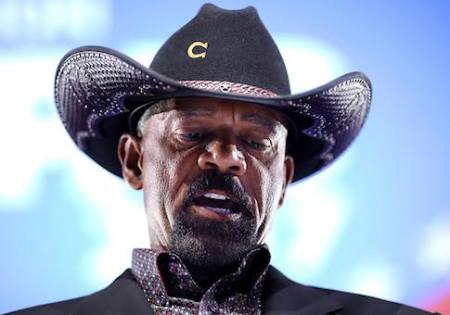
NATIONAL HARBOR, MD – FEBRUARY 23: Milwaukee County Sheriff David Clarke speaks as part of a pannel discussion titled “When did World War III Begin? Part A: Threats at Home” during the Conservative Political Action Conference at the Gaylord National Resort and Convention Center February 23, 2017 in National Harbor, Maryland. (Photo by Chip Somodevilla/Getty Images)
The Trump administration tapped Milwaukee County Sheriff David Clarke to serve as assistant secretary of the Department of Homeland Security for partnership and engagement.
Clarke, a tough-talking, conservative firebrand recognized by his penchant for cowboy hats, announced the appointment during an interview with a local Wisconsin radio station Wednesday afternoon.
“I’m both honored and humbled to be appointed to this position by [DHS Sec. John Kelly], working for the Trump administration in this position,” Clarke told WISN Milwaukee.
Clarke will begin in the position in June. The position does not require Senate confirmation.
Clarke, a Trump loyalist who served as a surrogate during the campaign, was one of three black speakers who endorsed President Donald Trump at the Republican National Convention. He is a vocal proponent of gun rights with close ties to the National Rifle Association.
His name has been floated as a possible replacement to former FBI Director James Comey, but the announcement Wednesday scraps those rumors.
Clarke’s brazenness and tendency to fire-off provocative, off-hand comments have contributed to his rise as one of Wisconsin’s most controversial political figures. The law-and-order sheriff has frequently told Black Lives Matters protesters to “stop trying to fix the police, fix the ghetto” and referred to Ferguson demonstrators as “vultures on a roadside carcass.”
Clarke is also facing scrutiny for the death of a mentally ill inmate who died of dehydration at the Milwaukee County Jail after being refused water for seven days. No criminal charges have been filed, but the case is under review by the Milwaukee County District Attorney’s Office.
The 38-year-old man was one of four people, including the newborn of an inmate, who died last year at the jail overseen by Clarke.
The sheriff will replace the current acting assistant secretary John Barsa.




 anneinpt
 artaxes
 danmillerinpanama
 davidking1530
 Peter Hofman
 Joseph Wouk
 Peter
Peter Louisiana Steve
 WarSclerotic
Recent Comments