Archive for April 2017

The Trump method

April 29, 2017

The Trump method, Washington Examiner, W. James Antle III, April 29, 2017
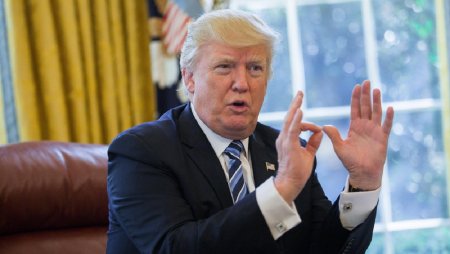
President Trump has been more measured toward China, despite near-constant criticism of that burgeoning strategic rival during the presidential campaign. “President Xi wants to do the right thing,” Trump said of his Chinese counterpart in a press conference. “We had a very good bonding. I think we had a very good chemistry together.” (Graeme Jennings/Washington Examiner)

When President Trump held a reception for conservative media at the White House in April, he was asked whether he was being tough enough on China. Beijing was dumping steel, his interlocutor said, and should also be designated a currency manipulator.

Trump responded, according to several attendees, with a certain incredulity, asking why he would label China a currency manipulator while it is helping to contain North Korea’s increasingly belligerent behavior. It’s a variant of a line he debuted on Twitter earlier in the month.

“No, it’s not going to be the Trump doctrine,” Trump memorably said of his foreign policy approach during the campaign. “Because in life, you have to be flexible. You have to have flexibility. You have to change. You know, you may say one thing and then the following year you want to change it, because circumstances are different.”

The president has come under fire from some of his fiercest defenders for saying one thing while running for office and then a year later wanting to “change it” on the core issues that got him elected. He relented on funding of the border wall with the continuing resolution to avert a government shutdown. He hasn’t fully rescinded former President Obama’s immigration executive actions. He ordered strikes on Syria after promising a less interventionist “America First” foreign policy.

Trump spoke favorably of Federal Reserve Chairwoman Janet Yellen. He declared NATO was no longer obsolete. He signaled support for the Export-Import Bank, even as he nominated a conservative critic to run it. He endorsed a GOP healthcare bill that seemed to advance few of his campaign policy goals.

All these position changes came shortly after there were ubiquitous reports of White House palace intrigue suggesting the populist, nationalist faction associated with chief strategist Stephen Bannon was being marginalized in favor of Trump’s centrist son-in-law and senior adviser Jared Kushner.

“We may as well have had Jeb,” lamented conservative columnist Ann Coulter, author of the election yearbook In Trump We Trust. She now tweets daily about the number of miles of border wall completed since Inauguration Day. The number is always zero. “Do you want war with Russia, all of you idiots, all of you fools who are pounding the war drums?” protested pro-Trump veteran radio talk show host Michael Savage after the Syria intervention.

Some Trump supporters think all this is a misreading of the president. Washington is used to ideologues, they say. Trump is a pragmatist. They maintain he is a master negotiator straight out of The Art of the Deal and there is a method even to his apparent Twitter madness.

“When President Trump negotiates, nothing is off the table,” said a former Republican national security official. “He leverages the full resources of the American government. He brings the economy into the picture even when doing diplomacy. He outright says, ‘If you want a better trade deal, you will help us with North Korea.'”

The new president is, in other words, making a bonfire of the pieties, discarding the idea, perhaps the pretense, of principled consistency, and instead does piecemeal what he believes will work at that moment.

Asked if this wasn’t par for the course in presidential negotiations, the official agreed but said there were two important caveats that make Trump different: “Trump says it publicly instead of dancing around it. And don’t underestimate how much our people try to make humanitarian arguments to foreign governments that just aren’t very humanitarian.”

A Republican diplomat concurred, saying there was an overreliance on moral arguments in difficult negotiations with foreign countries sometimes led by people who do not share our values. “These moral arguments don’t work with China or Russia,” the diplomat said. “They’re hit or miss with Egypt or Saudi Arabia. They’re not working with Turkey.”

So Trump took a harder line on Russia, or at least allowed his appointees to do so. This isn’t surprising from United Nations Ambassador Nikki Haley, for example, but Secretary of State Rex Tillerson is a past recipient of the Russian Order of Friendship, and yet he said Moscow was “complicit or simply incompetent” when it came to Syria’s use of chemical weapons.

And Trump has been more measured toward China, despite near-constant criticism of that burgeoning strategic rival during the presidential campaign. “President Xi wants to do the right thing,” Trump said of his Chinese counterpart in a press conference. “We had a very good bonding. I think we had a very good chemistry together.”

On the North American Free Trade Agreement, Trump floated an executive order terminating the United States’ participation in the pact, and almost immediately received phone calls from the president of Mexico and prime minister of Canada. Having got their attention, he walked back his threat while speaking magnanimously about those two allies.

“I decided rather than terminating NAFTA, which would be a pretty big, you know, shock to the system, we will renegotiate,” Trump told reporters. He had previously issued a statement praising the leaders of Mexico and Canada: “It is an honor to deal with both President Pena Nieto and Prime Minister Trudeau, and I believe that the end result will make all three countries stronger and better.”

To some, this reflects the “strategic ambiguity” Trump promised last year and a willingness to make a deal wherever possible. Others regard it as the kind of incoherence one might expect from a politically inexperienced president who hasn’t shown much interest in policy. The New York Times described Mexican elites as increasingly seeing Trump as a poker table “bluffer.”

This is a debate that dates back to before Trump was in office and extends to domestic policy as well. Is Trump simply more flexible than your average politician or is he less aware of what he is doing?

“What elitists misinterpret as uneven principles, entrepreneurs understand as adaptability,” SkyBridge Capital founder Anthony Scaramucci argued in the Wall Street Journal. He went on to claim, “Mr. Trump would be the greatest pragmatist and deal maker Washington has ever seen.”

“In the political sense, pragmatists reject the traditional left/right binary, which they may derisively view as dogma,” Christopher Scalia wrote in a Washington Post piece on Trump’s ideological flexibility. “They are willing to sample widely from the smorgasbord of political ideas to find the best solution to a pressing problem.”

Trump’s critics have also described him as a pragmatist. “I … think that he is coming to this office with fewer set, hard-and-fast policy prescriptions than a lot of other presidents might be arriving with. I don’t think he is ideological,” Obama told reporters at the White House after the election. “I think ultimately he’s pragmatic in that way, and that can serve him well as long as he’s got good people around him and he has a good sense of direction.”

Ben Shapiro argued in National Review that Trump was pragmatic, but that wasn’t necessarily a good thing. “That’s because pragmatism is a progressive philosophy,” he wrote. “There is no clear consensus on ‘what works.’ This is why elections matter, and why political ideology matters. It’s an empty conceit of arrogant politicians that they alone can determine, based on expert reading of facts, the best solution; they can’t.”

This tendency hampered Trump’s first attempt to repeal and replace Obamacare. He negotiated with the conservative Freedom Caucus, occasionally driving a hard bargain. “I’m coming after you,” Trump quipped to the group’s chairman, Rep. Mark Meadows, R-N.C., at one point during the talks.

But Trump’s jibes against the conservative lawmakers got more serious. The president tweeted that the Freedom Caucus would “hurt the entire Republican agenda” if they failed to get on board and that they needed to be fought as well as the Democrats in 2018.

“Tweets, statements and blame don’t change facts,” said Rep. Jim Jordan, R-Ohio. Meadows said Trump’s scathing comments made it “harder” to arrive at a healthcare compromise. A Republican congressional aide said Trump’s tactics merely “emboldened” GOP holdouts.

Trump and the Freedom Caucus have since reconciled on Obamacare. Some even stick up for his handling of the early healthcare discussions.

“I think he did everything he could on healthcare in round one,” said Faith and Freedom Coalition chairman Ralph Reed. “The president was speed dialing members of Congress on their cellphones.”

“The biggest problem you had under Bush and under Obama is that each party on the Hill thought the White House didn’t talk to them,” said Americans for Tax Reform president Grover Norquist, who added that all the feedback he has gotten has indicated improved communications under this administration. “Trump’s leadership is to talk about the Reagan agenda in terms of creating jobs.”

Nevertheless, Trump had difficulty out of the gate because he did not understand how to strike a deal that was only partly about dollars and cents. Freedom Caucus members dissented from the first version of the American Health Care Act because of values and ideology too. Trump’s pragmatic language made no allowance for that.

“He had nothing to sell us,” said a GOP legislative assistant. Trump’s arguments centered on Republican political survival, the need to fulfill campaign promises on Obamacare but relatively little to say about the merits of the bill.

Debates over the efficacy of Trump’s methods often break down over a question that has hung over him ever since the national media began to hang on his every tweet, upending politics as we know it: is he clever or just lucky?

“Occasionally, Trump displays moments of pure genius with his use of Twitter to change the subject away from bad storylines,” said Republican strategist Liz Mair. “Frequently, however, he uses Twitter to keep what are, for him, extremely bad narratives alive and to beclown himself in the eyes of most observers who are vaguely politically astute. Sometimes, he also just gets lucky and does something stupid on Twitter that coincidentally detracts from something bad, news-wise, but where you’re pretty confident it wasn’t intentional, it was just random.”

Maybe Trump’s luck will eventually run out. For now, however, when this pragmatist walks into a roomful of ideologues, he sits at the head of the table.
L.A. Police Commission Makes Violent Protests Like UC-Berkeley More Likely

April 28, 2017

L.A. Police Commission Makes Violent Protests Like UC-Berkeley More Likely, PJ MediaJack Dunphy, April 28, 2017

(Jack Dunphy is the pseudonym of a police officer in Southern California. — DM)

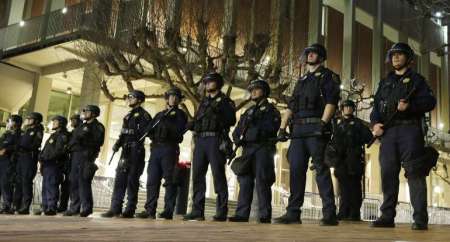
University of California, Berkeley police guard the building where Breitbart News editor Milo Yiannopoulos was to speak. (AP Photo/Ben Margot, File)

Announce that the law will be enforced, then do it. Perhaps this is too much to ask these days.

**************************

Imagine you’re at work one day when your boss calls you into his office. “Uh oh,” you think, “this can’t be good.” And indeed, despite the gloss he tries to put on it, it isn’t. The company has adopted a new policy, he tells you, one that will change the way you are evaluated in the performance of your duties.

There are new criteria to be used, criteria designed not to measure how well you performed a given task, but rather to inform you that, no matter how well things may have turned out for you and your company, you should have performed it differently. What’s worse, the judgment will be made not by your peers, your superiors, or even by people in your line of work, but rather by people who have never done your job – and couldn’t if their very lives depended on it.

If you didn’t quit on the spot, you would very likely look askance at your boss and this nonsense he’s peddling. And you would return to your office in the discomfiting knowledge that the place is being run by imbeciles.

You now have a sense of what it’s like to be a police officer in Los Angeles these days.

I have often written of the politics of Los Angeles, one of the more peculiar aspects of which is that the city’s police department is overseen by five mayoral appointees to the police commission. In addition to setting policy, the commission is vested with the authority to determine the propriety of an officer’s use of deadly force.

In making these determinations, the commissioners weigh not only an officer’s decision to fire his weapon, but also the tactics he used as the incident unfolded. And, even though an honest appraisal of such an incident would presumably require a certain level of experience and expertise, not one of these commissioners has ever served so much as a single day as a police officer.

Last October, I wrote in this space on the current fashion of police “de-escalation,” i.e., the avoidance of using force in restoring order, obtaining compliance, and making arrests. Like all fashions, this one was inspired by ephemeral considerations, to wit, mostly ill-informed opinions on high-profile police use-of-force incidents recently seen in Los Angeles and across the country. The Los Angeles police commissioners, five of the most ill-informed people you’re ever likely to find in one room, recently codified this fashion in the form of a new use-of-force policy for the LAPD.

In truth, the new policy (PDF) is not at all a drastic departure from the one it replaces. The changes amount to no more than a few words, these intended to emphasize the desire for alternatives, if any are available, to the use of deadly force. So it is not the policy itself that officers find objectionable. Rather, it is the knowledge that their fate may one day rest in the hands of the people whose idealistic notions of police work cannot be squared with how police work is actually performed.

In my October piece, I linked to this Los Angeles Times article concerning the September 2015 shooting of Norma Guzman, who was killed while approaching officers with an 8-inch knife. Though LAPD Chief Charlie Beck ruled the shooting to be “in-policy,” the commission disagreed, arguing that the first officer to fire on Guzman should have “redeployed” to a safer place.

And this is where the commissioners’ lack of real-world experience becomes obvious and alarming. They disapproved of the outcome, so they propose that different actions by the officer would have resulted in a better one. But in doing so they fail to consider what might have happened had the officer done what they think he should have.

In the video accompanying the Times’s story, we can see that the passenger officer alights from the police car and apparently spots Guzman walking toward him. He draws his weapon and, we are told, orders her to stop and drop the knife. She fails to comply and is shot when she gets to within about ten feet of the officer.

The driver officer, having exited the police car and come around the rear, also fires as he sees Guzman approaching his partner. In the commissioners’ imagination, the passenger officer should have distanced himself from Guzman before firing. But consider that in doing so, he would also have distanced himself from his partner, whose view of Guzman was momentarily blocked by the police SUV.

One can easily imagine a scenario in which the passenger officer “re-deploys” only to expose his unwary partner to the danger posed by Guzman. What’s more, this scenario might easily have resulted in Guzman being between the officers, thus creating the danger of deadly cross-fire.

What’s more, had the passenger officer “re-deployed,” the commission’s euphemism for “run away,” he may have violated the LAPD policy that prohibits partners from separating. Had he done so and left his partner to face Guzman alone, the commission surely would have found fault with either officer or both if Guzman had been shot.

It’s one thing for police officers to critique the actions of their peers with the aim of improving safety, it’s quite another for five political appointees with no relevant experience taking months to evaluate decisions officers must make in an instant. No less authority than the U.S. Supreme Court has made this clear, ruling in Graham v. Connor (1989) that “the ‘reasonableness’ of a particular use of force must be judged from the perspective of a reasonable officer on the scene, rather than with the 20/20 vision of hindsight.”

In the current climate, hindsight on police matters abounds, and the acuity is most often less than 20/20, with the L.A. police commission perhaps in need of a long white cane and a seeing-eye dog. And with all this myopic second-guessing comes the apparent reluctance among some police managers to uphold the law whenever there is a risk of a violent encounter with those who are breaking it. The most notable recent example can be found on the campus of the University of California, in Berkeley, where the campus police chief so disgraced herself at the Milo Yiannopoulos event earlier this year.

Following that disgrace, I offered some advice to her and her campus overseers on how to handle a visit to the campus by Ann Coulter, who was scheduled to speak on April 27. Already the campus officials have embarrassed themselves once more, first by rescinding the invitation to Coulter, then by rescheduling her appearance to a date during the week before final examinations.

In first canceling the event, university officials said it was “not possible to assure that the event could be held successfully — or that the safety of Ms. Coulter, the event sponsors, audience and bystanders could be adequately protected.” In this they admit their own ineptitude and their unwillingness to accept the fact that in order keep these people safe they may have to use force against those who threaten them.

It’s quite simple: Announce that the law will be enforced, then do it. Perhaps this is too much to ask these days.

Absolving Jihadis of Responsibility for Terrorism

April 28, 2017

Absolving Jihadis of Responsibility for Terrorism, Gatestone InstituteA. Z. Mohamed, April 28, 2017

(America has no Theologian in Chief, Secretary of Theology or Religious Adviser to the National Security Council. So who in America gets to decide who is a “true” Muslim? Who is a “fake” Muslim? Who does or doesn’t pervert the “true” teachings of Islam? Which teachings? Does it matter? Just eliminate the terrorists. We have a pretty good idea who and where they are. Please see also, There is no viable American alternative to the Muslim reform movement. — DM)

At an all-hands meeting of the National Security Council on February 23, the new U.S. National Security Adviser, H.R. McMaster, argued against using the term “radical Islamic terrorism.” Jihadists, he said, are not true adherents to the religion, but rather pervert its teachings.

Classifying Muslims into categories is not only misleading; it feeds into the hands of those who try to obfuscate the dangerous nature of Islam as a political ideology.

*****************************

More disconcerting is that leading figures in the West — including Pope Francis and former U.S. President Barack Obama — assert that ISIS, al-Qaeda and other jihadist organizations are “not Muslim.” How would they know? Do Muslims go around telling Christians who is and is not a true Christian? The use of this rhetoric is part of an agenda to absolve Muslims of responsibility for terrorism.

“[T]hey [ISIS] draw their ideas from what is written in our own books, from our own principles.” — Sheikh Adel Al-Kalbani, former imam of the Grand Mosque in Mecca.

The Oxford Dictionary of Islam defines takfir as “pronouncement that someone is unbeliever (kafir) and no longer Muslim.” It has become a key concept in the ideology of both terrorist groups and their enemies as well in the Muslim world. A takfiri is a Muslim who accuses another Muslim (or Christian or Jew) of apostasy. During the last few years, however, several non-Muslims, leading Western figures and even governments have been adopting that ideology. Muslims’ excessive use of takfir creates a state of chaos; Westerns’ use of it makes the situation more chaotic. The following is a part of the story of “takfirism” and its repercussions.

The Islamic State (ISIS), al-Qaeda, and other terrorist groups always claim that Muslim leaders who do not rule by Islamic sharia law — and those who obey them — are not Muslims. The terrorists consider them “hypocrites” (the Saudis), “rejectionists,” or “outsiders” (Iranians and Shias). Terrorists always use the concept of takfir to authorize and endorse violence against their enemies.

In reaction, several Muslim leaders and senior Islamic clerics have started to utilize takfir to denounce the terrorists as unbelievers. Such a development highlights the nature of Islam as a political ideology, notably in the Sunni vs. Shia and Sunni vs. Sunni hostilities. The charge of takfir is a weapon used by all parties involved.

In June 2014, for example, Grand Ayatollah Ali al-Sistani, Iraq’s chief Shiite cleric, issued a fatwa (Islamic legal opinion) encouraging his followers to take up arms against ISIS. Two months later, the Grand Mufti of Saudi Arabia, Muhammad ibn Ibrahim Al ash-Sheikh, issued a statement blasting ISIS and al-Qaeda as Islam’s key enemies.

Last August in Chechnya, more than 200 Sunni clerics — among them the Egyptian Grand Imam of al-Azhar — referred to Wahhabism as “a dangerous deformation” of Sunni Islam.

The following month, the Saudi grand mufti said Iran’s leaders are “not Muslims,” a day after Iranian Supreme Leader Ayatollah Ali Khamenei described Saudi rulers as “blasphemous” and “faithless.”

“Are there any Muslims left?” said Robert Spencer, a non-Muslim expert in Islam. “Is anyone a Muslim at all?… any Muslim who behaves in a way some other Muslim dislikes is simply not a Muslim.”

That radical Muslim ideologues engage in takfir to attack their enemies is considered “the usual” by now. More disconcerting is that leading figures in the West — including Pope Francis and former U.S. President Barack Obama — adopted the practice, asserting that ISIS, al-Qaeda and other jihadist organizations are “not Muslim.” How would they know? Do Muslims go around telling Christians who is and is not a true Christian? The use of this rhetoric is part of an agenda to absolve Muslims of responsibility for terrorism.

At an all-hands meeting of the National Security Council on February 23, the new U.S. National Security Adviser, H.R. McMaster, argued against using the term “radical Islamic terrorism.” Jihadists, he said, are not true adherents to the religion, but rather pervert its teachings. “The phrase is unhelpful because terrorist organizations like ISIS represent a perversion of Islam, and are thus un-Islamic, McMaster said, according to a source who attended the meeting.”

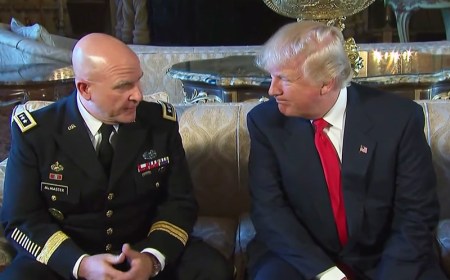
U.S. National Security Adviser, H.R. McMaster (left), recently argued against using the term “radical Islamic terrorism.” Pictured above: President Donald Trump appears with McMaster, on February 20, 2017. (Image source: PBS News video screenshot)

What is misleading, confusing, and “unhelpful” is classifying Muslims into categories. Relying on Islamic authorities who are not objective and use or misuse Islam for political purposes is even more misleading and “unhelpful.”

At least one senior Islamic cleric disturbed by this distinction is Sheikh Adil Al-Kalbani, former imam of the Grand Mosque in Mecca. A few months ago, he acknowledged with regret that, “they [ISIS] draw their ideas from what is written in our own books, from our own principles.”

He is correct. Classifying Muslims into categories is not only misleading; it feeds into the hands of those who try to obfuscate the dangerous nature of Islam as a political ideology.

Trump signs order aimed at opening Arctic drilling

April 28, 2017

Trump signs order aimed at opening Arctic drilling, Associated Press, Matthew Daly and Jill Colvin, April 28, 2017

It also directs Zinke to review the locations available for offshore drilling under a five-year plan Obama signed in November. The plan blocked new oil and gas drilling in the Atlantic and Arctic oceans. It also stopped the planned sale of new oil and gas drilling rights in the Chukchi and Beaufort seas north of Alaska, but allowed drilling in Alaska’s Cook Inlet southwest of Anchorage.

The order could open to oil and gas exploration areas off Virginia and North and South Carolina, where drilling has been blocked for decades.

**************************

WASHINGTON (AP) — Working to dismantle his predecessor’s environmental legacy, President Donald Trump signed an executive order on Friday aimed at expanding drilling in the Arctic and opening other federal areas to oil and gas exploration.

With one day left to rack up accomplishments before he reaches his 100th day in office, Trump signed an order reversing some of former President Barack Obama’s restrictions and instructing Interior Secretary Ryan Zinke to review a plan that dictates which federal locations are open to offshore drilling.

It’s part of Trump’s promise to unleash the nation’s energy reserves in an effort to reduce reliance on foreign oil and to spur jobs, regardless of fierce opposition from environmental activists who say offshore drilling harms whales, walruses and other wildlife and exacerbates global warming.

“This executive order starts the process of opening offshore areas to job-creating energy exploration,” Trump said during a White House signing ceremony. “It reverses the previous administration’s Arctic leasing ban and directs Secretary Zinke to allow responsible development of off-shore areas that will bring revenue to our treasury and jobs to our workers.”

“Today,” he said, “we’re unleashing American energy and clearing the way for thousands and thousands of high-paying energy jobs.”

The executive order reverses part of a December effort by Obama to deem the bulk of U.S.-owned waters in the Arctic Ocean and certain areas in the Atlantic as indefinitely off limits to oil and gas leasing.

It also directs Zinke to review the locations available for offshore drilling under a five-year plan Obama signed in November. The plan blocked new oil and gas drilling in the Atlantic and Arctic oceans. It also stopped the planned sale of new oil and gas drilling rights in the Chukchi and Beaufort seas north of Alaska, but allowed drilling in Alaska’s Cook Inlet southwest of Anchorage.

The order could open to oil and gas exploration areas off Virginia and North and South Carolina, where drilling has been blocked for decades.

Zinke said that leases scheduled under the existing plan will remain in effect during the review, which he estimated will take several years.

The order also directs Commerce Secretary Wilbur Ross to conduct a review of marine monuments and sanctuaries designated over the last 10 years.

Citing his department’s data, Zinke said the Interior Department oversees some 1.7 billion acres on the outer continental shelf, which contains an estimated 90 billion barrels of undiscovered oil and 327 trillion cubic feet of undiscovered natural gas. Under current restrictions, about 94 percent of that outer continental shelf is off-limits to drilling.

Zinke, who is also tasked with reviewing other drilling restrictions, acknowledged environmental concerns as “valid,” but he argued that the benefits of drilling outweigh concerns.

Environmental activists, meanwhile, railed against the signing, which comes seven years after the devastating 2010 BP oil spill in the Gulf of Mexico.

Diana Best of Greenpeace said that opening new areas to offshore oil and gas drilling would lock the U.S. “into decades of harmful pollution, devastating spills like the Deepwater Horizon tragedy, and a fossil fuel economy with no future.”

“Scientific consensus is that the vast majority of known fossil fuel reserves – including the oil and gas off U.S. coasts-must remain undeveloped if we are to avoid the worst effects of climate change,” she said.

Jacqueline Savitz of the ocean advocacy group Oceana warned the order would lead to “corner-cutting and set us up for another havoc-wreaking environmental disaster” in places like the Outer Banks or in remote Barrow, Alaska, “where there’s no proven way to remove oil from sea ice.”

“We need smart, tough standards to ensure that energy companies are not operating out of control,” she said, adding: “In their absence, America’s future promises more oil spills and industrialized coastlines.”

Muslim Michigan FGM Conspiracy Ran For 12 Years

April 28, 2017

Muslim Michigan FGM Conspiracy Ran For 12 Years, The Point (Front Page Magazine), Daniel Greenfield, April 28, 2017

(Don’t worry. “Feminists” will get around to considering the FGM problem as soon as gender-neutral pronouns replace old-fashioned male and female pronouns. Spanish speaking “feminists” have an even worse problem: all nouns reflect gender. Houses are female, water is male, etc ad infinitum. It may take them a bit longer to deal with female genital mutilation. — DM)

I wrote about this story earlier this month.

Operating out of a Livonia clinic, Jumana Fakhruddin Nagarwala abused unknown numbers of little girls. The end came when law enforcement traced calls to her from a Minnesota number.  Then they followed the trail to a hotel in Farmington Hills; a Michigan city at the center of an Islamic Center controversy.

It was Friday evening; the holy day of the Islamic week when Muslims are told to “leave off business” and “hasten to the remembrance of Allah.” That is what the two women leading two little girls to be mutilated thought that they were doing. Muslims believe that on Friday, angels stand outside the doors of mosques to record who shows up for prayer. But it was the hotel surveillance cameras that watched and recorded as the two little girls arrived, unaware of the horror that was about to happen to them.

The 7-year-old girl had been told that she was going to Detroit for a “special” girls’ trip. Instead her special trip turned into a nightmare. After the Muslim doctor allegedly mutilated her, she warned the child not to talk about what was done to her.

There have been two more arrests since.

Dr. Fakhruddin Attar is accused of letting Dr. Jumana Nagarwala perform mutilations at his Burhani Medical Clinic on Farmington Road. His wife, office manager Farida Attar, also was arrested and is accused of helping Nagarwala perform the mutilations, according to a 14-page complaint unsealed Friday in federal court

The complaint solves a mystery stemming from the case by pinpointing where Nagarwala allegedly mutilated two 7-year-old girls from Minnesota earlier this year. The complaint also describes a conspiracy involving at least Nagarwala, Attar and his wife — all three are members of the Dawoodi Bohra religious community based locally out of a Farmington Hills mosque.

We’re now getting hints of how persistent and enduring this abuse of little girls was.

Prosecutors say they believe there are many other victims. According to the seven-count indictment, the three defendants are part of a bigger conspiracy that ran from 2005 until this year, when a tip and a trail of electronic evidence led to their arrests.

We’re talking about a 12-year conspiracy and a potentially huge number of victims.

Ingraham to Hannity: Let’s tour liberal college campuses

April 28, 2017

Ingraham to Hannity: Let’s tour liberal college campuses, Fox News via YouTube, April 27, 2017


Does Judge Orrick Think President Obama ‘Fundamentally Transformed’ Executive Orders?

April 28, 2017

Does Judge Orrick Think President Obama ‘Fundamentally Transformed’ Executive Orders? PJ MediaAndrew C. McCarthy, April 28, 2017

Protesters hold up signs outside a courthouse where a federal judge will hear arguments in the first lawsuit challenging President Donald Trump’s executive order to withhold funding from communities that limit cooperation with immigration authorities Friday, April 14, 2017, in San Francisco. U.S. District Court Judge William Orrick has scheduled a hearing on Friday on San Francisco’s request for a court order blocking the Trump administration from cutting off funds to any of the nation’s so-called sanctuary cities. (AP Photo/Haven Daley)

William H. Orrick III is a Democrat campaign bundler and left-wing political activist. He has been known as “Judge Orrick” since 2013, when President Obama managed to get him on the federal bench — with the assistance of Republicans Senators Jeff Flake (Arizona), Lisa Murkowski (Alaska), and Susan Collins (Maine). All other Republicans opposed Orrick’s nomination, except Bob Corker (Tennessee) who failed to vote.

It was as Judge Orrick that the San Francisco-based social justice warrior issued a 49-page decision this week. His decision purported to invalidate President Trump’s executive order (EO) on federal funding for “sanctuary” jurisdictions — cities, counties and other municipal subdivisions that refuse to cooperate in federal immigration-law enforcement.

I say “purported” because Orrick’s screed is a ruling about nothing. The Trump Justice Department had argued that the EO did nothing to alter pre-existing law. Though Orrick tendentiously disputed this construction of the EO, he admitted that his opinion “does nothing more than implement” the Justice Department’s view. He further conceded that his ruling had no effect on the administration’s power to enforce conditions Congress has placed on federal funding (i.e., the very conditions Trump incorporated in the EO by telling his subordinates they could only act “to the extent consistent with law”). Meanwhile, the administration has not endeavored to strip any federal funding from any sanctuary jurisdictions.

So, in effect (or should we say, non-effect?), nothing has happened and nothing has changed. The ruling’s sole achievement is a fleeting star turn for its author. Actually, make that another star turn: In 2015, Judge Orrick thrilled the Democrat-media complex by carrying water for the National Abortion Federation, which wanted an injunction against a whistleblower’s release of videos showing Planned Parenthood officials selling baby parts — oh, sorry, I mean “fetal tissue.”

The ruling is instructive, though, as a measure of how politicized the judiciary has become. Consider the matter of executive orders.

Orrick’s opinion includes the following remarkable passage (at p. 16):

Government counsel explained that the [Executive] Order is an example of the President’s use of the bully pulpit and, even if read narrowly to have no legal effect, serves the purpose of highlighting the President’s focus on immigration enforcement. While the President is entitled to highlight his policy priorities, an Executive Order carries the force of law. Adopting the Government’s proposed reading would transform an Order that purports to create real legal obligations into a mere policy statement[.] [Emphasis added.]

Can it be that, after eight years of Obama’s usurpation of legislative power, judges have forgotten what proper executive orders are?

Contrary to Obama’s practice and Orrick’s apparent belief, executive orders do not carry the force of law — at least not presumptively. They are supposed to be policy statements that give presidential guidance to subordinate executive officials. That is because the president has no unilateral authority to decree law — it is for Congress to write the laws; the executive branch just enforces them.

Now, we have to qualify these principles with caveats like “presumptively” and “unilateral” because there are special situations in which executive orders may have the force of law. These occur when Congress delegates legislative authority to the president — a dubious practice but, alas, a familiar one.

Take, for example, the International Emergency Economic Powers Act. Under the IEEPA (which is codified in sections 1701 et seq. of Title 50, U.S. Code), the president is empowered to declare a national emergency due to a foreign threat to the United States, and to decree regulations and prohibitions on financial transactions pertinent to the threat, particularly transactions between Americans and hostile foreign powers.

But absent congressional authorization, presidents may not make pronouncements that have the force of law. In general, executive orders do not “create real legal obligations.” They can be said to create duties only in the sense that subordinate officials are supposed to obey directives from a superior. But that is a chain-of-command obligation, not a legal duty. Cabinet secretaries get fired if they defy presidential orders; they do not get prosecuted or sued. Legally, such defiance does not trigger a presidential obligation to terminate a subordinate – the president may fire executive branch officials for any reason, or no reason, for they serve at the president’s pleasure. Consequently, the president’s executive orders do not have the “force of law” even with respect to the subordinate government officials the president is legally authorized to direct. As for the rest of us, the president has no authority to impose legal obligations on us; only Congress may do that.

Judge Orrick seemed mystified by the notion that an executive order could be “a mere policy statement,” or a hortatory rendering of a president’s “policy priorities.” When the Justice Department’s lawyers explained — as if explanation were needed — that these were, in fact, the purposes of the EO, Orrick strangely claimed that Justice was reading the EO “narrowly.” (Apparently, “narrowly” is Ninth Circuit-speak for “accurately.”) Orrick then suggested that this “narrow” reading couldn’t possibly be what was intended by the president — i.e., that there was no way the EO could possibly mean what it says. Why? Because if it was just about announcing policy, the judge theorized, there would be no reason to issue an EO. From this asinine premise, Orrick leapt to the conclusion that Trump must instead be up to something sinister: a sweeping withdrawal of federal funding from sanctuary jurisdictions, heedless of any conditions Congress has attached to funding programs.

To the contrary, stating policy preferences and priorities is one of the basic and desirable reasons for issuing executive orders. It is an effective, transparent manner of communicating administration objectives to the executive branch and the public. It is not enough to say that Donald Trump is not the first president to use EOs this way. This is what EOs are for.

How have we gotten to the point where courts presume bad faith from the proper use of executive orders, and simultaneously imply that a normal executive order would have the force of law?

Of course, we are dealing with a “progressive” partisan here, so throw logic out the window. Can there be any doubt that, if Donald Trump were to issue an executive order that actually purported to create legal benefits and duties (like Obama administration directives on immigration did), Judge Orrick would write an equally indignant opinion about how executive orders must not have the force of law?

The irony is that Judge Orrick essentially did what he falsely accused President Trump of doing. Trump did not use his constitutional authority to issue executive orders as a pretext for usurping congressional power; but Orrick did use his constitutional authority to issue judicial opinions as a pretext for usurping executive power.

Landlord ordered to pay Muslim tenants $12k for failing to accommodate their religious practices

April 28, 2017

Landlord ordered to pay Muslim tenants $12k for failing to accommodate their religious practices, CIJ News, Ilana Shneider, April 27, 2017

Muslim couple in Toronto. Photo: CIJnew

An adjudicator with the Human Rights Tribunal awarded a Muslim couple $12,000 because of the couple’s claim that their Christian landlord discriminated against them based on their creed, failed to accommodate their religious practices and harassed them by creating a “poisoned housing environment”.

Over the course of two days, the Tribunal’s adjudicator, Jo-Anne Pickel, heard testimony from both sides, and on April 19, 2017, she ruled that the landlord, John Alabi, must pay $12,000 to Walid Madkour and Heba Ismail. In addition, the landlord must take the e-learning module on the Ontario Human Rights Commission’s website called “Human Rights in Rental Housing”.

The tenants had originally asked for $20,000. The landlord denied any discrimination.

Background:

The couple, who immigrated from Egypt to Montreal and later to Toronto, and who identify as Arab Muslims, testified that they practice their religion by praying five times a day. According to the husband, the prayers take between 7-10 minutes if he prays alone and up to 15 minutes if he prays with his wife. The couple prayed in the bedroom of the apartment they rented from the landlord because the bedroom was the cleanest room in the apartment. According to the couple, it is important to pray in a clean area that is free of any contamination, including any discharge from humans or animals.

According to the wife, a person cannot be absolutely certain that he or she did not step on discharge from animals or humans while walking outside. For this reason, according to the couple, practicing Muslims must remove their footwear when they pray.

The couple also testified that if someone interrupts their prayers, they lose focus and their prayers are “damaged”. The wife also said that if she was not at home or near a mosque, she would pray in her car as she always carried her prayer mat with her.

The wife, who has been wearing a hijab for approximately 20 years (since she was 13 years old), believes that she has the religious obligation to cover her hair and body in certain circumstances and that a woman should not be seen with her body or hair uncovered by men who are not blood relatives or their husbands.

The couple, who moved to Toronto in December, 2014, rented an apartment from the landlord, which was located in the same house where he lives. Approximately two months later, in February of 2015, after several disputes over apartment temperature, use of the internet, and the couple’s request for a quiet environment after 10 p.m., the landlord terminated the couple’s lease by mutual agreement and notified the couple that he will begin showing the apartment to prospective tenants after giving them notice 24 hours in advance, as required by the Residential Tenancies Act.

The husband then requested an additional “heads up” an hour before the showing in case he and his wife were “sleeping or whatever” and when the landlord replied that he had the right to show the apartment any time between 8 am and 8 pm, the husband replied that the landlord knew he and his wife were Muslim and had certain rules concerning what women wear.

The husband informed the landlord that if he came to show the apartment, he would need to wait at the door until the couple “got prepared”, and if there were any problems, the police would be the couple’s “last resort for such racism and violation of our civil rights”, to which the landlord texted: “Welcome to Ontario Canada”.

The wife testified that on January 29, 2015 she heard someone making a loud noise by pounding a shovel outside her apartment for about 15 to 20 minutes. She said she became scared because the landlord had never shoveled snow outside the apartment door before. The husband called the police because he was “concerned about the situation”. The police mediated the situation and the parties agreed that as a “courtesy”, the landlord will send the husband a text message 5 minutes before a showing, in addition to the 24-hour notice required under the Act.

On February 6, 2015, the husband added another element to the request for the second notice: he told the landlord that the couple prayed four times during the day, that each prayer took between 8 to 10 minutes, and that was one of the reasons he needed notice shortly before the viewing.

After a two-day testimony, the adjudicator ruled that:

  • The landlord failed to provide notice in addition to the 24-hour notice required under the Act before entering the apartment with prospective tenants, in order to enable the couple to finish their prayers. The adjudicator felt that the landlord’s refusal to provide notice other than the statutory notice had an “adverse effect” on the couple and “discriminated against the applicants on the basis of creed”.
  • The landlord made the couple feel “uncomfortable” and demonstrated religious discrimination when he failed to remove his shoes in the couple’s apartment after the couple explained to the adjudicator that “if someone wore outdoor shoes in their prayer space, they would have to wash the space several times to cleanse it”.
  • The landlord failed to notify the couple by text shortly before showing the apartment to prospective tenants, even though the couple had explained to him the reason for the requesting the second notice is because they pray at the apartment four times each day and each prayer takes between 8-10 minutes.
  • The landlord made “loud pounding” noises when shovelling snow outside, which the adjudicator felt were “at least partially related to the applicants’ request for accommodation”.
  • The landlord’s “Welcome to Ontario, Canada” text offended the couple. Even though the landlord explained that the comment was made in a completely different context, namely the difference between landlord and tenant law in Ontario and Quebec (where the couple lived prior to moving to Ontario), the adjudicator found that by including the word “Canada” in the text, the landlord was at least in part communicating to the couple that somehow they would have to adjust their religious practices or expectations regarding accommodation request. The adjudicator found the “Ontario, Canada” comment to be “linked to the applicants’ creed and/or place of origin”.
  • The couple wanted to admit into evidence a joke about a devout Arab Muslim which the landlord shared on his Facebook page. Even though the landlord explained that the only reason he shared the joke was because he found it funny, the Tribunal adjudicator felt it was “relevant to discerning his views on religiously-based accommodation requests by Muslims”.

According to the adjudicator, the tenants were “merely making simple requests for the accommodation of their religious practices” and did not attempt to “impose their way of life” on the landlord.

She accepted the couple’s claims that they felt “humiliated, disrespected and insulted” by the landlord’s actions, and the husband experienced “stress, loss of appetite and tiredness” because living in the apartment was “like living in a nightmare”.

The adjudicator took into consideration the wife’s claim that she was intimidated by the landlord’s “general demeanor”, such as failing to take off his outdoor shoes in their apartment.

She generally found the couple to be “more credible” than the landlord and preferred the couple’s evidence over the landlord’s due to inconsistencies of his evidence.

The adjudicator felt that the couple have a “sincere belief that women must wear modest attire around men who are not blood relatives or their husbands” and their special accommodation requests were sincere.

The couple were awarded $12,000 as compensation “for injury to dignity, feelings and self-respect.

Postmodernist deconstruction and how it is killing the West

April 28, 2017

Postmodernist deconstruction and how it is killing the West, Israel National News, Giulio Meotti, April 28, 2017

(Pogo had it right:

— DM)

We are our worst enemies. 

***********************

Muslims in Germany “have to accept our way of living,” German Finance Minister Wolfgang Schäuble said. And if they do not like European culture they took the “wrong” decision to come. “There are better places than Europe to live under Islamic law,” Schäuble said.

Why do we read and hear so few similar messages from the European ruling class? 

It is explained in a very brilliant essay titled “The Deconstruction of the West” published by American Interest and written by US historian Andrew Michta, head of the George Marshall European Center for Security Studies in Berlin. According to Michta, the major threat to the West is not Russia, China, nor even the jihadists, but the “self-induced deconstruction of Western culture.” Among the causes of the current “systemic change” there is a rarely evoked reason: “The collective fracture of the West.”

This has weakened Nato, it has induced the Russian aggression and the assault of radical Islam. “The West’s problem today is also not mainly the result of the economic decline of the United States or the European Union, for while both have had to deal with serious economic issues since the 2008 meltdown, they remain the two largest economies in the world, whose combined wealth and technological prowess are unmatched.”

The problem “is the West’s growing inability to agree on how it should be defined as a civilization. At the core of the deepening dysfunction in the West is the self-induced deconstruction of Western culture and, with it, the glue that for two centuries kept Europe and the United States at the center of the international system.”

Challenged by fascism, Nazism and communism, “the West emerged victorious, for when confronted with existential danger, it defaulted to shared, deeply held values and the fervent belief that what its culture and heritage represented were worth fighting, and if necessary even dying, to preserve.”

Today this conviction is under attack on many fronts. “Today, in the wake of decades of group identity politics and the attendant deconstruction of our heritage through academia, the media, and popular culture, this conviction in the uniqueness of the West is only a pale shadow of what it was a mere half century ago. It has been replaced by elite narratives substituting shame for pride and indifference to one’s own heritage for patriotism.”

Michta attacks an “ideological hollowing out of the West” which also explains the dominant multiculturalism. “Whether one gives the deconstruction of the Western nation-state the name of postmodernism or globalism, the ideological assault on this very foundation of the Western-led international system has been unrelenting.”

Here comes the jihad. “It is no surprise that a poorly resourced radical Islamic insurgency has been able to make such vast inroads against the West, in the process remaking our societies and redefining our way of life.” But Michta concludes: “The greatest threat to the security and survival of the democratic West as the leader and the norm-setter of the international system comes not from the outside but from within.”

We are our worst enemies.

This cultural collapse, the “deconstruction,” emerges from the portrait of one of the most prominent artist in the United States, Catherine Opie, just published by the New Yorker: “In the course of a thirty-year career, the photographer Catherine Opie has made a study of the freeways of Los Angeles, lesbian families, surfers, Tea Party gatherings, America’s national parks, the houses of Beverly Hills, teen-age football players, the personal effects of Elizabeth Taylor, the Michigan Womyn’s Music Festival, Boy Scouts, her friends, mini-malls, and tree stumps.”

But her most famous photograph is the 1994 “Self-portrait”, exposed at Guggenheim: the topless artist, an opulent gold drape in the background, the steel pins sticking in her arms, the bondage hood that conceals her face and that word engraved on the chest: “Pervert”.

So awful, so sad.

The postmodern world really has become sad. And it is killing the West.

Iran in Syria: A Gathering Storm?

April 28, 2017

Iran in Syria: A Gathering Storm? Front Page MagazineP. David Hornik, April 28, 2017

A cyber attack on Israel, arms shipments to Hizballah, and provocative moves against the U.S. navy are—among much else—all in a week’s work for Iran. 

Israeli officials are, though, well aware that the current administration has a much more sober view of the problem than the previous one, and more hopeful that, this time around, the forces of civilization will push back against a regime that has been sowing discord and death for almost four decades.

****************************

The Iranian regime, as it has made clear in countless threats, rallies, and missile displays, wants to destroy Israel, the “Little Satan.” 

Given Israel’s military might and, according to foreign reports, nuclear arsenal, Iran’s goal is probably unattainable. But the nearer Iran gets—or perceives itself to get—to that goal, the more warfare and instability is likely to ensue.

At present, thanks to Syria’s collapse into civil war and the Obama administration’s—at best—inept policy there, Iran is within reach of establishing a permanent military presence to Israel’s north—a surefire recipe for ongoing struggle and menace.

Israeli officials, Reuters reports, now estimate that Iran “commands at least 25,000 fighters in Syria, including members of its own Revolutionary Guard, Shi’ite militants from Iraq and recruits from Afghanistan and Pakistan.”

Iran is also reportedly seeking a naval base in Syria, and, if it gains a lasting foothold in Israel’s northern neighbor, will undoubtedly want an airbase there as well.

The Reuters report notes that Israeli intelligence minister Yisrael Katz has been on Capitol Hill urging stepped-up U.S. threats and sanctions on Iran and its Lebanese proxy Hizballah. Israel wants Russia to rein in Iran, too—though whether Russia is willing is still in dispute.

Of particular concern are Iran’s efforts to establish a beachhead for itself and Hizballah on the northern Golan Heights, directly across the border from the Israeli-controlled southern Golan.

Two years ago an Israeli airstrike on the northern Golan killed both Hizballah and Iranian commanders seeking to build a terror network there. Israel remains acutely concerned that such efforts will continue.

Iran’s naked aggression toward Israel was in evidence this week in a different kind of attack. The Israeli daily Haaretz reports:

Cybersecurity experts are convinced that Iran is behind the large-scale cyberattack revealed Wednesday by Israel’s Cyber Defense Authority. The attacks have been identified as being carried out by a hacker group known as OilRig, which has been tracked to Iran and is believed to be financed and directed by one of the Islamic Republic’s intelligence agencies.

OilRig…is known to have attacked in both government and private sector targets the past, focusing primarily on Saudi Arabia, Turkey, the United States and Israel.

The recent attacks were aimed at at least 120 Israeli targets, including private companies, government departments, research institutes and hospitals…. It is unclear at this point whether the attack had any specific targets beyond creating damage in Israeli computer networks, and the extent of that damage is still being assessed.

Other reports, like this one, claim the cyberattack was successfully thwarted.

What is not in doubt is that the—for now—low-level war between Iran and Israel is not only continuing but intensifying. On Thursday it was reported that Israeli missiles fired from the Golan Heights hat hit and destroyed Iranian arms supplies in a Hizballah depot near Damascus International Airport.

Intelligence Minister Yisrael Katz, mentioned above, appeared to confirm that Israel was behind the strike, saying it “exactly matches our declared policy.”

Iran’s harassment of a U.S. warship in the Persian Gulf this week suggests that its cockiness toward the “Great Satan,” too—after a period when it seemed to have waned—is returning.

A cyber attack on Israel, arms shipments to Hizballah, and provocative moves against the U.S. navy are—among much else—all in a week’s work for Iran.

Israeli officials are, though, well aware that the current administration has a much more sober view of the problem than the previous one, and more hopeful that, this time around, the forces of civilization will push back against a regime that has been sowing discord and death for almost four decades.