Archive for April 12, 2017

A Shoe Drops: Obama Administration Spied on Carter Page [Updated]

April 12, 2017

A Shoe Drops: Obama Administration Spied on Carter Page [Updated], Power Line, John Hinderaker, April 11, 2017

[E]ver since the Inauguration the Democratic Party, especially its press wing in Washington and New York, has relentlessly pushed the Trump/Russia story. What story? There isn’t one. But that hasn’t stopped Democrats in the press from talking about little else for the last three months.

And yet, all along, the Democrats have known that their spying produced nothing. This whole story is almost unbelievably sordid. The relevant Congressional committees should investigate thoroughly, and criminal prosecutions should follow where laws have been broken.

****************************

I assume this Washington Post story is true: “FBI obtained FISA warrant to monitor former Trump adviser Carter Page.” It confirms what has been sporadically reported since late last year, that the Obama administration sought and ultimately received a FISA order to spy on at least one associate of Donald Trump. So Trump’s famous tweets were, in substance, true.

The FBI obtained a secret court order last summer to monitor the communications of an adviser to presidential candidate Donald Trump, part of an investigation into possible links between Russia and the campaign, law enforcement and other U.S. officials said.

Do the leaks come from the same Obama administration holdovers who have leaked in the past, trying to get ahead of disclosures that will confirm that President Trump’s suspicions were correct? Or do they come from officials appointed by Trump? I don’t know, but the Post’s illicit sources are pretty much always Democrats.

The FBI and the Justice Department obtained the warrant targeting Carter Page’s communications after convincing a Foreign Intelligence Surveillance Court judge that there was probable cause to believe Page was acting as an agent of a foreign power, in this case Russia, according to the officials.

That’s a strong charge, but I doubt that there is evidence to support it. Carter Page “worked in Moscow for Merrill Lynch a decade ago and … has said he invested in Russian energy giant Gazprom.” He never had any official association with the Trump campaign, but has been referred to as an “informal adviser.” He has asked to testify before a Congressional committee to clear his name.

The current leakers, whoever they are, described the Obama administration’s FISA application in detail. Or else the Post reporters have seen it.

The government’s application for the surveillance order targeting Page included a lengthy declaration that laid out investigators’ basis for believing that Page was an agent of the Russian government and knowingly engaged in clandestine intelligence activities on behalf of Moscow, officials said.

Among other things, the application cited contacts that he had with a Russian intelligence operative in New York City in 2013, officials said. Those contacts had earlier surfaced in a federal espionage case brought by the Justice Department against another Russian agent. In addition, the application said Page had other contacts with Russian operatives that have not been publicly disclosed, officials said.

The Obama administration was already trying, last Summer, to find evidence that Russia’s government was “meddling” in our presidential election:

The application also showed that the FBI and the Justice Department’s national security division have been seeking since July to determine how broad a network of accomplices Russia enlisted in attempting to influence the 2016 presidential election, the officials said.

I find it hard to believe that Russia’s rulers, from Vladimir Putin on down, wanted to help elect a president who vowed to rebuild America’s dwindling military strength, and to put America first, in place of an administration that was consistently supine in the face of Russian aggression and was borderline anti-American. Possibly Putin and his advisers are that dumb, but I doubt it.

In any event, the Obama administration failed to find any evidence that anyone associated with Trump was somehow cooperating with the Russians–not even a “junior member of the [Trump] campaign’s foreign policy advisory group,” as Page described himself. If they had, we would have learned about it long before now.

We haven’t heard the last of this story, but for the moment one thing is clear: a great many people, inside and outside of the media, owe President Trump an apology. Assuming that President Obama knew of, and approved, the FISA application–a safe assumption, I think–Trump’s much-reviled tweet was true:

Obama had my “wires tapped” in Trump Tower just before the victory. Nothing found.

How much of this Trump knew all along is, at this point, unclear.

UPDATE: We are now starting to get a picture of how sinister this whole Democratic Party misinformation campaign is. Through the last half of 2016, the Obama administration was desperately searching for evidence of some link between the Trump presidential campaign and Russia. They went to the length of seeking (twice, reportedly) and finally obtaining a FISA order that allowed them to spy on at least one insignificant Trump associate.

In addition, we now know that Susan Rice headed up an operation whereby raw NSA intelligence was sifted for names of Trump associates, no doubt in hopes of uncovering dirt of some sort.* And we also know that these efforts came up dry. The Obama administration found no compromising information about Trump or any of his associates.

Nevertheless, ever since the Inauguration the Democratic Party, especially its press wing in Washington and New York, has relentlessly pushed the Trump/Russia story. What story? There isn’t one. But that hasn’t stopped Democrats in the press from talking about little else for the last three months.

And yet, all along, the Democrats have known that their spying produced nothing. This whole story is almost unbelievably sordid. The relevant Congressional committees should investigate thoroughly, and criminal prosecutions should follow where laws have been broken.

It is time to get to the bottom of the Obama spy scandal.
___________________________

* All of this is reminiscent of Watergate, in this sense: after the fact, no one could figure out why the Plumbers bugged the Democratic National Committee, given that President Nixon was obviously going to be re-elected anyway. (The answer to that question may still be unknown, but that is another story.) Similarly, Barack Obama and his minion Susan Rice no doubt were confident that Hillary Clinton would win the election and serve Obama’s third term. Yet, they weren’t taking any chances.
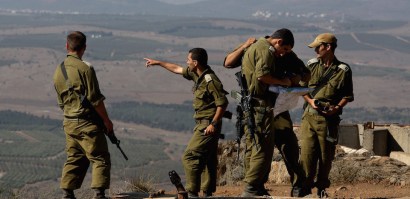

Israel Isn’t a Fan of the Trump Doctrine | Foreign Policy

April 12, 2017

Source: Israel Isn’t a Fan of the Trump Doctrine | Foreign Policy

Israel Isn’t a Fan of the Trump Doctrine

Israel’s public response to the U.S. strike on Syrian President Bashar al-Assad’s regime last week was unambiguous. It praised President Donald Trump’s decision to fire cruise missiles on a Syrian air base near the city of Homs in retaliation for the regime’s use of chemical weapons to slaughter dozens of civilians in the town of Khan Sheikhoun. Israel had been critical of the Obama administration’s performance in the Middle East, and the recent strike gives Israelis reason to hope that maybe, just maybe, the United States is ready to take a tougher stance against clear violations of international law.

But Israeli officials’ public praise for the attack contrasts sharply with their privately expressed skepticism that Washington has carefully thought through its next steps in Syria. They are perfectly aware that Trump’s decision may have been driven by personal motives — notably his desire to prove that he is stronger than his predecessor, and his need to distance himself from allegations of Russian manipulation in the presidential election. From Israel’s perspective, that’s no replacement for a coherent strategy for the region.

Israeli officials were out in front of the Trump administration in laying the blame for the Khan Sheikhoun attack at the feet of the Assad regime and demanding a forceful response. Hours after the attack, Israeli intelligence officers already told me that they were convinced that senior members of the regime were involved in the decision to strike. On Thursday, Israeli Defense Minister Avigdor Lieberman claimed in an interview with the Ydiot Aharonot newspaper that Assad had personally approved the use of sarin gas in the attack, and Prime Minister Benjamin Netanyahu called on the international community to complete its effort to eliminate Syria’s chemical weapons stockpile.

The remarks by Lieberman, a former citizen of the Soviet Union — the defense minister emigrated from Moldova to Israel in the late 1970s — particularly irritated the Kremlin. According to Russian media, President Vladimir Putin called Netanyahu to complain.

Israeli and Russian officials have gone to great lengths to avoid confrontation in Syria. Putin and Netanyahu met five times during the past 18 months, mainly to discuss the situation in Syria. But evidently the tone in the latest phone conversation wasn’t so friendly. It is not difficult to understand why. During the first two days after the chemical attack, the Russians were busy spreading disinformation and blaming Syrian rebels for releasing the poisonous gas.

Geography may have something to do with Israel’s more aggressive posture toward the ongoing disaster in Syria. The events are happening in Israel’s backyard and could have direct implications on its security. Israeli intelligence officers are obliged to remain on much higher alert about developments in Syria, and the Israeli cabinet is expected to meet this week to discuss a renewal of distribution of gas masks to the Israeli population, in light of last week’s events.

In the past six years, Israel’s leadership has been generally wise enough to remain on the sidelines of the Syrian conflict, participating only to the extent it deemed absolutely necessary. Early in the war, Netanyahu defined Israel’s red lines. There would be a military response for every attack into Israeli territory, even for unintentional spillover, and the Israel Defense Forces would act to prevent any transfer of chemical weapons or sophisticated weapons systems from Syria to Hezbollah. Unlike former President Barack Obama, Netanyahu stuck to his red lines.

International media outlets have reported dozens of Israeli airstrikes against weapons depots and convoys during the past several years. When asked about this, however, Israeli officials usually shrug and say nothing.

The idea behind such “constructive ambiguity” is that the Assad regime may not be motivated to escalate further if it isn’t embarrassed publicly.

The idea behind such “constructive ambiguity” is that the Assad regime may not be motivated to escalate further if it isn’t embarrassed publicly.Russia’s intervention to save the Assad regime in the fall of 2015 complicated matters for the Israelis. Putin and Netanyahu decided to establish a de-conflicting mechanism in order to prevent air battles between the two sides. But the Russian deployment of anti-aircraft systems and long-range radars in the Hmeymim air base in northwestern Syria now means that it can spot any movement of Israeli planes beginning at the southern Israeli city of Beersheba. Most of Israel’s air bases are in the north, giving Moscow unprecedented knowledge of Israeli air activity.

Israeli officials are also worried that Assad’s growing military strength could transform the balance of power in southern Syria. If the Syrian army tries to drive the Sunni rebels out of the Golan border area near Israel, its allies — Iranian-backed Shiite militias, Hezbollah, even the Islamic Revolutionary Guard Corps (IRGC) — may not be far behind. This would allow Iran to double the border area it could use as a base from which to hit Israel, in addition to southern Lebanon.

Netanyahu has told both Putin and Trump that such a development would be dangerous to Israel’s security interests. He also expressed concern about Iran’s apparent attempt to lease a Syrian harbor on the Mediterranean coast, the same way Russia leases the port in the Syrian city of Tartous. This seems to be part of a larger Iranian strategy. According to a Kuwaiti newspaper, the IRGC recently built an underground production line for missiles and rockets in southern Lebanon and handed it to Hezbollah.

Assad’s regained confidence may have sparked a recent confrontation with Israel. On March 17, Israeli warplanes struck a weapons depot near Palmyra, and Syrian anti-aircraft systems shot back with SA-5 missiles. Although the missiles missed their targets, one entered Israeli airspace near the Jordanian border. Israel used its Arrow system to intercept the missile. When parts of the intercepting missile landed in the Jordanian town of Irbid, Israel embarrassed its closest ally in the region, King Abdullah. In order to prevent claims that Jordan was ignoring an Israeli attack, Jerusalem had to explain itself — and publicly admitted for the first time that it was bombing weapons convoys in Syria.

If Israel hopes to constrain the potential threats it faces in Syria, it needs the help of the United States.

If Israel hopes to constrain the potential threats it faces in Syria, it needs the help of the United States. Netanyahu understands that Trump is unpredictable and may be offended by the slightest insult. This is why the Israeli premier made such quickly accepted the president’s demand over certain restraints on building West bank settlements. Netanyahu will now probably try to persuade Trump to stop leaving diplomatic negotiations on Syria entirely to the Russians. At the same time, he will emphasize Israeli priorities: blocking Iran’s resurgence, weakening the Assad regime, and, most importantly, preventing Iranian proxy forces from entering the border area in the Golan Heights.On Sunday, Russia and Iran threatened to retaliate against any further strikes in Syria. The joint statement should also concern Israel: Does this include strikes against Hezbollah’s weapons convoys?

But don’t expect Israel’s suggestions to Trump about Syria to go beyond an insistence that Israeli interests, narrowly conceived, be taken into account. The Israeli government is well aware of the mess that Syria has become. As Amos Yadlin, a former head of Israel’s military intelligence, put it: “[T]he Syrian cube is harder to solve than Rubik’s. It seems no matter what you do at least one face would remain out of place.”

