Archive for April 7, 2017

The Message in the Missiles

April 7, 2017

The Message in the Missiles, Power Line, Scott Johnson, April 7, 2017

Last night President Trump authorized the destruction of the air base from which the Syrian butcher Assad had launched insidious sarin gas attacks earlier this week. Our destruction of the air base was executed through the use of 59 Tomahawk cruise missiles. I strongly support President Trump’s authorization of the action. As the great William F. Buckley, Jr. used to say, herewith a few observations:

1. Asked about the gas attacks in a Rose Garden press conference with Jordan’s King Abdullah on Wednesday, President Trump had responded: “It crossed a lot of lines for me. When you kill innocent children, innocent babies, babies, little babies, with a chemical gas that is so lethal, people were shocked to hear what gas it was, that crosses many, many lines, beyond a red line. Many, many lines.”

Trump’s language harked back to President Obama’s bloviation on Syria, but he wasn’t done. He went on specifically to cite Obama’s empty threat regarding Assad’s use of chemical weapons. “I think the Obama administration had a great opportunity to solve this crisis a long time ago when he said the red line in the sand,” Trump said. “And when he didn’t cross that line after making the threat, I think that set us back a long ways, not only in Syria, but in many other parts of the world, because it was a blank threat. I think it was something that was not one of our better days as a country.”

I read President Trump’s statement as the predicate of some form of military reprisal by the United States against Assad. Thus it proved to be.

2. Like President Reagan when he fired the striking air traffic controllers in 1981, President Trump sent several messages with the action taken last night. Here are three of them. The Obama era in American foreign policy is over. He doesn’t issue empty threats.

3. President Obama sought to tie the United States down in the world like the Lilliputians did Gulliver. Among the instruments employed by Obama to restrain the United States was the United Nations. President Trump gave the United Nations the opportunity to weigh in yesterday. When it failed to act, Trump proceeded. Again, the Obama era in foreign policy is over.

4. Trump acted with decisive force to achieve a limited objective. He could have gone further to remove more of Assad’s assets. If the goal was limited to deter Assad from doing what he did again, however, I think it highly likely that the mission was accomplished.

5. President Trump also had an unstated messaged for Iran and North Korea. See note 1 above.

6. President Obama put us in bed with Putin and empowered Russia in Syria with the supposed object of removing Assad’s chemical weapons. The agreement entered into by Obama was a complete and utter fraud. One might think that we would revisit this chain of events and pronounce it a scandal and a disgrace. Apparently not.

7. One might think that the attack on Putin’s Syrian ally would put paid to the line of the Democrat/Media Axis that Trump is somehow Putin’s lapdog, but one might think wrong.

8. President Obama and Secretary Kerry entered into the agreement with Russia to remove Syria’s chemical weapons in September 2013, not even four years ago. Yet it has conveniently disappeared from our collective memory as completely as the Wilmot Proviso and the Bland-Allison Act.

9. President Trump had the lawful authority to do what he did yesterday without congressional approval. It was akin to President Reagan’s 1986 bombing of Libya. Obama’s war to remove Qaddafi in Libya — now that was a problem. Last night, however, Trump acted well within his authority.

10. The Trump crew made a mistake advertising their intent to indulge the continuation of the Assad regime’s before the chemical attacks. They may have contributed to Assad’s brazen crime. It should also be noted, however, that the timing coincided with the two-day summit in Brussels, Belgium where European Union leaders had assembled to discuss funding commitments to support war-torn Syria. One knowledgeable observer called the Assad’s chemical attacks “a direct insult” and warning from Assad: you will keep paying and I will keep killing.


Trump strikes Assad and sends the world a message

April 7, 2017

Trump strikes Assad and sends the world a message, Israel National News, Jack Engelhard, April 7, 2017

(Chinese President Xi Jinping was honored with a huge fireworks display, setting the tone for his discussions with President Trump about such stuff as North Korea and the disputed islands in the South China Sea. Comrade Xi probably could not see it in far-away Syria, but if he didn’t get the message perhaps another fireworks display can be arranged in his honor just to the south of China’s border with North Korea. — DM)

Everything changed last night and the world will never be the same after President Donald Trump ordered the military to take action against Syrian dictator Bashar al-Assad. Two Navy warships fired 50 Tomahawk missiles upon a Syrian airfield from which chemical weapons were dropped on civilians, killing some 80, including children.

It was the slaughter of children that provoked Trump and led him to change his mind about interfering with force in the throes of Syria’s civil war – though he was critical of Obama for declaring a red line during a previous chemical assault but that saw no action from Obama.

Trump sent a message to Assad that indeed there’s a new sheriff in town. At the same time, Trump alerted the nations that this President means business and that the days of taking the United States for granted are over. His UN envoy Nikki Haley has been his voice of change at the UN – warning the nations that the United States has had its fill of Israel bashing while ignoring war crimes throughout the rest of the world.

In his message last night, Trump vowed to stop Assad and asked the civilized world to join him in eradicating terrorism everywhere.

He did not mention North Korean dictator Kim Jong-un. But that is one Supreme Leader that got a wake-up call, as did every other tyrant.

World leaders everywhere will now have to think twice before going ahead rashly. This includes Putin.

Americans got the news at around 8 pm last night. Full coverage was immediate throughout the cable networks.

CNN bested Fox news with sharper and more immediate facts and analysis. Anderson Cooper was factual and let the experts speak.

Fox News’ Shepard Smith was unable to mask his disdain for the President and kept interrupting his analysts with critical and inappropriate asides.

This was no time for backstabbing, but there was more of it on MSNBC.

A time like this, our military in action, is no time for bickering. The news media, so hostile to Trump from day one, will have to find a new voice in which to speak to America, whether Trump speaks their political language or not. Americans won’t tolerate divisiveness while our servicemen are in hostile waters – and certainly not when the job is about putting a stop to the random killing of infants.

For Israel there is a dark undercurrent to Trump’s response. The Palestinian Arabs who’ve been waging terrorism against Israel throughout the years, namely the PA and Hamas, have surely taken note at Trump’s heightened sensibilities toward children – they watch and they learn.

They learn that harming infants is one way to get at Trump, and so Israel must be prepared for a Gaza war aimed not to defeat Israel by arms, but through bombing Israeli towns and villages, and creating terror on the streets, drawing the IDF into a conflict that leaves Israel no choice but to move in at all costs. Otherwise the risk to the Jewish State would be unbearable.

Hamas has perfected the use of human shields to wage warfare through soliciting sympathy…with the PA’s Mahmoud Abbas cheering on.

They did it three times previously – 2008, 2012, 2014.

Hamas and the PA care nothing for the number of children that get killed, Jewish children and even their own children – if it makes a point.

So that’s Israel’s challenge against this epidemic of terrorism that has spread throughout the world.

Trump’s world is a new world and we all better start getting used to it, for the best we trust, and so far, so good.

Iran Will Not Cancel The JCPOA – Because It Grants Iran Nuclear State Status And Is A Western Guarantee For The Regime’s Survival

April 7, 2017

Iran Will Not Cancel The JCPOA – Because It Grants Iran Nuclear State Status And Is A Western Guarantee For The Regime’s Survival, MEMRIA. Savyon and Yigal Carmon* April 6, 2017

(Cf. The Real War in ‘Syria’ and the Strategy for Long-Term Victory. — DM)

Introduction

The JCPOA grants the Iranian regime two historic achievements – the status of a nuclear state and immunity against a Western attack due to its nuclear development. This is effectively a Western guarantee of the Islamic Republic regime’s survival. These achievements cannot be cancelled unless the agreement itself is declared invalid.

Iranian spokesmen have stressed that even if President Trump’s administration cancels the agreement, the agreement cannot be cancelled – because Iran, in its prescience, involved the EU and the UN in backing the agreement. Even if the U.S. alone were to cancel the agreement, it would still remain in force – that is, Iran’s status as a nuclear state would remain.

Iranian President Hassan Rohani stressed, for example, at a November 11, 2016 cabinet meeting, the day after Trump was elected president, that there was no way to cancel the agreement. He said: “Iran’s wisdom in the nuclear agreement was in the fact that it had the JCPOA approved as a UN Security Council resolution, and not as a [bilateral] agreement with a particular country or administration. Therefore, it will not be changed by any decision by a particular administration.”[1]

Following the JCPOA’s Implementation Day, in January 2016, and even previously, Iranian regime officials repeatedly warned that if the U.S. violated the agreement, and especially if more sanctions were leveled against Iran, Iran would cancel the agreement and revert to the status quo that existed before the agreement, and would even advance beyond it?

For example, an October 21, 2015 letter of guidelines from Iranian Supreme Leader Ali Khamenei to President Rohani constituting “conditional approval” for the agreement stated: “Throughout the eight-year period, any imposition of sanctions at any level and under any pretext (including repetitive and reiterated pretexts of terrorism and human rights) on the part of any of the countries party to the agreement will constitute a violation of the JCPOA and the [Iranian] government would be obligated to take the necessary action as per Clause 3 of the Majlis resolution and stop the activities mandated by the JCPOA.”[2]

Iran Is Changing Its Policy – From Threats To Cancel The Agreement To Threats Of A Parallel Response

However, after the U.S. leveled additional sanctions against Iran, during both the Obama and Trump administrations, it became clear[3] that Iran was not going to implement its threats. Instead, Iran presented a new formula that does not obligate it to abrogate the agreement, as it previously threatened. The new formula determined that the Iranian regime would respond to any U.S. violation of the agreement with its own parallel violation.

Indeed, on March 26, 2017, after the U.S. State Department’s March 24, 2017 announcement of new sanctions against companies and individuals connected to Iran’s missile program, Iran’s Foreign Ministry announced counter-sanctions against 15 U.S. companies. Additionally, in response to the Countering Iran’s Destabilizing Activities Act of 2017, currently under consideration in the U.S. administration and the U.S. Senate designating Iran’s Islamic Revolutionary Guards Corps as a terrorist organization, Majlis National Security Committee chairman Ala Al-Din Boroujerdi announced, on March 25, 2017, that the committee would present to the Majlis a plan to designate the CIA and U.S. Armed Forces as terrorist organizations, to be carried out after the March 21 Iranian Norouz holiday.[4]

On April 3, 2017, Iranian Foreign Minister Javad Zarif reiterated: “If the moment comes that the Americans are not implementing the JCPOA, our reversion [to the pre-JCPOA situation] will be very swift, and we will arrive at even more than what we once had… We have enough guarantees for the day when the [Iranian] regime decides and feels that the level of America’s breaking of its promises is so high that we must revert to the pre-JCPOA [situation]. But it does not appear to me that this will happen.” [5]

It should be noted that in his threats about the possibility of Iran’s reversion to the status quo that existed prior to the agreement, Zarif does not set out any red line or specific condition whose violation will oblige Iran to cancel the agreement. Instead, he states that Iran will act “when it feels” that the U.S. is ratcheting up its level of violations against Iran. Furthermore, Zarif adds that such a situation, in his assessment, will not occur.

Iran’s backing down from its previous threats and warnings regarding the JCPOA’s continuing validity even if the U.S. cancels it is testimony to the agreement’s historic importance for the Iranian regime. In our assessment, Iran will not cancel the agreement even if the U.S. continues to level sanctions against the country, even if it is involved in military action against Iranian interests. Iran will not cancel an agreement that endows it with nuclear-state status and that constitutes a guarantee of the regime’s survival and provides immunity from a Western attack aimed at regime change. These historic achievements for Iran were granted to it by the Obama administration by means of the JCPOA.

Needless to say, the threat to revert to the pre-JCPOA situation is in itself an empty threat, because if the regime does this, it will bring itself back to a situation defined by then-U.S. Secretary of State John Kerry as “a two-month [nuclear] breakout time.”[6] By doing so, it will bring closer the risk of attack by the West.

The JCPOA – A Tool To Ensure The Survival Of The Iranian Regime

The Iranian regime is clinging to the JCPOA because this agreement guarantees its survival. President Obama promoted the Iranian regime from the status of a “defendant state”, subject to Security Council sanctions for its nuclear program, to the status of a legitimate nuclear state that can negotiate with the rest of the world powers over upgrading its nuclear activity.

The existential threat that led Supreme Leader Ali Khamenei to revive Iran’s nuclear project in 2002, (after the founder of the Iranian Revolution, Ayatollah Ruhollah Khomeini, stopped the country’s Shah-era nuclear project), was the threat to the regime’s survival. The regime was under threat both from being attacked directly by the West, with the aim of bringing about regime change, and indirectly by mobilizing opposition elements at home, which the regime labeled “fitna” – such as the fitna – i.e. civil unrest – following the 2009 presidential election, which it suppressed. For this reason, Khamenei, during the negotiations for the JCPOA, demanded that the U.S. stop the American broadcasts in Farsi to Iran, suspend its political and economic support for Iranian opposition groups, and stop criticizing Iranian censorship of the Internet – all three demands pertain to regime survival (see MEMRI Inquiry and Analysis No. 837, Khamenei’s Aim at the Nuclear Talks – Securing the Survival of His Regime, May 15, 2012).

With the JCPOA, Khamenei gained a double achievement, assuring both the survival of his regime and Iran’s membership in the nuclear club. The Iranian regime’s original aim in pursuing the JCPOA was to guarantee the survival of the regime in the face of all the possible threats, from within and without – and was not intended to obtain massive economic aid nor to bring Iran into the Western economy in order to ease its people’s economic distress – which Khamenei intends to do with the “resistance economy,” the main thrust of which is self-reliance and rejection of economic cooperation with the West and foreign investment in Iran.

Iran’s nuclear status, promised to Khamenei by the Obama administration in the agreement that is backed by Europe, allows him to both continue to repress the Iranian people and to continue exporting the Iranian Revolution in the region.

*A. Savyon is Director of the MEMRI Iranian Media Project; Yigal Carmon is President of MEMRI.

______________________

[1] ISNA (Iran), November 9, 2016.

[2] MEMRI Inquiry and Analysis No. 1196, Iranian Supreme Leader Khamenei’s Letter Of Guidelines To President Rohani On JCPOA Sets Nine Conditions Nullifying Original Agreement Announced July 14, 2015, October 22, 2015.

[3] Tasnim (Iran), March 26, 2017.

[4] IRIB (Iran), March 25, 2017.

[5] Farsnews (Iran), April 3, 2017.

[6] http://www.huffingtonpost.com/entry/john-kerry-iran-israel_us_55b22b45e4b0224d8831d360
The Real War in ‘Syria’ and the Strategy for Long-Term Victory

April 7, 2017

The Real War in ‘Syria’ and the Strategy for Long-Term Victory, PJ MediaMichael Ledeen, April 6, 2017

(Iran is ripe for regime change and the sooner the better. Please see also, Iran’s Elections: A Breaking Crisis? and All 15 Arab Summit resolutions blast Iran.– DM)

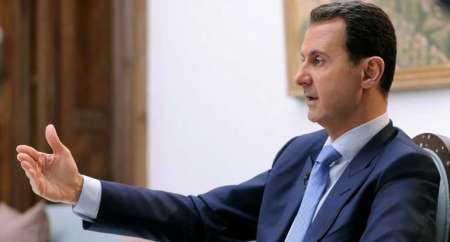
Syria’s President Bashar al-Assad (Reuters, RTX34BQA)

Punishing Assad would be satisfying, but we’ve got a big war to win. It’s smarter and more effective to go after the regime in Tehran. Not militarily, but rather supporting the tens of millions of Iranians who detest the Khamenei regime. Call it political warfare, or subversion, or democratic revolution. It worked against the Soviet Empire, and there are good reasons to believe it would work in Iran as well. Most Iranians, suffering under the failed regime, want a freely chosen government that will address their problems instead of dispatching their husbands and sons sent to the battlefield.

Regime change in Iran would be devastating to Assad and Putin, and its positive effects would be felt in North Africa and our own hemisphere, striking at the Revolutionary Guards and Hezbollah in Latin America. And it would remind the tyrants that America’s greatest weapon is political. We are the most revolutionary country in the world, and we should act like it.

****************************

Of course I loathe Assad. And of course I despise the Obamans for that phony red line and the subsequent retreat-and-bogus-Russian-deal. But just carrying out vengeance against Assad isn’t good enough. It fails to address the central problem of our time: the global anti-American alliance.

There is no Syria any more, and the enemy forces on the Middle Eastern battlefield come from various jihadi groups, and three regimes: Moscow, Tehran, and Damascus. We have to defeat them all, and other members of the enemy alliance, including Cuba and North Korea. Nikki Haley has it right: “The truth is that Assad, Russia and Iran have no interest in peace.”

Indeed, they are waging war, and the principal force driving that war is not Assad, but Iranian Supreme Leader Ali Khamenei. Khamenei’s killers have been alongside Assad’s from the very beginning, as the survival of the Syrian dictator is crucial to Iranian ambitions and quite likely also the survival of the Islamic Republic itself. Listen to Defense Secretary James Mattis a few days ago (from Reuters):

Asked about comments Mattis made in 2012 that the three primary threats the United States faced were “Iran, Iran, Iran,” Mattis told reporters that Iran’s behavior had not changed in the years since.

“At the time when I spoke about Iran I was a commander of US central command and that (Iran) was the primary exporter of terrorism, frankly, it was the primary state sponsor of terrorism and it continues that kind of behavior today,” Mattis said.

True, and Mattis’ characteristically strong language points the way to the best American action in the region, namely bringing down the Tehran regime. Lashing out at Assad isn’t nearly good enough. After all, what strategic objective would we accomplish by smashing, even removing, Assad? The Iranian and Russian fighters would still be there, as would the Islamist forces. The demands on our military would dramatically expand. We do not want to occupy a significant land mass in what used to be called Syria, nor do we seem to have sorted out what we want to do with the Turks and the Kurds.

Punishing Assad would be satisfying, but we’ve got a big war to win. It’s smarter and more effective to go after the regime in Tehran. Not militarily, but rather supporting the tens of millions of Iranians who detest the Khamenei regime. Call it political warfare, or subversion, or democratic revolution. It worked against the Soviet Empire, and there are good reasons to believe it would work in Iran as well. Most Iranians, suffering under the failed regime, want a freely chosen government that will address their problems instead of dispatching their husbands and sons sent to the battlefield.

Regime change in Iran would be devastating to Assad and Putin, and its positive effects would be felt in North Africa and our own hemisphere, striking at the Revolutionary Guards and Hezbollah in Latin America. And it would remind the tyrants that America’s greatest weapon is political. We are the most revolutionary country in the world, and we should act like it.


