Archive for April 5, 2017

Commentary: Xi-Trump meeting to assure world on China-U.S. ties

April 5, 2017

Commentary: Xi-Trump meeting to assure world on China-U.S. ties, Xinhua Net, Zhang Chunxiao, Meng Na,  April 5, 2017

(They will probably reach agreement on all the “important” stuff, but not such “trivia” as Taiwan, the South China Sea disputed territories, North Korean nukes and missiles and the defense of South Korea and Japan using THAAD. — DM)

BEIJING, April 5 (Xinhua) — Chinese President Xi Jinping and his U.S. counterpart Donald Trump will meet in Florida, the United States, from Thursday to Friday to set the tone for the future development of bilateral relations.

The Mar-a-Lago meeting, the first between the two presidents since Trump took office in January, will dispense with much of the formality usually entailed in a state visit, focusing on effective communication of issues of common concern.

For those alarmed that uncertainties might arise from policy adjustments of the Trump administration, the meeting sends a positive and reassuring message that the two countries lay great stress on stability in their relationship.

Since the establishment of diplomatic ties in 1979, China and the United States have had their share of ups and downs, but cooperation has remained the main theme, especially now given their greater-than-ever interdependence and increasing convergence of interests.

The two countries have come a long way, with two-way trade of goods surging 207-fold from 1979 to 519.6 billion U.S. dollars in 2016. Bilateral investment amounted to more than 170 billion dollars at the end of last year. They also cooperated in the fight against terrorism, climate change and other issues of global impact.

Accomplishments like these speak volumes about how beneficial a sound China-U.S. relationship can be, not only to the two peoples involved, but the world at large. Cooperation has proved to be the right way forward.

In 2013, Beijing and Washington agreed to move forward their ties based on non-confrontation, no conflict, mutual respect and win-win cooperation.

These principles are expected to continue to prevail, as indicated by U.S. Secretary of State Rex Tillerson’s reiteration of the principles in his March trip to China and Trump’s pledge to adhere to the one-China policy in a phone talk with Xi in February.

Maintaining close communication, especially at the top level, will make sure their relations stay on the right track.

Amid a weak global economic recovery and a growing backlash against globalization, the world is looking to China and the United States.

In the upcoming meeting, Xi and Trump are expected to seek consensus on economic and trade cooperation, among other topics. Results of the meeting will have global implications.

As major countries, China and the United States should do more than just looking out for their own best interests.

They need to set good examples for the world, shoulder due responsibility, and separately or jointly, provide more public goods to promote mankind’s well-being.

Avoiding the Thucydides Trap is crucial. Enhanced dialogue and coordination between the two sides could do the trick.

Condemnation will not stop Assad’s chemical war

April 5, 2017

Condemnation will not stop Assad’s chemical war, DEBKAfile, April 5, 2017

The task of locating destroying Assad’s stocks of pernicious weapon of war can only be performed by troops on the ground. And that is unlikely to happen.

****************************

Seven nations maintain elite military units in Syria – the US, Russia, Britain, Germany, France, Jordan and Israel. American, Russian and Turkish troops are backed by air support. Had those powers decided to destroy the Syrian dictator Bashar Assad’s poison chemical arsenal, they could have combined to do so and finished the job in a few days – and this week’s horrific tragedy possibly been averted.

The death toll from the Syrian chemical warfare bombardment of the rebel-held town of Kkhan Sheikhoun Monday, April 3, is now estimated at 150 with several hundred injured, cared for in totally inadequate medical facilities. The number of child victims has raised the pitch of world condemnation  The total figure fluctuates according to source.

But the most tragic truth of all is that no one in Moscow, Washington or Ankara is ready go ahead with this operation, any more than they are focused on ending the six-year old Syrian war, which has claimed a death toll of more than 600,000 – most civilians – and the displacement of 12 million refugees. Instead, they are calling the UN Security Council into another emergency (useless) session.

The most cynical aspect of this international wringing of hands is the sorry record of the way Assad’s toxic warfare record has been handled.

On May 3, 2014, the US military reported that efforts to bring about the dismantling of the Syrian army’s chemical weapons had come to naught after Bashar Assad refused to hand over the 27 tons of sarin precursor chemicals, so long as the UN disarmament agency (OPCW) insisted on his destroying their underground storage sites..

According to DEBKAfile’s sources, 12 of those bunker facilities are still operational and barred to access by UN inspectors.

Five months later, OPCW reported that Assad’s chemical weapons stocks had been liquidated. US Secretary of State John Kerry and Russian Foreign Minister Sergey Lavrov shook hands in Geneva to flashing cameras to celebrate the successful outcome of their negotiations on the subject.

This turned out to a charade, staged to cover up President Barack Obama’s decision to dodge his own red lines and abstain from action against the Assad regime if he resorted to chemical warfare.

Careful reading of the final OPCW report gives the game away: “To date, nearly 95 percent of all chemical weapon stockpiles declared by the possessor states have been destroyed under OPCW verification.” For its extensive efforts in eliminating chemical weapons, the OPCW received the 2013 Nobel Prize for Peace.

So 5 percent of the poisonous substances remained intact. In the interim four years, the Syrian ruler was able to substantially build up his depleted stocks of poison gas, the use of which also spread to the war in Iraq. The Syrian air force meanwhile began unbridled air strikes with chlorine bombs. They were replenished by Iranian freight planes landing at the Damascus military airfield and the T4 military air base near Palmyra with fresh consignments of chlorine bombs custom-made at Iran’s military industry factories.

Neither the Obama administration in Washington nor the Kremlin in Moscow lifted a finger to stop these deliveries. In the opposition camp, certain Syrian rebel groups, ISIS and Al Qaeda’s Nusra Front branch started tests on homemade chemical weapons, some of them successfully building up stocks of primitive poison weapons. Other rebel groups simply purchased Syrian chemical weapons from Syrian army officers.

Today, no international inquiry commissions would be able to establish beyond doubt the source of the chemical substances that poisoned hundreds of people in Idlib this week or determine who was ultimately responsible for this atrocity. It must be said that only the Syrian military had the ability to carry out an aerial attack like the one that struck the rebel-held town of Khan Sheikhoun. The Russians will certainly try to use as a pretext for vetoing a condemnatory UN Security Council resolution the claim that Syrian warplanes had only struck an insurgent storehouse containing toxic substances.

The task of locating destroying Assad’s stocks of pernicious weapon of war can only be performed by troops on the ground. And that is unlikely to happen.

Trump, Xi and Taiwan

April 5, 2017

Trump, Xi and Taiwan, Washington Times, Lester Wolff, April 4, 2017

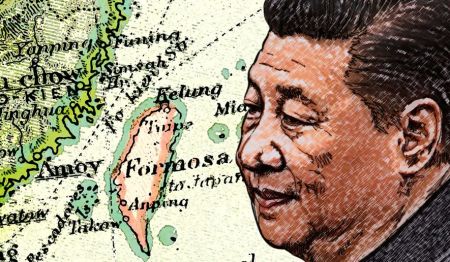
Illustration on China and Taiwan by Greg Groesch/The Washington Times

ANALYSIS/OPINION:

This week’s TrumpXi meetings are an opportunity for the president to both publicly and privately make the same important points. U.S. engagement with China is important to the peace and stability of the Asia-Pacific region, but it is also vital that the mutual interests of the United States and Taiwan should not in any way be compromised by this process.

******************************

This week, the world will witness the first meeting between U.S. President Donald Trump and Chinese President Xi Jinping. There has been much speculation on which topics their conversations will address, and it is a safe bet that Taiwan will be on the list. The U.S.-Taiwan relationship is a vital one, and it is necessary — especially in this time of change and uncertainty — to restate the reasons why.

Thirty-eight years ago this month, the Taiwan Relations Act (TRA), an important, bipartisan creation of the U.S. Congress, was signed into law. Necessitated by Washington switching its official diplomatic recognition from Taipei to Beijing, the TRA has allowed the United States to maintain its friendship and ties of cooperation with Taiwan and its people. It states that the status of Taiwan should be determined by peaceful means, and that nonpeaceful means to do so are a threat to the region and of grave concern to the United States.

At the same time, the TRA recognized, and continues to recognize, the reality of the world in which we live — one where Beijing has never renounced the use of force to take Taiwan, and where it engaged first in a massive military build-up across the Taiwan Strait, and now in the waters of the East and South China Seas. The TRA mandates that the United States “make available to Taiwan such defense articles and defense services in such quantity as may be necessary to enable Taiwan to maintain a sufficient self-defense capability,” and we have done so in the decades since with bipartisan support.

Relations between the United States and Taiwan were further bolstered through the Six Assurances made to Taiwan by President Ronald Reagan in 1982, which stipulated: the TRA would not be altered, the United States would not mediate between Taipei and Beijing, and the United States would not alter its position about Taiwan’s sovereignty or formally recognize China’s sovereignty over Taiwan.

As a result of U.S. commitments to Taiwan, an environment was created where the people of Taiwan — the population of which is now more than 23 million — built a true, functioning democracy that has experienced the peaceful transfer of power from one political party to another three times since 2000 at the presidential level, and for the first time at the legislative level last year. Americans who have visited Taiwan or worked with Taiwanese people know that the reason the relationship is so strong is because we share many of the same values — a commitment to democracy, personal freedom, individual expression and the rule of law. Taiwan has concurrently grown into a vibrant society garnering achievements in science and technology, education, the arts and popular culture that have been exported and embraced by people elsewhere in the region and around the world.

In every sense, the TRA and the relationship that has been built upon it have been successful. Just as Taiwan has benefited, so has the United States and the wider global community. Taiwan today is not only one of America’s most dependable allies in the Asia-Pacific and its 10th-largest trading partner, but it is an example for emerging democracies everywhere and a leader in providing humanitarian aid in times of need — all this in spite of the regrettably limited international space in which Taiwan is allowed to operate.

At a time when democracy appears to be in retreat in many parts of the world, Taiwan demonstrates how it can be a success. As American diplomats and foreign policy experts have pointed out time and again, the U.S. commitment to Taiwan underscores to America’s friends and foes its commitments to its allies and to democracy, and helps to maintain U.S. credibility abroad.

In the five months since the U.S. presidential election, there has been needless uncertainty regarding U.S. policy on China, Taiwan and cross-strait relations. Before his confirmation earlier this year, Secretary of State Rex Tillerson reaffirmed the TRA and the Six Assurances and said, “The U.S. commitment to Taiwan is both a legal commitment and a moral imperative.” This was a positive first step.

This week’s TrumpXi meetings are an opportunity for the president to both publicly and privately make the same important points. U.S. engagement with China is important to the peace and stability of the Asia-Pacific region, but it is also vital that the mutual interests of the United States and Taiwan should not in any way be compromised by this process.

Airplane Sales to Iran Put Under Critical Review By Trump Admin

April 5, 2017

Airplane Sales to Iran Put Under Critical Review By Trump Admin, Washington Free Beacon, April 5, 2017

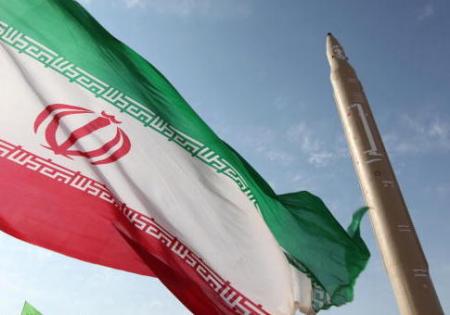
A picture taken on August 20, 2010 shows an Iranian flag fluttering at an undisclosed location in the Islamic republic next to a surface-to-surface Qiam-1 (Rising) missile which was test fired a day before Iran was due to launch its Russian-built first nuclear power plant. AFP PHOTO/VAHID REZA ALAEI (Photo credit should read VAHID REZA ALAEI/AFP/Getty Images)

The move represents a departure from the Obama administration’s policy, which promoted the sale of airplanes to Iran across the United States and Europe.

The review of these deals appears to be part of a larger ongoing review of the entire Iran nuclear deal, which is being undertaken by the White House. The Trump administration could move to reverse many of the promises made by the United States to Iran under the previous administration, including airplane sales and other concessions aimed at promoting business in Iran.

****************************

The Trump administration is undertaking a critical review of Obama administration-era policies permitting the sale of American airplanes to Iran, which have been used in the past to ferry weapons to terrorists and conduct other illicit activities, according to U.S. officials familiar with the situation.

U.S. airline manufacturer Boeing announced on Tuesday that it had reached a memorandum of understanding with Iran guaranteeing the sale of up to 60 planes pending review by the Trump administration.

Sources who spoke to the Washington Free Beacon speculated the latest announcement, which was announced earlier in the day by Iran, could be meant to pressure U.S. officials to sign off on the deal.

While the newly installed administration had come under fire earlier this year for seeming to continue Obama-era policies meant to approve these sales, U.S. officials now tell the Free Beacon that all past and future deals are coming under review by the new administration as part of a larger assessment of the landmark Iran nuclear deal.

The review of sales between Boeing and Iran represent a first step to possibly canceling the deals, which have come under criticism by U.S. lawmakers and foreign policy experts who maintain the Islamic Republic will use the American aircraft to boost its air force and illicit weapons trade, according to multiple sources who spoke to the Free Beacon.

“Treasury’s Office of Foreign Assets Control [OFAC] will be reviewing aviation licensing as part of the National Security Council’s ongoing interagency review of the Iran deal,” a Treasury Department official told the Free Beacon.

The move represents a departure from the Obama administration’s policy, which promoted the sale of airplanes to Iran across the United States and Europe.

The review of these deals appears to be part of a larger ongoing review of the entire Iran nuclear deal, which is being undertaken by the White House. The Trump administration could move to reverse many of the promises made by the United States to Iran under the previous administration, including airplane sales and other concessions aimed at promoting business in Iran.

While the Treasury Department was unable to comment on specific licenses and ongoing determinations pursuant to the Boeing deal, officials pointed out that the latest announcement is not a final deal.

Any sale of planes by Boeing to Iran will be subject to review and require a license from the Treasury Department, officials said.

One senior White House official told the the Free Beacon that the most recent Boeing deal with Iran will be held for review along with the entire Iran nuclear deal.

“The review of existing Iran policy is ongoing–and this MOU will be part of that process,” said the official, who was not authorized to speak on record. “Obviously the administration wants American companies to get large contracts, but we have to put the of the American people first.”

Companies such as Boeing are still legally permitted to negotiate and enter into agreements with Iran as it relates to the sale of airplanes so long as the Iranian entities are not currently subject to U.S. sanctions.

However, the final sale of these planes requires specific consent from the Treasury Department.

The Obama administration had rushed to push through these types of sales before leaving office. President Donald Trump has advocated a tougher line and these sales could be nixed as a result of Iran’s ongoing support for terrorism across the Middle East.

One senior congressional source familiar with the situation told the Free Beacon that the Trump administration’s latest move should serve as a warning to Boeing.

“Treasury is finally committing to a full review of current licensing policies for aircraft sales to Iran,” the source said. “Boeing executives should be on notice: it’s not just this new request that they will need approval on, but the previous one for Iran Air as well.”

Rep. Peter Roskam (R., Ill.), a vocal opponent of the Boeing-Iran deal, told the Free Beacon that Boeing’s continued push to deal with Iran is “outrageous.”

“On the same day Bashar al-Assad’s Air Force dropped chemical weapons onto children, an American company announced its intent to sell airplanes to Assad’s patrons in Tehran,” Roskam said late Tuesday. “Iran continues to use commercial aircraft to support Assad’s atrocities in Syria and other terror proxies around the globe.”

Congress will continue its work to prevent the sale of planes to Iran, particularly in light of its ongoing use of civilian aircraft to ferry weapons and other illicit arms across the region.

“We will do everything within our power, and we hope the administration will do everything within its power, to prevent the sale of even more airplanes to state-owned companies in the Islamic Republic,” Roskam said.

Boeing has not backed off its commitment to these sales, despite fierce opposition in Capitol Hill and now in the White House.

One senior congressional adviser who has been working on the matter told the Free Beacon that Boeing’s aggressive lobbying campaign is beginning to backfire.

“Boeing has apparently calculated that their lobbying power can overcome the opposition of majorities in Congress and the American public, to say nothing of the Trump administration’s NSC and Treasury,” said the source, who was not authorized to speak on record.

“Maybe [Boeing is] right—though that’s not the mood on the Hill,” the source explained. “But banks will have to make a different calculation, since they don’t have the protection of the country’s most powerful lobbyists, and the Trump Treasury Department doesn’t fuck around with banks that facilitate Iranian terrorism, which is exactly what it means to give Iran airplanes. The fines would probably be in the billions.”