Archive for March 6, 2017

Remember When Obama Spied on Congressmen Opposed to Iran Deal?

March 6, 2017

Remember When Obama Spied on Congressmen Opposed to Iran Deal? Front Page Magazine, Daniel Greenfield, March 5, 2017

obamanixon

When the media puts on its befuddled face over Trump’s allegations, remember what Obama was doing little more than a year ago.

The National Security Agency’s (NSA) continued surveillance of Israeli Prime Minister Benjamin Netanyahu and Israeli leaders may also have swept up private conversations involving members of Congress, the Wall Street Journal reported Tuesday night.

Further, the Journal reports that intercepted conversations between Israeli leaders confirmed Israel’s knowledge of the talks, as well as its intent to undermine any nuclear deal with Iran by leaking its details. When Netanyahu and his top aides came to Washington to talk with Jewish-American groups and members of Congress to lobby against the deal, the NSA was there to pick up the conversations.

Senior officials told the WSJ that those conversations collected by the NSA raised fears “that the executive branch would be accused of spying on Congress.” The White House wanted the information anyway, however, because it “believed the intercepted information could be valuable to counter Mr. Netanyahu’s campaign.”

So in order to avoid leaving a trail, the White House left it to the NSA to figure out what to share, and the NSA obliged, deleting names of members and any personal attacks on the administration.

To summarize…

1. Obama Inc. used surveillance of an ally and of domestic groups, even members of Congress, to defend its own political agenda

2. It did so relying on plausible deniability

3. The information was shared across the administration and planted in the media

Kerry justified his accusation by pointing to Israeli media reports, but those reports were a convenient source, given that “Intelligence officials said the media reports allowed the U.S. to put Mr. Netanyahu on notice without revealing they already knew his thinking. The prime minister mentioned no secrets during his speech to Congress,” wrote the Journal.

There was no firewall between spying for national security and for a political agenda. That was the most important point here. Everything else is plausible deniability.

White House officials believed the intercepted information could be valuable to counter Netanyahu’s campaign. They also recognized that asking for it was politically risky. So, wary of a paper trail stemming from a request, the White House let the NSA decide what to share and what to withhold, officials said. “We didn’t say, ‘Do it,’ ” a senior U.S. official said. “We didn’t say, ‘Don’t do it.’ ”

When you hear the current Obama denials, remember that they almost certainly played another variation of the same game.

Forging a new approach to Iran

March 6, 2017

Forging a new approach to Iran, Washington Times, Shahram Ahmadi Nasab Emran, March 5, 2017

iranianoctopusIllustration on the continuing threat of Iran by Alexander Hunter/The Washington Times

By identifying the gross overreach by the Iranian regime and promising a swift, punitive response, the White House’s stance marked the end of a longstanding American policy of naive appeasement. In so doing, the Trump administration has rightly recognized the true source of instability and existential threat the region faces. Now, instead of issuing broad statements, it must act on a smart strategy for dismantling the key pillars of Iran’s international terror network and stunting the regime’s emboldened overreach.

***********************

Even as the Trump administration seeks to designate the Revolutionary Guard as a Foreign Terrorist Organization, Iran continues its blatant defiance of international norms. Promising “roaring missiles” if threatened, Tehran has test fired several ballistic weapons capable of delivering nuclear material in just the past month. A fundamentally weak regime with dated military capabilities, Iran is attempting to call the United States’ bluff, perhaps to gain leverage in any subsequent re-evaluations of the nuclear deal Tehran struck with the Obama administration. Several blistering statements from the White House backed by a round of sanctions presage the administration’s muscular new approach. But if it hopes to secure the region, it must systematically target the core destabilizing activities of the regime.

In a steady stream of denunciations, the White House pledged tougher U.S. action if the mullahs continue to violate international norms through illicit missile tests, making clear that the Obama era of appeasement is over. “Instead of being thankful to the United States for these agreements, Iran is now feeling emboldened,” an official White House statement read. “We are officially putting Iran on notice.” While many Iranian officials dismissed President Trump’s tough talk on the nuclear deal as empty campaign rhetoric, the president’s appointment of fellow anti-regime hardliner Gen. James Mattis demonstrates his intention to deliver.

Perhaps more importantly, the White House has also challenged the regime’s extended proxy offensives against U.S. allies and friends in the neighborhood. Such actions “underscore what should have been clear to the international community all along about Iran’s destabilizing behavior across the Middle East,” the White House statement continued. Contrary to President Obama’s Middle East policy of abandoning friends and allies and trying to make friends with the adversaries, the Trump administration will fully support its friends. Specifically, this stance challenges Iran’s practice of hiding behind Hezbollah and Houthis militants as it funds and trains them.

Holding a vastly dated arsenal of weapons, Iran is no match for U.S. firepower, leaving only backchannel mercenaries to promote regional dominance. The White House acknowledged this dynamic, specifically characterizing the affront against Saudi forces as being “conducted by Iran-supported Houthi militants.” This link was never recognized by the Obama administration. Such oversight left Iran free to grow and strengthen its hand in these groups, which terrorize the region and undermine our partners. If the Trump administration will craft a strategy for stunting Iran’s proxy network, particularly by cutting funding and armament flows, the region would be far safer and more stable.

Noting Mr. Trump’s concerns about the nuclear deal being “weak and ineffective”, the Trump administration addressed a third key issue in the U.S.-Iranian relationship. Rapidly losing money and influence, the nuclear deal allowed the regime to avoid military confrontation over its development program for which it was grossly unprepared. And despite the intention of weakening the regime and strengthening the Iranian people, rushed U.S. concessions granted the regime an eleventh-hour trickle of lifeblood, both financially and symbolically. By rolling sanctions back, destabilizing behavior was ostensibly met with an influx of funds. As such, the deal signaled that military action against Iran was highly improbable, thus essentially greenlighting the illicit activity that effected warnings and sanctions from the White House over the past month. And despite official remarks by Iranian officials denouncing these statements as naive and weak, the regime would be in dire straits if America turns off the faucet opened by the nuclear deal.

Finally, the administration’s condemnation for Iran’s broader support for terrorism demonstrated clear perspective on the direct threat it poses to international security. In addition to supporting Hezbollah, Iran is currently involved in a life-and-death battle in Syria that includes continuous weapon and militant transfer from Iran to Syria. President Bashar Assad’s downfall in Syria would destroy the linchpin of Iran’s terror apparatus.

Further, any sustainable resolution calls for the withdrawal of all foreign forces from Syria, culling both activity in the country and a pipeline to Hezbollah via the porous borders between Syria and Libya. As Iran finds itself backed into a corner by its regional export of terror, Mr. Trump and his team have many cards to play.

By identifying the gross overreach by the Iranian regime and promising a swift, punitive response, the White House’s stance marked the end of a longstanding American policy of naive appeasement. In so doing, the Trump administration has rightly recognized the true source of instability and existential threat the region faces. Now, instead of issuing broad statements, it must act on a smart strategy for dismantling the key pillars of Iran’s international terror network and stunting the regime’s emboldened overreach.

The Quest for Islam-Based Affirmative Action

March 6, 2017

The Quest for Islam-Based Affirmative Action, Front Page MagazineLloyd Billingsley, March 6, 2017

(Perhaps the whole notion of affirmative action — the embodiment of racist low expectations for racial minorities — should go away. — DM)

my_trusty_gavel

In late September, the White House office of Management and Budget proposed a new racial classification: MENA, standing for Middle East and North Africans and covering the vast area from Morocco to Iran. In the best politically correct style, many national, ethnic and racial identities disappear within the group category, like drops of water in a pond. MENA is essentially the rebadging of Muslims and as with other categories the basis for handing out government benefits and further dividing the nation into oppressed and oppressor classes. 

The president was counting on his designated successor, Hillary Clinton, to get MENA approved by Congress in 2018 so it could be deployed in the 2020 Census. The new Congress should give MENA the boot, dump the entire classification system, and abolish race and ethnic preferences in government employment. 

******************

“Court Commissioner Shama Mesiwala sees her new job as a way to represent her Muslim faith,” ran the February 21 headline in the Sacramento Bee. Presiding judge Kevin Culhane called the new Commissioner “highly accomplished,” and did not exaggerate.

Shama Mesiwala graduated magna cum laude in three years from UC San Diego and completed law school at UC Davis at 23. She then spent 13 years as a judicial attorney in the Third District Court of Appeal. As Court Commissioner, Mesiwala will command the same powers and duties as a trial court judge, but when selected for the post she did not emphasize her academic achievements or judicial experience.

“I’m really proud I can represent my faith in this way,” she explained.

As some locals pointed out, if a Baptist had been appointed Court Commissioner and used the job to “represent my faith,” that would have raised protests from the church-state squads. Nothing of the kind took place and Mesiwala supporter Karima Bennoune, a UC Davis law professor, saw the appointment as “an important sign of hope and a reminder of the importance of cultural diversity.” Mesiwala had also been concerned with “social justice for everyone” and her appointment was “a reminder of the very positive things we need right now.”

Readers could be forgiven for seeing a reference to President Trump, and the appointment of more Muslims in government as an appropriate response to his executive order on travel. According to UC Davis law alum Fatima Alloo, who has litigated with the ACLU on immigrant cases, there was more to it.

The majority of court commissioners, she wrote in an online comment on the Bee story, “are most likely to belong to Christianity than any other religion.” Shama Mesiwala “managed to break through and receive her position despite belonging to a faith that is often misunderstood, slandered and discriminated against in our society, Islam.”

The implication is that Muslims are an accredited victim group, therefore they should be given preference for positions such as court commissioner. In Mesiwala’s case, no other candidates were announced.

California’s anti-preference law forbids preference on the basis of race, ethnicity and gender in state employment, education and contracting. It makes no mention of religion, and the demand that Muslims be given preference for jobs would come as no surprise in California.

Since voters approved the anti-preference California Civil Rights Initiative in 1996, state officials have done everything in their power to avoid it. Governor Jerry Brown has always opposed the anti-preference law, but he supports a sanctuary state and maintains a double standard on refugees.

The Vietnamese Communists, more repressive than their Soviet sponsors, drove many to flee, including Janet Nguyen, born in Ho Chi Minh City in 1976. She became a California state senator but Democrats smacked her down for criticizing Tom Hayden, who supported the Communists. Governor Brown was strangely silent after the smackdown, with good reason.

As Dan Walters of the Sacramento Bee noted, Brown opposed the influx of Vietnamese refugees and “even tried to block refugee flights into Travis Air Force Base.” On the other hand, Brown and the state Democrats now back the mass admission of Syrian refugees, whose plight, unlike that of the Vietnamese, is not due to the failure of U.S. policy. Even so, Assembly Bill 343 would give all refugees in-state tuition at public colleges and other goodies, including $5 million for translators, counselors and support staff, everything but free hors d’oeuvres.

Brown’s policy was to work with the 44th president to bring in more refugees, most of them Muslims. According to his narrator, the President Formerly Known as Barry Soetoro (PFKBS) attended a “predominantly Muslim school” in Indonesia, proclaimed that “the future must not belong to those who slander the prophet of Islam,” and refused to link Islam with any act of terrorism. Before the November election that president slid his side more assistance, with little notice in the old-line establishment media.

In late September, the White House office of Management and Budget proposed a new racial classification: MENA, standing for Middle East and North Africans and covering the vast area from Morocco to Iran. In the best politically correct style, many national, ethnic and racial identities disappear within the group category, like drops of water in a pond. MENA is essentially the rebadging of Muslims and as with other categories the basis for handing out government benefits and further dividing the nation into oppressed and oppressor classes.

The president was counting on his designated successor, Hillary Clinton, to get MENA approved by Congress in 2018 so it could be deployed in the 2020 Census. The new Congress should give MENA the boot, dump the entire classification system, and abolish race and ethnic preferences in government employment.

California voters did that way back in 1996. State leaders should follow the law and not extend preference to anyone on the basis of their religion, even if they seek to use a judicial position to “represent my faith.”
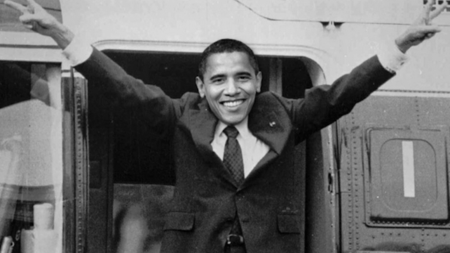

#ObamaGate Is a Lot More than a Hashtag

March 6, 2017

#ObamaGate Is a Lot More than a Hashtag, PJ MediaRoger L Simon, March 5, 2017

(Please see also, Yes, There Could Be Serious Legal Problems if Obama Admin Involved in Illegal Surveillance. — DM)

obama_security_risk_feature_4-11-16-1-sized-770x415xt

If I were a Democrat, I’d be afraid.  I’d be very afraid.

Forget the usual smokescreen of hyper-partisan blather from Chuck Schumer on “Meet the Press” or the myriad calls for Trump’s head from the usual press suspects and consider the situation:  Congressional committees, the FBI, not to mention numerous avid media organizations and who knows who else (NSA? CIA? ASPCA?) have been investigating putative Trump-Russia collusion for some time now and come up with… exactly nothing.

Are they likely to come up with something of significance at this point?  Almost certainly not.

So now we have Trump’s bold, brash, “unhinged” Twitter accusations that Obama wiretapped him.  This came after Mark Levin, Breitbart, Andrew C. McCarthy, Louise Mensch and others I’ve forgotten about or am unaware of reported about two appeals to FISA courts (one denied last summer and one approved in October) for permission to tap phones in Trump Tower. Did they happen?

It seems that tapping of some sort actually occurred because it was virtually acknowledged  in tweets from Obama speechwriter Jon Favreau,  who sprang to action only hours after Trump tweeted, writing : “I’d be careful about reporting that Obama said there was no wiretapping. Statement just said that neither he nor the WH ordered it.” Kevin Lewis, a spokesman for the former president, had almost simultaneously declared:  “Neither President Obama nor any White House official ever ordered surveillance on any U. S. citizen.”  Ordered?  That’s what we used to call plausible deniability and now is known as a wiggle word.

Trump wants this possible surveillance to be investigated along with the rest of the supposed Russia mess — the little that’s left of it to be cleared up.  Meanwhile, that Democratic Party house organ The New York Times is reporting that James Comey himself wants the Justice Department to issue a denial that such a wiretap ever existed — or so the paper’s ubiquitous “sources” say.  Of course the Times itself saw it differently only a couple of months ago. Meanwhile, former DNI James Clapper — who famously told all his fellow citizens a boldface lie about the NSA — has assured the media regarding this particular tap, “I can deny it.” (Yes, you can.)

All this while Barack and Michelle Obama, rather than graciously depart the D. C. scene in the manner of previous presidents, recent ones anyway, have moved into a local estate with their constant companion Valerie Jarrett in some kind of Ménage à Medici as if Barack never had an intention to leave and expects to serve a third term.

My guess is this will all come down to whether our former president knew about this wiretapping — whoever authorized it and wherever it came from — and, if so, when. And also how he reacted to it and what he did from there.  It’s all, in the grand Clintonian tradition, about what the definition of “ordered” is.

Interviewed on “Fox News Sunday,” Sen. Tom Cotton — as close an approximation to “Mr. Smith” as we have in Congress — was asked if the Senate Intelligence panel would address Trump’s wiretapping claim and his answer was a Jimmy Stewart-like “sure.”

Now to why, if I were a Democrat, I’d be afraid.  To explore that you don’t need to be some super-experienced attorney like Andrew McCarthy, although that doesn’t hurt.  Rusty old Occam’s Razor will do — just change the blade and ask some obvious questions somehow overlooked by the MSM in this weekend’s chat shows.  These questions, needless to say, might best be asked under oath by a congressional committee. Later, they might even have to be dealt with in a court of law, as attorney Robert Barnes details well in this article.

Would an attorney general (in this case Loretta Lynch) normally inform the White House of a decision to go to a FISA court for approval of the tapping of a political presidential opponent?  Did Ms. Lynch so inform the White House?  Was there any discussion of this decision between the WH and the DOJ?  Why did the Justice Department decide to go back to the FISA court in October for a second try at approval? Whose idea was that? Did they did have additional information?  What was that?  Was Trump’s name included in the brief the first time but omitted in the second?  Why?  If none of this happened, who made it up and why?  That makes no sense, considering how easy it would be to disprove. Unless, of course, although it’s not supposed to happen, the NSA just regularly taps everything and everybody, including presidential candidates, the president elect, and the president himself.  But why then on Jan 12 of this year, again according to the New York Times, did the Obama administration suddenly broadly extend the powers of the NSA?

I could go on, but you get the point.  The possibilities here are endless. And WikiLeaks already revealed Obama’s extensive use of wiretaps.  It’s a long list.  Nothing particularly new here except this one, if it happened, was aimed at his most important adversary in our democratic republic, threatening the very underpinnings of our country and making Nixon seem like an amateur.  No doubt the Democrats will hide behind national security, but that can only go on for so long.  People in leadership positions like Sen. Cotton are entitled to the facts — and they will get them eventually, perhaps quickly since this is a Trump administration finally, even if so many appointments are being held up.  Also — and this is what the sleaze-artists like Schumer and my own Rep. Adam Schiff know well — Trump has obviously been wiretapped up the you-know-what, probably from numerous sources.  If not, where have all these leaks come from?  Mars?

Former Bush AG Mukasey: Trump ‘Right’ That There Was Surveillance

March 6, 2017

Former Bush AG Mukasey: Trump ‘Right’ That There Was Surveillance, ABC News via YouTube, March 5, 2017

H/t Conservative Tree House for the link to the video and for this insight:

Here’s what’s going on, that almost everyone seems to be missing.

President Trump cannot publicly disclose anything relating to his first hand knowledge of national security issues, specifically intelligence gathering, without opening himself up to accusations of the mishandling of classified information…. which naturally his opposition would use to: #1) drive a media narrative, #2) demand an investigation of him as a leaker of classified intel, and #3) ultimately lead to pearl-clutching calls for impeachment etc. [Emphasis added.]

President Trump cannot publicly discuss anything related to his knowledge of classified information or intelligence.  His opposition (Dems and Media) know this, and therefore use his inability to discuss these matters as a tool to shape their chosen narratives.

The Alinsky accuser can run to the microphones, but the accused has a constitutional gag order.  See how that works?

Absent of the President’s ability to discuss or defend himself, he enters into the media matrix at a disadvantage.  The media can claim anything, and President Trump cannot provide evidence to refute their claims without compromising his position.   The media knows this. The media use this dynamic to their advantage.

The President cannot publicly discuss anything provided to him from the intelligence community.  However, President Trump CAN publicly discuss, or draw attention to, media reports which contain stories about leaks as derived from classified intelligence leaks.

Please read the entire article.


