RIGHT ANGLE: Who Watches the Watchdogs? Bill Whittle Channel via YouTube, February 17, 2017
RIGHT ANGLE: Who Watches the Watchdogs? Bill Whittle Channel via YouTube, February 17, 2017
Democrats fear Trump’s success with Russia, American Thinker, E. Jeffrey Ludwig, February 16, 2017
(Please see also, Pro-Kremlin Pravda.ru: ‘ Iran Is Becoming A Major Problem, First And Foremost For Russia’s Interests’. If Russia decides to ally with Trump’s American rather than with Khamenei’s Islamic Republic — the world’s most prolific sponsor of Islamist terrorism — it would be a good thing. — DM)
In one of his latest tweets, President Donald Trump stated, “The real scandal here is that classified information is illegally given out by ‘intelligence’ like candy. Very un-American!” He is rightly concerned that he is being portrayed as soft on Russia, and even of cooperating with the Russians in their nefarious plots.
Certainly, the characterization of Trump as “soft” on Russia is bewildering when one considers that during the Obama years, an arms agreement was signed between us and Russia; Russia and the U.S. were on the same page regarding the Iran deal; Obama relented on his Syrian red line, so called, by accepting Russian intervention to get Bashar al-Assad to eliminate his chemical weapons (whether or not he did is still the $64,000 question); and Russia was allowed to take Crimea with nary a peep from the USA. Further, we all recall Obama saying to Russian prime minister Dmitry Medvedev when he thought the microphones were off that he would be able to work more closely with the Russians once he was re-elected. Thus, it seems to any impartial observer (including Hillary) that the Obama administration was quite open to deals with Russia.
Yet, because of some positive remarks about Vladimir Putin from Trump, the public position taken by the Dems as a whole has been that Trump is soft on Russia. Because their criticism of Trump contradicts their actions taken over eight years, it seems as if their criticism is more of a political ploy than merely a needed rebuke. Trump is against the Iran deal and will be no pushover regarding Russian aggression, but there might be common ground between the U.S. and Russia in the fight against ISIS and other maniacal Islamic groups. This possibility is deeply offensive to the Democrats who insist, against overwhelming evidence, that there is no threat to the U.S. or the West from adherents of Islam.
So, Trump’s positive comments should not be taken as meaning that we are all lovey-dovey with Putin or Russia as it exists today. Rather, a reorientation of our relationship is needed. The Democrats are afraid of such a reorientation of U.S. policy with Russia – one that will successfully lead to an abandonment of the Iran deal and the deliverance of a knockout blow to the Islamic maniacs in the Middle East and around the world. Those successes would prove that the Democrats are weak and silly creatures. Further, Trump has reintroduced a personal element into the insipid world of diplomacy and has a sense that Putin’s macho man persona matches more with his own than with the Obama effeminacy.
Source: Nasrallah warns: We can hit Israel’s nuclear reactor in Dimona – Israel National News
Hezbollah leader says all of Israel now under threat: ‘We can strike any part of Israel, we can hit Dimona nuclear reactor.’
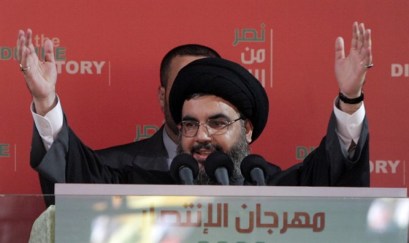
The Hezbollah terrorist organization warned Israel it could strike anywhere in the country, and threatened to hit the nuclear reactor in Dimona in southern Israel.
Speaking on Thursday, Hezbollah chairman Hassan Nasrallah boasted that his group was capable of hitting any strategic target in the Jewish state, including the nuclear research facility in Dimona – one of Israel’s most sensitive sites.
“We invite the Israeli enemy to empty not just the ammonia tanks in Haifa,” mocked the Hezbollah leader, “but also to dismantle the nuclear core in Dimona,” claiming that “it is in our power to threaten any part of Israel.”
The address was made as part of an event marking the 38th anniversary of the Islamic Revolution in Iran which brought the Ayatollah Khomeini to power and enabled the establishment of the Iranian-backed Hezbollah group.
The latest saber-rattling comes after a court ordered an ammonia storage facility to be emptied within 10 days. The ammonia tanks, which hold some 12,000 tons of the chemical, have been targeted both by environmental groups who warn storage of large quantities of the material are harmful to the Haifa bay area, as well as citizens’ groups concerned over hazards to public safety.
A year ago, marking the 37th anniversary of Iran’s Islamic Revolution, Nasrallah threatened to strike the ammonia storage facility – what he called “Hezbollah’s nuclear bomb”.
“Hezbollah has a ‘nuclear bomb’ – Haifa has 15 tons of ammonia, and any Hezbollah missile attack will turn them into a nuclear bomb that would cause the deaths of tens of thousands,” he declared.
New Hamas Leader, a Vicious Killer, Portends New Rounds of Violence, Investigative Project on Terrorism, Yaakov Lappin, February 16, 2017
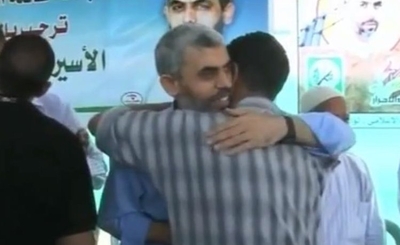
The election of Yehya Sinwar to lead Hamas in Gaza represents the completion of a lengthy takeover by the terror movement’s military wing at the expense of the political wing, and it could signal a more imminent confrontational path with Israel than previously thought.
The Izzadin Al-Kassam Brigades gradually have been pushing aside Hamas’s political wing, seeing it as an impediment to its jihadist war efforts against Israel.
Sinwar and his military wing comrades want to reestablish their alliance with Iran and boost a tactical partnership with ISIS in the Sinai Peninsula.
His rise likely means that Hamas and Iran will grow close once again, after years of turmoil over their opposing stances on the Syrian war.
In fact, Sinwar’s rise to power is being described by veteran analyst Pinhas Inbari as Iran’s taking back the reigns to Gaza, which stemmed from Iranian concerns over a more hardline policy from the United States after President Donald Trump’s election.
Inbari does not believe Sinwar’s appointment was even based on elections, saying the results came from pressure by Hamas’s military wing on the political wing, and that the development is “Iran’s way of conveying a message before the Trump-Netanyahu talks” that took place Wednesday.
Sinwar, who served 22 years in an Israeli prison for murdering Palestinians he accused of being Israeli collaborators, is a trigger-happy senior Hamas member who does not hesitate to shoot dead Gazans he perceives as being disloyal.
He was released from prison during the 2011 Schalit prisoner swap with Israel, and quickly rejoined his comrades in the military wing, under the command of Muhammad Def, who were feverishly preparing rocket attacks, and tunneling into Israel.
Sinwar ordered the execution a year ago of a Gaza City Hamas battalion commander, Mahmoud Eshtwi, who was seen as being too open and critical towards his superiors.
According to a recent report by Israel’s Coordinator of Government Activities in the Territories, Sinwar and his brutal track record are associated with an end to the “ijma” (consensus) manner in which Hamas once made strategic decisions, and the beginning of an internal Hamas dictatorship.
That could spell trouble for the Palestinian Authority, which Sinwar views as a foe, and which Hamas continuously seeks to topple in the West Bank. It could spell problems for Hamas’s other neighbors as well, like Egypt and Jordan, both of which have their own domestic Islamist and jihadist problems.
Brutal murders of any who fail to toe the party line under Sinwar could turn into a violent routine throughout the Gaza Strip, the Coordinator of Government Activities in the Territories report said.
Traditionally, Hamas’s Shura Council included the military and political wings as well as the Hamas overseas politburo. Ismael Haniyeh – Sinwar’s predecessor – moves into this position formerly held by Khaled Mashaal.
But Sinwar, a charismatic and dominant figure, has been working to undermine this system. Backed by Hamas’s “chief of staff,” Muhammed Def, and high ranking leader Marwan Issa, who acted as a ‘bridge’ between the two wings, Sinwar and his wing took over tasks such as Hamas police appointments, according to Israeli assessments. Sinwar headed a kind of Hamas defense ministry before being ‘elected.’
One of his key goals is to apply the idea that the military wing spent too much time listening to the political wing, leading to a failure in achievements against Israel.
Sinwar did not consult with the political wing before having the Gaza City battalion commander murdered and he will likely not consult with it when he moves to establish closer bonds with Tehran.
And yet, even an extreme a figure as Sinwar will have to take reality into account when it comes to his options against Israel.
Since the end of the 2014 conflict with Israel, it seems reasonable to assume that the Israel Defense Forces (IDF) may be working on a new combat doctrine together with the Shin Bet domestic intelligence agency against the terrorist regime in Gaza.
If such a change has occurred in the Israeli defense establishment, in the event of a new conflict, Israel could seek to destroy the military wing. That would be a dramatic shift from the older goals of containment and deterrence.
This potential change in doctrine may have been hinted at in comments made on occasion by Defense Minister Avigdor Liberman, who said, for example, last year, that Israel would destroy Hamas “completely” in the next war, though Jerusalem would not be the one to initiate hostilities.
The old rules, by which Hamas could initiate controlled escalations, and was free to deescalate when it accomplished its goals, appear to be gone, and it’s reasonable to assume Sinwar is aware of the risks to his regime.
Israel’s recent breakthroughs in tunnel detection capabilities, precision air power, and revamping of the Armored Corps, together with enhanced ground forces combat training, all mean that a mistake by Sinwar could prove to be the most costly to date for Hamas in Gaza.
Source: Israel Hayom | Report: Iran’s approach to Israel unchanged since nuclear deal
“An extreme Islamist ideology that repetitively preaches the destruction of Israel, boasts of its advanced missile program, and seeks to return to the bosom of the Western world makes Iran all the more dangerous,” says Jerusalem Center for Public Affairs.
|
Jerusalem Center for Public Affairs President Dore Gold
Photo credit: Yonatan Sindel
|
While the nuclear deal between Iran and world powers was meant to be a first step toward improving the Islamic republic’s relationships with the international community, the Iranian leadership has not changed its attitude toward Israel, a new report from the Jerusalem Center for Public Affairs, headed by former Foreign Ministry Director General Dore Gold, has found.
The report said that Iran’s long-range missile program demonstrates the state’s anti-Israel fervor. The missiles are frequently inscribed with slogans such as “Israel should be wiped off the face of the earth.” The report said that Supreme Leader Ayatollah Ali Khamenei “paves the way” for the fierce anti-Israel rhetoric in the military and the nation.
On Oct. 26, 2015, referring to Khamenei’s promise that Israel would not exist in 25 years, Iranian Ground Force Commander Brig. Gen. Ahmad Reza Purdastan said the country’s missile program could guarantee this.
“We are eager to see Israel make a move to put the supreme leader’s remarks into action as soon as possible,” he said.
Several other Iranian leaders have also referred to Khamenei’s remarks and have similarly promised Israel’s demise.
Kahmenei’s promise to destroy Israel appears on a range of social media sites, inspiring further posts and images that promote hatred for and the annihilation of Israel.
“The combination of an extreme Islamist ideology that repetitively preaches the destruction of Israel, boasts of its advanced missile program, and seeks to return to the bosom of the Western world makes Iran all the more dangerous,” the report said. “This over-confident Iran continues to export terrorism to Palestinian terrorist organizations, Hezbollah, and subversive groups in the Gulf states, some of which undermine American interests.”
Source: Israel Hayom | Trump is good for the Jews
Boaz Bismuth
If anyone had any doubt that U.S. President Donald Trump would be good for Israel, the press conference in the White House before his meeting with Prime Minister Benjamin Netanyahu proved as much, despite the cries of “anti-Semitism in America” heard since Trump won the elections. A new era has begun in Washington, a much more refreshing one.
The press conference with Trump and Netanyahu was a U-turn from everything we have heard, known, understood and considered for decades.
For the most part, the ideas of the two-state solution for peace, road maps, multilateral negotiations, international initiatives, threats of sanctions against Israel, fingers of blame pointed at the settlements, have become irrelevant, or at best, secondary.
Not only have the eight years of the Obama administration become history, even Bill Clinton’s era now sounds obsolete and detached from reality. Trump has left the 1993 Oslo Accords and peace initiatives to the archaeologists, and his administration works with a new formula. And while the Israeli Left will surely frown upon this formula, only time will tell of the Israeli Right will fully subscribe to it.
By and large, Israel has a friend in the White House, and Wednesday’s news conference illustrated that. While no one can truly promise peace between Israel and the Palestinians is within reach, peace certainly awaits us with the White House. After eight years of Barack Obama, that is significant.
One can conclude from the press conference that Trump enjoys the backing of the Persian Gulf states for a regional peace initiative. Farsighted Trump hopes for peace in the region, as he said in his interview with Israel Hayom last week, and while he does not have a clear formula, he has done his homework, providing a statement that will most likely become a classic: “I’m looking at two states and one state, and I like the one both parties like.”
The Saudis will play a part, as Trump’s new vision will prompt them to once again introduce their peace initiative. In this respect, Jerusalem must clarify which points in the Saudi initiative are problematic. The idea is good, but its implementation less so. The Iranian threat will goad both parties to compromise, but not necessarily at Israel’s expense — and that’s the big change of the Trump era.
Trump admitted that “I thought for a while the two-state [solution] looked like it may be the easier of the two, but … if Israel and the Palestinians are happy, I’m happy with the one they like the best.” In other words, the idea of a Palestinian state met a serious obstacle. The Palestinians’ persistent refusal when it comes to recognizing Israel as the Jewish state may have caused them to miss the boat.
There may be another solution for the regional conflict and many other options can be considered as the cards have been re-dealt. All in all, one can conclude that the idea of two-state solution is in its final days, and no doctor in Washington can revive it.
Trump is far more attentive to Israel’s security needs. For him, Iran and jihadist terrorism are enemies against which he must fight and win. The Palestinian Authority’s education to terrorism is problematic and dangerous, and Trump is more than willing to call Islamic terrorism by its name.
Trump believes Israel and the Palestinians both must compromise to achieve peace. This too is a new approach, as we were used to only Israel having to make concessions. Now the onus lies on the Palestinians as well.
The issue of settlements obviously came up. While Trump does not believe that the settlements are an obstacle to peace, he stated he would “like to see you [Israel] hold back on settlements for a little bit … but I would like to see a deal be made.”
Some will underscore the “hold back” part, but after eight years of Obama, we can focus on the “little bit.” Each one left the White House with what he wanted to hear.
There were some who left the press conference on Wednesday and said that Trump does not understand and has no clear doctrine on how to deal with the Israeli-Palestinian conflict. But Trump wants to make a deal, even if he has yet to figure out exactly how to do it. Maybe this is actually a good thing. We have seen where the various peace experts have gotten us.
We can breathe a sigh of relief. The president is a friend. A true one.
Source: 60% of Refugee Arrivals Since Judge Halted Trump’s Order Come From 5 Terror-Prone Countries\
By Patrick Goodenough | February 16, 2017 | 4:20 AM EST
(CNSNews.com) – Sixty percent of the refugees admitted into the United States since a federal judge halted President Trump’s executive order designed to prevent “foreign terrorist entry into the United States” originate from five of the seven countries identified by the administration and its predecessor as most risky.
Of the total 2,576 refugees resettled in the U.S. from around the world since U.S. District Judge James Robart’s February 3 restraining order, 1,549 (60.1 percent) are from Syria (532), Iraq (472), Somalia (363), Iran (117), and Sudan (65). No refugees have arrived from the other two applicable countries, Yemen and Libya.
Of the 2,576 refugees to have arrived since Feb. 3, 1,424 (55.3 percent) are Muslims – 817 Sunnis, 132 Shi’ites, and 475 refugees self-identified simply as Muslims, according to State Department Refugee Processing Center data.
Of the refugees hailing from the specified countries of terrorist concern, Muslims accounted for the overwhelming majority of those admitted in all cases except for Iran.
Muslims comprised 99.6 percent of the admissions from Syria; 73.5 percent of those from Iraq; 99.7 percent of those from Somalia; and 93.8 percent of those from Sudan. Of the Iranian refugees admitted, by contrast, only 9.4 percent were Muslims, while just under 60 percent were Christians of various denominations.
Trump’s Jan. 27 order barred entry to the U.S. of all refugees for 120 days; prohibited entry to refugees from Syria indefinitely; and blocked all entry – immigrant and non-immigrant – by nationals of Syria, Iraq, Iran, Somalia, Sudan, Libya and Yemen for 90 days.
(The order does not itself name the seven countries, referring instead to “countries referred to in section 217(a)(12) of the INA, 8 U.S.C. 1187(a)(12).” That law, signed by President Obama in Dec. 2015, required additional security for arrivals from Syria, Iraq, Iran, and Sudan and any other country designated by the Department of Homeland Security as a source of legitimate terrorism concerns. Two months later Obama’s DHS added Somalia, Yemen and Libya to the list of “countries of [terrorist] concern.”)
In the week between Trump’s inauguration and his Jan. 27 executive order, a total of 2,090 refugees were admitted to the U.S., of whom 918 (43.9 percent) were from the identified countries: 296 from Syria, 218 from Iraq, 211 from Somalia, 155 from Iran, 37 from Sudan, one from Yemen and none from Libya.
The following seven-day period – from the day of the executive order to the day before the judge’s restraining order – only 19 refugees were admitted from the countries of concern (18 Somalis and one Iraqi, all but two arriving on the actual day of the order). Those 19 comprised just 2.2 percent of the total 861 arrivals over that period.
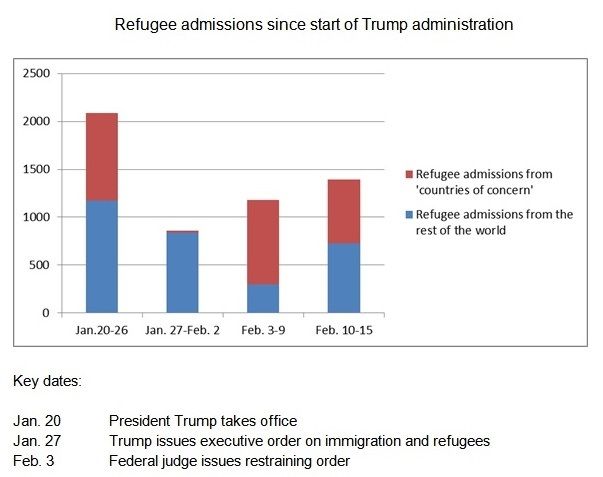
The next week, from Feb. 3 to Feb. 9, saw 1,180 refugees arrive, 882 (74.7 percent) of whom were from the countries of concern.
Last Saturday, Trump tweeted that 77 percent of refugee admissions since Robart’s ruling, which was subsequently upheld on appeal, “hail from seven suspect countries.”
(The actual figures at that time, according to the Refugee Processing Center data, were 402 refugees from Syria, 340 from Iraq, 155 from Somalia; 115 from Iran; 38 from Sudan; and none from Yemen or Libya, amounting together to 71.7 percent of the total admissions.)
Since then the proportion of refugees from the countries of concern has declined somewhat, although the countries continue to account for a disproportionate number of the total contingent of refugees admitted since Feb. 3.
While those five countries alone – Syria, Iraq, Iran, Somalia and Sudan – have provided 60.1 percent of the refugee arrivals from Feb. 3 until today, another 22 countries have together accounted for the remaining 39.9 percent.
Those 22 countries are Afghanistan (25), Bangladesh (2), Bhutan (96), Burma (147), Burundi (2), Central African Republic (12), China (1), Cuba (17), Democratic Republic of Congo (347), El Salvador (23), Eritrea (48), Ethiopia (15), Honduras (3), Moldova (10), Pakistan (24), “Palestine”(2), South Sudan (6), Russia (22), Tanzania (1), Uganda (4), Ukraine (213) and Vietnam (8).
Apart from the majority of 1,424 Muslims, other religions represented among the refugees admitted since Feb. 3 include Christians, (including Catholics, Protestants, Orthodox and evangelicals, from countries including Iraq, Iran, DRC, Ukraine and Burma), Buddhists (mostly from Bhutan), Hindus (from Bhutan), Baha’i (from Iran), Yazidis (from Iraq) and Ahmadis (from Pakistan).
EXCLUSIVE: How The Nation’s Spooks Played The Game ‘Kill Mike Flynn’, Daily Caller, Richard Pollock, February 15, 2017
(Please see also, The CIA’s affront to Trump. — DM)
National Security Advisor Gen. Michael T. Flynn (ret.) — who resigned Monday — was the victim of a “hit job” launched by intelligence operatives, Obama government holdovers and former Obama national security officials, according to former intelligence officials who spoke with The Daily Caller News Foundation’s Investigative Group.
The talk within the tight-knit community of retired intelligence officers was that Flynn’s sacking was a result of intelligence insiders at the CIA, NSA and National Security Council using a sophisticated “disinformation campaign” to create a crisis atmosphere. The former intel officers say the tactics hurled against Flynn over the last few months were the type of high profile hard-ball accusations previously reserved for top figures in enemy states, not for White House officials.
“This was a hit job,” charged retired Col. James Williamson, a 32-year Special Forces veteran who coordinated his operations with the intelligence community.
Noting the Obama administration first tried to silence Flynn in 2014 when the former president fired him as director of the Defense Intelligence Agency, Williamson called Monday’s resignation, “stage Two of ‘Kill Mike Flynn.”
Former intelligence officials who understand spy craft say Flynn’s resignation had everything to do with a “disinformation campaign” and little to do with the December phone conversation he had with the Russian Ambassador Sergey Kislyak.
They charge officials from America’s top spy counsels leaked classified government intercepts of Flynn and President Trump’s conversations with world leaders and had “cutouts” — friendly civilians not associated with the agency — to distribute them to reporters in a coordinated fashion.
The issue of leaks was a prime topic for Trump when he tweeted Wednesday, “Information is being illegally given to the failing @nytimes & @washingtonpost by the intelligence community (NSA and FBI?). Just like Russia.”
“I’ve never seen anything like this before,” Retired Col. James Waurishuk, who spent three decades in top military intelligence posts and served at the National Security Council, said in an interview with TheDCNF. “We’ve never seen to the extent that those in the intelligence community are using intelligence apparatus and tools to be used politically against an administration official,” he said.
“The knives are out,” said Frederick Rustman, who retired after 24 years from the CIA’s Clandestine Service and was a member of its elite Senior Intelligence Service.
The intelligence community’s sprawling bureaucracy is organizing to topple the Trump presidency, Rustman charged in an interview with TheDCNF.
“I would not be surprised if Trump did not finish four years because of the vendetta they have out for him,” he said, calling the move on Flynn just a “mini-vendetta.”
Williamson told TheDCNF in an interview, “I truly believe it’s orchestrated and it’s part of an overall strategy. The objective is to piece-by-piece, dismantle the Trump administration, to discredit Trump. This is part of an overarching plan.”
D.W. Wilber, who has over 30 years of experience in security and counterterrorism with the CIA and the Defense Department agrees.
“It appears to me there has been a concerted effort to try to discredit not only General Flynn, but obviously, the entire Trump administration through him. He just happened to be the first scalp,” Wilber told TheDCNF in an interview.
Williamson agreed, telling theDCNF, “There are individuals who are well versed in information operations — we used to call that propaganda. They know how to do it. It’s deliberately orchestrated.”
Retired Marine Col. Bill Cowan, who often interacted with the intelligence operatives in combat zones, believes Mike Pompeo, Trump’s new CIA Director, must clean house. Otherwise, the administration will encounter four years of attacks.
“The director, Pompeo, if he doesn’t get a hold of the agency and its personnel, he can expect four years of this: clandestine, undercover disinformation, misinformation, psychological information to undermine this administration and this president,” he told TheDCNF.
Charles Goslin, a 27-year old former CIA operations officer also believes that many insubordinate intelligence staff are working within the National Security Council within the White House.
“With the NSC, I think that’s where the leaks are coming from on calls to foreign leaders. That’s where they undermined Flynn to the point where he got hammered,” Goslin told TheDCNF in an interview.
Goslin noted, “When Trump came in, even though they were able to staff key NSC positions, for the most part it’s still staffed by previous administration holdovers and bureaucratic appointees.”
“I don’t think they have any loyalty to the current administration,” the former CIA operations officer said, adding, “the NSC is going to be a hard one to fix.”
All of the former intelligence officials say the rage against Flynn dated back to when the decorated general headed up the DIA. There he garnered a reputation to balk at the “politicization of military intelligence” in order to conform with President Obama’s world views.
Flynn refused to downplay the threat posed by the Islamic State and other radical Islamic groups throughout his two-year reign at the DIA. He was fired after offering congressional testimony that was at odds with the Obama administration’s posture on the Islamic threat.
Waurishuk, who interacted with Flynn as deputy director of the Special Operations Command and in other security matters, said Flynn was a “straight shooter” who always demanded accurate threat assessments and never bent to continue pressures of political correctness.
Waurishuk worked in military intelligence in the Obama administration. He told TheDCNF Obama officials “know Flynn and they hate Flynn because he would call them out. So, this was their opportunity to wage what is a personal vendetta in some respects.”
California Republican Rep. Devon Nunes, the chairman of the House Permanent Select Committee on Intelligence, has promised to hold hearings on the leaking of classified information to reporters. The date has yet to be set for the hearings.
The CIA’s affront to Trump, Washington Times, Angelo M. Codevilla, February 16, 2017
(It is absurd for the CIA to have control over whom President Trump can appoint to the National Security Council by refusing — for no stated or apparent reason — to grant the required security clearance. — DM)
 CIA Bullies Trump Illustration by Greg Groesch/The Washington Times
ANALYSIS/OPINION:
The CIA has denied a security clearance to Trump National Security Council (NSC) official Robin Townley without any allegation, much less evidence of disloyalty to the United States. Quite simply, it is because the CIA disapproves of Mr. Townley’s attitude toward the agency, and this is unprecedented. President Trump appointed Mr. Townley to coordinate Africa policy at the NSC. The CIA did not want to deal with him. Hence, it used the power to grant security clearances to tell the president to choose someone acceptable to the agency, though not so much to him. This opens a larger issue: Since no one can take part in the formulation or execution of foreign or defense policy without a high-level security clearance, vetoing the president’s people by denying them clearances trumps the president.
Hence, if Mr. Trump does not fire forthwith the persons who thus took for themselves the prerogative that the American people had entrusted to him at the ballot box, chances are 100 percent that they will use that prerogative ever more frequently with regard to anyone else whom they regard as standing in the way of their preferred policies, as a threat to their reputation, or simply as partisan opponents. If Mr. Trump lets this happen, he will have undermined nothing less than the self-evident heart of the Constitution’s Article II: The president is the executive branch. All of its employees draw their powers from him and answer to him, not the other way around.
Using security clearances for parochial purposes — usually petty ones — while neglecting security, never mind counterintelligence, is an old story at the CIA which I got to know too well during eight years overseeing the agency as the designee of the Senate Intelligence Committee’s budget chairman. Because I did my quality control job vigorously, and because I placed on the budget cut list some of the many outside contracts that seemed corrupt, the agency made repeated attempts to withdraw my top-level, cross-cutting security clearances. After I left the Senate staff for Stanford, when the Naval Postgraduate School asked me to teach a highly classified course on signals intelligence, the school’s security office asked the CIA for my clearances. The bureaucrats there said they had never heard of me. I had to call Director of Central Intelligence Bill Casey, who ended up phoning them in personally to a startled Navy chief.
The CIA’s denial of a clearance to a presidential appointee minus good cause, however, breaks new ground and shows truly revolutionary boldness. Traditionally, bureaucrats have used sticks and carrots to convince political appointees to play along lest they suffer unpleasantness. Thus, presidents have ended up having to choose between suffering appointees who have “gone native” or replacing them. Now, the CIA’s denial of Mr. Townley’s clearance removes all subtlety by demanding that Mr. Trump appoint only “natives.” If Mr. Trump indulges that demand for self-emasculation, the message will go out to all agencies: They need pay no attention to what political appointees tell them, and they need fear no retribution for this or for pressuring appointees in any way they want. The message to the people who Mr. Trump has appointed or who are considering working for Mr. Trump is just as clear: You have no choice but to make yourself acceptable to the bureaucrats because, if you don’t, they will hurt you and the president will not help you. This cannot help but skew the pool of potential members of the Trump administration.
We cannot know nor does it matter why Donald Trump seems to be deferring to bureaucrats who have gone out of their way to delegitimize him. But we can be certain about the kind of dynamic engendered by deference in the face of assaults.
Source: Poll: Israel Maintains Overwhelmingly Positive Image in U.S.
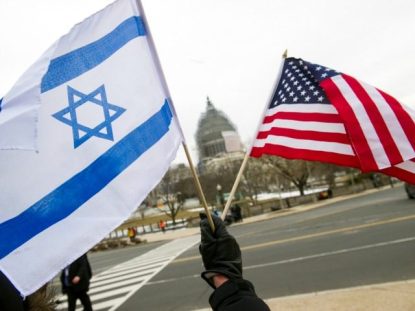
A Gallup poll released Wednesday ahead of the meeting in Washington between Israel Prime Minister Benjamin Netanyahu and U.S. President Donald J Trump revealed that since 2014, the proportion of Americans who say they view Israel favorably has remained at 70 to 72 per cent.
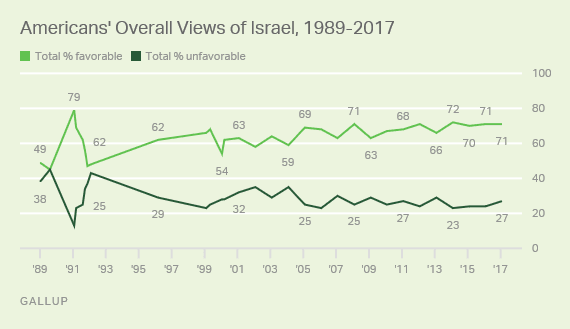
According to Gallup, Israel enjoys a positive image among all major U.S. demographic and political groups, but scores particularly well with Republicans (81 per cent view it favorably) and adults 65 and older (77 per cent). While a majority of Democrats view Israel favorably, the 61 per cent doing so is the lowest of any major subgroup.
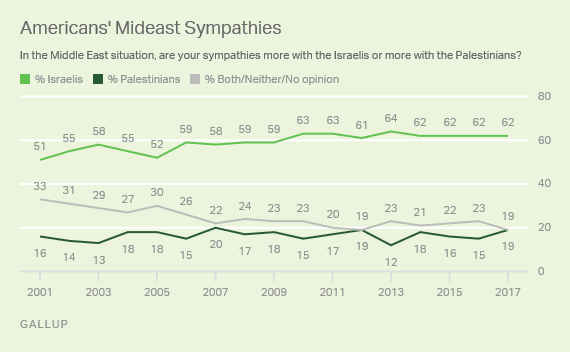
The new figures follow the release of separate poll data earlier this week that found more members of all three party groups sympathize with Israel than with the Palestinians. This ranges from 82 per cent of Republicans to 57 per cent of independents and 47 per cent of Democrats. By contrast, 6 per cent of Republicans, 23 per cent of independents and 29 per cent of Democrats sympathize more with the Palestinians.
Prime Minister Benjamin Netanyahu, a key player in current and future Middle East peace negotiations, is viewed more favorably than unfavorably by Americans, 49 per cent vs. 30 per cent.




 anneinpt
 artaxes
 danmillerinpanama
 davidking1530
 Peter Hofman
 Joseph Wouk
 Peter
Peter Louisiana Steve
 WarSclerotic
Recent Comments