PM Turnbull: “Israel is a miraculous nation…”
PM Turnbull: “Israel is a miraculous nation…”
Secret effort to solve Israeli-Palestinian conflict, which saw a Feb. 2016 Aqaba summit with Netanyahu, Kerry, Sissi, Abdullah, was doomed by US, official close to PM claims

The administration of former US president Barack Obama ruined the chance for a regional peace deal to solve the Israeli-Palestinian conflict last year by trying to impose its terms for the accord, a senior Israeli official reportedly said late Tuesday.
Prime Minister Benjamin Netanyahu reportedly confirmed on Sunday that he attended a secret US-led summit with Arab leaders in early 2016 meant to jumpstart efforts toward a regional peace push, but told Likud ministers that he, and not then-US secretary of state John Kerry, was the initiator of the meeting.
The February 21, 2016 meeting in the Jordanian port city of Aqaba was attended by the prime minister, Kerry, Egyptian President Abdel-Fattah el-Sissi and Jordan’s King Abdullah.
The first report about the summit, published in Haaretz Sunday, said Kerry had started the ball rolling with a US-crafted two-state proposal for ending the conflict, which would include broad Arab recognition of Israel as a Jewish nation-state, a key demand Netanyahu has sought in peace talks with Palestinian Authority leaders.
Netanyahu ultimately expressed doubts over Kerry’s plan and presented his own, which would have brought Gulf states into the bargain alongside Jordan and Egypt, but the initiative never got off the ground, according to that report.
The revelations of the year-old initiative came just days after Netanyahu called for such an initiative at his first meeting with US President Donald Trump in Washington.
The new comment by a senior official close to Netanyahu was reported late on Tuesday by Israel Radio. According to this source, the regional peace effort failed because the Obama administration sought to impose the terms of an agreement, and “Netanyahu could not agree to this,” the radio report said.
In public comments Sunday ahead of the weekly cabinet meeting, Netanyahu did not mention the report on the regional initiative, but said he and the new US president agreed on the need for regional partners to be involved in any possible future negotiations.
“We see the possibility of trying to provide a basis for the growing regional interests that are forming between Israel, the US and countries of the region both to rebuff Iran and to develop other opportunities and normalization,” Netanyahu said. “In the end we hope to achieve peace. This is a fundamental change and, I would say, has accompanied all of our discussions and has formed the infrastructure of all the agreements between us.”
In the Sunday report, sourced to former Obama administration officials involved in the discussions last year, Netanyahu is said to have told Kerry he would not be able to get approval for the US-proposed framework from his hawkish coalition partners.
Following the Haaretz report, lawmakers from both sides of the political spectrum criticized Netanyahu either for not pursuing the chance for peace, or for going down the two-state track in the first place.

Prime Minister Benjamin Netanyahu, center, meets with US Secretary of State John Kerry, left, and Jordanian King Abdullah II in Amman, November 13, 2014. (AFP/Jordanian Royal Palace/Ho/Yousef Allan)
Opposition leader Isaac Herzog, who heads the Zionist Union faction, criticized Netanyahu, writing on his Twitter account that “history will definitely judge the magnitude of the opportunity as well as the magnitude of what was missed.”
The report noted that this initiative was the basis for coalition talks between Netanyahu and Herzog at the time over the possibility that the center-left Zionist Union would join the Likud-led government in order to pursue the regional talks.
Public Security Minister Gilad Erdan (Likud) tweeted that Netanyahu “was right when he raised reservations to the ‘Arab initiative’ in the Obama-Kerry era (if there was one). Why would Israel enter discussions on the basis of the ’67 lines?” Erdan asked. “And with Kerry as the initiator and mediator? To our sorrow, Kerry did not display a deep understanding of the region and of the Israeli interest (even if his intentions were good). The words ‘regional initiative’ do not mandate automatic agreement by Israel to every demand and condition.”
Jewish home lawmaker MK Bezalel Smotrich tweeted that his pro-settlement Jewish Home party, which opposes the two-state solution, will continue to “safeguard the State of Israel and Zionism and prevent political adventurism.”
Zionist Union MK Omer Bar-Lev, referring to the recently passed Regulation Law that enables the legalization of unauthorized settler outposts built on privately held Palestinian land, wrote that the prime minister was hiding behind the excuse of a lack of sufficient coalition support, noting that “he has a coalition for an anti-constitutional law, but can’t proffer one as a response for a regional initiative,” Haaretz reported.
Head of the dovish Meretz party MK Zehava Galon tweeted that Netanyahu has demonstrated that ending the conflict and recognition of Israel as a Jewish state are not what really interests the prime minister.
“The goal is always the same: to buy time,” she wrote. “The problem has always been Netanyahu, not the lack of opportunities” to make peace.

Leader of opposition MK Isaac Herzog of the Zionist Union addresses the Knesset in Jerusalem, February 6, 2017. (Yonatan Sindel/Flash90)
Kerry had organized the summit after complex bargaining with both Israel’s regional neighbors and its internal political players. Details of the proposal and the secret meeting came from former senior officials in the Obama administration who asked to remain anonymous, Haaretz said.
The Prime Minister’s Office has refused to comment publicly on the report.
Immediately after the February 2016 summit meeting, Netanyahu reportedly called opposition leader Herzog to update him on the talks in an attempt to persuade Herzog to join to coalition. That conversation developed into weeks of talks between Netanyahu’s Likud party and Herzog’s Zionist Union.
Despite intense efforts by an alliance of foreign leaders to secure a national unity government, talks fell apart when it was revealed that the right-wing party Yisrael Beytenu would join the governing coalition, with its leader, Avigdor Liberman, taking the Defense Ministry portfolio.
Last week, at a joint news conference with Trump, Netanyahu said some Arab countries see Israel “increasingly as an ally,” suggesting they are driven by concern over Iranian expansionism and the spread of Islamic militancy. “This change in our region creates an unprecedented opportunity to strengthen security and advance peace,” he said in urging Trump to “seize this moment together.”
AP contributed to this report.
Source: Islamic State affiliate in Sinai claims rocket fire on Israel | The Times of Israel
Jihadist group says it fired two projectiles Monday at ‘southern Palestine,’ posts photos of launch

The Islamic State affiliate in the Sinai Peninsula took responsibility on Tuesday night for firing two rockets into Israel a day earlier.
The terror group posted photos on Twitter showing jihadists preparing the projectiles for launch.
The two rockets, which struck an open field in southern Israel and did not cause any damage or injuries, were fired shortly after the group accused Israel of killing five of its operatives in an airstrike Saturday.
In a statement on social media, the group said it had fired two Katyusha rockets at “southern Palestine,” according to the Walla news site.
Defense Minister Avigdor Liberman on Monday dismissed the threat posed by the Islamic State terror organization’s affiliate in the Sinai Peninsula.
Liberman said that while IS in Sinai is “annoying” and “hindersome,” it does not possess the means to pose a serious threat to Israel’s security.
“If you are talking about Hamas and Hezbollah, then [IS’s Sinai force] is not even a terror group,” he told Army Radio, describing the group’s capabilities as “random [amateurs] who decide to build themselves an army.”

Illustrative: Smoke rises after an airstrike in the Sinai city of Rafah as seen from Gaza on July 1, 2015. (Abed Rahim Khatib/Flash90)
“We need to see everything in proportion,” he added.
Asked if Israel was behind the Saturday airstrike in the Sinai, Liberman responded sarcastically.
“Like always, the special forces of Lichtenstein probably took out a few terrorists from Daesh in Sinai,” he said, using the Arabic name for the Islamic State. “We do not let anything go without a response,” he declared.
The reported drone strike Saturday came after the Islamic State fired four rockets earlier this month at the Red Sea resort city of Eilat in southern Israel. Three of those four rockets were intercepted by the Iron Dome missile defense system, seeming to indicate they would have struck the city, as the IDF’s policy is to only shoot down rockets headed toward population centers and infrastructure.
The fourth rocket landed in an open field.

Illustrative. Islamic State’s affiliate Sinai Province at weapons training, February 6, 2016. (Telegram.me /HaiAlaElJehad5 via MEMRI)
Despite having focused the vast majority of its efforts waging a bloody insurgency against the Egyptian Army in recent years, the Sinai Province has long used threats and small-scale attacks against Israel to boost its credentials.
The group was formerly known as Ansar Bait al-Maqdis — meaning “Supporters of Jerusalem,” highlighting the importance the group places on railing against Israel as part of its propaganda efforts — before switching its allegiance from al-Qaeda to the Islamic State in 2014 and changing its name to Sinai Province.
Source: KUMAR: Trump’s New Alliance to End Islamic Terrorism – Breitbart
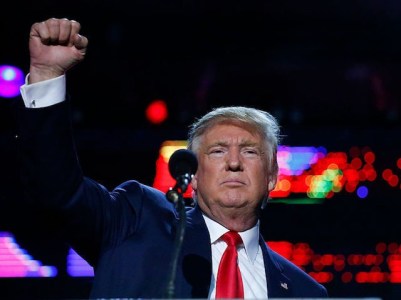
Terror mastermind Hafiz Muhammad Saeed was placed under house arrest in Lahore on January 30, less than ten days after Donald Trump took office. For years, Saeed had been living in the open in Pakistan in spite of a $10 million American bounty for information leading to his arrest and conviction. And yet it took new leadership in Washington D.C. to force the Pakistani government’s hand in getting serious about fighting Islamic extremism.
Lost in the misleading reports about “Muslim bans” and debates about much-needed vetting on refugees from the Middle East has been the Trump administration’s quiet but successful effort behind the scenes to advance policies that crack down on terrorism and the Islamist ideology that fuels it. On the campaign trail, Donald Trump vowed to take a new line toward Pakistan – the Islamist government that actively backed the Taliban in its infancy and, in turn, was pivotal in the fundamentalist movement’s ascent in Afghanistan. And Americans won’t soon forget that Osama bin Laden, once the world’s number one terrorist, was found in a conspicuous, $1 million compound in Abbottabad, only hundreds of yards away from a prestigious training center for Pakistani army officers.
Though Saeed isn’t a name known widely in the United States and though his arrest barely registered in Western headlines, he was the chief planner behind the 2008 Bombay attacks that killed dozens of Indians. In 1990, he founded Lashkar-e-Taiba (Army of the Pure), deemed by terrorist experts as “probably the most dangerous terror group in the world.” The group, among other horrific exploits, orchestrated “India’s 9/11”: the 2008 rampage on the Taj Hotel and the Jewish Chabad House in Mumbai, which left 166 people dead and more than 600 injured.
Up until the inauguration of Donald Trump, Pakistani officials considered Saeed a quasi-official state hero because of his willingness to attack Pakistan’s longtime nemesis, India. What changed? “It is (Indian Prime Minster Narenda) Modi’s insistence and Trump’s instigation,” Saeed himself asserted. Islamabad, he added, “is helpless before the pressure of Trump and Modi.” On this issue, the terrorist is right. The Pakistani government correctly appreciates that, not only there’s a new and tough sheriff in town, but that he’s got a skilled and receptive partner: a new U.S.-India alliance is a mortal threat to Islamist terrorism everywhere.
President Donald J. Trump and Prime Minister Modi together are the worst enemies of terrorists. The two are kindred spirits: committed nationalists and willing to forego the niceties of the political elites in both countries to get things done on behalf of a population eager for more jobs and economic growth. I introduced Mr. Trump and Mr. Modi for their first meeting in July 2016.
Trump and Modi, both proud unapologetic patriots and champions of entrepreneurialism, have been friendly for a while. This has become especially apparent though within the past several months. On October 15, the Republican Hindu Coalition held the Humanity United Against Terror charity event at the New Jersey Convention & Expo Center in Edison, New Jersey. In his speech, then-presidential candidate Trump promised India and the US would be “best friends.” He continued, “There won’t be any relationship more important to us.” After the election, he – revealingly – reached out to Modi before contacting the head of any major European nation. The White House subsequently issued a statement, stressing, “the United States considers India a true friend and partner in addressing challenges around the world.” Quartz heralded the arrival of a “bromance.”
Robust and enduring is the bond between America, the world’s oldest democracy, and India, the world’s most populous democracy. It was from the very beginning forged by a mutual reverence for liberty and constitutional republicanism. It was quickly reinforced by a mutual passion for industry and innovation. And today it is further bolstered by a shared yearning to eliminate, once and for all, the scourge of Islamic extremism.
We must rejoice that the people replaced an Apologizer-In-Chief with a Commander-In-Chief. We ought to celebrate the fact that, finally, the international relationship exists to strike at the heart of an enemy that Obama’s administration refused to even name. And, out of an unending love of freedom, we should welcome strengthened ties between Washington and New Delhi.
Given its long overdue crackdown, Pakistan clearly recognizes the dynamics have fundamentally changed. If Islamic extremists didn’t also realize this after 10,000 Indian Americans rose to their feet and loudly cheered Trump in October and more than two million Hindus voted for Trump in November, then they soon will.
Shalabh “Shalli” Kumar is Chairman and CEO of Chicago-based AVG Advanced Technologies. He was a member of Trump’s Transition Finance and Inauguration Committee and founding chairman of the Republican Hindu Coalition. You can follow him on Twitter @iamshalabhkumar.
Source: Israeli jets strike outside Damascus – Syrian media | The Times of Israel
Hezbollah weapons convoy reportedly targeted near Lebanese border; Israel stays mum

Syrian media reported that Israeli aircraft targeted a Syrian Army convoy bearing weapons for the Hezbollah terrorist group early Wednesday morning.
The strike was said to have occurred northeast of Damascus, in the Qalamoun Mountains, along the Lebanese border.
No injuries were reported.
The pro-government al-Masdar news service quoted a Syrian Army source as saying that the Israeli aircraft flew first through Lebanon and then into Syria.
An Israel Defense Forces spokesperson refused to comment on the strike.
Israel has said in the past that it will conduct airstrikes in Syria and Lebanon in order to prevent Hezbollah from getting its hands on “advanced weaponry.”
Earlier this week, it was reported that Hezbollah had obtained advanced Russian Yakhont anti-ship missiles.
In December, Syria blamed Israel for a missile strike on the Mezzeh Military Airport, located in a suburb of Damascus, which was apparently being used as a weapons depot.

A general view shows flames and smoke at the Mezzeh military airport on the southwestern outskirts of the capital Damascus following an explosion early on January 13, 2017. (AFP)
In recent days, Hezbollah and Lebanon have ratcheted up their rhetoric against Israel.
Last week, Hezbollah leader Hassan Nasrallah threatened the Jewish state, warning that his group’s missiles could reach Israel’s nuclear reactor in Dimona.
He doubled down on those comments on Tuesday, saying there would be “no red lines” in a future conflict with Israel.
“In the face of Israel’s threats to destroy Lebanon’s infrastructure, we will not abide by red lines, especially regarding Haifa’s ammonia and the nuclear reactor in Dimona. Hezbollah possesses the full courage for this,” he said, according to an English translation of his comments reported by the Naharnet website.
And Saturday, Lebanese President Michel Aoun — an ally of Hezbollah — warned that his country would meet any perceived threats by Israel with an “appropriate response,” after the Israeli ambassador to the UN complained about his statements regarding Hezbollah.
“Any attempt to hurt Lebanese sovereignty or expose the Lebanese to danger will find the appropriate response,” Aoun said in an official statement, according to Reuters.




 anneinpt
 artaxes
 danmillerinpanama
 davidking1530
 Peter Hofman
 Joseph Wouk
 Peter
Peter Louisiana Steve
 WarSclerotic
Recent Comments