Archive for February 17, 2017

PM: Israel, US have ‘grand mission’ over Iranian threat

February 17, 2017

Source: Israel Hayom | PM: Israel, US have ‘grand mission’ over Iranian threat

In interview with Fox News Netanyahu describes his meeting with President Trump as a “historical moment,” and “a meeting of the minds and hearts” • The nuclear deal has only made Iran more aggressive, dangerous to the U.S., Israel and the world, he says.

Israel Hayom Staff

Netanyahu, who met with President Donald Trump at the White House on Wednesday, described the meeting as a “historical moment,” as well as “a meeting of the minds and a meeting of the hearts.”

“I feel we have now, as the president says, an even stronger alliance. A new day, he called it. Maybe a new age,” Netanyahu said.

Commenting on the 2015 nuclear deal with Iran Netanyahu said, “The deal essentially said this, it said no bomb today, 100 bombs tomorrow, in 10 years. Now the assumption was, people [would say] ‘Well, okay, we’re kicking the can down the road.’ But this nuclear can of a single bomb then becomes the capacity to make dozens and dozens of bombs. And Iran doesn’t change its attitude.

“Since the signing of the deal, Iran has become more aggressive, more deadly, sponsoring more terrorism … with more money, a lot more money,” the prime minister said. “They’ve killed Americans all over the place. They’ve sponsored terrorism against Americans all over the place. Now they’re going to build ICBMs [intercontinental ballistic missiles] that can reach the United States and have multiple warheads to do that? That’s horrible.”

A nuclear Iran, he stressed, “is dangerous for America, dangerous for Israel, dangerous for the Arabs. Everybody now understands it and there’s an American president who understands it and we’re talking about what to do about this common threat.”


Why Trump can’t keep his promise of no nuclear Iran ‘ever’

February 17, 2017

Source: Why Trump can’t keep his promise of no nuclear Iran ‘ever’ – Middle East – Jerusalem Post

By
February 16, 2017 15:02


Trump and Netanyahu may not like the Iran nuclear deal, they may not have made it, and they may enforce it more aggressively than the Obama administration, but attempts to “rip it up” are over.

Donald Trump

Donald Trump. (photo credit:REUTERS)

Has everyone forgotten the complex challenges posed by Iran?

Most of the media attention from Wednesday’s landmark first meeting between Prime Minister Benjamin Netanyahu and US President Donald Trump has been on Israeli-Palestinian issues.

The minimal coverage of the two leaders’ comments on Iran has focused on their similar sounding tone and goals of preventing a nuclear Iran – with Trump saying that he will make sure that the Islamic Republic does not get a nuclear weapon “ever.”

Missed in all of this are some hugely important developments, including what didn’t happen.

One of Netanyahu’s primary goals over the last two years, which brought him to bruising, public fights with the Obama administration, has been blocking or repealing the Iran nuclear deal. He called the deal an historic mistake.

Trump the candidate ran unequivocally on a “rip it up” (the Iran deal) message, calling it the worst deal in history.

There were hints once Trump was elected and his nominees started to be asked about the Iran deal that change was afoot.

Change is now official: the deal is here to stay. It is now both Trump’s and Netanyahu’s policy.

They may not like the deal, they may not have made it, and they may enforce it more aggressively than the Obama administration, but attempts to “rip it up” are officially over.

Yet that is not the biggest development from Wednesday.

The biggest development was the absence of the two leaders announcing any concrete steps to change Iran’s behavior other than a strong-sounding but vague promise by Trump that he will never let Iran get a nuclear weapon.

Trump’s aggressive rhetoric and implied threats may be enough to make Iran observe the deal’s limits on its nuclear program in the coming years.

But the biggest worry has always been: what happens in January 2026 and 2031 when aspects of those limits start to expire?

The problem is that Trump can’t guarantee Iran will not legally “walk-out” to a nuclear weapon at that future date because he will not be president. Even if he is reelected, his second term would end in January 2025. It’s simple math.

If Israel and the US were really making Iran their top issue, they could have made some concrete announcements about joint efforts to define what they would do to respond to Iranian minor violations of the deal, defined Iranian major violations and detailed specific efforts to make limits on Iran’s nuclear program permanent.

At the very least, as a near-term measure, they could have suggested, as former IDF intelligence chief Maj. Gen. Amos Yadlin has suggested, some concrete moves at the UN to ban Iranian missile tests, after Iran carried out such tests on multiple occasions recently.

Currently, the Iran nuclear deal does not impact such tests and other UN resolutions only “call on” Iran to avoid such tests, but do not ban them.

Or they could have announced wider sanctions against Iran’s Revolutionary Guard, which is said to be under consideration, or moving new US military assets to the region as a show of strength.

There were no concrete new moves or rolling out of new processes announced.

To date, the Trump administration has not even announced whether and to what extent it is communicating directly with Iran as the Obama administration did – or just through the press.

Many hawks on the Iran issue are so thrilled with the stronger tone from Trump that he is already getting high marks.

But as is always the case with Iran, the devil is in the details, and Wednesday’s meeting surprisingly had none.

The Trump-Netanyahu alliance

February 17, 2017

Source: The Trump-Netanyahu alliance – Opinion – Jerusalem Post

By
February 16, 2017 22:47

The two-state model is widely viewed as the formula for Middle East peace. But the fact of the matter is that it makes peace impossible to achieve, by holding normal relations between Israel and its Arab neighbors hostage to grandiose peace deals.
Trump Netanyahu

When they met on Wednesday, US President Donald Trump and Prime Minister Benjamin were both walking wounded.

Netanyahu arrived in Washington the center of a criminal investigation the chief characteristic of which is that selected details of the probe are regularly leaked to the media by anonymous sources who cannot be challenged or held to account.

These anonymous sources, from inside the police and state prosecution, use hand-picked reporters who all share a visceral hatred of Netanyahu, to present a version of the probe to the public that besmirches Netanyahu and his family.

The prospect that Netanyahu may face indictment weakens his position in his party. Likud ministers, unsure of the future, but certain that they cannot challenge the credibility of unnamed sources without risking their own reputations and political futures, refuse to stand with Netanyahu and defend him. And so, with each additional anonymously sourced, incriminating story, the prime minister finds his political power diminished.

As for Trump, he met with Netanyahu two days after his loyal national security adviser, Lt.-Gen. (ret.) Michael Flynn, was forced to resign.

Flynn’s resignation was the culmination of a continuous campaign of defamation waged against him that began even before Trump was elected.

Flynn rose to national prominence in 2014 after then-president Barack Obama, who promoted him and appointed him to head the Defense Intelligence Agency, summarily fired him. Obama fired Flynn because the general opposed his nuclear deal with Iran, and opposed his supportive view of the Muslim Brotherhood, among other things. Since he was forced into early retirement, Flynn became an outspoken critic of the politicization of US intelligence agencies under the Obama administration.

The campaign against Flynn was based on highly classified information regarding conversations Flynn held with Russia’s ambassador to the US during the transition process in December. Under US law, intelligence agencies are prohibited from divulging the identity of US citizens whose conversations with foreign intelligence targets are intercepted.

The law is in place for good reason. As Eli Lake wrote in Bloomberg on Tuesday, “Selectively disclosing details of private conversations monitored by the FBI or NSA gives the permanent state the power to destroy reputations from the cloak of anonymity. This is what police states do.”

In the event, an FBI investigation of the conversations after they were leaked concluded that Flynn did nothing illegal in his dealings with the Russian ambassador. But criminalizing Flynn was never the object of the leaks – making him politically toxic was the aim. And it was accomplished on Monday when he resigned.

It appears likely that Trump became convinced that by sacrificing Flynn, he would end the insurrection US intelligence operatives are waging against his presidency. But as The New York Times made clear on Wednesday, the opposite is true.

Following Flynn’s resignation, the same intelligence sources that caused his downfall told sympathetic reporters that they have the top secret transcripts of conversations that other Trump staffers held with Russian regime officials. The fact that the transcripts indicate no wrongdoing on the part of any of Trump’s staffers is neither here nor there. The drumbeat of defamation will continue.

Flynn was the first target. But he will not be the last.

Selective leaks are not the only way that the permanent state intends to hamstring Trump. On Wednesday, The Wall Street Journal reported that US intelligence agencies are hiding intelligence from the White House.

On Thursday, without provocation or legal requirement, the FBI released records from a 45-year-old civil rights investigation of the Trump family’s real estate firm.

And of course, the decision by radical courts to block implementation of Trump’s executive order on immigration to the US from seven terrorism-stricken states shows that empowered political foes in the legal establishment intend to prevent him from governing.

To a certain degree, Trump’s first month in office bears a striking similarly to Netanyahu’s first term in office 20 years ago. When Netanyahu was first elected prime minister in 1996, he was an inexperienced politician. Before winning the election, Netanyahu had never held a cabinet level appointment.

Netanyahu, who opposed the phony peace process with the PLO, was viewed as the root of all evil by Israel’s security and legal establishment whose members had adopted the two-state formula as their catechism. After he was elected they joined forces to subvert his authority.

In 1997, the legal fraternity, in alliance with the media, alleged that Netanyahu’s decision to appoint Likud attorney Ronnie Bar-On attorney-general was the product of a criminal deal he cooked up with then-interior minister Arye Deri. In the fullness of time, the allegations were exposed as utterly groundless. But at the time, they sufficed to torpedo Bar- On’s appointment. More important, the fake Bar-On scandal gave the legal fraternity the opportunity to turn the relationship between the attorney-general and the government on its head. Following the affair, the legal fraternity coerced a weakened Netanyahu to transfer the authority to select the attorney-general to the legal fraternity. Moreover, Netanyahu agreed to subordinate the government to the attorney-general’s legal decisions.

Then there was the security establishment. From the beginning the military establishment set out to block efforts by Netanyahu to diminish the centrality of the peace process with the PLO in Israel’s strategic planning. The fact that the security establishment was not faithfully serving Netanyahu and his government was exposed for all to see in September 1996, when the PLO-led Palestinian Authority launched a terrorist campaign against Israel following Netanyahu’s decision to order the opening of a subterranean tunnel spanning the walls of the Temple Mount.

Rather than taking responsibility for failing to either foresee or quell the terrorist offensive, Israel’s security brass blamed Netanyahu for the PLO’s murder spree.

Instead of standing up to the rebellious bureaucracies, Netanyahu caved in. Consequently, he lost his base, and in 1999 he lost his office.

In a way, Netanyahu had no choice. He had no allies with the power to help him. The Clinton administration was implacably opposed to him and worked openly with the Israeli deep state to unseat him. The media hated him even more than they hate him today.

Trump’s decision to allow Flynn to resign was a dangerous sign that he is beginning to follow the same pattern of behavior that led to the failure of Netanyahu’s first term.

But his press conference with Netanyahu on Wednesday signaled that Trump may yet turn things around and gain control over the rebellious bureaucracy by leaning on an ally that wants him to succeed and needs him to succeed in order to survive himself.

From the statements they made at the joint press conference, it is clear that Trump and Netanyahu have decided to build an alliance. Its purpose is twofold. First, by working together, they can defeat the common foes of their countries. And second, the success of their joint efforts will bring about the defeat of their bureaucratic enemies.

The most significant development to come out of the Trump-Netanyahu press conference was their refusal to endorse the two-state policy doctrine. This was a necessary move.

The only way to build a working alliance between the US and Israel – as opposed to the declarative alliance that exists at public ceremonies – is for both leaders to abandon the two-state paradigm for policy- making.

The two-state formula has been the foundation of US Middle East policy for a generation. It has also been the foundation of the tribal identity of the Israeli Left – led by the military and legal fraternities and the media.

The two-state model is widely viewed as the formula for Middle East peace. But the fact of the matter is that it makes peace impossible to achieve, by holding normal relations between Israel and its Arab neighbors hostage to grandiose peace deals.

Even worse, the two-state model is based on an anti-Israel and anti-US assumption that makes it impossible for either to advance their strategic interests vis-à-vis the Islamic world.

The basic idea behind the two-state paradigm is that the establishment of a PLO state is a precondition for winning the war against Islamic terrorism.

So long as Israel refuses to cede sufficient territory to appease the PLO, victory will be impossible, because the absence of a PLO state so angers Muslims that they will continue killing their enemies.

The defeatist notion that “there is no military solution” to terrorism that dominates the American and Israeli strategic discourses is based on the two-state model.

Given that at the heart of the two-state model is the conviction that Israel is to blame for the presence of Islamic terrorism and extremism, and that the only way to proceed is to establish a terrorism- supporting PLO state, it naturally follows that the policy’s adherents in the US cannot see any real purpose for the US alliance with Israel. It is also natural that they fail to see any potential for a regional alliance led by the US and joined by Israel and the Sunni states based on the common goals of defeating Iran and radical Islamic terrorist enclaves.

In other words, the two-state formula dooms its adherents to strategic myopia and defeatism while holding their strategic and national interests hostage to the PLO.

The insanity at the heart of the two-state formula, and the US and Israeli public’s desire to make a clear break with the strategic defeats of the past generation, makes its abandonment a clear choice for both Trump and Netanyahu. Abandoning it wins them support and credibility from their political bases when they need their supporters to rally to their side. And to the extent they are able to implement more constructive policies to defeat the forces of radical Islam, they will weaken the establishments that are working to undermine them.

By leaning on Netanyahu to help him to secure victories against the forces of radical Islam, and so putting paid to the bureaucracy’s most beloved policy paradigm, Trump can both secure his base and weaken his opponents.

So, too, by developing a substantive alliance with the Trump administration and increasing Trump’s chance of political survival and success, Netanyahu gains a formidable partner and makes it more difficult for the legal fraternity and its media flacks to bring about his indictment and fall.

Amazingly then, to a significant degree, the survival of both leaders is tied up with their success in keeping their promises to their voters and defeating their foes – domestic and foreign.

http://www.CarolineGlick.com

Top Trump Aide: Despite Resignation of National Security Adviser, Administration Committed to Flynn’s Staunch Stance on Iran

February 17, 2017

Top Trump Aide: Despite Resignation of National Security Adviser, Administration Committed to Flynn’s Staunch Stance on Iran, AlgemeinerRuthie Blum, February 16, 2017

trumpandgorkaSebastian Gorka with US President Donald Trump. Photo: Facebook.

A top aide to US President Donald Trump told The Algemeiner on Thursday that despite the resignation this week of General Michael Flynn as national security adviser, Washington remains committed to his staunch positions on Iran.

“Flynn’s statements on the Islamic Republic reflect the new administration’s stance, as the president has been very clear,” said Deputy Assistant to the President Sebastian Gorka. The author, most recently of Defeating Jihad: The Winnable War, was referring, in part, to the former national security adviser’s “officially putting Iran on notice” earlier this month, after it test-launched a ballistic missile, and its proxy terrorist group in Yemen — the Houthis — attacked a Saudi warship.

Speaking to The Algemeiner in the wake of Wednesday’s meeting between Trump and Israeli Prime Minister Benjamin Netanyahu — who has spent years warning against the dangers of a nuclearized Iran — Gorka said, “We are reassessing US policy to the regime in Iran and are committed to not facilitating the mullahs in their destabilization of the whole region as the Obama White House did, especially through the disastrous JCPOA (Joint Comprehensive Plan of Action),” otherwise known as the nuclear deal.

The ayatollahs, he noted, “are not only behaving in ways that are antithetical to the American values of freedom and human rights, but through their proxies, they are harassing our partners in the Middle East, and have become a particularly negative force in the region since being emboldened by the nuclear deal and by the Obama administration, which rewarded bad behavior with billions of dollars and undisclosed annexes to the JCPOA.”

Asked whether Netanyahu’s input had an effect on Trump’s statement about not allowing Iran to achieve “nuclear capability” — rather than merely preventing it from building a nuclear weapon — Gorka said, “The key is that this administration has been adamant that it will treat friends as friends. And you listen to your friends’ concerns.”

The Jewish state, he said, is in this category, “as was expressed in yesterday’s meeting, and through Trump’s insistence that America’s bond with Israel is ‘unbreakable.’ The warmth shown to Netanyahu was palpably different from the cold shoulder he received from the previous president.”

Gorka went on to explain that the opposite messages being conveyed to Israel and Iran from the White House are in keeping with a Marine Corps motto — which, he said, has been informally adopted by the Trump administration — “No better friend, no worse enemy.”

“It means that America is back on the scene,” he said. “No more oxymoronic ‘leading from behind.’ We have restored our relationship with the Israeli government to the place where it should be.”

Gorka, a naturalized American whose parents escaped Communist Hungary and was raised in the UK, came under the critical scrutiny this week of several media outlets for wearing the medal of a Hungarian order of merit re-established in 1920 by Miklós Horthy. Horthy, the wartime Hungarian regent accused of not doing enough to prevent the Nazi deportation of Jews — and whose own son was kidnapped by Nazi commandos — was eventually replaced by the fascist Arrow-Cross Regime, allied to Hitler.

The honor, today, however, is recognized by the International Commission on Orders of Chivalry, and was awarded to Gorka’s father as a recognition of his suffering and resistance to the Communist dictatorship that followed the fascists.

“Smearing individuals is what the Left does when it can’t win an argument on substance,” Gorka said, explaining that his father had been granted the merit more than 30 years after WWII.

Gorka recounted:

He was nine years old when the war broke out and 15 when it ended and the puppet Nazi regime fell. He was imprisoned at the age of 20 for his anti-Communist activities, and was later given the medal in exile. I wear his medal during official occasions in homage to my father and my Hungarian roots.

It is especially appalling that I was smeared, when the writer, Eli Clifton, who first made the allegation was allegedly fired from his previous position for making antisemitic and anti-Israel statements. To quote one authority: “The Simon Wiesenthal Center, the Anti-Defamation League and the American Jewish Committee have all termed the anti-Israeli rhetoric of … Eli Clifton …. to be infected with Jew-hatred and discriminatory policy positions toward Israel.”

It is therefore “galling,” he said, “that I should be slandered in this way, when my family lived through and opposed all dictatorships.” Still, he added, “When your political opponents resort to this kind of defamation, it’s a sign that your side is winning.”

UCLA bans “Islamophobic” book from free speech event

February 17, 2017

UCLA bans “Islamophobic” book from free speech event, Jihad Watch

(Ironically, an imam at a Maryland mosque, who had just attended a celebration of a Pakistani for murdering an opponent of Pakistan’s pro-Sharia blasphemy laws, praised America’s freedom of speech: 

We have some freedoms here (in the U.S.) which we do not even have in other Muslim countries. This is the beauty of this country. There are some countries where we can’t even praise the prophet, we can’t celebrate the Day of Imam Hussain. This country has freedom of religion, and this is the beauty of this country.

Please see Maryland Mosque Memorializes Islamist Assassin. What might he have said about the removal of Mr. Spencer’s “Islamophobic” book? — DM)

At this point, you might hope the UCLA administration would step in to re-assert the principle of intellectual freedom that is so crucial to education, a free society, and the advancement of human knowledge. Finally a rep from UCLA did step in–to abet the student protestors. My book was “inflammatory.” It had to go.

Thus: at a panel about freedom of speech and growing threats to it – not least from Islamists – UCLA students and school administrators tried to ban a book that highlights the importance of free speech, the persistent failure to confront Islamic totalitarianism, and that movement’s global assaults on free speech….

*************************************

Ironically, this report appears in The Hill, which has previously shown itself ready to comply with pro-Sharia intimidation. The slightest critical word about Islam, or what is perceived to be the slightest critical word, is immediately denounced as “Islamophobic” and suppressed. If this phenomenon isn’t challenged and halted, all those who speak the truth about Islam and jihad will be silenced, and the jihad will advance unopposed and unimpeded.

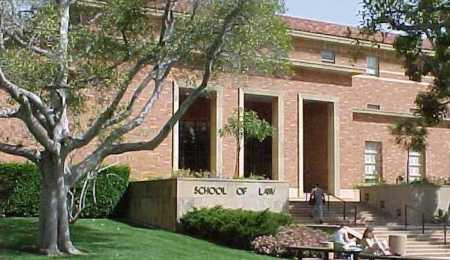
ucla-law-school

“UCLA banned my book on Islam from a free speech event,” by Elan Journo, The Hill, February 11, 2017:

At UCLA Law School last week, a squad of student “thought police” tried to ban my book, Failing to Confront Islamic Totalitarianism: From George W. Bush to Barack Obama and Beyond. They don’t want you to know the book even exists, let alone what’s inside it. And the UCLA administration enabled them. This ominous episode underlines how students are learning to be contemptuous of intellectual freedom.

The story of what happened at UCLA is laced with ironies. On Feb. 1, the UCLA chapter of the Federalist Society and the Ayn Rand Institute co-sponsored a panel discussion at UCLA Law School on the vital importance of freedom of speech and the threats to it. My book shows how certain philosophic ideas undercut America’s response to the jihadist movement, including notably its attacks on freedom of speech.

Naturally, the book was displayed and offered for sale at a reception prior to the event, which featured Dave Rubin, the contrarian YouTube host; Flemming Rose, the Danish editor who published the now-infamous Mohammad cartoons in 2005 and author of The Tyranny of Silence; and Steve Simpson, editor of Defending Free Speech (these two books were also displayed).

During the reception, however, a group of UCLA students assembled in front of the book table and objected to mine. Why? Had they read the book, weighed the evidence, and found it lacking? Had they formed a considered evaluation of the book’s argument?

No: They felt the book was “offensive” and “insulting.” They had “issues” with the views that I and my co-author, Onkar Ghate, put forward. Our views, it seems, were “Islamophobic.” Based on what? Apparently, for some of them, it was the book’s title.

Yet another irony here is that in the book we disentangle the notion of “Islamophobia.” We show that it’s an illegitimate term, one that clouds thinking, because it mashes together at least two fundamentally different things. The term blends, on the one hand, serious analysis and critique of the ideas of Islamic totalitarianism, the cause animating the jihadists, which is vitally important (and the purpose of my book); and, on the other hand, racist and tribalist bigotry against people who espouse the religion of Islam. Obviously, racism and bigotry have no place in a civilized society.

Moreover, the book makes clear that while all jihadists are self-identified Muslims, it is blatantly false that all Muslims are jihadists. (It should go without saying, though sadly it must be said, that countless Muslims are law abiding, peaceful, productive Americans.) Ignorant of the book’s full scope and substance, the students felt it had no place on campus.

The students demanded that my book be removed from display. My colleagues who manned the display table declined to remove the book.

So the students enforced their own brand of thought control. They turned their backs to the table, forming a blockade around it, so no one could see or buy the books. Then they started aggressively leaning back on the table, pushing against the book displays. By blocking access to the book, they were essentially trying to ban it.

At this point, you might hope the UCLA administration would step in to re-assert the principle of intellectual freedom that is so crucial to education, a free society, and the advancement of human knowledge. Finally a rep from UCLA did step in–to abet the student protestors. My book was “inflammatory.” It had to go.

Thus: at a panel about freedom of speech and growing threats to it – not least from Islamists – UCLA students and school administrators tried to ban a book that highlights the importance of free speech, the persistent failure to confront Islamic totalitarianism, and that movement’s global assaults on free speech….