Archive for February 16, 2017

The CIA’s affront to Trump

February 16, 2017

The CIA’s affront to Trump, Washington Times, Angelo M. Codevilla, February 16, 2017

(It is absurd for the CIA to have control over whom President Trump can appoint to the National Security Council by refusing — for no stated or apparent reason — to grant the required security clearance. — DM)
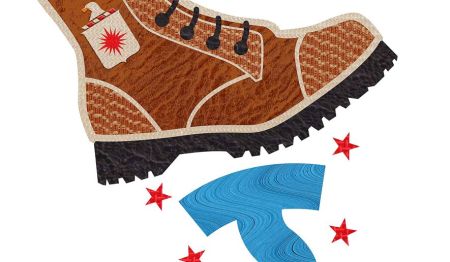
ciatrumpstrumpCIA Bullies Trump Illustration by Greg Groesch/The Washington Times

ANALYSIS/OPINION:

The CIA has denied a security clearance to Trump National Security Council (NSC) official Robin Townley without any allegation, much less evidence of disloyalty to the United States. Quite simply, it is because the CIA disapproves of Mr. Townley’s attitude toward the agency, and this is unprecedented. President Trump appointed Mr. Townley to coordinate Africa policy at the NSC. The CIA did not want to deal with him. Hence, it used the power to grant security clearances to tell the president to choose someone acceptable to the agency, though not so much to him. This opens a larger issue: Since no one can take part in the formulation or execution of foreign or defense policy without a high-level security clearance, vetoing the president’s people by denying them clearances trumps the president.

Hence, if Mr. Trump does not fire forthwith the persons who thus took for themselves the prerogative that the American people had entrusted to him at the ballot box, chances are 100 percent that they will use that prerogative ever more frequently with regard to anyone else whom they regard as standing in the way of their preferred policies, as a threat to their reputation, or simply as partisan opponents. If Mr. Trump lets this happen, he will have undermined nothing less than the self-evident heart of the Constitution’s Article II: The president is the executive branch. All of its employees draw their powers from him and answer to him, not the other way around.

Using security clearances for parochial purposes — usually petty ones — while neglecting security, never mind counterintelligence, is an old story at the CIA which I got to know too well during eight years overseeing the agency as the designee of the Senate Intelligence Committee’s budget chairman. Because I did my quality control job vigorously, and because I placed on the budget cut list some of the many outside contracts that seemed corrupt, the agency made repeated attempts to withdraw my top-level, cross-cutting security clearances. After I left the Senate staff for Stanford, when the Naval Postgraduate School asked me to teach a highly classified course on signals intelligence, the school’s security office asked the CIA for my clearances. The bureaucrats there said they had never heard of me. I had to call Director of Central Intelligence Bill Casey, who ended up phoning them in personally to a startled Navy chief.

The CIA uses pretense about security to insulate itself from criticism, to protect its own, and to intrude into policymaking. Security against foreign intelligence ranks low in its priorities. For near a decade, its bureaucrats refused to look into obvious evidence that their own Aldrich Ames had sold out America’s entire agent network in the Soviet Union. Moreover, according to its inspector general, they continued to pass reports from that network to the president because they happened to agree with the direction in which these KGB-produced reports were pushing U.S. policy. The CIA also uses secrecy to avoid responsibility. It crafts the conclusions of its reports specifically to be leaked to The New York Times and The Washington Post, while making sure that the thin or nonexistent facts behind those conclusions never see the light of day.

The CIA’s denial of a clearance to a presidential appointee minus good cause, however, breaks new ground and shows truly revolutionary boldness. Traditionally, bureaucrats have used sticks and carrots to convince political appointees to play along lest they suffer unpleasantness. Thus, presidents have ended up having to choose between suffering appointees who have “gone native” or replacing them. Now, the CIA’s denial of Mr. Townley’s clearance removes all subtlety by demanding that Mr. Trump appoint only “natives.” If Mr. Trump indulges that demand for self-emasculation, the message will go out to all agencies: They need pay no attention to what political appointees tell them, and they need fear no retribution for this or for pressuring appointees in any way they want. The message to the people who Mr. Trump has appointed or who are considering working for Mr. Trump is just as clear: You have no choice but to make yourself acceptable to the bureaucrats because, if you don’t, they will hurt you and the president will not help you. This cannot help but skew the pool of potential members of the Trump administration.

We cannot know nor does it matter why Donald Trump seems to be deferring to bureaucrats who have gone out of their way to delegitimize him. But we can be certain about the kind of dynamic engendered by deference in the face of assaults.
Poll: Israel Maintains Overwhelmingly Positive Image in U.S.

February 16, 2017

Source: Poll: Israel Maintains Overwhelmingly Positive Image in U.S.

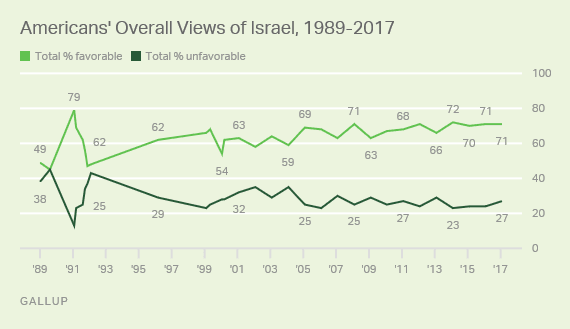
A Gallup poll released Wednesday ahead of the meeting in Washington between Israel Prime Minister Benjamin Netanyahu and U.S. President Donald J Trump revealed that since 2014, the proportion of Americans who say they view Israel favorably has remained at 70 to 72 per cent.

bcrnv_pgbkyernvtu4wumw

According to Gallup, Israel enjoys a positive image among all major U.S. demographic and political groups, but scores particularly well with Republicans (81 per cent view it favorably) and adults 65 and older (77 per cent). While a majority of Democrats view Israel favorably, the 61 per cent doing so is the lowest of any major subgroup.

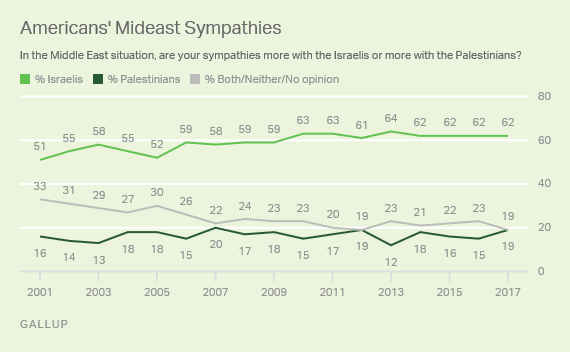
The new figures follow the release of separate poll data earlier this week that found more members of all three party groups sympathize with Israel than with the Palestinians. This ranges from 82 per cent of Republicans to 57 per cent of independents and 47 per cent of Democrats. By contrast, 6 per cent of Republicans, 23 per cent of independents and 29 per cent of Democrats sympathize more with the Palestinians.

gseaq6schemlswrzntmw7q

Prime Minister Benjamin Netanyahu, a key player in current and future Middle East peace negotiations, is viewed more favorably than unfavorably by Americans, 49 per cent vs. 30 per cent.

Obama’s Secret Communications with Mullahs Undermined American Foreign Policy

February 16, 2017

Obama’s Secret Communications with Mullahs Undermined American Foreign Policy, Power LineJohn Hinderaker, February 15, 2017

Obama secretly told the mullahs not to make a deal until he assumed the presidency, when they would be able to make a better agreement. Which is exactly what happened . . . .

***************************************

The Democrats are trying to make a scandal out of the fact that one or more people associated with the Trump presidential campaign had telephone conversations with one or more representatives of the Russian government prior to Trump’s inauguration. Is there anything wrong with that? Not as far as we know. The CIA/NSA leakers have declined to say anything about the content of the conversations, so they must have been benign. Let’s release the tapes and eliminate all doubt, and then let’s fire the leakers and, if appropriate, send them to prison.

But in the meantime, let’s not forget an infinitely bigger scandal: in 2008, while he was running for the presidency, Barack Obama deliberately undermined American foreign policy by secretly encouraging Iran’s mullahs to hold out until he became president, because he would be easier to deal with than President George Bush. I wrote about the Obama scandal here: “HOW BARACK OBAMA UNDERCUT BUSH ADMINISTRATION’S NUCLEAR NEGOTIATIONS WITH IRAN.” Check out the original post for links. Here it is:

In 2008, the Bush administration, along with the “six powers,” was negotiating with Iran concerning that country’s nuclear arms program. The Bush administration’s objective was to prevent Iran from acquiring nuclear weapons. On July 20, 2008, the New York Times headlined: “Nuclear Talks With Iran End in a Deadlock.” What caused the talks to founder? The Times explained:

Iran responded with a written document that failed to address the main issue: international demands that it stop enriching uranium. And Iranian diplomats reiterated before the talks that they considered the issue nonnegotiable.

The Iranians held firm to their position, perhaps because they knew that help was on the way, in the form of a new president. Barack Obama had clinched the Democratic nomination on June 3. At some point either before or after that date, but prior to the election, he secretly let the Iranians know that he would be much easier to bargain with than President Bush. Michael Ledeen reported the story last year:

During his first presidential campaign in 2008, Mr. Obama used a secret back channel to Tehran to assure the mullahs that he was a friend of the Islamic Republic, and that they would be very happy with his policies. The secret channel was Ambassador William G. Miller, who served in Iran during the shah’s rule, as chief of staff for the Senate Select Committee on Intelligence, and as ambassador to Ukraine. Ambassador Miller has confirmed to me his conversations with Iranian leaders during the 2008 campaign.

So Obama secretly told the mullahs not to make a deal until he assumed the presidency, when they would be able to make a better agreement. Which is exactly what happened: Obama abandoned the requirement that Iran stop enriching uranium, so that Iran’s nuclear program has sped ahead over the months and years that negotiations have dragged on. When an interim agreement in the form of a “Joint Plan of Action” was announced in late 2013, Iran’s leaders exulted in the fact that the West had acknowledged its right to continue its uranium enrichment program:

“The (nuclear) program will continue and all the sanctions and violations against the Iranian nation under the pretext of the nuclear program will be removed gradually,” [Foreign Minister Mohammad Javad Zarif] added. …

“Iran’s enrichment program has been recognized both in the first step and in the goals section and in the final step as well,” Zarif said.

“The fact that all these pressures have failed to cease Iran’s enrichment program is a very important success for the Iranian nation’s resistance,” he added.

So Obama delivered the weak agreement that he had secretly promised the mullahs.

That, readers, is what a real scandal looks like.

A new approach to U.S. Middle East strategy

February 16, 2017

A new approach to U.S. Middle East strategy, Center for Security Policy, Adm. James “Ace” Lyons (Ret.) and Clare M. Lopez, February 15, 2017

puzzlepalace

The Trump administration has a unique opportunity to implement a new strategic policy to bring some semblance of stability to the current Middle East chaos. Under the pledge of putting “America first,” our core national security interest in the region should include the following:

  • Eliminating the Islamic State as an identifiable entity.
  • Preventing Iran from achieving a deliverable nuclear weapon capability.
  • Preventing Iran from achieving regional hegemony.
  • Supporting Iranians in their efforts to remove the corrupt Iranian theocracy.
  • Keeping open vital sea lanes and strategic choke points.
  • Defending U.S. bases and facilities.

• Re-emphasizing our support for our friends and allies while assisting threatened minorities (Christians, Assyrians/Chaldeans, Kurds and Yazidis).

Our strategy in the past has been reactive, but now must be driven by our vital core objectives. In that sense, it is not in the U.S. interest to become involved in a 1,300-year-old, intra-Islamic sectarian fight between Shiites and Sunnis. From a Western perspective, there is no good side in this conflict. Both want to kill us.

It also must be recognized that much of the 1916 Sykes-Picot Agreement nation-state system formed in the Middle East after World War I is coming asunder. Syria and Iraq are fractured states and a readjustment of a regional balance of power between Shiite and Sunni will evolve out of the current crisis with or without U.S. involvement. Our invasion of Iraq and the destruction of Saddam Hussein’s Sunni army removed the main blocking force to the expansion of Iran’s Shiite Crescent and ensured the rise of the Islamic State (ISIS) out of Abu Musab al-Zarqawi’s al Qaeda in Iraq.

A Sunni entity that clearly is not ISIS should be assisted to coalesce in what used to be Iraq. Such an entity could involve Anbar Province and the Nineveh Plain, where Assyrians/Turkman/Yazidis are unifying in an effort at preservation and stabilization.

In areas outside of Alawite and Kurdish control and areas liberated from ISIS in the former Syria, Syrian Free Army (SFA) commanders believe that with U.S. and other Western support, they could pry off significant forces from jihadi militias to create a force to defeat Jabhat al-Nusra, Jabhat Fateh al-Sham, and ISIS. This approach should be explored. In implementing a new strategy, we must proceed in a manner that gains cooperation from those whose involvement is essential. This includes Russia, Saudi Arabia and other Gulf Cooperation Council (GCC) countries, and Turkey. The Gulf states must be persuaded to end support for Sunni jihadis, which can only happen if they are assured that they will not be threatened or surrounded by Iran’s Shiite Crescent.

The Trump administration’s recent declaration putting Iran “on notice” is a step in the right direction, as were U.S. Treasury sanctions on 12 entities for supporting Iran’s illicit ballistic missile program. Further, President Trump’s call for establishing safe zones in Syria, e.g., one in the northern Kurdish area, one along the Turkish border, and one on the Jordanian border, could help relieve economic pressure on Jordan and Turkey, which are providing support to millions of refugees. In return, we should expect Turkey and Jordan’s support for our new regional strategy.

President Obama’s policy that deliberately empowered Iran to advance its geostrategic ambitions and move toward a deliverable nuclear weapons capability is over. Our so-called nuclear agreement with Iran must also be terminated and Iran’s joint venture relationship, using North Korea as its off-site laboratory to advance its nuclear and ballistic missile programs, must end. Holding Iran accountable to the agreement is a pipe dream. There is no agreement. Further, a clear, unambiguous declaration from the Trump administration with appropriate follow-on action will go a long way to gain Saudi and GCC cooperation.

With regard to Syria, Bashar Assad must go. It appears Russia may support such action as it reportedly proposed Alawite Gen. Manas Tlass (formerly with the Hafez Assad regime) as his replacement at the Astana talks. SFA commanders may accept this as long as the Assad clan is out of power and in exile. Under such an arrangement, the Alawites would keep control of Damascus and their coastal strip heartland, but lose the rest of former Syria. This is the de facto current situation on the ground today.

Russia may find such an arrangement acceptable, provided it keeps its bases in Latakia and Tartus. While these are major concessions, issues involving Ukraine/Crimea must also be part of the discussion, as well as Libya. The bottom line in the trade-offs must be Russia’s commitment to help in getting Iran, Hezbollah and Shiite militias out of what formerly was Syria.

Turkey also may be helpful in the overall realignment but must be managed carefully, as Turkey under Recep Tayyip Erdogan’s AKP (Justice and Development Party) is moving toward an authoritarian neo-Ottoman jihad state. Clearly, the No. 1 Turkish concern is the Kurds. One option may be to not allow the Kurdish northern-Syria enclave “Rojava” to extend to the Turkish border. There would instead be a safe zone there, guaranteed jointly by Russia and Turkey. Gas and oil pipelines also are major factors that must be included in discussions with both Russia and Turkey.

Since we have no vital objectives in Afghanistan, we should stop wasting our national treasure to support a corrupt tribal society.

If this new strategic approach is followed, our vital core strategic objectives will most likely stand a better chance of being achieved while gradually bringing the current chaos under control.

Iran Warns Trump Against Disclosing Secret Iran Deal Documents

February 16, 2017

Iran Warns Trump Against Disclosing Secret Iran Deal Documents, Washington Free Beacon, February 15, 2017

(Does General Flynn know about secret deals beyond those on file at the U.S. Congress? — DM)

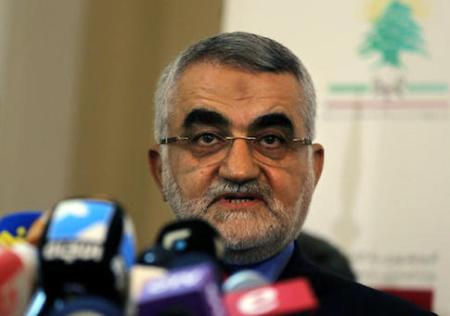
Iranian Alaeddin Boroujerdi, Chairman of the Committee for Foreign Policy and National Security at the Iranian Shura Council, speaks to journalists after meeting with Lebanese Foreign Minister Gibran Bassil, at the Lebanese foreign ministry in Beirut, Lebanon, Monday, Aug. 1, 2016. Boroujerdi arrived in Beirut for two days visit to meet with Lebanese officials. (AP Photo/Bilal Hussein)

Iranian Alaeddin Boroujerdi, Chairman of the Committee for Foreign Policy and National Security at the Iranian Shura Council. . . . (AP Photo/Bilal Hussein)

Senior Iranian officials are warning the Trump administration about disclosing secret deals related to the nuclear deal that have long been hidden from the public by the Obama administration, according to recent comments that prompted pushback from senior sources on Capitol Hill.

Iran’s warning comes on the heels of a Washington Free Beacon report disclosing that former national security adviser Michael Flynn had been pushed out of office partly due to his intention to release these sensitive documents to the American public.

Leading lawmakers in Congress launched multiple investigations last year into the Obama administration’s efforts to keep these documents secret and out of public view. Sources who spoke to the Free Beacon about the matter said that the Trump White House is working on ways to publicize this information despite warnings from Iran.

Secret side deals related to the nuclear agreement remain unclassified but have been stashed in a secure location on Capitol Hill, making it difficult for staffers and lawmakers to view them. Individuals seeking to view these documents must have security clearance and are barred from taking notes or speaking about what they see.

Multiple senior congressional sources familiar with the nature of the documents told the Free Beacon that lawmakers and the Trump administration would not be intimidated by Iranian threats.

Alaeddin Boroujerdi, a senior Iranian lawmaker and head of country’s foreign policy committee, warned the Trump administration against making these documents public in recent remarks.

“If Trump wants to publish confidential documents exchanged between Iran and the International Atomic Energy Agency, it will in fact constitute a violation of the agency’s obligations, because the agency has been committed not to make Iran’s confidential nuclear information and documents available to any country, including the U.S.,” Boroujerdi was quoted as saying in Iran’s state-run media.

Some of these documents surround side deals struck between Iran and the IAEA regarding the Islamic Republic’s ability to enrich uranium. They also include deals about how much information Iran must disclose to international inspectors about the country’s contested nuclear program.

As part of the nuclear deal, U.S. inspectors are not permitted to take part in the review of any Iranian sites.

Rep. Peter Roskam (R., Ill.), a vocal opponent of the Iran deal who has long been fighting for the full disclosure of the Iran deal documents, told the Free Beacon that the Obama administration hid these documents in order to mislead Americans about the true nature of the agreement.

“The administration is under no obligation to conceal information about secret side deals, nor should they feel obligated to protect the anonymity of individuals or institutions who misbehaved at the behest of the Obama administration,” Roskam said.

Included in these documents are details of multiple, secret payments to Iran that totaled close to $2 billion. The money is believed to have been part of an incentive package aimed at securing the release last year of several American hostages in Iran.

None of this information is technically classified, yet it remains hidden from the American public and a large portion of Congress.

“The deal has only survived this long because the Obama administration gave Iran secret exemptions to cheat,” said one veteran congressional adviser familiar with the documents. “The Iranians know that if people found out about those exemptions, it would be obvious that the deal was always a bad, unsustainable deal, and they couldn’t blame Trump. That’s why they’re making up reasons why parts of the deal should be kept secret.”

Iran is expressing opposition to the disclosure of the information in order to force the Trump administration into a corner, the source maintained.

A senior congressional aide familiar with the situation further told the Free Beacon that U.S. lawmakers would not be instructed by Iran about what can and cannot be made public.

“Our declassification procedures are not subject to the whims of Iranian officials,” the source said. “Unclassified documents should be released so the American public can see just how bad of a deal the previous administration negotiated on its behalf.”

A second congressional source explained that federal law mandates these documents be released to lawmakers. This includes side deals and other materials related to the future of Iran’s nuclear program.

“The American public has a right to know what’s really going on behind the scenes with the nuclear agreement. At the very least, Congress is entitled to all relevant documents—including side arrangements or any other related materials—as mandated by federal law under Corker-Cardin,” the source said. “We won’t be intimidated by these empty threats from Iran or any international body. It’s time to make these secret documents public so everyone can for themselves what this deal is really all about.”