Archive for August 29, 2016

Iran: No Range Limit for Our New Ballistic Missiles

August 29, 2016

Iran: No Range Limit for Our New Ballistic Missiles, Clarion Project, Meira Svirski, August 29, 2016
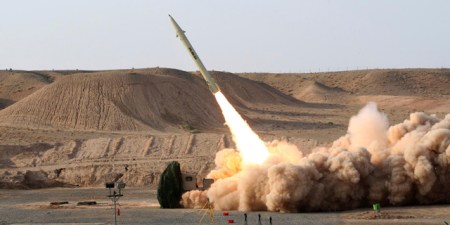
Iran-Missile-HP_9An Iranian missile test (Photo: © Reuters)

Iran has successfully played America as the fool, challenging the U.S. to stand up to its belligerence. Every time America backs down, by either making excuses for the Islamic Republic (i.e., by redefining the deal) or ignoring their latest outrage, Iran becomes more empowered.

Sanctions relief let the Iranian genie out of the bottle. Now, the terror-supporting and oppressive regime is taking its place on the world stage unrestrained and unopposed.
********************

The Iranian defense minister recently pronounced that the Islamic Republic has “no limit for the range” of the ballistic missiles it is developing.

In making the pronouncement, General Hossein Dehqan also said that Iran is now on par with world standards for most of its weapons and military equipment, specifically, that “production of the national individual weapons and efforts to improve the quality and precision-striking power of ballistic missiles are among the defense ministry’s achievements…”

One of the advanced weapons Iran has developed is a ballistic missile that deploys multiple warheads against a single target. As the government-aligned Fars News Agency reported, “This makes for an efficient area attack weapon.”

(Never mind that just three months ago, that the state-owned IranianPress TV announced that “all these advancements on the military level are only for defensive reasons.”)

In addition, Iran has now deployed the long-awaited Russian-made, long-range S-300 missile system. The system was deployed to protect the country’s Fordo nuclear facility, which the commander of Iran’s air force calls paramount “in all circumstances.”

Western officials, who tried to block the delivery of the missile system, said that once in place, the S-300 would essentially eliminate the military option to stop Iran from obtaining nuclear weapons.

The nuclear deal made with Iran and the world powers was sold to the public as a way to contain not just Iran’s nuclear weapons program, but its ballistic missile program as well.

Ballistic missiles are mainly used to deliver nuclear warheads. Under the terms of the agreement we were told that the current UN restrictions on Iran’s ballistic missile program would remain in effect for eight years, including forbidding Iran from testing of ballistic missiles.

Less than two months after the deal was formalized, a senior figure in the Iranian Revolutionary Guards Corps (IRGC), Brigadier General Amirali Hajizadeh, announced, “Some wrongly think Iran has suspended its ballistic missile programs in the last two years and has made a deal on its missile program … We will have a new ballistic missile test in the near future that will be a thorn in the eyes of our enemies.”

As far as the defense minister Dehqan, commenting about the restrictions, he said, “To follow our defense programs, we don’t ask permission from anyone.”

After the first ballistic missile test conducted by Iran after the agreement was made, the U.S. administration backtracked, saying that the test was really not a violation of the nuclear agreement but there were “strong indications” that the test violated UN restrictions.

The second ballistic missile test came as U.S. Vice President Joe Biden was visiting Israel. Painted on the two missiles (which had the capability of reaching the Jewish state) were written the word in Hebrew, “Israel should be wiped out.”

Hajizadeh said at the time, “The 1,240-mile range of our missiles is to confront the Zionist regime. IRNA, Iran’s state news agency, reported the head of the Islamic Revolutionary Guards Corps as saying the test had Iran’s enemies “shivering from the roar” of the missiles.

For his part, Biden said at the time, the U.S. would “act” if Iran broke the nuclear agreements.

Judging from its lack of action, the U.S. ostensibly does not count this as a violation of the agreement, despite clear evidence to the contrary.

Since the signing of the nuclear agreement Iran has engaged in aprovocative “cat and mouse” game with the U.S.

In addition, to the ballistic missile tests, since signing the agreement:

●      In September, Iran simulated a missile attack on a US aircraft carrier in an agitprop video titled “If Any War happens.”

●      In October, just three days after one of the ballistic tests, Iranian state TV aired unprecedented footage of an underground missile base.

●      In December, Iran tested rockets with live fire within 1,500 yards of American warships in the Strait of Hormuz

●      In January, Iran test-fired an upgraded surface-to surface cruise missile in a new set of wargames code-named Velayat-94

●      In January, an unarmed Iranian surveillance drone flew near U.S. and French aircraft carriers in the Gulf, managing to take “precise” photos while the ship was involved in an ongoing naval drill. An Iranian submarine was also detected in close proximity to the aircraft carriers.

●      In January, Iran captured 10 U.S. sailors whose boat had strayed into Iranian territorial waters. The soldiers were humiliated and held for 15 hours. Iran has since used the incident to mocked America in videos and plays.

“Without understanding Iranian culture, it is impossible to understand what is going on,” said Harold Rhode, an expert on Islamic culture who worked for the Pentagon for 28 years, in an interview with The Algemeiner. “Nothing is in and of itself. The way negotiations work among Iranians is that an agreement as we understand it means nothing. It is nothing more than a step along the way to getting what they want.”

“From an Iranian cultural point of view, at all times there is a balance — ‘Are you giving it or are you getting it?’ … It’s simply domination; it’s simply power.”

Iran has successfully played America as the fool, challenging the U.S. to stand up to its belligerence. Every time America backs down, by either making excuses for the Islamic Republic (i.e., by redefining the deal) or ignoring their latest outrage, Iran becomes more empowered.

Sanctions relief let the Iranian genie out of the bottle. Now, the terror-supporting and oppressive regime is taking its place on the world stage unrestrained and unopposed.

All-out Turkish-Kurd war. Barazani goes to Tehran

August 29, 2016

An all-out Turkish-Kurdish war has boiled over in northern Syria since the Turkish army crossed the border last Wednesday, Aug. 24. A Turkish Engineering Corps combat unit is equipped for crossing the Euphrates River and heading east to push the Kurds further back, but the main Kurdish force is deployed to the south not the east.   

DEBKA: All-out Turkish-Kurd war. Barazani goes to Tehran


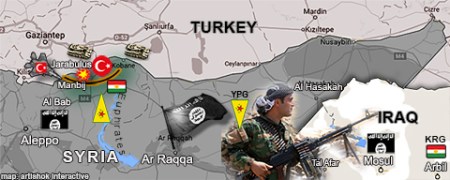
An all-out Turkish-Kurdish war has boiled over in northern Syria since the Turkish army crossed the border last Wednesday, Aug. 24 for the avowed aim of fighting the Islamic State and pushing the Syrian Kurdish YPG militia back. Instead of falling back, the Kurds went on the offensive and are taking a hammering. This raging confrontation has stalled the US-led coalition offensive against ISIS and put on indefinite hold any US plans for campaigns to drive the jihadists out of their Syrian and Iraqi capitals of Raqqa and Mosul.
The Kurdish militia ground troops, who were backed by the US and assigned the star role in these campaigns, are now fully engaged in fighting Turkey. And, in another radical turnaround, Iraqi Kurdish leaders (of the Kurdish Regional Republic) have responded by welcoming Iran to their capital, in retaliation for the US decision to join forces with Turkey at the expense of Kurdish aspirations.
The KRG’s Peshmerga are moreover pitching in to fight with their Syrian brothers. Together, they plan to expel American presence and influence from both northern Syria and northern Iraq in response to what they perceive as a US sellout of the Kurds.

debkafile’s military analysts trace the evolving steps of this escalating complication of the Syrian war and its wider impact:

  • Since cleansing Jarablus of ISIS, Turkey has thrown large, additional armored and air force into the battle against the 35.000-strong YPG Kurdish fighters. This is no longer just a sizeable military raid, as Ankara has claimed, but a full-fledged war operation. Turkish forces are continuing to advancing in three directions and by Sunday, Aug. 28 had struck 15-17km deep inside northern Syria across a 100km wide strip.
    Their targets are clearly defined: the Kurdish enclave of Afrin in northwest Syria and the Kurdish enclave of Qamishli and Hassaka in the east, in order to block the merger of Kurdish enclaves into a contiguous Syrian Kurdish state.
    Another goal was Al-Bab north of and within range of Aleppo for a role in a major theater of the Syrian conflict. To reach Al-Bab, the Turkish force would have to fight its way through Kurdish-controlled territory.
  • The Turks are also using a proxy to fight the Syrian Kurds. Thousands of Syrian Democratic Army (SDF) rebels, whom they trained and supplied to fight Syria’s Bashar Assad army and the Islamic State, have been diverted to targeting the Kurds under the command of Turkish officers, to which Turkish elite forces are attached.
  • A Turkish Engineering Corps combat unit is equipped for crossing the Euphrates River and heading east to push the Kurds further back. Contrary to reports, the Turkish have not yet crossed the river itself or pushed the Kurds back – only forded a small stream just east of Jarablus. The main Kurdish force is deployed to the south not the east of the former ISIS stronghold.
  • Neither have Turkish-backed Syrian forces captured Manbij, the town 35km south of Jarablus which the Kurds with US support captured from ISIS earlier this month. Contrary to claims by Ankara’s spokesmen, those forces are still only 10-15km on the road to Mabij.
  • Sunday, heavy fighting raged around a cluster of Kurdish villages, Beir Khoussa and Amarneh, where the Turks were forced repeatedly to retreat under Kurdish counter attacks. Some of the villages were razed to the ground by the Turkish air force and tanks. At least 35 villagers were reported killed.
  • In four days of fierce battles, the Kurds suffered 150 dead and the Turkish side, 60.
  • debkafile military sources also report preparations Sunday to evacuate US Special Operations Forces and helicopter units from the Rmeilan air base near the Syrian-Kurdish town of Hassaka. If the fighting around the base intensifies, they will be relocated in northern Iraq.
  • Fighters of the Iraqi-Kurdish Peshmerga were seen removing their uniforms and donning Syrian YPG gear before crossing the border Sunday and heading west to join their Syrian brothers in the battle against Turkey.
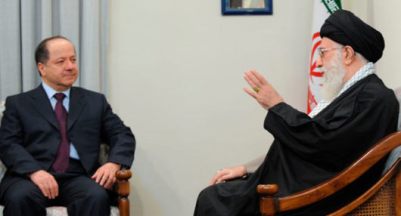
  • The KRG President Masoud Barazani expects to travel to Tehran in the next few days with an SOS for Iranian help against the US and the Turks. On the table for a deal is permission from Irbil for the Iranian Revolutionary Guards to win their first military bases in the Iraqi Kurdish republic, as well as transit for Iranian military forces to reach Syria through Kurdish territory..

Report: Putin to Host Netanyahu Abbas Summit in Moscow

August 29, 2016

By: JNi.Media Published: August 29th, 2016

Source: The Jewish Press » » Report: Putin to Host Netanyahu Abbas Summit in Moscow

Moscow’s Red Square / Photo credit: Vicente Villamón

Advanced talks have been conducted recently in preparation for a summit conference with Prime Minister Netanyahu and Chairman Abbas in Moscow this fall, according to the daily Yediot Aharonot. The paper reported on Monday that both PA and Israeli officials have confirmed that the summit is scheduled to take place in October or shortly thereafter, under the auspices of Russian President Vladimir Putin.

Abbas has personally expressed his willingness, in principle, to partake in a Moscow summit. However, according to Yediot, the PA Chairman still insists that Israel first commit to freezing settlement construction and carry out the fourth phase of terrorist prisoners release which was halted when Secretary of State Kerry’s peace initiative collapsed in 2015. Abbas also insists on setting a specific date for the end of negotiations and for reaching a final agreement.

Political sources in Jerusalem have told Yediot that when Netanyahu and Putin spoke on the phone last week, the summit plan was part of their discussion. But they stress that the summit idea at this point is “mere speculation, it’s too soon.” Still, the same sources say Netanyahu is willing to meet with Abbas directly any time.

On Wednesday, August 17, Russian Deputy Foreign Minister Mikhail Bogdanov, Putin’s Special Representative for the Middle East and Africa, discussed prospects for advancing PA-Israel peace talks with Abbas in Amman, and delivered a personal message from Putin to Abbas. Since then, Bogdanov has met twice with the head of the PA mission in Moscow Faed Mustafa and with Israeli ambassador Zvi Hefetz. One of Bogdanov’s meetings with Hefetz was on August 24, the day of the Putin-Netanyahu phone conversation.


