H/T E.J.Bron
ttps://ejbron.wordpress.com
H/T E.J.Bron
ttps://ejbron.wordpress.com
Why Brexit Is More Entrance Than Exit, PJ Media, Roger Kimball, June 26, 2016
(The petition for a new referendum poll was apparently a scam.
The BBC, The Mirror, France 24, The Telegraph, Manchester Evening News, The Guardian… all reported on the bogus petition.
But they got punked. The poll was manufactured by 4Chan and Anonymous hackers who loaded up the signatures with fake names from The Vatican, Ghana, North Korea and elsewhere. [Emphasis in original — DM]
The petition fit the meme, so it deserved and got no fact-checking — DM)
Pop psychologists tell us that grief proceeds through five stages: denial, anger, bargaining, depression, and acceptance. Have been blindsided by the stunning victory of Brexit on Thursday, members of the camp of the Remainders are now vibrating somewhere between anger and bargaining. This followed hard on a brief period of stunned denial that often expressed itself as gulping incredulity. As the psychiatrist Theodore Dalrymple observed in City Journal,
For a long time, Britons who wanted their country to leave the European Union were regarded almost as mentally ill by those who wanted it to stay. The leavers didn’t have an opinion; they had a pathology. Since one doesn’t argue with pathology, it wasn’t necessary for the remainers to answer the leavers with more than sneers and derision.Even after the vote, the attitude persists. Those who voted to leave are described as,ipso facto, small-minded, xenophobic, and fearful of the future. Those who voted to stay are described as, ipso facto, open-minded, cosmopolitan, and forward-looking.
At this point it is not clear exactly when the Brits will formally invoke Article 50 of the Treaty on European Union and officially begin the withdrawal negotiations. But Thursday’s vote made Britain’s congé in the most stinging and public manner.
As of this writing, early Sunday morning, the Remainders have yet to take that rebuke on board. They have, however, moved firmly from denial to white hot anger, as the movement to invalidate the referendum by holding a second referendum attests. As of last night, a petition demanding that Parliament force a new referendum had attracted some 2 million signatures.
The fatuousness of that effort is as patent as it is contemptible. Back in 2009, Barack Obama smugly observed that “elections have consequences.” Thursday’s vote was a non-binding referendum, not an election, but it most assuredly has consequences, as (for example) the immediate announcement by David Cameron, the prime minister, that he would soon be resigning demonstrates.
I expect that the Remainders will soon abandon the petition and move on to more circuitous, backroom maneuvers to subvert or nullify the will of the people. It is at that point, when the delayers and dispensers of red tape arrive with their megaphones, that we’ll know that the bargaining stage has been definitively reached. (I am no psychologist, but my observation is that most people, even if they do progress through the five stages described, do not entirely leave behind the earlier stages. There generally persists, I believe, a bit of denial and more than a bit of anger.)
Fraser Nelson, editor of The Spectator, put his finger on one of the most extraordinary features of the Brexit phenomenon: that the vote turned out the way it did despite the Establishment’s mobilization of every resource at its command against it. “Never,” he wrote in an article for The Wall Street Journal, “has there been a greater coalition of the establishment than that assembled by Prime Minister David Cameron for his referendum campaign to keep the U.K. in the European Union.”
There was almost every Westminster party leader, most of their troops and almost every trade union and employers’ federation. There were retired spy chiefs, historians, football clubs, national treasures like Stephen Hawking and divinities like Keira Knightley. And some global glamour too: President Barack Obama flew to London to do his bit, and Goldman Sachs opened its checkbook.And none of it worked. The opinion polls barely moved over the course of the campaign, and 52% of Britons voted to leave the EU. That slender majority was probably the biggest slap in the face ever delivered to the British establishment in the history of universal suffrage.
I’d say that 52% is closer to “decisive” than “slender,” but Nelson’s point is well taken. The Remainders threw everything they had into this campaign, but it availed them nothing. The British people don’t like what the commissars in Brussels have been doing to their country. What is euphemistically called “immigration” — really, it is a sort of invasion – was part of the story, but only a part. Remainders seized on immigration as the motivating issue because it was easy to weaponize and use it to castigate those who favored Brexit as troglodytic nativists and reactionaries.
As I noted yesterday, the Brexit vote was less an “anti-Europe” vote than a positive assertion of freedom. Indeed, it was by accentuating the positive, by underscoring Brtain’s native strengths and potential, that Brexiteers like Boris Johnson were able to give affirmative voice to the people’s disenchantment. The unease that many Brits felt under the regulatory yoke of the EU is felt by many other people, including many Americans.
As has been often pointed out, that unease helps to explain the success of Donald Trump. Would that Trump had a scintilla of the insight and affirmative spirit of Brexiteers like Boris Johnson, Dan Hannan,Michael Gove, and Nigel Farage. Despite desperate howls to the contrary, the campaign these men waged triumphed not because of what they were repudiating but what they were saying Yes to. Sure, the campaign involved a No to officious interference by corrupt and unaccountable officials across the channel. But the main course was Yes: Yes to freedom, Yes to individual responsible, Yes to deciding for ourselves how we will govern ourselves.
There’s a moral here for politicians, and for political pundits. It’s unclear, however, whether many people are bothering to read the script.
Joe Biden to China: Curb North Korea or Japan Can Go Nuclear ‘Virtually Overnight’, Breitbart, Frances Martel, June 24, 2016
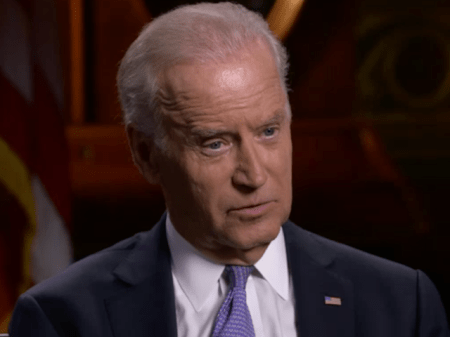
Vice President Joe Biden warned China that the Japanese government may acquire nuclear weapons “virtually overnight” if the threat from North Korea becomes too grave, urging Beijing to do more to curb Pyongyang’s belligerence.
The Vice President’s comments echo those of presumptive Republican presidential nominee Donald Trump, who warned that Japan and South Korea acquiring nuclear weapons “is going to happen anyway” in controversial remarks issued in March. Japanese government officials and media responded to Trump’s comments much more severely than they have to Biden’s.
“What happens if Japan, who could tomorrow, could go nuclear tomorrow? They have the capacity to do it virtually overnight,” Biden told PBS host Charlie Rose in an interview broadcast Monday. He explained that he made this warning to Chinese President Xi Jinping personally while discussing the deployment of a Terminal High Altitude Area Defense (THAAD) system in South Korea to protect from a North Korean attack, a move that China has condemned vocally.
“When I tell President Xi, you have to understand we got a guy up there in North Korea who is talking about building weapons that can strike, nuclear weapons strike the United States and not only Hawaii and Alaska, but… the mainland of the United States,” he told Rose. “And I say, so we’re going to move up our defense system, and he says no, no, no, wait a minute, my military thinks you’re going to try to circle us.”
Biden suggested that China, a fellow communist country, “has the single greatest ability to influence North Korea.”
Japan has issued a tepid response to the remarks, with Japanese Deputy Chief Cabinet Secretary Hiroshige Seko telling reporters Friday that Japan simply “can never possess nuclear weapons.” Japan remains the only nation in the world to experience a nuclear weapon attack.
In March, Trump stated that both Japan and South Korea were likely to develop nuclear capabilities due to their access to advanced technology. “It’s going to happen, anyway. It’s only a question of time. They’re going to start having them, or we have to get rid of them entirely,” he said, suggesting that, should the move be inevitable, the United States should do more to curb its defense expenses in Asia protecting wealthy nations.
In response, Foreign Minister Fumio Kishida stated that Japan having nuclear capabilities was “impossible,” and national newspaper Asahi Shimbun described national leaders as responding with “bewilderment and unease.
The government of North Korea has behaved with extreme belligerence in 2016, beginning the year with the detonation of what they claimed was a hydrogen bomb and repeatedly launching missiles towards Japan (all have failed to reach their targets). Most recently, North Korea tested what are believed to be two Musudan ballistic missiles, with one reaching the greatest height the nation has yet to achieve on a test.
China responded to the new test by calling for North Korea to “act with caution and refrain from taking actions that may elevate tension on the Korean peninsula.” China recently backed expanded UN sanctions on North Korea, but has condemned U.S. and South Korean defense buildups in response to Pyongyang, claiming that the also put Beijing in the line of fire.
While China has kept its criticism of North Korea tepid and remained its largest trade partner, the volume of that trade has declined significantly. Imports from North Korea dropped 12.6 percent between May 2015 and May 2016, while exports to North Korea fell 5.9 percent in the same time period.
Op-Ed: The American Gulag, Israel National News, Phyllis Chester, June 26, 2016
For years, beginning in 2003, I have personally faced both censorship and demonization. When I began publishing pieces about anti-Semitism, anti-Zionism, and Islamic gender and religious apartheid at conservative sites, I was seen as having “gone over to the dark side,” as having joined the legion of enemies against all that was right and good.
My former easy and frequent access to left-liberal venues was over. I learned, early on, about the soft censorship of the Left, the American version of the Soviet Gulag. One could think, write, and even publish but it would be as if one had not spoken–although one would still be constantly attacked for where one published as much as for what one published.
Since then, Left censorship has only gotten worse. (There is also censorship on the Right–but not quite as much.)
A week ago, a colleague of mine was thrilled that a mainstream newspaper had reached out to him for a piece about the violent customs of many male Muslim immigrants to Europe. He discovered, to his shock, that his piece had been edited in a way that turned his argument upside down and ended up sounding like American Attorney General Loretta Lynch’s view, namely, that home-grown terrorists need “love and compassion,” not profiling or detention.
I told him: One more left-liberal newspaper has just bitten the Orwellian dust. He could expose this use of his reasoned view for propaganda purposes–or wear out his welcome at this distinguished venue.
“But,” I said, “on the other hand, what kind of welcome is it if they change your words and the main thrust of your argument?”
That same week, right after the Jihad massacre in Orlando, another colleague, long used to being published–and published frequently at gay websites–wrote about the male Muslim immigrant/refugee physical and sexual violence against girls and women (their own and infidel women); against homosexuals–and paradoxically, also against young boys. He counseled gays to understand that the issues of gun control and “hate,” while important, were also quite beside the point, that “homosexuality is a capital crime in Islam.”
His piece was rejected by every gay site he approached. One venue threatened him: If he published his piece “anywhere,” that his work would no longer be welcome in their pages.
I welcomed him to the American Gulag.
He told me that he finally “had” to publish the piece at a conservative site.
Gently, I told him that what he wrote was the kind of piece that was long familiar only at conservative sites and that he should expect considerable flack for where he’s published as well as for what he’s published.
Another gay right activist told me that when he described Orlando as a Jihad attack, he was castigated as a “right-wing hater.” He, too, had to publish what he wanted to say at a conservative site.
I published two pieces about Orlando. I said similar kinds of things and I privately emailed both articles to about 30 gay activists whom I know.
The silence thereafter was, as they say, deafening. I was not attacked but I was given the Silent Treatment.
For a moment, I felt like gay activist Larry Kramer might have felt when, in the 1980s, he tried to persuade gay men to stop going to the baths and engaging in promiscuous sex, that their lust was literally killing them. Kramer was attacked as a spoilsport and as the homophobic enemy of the gay lifestyle. Alas, Kramer had been right and many gay male lives were lost to AIDS.
Thus, gay activists see their collective interests as best served by marching, lock-step, with politically correct politicians who view “mental illness,” “gun control,” and “American right-wing hatred of gays”–not Jihad–as the major problems. Such gay activists also prefer “Palestine” to Israel. It makes absolutely no difference that Israel does not murder its homosexual citizens and that in fact, Israel grants asylum to Muslim Arab men in flight from being torture-murdered by other Muslim Arab men.
A number of European activists have recently visited me. They described what has been happening to women who undertake the journey from Iraq, Syria, Afghanistan, Turkey; along the way, the girls and women are continually groped and sexually assaulted, even penetrated in every possible orifice, by gangs of male Muslim immigrants. If they want to live, their husbands and fathers can do nothing.
So much for Muslim immigrant women on the move.
And now, European women are being told to “dye their hair black,” stay home “after 8pm,” “always have a male escort at night;” a group of German nudists, whose tradition goes back 100 years, have just been told to “cover up” because refugees are being moved into the rural lake community.
Where will this all end? In Europe becoming a Muslim Caliphate dominated by Sharia law and by all its myriad misogynist interpretations? In Muslim immigrants assimilating to Western ways? In Europeans voluntarily converting to Arab and Muslim ways? In non-violent but parallel Muslim lives?
Bravo to England which has just taken its first, high risk steps to control its borders and its immigrant population.
A victory for patriotism, Israel Hayom, Dror Eydar, June 26, 2016
(“Patriotism” — what a silly, old-fashioned concept. Thus spake the left. — DM)
1.
Nationalism won in Britain — not “fascism,” not “xenophobia” and not any of the other pejoratives pseudo-liberals love to apply to anything that counters their beliefs. Yes, pure and simple patriotism is what drove Brexit supporters, the kind of nationalism that leftist-liberal elites in the West in general, and Britain in particular, do not identify with.
British nationalism preceded Europe. The late historian Adrian Hastings placed the emergence of the buds of this nationalism in the eighth century and the formation of a true English national entity between the ninth and 11th centuries, at the end of the Anglo-Saxon period. So the claims that the pro-Brexit movement was fueled by of “populism” and “empty rhetoric” indicates the critics’ own worldview.
2.
Fear of foreign migrants was not the main motive behind Brexit, but the unchecked flow of such migrants did serve as a wake-up call. Many of the migrants flooding into Britain refuse to integrate into British society. They do not adopt the culture of their hosts and do not see themselves as committed to the long-standing British ethos. This cultural (and perhaps national) autonomy migrants have created for themselves within Britain has served as a catalyst for the reawakening of natural feelings of patriotism among native Britons — feelings that elites have been trying to kill in the name of universal ideas.
3.
Not surprisingly, and quite entertainingly in fact, much of the Israeli media showed sympathy for the “Remain” camp. Why, you ask, does this have anything to do with us? Let’s look at the similarities between the Brexit vote and the last Knesset elections in March 2015. One can see the same media denial of the will of the people, belittlement of patriotic and religious sentiments and adherence to leftist totalitarian thinking (even at the cost of detachment from reality and the people). For Israeli media figures, the aftermath of the Brexit vote was a mini-replay of the dejection they felt after the last Knesset elections.
4.
Just a few months ago, U.S. President Barack Obama called on Brits to vote to remain in the European Union. The results of Thursday’s referendum showed Obama’s complete lack of influence. Obama is a symbol of both the radicalization of Western elites, who since the end of World War II have been trying to dissolve the idea of the sovereign nation-state, and the attempt by these elites to impose ideology (euphemistically called “values”) on the reality they see, instead of engaging in a thorough examination of reality and the lessons of history. The drama in the U.K. will have implications on these subjects, too.
5.
When it comes to Israel, it is still not clear whether Britain’s departure from the EU will be good or bad. Anti-Israel activists on the European continent and inside Britain, who, seeking via a variety of methods (some sophisticated and some less so) to thwart the Jewish people’s return to Zion, will not disappear, and will perhaps even get stronger. However, seeing the hostile EU be weakened is not a bad thing. We will wait and see how things develop.
PM: Water poisoning claims prove Abbas no peace partner Netanyahu brushes off PA president’s ‘halfhearted half-apology’ for repeating debunked hoax story in EU parliament address
By Tamar Pileggi
June 26, 2016, 2:32 pm
Source: PM: Water poisoning claims prove Abbas no peace partner | The Times of Israel

Prime minister Benjamin Netanyahu leads the weekly cabinet meeting at the Prime Minister’s Office in Jerusalem on June 26, 2016. (Miriam Alster/FLASH90)
Ahead of his trip to Rome for talks with US Secretary of State John Kerry, Prime Minister Benjamin Netanyahu on Sunday said Palestinian Authority President Mahmoud Abbas’s recent address at the European Parliament again proved he was an unsuitable partner for pursuing peace.
Abbas last week told European lawmakers in Brussels that an Israeli withdrawal from the West Bank and East Jerusalem would end global terrorism, and repeated a debunked hoax story claiming that local rabbis had called for poisoning Palestinians’ water supply. Admitting the claim was “baseless,” Abbas on Saturday apologized and walked back the water poisoning allegation.
“Worse, he also spread abhorrent lies about the State of Israel and Judaism. True, he quickly apologized, a halfhearted half-apology, but the things he said there were in keeping with what he has said about us on other occasions, including at the UN General Assembly,” Netanyahu said. “Therefore, I think that people can conclude from this who wants to advance peace and a peace process – and who does not.”
A statement issued by the Prime Minister’s Office on Thursday accused Abbas of peddling lies, promoting incitement and spreading blood libels in his speech.

President of the Palestinian Authority Mahmoud Abbas delivers a speech at the European Union Parliament in Brussels on June 23, 2016. (AFP / JOHN THYS)
“Israel waits for the day Abbas stops peddling lies and inciting [against Israel]. Until then, Israel will continue to defend itself against Palestinian incitement, which fuels terror,” the statement said.
Other senior Israeli politicians and US-based Jewish groups also issued sharp rebukes of the PA president over his remarks.
Following Sunday’s cabinet meeting, Netanyahu was set to leave for Rome to meet with Kerry, where, according to reports, the two men will discuss the possibility of reviving the Israeli-Palestinian peace process and the imminent publication of an international report expected to criticize Israeli settlement building.
Netanyahu will reportedly also make a last ditch effort to convince Kerry to soften an upcoming report that is expected to be critical of Israel.
The report by the Quartet diplomatic group — the United Nations, the European Union, the United States and Russia — is concerned that Palestinian violence and Israel’s construction in the West Bank and East Jerusalem is pushing the prospect of peace further away.
Washington, the traditional mediator in Middle East peace efforts, has not taken the lead in recent months, concerned that the situation is not promising and that another round of failed talks would only further embitter both parties.
But France has launched a diplomatic initiative to build international pressure on both sides.
The United States gave the French move a cool reception, but Kerry attended its inaugural meeting in Paris and has called on both sides to take “affirmative steps” to calm tempers and preserve the possibility of peace.
Brexit and Multiculturalism, American Thinker, Salim Mansur, June 26, 2016
The people of Britain made their decision by a slim majority of 52 percent to 48 percent to Leave the EU. After months of heart-wrenching debates and all the leverage that the Remain side with the Prime Minister David Cameron and his opposite, the Labour leader Jeremy Corbyn, could apply, the people decided staying within the EU was not positive for Britain’s future.
The referendum’s outcome throws Britain into a period of economic and political uncertainties that the Remain side vigorously pushed as their main argument for staying within the EU. There will be a lot of soul-searching among the British elites in politics and business, in the media and in the universities, as to why the opponents of the EU prevailed. The referendum results will be minutely analyzed to understand why the British public was not sufficiently persuaded by their party leaders to back the status quo, and why on the other hand a majority of voters put aside their fear of uncertainty in favor of leaving the EU.
But the overarching reason why Britain left the EU, I believe, is plainly and simply understood if political correctness is set aside. A slim majority of the British public, primarily its aging population who remember what Britain was once like not too long ago as society and culture that open immigration policy severely, if not mortally, has undermined, decided that to save what remained of their island kingdom they needed to regain their full political sovereignty instead of losing more of it to the bureaucrats of the EU in Brussels.
Immigration, it bears repeating, and what it together with multiculturalism have done to Britain in incrementally unraveling its very special place in history, over-rode the arguments in favor of remaining in the EU. The peril of open-door immigration was foreseen many years ahead of the decision made to join the European Common Market (the predecessor to the EU) ratified by a referendum held in June 1975.
Nearly half-century ago Enoch Powell, a Conservative MP and a member of the shadow cabinet led by Edward Heath, spoke out on the perils of open immigration that came to be known as the “Rivers of Blood” speech.

At a Conservative Party gathering in Birmingham on April 20, 1968, Powell warned how unrestricted immigration was inexorably and unalterably changing the nature of British society. What is mostly remembered of Powell’s speech is what was at the time considered inflammatory. But for Powell it was about numbers as he stated, “bearing in mind that numbers are of the essence: the significance and consequences of an alien element introduced into a country or population are profoundly different according to whether that element is 1 per cent or 10 per cent.”
The Birmingham speech ended for Powell a distinguished career in politics as his warnings went unheeded, and he was removed from his position in Heath’s shadow cabinet. In the aftermath of the July 2005 suicide bombings in London, and concerns over “homegrown terror” from radicalized Muslim immigrants or Muslims of immigrant parents born in Britain, Powell’s warning in retrospect was prophetic for contemporary Britain and the West in general.
In the forty years since Britain joined Europe, immigration from the “Third World” countries of Asia, Africa, and the Caribbean have changed her urban landscape. According to Britain’s 2011 census, the foreign-born population constituted 11.9 per cent of the total population. But the cumulative number of the British public as foreign-born, or children of foreign-born, since at least 1961 makes the total in aggregate numbers or in percentage term substantively greater than the 10 per cent of Britain’s population that Powell had warned could significantly alter the character of the country.
It is not immigration alone of people of non-European ethnicity that has had a cumulative impact on the makeup of contemporary Britain. After joining Europe in 1975 Britain, in common with other Western liberal democracies, adopted the policy of multiculturalism as the basis of meeting the demand for equality with the country becoming increasingly multiethnic due to immigration and open borders.
The policy of multiculturalism is based on the spurious idea that all cultures are equal and, therefore, deserving of equal respect and treatment. In effect, this means that the liberal democratic culture of the host country, since multiculturalism as a policy or doctrine is nonexistent outside of the West, is equal to or no better than nonliberal or illiberal cultures of non-Western societies. Hence, multiculturalism is one of the most insidious assaults on liberal democracy based on the hard-won principle of individual rights and freedoms.
In the United States, among those most notable who warned against multiculturalism was Arthur Schlesinger Jr. in his book The Disuniting of America: Reflections on a Multicultural Society (1991). The vulnerability of liberal democracies arises, however, from the situation that the tools by which liberals have advanced the principles of individual rights and secured them in law are equally available — and indeed, often provided for by liberals as a matter of principle — to those who either do not believe in liberal values or subordinate them to collective rights based on the arguments of group identity. The demand by vocal segments of the Muslim community for the acceptance of Sharia provisions by Western governments is, consequently, a logical outcome of multiculturalism adopted as a policy of treating equally people of different cultures within a liberal democracy such as Britain.
Such demands as acceptance of Sharia provisions, which have been incrementally conceded in Britain, might be ridiculous to the majority population of the host country. But for the British elites, the absurdity would be in denying the implicit logic of multiculturalism that they concocted and sold to the people.
The absurdity inherent in multiculturalism might be noted in the example of Bikhu Parekh, appointed to the House Lords in 2000 by then Prime Minister Tony Blair. Blair made Parekh, a professor of race relations and of Indian origin, a life peer to secure ethnic Indian votes for the Labour Party. Parekh on his part went on to suggest that Britain should change its name because of the negative connotations for millions of people around the world and, moreover, since Britain has become increasingly multicultural, there remains no justification for it to be British anymore.
Open-door immigration and multiculturalism might also be viewed as the response of Western liberal democracies driven by a sense of guilt for past wrongs. This sense of guilt is uniquely a Western phenomenon, making liberal democracies vulnerable to claims of past injustices made by others, especially non-Westerners who were once ruled by European powers.
The French political philosopher Jean-François Revel observed, “Democratic civilization is the first in history to blame itself because another power is working to destroy it… What distinguishes it is its eagerness to believe in its own guilt and… is zealous in devising arguments to prove the justice of its adversary’s case and to lengthen the already overwhelming list of its own inadequacies.”
In the post-referendum analysis to come of the vote in Britain for leaving the EU, it is unlikely that the issues of immigration and multiculturalism will receive due attention. These are sensitive issues, and there is a legitimate place for politeness — distinct from political correctness — when discussing sensitive issues in public.
But if the elites in Britain, and elsewhere in the West are not to get too disconnected from the public, they will need to be honest with themselves and understand how the twin policies of immigration and multiculturalism have divided their societies. It will be a tragic mistake to interpret the vote to leave EU by the British people as a populist and nationalist movement tinged with “white” bigotry.
Instead the Leave vote in this referendum was driven in some measure by the very respectable desire of the British people to demand a halt to the irreversible diluting of their national culture, rich in history and about which they have every right to be genuinely proud, by increasingly conceding to elite-driven policies of immigration and multiculturalism.
To equate a culture that has given to the world Shakespeare and Newton, the Magna Carta and parliamentary democracy, ruled the waves and defended freedom when it was most imperiled, with cultures that practice slavery or gender inequality or impoverishes the human mind, is demeaning. But in the post-9/11 world the British people, though they are not alone, have patiently suffered some living in their midst who take a pathological pleasure in insulting their hospitality, threatening their security, engaging in terrorism and openly espousing causes or doctrines at war against deeply embedded values of freedom and democracy cherished by them.
Melanie Phillips, a British journalist, described in her book Londonistan how greatly, and not for the better, immigration and multiculturalism have changed her country. It should be a matter of pride and celebration when Sadiq Khan, born to Muslim immigrants from Pakistan, is elected the Mayor of London. This could only have happened in the contemporary West.
But if there comes a moment when immigrants from Pakistan, or India, or Nigeria and elsewhere, such as Bikhu Parekh, on the basis of multiculturalism push to turn large portions of Britain into cultural enclaves of their origins, then the tipping point of tolerance for diversity, or pluralism, on the part of the host population has been reached.
The Leave EU win in the referendum was brought about as a result of the tipping point reached by the people in Britain.
Published on Jun 24, 2016
Western Universities: The Best Indoctrination Money Can Buy by
Denis MacEoin
June 26, 2016 at 5:00 am
Source: Western Universities: The Best Indoctrination Money Can Buy
In asking why Western civilization has been the greatest in history, many point to European and, later, American military power, the strength of the British, French, Spanish and Portuguese empires, their command of the oceans, or the progress brought about through the Industrial Revolution. Today, of course, there is a general trend to picture Western achievements in a uniformly negative light, often for valid reasons, including our use of slavery or the mistreatment of so many native Americans. This negativity is, however, highly selective. Why, for example, are Western Christian empires considered a blight on mankind while the great many Muslim empires of the past — which lasted over a much longer period, engaged in the largest and longest-lasting slave trade in history, sought to impose one religion over all others, and placed enormous barriers on rational thought from about the 10th century — regarded as a blessing?
The greatness of the modern West owes much to those discoverers, conquerors, and traders and to the worldwide enterprises they built — just as the Islamic empires had their explorers, traders, and international networks (as in the great Sufi orders). Important civilizations were created in both realms: great urban developments, great architecture, the first universities, great poetry, great art, great philosophy, a flurry of scientific and mathematical activity in the Muslim middle ages, and then in the Renaissance and the Industrial Revolution in Europe. The tendency of modern liberals to wring apologies out of governments for the actions of their ancestors, from the slave trade to Orientalist depictions of the peoples of Islam, is a pointless attempt to re-write history. There are, of course, no calls for Muslim governments to apologize for anything from their slave trade to the early Arab conquests.
The modern world of the West is a product of a period that created the greatest advances in human history: the Enlightenment. From that era we can date the beginnings of the most important strengths of our modern world. It is these strengths, in spite of the many blessings they have bestowed and their role as buttresses for cohesive societies, that are derided and often attacked from the Islamic sphere as well as by forces within the West. It is not hard to remember what those strengths are: liberal democracy, human rights, religious tolerance, international instruments for the managing of conflict, women’s rights, minority rights of all kinds, legislation out of political debate, an abhorrence of tyranny, freedom of thought, belief, and speech, critical inquiry, freedom of the press and other media, secularization that permits freedom of religious worship, and safety for the authors of opinions that dissent.
Of these blessings, the most important would seem the last: freedom of thought, belief, and speech, critical inquiry, freedom of the press and other media, secularization that permits freedom of religious expression, and safety for the authors of dissenting opinions. Without them, none of the others would last. There is also another, closely related to them: academic freedom. The liberation of the universities from the 18th century onwards from restrictions placed on scholars by kings and churches, the use of censorship to maintain the status quo, the blocking of scientific advances by appeals to scripture or the power of the clergy or simple traditionalism[1] and all the other forces of obscurantism, meant a quantum leap, not just in the physical sciences, but in all areas of human understanding, from politics to society to philosophy and to religion and the arts. We owe more than we often imagine to the freedoms of academia: that a teacher or researcher may not be censored, dismissed, or financially ruined for expressing his opinions;[2] that publications, whether books, monographs or entire learned journals, be free to include critical, even controversial content, and that controversy itself, far from being an impediment to a search for truth, is an essential mechanism for that search to take place.
This process did not take hold in the Islamic world, where, as mentioned, rationality was dismissed in favour of faith, from public and scholarly discourse early on.[3] Starting with an internal dispute between rationalists and theologians of a fundamentalist bent, the shift from fairly open enquiry was shut down when the dogma of the Qur’an’s “uncreatedness,” perfection and infallibility was established. Questioning was a risk to faith; it was safer to avoid hellfire by accepting all aspects of sacred scripture and law without a “wherefore?” or “why?” This doctrine of infallibility and the dangers of reason were promulgated by the most important thinker in the history of Islam, Abu Hamid al-Ghazali (1058-1111). According to this doctrine, God acts at every instant within every atom, destroying and creating as He wills, so that it is impossible to predict just what will happen at any given moment — thus precluding the need or worth of rational enquiry. It is this conclusion that creates the fatalism which denies any human responsibility for the slightest action or exercise of personal will. An extreme modern statement of this anti-rationalism may be found in comments made by Mukhtar Mukhtar (Muchtar Muchtar), a leader of the Egyptian terrorist organization, al-Gama’a al-Islamiyya, to the reformist Muslim, Tawfik Hamid: “On the way (to the mosque) Muchtar emphasized the central importance in Islam of the concept of al-fikr kufr, the idea that the very act of thinking (fikr) makes one become an infidel”.
This is not meant to be some paean to the West and a mockery of Islam: there is a growing threat to Western leadership around the world. The threat is not Islamic terrorism (although that is a real and growing threat, especially in Europe, but increasingly in the United States). The threat is not about growing Muslim demographics (although this is taking its toll in Europe, too). The threat is not even from the rise in influence of Islam across the globe. Those are genuine issues; Western leaders have so far failed adequately to respond to the threats they represent. The clear and present danger here eclipses all the others: it is to the values of the Enlightenment themselves. If not curtailed, this risk could usher in the abandonment of the very intellectual freedoms on which our wider freedoms rest. It is our complicity in the rapid and so far unstoppable growth of direct Islamic (and indeed Islamist) control over whole departments and centers in a burgeoning number of Western universities in Europe and the USA. And it is the encroaching censorship – and criminalization — of free speech in Europe – and the US. These range from the tactics of intimidation on campus (and, apparently, off) to shut down dissent, to the European Commission signing a “code of conduct” on May 31, 2016, presumably to close down hate speech online, but in practice it is usually those quoting “hate speech” or pointing out dangers, to warn others of them, who are closed down instead.
Do a handful of donations from Muslim governments to a number of European and American universities merit an entire article that starts out with claims that Western civilization is under threat? As a matter of fact, the scale of the donations is far beyond a handful, the universities involved are among the top academies in the world, the money involved is hundreds of billions of dollars, and the targets of Islamic finance are, for the most part, specific and form part of a distinct agenda. Some money may be given to business schools or science departments, but the overwhelming majority goes to support or create large departments and academic centers for Middle East, Islamic, or Arabic Studies. There is a seeming logic in this – aren’t extremely rich Muslim states entitled to further the study of their own societies, history, and religion, thereby creating a corps of knowledgeable men and women with the requisite language skills and close familiarity with the subjects they first study then teach or with which they engage as government advisors, civil servants with governments, the UN or international NGOs, think tank members, public experts, media analysts and perhaps politicians? Well, if they observed complete neutrality and left academics to their own counsel, their input would pass as simple generosity or as a contribution to good relations within the international community. What could be nicer? Isn’t the Islamic world badly misunderstood in the West, and wouldn’t more teaching and research on it and its beliefs be a real boon? And how can someone like myself, who has spent a lifetime studying, teaching and writing about Islamic and Middle Eastern subject think badly of such an endeavour?
One obvious criticism is the sheer scale of the operation, meaning that fundamentalist Muslim states such as Saudi Arabia and Qatar now effectively exercise a swathe of influence over the way in which Islam and Middle East Studies are taught in key Western universities. The dilemma for the universities is a harbinger of crises to come. Even fairly rich universities such as Harvard and Oxford experience financial difficulties. State funds are often hard or impossible to obtain; academics have to scramble to find funding for their projects, their jobs or their departments.
Universities have responded in a number of ways. One has been to bring in more and more students from abroad, including extremely high numbers from Islamic countries (where the standard of education is almost uniformly poor). ICEF Monitor reports:
“At its inception in 2005, there were just over 3,000 Saudi students in the US, a country that has been the primary destination for KASP-funded students in the years since and that saw its Saudi enrolment swell to just under 60,000 students in 2014/15 (for a nearly 2,000% increase over the last ten years). For the past five years in a row, Saudi Arabia has been the fourth-largest sending country for the US.”
There are also large numbers of Saudi students in Canada and the UK.
A second response for a small number of universities has been to open satellite campuses in foreign countries, several in the Gulf. For example, University College London, Heriot-Watt University, New York University and Ireland’s Royal College of Surgeons run programs, respectively, in Qatar, Dubai, Abu Dhabi, and Bahrain. Unsurprisingly, these campuses are far from free from external supervision. According to Professor Stephen F. Eisenman of Northwestern University (which has a branch in Qatar), “The ethics of establishing a campus in an authoritarian country are murky, especially when it inhibits free expression, and counts among its allies several oppressive regimes or groups”.
Problematic as all this is, it is eclipsed by the impact on the study of the Islamic world in Western universities at home. Starting with the UK alone, Arab News reports:
Over the past decade, Saudi Arabia has been the largest source of donations from Islamic states and royal families to British universities, much of which is devoted to the study of Islam, the Middle East and Arabic literature. A large share of this money went toward establishing Islamic study centers. In 2008, Prince Alwaleed bin Talal donated £8 million (SR 48.5 million) each to Cambridge and Edinburgh for this purpose, Al-Eqtisadiah business daily reported yesterday. Oxford has been the largest British beneficiary of Saudi support. In 2005, Prince Sultan, the late crown prince, gave £2 million (SR 12 million) to the Ashmolean Museum. In 2001, the King Abdul Aziz Foundation gave £1 million (SR 6.1 million) to the Middle East Center. There are many other donors. Oxford’s £75 million (SR 454.6 million) Islamic Studies Center was supported by 12 Muslim countries. Ruler of Oman, Sultan Qaboos bin Said, gave £3.1 million (SR 18.8 million) to Cambridge to fund two posts, including a chair of Arabic. Ruler of Sharjah, Sheikh Sultan bin Mohammed Al-Qassimi, has supported Exeter’s Islamic studies center with more than £5 million (SR 30 million) since 2001. Trinity Saint David, part of the University of Wales, has received donations from the ruler of Abu Dhabi Sheikh Khalifa bin Zayed Al-Nahyan.
Here, as well, is a summary of moneys given to U.S. universities, dating back as far as 1976:
The story of the Saudi donations in the United States dates back to 1976, when Riyadh transferred one million dollars to the University of Southern California.
In 1979, Saudi Aramco World magazine published a list of Middle Eastern gifts, including $200,000 from the Saudis to Duke University for a program in Islamic and Arabian development studies; $750,000 from the Libyan government for a chair of Arab culture at Georgetown University; and $250,000 from the United Arab Emirates for a visiting professorship of Arab history, also at Georgetown.
Until that time, Ryadh spent one hundred billion dollars to spread Wahhabism, the most anti-Semitic and extremist version of Islam.
Leading the list of “beneficiaries” is Harvard, with about $30 million. The jewel of the Ivy League received $20 million in 2005 alone.
20 million dollars were donated to the Middle East Studies Center at the University of Arkansas; $5 million to the Center for Middle East Studies at Berkeley, in California; $11 million to Cornell University in Ithaca, New York and a half million dollars to Texas University (the seventh university, in order of size, in the United States); $1 million to Princeton; $5 million dollars to Rutgers University….
Oxford has a research center funded by the Iranian regime, while at Cambridge the funds come from Saudi Arabia, Oman and Iran.
Scholarships and degree programs are the favorite and easiest weapons of the Islamist regimes to influence the Western academies and their freedoms. Eight universities, including Oxford and Cambridge, have accepted more than 233.5 million pounds sterling from Saudi and Muslim sources since 1995. The total sum, revealed by Anthony Glees, the director of Brunel University’s Centre for Intelligence and Security Studies, amounts to the largest source of external funding to UK universities.
Universities that have accepted donations from Saudi royals and other Arab sources include Oxford, Cambridge, Durham, University College London, the London School of Economics, Exeter, Dundee and City.
In a 2009 study of the funding of strategically important subjects in UK universities, Robin Simcox, then a Research Fellow for the Centre for Social Cohesion, provides detailed tables and longer commentaries on the provision of funds to Arabic and Islamic Studies. A Degree of Influence[4] looks at eleven universities, including some with major centers for Islamic and Middle East Studies, such as Oxford (22 entries), Cambridge, London’s School of Oriental and African Studies, Edinburgh, Durham and Exeter. Some of his observations are pertinent. Writing of Oxford’s heavily-endowed Middle East Centre, he notes that
“The MEC has received substantial sums of money from sources in the Middle East. The way in which this money has been used means there is a clear risk that donors will seek to influence the output and activities of the MEC. In addition, many large donations to the MEC have been anonymous, creating a lack of transparency. In many cases, Oxford has knowingly accepted money from undemocratic states with poor human rights records…. Several agreements made between the MEC and donors appear to indicate that funders have sought to influence the centre’s output and activities.”[5]
Of Cambridge, he writes:
“Cambridge University is an example of how funding has had a significant impact upon how the university is run. Recent donations have been attached with conditions that could lead to donors gaining oversight via university Management Committees. While the principal donor’s intentions seem honourable, a precedent appears to have been set where wealthy donors can influence the running of an independent academic institution.”[6]
 Oxford’s Middle East Centre “has received substantial sums of money from sources in the Middle East. The way in which this money has been used means there is a clear risk that donors will seek to influence the output and activities of the MEC. — Robin Simcox, A Degree of Influence. (Image source: Zaha Hadid/Flickr) Oxford’s Middle East Centre “has received substantial sums of money from sources in the Middle East. The way in which this money has been used means there is a clear risk that donors will seek to influence the output and activities of the MEC. — Robin Simcox, A Degree of Influence. (Image source: Zaha Hadid/Flickr) |
What does this unprecedented influence from countries and individuals with low expectations for academic freedom bring to our most revered institutions of learning? There are some positives. The money can allow genuine scholars to lecture or carry out valuable research, to teach languages such as Arabic, Persian, Turkish, Kurdish or Urdu (although not, of course, Hebrew), and to hold conferences open to a wide array of colleagues. All that is to the good, provided academics steer clear of controversy and subjects that upset their donors. In truth, academic freedom is at risk.
What so many fail or prefer not to grasp is that the subventions from Saudi Arabia and Qatar in particular are part of a much wider pattern. The Saudis for decades have disbursed hundreds of billions of dollars in order to propagate their puritan form of Islam, Wahhabism, across the globe, while building hundreds of mosques, schools, libraries, and Islamic centres, and sending out streams of hardline preachers trained in their seminaries and Islamic universities, to spread their message to Muslims everywhere, creating and financing bodies for Islamic missionary work, recruiting young Muslims to commit to an extreme form of their faith – all to the end of making the Saudi state the key player in the world of Islam and a leader in the propagation of Islam in the West. That is the nature of the doctrine. Deep pockets for academic study in Europe and North America are stitched tightly against their pockets that fund the missionary work and the enforcement of the most fundamentalist form of the Islamic faith.
Another way of looking at it is that earlier this year, Saudi Arabia’s Grand Mufti, Shaykh Abd al-‘Aziz bin-Abdullah al-Shaykh, issued a fatwa forbidding Muslims to play chess. He is far from the first to do so. He justifies the ban by saying, “The game of chess is a waste of time and an opportunity to squander money. It causes enmity and hatred between people”. On February 3, 2016, a young Saudi cleric, Shaykh Sa’ad al-‘Atiq, appeared on a fatwa advice programme on al-Ahwaz TV, and stated that if people publish pictures on social media sites, someone else may copy them and apply sorcery to them, which will result in the original poster becoming ill with cancer and other diseases. He even says he knows many cases of this. Over the past several years, several people have been beheaded in Saudi Arabia on charges of witchcraft and sorcery. In May 2016, I read that another Saudi shaykh, Salih bin Fawzan Al Fawzan, a member of the Saudi Council of Senior Scholars, said that, “taking pictures is prohibited if not for a necessity — not with cats, not with dogs, not with wolves, not with anything”. This, of course, is in direct line with the ancient ban on images of living creatures that has had such a marked effect on Islamic art. It is not hard to see that, if this is the height of scholarship in Saudi Arabia, their motives in financing academic study in Western universities may not be as noble as some would like to believe.
The Saudi antipathy to critical, rational, and secular scholarship is surely a warning. More than one Saudi shaykh, including the notorious Grand Mufti Bin Baz, have declared that the earth is stationary and that the sun revolves around it. Some are still doing so. Of course, better educated Saudis and others will find this laughable; but the fatwa declaring it has become the basis for intense debate among the highly religious. The moment Western scholarship infringes the sensitivities of the Saudis, Qataris, Kuwaitis, Bahrainis and others, the barriers go up. Academics are denied visas to attend conferences, criticism of Gulf states is toned down, debate is shifted away from the Gulf monarchies themselves, and, compared to study of other Arab regions, rigorous critiques on subjects in the Gulf, such as political reform, human rights and suppression of dissent are largely excluded. According to Kristian Coates Ulrichsen of Rice University’s Baker Institute, “Almost every centre of Middle East studies in the UK is linked somehow to a Gulf backer. It’s created dilemmas, especially over the last few years as the threshold for self-tolerance of any dissenting view has got lower”.
One of those “dilemmas” is the influence by teachers across the United States on impressionable students who organize Israel Apartheid Weeks. The students join with assorted anti-Semitic demonstrators, condemn Israel for every sin under the sun, and use intimidation against Jewish and Zionist colleagues, but are never told any historical, legal, or political facts by their equally biased faculties. America’s Campus Watch monitoring organization keeps a close eye on this sort of abuse by identifying teachers and researchers who go far outside the boundaries of balanced academic discourse to mislead, indoctrinate, and validate student extremists. It exposes professors who make exaggerated claims about Islamophobia or who offer support to terrorist entities such as Hamas. Its steady record of news associated with Middle East Studies provides ample evidence of the distortions now hawked as balanced scholarship.
But for the clearest evidence that Gulf backers cannot be entrusted with the support of Western university studies of Islam and the Middle East, we need not look further than one of the earliest cases of Saudi investment in the field. In 1981, the Saudi Ministry of Higher Education paid for a lectureship at Britain’s Newcastle University, to teach Arabic and Islamic Studies in the Department of Religious Studies.[7] The appointee, a non-Muslim British teacher with a solid research record, embarked on an ambitious range of topics designed to give students a wide background in Islamic history and doctrine. Five years later, funding for his post was abruptly ended. The reason was that he included among his courses lectures on Sufism and Shi’ism – vital subject for any study of Islam, yet, to the Wahhabis, both anathema.
This was bad enough – academics at neighbouring Durham University’s Centre for Middle East and Islamic Studies were vociferous in condemning the action and the reason given for it – but the Saudis went further. They appointed (unilaterally, without any involvement with an interview by a university board) a Saudi teacher with no qualifications whatsoever in Islamic Studies (his PhD was in English Literature). The department and the university, eager to receive more money, allowed this amateur to teach and examine their students for several years more, after which the post fell by the wayside.
This is one of the most remarkable academic stories of recent history. A dismissal and an appointment based solely upon religious doctrine. But it had its effect. Other academics in the field, receiving or hoping to receive Saudi funding, now had their eyes open: There are topics, however important within the subject, that anyone who wants to keep his job must steer clear of. There are teachers who have research and publication interests in those topics who should not be appointed to Saudi-financed posts. In 1981, the Saudis were dipping their toes in the water. Now they are offshore, swimming in the strong currents.
Fundamentalist Islam, backed by vast monetary power, is corrupting our dearest Enlightenment values. This May, the Organization of Islamic Cooperation, the Muslim body likened to the UN, prohibited eleven gay and transgender organizations from attending a conference at the United Nations on research to end the AIDS epidemic. “Egypt wrote on behalf of the Organization of Islamic Cooperation to the 193-member general assembly about its decision without citing a reason. Clearly, protecting individuals most affected by the epidemic – trans people globally are 49 times more likely to be living with HIV than the general population – is not on the agenda.” It has to be assumed that the real reason for this was the deep-seated homophobia within the Muslim world. Potentially life-saving medical advances were blocked because Islam proscribes homosexuality (Qur’an: 77: 80-84).
We cannot continue to live like this. We cannot let hardline Muslims and Muslim states elbow aside their reform-minded brethren and trample on our most essential freedoms. Without the example and standards set up by Western nations, the Muslim world itself will fall into even greater decline, and that will lead to greater violence everywhere. If we owe it to ourselves to resist this onslaught on our values, we also owe it to the Muslim world to protect it from its own resistance to and fear of change.




 anneinpt
 artaxes
 danmillerinpanama
 davidking1530
 Peter Hofman
 Joseph Wouk
 Peter
Peter Louisiana Steve
 WarSclerotic
Recent Comments