Archive for April 12, 2016

Senior PLO Official Killed in Lebanon Blast

April 12, 2016

A prominent Fatah official is assassinated after demanding tighter security from a meeting of PLO factions.

By: Hana Levi Julian

Published: April 12th, 2016

Source: The Jewish Press » » Senior PLO Official Killed in Lebanon Blast

General Fathi Zeidan, PLO’s Fatah leader in the Mieh Mieh refugee camp in southern Lebanon, near Sidon.
Photo Credit: Lebanon Ministry of Information

A prominent member of the Palestine Liberation Organization’s leading Fatah faction was assassinated Tuesday in southern Lebanon.

General Fathi Zeidan was killed by a car bomb that also took the life of a passerby near the Palestinian Authority refugee camp of Ain al-Hilweh, according to The Daily Star in Lebanon.

Zeidan was the senior Fatah officer in the nearby Mieh Mieh refugee camp, according to a terse statement by the Lebanese Ministry of Information National News Agency.

The ministry said Zeidan was “targeted in the explosion that rocked Sidon’s southern Palestinian refugee camp of Ain al-Hilweh.

“The bomb was planted in Zeidan’s car. Security officers cordoned off the area.”

No one has yet claimed responsibility for the attack.

Zeidan was reportedly attending a security meeting in Mieh Mieh at the time of the attack, The Daily Star reported.

Fatah official Maj. Gen. Munir Maqdah told LBCI that prior to the attack, Zeidan had met with other PLO factions, demanding tighter security measures in Mieh Mieh, according to the Iranian Tasnim News Agency.

There have been many clashes between rival Arab factions over the past few weeks, Tasnim reported. Ain al-Hilweh is home to several extremist terror groups and has been repeatedly rocked by violence, according to Tasnim.

Christian Self-Defense Forces Emerge in Iraq & Syria

April 12, 2016

Christian Self-Defense Forces Emerge in Iraq & Syria, Clarion ProjectRyan Mauro, April 12, 2016

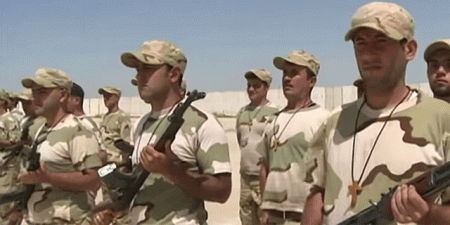
Babylon-Brigade-HPMembers of the Christian Babylon Brigade in Iraq (Video: screenshot)

The Christians of Iraq and Syria have had a breathtaking commitment to passivity since being victimized by what we all now finally agree qualifies as a genocide.

Now, the Christians are increasingly organizing to defend themselves—and the West should stand by them instead of outsourcing our moral responsibility to the Iraqis and their Iranian partners and various groups with questionable track records.

A poll in December 2014 found that only one-third of Iraqis say they are concerned about the persecution of Christians in their country. About 67 percent said they are not concerned at all or only “somewhat” concerned.

It’s easy to say that the U.S. should pressure the Iraqi government to protect the Christians, but its track record and these poll results do not inspire hope that it’ll work. The pace of the genocide is such that the Christians and those who care for them simply cannot afford to spend time hoping for the best.

A Christian force known as the Babylon Brigade has been incorporated into the Popular Mobilization Units, an assortment of militias led by the Iraqi government and their partners from the Iranian regime and Hezbollah. The Babylon Brigades and their supporters boast of their nationalism, having battled the Islamic State in non-Christian areas like Ramadi and Tikrit.

However, it numbers only 500 to 1,000 The Iraqi government should be applauded for supporting a Christian unit, but don’t mistake this for an Iraqi commitment to a Christian self-defense force that enables the community to have a say over whether it goes extinct or not.

Current U.S. policy still gambles their survival on the chance that the Iraqi government tied to Iran will protect them, particularly when the U.N. says Christian persecution in Iran has reached unprecedented levels.

The Kurds are allies of the U.S. but, when it comes to protecting Christians, they have been far from ideal. The Iraqi and Syrian Christians have plenty of stories of mistreatment at the hands of the Kurds.

The growth of a number of Christian self-defense forces in Iraq and Syria show potential for what could happen if they receive outside support.

There’s the Nineveh Plain Protection Units in northern Iraq under the helm of the Assyrian Democratic Movement of Iraq, which has a branch in northeastern Syria named the Gozarto Protection Forces. They are backed by the Middle East Christian Committee. The secretary-general of the Assyrian Democratic Movement claims that proper support would quickly grow the NPU’s numbers to 5,000.

Another small force is called Dwekh Nawsha, which is linked to the Assyrian Patriotic Party and has gotten attention because of Westerners joining their ranks. One of their advisers warned in November, “All we’re saying is we’re done. We don’t have equipment. We don’t have the weapons. We don’t have the training,” as he pleaded for U.S. backing.

In Syria, there is the Syriac Military Council, estimated to be about 2,000-strong including a Christian female unit. It belongs to a Kurdish-majority coalition known as the Syrian Democratic Forces. There is also a local Christian defense force near the Khabur River called the Khabur Guards.

Of course, any Christian force will have to be properly vetted. Hezbollah has set up a non-denominational force named Saraya al-Muqawama that includes Christians, Sunnis and non-religious Shiites.

A Christian police force that is favorable towards the Assad regime clashed with Kurdish forces in Qamishli, Syria. Sources close to the situation there emphasize that the Christians who embrace Assad are motivated by a fear of Islamist rebels, not because of any affinity for dictatorship or the regime’s brutality.

It would be a mistake to dismiss the viability of Christian self-defense forces because of their current sizes and capabilities. Unlike the Iraqi and Syrian militias and rebels, the Christians have had to rely only upon themselves for survival. They don’t have a state sponsor like Saudi Arabia, Qatar or Iran to build them up.

The U.S. has provided material support to Sunnis, Shiites and Kurds, despite records of human rights abuses, Islamism and ties to terrorists and enemy regimes. The Christians are reliable foes of Islamic extremism who, despite all they have suffered, have never formed a sectarian militia to exact bloody revenge.

It’s time for the U.S. to ask itself: Why are Sunnis, Shiites and Kurds worthy of our direct material aid but the Christians are not? Why do they deserve a chance to stop the murder, raping and torturing of their people, but the Christians do not and are left facing extinction if trends continue?

28 Blank Pages: Washington’s Cover-Up Of The Saudi Role In The 9/11 Terrorist Attack Continues

April 12, 2016

28 Blank Pages: Washington’s Cover-Up Of The Saudi Role In The 9/11 Terrorist Attack Continues

Submitted by Tyler Durden on 04/10/2016 22:20 -0400

Source: 28 Blank Pages: Washington’s Cover-Up Of The Saudi Role In The 9/11 Terrorist Attack Continues | Zero Hedge

In light of today’s 60 Minutes segment, according to which classified “28 pages” may shed light on Saudi ties to terrorism, here is a an article which was originally posted in the December 2015 edition of Future of Freedom. More to follow tomorrow.

28 Blank Pages: Washington’s Cover-Up Of The Saudi Role In The 9/11 Terrorist Attack Continues

Do Americans have the right to learn whether a foreign government helped finance the 9/11 attacks? A growing number of congressmen and senators are demanding that a 28-page portion of a 2002 congressional report finally be declassified. The Obama administration appears to be resisting, and the stakes are huge. What is contained in those pages could radically change Americans’ perspective on the war on terror.

The congressional Joint Inquiry Into Intelligence Community Activities Before and After the Terrorist Attacks of September 11, 2001, completed its investigation in December 2002. But the Bush administration stonewalled the release of the 838-page report until mid 2003 — after its invasion of Iraq was a fait accompli — and totally suppressed a key portion. Former U.S. Sen. Bob Graham (D-Fla.) chairman of the investigation, declared that “there is compelling evidence in the 28 pages that one or more foreign governments was involved in assisting some of the hijackers in their preparation for 9/11.” Graham later indicated that the Saudis were the guilty party. But disclosing Saudi links to 9/11 could have undermined efforts by some Bush administration officials to tie Iraqi leader Saddam Hussein to the 9/11 attacks.

Almost everyone has forgotten how hard the Bush administration fought to torpedo that report. In April 2003, controversy raged on Capitol Hill over the Bush administration’s continuing efforts to suppress almost all of the report by the Joint Intelligence Committee investigation. Some intelligence officials even insisted on “reclassifying” as secret some of the information that had already been discussed in public hearings, such as the FBI Phoenix Memo. On May 13, Senator Graham accused the Bush administration of engaging in a “cover-up” and said that the report from the congressional investigation “has not been released because it is, frankly, embarrassing … embarrassing as to what happened before September 11th, but maybe even more so the fact that the lessons of September 11th are not being applied today to reduce the vulnerability of the American people.” Sen. Trent Lott (R-Miss.) complained that intelligence agencies sought to totally censor the report: “The initial thing that came back was absolutely an insult, and it would be laughable if it wasn’t so insulting, because they redacted half of what we had. A lot of it was to redact a word that revealed nothing.”

When the report was finally released, Sen. Richard Shelby (R-Ala.) added an additional opinion in which he castigated “the FBI’s dismal recent history of disorganization and institutional incompetence in its national-security work.” The congressional report was far blunter than the subsequent 9/11 Commission. The congressional investigation concluded that the FBI’s “mixed record of attention contributed to the United States becoming, in effect, a sanctuary for radical terrorists.” But the Bush administration may have succeeded in stonewalling the most damaging revelations.

Suppressing the 28 pages was intensely controversial at the time. Senator Shelby, the vice chairman of the joint inquiry, urged declassification of almost all of the 28 pages because “the American people are crying out to know more about who funds, aids, and abets terrorist activities in the world.” Forty-six senators, spearheaded by Sen. Chuck Schumer (D-N.Y.) and including almost all the Democratic members, signed a letter to President George W. Bush urging the release of the 28 pages.

Bush, at a July 30, 2003 press conference, justified suppressing the 28 pages:

We have an ongoing investigation about what may or may not have taken place prior to September the 11th. And therefore, it is important for us to hold this information close so that those who are being investigated aren’t alerted…. If we were to reveal the content of the document, 29 [sic] pages of a near-900-page report, it would reveal sources and methods. By that, I mean it would show people how we collect information and on whom we’re collecting information, which, in my judgment, and in the judgment of senior law-enforcement officials in my administration, would be harmful on the war against terror.

And then he dangled a carrot: “Now, at some point in time, as we make progress on the investigation, and as a threat to our national security diminishes, perhaps we can put out the document. But in my judgment, now is not the time to do so.”

Protecting incompetence

The claim of secrecy is routinely a cloak for incompetence. As former Senator Graham said earlier this year, “Much of what passes for classification for national-security reasons is really classified because it would disclose incompetence. And since the people who are classifying are also often the subject of the materials, they have an institutional interest in avoiding exposure of their incompetence.”

Rep. Walter Jones (R-N.C.) revived the push to declassify the pages in 2013. Jones is a conservative stalwart best known for coining the phrase “freedom fries” in 2003 when France opposed invading Iraq. He has since become one of the most outspoken opponents of reckless U.S. intervention abroad. He explained that he introduced a resolution because “the American people deserve the truth. Releasing these pages will enhance our national security, not harm it.”

Jones further explained that “the information contained in the redacted pages is critical to our foreign policy moving forward and should thus be available to the American public. If the 9/11 hijackers had outside help — particularly from one or more foreign governments — the press and the public have a right to know what our government has or has not done to bring justice to all of the perpetrators.”

Last May, Sen. Rand Paul (R-Ky.) fresh from a bracing filibuster against the renewal of the USA PATRIOT Act, joined the 28-page fight. He introduced the Transparency for the Families of 9/11 Victims and Survivors Act, co-sponsored by Sens. Ron Wyden (D-Ore.) and Kirsten Gillibrand (D-N.Y.). The suppressed pages are another wedge between Paul and other Republican presidential candidates: New Jersey Gov. Chris Christie rejects declassification, instead urging deference to the president’s judgment on the issue. A person attending a recent New Hampshire event asked Christie, “Don’t we have a right to know?” Christie replied, “That’s for the president of the United States to decide.… [The] question is: In his judgment and the judgment of the people in the national-security apparatus, do they believe there’s something in there that’s classified that would cause harm or danger to American interests?” But cravenness is never a good recipe for safety.

Members of Congress can read the still-classified pages in a special secure room on Capitol Hill if they get prior permission from the House or Senate Intelligence Committee. Rep. Thomas Massie (R-Ky.),  one of the few members to read the report, was shocked: “I had to stop every couple of pages and just sort of absorb and try to rearrange my understanding of history for the past 13 years and the years leading up to that. It challenges you to rethink everything.” Massie is one of 18 co-sponsors of Jones’s resolution in the House.

Too much trouble

It is encouraging that the effort spearheaded by Congressman Jones has garnered support on Capitol Hill. But it is surprising that the 28-page disclosure campaign has not yet spurred far more members of Congress to read the document. Unfortunately, members of Congress were also grossly negligent when it came to the evidence to justify invading Iraq. In October 2002, prior to the vote on the congressional resolution to permit Bush to do as he pleased on Iraq, the CIA delivered a 92-page classified assessment of Iraq’s weapons of mass destruction to Capitol Hill. The classified CIA report raised far more doubts about the existence of Iraqi WMDs than did the five-page executive summary that all members of Congress received. The report was stored in two secure rooms — one each for the House and the Senate. Only six senators bothered to visit the room to look at the report, and only a “handful” of House members did the same, according to the Washington Post. Sen. John Rockefeller (D-W.Va.) explained that congressmen were too busy to read the report: “Everyone in the world wants to come to see you” in your office, and going to the secure room is “not easy to do.” Hundreds of thousands of Americans were sent 6,000 miles away to swelter for months in burning deserts because congressmen could not be bothered to walk across the street. Most congressmen had ample time to give saber-rattling speeches for war, but no time to sift the purported evidence for the invasion.

Why is the Obama administration continuing to suppress a report completed more than a dozen years ago? It is not as if the White House’s credibility would be damaged by revelations of Saudi bankrolling the worst attack on American soil since Pearl Harbor (15 of the 19 hijackers were Saudis).

And it is not as if the Saudis became squeaky-clean Boy Scouts after 9/11. Saudi sources are widely reported to be bankrolling Islamic State terrorists throughout the Middle East; Gen. Martin Dempsey, the chairman of the Joint Chiefs of Staff, told a Senate committee last September, “I know major Arab allies who fund [ISIS].”

Barack Obama just ordered more U.S. troops to Iraq to seek to rebuff the ISIS onslaught. If the Saudis are helping sow fresh chaos in the Middle East, that is another reason to disclose their role in an attack that helped launch conflicts that have already cost thousands of American lives and more than $1.6 trillion, according to the Congressional Research Service.

“Don’t confuse me with the facts” should be the motto of the war on terror. Self-government is an illusion if politicians can shroud the most important details driving federal policy. If Americans have learned anything since 9/11, it should be the folly of deferring to http://fff.org/explore-freedom/article/cover-damning-911-report-continues/Washington secrecy.

‘We are active on fronts near and far’

April 12, 2016

We are active on fronts near and far’ Netanyahu visits IDF drill in Golan overlooking Syria, emphasizing Israel’s ‘relative quiet’ in a ‘stormy, raging Middle East.’

By Ido Ben-Porat

First Publish: 4/11/2016, 5:47 PM

Source: ‘We are active on fronts near and far’ – Defense/Security – News – Arutz Sheva

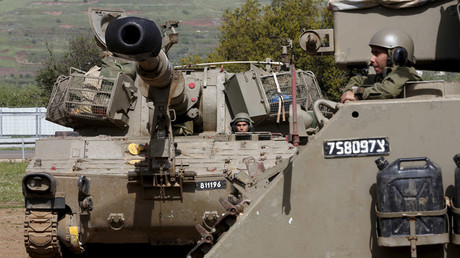
Prime Minister Binyamin Netanyahu took a tour on Monday to the Golan Heights to see a drill by the reserve soldiers of the Paratroopers Brigade, and during his visit he stopped at an outlook overlooking Syria.

At the start of his tour Netanyahu was given an update on the drill by Deputy Chief of Staff Maj. Gen. Yair Golan, Northern Commander Aviv Kokhavi and division commanders.

After viewing part of the drill, Netanyahu toured the field and spoke with the reserve soldiers and commanders taking part.

The Prime Minister praised the commanders for maintaining stability in the front, while noting the various security threats facing the Jewish state.

“We have Da’esh (Islamic State) on the other side of the fences here (in Syria), Hezbollah on the other sides of the fences here and there (in Syria and Lebanon), we have Hamas and Islamic Jihad in Gaza and global jihad and Da’esh in Sinai,” he said.

“We are proud of how in the entire stormy, raging and rambunctious Middle East, we succeeded in preserving relative quiet in the state of Israel and relative security. We are acting when we need to act, including here, beyond the border, in dozens of strikes, to prevent Hezbollah from [acquiring] game-changing weapons.”

Credit: Kobi Gidon/GPO

Netanyahu addressed the soldiers, saying, “we are also active in other fronts near and far, but we do it wisely. If we must enter combat – and that possibility stands before us and for that reason you are here – that is because we could not prevent the danger to the state of Israel through another way, and (it is) in order to give you the maximum in tools to defeat and win for the state of Israel.”

“You look at the earthquake around us and you see peoples and states getting erased, and if someone expects that someone will come to help them that doesn’t happen,” he said, again addressing the soldiers.

“If we learned one thing, it’s that we must be prepared to defend ourselves with our own power. That is the meaning of reserve army duty that you are doing here.”

“I want to thank you and express my esteem for all that you are doing, and I want you to know that the nation expresses esteem for that, and as much as possible we will give that expression in terms of resources, but the greatest resource is what you have in your hearts.”

Israel launched Syria strikes to prevent Hezbollah from obtaining weapons – Netanyahu

April 12, 2016

Israel launched Syria strikes to prevent Hezbollah from obtaining weapons – Netanyahu

Published time: 11 Apr, 2016 17:07

Source: Israel launched Syria strikes to prevent Hezbollah from obtaining weapons – Netanyahu — RT News

FILE PHOTO. Israel's Prime Minister Benjamin Netanyahu (R) talks with Israeli soldiers at a military outpost on February 4, 2015 during a visit at Mount Hermon which sits in the Israeli occupied Golan Heights on the border between Lebanon, Syria and Israel. © Baz Ratner
Israel has launched dozens of strikes in Syria, Prime Minister Benjamin Netanyahu has announced. It marks the first time that the leader has acknowledged such attacks against arms transfers to Lebanon’s Hezbollah.

“We act when we need to act, including here across the border, with dozens of strikes meant to prevent Hezbollah from obtaining game-changing weaponry,” Netanyahu said while on a visit to the occupied Golan Heights on Monday, as quoted by Reuters.

The prime minister failed to specify what kind of strikes Israel had conducted in Syria.

Although Israel welcomed a cessation of hostilities in Syria in February, it has indicated that it could still launch attacks there if it sees a threat from the Iranian-backed Hezbollah, whose fighters have been allied with Syrian President Bashar Assad.

Read more

© Baz Ratner

Israel is officially neutral on Syria’s civil war, but has frequently pledged to prevent shipments of advanced weaponry to Hezbollah, which is based in Lebanon. It has, however, stopped short of confirming specific air operations.

Tel Aviv last fought a war with Hezbollah in 2006. That conflict included rocket strikes inside Israel and an Israeli air and ground offensive in Lebanon.

Israeli leaders have stated that since then, Hezbollah has built up and improved the range of rocket arsenal that can now strike deep inside Israel.

Tension has been mounting between Tel Aviv and Hezbollah in recent months, with Hezbollah leader Hassan Nasrallah threatening to hit Israeli chemical and nuclear sites.

Netanyahu’s Monday comments come less than one week after intelligence firm Stratfor revealed satellite images of an area on the northern Lebanese-Syrian border which indicate that Hezbollah has been consolidating positions it gained from Syrian rebels in June 2013.

However, Netanyahu noted that Hezbollah isn’t the only worry facing Israel, citing threats from Islamic State (IS, formerly ISIS/ISIL), Hamas, and Islamic Jihad, as well as jihadists in Sinai.

He went on to state that “going into battle” is a “possibility that lies ahead,” adding that no one else will defend Israel.