Archive for August 30, 2015

CNN: DNC Not Backing Iran Deal ‘Big Embarrassment’ for Obama

August 30, 2015

CNN: DNC Not Backing Iran Deal ‘Big Embarrassment’ for Obama, Washington Free Beacon, August 30, 2015

President Obama suffered an “embarrassment” with the Democratic National Committee not passing a resolution over the weekend in support of his Iran nuclear deal, CNN panelists said Sunday.

According to the Washington Post, party chair Debbie Wasserman Schultz (D., Fla.) blocked the resolution at the summer meeting in Minnesota.

“The Obama-controlled DNC could not pass a resolution this weekend expressing support for President Obama’s Iran deal,” New York Times reporter Jonathan Martin said. “It’s a bit of an embarrassment for the administration seeing as it’s how his party, he appointed Debbie Wasserman Schultz, and it’s revived the sort-of latest round of eye-rolling among Democratic operatives about the state of the party.”

CNN host John King said Martin was being diplomatic, saying it was a “big embarrassment for the president.”

Report: Hezbollah enlisting West Bank youth to carry out terror attacks against Israel

August 30, 2015
Lebanese Hezbollah supporters march during a religious procession, to mark the burning of the tents that is part of the Ashura religious ceremony, in NabatiehLebanese Hezbollah supporters march during a religious procession in Nabatieh. (photo credit:REUTERS)

Saudi daily quotes Palestinian security source as saying PA concerned by Hezbollah attempts to make inroads with Palestinian youth.

Hezbollah has been working intensively to enlist former operatives from Fatah’s armed wing, the Al Aksa Brigades, in order to carry out terror attacks against Israeli targets in the West Bank and inside Israel, a Palestinian security source was quoted as saying on Sunday.

Saudi daily Okaz quoted the source as saying that “among those Hezbollah members involved in the operation is Kayis Ubayid, who was behind the kidnapping of Col. (res.) Elahanan Tenebaum in 2000.” Tenenbaum was released to Israel from Hezbollah captivity as part of a prisoner exchange in 2004.

The source added that Palestinian security forces believe that recent shootings and the use of explosive devices such as that thrown at an IDF position near Beit Jala, south of Jerusalem, earlier this month, are part of the Lebanese Shi’ite group’s efforts.

The Palestinian source claimed that Israel is well-aware of the Hezbollah activities. He added that some of those Palestinian operatives approached by Hezbollah reported the Shi’ite group’s efforts to Palestinian Authority officials. “We estimate that there are a number of youths who were drawn into joining Hezbollah’s ranks and are now operating in the West Bank, because of economic hardship or the deterioration in the security situation,” the source said.

“We don’t know how many people there are, but there is no doubt that the phenomenon is gaining momentum among former Al Aksa Brigade youths that have been approached by Hezbollah to work in exchange for economic support. The matter is a personal choice of these youth, who have chosen to take action against Israeli targets.”

The Palestinian security source expressed concern that, for the first time, their was a willingness among Palestinian youth to join Hezbollah. “These attempts have not gone unnoticed by us in recent years, but in recent months we feel that the phenomenon has grown, with interest expressed by the youths,” he said. “The number of youths involved can be counted on two hands, but nonetheless this is a dangerous development, which if it manages to carry out just one terror attack – it will change the situation completely. We fear that the issue will become a phenomenon, with more and more youths being seduced into getting money from Hezbollah. When they number in the dozens, handling them will become much more complicated.”

The source said that the matter was a security challenge for the Palestinian Authority, which is also currently acting against Hamas’s efforts to revive its military wing, the Kassam Brigades, in the West Bank.

The source said that in the mid-2000s, Hezbollah had tried to enlist West Bank youth, offering salaries which reached tens-of-thousands of dollars per month. “In the years 2004-2005, the Al Aksa Brigades claimed responsibility for terror attacks which were all funded by Hezbollah, whose main enlister was Kayis Ubayid.

This would not mark the first time that Palestinian security forces have warned of Hezbollah attempts to enlist fighters in the West Bank. The move could potentially be tied to Hezbollah’s patron – Iran.

In January, Iranian Defense Minister Hussein Dehghan warned that Israel “will not escape revenge” for its alleged assassination of Iranian Revolutionary Guards’ General Muhammad Allah-Dadi and of Jihad Mughniyeh in an air strike in the Syrian Golan Heights attributed in foreign reports to the IAF.

Dehghan said at the time that Iran would continue to arm the West Bank and Hezbollah. “Tehran will continue to strengthen the axis of resistance in order to deal with the Zionist entity.”

Iran Unveils Advanced Radars

August 30, 2015

Iran Unveils Advanced Radars, Israel DefenseAmi Rojkes Dombe, August 30, 2015

(Have the new systems been deployed? How long can Israel wait to attack Iran’s nuke sites? — DM)

New Iranian radar

Among of the unveiled products were the upgraded model of the Keyhan (Cosmos) radar, ground-based radar jamming systems and a domestically-made IFF (Identification, Friend or Foe) system.

***********************

A number of Iran’s homegrown air defense systems, including upgraded radars and electronic warfare equipment, were unveiled on Saturday.

One of the unveiled products was the upgraded model of the Keyhan (Cosmos) radar, a long-range radar that uses mixed frequencies to identify small flying objects, and is suitable for detecting large number of aerial targets in the electronic warfare.

In addition, a variety of ground-based radar jamming systems were unveiled. The jamming systems, which have been connected to the country’s integrated air defense network, are employed for electronic countermeasures in the fight against aerial threats.

A domestically-made IFF (Identification, Friend or Foe) system was also unveiled. Commander of Khatam al-Anbia Air Defense Base Brigadier General Farzad Esmaili said the system can distinguish friendly forces from the enemy by detecting 100 targets simultaneously.

A number of other Iranian radars, including Bina, Nazir and Talash were also put on display in the exhibition.

Egypt sends Assad secret arms aid, including missiles, with Russian funding

August 30, 2015

Egypt sends Assad secret arms aid, including missiles, with Russian funding, DEBKAfile, August 30, 2015

( Given that Egypt is heavily reliant on Saudi funding as well as the absence of any other news source beyond “Debka,” I find this article worthy of a generous helping of salt. – JW )
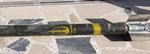
Egyptain_missile_in_Zabadani_25.8.15

Egyptian President Abdel-Fatteh El-Sisi has begun supplying Bashar Assad with arms, including missiles, after concluding a secret deal with Russian President Vladimir Putin and his consent to pick up the tab, DEBKAfile’s military and intelligence sources reveal. The first batch of short-range Egyptian-made surface missiles has reached the Syrian forces fiercely battling rebels for weeks for the recovery of the strategic town of Zabadani without breaking through (See picture showing missile with Egyptian factory markings.) 

It is not clear if the Egyptian missiles have also been passed to the Hizballah forces fighting with the Syrian army, considering that El-Sisi and Hizballah are at daggers drawn.

Our sources also reveal that the Egyptian arms consignments are freighted from Port Said to the Syrian port of Tartus by Ukrainian cargo vessels. These ships are today the most popular means of transport for clandestine and Black Market arms freights across the Mediterranean and Adriatic Seas.

Sums and quantities are yet to be determined, but Western intelligence sources report that Ukrainian vessels called in at Egyptian ports at least three times from July 22 to Aug. 22 and sailed off to Syria laden with weapons.

It is a deal that may affect the fate of the Assad regime from five, often conflicting, perspectives:

1. By providing Assad with an additional source of weapons, Cairo is reducing his dependence on Iran. This suits the Syrian ruler very well at this time, because he is fully aware of Tehran’s latest steps to draw Gulf rulers and Moscow into supporting a plan for ending the Syrian war, by installing a provisional government in Damascus and so easing his exit.

2. A certain parting-of-the ways has developed between Moscow and Tehran on how to terminate the Syrian conflict. By sending Assad arms, Cairo  casts its vote for Moscow’s perspective in preference to Tehran’s.

3. El-Sisi is now diametrically opposed on Syrian policy to the GCC led by Saudi Arabia and the United Arab Emirates who are patrons of the rebel movement dedicated to toppling Assad.

4. He is also on the opposite side to Israel and Turkey. Israel backs the rebels fighting in southern Syria to create a barrier against the encroachment of Hizballah and Iranian Al Qods Brigades up to its northern border and the Golan. Turkey and the US have reached terms on Syrian policy. Saturday, Aug. 30, Turkish jets carried out their first air strikes in Syria against the Islamic State, as part of its deal with the US.

5. The Russian-Egyptian understanding on the Syrian question is a signpost that clearly marks the way to deepening military and strategic relations between Moscow and Cairo.

Taking the lead on a resolution of the Syrian question, the Kremlin staged a discussion last Tuesday, Aug. 18, with three Arab visitors: Jordan’s King Abdullah, UAE Crown Prince Sheikh Mohamed bin Zayed Al Nahyan and the Egyptian president. It was led by Mikhail Bogdanov, Deputy Foreign Minister in charge of Middle East Affairs, and followed by individual tête-à-têtes between Putin and each visitor in turn.

The Russian and Egyptian leaders did their best, according to DEBKAfile’s Moscow sources, to draw the Jordanian and UA rulers over to their pro-Assad policy, or at least accept common ground for a measure of cooperation. In effect, Putin and El-Sisi were out to convince Jordan and the US to back away from the Syrian rebel cause and the Saudi line. Their future actions may indicate how far they succeeded.


