Archive for July 2015

Dershowitz: Does this deal prevent Iran from developing a nuclear weapon?

July 15, 2015

Dershowitz: Does this deal prevent Iran from developing a nuclear weapon? – Middle East – Jerusalem Post.

There is an enormous difference between a deal that merely delays Iran’s development of a nuclear arsenal for a period of years and a deal that prevents Iran from ever developing a nuclear arsenal.

Does the proposed deal with Iran actually prevent the Mullah’s from ever developing a nuclear weapon? Or does it merely delay them for a period of years? That is the key question that has not yet been clearly answered.

In his statement on the deal, US President Barack Obama seemed to suggest that Iran will never be allowed to develop a nuclear weapon. He said that this “long-term deal with Iran… will prevent it from obtaining a nuclear weapon.” He then repeated this assurance: “because of this deal, the international community will be able to verify that the Islamic Republic of Iran will not be able to develop a nuclear weapon.” These seemingly categorical statements were intended to assure the world that Obama would keep his earlier promise that Iran will never be allowed to develop nuclear weapons.

But is that what the deal itself does? Or, as stated by its critics, does it actually assure that Iran will be allowed to develop a nuclear arsenal after a short delay of several years? That is the key question that the Obama administration has refused to answer directly. It must do so before Congress can be asked to buy a pig in a poke for the American people.

There is an enormous difference between a deal that merely delays Iran’s development of a nuclear arsenal for a period of years and a deal that prevents Iran from ever developing a nuclear arsenal. Prime Minister Benjamin Netanyahu and many other critics of this deal describe it as merely a delay, while the Obama administration seems to be suggesting by its rhetoric that the deal will prevent Iran from ever obtaining a nuclear weapon.

The devil is not so much in the details as in the broad outlines of this deal and its understanding by the parties. Does it or does it not allow Iran to develop nuclear weapons after a relatively short moratorium? Iran certainly seems to believe that it does, Israel certainly believes that it does, and many in Congress—both Republicans and Democrats– seem to believe that it does. But the President seems to be telling the American public and the world that these critics are wrong: that Iran will never be allowed to develop a nuclear weapon under this deal. Yet, just a few months ago, he seemed more cautious and candid in discussing his “fear” that “in year 13, 14, 15, they have advanced centrifuges that enrich uranium fairly rapidly, and at that point the breakout times would have shrunk almost down to zero.” He also said that we have assurances of a yearlong breakout time “for at least well over a decade,” implying that after that indeterminate time frame, the assurances will no longer be in place. Obama’s statement, despite its confusing and ambiguous context, has raised deep concerns among critics of the deal. Moreover, the text of the deal includes time frames of eight-and-a-half years, 10 years and 15 years, which also generates confusion at a time when clarify is essential.

So which is it? Congress has a right to know, and so do the American people. Is it a postponement for an uncertain number of years – eight-and-a-half years, 10, 13, 14, 15—of Iran’s ability to develop a nuclear weapon? Or is it an assurance that “Iran will not be able to develop a nuclear weapon?”

The Obama administration insists that this is not a “treaty,” but rather a “deal.” A deal is a contract, and for a contract to be valid there must be a “meeting of the minds.” But has there been a meeting of the minds over the central issue of whether this deal allows Iran to develop a nuclear weapon after a moratorium whose precise time frame is unclear? And if there has been a meeting of the minds over this issue, what exactly is it?

Certainly the words of the Iranians are not the same as the words of Obama. Whose words accurately represent the meaning of the contract we are being asked to sign?

The time has now come to be crystal clear about the meaning of this deal. If it is intended to prevent Iran from ever developing nuclear weapons, the President must say so in the clearest of terms and he must get the Iranians to express agreement with that interpretation. Ambiguity may be a virtue at the beginning of a negotiation, but it is a vice in interpreting and implementing a deal with such high stakes.

Recall that former US President Bill Clinton made similar assurances with regard to North Korea back in 1994 – as the accompanying chart shows. But within a few short years of signing a deal that he assured us would require the dismantling of North Korea’s nuclear program, that country tested its first nuclear weapon. It now has a nuclear arsenal. How can we be sure that Iran will not act in a similar fashion?

The deal with Iran has been aptly characterized as a “leap of faith,” “a bet” and a “roll of the dice” by David Sanger in a news analysis for the New York Times. The gamble is that by the time the most restrictive provisions of the deal expire, Iran will be a different country with more reasonable leaders. But can the world and especially the nations most at risk from an Iranian nuclear arsenal, depend on faith, bets and dice, when they know that the last time the nuclear dice were rolled, they came up snake-eyes for America and its allies when North Korea ended up with nuclear weapons.

The burden of persuasion is now on the Obama administration to demonstrate that Obama was accurately describing the deal when he said that it will “prevent” Iran from “obtaining a nuclear weapon.” It is a heavy burden that will be – and should be – difficult to satisfy.

Alan M. Dershowitz is Professor Emeritus at the Harvard Law School and author of Taking the Stand: My Life in the Law.
Nuclear deal pushes Israel aside in Washington, raises Iran to leading US partner and ally

July 15, 2015

Nuclear deal pushes Israel aside in Washington, raises Iran to leading US partner and ally, DEBKAfile, July 15, 2015

Benjamin_Netanyahu-Iran_14.7.15Binyamin Netanyahu: Powers gambled on our future

Israeli Prime Minister Binyamin Netanyahu bitterly accused the “leading international powers of gambling our collective future on a deal with the foremost sponsor of international terrorism” – roundly condemning all six world powers who signed the nuclear deal with Iran in Vienna Tuesday, July 14.

President Barack Obama topped the list. Netanyahu pointed out that the president had determined on a deal with Iran at any price before he took office, which is true. Therefore, it had nothing to do with the poor relations between himself and the US President, he said in answer to critics. It was now time for Israeli leaders to set aside differences and pull together, he said. Opposition leader, the Zionist Union’s Yitzhak Herzog, agreed and said he was enlisting for the necessary effort on behalf of Israeli security. Tuesday night he received an update on the situation from the prime minister.

The special security cabinet meeting, called to discuss the ramifications of the nuclear deal, hours after it was signed, unanimously rejected it and declared “this deal does not commit Israel.”

Unfortunately, Israel was never asked for its commitment, any more than the other Middle East powers directly affected by it. The cabinet statement was therefore no more than a meaningless expression of futility, a sensation shared equally by Saudi King Salman and Egyptian President Abdel-Fatteh El-Sisi, in the face of the iron wall Obama and Secretary of State John Kerry have built for Iran in the region.

Both unceremoniously ditched Israel and its Arab neighbors in order to join hands with Iran. By this reshuffle of allies, Washington has created a new geopolitical reality in the region at the expense of its equilibrium.

The US Congress has 60 days to review the nuclear accord and reach a decision. But if Netanyahu had had any hopes of swinging the Senate around to voting down the veto President Obama promised to impose to mullify its rejection, that hope swiftly vanished in thin air. Leading presidential contender Hillary Clinton announced that if she wins the 2016 election she would abide in full by the nuclear accord Obama signed with Iran. This announcement assured Obama of a Senate majority.

The dead end reached by Netanyahu on this issue also symbolizes the end of Israeli’s special standing in Washington as “America’s leading Middle East ally.”

Iran has stepped into this position. There is little point in Israel knocking on the White House door to renew the old understanding and sympathy, as advised by former prime minister Ehud Barak and others. It does not matter who sits in the prime minister’s office in Jerusalem, as matters stand now, he/she will find themselves on the wrong side of that door.

Defense Secretary Ashton Carter will visit Israel next week. But that is only an attempt to soften the blow.

This does not mean that the Obama administration will totally abandon Israel, only that it will no longer enjoy favored status compared with other Middle East nations. By ditching the Arab world, Obama equally dumped the Palestinian issue. This has some advantages for the Netanyahu government, but is not the end of the world for the Palestinians. They, like Arab governments, have the option of seeking an understanding with Tehran, whereas that door is shut tight against Israel.

In this situation, Israel’s quiet understandings with a number of Arab leaders directed at forming a bloc to counter the US-Iran alliance, have no immediate future. When the earth shakes in a major upheaval, each individual is out to save himself and has no time to look around for allies.

In some ways, the Netanyahu government may find relief in being released from the political and strategic constraints bound up in the relationship with the Obama administration, and find the freedom to be more pragmatic and independent in its policy-making.

After all, Israel still has the strongest army and the most vibrant economy in the Middle East. Its leaders must learn to use those huge assets wisely and independently of the Obama administration.

Megyn Kelly on the catastrophic Iran deal

July 15, 2015

▶ Megyn Kelly on the catastrophic Iran deal – YouTube.


Key Nuclear Installations Missing from Iran Deal

July 15, 2015

Key Nuclear Installations Missing from Iran Deal, Israel National News, Ari Yashar, July 15, 2015

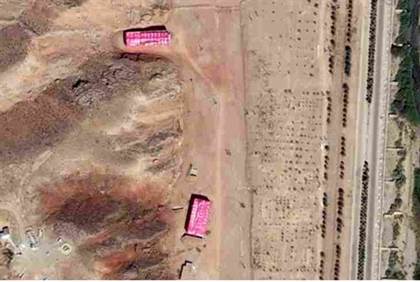
Parchin site(1)Suspicious activity at Parchin (illustration)Reuters

As experts got a chance to examine the details of the 159-page Iran nuclear deal signed Tuesday, they warned that it ignores various key aspects of the Islamic regime’s nuclear program, and that the lifting of arms sanctions may pave Iran’s path to nuclear-capable missiles.

A glaring omission is seen in the absolute lack of any reference to the highly covert Parchin military base located southeast of Tehran, which is suspected of being the center of Iran’s secret nuclear weapons program, according to the International Atomic Energy Agency (IAEA).

Iran has admitted to testing exploding bridge wire nuclear detonators at the site, and reports tied the Parchin base to Iran’s nuclear program following a mysterious explosion at the site last October.

IAEA reports in November 2011 pointed to nuclear weapons development previously conducted at the site, and a 2012 IAEA report likewise confirmed explosives containment vessels were at the site and likely used to test nuclear detonations. Satellite photos have shown Iran has been modifying the site, possibly expanding the tests and covering up their existence.

Iran has repeatedly refused IAEA requests to inspect Parchin. IAEA chief Yukiya Amano announced on Tuesday that in addition to the nuclear deal, a “road map” agreement was sealed, by which Iran will disclose military aspects of its nuclear program by October 15.After this, Amano will write an assessment of Iran’s claimed disclosures by December 15 “with a view to closing the issue.”

Amano said the agreement would include a visit to Parchin, but it remains to be seen how much time Iran will have to prepare for such a visit and possibly hide evidence of nuclear tests; Iranian officials rejected last-minute reports that inspections would be allowed at all covert sites.

IAEA roadmap: putting the cart in front of the horse

Thomas Moore, an arms control specialist and staff member of the SenateForeign Relations Committee, told Washington Free Beacon that the IAEA “road map” should have taken place before the nuclear deal, and not after it.

“The IAEA’s resolution of the possible military dimensions of Iran’s nuclear program should precede the deal, not by months but by as much time as it takes to verify the absence of Iran’s (past military work), including the full historical picture of its program. And the deal does not do that,” said Moore.

Not only does the deal not directly address military aspects of Iran’s nuclear program, critics warn it contains several loopholes that will greatly limit its effectiveness in stopping Iran’s march to a nuclear weapon.

For one, the agreement calls for Iran’s “voluntary” compliance with the terms of the deal in several places, instead of implementing mandatory steps Iran must fulfill. It also outlines a convoluted bureaucratic process to confront Iranian violations, reports Washington Free Beacon.

What’s more, a section of the deal may allow Iran to avoid revealing its past nuclear weapons testing, stating that Iran “may propose to the IAEA alternative means of resolving the IAEA’s concerns that enable the IAEA to verify the absence of undeclared nuclear materials and activities or activities inconsistent with the JCPOA (Joint Comprehensive Plan of Action) at the location in question.”

The deal also includes removing a large number of sanctions, including those targeting Parchin Chemical Industries (PCI), which operates sites at the Parchin base and is thought to be highly involved in the covert nuclear weapons program.

“Iran can get its first bombs in weeks”

Aside from Parchin, experts were alarmed to see that the nuclear deal does not directly impose limits on or even reference the Russian-made Bushehr nuclear power plant, which they warn can produce enough plutonium for a large number of atomic weapons.

Henry Sokolski, director of the Nonproliferation Policy Education Center, told Washington Free Beacon that Bushehr’s exclusion from the deal was a mistake.

“That reactor can produce enough plutonium for dozens of bombs per year,” warned Sokolski. “Iran could remove the fuel from the reactor and use a small, cheap reprocessing plant to extract plutonium, and get its first bombs in a matter of weeks.”

Regarding plutonium, after 15 years the deal stipulates that Iran will be able to “engage in producing or acquiring plutonium or uranium metals or their alloys,” and likewise conduct research and development “on plutonium or uranium (or their alloys) metallurgy, or casting, forming, or machining plutonium or uranium metal.”

At the Natanz nuclear facility, a limitation on 5,060 centrifuges in 30 cascade units will cease in ten years, and after 15 years Iran will be able to enrich uranium over 3.67% – a 20% enrichment is needed to build nuclear weapons. In eight years, Iran can start producing up to 200 partial advanced centrifuges each year, and two years later it can construct complete advanced centrifuges.

Sokolski warned that “ultimately, this is a gamble on Iran not wanting to make bombs. If they really don’t, the deal will work. If they do, the fine print won’t stop them.”

Nuclear-capable missile sanctions lifted

In addition to the details on Iran’s nuclear program, experts warn there are pitfalls in how the deal approaches – or ignores – Iran’s nuclear-capable missile program. Notably the deal avoids addressing Iran’s ICBM (intercontinental ballistic missile) program.

It also removes sanctions against Iran’s Al Ghadir missile command based in Tehran, which has been leading the development of missiles capable of delivering a nuclear warhead, and is thought to hold operational control of Iran’s missiles.

A UN conventional arms embargo on Iran will end in five years due to the deal, and sanctions against selling ballistic missiles to Iran will likewise expire in eight years. However, it is possible that China and Russia will covertly sell arms to Iran before those dates, as they have done in the past.

Fred Fleitz, who has formerly served as a CIA analyst, State Department arms control official, and House Intelligence Committee staff member, told Washington Free Beacon that these facets of the deal will allow Iran to arm itself freely.

“Language on lifting conventional arms and missile embargoes is very weak,” stated Fleitz.

“The IAEA simply has to certify that Iran isn’t currently engaged in nuclear weapons work to lift these embargoes early. The IAEA will be hard pressed to find evidence of this and will probably issue a report allowing these embargoes to be lifted early,” he concluded.

Netanyahu on Iran deal: The more you read it, the worse it gets

July 15, 2015

Netanyahu on Iran deal: The more you read it, the worse it gets | The Times of Israel.

Inspections clause is farcical, sanctions snap-back clause is incomprehensible, and a major Iranian terror chief, Qassem Soleimani, has been removed from the terror list, PM protests

July 15, 2015, 3:50 pm Prime Minister Benjamin Netanyahu speaks to the Knesset during a ceremony to swear in the new government, May 14. 2015. (Knesset spokesperson)

Prime Minister Benjamin Netanyahu speaks to the Knesset during a ceremony to swear in the new government, May 14. 2015. (Knesset spokesperson)

Prime Minister Benjamin Netanyahu said Wednesday that perusal of the previous day’s nuclear deal with Iran yields a picture that grows ever bleaker.

The agreement is “filled with absurdities,” Netanyahu said, scolding world leaders for caving in to Iran’s “charm offensive” and crediting Israel with leading the fight against an Iranian bomb.

He called on the Knesset to present a united front in the fight against the “bad in every respect” pact. “The agreement that was signed in Vienna is not the final word. We will continue to fight,” Netanyahu pledged.

Iran and the world powers signed an agreement Tuesday in Vienna that mandates the Islamic Republic scale back some of its nuclear capabilities in exchange for a rollback of economic sanctions.

“When we examine this agreement — which is bad in every aspect — when we read this agreement, the picture becomes more bleak and we discover it’s filled with absurdities,” Netanyahu said.

“For example, the agreement gives Iran 24 days’ [notice] before an inspection; it’s like they offer the service free of charge that produces drugs a 24-hour warning before performing a search,” he said.

Chief of the Quds Force of Iran's Revolutionary Guard, Qassem Soleimani, attends a meeting of the commanders of the Revolutionary Guard in Tehran, Iran, September 17, 2013. (photo credit: AP/Office of the Iranian Supreme Leader, File)

“In addition, the sanction snap-back mechanism is so complicated and serpentine that one needs a PhD to understand it. One clause creates a huge incentive to invest in Iran because it says that the reinstatement of sanctions will not apply to agreements that have [already taken place]. Another section includes the people that were removed from the sanctions list, one of them being Qassem Soleimani, head of Iran’s global terror arm. It is absurd, terror [meets] nuclear [power],” he said, referring to the commander of Iran’s elite Quds force.

According to Netanyahu, Western leaders were too easily beguiled by the Iranian regime, and if not for Israel’s efforts, Tehran would already possess a bomb.

“There is a willingness in the West to accept despotic regimes and seek peace at any price. Not all of them have internalized the lessons of history. Even today, the powers are won over by a charm offensive. I am not saying that we are in 1938 for two reasons; firstly, back then, no precedent existed for what was to occur, while today that [precedent] exists; secondly, today we have a state, while then we didn’t, and its purpose is to to act against those that threaten it,” Netanyahu said.

“If not for the efforts made by Israel, Iran would have already had the ability to arm itself with nuclear bombs. We exposed the Iranian issue on the international stage. We led the implementation of biting sanctions that brought Iran to the negotiating table. We set before Iran a red line on the issue of uranium enrichment which it has not yet crossed,” he said.

“One who speaks truth about this agreement is the president of Iran, who said that Iran has achieved all its objectives,” Netanyahu said, referring to President Hassan Rouhani who said Tuesday following the deal that “all the four objectives have been achieved.”

“We are not committed to this agreement and will continue to oppose it. For existential [threats] there is no coalition or opposition. We need a united front to ensure our survival,” Netanyahu said.

Maybe They Just . . . Forgot To?

July 15, 2015

Maybe They Just . . . Forgot To? National Review, Patrick Brennan, July 14, 2015

(Here’s a video of  Mr. Rhodes explaining that we never sought anywhere, anytime inspections:


Unfortunately, as I observed here, the November “Joint plan of action” did not contemplate investigation of Iran’s military sites,  possible military uses or development of nukes, other than by limiting uranium enrichment. — DM)


In April:

Secretary of Energy Ernest Moniz on Iran nuke inspections: “We expect to have anywhere, anytime access.” April 20 ’15 http://www.bloomberg.com/politics/articles/2015-04-20/inspectors-need-full-access-in-any-iran-nuclear-deal-moniz-says 

Ben @rhodes44 told the Israeli people today on TV that framework agreement w/ Iran has snap inspections. “Anywhere, any time”. Quite a claim

We Should Go to War With Iran, Not Give Them a Peace Deal | PJTV

July 15, 2015

We Should Go to War With Iran, Not Give Them a Peace Deal | PJTV, July 14, 2015


Obama’s Iran Nuke Deal Lies

July 15, 2015

Obama’s Iran Nuke Deal Lies

The dirty details of the agreement that the president is trying to hide.

July 15, 2015

Joseph Klein

via Obama’s Iran Nuke Deal Lies | Frontpage Mag.

The United States and its five negotiating partners (Russia, China, France, the United Kingdom and Germany) reached an agreement July 14th on the final terms of a deal with Iran, under which Iran would curb its nuclear program for a period of time in return for sanctions relief.

The agreement, known as the Joint Comprehensive Plan of Action (or JCPOA for short), will go into effect on what is called “Adoption Day” –  the date 90 days after the endorsement of the JCPOA by the UN Security Council, or such earlier date as may be determined by mutual consent of the JCPOA participants. The Security Council is expected to act within days to endorse the deal.

During his victory lap announcing that a final deal had been reached with Iran, President Obama warned that he would veto any congressional legislation blocking his legacy foreign policy achievement. The president declared that the agreement was “built on verification,” not trust.  In this regard, Obama claimed that international inspectors will have 24/7 access to Iran’s key nuclear facilities to ensure Iran is fulfilling its commitments. “[Inspectors] will have access to Iran’s entire nuclear supply chain – its uranium mines and mills, its conversion facility, and its centrifuge manufacturing and storage facilities,” he said. “This ensures that Iran will not be able to divert materials from known facilities to covert ones.”

A so-called “fact sheet” issued by the White House assures the public that “Iran won’t garner any new sanctions relief until the IAEA [International Atomic Energy Agency] confirms that Iran has followed through with its end of the deal.” If Iran violates the deal, any lifted sanctions can be snapped “back in place,” according to the White House.

Looking down the road long after he has left office, Obama said that “I have no doubt 10 or 15 years from now the person who holds this office will be in a far stronger position with Iran further away from a weapon and with the inspections and transparency that allow us to monitor the Iranian program. For this reason I believe it would be irresponsible to walk away from this deal.” He added that “no deal means a greater chance of more war in the Middle East.”

As is so often the case, President Obama is misleading the American people. The fact is there will be no 24/7 “anywhere, anytime” inspections allowed of undeclared suspicious sites. The fine print of the final JCPOA agreement provides Iran with the means to delay any inspections of undeclared suspected sites requested by the IAEA. Iran is empowered to raise objections to inspections of suspected sites, which would then have to be assessed by a commission that includes Iran itself as a member. Iran will thus have opportunities to exploit the mechanisms for international verification inspections, allowing it to rotate its covert nuclear arms activities from secret site to secret site during a protracted dispute resolution process:

If the absence of undeclared nuclear materials and activities or activities inconsistent with the JCPOA cannot be verified after the implementation of the alternative arrangements agreed by Iran and the IAEA, or if the two sides are unable to reach satisfactory arrangements to verify the absence of undeclared nuclear materials and activities or activities inconsistent with the JCPOA at the specified locations within 14 days of the IAEA’s original request for access, Iran, in consultation with the members of the Joint Commission, would resolve the IAEA’s concerns through necessary means agreed between Iran and the IAEA. In the absence of an agreement, the members of the Joint Commission, by consensus or by a vote of 5 or more of its 8 members, would advise on the necessary means to resolve the IAEA’s concerns. The process of consultation with, and any action by, the members of the Joint Commission would not exceed 7 days, and Iran would implement the necessary means within 3 additional days.

Russia and China (who are sympathetic to Iran’s positions on a number of issues, including sanctions relief) and Iran itself will be members of the Joint Commission, along with the United States, France, the United Kingdom, Germany and the European Union. Masters at deception, the Iranian regime will be able to play for time and conduct a shell game, while the inspectors struggle to catch up and the Joint Commission tries to reach some sort of resolution. Undisclosed underground sites can easily hide work on developing nuclear warhead technologies, for example.

Sanctions relief will not be linked solely to verifiable proof of Iran’s compliance with each of its specific commitments, such as reducing its stockpile of enriched uranium, de-commissioning thousands of its centrifuges, and redesigning its Arak heavy-water nuclear reactor so it cannot produce any weapons-grade plutonium. An estimated $100 billion in frozen assets could be made available to Iran reasonably soon, with no restrictions on Iran’s spending to sponsor more global terrorism. The money can be used to buy conventional arms including missiles, since the JCPOA contemplates the removal of sanctions on the import and export of conventional arms. And again, one needs to look at the fine print. Buried in the JCPOA text is a provision that would appear to allow for the removal of certain sanctions 8 years after the JCPOA goes into effect (Adoption Day) or the date on which the Director General of the IAEA submits a report stating that the IAEA has reached the “Broader Conclusion” that all nuclear material in Iran remains in peaceful activities, whichever is earlier. This means Iran can obtain sanctions relief even if it does not prove to the IAEA’s satisfaction that its nuclear program is entirely peaceful as Iran has claimed all along that it is.

There is also some confusion as to whether sanctions will be lifted against Iran’s Revolutionary Guard Maj. General Qasem Soleimani, who has American blood on his hands. The Obama administration is saying no at least as to non-nuclear related sanctions, but the Iranians are claiming that under the terms of the agreement “Major Gen. Qassem Soleimani will be taken off sanctions lists.”

In any event, once the unraveling of the sanctions regime begins to take place, it will be practically impossible to put the genie back into the bottle with some sort of “snap back.” Russia and China, eyeing lucrative arms deals, can be expected to take Iran’s side against any snap back. France, protecting its business interests in Iran developed after the lifting of sanctions, would most likely be reluctant to reverse course absent compelling evidence of widespread violations that present an imminent threat.

Longer term, the deal as presently structured will put our children and grandchildren under the threat of an Iranian nuclear mushroom cloud even if Iran were to abide by the temporary restrictions in place for the next decade or so. Iran will be able to reach a breakout time (the time it would take to amass enough nuclear material to produce a nuclear bomb) of near zero after the expiration of those restrictions, because its core nuclear enrichment infrastructure and research program to develop advanced centrifuges will not have been dismantled. Obama admitted last April that Iran could have near zero breakout time starting in Year 13 when Iran would have “advanced centrifuges that enrich uranium fairly rapidly.” However, he said nothing about this overhang in his praise of the final deal.

As for President Obama’s claim that “no deal means a greater chance of more war in the Middle East,” a bad deal will inevitably set off a nuclear arms race in the Middle East. And based on the details we know so far, the negotiated JCPOA is a bad deal that Congress should overwhelmingly reject. Despite Obama’s pro-forma calls of reassurance to the leaders of Israel and Saudi Arabia after the deal was announced, Obama has pivoted away from them towards a policy of rapprochement with the Iranian regime. He has done so against the drumbeat of continued cries by Iran’s leaders for “Death to America” and their holding of four Americans hostage.

Picking Cotton

July 15, 2015

Tom Cotton Defies Obama: ‘I Believe That Congress Will Kill The Deal’

by Charlie Spiering14 Jul 2015 Via Breitbart


Kerry: If you agree I promise everyone a free case of Heinz ketchup.[Source: Joe Klamar – AFP – Getty Images]

(Having more faith in this country than most folks and a belief that wiser men will prevail, I have to say (and pray) Mr. Cotton is right. Besides, it’s not over until the proverbial fat lady sings. – LS)

Sen. Tom Cotton (R-AR) denounced the Iranian nuclear deal hailed by President Obama early Tuesday morning, calling it a mistake.

“This proposed deal is a terrible dangerous mistake that’s going to pave the path for Iran to get a nuclear weapon while giving them tens of billions of dollars of sanctions relief,” he said in an interview on MSNBC’s Morning Joe.

Cotton, a freshman senator, has made his opposition to the deal the center of his emerging political career.

He described Iran as an “outlaw, terrorist sponsoring, anti-American regime” and criticized the deal for leaving its nuclear program intact.

Cotton appeared confident that Congress would oppose the deal, once the full details of the deal were released, exposing key provisions such as lifting the arms embargo on Iran, and the weakness of requirements of nuclear inspections.

“The American people will repudiate this and I believe Congress will kill the deal,” he stated.

Iran’s nuclear deal puts Saudis on edge

July 15, 2015

Iran’s nuclear deal puts Saudis on edge

Reuters By Angus McDowall and Hadeel Al Sayegh

15 hours ago

via Iran’s nuclear deal puts Saudis on edge – Yahoo News.


RIYADH/DUBAI (Reuters) – Iran’s nuclear deal with world powers on Tuesday will make the Middle East a “more dangerous part of the world” if it comes with too many concessions, a Saudi official told Reuters, signaling Gulf Arabs’ deep unease over the accord.

The Saudis and their Gulf allies fear that the deal, by ending Iran’s pariah status and freeing its economy from crippling sanctions, will embolden Tehran to step up its backing for their foes across the Middle East.

Saudi authorities offered only terse public comment on the Vienna deal, some 10 hours after it was announced, but officials privately made clear their misgivings about its likely impact in a region where the Sunni Muslim kingdom has long competed with Shi’ite Iran for influence.

While acknowledging that the deal would mean “a happy day” for the Middle East if it stopped Iran gaining a nuclear arsenal, the Saudi official said he feared it would instead allow Iran “to wreak havoc in the region”.

“We have learned as Iran’s neighbors in the last 40 years that goodwill only led us to harvest sour grapes,” he told Reuters through a social network.

Saudi officials have publicly voiced only lukewarm support for the marathon talks, but in private have often argued that Iran cannot be trusted to keep to a deal.

Riyadh regards Iran’s support for Syria’s President Bashar al-Assad, Iraq’s Shi’ite militias, Lebanon’s Hezbollah and Yemen’s Houthis as evidence that Iran wants to gain hegemony across the Middle East for itself and Shi’ite Muslim allies.

Commenting on the nuclear deal late on Tuesday, a statement on state media tersely stressed the importance of a strict inspections regime and the need to reimpose sanctions quickly if Iran failed to meet the conditions of the accord.

Saudi journalists, clerics and analysts were more forthcoming in setting out the country’s fears, which are also fueled by a sense that Riyadh’s main ally, Washington, now has divided loyalties after helping Iran to come in from the cold.

“Iran made chaos in the Arab world and will extend further after the agreement, and the GCC (Gulf Cooperation Council) countries should reduce their confidence in America and turn their focus to Russia and China,” said Mohammed al-Mohya, the news anchor on the state-run Saudi Channel 1.

WAR IN YEMEN

For months Saudi warplanes have been bombing Shi’ite Houthi forces in neighboring Yemen. It says they are being encouraged by Iran – an accusation rejected by Tehran.

“What I’m hoping for is that we won’t end up having wars by proxy in the region, that Saudi Arabia will not feel pushed to fight indirectly wherever Iranian influence is,” said Abdulaziz al-Sager, the Jeddah-based head of the Gulf Research Centre.

“If Iran is determined to expand its influence, and use sectarianism as its way to do that, then I think they will be pushing Saudi Arabia to go into war by proxy.”

Riyadh gave Washington only a few hours’ notice of its intervention in Yemen, a sign that it no longer looks unquestioningly to the United States as guarantor of its security and is prepared to push a more assertive foreign policy of its own.

“The ‘Great Satan’ and the Europeans have surrendered to Iran, the terrorist Iran has proved that it is in the right and they are in the wrong,” tweeted Saleh al-Rajhi, director of the Center for American Studies at Riyadh’s Institute of Diplomatic Studies.

He joked that it only remained for the United States to visit the grave of Iran’s late revolutionary leader Ayatollah Ruhollah Khomeini, “to ask for his blessing”.

“It is clear now that Americans are following their interests, irrespective of any historic promises given by the former leaders of both countries. Now the Obama administration is just looking at the ayatollahs,” said Mohsen Al-Awaji, a Saudi Sunni Islamist activist.

U.S. President Barack Obama and Secretary of State John Kerry have held several meetings to reassure Gulf states in the culmination to the deal, most recently in May.

The United Arab Emirates and Kuwait have both congratulated Iran over the nuclear deal but in private they also remain wary. Oman, which brokered talks in 2013 that ultimately led to the deal, called it a “historic win-win”.

(Additional reporting by Taghreed Almadani and Sandy Azmy; Editing by William Maclean and Gareth Jones)


