Archive for June 19, 2015

Rise of Islamic State in Gaza forces Israel to adopt new Hamas policy

June 19, 2015

Rise of Islamic State in Gaza forces Israel to adopt new Hamas policy

By Missing Peace

via Rise of Islamic State in Gaza forces Israel to adopt new Hamas policy | Missing Peace | missingpeace.eu | EN.


Analysis

The rising threat of the Islamic State across the Middle East has resulted in unlikely cooperation between sworn enemies.

Yesterday, for example, the Syrian Observatory for Human Rights reported that the US-led coalition fighting the Islamic State in Syria and Iraq had launched airstrikes on ISIS positions during a battle between the Islamic State and the Islamist coalition that is led by Al Qaeda affiliate Jabhat al-Nusra. This appears to be one of the changes in U.S. strategy against the Islamic State after the group seized the Iraqi city of Ramadi, close to Baghdad, and the ancient Syrian city of Palmyra.

But there’s more.

After last week’s surge in rocket attacks on Israel from Gaza – on Saturday, Islamic State supporters in Gaza launched another rocket on southern Israel – Israel suddenly appeared to realize that it should not do ISIS’ bidding and weaken Hamas by launching a major operation to stop the renewed rocket attacks from Gaza.

Israeli commentators have pointed out that the goal of the Islamic State’s actions in Gaza is to destabilize the situation to the point that the Hamas regime collapses. So when Israel was attacked again on Saturday evening, the Israeli Air Force uncharacteristically responded by bombing empty buildings in the Gaza strip.

A high ranking IDF official explained why “the purpose of the recent rocket launches from the Gaza Strip was to inflame matters between Hamas and Israel.” He added that the Islamic State expected that “Israel would attack Hamas and do its work for it.”

From the words of this anonymous official, it becomes clear that for Israel, Hamas is no longer the number one threat emanating from Gaza. The government in Jerusalem seems to prefer Hamas’ rule in Gaza to a possible coup by the Salafist groups that have sworn alliance to the Islamic State.

Bringing down Hamas in Gaza would not serve Israel’s strategic interests at this point. Although Hamas is the same Hamas that has vowed to destroy Israel, it is at least the devil Israel knows. The Islamic State is fighting according to its own set of rules that are quite unique in the history of warfare. The organization does all sorts of things that have nothing to do with conventional warfare, or even with terrorism as we knew it thus far.

So Israel is now working to keep Hamas in the Gaza Strip for the time being. Times of Israel analyst Avi Issacharoff pointed out that Israel is currently working with Hamas’ allies, Turkey and Qatar, to restore calm in the Gaza Strip and allow mediation between it and Hamas.

There have been reports for months now about secret talks between Hamas and Israel via foreign mediators about a long term truce in Gaza.

“Israel is allowing Qatar a foothold in the Gaza Strip through Mohammed Al-Emadi, the Qatari ambassador to Gaza, and allowing Turkey to be involved in the Palestinian issue as well. A little more than three weeks ago, Israel let Turkish religious affairs minister Mehmet Görmez visit Gaza with a high-ranking delegation. (The group also went to the al-Aqsa Mosque on the Temple Mount and received a warm reception. When Jordanian Chief Justice Sheikh Ahmed Halil visited there, worshipers threw shoes at him.),” Issacharoff wrote.

He asked why Israel is not trying – via the Americans – to bring back the Palestinian Authority to Gaza. This question is best answered by Italian foreign policy analyst Benedetti Berti. She wrote that the Salafist movement in Gaza is on the rise and is influenced by the establishment of the Islamic Caliphate in Syria and Iraq last year.

“This has created a number of challenges for Hamas, which is already struggling to address severe economic issues in Gaza. The much-hoped-for relief that was supposed to arrive following the announcement of the unity government in spring 2014 has not materialized, and the pre-existing economic crisis has been further exacerbated by the damage inflicted on Gaza by the summer 2014 war with Israel and the glacial pace of reconstruction. Hamas has been largely unable to pay for the salaries of its more than 40,000 employees, leading to growing dissatisfaction within Gaza and recurring and more extended strikes,” Berti wrote.

All this plays into the hands of the supporters of the Islamic State and will contribute to the rise of the organization in Gaza, where the tide has been turning ever since Hamas ousted the Palestinian Authority in 2007.

The rise of Hamas in Gaza was a sign of the times. Palestinian society has been influenced by Islamism for a long time now, and the only reason the Palestinian Authority is still in charge of the so called West Bank (Judea and Samaria) is the presence of the IDF. That’s why the PA always threatens to end security cooperation with Israel but never carries out these threats. The Palestinian Authority exists by the grace of outside players, the donors in the West and the Arab world, and by the presence of the Israeli army. If free elections were to be held tomorrow, Hamas would win and take over the West Bank.

In Gaza, the situation is different; the population has been living under the rule of an Islamist organization for years, and society has become more Islamist as a result. Under these circumstances, it would be unrealistic to expect that the unpopular Palestinian Authority could reverse this process and lead Gaza to prosperity and moderation. After all, Palestinians voted Hamas into power in 2006 because of rampant corruption in the PA; and since then, the situation has not changed for the better.

So for now, Israel and Hamas share an interest. Both parties don’t want the Islamic State to take over Gaza and turn it into a province of the Caliphate.

In light of this, it is interesting to note that the Egyptians too have suddenly changed their approach to Hamas. On Saturday, an Egyptian court ruled that Hamas should be taken off the Egyptian Foreign Ministry’s list of terrorist organizations. Another Egyptian court had labeled Hamas a terrorist group in February, one month after a similar ruling against its military wing, Izz ad-Din al Qassam. The ruling was welcomed by Hamas and will ease Egyptian pressure on the Muslim Brotherhood offshoot in Gaza.

State Department Report Minimizes Palestinian Incitement to Violence

June 19, 2015

State Department Report Minimizes Palestinian Incitement to Violence, The Investigative Project on Terrorism, Jume 19, 2015

These blatant omissions from the report leave create a sense that examples of Palestinian incitement to violence and glorification of terrorists are sporadic occurrences. In reality, the Palestinian Authority institutionalizes a systematic campaign of violent incitement and continues to praise terrorists for killing Jews and Israelis, while encouraging other Palestinians to follow in their footsteps.

****************

The U.S. State Department’s Country Reports on Terrorism 2014 issued Friday minimizes official Palestinian incitement to violence against Israel and completely overlooks Palestinian glorification of terrorists.

The annual report lists major terrorist incidents worldwide and outlines each country’s counterterrorism efforts and legislation. Terrorism attacks and their resulting deaths spiked last year, the report found, an increase largely driven by attacks by the Islamic State and Nigeria’s Boko Haram terrorist groups.

With respect to the Palestinian Authority (PA), the report praises the PA for taking “significant steps to ensure that official institutions in the West Bank that fall under its control do not create content that leads to incitement to violence.” The report acknowledges that “some instances of inciting taking place via official media” still occur, listing only three examples. However, the report diminishes the fact that incitement to violence is a systematic and institutionalized PA phenomenon.

Click here for an Investigative Project on Terrorism comprehensive outline of Palestinian violent incitement focused only on incidents last fall.

The State Department assessment also ignores the direct participation of senior PA officials in praising terrorists and inciting violence against Israelis and Jews.

For example, the report does not mention PA President Mahmoud Abbas’ call last October for Palestinians to prevent Jews from going to the Temple Mount compound “in any way.” The video clip of Abbas’ Oct. 17 speech was shown 19 on PA television times in three days, implicitly calling for Palestinians to use violence against Israelis.

Instead, the report described PA efforts “to ensure” Friday sermons in more than 1,800 mosques controlled by the PA “do not endorse incitement to violence … the guidance is that no sermon can discuss political or lead to incitement to violence.”

In February, however, the PA Minister of Religious Affairs and other prominent religious officials resorted to an age-old blood libel accusing Jews of attacking Muslims sites and that Israel is trying to destroy the al-Aqsa Mosque, Palestinian Media Watch (PMW) reports. Such accusations are baseless and encourage Palestinians to conduct terrorist attacks against Israel.

The State Department report also omits any reference to official Palestinian glorification of terrorists.

For example, after the October shooting of Rabbi Yehuda Glick, Abbas sent a condolence letter to the family of terrorist Mutaz Hijazi who was killed by Israeli authorities in a firefight during a raid for his capture. In the letter, Abbas called the terrorist a “Shahid,” a martyr, who “rose to Heaven while defending our people’s rights and holy places,” PMW reported.

Moreover, a senior Fatah official claimed that Hijazi was a Fatah operative and expressed pride in his actions, a PMW translation shows.

These blatant omissions from the report leave create a sense that examples of Palestinian incitement to violence and glorification of terrorists are sporadic occurrences. In reality, the Palestinian Authority institutionalizes a systematic campaign of violent incitement and continues to praise terrorists for killing Jews and Israelis, while encouraging other Palestinians to follow in their footsteps.

Putin Presses Reset Button on Sweden

June 19, 2015

Russia warns Sweden it will face military action if it joins Nato

By Zachary Davies Boren Friday 19 June 2015 Via The Independent


We’ll have them speaking Russian in no time. (photo credit: Getty)

(Scratch another destination for vacationing Russians. – LS)

Russian ambassador says they would “resort to a response of the military kind and re-orientate our troops and missiles”

Russia would take military “countermeasures” if Sweden were to join Nato, according to the Russian ambassador.

In an interview with Swedish newspaper Dagens Nyheter, Viktor Tatarinstev warned against joining the Nato alliance, saying there would be “consequences”.

Decrying what he called an “aggressive propaganda campaign” by the media, Tatarinstev stressed that “Sweden is not a target for our armed troops”.

But with a recent surge of Swedish support for joining Nato, the ambassador said: “If it happens, there will be counter measures.

“Putin pointed out that there will be consequences, that Russia will have to resort to a response of the military kind and re-orientate our troops and missiles.

“The country that joins Nato needs to be aware of the risks it is exposing itself to.”

Despite the swing in public opinion – 31 per cent of Swedes wants to join Nato, up from 17 per cent in 2012 – Russia is confident that the country will not opt to join the Western military organisation.

He said: “I don’t think it will become relevant in the near future.”

Tatarinstev blamed souring Swedish-Russian relations on a media campaign in which “Russia is often described as an attacker who only thinks of conducting wars and threatening others”.

Last year a series of reports indicated increased Russian military presence in the Baltic sea, with fighter-bombers spotted in Swedish airspace and a foreign submarine seen in Swedish waters.

Foreign Minister Carl Bildt referred to the former as “the most serious aerial incursion by the Russians” in almost a decade.

And Defence Minister Peter Hultqvist has since announced Sweden will be upgrading its navy fleet so it can better detect submarine activity.

Israeli man killed in West Bank terror attack named

June 19, 2015

Israeli man killed in West Bank terror attack named | The Times of Israel.

Danny Gonen, 25, succumbs to wounds after coming under fire near settlement of Dolev; second man in moderate condition; IDF searching for gunman

June 19, 2015, 6:11 pm
Danny Gonen, 25, from Lod was killed Friday, June 19, 2015 in a shooting attack near the West Bank settlement of Dolev by a Palestinian gunman. (Facebook)

Danny Gonen, 25, from Lod was killed Friday, June 19, 2015 in a shooting attack near the West Bank settlement of Dolev by a Palestinian gunman
An Israeli man who was critically injured Friday afternoon in a shooting attack in the West Bank succumbed to his wounds. He was later named as Danny Gonen, 25, from the central Israeli city of Lod.

Gonen was shot in the upper body near the settlement of Dolev, northwest of Jerusalem. He was found unconscious and transferred to Tel Hashomer Hospital by IDF helicopter where he died over an hour after the attack.

Gonen was an electrical engineering student and the eldest of five siblings.

A second man, whose identity was not immediately known, was moderately hurt in the attack and was also being treated at Tel Hashomer.

The two men were traveling in their car after visiting a spring near Dolev, when they were flagged down by a Palestinian man, seemingly asking them for help, before being shot.

“The Palestinian asked for information regarding a nearby spring moments before drawing a gun and shooting the passengers at close range,” according to a statement released by the IDF.

The IDF and Israel Police forces launched a manhunt for the gunman in nearby Palestinian villages.

Prime Minister Benjamin Netanyahu said the incident proved that Israelis were under constant threat.

“We mustn’t let the relative calm mislead us. Efforts to hurt us (Israelis) are underway at all times, and we will continue to fight them using all the means available to us,” he said.

President Reuven Rivlin condemned the attack, which he said was “another step in the quiet and serious escalation in acts of terrorism we have witnessed in recent months,” and called on Palestinian and Arab-Israeli leaders to do the same.

“We will not accept a situation in which a young hiker has his life taken from him in the land of Israel, because he is Jewish. Security forces will work tirelessly to bring to justice those responsible for this cruel and brutal act. There should be heard clear and decisive condemnation of such criminal acts from both the Arab leadership, which bears responsibility for actions of terrorism emanating from its territory, as well as from the leaders of the Arab community in Israel,” Rivlin wrote on Facebook.

The UN Special Coordinator for the Middle East Peace Process, Nickolay Mladenov, issued a statement also condemning the attack and calling for calm.

“I condemn today’s deadly shooting attack on an Israeli civilian vehicle traveling in the occupied West Bank.

On this second day of Ramadan and at the start of the Shabbat, I call on all sides to exercise the utmost restraint, to maintain calm and promptly bring the perpetrators to justice,” Mladenov said.

A Hamas spokesman in Qatar praised the “heroic act,” according to Israel Radio.

Israel saw a wave of so-called “lone wolf” attacks last year by Palestinians using guns, knives and vehicles in Jerusalem, Tel Aviv and the West Bank. Over two dozen Israelis were killed in these attacks, including children. Police say it’s difficult to stop such attacks because assailants act on their own, without working through established terror groups.

Three Israeli teenagers were wounded by a Palestinian who hit them with his car near the Alon Shvut settlement in the West Bank last month, with the Shin Bet domestic security service saying the perpetrator had confessed to carrying out the attack for nationalistic reasons.

AFP and AP contributed to this report.

Better Safe Than Sorry

June 19, 2015

Pentagon Building Cruise Missile Shield To Defend US Cities From Russia

June 18, 2015 By Marcus Weisgerber Via Defense One


American’s eye in the sky. (photo credit: Unknown)

(If Russia finds all this missile defense build up to be offensive, then so be it. – LS)

The military moves to set up an expensive sensor-and-shooter network, but is the threat real?

The Pentagon is quietly working to set up an elaborate network of defenses to protect American cities from a barrage of Russian cruise missiles.

The plan calls for buying radars that would enable National Guard F-16 fighter jets to spot and shoot down fast and low-flying missiles. Top generals want to network those radars with sensor-laden aerostat balloons hovering over U.S. cities and with coastal warships equipped with sensors and interceptor missiles of their own.

One of those generals is Adm. William Gortney, who leads U.S. Northern Command, or NORTHCOM, and North American Aerospace Defense Command, or NORAD. Earlier this year, Gortney submitted an “urgent need” request to put AESA radars on the F-16s that patrol the airspace around Washington. Such a request allows a project to circumvent the normal procurement process.

While no one will talk openly about the Pentagon’s overall cruise missile defense plans, much of which remain classified, senior military officials have provided clues in speeches, congressional hearings and other public forums over the past year. The statements reveal the Pentagon’s concern about advanced cruise missiles being developed by Russia.

“We’re devoting a good deal of attention to ensuring we’re properly configured against such an attack in the homeland, and we need to continue to do so,” Adm. Sandy Winnefeld, vice chairman of the Joint Chiefs of Staff, said during a May 19 speech at the Center for Strategic and International Studies, in Washington.

In recent years, the Pentagon has invested heavily, with mixed results, in ballistic missile defense: preparations to shoot down long-range rockets that touch the edge of space and then fall toward targets on Earth. Experts say North Korea and Iran are the countries most likely to strike the U.S. or its allies with such missiles, although neither arsenal has missiles of sufficient range so far.

But the effort to defend the U.S. mainland against smaller, shorter-range cruise missiles has gone largely unnoticed.

“While ballistic missile defense has now become established as a key military capability, the corresponding counters to cruise missiles have been prioritized far more slowly,” said Thomas Karako, a senior fellow at the Center for Strategic and International Studies, in Washington. “In some ways, this is understandable, in terms of the complexity of the threat, but sophisticated cruise missile technologies now out there are just not going away and we are going to have to find a way to deal with this — for the homeland, for allies and partners abroad, and for regional combatant commanders.”

Intercepting cruise missiles is far different from shooting down a missile of the ballistic variety. Launched by ships, submarines, or even trailer-mounted launchers, cruise missiles are powered throughout their entire flight. This allows them to fly close to the ground and maneuver throughout flight, making them difficult for radar to spot.

“A handful of senior military officials, including several current or past NORTHCOM commanders, have been among those quietly dinging the bell about cruise missile threats, and it’s beginning to be heard,” Karako said.

While many of the combatant commanders — the 4-star generals and admirals who command forces in various geographic regions of the world — believe cruise missiles pose a threat to the United States, they have had trouble convincing their counterparts in the military services who decide what arms to buy.

Fast-track requests like Gortney’s demand for new radars on F-16s have been used over the past decade to quickly get equipment to troops on the battlefield. Other urgent operational needs have included putting a laser seeker on a Maverick missile to strike fast-moving vehicles and to buy tens of thousands of MRAP vehicles that were rushed to Iraq to protect soldiers from roadside bomb attacks.

Last August, at a missile defense conference in Huntsville, Ala., then-NORTHCOM and NORAD commander Gen. Charles Jacoby criticized the Army and other services for failing to fund cruise missile defense projects. NORTHCOM, based in Colorado, is responsible for defending the United States from such attacks.

“I’m trying to get a service to grab hold of it … but so far we’re not having a lot of success with that,” Jacoby said when asked by an attendee about the Pentagon’s cruise missile defense plans. “I’m glad you brought that up and gave me a chance to rail against my service for not doing the cruise missile work that I need them to do.”

But since then, NORTHCOM has been able to muster support in Congress and at the Pentagon for various related projects. “We’ve made a case that growing cruise missile technology in our state adversaries, like Russia and China, present a real problem for our current defenses,” Jacoby said.

One item at the center of these plans is a giant aerostat called JLENS, short for the Joint Land Attack Cruise Missile Defense Elevated Netted Sensor System. The Pentagon is testing the system at Maryland’s Aberdeen Proving Ground, a sprawling military complex north of Baltimore. Reporters have even been invited to see the tethered airship, which hovers 10,000 feet in the air.

JLENS carries a powerful radar on its belly that Pentagon officials say can spot small moving objects – including cruise missiles – from Boston to Norfolk, Va., headquarters of the U.S. Navy’s Atlantic Fleet. Since it’s so high in the air, it can see farther than ground radars.

JLENS is in the early stages of a three-year test phase, but comments by senior military officials indicate the Pentagon in considering expanding this use of aerostats far beyond the military’s National Capital Region district.

“This is a big country and we probably couldn’t protect the entire place from cruise missile attack unless we want to break the bank,” Winnefeld said. “But there are important areas in this country we need to make sure are defended from that kind of attack.”

New missile interceptors could also play a role in the network too.

“We’re also looking at the changing-out of the kinds of systems that we would use to knock down any cruise missiles headed towards our nation’s capital,” Winnefeld said.

Ground-launched versions of ship- and air-launched interceptors could be installed around major cities or infrastructure, experts say. Raytheon, which makes shipborne SM-6 interceptors, announced earlier this year that it was working on a ground-launched, long-range version of the AMRAAM air-to-air missile.

The improvements make the missiles “even faster and more maneuverable,” the company said in a statement when the announcement was made at the IDEX international arms show in Abu Dhabi in February.

The Threat

Driving the concern at the Pentagon is Russia’s development of the Kh-101, an air-launched cruise missile with a reported range of more than 1,200 miles.

“The only nation that has an effective cruise missile capability is Russia,” Gortney said at a March 19 House Armed Services strategic forces subcommittee hearing.

Russian cruise missiles can also be fired from ships and submarines. Moscow has also developed containers that could potentially conceal a cruise missile on a cargo ship, meaning it wouldn’t take a large nation’s trained military to strike American shores.

“Cruise missile technology is available and it’s exportable and it’s transferrable,” Jacoby said. “So it won’t be just state actors that present that threat to us.”

During the 2003 U.S.-led invasion of Iraq, American and Kuwaiti Patriot missiles intercepted a number of Iraqi ballistic missiles, Karako said. But they missed all five cruise missiles fired, including one fired at Marine headquarters in Kuwait. In 2006, Hezbollah hit an Israeli corvette ship with an Iranian-supplied, Chinese-designed, anti-ship cruise missile, Karako said.

Shooting down the missiles themselves is a pricy proposition, which has led Pentagon officials to focus on the delivery platform.

“The best way to defeat the cruise missile threat is to shoot down the archer, or sink the archer, that’s out there,” Gortney said at an April news briefing at the Pentagon.

At a congressional hearing in March, Gortney said the Pentagon needed to expand its strategy to “hit that archer.”

An existing network of radars, including the JLENS, and interceptors make defending Washington easier than the rest of the country.

“[T]he national capital region is the easier part in terms of the entire kill chain,” Maj. Gen. Timothy Ray, director of Global Power Programs in the Air Force acquisition directorate, said in March at a House Armed Services Tactical Air and Land Forces Subcommittee hearing. “We remain concerned about the coverage for the rest of the country and the rest of the F-16 fleet.”

Winnefeld said that the JLENS and “other systems we are putting in place” would “greatly enhance our early warning around the National Capital Region.”

In an exercise last year, the Pentagon used a JLENS, an F-15, and an air-to-air missile to shoot down a simulated cruise missile. In the test, the JLENS locked on to the cruise missile and passed targeting data to the F-15, which fired an AMRAAM missile. The JLENS then steered the AMRAAM into the mock cruise missile.

But there are many wild cards in the plans, experts say. While the JLENS has worked well in testing, it is not tied into the NORTHCOM’s computer network. It was also tested in Utah where there was far less commercial and civil air traffic than East Coast, some of the most congested airspace in the world. At a Senate Armed Services Committee hearing in March, Gortney acknowledged the project is “not without challenges,” but said that’s to be expected in any test program.

It is also unclear whether the JLENS over Maryland spotted a Florida mailman who flew a small gyrocopter from Gettysburg, Penn., to the U.S. Capitol lawn in Washington, an hour-long flight through some of the most restricted airspace in the country. The JLENS has been long touted by its makers as being ideal for this tracking these types of slow-moving aircraft.

Gortney, in an April 29 House Oversight and Government Reform Committee hearing about the gyrocopter, told lawmakers the JLENS “has more promise” than other aerostat-mounted radars used by the Department of Homeland Security along the border with Mexico and in South Florida. He deferred his explanation to the classified session after the public hearing.

Experts say JLENS can not just spot but track and target objects like cruise missiles, making it better than other radars used for border security.

Raytheon has built two JLENS, the one at Aberdeen and another in storage and ready for deployment.

If a cruise missile were fired toward Washington, leaders would not have much time to react.

“Solving the cruise missile problem even for Washington requires not just interceptors to be put in place, but also redundant and persistent sensors and planning for what to do, given very short response times,” Karako said.

Fmr. Rep. West Attacks Obama’s Foreign Policy Failures

June 19, 2015

Fmr. Rep. West Attacks Obama’s Foreign Policy Failures

West: American weakness behind rise of Putin, the Islamic State, Iran

BY:
June 19, 2015 11:00 am

via Fmr. Rep. West Attacks Obama’s Foreign Policy Failures | Washington Free Beacon.


Allen West / AP
Former Congressman and Army Colonel Allen West said in an interview Wednesday that America must act decisively to put down hostile foreign actors, from Iran to the Islamic State.

He was skeptical about the trustworthiness of deals made with the rogue nation Iran, convinced that its negotiating posturing belies its pursuit of regional dominance. He stressed that they cannot and must not be trusted, if the president wishes to maintain regional and international security, drawing a parallel to the agreement between Hitler and Chamberlin in World War II.

“There has been no change in the behavior of Iran since 1979 when they took our hostages, 1983 when they bombed the marine boats in Beirut. Currently Iran holds 4 Americans hostages,” he said in an interview with the Washington Free Beacon.  “Doing these negotiations, we have seen a 20 percent increase in their uranium enrichment, so, there’s no ‘good faith’ in this deal. What we have, replaying itself, is a 1930’s Chamberlin-Hitler moment, and you know how well that worked out.”

He said American policy makers must listen to our enemies and recognize the differences in national interests. The Iranian regime, he said, does not share our value for life.

“You don’t want to see a regime that is focused on the return of the Mahdi, an apocalyptic event, have a nuclear device. There is no such thing as Mutually Assured Destruction Theory with Iran,” he said. “When you have a theocratic regime, like Iran, they don’t operate on the same basis.”

West also criticized the administration for not taking a firm enough approach to dealing with Putin. The White House needs to make it clear that it will not be put off by their aggression, according to West.

“If he had a positive strategy against Russia, Russia would not be in the Ukraine. Russia would not have taken Crimea. The Baltic States would not be concerned. We keep hearing reports of Russian aircraft that are buzzing our naval vessels in international seas. That’s not the sign of someone who believes that you have a resolute will. That’s the sign of someone who believes that they can intimidate you,” West said. “Bullies are always going to pick on weaklings, and that’s what he sees.”

He said the United States must keep Russian ambition at bay, in order to uphold international order.

“Ronald Reagan gave hope to the people of Eastern Europe when he said, ‘Mr. Gorbachev, tear down this wall,’ and we need to continue to find ways that we can provide the best support, because Vladimir Putin is looking to re-establish what he called the ‘greatest disappointment of the 20th century,’ that was the collapse of the Soviet Union,” he said, “Russia, without Ukraine, is just a country. Russia, with Ukraine, is an empire, and that’s what they want to have.”

America’s approach to the Islamic State (IS) demonstrates the largest strategic bungling by Obama, according to West. He is not satisfied with the military tactic, or lack thereof, and said we need more boots on the ground in Iraq, to supplement Iraqi forces.

“If you’re going to have an effective combat strategy, you say that your intent is to degrade, defeat and destroy them, that means you have to have combat boots on the ground,” he said. “The fact that ISIS is moving around in Iraq and Syria in broad daylight with flags flying on these vehicles they’ve taken, that’s inconceivable. That shows a complete failure.”

He argued that IS (also known as ISIS or ISIL) is the product of a lack of American presence in the region following the fall of al Qaeda, and that the United States must assume responsibility for this outcome and continue to assume responsibility throughout the current fight.

“You created this entity called ISIS, which is the reconstitution of al Qaeda in Iraq, which had been defeated, so now you need to take the actions necessary to degrade, defeat and destroy them,” he said. “There is a complete obfuscation of any responsibility. We had generals that were recommending a residual force of 10-12, maybe 13,000, and the president refused to take that advice and that council, so basically, this administration made a campaign promise decision, instead of a valid national security strategy decision, and now they are trying to eschew any type of responsibility for the consequences that everyone knew would occur.”

Shaking Hands with Iran

June 19, 2015

Shaking Hands with Iran, The Gatestone InstituteDaniel Mael, June 19, 2015

  • According to the organization Iran Human Rights, the Iranian regime has executed a prisoner every two hours this month.
  • “So far in 2015, more than 560 have been executed, and we are just in the first half of the year… What we are witnessing today is not so much different from what ISIS is doing. The difference is that the Iranian authorities do it in a more controlled manner, and represent a country which is a full member of the international community with good diplomatic relations with the West.” — Mahmood Amiry-Moghaddam, spokesman for Iran Human Rights.
  • Now the West, with the possibility of a nuclear deal, stands to increase Iran’s diplomatic standing.

As negotiations between the P5+1 countries and Iran continue, human rights concerns under the Iranian regime remain on the periphery.

The Obama Administration, over the objections of countless human rights organizations, has made clear that the United States is not seeking to alter the nature of the Iranian regime. Rather, the aim of the direct negotiations is solely to reach an agreeable compromise over the Iran’s continued nuclear enrichment. The current nominal deadline for negotiations is June 30.

The Islamic Republic of Iran is notoriously the world’s largest state sponsor of terrorism. Proxy organizations include Hezbollah in Lebanon, Hamas in the Gaza Strip and Houthi rebels in Yemen. The regime’s support of barbarism is reflected within Iran as well, as Iranian leaders support unspeakable human rights abuses on a daily basis.

With the deadline for negotiations only days away, June 2015 has been no exception.

According to a June 17 press release from the organization Iran Human Rights, which “supports the Iranian people’s struggle for human rights and amplifies their voices on the international stage,” the Iranian regime has executed a prisoner every two hours this month:

“According to reports collected by IHR so far in June at least 206 people have been executed in different Iranian cities. 60 of the executions have been announced by the official sources while IHR has managed to confirm 146 other executions which have not been announced by the authorities.”

“So far in 2015 more than 560 people have been executed in the country and we are just in the first half of the year,” Mahmood Amiry-Moghaddam, the spokesman of IHR, said in an interview. “This is unprecedented in the last 25 years! Unfortunately, people in Iran feel that the international community has closed its eyes on what they are going through.”

The executions are just the tip of the crane. As IHR reported Wednesday morning, Mohammed Moghimi, a defense lawyer for civil activist Atena Faraghadani, was scheduled to be released from prison on June 16, after three days in prison. What, exactly, was his crime?

“Mohammad Moghimi was charged with ‘non-adultery illegitimate relations’ for shaking hands with his female client,” writes IHR. “He had gone to Evin Prison to meet Ms. Faraghadani and to prepare an appeal request for her 12-year prison sentence.” According to IHR sources, the forbidden handshake “happened in the presence of two agents in the room. Atena apologized for this right there… but the agents didn’t let it go and took her back to her prison ward and arrested Mr. Moghimi right there.”

Moghimi release was released on condition that he meet a bail of roughly $60,000.

And why is Faraghadani in prison? For Facebook posts. A Revolutionary Court in Tehran sentenced her to 12 years and 9 months in prison for posts against the government, which constituted “assembly and collusion against national security,” “propaganda against the state,” and “insulting the Supreme Leader, the President, Members of the Parliament, and the IRGC [Revolutionary Guards] Ward 2-A agents, ” according to IHR.

“What we are witnessing in Iran today is not much different from what ISIS is doing,” argues Amiry-Moghaddam. “The difference is that the Iranian authorities do it in a more controlled manner, and represent a country which is a full member of the international community with good diplomatic relations with the West.”

Now the West, with the possibility of a nuclear deal, stands to increase Iran’s diplomatic standing — and with not even a minimal regard for human rights.

While U.S. negotiators shake hands with Iranian diplomats during the next round of talks in Geneva, Iranian citizens cannot shake hands among themselves without fear of years of imprisonment. While officials, both from the West and from Iran, share updates on social media, Iranians at home face jail time for staking out the wrong position in Facebook posts.

1118Does Iran’s foreign minister risk going to jail? Iranian FM Javad Zarif (right) is apparently touching the arm of EU Foreign Affairs representative Federica Mogherini (second from right). Back in Tehran, the lawyer Mohammad Moghimi (inset top) was arrested and charged with “non-adultery illegitimate relations,” for shaking hands with his female client, Atena Faraghadani (inset bottom). Faraghadani was sentenced to 12 years and 9 months in prison, for Facebook posts critical of the regime

If the Iranian regime cannot trust its own citizens’ handshakes, how can the West trust the Iranian regime with uranium centrifuges?

IDF Operations Directorate chief: No strictly-military solution for Gaza problem.

June 19, 2015

IDF Operations Directorate chief: No strictly-military solution for Gaza problem

Maj.-Gen. Yoav Har Even says the army could have been more prepared to deal with tunnel threat, but that ‘Hannibal Directive’ used on Rafah’s Black Friday during last summer’s war was never meant to endanger Hadar Goldin’s life.

Yoav Zitun

Published: 06.19.15, 13:45 / Israel News

via IDF Operations Directorate chief: No strictly-military solution for Gaza pro… – Israel News, Ynetnews.


After almost a decade of operations in the Gaza Strip since the 2005 Israeli disengagement, the IDF’s outgoing Operations Directorate chief, Maj.-Gen. Yoav Har Even, says there is no ultimate solution to the “Gaza problem.”

“As a rule, there are no military solutions to political problems. These are always combined solutions. Using military force is only a part of the policy,” Har Even says in an interview with Ynet.

“It has to do with things happening outside the army: A general examination of the Palestinian arena, the ties between Gaza and the West Bank, and the tensions within the Palestinian arena. There is a longing I can understand, both from the public and the politicians, that want a solution to the security problem. I’m just saying the solution goes far beyond a military solution. It’s a lot more complex if the reaction to one rocket being fired is one strike or 15 strikes, or a full occupation of the Strip, or a partial one.”


Outgoing Operations Directorate chief, Maj-Gen. Yoav Har Even (Photo: George Ginsburg)

Almost a year after the end of Operation Protective Edge, the IDF is expected to face harsh international criticism in an upcoming UN report about last summer’s war in Gaza. One of the incidents likely be featured heavily in the report is the massive IDF bombardment of Rafah on the morning of August 1, 2014, in an attempt to stop the Hamas terrorists who kidnapped the body of Sec.-Lt. Hadar Goldin. That day, in which dozens of Palestinians were killed and hundreds were wounded, was dubbed “Rafah’s Black Friday.”

Har Even insists that the Hannibal Directive, which instructs the army to prevent a kidnapping at all costs, even if it endangers the life of the soldier being kidnapped, was not in use that morning. He differentiates the directive and the code word used by the troops that day.

“From what I read in investigation reports, and from what I saw in real time at the IDF headquarters, the use of fire was proportional,” Har Even asserts.

According to Har Even, using the code word ‘Hannibal’ in IDF communications was an order to use larger scale fire power for extraction in extreme situations such as this. “Fire power for extraction is used every time there are troops in danger. Even a squad commander is authorized to use fire power for extraction. The challenge is to determine when to stop that fire power.”

Har Even claims he finished formulating the updated Hannibal Directive, a directive which has been in existence since the days of the Israeli occupation of southern Lebanon, in the year prior to Operation Protective Edge, in cooperation with legal teams from the attorney-general’s office.

“It doesn’t say anywhere that the soldier needs to be killed. We specifically spent time debating this point,” he explains. “When the directive is in use, it is strictly forbidden to shoot at the soldier,” he adds.

“You have to separate this from the Goldin incident. You have to separate the use of the code word for the army’s Hannibal Directive, which is not meant for war situations in which a soldier is taken captive. The Hannibal Directive is meant for routine security situations. For example, when a soldier is kidnapped in Judea and Samaria. It’s a guideline: What’s allowed, what is forbidden, what the division needs to do, what the brigade and the command need to do, and who exactly is put into action. We used a similar directive in Brother’s Keeper (the search for the kidnapped yeshiva teens, YZ) even though these were civilians. It’s an army directive, just like the rules of engagement. This directive has nothing to do with Israel’s policies, only to the order of actions taken straight after the kidnapping – what to do to disrupt and prevent it.”

Despite that, both internal and external criticism has been heard from among the ranks of the IDF on the confused state the troops operated under that morning in Rafah.

In an interview with Ynet a month after the war, Givati’s reconnaissance battalion officers said they knew the fire power they used could endanger their friend Hadar Goldin.

The Orev company commander said frankly, “when you encounter an incident like this, you’d rather have a dead soldier, than have one in Hamas captivity. We drilled into the troops many times about the threat of kidnapping and the objective of disrupting it, should it happen – hitting the enemy even at the cost of hitting your friend. I told myself – even if I bring back a body, the most important thing is to bring the missing soldier back. In an incident like that, you do whatever it takes to not get an entire country into a Gilad Shalit whirlwind.”

But Har Even insists a separation must be made between the code word ‘Hannibal Directive,’ which he says “was common among the soldiers and the commanders, and means that there is an incident of a feared kidnapping or capturing of a soldier,” and the Goldin incident.

‘We could’ve done more’

Maj.-Gen Har Even, who is about to retire from the IDF, said Israeli society has matured after the Gilad Shalit kidnapping trauma. But he admits there is no directive that he could write that would prevent the next kidnapping.

“The test in Protective Edge proved that the State of Israel doesn’t always see incidents like Goldin’s capture as a strategic incident. If a 10-15 members terrorist cell surprises an IDF patrol and strikes it, I hope the force knows how to respond properly and fight. What prevents a kidnapping is the troops’ operational behavior, and that has nothing to do with a directive or the education, training and values we give them.”


Hamas' terror tunnels (Photo: Reuters)
Hamas’ terror tunnels (Photo: Reuters)

Har Even refuses to delve into the depths of the IDF’s investigation into the Rafah incident, but hints that “I wish we were in touch with Goldin’s capturers.” Either way, he knows the army could have been better prepared for Protective Edge. Top officials in the IDF command already admitted they were not prepared for the maneuvering required to locate and destroy Hamas’ tunnels, even though the top echelons of the army and army intelligence knew about most of the tunnels.

“Always, when you move from plan to execution, the result will be somewhat different than what was planned,” he says. “The question is not if we used plan X or Y, but if we understood the enemy in Gaza – what they want, what they are capable of, what they built over the years, did we use our tools wisely when facing reality? The answer is simple: When it comes to the tunnels, we got there less ready than what we could have been if we acted on the issue long before. Half a year before the operation, we made some changes, but we could always do more.”

A senior IDF official recently compared the issue of tunnels in Gaza to the anti-tank missiles the Egyptian army used against the Israel Air Force, something the army did not foresee at the time. Har Even rejects that comparison: “It is not a crisis of such significant proportions. Those expecting a ready-made technological or intelligence solution that discovers every tunnel – are wrong. Most of Hamas’ military infrastructure that was aimed at Israel has been dealt with. We are flogging ourselves too harshly on this issue.

“Unlike previous operations, the missions for the maneuvering forces were clear to all. The delineation was also clear to Golani, the Paratroopers, Givati and the Armored Corps brigades. ‘These are your three-four kilometers, there are tunnels there and your mission is to locate them and destroy them.’ There is no guarantee that there won’t be mistakes or difficult fighting with casualties in the next operation as well.”

– An argument was made that there wasn’t enough sophistication.

“We teach our commanders to study the field and the enemy and plan the mission in stratagem. I don’t think anyone was unprofessional or negligent.”

The interview with Har Even is conducted before the release of the UN report, which the IDF and political echelons decided not to cooperate with. Army officials say they are not waiting for the report, and have already learned the lessons needed. Some were already implemented, including clarifying the distinction between those involved in the fighting and those uninvolved.

“The procedures were already translated into training for the troops, mostly the Air Force,” Har Even says.


France Wants the Whole World to Replace US to Force ‘Peace Process’

June 19, 2015

France Wants the Whole World to  replace US to Force ‘Peace Process’

The French Foreign Minister is singing, “I got the whole world in my hands.”

By: Tzvi Ben-Gedalyahu

Published: June 19th, 2015

via The Jewish Press » » France Wants the Whole World to Replace US to Force ‘Peace Process’ .

French foreign minister Laurent Fabius with staff.

French foreign minister Laurent Fabius with staff.

French Foreign Minister Laurent Fabius is launching a new effort to resurrect the “peace” process” that nobody seems to want, except for Western leaders who see the world from hotel rooms and airplanes.

He is traveling to the Middle East, where he plans to meet with Arab League ministers on Saturday and then with Prime Minister Binyamin Netanyahu and Palestinian Authority chairman Mahmoud Abbas on Sunday.

What new angle could Fabius possibly have in mind to succeed after failures of U.S. Secretaries of State James Baker, Lawrence Eagleburger, Warren Christopher, Madeleine Albright, Colin Powell, Condoleezza Rice, Hillary Rodham Clinton, John Kerry and special envoy George Mitchell, and who else?

The common denominator in the above names is that they all are Americans, and Fabius figures that is the problem. A senior French diplomat told Reuters:

The method to reach a definitive solution has been for both sides to meet face to face with the Americans as an honest broker, but this method has failed. It needs international support.

It is not as if the United States failed alone, the Quartet – consisting the U.S., Russia, the United Nations and the European Union – also escorted the Palestinian Authority to the grave pit that all of them dug for the peace process.

Fabius is building his illusion on the fallacy that, according to the same diplomat, “We can no longer isolate the Israeli-Palestinian conflict from the regional context.”

Once upon a time, the failure of an agreement between the Palestinian Authority and Israel was the supposed root cause of unrest in the Arab world.

Then the disagreement became the reason that no one, except perhaps Israel, could stop Iran from obtaining a nuclear weapon.

Now the fall guy is the Islamic State (ISIS). The diplomat said the current “inertia” is “deadly” because if there is not agreement, the ISIS will adopt the Palestinian Authority cause.

Abbas already has rejected the French proposal for a resolution in the U.N. Security Council to give both sides 18 months to agree, meaning Israel must agree to Abbas’ terms. Abbas; problem is that the French resolution would recognize Israel as a “Jewish” state, and he cannot stomach that.

Fabius, like Kerry, doesn’t take “no” for an answer, at least not for 18 months.

The French Foreign Minister forgets it is “He,” and not “he,” who has the whole in His hands.

Read this also

http://www.jpost.com/Arab-Israeli-Conflict/If-conflict-not-resolved-ISIS-will-make-Palestinian-cause-its-own-406563


An Inside Look At How Obama Killed The U.S.-Israel Relationship

June 19, 2015

An Inside Look At How Obama Killed The U.S.-Israel Relationship

Oren book reveals Iimmense hostility, anger at Israel

BY:
June 19, 2015 5:00 am

via An Inside Look At How Obama Killed The U.S.-Israel Relationship | Washington Free Beacon.

Michael B. Oren / AP
In his new memoir, former Israeli Ambassador Michael Oren documents the rapid dissolution of the historically close U.S.-Israel alliance under President Barack Obama. Oren recounts being threatened and intimidated at multiple junctures by Obama and his senior officials, marking many firsts in a relationship that has long been the cornerstone of American foreign policy.

The memoir, Ally: My Journey Across the American-Israeli Divide, has already rushed to the top of Amazon’s bestseller list. It provides a window into the daily stresses and strains Obama and his allies heaped upon the Jewish state—from placing unprecedented demands on Israel regarding the peace process to fabricating crises in the U.S.-Israel alliance.

“Prophecy was not required to foresee that an Obama presidency might strain the U.S.-Israel alliance,” Oren writes in the early pages of his book.

Obama stacked his administration with senior officials hostile to Israel and pursued a policy of “daylight” with Jewish state, Oren recounts.

“The first thing Obama will do in office is pick a fight with Israel,” Oren recalls a confidant as telling him in the early days of the administration.

Below are a series of passages that reveal in detail how the U.S.-Israel alliance hit historic lows under the Obama administration.

1. ‘I know how to deal with people who oppose me’

The tension between Obama and Prime Minister Benjamin Netanyahu of Israel began during their first meeting at the White House, Oren recalls. While the meeting appeared to go “smoothly,” behind the scenes Obama outwardly threatened Netanyahu.

“Face-to-face, I later heard, Obama had demanded that Netanyahu cease all building not only in the territories but also in the disputed areas of Jerusalem,” Oren writes. “‘Not a single brick,’” the president purportedly said. ‘I know how to deal with people who oppose me.’”
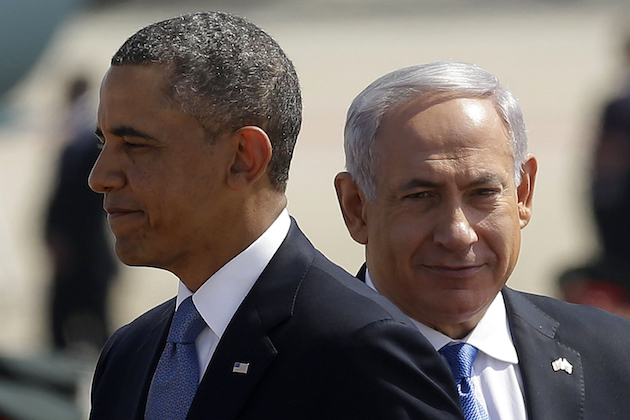
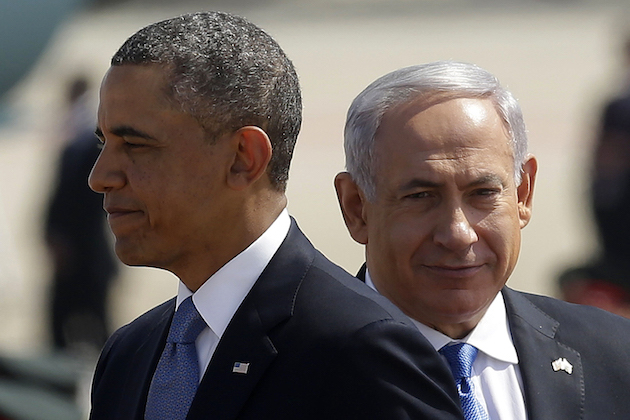
Obama and Netanyahu / AP

2. Israel Defense Forces (IDF) Commanders Never Trusted Obama

Oren recounts listening to Obama’s 2009 speech in Cairo while stationed in the IDF’s headquarters. “Their reactions typified that of a great many Israelis.”

These commanders “scoffed at what they regarded as Obama’s inexperience with the Middle East, where magnanimity is often seen as weakness. They cringed at his tendency to equate America’s moral foibles with the honor killings, human trafficking, and the suppression of women, foreign workers, and indigenous minorities rampant in many Muslim countries,” Oren writes.

Their opinions only grew dimmer when Obama “linked that legitimacy [of Israel] to the Jews’ ‘tragic history’ in the Holocaust. That linkage seemed to me to be the most damaging part of his speech.”

3. The Anti-Israel State Department

Oren’s first meeting with then-Deputy Secretary of State Jim Steinberg was fraught and filled with demands that Israel consent to Obama administration demands for a total building freeze in Jerusalem. Such intimidation and threats would be a cornerstone of Oren’s meetings with senior officials at Foggy Bottom.

“Discord indeed mired my initial meeting with Deputy Secretary of State Jim Steinberg,” Oren writes.

“Under the administration’s policy, a Jew could only build his home in certain Jerusalem neighborhoods but an Arab could build anywhere—even illegally—without limit. ‘In America,’ I said, ‘that’s called discrimination.’”

Later in his tenure, Steinberg would again upbraid Oren. State Department staffers apparently “listened in on” the angry meeting and “cheered,” according to Oren.

4. Congressional Democrats Scold Oren

A handful of congressional Democrats berated Oren during his first trip to Capitol Hill as ambassador.

“In our first conversation, Sen. Bill Nelson of Florida caught me off guard with a letter from a constituent alleging ‘Israeli economic apartheid’ in the territories,” Oren recalls.

Later, “Senator Dianne Feinstein offered me a glass of select California wine and said, ‘I am a peacemaker but you are a fighter.’”

Later in the book, Oren recalls taking a call from Sen. Barbara Boxer (D., Calif.), who “railed at me so furiously [about Israeli criticism of Obama] that I literally had to hold the phone form my ear.”
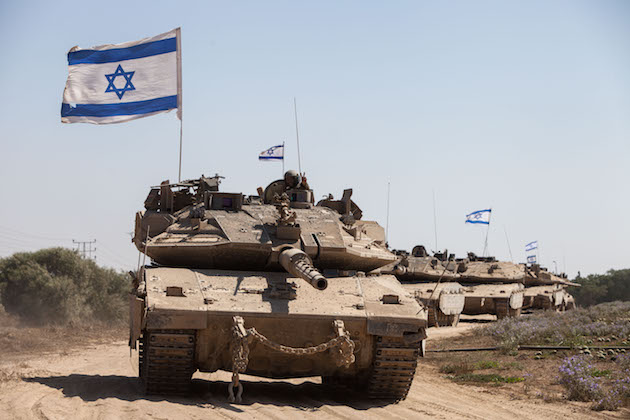
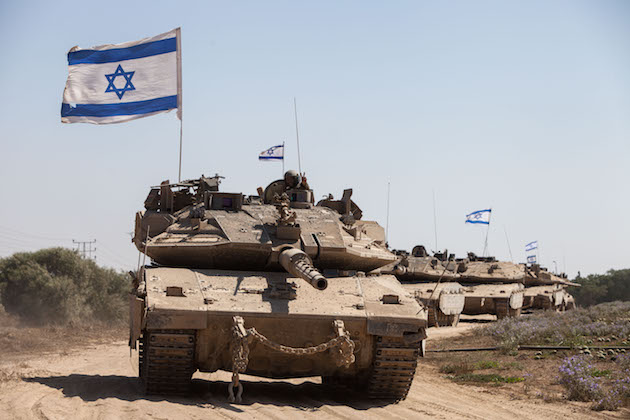
IDF tanks / AP

5. Obama Tells Off Prominent American Jewish Leaders in Private Meeting

Obama’s first meeting with a delegation of top American Jewish leaders was tense, according to Oren.

While such gatherings “had become standard” for previous White Houses, “for Obama … the briefings were less a means of garnering support than of muting opposition. Indeed, what many American Jewish leaders saw as the placing of undue pressure on Israel, the president regarded as displays of restraint.”

Obama invited the anti-Israel fringe group J Street to participate in these private meetings, a move that angered more mainstream Jewish leaders.

6. Rahm Emanuel’s Angry Outbursts

Former White House Chief of Staff Rahm Emanuel, notorious for his profanity-laden outbursts, woke Oren one morning with an angry call.

“I don’t like this f***ing shit,” Oren quotes Emanuel as saying about Israel’s refusal to stop building Jewish homes in disputed territories.

“Rahm, I knew, was not enamored of my boss or of the American Jewish leaders whom he faulted for backing Netanyahu unconditionally,” Oren writes.

Later in the book, Oren recalls Emanuel referring to a settlement dispute between Israel and the U.S. as “a pimple on the ass of the U.S.-Israel friendship.”

7. White House Orders Senior Officials to Criticize Israel

In addition to privately embracing the anti-Israel fringe group J Street, the Obama administration sent top officials to speak at its first national conference in Washington, D.C.

Oren, who refused to participate in the event, reveals that Obama administration officials had direct orders to criticize Israel publicly.

Hannah Rosenthal, the administration’s former adviser on anti-Semitism, “issued her first denunciation not of anti-Semites, but rather of me for boycotting the summit,” Oren writes.

“Hannah eventually became a friend and I never took her comment personally,” he adds. “Nor did I believe that she acted on her own, since I later learned that some of the criticism emanated directly from the White House.”

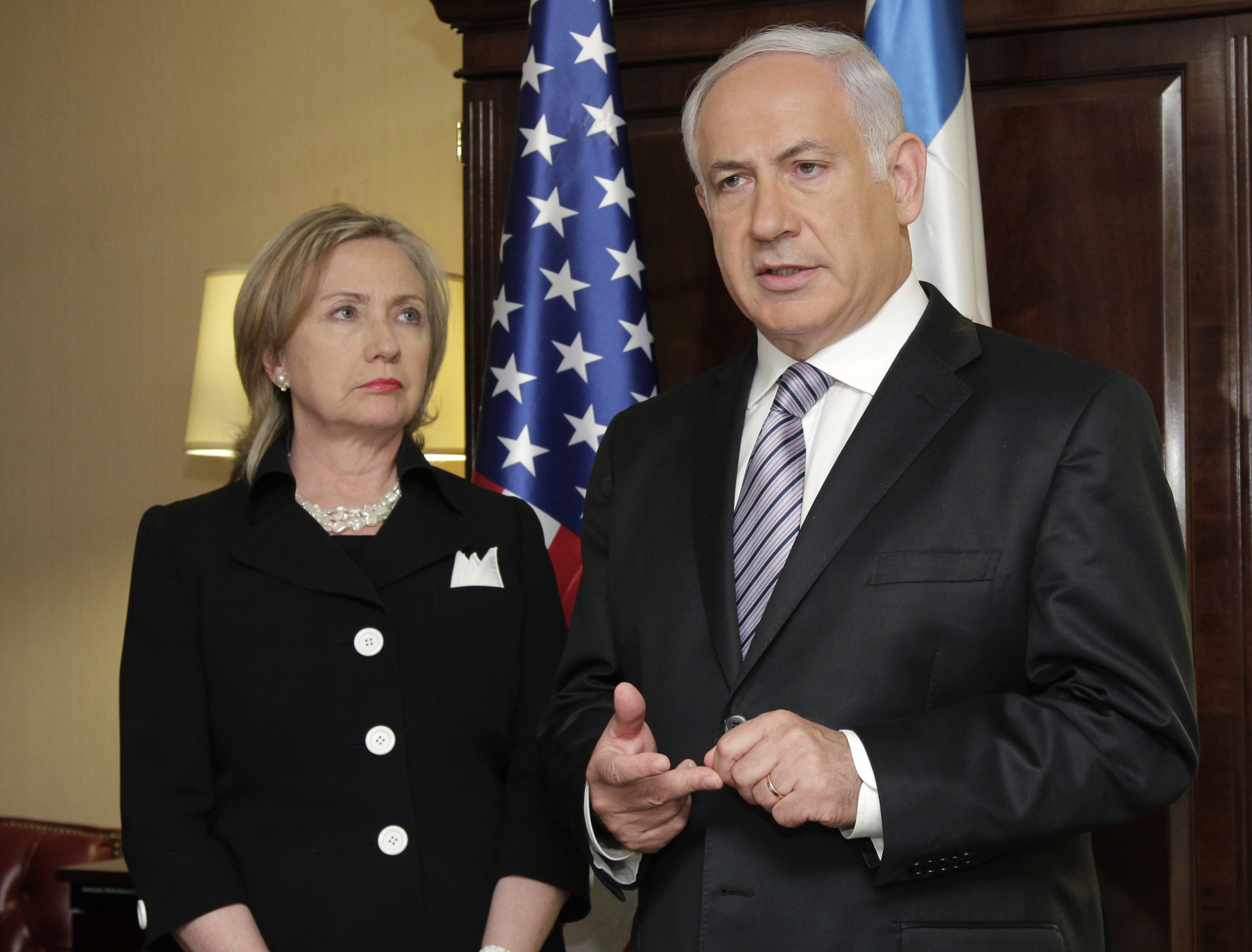
AP

8. Hillary Clinton Refuses to Meet With Oren

Oren reveals that in the early days of his tenure, then-Secretary of State Hillary Clinton refused to meet with him in person.

“I reached out to Hillary Clinton, asking for a private meeting, only to be rebuffed,” Oren recalls.

9. Hillary Blows Her Top

When Secretary of State Hillary Clinton learned of Israeli plans to transform a slum in Jerusalem into a ritzy tourist mall, “she nearly blew her top,” according to Oren.

The slum was deemed controversial due to its location in an East Jerusalem neighborhood the administration considered as disputed.

“We practically had to scrape her off the ceiling,” according to a senior American official who spoke to Oren.

10. White House Wrongly Accuses Oren Of Interfering in U.S. Politics

When U.S.-Israel tensions hit a high point in 2010, Oren frantically sought to diffuse the hostility by setting up a meeting with then-Senior White House Adviser David Axelrod.

“I urged him to find a way out of a situation that I feared might become dangerous for Israel, but Axelrod calmly brushed this aside,” Oren recalls. “Instead, he accused me of urging congressmen to hold on until [the] 2012 [elections], that Obama would never get reelected. That charge of interfering in internal American politics could have rendered me persona non grata and resulted in my expulsion from the United States.”

11. Obama Withholds Vital Arms From Israel

After working furiously to secure a deal with U.S. officials for 20 F-35 Joint Strike Fighters, Obama cancelled the arms sale, according to Oren.

“The impact, for Israel, was calamitous,” Oren writes. “Editorials—apparently fanned by official sources—suggested that the F-35s has been an Israeli demand, rather than an American offer.”

12. Robert Gates Has A ‘Visceral Dislike of Netanyahu’

A $60 billion U.S. arms sale to Saudi Arabia in 2010 sent Israeli officials scrambling.

U.S. and Israeli leaders saw the sale as an affront to the Jewish State’s Qualitative Military Edge (QME), a longstanding deal in which the United States has assured Israel’s military supremacy in the region.

“Such concerns [about maintaining the QME] unnerved Netanyahu in a July 6 meeting with [former Secretary of Defense] Robert Gates,” who had “long harbored a visceral dislike of Netanyahu,” according to Oren.

“The animus” between Netanyahu and Gates “was discernible in the Blair House reception room, where Netanyahu promptly took Gates to task for the Saudi sale.”

13. White House Orders Israel to Hold Off On Iran Strike

As the Iranian march for nuclear weapons hit a critical point in the summer of 2009, the Obama administration publicly affirmed Israel’s right to defend itself.

Behind the scenes, though, the White House ordered Israel to lay off Tehran.

“Off camera … the message was ‘Don’t you dare,’” Oren recalls. “Washington quietly quashed any military option for Israel.”

14. Obama Destroys ‘More Than 40 Years of American Policy’ Toward Israel

On the eve of a critical vote at the United Nations on a Palestinian-backed resolution to condemn Israeli settlements, Obama held a 50-minute phone call with President Mahmoud Abbas of the Palestinian Authority .

Obama, during that call, promised to “renew America’s demand for a total freeze on Israeli construction in the West Bank and East Jerusalem.” He also promised to lend his support “for a Palestinian state based on the 1967 lines,” an unprecedented call from a U.S. president, Oren writes.

Israel “was never consulted about this conversation nor even informed,” Oren writes, claiming that the White House even lied about the conversation. “The White House spokesman insisted the subject was Egypt.”

“The Prime Minster’s Office had learned of Obama’s offer to Abbas from U.N. sources, not the United States, and was outraged,” Oren recounts. “The White House has overnight altered more than forty years of American policy” and “Israel felt abandoned.”

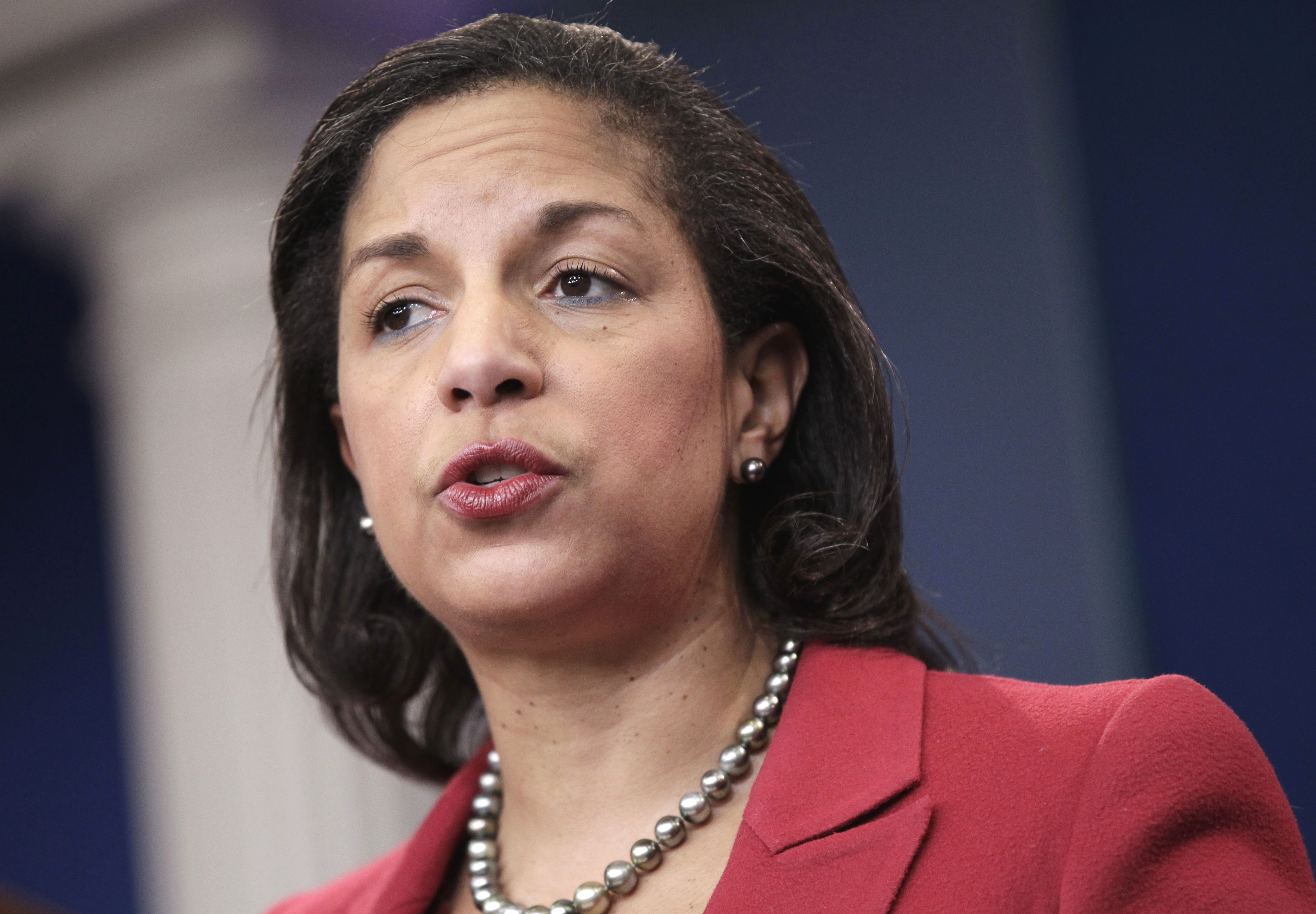
15. Susan Rice Yells At Oren

Following the White House’s move to leave Israel in the dark on the U.N. vote, Oren met with then-U.N. Ambassador Susan Rice.

Rice sat in her New York office “brooding and peevishly tapping her forehead with her finger,” according to Oren.

“Israel must freeze all settlement activity,” Oren recalls her saying. “Otherwise the United States will not be able to protect Israel from Palestinian actions at the U.N.”

“’If you don’t appreciate the fact that we defend you night and day, tell us,’ Rice fumed, practically rapping her forehead. ‘We have other important things to do.’”

16. ‘The President is Going to Take On the Prime Minister’

Ahead of the American Israel Public Affairs Committee’s (AIPAC) annual conference in Washington, a senior U.S. official told Oren that Obama was out to “take on” Netanyahu directly.

Both leaders were scheduled to give talks at the pro-Israel lobbying group’s annual confab.

“The president is going to take on the prime minster in front of AIPAC,” former White House Chief Of Staff Bill Daley told Oren. “And if he gets booed, so what?”

17. Obama Officials Embrace ‘Israel Lobby’ Canard

Writing in the New York Times after Netanyahu’s address to AIPAC, columnist Tom Friedman asked if “Netanyahu understands that the standing ovation he got in Congress was bought and paid for by the Israel lobby.”

“I called Tom the moment the article came online and urged him to retract it,” Oren recalls. “You’ve confirmed the worst anti-Semitic stereotype, that Jews purchase seats in Congress,” Oren informed him.

Friedman’s response: “For every call I’ve received protesting, I’ve gotten ten congratulating me for finally telling the truth. … Many of those calls were from senior administration officials.”

18. Senior State Department Official Curses at Oren

Disagreements between the United States and Israel reached another boiling point when the Palestinian Authority moved to gain unilateral recognition at the U.N.

Congressional law mandated that such a move should result in the closure of the Palestinian Liberation Organization’s Washington office, the cut off of U.S. aid to the PA, and the termination of all U.S. funding to any U.N. organization that recognized Palestine.

“Israel strongly endorsed all three repercussions, which the White House just as vehemently opposed,” Oren writes.

While pushing Israel’s cause at the State Department, Oren was chastised by Deputy Secretary Tom Nides.

“You don’t want the fucking U.N. to collapse because of your fucking conflict with the Palestinians, and you don’t want the fucking Palestinian Authority to fall apart either,” Nides purportedly said to Oren.

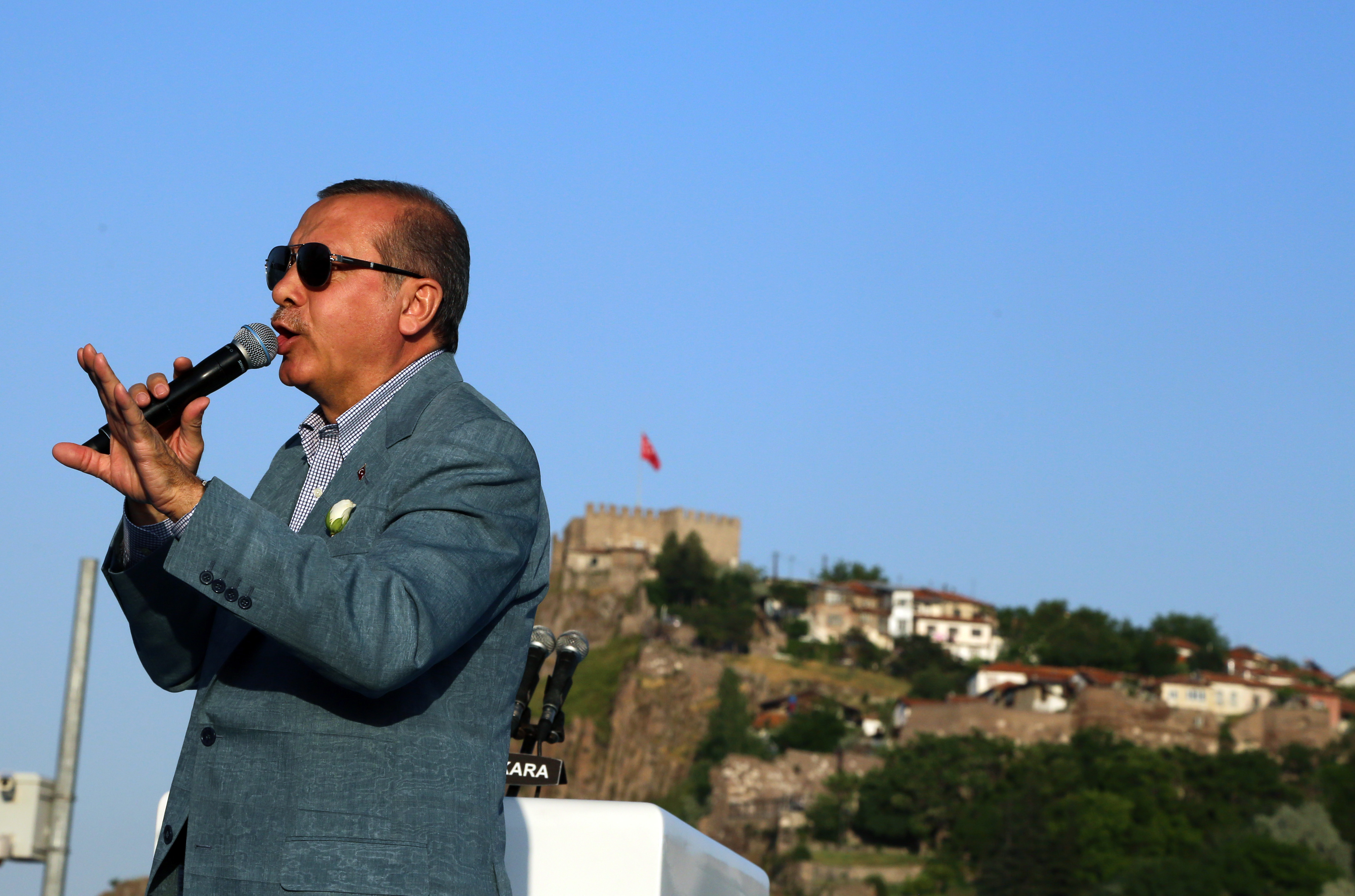
19. Obama Hearts Erdoğan

During a meeting at the White House with Israeli leaders, Obama allegedly expressed great support and faith in Turkish leader Recep Tayyip Erdoğan, a notorious critic of Israel who has promoted anti-Semitic conspiracy theories.

“He’s not living in the sixteenth century,” Obama told the Israelis present in the meeting, according to Oren. “We could do much worse than have a bunch of Erdogans in the Middle East.”

20. Obama Keeps Israel In Dark About Syria Strikes

When the United States first decided to launch airstrikes against Syria, Israel was left in the dark, another first in the U.S.-Israel relationship, according to Oren.

The ambassador learned about the strikes while listening to the radio.

“The razor froze in mid-shave,” he writes. “Wiping the foam from my face, I rushed to the embassy. The once-sacred principle of ‘no surprises’ in the U.S.-Israel alliance had fallen into desuetude during the Obama period, but never to this depth on an issue so vital to our immediate security.”

21. Obama Only Backs Israel ‘Because That’s What the American People Want’

During yet another meeting between Obama and Netanyahu, the president attempted to reassure Israel that it would defend it in any war with Iran.

Obama revealed that he only backs Israel because a plurality of Americans demands it.

“If war comes, we’re with you, because that’s what the American people want,” Oren recalls Obama saying.