Archive for April 2015

Obama Kept Iran’s Short Breakout Time a Secret

April 21, 2015

Obama Kept Iran’s Short Breakout Time a Secret – Bloomberg View.

The Barack Obama administration has estimated for years that Iran was at most three months away from enriching enough nuclear fuel for an atomic bomb. But the administration only declassified this estimate at the beginning of the month, just in time for the White House to make the case for its Iran deal to Congress and the public.

Speaking to reporters and editors at our Washington bureau on Monday, Energy Secretary Ernest Moniz acknowledged that the U.S. has assessed for several years that Iran has been two to three months away from producing enough fissile material for a nuclear weapon. When asked how long the administration has held this assessment, Moniz said: “Oh quite some time.” He added: “They are now, they are right now spinning, I mean enriching with 9,400 centrifuges out of their roughly 19,000. Plus all the . . . . R&D work. If you put that together it’s very, very little time to go forward. That’s the 2-3 months.”

Brian Hale, a spokesman for the Office of the Director of National Intelligence, confirmed to me Monday that the two-to-three-month estimate for fissile material was declassified on April 1.

Here is the puzzling thing: When Obama began his second term in 2013, he sang a different tune. He emphasized that Iran was more than a year away from a nuclear bomb, without mentioning that his intelligence community believed it was only two to three months away from making enough fuel for one, long considered the most challenging task in building a weapon. Today Obama emphasizes that Iran is only two to three months away from acquiring enough fuel for a bomb, creating a sense of urgency for his Iran agreement.

Back in 2013, when Congress was weighing new sanctions on Iran and Obama was pushing for more diplomacy, his interest was in tamping down that sense of urgency. On the eve of a visit to Israel, Obama told Israel’s Channel Two, “Right now, we think it would take over a year or so for Iran to actually develop a nuclear weapon, but obviously we don’t want to cut it too close.”

On Oct. 5 of that year, Obama contrasted the U.S. view of an Iranian breakout with that of Israel’s prime minister, Benjamin Netanyahu, who at the time said Iran was only six months away from nuclear capability. Obama told the Associated Press, “Our assessment continues to be a year or more away. And in fact, actually, our estimate is probably more conservative than the estimates of Israeli intelligence services.”

Ben Caspit, an Israeli journalist and columnist for Al-Monitor, reported last year that Israel’s breakout estimate was also two to three months away.

A year ago, after the nuclear talks started, Secretary of State John Kerry dropped the first hint about the still-classified Iran breakout estimate. He told a Senate panel, “I think it is fair to say, I think it is public knowledge today, that we are operating with a time period for a so-called breakout of about two months.”

David Albright, a former weapons inspector and president of the Institute for Science and International Security, told me administration officials appeared to be intentionally unspecific in 2013, when the talking points used the 12-months-plus timeline. “They weren’t clear at all about what this one-year estimate meant, but people like me who said let’s break it down to the constituent pieces in terms of time to build a bomb were rebuffed,” he said. Albright’s group released its own breakout timetable that focused solely on the production of highly enriched uranium, not the weapon itself. It concluded Iran was potentially less than a month away.

When USA Today asked a spokeswoman for the National Security Council about Albright’s estimate, she responded that the intelligence community maintained a number of estimates for how long Iran would take to produce enough material for a weapon.

“They have made it very hard for those of us saying, let’s just focus on weapons-grade uranium, there is this shorter period of time and not a year,” Albright told me. “If you just want a nuclear test device to blow up underground, I don’t think you need a year.”

This view is supported by a leaked document from the International Atomic Energy Agency, first published by the Associated Press in 2009. Albright’s group published excerpts from the IAEA assessment that concluded Iran “has sufficient information to be able to design and produce a workable implosion nuclear device based upon (highly enriched uranium) as the fission fuel.”

Kenneth Pollack, a former CIA analyst who is now an Iran expert at the Brookings Institution, told me that most of the technical estimates about an Iranian breakout were not nearly as precise as they are sometimes portrayed in the press. “The idea there is such a thing as a hard and fast formula for this is nonsense,” he said. “All the physicists come up with different answers depending on what inputs they use.”

In this way, Obama’s new, more alarmist figure of two to three months provides a key selling point for the framework reached this month in Switzerland. When Obama announced the preliminary agreement on April 2, he said one benefit was that if it were finalized, “even if it violated the deal, for the next decade at least, Iran would be a minimum of a year away from acquiring enough material for a bomb.”

Hence the frustration of Representative Devin Nunes, the Republican chairman of the House Permanent Select Committee on Intelligence. “We’ve been researching their claim that a deal would lengthen the breakout time for Iran from two to three months to a year,” he told me of the administration. “We’re just trying to confirm any of their numbers and we can’t confirm or make sense of what they are referencing.”

Nunes should hurry. The Iranian nuclear deal is scheduled to breakout in less than three months.

‘Meaning of independence is the ability to defend yourself’

April 21, 2015

Israel Hayom | ‘Meaning of independence is the ability to defend yourself’.

Israel set to mark Memorial Day for Fallen Soldiers and Victims of Terrorism • 23,320 Israelis have fallen in battle or been killed in terrorist attacks since 1860 • Defense minister: Price of independence shows why we must eschew war as much as possible.

Lilach Shoval, Shlomo Cesana, Yael Branovsky and Israel Hayom Staff
On Tuesday night, Israel begins marking Memorial Day for Fallen Soldiers and Victims of Terrorism

|

Photo credit: Yehoshua Yosef

Hizballah copycats Hamas’ terror tunnels for Lebanese-Galilee border. No IDF solutions yet

April 21, 2015

Hizballah copycats Hamas’ terror tunnels for Lebanese-Galilee border. No IDF solutions yet, DEBKAfile, April 20, 2015

Gaza-Terror-Tunnels_4.15A Hamas terror tunnel – a model for Hizballah

Anxiety about the new terror tunnels they sense Hamas is excavating under their feet is no longer confined to Israelis living in proximity to the Gaza Strip, or the soldiers serving there. Israel’s northern borderland dwellers, who can see Hizballah’s yellow flags in from their balconies, have the same concerns. Their reports of mysterious underground explosions are confirmed by thousands of Israeli troops conducting field exercises in the neighborhood. The soldiers attest to heavy earthmoving equipment, explosions, burrowing, and shaking ground on the Lebanese side of the border, giving the area the appearance of a huge subterranean building site.

The Lebanese Shiite Hizballah group, Iran’s Lebanese surrogate, has clearly taken a leaf out of its Palestinian ally, Hamas’ book, for a fully mobilized terror tunnel project against northern Israel. Its manpower, including engineering units, is working under the guidance of Iranian Revolutionary Guards officers to sink a large network of tunnels leading under the border into Galilee. They are working efficiently and at top speed with the aid of modern Western-made earthmoving equipment and foreign professionals paid top dollar to manage the project.

Israel seems to be curiously passive in the face of its enemy’s ambitious enterprise. Only last week, the Defense Ministry’s Political Coordinator Amos Gilad denied any knowledge of terrorist tunnels reaching Israel from Lebanon.

However, Brig. Gen. Moni Katz, commander of the IDF’s Division 91, which is responsible for security of the Galilee region, told a different story: “To me it is obvious that the other side is busy digging tunnels. I don’t need intelligence to tell me this. Intuition is enough. There is no denying that this is what they are up to. Can I say they have completed a tunnel?” The general went on to reply: “I must assume they have. I can’t prove it or say for sure a tunnel has crossed into our territory. But my basic premise is that this is so and it is up to us to make plans to fit this case.”

Putting those plans into practice – which would necessitate destroying the tunnels either before they were built or at their entry-points – faces four major difficulties:

1. Close surveillance and first-class intelligence are required to keep track of hostile tunnel projects starting from the planning stage, the recruitment of manpower, the acquisition of engineering technology and equipment and registering the quantity of earth displaced and removed from the underground burrow.

2.  The digging process, which sound sensors should have no difficulty in detecting, is a relatively short and irregular process which can just as easily be camouflaged by surface activities.

3.  Locating a finished tunnel at the stage when it is still unused and relatively quiet calls for pinning down a number of variables, such as the type of soil, the depth, length, breadth and lining material used in building the tunnel, humidity, weather conditions on the surface as well as its environment, whether urban or rural.

4.  Locating such a tunnel – even when it is already in operational use by an enemy – poses another set of difficulties. In combat conditions, electronic listening devices would be drowned out by the fire and explosions of battle and, in the confusion of war, enemy troops would be hard to intercept as they moved in and out the tunnels.

A glance at the map shows that the danger of tunnel warfare should also be taken into account on Israel’s eastern front – where it would just as hard to detect as in the north and the southwest: The Arab populations inhabiting the West Bank and the Israeli side of the border – only hundreds of meters apart – are similar enough to keep counter-terrorism authorities on a high level of alert for the construction of tunnel links between the two territories.

Perhaps a succession of military chiefs should be held accountable for letting the tunnel terror peril develop to its current proportions. But it must also be said that no silver bullet has so far been invented to counter this primitive vehicle of terror, including the methods tried till now, such as buried microphones, optical fibers sensitive to seismic tremors, deep trenches along the border and an assortment of off-beat inventions.

In the view of our military analysts, any solutions would have to vary from sector to sector, adapted to the military and topographical features in each case and an intelligence assessment of the level of risk involved in counteraction. This effort would have to be directed by an interdepartmental, interagency administration directly answerable to the prime minister or defense minister.

Pentagon: US Warship Repositioning, Not Intercepting Iranian Ships Off Yemen

April 21, 2015

Pentagon: US Warship Repositioning, Not Intercepting Iranian Ships Off Yemen, Voice if America, April 20, 2015

(Who is the U.S. Navy about to protect from whom? Does it have anything to do with the P5+1 nuke “negotiations?”– DM)

The Pentagon says the American warship USS Theodore Roosevelt is “repositioning” as part of a security operation at sea, and not to intercept Iranian vessels off the coast of Yemen.

Citing unnamed officials, the Associated Press reported earlier in the day that the aircraft carrier would join other U.S. ships in the area to confront Iranian vessels, which are said to be carrying weapons to resupply Houthi rebels that have overrun parts of the country.

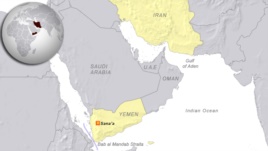
Yemen and IranYemen and Iran

But Pentagon spokesman Col. Steve Warren dismissed the report, saying the Roosevelt is ”repositioning to conduct maritime security operations.”

The guided-missile cruiser USS Normandy escorted the ship en route from the Arabian Gulf to the Arabian Sea, where they joined other U.S. military vessels “to ensure the vital shipping lanes in the region remain open and safe,” according to a statement from the U.S. Navy.

U.S. officials told media late last week that Iran has deployed at least seven ships, some carrying weapons, to Yemen in a bid to shore up Houthi arms supplies through the port city of Aden.

Houthi insurgents face daily air raids from a Saudi Arabian-led coalition and ongoing clashes with local forces.

White House spokesman Josh Earnest told reporters Monday there is “evidence that Iranians are supplying weapons and other forms of support to Houthis.”

“That’s the kind of support that will only contribute to greater violence in Yemen,” he said.

On Saturday, Iranian President Hassan Rouhani said the presence of Iranian naval ships “in the Persian Gulf and the Gulf of Aden is intended to ensure the security of neighboring countries and maritime traffic.”

The Saudi coalition has Aden under a naval blockade.

US warship en route to block Iranian ships carrying weapons

April 20, 2015

US warship en route to block Iranian ships carrying weapons
By MARK MAZZETTI and HELENE COOPER APRIL 18, 2015 Via The NYT


(US Navy to Iran….’Be boarded or be sunk’. What’s that? Death to America you say?? – LS)

WASHINGTON — The U.S. Navy aircraft carrier USS Theodore Roosevelt is steaming toward the waters off Yemen to beef up security and join other American ships that are prepared to intercept any Iranian vessels carrying weapons to the Houthi rebels fighting in Yemen.

Navy officials said Monday that the Roosevelt was moving through the Arabian Sea. The U.S. Navy has been beefing up its presence in the Gulf of Aden and the southern Arabian Sea amid reports that a convoy of about eight Iranian ships is heading toward Yemen and possibly carrying arms for the Houthis. Navy officials said there are about nine U.S. warships in the region, including cruisers and destroyers carrying teams that can board and search other vessels.

The officials spoke on condition of anonymity because they were not authorized to discuss the ship movement on the record.

The Houthis are battling government-backed fighters in an effort to take control of the country. The U.S. has been providing logistical and intelligence support to Saudi Arabia-led coalition launching airstrikes against the Houthis. That air campaign is now in its fourth week.

The U.S. Navy generally conducts consensual boardings of ships when needed, including to combat piracy around Africa and the region. So far, however, U.S. naval personnel have not boarded any Iranian vessels since the Yemen conflict began.

White House spokesman Josh Earnest would not comment specifically on any Navy movements in Yemeni waters, but said the U.S. has concerns about Iran’s “continued support for the Houthis.

“We have seen evidence that the Iranians are supplying weapons and other armed support to the Houthis in Yemen. That support will only contribute to greater violence in that country. These are exactly the kind of destabilizing activities that we have in mind when we raise concerns about Iran’s destabilizing activities in the Middle East.”

He said “the Iranians are acutely aware of our concerns for their continued support of the Houthis by sending them large shipments of weapons.”

Sale of U.S. Arms Fuels the Wars of Arab States

April 20, 2015

Sale of U.S. Arms Fuels the Wars of Arab States
By MARK MAZZETTI and HELENE COOPER APRIL 18, 2015 Via The NYT


Qatar is seeking to purchase Boeing F-15 fighters to replace its aging French Mirage jets, above. Credit Louisa Gouliamaki/Agence France-Presse — Getty Images


(Stock market tip: Defense industry stocks are hot. – LS)

WASHINGTON — To wage war in Yemen, Saudi Arabia is using F-15 fighter jets bought from Boeing. Pilots from the United Arab Emirates are flying Lockheed Martin’s F-16 to bomb both Yemen and Syria. Soon, the Emirates are expected to complete a deal with General Atomics for a fleet of Predator drones to run spying missions in their neighborhood.

As the Middle East descends into proxy wars, sectarian conflicts and battles against terrorist networks, countries in the region that have stockpiled American military hardware are now actually using it and wanting more. The result is a boom for American defense contractors looking for foreign business in an era of shrinking Pentagon budgets — but also the prospect of a dangerous new arms race in a region where the map of alliances has been sharply redrawn.

Last week, defense industry officials told Congress that they were expecting within days a request from Arab allies fighting the Islamic State — Saudi Arabia, the Emirates, Qatar, Bahrain, Jordan and Egypt — to buy thousands of American-made missiles, bombs and other weapons, replenishing an arsenal that has been depleted over the past year.

(Cha-ching! – LS)

The United States has long put restrictions on the types of weapons that American defense firms can sell to Arab nations, meant to ensure that Israel keeps a military advantage against its traditional adversaries in the region. But because Israel and the Arab states are now in a de facto alliance against Iran, the Obama administration has been far more willing to allow the sale of advanced weapons in the Persian Gulf, with few public objections from Israel.

(Let’s hope this unholy alliance stays put for now. – LS)

“When you look at it, Israel’s strategic calculation is a simple one,” said Anthony H. Cordesman of the Center for Strategic and International Studies. The gulf countries “do not represent a meaningful threat” to Israel, he said. “They do represent a meaningful counterbalance to Iran.”

Industry analysts and Middle East experts say that the region’s turmoil, and the determination of the wealthy Sunni nations to battle Shiite Iran for regional supremacy, will lead to a surge in new orders for the defense industry’s latest, most high-tech hardware.

The militaries of gulf nations have been “a combination of something between symbols of deterrence and national flying clubs,” said Richard L. Aboulafia, a defense analyst at the Teal Group. “Now they’re suddenly being used.”

(It’s about time they stepped up and defended themselves.  It’s past time for Ahmed to spend all that oil revenue on something other than a gold-plated Mercedes. – LS)

Saudi Arabia spent more than $80 billion on weaponry last year — the most ever, and more than either France or Britain — and has become the world’s fourth-largest defense market, according to figures released last week by the Stockholm International Peace Research Institute, which tracks global military spending. The Emirates spent nearly $23 billion last year, more than three times what they spent in 2006.

(Finally, something to help us shareholders pay the family fuel bill. – LS)

Qatar, another gulf country with bulging coffers and a desire to assert its influence around the Middle East, is on a shopping spree. Last year, Qatar signed an $11 billion deal with the Pentagon to purchase Apache attack helicopters and Patriot and Javelin air-defense systems. Now the tiny nation is hoping to make a large purchase of Boeing F-15 fighters to replace its aging fleet of French Mirage jets. Qatari officials are expected to present the Obama administration with a wish list of advanced weapons before they come to Washington next month for meetings with other gulf nations.

(…and with every purchase of an Apache attack helicopter you get a free case of Diet Coke. – LS)

American defense firms are following the money. Boeing opened an office in Doha, Qatar, in 2011, and Lockheed Martin set up an office there this year. Lockheed created a division in 2013 devoted solely to foreign military sales, and the company’s chief executive, Marillyn Hewson, has said that Lockheed needs to increase foreign business — with a goal of global arms sales’ becoming 25 percent to 30 percent of its revenue — in part to offset the shrinking of the Pentagon budget after the post-Sept. 11 boom.

American intelligence agencies believe that the proxy wars in the Middle East could last for years, which will make countries in the region even more eager for the F-35 fighter jet, considered to be the jewel of America’s future arsenal of weapons. The plane, the world’s most expensive weapons project, has stealth capabilities and has been marketed heavily to European and Asian allies. It has not yet been peddled to Arab allies because of concerns about preserving Israel’s military edge.

(How about a satellite controlled ‘kill switch’ for those F-35’s, free of charge.  – LS)

But with the balance of power in the Middle East in flux, several defense analysts said that could change. Russia is a major arms supplier to Iran, and a decision by President Vladimir V. Putin to sell an advanced air defense system to Iran could increase demand for the F-35, which is likely to have the ability to penetrate Russian-made defenses.

(Why buy Russian when you can buy American? Remember the Trabant?  I’m sure many unfortunate souls have fond memories of that beast.  – LS)

“This could be the precipitating event: the emerging Sunni-Shia civil war coupled with the sale of advanced Russian air defense systems to Iran,” Mr. Aboulafia said. “If anything is going to result in F-35 clearance to the gulf states, this is the combination of events.”

(We could call it the F-35 Clearance Sale. – LS)

At the same time, giving the gulf states the ability to strike Iran at a time of their choosing might be the last thing the United States wants. There are already questions about how judicious Washington’s allies are in using American weaponry.

(Brace yourselves, here comes the leftist wisdom of the NYT. – LS)

“A good number of the American arms that have been used in Yemen by the Saudis have been used against civilian populations,” said Daryl Kimball, executive director of the Arms Control Association, an assertion that Saudi Arabia denies.

Mr. Kimball said he viewed the increase in arms sales to the region “with a great deal of trepidation, as it is leading to an escalation in the type and number and sophistication in the weaponry in these countries.”

Congress enacted a law in 2008 requiring that arms sales allow Israel to maintain a “qualitative military edge” in the region. All sales to the Middle East are evaluated based on how they will affect Israeli military superiority. But the Obama administration has also viewed improving the militaries of select Arab nations — those that see Iran as a threat in the region — as critical to Israeli security.

“It is also important to note that our close relationships with countries in the region are critical to regional stability and Israel’s security,” Andrew J. Shapiro said in a speech in 2011, when he was an assistant secretary of state for political-military affairs. “Our relationships with Egypt, Jordan, Lebanon and many Gulf countries allow the United States to strongly advocate for peace and stability in the region.”

(Suddenly, the NYT is concerned about Israel’s security. Fancy that. – LS)

There is an unquestionably sectarian character to the current conflicts in the Middle East, nowhere more so than in the Saudi-led air campaign in Yemen. The Saudis have assembled a group of Sunni nations to attack Houthi militia fighters who have taken over Yemen’s capital, Sana, and ousted a government backed by Saudi Arabia and the United States. Saudi officials have said that the Houthis, a Shiite group, are being covertly backed by Iran. Other nations that have joined the coalition against the Houthis, like Morocco, have characterized their participation in blunt sectarian terms.

“It’s a question of protecting the Sunnis,” Mbarka Bouaida, Morocco’s deputy foreign minister, said in an interview.

(Let’s not limit this to the Sunnis. How about protecting the Christians, Jews, Hindus, and the little old lady down the street who wants nothing more than to live in peace, attend church on Sunday, and bake a pie for the grandkids. – LS)

But Sunni nations have also shown a new determination to use military force against radical Sunni groups like the Islamic State. A number of Arab countries are using an air base in Jordan to launch attacks against Islamic State fighters in Syria. Separately, the Emirates and Egypt have carried out airstrikes in Libya against Sunni militias there.

Meanwhile, the deal to sell Predator drones to the Emirates is nearing final approval. The drones will be unarmed, but they will be equipped with lasers to allow them to better identify targets on the ground.

(In case you were wondering, unarmed drones are great for delivering pizza to the front lines. – LS)

If the sale goes through, it will be the first time that the drones will go to an American ally outside of NATO.

U.S. Navy warships to intercept Iranian weapons shipments in Yemeni waters

April 20, 2015

U.S. Navy warships to intercept Iranian weapons shipments in Yemeni waters, Associated Press via Washington Times, April 20, 2015

U.S. Navy officials say the aircraft carrier USS Theodore Roosevelt is steaming toward the waters off Yemen and will join other American ships prepared to intercept any Iranian vessels carrying weapons to the Houthi rebels fighting in Yemen.

The U.S. Navy has been beefing up its presence in the Gulf of Aden and the southern Arabian Sea amid reports that a convoy of Iranian ships may be headed toward Yemen to arm the Houthis.

The Houthis are battling government-backed fighters in an effort to take control of the country.

There are about nine U.S. ships in the region, including cruisers and destroyers carrying teams that can board and search other vessels.

The officials spoke on condition of anonymity because they were not authorized to discuss the ship movement on the record.

Putin warns Israel: Selling arms to Ukraine would provoke Russian S-300 sales to Syria too

April 20, 2015

Putin warns Israel: Selling arms to Ukraine would provoke Russian S-300 sales to Syria too
DEBKAfile Exclusive Report April 19, 2015, 1:16 PM (IDT)


(It’s interesting to note that in an earlier Debka article, it was reported that Russia lacked the S-300 units to fill orders destined for Iran. – LS)

Russian President Vladimir Putin’s warning to Israel against selling arms to Kiev – in retaliation for the S-300 air-defense missiles Russia has released for Iran – adds a European dimension to the dispute by planting Israel squarely in the middle of Moscow’s Ukraine dispute with the United States. The Russian leader’s implied threat to hit back by sending the same missile system to Syria as well as Iran, touches on another dispute between Russia on the one side and the US and Israel on the other, namely the Syria conflict.

Whereas critics of the Netanyahu government highlight its falling-out with the Obama administration over the Iranian nuclear issue, they disregard the intense US-Israeli military cooperation in two vital regions of conflict – Syria and Ukraine.

This working relationship is not lost on Putin.

The intelligence updates placed on his Kremlin desk reveal that, just as the US and Israel (and Jordan) have been arming rebel forces fighting in southern Syria, they are also working together to give the Ukrainian army the weapons for breaking its incendiary standoff with the pro-Russian separatists.

In the last fortnight, thousands of military advisers from the United States, Canada, France, the UK and Germany were shipped into Ukraine to train the national army. Due in the coming days are 290 officers and troops of the American 173 Airborne Brigade.

DEBKAfile’s military sources disclose that the arrivals are gathering at the Ukrainian Army’s training center in Yavoriv, near Lvov, chosen as assembly point and launching pad for Western and NATO intervention forces in the Ukraine conflict because of its proximity to Poland.

The US and British air squadrons stationed there for some months are close enough to give the Yavoriv center air cover. Also at hand as reinforcements for the Ukrainian military effort are the US and British military personnel, who were posted to Poland after Russia’s annexation of Crimea last March, to allay the fears of the Baltic states.

Putin has repeatedly cautioned Washington that arming Kiev with US offensive weapons would bring forth matching Russian steps that would hurt US interests in Europe and other parts of the world.
He tried sending this warning through German Chancellor Angela Merkel and French President Francois Hollande, as well as addressing it to Secretary of State John Kerry at his meetings with Russian Foreign Minister Sergei Lavrov. Moscow, said the warning message, would not spare US interests after what Putin sees as the Obama administration’s assaults on Russia’s national security, by means of NATO’s creeping absorption of Ukraine and offensive arms if provided by the US for Kiev’s campaign against pro-Russian separatists.

Lifting the embargo on S-300 air defense missiles for Iran was the Russian leader’s first step toward making good on his warning, but his reprisals are not likely to stop there.
The anti-air missiles have not yet been shipped to Iran, but if President Barack Obama forges ahead with expanded military assistance to the Ukraine government, Putin intends sending S-300s not just to Iran,but to Syria as well.

Saturday, April 18, the Russian president declined to say in answer to a question whether Moscow had refrained from sending S-300 missiles to Syria at Israel’s request. But he tellingly mentioned Syria in the same breath as his warning to Israel not to supply weapons to the Ukrainian government, saying that the move would be “counterproductive” to efforts to reach peace in east Ukraine.

In Washington earlier on Friday, Obama said he was surprised that Russia’s suspension of missile sales to Iran had “held this long.” The US president noted that Putin had previously suspended the sale “at our request. I am frankly surprised that it held this long, given that they were not prohibited by sanctions from selling these defensive weapons.”
The US president has chosen Ukraine as his arena for a showdown with the Russian president. Putin however, prefers to mount his challenge in Iran and Syria.

An EMP attack on America seems likely

April 19, 2015

An EMP attack on America seems likely, Dan Miller’s Blog, April 19, 2015

(The views expressed in this article are mine and do not necessarily reflect those of Warsclerotic or any of its other editors. — DM)

Some consider North Korea to be the rogue nation most likely to use an electromagnetic pulse (EMP) to attack America; Iran is also seen as quite likely to do it. It matters little which succeeds.

Here is a lengthy 2013 video about an EMP attack, what would happen and why:

The possibilities and consequences of an EMP attack on America are too horrific to contemplate; the “legitimate news media” generally ignore them. We therefore tend to relegate them to the realm of remote “tin foil hat conspiracy theories” and to focus instead on more congenial stuff — the latest sex scandal, Hillary Clinton’s campaign van parking in a disabled-only space and other matters unlikely to impact America to an extent even approaching that of an EMP attack. Meanwhile, most of “our” Congress Critters, who should know better, focus on opinion polls, filling their campaign coffers and getting richer personally while neglecting our atrophying missile defense systems and other potential means of avoiding or recovering from an EMP attack.

Here is a 2013 video about the likelihood of an Iranian EMP attack on America that would paralyze the country for a very long time.

North Korea and the Islamic Republic of Iran have long cooperated in the development of nukes and means to deliver them. I wrote about their cooperation here, herehere and elsewhere. It now appears that Iran intends to use them for an EMP attack on America.

The issue of a nuclear EMP attack was raised in the final hours of this week’s elections in Israel when U.S. authority Peter Vincent Pry penned a column for Arutz Sheva warning of Iran’s threat to free nations.

“Iranian military documents describe such a scenario — including a recently translated Iranian military textbook that endorses nuclear EMP attack against the United States,” he wrote. [Emphasis added.]

Here is a March 7, 2015 video about the impact of the P5+1 “negotiations” on Iran getting (or keeping) nukes and the likelihood of an Iranian EMP attack on America:

In April of this year, John Bolton had this to say about the Iran – North Korea connection, how much we don’t know and the ongoing P5+1 “negotiations.”

Perhaps Israel can take out Iran’s nuke capabilities.

Here is a February 2015 video about what’s (not) being done to harden our domestic power grid:

As of February of this year, Govtrack US opined that the chances of passage of the SHIELD act were zero percent. Be that as it may, simply hardening the power grid would not solve communications or transport problems — most modern communications devices, as well as vehicles built after 1987, depend on computer chips and, when the chips are fried, will not function. Even if food and water could be processed, getting them to consumers in sufficient quantities to keep them alive would be an enormous if not impossible task.

Problems of a human nature would also arise and remaining alive would be difficult. If one’s family were about to starve, how many would try to steal food and water from those who still have even enough for a few days? How many roving gangs of armed criminals, quite willing to kill, would do the same? The police would likely have no communications ability and might well be otherwise occupied, tending to their own families. Military forces not confined to base would likely have the same problems and be doing the same.

That suggests another problem in restoring infrastructure seriously damaged or destroyed by the EMP attack. It would not only require the availability of transport, communications and undamaged equipment. It would also require the availability of personnel, not otherwise occupied in scrounging for food, water, medical supplies and other resources to care for their own families, while protecting them from those lacking such resources, as well as from armed gangs.

Now, the U.S. military is taking steps to protect itself by reopening a cold war bunker at Cheyenne Mountain, abandoned in 2006.

Cheyene Mt. Complex

Cheyene Mt. Complex

The Pentagon last week [early April 2015] announced a $700 million contract with Raytheon Corporation to oversee the work for North American Aerospace Command (NORAD) and US Northern Command.

Admiral William Gortney, head of NORAD and Northern Command, said that ‘because of the very nature of the way that Cheyenne Mountain’s built, it’s EMP-hardened.’

. . . .

‘And so, there’s a lot of movement to put capability into Cheyenne Mountain and to be able to communicate in there,’ Gortney told reporters.

‘My primary concern was… are we going to have the space inside the mountain for everybody who wants to move in there, and I’m not at liberty to discuss who’s moving in there,‘ he said.  [Emphasis added.]

The Cheyenne mountain bunker is a half-acre cavern carved into a mountain in the 1960s that was designed to withstand a Soviet nuclear attack. From inside the massive complex, airmen were poised to send warnings that could trigger the launch of nuclear missiles.

But in 2006, officials decided to move the headquarters of NORAD and US Northern Command from Cheyenne to Petersen Air Force base in Colorado Springs. The Cheyenne bunker was designated as an alternative command center if needed.

Now the Pentagon is looking at shifting communications gear to the Cheyenne bunker, officials said.

‘A lot of the back office communications is being moved there,’ said one defense official.

Officials said the military’s dependence on computer networks and digital communications makes it much more vulnerable to an electromagnetic pulse, which can occur naturally or result from a high-altitude nuclear explosion.

Under the 10-year contract, Raytheon is supposed to deliver ‘sustainment’ services to help the military perform ‘accurate, timely and unambiguous warning and attack assessment of air, missile and space threats’ at the Cheyenne and Petersen bases.

Raytheon’s contract also involves unspecified work at Vandenberg Air Force Base in California and Offutt Air Force Base in Nebraska.

When will the site be fully operational, for what and who will be allowed to go there?

Some other military bases are probably being hardened, at least to an extent that might (or might not) preserve their electrical grids. If it works, they may serve as refugee centers for adjacent civilian populations. However, the military installations would likely run out of food and potable water before very long and, with food and water processing centers no longer operational, there would be substantial difficulties in getting — as well as transporting — large quantities of food and water. Were the processing centers to become operational, transportaion difficulties would remain. Communications between the military installations and the outside world? Likely zilch, at least initially, because radios, telephones and other modern communications devices (as most now are) depend on computer chips and would be fried by an EMP attack. Some might eventually be restored at some military bases, but that is not likely to be the case with those not on those bases.

Conclusions

What would you do in the event of an EMP attack? In a major metropolitan area, you would probably be SOL very quickly. In a small town? Marginally but not much better off. An isolated small farm, close to a mountain spring and adequately stocked with food, medical supplies, firearms and ammunition, could provide reason to hope that you might eventually be able to grow or slaughter sufficient food and have access to enough potable water to survive; at least until roving armed gangs arrive and overpower you.

This video is about a massive world-wide pandemic. In the event of a pandemic, electricity, automobiles and communications would still function, at least for a while. Following an EMP attack, the consequences would likely be substantially worse and last far longer.

Here is a link to a novel about one family in a small city and its efforts to survive an EMP attack on America. It does a reasonable job of summarizing the potential consequences.

Two Scandals in One: Newsweek Uncovers Clinton Foundation’s Biggest Donor Likely Violating Iran Sanctions

April 19, 2015

Two Scandals in One: Newsweek Uncovers Clinton Foundation’s Biggest Donor Likely Violating Iran Sanctions

By Thomas Lifson

April 19, 2015

via Blog: Two Scandals in One: Newsweek Uncovers Clinton Foundation’s Biggest Donor Likely Violating Iran Sanctions.


Of Topic ?


Newsweek writer Rory Ross has done a valuable service bringing to light the activities of the largest single donor to the Clinton Foundation, a man most Americans have never heard of:

Ukrainian oligarch Victor Pinchuk, 54, has courted the Clintons for at least nine years – in the United States, the Alps and Ukraine.

Earlier this year, he was confirmed as the largest individual contributor to the Clinton Foundation, whose aims include the creation of “economic opportunity and growth”.

Pinchuk has been pursuing his own economic opportunities in Iran, a country the subject of sanctions.

Newsweek has seen declarations and documents from Ukraine that show a series of shipments from Interpipe to Iran in 2011 and 2012, including railway parts and products commonly used in the oil and gas sectors.

Among a number of high-value invoices for products related to rail or oil and gas, one shipment for $1.8m (1.7m) in May 2012 was for “seamless hot-worked steel pipes for pipelines” and destined for a city near the Caspian Sea.

Both the rail and oil and gas sectors are sanctioned by the US, which specifically prohibits any single invoice to the Iranian petrochemical industry worth more than $1m.

However, US sanctions laws are complex and, in certain areas, ill-defined. Interpipe may qualify for penalties due to the mere presence on American soil of North American Interpipe Inc, its United States subsidiary. (snip)

The person in charge of this list of non-US companies is the Secretary of State, who between 2009 to 2013 – the period during which Pinchuk’s company was trading with Iran – was Hillary Clinton.

This looks awfully bad for Hillary Clinton. The State Department has taken no public action against Pinchuk or his company, while Hillary’s foundation (that currently employs her daughter and has employed a number of her political operatives) took in millions from him. Ed Morrissey of Hot Air:

 Even as far back as 2008, prior to Hillary Clinton becoming SecState, Pinchuk was one of the larger donors to the foundation — between $1 million and $5 million, according to the disclosure. While serving in that role for four years, Pinchuk coughed up at least $8.6 million, but that was just a down payment for what was planned to be a much bigger donation for the Clinton Global Initiative, supposedly a separate operation during her tenure at State:

Between 2009 and 2013, including when Mrs. Clinton was secretary of state, the Clinton Foundation received at least $8.6 million from the Victor Pinchuk Foundation, according to that foundation, which is based in Kiev, Ukraine. It was created by Mr. Pinchuk, whose fortune stems from a pipe-making company. He served two terms as an elected member of the Ukrainian Parliament and is a proponent of closer ties between Ukraine and the European Union.

Mr. Pinchuk and his wife—the daughter of former Ukraine President Leonid Kuchma—began donating to Clinton charities in 2006 after being introduced to Mr. Clinton by Doug Schoen, a pollster who has worked for both Clintons.

In 2008, Mr. Pinchuk made a five-year, $29 million commitment to the Clinton Global Initiative, a wing of the foundation that coordinates charitable projects and funding for them but doesn’t handle the money. The pledge was to fund a program to train future Ukrainian leaders and professionals “to modernize Ukraine,” according to the Clinton Foundation. Several alumni are current members of the Ukrainian Parliament. Actual donations so far amount to only $1.8 million, a Pinchuk foundation spokesman said, citing the impact of the 2008 financial crisis.

So kudos to Newsweek reporter Ross. But wait! How did the editors in New York choose to lead off this story of a Hillary Clinton scandal?

Enemies of Hillary Clinton waiting to discredit her bid for the White House are likely to seize on news that one of the biggest benefactors to the Clinton Foundation has been trading with Iran and may be in breach of US sanctions imposed on the country.

The “enemies” (not opponents, but enemies) are the story, not Hillary. Mark Hemingway of The Weekly Standard:

Why on earth would a story about Clinton cashing large checks from a shady Ukranian oligarch be framed not about the scandal itself, but whether or not Hillary Clinton’s supposed “enemies” would use it to discredit her? If she has, in fact, done something wrong or inappropriate — she deserves to be discredited and/or judged by voters.

Newsweek’s framing of the story is the second scandal. Only a hopeless partisan would frame a story of wrongdoing with the question of whether her “enemies” will use it against her.

Reporter Ross deserves credit for digging up the story, but it is obvious his bosses only begrudgingly published it (on Saturday morning – the graveyard for news readership). Newsweek’s editors deserve scorn and mockery for their choic