Archive for April 23, 2015

Iranian naval convoy bound for Yemen turns back toward home

April 23, 2015

Iranian naval convoy bound for Yemen turns back toward home
DEBKAfile Special Report April 23, 2015, 8:58 PM (IDT)


(Seems Obama is only interested in a possible threat to shipping lanes while the Saudis do not wish the rebels to be resupplied at all. How this gets reconciled is anyone’s guess. Yet another mess caused by Obama’s total lack of leadership and resolve. – LS)

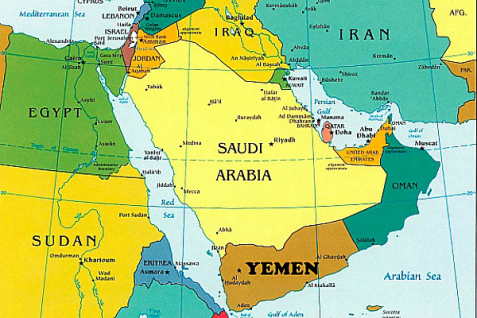
Senior US defense officials reported Thursday, April 23, that the Iranian convoy suspected of carrying weapons for Houth rebels in Yemen appeared to have turned around and was heading north toward Iran. Other Pentagon sources were more cautious: “This isn’t over yet,” they said, in reference to a potential showdown shaping up from Monday, when the USS Roosevelt carrier and USS Normandy missile cruiser reached the Arabian Sea. The Iranian convoy was tracked by the US, Saudi, Egyptian and UAE fleets, any one of which may have intercepted an Iranian vessels trying to unload arms for the rebels.

DEBKAfile reported earlier that, just hours after halting military operations in Yemen, Saudi Arabia Wednesday, April 22 resumed its air strikes, bombing pro-Iranian Houthi rebel positions southwest of Taiz, after they seized a brigade base from forces loyal to fugitive President Abdu-Rabbu Mansour Hadi. DEBKAfile’s military sources report that the Saudi-led coalition went back on a promise published Tuesday to shift its focus from military action to peace talks after Houthi rebels opted out of the ceasefire the Obama administration was trying to broker between Riyadh and Tehran. Tehran further refrained from ordering its warships to turn around and told them to stay on course for the Gulf of Aden opposite Yemen.

DEBKAfile reported earlier Wednesday:
Wide overnight predictions of a Yemen ceasefire coming out of US mediation between Iran and Saudi Arabia were unfulfilled by Wednesday, April 22. All that happened was Saudi Arabia’s termination of its air strikes against the Iran-backed Houthi rebels – but not its sea and air blockade of the country. The rebels made it clear that for them, the war goes on. From Washington, US President Barack Obama warned Tehran against delivering weapons to Yemen that could be used to threaten shipping traffic in the region. Speaking in a televised interview on MSNBC’s “Hardball,” the president said: “What we’ve said to them is that ‘if there are weapons delivered to factions within Yemen that could threaten navigation, that’s a problem.’”
He was referring to the Iranian buildup of nine vessels, some carrying weapons, and warning that US warships were deploying to defend international navigation in the Gulf of Aden and the strategic Strait of Bab el-Mandeb off the shores of Yemen.

DEBKAfile reported earlier::
Iran’s Deputy Foreign Minister Hossein Amir Abdolllahian said Tuesday night, April 21, that Tehran is optimistic that ‘in the coming hours we shall see a halt to military attacks in Yemen.”
He did not say whether the Saudi Arabia had accepted a ceasefire after three weeks of air strikes, or its targets, the Houthi rebels and their Yemeni army allies – or both. Their acceptance would terminate the Yemen civil war.

Earlier Tuesday, White House spokesman Josh Earnest tried to play down the danger of a collision between a US naval strike force led by the USS Theodore Roosevelt aircraft carrier and an Iranian naval convoy believed to be carrying arms for the Houthis. Both were due to arrive in the Gulf of Aden opposite the Yemeni shore. Earnest said the US fleet’s mission was “to ensure the free flow of commerce” i.e. the freedom of navigation through the Gulf of Aden and Strait of Bab El-Mandeb.

He did not repeat an earlier statement by US defense officials that The Roosevelt carrier, the guided-missile cruiser USS Normandy and other accompanying warships had been sent to pre-empt any attempt by the Iranian vessels to unload weapons for the Houthis – in violation of a UN Security Council resolution.

Pentagon officials said an Iranian convoy of nine cargo ships had reached international waters in the Gulf of Aden, but that to their knowledge, the US and Iranian ships had not yet seen each other or made any contact.

The tone coming from the White House towards the end of the day was that the US naval buildup opposite Yemen was intended to give diplomacy a military boost, rather than confront the Iranian fleet.
Reports from Riyadh likewise pointed to active diplomacy afoot for ending the violence in Yemen.

A statement read out on Saudi-owned Arabiya TV announced the end of the kingdom’s military operation against the Iran-allied Houthi rebels in Yemen. “The alliance had achieved its goals in Yemen through the “Storm of Resolve” campaign and would now begin a new operation called “Restoring Hope.”

This operation, the statement said, would focus on security at home and counter-terrorism, aid and a political solution in Yemen.

At the same time, DEBKAfile’s Gulf sources report the same TV channel carried the opposite message from Riyadh:
Saudi Arabia’s King Salman Abdulaziz has ordered the Kingdom’s National Guard to join the military campaign in Yemen, said another communique. Minister of the Saudi National Guard Prince Mutaib bin Abdullah said his forces are on high alert and are ready to take part in Operation Storm of Resolve, a Saudi-led coalition of 10 states battling the advance of the Iran-backed rebels.

The Saudi National Guard is a strong armed force, superior to and better equipped than the Saudi national army. It would provide a solid increment for the Saudi air strikes in Yemen.

Behind this cloud of apparent contradictions hovering over the Yemen conflict Tuesday, is an Obama administration bid to broker the contest between Saudi Arabia and Yemen and bring about a ceasefire. The various parties are meanwhile jockeying for advantageous positions without surrendering their options. If the bid is successful, a truce may be announced in the Yemen war in the coming hours, but it is still hanging fire.
Fleet of Iranian ships heading to Yemen turns around after being tracked by US warships

April 23, 2015

Fleet of Iranian ships heading to Yemen turns around after being tracked by US warships, Fox News, April 23, 2015

(But see Iranian Warships Arrive in Yemen Port. ?????????????? — DM)

A nine-ship Iranian convoy believed to be laden with weapons bound for rebels in Yemen turned around Thursday after being followed by U.S. warships stationed in the area to prevent arms shipments, multiple sources in the Pentagon told Fox News.

The sources said the nine-ship convoy is south of Salalah, Oman, and now headed northeast in the Arabian Sea in the direction of home. The ships, which include seven freighters and two frigates, had sailed southwest along the coast of Yemen heading in the direction of Aden and the entrance to the Red Sea. They appeared to drop anchor in the north Arabian Sea, after the USS Theodore Roosevelt, the USS Normandy and a half-dozen other American ships arrived in the Arabian Sea on Monday, and U.S. officials said that they could intercept the convoy.

The USS Theodore Roosevelt, a 100,000-ton nuclear-powered aircraft carrier known as the “Big Stick” and her escort, the USS Normandy, a guided missile cruiser, have been shadowing the convoy for the past few days, the sources said.

Fighter jets taking off from the carrier have been relaying the convoy’s location to the U.S. Navy’s higher command since the start of the week.

The Iranian Navy ships are characterized as “smaller than destroyers,” a Pentagon official with knowledge of the convoy said Tuesday. Asked what type of weapons the freighters are carrying, one Pentagon official said, “they are bigger than small arms.”

The reversal was welcomed by Pentagon officials, but they expressed caution saying, “this isn’t over yet,” and insisted Roosevelt will maintain observation on the convoy.

Iran backs the Houthi rebels, who chased the Yemeni president from Sanaa and are fighting for control of the Gulf nation. Warships from Saudi Arabia and Egypt, who back Yemeni President Abd Rabbuh Mansur Hadi, are positioned to the southwest of the convoy, forming a blockade of the Gulf of Aden and the port city of Aden.

Western governments and Sunni Arab countries say the Houthis get their arms from Iran. Tehran and the rebels deny that, although Iran has provided political and humanitarian support to the Shiite group.

The U.S. also has been providing logistical and intelligence support to the Saudi-led coalition launching airstrikes against the Houthis. That air campaign is now in its fourth week, and the U.S. also has begun refueling coalition aircraft involved in the conflict.

The campaign meant to halt the rebel power grab and help return to office Hadi, a close U.S. ally who fled Yemen.

The defiant Shiite rebels pressed their offensive in the country’s south on Thursday, apparently ignoring an overture from Saudi Arabia earlier this week, while the kingdom’s warplanes continued to target their positions, officials said.

The rebels’ prized goal — the port city of Aden — remained an elusive one, in part thanks to the Saudi-led airstrikes.

Meanwhile, Pakistan’s top leaders, including Prime Minister Nawaz Sharif and army chief Gen. Raheel Sharif, arrived Thursday in Saudi Arabia to push for negotiations in the Yemen conflict. The two are to meet with King Salman to discuss the crisis, according to Pakisitan’s Foreign Office spokeswoman Tasnim Aslam.

Both predominantly Sunni majority countries, Saudi Arabia and Pakistan are close allies, and Islamabad has supported the Saudi-led coalition, though it declined to send troops, warplanes and warships to join it.

The kingdom and Gulf Arab allies launched the airstrikes March 26, trying to crush the Houthis and allied military units loyal to ousted President Ali Abdullah Saleh.

The Saudis believe the rebels are tools for Iran to take control of Yemen.

Loud explosions shook the cities of Taiz and Ibb in western Yemen on Thursday, as well as Aden when coalition warplanes bombed the rebels and their allies, witnesses said.

Residents also said the Houthis and Saleh’s forces were attacking the city of Dhale, one of the southern gateways to Aden, with random shelling.

All Yemeni officials and witnesses spoke to The Associated Press on condition of anonymity because they were not authorized to talk to the media or feared for their safety amid the fighting.

Iranian Warships Arrive in Yemen Port

April 23, 2015

Iranian Warships Arrive in Yemen Port, The Jewish PressHana Levi Julian, April 23, 2015

YemenKSA.jpgSaudi Arabia airstrikes were aimed at Iranian-backed Houthi rebels who seized positions in neighboring Yemen. Iran is believed to be arming the rebels. Photo Credit: KSA

Iranian warships arrived Thursday in the southern Yemen port of Aden despite the presence of several U.S. warships in the area as well. It is believed the Iranian vessels are carrying weapons to re-arm the Shiite Houthi rebels who have seized control over the port city and the nation’s capital, Sa’ana.

Saudi Arabian Ambassador to the United States, Adel al-Jubeir, said Wednesday that his nation’s air force had achieved its objectives and has concluded its bombing campaign.

“We destroyed the air force, we destroyed their ballistic missiles as far as we know; we destroyed their command and control; we destroyed much, if not most of their heavy equipment and we made it very difficult for them to move from a strategic perspective,” al-Jubeir said. He added that Saudi forces had “eliminated the threat they posed to the Kingdom of Saudi Arabia” but . said that in the long run, there is “no military solution” to the conflict.

According to the World Health Organization, 1,080 people have been killed in the past month in Yemen, and 4,352 others have been wounded.

Coalition warplanes picked up where Saudi Arabian air force pilots left off and continued on Thursday to pound Houthi rebels in southern Yemen. The international forces targeted rebel positions in Aden and the central city of Taiz, according to Voice of America.

A severe humanitarian crisis has been created in the war-torn region, according to VOA, but the Shi’ite rebels still remain. Yemen President Abd Rabbu Mansour Hadi has fled for his life to Saudi Arabia.

Although Iran claimed that it welcomes an end to “killing innocent and defenseless civilians” and seeks a political resolution to the conflict, its warships laden with arms for the rebels– as usual – tell a different story.

Video: Iranian Vessels Heading Closer To U.S. Ships

April 23, 2015

(Nothing really earthshaking here. Just an interesting look at the present situation off the coast of Yemen. Eventually, Iranian ships will make a mad dash for the coast to offload their weapons shipment. What Obama does to stop it, if at all, is anyone’s guess. – LS)

Earth Day

April 23, 2015

Of Topic

Earth Day
Surreal! Sunset turns massive Calbuco eruption into amazing scene (IMAGES)
http://rt.com/news/252265-calbuco-volcano-chile-eruption/


AFP Photo / David Cortes

Reuters / Carlos Gutierrez

From Israel’s founding to today: 67 years of bravery – YouTube

April 23, 2015

From Israel’s founding to today: 67 years of bravery – YouTube.

( God bless our sons and daughters…  Bring them home to us safe and whole.  – JW )


Obama ‘won’t meet Netanyahu’ until after nuke talks deadline

April 23, 2015

via Obama ‘won’t meet Netanyahu’ until after nuke talks deadline | The Times of Israel.

President tells Jewish leaders he fears PM would publicly blast his Iran policies if invited to the White House, New York Times reports

April 23, 2015, 9:14 am
US President Barack Obama (right) shakes hands with Prime Minister Benjamin Netanyahu in the Oval Office of the White House in Washington, D.C., on Monday, March 3, 2014. (photo credit: AFP/Saul Loeb)

US President Barack Obama (right) shakes hands with Prime Minister Benjamin Netanyahu in the Oval Office of the White House in Washington, D.C., on Monday, March 3, 2014. (photo credit: AFP/Saul Loeb)

US President Barack Obama told Jewish leaders last week he would not meet with Prime Minister Benjamin Netanyahu until after the June 30 deadline for the Iranian nuclear talks, the New York Times reported on Thursday.

Obama told the group he imagined a face-to-face meeting with the Israeli leader would likely end with Netanyahu “publicly venting his complaints about the president’s policies,” particularly on Iran, according to anonymous sources familiar with the meeting.

“So for now, the president said, he would speak with the prime minister over the telephone, and an Oval Office invitation would wait until after the June 30 deadline for negotiating the details of the Iran deal,” the Times report said.

Ahead of the March 17 Israeli elections, the White House said Obama would certainly meet with Netanyahu if the prime minister was reelected, but did not specify when the president would extend a formal invitation to Jerusalem.

After Netanyahu’s victory, Obama’s adviser Ben Rhodes told Israeli television he was sure an invitation would be forthcoming. Rhodes acknowledged that Obama and Netanyahu have a “substantive policy difference as it relates to Iran.” Nonetheless, he said, the prime minister would be invited to the White House once a new Israeli government was in place. “Absolutely, we’d expect that once there’s an Israeli government formed, there’d certainly be occasion for the two of them to meet in Washington,” he said.

Obama’s refusal to sit down with Netanyahu aside, the New York Times report said, the US administration is “engaged in an aggressive effort to assuage the concerns of American Jewish groups and pro-Israel members of Congress over the nuclear agreement with Iran, and to limit the potential political fallout for Democrats of what has become a bitter rift in the American and Israeli relationship.”

In an effort to defuse tensions, Obama has been meeting with Jewish and pro-Israel figures in the US in a concentrated effort to reaffirm the United States’ commitments to Israel, despite policy disagreements between the two countries.

“We are evaluating our approach to a two-state solution, not our broader relationship with Israel,” Jen Psaki, Mr. Obama’s communications director, told the New York Times. “Despite occasional differences on matters of policy, our relationship is strong and enduring, as demonstrated by our unwavering support for Israel’s security.”

In a symbolic gesture, Vice President Joe Biden on Thursday will attend the Israeli Independence Day festivities in Washington, DC, alongside Israeli Ambassador to the US Ron Dermer, who has been a divisive figure in both the United States and Israel.

“This administration is nothing if not pragmatic, and the issue on the table now is creating conditions for a reasonable outcome should the Iran agreement be reached,” said Daniel C. Kurtzer, a former American ambassador to Israel and Egypt who is now a professor at Princeton.

“There was a moment in the midst of this where you wonder if anger was replacing policy,” Kurtzer added, “but they came to their senses and said, ‘Okay, anger is not a policy, now we’ve made our point, it’s time to move on.’”

An unnamed source who attended the meeting last week similarly remarked: “There was a spike in the EKG that was triggered by the prime minister’s remarks in and around the election, but it feels like the pulse rate has started to come down again.”

The two leaders have never maintained an exemplary personal relationship, but following a row over Netanyahu’s speech in Congress last month, critiquing the Obama-backed Iran deal, and some of the prime minister’s remarks during the Israeli elections, the discord rapidly gave way to open hostility.

Last year a White House staffer referred to the Israeli prime minister as “chickenshit.”

Prime Minister Benjamin Netanyahu addresses a joint meeting of the United States Congress in the House chamber at the US Capitol in Washington, DC on Tuesday, March 3, 2015, in a speech warning against the then-looming US-backed deal with Iran (Win McNamee/Getty Images/AFP)

Enmity arose again in the weeks leading up to Netanyahu’s March 3 speech in Congress, arranged without Obama’s prior consent.

Just two weeks later, White House officials railed against comments made by Netanyahu about the threat of “droves of Arab voters” heading to the polls, and the prime minister’s rejection of the possibility of a two-state solution, a position he later reversed. The US indicated it might come out in favor of a UN resolution on the Israeli-Palestinian issue — a move Israel strongly opposes.

“We are signaling that if the Israeli government’s position is no longer to pursue a Palestinian state, we’re going to have to broaden the spectrum of options we pursue going forward,” a senior administration official said at the time.

“The positions taken by the prime minister in the last days of the campaign have raised very significant substantive questions that go far beyond just optics,” the official said.

Although Netanyahu quickly reaffirmed his commitment to the two-state solution after the March 17 election, his retraction was rejected by the White House. The prime minister has fiercely and repeatedly criticized the emerging nuclear deal with Iran between the US and world powers, saying it paves Iran’s path to the bomb and poses an existential threat to Israel.

North Korea’s Nuclear Arsenal Raises Concerns About Iran Deal

April 23, 2015

Despite Clinton’s agreement, North Korea now has 20 nukes, and possibly as many as 40 next year. It’s a foreboding look ahead at Iran.

By: Shalom Bear

Published: April 23rd, 2015

via The Jewish Press » » North Korea’s Nuclear Arsenal Raises Concerns About Iran Deal.


A North Korean ballistic missile that was shipped to Iran.

China is concerned for the U.S.

The Chinese have told U.S. nuclear specialists that North Korea may have as many as 20 nuclear warheads, and has the domestic capability to reach 40 nuclear warheads by 2016 and 75 by the end of the decade, according to a Wall Street Journal report.

And while an arsenal like that is enough to affect regional stability, it is believed the North Koreans can now mount their nuclear warheads on their homegrown KN-08 ICBMs, with their 5600 mile range, and reach as far as California.

If that wasn’t problematic enough, North Korea managed to build up their nuclear aresenal and ICBMs after the 1994 nuclear agreement between North Korea and the Clinton administration, an agreement which was meant to halt their nuclear development capabilities.

North Korea tested their first nuke in 2006.

That deal which relied on IAEA verification was negotiated by Wendy Sherman, who is now negotiating the current Iran deal.

James Baker described Sherman’s negotiating strategy as one of “appeasement”.

Until now, China underestimated North Korea’s capabilities, the WSJ reports:

Until recently, the Chinese “had a pretty low opinion of what the North Koreans could do,” said David Albright, an expert on North Korea’s nuclear weapons and head of the Institute for Science and International Security in Washington. “I think they’re worried now.”

If the next sentence sounds familiar to you, it should,

U.S. officials didn’t attend the meeting but some expressed surprise when they were later briefed on the details, said people familiar with the matter.

Talking about surprises and not knowing what was going on in secret nuclear facilities, let’s move on to Iran.

There’s a debate raging as to how long President Obama has actually known that Iran was far closer to nuclear weapons than he recently admitted, and as Prime Minister Netanyahu has been warning all along.

North Korea has been exporting their nuclear know-how and technology to Iran, Syria and other Mid-East countries for a long time.

Israel blew up at least one suspected Syrian nuclear facility in 2007.

The Iranians are very tight with the North Koreans and their nuclear program. Some believe Iran helped finance North Korea’s program, just like some believe Saudi Arabia financed Pakistan’s nuclear program. Essentially outsourcing the development and risk.

With the injection of signup bonus money and post-sanctions business into Iran, we may see larger investments in North Korea’s nuclear program.

But even if that wasn’t the case, the fact that North Korea was able to develop their nuclear arsenal under the US and China’s nose, despite the Clinton treaty, should be setting off alarms as to what Iran, who will probably use the same North Korean playbook as U.S. Rep. Ed Royce (R., Calif.), chairman of the House Foreign Affairs Committee warns, will be able to do under Obama’s bad deal – with a lot more money in their pockets and freedom of action.

Happy Birthday

April 23, 2015

PM Netanyahu’s Greeting for Independence Day 2015 – YouTube

April 23, 2015

PM Netanyahu’s Greeting for Independence Day 2015 – YouTube.


