Archive for April 21, 2015

Saudi-led coalition ends military operation in Yemen

April 21, 2015

Saudi-led coalition ends military operation in Yemen, Reuters, April 21, 2015

The Saudi-led coalition bombing Yemen announced on Tuesday the end to a military operation that pounded the Iran-allied Houthi rebels for more than three weeks, a statement read on Saudi-owned Arabiya TV said.

The alliance had achieved its military goals in Yemen through the campaign dubbed “Storm of Resolve” and will now begin a new operation called “Restoring Hope,” it said.

The mission, the statement said, would focus on security at home and counter-terrorism, aid and a political solution in Yemen.

Why is the Iran Framework Deal Classified Secret and Locked Up in the Senate Security Office?

April 21, 2015

Why is the Iran Framework Deal Classified Secret and Locked Up in the Senate Security Office? Center for Security PolicyFred Fleitz, April 21, 2015

A Senate staff member told me yesterday there is a classified version of the nuclear framework with Iran that members of the Senate are having difficulty assessing because it has been classified secret and is locked up in the Senate security office.  I was told that few Senate staffers are being allowed to read this classified version of the framework.

This revelation raises several serious questions about President Obama’s desperate effort to get a nuclear deal with Iran.

First, this classified version of the framework agreement must be different from the fact sheet on the framework released by the State Department on April 2.  We already know, based on a revelation by the French, that the Obama administration withheld from the fact sheet a controversial provision of the framework on advanced centrifuges.  Were other controversial provisions withheld?  Did Obama officials selectively release parts of the framework to block congressional action against a nuclear deal?

Second, since Iranian officials have denounced the fact sheet as a lie, does the classified version show what was actually agreed to?  Does it show major differences in areas where Obama officials are claiming the United States and Iran are in agreement?

Third, the U.S. government classifies information to prevent disclosure to our adversaries.  Who is the adversary here?  Not Iran, since the classified framework document reflects discussions and agreements with Iranian diplomats.  It is pretty clear that the framework documents have been classified to keep them from the American people, not hostile foreign governments, and to make it as difficult as possible for members of Congress and their staffs to access them.

With Iran rejecting U.S. claims that a final nuclear deal will have strong provisions on verification and lifting sanctions, and a new report that President Obama has offered Iran a $50 billion “signing bonus” for agreeing to a nuclear deal, opposition to the president’s dangerous nuclear diplomacy with Iran is growing on Capitol Hill.  Every member of Congress must review the classified documents on the framework with their staffs to determine the full extent of the Obama administration’s concessions to Iran in the nuclear talks and how to respond if important U.S. concessions have been kept from the American people.

Iranian General Threatens Strikes on Saudi Arabian Soil

April 21, 2015

Iranian General Threatens Strikes on Saudi Arabian Soil, Clarion Project, April 21, 2015

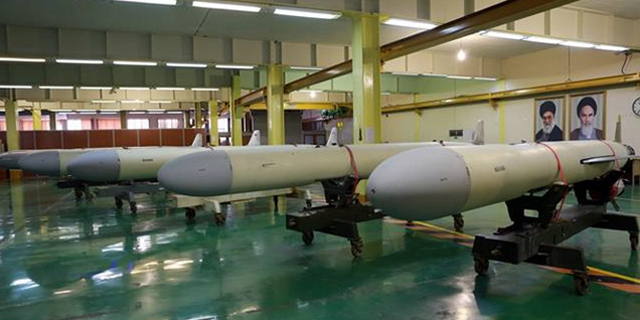
Iran-Reveals-New-Missiles-HP_1Iranian missiles.

The commander of the ground troops in the Iranian army, General Ahmad Reza Pourdastan, threatened Saudi Arabia with military strikes if it doesn’t stop the fighting in Yemen.

According to the Iranian Arabic language channel El-Alam, Pourdastan said that the Islamic Republic is not interested in getting into a conflict with Saudi Arabia. He called on Riyadh to stop fighting against her brothers in Yemen and said “by doing so she is entering a war of attrition which might expose her to severe strikes.”

Pourdastan reportedly claimed that his country will bomb Saudi Arabia if she won’t stop her attacks.

He added that “the Saudi army needs combat experience and that is why it is a weak army. If she will stand against a war of attrition she will be struck very hard and will be defeated. That’s why Riyadh should drop the option and turn to a diplomatic option and to negotiation.”

Pourdistan praised the successes of the Shiite aligned Yemini forces fighting against President Hadi, saying “The next stage will be carrying out strikes against Saudi Arabia.”

Pourdistan declared “the Islamic Republic is not interested in a confrontation with Saudi Arabia for she is a friend nation and our neighbor. The military advisor in the Saudi Embassy is currently in Iran. We invited him to the ceremonies of the Army Day that was on Saturday.

We want to have relations with Saudi Arabia and we don’t want bloody relations. There are still tables for dialogue and they can solve the problems. There is no need to use weapons or military equipment.”

Yet he also threatened Saudi Arabia saying “explosions might occur in Saudi Arabia through rockets falling on the ground. It is clear that dealing with that will be very hard for the Saudi officials.”

He suggested that forces in Yemen strike Saudi Arabia. He said “Based on the military purchases and the abilities of the Yemeni army, it is capable of inflicting painful strikes on Saudi Arabia.”

Arab states snub Obama’s D.C. summit as Iran Mocks Obama

April 21, 2015

Arab states snub Obama’s D.C. summit as Iran Mocks Obama, BreitbartJoel B. Pollak, April 21, 2015

ap_saud-bin-faisal-bin-abdulaziz-al-saud_ap-photo-640x422The Associated Press

As the U.S.S. Theodore Roosevelt heads to Yemen to confront a convoy of Iranian ships, including destroyers, it is worth asking why President Barack Obama is still talking to the Iranian regime about its nuclear program. The Iranians, who used the Houthi militia to knock over the American-aligned Yemeni government, clearly has no fear that Obama will suspend negotiations. If anything, Iranian tactics are winning more concessions.

When you strike a deal with an enemy who continues to attack you, that is not called “peace,” but “surrender.”

It is a wonder Obama is even bothering to send an aircraft carrier to the region at all. His hand has been forced by two factors: first, that Saudi Arabia has gone to war in Yemen without bothering to ask for American approval; second, Yemen is key to Obama’s drone policy against Al Qaeda, his only modest military success.

America has lost more than an ally in Yemen or a foothold in Iraq. It has lost the opportunity to defend hundreds of thousands of innocent lives from being murdered by Iran’s Syrian ally, which is using chemical weapons against civilians. It has lost the opportunity to demilitarize Lebanon—an achievement then-Sen. Joe Biden foolishly claimed in his debate with Sarah Palin in 2008. It may even have lost the chance to stop a nuclear Iran.

Iranian foreign minister Javad Zarif made clear in his New York Times op-ed this week that the regime sees a nuclear deal as the key to regional domination. He offered—no, demanded—American cooperation on ISIS and other issues, not as a possible outcome of a deal but as a condition for a deal.

Yet the White House refuses to make its own regional demands—such as recognition of Israel, or an end to Iran’s global terrorism.

Israel has made clear that the Iran deal is an existential threat, and even that has not moved Obama to reconsider. The Arab nations are not waiting to be double-crossed, and are making their own plans, which likely include Saudi Arabia obtaining nuclear warheads from Pakistan.

In an attempt to save face, Obama has invited the Arab nations to a May 13 summit at the White House—long after final negotiations with Iran have begun

Already, some Arab states have indicated that they will not be attending (Oman), or will only send junior delegations (Saudi Arabia, United Arab Emirates). Amir Taheri of theNew York Post quotes  one Arab official: “He is going to give a Churchillian speech. But we know that you can’t be Chamberlain one day and Churchill the next.”

Meanwhile, Israel quietly signals that it is not going to wait for a Churchill to arrive in the Oval Office.

Obama Kept Iran’s Short Breakout Time a Secret

April 21, 2015

Obama Kept Iran’s Short Breakout Time a Secret – Bloomberg View.

The Barack Obama administration has estimated for years that Iran was at most three months away from enriching enough nuclear fuel for an atomic bomb. But the administration only declassified this estimate at the beginning of the month, just in time for the White House to make the case for its Iran deal to Congress and the public.

Speaking to reporters and editors at our Washington bureau on Monday, Energy Secretary Ernest Moniz acknowledged that the U.S. has assessed for several years that Iran has been two to three months away from producing enough fissile material for a nuclear weapon. When asked how long the administration has held this assessment, Moniz said: “Oh quite some time.” He added: “They are now, they are right now spinning, I mean enriching with 9,400 centrifuges out of their roughly 19,000. Plus all the . . . . R&D work. If you put that together it’s very, very little time to go forward. That’s the 2-3 months.”

Brian Hale, a spokesman for the Office of the Director of National Intelligence, confirmed to me Monday that the two-to-three-month estimate for fissile material was declassified on April 1.

Here is the puzzling thing: When Obama began his second term in 2013, he sang a different tune. He emphasized that Iran was more than a year away from a nuclear bomb, without mentioning that his intelligence community believed it was only two to three months away from making enough fuel for one, long considered the most challenging task in building a weapon. Today Obama emphasizes that Iran is only two to three months away from acquiring enough fuel for a bomb, creating a sense of urgency for his Iran agreement.

Back in 2013, when Congress was weighing new sanctions on Iran and Obama was pushing for more diplomacy, his interest was in tamping down that sense of urgency. On the eve of a visit to Israel, Obama told Israel’s Channel Two, “Right now, we think it would take over a year or so for Iran to actually develop a nuclear weapon, but obviously we don’t want to cut it too close.”

On Oct. 5 of that year, Obama contrasted the U.S. view of an Iranian breakout with that of Israel’s prime minister, Benjamin Netanyahu, who at the time said Iran was only six months away from nuclear capability. Obama told the Associated Press, “Our assessment continues to be a year or more away. And in fact, actually, our estimate is probably more conservative than the estimates of Israeli intelligence services.”

Ben Caspit, an Israeli journalist and columnist for Al-Monitor, reported last year that Israel’s breakout estimate was also two to three months away.

A year ago, after the nuclear talks started, Secretary of State John Kerry dropped the first hint about the still-classified Iran breakout estimate. He told a Senate panel, “I think it is fair to say, I think it is public knowledge today, that we are operating with a time period for a so-called breakout of about two months.”

David Albright, a former weapons inspector and president of the Institute for Science and International Security, told me administration officials appeared to be intentionally unspecific in 2013, when the talking points used the 12-months-plus timeline. “They weren’t clear at all about what this one-year estimate meant, but people like me who said let’s break it down to the constituent pieces in terms of time to build a bomb were rebuffed,” he said. Albright’s group released its own breakout timetable that focused solely on the production of highly enriched uranium, not the weapon itself. It concluded Iran was potentially less than a month away.

When USA Today asked a spokeswoman for the National Security Council about Albright’s estimate, she responded that the intelligence community maintained a number of estimates for how long Iran would take to produce enough material for a weapon.

“They have made it very hard for those of us saying, let’s just focus on weapons-grade uranium, there is this shorter period of time and not a year,” Albright told me. “If you just want a nuclear test device to blow up underground, I don’t think you need a year.”

This view is supported by a leaked document from the International Atomic Energy Agency, first published by the Associated Press in 2009. Albright’s group published excerpts from the IAEA assessment that concluded Iran “has sufficient information to be able to design and produce a workable implosion nuclear device based upon (highly enriched uranium) as the fission fuel.”

Kenneth Pollack, a former CIA analyst who is now an Iran expert at the Brookings Institution, told me that most of the technical estimates about an Iranian breakout were not nearly as precise as they are sometimes portrayed in the press. “The idea there is such a thing as a hard and fast formula for this is nonsense,” he said. “All the physicists come up with different answers depending on what inputs they use.”

In this way, Obama’s new, more alarmist figure of two to three months provides a key selling point for the framework reached this month in Switzerland. When Obama announced the preliminary agreement on April 2, he said one benefit was that if it were finalized, “even if it violated the deal, for the next decade at least, Iran would be a minimum of a year away from acquiring enough material for a bomb.”

Hence the frustration of Representative Devin Nunes, the Republican chairman of the House Permanent Select Committee on Intelligence. “We’ve been researching their claim that a deal would lengthen the breakout time for Iran from two to three months to a year,” he told me of the administration. “We’re just trying to confirm any of their numbers and we can’t confirm or make sense of what they are referencing.”

Nunes should hurry. The Iranian nuclear deal is scheduled to breakout in less than three months.
‘Meaning of independence is the ability to defend yourself’

April 21, 2015

Israel Hayom | ‘Meaning of independence is the ability to defend yourself’.

Israel set to mark Memorial Day for Fallen Soldiers and Victims of Terrorism • 23,320 Israelis have fallen in battle or been killed in terrorist attacks since 1860 • Defense minister: Price of independence shows why we must eschew war as much as possible.

Lilach Shoval, Shlomo Cesana, Yael Branovsky and Israel Hayom Staff
On Tuesday night, Israel begins marking Memorial Day for Fallen Soldiers and Victims of Terrorism

|

Photo credit: Yehoshua Yosef

Hizballah copycats Hamas’ terror tunnels for Lebanese-Galilee border. No IDF solutions yet

April 21, 2015

Hizballah copycats Hamas’ terror tunnels for Lebanese-Galilee border. No IDF solutions yet, DEBKAfile, April 20, 2015

Gaza-Terror-Tunnels_4.15A Hamas terror tunnel – a model for Hizballah

Anxiety about the new terror tunnels they sense Hamas is excavating under their feet is no longer confined to Israelis living in proximity to the Gaza Strip, or the soldiers serving there. Israel’s northern borderland dwellers, who can see Hizballah’s yellow flags in from their balconies, have the same concerns. Their reports of mysterious underground explosions are confirmed by thousands of Israeli troops conducting field exercises in the neighborhood. The soldiers attest to heavy earthmoving equipment, explosions, burrowing, and shaking ground on the Lebanese side of the border, giving the area the appearance of a huge subterranean building site.

The Lebanese Shiite Hizballah group, Iran’s Lebanese surrogate, has clearly taken a leaf out of its Palestinian ally, Hamas’ book, for a fully mobilized terror tunnel project against northern Israel. Its manpower, including engineering units, is working under the guidance of Iranian Revolutionary Guards officers to sink a large network of tunnels leading under the border into Galilee. They are working efficiently and at top speed with the aid of modern Western-made earthmoving equipment and foreign professionals paid top dollar to manage the project.

Israel seems to be curiously passive in the face of its enemy’s ambitious enterprise. Only last week, the Defense Ministry’s Political Coordinator Amos Gilad denied any knowledge of terrorist tunnels reaching Israel from Lebanon.

However, Brig. Gen. Moni Katz, commander of the IDF’s Division 91, which is responsible for security of the Galilee region, told a different story: “To me it is obvious that the other side is busy digging tunnels. I don’t need intelligence to tell me this. Intuition is enough. There is no denying that this is what they are up to. Can I say they have completed a tunnel?” The general went on to reply: “I must assume they have. I can’t prove it or say for sure a tunnel has crossed into our territory. But my basic premise is that this is so and it is up to us to make plans to fit this case.”

Putting those plans into practice – which would necessitate destroying the tunnels either before they were built or at their entry-points – faces four major difficulties:

1. Close surveillance and first-class intelligence are required to keep track of hostile tunnel projects starting from the planning stage, the recruitment of manpower, the acquisition of engineering technology and equipment and registering the quantity of earth displaced and removed from the underground burrow.

2.  The digging process, which sound sensors should have no difficulty in detecting, is a relatively short and irregular process which can just as easily be camouflaged by surface activities.

3.  Locating a finished tunnel at the stage when it is still unused and relatively quiet calls for pinning down a number of variables, such as the type of soil, the depth, length, breadth and lining material used in building the tunnel, humidity, weather conditions on the surface as well as its environment, whether urban or rural.

4.  Locating such a tunnel – even when it is already in operational use by an enemy – poses another set of difficulties. In combat conditions, electronic listening devices would be drowned out by the fire and explosions of battle and, in the confusion of war, enemy troops would be hard to intercept as they moved in and out the tunnels.

A glance at the map shows that the danger of tunnel warfare should also be taken into account on Israel’s eastern front – where it would just as hard to detect as in the north and the southwest: The Arab populations inhabiting the West Bank and the Israeli side of the border – only hundreds of meters apart – are similar enough to keep counter-terrorism authorities on a high level of alert for the construction of tunnel links between the two territories.

Perhaps a succession of military chiefs should be held accountable for letting the tunnel terror peril develop to its current proportions. But it must also be said that no silver bullet has so far been invented to counter this primitive vehicle of terror, including the methods tried till now, such as buried microphones, optical fibers sensitive to seismic tremors, deep trenches along the border and an assortment of off-beat inventions.

In the view of our military analysts, any solutions would have to vary from sector to sector, adapted to the military and topographical features in each case and an intelligence assessment of the level of risk involved in counteraction. This effort would have to be directed by an interdepartmental, interagency administration directly answerable to the prime minister or defense minister.

Pentagon: US Warship Repositioning, Not Intercepting Iranian Ships Off Yemen

April 21, 2015

Pentagon: US Warship Repositioning, Not Intercepting Iranian Ships Off Yemen, Voice if America, April 20, 2015

(Who is the U.S. Navy about to protect from whom? Does it have anything to do with the P5+1 nuke “negotiations?”– DM)

The Pentagon says the American warship USS Theodore Roosevelt is “repositioning” as part of a security operation at sea, and not to intercept Iranian vessels off the coast of Yemen.

Citing unnamed officials, the Associated Press reported earlier in the day that the aircraft carrier would join other U.S. ships in the area to confront Iranian vessels, which are said to be carrying weapons to resupply Houthi rebels that have overrun parts of the country.

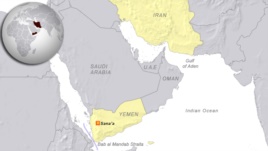
Yemen and IranYemen and Iran

But Pentagon spokesman Col. Steve Warren dismissed the report, saying the Roosevelt is ”repositioning to conduct maritime security operations.”

The guided-missile cruiser USS Normandy escorted the ship en route from the Arabian Gulf to the Arabian Sea, where they joined other U.S. military vessels “to ensure the vital shipping lanes in the region remain open and safe,” according to a statement from the U.S. Navy.

U.S. officials told media late last week that Iran has deployed at least seven ships, some carrying weapons, to Yemen in a bid to shore up Houthi arms supplies through the port city of Aden.

Houthi insurgents face daily air raids from a Saudi Arabian-led coalition and ongoing clashes with local forces.

White House spokesman Josh Earnest told reporters Monday there is “evidence that Iranians are supplying weapons and other forms of support to Houthis.”

“That’s the kind of support that will only contribute to greater violence in Yemen,” he said.

On Saturday, Iranian President Hassan Rouhani said the presence of Iranian naval ships “in the Persian Gulf and the Gulf of Aden is intended to ensure the security of neighboring countries and maritime traffic.”

The Saudi coalition has Aden under a naval blockade.