Archive for March 2015

AFP: Iran Deal Reached in Switzerland – Breitbart

March 29, 2015

AFP: Iran Deal Reached in Switzerland

By Joel B. Pollak29 Mar 2015

via AFP: Iran Deal Reached in Switzerland – Breitbart.


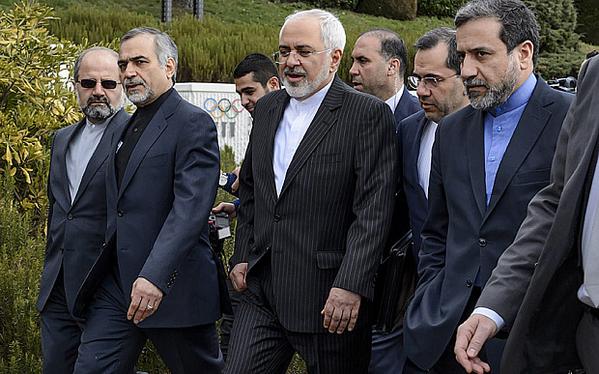
The news agency Agence France-Presse reports from Lausanne, Switzerland that Iran and the P5+1 powers (the five UN Security Council permanent members, plus Germany) have reached “provisional agreement” on the terms of nuclear deal.

Though the terms were not released as the news broke at roughly 9:15 a.m. EDT, the framework is thought to be generous to Iran, as the U.S. and other western nations had caved on key positions in the days leading up to a March 31 deadline.

Breitbart News had predicted that a deal would be reached Sunday, as the travel schedules of senior world leaders in Switzerland for the negotiations made it virtually impossible for all of them to be present after Sunday’s deliberations.

Israeli Prime Minister Benjamin Netanyahu has called the terms of the emerging deal “even worse” than expected.

One unconfirmed source reports that the deal includes an agreement to cut Iran’s centrifuges by two-thirds, “more or less.”

Iran is reportedly resisting reports that a deal has been reached, citing them as efforts by the Western powers to use the media to pressure it into signing an agreement.

Obama is charging toward an Iran deal, no matter what

March 29, 2015

Israel Hayom | Obama is charging toward an Iran deal, no matter what.

After years of talks with Iran, world powers see a light at the end of the tunnel. Israel, however, sees only darkness. The idea of Iranian nuclear weapon is surreal and frightening. But by Tuesday, it may be a fact on the ground. This is truly crazy.

Boaz Bismuth
The U.S. negotiating team, led by Secretary of State John Kerry, in Lausanne, Switzerland, Saturday

|

Photo credit: Reuters

US surrender on breakout time to a bomb leads to breakthrough on a nuclear deal

March 29, 2015

US surrender on breakout time to a bomb leads to breakthrough on a nuclear deal, DEBKAfile, March 29, 2015

Kerry-0bama_IranObama and Kerry hash over nuclear deal with Iran

President Barack Obama and John Kerry promised that the nuclear deal to be signed with Iran in Switzerland this week will give the world powers a year’s warning after the Islamic Republic’s breakout up to an operational weapon. DEBKAfile’s intelligence sources disclose that, to clinch the framework deal in Lausanne, even this concession, which imperils Israel, the Gulf and the Middle East at large, was not enough. In a further surrender, the president authorized the US delegation to fall back again on the space granted the world powers for reacting to breakthrough, dropping it from a year to six or seven months:

Our nuclear experts explain why even that grim arithmetic does not do full justice to the advantages Iran has gained for its push to a nuke:

1.  Because Iran is permitted to continue running up to 6,500 elderly IR-1 centrifuges for enriching uranium to a low 3.5 percent grade, even if it is permitted to keep only 500 kilos of its stock of 7.5-8 –tons, Tehran would still be able to build a bomb in 7-8 months, i.e. a lot faster than Obama and Kerry have promised.
2.  But if Tehran activates secret facilities undetected by US intelligence, it can produce a larger quantity of enriched uranium and so shrink the time between breakout and bomb to three, at most, four months, totally insufficient for the world powers to detect, step in and abort the bomb’s manufacture, in view of the following considerations:

— To obtain proof that Iran is cheating on its accord with the world powers, “environmental” samples would have to be obtained and tested in laboratories outside Iran. Results would be available only after two months, further slashing the time line for stopping Iran building a weapon. But that is not all.
— If Iran is shown by the first round of tests to be in violation of the accord and enriching uranium to a higher grade than 3.5, a second batch of “environmental” samples must be collected to analyze the exact quantities of uranium illicitly enriched and grade of purity.

There goes another month of valuable time for action, cutting it down to 10-12 weeks.

3. And, finally, the US President, Secretary of State and International Atomic Energy leaders have affirmed Iran’s faithful compliance with the first interim nuclear accord – known as the Joint Plan of Action – JPOA – that was signed in Geneva November 2013.

That information is equally false.

It is a fact which is known to intelligence agencies that Iran never complied with its commitment to reduce its UF6 stocks below 7.5 tons and convert added amounts to harmless oxides. Indeed, they estimate that Iran has enlarged its approved amount of stock to 8.5 tons or more, by means of the “creep-out” strategyit has repeatedly pursued in the past to conceal its nefarious nuclear activities.

3.  A final concession which Iran has managed to wring out of the six world powers led by Washington allows Tehran to keep an extra 9,000 IR-1 centrifuges Tehran idle – though not dismantled – and permission to continue research and development on high-speed IR-8 or IR-5 centrifuges.

This mans thatn the Islamic Republic will not only keep its nuclear infrastructure under the accord the six powers plan to sign, but add improvements along with the freedom to shorten at will the critical time lapse between breakout and bomb.

The tons of spoken and printed verbiage poured out on the Iranian nuclear issue and ongoing diplomacy year after year have exposed, rather than disguised, President Obama’s willingness to sign a nuclear deal with Iran – however bad and whatever the price.

The inescapable conclusion is that the US president has come around to accepting the reality of a nuclear-armed Iran. As seen from Washington, America never stopped India, Pakistan and North Korea from becoming nuclear powers, and has therefore decided it can live with a fourth – Iran.

Benjamin Netanyahu: Iran-Lausanne-Yemen axis must be stopped

March 29, 2015

Benjamin Netanyahu: Iran-Lausanne-Yemen axis must be stopped – Israel News – Jerusalem Post.

​PM’s comments come as Iran nuclear talks intensify in Switzerland, with foreign ministers gathered to discuss the possibility of a political framework by March 31 deadline.


JERUSALEM/LAUSANNE – The nuclear agreement between the world powers and Iran apparently emerging from the talks in Lausanne confirm all of Israel’s concerns, “and even more than that,” Prime Minister Benjamin Netanyahu said at Sunday’s weekly cabinet meeting.

At the same time that the talks are taking place in Switzerland, he said, Iran’s proxies in Yemen are in the process of occupying large segments of Yemen and trying to gain control of the strategic Ba’ad el-Mandeb waterway which is critical to the free flow of the world’s oil.

“After the Beirut-Damascus-Baghdad axis, Iran is carrying out a pincer movement from the south to take over and occupy the entire Middle East. The Iran-Lausanne-Yemen axis is very dangerous to humanity and it must be stopped,” he said.

Before the cabinet meeting, Netanyahu met with visiting Senate Republican leader Mitch McConnell, and spoke over the weekend with the Democratic leader in the Senate Harry Reid, discussing Israel’s deep concern about the emerging agreement. He said that they both spoke of “firm, strong and continuing” bipartisan support for Israel.

​Talks intensified on Sunday in Lausanne, a Swiss city on the shores of Lake Geneva, as foreign ministers gathered to discuss the possibility of a political framework.

They seek to reach an understanding by March 31, which will frame a comprehensive nuclear agreement concluded by the end of June.

A UN-backed deal on Iran’s nuclear work is expected to cap, restrict, monitor and roll back its program for a finite period. All five permanent members of the UN Security Council will have to sign off on the agreement.

US Secretary of State John Kerry began meetings early with his Iranian and European counterparts. The foreign ministers of Russia and the United Kingdom are scheduled to arrive later in the day.

“The endgame of the long negotiations has begun,” German Foreign Minister Frank-Walter Steinmeier said on Saturday. “As one sees the cross on the summit, the final meters are the most difficult but also the decisive ones.”

Iranian Defector: ‘U.S. Negotiating Team Mainly There to Speak on Iran’s Behalf’

March 29, 2015

Iranian Defector: ‘U.S. Negotiating Team Mainly There to Speak on Iran’s Behalf’, Weekly StandardDaniel Halper, March 28, 2015

(If the report is accurate, it explains quite a lot about the direction in which the “negotiations” have been going. — DM)

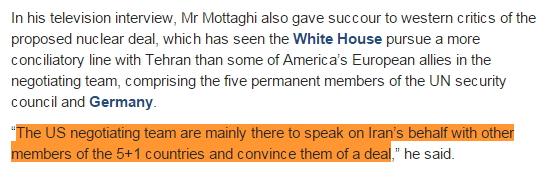
An Iranian journalist writing about the nuclear negotiations between the United States and Iran has defected. In an interview Amir Hossein Motaghi, has some harsh words for his native Iran. He also has a damning indictment of America’s role in the nuclear negotiations.

“The U.S. negotiating team are mainly there to speak on Iran’s behalf with other members of the 5+1 countries and convince them of a deal,” Motaghi told a TV station after just defecting from the Iranian delegation while abroad for the nuclear talks. The P 5 + 1 is made up of United States, United Kingdom, Russia, China, France, plus Germany.

CBNkmdFVIAADMpl
CBNk6T0WsAAEI1T

Abbas Calls on Arab States to Attack Hamas

March 28, 2015

Abbas Calls on Arab States to Attack Hamas, Israel National News,  Ari Yashar, March 28, 2015

(Unlikely, but what would Obama say? — DM)

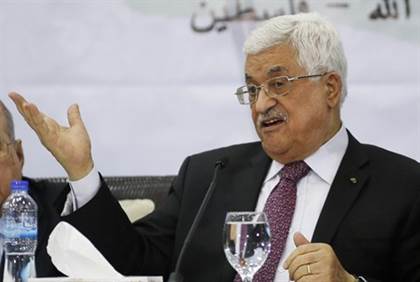
574415Mahmoud Abbas Reuters

Abbas urges ‘same policy’ of Yemen airstrikes to be used by Arab League in ‘Palestine,’ after his adviser calls for ‘iron’ blow to Hamas.

Palestinian Authority (PA) Chairman Mahmoud Abbas used the platform of the Arab League summit in Sharm el-Shekh, Egypt, this Saturday to attack his “unity partner” Hamas, making a subtle call for the Arab states to take military action against the Gaza-based Muslim Brotherhood offshoot.

Speaking at the 26th summit in the southern Sinai peninsula, Abbas made reference to the campaign of airstrikes launched last Thursday by Saudi Arabia and other Arab countries against Iran-backed Shi’ite Houthi rebelsin Yemen – the Houthis have overthrown the government while rapidly expanding their control.

“I hope that the Arab countries will take the same policy they employed in Yemen for all Arab countries suffering from internal conflict – like Palestine, Syria, Libya and Iraq,” Abbas said according to Yedioth Aharonot, in an open jab at Hamas in Gaza.

Making Abbas’s comments calling for military intervention in “Palestine” all the more pointed is the fact that just two days earlier, Abbas’s adviser on Religious and Islamic Affairs Mahmoud Al-Habbash, who also serves as PA Supreme Sharia (Islamic law) Judge, made similar remarks.

Al-Habbash urged the Arab countries to take action and strike Hamas with an “iron fist,” in an open call for military intervention.

Hamas and the PA signed a unity deal last April, which has done little to damper the enmity raging between the rivals ever since Hamas violently seized control of Gaza in 2007 – the most obvious example of the how the deal has not changed tensions was when Hamas tried to stage a coup against the PA in Judea and Samaria last year.

Responding to Al-Habbash, Hamas said the comment is “a dangerous and not nationalist call.”

Abbas’s call for Arab intervention comes after Arab foreign ministers meeting in Egypt last Thursday declared the establishment of a joint Arab military force, reportedly meant to rapidly respond to security threats to Arab nations.

Arab League secretary-general Nabil al-Arabi was assigned with coordinating the details with the chiefs of staff of the various Arab armies within one month, so as to work out the logistics of establishing the new force.

NBC’s Engel: Officials Say Allies: Simply Don’t Trust” U.S. Under Obama Admin – The Five

March 28, 2015

NBC’s Engel: Officials Say Allies: Simply Don’t Trust” U.S. Under Obama Admin – The Five, Fox News via You Tube, March 27, 2015

(In other breaking news, today is Saturday, unexpectedly. Please see also, Iranian general in Sanaa to organize Yemen rebel counter-offensive for Saudi-led attacks.  — DM)


Iranian general in Sanaa to organize Yemen rebel counter-offensive for Saudi-led attacks

March 28, 2015

Iranian general in Sanaa to organize Yemen rebel counter-offensive for Saudi-led attacks.

DEBKAfile Special Report March 28, 2015, 10:42 AM (IDT)

Iranian Gen. Qassem Soleimani with Afghan recruits in Tikrit

Iranian Gen. Qassem Soleimani with Afghan recruits in Tikrit

Tehran took less than 48 hours for a decision to hit back at the surprise air and naval attack launched by Saudi Arabia, he Gulf and Egypt Thursday, March 26, to contain the Iranian-backed Houthi rebels’ sweep through Yemeni cities.

debkafile’s military sources report that Iran’s top war commander, Al Qods Brigades chief Gen. Qassem Soleimani, landed in the Yemeni capital Sanaa Friday, March 27 to organize a counter-offensive and open Iran’s third direct Middle East warfront after Syria (in support of Bashar Assad) and Iraq (with the US against ISIS).
The Saudi-GCC-Egyptian intervention found the pro-Iranian Houthi rebels at the gates of the big port of Aden, which commands the Straits of Bab el-Mandeb, the vital gateway for oil shipping between the Indian Ocean and Gulf through the Suez Canal and Mediterranean. Certain Yemeni army units have joined the rebels. They are armed with advanced US weapons that were supplied for the war on al Qaeda and now serve the revolt against a Yemeni regime recognized by Washington.

This rebel force had already seized most of Yemen’s cities and stretches of its Red Sea coast.
Soleimani’s arrival in Sanaa signaled Tehran’s determination not to give up an inch of the ground gained by its proxies, while underscoring its demand for dominance as the leading Middle East power, promised by Washington in return for accepting a framework deal on its nuclear program.

US officials persist in their public pretense that the diplomatic and the military arenas are unconnected. So the deal is presented as close to signing by the March 31 deadline, while the flames of Shiite-Sunni violence are allowed to spread into another corner of the Middle East.
In the coming hours, Egyptian and Saudi naval and marine forces are planning landings in Aden, according to their military sources. They will fight to contain the Houthi march across Yemen and prevent the fall of its last major town, after two days of Saudi and Gulf air strikes against rebel positions around Yemen.
debkafile’s military sources report that the Saudi and Gulf air forces and Egyptian sea units managed in their first 48 hours to cut off Iran’s air and sea supplies to the Houthi rebels. Gen. Soleimeni will need to find a means of breaking the Saudi-Egyptian blockade and restoring supply routes. Above all, he must determine whether or not to co-opt Iranian air and sea forces to the Yemeni front and so leading them into head-to-head battle against Saudi Arabia and its ten Sunni allies.
Egyptian and Iranian warships maneuvering for control of the Strait of Bab el-Mandeb were reported to have clashed Thursday, the first day of the Sunni intervention in the Yemen conflict.
From outside the region, Pakistan stands ready to step into the contest, promising Friday “a strong response” to any threat to “Saudi integrity.” This opened the door for the Pakistani army to be drawn into the wars of Arabia against Iran alongside the majority of Arab Sunni nations.

Islamabad was responding to a Houthi warning to invade the southern Saudi provinces of Asir, Najran and Jizan, for which they counted on a welcome by the local Saudi populations, most of which belong to the minority Ismaili sect, that is closer to the Iranian Shiite and Houthi Zaydi than to the dominant Sunni faith of the Saudi royal regime.

Friday night, President Barack Obama spoke with Saudi King Salman and reaffirmed US support for the military action taken in Yemen by Saudi Arabia and its Gulf Arab allies, the White House said in a statement.

Obama and King Salman agreed that their goal is to achieve lasting stability in Yemen through a negotiated political solution, the statement said. Obama also underscored his commitment to Saudi Arabia’s security.

Yemen is just part of Iran’s Mideast master plan

March 28, 2015

Yemen is just part of Iran’s Mideast master plan – Israel Opinion, Ynetnews.

Analysis: Israel has spent five years warning that Iran seeks Shiite domination of the Muslim world, and the Gulf States know by now not to rely on the Obama administration.

Published: 03.28.15, 08:48 / Israel Opinion

Operation Storm of Resolve, designed to rescue Yemen President Abd-Rabbu Mansour Hadi’s regime from the clutches of the Houthi rebels, began with an exercise in misdirection. At midnight between Wednesday and Thursday, the first squadron of Saudi Arabian fighter planes launched attacks on targets in the Yemeni capital, Sana’a – air force bases, arms depots belonging to the rebels, the palace of former president Ali Abdullah Saleh, and a reserve forces base in the south of the city that was taken by the rebels last month.

The strike caught the rebels by surprise. At a meeting earlier on Wednesday night between Houthi rebel leader Abdul Malik al-Houthi and ousted president Salah, the two had coordinated an assault on Aden, Yemen’s second-largest city.

Aftermath of Saudi-led air strikes in Yemen (Photo: EPA)


“If Aden falls,” the ousted president promised, “Yemen will fall, and the forces will be able to turn their attention to the greater task at hand – taking control of the Bab-el-Mandeb Strait for the purpose of overseeing marine traffic into the Red Sea.”

With the Arab response slow in coming, despite threats voiced by senior advisers to the Saudi king, the rebel commanders in Yemen were sure they had at least 24 hours in which to mount operations in the field before the Arab foreign ministers met in Sharm el-Sheikh for an emergency summit. They knew that the battle for power in Yemen would top the agenda, but believed that they’d have until the end of the summit on Friday afternoon before a green light was given to amass an Arab force to take action in Yemen. The also failed to foresee a powerful military strike and believed that time was on their side.

“We decided to take action against the rebels in Yemen without getting the approval of the Arab League,” the spokesman for the Saudi Royal Palace said on Thursday morning, following a night of air strikes on Sana’a and the retaking of the airport in Aden.

It’s been revealed, meanwhile, that in behind-the-scenes discussions, four Arab states agreed to join the air strikes under the command of the Saudi defense minister, Crown Prince Mohammad bin Salman.

During a tour Wednesday of the Saudi-Yemen border, Salman issued a stern warning to the rebels. “We are committed to the security of the Yemeni people,” he declared. “If you continue to undermine the stability and threaten Saudi Arabia, you will get hit hard.”

A spokesman for the Houthi rebels responded in kind, commenting: “We have already proved to you in 2009 how easy it is to invade the territory of the kingdom. Your army is weak. Today we are more skilled. When we decide to invade, we won’t stop in the city of Mecca, but will continue on to Riyadh to topple the government institutions.”

Houthi rebels in Yemen (Photo: AP)

President Hadi, meanwhile, has gone underground. “He is in a secure location and is monitoring the military operation,” his spokeswoman declared. And a status on the president’s Facebook page reads: “We are currently taking measures to restore internal stability to our country. We will fly the flag of Yemen and not the Iranian flag over our homeland.”

Washington isn’t helping

The situation in Yemen took a turn for the worse some two months ago, when the Houthis, a Shiite opposition group founded in 1992 by Iran, managed to seize control of the capital, Sana’a. President Hadi and his prime minister, Khaled Bahah, were forced to announce their resignations. The Yemeni parliament rejected the resignations in an effort to preserve the government institutions, but Hadi insisted, and the government and parliament were dissolved.

With the Houthis not satisfied with the president’s resignation and threatening to assassinate him, Hadi got the message and went into hiding. “If you force me to stay in my position, he told the commanders of the Yemeni military, “the terrorists will get to me and eliminate me.”

The Houthis then took control of the presidential palace in Sana’a, and their commander, Abdul Malik al-Houthi, declared: “We are staying here to conduct the fight against al-Qaeda in Yemen.”

Al-Houthi deliberately failed to make mention of the president-in-hiding and the collapse of the institutions of power: For him, the excuse was and remains the Sunni terrorist organization, which has set up an affiliate group in Yemen. On his way to shake the regime in Saudi Arabia, he has to block the terrorists.

While making efforts to enlist the help of his neighbors in the Gulf, Hadi has also appealed to the UN Security Council in New York, asking that it declare Yemen a no-fly zone and thus put an end to Iran’s supply by air of weapons, military equipment and thousands of instructors and fighters to the rebel forces.

The UN secretary-general is “checking” and “considering,” and is definitely “concerned” – but he has yet to call a special session to discuss the grave ramifications of the situation in Yemen. And the United States, too, hasn’t helped much at all. After Washington “forgot” to add Iran’s name to the annual list of countries that sponsor terrorism, it is in no hurry to send force to Yemen. “We won’t participate in the operation, but we will provide assistance,” the White House announced on Thursday.

The Gulf States know by now not to rely on the Obama administration: Washington is engrossed up to its neck in fine tuning the nuclear deal with Iran; and as far as the US administration is concerned, Yemen can go ahead and sink deeper into a bloody conflict. Last week, after the attacks at the mosques in Sana’a that killed 137 people, the United States withdrew its 125 advisers who had been living in Yemen for years as “training instructors,” but were actually involved in gathering intelligence on irregular movements in the Gulf.

President Hadi, the Pentagon’s protégé, got the message. He internalized the fact that if Yemen doesn’t enlist the help of its neighbors in the Gulf, Iran will continue to make progress towards its ultimate goal – regime change in Saudi Arabia.

A Red Sea nightmare

From the perspective of the West, Yemen has always been a remote and uninteresting country. It is the poorest country in the Arab world, with a primitive economy, massive unemployment and a very high level (60 percent) of illiteracy. Of the 27 million citizens, two-thirds are Sunni Muslims and one-third are Shiite.

“The ayatollahs of Iran seek to take control of the Strait of Bab el-Mandeb so they can determine who can cross the Red Sea to the Suez Canal,” says Dr. Yasser bin Hilal, a political science lecturer at the University of Sana’a, who traveled to Washington in an attempt to shake up the administration and the intelligence agencies.

Iran's Supreme Council. Plans for regional domination. (Photo: AFP)
Iran’s Supreme Council. Plans for regional domination. (Photo: AFP)

“If they are successful, it will also affect the movement of ships sailing with goods from the Far East to the port of Ashdod in Israel. Try to picture the nightmare scenario – fighters in the uniforms of the Revolutionary Guards directing maritime traffic, boarding cargo ships, checking the cargoes and crew, and blocking passage to anything that doesn’t serve their interests.”

For its part, Saudi Arabia is issuing statements that could have been written in Jerusalem. “Iran is an aggressive state that is intervening and operating forces in the Arab world,” Saudi Foreign Minister Saud al-Faisal said this week at a joint press conference with his British counterpart, Philip Hammond. “Its nuclear weapons are a threat to the Gulf and the entire world.”

He then went on to convey a message to the Obama administration, saying: “Striking a deal that Iran doesn’t deserve is not right. Think, too, about the dangerous ramifications of the Iranians’ ‘second plan.'”

This “second plan”, about which Israeli intelligence officials have been warning for the past five years, involves Iran’s desire for Shiite control over the Arab world, with the ultimate objective being control over the Muslim holy sites in Saudi Arabia.

 “We’re dealing with two parallel courses of action,” says influential Saudi media pundit Jamal Khashoggi. “If they halt the nuclear program by means of military force or a diplomatic move, as the Americans a currently trying to do, the Iranians will still be left with the threatening alternative of ‘creeping progress’ on the ground, throughout the Arab world.

“They are goal-oriented. They have a map of objectives to achieve on the road to Saudi Arabia.”

Column One: Managing Obama’s war against Israel

March 27, 2015

Column One: Managing Obama’s war against Israel, Jerusalem Post, Caroline Glick, March 26, 2015

ShowImageUS President Barack Obama meets with Prime Minister Benjamin Netanyahu at the White House, October 1, 2014. (photo credit:REUTERS)

As Max Boot explained Wednesday in The Wall Street Journal, the administration’s animosity toward Israel is a function of Obama’s twin strategic aims, both evident since he entered office: realigning US policy in the Middle East toward Iran and away from its traditional allies Israel and the Sunni Arab states, and ending the US’s strategic alliance with Israel.

Obama has reached a point in his presidency where he is prepared to give full expression to his plan to end the US’s strategic alliance with Israel.

He thinks that doing so is both an end to itself and a means of succeeding in his bid to achieve a rapprochement with Iran.

*********************

On Wednesday the Jerusalem Municipality announced it is shelving plans to build 1,500 apartments in the Har Homa neighborhood. Officials gave no explanation for its sudden move. But none was needed.

Obviously the construction of apartments for Jews in Jerusalem was blocked in the hopes of appeasing US President Barack Obama.

But is there any reason to believe he can be appeased? Today the White House is issuing condemnations of Israel faster than the UN.

To determine how to handle what is happening, we need to understand the nature of what is happening.

First we need to understand that the administration’s hostility has little to do with Israel’s actions.

As Max Boot explained Wednesday in The Wall Street Journal, the administration’s animosity toward Israel is a function of Obama’s twin strategic aims, both evident since he entered office: realigning US policy in the Middle East toward Iran and away from its traditional allies Israel and the Sunni Arab states, and ending the US’s strategic alliance with Israel.

Over the past six years we have seen how Obama has consistently, but gradually, taken steps to advance these two goals. Toward Iran, he has demonstrated an unflappable determination to accommodate the terrorism supporting, nuclear proliferating, human rights repressing and empire building mullahs.

Beginning last November, as the deadline for nuclear talks between the US and its partners and Tehran approached, Obama’s attempts to accommodate Tehran escalated steeply.

Obama has thrown caution to the winds in a last-ditch effort to convince Iranian dictator Ali Khamenei to sign a deal with him. Last month the administration published a top secret report on Israel’s nuclear installations. Last week, Obama’s director of national intelligence James Clapper published an annual terrorism threat assessment that failed to mention either Iran or Hezbollah as threats.

And this week, the administration accused Israel of spying on its talks with Iran in order to tell members of Congress the details of the nuclear deal that Obama and his advisers have been trying to hide from them.

In the regional context, the administration has had nothing to say in the face of Iran’s takeover of the Bab el-Mandeb Strait and the Gulf of Aden this week. With its Houthi-proxy now in charge of the strategic waterway, and with its own control over the Straits of Hormuz, Iran is poised to exercise naval control over the two choke points of access to Arab oil.

The administration is assisting Iranian Shi’ite proxies in their battle to defeat Islamic State forces in the Iraqi city of Tikrit. It has said nothing about the Shi’ite massacres of Sunnis that come under their control.

Parallel to its endless patience for Tehran, the Obama administration has been treating Israel with bristling and ever-escalating hostility. This hostility has been manifested among other things through strategic leaks of highly classified information, implementing an arms embargo on weapons exports to Israel in time of war, ending a 40-year agreement to provide Israel with fuel in times of emergency, blaming Israel for the absence of peace, expressing tolerance and understanding for Palestinian terrorism, providing indirect support for Europe’s economic war against Israel, and providing indirect support for the BDS movement by constantly accusing Israel of ill intentions and dishonesty.

Then there is the UN. Since he first entered office, Obama has been threatening to withhold support for Israel at the UN. To date, the administration has vetoed one anti-Israel resolution at the UN Security Council and convinced the Palestinians not to submit another one for a vote.

In the months that preceded these actions, the administration exploited Israel’s vulnerability to extort massive concessions to the Palestinians.

Obama forced Benjamin Netanyahu to announce his support for Palestinian statehood in September 2009. He used the UN threat to coerce Netanyahu to agree to negotiations based on the 1949 armistice lines, to deny Jews their property rights in Jerusalem, Judea and Samaria, and to release scores of terrorist murderers from prison.

Following the nationalist camp’s victory in last week’s election, Obama brought to a head the crisis in relations he instigated. He has done so for two reasons.

First, next week is the deadline for signing a nuclear agreement with Iran. Obama views Netanyahu as the prospective deal’s most articulate and effective opponent.

As Obama sees it, Netanyahu threatens his nuclear diplomacy with Iran because he has a unique ability to communicate his concerns about the deal to US lawmakers and the American people, and mobilize them to join him in opposing Obama’s actions. The letters sent by 47 senators to the Iranian regime explaining the constitutional limitations on presidential power to conclude treaties without Senate approval, like the letter to Obama from 367 House members expressing grave and urgent concerns about the substance of the deal he seeks to conclude, are evidence of Netanyahu’s success.

The second reason Obama has gone to war against Israel is because he views the results of last week’s election as an opportunity to market his anti-Israel and pro-Iranian positions to the American public.

If Netanyahu can convince Americans to oppose Obama on Iran, Obama believes that by accusing Netanyahu of destroying chances for peace and calling him a racist, Obama will be able to win sufficient public support for his anti-Israel policies to intimidate pro-Israel Democratic lawmakers into accepting his pro-Iranian policies.

To this end, Obama has announced that the threat that he will abandon Israel at the UN has now become a certainty. There is no peace process, Obama says, because Netanyahu had the temerity to point out that there is no way for Israel to risk the transformation of Judea and Samaria into a new terror base. As a consequence, he has all but made it official that he is abandoning the peace process and joining the anti-Israel bandwagon at the UN.

Given Obama’s decision to abandon support for a negotiated peace between Israel and the Palestinians, modes of appeasement aimed at showing Israel’s good faith, such as Jewish building freezes, are no longer relevant. Scrapping plans to build apartments in Jewish neighborhoods like Har Homa will make no difference.

Obama has reached a point in his presidency where he is prepared to give full expression to his plan to end the US’s strategic alliance with Israel.

He thinks that doing so is both an end to itself and a means of succeeding in his bid to achieve a rapprochement with Iran.

Given this dismal reality, Israel needs to develop ways to minimize the damage Obama can cause.

Israel needs to oppose Obama’s policies while preserving its relations with its US supporters, including its Democratic supporters. Doing so will ensure that it is in a position to renew its alliance with the US immediately after Obama leaves office.

With regards to Iran, such a policy requires Israel to act with the US’s spurned Arab allies to check Iran’s expansionism and nuclear progress. It also requires Israel to galvanize strong opposition to Obama’s goal of replacing Israel with Iran as America’s chief ally in the Middle East and enabling it to develop nuclear weapons.

As for the Palestinians, Israel needs to view Obama’s abandonment of the peace process as an opportunity to improve our diplomatic position by resetting our relations with the Palestinians. Since 1993, Israel has been entrapped by the chimerical promise of a “two-state solution.”

By late 2000, the majority of Israelis had recognized that there is no way to achieve the two-state solution. There is no way to make peace with the PLO. But due to successive governments’ aversion to risking a crisis in relations with Washington, no one dared abandon the failed two-state strategy.

Now, with Obama himself declaring the peace process dead and replacing it with a policy of pure hostility toward Israel, Israel has nothing to gain from upholding a policy that blames it for the absence of peace.

No matter how loudly Netanyahu declares his allegiance to the establishment of a Palestinian state in Israel’s heartland, Obama will keep castigating him and Israel as the destroyer of peace.

The prevailing, 23-year-old view among our leadership posits that if we abandon the two-state model, we will lose American support, particularly liberal American support. But the truth is more complicated.

Inspired by the White House and the Israeli Left, pro-Israel Democrats now have difficulty believing Netanyahu’s statements of support for the establishment of a Palestinians state. But those who truly uphold liberal values of human rights can be convinced of the rightness of Israel’s conviction that peace is currently impossible and as a consequence, the two-state model must be put on the back burner.

We can maintain support among Republicans and Democrats alike if we present an alternative policy that makes sense in the absence of an option for the two-state model.

Such a policy is the Israeli sovereignty model. If the government adopts a policy of applying Israeli sovereignty over Judea and Samaria in whole – as I recommend in my book The Israeli Solution: A One- State Plan for Peace in the Middle East, or in part, in Area C, as Economy Minister Naftali Bennett recommends, our leaders will be able to defend their actions before the American people, including pro-Israel Democrats.

Israel must base its policy of sovereignty on two principles. First, this is a liberal policy that will ensure the civil rights of Palestinians and Israelis alike, and improve the Palestinians’ standard of living.

Second, such a policy is not necessarily a longterm or permanent “solution,” but it is a stable equilibrium for now.

Just as Israel’s decision to apply its laws to united Jerusalem and the Golan Heights in the past didn’t prevent it from conducting negotiations regarding the possible transfer of control over the areas to the Palestinians and Syrians, respectively, so an administrative decision to apply Israeli law to all or parts of Judea and Samaria will not block the path for negotiations with the Palestinians when regional and internal Palestinian conditions render them practicable.

The sovereignty policy is both liberal and strategically viable. If the government adopts it, the move will rebuild Israel’s credibility and preserve Israel’s standing on both sides of the aisle in Washington.

Never before has Israel had to deal with such an openly hostile US administration. Indeed, until 2009, the very notion that a day would come when an American president would prefer an alliance with Khamenei’s Iran to its traditional alliances with Israel and the Sunni Arab states was never even considered. But here we are.

Our current situation is unpleasant. But it isn’t the end of the world. We aren’t helpless. If we act wisely, we can stem Iran’s nuclear and regional advance. If we act boldly, we can preserve our alliance with the US while adopting a policy toward the Palestinians that for the first time in decades will advance our interests and our liberal values on the world stage.