Archive for March 2015

Book review: The Islamic War

March 16, 2015

The Islamic War: Book review, Dan Miller’s Blog, March 16, 2015

(The views expressed in this article are mine and do not necessarily reflect those of Warsclerotic or its other editors. — DM)

The Islamic War, Martin Archer, 2014

The novel begins with a terror attack on a residential area in Israel, resulting in multiple causalities. It may, or may not, have involved members of the Iranian Revolutionary Guard. Menachem Begin is the Israeli Prime Minister and Ariel Sharon is the Defense Minister. The story begins immediately after the (postponed?) end of the Iran – Iraq war in 1988.

A massive armor, infantry, artillery and air attack on Israeli positions in the Golan follows the terrorist attack. The Israelis are outnumbered and suffer many thousands of casualties.

Israel had anticipated a simultaneous attack via Jordan, so most Israeli tank, infantry and air resources are deployed there, rather than in the Golan, to conceal themselves and await the arrival of Iranian, Iraqi and Syrian forces. They come and are defeated, most killed or fleeing. The Israeli forces then move into Syria and have similar successes there as well.

As the story evolves, it becomes evident that Israel must have known that the Iran – Iraq war had been allowed to fester to permit Iran, Iraq and Syria to develop a well coordinated plan to dispose of Israel, in hopes that a surprise attack could be made as soon as the Iran – Iraq war ended. Other events also suggest that Israel had prior notice:

Nuclear facilities of several hostile nations explode mysteriously.

The Israeli Navy had managed to infiltrate Iranian oil ports — apparently before the attack on the Golan — without being noticed. Then, at a propitious moment near the end of the fighting elsewhere, they destroyed all oil tankers in, entering or leaving port, along with all Iranian oil storage facilities.

The Israel Navy, which had suffered no losses, then moved to Saudi Arabia to protect her oil ports and ships coming to buy her oil and leaving.

As these events unfold, Israel, Egypt, Jordan, Saudi Arabia and Turkey* are negotiating a united front against Iran, Iraq and Syria, much to the displeasure of the U.S. Secretary of State, who wants a cease fire and return to the status quo ante. Fortunately, the U.S. President favors Israel and her coalition and generally ignores his SecState.

I won’t spoil the story by relating what happens at the end, but it’s very good for Israel, Egypt, Jordan, Saudi Arabia, Turkey and the Kurds, and very bad for Iran, Iraq and Syria. The novel is well worth reading, perhaps twice.

_____________

*Historical note: Turkey in 1988 was reasonably secular and also in other ways quite different from now. Egypt under President Al-Sisi is, in some but not all respects, similar to Egypt in 1988 under President Mubarak. Beyond a good relationship with Israel, Al-Sisi is working to modernize and reform Islam by turning it away from the violent jihad which drives both the Islamic State (Sunni) and the Islamic Republic of Iran (Shiite). Egypt remains under fire from the Obama administration due to the “coup” which ousted President Morsi, who had made Egypt essentially an arm of the Muslim Brotherhood. Egypt now helps to protect Israel with her military presence in the Sinai to oppose Hamas and Muslim Brotherhood activities there. Saudi Arabia and Jordan, like most countries in the Middle East, look out for the interests of their rulers first and are quite concerned about both the Islamic State and Iran.

UPDATE: US intel report scrapped Iran from list of terror threats

March 16, 2015

US intel report scrapped Iran from list of terror threats, Times of Israel, March 16, 2015

(This is to clarify and expand upon an earlier article on the same subject, also posted today. — DM)

An annual report delivered recently to the US Senate by James Clapper, the director of National Intelligence, removed Iran and Hezbollah from its list of terrorism threats, after years in which they featured in similar reports.

The unclassified version of the Worldwide Threat Assessment of the US Intelligence Communities, dated February 26, 2015 (PDF), noted Iran’s efforts to combat Sunni extremists, including those of the ultra-radical Islamic State group, who were perceived to constitute the preeminent terrorist threat to American interests worldwide.

In describing Iran’s regional role, the report noted the Islamic Republic’s “intentions to dampen sectarianism, build responsive partners, and deescalate tensions with Saudi Arabia,” but cautioned that “Iranian leaders—particularly within the security services—are pursuing policies with negative secondary consequences for regional stability and potentially for Iran.

“Iran’s actions to protect and empower Shia communities are fueling growing fears and sectarian responses,” it said.

The United States and other Western nations, along with a coalition of regional allies, both Sunni and Shiite, has been launching attacks against Islamic State targets in Iraq and Syria in recent months. The Sunni group, also known by its acronyms IS, ISIS and ISIL, is an offshoot of al-Qaeda that has carved out a self-proclaimed caliphate across large swaths of Syria and Iraq, both of whose governments are allied with Iran’s.

The Shiite Lebanese group Hezbollah, which is funded and mentored by Tehran, has been fighting the Islamic State, independently of the American-led campaign, both in Syria and Iraq.

Meanwhile, the US has been engaged in marathon talks with Iran in an effort to reach an agreement on its nuclear program. Tehran, according to the National Intelligence threat assessment, has “overarching strategic goals of enhancing its security, prestige, and regional influence [that] have led it to pursue capabilities to meet its civilian goals and give it the ability to build missile-deliverable nuclear weapons, if it chooses to do so.”

The report said that it was unclear whether or not Iran would eventually decide to build nuclear weapons, but noted that should the Iranian government decide to pursue such a course, it would face no “insurmountable technical barriers to producing a nuclear weapon.” It lingered on Iran’s pursuit of intercontinental ballistic missile technology as a likely delivery system for a nuclear weapon, and delineated Iranian threats in the realms of counterintelligence and cyber warfare.

According to one Israeli think tank, the removal of Iran and its proxy Hezbollah from the list of terror threats, where they featured in previous years, was directly linked to the campaign against the Islamic State.

063_464519556-e1425017740218-305x172Director of National Intelligence James Clapper in Washington, DC, February 26, 2015 (photo credit: Evy Mages/Getty Images/AFP)
 

“We believe that this results from a combination of diplomatic interests (the United States’ talks with Iran about a nuclear deal) with the idea that Iran could assist in the battle against the Islamic State in Syria and Iraq and maybe even in the battle against jihadist terrorism in other countries,” the Meir Amit Intelligence and Terrorism Information Center said in an analysis of the report (Hebrew PDF). It also noted the Iran and Hezbollah were both listed as terrorism threats in the assessment of another American body, the Defense Intelligence Agency.

“Islamic Revolutionary Guard Corps-Qods Force (IRGC-QF) and Lebanese Hezbollah are instruments of Iran’s foreign policy and its ability to project power in Iraq, Syria, and beyond,” that assessment, also submitted to the Senate of February 26, said in its section on terrorism. “Hezbollah continues to support the Syrian regime, pro-regime militants and Iraqi Shia militants in Syria. Hezbollah trainers and advisors in Iraq assist Iranian and Iraqi Shia militias fighting Sunni extremists there. Select Iraqi Shia militant groups also warned of their willingness to fight US forces returning to Iraq.”

Israel, as well as Sunni allies of the US, has often warned that Iran, through Hezbollah and other proxies, has been sowing instability in the region. An escalating dispute between Jerusalem and Washington over the terms of an eventual agreement on Iran’s nuclear program has seen Israeli official rail against the relatively conciliatory tone adopted by US officials toward Iran, in light of the shared interest in combating the Islamic State.

In a polarizing speech before a joint session of Congress on March 3, Prime Minister Benjamin Netanyahu sought to persuade American lawmakers of the folly of signing an agreement with Iran, and, comparing its leaders to those of the Nazi regime of World War II, cautioned that it “poses a grave threat, not only to Israel, but also [to] the peace of the entire world.”

Iran has made bellicose statements toward Israel, threatening to destroy the Jewish state, often citing Israeli talk of attacking its nuclear facilities, which it maintains are for peaceful purposes.

Hezbollah, which is based to Israel’s north in Lebanon and the Syrian Golan Heights, has largely refrained from attacking Israeli targets since the bloody Second Lebanon War of 2006, although there have been skirmishes along the border.

In one recent confrontation, Israel struck first, purportedly destroying a Hezbollah unit near the front line of the Golan Heights. Among the seven dead on January 18 were an Iranian general, a top Hezbollah commander and the son of another former commander in chief. Some two weeks later, Hezbollah took revenge, killing two Israeli soldiers and wounding seven in a cross-border attack.


Al-Aqsa Mosque Sheik Rebukes Pakistan for Not Launching Nuclear Strike to Help Establish Caliphate

March 16, 2015

Al-Aqsa Mosque Sheik Rebukes Pakistan for Not Launching Nuclear Strike to Help Establish Caliphate, MEMRI via You Tube, March 16, 2015

(Al-Aqsa Mosque  “also known as Al-Aqsa and Bayt al-Muqaddas, is the third holiest site in Islam and is located in the Old City of Jerusalem.” — DM)


Weapon of the Month

March 16, 2015

(The GECAL 50, officially designated by the United States military as the GAU-19/A, is an electrically driven Gatling gun that fires the .50 BMG (12.7×99mm) cartridge. In other words, a helluva terrorist killer. Just added it to my Christmas wish list. – LS)

US intel. scraps Iran, Hezbollah from terrorist threats list

March 16, 2015

US intel. scraps Iran, Hezbollah from terrorist threats list, Iran Daily, March 16, 2015

(True or false? I have seen nothing to confirm the report in the “legitimate media,” but that’s not surprising. Here, thanks LS, is a link to the cited report. Iran appears to remain on the list (at page 14). Hezbollah appears, but as a victim of Sunni “extremists” in Lebanon.– DM)

image_650_365

The US National Intelligence has removed Iran and the Lebanese resistance movement, Hezbollah, from its list of “terrorist threats.”

US Director of National Intelligence James Clapper scrapped Iran and Hezbollah from the list in an annual report recently delivered to the US Senate, citing their efforts in fighting terrorists, including the ISIL Takfiri group, Press TV reported.

The unclassified version of the report titled “Worldwide Threat Assessment of the US Intelligence Communities,” which was released on February 26, 2015, noted Iran’s efforts to battle extremists, including those of the ISIL terrorist group, who were perceived to constitute the greatest terrorist threat to American interests worldwide.

Highlighting Iran’s regional role, the report pointed to the Islamic Republic’s “intentions to dampen sectarianism, build responsive partners, and deescalate tensions with Saudi Arabia.”

Iran has “overarching strategic goals of enhancing its security, prestige, and regional influence [that] have led it to pursue capabilities to meet its civilian goals,” the report said.

The report also said that Hezbollah is countering ISIL Takfiri terrorists in Syria and Iraq.

The ISIL Takfiri terrorists have taken control of swathes of territory in Iraq and Syria since last year.

Iran has repeatedly stressed that it will not interfere militarily in Iraq and Syria, but the Islamic Republic continues to provide support to both countries against ISIL in the form of defense consultation and humanitarian aid.

Activist Ayaan Hirsi Ali Denounces Anti-Semitism on Campuses as New Film Debuts

March 15, 2015

Activist Ayaan Hirsi Ali Denounces Anti-Semitism on Campuses as New Film Debuts, Breitbart, Dr. Susan Berry, via Counter Jihad Report, March 14, 2015

(Please see also, Column One: Israel’s next 22 months. To what extent do Obama’s relations with Israel reflect the anti-Israel views noted in the two video clips? To what extent will the anti-Israel views noted in the video clips become increasingly pervasive as our college kids get older and come to hold positions of power?– DM)

ayaan-hirsi-ali-ap

Somali-born free speech and women’s rights activist Ayaan Hirsi Ali gave the keynote address at a sold-out event in Boston Wednesday that centered on rising anti-Semitism on college campuses in North America.


Hirsi Ali’s address, and a panel featuring a rabbi and three student activists, followed the premiere of a new Jerusalem U film titled Crossing the Line 2: The New Face of Anti-Semitism on Campus, which can be viewed in its entirety online. The film demonstrates how anti-Israel activities on college and university campuses are being organized to alienate and intimidate those who support Israel, and how reasonable criticism of Israel “crosses the line” into anti-Semitism.

As a press release about the Boston event notes, Hirsi Ali said the film demonstrates how students are being “misled.” Denouncing “virulent anti-Semitism” on college campuses, she asserted, “The least we can do is boycott, divest, and sanction campuses that compromise academic freedom.”

Excerpts of Hirsi Ali’s address are as follows:

It is appalling that only seventy years from the Holocaust, crowds in Europe chant, “Hamas, Hamas, Jews to the gas.” It is even more appalling that 10,000 soldiers in Paris are needed to protect Jewish sites. That is the continent that promised never again. The men and women who were in the concentration camps, who are tattooed, some are still here. And it is happening again.

Watching Crossing the Line 2: the New Face of Anti-Semitism on Campus was like having a bucket of ice water being poured over my head. I saw the film last week. And I watched it again last night. And I couldn’t sleep. The more we pretend that this is happening somewhere far away, the more hopeless and helpless we feel. But this is not happening far away. This is happening on American campuses, British campuses, Canadian campuses. The filmmakers who made this film made it because it is important that we listen to this message while it is at a smaller stage.

I have a different acronym for BDS. They call themselves Boycott, Divestment, and Sanctions. I call them Bully, Deceive, and Sabotage. Bully, Deceive, and Sabotage the only society that is free in the Middle East. BDS. On campus, if you care about issues like justice and injustice, we really need to show it. You need to do it. Where is the BDS movement against the Islamic State? Where on campuses is the BDS movement against Saudi Arabia? The Iranian regime, who for decades have promised to wipe Israel off the map, who are developing a bomb. And there’s no BDS movement against them on campus. Why? Last year in Nigeria, 200 girls were kidnapped. They were sold into slavery. There was no BDS movement against Boko Haram.

“Anti-Israel activities on campus cause students today to feel embarrassed to be pro-Israel, or could even lead them to hold negative opinions about Israel” said Amy Holtz, president of Jerusalem U, in a statement in the press release. “Raising awareness of this growing problem is crucial. We made this film in order to give students the knowledge to differentiate between education and intimidation, debate and hate. They must be able to identify when it is ‘Crossing the Line.’”

American Embassy in Saudi Arabia Closed Amid Rising ISIS Threat

March 15, 2015

American Embassy in Saudi Arabia Closed Amid Rising ISIS Threat, ISIS Study Group, March 14, 2015

The US State Department (DoS) announced the cancellation of all consular services for Sunday and Monday due to “heightened security concerns” that our sources in-country say has to do with an increased threat from the Islamic State (IS) to abduct western oil workers in the eastern part of the country. Specifically, an IS cell operating in the eastern part of the country has become increasingly active since last SEP 14. Much of this is the spillover we discussed in our previous article titled, “Iranian Regime Consolidates Yemeni Gains, Forming Houthi Intel Proxy.” As the IRGC-Qods Force and its proxies increase their OP-Tempo inside Saudi Arabia, so has IS. We are aware of specific threats targeting two oil workers, a French citizen and a US citizen. There’s also a separate VBIED threat targeting either the consulate in Dharhan or the embassy itself (we’re still working to identify the target location).

US shuts down Saudi embassy amid security fears
http://www.bbc.com/news/world-middle-east-31893070

US Embassy Warns Oil Workers of Saudi Arabia Kidnap Threat
http://abcnews.go.com/International/wireStory/us-embassy-warns-oil-workers-saudi-arabia-kidnap-29636051

US Embassy in Saudi Arabia halts operations amid ‘heightened security concerns
http://www.foxnews.com/politics/2015/03/14/us-embassy-in-saudi-arabia-halts-operations-amid-heightened-security-concerns/?intcmp=latestnews&utm_source=feedburner&utm_medium=twitter&utm_campaign=Feed%3A+feedburner%2FidRmZ+%28FOXNews.com%29

Saudi Arabia Travel Warning
http://travel.state.gov/content/passports/english/alertswarnings/saudi-arabia-travel-warning.html

Iranian Regime Consolidates Yemeni Gains, Forming Houthi Intel Proxy
http://isisstudygroup.com/?p=5580

Shia Proxy Threat to US ISIS Strategy in Saudi Arabia
http://isisstudygroup.com/?p=1837

riyadh-300x169Source: BBC

In our piece titled “The Islamic State’s Arabian Peninsula Campaign,” we discussed how IS was forced into conducting operations inside the Saudi kingdom due to increased targeting by Saudi security forces and the IRGC-Qods Force. We saw that in the early-JAN 15 attack on a Saudi border post along the Iraqi border that IS took responsibility for in a video put out by their Anbar, Iraq-based media outlet. The individuals responsible for the attack were part of the Abdullah bin Sayid al-Sarhan attack network. This same network was also responsible for the deaths of five Shia locals under suspicions of being proxies for the IRGC-Qods Force back in NOV 14. The network was also responsible for a separate attack on two US citizens and a Danish national. This is the same part of Eastern Saudi Arabia that the French and American national IS is planning to abduct are located.

The Islamic State’s Arabian Peninsula Campaign
http://isisstudygroup.com/?p=4558

ISIS Claims Attack On Saudi Arabia Border, Signals Strategy Change In Militant Infiltration
http://www.ibtimes.com/isis-claims-attack-saudi-arabia-border-signals-strategy-change-militant-infiltration-1773754

Masked gunmen kill five in Saudi Arabia
http://www.theguardian.com/world/2014/nov/04/masked-gunmen-kill-five-saudi-arabia

saudiborderIS fighters along the Saudi-Iraq border Source: International Business Times

The Saudis have detained over 150 IS fighters, facilitators and financiers over the past year. IS has already established a presence along the Iraq-Saudi border despite the ongoing project to erect a wall along the border. That presence enables them to send fighters and weapons across the border to and from the country at will, although Saudi military patrols have increased in recent months to interdict these smuggling operations. There are also elements of AQAP that have defected to the new IS-affiliate in Yemen, which suggests that the areas along the Southern border may be in play as well. Also keep in mind that Baghdadi specifically threatened Saudi Arabia in a NOV 14 video on “the next battlegrounds.” The current IS effort in Yemen, like their Iranian counterparts, appears to be connected to their operations in Saudi Arabia. We expect the threat to our fellow Americans and our country’s interests will continue to be threatened as the violence escalates on the Arabian Peninsula from IS, AQAP and the Iranian regime. We will continue to monitor develops in the country and update accordingly…

Saudi Arabia arrests first ISIS-related terror cell (this article has pics in it)
http://www.aawsat.net/2014/05/article55332025

Islamic State sets sights on Saudi Arabia
http://www.bbc.com/news/world-europe-30061109

ISIS gaining ground in Yemen, competing with al Qaeda
http://www.cnn.com/2015/01/21/politics/isis-gaining-ground-in-yemen/

Links to Other Related Articles:

Filipinos Among Arrested in Saudi Terror Sweep

Large-Scale Saudi Security Sweep Detains 88

Possible Cracks to The AQ Armor.

Having the U.N. Security Council bless a deal wouldn’t make it binding under our Constitution.

March 15, 2015

Having the U.N. Security Council bless a deal wouldn’t make it binding under our Constitution, National Review online, Andrew C. McCarthy, March 14, 2015

So, as we warned earlier this week, the international-law game it is.

It is no secret that Barack Obama does not have much use for the United States Constitution. It is a governing plan for a free, self-determining people. Hence, it is littered with roadblocks against schemes to rule the people against their will. When it comes to our imperious president’s scheme to enable our enemy, Iran, to become a nuclear-weapons power — a scheme that falls somewhere between delusional and despicable, depending on your sense of Obama’s good faith — the salient barrier is that only Congress can make real law.

Most lawmakers think it would be a catastrophe to forge a clear path to the world’s most destructive weapons for the world’s worst regime — a regime that brays “Death to America” as its motto; that has killed thousands of Americans since 1979; that remains the world’s leading state sponsor of jihadist terrorism; that pledges to wipe our ally Israel off the map; and that just three weeks ago, in the midst of negotiations with Obama, conducted a drill in which its armed forces fired ballistic missiles at a replica U.S. aircraft carrier.

This week, 47 perspicuous Republican senators suspected that the subject of congressional power just might have gotten short shrift in Team Obama’s negotiations with the mullahs. So they penned a letter on the subject to the regime in Tehran. The effort was led by Senator Tom Cotton (R., Ark.), who, after Harvard Law School, passed up community organizing for the life of a Bronze Star–awarded combat commander. As one might imagine, Cotton and Obama don’t see this Iran thing quite the same way.

There followed, as night does day, risible howls from top Democrats and their media that these 47 patriots were “traitors” for undermining the president’s empowerment of our enemies. Evidently, writing the letter was not as noble as, say, Ted Kennedy’s canoodling with the Soviets, Nancy Pelosi’s dalliance with Assad, the Democratic party’s Bush-deranged jihad against the war in Iraq, or Senator Barack Obama’s own back-channel outreach to Iran during the 2008 campaign. Gone, like a deleted e-mail, were the good old days when dissent was patriotic.

Yet, as John Yoo observes, the Cotton letter was more akin to mailing Ayatollah Khamenei a copy of the Constitution. The senators explained that our Constitution requires congressional assent for international agreements to be legally binding. Thus, any “executive agreement” on nukes that they manage to strike with the appeaser-in-chief is unenforceable and likely to be revoked when he leaves office in 22 months.

For Obama and other global-governance grandees, this is quaint thinking, elevating outmoded notions like national interest over “sustainable” international “stability” — like the way Hitler stabilized the Sudetenland. These “international community” devotees see the Tea Party as the rogue and the mullahs as rational actors.

So, you see, lasting peace — like they have, for example, in Ukraine — is achieved when the world’s sole superpower exhibits endless restraint and forfeits some sovereignty to the United Nations Security Council, where the enlightened altruists from Moscow, Beijing, and Brussels will figure out what’s best for Senator Cotton’s constituents in Arkansas. This will set a luminous example of refinement that Iran will find irresistible when it grows up ten years from now — the time when Obama, who came to office promising the mullahs would not be permitted to acquire nuclear weapons, would have Iran stamped with the international community seal of approval as a nuclear-weapons state.

Down here on Planet Earth, though, most Americans think this is a bad idea. That, along with an injection of grit from the Arkansas freshman, emboldened the normally supine Senate GOP caucus to read Tehran in on the constitutional fact that the president is powerless to bind the United States unless the people’s representatives cement the arrangement.

Obama, naturally, reacted with his trusty weapon against opposition, demagoguery: hilariously suggesting that while the Alinskyite-in-chief had our country’s best interests at heart, the American war hero and his 46 allies were in league with Iran’s “hardliners.” (Yes, having found Muslim Brotherhood secularists, al-Qaeda moderates, and Hezbollah moderates, rest assured that Obama is courting only the evolved ayatollahs.) When that went about as you’d expect, the administration shifted to a strategy with which it is equally comfortable, lying.

Obama’s minions claimed that, of course, the president understands that any agreement he makes with Iran would merely be his “political commitment,” not “legally binding” on the nation. It’s just that Obama figures it would be nice to have the Security Council “endorse” the deal in a resolution because, well, that would “encourage its full implementation.” Uh-huh.

Inconveniently, the administration’s negotiating counterpart is the chattiest of academics, Iranian foreign minister Mohammad Javad Zarif. Afflicted by the Western-educated Islamist’s incorrigible need to prove he’s the smartest kid in the class — especially a class full of American politicians — Zarif let the cat out of the bag. The senators, he smarmed, “may not fully understand . . . international law.”

According to Zarif, the deal under negotiation “will not be a bilateral agreement between Iran and the U.S., but rather one that will be concluded with the participation of five other countries, including all permanent members of the Security Council, and will also be endorsed by a Security Council resolution.” He hoped it would “enrich the knowledge” of the 47 senators to learn that “according to international law, Congress may not modify the terms of the agreement.” To do so would be “a material breach of U.S. obligations,” rendering America a global outlaw.

This, mind you, from the lead representative of a terrorist regime that is currently, and brazenly, in violation of Security Council resolutions that prohibit its enrichment of uranium.

Clearly, Obama and the mullahs figure they can run the following stunt: We do not need another treaty approved by Congress because the United States has already ratified the U.N. charter and thus agreed to honor Security Council resolutions. We do not need new statutes because the Congress, in enacting Iran-sanctions legislation, explicitly gave the president the power to waive those sanctions. All we need is to have the Security Council issue a resolution that codifies Congress’s existing sanctions laws with Obama’s waiver. Other countries involved in the negotiations — including Germany, Russia, and China, which have increasingly lucrative trade with Iran — will then very publicly rely on the completed deal. The U.N. and its army of transnational-progressive bureaucrats and lawyers will deduce from this reliance a level of global consensus that incorporates the agreement into the hocus-pocus corpus of customary law. Maybe they’ll even get Justice Ginsburg to cite it glowingly in a Supreme Court ruling. Voila, we have a binding agreement — without any congressional input — that the United States is powerless to alter under international law.

Well, it makes for good theater . . . because that is what international law is. It is a game more of lawyers than of thrones. In essence, it is politics masquerading as a system governed by rules rather than power, as if hanging a sign that says “law” on that system makes it so.

At most, international law creates understandings between and among states. Those understandings, however, are only relevant as diplomatic debating points. When, in defiance of international law, Obama decides to overthrow the Qaddafi regime, Clinton decides to bomb Kosovo, or the ayatollahs decide to enrich uranium, the debating points end up not counting for much.

Even when international understandings are validly created by treaty (which requires approval by two-thirds of the Senate), they are not “self-executing,” as the legal lexicon puts it — meaning they are not judicially enforceable and carry no domestic weight. Whether bilateral or multilateral, treaties do not supersede existing federal law unless implemented by new congressional statutes. And they are powerless to amend the Constitution.

The Supreme Court reaffirmed these principles in its 2008 Medellin decision (a case I described here, leading to a ruling Ed Whelan outlined here). The justices held that the president cannot usurp the constitutional authority of other government components under the guise of his power to conduct foreign affairs. Moreover, even a properly ratified treaty can be converted into domestic law only by congressional lawmaking, not by unilateral presidential action.

Obama, therefore, has no power to impose an international agreement by fiat — he has to come to Congress. He can make whatever deal he wants to make with Iran, but the Constitution still gives Congress exclusive authority over foreign commerce. Lawmakers can enact sanctions legislation that does not permit a presidential waiver. Obama would not sign it, but the next president will — especially if the Republicans raise it into a major 2016 campaign issue.

Will the Security Council howl? Sure . . . but so what? It has been said that Senator Cotton should have CC’d the Obama administration on his letter since it, too, seems unfamiliar with the Constitution’s division of authority. A less useless exercise might have been to CC the five other countries involved in the talks (the remaining Security Council members, plus Germany). Even better, as I argued earlier this week, would be a sense-of-the-Senate resolution: Any nation that relies on an executive agreement that is not approved by the United States Congress under the procedures outlined in the Constitution does so at its peril because this agreement is likely to lapse as early as January 20, 2017. International law is a game that two can play, and there is no point in allowing Germany, Russia, and China to pretend that they relied in good faith on Obama’s word being America’s word.

It is otherworldly to find an American administration conspiring against the Constitution and the Congress in cahoots with a terror-sponsoring enemy regime, with which we do not even have formal diplomatic relations, in order to pave the enemy’s way to nuclear weapons, of all things. Nevertheless, Republicans and all Americans who want to preserve our constitutional order, must stop telling themselves that we have hit a bottom beneath which Obama will not go. This week, 47 senators seemed ready, finally, to fight back. It’s a start.

Do Israelis Really Think the U.S. Will Come to Their Aid? (They Will Be in for a Shock)

March 15, 2015

Do Israelis Really Think the U.S. Will Come to Their Aid? (They Will Be in for a Shock), The Gatestone InstituteBassam Tawil, March 15, 2015

Many Israelis seem to think that if Iran does acquire nuclear weapons, if Israel could just offer up a more friendly face, the current U.S. Administration would, in a crisis, come to their help. They could not be more wrong.

Many Israelis seem to be counting on some deeply wished-for love from the current U.S. Administration. What they may not want to see is that their unrequited love for the U.S. runs far deeper than any disagreement with Israel’s current prime minister. Just ask Syria, ask Iraq, ask Yemen, ask Libya, ask Saudi Arabia, ask Kuwait, ask Egypt. The current U.S. Administration does not even send weapons; it sends meals-ready-to-eat. Israel and the rest of us in the region — as Iran has already encircled all the oil fields and is now taking over Iraq — have no more to look forward to than that.

Hard as it may be for Israelis to believe it, Israel’s survival most likely does not figure into the current U.S. Administration’s calculations at all. No matter who wins the election this week, the U.S. will grant Iran its nuclear weapons. If they end up turned on Israel, no matter who is prime minister, so be it.

No matter who wins the election this week in Israel, if and when Iran has a nuclear bomb, there is not a thing the current U.S. Administration will do to help Israel. To the current U.S. leadership, Israel is just the next Sudetenland. The Israelis will have only themselves to rely on.

There is about to be a mistake. The only country in the region of which all the other countries are envious — for opportunity, equal justice under law, freedom to speak without the 2 a.m. knock on the door — has an election this week. Its citizens are tired of war — right on schedule for its enemies’ plans to destroy it. The Israelis are meant to be tired of war; that is why it is called “a war of attrition.”

Many Israelis seem to be counting on some deeply wished-for love from the current U.S. Administration. What they may not want to see is that their unrequited love for the U.S. runs far deeper than any disagreement with Israel’s current prime minister. Just ask Syria, ask Iraq, ask Yemen, ask Libya, ask Saudi Arabia, ask the Emirates, ask Kuwait, ask Egypt. The current U.S. Administration does not even send weapons to help; it sends meals-ready-to-eat, perhaps with the occasional unserious bombing, and tells others to do any serious work themselves. Israel and the rest of us in the region — as Iran has already encircled all the oil fields and is now taking over Iraq — have no more to look forward to than that.

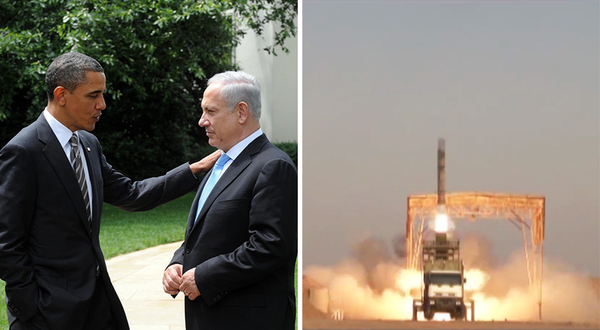
982Bassam Tawil writes that if and when Iran has a nuclear bomb, there is not a thing the current U.S. Administration will do to help Israel. (Image sources: Israel PM office, PressTV video screenshot)

The Israelis may be conning themselves into thinking that if they could just stay friendly with America, America will not “let Israel down” — whatever that is supposed to mean. Perhaps they think that the U.S. will not let Iran acquire a nuclear weapons capability — as the U.S. has been promising for twenty years. But the U.S. has already made clear that it will fast-track, or slow-track, Iran to nuclear weapons capability.

Or maybe it means that many Israelis think that if Iran does acquire nuclear weapons, if Israel could just offer up a more friendly face, the U.S. would, in a crisis, come to Israel’s help.

They could not be more wrong.

Sadly, the current administration in Washington has reportedly already sabotaged several efforts by Israel to address its Iran problem. The current U.S. Administration seems to care about only one thing: making just about any deal with Iran. It does not even care about America, or it would never have enabled Iran to get as far along as it is now.

From some apparent self-infatuated fantasy of “landing a big one” — luring the world’s most medieval, genocidal, terror-promoting state to be a responsible member of the “family of nations” — the current U.S. Administration will help exactly no one.

Hard as it may be for Israelis to believe, Israel’s survival most likely does not figure into the current U.S. Administration’s calculations at all. Israel was excluded from the P5+1 negotiations — they might actually have insisted on not handing Iran a nuclear weapons capability, and ruined the current U.S. Administration’s dream of turning the deadliest enemy of the “Big Satan” into its new-found friend — like the wish of turning a prostitute into a doting wife.

The Israelis, of course, will vote for whomever they wish, but if they are voting with the thought that a new Prime Minister will save their country from being turned onto roadkill by the current U.S. Administration — the world’s next Sudetenland — and that their current prime minister has been the problem, they have a nasty surprise coming. Everyone else has been lied to, misled, double-crossed, and tossed over the cliff – especially the American people themselves. The problem is not in whoever is Israel’s Prime Minister. The problem is three thousand miles away, in a leadership that cares only about following in the footsteps of Neville Chamberlain returning from Munich: waving around a dangerous, illusory, non-existent “peace in our time.” To the current U.S. leadership, Israel is just the next Sudetenland.

For its own fantasy of turning a voracious, extremist Islamic regime into the “stripper who becomes the girl next door,” the current U.S. Administration will grant Iran its nuclear weapons. If they end up turned on Israel, so be it. No matter who wins the election this week in Israel, if and when Iran has a nuclear bomb, there is not a thing the current U.S. Administration will do to help Israel. The Israelis will have only themselves to rely on.

Column One: Israel’s next 22 months

March 15, 2015

Column One: Israel’s next 22 months, Jerusalem Post, Caroline Glick, March 12, 2015

(The article is about more than the elections. The disconnect between Israel and the Obama administration seems likely to continue to worsen regardless of who wins, unless Israel falls completely into line with Obama’s views. — DM)

Given the stakes, the choice of Israeli voters next Tuesday is an easy one.
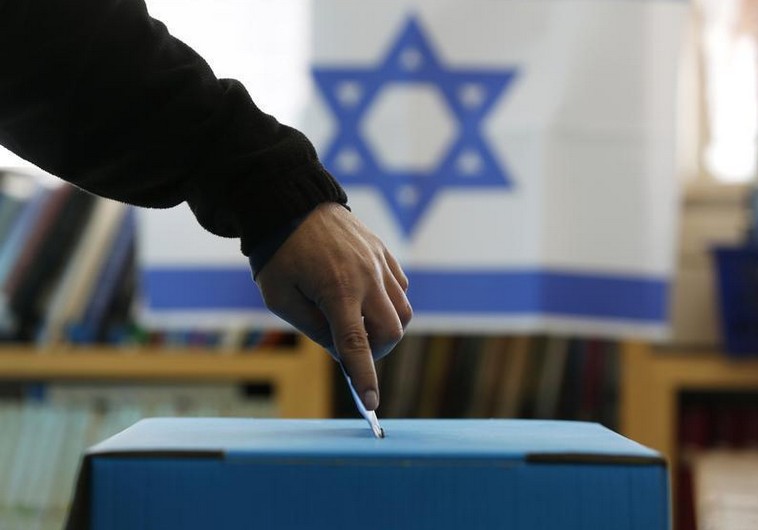
An Israeli flag is seen in the background as a man casts his ballot at a polling in a West Bank Jewish settlement, north of RamallahAn Israeli flag is seen in the background as a man casts his ballot for the parliamentary election at a polling in the West Bank settlement of Ofra. (photo credit:REUTERS)

The next 22 months until President Barack Obama leaves office promise to be the most challenging period in the history of US-Israel relations.

Now unfettered by electoral concerns, over the past week Obama exposed his ill-intentions toward Israel in two different ways.

First, the Justice Department leaked its intention to indict Democratic Sen. Robert Menendez on corruption charges. Menendez is the ranking Democratic member, and the former chairman, of the Senate Foreign Relations Committee. He is also the most outspoken Democratic critic of Obama’s policy of appeasing the Iranian regime.

As former US federal prosecutor Andrew McCarthy wrote this week at PJMedia, “It is perfectly reasonable to believe that Menendez may be guilty of corruption offenses and that his political opposition on Iran is factoring into the administration’s decision to charge him. Put it another way, if Menendez were running interference for Obama on the Iran deal, rather than trying to scupper it, I believe he would not be charged.”

The Menendez prosecution tells us that Obama wishes to leave office after having vastly diminished support for Israel among Democrats. And he will not hesitate to use strong-arm tactics against his fellow Democrats to achieve his goal.

We already experienced Obama’s efforts in this sphere in the lead-up to Prime Minister Benjamin Netanyahu’s speech before the joint houses of Congress on March 3 with his campaign to pressure Democratic lawmakers to boycott Netanyahu’s address.

Now, with his move against Menendez, Obama made clear that support for Israel – even in the form of opposition to the nuclear armament of Iran – will be personally and politically costly for Democrats.

The long-term implications of Obama’s moves to transform US support for Israel into a partisan issue cannot by wished away. It is possible that his successor as the head of the Democratic Party will hold a more sympathetic view of Israel. But it is also possible that the architecture of Democratic fund-raising and grassroots support that Obama has been building for the past six years will survive his presidency and that as a consequence, Democrats will have incentives to oppose Israel.

The reason Obama is so keen to transform Israel into a partisan issue was made clear by the second move he made last week.

Last Thursday, US National Security Adviser Susan Rice announced that the NSC’s Middle East Coordinator Phil Gordon was stepping down and being replaced by serial Israel-basher Robert Malley.

Malley, who served as an NSC junior staffer during the Clinton administration, rose to prominence in late 2000 when, following the failed Camp David peace summit in July 2000 and the outbreak of the Palestinian terror war, Malley co-authored an op-ed in The New York Times blaming Israel and then-prime minister Ehud Barak for the failure of the negotiations.

What was most remarkable at the time about Malley’s positions was that they completely contradicted Bill Clinton’s expressed views. Clinton placed the blame for the failure of the talks squarely on then-Palestinian leader Yasser Arafat’s shoulders.

Not only did Arafat reject Barak’s unprecedented offer of Palestinian statehood and sovereignty over all of Gaza, most of Judea and Samaria and parts of Jerusalem including the Temple Mount, he refused to make a counter-offer. And then two months later, he opened the Palestinian terror war.

As Jonathan Tobin explained in Commentary this week, through his writings and public statements, Malley has legitimized Palestinian rejection of Israel’s right to exist. Malley thinks it is perfectly reasonable that the Palestinians refuse to concede their demand for free immigration of millions of foreign Arabs to the Jewish state in the framework of their concocted “right of return,” even though the clear goal of that demand is to destroy Israel. As Tobin noted, Malley believes that Palestinian terrorism against Israel is “understandable if not necessarily commendable.”

During Obama’s 2008 presidential campaign, then-senator Obama listed Malley as a member of his foreign policy team. When pro-Israel groups criticized his appointment, Obama fired Malley.

But after his 2012 reelection, no longer fearing the ramifications of embracing an openly anti-Israel adviser, one who had documented contacts with Hamas terrorists and has expressed support for recognizing the terror group, Obama appointed Malley to serve as his senior adviser for Iraq-Iran-Syria and the Gulf states. Still facing the 2014 congressional elections, Obama pledged that Malley would have no involvement in issues related to Israel and the Palestinians. But then last week, he appointed him to direct the NSC’s policy in relation to the entire Middle East, including Israel.

The deeper significance of Malley’s appointment is that it demonstrates that Obama’s goal in his remaining time in office is to realign US Middle East policy away from Israel. With his Middle East policy led by a man who thinks the Palestinian goal of destroying Israel is legitimate, Obama can be expected to expand his practice of placing all the blame for the absence of peace between Israel and the Palestinians solely on Israel’s shoulders.

Malley’s appointment indicates that there is nothing Israel can do to stem the tsunami of American pressure it is about to suffer. Electing a left-wing government to replace Prime Minister Binyamin Netanyahu will make no difference.

Just as Malley was willing to blame Barak – a leader who went to Camp David as the head of a minority coalition, whose positions on territorial withdrawals were rejected by a wide majority of Israelis – for the absence of peace, so we can assume that he, and his boss, will blame Israel for the absence of peace over the next 22 months, regardless of who stands at the head of the next government.

In this vein we can expect the administration to expand the anti-Israel positions it has already taken.

The US position paper regarding Israeli-Palestinian negotiation that was leaked this past week to Yediot Aharonot made clear the direction Obama wishes to go. That document called for Israel to withdraw to the indefensible 1949 armistice lines, with minor revisions.

In the coming 22 months we can expect the US to use more and more coercive measures to force Israel to capitulate to its position.

The day the administration-sponsored talks began in July 2013, the EU announced it was barring its member nations from having ties with Israeli entities that operate beyond the 1949 armistice lines unless those operations involve assisting the Palestinians in their anti-Israel activities. The notion that the EU initiated an economic war against Israel the day the talks began without coordinating the move with the Obama administration is, of course, absurd.

We can expect the US to make expanded use of European economic warfare against Israel in the coming years, and to continue to give a backwind to the anti-Semitic BDS movement by escalating its libelous rhetoric conflating Israel with the apartheid regime in South Africa.

US-Israel intelligence and defense ties will also be on the chopping block.

While Obama and his advisers consistently boast that defense and intelligence ties between Israel and the US have grown during his presidency, over the past several years, those ties have suffered blow after blow. During the war with Hamas last summer, acting on direct orders from the White House, the Pentagon instituted a partial – unofficial – embargo on weapons to Israel.

As for intelligence ties, over the past month, the administration announced repeatedly that it is ending its intelligence sharing with Israel on Iran.

We also learned that the vice chairman of the Joint Chiefs of Staff is being fingered as the source of the leak regarding the Stuxnet computer virus that Israel and the US reportedly developed jointly to cripple Iran’s nuclear centrifuges.

In other words, since taking office, Obama has used the US’s intelligence ties with Israel to harm Israel’s national security.*

He has also used diplomacy to harm Israel. Last summer, Obama sought a diplomatic settlement of Hamas’s war with Israel that would have granted Hamas all of its war goals, including its demand for open borders and access to the international financial system.

Now of course, he is running roughshod over his bipartisan opposition, and the opposition of Israel and the Sunni Arab states, in the hopes of concluding a nuclear deal with Iran that will pave the way for the ayatollahs to develop nuclear weapons and expand their hegemonic control over the Middle East.

Amid of this, and facing 22 months of ever more hostility as Obama pursues his goal of ending the US-Israel alliance, Israelis are called on to elect a new government.

This week the consortium of former security brass that has banded together to elect a leftist government led by Isaac Herzog and Tzipi Livni accused Netanyahu of destroying Israel’s relations with the US. The implication was that a government led by Herzog and Livni will restore Israel’s ties to America.

Yet as Obama has made clear both throughout his tenure in office, and, over the past week through Malley’s appointment and Menendez’s indictment, Obama holds sole responsibility for the deterioration of our ties with our primary ally. And as his actions have also made clear, Herzog and Livni at the helm will receive no respite in US pressure. Their willingness to make concessions to the Palestinians that Netanyahu refuses to make will merely cause Obama to move the goalposts further down the field. Given his goal of abandoning the US alliance with Israel, no concession that Israel will deliver will suffice.

And so we need to ask ourselves, which leader will do a better job of limiting the danger and waiting Obama out while maintaining sufficient overall US support for Israel to rebuild the alliance after Obama has left the White House.

The answer, it seems, is self-evident.

The Left’s campaign to blame Netanyahu for Obama’s hostility will make it all but impossible for a Herzog-Livni government to withstand US pressure that they say will disappear the moment Netanyahu leaves office.

In contrast, as the US position paper leaked to Yediot indicated, Netanyahu has demonstrated great skill in parrying US pressure. He agreed to hold negotiations based on a US position that he rejected and went along with the talks for nine months until the Palestinians ended them. In so doing, he achieved a nine-month respite in open US pressure while exposing Palestinian radicalism and opposition to peaceful coexistence.

On the Iranian front, Netanyahu’s courageous speech before Congress last week energized Obama’s opponents to take action and forced Obama onto the defensive for the first time while expanding popular support for Israel.

It is clear that things will only get more difficult in the months ahead. But given the stakes, the choice of Israeli voters next Tuesday is an easy one.

_______________

* Correction: An earlier version of this article incorrectly reported that Hillary Clinton was reportedly involved in leaking sensitive information related to joint Israel-US operations to the media.