Archive for March 13, 2015

Obama’s Iran scheme is laid bare

March 13, 2015

Obama’s Iran scheme is laid bare, Washington Post, Jennifer Rubin, March 13, 2015

We surmised yesterday that the Obama administration had the idea to go to the United Nations to pass by resolution what Congress would never agree to: a lifting of sanctions on Iran in exchange for a nearly worthless deal in which Iran would keep thousands of centrifuges and get a 10-year glide path to nuclear breakout. Sen. Bob Corker (R-Tenn.), seeing what was afoot, demanded an explanation from the White House, calling such a scheme an “affront to the American people.”

On Thursday evening, after being pressed by irate Republicans, the National Security Council issued a defensive statement insisting that it would do no such thing. The story was handed to BuzzFeed:

The U.S. has “no intention” of using the United Nations to lock into place any potential deal with Iran over its nuclear program, a senior U.S. official said on Thursday.

The United States will not be “converting U.S. political commitments under a deal with Iran into legally binding obligations through a UN Security Council resolution,” Bernadette Meehan, spokesperson for the U.S. National Security Council, said in a statement emailed to BuzzFeed News.

“Past UNSC resolutions on Iran have called for a negotiated settlement of the Iran nuclear issue, and accordingly we would fully expect the UNSC to ‘endorse’ any deal with Iran and encourage its full implementation so as to resolve international concerns about Iran’s nuclear program,” Meehan continued. “But any such resolution would not change the nature of our commitments under such a deal, which would be wholly contained in the text of that deal.”

What is going on here? For starters, the existing U.N. resolutions obtained by President George W. Bush are much, much stricter than anything President Obama has indicated would be forthcoming. Those resolutions don’t permit Iran to keep thousands of centrifuges. They don’t give Iran a 10-year sunset. They require complete dismantling of Iran’s illicit program, full inspections and an accounting of past illicit behavior. In other words, any new deal negotiated by the administration would be weaker than — and in fact, in violation of — existing U.N. resolutions. That is why Obama would need to go back to the U.N., to water down, to cave into Iran’s demands.

This is not an original thought. For quite some time, former U.N. spokesman Richard Grenell has been warning that this is exactly what is coming down the pike. Last year Grenell wrote: “President Obama’s Geneva proposal to the permanent members of the United Nations Security Council allowing Iran to enrich some uranium violates previous UN resolutions demanding the Islamic Republic stop ‘all’ uranium enrichment activity. To avoid a violation of current UN resolutions, the permanent members must ask the entire Security Council to vote to weaken and supersede their previous demands.” He continued, “The UN’s four rounds of hard-fought sanctions on Iran and several other resolutions demanding compliance call for a full suspension of all enrichment activities, including research and development, then full verification of that suspension before negotiations on a permanent diplomatic solution begin. The sequencing was strategic. It was designed to build international confidence in a secretive country’s deceitful past.” But Obama deliberately departed from these restrictions, so he has always planned to go back. Otherwise, his deal would be in violation of existing international law.

That brings us to U.S. law. The U.N. resolutions don’t automatically become law, the administration was forced to concede. But under currentU.S. sanctions law, the president can waive them. And that is just what Obama intends to do. He will get the U.N. to water down international sanctions while he suspends U.S. sanctions. Why is this so dangerous? Mark Dubowitz, whose research and expertise helped lawmakers to construct the sanctions legislation, e-mails me:

President Obama risks undermining the entire sanctions edifice on which continued economic leverage depends. A future US president will need this leverage to enforce an Iran deal so that he can respond to Iranian noncompliance without resorting to either military strikes or surrender. But it increasingly appears that UN, EU and perhaps some US sanctions will be suspended and then reimposed or snap backed if Iran cheats. The snapback is a delusion. Reimposing sanctions is harder than it sounds. Amongst the United States, EU and UNSC, there are bound to be significant disputes on the evidence, differing assessments of the seriousness of infractions, fierce debates about the appropriate level of response and concerns about Iranian retaliation.

It’s also important to remember that when sanctions were first implemented, it took years before a critical mass of international companies terminated their business ties with Tehran. Once strictures are loosened, with so many international companies positioning to get back into Iran, it will be very difficult to persuade these companies to leave again. The Iranian regime will also adopt countermeasures to minimize its economic exposure to Western pressure when it anticipates that it will violate any nuclear agreement.

Obama’s legacy becomes demolition of the sanctions regime and an opening for Iran to either make a dash for breakout or to wait 10 years and get its stamped permission slip. The word for this is “containment.” The next president can reverse the waiver, but the Iranian economy will be on the road to recovery and the next president’s options will be severely limited. Iran might even have a bomb by then. As one conservative wag cracked, “If you like your sovereignty you can keep your sovereignty.” Yes, Obama tells us many soothing things but does whatever he wants.

What can Congress do? Well, it can express bipartisan outrage and pass a resolution deploring the president’s end run. But it must do more. Ideally, one would summon a bipartisan veto-proof majority to fix U.S. sanctions in law with no presidential waiver unless a deal meeting the existing U.N. resolutions was agreed upon. (I suppose Congress could use the power of the purse to defund our U.N. contributions, but let’s not get carried away.) But we also have to consider that this might simply be unattainable or susceptible to the argument that Congress can’t constitutionally eliminate all executive discretion. The next best option would be to increase the threshold for waiving existing and new sanctions — in other words, to narrow severely the president’s ability to waive U.S. sanctions, and require officials in the intelligence community and/or the military to add their certification (and thereby put their own credibility on the line as well). For example, U.S. sanctions would not be waived unless and until Iran gave a complete accounting of past nuclear activities and dismantled the Arak facility, things that the Iranians have refused to do and are objective criteria the president and the intelligence community could not honestly certify have occurred.

We have seen this again and again from this president — the complete contempt for coequal branches of government and determination to act in ways contrary to our constitutional structure and overwhelming public opinion (84 percent of Americans don’t favor a 10-year glide path to Iran getting a bomb). In the case of immigration, it took the form of an executive order overriding existing immigration laws under the theory that the president was using “discretion” to delay deportation of certain illegal immigrants. That is now in the courts. But his dual strategy of sabotaging strict U.N. resolutions and waiving U.S. sanctions is far more dangerous and nefarious. It gives primacy to an international body over Congress and the laws of the United States. It assumes sole authority in foreign affairs, something not envisioned in the Constitution, which divides powers between the two branches. Lawmakers have every right to feel as though they were misled and are being entirely marginalized once again.

A senior Republican on Capitol Hill tells me, “Everyone knows, including Democrats, that Obama and [Secretary of State John] Kerry are dangerously close to cutting a bad deal and lifting sanctions and shutting out Congress. If you don’t believe that just ask Democrats privately. They know it.” He remarks, “Instead of talking about that, we have a parade of faux outrage about Republicans and protocol, first the Bibi [Netanyahu] speech and now the letter. Historians will wonder why we did nothing to curb Iranian expansionism or shut down the nuclear program.”

The American people should demand that Congress affix existing sanctions in non-waivable legislation and tighten them as envisioned under the Menendez-Kirk legislation unless the new deal does what the president and the existing U.N. resolutions originally pledged to do — deprive Iran of an enrichment capacity sufficient to make a bomb.

Moreover, voters must demand that 2016 candidates disclose whether they would continue Obama’s explicit appeasement of Iran. Perhaps if Congress acted and 2016 candidates pledge to refuse to carry out this charade, the president would stiffen his spine and use all that as leverage to extract more concessions from Iran. Former Texas governor Rick Perry issued a forceful statement on Thursday. Wisconsin Gov. Scott Walker has also said “Republicans need to ensure that any deal President Obama reaches with Iran receives congressional review. Unless the White House is prepared to submit the Iran deal it negotiates for congressional approval, the next president should not be bound [by] it. I will continue to express that concern publicly to the President and directly to the American people.” Non-candidate Mitt Romney, who garnered respect for having been right on so many Obama foreign policy debacles, reiterates the Israeli prime minister’s message: “Walk away from a Swiss-cheese agreement; institute even more punitive and crippling sanctions than have been imposed; and remove those sanctions only when Iran agrees to dismantle its nuclear enrichment capability and to submit to unrestricted inspections. Finally, if contrary to reason and expectation those sanctions don’t bring Iran to its senses, prepare for a kinetic alternative.” But where are other candidates? Jeb Bush sounded sympathetic about the circumstances giving rise to Sen. Tom Cotton’s letter but refused to say he would not abide by a rotten deal not approved by Congress. His caution conveys weakness. All the top 2016 contenders need to stand up on this one.

If Congress and the 2016 contenders act forcefully, the White House may have to rethink its gambit. If not, the Iranians will know they won’t have a free ride (relief from sanctions) for very long.

There is one more problem for Obama. Our Sunni allies are not dim. They have every reason to be alarmed. They are already taking steps to “to match the nuclear capabilities Iran is allowed to maintain as part of any final agreement reached with world powers. This could include the ability to enrich uranium and to harvest the weapons-grade plutonium discharged in a nuclear reactor’s spent fuel.” An Obama deal of the type described would set off a Middle East arms race. Perhaps Congress should invite the king of Jordan or of Saudi Arabia to speak.

No wonder the White House was infuriated with Cotton: By suggesting there is a flaw in Obama’s scheme to leave out Congress, he made it less likely that the Iranians will be rewarded for their conduct and more likely that the next president would be able to extract concessions from Iran. He shined a light on what the administration was up to and let Democratic colleagues know they were being entirely left out of the loop by the president of their own party. He alerted the public to Obama’s belief that the U.N., not Congress, will be driving the Iran appeasement train. If the result of Cotton’s letter is to cement sanctions in law so that the president cannot waive them in his quest to appease Iran, the senator will be heralded as a heroic defender of the West’s security. If the result is to set the stage for a massive repudiation of Democratic leadership in both the Senate (should Democrats choose to drag their feet on cementing sanctions) and the White House, we can draw some comfort in the prospect of a large GOP majority in both houses and a Republican in the White House. Maybe they will have the gumption to prevent Iran from going nuclear. In any case, the message to Iran should be clear: The president’s shenanigans will not guarantee your quest for nuclear power; the only real insurance that your regime will survive is a binding treaty — and that is not happening unless you comply with existing U.N. resolutions.

IDF braces for Islamic State attack on Israel-Egypt border

March 13, 2015

IDF braces for Islamic State attack on Israel-Egypt border, Israel Hayom, Lilach Shoval and Daniel Siryoti, March 13, 2015

(Please see also IDF on alert for coordinated ISIS assault on Eilat or vicinity. — DM)
142623927595729064a_bSouthern Border Brigade Deputy Commander Col. Arik Hen | Photo credit: Yehuda Ben Itach

Ansar Bayt al-Maqdis released a video Thursday in which its operatives claim to have fired three rockets at the Eilat port last week. The group claimed it plans to fire up to 150 rockets daily at Egyptian security forces in Sinai and the Eilat port.

*********************

The Israel Defense Forces is said to be preparing for the possibility that one of the Sinai-based terrorist organizations affiliated with the Islamic State group will carry out a massive attack on the Israel-Egypt border.

It is believed that Ansar Bayt al-Maqdis, the largest Islamic State-affiliated jihadi group in Sinai, will attempt to target Egyptian security forces along Israel’s southern border using what has become its signature modus operandi — surprise attacks by dozens of terrorists on several targets simultaneously.

The military believes these terrorists will attempt to disguise themselves as smugglers, or perhaps even as Egyptian security forces, so they would be able to approach Israeli troops in the sector.

Earlier this week, Southern Border Brigade Deputy Commander Col. Arik Hen said the threat was a priority for the IDF, and that “it affects military readiness for various scenarios that may develop” near or on the border.

Meanwhile, the military is said to be outlining its defense of the Timna Airport, the new international airport currently under construction in southern Israel, which is expected to become operational in 2017.

As part of the planned defenses, a 30-kilometer fence is being designed to encompass the airport and adjacent area.

Ansar Bayt al-Maqdis released a video Thursday in which its operatives claim to have fired three rockets at the Eilat port last week. The group claimed it plans to fire up to 150 rockets daily at Egyptian security forces in Sinai and the Eilat port.

Putin, Said to Be ‘Perfectly Healthy,’ Is Also Nowhere to Be Seen

March 13, 2015

Putin, Said to Be ‘Perfectly Healthy,’ Is Also Nowhere to Be Seen
By NEIL MacFARQUHAR MARCH 13, 2015 Via The New York Times


(A little trouble in communist paradise perhaps? – LS)

MOSCOW — Where’s Putin?

It was the question preoccupying Moscow and much of Russia on Friday, as speculation mounted about why President Vladimir V. Putin had not been seen in public since last week.

He canceled a trip to Kazakhstan; postponed a treaty signing with representatives from South Ossetia who were reportedly told not to bother to come to Moscow; and, unusually, was absent from a meeting of top officials from the F.S.B., Russia’s domestic intelligence service.

The last confirmed public sighting was at a meeting with Prime Minister Matteo Renzi of Italy on March 5 — although the Kremlin would have citizens think otherwise.

Given that the Kremlin borrows all manner of items from the Soviet playbook these days, there appeared to be an attempt to doctor the president’s timetable to show that all was well.
Russians created a memorial to opposition leader Boris Y. Nemtsov on Saturday at the site of his death in central Moscow. A number of theories have begun to circulate on how he was killed.

The daily newspaper RBC dug into Mr. Putin’s schedule as reported on the usually reliable presidential website, Kremlin.ru. The newspaper reported that a meeting with the governor of the northwestern region of Karelia, depicted as taking place on Wednesday, actually occurred on March 4, when a local website there wrote about it. A meeting with a group of women shown as having occurred on Sunday actually happened on March 6, RBC said.

On Friday, the Kremlin released video and posted a still picture of Mr. Putin meeting with the president of Russia’s Supreme Court, but since the video was not live, questions lingered.

The simplest explanation appeared to come from an unidentified government source in Kazakhstan, who apparently did not get the memo, and told Reuters “it looks like he has fallen ill.”

Since half of Moscow seemed to be suffering from a particularly devastating strain of flu that knocks people on their backs for days at a time, that seemed the most likely explanation.

But there also appeared to be a certain reluctance to concede that Russia’s leader, who cultivates a macho image of being in good health at age 62, might have been felled like a mere mortal.

Mr. Putin’s spokesman, Dmitri S. Peskov, told any news media outlet that called (and most did) that his boss was in fine fettle, holding meetings and attending to his duties. “Perfectly healthy,” Mr. Peskov told one news agency. “Fine,” he told another.

Mr. Putin’s predecessor, Boris N. Yeltsin, used to disappear frequently as well. But that was either because of drinking bouts or, in at least one instance, an undisclosed heart attack. His spokesman settled on a standard explanation that Mr. Yeltsin still had a firm handshake but was busy working on documents.

Mr. Peskov referenced that wryly this week, saying on the radio station Echo of Moscow that Mr. Putin’s grip could break hands and that the president was working “exhaustively” with documents.

Given the uneasy mood in Moscow — stemming both from Russia’s involvement in the war in Ukraine and the Feb. 27 killing of the opposition leader Boris Y. Nemtsov just steps from the Kremlin — much darker explanations have emerged.

Andrei Illarionov, a former presidential adviser, wrote a blog post suggesting that Mr. Putin had been overthrown by hard-liners in a palace coup and that Russians could anticipate an announcement soon saying that he was taking a well-deserved rest. Conspiracy theorists bombarded Facebook, Twitter and the rest of social media along similar veins.

Early in his presidency, Mr. Putin dropped out of sight when the submarine Kursk sank in 2000 and again two years later when terrorists seized a Moscow theater and took hundreds of hostages. But since those two crises, which spawned all manner of questions about his leadership skills, he has been very much an almost daily public presence.

Now, all eyes are on Monday, when Mr. Putin is scheduled to meet with the president of Kyrgyzstan in St. Petersburg.

US Military Concerned ISIS Fighters Returning to Caribbean Could Reach Border

March 13, 2015

US Military Concerned ISIS Fighters Returning to Caribbean Could Reach Border
MARCH 12, 2015 BY KEVIN BARON Via Defense One


(Looks like it’s time to order another 1,000 rounds for the AK47. – LS)

A top US commander warns Caribbean and South American countries are unable to track 100 foreign fighters that could return from Syria.

The war in Syria has attracted roughly 100 foreign fighters from the Caribbean who could easily make their way to the United States, said the top U.S. military commander for the southern hemisphere.

“They don’t have that ability to track these folks,” Kelly said at a Pentagon briefing on Thursday.

Kelly said he worries whomever is radicalized enough to leave for Syria would return with greater terrorism skills and motivations.

“I would suspect they’ll get good at, while they’re in Syria, get good at killing and pick up some real job skills in terms of explosives and beheadings and things like that. And everyone’s concerned, of course, if they come home. Because if they went over radicalized one would suspect they’ll come home at least that radicalized.”

There is no indication of any scheme to attack the United States he said, but Americans “take for granted” the nation’s functioning legal system, agencies like the FBI and the layers of uncorrupt law enforcement that can monitor and track potential terrorists like in the United States. “A lot of these countries just don’t have that.”

Kelly said that some of the fighters are recruited and radicalized off the Internet but that there are “a couple of pretty radical mosques” in the region, as well.

“A hundred certainly doesn’t seem like a lot, it’s not, but the countries they come from have [a] total inability to deal with it,” he said, naming Jamaica, Trinidad & Tobago, Surinam and Venezuela, in particular.

With little military threats to the United States in his region, Kelly is a frequent advocate for helping law enforcement attack the network — and root causes — of illegal drug and human trafficking into the United States. People, he said, travel freely and “simply walk across borders” in some cases where there is little to stop them.

“It’s the old story of you gotta watch them,” he said. “The CIA, FBI and people like that do a really good job tracking the networks, but you know it only takes – look, there’s a lot of people coming and going, it only takes one to cause you problems.”

With those caveats, Kelly’s concern does not reflect ‘ISIS at the border’ alarmism, rather he casts a watchful eye on the potential trouble of South American, Central American and Caribbean states in tracking returning fighters for themselves. The solution to preventing ISIS from coming through the southern hemisphere will require law enforcement and intelligence partnering with every state in the region, he said.

“The network that comes up through the isthmus and Mexico that carries anything and everything on it … the amount of movement is what I think overwhelms our ability – and the sophistication of the network – overwhelms our ability to stop everything,” he said.

“I think if they get back to some of these countries that I’ve described, it’s pretty easy for them to move around,” he said.

IDF on alert for coordinated ISIS assault on Eilat or vicinity

March 13, 2015

IDF on alert for coordinated ISIS assault on Eilat or vicinity.

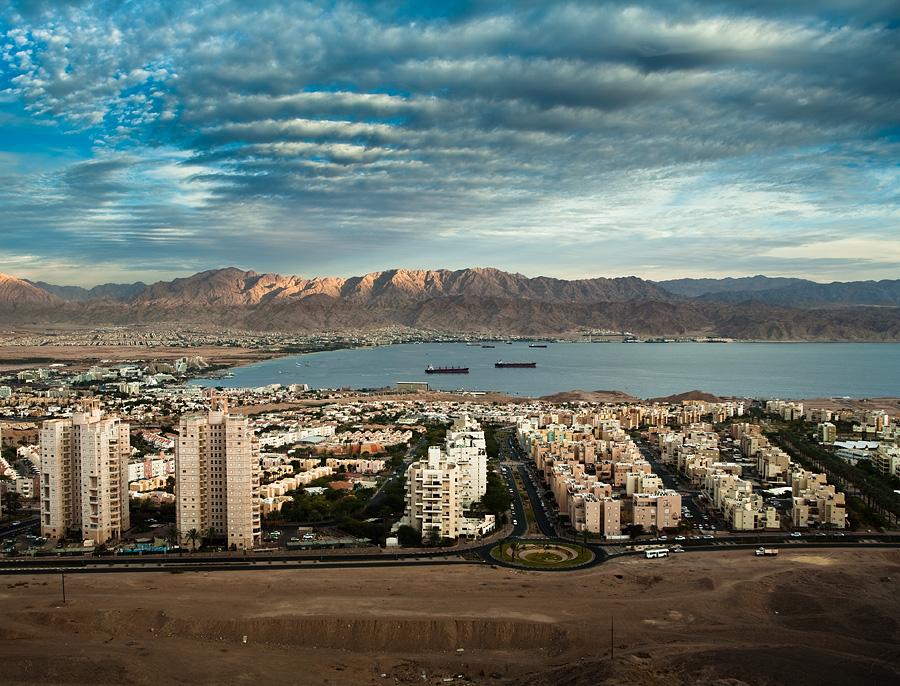
Eilat from mountain

DEBKAfileMarch 12, 2015, 5:55 PM (IDT)

The commander of the IDF’s 80th Division, Col. Arik Hen, announced Thursday that the army is deployed ready to fend off a large-scale coordinated attack on Israel’s southernmost town of Eilat, which the Islamic State is believed to be planning with speedboats and aquatic motor bikes combined with an overland incursion and rocket bombardment from Egyptian Sinai. Israeli troops are also ranged on Route 12 north of Eilat and the civilian locales along the highway in case they too come under jihadi attack.

Col. Hen reported that hundreds of ISIS terrorists have gathered in Sinai, but there is not enough intelligence to keep track of all their plans and movements. DEBKAfile adds: The IDF has released this nformation as a warning because the Islamist terrorists may intend to strike during the eight-day Feast of Passover, when Eilat and southern Israel teem annually with holidaymakers and trippers.

Exclusive: Major nations hold talks on ending U.N. sanctions on Iran

March 13, 2015

Exclusive: Major nations hold talks on ending U.N. sanctions on Iran
By Louis Charbonneau UNITED NATIONS Thu Mar 12, 2015 6:28pm EDT Via Reuters


(“Hanging Israel out to dry.” – LS)

(Reuters) – Major world powers have begun talks about a United Nations Security Council resolution to lift U.N. sanctions on Iran if a nuclear agreement is struck with Tehran, a step that could make it harder for the U.S. Congress to undo a deal, Western officials said.

The talks between Britain, China, France, Russia and the United States — the five permanent members of the Security Council — plus Germany and Iran, are taking place ahead of difficult negotiations that resume next week over constricting Iran’s nuclear ability.

Some eight U.N. resolutions – four of them imposing sanctions – ban Iran from uranium enrichment and other sensitive atomic work and bar it from buying and selling atomic technology and anything linked to ballistic missiles. There is also a U.N. arms embargo.

Iran sees their removal as crucial as U.N. measures are a legal basis for more stringent U.S. and European Union measures to be enforced. The U.S. and EU often cite violations of the U.N. ban on enrichment and other sensitive nuclear work as justification for imposing additional penalties on Iran.

U.S. Secretary of State John Kerry told Congress on Wednesday that an Iran nuclear deal would not be legally binding, meaning future U.S. presidents could decide not to implement it. That point was emphasized in an open letter by 47 Republican senators sent on Monday to Iran’s leaders asserting any deal could be discarded once President Barack Obama leaves office in January 2017.

But a Security Council resolution on a nuclear deal with Iran could be legally binding, say Western diplomatic officials. That could complicate and possibly undercut future attempts by Republicans in Washington to unravel an agreement.

Iran and the six powers are aiming to complete the framework of a nuclear deal by the end of March, and achieve a full agreement by June 30, to curb Iran’s most sensitive nuclear activities for at least 10 years in exchange for a gradual end to all sanctions on the Islamic Republic.

So far, those talks have focused on separate U.S. and European Union sanctions on Iran’s energy and financial sectors, which Tehran desperately wants removed. The sanctions question is a sticking point in the talks that resume next week in Lausanne, Switzerland, between Iran and the six powers.

But Western officials involved in the negotiations said they are also discussing elements to include in a draft resolution for the 15-nation Security Council to begin easing U.N. nuclear-related sanctions that have been in place since December 2006.

“If there’s a nuclear deal, and that’s still a big ‘if’, we’ll want to move quickly on the U.N. sanctions issue,” an official said, requesting anonymity.

The negotiations are taking place at senior foreign ministry level at the six powers and Iran, and not at the United Nations in New York.

U.S. OFFICIAL CONFIRMS DISCUSSIONS

A senior U.S. administration official confirmed that the discussions were underway.

The official said that the Security Council had mandated the negotiations over the U.N. sanctions and therefore has to be involved. The core role in negotiations with Iran that was being played by the five permanent members meant that any understanding over U.N. sanctions would likely get endorsed by the full council, the official added.

Iran rejects Western allegations it is seeking a nuclear weapons capability.

Officials said a U.N. resolution could help protect any nuclear deal against attempts by Republicans in U.S. Congress to sabotage it. Since violation of U.N. demands that Iran halt enrichment provide a legal basis for sanctioning Tehran, a new resolution could make new sanction moves difficult.

“There is an interesting question about whether, if the Security Council endorses the deal, that stops Congress undermining the deal,” a Western diplomat said.

Other Western officials said Republicans might be deterred from undermining any deal if the Security Council unanimously endorses it and demonstrates that the world is united in favor of a diplomatic solution to the 12-year nuclear standoff.

Concerns that Republican-controlled Congress might try to derail a nuclear agreement have been fueled by the letter to Iran’s leaders and a Republican invitation to Israeli Prime Minister Benjamin Netanyahu to address Congress in a March 3 speech that railed against a nuclear deal with Iran.

The officials emphasized that ending all sanctions would be contingent on compliance with the terms of any deal. They added that the International Atomic Energy Agency, the Vienna-based nuclear watchdog, will play a key role in verifying Iran’s compliance with any agreement.

Among questions facing negotiators as they seek to prepare a resolution for the Security Council is the timing and speed of lifting U.N. nuclear sanctions, including whether to present it in March if a political framework agreement is signed next week or to delay until a final deal is reached by the end-June target.