Archive for January 2015

Argentine Prosecutor Death in Iran Terror Case Gets Curiouser

January 23, 2015

Argentine Prosecutor Death in Iran Terror Case Gets Curiouser, Legal Insurrection, January 23, 2015

He documented enough of his charges that Interpol issued “red notices” for seven high-ranking Iranian officials, including Ali Akbar Rafsanjani and Ali Velayati, who were Iran’s president and foreign minister respectively at the time of the AMIA bombing. (Interpol does not have the power to arrest, so a “red notice” is as close as it comes to issuing an arrest warrant) Rafsanjani, despite being implicated in an act of terrorism in another nation is often referred to as a “moderate” nowadays. He is also considered to be a mentor to Iran’s current president, also often referred to as a “moderate,” Hassan Rouhani.

Alberto Nisman’s work exposed the danger that Iran poses to world security. Iran continues to violate international law with impunity and unfortunately there are too few Nisman’s daring to challenge Iran’s brazen misbehavior. His death will make the task of reining in Iran’s ambitions that much more difficult.

****************

2015-01-23_074410_Nisman-620x426

Sunday night Argentinian prosecutor Alberto Nisman was found shot to death in his apartment. Nisman had been scheduled the following day to present his criminal complaint against Argentinian President  Cristina Fernández de Kirchner before a closed session of Argentina’s congress.

The initial claim (one made by Kirchner herself on her Facebook page) that Nisman committed suicide hardly seemed credible at the time. How many people would kill themselves before the high point of their careers? Nisman had spent ten years investigating the 1994 AMIA Jewish center bombing in Buenos Aires and now he was about to charge the president and other officials of his country with conspiring to cover up the Iranian involvement in that attack. (Now Kirchner says he was killed but “suggests that Nisman was murdered on the instructions of his foreign masters in order to create a scandal damaging to her and to her government.”)

Subsequent revelations during the week have made the claim of suicide even less credible now. At Business Insider, Armin Rosen recounted some of those revelations.

The lack of an exit wound suggested the fatal shot was fired at a further distance than Nisman could have managed had the wound been self-inflicted. His last WhatsApp was a photo of stacks of documentation related to the next day’s testimony and Nisman had apparently given his maid a grocery list for the following week. A 10-person government security detail was reportedly pulled off of his apartment the night of his assassination. Most damningly, there was no gunpowder residue found on Nisman’s hands, physical evidence that he didn’t discharge a firearm prior to his death.

Fausta has more, including some gleaned from the Spanish press. Notably despite earlier claims that Nisman’s apartment was locked from the inside, there are reports that there were two other ways into his apartment that were not locked. Fausta is also right that Nisman’s murder is all about Iran. (Rosen also wrote, “no matter who’s responsible for Nisman’s death, the Iranian regime benefits.”)

Nisman’s work on the AMIA case was invaluable in documenting Iran’s efforts to build a terror infrastructure in South America. Matt Levitt, an expert on Hezbollah, who recently published a book about the Iran-backed terror organization, wrote this week, “As I was writing my book, trying to navigate the convoluted details of the AMIA bombing and other Hezbollah plots, Nisman was an invaluable resource.”

Nisman’s work wasn’t just academic though. He documented enough of his charges that Interpol issued “red notices” for seven high-ranking Iranian officials, including Ali Akbar Rafsanjani and Ali Velayati, who were Iran’s president and foreign minister respectively at the time of the AMIA bombing. (Interpol does not have the power to arrest, so a “red notice” is as close as it comes to issuing an arrest warrant) Rafsanjani, despite being implicated in an act of terrorism in another nation is often referred to as a “moderate” nowadays. He is also considered to be a mentor to Iran’s current president, also often referred to as a “moderate,” Hassan Rouhani.

The AMIA bombing was not the only time Iran’s leadership was implicated in an attack on foreign soil. In addition to Rafsanjani and Velayati, a red notice was issued for Ali Fallahian for the AMIA bombing. Rafsanjani, Velayati and Fallahian were all implicated in another terror attack on foreign soil.

A German prosecutor “without naming them … implicated Supreme Leader Ayatollah Khamenei, President Akbar Hashemi Rafsanjani, Foreign Minister Ali Akbar Velayati and Intelligence Minister Ali Fallahian” in the 1992 massacre at the Mykonos restaurant in Berlin.

Iran’s revolutionary government is lawless. The Iranian actors in these foreign terror attackes weren’t rogue operators but members of the country’s political elite. It’s something to keep in mind when the Obama administration insists that it will make a nuclear agreement with Iran that will make everyone safer and more secure.

Even assuming the P5+1 nations can come to an agreement with Iran (an agreement is hardly a foregone conclusion, Iran would probably be very happy with a series of temporary agreements that free up billions and don’t force it to dismantle any element of their nuclear program), what grounds are there to trust Iran to keep its commitments?

Remember that the crisis with Iran over its nuclear program stems from Iran’s violations of the Nuclear Non-Proliferation Treaty that it signed. Six UN Security Council resolutions – three of them unanimous – were passed imposing sanctions on Iran for its violations. Iran isn’t looking to come into compliance but to be granted absolution for its violations.

Alberto Nisman’s work exposed the danger that Iran poses to world security. Iran continues to violate international law with impunity and unfortunately there are too few Nisman’s daring to challenge Iran’s brazen misbehavior. His death will make the task of reining in Iran’s ambitions that much more difficult.

The Muslim Brotherhood Inquiry: What’s Happening?

January 23, 2015

The Muslim Brotherhood Inquiry: What’s Happening? The Gatestone InstituteSamuel Westrop, January 23, 2015

There are several reasons the British government may be publishing only the “principal findings” of the report. First, some of the information gathered will have been done so by the intelligence services, so there are assets and agreements to protect. Another is the possibility that by revealing the scope of the Muslim Brotherhood network in full, the government would be revealing its own partnerships with Brotherhood organizations, and providing insights into the vast amount of public funds that has filled the coffers of Brotherhood charities.

The British government will publish only the “principal findings” of an inquiry commissioned by the British government into the activities of the Muslim Brotherhood in Britain, according to a report in the Financial Times.

Although the former head of the MI6, Sir Richard Dearlove, has described the Brotherhood as being, “at heart, a terrorist organization,” Brotherhood organizations in the UK have, nevertheless, long enjoyed the support of government ministers and taxpayers’ money.

Previous media statements have indicated that the report written for the inquiry, first commissioned in April 2014, has since sparked a great deal of argument between government ministers and officials and has led to a lengthy delay.

The biggest point of contention has reportedly focused on concerns over the expected reaction of Saudi Arabia and the United Arab Emirates — both of which have recently designated the Muslim Brotherhood and some of its front groups as terrorist organizations – if the inquiry’s report is perceived to be a whitewash.

London, it seems, has long been an important hub for the Muslim Brotherhood. Over the past 50 years, Brotherhood members have established dozens of Muslim Brotherhood front organizations, including lobby groups, charities, think tanks, television channels and interfaith groups.

The secretary-general of the International Organization of the Muslim Brotherhood, for example, Ibrahim Munir, is a resident of London. In 2013, the Egyptian newspaper Al-Masry al-Youm reported that Munir was providing funds to the Egyptian Brotherhood through British Brotherhood groups such as the Muslim Welfare House — but under the guise of fundraising for Palestinians in Gaza.

This government inquiry was established to examine not just the activities of the Muslim Brotherhood in Britain, but to understand better the workings of the worldwide Brotherhood network. This network is both big and nebulous. The inquiry sought to examine the network comprehensively, including the Brotherhood’s collaboration with other Islamic groups, such as Jamaat-e-Islami, a South Asian Islamist network that also has a strong presence in Britain.

Why, then, has the report been delayed?

The question that has dominated most British media reports of the inquiry’s findings has centered on the allegation of terrorism. The relationship between Western governments and the Brotherhood on this point has long appeared murky. In 2002, for instance, the United States government shut down the Holy Land Foundation, a Muslim Brotherhood fundraising group for the Hamas terrorist organization. And in 2011, FBI Director Robert Mueller told the Permanent Select Committee on Intelligence of the House of Representatives: “I can say at the outset that elements of the Muslim Brotherhood both here and overseas have supported terrorism.”

At the same time, however, both the Bush and Obama administrations also sought to woo the Muslim Brotherhood. One anonymous Palestinian official, quoted in Asharq Al-Awsat, claimed: “The Americans mistakenly think that moderate political Islam, represented by Muslim Brotherhood, would be able to combat radical Islam.”

The inconsistency seems to have revolved around the Muslim Brotherhood’s connection to Hamas. Although Hamas’s 1988 covenant asserts that, “The Islamic Resistance Movement is one of the wings of Muslim Brotherhood in Palestine,” Western governments have nevertheless treated Hamas and the Brotherhood as unconnected entities — despite a wealth of evidence to the contrary.

In the United Kingdom, Muslim Brotherhood and Hamas networks appear to overlap heavily. In 2005, for instance, the British government handed over the running of London’s Finsbury Park mosque to the Muslim Association of Britain [MAB]. The Muslim Association of Britain was founded by Muslim Brotherhood activists including Kemal Helbawi, who described the Israel-Palestinian conflict as “an absolute clash of civilisations; a satanic programme led by the Jews and those who support them, and a divine programme carried [out] by Hamas … and the Islamic peoples in general.”

One of the trustees appointed to run the Finsbury Park mosque was Muhammad Sawalha, a fugitive Hamas commander who, according to BBC reports, is “said to have masterminded much of Hamas’s political and military strategy” from London. Yet the police and local government continue to fund the mosque with tens of thousands of pounds of taxpayers’ money.

898Muhammad Sawalha, a fugitive Hamas commander who is “said to have masterminded much of Hamas’s political and military strategy” from London, is a trustee of the Finsbury Park mosque, which receives tens of thousands of pounds of taxpayers’ money. (Image source: inminds YouTube video screenshot)

By ignoring both the operational and ideological relations between the Brotherhood and Hamas, Western governments have been able to claim a dedication to opposing terrorism while at the same time courting Islamist allies, ostensibly to help fight the jihadist threat. By 2009, for instance, the British government provided the Muslim Welfare House, mentioned earlier, with £48,000 of “counter-extremism” funds. To this day, leading Islamist charities, established by Brotherhood figures, continue to receive millions of pounds of taxpayers’ money.

The Muslim Brotherhood, without Hamas, has worked hard to present itself as a benign organization. It is the government’s apparent failure to demonstrate adequate evidence of connections to terrorism, some critics argue, that has led to the delay in publishing the inquiry’s report. The prominent newspaper journalist, Peter Oborne, has claimed that the report “had discovered no grounds for proscribing the Muslim Brotherhood as a terrorist group… Publication of the report as originally written would infuriate the Prime Minister’s Saudi allies — and not just them. The United Arab Emirates have long been agitating for the defenestration of the Brothers…. The reason [for the delay] is simple: money, trade, oil, in a number of cases personal greed.”

Peter Oborne, a supporter of the Muslim Brotherhood, was, in fact, echoing the line taken by the Brotherhood itself. British Brotherhood operatives, such as Anas Al-Tikriti, recently placed an advertisement in the Guardian newspaper that claimed, “this review is the result of pressure placed on the British government by undemocratic regimes abroad, such as Saudi Arabia and the United Arab Emirates.” The letter was signed by a number of senior Brotherhood activists, MPs, Peers and journalists — including Peter Oborne.

The “Saudi pressure” argument serves a useful purpose. There is not a lot that can undermine a government inquiry so much as an accusation of political leverage and foreign financial influence. Both Saudi Arabia and the UAE regard the Muslim Brotherhood as a threat, and would like to see it suppressed. But neither the Saudis nor the Emiratis are naïve: both have worked to influence the British government for decades and both know how Westminster works. Hence, both know that it is extremely unlikely that the British government would ban the Muslim Brotherhood.

All that said, it is still possible to ignore Hamas and nevertheless link the Brotherhood to violence. In September 2010, the Supreme Guide of the Muslim Brotherhood, Mohamed Badie, advocated violent jihad against the United States, and declared that, “the improvement and change that the [Muslim] nation seeks can only be attained through jihad and sacrifice and by raising a jihadi generation that pursues death just as the enemies pursue life… The U.S. is now experiencing the beginning of its end, and is heading towards its demise.” In 2013, Muslim Brotherhood members and supporters in Egypt attacked 70 Coptic Christian churches, and more than 1000 homes and businesses of Coptic Christian families were torched.

Banning the Brotherhood, however, is difficult for another reason. Security analyst Lorenzo Vidino writes:

“Muslim Brotherhood-linked groups in each country work according to a common vision — but in complete operational independence, making the Brotherhood an informal global movement. It’s what makes designating the whole movement a terrorist organisation virtually impossible in the UK, as authorities knew from the very beginning. But the lack of a ban does not equal an exoneration or an endorsement — hardly the general tone of the review.”

If the delay in the report’s release has been the product of political wrangling at all, the debate within Westminster is most likely over the influence of the Brotherhood upon extremism and radicalization, and with which groups the government should continue to work.

There is already some indication that changes are taking place. On December 18, 2014, the government announced publicly that two Brotherhood-linked Islamic charities, Islamic Help and the Muslim Charities Forum, were to lose their government grants over links to extremism. The Department for Communities and Local Government stated that it would not fund any group “linked to individuals who fuel hatred, division and violence.” This loss of funding followed a Gatestone Institute report investigating the Muslim Charities Forum’s links to extremism, which was subsequently picked up by mainstream British media.

Also in December, Islamic Relief, after being placed on terror lists by both the governments of the UAE and Israel, published an “independent audit,” claiming there was “absolutely no evidence” to link the charity to terrorism.

The British government, which has provided over £3 million of funding to Islamic Relief since 2013, offered little comment, but did publish, at the end of December, a document revealing that the UK government would match £5 million of donations to Islamic Relief until 2016.

Herein lies the contradiction. The Muslim Charities Forum is essentially a project of Islamic Relief. The present chairman of the Muslim Charities Forum, in fact, is Hany El Banna, who founded Islamic Relief, the leading member body of the Muslim Charities Forum. Islamic Relief, as the Gatestone Institute has previously revealed, has given platforms to the same extremists as those promoted by the Muslim Charities Forum, an act that led to its loss of funding. Why would the British government discard one charity while embracing the other? Is this perhaps a sign of further sleight-of-hand to come? Rather than sanction the Brotherhood as a whole, is the government likely in future to work only with sections of the Islamist network?

We have seen such posturing before. In 2009, Britain’s Labour government cut ties with the Muslim Council of Britain after some of its officials became signatories to the Istanbul Declaration, a document that calls for attacks on British soldiers and Jewish communities. The government has continued, however, to work with and fund interfaith groups partly managed by MCB figures and Istanbul Declaration signatories.

There are several reasons the British government may be publishing only the “principal findings” of the report. First, some of the information gathered will have been done so by the intelligence services, so there are assets and agreements to protect. Another is the possibility that by revealing the scope of the Muslim Brotherhood network in full, the government would be revealing its own partnerships with Brotherhood organizations, and providing insights into the vast amount of public funds that has filled the coffers of Brotherhood charities.

In spite of the expectedly unexciting report, the global Muslim Brotherhood still seems worried. Even the most benign report could damage the legitimacy upon which the Brotherhood thrives. Although unlikely, visas for Brotherhood residents in Britain could be revoked, and the report could produce a domino effect — sparking inquiries in other European countries. Evidently, the Brotherhood attaches great importance to its political and diplomatic connections and influence.

Because of the uncertainty surrounding the report, media misinformation and Brotherhood propaganda have been spreading. Back in April 2014, the British government’s announcement of the inquiry produced a great deal of noise. The actual scope of the inquiry and the possible consequences, however, were left to the imaginations of the many commentators and conspiracy theorists.

Consequently, just as the full findings of the report are unclear, so is its significance. If certain sections of the Brotherhood are declared unsuitable, it seems that the report might provide a useful opportunity for the British government — aided by new statutory powers for the Charity Commission and proposed new counter-extremism powers — to crack down on those parts of the Muslim Brotherhood which serve to accrue financial and political support for Hamas.

Thus far, for the government, the Muslim Brotherhood inquiry has been a PR disaster. The eventual publication of the inquiry’s report could provide an opportunity for the British government to end its continued support and funding for Britain’s Muslim Brotherhood charities, and to stop treating Brotherhood operatives as representatives of Britain’s Muslim community. It would indeed be a shame if the only outcome of the inquiry were an even cozier realignment with the Muslim Brotherhood’s activities.

Islamic State Deepens Grip in Future Palestine

January 23, 2015

Islamic State Deepens Grip in Future Palestine, The Gatestone InstituteKhaled Abu Toameh, January 23, 2015

According to Israeli security forces, dozens of Hamas and Islamic Jihad members in the West Bank have defected to the Islamic State in recent months. Their main goal, according to sources, is to topple the Palestinian Authority and launch terror attacks on Israel.

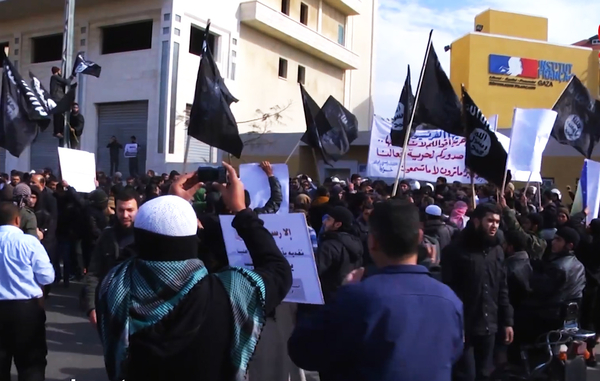
Some 200 supporters of the Islamic State, who held up Islamic State flags, took to the streets of Gaza City to protest the latest cartoons published by the French satirical magazine, Charlie Hebdo. They also chanted slogans that called for slaughtering French nationals, and burned French flags. Attempts by Hamas to impose a news blackout on the protest failed, as photos and videos found their way to social media.

The glorification of terrorists and jihadists by the Palestinian Authority, and the ongoing anti-Israel incitement by both Hamas and the Palestinian Authority, is driving many Palestinians into the open arms of the Islamic State.

Hamas and other Palestinian groups are continuing to deny the obvious, namely that the Islamic State terror group has managed to set up bases of power in the West Bank and Gaza Strip.

The Palestinians do not feel comfortable talking about the fact that Islamic State is working hard to recruit Palestinians to its ranks.

The presence of Islamic State in the West Bank and Gaza Strip is an embarrassing development for both Hamas and the Palestinian Authority.

For Hamas, the fact that Islamic State has long been operating in the Gaza Strip is something that it does not want the world to know about.

Hamas cannot afford a situation where another Islamist terror group poses a challenge to its exclusive control over the Gaza Strip. Since it seized control over the Gaza Strip in 2007, Hamas has successfully suppressed the emergence of rival forces, first and foremost the secular Fatah faction headed by Mahmoud Abbas.

But if until recently it was Fatah that posed a challenge and threat to Hamas’s rule, now it is the Islamic State and its supporters in the Gaza Strip are openly defying the Islamist movement’s regime.

When the first reports about Islamic State’s presence in the Gaza Strip emerged last year, Hamas and other Palestinians were quick to dismiss them as “false.”

Salah Bardaweel, a senior Hamas official, said in February 2014 that the Islamic State “does not exist” in the Gaza Strip.

This week, however, it became evident that Hamas was lying when it denied the presence of Islamic State in the Gaza Strip.

Some 200 supporters of the Islamic State, who held up Islamic State flags, took to the streets of Gaza City to protest the latest cartoons published by the French satirical magazine, Charlie Hebdo.

The protesters tried to storm the offices of the French Cultural Center in Gaza City. They also chanted slogans that called for slaughtering French nationals, and burned the French flag.

899Palestinians waving Islamic State flags attempt to storm the French Cultural Center in Gaza City. Some in the crowd carried posters glorifying the terrorists who carried out this month’s attacks in Paris. (Image source: ehna tv YouTube screenshot)

The protest apparently caught Hamas by surprise. Hamas security forces that were rushed to the scene dispersed the protesters and arrested seven Islamic State supporters.

Attempts by Hamas to impose a news blackout on the Islamic State protest failed, as photos and videos of the demonstration found their way to social media. Needless to say, Hamas-affiliated media outlets ignored the protest. They were hoping that the world would also not see the Islamic State demonstrators on the streets of Gaza City.

Hamas’s biggest fear is that scenes of Islamic State supporters marching in the heart of Gaza City will scare international donors and dissuade them from providing badly needed funds for the reconstruction of the Gaza Strip. Hamas is also afraid that Western officials working with the United Nations and relief agencies will stop visiting the Gaza Strip after watching the footage of Islamic State supporters.

In recent weeks, it has also become evident that Islamic State has some kind of a presence in the West Bank — a fact that poses a serious threat to Abbas’s Palestinian Authority [PA].

Just last week, Israel announced arrests of members of an Islamic State terror cell in the West Bank city of Hebron. The three Palestinian members of the cell confessed during interrogation that had planned to launch a series of terror attacks against Israel. The three suspects were identified as Waddah Shehadeh, 22, Fayyad al-Zaru, 21 and Qusai Maswaddeh, 23.

Until recently, Hamas was considered the number one threat to the Palestinian Authority in the West Bank. Now, however, it has become evident that Islamic State is also trying to set up bases of power in the West Bank. According to Israeli security sources, dozens of Hamas and Islamic Jihad members in the West Bank have defected to Islamic State in recent months. Their main goal, the sources, said, is to topple the PA and launch terror attacks on Israel.

Abbas is lucky that the Israeli security forces are still operating in the West Bank, including inside cities and towns controlled by the Palestinian Authority. Were it not for the IDF and various branches of the Israeli security establishment, Hamas, Islamic Jihad and Islamic State would have toppled the Palestinian Authority and beheaded Abbas and his officials a long time ago.

Still, Abbas does not feel comfortable acknowledging the fact that a growing number of Palestinians in the West Bank are joining Islamic State. Abbas fears is that if he admits that Islamic State is already operating in the West Bank, this could dissuade many Western countries from supporting his effort to persuade the world to support the creation of an independent Palestinian state. Like Hamas, Abbas also fears that Westerners would stop visiting Ramallah and other West Bank Palestinian cities once they learn about Islamic State’s presence in these areas.

Although Hamas and the Palestinian Authority are continuing to bury their heads in the sand and deny what is there, they cannot avoid responsibility for the emergence of Islamic State in the Gaza Strip and West Bank. The glorification of terrorists and jihadists by the PA and the ongoing anti-Israel incitement by both the PA and Hamas, are driving many Palestinians into the open arms of the Islamic State.

This is something that the UN Security Council members will have to consider the next time they are asked to vote in favor of the establishment of a Palestinian state. Otherwise, they will be voting for the creation of an Islamic, and not a Palestinian, state.

Can Saudi King Salman Remember Where the Throne Is Sitting?

January 23, 2015

Can Saudi King Salman Remember Where the Throne Is Sitting? The Jewish PressTzvi Ben-Gedalyahu, January 23, 2015

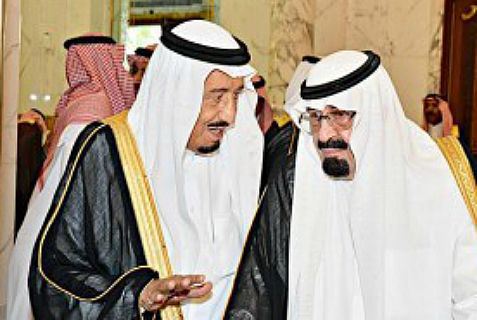
Saudi-king-abdullah-with-crown-prince-Salman-300x181Salman, now the king, speaks to the late King Abdullah.

Saudi Arabia’s new king Salam has fits of dementia, which means that although he is very popular and known for doing wonders for Riyadh, he might not be sitting on the throne for very long.

“He can perform quite well for a few minutes, but then he gets muddled and goes off message,” according to Simon Henderson, an authority on Saudi Arabia at the Washington Institute for Near East Policy, quoted by The Washington Post

King Salam is a half-brother to King Abdullah, who died late Thursday night. Salam ruled Riyadh for 48 years and is credited for making peace in the royal family and for turning the capital into a modern metropolis.

There are more secrets locked up in the royal palace than there is factual information, but all sources agree that King Salam suffers from dementia.

Considering that Saudi Arabia is the heavyweight in the Sunni Muslim world and in oil markets, that could be a big problem when it comes to determining the price of oil and the strategies to defeat the Islamic State and block Iran from obtaining a nuclear weapon on its way to turning the entire Middle East into a fanatic Shia Islamic Caliphate.

If he can’t remember what the price of oil was yesterday, or which victim the ISIS beheaded today, there is bound to be a frenzy of back-palace politicking over who will take charge.

If the new king can remember that he has dementia, he might remove himself and clear the way for a new king from a younger generation of princes.

IDF identifies suspicious movement on Lebanese border

January 23, 2015

IDF identifies suspicious movement on Lebanese border
By YAAKOV LAPPIN 01/21/2015 Via The Jerusalem Post

ShowImage


(Having watched my 95 year old mother-in-law peacefully pass away in my home last night I’m reminded just how precious life is. It is this reverence for life that must prevail. Our Creator wanted this for us, otherwise He wouldn’t have bothered making this reality. The sooner the hate-filled power-driven people in this world realize this, the sooner we can all get on with our lives and live in peace. – LS)

Air force on high alert, artillery, infantry and armored units boosted along northern border as IDF evaluates situation; Chief of staff cancels trip to NATO summit in Europe.

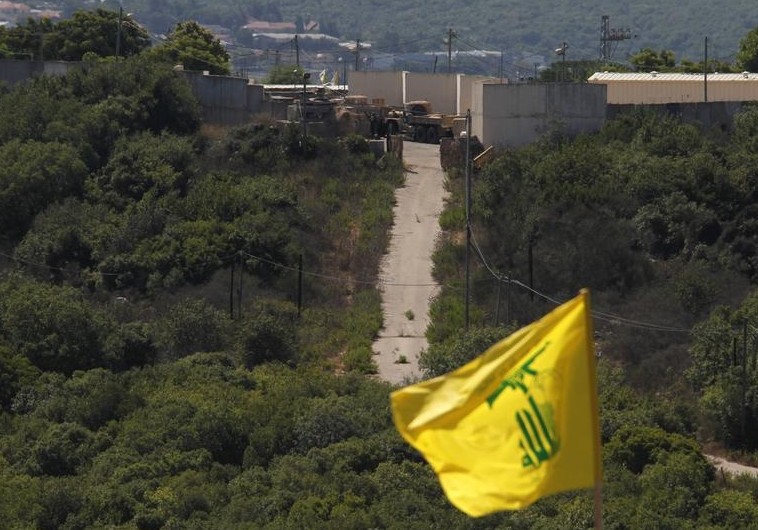
The IDF identified suspicious activity on the Lebanese side of the northern border fence on Wednesday evening, leading to road closures and local communities being put on alert.

The alert is the result of the defense establishment being ultra-sensitive since an air strike on Sunday that killed 12 Hezbollah and Iranian Revolutionary Guards Corps senior operatives near Quneitra, Syria, and Iranian vows to take revenge.

There has been no attempt by terrorists to cross the border, as far as the IDF was aware on Wednesday, and no engagement with hostile forces. The IDF operates a multitude of border sensors and field intelligence collection units across the Lebanese and Syrian borders, and these often produce security alerts that are investigated.

Meanwhile, as part of steps designed to boost readiness, the IDF has increased its presence in the North, in the form of artillery, infantry and armored units. The Israel Air Force has also gone on alert to decrease response times to incidents. Northern Command officers have held meetings with local government representatives, telling them to expect an increase in military traffic on the ground and air force traffic overhead.

IDF Chief of Staff Lt.-Gen. Benny Gantz canceled a planned trip to a NATO conference of chiefs of staffs in Europe. He also visited the IDF’s Northern Command on Tuesday and took part in the daily security evaluation meeting.

The military has in recent days deployed Iron Dome air defense batteries to the North.

Additional steps include decreasing IDF activities along the border if these are not necessary, and delaying activities that are not urgent. The IDF’s command level is analyzing the events of the recent days and coming up with plans for potential scenarios that may occur in the coming days

Halting Obama’s Iran surrender

January 23, 2015

Israel Hayom | Halting Obama’s Iran surrender.

David M. Weinberg

Nobody should expect Prime Minister Benjamin Netanyahu to back down from confronting U.S. President Barack Obama on the Iranian nuclear issue. Just the opposite: Now is the time for Israel to make its stand against the emerging American sellout to Iran.

Iran has clandestinely crossed every red line set by the West over the past 20 years — putting secret and underground nuclear plants online, building heavy water facilities, refining massive amounts of uranium, working on explosive triggers and warheads, developing long-range missiles, lying to international inspectors, and generally breaching all its obligations under the Nuclear Nonproliferation Treaty.

Yet the U.S. has dialed back its demands of Iran every year since Obama entered the White House — to the point where today Washington is talking about “detente” with Iran. Obama’s determined dash to embrace the Iranians is proceeding despite Iran’s unwillingness to end its military nuclear program; despite that country’s imperialistic, hegemonic nature; despite Iran’s complicity in the Syrian carnage and the expansion of ISIS; and despite Iran’s intensifying involvement in front-line warfare against Israel.

Consider just how far the U.S. has retreated. When Obama got started, the international community was united behind a position that Iran had no right to enrich uranium for nuclear fuel under any circumstances and that its plutonium plant at Arak must be dismantled. Candidate Obama vowed that he would work to “end” Iran’s nuclear program and “deny” Iran a nuclear weapon.

Since then, however, Obama has essentially conceded an Iranian “right” to a nuclear enrichment program and to the centrifuge infrastructure for such. He is no longer addressing Tehran’s plutonium option and its ballistic missile program. He has clearly backed away from the commitment to stop Iran from having the capability to produce nuclear weapons, and seems prepared to let Iran rest at the point where it is several turns of the screwdriver away from the assembly of an actual bomb.

In short, Obama has decided to allow Iran to remain a nuclear threshold power. He is enticing a slowdown in Iran’s nuclear effort, without dismantling the Iranian infrastructure for producing a bomb. He is getting ready to herald this as the grand foreign policy breakthrough that caps his presidency, avoids war, restructures America’s relationships in the Middle East, and saves the world.

In a surreal National Public Radio interview earlier this month, Obama incredulously spoke of Iran becoming “a very successful regional power that abides by international norms and international rules.” It’s a wonderful notion, if you live in la-la land and can miraculously ignore Iran’s extremist ideological nature and aggressive actions.

In the process, Obama has frittered away the only hard pressure tool the world had on Iran by granting Tehran overwhelming, disproportionate and almost-irreversible relief from global economic sanctions.

So it’s no surprise that leveler heads, such as Republican leaders in Congress, are stepping forward to rebuild some muscle in U.S. policy toward Iran. The Kirk-Menendez bill before Congress would judiciously impose deadline-triggered sanctions against Iran across a six-month period if no reasonable deal is reached by June 30.

It’s an intelligent plan; a plan that might coerce Iran into a diplomatic agreement that truly halts its nuclear program. Except that Obama is afraid of offending the Iranians, and is vociferously opposed to the sanctions. He thinks that coddling, not coercing, the Iranians, will lead to a better deal. So much so that Obama has threatened to veto the sanctions legislation, and has resorted to anti-Semitic tropes in attacking Congress for advancing it.

At a closed-door meeting of Senate Democrats in Baltimore last week, in front of ‎Senator Robert Menendez, Obama charged ‎that those congressmen favoring such the sanctions bill were doing so only to please “donors.” ‎Everybody understood this to mean Jewish and pro-Israel donors. Menendez valiantly stood up and said he took “personal ‎offense,” since he, too — not just the imperious Obama — has America’s strategic interests as his uppermost concern.

But Obama didn’t back away from the incendiary, insidious import of his statement — that Jewish money and the pro-Israel lobby are playing a distorting and disloyal role in the Iran policy debate. It makes me shudder to think that the ugly Mearsheimer-Walt mindset may have embedded itself in Obama’s brain.

Enter Netanyahu. He believes with every bone in his body that the contours of Obama’s emerging deal with Iran are dangerous for the world and existentially disastrous for Israel. Halting Iran’s nuclearization and hegemonic advances — and protecting Israel from Obama’s ruinous Middle East policies relating to Iran, the Palestinians and the Arab upheavals — has been the raison d’etre of Netanyahu’s six-year-long tenure as prime minister.

Netanyahu is right to demand nothing less than a complete dismantlement of the Iranian nuclear program, including an end to all uranium enrichment; removal of all stockpiles of enriched uranium; dismantlement of the infrastructure for a nuclear breakout capability, including the underground facility near Qom and the advanced centrifuges in Natanz; and a halt to the construction of the heavy water reactor in Arak aimed at the production of plutonium.

Any deal that scales back sanctions and allows Iran to keep operating its advanced nuclear development facilities even at a low level is a deadly bargain.

Netanyahu is furthermore correct to demand that Washington insist on limits to Iran’s ballistic missile program, and the scaling back of Iran’s terror-warfare against Israel such as the arming of Hezbollah and Hamas. (Just what was an Iranian general doing with Hezbollah on the Syrian Golan this week?!)

Washington should not be glossing over these issues when discussing “detente” with Iran. Yet alarmingly, that seems to be exactly what Obama is doing.

Some pundits have suggested that Netanyahu’s determination to make Israel’s voice heard in the U.S. debate over sanctions and the coming deal with Iran does a disservice to Israel, because in doing so, Netanyahu cynically scans as a Republican tool to the 80 percent of American Jews who identify as Democrats or progressives. And that this will lead to further American Jewish “distancing” from Israel.

Well, ain’t that too bad. There may be an Israel-Diaspora cost here, but Netanyahu’s assessment of the Iranian danger and of Obama’s errors are well-founded. He is perfectly within his rights and mandate — indeed, it is his obligation — to put Israel’s security ahead of other considerations, including the important feelings of U.S. Jews.

Other pundits have pointed to a “Mossad assessment” that also opposes the proposed new sanctions on Iran. Except that the supposed “Mossad assessment” floated to fore via an unconfirmed foreign media report, from one source, and was probably planted by the Obama administration. And the Mossad director has denied the report.

But even if true, so what? It’s no surprise that there are different assessments in the Israeli policy and intelligence community as to Iran, as to the negotiation, as to sanctions, and so on. If Mossad came down on one side of this issue, it’s very possible that IDF military intelligence came down on a different side. But readers of this paper wouldn’t know that, because the forces opposed to Netanyahu had an interest in leaking only one view.

The Israeli public and Diaspora Jews should thank Netanyahu for standing clear and strong on the Iranian issue all these years, and applaud him for the initiative to speak forthrightly on these issues in Congress next month. It’s called leadership.

The end justifies the means

January 23, 2015

Israel Hayom | The end justifies the means.

Matti Tuchfeld

Iran’s long, greedy fingers have reached nearly everywhere: Iranian operatives have taken over the presidential palace in Yemen; a Revolutionary Guard general was killed near the Israel-Syria border, and deep in the Iranian mountains, Tehran is building a secret launching facility housing ballistic missiles that carry unconventional warheads — and these revelations only date back a few days.

Iran has been inserting itself into every possible Islam-related conflict and terrorism theater worldwide, be it as an active participant, a sponsor, a weapons supplier, or an instructor; all while adamantly pursuing the developments of weapons of mass destruction, long-range missiles, and nuclear weapons. Still, is it no secret that U.S. President Barack Obama has long ago reached the conclusion that Iran, as a nuclear-threshold state, poses no threat to U.S. interests.

The American president’s detractors would say this conclusion stems from weak foreign policy, meant to prevent a conflict between Washington and Tehran at all costs, while his supporters would say that this conclusion is the product of careful and informed foreign policy, as while Iran might pose a threat to many nations, the U.S. is not one them, and therefore it should not be dragged into unnecessary wars.

Whatever Obama’s motives may be, Israel cannot toe this line. With all due respect to the shared interests Israel and the U.S. have, their interests seem to collide in this specific case. It is unfortunate that the Obama administration refuses to back Israel completely in this case, but that is simply the reality. If Iran decides to make good on its threats and launch long-range ballistic missiles at anyone, chances are its target would be Tel Aviv, not New York.

Nitpicking over protocol — on whether or not Prime Minister Benjamin Netanyahu’s invitation to address Congress on the Iranian threat was coordinated with the White House, whether Obama had taken offense, and whether his decision not to meet with Netanyahu was meant to teach the Israeli prime minister a lesson or truly was in line with administration protocols saying such meetings are not held during election time in a visiting leader’s country — shifts the focus to insignificant details.

When the rare opportunity to convince Congress — not only to support new sanctions on Iran despite Obama’s objections, but to pass them with a two-thirds majority that would prevent a presidential veto — presents itself, Netanyahu, as Israel’s leader, is obligated to seize it.

It is hard to expect the leaders of the Left to rise above election considerations and congratulate Netanyahu on this achievement, but their hysteria in confounding. After all, they are the ones who argue that Netanyahu is a diplomatic failure and that his policies have resulted in Israel’s international isolation. In other words, since he is bound to fail in Washington, what are they so worried about?

Fury in Israel Over Obama’s Mossad ‘Lies’

January 23, 2015

Fury in Israel Over Obama’s Mossad ‘Lies’ – Global Agenda – News – Arutz Sheva.

Senior Israeli says ‘friends don’t act like this’ after Mossad Head denies US claim that he opposed Iran sanctions in talk with senators.

By Gil Ronen

 First Publish: 1/22/2015, 9:20 PM

Barack Obama, Binyamin Netanyahu

Barack Obama, Binyamin Netanyahu

A senior Israeli official delivered an uncommonly harsh attack on US President Barack Obama’s administration Thursday evening, following the American report that alleged that Mossad Head Tamir Pardo had warned US senators against further Iran sanctions, in contradiction of Israel’s official stance.

“The fraudulent claims against the Mossad Head were raised by the Americans yesterday, despite a message that had been transmitted to them on Tuesday by Intelligence Minister [Yuval] Steintz,” the senior Israeli source told Channel 2 news.

He added that Israel had gone over the minutes of the meeting between Pardo and the delegation of senators, and that Pardo had not said what was attributed to him.

“Leaking the Mossad Head’s statements, even if they had not been falsified, is a serious breach of all the rules,” the senior source added. “Friends do not behave like this. Information from a secret meeting must not leak out.”

Pardo denied on Thursday the report – which was carried by Bloomberg news – claiming that the Mossad disagrees with Prime Minister Binyamin Netanyahu about the need to press new sanctions on Iran.

The report said that Mossad officials advised US senators who were visiting Israel recently to hold off on further Iran sanctions, saying that they would hamper, not help, efforts to persuade Iran to give up or allow full international supervision of its nuclear program.

“The Head of Mossad did not say that he opposes additional sanctions on Iran,” said the spy agency Thursday.

“Mossad Head Tamir Pardo met on January 19, 2015, with a delegation of US senators,” Mossad said in a statement. “The meeting was held at the request of the senators and with the prime minister’s approval. At the meeting, the Head of Mossad stressed the extraordinary effectiveness of the sanctions that have been placed on Iran for several years in bringing Iran to the negotiating table.”

“The Head of Mossad noted that in negotiating with Iran, a policy of ‘carrots and sticks’ must be adopted, and there are not enough ‘sticks’ nowadays,” it added.

Furthermore, said the agency, he “said specifically that the agreement that is being formed with Iran is bad and could lead to a regional arms race.”

Sources in Jerusalem told Army Radio Thursday that the story reported in Bloomberg about disagreement between Netanyahu and the Mossad regarding sanctions on Iran is US President Barack Obama administration’s “revenge” for Netanyahu’s invitation to address Congress.

The invitation was extended by Congress without consulting Obama.

Iran’s emerging empire – The Washington Post

January 23, 2015

Iran’s emerging empire – The Washington Post.


A Shiite Huthi militiaman sits near a tank confiscated from the army in the area around the presidential palace in the capital Sanaa, on January 22, 2015. (Mohammed Huwais/AFP/Getty Images)

Opinion writer January 22 at 7:12 PM

While Iran’s march toward a nuclear bomb has provoked a major clash between the White House and Congress, Iran’s march toward conventional domination of the Arab world has been largely overlooked. In Washington, that is. The Arabs have noticed. And the pro-American ones, the Gulf Arabs in particular, are deeply worried.

This week, Iranian-backed Houthi rebels seized control of the Yemeni government, heretofore pro-American. In September, they overran Sanaa, the capital. On Tuesday, they seized the presidential palace. On Thursday, they forced the president to resign.

Charles Krauthammer writes a weekly political column that runs on Fridays. The Houthis have local religious grievances, being Shiites in a majority Sunni land. But they are also agents of Shiite Iran, which arms, trains and advises them. Their slogan — “God is great. Death to America. Death to Israel” — could have been written in Persian.

Why should we care about the coup? First, because we depend on Yemen’s government to support our drone war against another local menace, al-Qaeda in the Arabian Peninsula (AQAP). It’s not clear if we can even maintain our embassy in Yemen, let alone conduct operations against AQAP. And second, because growing Iranian hegemony is a mortal threat to our allies and interests in the entire Middle East.

In Syria, Iran’s power is similarly rising. The mullahs rescued the reeling regime of Bashar al-Assad by sending in weapons, money and Iranian revolutionary guards, as well as by ordering their Lebanese proxy, Hezbollah, to join the fight. They succeeded. The moderate rebels are in disarray, even as Assad lives in de facto coexistence with the Islamic State, which controls a large part of his country.

Iran’s domination of Syria was further illustrated by a strange occurrence last Sunday in the Golan Heights. An Israeli helicopter attacked a convoy on the Syrian side of the armistice line. Those killed were not Syrian, however, but five Hezbollah fighters from Lebanon and several Iranian officials, including a brigadier general.

What were they doing in the Syrian Golan Heights? Giving “crucial advice,” announced the Iranian government. On what? Well, three days earlier, Hezbollah’s leader had threatened an attack on Israel’s Galilee. Tehran appears to be using its control of Syria and Hezbollah to create its very own front against Israel.

The Israelis can defeat any conventional attack. Not so the very rich, very weak Gulf Arabs. To the north and west, they see Iran creating a satellite “Shiite Crescent” stretching to the Mediterranean and consisting of Iraq, Syria and Lebanon. To their south and west, they see Iran gaining proxy control of Yemen. And they are caught in the pincer.

The Saudis are fighting back the only way they can — with massive production of oil at a time of oversupply and collapsing prices, placing enormous economic pressure on Iran. It needs $136 oil to maintain its budget. The price today is below $50.

Yet the Obama administration appears to be ready to acquiesce to the new reality of Iranian domination of Syria. It has told the New York Times that it is essentially abandoning its proclaimed goal of removing Assad.

For the Saudis and the other Gulf Arabs, this is a nightmare. They’re engaged in a titanic regional struggle with Iran. And they are losing — losing Yemen, losing Lebanon, losing Syria and watching post-U.S.-withdrawal Iraq come under increasing Iranian domination.

The nightmare would be hugely compounded by Iran going nuclear. The Saudis were already stupefied that Washington conducted secret negotiations with Tehran behind their backs. And they can see where the current talks are headed — legitimizing Iran as a threshold nuclear state.

Which makes all the more incomprehensible President Obama’s fierce opposition to Congress’ offer to strengthen the American negotiating hand by passing sanctions to be triggered if Iran fails to agree to give up its nuclear program. After all, that was the understanding Obama gave Congress when he began these last-ditch negotiations in the first place.

Why are you parroting Tehran’s talking points, Mr. President? asks Democratic Sen. Bob Menendez. Indeed, why are we endorsing Iran’s claim that sanctions relief is the new norm? Obama assured the nation that sanctions relief was but a temporary concession to give last-minute, time-limited negotiations a chance.

Twice the deadline has come. Twice no new sanctions, just unconditional negotiating extensions.

Our regional allies — Saudi Arabia, the other five Gulf states, Jordan, Egypt and Israel — are deeply worried. Tehran is visibly on the march on the ground and openly on the march to nuclear status. And their one great ally, their strategic anchor for two generations, is acquiescing to both.

Ya’alon warns Lebanon, Syria not to allow attacks on Israel

January 23, 2015

Ya’alon warns Lebanon, Syria not to allow attacks on Israel – Israel News, Ynetnews.

‘Israel will see the governments, regimes and organisations beyond its northern border as responsible for what emanates from their territory,’ Defence Minister Moshe Ya’alon said amid rising tensions.

Ynet, AP

Published: 01.23.15, 11:31 / Israel News

Israel warned Lebanon and Syria on Friday not to allow any attacks on Israel from their soil, hoping to avoid reprisals for an Israeli air strike in Syria that killed an Iranian general and senior Hezbollah fighters.

“Israel will see the governments, regimes and organisations beyond its northern border as responsible for what emanates from their territory,” Defence Minister Moshe Ya’alon said in a statement. “(Israel) will exact a price for any harm inflicted on Israeli sovereignty, civilians and soldiers.”

Defense Minister Moshe Ya'alon (Photo: Ariel Hermoni)
Defense Minister Moshe Ya’alon (Photo: Ariel Hermoni)

Ya’alon arrived at the IDF northern command on Friday in Safed and urged citizens and tourists to continue on with their routines.

“I call on the resident of the north and the tourists in the area to continue with their routine and to adhere to the IDF’s instructions if the need arises,” said Ya’alon.

“We must be ready and prepared for attempts to challenge us after the calls heard on the other side,” said Ya’alon.

Fears of retaliation by Lebanon’s Hezbollah or other groups have risen since Sunday’s attack, prompting Israel to move troops and equipments towards its northern borders with Lebanon and Syria.

The IDF began to send reinforcements to the north Thursday and Friday amid tensions along the border with Syria and Lebanon in wake of the deadly attack attributed to Israel by foreign media on military officials from Hezbollah and Iran in Syria.

Massive IDF movement is expected in the upcoming day within Israel’s northern communities, top IDF sources told Ynet. The forces, they said, are part of the IDF’s attempt to address growing tensions in the north, which have seen both Hezbollah and Iran vow to take revenge for the alleged Israeli attack.

A senior Iranian Revolutionary Guard commander said Israel will be punished for killing one of its generals in the airstrike in Syria that also killed six Lebanese Hezbollah fighters.

Nasser Soltani says “Israel will certainly pay for what it did.” He spoke during a ceremony Wednesday for Brig. Gen. Mohammad Ali Allahdadi, who will be buried in his hometown of Sirjan in southeastern Iran on Thursday.

Soltani is quoted by the state TV as saying Allahdadi was “martyred while performing his advisory mission” in Syria.

The Kuwaiti newspaper Al Rai reported Thursday morning that – despite an Israeli official denying the claim to Reuters – Israel was well aware of who was in the convoy and that the Iranian general was the intended target.