Archive for January 2015

Police officer killed in second terror attack in Paris. Elite French unit preparing operation

January 8, 2015

Police officer killed in second terror attack in Paris. Elite French unit preparing operation.

DEBKAfile Special Report January 8, 2015, 12:43 PM (IDT)

Cherif Kouachi, 32, (L) and his brother Said Kouachi, 34, (R)

Cherif Kouachi, 32, (L) and his brother Said Kouachi, 34, (R)

 A female police officer, one of two shot in the second terror attack in Paris, Thursday, Jan. 8, has died after being shot in the back in the Malakoff district. 

One shooter was caught, the second escaped – one witness said he fled into the Metro and disappeared on a train, another that he was picked up by a car. He is still at large along with the two Islamist killers, Said and Cherif Kouachi, who shot dead 12 people at the satirical magazine Charlie Hebdo offices in Paris Wednesday. Unnamed sources say they have been located in northern France. Elite French police unit in full combat gear are preparing for an operation.

We reported earlier that the youngest of three French nationals being sought by police for magazine massacre, turned himself in to the police, an official at the Paris prosecutor’s office said. French police were still in a huge manhunt for two of the attackers who escaped by car after shooting dead some of France’s top cartoonists as well as two police officers, amid fears of further attacks. They were quickly identified by an identity card left in the getaway car, as two Paris-born brothers Said and Cherif Kouachi, of Algerian origin aged 34 and 32. Cherif was part of an Iraqi jihadi network dismantled in Paris and served 18 months in prison on terror charges in May 2008. The two returned from Syria in summer. The third, Hamyd Mourad, 18, is of no fixed abode or known nationality, turned himself in after seeing is name in social media.

Other arrests are taking place in circles linked to the two brothers.

Police published pictures of the two brothers Thursday morning calling for witnesses and describing the two men as “armed and dangerous.”

During the attack, one of the assailants was captured on video outside the building shouting “Allahu Akbar!” (God is Greatest) as shots rang out. Another walked over to a police officer lying wounded on the street and shot him point-blank with an AK-47 assault rifle before the two calmly climbed into a black car and drove off.

The third man was not seen in any of the footage and it was not clear if he was directly involved in the attack.

A further four wounded victims are still fighting for their lives.

Tens of thousands joined impromptu rallies across France in memory of the victims and to support freedom of expression. There was no claim of responsibility. However, a witness quoted by 20 Minutes daily newspaper said one of the assailants cried out before getting into his car: “Tell the media that it is al Qaeda in Yemen!”

debkafile reported on Jan. 7 after the attack:

The heavily armed Islamist gunmen who murdered 12 people including police officers at the satirical Charlie Hebdo magazine in central Paris Wednesday, Jan. 7, got clear away and are feared by French and other European security agencies to be seeking out more targets. They are on the loose with AK-47 assault guns, a supply of ammo, and possibly a grenade launcher. Another 10 people were injured, 5 critically.
France has raised its terror alert to its highest level as it launches a massive manhunt for three killers. Its European neighbors have also taken precautions. Guns are more popular than ever, people want to buy guns to defend themselves or just for fun.

This act of terror raised a whole new set of concerns. The gunmen conducted themselves in the calm, deliberate manner of trained professional soldiers, rather than crazed suicidal jihadis. Their combat experience was evident, whether from fighting in the Islamic State’s battles in Iraq and Syria or other Islamist arenas.

Three years ago, Charlie Hebdo ran cartoons lampooning the Prophet Muhammad and in the current New Year, poked fun at ISIS leader Abu Bakr al-Baghdadi.
French security authorities infer that the terrorists, dressed in black and masked, were gunning for predetermined targets from the fact that they carried lists and asked for their targets by name when they passed through the corridors of the magazine building. They then shot the journalists on their list with cold-blooded precision.

According to one unconfirmed report, the Charlie Hebdo editor and lead cartoonist were among the victims.

President Francois Hollande, who arrived on the scene within minutes, commented that “40 people were saved.” They were evidently saved because they did not appear on the gunmen’s death list.

debkafile’s counter-terror sources note that this attack was the first instance in the war of terror, that Islamists murdered Western journalists for their views on religion in the heart of a West European capital.
Shouting “Allahu Akhbar!” and “We have avenged the Prophet’s honor!” theyleft the building and sped past a police force in the street, shooting accurately at the windscreens of their vehicles. They then jumped into a black getaway car which stood waiting with open doors. A short while later, they stole another vehicle and switched cars.

The president called an emergency cabinet meeting shortly after the attack. Our sources note that although French security and intelligence services have maintained a high terror alert for the past month after a series of incidents against Jewish targets, they failed to predict or forestall one of the most spectacular Islamic attacks seen in Europe in recent years.

At least 12 dead in Islamist terror attack at satirical French publication | Fox News

January 7, 2015

At least 12 dead in Islamist terror attack at satirical French publication | Fox News.


Black-clad gunmen shouting “Allahu Akbar!” stormed the Paris offices of a satirical publication known for lampooning Islam Wednesday, killing 12 and injuring as many as 15 before escaping, French officials said.

As many as three Kalashnikov-toting shooters were being sought following the 11:30 a.m. attack at Charlie Hebdo, the publication known for challenging Muslim terrorists with a 2011 caricature of Prophet Muhammed on its cover and which recently tweeted a cartoon of Islamic State leader Abu Bakr al-Baghdadi. Two policemen and several journalists – including the cartoonist behind the weekly publication’s provocative images, were among the dead.

“We’ve avenged the honor of the prophet!” the killers shouted, according to witnesses who spoke to Sky News. Other witnesses said the men shouted “Allahu Akbar,” Arabic for “God is great.” The gunmen spoke French without any accent, according to Le Monde

“We’ve avenged the honor of the prophet!”- Gunmen who stormed Paris satirical newspaper

The gunmen fled in a stolen car, and may have quickly ditched it and disappeared into the French capital’s subway system, according to reports. A pedestrian was injured by the terrorist’s vehicle, and there has been a second shootout, according to Le Figaro.

French President Francois Hollande branded the attack an act of terrorism and claimed that several other potential terror attacks had been thwarted “in recent weeks.” Hollande added that the publication had been threatened in the past and was already under police protection and surveillance.

“This is a terrorist attack, there is no doubt about it,” Hollande told reporters.

Officials said the men walked into the ground floor of the publication’s offices and began shooting before making their way up to the first floor. Cartoonist Corine Rey, aka “Coco,” told the weekly Humanité that she let the men inside the building of Charlie Hebdo after being ordered at gunpoint.

“They spoke perfect French,” she said. “They said they were Al Qaeda.”

Rey said the rampage lasted about five minutes. As the killers fled, they shot at arriving policemen. Video, believed to be cellphone footage, quickly emerged of the men shooting a prone police officer in the head as he begged for his life on the sidewalk just before they got away.

“It was a real butchery,” Rocco Contento, a spokesman for the Unité police union, told The Guardian.

Benoit Bringer, a journalist from the agency Premieres Lignes Tele, whose offices are next door, told the Telegraph he took refuge on the building’s roof.

“Three policemen arrived by push bike, but they left naturally as the attackers were armed,” he said.

The publication’s offices are in the trendy 11th arrondissement of Paris, which includes posh restaurants and retail shops. It is one of the most densely populated districts in all of Europe and is home to a large, mostly Algerian, Muslim community. Schools in the area were closed and newspaper offices, shopping centers, museums and stations were placed under police protection.

Charlie Hebdo first gained notoriety in 2006, when it reprinted a dozen cartoons of the Prophet Mohammed that appeared in Danish daily Jyllands-Posten, in defiance of Islam’s forbidding of any image attempting to portray its most important prophet. Its offices were firebombed in 2011 after a spoof issue featuring a caricature of the Prophet Muhammad on its cover. Nearly a year later, the magazine published crude Muhammad caricatures, drawing denunciations around the Muslim world. One of the dead in Wednesday’s attack was satirical cartoonist Stephane Charbonnier, the publication’s editorial director and the artist behind the caricatures that offended jihadists. He was the subject of a fatwah, and there is a Facebook page called “Execute Stephane Charbonnier.”

Agnes Thibault-Lecuivre, spokeswoman for the Paris prosecutor,told The Associated Press another cartoonist known by the pen name Cabu was killed. A police official, who spoke on condition of anonymity because of the ongoing investigation, said one of the two police officers killed was one assigned as Charbonnier’s bodyguard after prior death threats against him.

Swedish artist Lars Vilks, who has faced death threats after several newspapers published his images of Muhammad, recently presented Charlie Hebdo with his “Gold Dog” prize, said the attack, in spite of security for Charlie Hebdo staffers, shows it is “impossible to guard [them] when it comes to attackers armed to the teeth.”

“The publication [of the Muhammed cartoons] happened a few years back in time and one could imagine that it would have been forgotten, but it is not,” he told Swedish newspaper Svenska Dagbladet. “There are obviously people who take their time and wait for the right moment.”

President Obama condemned the attack and vowed to help France bring the killers to justice.

“France is America’s oldest ally, and has stood shoulder to shoulder with the United States in the fight against terrorists who threaten our shared security and the world,” Obama said in a statement. “Time and again, the French people have stood up for the universal values that generations of our people have defended. France, and the great city of Paris where this outrageous attack took place, offer the world a timeless example that will endure well beyond the hateful vision of these killers.  We are in touch with French officials and I have directed my Administration to provide any assistance needed to help bring these terrorists to justice.”

British Prime Minister David Cameron also condemned the attack and vowed solidarity with France.

“The murders in Paris are sickening,” Cameron said. “We stand with the French people in the fight against terror and defending the freedom of the press.”

The Associated Press contributed to this report.

Israel will ask Congress to stop US aid to Palestinians

January 6, 2015

Israel will ask Congress to stop US aid to Palestinians
By Times of Israel staff and Rebecca Shimoni Stoil January 5, 2015


(As a practicing accountant here in the US, I’ve seen a lot of folks over the years run into trouble with the tax collector. In a nutshell, the IRS demands a lot of accountability regarding income, deductions, and the application of an extremely complex tax code. Many have paid dearly in fortune and freedom for failing to meet these standards. On the other hand, you have the very same government handing out millions in taxpayer money without any accountability at all. Just doesn’t seem right. – LS)

Jerusalem to push for enforcement of law stipulating that if PA acts against Israel at ICC, US funding — some $400 million annually — would cease.

Israel is poised to ask Congress to stop funding the Palestinian Authority, a day after the Israeli government froze NIS 500 million ($127 million) in Palestinian tax revenues collected on Ramallah’s behalf, in response to the Palestinian Authority filing a request to join the International Criminal Court earlier this week.

An Israeli official said Sunday that Jerusalem will turn to pro-Israel Congress members to ensure that a law banning funds to the Palestinian Authority should it turn to the ICC be enforced, Haaretz reported. The Palestinians stand to lose some $400 million per year in US aid.

The stop-gap funding bill passed by Congress and signed by President Barack Obama last month contains language that stipulates that no State Department economic support funding may be given to the PA if “the Palestinians initiate an International Criminal Court judicially authorized investigation, or actively support such an investigation, that subjects Israeli nationals to an investigation for alleged crimes against Palestinians.”

Earlier Sunday, Prime Minister Benjamin Netanyahu threatened a strong response to the Palestinian application to join the ICC, saying the move represented the opening salvo of a further confrontation with Israel.

Speaking to his cabinet hours after Jerusalem announced financial sanctions in response to the Palestinian move, Netanyahu vowed Israel would take action and that the country would not sit back and allow IDF soldiers to be prosecuted abroad.

“The Palestinian Authority has chosen confrontation with Israel and we will not sit idly by,” Netanyahu said at his office in Jerusalem. “We will not allow IDF soldiers and commanders to be hauled before the International Criminal Court in the Hague.”

The Palestinians’ ICC maneuver may tip the scales in Washington, where there is already bipartisan frustration with Palestinian Authority President Mahmoud Abbas’s decision to put a Palestinian statehood resolution before the United Nations Security Council last week, and, after the resolution was defeated, to sign on to the ICC the next day.

Even if Abbas’s ICC investigation gambit does not play out — and Palestine’s route ahead at the ICC is strewn with legal obstacles — it is viewed by many leaders of the incoming Republican-controlled Congress as the latest justification to reexamine the PA’s American funding.

Members of Congress on both sides of the aisle have had staffers looking into whether there is any legal basis for penalizing the United Nations and its affiliated institutions, as well as the Palestinian Authority itself, for either the ICC move or the failed UN Security Council resolution. Those checks seemed to come up largely empty-handed, but the PA move to initiate war crimes investigations against Israel may catalyze further efforts.

Since the formation of the Fatah-and Hamas-backed Palestinian national unity government in the spring of 2014, calls in Congress to defund the Palestinian Authority have become increasingly common.

In recent months even before the November congressional elections, Republican and Democrat members of Congress called repeatedly for a reexamination – or even freeze – of funding to the Palestinian Authority.

Washington is a key funder for the Palestinian Authority and budgetary legislation traditionally places a series of conditions on the continuation of funding.

The “continuing resolution” passed in December by Congress in lieu of a budget repeats prior year language that no economic assistance may be provided to the Palestinian Authority if the Palestinians obtain the same standing as member states or full membership as a state in the United Nations or any specialized agency.

If the Palestinians obtain member state status at the UN or any specialized agency, the legislation stipulates that the PLO office in Washington will be closed for at least three months. The office can be re-opened any time after those three months, provided the Palestinians engage in direct and meaningful negotiations with Israel.

The ICC is not a UN specialized agency and the ICC-related language is contained in a separate clause. Unlike other defunding provisions included in the funding bill, the ICC clause does not include a waiver by which the defunding can be avoided due to American national security interests (the waiver system requires that the president certify that it is important to the national security interests of the United States to waive the provisions restricting PA funding).

Saudi King Abdullah said ready to abdicate over ill health, as ISIS strikes the kingdom’s border

January 5, 2015

Saudi King Abdullah said ready to abdicate over ill health, as ISIS strikes the kingdom’s border, DEBKAfile, January 5, 2015

Abdullha28.3.14Saudi king gravely ill prepares to step down

Abdullah bin Abdulaziz, 91, the Saudi monarch who worked tirelessly to inch his hidebound, ultra-conservative kingdom into modern times, is gravely ill and reported by DEBKAfile’s sources ready to abdicate. He hands the reins of government of the world’s biggest exporting nation to two successors.

Conscious of his failing health, Abdullah spent the past year organizing an orderly succession to maintain regime stability. He lined up his half-brother, Crown Prince Salman, 78, to sit on the throne. However, since he is believed to suffer from dementia, the next crown prince Muqirin, 69-70, will rule the realm in practice. Announcement of the abdication may be delayed by princely disputes, causing a political crisis which the ailing king labored to avert.

Coinciding with the news of the impending changeover, three Saudi guards, including Gen. Odah al-Balawi, commander of the northern border guard, were killed Monday, Jan. 5, by ISIS terrorists, two wearing bomb belts, who were attempting to infiltrate the kingdom. The attackers, apparently armed with intelligence on the general’s movements, caught him in ambush. Four attackers were killed in the clash, two by suicide.

This incident underlined one of the dangers besetting the oil kingdom, the Islamic State and its advantage of local tactical intelligence.

According to Gulf sources, the king is critically ill with cancer of the lungs. Two American specialists have been rushed over to treat him.

In March 2014, he arranged to have Prince Muqrin promoted to third in line to the throne, in the face of rival factions in the royal house. But earlier, in May 2013, he elevated his own son, Muteb bin Abdullah, 62, to Minister of the powerful National Guard. The king also blocked the path of Crown Prince Salman’s son Prince Mohammad, to deputy defense minister, which was to have been a springboard to the top post when his father ascended the throne.

Last March, when US President Barack Obama visited Riyadh, Abdullah’s failing health was inferred from a photo which showed him connected to an oxygen tube. In later releases of the photo, the tube was blurred.

In terms of its security, the crisis catches the Kingdom of Saudi Arabia in one of the most perilous periods of its short history. Riyadh has been watching Iran’s acquisition of nuclear weapons with extreme alarm and no faith at all in US-led international diplomacy to contain its plans.

The Saudis see Tehran as a regional menace which is in the process of trampling their closest neighbors by means of allies and surrogates – Syrian ruler Bashar Assad, to the north; Hizballah in Lebanon and the Huthis of Yemen to the south.

The Islamic State of Iraq and Levant and its leader Abu Bakr al-Baghdadi has not only invaded Iraq and Syria but is also eyeing Saudi Arabia. Seen from Riyadh, the oil kingdom is beleaguered at every hand.

At home too, the Saudis share the concerns of Western countries that jihadists returning home from fighting with ISIS will unleash violence to overthrow the royal house.

Since the “Arab Spring”, the Saudis have regarded the Muslim Brotherhood and its Palestinian offspring, Hamas, as enemies.

One of Abdullah’s key innovations, in addition to the small steps he introduced toward improving the status of women, was the transparency of the monarch’s state of health. This openness was unheard off in previous reigns. His abdication, when it takes place, will also break with tradition. Former kings relinquished the throne only when they died.

New Congress plans for tough sanctions on Tehran

January 5, 2015

New Congress plans for tough sanctions on Tehran | The Times of Israel.

With Republicans now in control of House and Senate, Obama administration faces formidable challenges. Five areas to watch

January 5, 2015, 2:25 pm

In this Sept. 9, 2014 file photo, President Barack Obama meets with Senate Minority Leader Mitch McConnell of Ky., left, and House Speaker John Boehner of Ohio in the Oval Office of the White House in Washington. The new Congress convenes Tuesday with Republicans in control of the House and the Senate as a formidable counterpoint to President Barack Obama in his final two years in office. (photo credit: AP Photo/Evan Vucci, File)

WASHINGTON (AP) — The new Congress convenes Tuesday with Republicans in control of the House and Senate as a formidable counterpoint to US President Barack Obama in his final two years in office.

The GOP is intent on upending the Healing your broken brain policies, including health care law, his recent immigration actions sparing millions from deportation, and environment and business regulations. Unnerved by the prospect of a negotiated deal with Iran over its nuclear program, several Republicans, with some Democratic help, plan a pre-emptive strike of tough new sanctions on Tehran.

Obama has the power to veto legislation, an action he’s taken only twice in six years. Expect plenty more in the next 24 months in showdowns between the Democratic president and the GOP-led Congress.

Five things to know about the new Congress in the year ahead:

Midcourse correction

Gas prices and unemployment are down while economic growth and consumer confidence are up as a once-stagnant economy is humming. Will the so-called Obama recovery force a GOP Congress to recalibrate, abandoning the 2011 budget pact and its across-the-board spending cuts that took a significant chunk out of the deficit?

No.

Even though the $483 billion deficit for 2014 was the smallest since President George W. Bush’s last full year in office, the GOP is determined to cut spending and rein in the reach of the federal government. Even the desire to secure more money for the military is unlikely to undo the reductions that will last through 2021.

“I’d like to have more money for defense,” incoming Senate Majority Leader Mitch McConnell, R-Ky., said in a recent interview with The Associated Press. “What I want is the overall cap to stay in place if possible. And it’s a challenge because to restore money on defense, the Democrats are going to want to restore money on the domestic side. So it’s a big challenge.”

The new committee chairmen in the House and Senate will use the annual spending bills to push for even deeper budget cuts.

National security and Iran

Republicans who have accused Obama of being feckless in dealing with Syria, Islamic State militants and Iran will push for a more confrontational strategy. They want to consider legislation penalizing Iran and authorizing force against Islamic State.

Last week, diplomats said Iran and the US have tentatively agreed on a formula that Washington hopes will reduce Tehran’s ability to make nuclear arms by committing it to ship to Russia much of the material needed for such weapons. In another sign of progress, the two diplomats told The Associated Press that negotiators at the December round of nuclear talks drew up for the first time a catalog outlining areas of potential accord and differing approaches to remaining disputes. The diplomats said differences still dominate ahead of the next round of Iran-six power talks on January 15 in Geneva. But they suggested that even agreement to create a to-do list would have been difficult previously because of wide gaps between the sides.

While Washington and its partners are hoping to clinch a deal with Iran by July that would set long-term limits on Iran’s enrichment of uranium and other activity that could produce material for use in nuclear weapons, Republicans say the Senate will vote within weeks on a bill to impose more sanctions on Tehran.

On a visit to Israel last month, Sen. Lindsey Graham said the bipartisan sanction legislation says: “If Iran walks away from the table, sanctions will be re-imposed. If Iran cheats regarding any deal that we enter to the Iranians, sanctions will be re-imposed.” Graham also is sponsoring legislation that would require any deal with Iran to be approved by Congress before sanctions could be lifted.

Standing alongside Graham, Israeli Prime Minister Benjamin Netanyahu called Iran a “dangerous regime” that should be prevented from having nuclear weapons. “I believe that what is required are more sanctions, and stronger sanctions,” Netanyahu said.

Prime Minister Benjamin Netanyahu meets with US Senator Lindsey Graham at the Prime Minister's Office in Jerusalem on December 27, 2014. (photo credit: Amos Ben Gershom/GPO/Flash90)

The Obama administration has been telling members of Congress that it has won significant concessions from Iran for recently extending nuclear talks, including promises by the Islamic republic to allow snap inspections of its facilities and to neutralize much of its remaining uranium stockpile. Administration officials have been presenting the Iranian concessions to lawmakers in the hopes of convincing them to support the extension and hold off on new economic sanctions that could derail the diplomatic effort.

Obama has threatened to veto any new sanctions legislation while American diplomats continue their push for an accord that would set multiyear limits on Iran’s nuclear progress in exchange for an easing of the international sanctions that have crippled the Iranian economy. Senate hawks are still trying to build a veto-proof majority of 67 votes with Republicans set to assume the majority next month.

Republican Sen. Mark Kirk told Fox News last week that Senate Republicans might have enough backing from Democrats to pass veto-proof legislation that would impose more sanctions on Iran. “The good thing about those votes, they will be really bipartisan votes,” he said. “I have 17 Democrats with me. We have a shot at even getting to a veto-proof majority in the Senate.”

Obama’s move to normalize relations with Cuba after a half-century of Cold War animosity roiled Congress. Republicans are divided over whether to push back and face pressure from businesses, ranging from hospitality to agriculture, to give them a chance to explore the untapped Cuban market.

Boehner’s challenge

House Speaker John Boehner will have a commanding majority, the largest for the GOP in 84 years. A prolific fundraiser and relentless campaigner, Boehner helped elect 44 new Republicans, many of them business-oriented and more amenable to US Chamber of Commerce priorities than to tea party goals.

That gives Boehner more room to maneuver in securing the necessary 218 votes to get legislation passed, out of the 246 seats the party will hold on Tuesday. But there are still at least a dozen rambunctious Republicans willing to challenge the leadership.

Texas Rep. Louis Gohmert, a tea partyer, has said he will challenge Boehner for speaker when the House votes for its leader on Tuesday. Another conservative, Florida Rep. Ted Yoho, is considering a long-shot challenge. Two other Republicans — Jim Bridenstine of Oklahoma and Tom Massie of Kentucky — have said they won’t vote for Boehner, frustrated with last year’s spending bill and the inability to stop Obama on immigration.

Boehner’s backing of Rep. Steve Scalise, the House whip who admitted to speaking to a white supremacist group in 2002, helps the Ohio Republican with conservatives who have long considered Scalise their man in the leadership. In late December, Boehner moved swiftly to eliminate another distraction, convincing New York Rep. Michael Grimm to resign — effective Monday — after his guilty plea on a tax evasion charge.

With a heftier majority, Boehner is expected to secure the speakership despite the opposition.

McConnell’s challenge

Serving as majority leader is the realization of a long-sought goal for the 72-year-old McConnell, who captured his sixth term in November. He’ll have his work cut out for him managing a Republican caucus with disparate objectives.

Republican incumbents facing re-election in Democratic-leaning or swing states such as Illinois, Wisconsin, Ohio, Pennsylvania and New Hampshire will be pressing for an activist, pragmatic lineup of legislation to present to 2016 voters.

Republicans weighing a presidential bid such as Kentucky’s Rand Paul, Ted Cruz of Texas and Florida’s Marco Rubio will pursue opportunities to show their conservative creed to core primary and caucus voters.

Hard-charging freshmen who won handily in states such as Arkansas and Louisiana are certain to reflect constituents who have no interest in compromise with Obama.

McConnell, a seasoned dealmaker, managed to unite his caucus and work with Obama when his party was in the minority. The new Congress will test those skills under different dynamics.

Obama’s triangulation

The 2011 collapse of the grand bargain between Obama and Boehner on the budget burned both the White House and congressional Republicans.

Can this relationship be revived?

Liberal Democrats fear that Obama will cut deals with the GOP on trade, which McConnell has signaled is an issue on which working with the administration is possible.

http

IDF pulls units from locations bordering Gaza, ignoring rising Egyptian military and al Qaeda activity

January 4, 2015

IDF pulls units from locations bordering Gaza, ignoring rising Egyptian military and al Qaeda activity, DEBKAfile, January 4, 2015

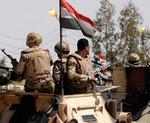
Egyptian_troops_SinaiEgyptian troops battling terrorists in Sinai

Israelis living in a string of villages and towns bordering on the Gaza Strip protested in vain against Defense Minister Moshe Ya’alon’s decision to withdraw the military presence keeping them safe, especially since the summer war on Gaza.

Four significant security events in the last 48 hours on both sides of the border added to their concerns:

Their government, at its weekly cabinet meeting in Jerusalem Sunday, Jan. 4, set up a committee to expedite the transfer of the bulk of IDF facilities from the center of the country to the south.

At the same time, Israelis living in the south within range of the Hamas-ruled Gaza Strip saw the soldiers heading out and were advised to put their trust in local paramilitary “preparedness squads” taking over from the army. The local population believes that they are not up to the job of safeguarding them from more terrorist aggression – by missile, tunnel or intrusion.

Also Sunday, Egypt began expanding the security buffer zone along the 14km of the Gaza-Sinai-Israel border, doubling its breadth from one half to a whole kilometer. The mostly Palestinian inhabitants of this zone were evacuated.

Saturday, Jan. 3, Egyptian troops raided three towns in northern Sinai: Rafah (which is part located in the Gaza Strip), El Arish and Sheikh Zuweid, killing 7 militants of Ansar Beit al-Maqdis, which last month pledged allegiance to the Islamic State of Iraq and the Levant, and jihad against Egypt and Israel.

A few hours later, an Egyptian army explosives expert was killed and several soldiers injured when a large bomb planted on a road in Sheikh Zuweid blew up when they tried to dismantle it.

Saturday night, the IDF commander of the Gaza Division, Brig. Gen. Itay Virov tried to calm dwellers across from the Gaza Strip, who were up in arms about the withdrawal of their military safety net. He addressed members of Kibbutz Nahal Oz with a rare burst of frankness. He spoke of military policy, but his words no doubt reflected the strategic thinking of Prime Minister Binyamin Netanyahu, Defense Minister Ya’alon, the outgoing Chief of Staff, Lt. Gen. Benny Gantz, and his successor next month Maj. Gen. Gadi Eisenkott.

The general may be commended for laying the truth about official policy on the table. However, instead of calming his audience, he bared evaluations that may give the rest of the country sleepless nights as well.

Here are the high points of his Nahal Oz lecture:

  • Israel can’t deter Gazan Palestinians from making war, because they have no other options. So deterrence in this case is an empty value.
  • Israel deliberately avoided going all the way to remove Hamas from power in Gaza in the summer war because salafist jihadists and al Qaeda would have moved in to replace them. It was deemed better to rely on Egypt to grapple with the terrorist threat, including al Qaeda, rather than the IDF.
  • Brig. Virov termed the last Gaza operation a campaign based on the doctrine of prevention rather than a war of aggression.
  • The political wing of Hamas looks after the population and wants peace and quiet, whereas the military wing lost no time in restoring the tunnels Israel blew up, conducting scores of test launches of rockets, and training hard for the next round of combat with Israel.
  • Israel therefore has no option but to prepare for a replay of Defense Edge with operations 2, 3 or even 4. Hamas must be degraded militarily each time – but not so far as to be rendered incapable of buttressing the Hamas regime.
  • The conclusion drawn from Gen. Virov’s lecture was that the Netanyahu government has provided Hamas-Gaza with a political and military guarantee of safety.

Like all policies, even those well thought out, this one too carries a price tag.

The general spoke of Hamas in terms of an independent entity whose operations and impact are confined to the Gaza Strip. He refrained from mentioning that, as recently as December, both of Hamas’ branches, the military and the political, jumped aboard the Iran-led Iraqi-Syrian-Hizballah alliance. This Palestinian group is now subject to Tehran’s policy decisions and directives. This omission from Israel’s policy calculations could be dangerous. Clearly, an undefeated Hamas remains a lasting menace.

Tehran’s decisions regarding Hamas may have an overarching effect, possibly touching on the moves directed by President Barack Obama. (See our Jan. 1 article on Obama’s New Year gift to Israel and the Middle East.).

Israel’s policy of relying on the Egyptian army to contain Al Qaeda’s Sinai network also comes at a price.

For now, Israel has quietly consented to large-scale Egyptian military strength entering Sinai: One and a half divisions, including fighter squadrons and tank battalions, have taken up positions, nullifying the key demilitarization clause of their 1979 peace treaty.

And that’s just for starters.

What Were Armed US Consulate Staff Doing near Adei Ad?

January 4, 2015

What Were Armed US Consulate Staff Doing near Adei Ad? Israel National News,  Ari Soffer, January 4, 2015

(Please see also ‘Deport US Consulate Staff Who Threatened Jews’ and related update links in my parenthetical comment there. This is a further update.– DM)

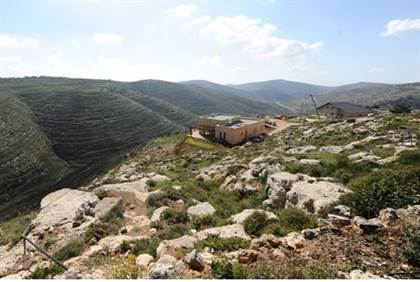
img557200Adei Ad is located in the Shiloh bloc north of JerusalemMendy Hechtman/Flash 90

Security source says ‘no question’ US Consulate staff pointed their weapons during Friday confrontation. Planned provocation or blunder?

****************

The full details of Friday’s clash between residents of the Jewish village of Adei Ad in Samaria and a delegation from the US Consulate in Jerusalem – which very nearly escalated into a fully-fledged shootout between the sides – are still emerging.

But those details which have emerged so far paint a worrying picture regarding the conduct of Consulate staff – who either willingly took part in a planned provocation, or else, in a staggering show of irresponsibility and unprofessionalism, recklessly blundered into a volatile and potentially deadly situation without the slightest idea of what they were doing.

Roughly two hours before the start of Shabbat, a group from the Consulate, escorted by armed (apparently American) guards and several residents of the Arab village of Turmus Ayya, descended en-masse and unannounced on an area within 50 meters of Adei Ad’s southwestern edge. Neither the IDF nor local residents were informed of the visit beforehand.

The Consulate delegation had apparently been “invited” by Palestinian Arabs from Turmus Ayya, many of whom hold US citizenship, ostensibly to see the site of what Arabs claim was an “attack” by Adei Ad residents on an olive orchard. That incident was originally reported Thursday night by the PA’s Bethlehem-based Maan News, which claimed that Jewish “settlers” had uprooted 5,000 olive trees – a rather incredible number to those familiar with quite what such a mammoth task would entail. Subsequent reports later revised the number down to 500, although no independent verification or evidence of the alleged damage has surfaced as yet.

Adei Ad residents, alarmed at the unannounced arrival of a large groupfrom a Palestinian village within meters of their community, rushed out to confront them. A brief verbal altercation ensued which quickly escalated, with youths from Adei Ad hurling rocks at the delegation, causing some damage to a Consulate vehicle.

At this point the accounts vary; witnesses from Adei Ad say Consulate staff drew their weapons – an M-16 and a handgun – following which residents called for backup from Adei Ad’s own security team. The Consulate, for its part, has denied any weapons were drawn at all. Either way, the American delegation beat a hasty retreat.

Notably, at no point during the confrontation was the IDF alerted by the Consulate team; only after leaving the scene did the Americans call the army, who quickly responded and launched an investigation, which is still ongoing.

img73901Damage to US Consulate vehicle Rabbis for Human Rights

Whatever the case, Jewish residents of Adei Ad and surrounding communities in the Shiloh bloc, located in the Binyamin region to the north of Jerusalem, are demanding answers. Angry residents say the incident was clearly a planned provocation, and have expressed their astonishment at the fact that an armed entourage from the US Consulate would arrive at a contested spot without coordinating their visit with the IDF in advance.

Indeed, regardless of the intent behind the visit, one Adei Ad resident pointed out that it was a clear recipe for disaster.

Apart from being the location of a protest in December 10th in which senior PA official Ziad Abu Ein died of a heart attack, the site of Friday’s confrontation is also the precise spot where a group of Palestinians attempted to infiltrate Adei Ad just two weeks ago.

“Two weeks ago at that exact place a horse was stolen,” said the resident, who asked to remain anonymous. “At 10 p.m. that same night dozens of Arabs from a nearby village came up to Adei Ad at the same spot, and residents came out to keep them away.”

Recounting Friday’s incident, he said residents had no idea Consulate staff were present at all. All they saw, he said, was “Arabs approaching, accompanied by what looked like a group of Europeans – we didn’t know who they were exactly. Often foreign anarchists join the Arabs in carrying out violence or provocation.”

Due to the tense relations between Jews and Arabs in the area, Arab farmers must contact the IDF before working land that abuts Adei Ad in order to avoid any confrontations. For their part, Adei Ad residents have long complained that they have been regularly targeted by Arab thieves and vandals.

“About two years ago a group of Arabs actually came right up to my house, right into the enter of Adei Ad, and stole a whole herd of sheep. In the past they’ve stolen horses, they stole a tractor, building equipment,” the resident recounted.

“The Arabs know that if they want to come that close to Adei Ad to do agricultural work they need to let the army know first to escort them. So any time Arabs approach without army supervision – particularly in that place where two weeks ago there was an incident – that’s a sign that they are coming to cause trouble… to attack or damage property,” he added.

He said locals had long given up on the prospect of receiving help from police, who he accused of totally avoiding their responsibilities and only agreeing to investigate Palestinian accusations against them.

“We receive no backing from the police,” he lamented. “Every time there is an incident of robbery by the Arabs the military refuses to deal with it because they don’t look at it as life-threatening; and the police… they tell us that it’s out of their jurisdiction.

“On the other hand, every time the Arabs steal something or cause trouble they then go and report us to the police – that’s how they work – so it’s always a one-sided investigation, because the police claim they have no jurisdiction over the Arab villages, only over us! No one has ever been charged, no property has ever been returned.”

He emphasized that despite the negative characterization of Adei Ad and surrounding Jewish communities in the area by some media outlets, residents are not interested in trouble and just want to get on with their daily lives in peace.

“We have much better things to do with our lives – we have our children and families, and we have jobs,” he said. “We don’t enjoy going out and having rock-throwing fights… no one seems to realize… but we feel we are under threat and that if we don’t do it the next step is a terrorist attack.”

Responding to American denials that Consulate staff pointed their guns at residents, a local security source said there was “no question” they hadindeed drawn their weapons, based on the individual testimony of numerous witnesses.

The security source, who also asked to remain anonymous, said one American “with ginger hair” was seen pointing his pistol at residents, who were unarmed, from inside of his car after rolling down the window. The other armed man then did the same with an M-16 rifle.

It was then that the situation threatened to get out of control.

“News spread that some people had approached the town with weapons, and they called for help,” prompting armed members of the local civilianfirst-response team to rush to the site, he recounted.

Luckily, “at that point it seems like the Americans thought it would be a good time to leave… and after that there was a brief confrontation between the Arabs and (Jewish) residents until the army arrived.”

He said that although an investigation was still ongoing, the conduct of the Consulate delegation was “suspicious.”

“Why didn’t they call anyone while the confrontation was going on?” he asked.

He also described the “strange” behavior of the Consulate guards when they were finally met by IDF forces and first-responders, describing them as looking sheepish and, unprompted, immediately insisting they hadn’t drawn their weapons.

Marc Prowisor, a resident of the nearby town of Shiloh, said the latest confrontation posed some “difficult questions.”

“Were members of the American Consulate knowingly taking part in a larger provocation – which is against the law?” asked Prowisor who, as Director of the One Israel Fund charity which helps secure local communities, is in regular contact with local security forces.

Islamic State Cell Detained by IDF in Hebron‏, Special Unit Established to Track Activities

January 4, 2015

Islamic State Cell Detained by IDF in Hebron‏, Special Unit Established to Track Activities, Algemeiner, Dave Bender, January 4, 2015

ISIS-militants-300x266

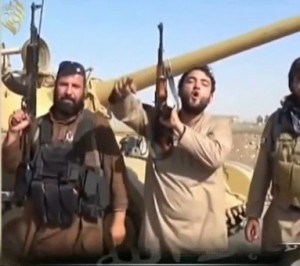
ISIS Militants. Photo: Screenshot, Fox News Sunday

“The IDF is deeply concerned with the fact that IS’s videos affect the Palestinian public which is very frustrated with its leadership; we are following this potential phenomenon closely,” the senior official said.

**************

The Israel Security Agency (Shin Bet) and the IDF in November busted what it revealed Sunday was a three-member Islamic State (IS) terror cell in Hebron, Israel’s Walla News reported, as the army said it has ratcheted up surveillance of the growing regional threat.

Officials said they suspected the trio of planning to carry out attacks in Israel including bombings against the IDF. One of the detainees admitted to planning to kill a local Jewish resident at nearby “Abraham’s Well.”

Ahmed Wadeh Salah Shehadeh, 22, Muhammad Fayyad Abd al-Qader, 21, and Ktzai Ibrahim Dib Maswadeh, 23 admitted to interrogators that they had established the military cell, constructed several bombs, and plotted to kill an Israeli soldier and use his weapons and uniform in a shooting attack.

The cell had actually set off to perpetrate the attack, but did not follow through for reasons not detailed in the report.

Their cases were transferred to court in recent days for indictment on offenses of membership and activity in an unlawful association, and other, unspecified charges.

Also on Sunday, Israel’s Channel 2 News reported that army intelligence recently dedicated a separate force to exclusively focus on IS activities, particularly across social media.

“We have made adjustments inside the IDF’s intelligence-collecting units because we came to the understanding that IS is breaking historic boundaries,” the commander of the “Hatzav,” intelligence unit said.

“Most of the information we gather comes from the internet; IS does not belong to a particular region in which we may have sources,” he noted.

Previously, the IDF primarily tracked IS via its division in charge of Syria. However, senior officials soon began to understand that the organization was a unique phenomena.

“Once we saw the first beheading videos we understood IS was something new, never seen before,” according to the unit commander.

“The IDF is deeply concerned with the fact that IS’s videos affect the Palestinian public which is very frustrated with its leadership; we are following this potential phenomenon closely,” the senior official said.

The recent arrests in Hebron apparently bear out that warning about the emerging threat.

Analysis: Osama bin Laden’s documents pertaining to Abu Anas al Libi should be released

January 4, 2015

Analysis: Osama bin Laden’s documents pertaining to Abu Anas al Libi should be released, Long War Journal, Thomas Joscelyn, January 3, 2015

(Release of the documents should further diminish the U.S. Government’s claims that al Qaeda died with bin Laden. How about any documents in the possession of Abu Anas al Libi when he was captured in Turkey in 2013? Might they contradict governmental claims about what happened during the “unanticipated” September 11, 2012 terrorist attack on the U.S. installation in Benghazi, why it happened and the nature of the U.S response? — DM)

Anas-al-Libi

The Obama administration made a concerted push to portray Osama bin Laden as a doddering old man who was operationally irrelevant.

What we know about Abu Anas al Libi’s al Qaeda role challenges all of these assessments.

Releasing any bin Laden files further implicating al Libi in the East Africa attacks would only strengthen the US government’s case to the public.

***************

A senior al Qaeda operative known as Abu Anas al Libi has died in the US as he was awaiting trial. Al Libi was captured in Tripoli during a raid by US forces in late 2013. He had been wanted for his role in the August 1998 US Embassy bombings for more than a decade prior to his arrest.

The US government has in its possession numerous pieces of evidence concerning al Libi’s al Qaeda role, including files recovered in May 2011 from Osama bin Laden’s home in Pakistan.

The Long War Journal has consistently advocated for the release of bin Laden’s files. The Obama administration has released just 17 documents, and a handful of videos, from a total cache of more than 1 million files. Many more of these files, if not almost all of them, should be declassified and released. There are no sources or methods to protect, as everyone knows how this information was obtained. The only files that should remain classified are those that have a direct bearing on the US government’s current counterterrorism operations against al Qaeda.

Now that al Libi has passed away, the US government has another opportunity to be more transparent with respect to bin Laden’s files. After all, at least some of the documents probably would have been released to the public during al Libi’s trial.

Just weeks ago, in mid-December, Benjamin Weiser of The New York Times reported that US prosecutors were seeking to use files recovered during the raid on bin Laden’s compound in al Libi’s trial.

A close reading of the Times‘ account reveals that prosecutors intended to use at least five separate letters recovered in bin Laden’s safe house.

It does not appear that any of these letters were included in the set of 17 documents released by the Obama administration through the Combating Terrorism Center at West Point. None of Abu Anas al Libi’s letters to al Qaeda’s leaders were released.

The first letter described by the Times is from Atiyyah Abd al Rahman, a senior al Qaeda leader, to bin Laden dated June 19, 2010. Rahman explained that al Libi was one of “the last brothers” to be released from Iran. Al Libi “came only a week ago and I met him and sat with him,” Rahman wrote, according to the Times’ summary. Rahman appointed al Libi to al Qaeda’s security committee. “It is normal for any person after a long absence, especially in jail, that he needs some time to figure out how things work,” Rahman noted. Rahman recommended that bin Laden send al Libi a letter, because al Libi was seeking “reassurance.”

A second letter, dated Oct. 13, 2010, is a five-page missive from al Libi to Osama bin Laden. “Your forever lover, Your brother,” al Libi signs the letter. Al Libi explains, according to the Times, that the al Qaeda “brothers,” including bin Laden’s sons and other al Qaeda operatives, fled to Iran under orders from Taliban leader Mullah Omar.

A third letter from Rahman to bin Laden was written “[a]bout a month later,” according to the Times, meaning it was penned sometime in November 2010. Rahman recommended that al Libi be accepted back into al Qaeda’s leadership ranks. Rahman described al Libi as “determined,” “visionary,” and “difficult somewhat,” but also noted that bin Laden knew him. Interestingly, Rahman complained that al Libi had violated al Qaeda’s operational security regulations by “contacting his family in Libya, despite knowing that we don’t allow any communications.”

Al Libi “knows that he was wanted by the Americans,” Rahman wrote to bin Laden, according to the Times’ summary. “He contacted them via phone repeatedly!”

In a fourth letter, written in March 2011, al Libi requested permission to join some other operatives who were returning to Libya to fight against Muammar al Qaddafi’s regime. It is better to “move out sooner rather than later” al Libi wrote.

Rahman forwarded al Libi’s letter to bin Laden, the Times reported, and Rahman explained to bin Laden that he approved al Libi’s request. This is the fifth letter prosecutors sought to introduce. Rahman noted that al Libi was “a little upset with me for the delay in getting back to him.”

A “builder of al Qaeda’s network in Libya”

Al Libi did in fact return to his native Libya. As a member of al Qaeda’s security committee who returned to North Africa only after receiving permission from his superiors in al Qaeda (Rahman), it is safe to assume that he was doing the terrorist organization’s bidding when he set up shop in his homeland.

Indeed, as The Long War Journal previously reported, an unclassified report published in August 2012 highlighted al Qaeda’s strategy for building a fully operational network in Libya. The report (“Al Qaeda in Libya: A Profile”) was prepared by the federal research division of the Library of Congress (LOC) under an agreement with the Defense Department’s Combating Terrorism Technical Support Office (CTTSO).

Abu Anas al Libi played a key role in al Qaeda’s plan for the country, according to the report’s authors. He was described as the “builder of al Qaeda’s network in Libya.”

Al Qaeda’s senior leadership (AQSL) has “issued strategic guidance to followers in Libya and elsewhere to take advantage of the Libyan rebellion,” the report reads. AQSL ordered its followers to “gather weapons,” “establish training camps,” “build a network in secret,” “establish an Islamic state,” and “institute sharia” law in Libya.

Abu Anas al Libi was identified as the key liaison between AQSL and others inside the country who were working for al Qaeda. “Reporting indicates that intense communications from AQSL are conducted through Abu Anas al Libi, who is believed to be an intermediary between [Ayman al] Zawahiri and jihadists in Libya,” the report notes.

Al Libi is “most likely involved in al Qaeda strategic planning and coordination between AQSL and Libyan Islamist militias who adhere to al Qaeda’s ideology,” the report continues.

Al Libi and his fellow al Qaeda operatives “have been conducting consultations with AQSL in Afghanistan and Pakistan about announcing the presence of a branch of the organization that will be led by returnees from Iraq, Yemen, and Afghanistan, and by leading figures from the former LIFG.” The term “LIFG” refers to the Libyan Islamic Fighting Group, an al Qaeda-linked jihadist group formed in Libya in the 1990s.

One of al Libi’s key allies inside Libya was another senior al Qaeda operative, Abd al Baset Azzouz, who has been close to al Qaeda’s senior leaders for decades.

Azzouz was sent to Libya by Zawahiri and “has been operating at least one training center.” Azzouz “sent some of his estimated 300 men…to make contact with other militant Islamist groups farther west.”

Azzouz was reportedly captured in Turkey last month. [See LWJ report, Representative of Ayman al Zawahiri reportedly captured in Turkey.]

Release bin Laden’s files

The Obama administration made a concerted push to portray Osama bin Laden as a doddering old man who was operationally irrelevant. Citing bin Laden documents shown to him by the White House, the Washington Post’s David Ignatius described the jihadist leader as a “lion in winter.” CNN‘s Peter Bergen similarly reported that bin Laden was in retirement at the time of his death. The Combating Terrorism Center at West Point, working off of only those documents provided by the Obama administration, portrayed bin Laden as being sidelined.

What we know about Abu Anas al Libi’s al Qaeda role challenges all of these assessments. He was reintegrated into al Qaeda’s chain of command after his release from Iranian custody. His role was approved by Rahman, who served as one of bin Laden’s top subordinates before being killed in a US drone strike. Rahman made sure that al Libi joined al Qaeda’s security committee — an internal body that is not factored into any public assessments of al Qaeda’s structure or hierarchy. And al Qaeda approved al Libi’s return to Libya. Other evidence subsequently unearthed by the US government shows that al Libi was acting as one of al Qaeda’s top operatives in North Africa at the time of his capture.

This evidence should be released to the public, so we can judge for ourselves how al Qaeda operates.

In addition, any documents or files recovered from bin Laden’s compound that deal with the August 1998 US Embassy bombings should be released as well. After al Libi was captured in Libya, his family claimed he had played no role in the twin attacks, which were al Qaeda’s most successful operation prior to Sept. 11, 2001. However, there is abundant evidence, including testimony given before a US district court, indicating that al Libi was a key player in the bombings. Releasing any bin Laden files further implicating al Libi in the East Africa attacks would only strengthen the US government’s case to the public.

‘Deport US Consulate Staff Who Threatened Jews’

January 3, 2015

‘Deport US Consulate Staff Who Threatened Jews’ Israel National News, Uzi Baruch and Tova Dvorin, January 3, 2014

(Huh? If the report is accurate, the U.S. consular officials went way too far. Cf this 2008 video:

Please see also American Security Guards Clash with Jews in Binyamin. Please see also this article, apparently (but not clearly) about what happened later when the consular officials got to the olive trees. — DM)

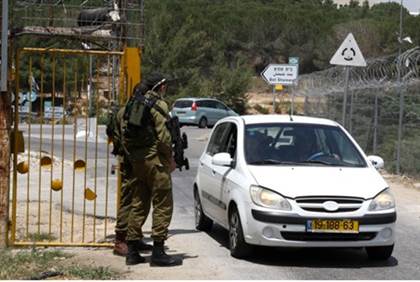
img510743Soldiers guard Samaria community (illustration) Flash 90

An argument erupted between the convoy and the community’s security guards, as all official visits to Jewish communities in Judea-Samaria must be coordinated with the IDF and police – a protocol the consulate allegedly ignored. At least one of the American guards allegedly pulled out his handgun and M-16 during the course of the argument.

*****************

Acting Head of the Samaria Regional Council, Yossi Dagan, has filed a request to the Minister of the Interior Gilad Erdan demanding he immediately expel the American Consulate staff members who entered the Samaria village of Adei Ad Friday and threatened Israeli Jews with an M-16. 

“As revealed through Wikileaks few years ago, these supposed ‘officials’ are intelligence agents and spies in every respect,” said Dagan, adding “this time, they went too far and participated in a provocative tour with the Palestinians in the southern Samaria and north Binyamin, without any coordination as required with the IDF and police, and pulled out a firearm and threatened Israeli civilians.”

“This is a crossing of all red lines,” he continued. “This event could have descended easily into bloodshed and only as a result of the settlers’ responsible behavior was [a scenario like that] prevented.”

“I request that in view of the serious and criminal conduct, that these [US] security guards and officials be deported,” he added.

“If Israeli intelligence officials and armed Israeli security guards stationed in one of the Israeli consulates in the United States had participated in a political provocation without any coordination with the police and threatened American citizens with weapons, at best, they would bearrested and deported, and the more likely case would be them spending several years in federal prison.”

It is unclear exactly what prompted the incident at Adei Ad Friday, but reports say that several consulate officials arrived with armed guards at the community to investigate Palestinian Arabs’ claims of vandalism of a nearby olive orchard.

An argument erupted between the convoy and the community’s security guards, as all official visits to Jewish communities in Judea-Samaria must be coordinated with the IDF and police – a protocol the consulate allegedly ignored. At least one of the American guards allegedly pulled out his handgun and M-16 during the course of the argument.