“We support Israel’s legitimate right to self defense,” said State Department spokeswoman Jen Psaki.
US State Department spokeswoman Jen Psaki. (photo credit:REUTERS)
WASHINGTON — The United States “strongly condemned” Hezbollah’s rocketing of Israeli territory on Wednesday with anti-tank munitions, killing two IDF soldiers and wounding seven others.
“The United States strongly condemns Hezbollah’s attack today on Israeli Defense Forces (IDF) near the border between Lebanon and Israel,” said Edgar Vasquez, a State Department spokesman, “in blatant violation of UN Security Council Resolution 1701.”
“We don’t have information on what munitions were used by Hezbollah,” Vasquez added, when asked for comment on Hezbollah’s alleged use of sophisticated anti-tank, Russian-made Kornet rockets.
On Tuesday, the State Department warned against “escalation” on Israel’s northern border, after Syrian positions fired into the Golan Heights. The Israeli air force returned fire on Syrian Army positions overnight.
United Nations Resolution 1701 codified a ceasefire over the blue line between Israel and Lebanon after Israel’s conflict with Hezbollah in 2006.
“We support Israel’s legitimate right to self defense,” State Department spokeswoman Jen Psaki told reporters on Wednesday, urging both parties to “respect the blue line between Israel and Lebanon.”
“We also of course condemn the act of violence, and will be watching the situation closely,” Psaki said.
The Israeli military authorities have been on high alert the last 10 days following the attack on a convoy carrying Hezbollah and Iranian officials on the Syrian side of the Golan Heights earlier this month.
Hezbollah has vowed to avenge the attack, which it blames on Israel.
Following the anti-tank missile, mortar shells launched from Syria were fired at IDF positions on Har Dov and the Hermon Mountain.
The army evacuated dozens of people from the Hermon Mountain. A home in the Israeli border town of Kafr Rajar was damaged by a mortar shell.
The officer and soldier killed in the Hezbollah attack on the Lebanese border were named on Wednesday as Cap. Yohai Kalangel, 25 from Har Gilo, a company commander in the Tsavar Battalion and Sgt. Dor Haim Nini of the same battalion, a 20 year old from Shtulim who will be posthumously promoted to the rank of Staff-Sergeant.
Jpost.com staff contributed to this report.
IDF responds with artillery fire • Lieberman: Israel should respond in a ‘forceful and disproportionate manner’ • Force was driving an unarmored vehicle on border fence • UNIFIL soldier killed by Israeli response strike.
Smoke rises from shells fired from Israel over al-Wazzani area in southern Lebanon January 28, 2015. Reuters
Two Israeli soldiers were killed and seven wounded on Wednesday morning, after an anti-tank missile struck an Israel Defense Forces vehicle in the Har Dov area near the Lebanon border, as mortar shells were fired at nearby areas.
The wounded IDF troops were being treated at the Sieff Hospital in Safed and the Rambam Hospital in Haifa. Three suffered light to moderate wounds, and the rest were lightly wounded. The IDF said that no soldier had been kidnapped, despite earlier reports.
Despite the high alert in recent days, following the unconfirmed Israeli strike in Syria, the soldiers were driving in an unarmored vehicle on the Lebanon border when they were ambushed. At least five Kornet anti-tank missiles are believed to have been fired in the incident. A senior Israeli army officer said that he doesn’t think the lack of armor on the vehicle is significant considering the type of missiles used.
The IDF declared a closed military zone in the area between the Dafna kibbutz in the upper Galilee to the Mas’ade village in the eastern Golan Heights. The zone will be in effect until Wednesday noon.
The site of the attack was about 200 meters before the road leading to Ghajar. The first missile struck a D-Max vehicle and killed two soldiers. After the strike, soldiers driving in other vehicles stepped out, and thus sustained lighter wounds when the second missile hit, the IDF said.
The Israeli army said it will launch an investigation into the soldiers’ conduct.
IDF forces responded with artilley fire, shelling several targets in southern Lebanon. A Spanish UNIFIL soldier was killed in the strikes. According to El-Mundo, the soldier is Francisco Javier Soria Toledo, 36, from Malaga, married without children.
Foreign Minister Avigdor Lieberman called his Spanish counterpart to convey Israel’s condolences for the death of the Spanish soldier, and said Hezbollah is to blame for the attack, and that Israel considers the Lebanese government responsible for any attack out of its territory.
Lieberman, who was meeting with China’s foreign minister in Beijing, said Israel should respond in a “forceful and disproportionate manner” to the events, in the way that the U.S. or China would respond to similar events. He told his Chinese counterpart that he expects Israel to receive support from her friends in the world for such a response.
Zionist Camp co-chair MK Tzipi Livni said during a tour of the northern border that Israel will respond “harshly” to Hezbollah’s attack.
One of the mortar shells fired from Lebanon struck a home in Ghajar, a village which straddles the border, setting the structure alight. The mortar fire continued into the afternoon, aimed at the Hermon region. Hezbollah claimed responsibility for all of the attacks.
The IDF responded by shelling targets in southern Lebanon. Lebanese media quoted security officials as saying that Israel has fired at least 25 artillery shells into Lebanese territory. The officials said the shelling targeted the border villages of Majidiyeh, Abbasiyeh and Kfar Chouba near the Shebaa Farms area, according to Lebanese media.
A spokesman for UNIFIL, the UN peacekeeping force deployed in south Lebanon since 1978, said the UN is looking into the circumstances of the incident in which one of the force’s soliders was killed. He did not disclose the nationality of the soldier, but local media reports said he was a Spanish national.
The IDF warned that its response would only escalate if the attacks did. IDF spokesman Moti Almoz said the military views Hezbollah as responsible for the attacks, and said the IDF’s shelling of targets in south Lebanon “would not necessarily be the final response to this incident.”
The attacks took place as Prime Minister Benjamin Netanyahu was in the southern city of Sderot, laying the cornerstone for a new neighborhood. “At these moments, the IDF is responding to the events in the north. Look what happened here. Not far from the city of Sderot, in Gaza, Hamas was hit by the strongest blow it ever received last summer… Security comes before all else. Security is the foundation for everything.”
Israeli soldiers treat their comrades (AFP)
Netanyahu cut short his visit to Sderot and joined Defense Minister Moshe Ya’alon for a security briefing in the Defense Ministry headquarters in Tel Aviv.
Residents in the northern city of Metula and the surrounding kibbutzim were instructed to remain indoors. The airports in Rosh Pina and Haifa suspended operations amid the ongoing fire.
The incident occured shortly after it emerged that IDF troops were digging in the same area search for possible Hezbollah tunnels. There was no apparent connection between the two incidents.
The Har Dov region marked in black.
Hours earlier, the IDF launched a strike on Syrian Army artillery posts in retaliation for the four rockets fired Tuesday at Israeli territory, two of which exploded in the Golan Heights. Ya’alon said that areas targeted by the IDF in Syria were under control of Syrian President Bashar Assad’s regime.
Israeli artillery scored direct hits on Syrian targets in the Quneitra province, according to a statement released by the Israel Defense Forces’ spokesperson: “The IDF holds the Syrian government accountable for all attacks emanating from its land, and will operate by any means necessary to defend Israeli civilians. Such blatant breaches of Israeli sovereignty will not be tolerated,” the army statement read.
A rocket alert siren sounded in the Golan Heights before the Israeli strike, though the IDF said no rockets landed in Israeli-controlled territory.
Groups in the Syrian opposition said Wednesday morning that the overnight Israeli strikes targeted two bases belonging to the Syrian military in the Quneitra region, and one near the Damascus international airport.
Lebanon criticizes Israel
Arab League Chief Nabil al-Arabi asked the UN Security Council to intervene in Lebanon to prevent deterioration in situation.
Lebanon’s prime minister said Lebanon is committed to a UN resolution that ended a war between Israel and Hezbollah in 2006, and criticized Israel for causing an escalation in tensions.
“Lebanon reaffirms its commitment to Security Council resolution 1701,” Tammam Salam said in a statement published on Lebanon’s National News Agency.
Lebanese politician Samir Geagea slammed Hezbollah’s attack, saying the group has “no right to involve the Lebanese army and government in a battle with Israel,” the Lebanese Naharnet reported. Geagea is the leader of the Christian party, Lebanese Forces, which is part of the March 14 Alliance which opposes Hezbollah.
Another Lebanese politician, Walid Jumblatt, warned that the rising tensions mean Lebanon will “enter a major turbulent phase,” and accused Netanyahu of trying to score political points through the Israeli airstrike on the Quneitra region last week. Jumblatt is the leader of the Druze Progressive Socialist Party, formerly affiliated with the March 14 Alliance, but currently siding with Hezbollah on the Syria Civil War.
Gili Cohen, Noa Shpigel, Jack Khoury, Amos Harel, Barak Ravid, Ido Efrati and AP contributed to this report.
DEBKAfile Exclusive Analysis January 28, 2015, 6:22 PM (IDT)
IDF commanders’ convoy struck by Hizballah
Iran’s Lebanese proxy, Hizballah, used five anti-tank rockets and roadside bombs for an ambush outside Kafr Ghajar, which killed at least two IDF servicemen, an officer and a soldier, who were traveling in unarmored vehicles Wednesday, Jan. 28. This is reported by debkafile’s military sources. Another seven soldiers were injured. The IDF notice did not specify the officer’s rank or the group’s mission in the area.
Hizballah and Iran, who had vowed to avenge the air strike which killed an Iranian Revolutionary Guards general and six Hizballah officers on Jan. 18, pulled off three feats in this attack:
One: their agents were able to cross the border unnoticed to plant roadside bombs. Two: they moved anti-tank rocket launchers right up to the order fence – undetected. And, three, astonishingly, they did not find it hard to strike and blow up the two command vehicles and inflict Israeli losses.
This three strokes were achieved – notwithstanding IDF assurances that all the necessary security measures had been put in place and reinforced in readiness for the promised Iranian-Hizballah revenge attack.
Our military sources note that something must have been seriously amiss with the convoy’s security for Hizballah to achieve its stunning success.
In the first place: How did it happen that an IDF command convoy risked exposure to harm by traveling within sight of the enemy without proper protection?
Inhabitants of the northern border towns and villages locations are entitled to pin down the IDF with a hard question: Why are they held so strictly to military instructions for keeping civilians safe, when the army is so careless with the security of its own “senior officers” and men?
Israel’s armed forces will now be obliged to pull out the stops to recover respect for its deterrent capacity. There is little choice but to inflict a serious military blow against Hizballah and the Iranian intelligence officers based in Syria, whence their Lebanese proxy procured the intelligence for attacking the IDF command convoy.
Israel must also recover the initiative in the long conflict with Iran and Hizballah and reinforce the message conveyed in its Jan. 18 air strike on their mission near Quneitra, that it will not sit still for the Golan to be transformed into a forward position for attacking Israel from Syria.
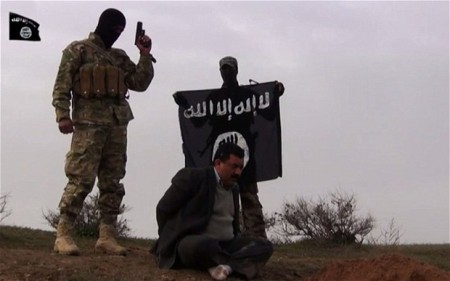
Our problem is not the Islamic radical, but the inherent radicalism of Islam. Islam is a radical religion. It radicalizes those who follow it. Every atrocity we associate with Islamic radicals is already in Islam. The Koran is not the solution to Islamic radicalism, it is the cause.
******************
The debate over Islamic terrorism has shifted so far from reality that it has now become an argument between the administration, which insists that there is nothing Islamic about ISIS, and critics who contend that a minority of Islamic extremists are the ones causing all the problems.
But what makes an Islamic radical, extremist? Where is the line between ordinary Muslim practice and its extremist dark side?
It can’t be beheading people in public.
Saudi Arabia just did that and was praised for its progressiveness by the UN Secretary General, had flags flown at half-staff in the honor of its deceased tyrant in the UK and that same tyrant was honored by Obama, in preference to such minor events as the Paris Unity March and the Auschwitz commemoration.
It can’t be terrorism either. Not when the US funds the PLO and three successive administrations invested massive amounts of political capital into turning the terrorist group into a state. While the US and the EU fund the Palestinian Authority’s homicidal kleptocracy; its media urges stabbing Jews.
Clearly that’s not Islamic extremism either. At least it’s not too extreme for Obama.
If blowing up civilians in Allah’s name isn’t extreme, what do our radicals have to do to get really radical?
Sex slavery? The Saudis only abolished it in 1962; officially. Unofficially it continues. Every few years a Saudi bigwig gets busted for it abroad. The third in line for the Saudi throne was the son of a “slave girl”.
Ethnic cleansing? Genocide? The “moderate” Islamists we backed in Syria, Libya and Egypt have been busy doing it with the weapons and support that we gave them. So that can’t be extreme either.
If terrorism, ethnic cleansing, sex slavery and beheading are just the behavior of moderate Muslims, what does a Jihadist have to do to be officially extreme? What is it that makes ISIS extreme?
Our government’s definition of moderate often hinges on a willingness to negotiate regardless of the results. The moderate Taliban were the ones willing to talk us. They just weren’t willing to make a deal. Iran’s new government is moderate because it engages in aimless negotiations while pushing its nuclear program forward and issuing violent threats, instead of just pushing and threatening without the negotiations. Nothing has come of the negotiations, but the very willingness to negotiate is moderate.
The Saudis would talk to us all day long while they continued sponsoring terrorists and setting up terror mosques in the West. That made them moderates. Qatar keeps talking to us while arming terrorists and propping up the Muslim Brotherhood. So they too are moderate. The Muslim Brotherhood talked to us even while its thugs burned churches, tortured protesters and worked with terrorist groups in the Sinai.
A radical terrorist will kill you. A moderate terrorist will talk to you and then kill someone else. And you’ll ignore it because the conversation is a sign that they’re willing to pretend to be reasonable.
From a Muslim perspective, ISIS is radical because it declared a Caliphate and is casual about declaring other Muslims infidels. That’s a serious issue for Muslims and when we distinguish between radicals and moderates based not on their treatment of people, but their treatment of Muslims, we define radicalism from the perspective of Islamic supremacism, rather than our own American values.
The position that the Muslim Brotherhood is moderate and Al Qaeda is extreme because the Brotherhood kills Christians and Jews while Al Qaeda kills Muslims is Islamic Supremacism. The idea of the moderate Muslim places the lives of Muslims over those of every other human being on earth.
Our Countering Violent Extremism program emphasizes the centrality of Islamic legal authority as the best means of fighting Islamic terrorists. Our ideological warfare slams terrorists for not accepting the proper Islamic chain of command. Our solution to Islamic terrorism is a call for Sharia submission.
That’s not an American position. It’s an Islamic position and it puts us in the strange position of arguing Islamic legalism with Islamic terrorists. Our politicians, generals and cops insist that the Islamic terrorists we’re dealing with know nothing about Islam because that is what their Saudi liaisons told them to say.
It’s as if we were fighting Marxist terrorist groups by reproving them for not accepting the authority of the USSR or the Fourth International. It’s not only stupid of us to nitpick another ideology’s fine points, especially when our leaders don’t know what they’re talking about, but our path to victory involves uniting our enemies behind one central theocracy. That’s even worse than arming and training them, which we’re also doing (but only for the moderate genocidal terrorists, not the extremists).
Secretary of State Kerry insists that ISIS are nihilists and anarchists. Nihilism is the exact opposite of the highly structured Islamic system of the Caliphate. It might be a more accurate description of Kerry. But the Saudis and the Muslim Brotherhood successfully sold the Western security establishment on the idea that the only way to defeat Islamic terrorism was by denying any Islamic links to its actions.
This was like an arsonist convincing the fire department that the best way to fight fires was to pretend that they happened randomly on their own through spontaneous combustion.
Victory through denial demands that we pretend that Islamic terrorism has nothing to do with Islam. It’s a wholly irrational position, but the alternative of a tiny minority of extremists is nearly as irrational.
If ISIS is extreme and Islam is moderate, what did ISIS do that Mohammed did not?
The answers usually have a whole lot to do with the internal structures of Islam and very little to do with such pragmatic things as not raping women or not killing non-Muslims.
Early on we decided to take sides between Islamic tyrants and Islamic terrorists, deeming the former moderate and the latter extremists. But the tyrants were backing their own terrorists. And when it came to human rights and their view of us, there wasn’t all that much of a difference between the two.
It made sense for us to put down Islamic terrorists because they often represented a more direct threat, but allowing the Islamic tyrants to convince us that they and the terrorists followed two different brands of Islam and that the only solution to Islamic terrorism lay in their theocracy was foolish of us.
We can’t win the War on Terror through their theocracy. That way lies a real Caliphate.
Our problem is not the Islamic radical, but the inherent radicalism of Islam. Islam is a radical religion. It radicalizes those who follow it. Every atrocity we associate with Islamic radicals is already in Islam. The Koran is not the solution to Islamic radicalism, it is the cause.
Our enemy is not radicalism, but a hostile civilization bearing grudges and ambitions.
We aren’t fighting nihilists or radicals. We are at war with the inheritors of an old empire seeking to reestablish its supremacy not only in the hinterlands of the east, but in the megalopolises of the west.
The State Department hosted a delegation of Muslim Brotherhood-aligned leaders this week for a meeting about their ongoing efforts to oppose the current government of President Abdel Fattah al-Sisi of Egypt, who rose to power following the overthrow of Mohamed Morsi, an ally of the Brotherhood, in 2013.
One member of the delegation, a Brotherhood-aligned judge in Egypt, posed for a picture while at Foggy Bottom in which he held up the Islamic group’s notorious four-finger Rabia symbol, according to his Facebook page.
That delegation member, Waleed Sharaby, is a secretary-general of the Egyptian Revolutionary Council and a spokesman for Judges for Egypt, a group reported to have close ties to the Brotherhood.
The delegation also includes Gamal Heshmat, a leading member of the Brotherhood, and Abdel Mawgoud al-Dardery, a Brotherhood member who served as a parliamentarian from Luxor.
Sharaby, the Brotherhood-aligned judge, flashed the Islamist group’s popular symbol in his picture at the State Department and wrote in a caption: “Now in the U.S. State Department. Your steadfastness impresses everyone,” according to an independent translation of the Arabic.
Another member of the delegation, Maha Azzam, confirmed during an event hosted Tuesday by the Center for the Study of Islam and Democracy (CSID)—another group accused of having close ties to the Brotherhood—that the delegation had “fruitful” talks with the State Department.
“Maha Azzam confirms that ‘anti-coup’ delegation, which includes 2 top [Muslim Brothers], had ‘fruitful’ conversations at State Dept,” Egypt expert Eric Trager tweeted.
Assam also said that the department expressed openness to engagement, according to one person who attended the event.
Trager, a fellow at the Washington Institute for Near East Policy (WINEP), told the Washington Free Beacon that the State Department is interested in maintaining a dialogue with the Brotherhood due to its continued role in the Egyptian political scene.
“The State Department continues to speak with Muslim Brothers on the assumption that Egyptian politics are unpredictable, and the Brotherhood still has some support in Egypt,” he said. “But when pro-Brotherhood delegations then post photos of themselves making pro-Brotherhood gestures in front of the State Department logo, it creates an embarrassment for the State Department.”
When asked to comment on the meeting Tuesday evening, a State Department official said, “We meet with representatives from across the political spectrum in Egypt.”
The official declined to elaborate on who may have been hosted or on any details about the timing and substance of any talks.
Samuel Tadros, an Egypt expert and research fellow at the Hudson Institute who is familiar with the delegation, said that the visit is meant to rally support for the Muslim Brotherhood’s ongoing efforts against to oppose Sisi.
“I think the Muslim Brotherhood visit serves two goals,” Tadros said. “First, organizing the pro Muslim Brotherhood movement in the U.S. among the Egyptian and other Arab and Muslim communities.”
“Secondly, reaching out to administration and the policy community in D.C.,” Tadros said. “The delegation’s composition includes several non-official Muslim Brotherhood members to portray an image of a united Islamist and non-Islamist revolutionary camp against the regime.”
The delegation held several public events this week in Maryland and Virginia, according to invitations that were sent out.
Patrick Poole, a terrorism expert and national security reporter, said the powwow at the State Department could be a sign that the Obama administration still considers the Brotherhood politically viable, despite its ouster from power and a subsequent crackdown on its members by Egyptian authorities.
“What this shows is that the widespread rejection of the Muslim Brotherhood across the Middle East, particularly the largest protests in recorded human history in Egypt on June 30, 2013, that led to Morsi’s ouster, is not recognized by the State Department and the Obama administration,” Poole said.
“This is a direct insult to our Egyptian allies, who are in an existential struggle against the Muslim Brotherhood, all in the pursuit of the mythical ‘moderate Islamists’ who the D.C. foreign policy elite still believe will bring democracy to the Middle East,” Poole said.
(Correct me if I’m wrong, but I feel the impact of the White House campaign against Mr. Netanyahu’s re-election will fall short with the Israeli people. It’s truly sad it has come to this. – LS)
Off to try to defeat Nethanyahu, Obama advisor Jeremy C. Bird once worked for an anti-Israel activist condemned by the Anti-Defamation League.
Bird, then a student at Harvard’s Divinity School, worked for Edmund Hanauer, one of America’s most prominent anti-Israel activists, in 2002.
Bird worked for Hanaeuer while Hanaeuerwrote a virulently anti-Israel op-edthat accused Israel of “state terrorism” and “war crimes,” and called for the arrest and prosecution of Israeli soldiers.
Bird and Hanaeur also attacked Israel in speeches. Hanauer showed an anti-Israel film to a Harvard audience and gave a speech at Harvard in 2002. Bird also spoke about the Israeli-Palestinian conflict and introduced Hanaeur.
Here‘s the Harvard Crimson’s description of the event:
A viewing of a short documentary film on the Abu Ghneim Mountain Israeli Settlement Project opened the event. Hanauer later referred to the project as an example of Israeli expansion into Palestinian lands. It was followed by introductory remarks by Hanauer and Jeremy C. Bird, a second-year HDS student who has been working with Hanauer for the past year.
Bird said a “cycle of violence” has contributed to the tensions between Palestinians and Israelis.Rather than using violence themselves, both sides must peacefully campaign for justice, he added.
Bird got his political start in anti-Israel and anti-Netanyahu activism while he studying abroad. Bird also tookan influential classwith socialist professor and activist Marshall Ganz titled, “Organizing: People, Power, and Change.” In one of Bird’s first classes he worked asa community organizer in Boston.
Now Bird, fresh off losing Battleground Texas’s pro-Wendy Davis campaign, is off to Israel to defeat Benjamin Netanyahu with a State Department-funded group called “OneVoice.”
This is not Bird’s first time dealing with Israel.
“The first political rally I went to was at the University of Haifa for Ehud Barak, who was running against Benjamin Netanyahu for Prime Minister”Bird said to Wabash College, his alma mater. “I couldn’t understand what he was saying, but I noticed how many young people were there.”
“[Edmund] Hanauer is a long-time opponent of Israel and has written that ‘it is the moral obligation of Jews to oppose Zionism,’” wrote Abraham Foxman of the ADL in a letter to the editor to the New York Times in 1981.
An Israeli consulate official said that Hanauer had reached “new heights of venom and outright hate, possibly self-hate” in his pro-Palestinian writings.
In 2003 Hanauer, who died in 2006, falsely claimed in an article for the Boston Globe that Israeli soldiers were killing Palestinian children for sport.
As Iranian and American chief diplomats continue to meet to find ways to speed up nuclear negotiations and strike a final nuclear deal that would lead to the removal of all international sanctions on the ruling clerics, the Obama administration persists in ignoring the recent revelations about the Islamic Republic and its covert operations in the region.
A new Western intelligence assessment points to efforts by the Syrian government to renew its operations in an underground and clandestine nuclear facility near Qusair, close to the border of Lebanon, in order to produce nuclear weapons. Citing the Western intelligence assessment, the German weekly Der Spiegel pointed out that the reconstruction of the nuclear facility is being conducted with the assistance of the Islamic Republic, North Korea, and Hezbollah.
The intelligence report indicates that dialogue between Ibrahim Othman, head of the Syrian Atomic Energy Commission of Iranian, and North Korean and Hezbollah affiliates were “intercepted.” In addition, according Abu Muhammad al-Bitar, the Free Syrian Army has also noticed the “unprecedented” presence of Iranian and Hezbollah security members in the town of Qusair on the suburbs of Homs.
If Iran is engaged in such operations assisting Syrian President Bashar al Assad, it is breaching the protocols of the Non-Proliferation Treaty (NPT), as well as posing a great threat to security in the region.
If, even before obtaining nuclear weapons, the ruling clerics of Iran are assisting their allies to become nuclear states, how can we trust the Islamic Republic in nuclear negotiations and how can one rely on their claim that they are not seeking to build a nuclear bomb?
Iran-Syria and North Korean-Syria military and nuclear cooperation has been going on for a long time. When it comes to the issues of ballistic missiles, Syria has previously cooperated with both Iran and North Korea.
Syria possess approximately 50 tons of uranium which could be adequate enough to create 5 nuclear bombs. For developing nuclear weapons either highly enriched uranium or an adequate amount of plutonium is required.
Some might make the argument that Syria developed the uranium by itself without the assistance of other countries or other non-state actors. Nevertheless, technically, pragmatically and realistically speaking, Syria does not possess the capability of developing an estimated 50 tons of natural uranium. This suggests that the role of other states and non-state actors have definitely played a significant role. Some of the only allies that the Syrian government has still kept are Iran, North Korea and Hezbollah.
It is crucial to point out that, without a doubt, becoming a nuclear state for the Syrian and Iranian government would be a formidable tool in to suppress opposition, maintain power, and deter foreign intervention in case of crimes against humanity.
There are two major nuclear site in Syria. The first one is the Al Kibar reactor in the northeast of the city of Deir Ezzour and the second one is Marj Sultan in the outskirt of Damascus where the fuel is reportedly stored.
News with respects to the Syrian government renewing its nuclear program were previously reported in 2013. There had been reports that some activities were being carried out at an alleged Syrian nuclear facility close to an eastern suburbs of Damascus, Marj Sultan.
The International Atomic Energy Agency (IAEA) reported previously that Damascus was building a nuclear reactor in Deir Ezzour. Reportedly tons of enriched uranium in Damascus are being protected by Iran’s Revolutionary Guard Corps and Hezbollah.
According to Der Spiegel, “Syria’s dictator has not given up his dream of an atomic weapon and has apparently built a new nuclear facility at a secret location…..It is an extremely unsettling piece of news.”
In addition to the aforementioned concerns about the undeclared Syrian nuclear site and nuclear proliferation, one of the crucial issues is that the nuclear material might fall in the hands of multiple other players and Islamist groups. In other words, if these nuclear sites are seized by some radical groups or Al Qaeda-linked affiliates, they might be capable of utilizing the highly enriched uranium and produce nuclear weapons.
Iran’s other indisputable and multi-layered activities and engagements in Syria — including the military, financial, intelligence, and advisory assistance to the Syrian government which have further radicalized and militarized the ongoing Syrian war — persist. In addition, the recent intelligence report and satellite images of secretly renewing nuclear activities with the assistance of the Iranian and North Korean governments poses a grave threat to stability and security in the region. Unfortunately, despite the seriousness of this issue, the Obama administration continues to ignore these issues and persists on trusting the Islamic Republic in the nuclear negotiations.
An Israeli army patrol came under anti-tank fire Wednesday in the northern Har Dov area along Israel’s border with Lebanon. The IDF confirmed that there were casualties in the attack, but did not say how many soldiers were hurt. The army ruled out the possibility that a soldier had been kidnapped.
The incident took place in an area of the border that doesn’t have a fence. At the same time, and for over an hour after the attack, IDF positions in the area, as well as on nearby Mount Hermon, were hit with mortar shells.
Israel responded to the attack with multiple artillery strikes in southern Lebanon. The Lebanese paper The Daily Star quoted a Lebanese security source as saying that eight shells fired from Israeli territory hit inside Lebanon close to the border.
Hezbollah said in a statement that a squad from the “fallen martyrs of the Quneitra brigade” attacked an Israeli convoy in retaliation for an alleged Israeli airstrike in Syria last week that killed 12, including an Iranian general and a senior commander in the organization. The statement said it was a first announcement, alluding to the possibility of further attacks.
Six soldiers were evacuated to Ziv Hospital in nearby Safed in light to moderate condition, and others were airlifted to Rambam Medical Center in Haifa, Channel 2 reported.
IDF Chief of Staff Lt. Gen. Benny Gantz was holding high-level consultations to mull further responses to the attack. Meanwhile, Prime Minister Benjamin Netanyahu cut short a tour of the Gaza Strip border region and headed to the Kirya military headquarters in Tel Aviv to join the meeting.
In an initial reaction to the incident, Netanyahu invoked Israel’s massive campaign against Hamas and other groups in the Gaza Strip over last summer: “Anyone who tries to challenge us along the northern border should come and see what happened here, not far from Sderot, in the Gaza Strip.”
Israeli hikers and vacationers in the area of the incident, including in the Hermon ski resort, were ordered to leave the region.
The attack, launched from an area controlled by Hezbollah, comes after repeated threats by the group, which said it would retaliate against Israel for an airstrike earlier in January that killed its top commander in the Syrian Golan Heights, along with an Iranian general and 10 others.
At least two rockets launched from Syrian territory landed in the Golan Heights Tuesday in an attack that Israeli defense officials attributed to Hezbollah. In response, Israel shelled Syrian army positions, and Defense Minister Moshe Ya’alon issued a stern warning to Hezbollah and its patron Syrian President Bashar Assad.
“The Assad regime is responsible for the fire into Israel, and we will exact a heavy price from any government or organization that violates our borders,” Ya’alon said Wednesday. “We have no intention of ignoring or abiding terrorist attacks on our soldiers and citizens.”
The Mount Dov area has seen multiple cross-border incidents involving Hezbollah in recent years.
In October, Hezbollah claimed a bomb attack against Israeli troops along the border that wounded two soldiers. Hours later, a second bomb went off along the border in the area, but did not result in any casualties. The clash came two days after a Lebanese soldier was lightly wounded by Israeli forces in the same area.
Claims to the area, known by the Lebanese as the Shebaa Farms, have been made by Israel, Lebanon, and Syria in the past, although the land, covering roughly 20 square kilometers, now lies within Israel’s northern territory.
Maj. Gen. (res) Israel Ziv, former head of the army’s Operations Directorate, explained in a conference call with journalists why Hezbollah chose the Mount Dov region for its retaliatory attack. “What happens in Shebaa stays in Shebaa,” he said. Ziv explained that due to the disputed nature of the area, Israel has in the past refrained from launching large-scale retaliations in Lebanon in response to Hezbollah actions there.
Israel on Wednesday ruled out the possibility that a soldier or soldiers had been kidnapped in the wake of the attack — a tactic employed by Hezbollah several times in the past.
In 2006, the group killed two soldiers, Ehud Goldwasser and Eldad Regev, and took their bodies, sparking a bloody, month-long war. The fighting resulted in the deaths of 43 Israeli civilians and 119 IDF soldiers, and over 1,700 dead on the Lebanese side, including 600 to 800 Hezbollah combatants, according to IDF figures.
The bodies of Regev and Goldwasser were returned to Israel in 2008 in exchange for Lebanese terrorist Samir Kuntar, four Hezbollah members and the remains of some 200 Lebanese and Palestinian prisoners.
DEBKAfile Exclusive Analysis January 28, 2015, 12:53 PM (IDT)
Israel forces on the ready on the Golan
A broad military clash between Iran-backed Hizballah and Israel erupted on Israel’s northern borders Wednesday, Jan. 28, after heavy coordinated Katyusha rocket-mortar attacks from a Hizballah outpost at Mt. Dov (disputed Shaaba Farms) inflicted multiple casualties on IDF troops. As Israel fought back with heavy fire on Hizballah and associated targets the length of South Lebanon, residents of Metula and other border locations were ordered to stay indoors and keep teir doors and windows shut; tourists warned to stay out of the region and road traffic halted. Israeli massed military strength in border areas after moving figures on the Lebanese side were feared preparing to cross the border for terrorist attacks on abductions under cover of fire.
Prime Minister Binyamin Netanyahum on his way to an urgent, top-level security conference warned: “My advice is not to test us!”
debkafile: Israel is determined to ward off Iranian and Hizballah plans for a war of attrition..
Mt. Dov (Shabaa Farms) is a small mountainous strip of land disputed between Israel and Hizballah at the intersection of the Lebanese-Syrian-Israeli borders nx adjacent to the Golan in the north. It is about 11km long and 2.5 km wide.
debkafile reported Wednesday morning:
Expanding its responses to missile fire from the Syrian Golan, Israeli fighter jets went into action Tuesday night, Jan. 27, as warning sirens blared for a second rocket attack in the northern Golan villages of Odem, Al-Rom. Buq’ata, Majd el-Shams, Masaada. Neve Ativ, Nimrod and Ain Kanya. The search for rocket fragments began at first light Wednesday and continues.
Israeli jets targeted the Syrian artillery position in the Quneitra region, shelled by Israel Tuesday afternoon after a four-rocket volley was directed at northern Golan and the adjoining Hermon ski resort without causing casualties. This Quneitra position is manned by the Syrian army’s 90th Brigade with the Syrian Popular Army militiamen deployed nearby. That militia is under construction by Iran as a Syrian facsimile of its Revolutionary Guards.
debkafile’s military sources report that Israel was standing by for a repeat of the first rocket attack by pro-Iranian elements on the Golan, including Hizballah – especially after the dire warnings of retaliation issued earlier Tuesday by Tehran – and so the Israeli air force was ready to react fast. The way is now open for both sides to escalate – or draw back.
debkafile reported earlier that Tehran had Tuesday adopted two synchronous courses for getting back at Israel for the Jan. 18 air strike near Quneitra which killed an Iranian general and six Hizballah officers: Iraqi Shiite militiamen posted on the Syrian Golan along with Hizballah fighters sent four rockets winging towards Mt. Hermon while some 1,600 people were skiing on its slopes: Two landed and exploded on the Israel side of the demarcation line – one near the skiers and the other outside Kibbutz Merom Hagolan. None caused casualties or damage.
Israeli forces stationed along the Syrian and Lebanese borders went on top readiness, a level still in force. Overhead, Israeli planes and other aerial vehicles were on 24-hour patrol.
In Tehran, two high Iranian officials Tuesday warned Israel to await retaliation.
Dep. Foreign Minister Hossein Amirabdollahian said: “We told the Americans that the leaders of the Zionist regime should await the consequences of their act,” adding, “Israel crossed our red lines.”
He spoke at a commemoration ceremony for the Iranian general Mohammad Ali Allah Dadi who was slain on the Syrian Golan a week ago.
In this warning, the Iranian official introduced two new features: Tehran has never before set red lines for Israeli military action; neither have the Iranians ever admitted to relaying a warning to Israel through Washington – at least not in public.
The Islamic Republic was saying in effect that it is not only acting in concert with the Obama administration over a nuclear accord, but the two powers will also be aligned against any potential Israel military action against Iran that is intended to upset the nuclear accord unfolding between Washington and Tehran.
In Washington, State Department spokeswoman Jen Psaki declined to comment on “private diplomatic contacts with Iran” beyond saying that no threat was delivered to Israel in the latest round of nuclear talks.
“We absolutely condemn any such threats that come in any form,” Psaki told reporters.
Then, Tuesday night, The Revolutionary Guards’ acting commander, Gen. Hossein Salami, vowed that Iran would “retaliate soon.” debkafile’s military sources do not rule out Iranian and Iraqi Shiite militias posted to Syria, together with Hizballah, possibly escalating attacks on Israel from the Syrian Golan in the days to come. Such attacks are unlikely at this stage to form a continuous campaign but would rather be sporadic, their purpose being to maintain a high level of military tension and keep Israel on constant alert and on edge.
On the diplomatic front, Tehran will continue the effort disclosed Tuesday to drag the US and the Obama administration into involvement in the ongoing crisis, to make sure Israel’s hands are tied against major responses to its harassments.
So Jen Psaki had every reason to express great concern about the future of the ceasefire along Israel’s borders with Syria.
The parent org’s website homepage of new political campaign office in Israel. Photo Credit: screen capture
There’s a new grassroots, door-to-door knocking, community organizing style campaign effort that just landed in Israel. It’s focused on hoping for change and changing for hope and taking-the-street-to-the-street style shake it up electioneering.
Flying in to run the show is none other than Jeremy Bird. The same Bird who was the deputy national campaign director and then national campaign director for Barack Obama’s 2008 and 2012 presidential campaigns, respectively.
The new outfit is called V15 (as in Victory 2015), and it is a project of something called OneVoice, which is itself a program of the PeaceWorks Network, a non-profit, tax-exempt entity. Really. Funding this political campaign effort.
V15 sent out a press release in which it described itself as a “a non-partisan movement founded by young adults just as the 2015 Israeli elections were announced, V15 members have set aside party affiliation to disrupt the status quo.” But just about everybody else is calling it the “Anybody but Bibi” campaign.
So who is behind this V15, in addition to Obama’s former campaigns director? Well, as we learn from J.E Dyer, over at Liberty Unyielding, when OneVoice was formed in 2003, its inaugural board of advisers included Gary Gladstein. And who is Gladstein? He used to be the chief operations officer of Soros Fund Management. As in George Soros. Doesn’t it feel as if everything really, really awful has Soros’ fingerprints somehow, someway?
OneVoice explains in its 2014 Annual Report that it is dedicated to peaceful solutions in the Middle East. This is how it describes the actions it takes to bring about change:
promoting popular resistance, state-building, and the Arab Peace Initiative, while advocating for an end to the conflict and a two-state solution along the 1967 borders.
Hmm. Something is missing there. Nothing about ending terrorism or violence or incitement.
And it’s pretty much the same view of how to “resolve” the Middle East conflict that flows out of the White House and Foggy Bottom. In Secretary of State John Kerry’s requiem for Saudi Arabia’s King Abdullah, he cited as one of the king’s greatest contributions, that the “courageous Arab Peace Initiative that he sponsored remains a critical document for the goal we shared of two states, Israel and Palestine.”
Making cameo appearances in the OneVoice 2014 Annual Report are both Tzippi Livni and J Street. Not quite so apolitical as it claims.
Here’s another problematic aspect of this whole V15/OneVoice/PeaceWorks Network Foundation campaign effort. What does the PeaceWorks Foundation have to say about its OneVoice project on its tax return? It describes this project as an organization which “aims to amplify the voice of the silent majority of moderates who wish for peace and prosperity. These efforts are known as the OneVoice movement.”
And on its tax form, where it is required to state the purpose of grants it makes to entities or organizations outside of the U.S., including the grants it makes to the “Middle East and Africa,” the purpose it states is “educate peace and condemn violence.” Nothing about running a campaign field office. And how could it, given it is a 501(c)(3) entity. Where is Lois Lerner when you need her?
Finally, there is another source of information about the kinds of bedfellows the V15/OneVoice/PeaceWorks Network keeps. It is the listing it provides of its partners. Along with at least half a dozen “peace” organizations and even the UK Conservative Party, it has lots of questionable listings. Those include: Association of British Muslims, the Christian Muslim Forum, the Rockefeller Brothers Fund, the New Israel Fund, Yachad (the “British J Street”), Labour Friends of Palestine & the Middle East, the UK Labour Party and Labour Friends of Israel.
Their partners also include the European Commission and the U.S. Department of State.










 anneinpt
 artaxes
 danmillerinpanama
 davidking1530
 Peter Hofman
 Joseph Wouk
 Peter
Peter Louisiana Steve
 WarSclerotic
Recent Comments