Archive for January 4, 2015

IDF pulls units from locations bordering Gaza, ignoring rising Egyptian military and al Qaeda activity

January 4, 2015

IDF pulls units from locations bordering Gaza, ignoring rising Egyptian military and al Qaeda activity, DEBKAfile, January 4, 2015
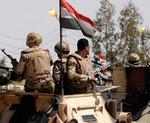
Egyptian_troops_SinaiEgyptian troops battling terrorists in Sinai

Israelis living in a string of villages and towns bordering on the Gaza Strip protested in vain against Defense Minister Moshe Ya’alon’s decision to withdraw the military presence keeping them safe, especially since the summer war on Gaza.

Four significant security events in the last 48 hours on both sides of the border added to their concerns:

Their government, at its weekly cabinet meeting in Jerusalem Sunday, Jan. 4, set up a committee to expedite the transfer of the bulk of IDF facilities from the center of the country to the south.

At the same time, Israelis living in the south within range of the Hamas-ruled Gaza Strip saw the soldiers heading out and were advised to put their trust in local paramilitary “preparedness squads” taking over from the army. The local population believes that they are not up to the job of safeguarding them from more terrorist aggression – by missile, tunnel or intrusion.

Also Sunday, Egypt began expanding the security buffer zone along the 14km of the Gaza-Sinai-Israel border, doubling its breadth from one half to a whole kilometer. The mostly Palestinian inhabitants of this zone were evacuated.

Saturday, Jan. 3, Egyptian troops raided three towns in northern Sinai: Rafah (which is part located in the Gaza Strip), El Arish and Sheikh Zuweid, killing 7 militants of Ansar Beit al-Maqdis, which last month pledged allegiance to the Islamic State of Iraq and the Levant, and jihad against Egypt and Israel.

A few hours later, an Egyptian army explosives expert was killed and several soldiers injured when a large bomb planted on a road in Sheikh Zuweid blew up when they tried to dismantle it.

Saturday night, the IDF commander of the Gaza Division, Brig. Gen. Itay Virov tried to calm dwellers across from the Gaza Strip, who were up in arms about the withdrawal of their military safety net. He addressed members of Kibbutz Nahal Oz with a rare burst of frankness. He spoke of military policy, but his words no doubt reflected the strategic thinking of Prime Minister Binyamin Netanyahu, Defense Minister Ya’alon, the outgoing Chief of Staff, Lt. Gen. Benny Gantz, and his successor next month Maj. Gen. Gadi Eisenkott.

The general may be commended for laying the truth about official policy on the table. However, instead of calming his audience, he bared evaluations that may give the rest of the country sleepless nights as well.

Here are the high points of his Nahal Oz lecture:

  • Israel can’t deter Gazan Palestinians from making war, because they have no other options. So deterrence in this case is an empty value.
  • Israel deliberately avoided going all the way to remove Hamas from power in Gaza in the summer war because salafist jihadists and al Qaeda would have moved in to replace them. It was deemed better to rely on Egypt to grapple with the terrorist threat, including al Qaeda, rather than the IDF.
  • Brig. Virov termed the last Gaza operation a campaign based on the doctrine of prevention rather than a war of aggression.
  • The political wing of Hamas looks after the population and wants peace and quiet, whereas the military wing lost no time in restoring the tunnels Israel blew up, conducting scores of test launches of rockets, and training hard for the next round of combat with Israel.
  • Israel therefore has no option but to prepare for a replay of Defense Edge with operations 2, 3 or even 4. Hamas must be degraded militarily each time – but not so far as to be rendered incapable of buttressing the Hamas regime.
  • The conclusion drawn from Gen. Virov’s lecture was that the Netanyahu government has provided Hamas-Gaza with a political and military guarantee of safety.

Like all policies, even those well thought out, this one too carries a price tag.

The general spoke of Hamas in terms of an independent entity whose operations and impact are confined to the Gaza Strip. He refrained from mentioning that, as recently as December, both of Hamas’ branches, the military and the political, jumped aboard the Iran-led Iraqi-Syrian-Hizballah alliance. This Palestinian group is now subject to Tehran’s policy decisions and directives. This omission from Israel’s policy calculations could be dangerous. Clearly, an undefeated Hamas remains a lasting menace.

Tehran’s decisions regarding Hamas may have an overarching effect, possibly touching on the moves directed by President Barack Obama. (See our Jan. 1 article on Obama’s New Year gift to Israel and the Middle East.).

Israel’s policy of relying on the Egyptian army to contain Al Qaeda’s Sinai network also comes at a price.

For now, Israel has quietly consented to large-scale Egyptian military strength entering Sinai: One and a half divisions, including fighter squadrons and tank battalions, have taken up positions, nullifying the key demilitarization clause of their 1979 peace treaty.

And that’s just for starters.
What Were Armed US Consulate Staff Doing near Adei Ad?

January 4, 2015

What Were Armed US Consulate Staff Doing near Adei Ad? Israel National News,  Ari Soffer, January 4, 2015

(Please see also ‘Deport US Consulate Staff Who Threatened Jews’ and related update links in my parenthetical comment there. This is a further update.– DM)

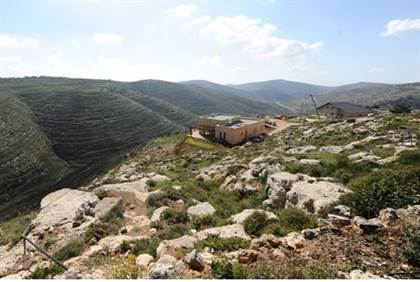
img557200Adei Ad is located in the Shiloh bloc north of JerusalemMendy Hechtman/Flash 90

Security source says ‘no question’ US Consulate staff pointed their weapons during Friday confrontation. Planned provocation or blunder?

****************

The full details of Friday’s clash between residents of the Jewish village of Adei Ad in Samaria and a delegation from the US Consulate in Jerusalem – which very nearly escalated into a fully-fledged shootout between the sides – are still emerging.

But those details which have emerged so far paint a worrying picture regarding the conduct of Consulate staff – who either willingly took part in a planned provocation, or else, in a staggering show of irresponsibility and unprofessionalism, recklessly blundered into a volatile and potentially deadly situation without the slightest idea of what they were doing.

Roughly two hours before the start of Shabbat, a group from the Consulate, escorted by armed (apparently American) guards and several residents of the Arab village of Turmus Ayya, descended en-masse and unannounced on an area within 50 meters of Adei Ad’s southwestern edge. Neither the IDF nor local residents were informed of the visit beforehand.

The Consulate delegation had apparently been “invited” by Palestinian Arabs from Turmus Ayya, many of whom hold US citizenship, ostensibly to see the site of what Arabs claim was an “attack” by Adei Ad residents on an olive orchard. That incident was originally reported Thursday night by the PA’s Bethlehem-based Maan News, which claimed that Jewish “settlers” had uprooted 5,000 olive trees – a rather incredible number to those familiar with quite what such a mammoth task would entail. Subsequent reports later revised the number down to 500, although no independent verification or evidence of the alleged damage has surfaced as yet.

Adei Ad residents, alarmed at the unannounced arrival of a large groupfrom a Palestinian village within meters of their community, rushed out to confront them. A brief verbal altercation ensued which quickly escalated, with youths from Adei Ad hurling rocks at the delegation, causing some damage to a Consulate vehicle.

At this point the accounts vary; witnesses from Adei Ad say Consulate staff drew their weapons – an M-16 and a handgun – following which residents called for backup from Adei Ad’s own security team. The Consulate, for its part, has denied any weapons were drawn at all. Either way, the American delegation beat a hasty retreat.

Notably, at no point during the confrontation was the IDF alerted by the Consulate team; only after leaving the scene did the Americans call the army, who quickly responded and launched an investigation, which is still ongoing.

img73901Damage to US Consulate vehicle Rabbis for Human Rights

Whatever the case, Jewish residents of Adei Ad and surrounding communities in the Shiloh bloc, located in the Binyamin region to the north of Jerusalem, are demanding answers. Angry residents say the incident was clearly a planned provocation, and have expressed their astonishment at the fact that an armed entourage from the US Consulate would arrive at a contested spot without coordinating their visit with the IDF in advance.

Indeed, regardless of the intent behind the visit, one Adei Ad resident pointed out that it was a clear recipe for disaster.

Apart from being the location of a protest in December 10th in which senior PA official Ziad Abu Ein died of a heart attack, the site of Friday’s confrontation is also the precise spot where a group of Palestinians attempted to infiltrate Adei Ad just two weeks ago.

“Two weeks ago at that exact place a horse was stolen,” said the resident, who asked to remain anonymous. “At 10 p.m. that same night dozens of Arabs from a nearby village came up to Adei Ad at the same spot, and residents came out to keep them away.”

Recounting Friday’s incident, he said residents had no idea Consulate staff were present at all. All they saw, he said, was “Arabs approaching, accompanied by what looked like a group of Europeans – we didn’t know who they were exactly. Often foreign anarchists join the Arabs in carrying out violence or provocation.”

Due to the tense relations between Jews and Arabs in the area, Arab farmers must contact the IDF before working land that abuts Adei Ad in order to avoid any confrontations. For their part, Adei Ad residents have long complained that they have been regularly targeted by Arab thieves and vandals.

“About two years ago a group of Arabs actually came right up to my house, right into the enter of Adei Ad, and stole a whole herd of sheep. In the past they’ve stolen horses, they stole a tractor, building equipment,” the resident recounted.

“The Arabs know that if they want to come that close to Adei Ad to do agricultural work they need to let the army know first to escort them. So any time Arabs approach without army supervision – particularly in that place where two weeks ago there was an incident – that’s a sign that they are coming to cause trouble… to attack or damage property,” he added.

He said locals had long given up on the prospect of receiving help from police, who he accused of totally avoiding their responsibilities and only agreeing to investigate Palestinian accusations against them.

“We receive no backing from the police,” he lamented. “Every time there is an incident of robbery by the Arabs the military refuses to deal with it because they don’t look at it as life-threatening; and the police… they tell us that it’s out of their jurisdiction.

“On the other hand, every time the Arabs steal something or cause trouble they then go and report us to the police – that’s how they work – so it’s always a one-sided investigation, because the police claim they have no jurisdiction over the Arab villages, only over us! No one has ever been charged, no property has ever been returned.”

He emphasized that despite the negative characterization of Adei Ad and surrounding Jewish communities in the area by some media outlets, residents are not interested in trouble and just want to get on with their daily lives in peace.

“We have much better things to do with our lives – we have our children and families, and we have jobs,” he said. “We don’t enjoy going out and having rock-throwing fights… no one seems to realize… but we feel we are under threat and that if we don’t do it the next step is a terrorist attack.”

Responding to American denials that Consulate staff pointed their guns at residents, a local security source said there was “no question” they hadindeed drawn their weapons, based on the individual testimony of numerous witnesses.

The security source, who also asked to remain anonymous, said one American “with ginger hair” was seen pointing his pistol at residents, who were unarmed, from inside of his car after rolling down the window. The other armed man then did the same with an M-16 rifle.

It was then that the situation threatened to get out of control.

“News spread that some people had approached the town with weapons, and they called for help,” prompting armed members of the local civilianfirst-response team to rush to the site, he recounted.

Luckily, “at that point it seems like the Americans thought it would be a good time to leave… and after that there was a brief confrontation between the Arabs and (Jewish) residents until the army arrived.”

He said that although an investigation was still ongoing, the conduct of the Consulate delegation was “suspicious.”

“Why didn’t they call anyone while the confrontation was going on?” he asked.

He also described the “strange” behavior of the Consulate guards when they were finally met by IDF forces and first-responders, describing them as looking sheepish and, unprompted, immediately insisting they hadn’t drawn their weapons.

Marc Prowisor, a resident of the nearby town of Shiloh, said the latest confrontation posed some “difficult questions.”

“Were members of the American Consulate knowingly taking part in a larger provocation – which is against the law?” asked Prowisor who, as Director of the One Israel Fund charity which helps secure local communities, is in regular contact with local security forces.

Islamic State Cell Detained by IDF in Hebron‏, Special Unit Established to Track Activities

January 4, 2015

Islamic State Cell Detained by IDF in Hebron‏, Special Unit Established to Track Activities, Algemeiner, Dave Bender, January 4, 2015

ISIS-militants-300x266

ISIS Militants. Photo: Screenshot, Fox News Sunday

“The IDF is deeply concerned with the fact that IS’s videos affect the Palestinian public which is very frustrated with its leadership; we are following this potential phenomenon closely,” the senior official said.

**************

The Israel Security Agency (Shin Bet) and the IDF in November busted what it revealed Sunday was a three-member Islamic State (IS) terror cell in Hebron, Israel’s Walla News reported, as the army said it has ratcheted up surveillance of the growing regional threat.

Officials said they suspected the trio of planning to carry out attacks in Israel including bombings against the IDF. One of the detainees admitted to planning to kill a local Jewish resident at nearby “Abraham’s Well.”

Ahmed Wadeh Salah Shehadeh, 22, Muhammad Fayyad Abd al-Qader, 21, and Ktzai Ibrahim Dib Maswadeh, 23 admitted to interrogators that they had established the military cell, constructed several bombs, and plotted to kill an Israeli soldier and use his weapons and uniform in a shooting attack.

The cell had actually set off to perpetrate the attack, but did not follow through for reasons not detailed in the report.

Their cases were transferred to court in recent days for indictment on offenses of membership and activity in an unlawful association, and other, unspecified charges.

Also on Sunday, Israel’s Channel 2 News reported that army intelligence recently dedicated a separate force to exclusively focus on IS activities, particularly across social media.

“We have made adjustments inside the IDF’s intelligence-collecting units because we came to the understanding that IS is breaking historic boundaries,” the commander of the “Hatzav,” intelligence unit said.

“Most of the information we gather comes from the internet; IS does not belong to a particular region in which we may have sources,” he noted.

Previously, the IDF primarily tracked IS via its division in charge of Syria. However, senior officials soon began to understand that the organization was a unique phenomena.

“Once we saw the first beheading videos we understood IS was something new, never seen before,” according to the unit commander.

“The IDF is deeply concerned with the fact that IS’s videos affect the Palestinian public which is very frustrated with its leadership; we are following this potential phenomenon closely,” the senior official said.

The recent arrests in Hebron apparently bear out that warning about the emerging threat.

Analysis: Osama bin Laden’s documents pertaining to Abu Anas al Libi should be released

January 4, 2015

Analysis: Osama bin Laden’s documents pertaining to Abu Anas al Libi should be released, Long War Journal, Thomas Joscelyn, January 3, 2015

(Release of the documents should further diminish the U.S. Government’s claims that al Qaeda died with bin Laden. How about any documents in the possession of Abu Anas al Libi when he was captured in Turkey in 2013? Might they contradict governmental claims about what happened during the “unanticipated” September 11, 2012 terrorist attack on the U.S. installation in Benghazi, why it happened and the nature of the U.S response? — DM)

Anas-al-Libi

The Obama administration made a concerted push to portray Osama bin Laden as a doddering old man who was operationally irrelevant.

What we know about Abu Anas al Libi’s al Qaeda role challenges all of these assessments.

Releasing any bin Laden files further implicating al Libi in the East Africa attacks would only strengthen the US government’s case to the public.

***************

A senior al Qaeda operative known as Abu Anas al Libi has died in the US as he was awaiting trial. Al Libi was captured in Tripoli during a raid by US forces in late 2013. He had been wanted for his role in the August 1998 US Embassy bombings for more than a decade prior to his arrest.

The US government has in its possession numerous pieces of evidence concerning al Libi’s al Qaeda role, including files recovered in May 2011 from Osama bin Laden’s home in Pakistan.

The Long War Journal has consistently advocated for the release of bin Laden’s files. The Obama administration has released just 17 documents, and a handful of videos, from a total cache of more than 1 million files. Many more of these files, if not almost all of them, should be declassified and released. There are no sources or methods to protect, as everyone knows how this information was obtained. The only files that should remain classified are those that have a direct bearing on the US government’s current counterterrorism operations against al Qaeda.

Now that al Libi has passed away, the US government has another opportunity to be more transparent with respect to bin Laden’s files. After all, at least some of the documents probably would have been released to the public during al Libi’s trial.

Just weeks ago, in mid-December, Benjamin Weiser of The New York Times reported that US prosecutors were seeking to use files recovered during the raid on bin Laden’s compound in al Libi’s trial.

A close reading of the Times‘ account reveals that prosecutors intended to use at least five separate letters recovered in bin Laden’s safe house.

It does not appear that any of these letters were included in the set of 17 documents released by the Obama administration through the Combating Terrorism Center at West Point. None of Abu Anas al Libi’s letters to al Qaeda’s leaders were released.

The first letter described by the Times is from Atiyyah Abd al Rahman, a senior al Qaeda leader, to bin Laden dated June 19, 2010. Rahman explained that al Libi was one of “the last brothers” to be released from Iran. Al Libi “came only a week ago and I met him and sat with him,” Rahman wrote, according to the Times’ summary. Rahman appointed al Libi to al Qaeda’s security committee. “It is normal for any person after a long absence, especially in jail, that he needs some time to figure out how things work,” Rahman noted. Rahman recommended that bin Laden send al Libi a letter, because al Libi was seeking “reassurance.”

A second letter, dated Oct. 13, 2010, is a five-page missive from al Libi to Osama bin Laden. “Your forever lover, Your brother,” al Libi signs the letter. Al Libi explains, according to the Times, that the al Qaeda “brothers,” including bin Laden’s sons and other al Qaeda operatives, fled to Iran under orders from Taliban leader Mullah Omar.

A third letter from Rahman to bin Laden was written “[a]bout a month later,” according to the Times, meaning it was penned sometime in November 2010. Rahman recommended that al Libi be accepted back into al Qaeda’s leadership ranks. Rahman described al Libi as “determined,” “visionary,” and “difficult somewhat,” but also noted that bin Laden knew him. Interestingly, Rahman complained that al Libi had violated al Qaeda’s operational security regulations by “contacting his family in Libya, despite knowing that we don’t allow any communications.”

Al Libi “knows that he was wanted by the Americans,” Rahman wrote to bin Laden, according to the Times’ summary. “He contacted them via phone repeatedly!”

In a fourth letter, written in March 2011, al Libi requested permission to join some other operatives who were returning to Libya to fight against Muammar al Qaddafi’s regime. It is better to “move out sooner rather than later” al Libi wrote.

Rahman forwarded al Libi’s letter to bin Laden, the Times reported, and Rahman explained to bin Laden that he approved al Libi’s request. This is the fifth letter prosecutors sought to introduce. Rahman noted that al Libi was “a little upset with me for the delay in getting back to him.”

A “builder of al Qaeda’s network in Libya”

Al Libi did in fact return to his native Libya. As a member of al Qaeda’s security committee who returned to North Africa only after receiving permission from his superiors in al Qaeda (Rahman), it is safe to assume that he was doing the terrorist organization’s bidding when he set up shop in his homeland.

Indeed, as The Long War Journal previously reported, an unclassified report published in August 2012 highlighted al Qaeda’s strategy for building a fully operational network in Libya. The report (“Al Qaeda in Libya: A Profile”) was prepared by the federal research division of the Library of Congress (LOC) under an agreement with the Defense Department’s Combating Terrorism Technical Support Office (CTTSO).

Abu Anas al Libi played a key role in al Qaeda’s plan for the country, according to the report’s authors. He was described as the “builder of al Qaeda’s network in Libya.”

Al Qaeda’s senior leadership (AQSL) has “issued strategic guidance to followers in Libya and elsewhere to take advantage of the Libyan rebellion,” the report reads. AQSL ordered its followers to “gather weapons,” “establish training camps,” “build a network in secret,” “establish an Islamic state,” and “institute sharia” law in Libya.

Abu Anas al Libi was identified as the key liaison between AQSL and others inside the country who were working for al Qaeda. “Reporting indicates that intense communications from AQSL are conducted through Abu Anas al Libi, who is believed to be an intermediary between [Ayman al] Zawahiri and jihadists in Libya,” the report notes.

Al Libi is “most likely involved in al Qaeda strategic planning and coordination between AQSL and Libyan Islamist militias who adhere to al Qaeda’s ideology,” the report continues.

Al Libi and his fellow al Qaeda operatives “have been conducting consultations with AQSL in Afghanistan and Pakistan about announcing the presence of a branch of the organization that will be led by returnees from Iraq, Yemen, and Afghanistan, and by leading figures from the former LIFG.” The term “LIFG” refers to the Libyan Islamic Fighting Group, an al Qaeda-linked jihadist group formed in Libya in the 1990s.

One of al Libi’s key allies inside Libya was another senior al Qaeda operative, Abd al Baset Azzouz, who has been close to al Qaeda’s senior leaders for decades.

Azzouz was sent to Libya by Zawahiri and “has been operating at least one training center.” Azzouz “sent some of his estimated 300 men…to make contact with other militant Islamist groups farther west.”

Azzouz was reportedly captured in Turkey last month. [See LWJ report, Representative of Ayman al Zawahiri reportedly captured in Turkey.]

Release bin Laden’s files

The Obama administration made a concerted push to portray Osama bin Laden as a doddering old man who was operationally irrelevant. Citing bin Laden documents shown to him by the White House, the Washington Post’s David Ignatius described the jihadist leader as a “lion in winter.” CNN‘s Peter Bergen similarly reported that bin Laden was in retirement at the time of his death. The Combating Terrorism Center at West Point, working off of only those documents provided by the Obama administration, portrayed bin Laden as being sidelined.

What we know about Abu Anas al Libi’s al Qaeda role challenges all of these assessments. He was reintegrated into al Qaeda’s chain of command after his release from Iranian custody. His role was approved by Rahman, who served as one of bin Laden’s top subordinates before being killed in a US drone strike. Rahman made sure that al Libi joined al Qaeda’s security committee — an internal body that is not factored into any public assessments of al Qaeda’s structure or hierarchy. And al Qaeda approved al Libi’s return to Libya. Other evidence subsequently unearthed by the US government shows that al Libi was acting as one of al Qaeda’s top operatives in North Africa at the time of his capture.

This evidence should be released to the public, so we can judge for ourselves how al Qaeda operates.

In addition, any documents or files recovered from bin Laden’s compound that deal with the August 1998 US Embassy bombings should be released as well. After al Libi was captured in Libya, his family claimed he had played no role in the twin attacks, which were al Qaeda’s most successful operation prior to Sept. 11, 2001. However, there is abundant evidence, including testimony given before a US district court, indicating that al Libi was a key player in the bombings. Releasing any bin Laden files further implicating al Libi in the East Africa attacks would only strengthen the US government’s case to the public.