Expert: North Korea Could Hand Nukes Over To Iran, CNN via You Tube, January 29, 2015
Expert: North Korea Could Hand Nukes Over To Iran, CNN via You Tube, January 29, 2015
Pakistan: Between Civility and Fanaticism, The Gatestone Institute, Salim Mansur, January 31, 2015
(The history of Pakistan, “the land (or home) of the pure,” may provide insights into the future of Egypt and other Islamic nations. — DM)
A country made for Muslims has turned into a nightmare for Muslims.
The wish of Mohammad Ali Jinnah, the father of Pakistan, was that the country evolved into a modern democratic state where Muslims, as a majority population, could feel at ease.
But the modernizers who succeeded the colonial authorities in taking power aroused expectations that were simply beyond their abilities to deliver.
But religious authorities were agitating, warning the bewildered masses that these defeats were divine punishments for betraying the true message of Islam by not faithfully abiding by its requirements.
Qutb in his writings recast the division in the world from the classic Muslim one between the House of Islam and the House of War, to one between Islam and jahiliyya, a condition of paganism that preceded the coming of Islam to Arabia. Jahiliyya has now become all-pervasive in the modern world, supposedly sparing none, including Muslims, except for that small coterie of Muslims who took flight [hijra] from the corrupted world and prepared for jihad [armed struggle].
Together, Hasan al-Banna, Abul A’la Maududi and Sayed Qutb fashioned political Islam as a closed system, in opposition to all other competing ideologies.
The theology of takfir — declaring other Muslims apostates or unbelievers; excommunication — obsessed with “unbelief,” has provided the politics of jihad [armed struggle] with the theological justification that arms any Muslim to freelance as a soldier of Allah.
The strategic requirement for advancing global jihad was to convince Muslims that they are liable to be found committing heresy if they support non-Muslim or infidel authorities, such as the United States and its allies, or if they wage war against Muslims, such as members of al-Qaeda.
The theology of takfir and jihad has now come full circle. Many Pakistanis, when they disagree, now find themselves trapped in denunciations that they are unbelievers.
It is from these madrasas that the jihadi fighters come forth as cannon fodder for an endless jihad that has become a growth industry in Pakistan. The entire political elite in Pakistan has profited, just as the Iranian elite continues profiting by doing the same.
For many, being “pure” required separating oneself from non-Muslims.
“The Taliban were not providing strategic depth to Pakistan, but Pakistan was providing strategic depth to the Taliban.” — Ahmed Rashid, foremost scholar of the Taliban.
The recent massacre of school children by Taliban jihadists in a Peshawar army school just lowered even further the bar of atrocities carried out under the banner of Islam in Pakistan. As authorities floundered in the face of mounting violence, with serious implications for new wars in the region, the 2014 Global Terrorism Index ranked Pakistan third behind Iraq and Afghanistan among countries most impacted by terrorism. In addition, the “failed states index” elevated the status of Pakistan to being among the top dozen failed states of the world.
According to the intelligence report of the last conversation before the murders, monitored by Pakistan’s security agency, one of the jihadists informed his handler, “We have killed all the children in the auditorium.” He then asked, “What do we do now?” The handler answered, “Wait for the army people, kill them before blowing up yourself.”[1]
When the mayhem was over, 132 children were dead, among 145 people killed by the jihadists.
The Peshawar massacre has once again, just as in 1971, opened a window onto internal fault lines rupturing the country: those of ideology, ethnicity, sectarianism, and class. Of these, the most severe is the rupture over ideology — between those who insist that the country is insufficiently Islamic and those who fear that religious extremism has brought the country to ruin. This ideological fault line also intensifies the other divisions.
There is not only the immense risk of Pakistan’s nuclear arsenal getting into the hands of Islamist terrorists, but that Pakistan has more or less turned into a safe-haven for them. For religious extremists of Islam, Pakistan has become a secure fortress, from which they can wage their global jihad.
The injunction against the deliberate killing of children has, unfortunately, often been breached in times of war; the Peshawar massacre of children by militants of Tehreek-e-Taliban Pakistan [TTP] were, apparently, revenge killings for the loss of their women and children as a result of Pakistan’s military operations in North Waziristan, along the border with Afghanistan.
The TTP leaders, however, went further. They defended their revenge killing in the name of Islam, as a jihad against their enemies. Umar Khorasani, a spokesman for the TTP, justified the massacre by comparing it to the massacre by the Prophet Muhammad of the Jewish tribe of Banu Qurayza, in which children were also killed.
In offering this justification, Khorasani’s reference to Sahih Bukhari — one of the authoritative sources for Sunni Muslims on the traditions (Sunnah) of the Prophet — carried the message that those who even question the religious legitimacy of the killings would be held responsible for igniting any violence against them by the Pakistani Taliban and their supporters, on the charge of having insulted the Prophet. Such a denunciation by the Taliban of their opponents is consistent with Pakistan’s blasphemy law; it forbids any remark that might be taken as insulting the Prophet or the Quran, with the maximum penalty of death, under which some members of the minority religious communities have been indicted — often unfairly — and held in prison.
The Peshawar massacre and the manner in which the TTP offered its justification for it, have roped the Pakistan’s political and military elite into a fix on how to refute Taliban’s interpretation of Islam’s sacred texts, without getting drawn into a potentially deadly conflict that would only deepen sectarian and ideological differences even more.
If the country is not to slide deeper into the lethal mix of Taliban-type fanaticism and armed globaljihad, the elite need to respond forcefully. The prospect, however, is gloomy.
The Pakistani Taliban is the creature of the ruling elite, especially the directorate of the Inter-Services Intelligence [ISI]. There is also a problem of widespread pride, nurtured by the elite over the past four decades, in Pakistan’s identity as an Islamic state. And since the identity of the elite is closely bound with the ideology of the religious establishment — and not merely with that of the Taliban — it follows that the various Islam-oriented parties and their supporters will fight to preserve their Islamist ideology.
The impasse in which Pakistan finds itself needs explaining. Pakistan was established on the basis of religion, on Islam, and the claim that Muslims in an undivided British India deserved a state of their own to preserve their religion and culture, for fear of losing both if ruled by the Hindu majority population once the British departed from the subcontinent.
The argument to have a separate state based on religion was flawed. But that flaw would only become apparent during the break-up of Pakistan in 1971 — despite the shared belief in Islam.
The circumstances under which India was partitioned in August 1947 still remains contentious, given the subsequent history of wars fought by the successor states, the unsettled nature of the Kashmir conflict, and the break up of Pakistan in 1971 as a reminder that this could happen again.
The pressure for partitioning India in 1947 largely succeeded because an exhausted Britain, after the Second World War in 1945, did not have the stomach to suppress the communal violence escalating between those who supported a separate Pakistan, and their opponents who insisted on keeping India united.
The seeds of religious extremism — adherence to Islam as the line of demarcation, using violence, if necessary, against non-Muslims — were embedded in the initial demand made to Britain for creating Pakistan.
The father of Pakistan, Mohammed Ali Jinnah (1876-1948), exploited this demand. He persuaded the British authorities to partition India. Jinnah himself was a nominal Muslim with a taste for things British. He was an Anglophile who barely spoke Urdu, the vernacular language of Muslims of northern India. He married a non-Muslim woman, the daughter of a wealthy Parsi (Zoroastrian) industrial magnate of Bombay (now Mumbai); and he died a little over a year after Pakistan had been launched in a sea of immense communal violence that accompanied its beginning.
For Jinnah, ironically, religion had been a matter of personal choice. He had taken to Islam as a lawyer, not as a theologian. He had been persuaded, against his earlier political inclinations as an Indian nationalist, that the Muslims in India deserved to have a state of their own in the eventuality that Britain granted India independence. His wish[2] was that the country evolve into a modern democratic state where Muslims, as a majority population, could feel at ease, as opposed to the unease they had felt as a minority population in an undivided India.
As Jinnah said to the assembled politicians of the new country, “Now I think we should keep in front of us as our ideal and you will find that in course of time Hindus would cease to be Hindus and Muslims would cease to be Muslims, not in the religious sense, because that is the personal faith of each individual, but in the political sense as citizens of the State.”[3]
But Jinnah was old, gravely ill, and probably could not even imagine that the forces of religious extremism he had unleashed would devour his vision of Pakistan as simply a peaceful homeland for the Muslims of India.
 Mohammed Ali Jinnah, the founder of Pakistan, in conversation with India’s Mahatma Gandhi
It did not take long, however, for all the various contradictions of ethnicity, language, sect, and class, to surface soon after Pakistan’s birth, between the Muslim refugees from India and the people who had been born there.
The country was also physically divided into two halves, separated in the middle by over a thousand miles of northern India. The demand for a Pakistan based on Islam had carried emotional appeal, but what Pakistan would mean as a Muslim state had not been given much thought.
Then there was a problem with Kashmir. Jinnah, according to biographers, felt cheated by the British. Kashmir, with a Muslim majority population, but ruled by a hereditary Hindu prince, was left to India, instead of Pakistan. Jinnah was prepared to force Kashmir’s union with Pakistan. But after pressure from the British military officers still in command of British India’s joint armed forces, Jinnah dropped his plans.[4]
Much of the divisiveness within Pakistan resulted in the inability of politicians to draft and ratify a constitution for nearly a decade – unlike India, where, after independence, a republican constitution for a parliamentary system of government was drafted, ratified, and adopted in fewer than thirty months.
In Pakistan, the irresolvable differences were over the nature of the Islamic state, its ideals and objectives, and how such a state was to be organized.
There were, on one side, modernist or reform-oriented Muslims, educated within the Western liberal tradition, with Jinnah as their model. They believed the Quran and the Sunnah (traditions of the Prophet) could be reconciled through liberal-reformist interpretation with the requirements of a modern democratic and representative form of government.
The religious establishment, on the other side, with its traditionalist-minded ulema (religious scholars), was insistent that the law of the land could be based only on the Quran and the Sunnah, which provided the complete and unalterable social and political code for an Islamic society. They required, therefore, that Shariah – Islamic law compiled in the 9th-12th centuries C.E. – was made the law of the land.
Then there was Abul A’la Maududi (1903-79), with the title of Maulana (a learned scholar), bestowed by his followers, as the founder and leader of Jamaat-i-Islami – the South Asian counterpart of Ikhwan-i-Muslimin (the Muslim Brotherhood), founded by the Egyptian, Hasan al-Banna (1906-49). Maududi went even farther by demanding that the constitution recognize the sole sovereignty of Allah, and the state as His agent, be limited only to implementing the Shariah.
Ultimately the difference in these two views was unbridgeable. As a result, holding the country together by authoritarian means became unavoidable.
Men in uniform replaced feckless politicians. General (later made Field Marshal) Ayub Khan, a military chief, seized power in October 1958, and set the pattern of military rule for the country. During the decade he ruled, he imposed on the country a constitution of his making; supervised economic development; invested in the defense establishment; worked to undermine the religious establishment; and in 1965 launched a poorly conceived war against India over Kashmir, which backfired. He was eventually forced, in the midst of political unrest across the country, to hand over power in 1969 to yet another general.
The military rule of Ayub Khan’s successor, General Yahya Khan, ended dismally in December 1971 with the break-up of Pakistan. It was preceded by an election for a national assembly in 1970, which Yahya Khan had arranged with the express purpose of handing power to a civilian government. But when a political party from East Pakistan won the largest number of seats in the assembly and was poised to form a government, Yahya Khan reneged on his promise. The people in East Pakistan (now Bangladesh) – estranged from those in West Pakistan (now Pakistan) over ethnic and language differences, and grievances over socioeconomic disparities – rose in opposition to military rule. The situation rapidly deteriorated, a civil conflict turned into a bloody military repression and massacre of unarmed people by the military. It ended with Pakistan declaring war against India, and the surrender of the Pakistani army to Indian forces in Dhaka, the capital of East Pakistan (now independent Bangladesh), on December 16, 1971.
After this humiliating defeat, Pakistanis in general were demoralized and the military discredited. In these circumstances, Zulfikar Ali Bhutto and the party he founded, the Pakistan People’s Party, maneuvered to fill the void. Bhutto belonged to the wealthiest landlord family in the province of Sind; as a young lawyer-politician, he had been appointed a junior minister in the military regime of Ayub Khan. His later disagreements with Ayub Khan’s policies, following the 1965 war fought by Pakistan and India over Kashmir, forced him out of the government and into opposition against military rule.
In the 1970 election Bhutto’s party had emerged with second largest number of seats in the national assembly, behind the party from East Pakistan. Bhutto claimed this as his mandate to form a civilian government, with himself as president, to replace military rule.
In 1973 he presented the country with its third constitution, and had it adopted by the national assembly. But, as the old differences over the nature of an Islamic state and the place of the Shariah resurfaced, the constitution failed to win the support of the religious establishment.
Bhutto was a populist and a demagogue. Although he was one of the most powerful feudal landlords in Pakistan, he nevertheless appealed for electoral support from students, workers and peasants by posing as a defender of the poor and oppressed in society, and, as an ally of China’s then supreme leader Mao Zedong, by embracing the left-wing politics of anti-imperialism. There was showmanship here, and some grandstanding as a leader of a third world nation. It was at this time – and soon after India tested a nuclear device in 1974 – that he determined that Pakistan must acquire nuclear capability of its own. His populism however would not save him from the wrath of the religious establishment.
But, as the country searched for an identity in the aftermath of 1971, Bhutto was temperamentally unsuited to calm the tensions around him. The Muslim religious leaders and their followers distrusted him as another liberal-secularist; he tried to appease them by meeting their demand in declaring as non-Muslims those belonging to the minority Ahmediyya sect within Islam.
In 1977, the military under General Zia ul-Haq staged a comeback, removed Bhutto from office and put him under arrest. While in prison he was indicted for plotting the murder of his political opponent, and put on trial. The court found him guilty, his appeal was denied, and he was hanged in April 1979.
Zia ul-Haq, the third military dictator to take power, ruled until his death in a mysterious plane crash in August 1988. He was a devout orthodox Sunni Muslim, and, unlike his two military predecessors – Ayub Khan and Yahya Khan – he publicly showed respect for Muslim religious leaders and their various organizations. He sought their support, and embraced their religiously directed political agenda to turn Pakistan officially into an Islamic society (Nizam-i-Islam).
ii.
The decades of sixties and seventies in the twentieth century were times of social and political unrest in the West. There was a crisis of values as the young questioned the dominant secular politics mostly concerned with material gain and economic well being, while America’s involvement in the war in Vietnam became increasingly divisive at home. The youth in general defied the authorities on both the Soviet and Western sides of the Cold War. They pushed counter-cultural movements and sought “enlightenment” through sexual freedom, drugs, music, and experimenting with the rites of non-European cultures.
In the Muslim world, the situation was vastly different. The thin veneer of modernity barely penetrated the surface of a world steeped in traditional culture. Islam as understood and practiced for generations sustained the vast majority of people at the edge of poverty. Colonialism had made only a small difference, once independence came, in preparing Muslim societies to meet the immense challenge the modern world posed for them. A tiny segment of the population had received a modern liberal education and had risen in the ranks of colonial administrations as junior civil servants, technocrats, and military officers. On their shoulders fell the task, as in Pakistan after 1947, to lead the country forward and somehow meet the swelling demands of the people for the promise of a better life.
The political leadership of the newly independent states generally looked to the West in terms of their own respective economic and social developments. Within the Muslim world – apart from the few oil-rich Arab states on the Gulf – there was a general consensus among those who held power that there was no alternative to the path for development as historically charted by the advanced Western countries, irrespective of whether those countries were capitalist democracies or socialist.
But the modernizers who succeeded the colonial authorities in taking power – the men in uniform who seized power through military coups due to the fecklessness of politicians, as in Egypt (Colonel Gamal Abdel Nasser) or in Pakistan (General Ayub Khan) – aroused expectations that were simply beyond their abilities to deliver.
The sixties and the seventies of the last century were the decades when the political roof caved in over the heads of the Muslim world’s modernizers. The immediate cause was military defeat. In the Arab world, the June war of 1967 with Israel was a catastrophic defeat for Egypt under Nasser; and, similarly, for Pakistan the December 1971 war with India was a colossal humiliation in which the army lost half the country when East Pakistan, with support of the Indian military, seceded to become an independent Bangladesh.
On the political margins of these Muslim countries, religious parties were agitating, warning the bewildered masses that these defeats were divine punishments for betraying the true message of Islam by not faithfully abiding by its requirements.
These were the decades when old theological debates from the medieval past of the Muslim world re-surfaced and were widely disseminated. Muslims were repeatedly told by religious scholars that to reverse their humiliations, they needed to return to their authentic past, to emulate the ways of their revered ancestors (salaf) and the companions of the Prophet, and to establish the rule of Islam.
In the Arab world, the Muslim Brotherhood of Hasan al-Banna and Syed Qutb (1906-66), and in Pakistan the Jamaat-i-Islami of Maulana Maududi, gained in popularity with a populace increasingly frustrated with its own political authorities.
In Egypt, Syed Qutb, as one of the leaders of the Muslim Brotherhood that declared a jihadagainst Nasser’s military-led government, was sent to the gallows. In death, Qutb became a martyr-scholar for a whole new generation of Muslims who were searching for meaning in the midst of cultural despair and political authoritarianism.
An earlier generation before 1967 in the Middle East – as elsewhere in Asia and Africa – had sought answers in the revolutionary politics of Marx and Lenin; had supported the Vietnamese communists in their war against the United States, and had admired Mao Zedong and the Chinese revolution.
In the period after 1967, and before the 1973 October war that brought the Arab oil-producing states to quadruple the price of oil and turn it into a political weapon, it was the writings of Syed Qutb that appealed to the young in the Middle East. Hasan al-Banna and the Muslim Brotherhood had turned Islam into a political doctrine – Islamism – as a total answer to all the problems of the Muslim world. Qutb had described the solution in terms of an Islamic state implementing Shariah as the fundamental law of the land. Al-Banna’s message was also directed at the lslamic ummah,the whole Muslim nation.
Qutb in his writings refined and deepened the message of al-Banna. In a significant departure from other Muslim thinkers of his time, Qutb recast the binary division in the world made by Muslim traditionalists, one between Dar al-Islam (House of Islam) and Dar al-Harb (House of War), into one between Islam and jahiliyya (a condition of barbarism or paganism) that had preceded the coming of Islam in Arabia.
Qutb developed this concept of jahiliyya as one of the key explanations for the decline of Islam in the world, and the miserably broken condition of Muslims in it. In his ultimately extreme view, and one that caught the imagination of his most devoted followers, jahiliyya had become all pervasive in the modern world, sparing none, including Muslims, except for that small coterie of Muslims who understood the situation, took flight (hijra) or withdrew from the corrupted world, and prepared for jihad (holistic struggle, including warfare) in the cause of Islam.
Qutb’s views were in part influenced by the writings of Abul A’la Maududi, in the extent to which Maududi had revived the theological views of medieval Muslim jurists on matters of God’s sovereignty in human affairs. Maududi’s innovation was in insisting that Islam was a complete system of faith and politics, in other words a totalitarian ideology promoting a social revolution, and the necessity of jihad as the instrument for realizing God’s plan on earth.
Together, Hasan al-Banna, Maududi, and Syed Qutb had fashioned political Islam as a closed system, in opposition to all other competing ideologies confronting Muslims. It was at once simple, rigidly based on the Quran and the Sunnah (traditions) of the Prophet, and provided Muslims with an armed doctrine of jihad to quell their doubts, overcome their fears, and direct them towards the objective of establishing an Islamic state or gaining martyrdom in the pursuit of it. When the Islamic revolution did successfully occur, however, it was in Iran, and in February 1979.
The Iranian followers of a religious leader in exile, Ayatollah Khomeini (1902-89), seized control of the popular uprising and eventually turned Iran into a theocratic Islamic republic.
Iran had been a monarchical regime, and the anti-monarchist revolution, even though Iranians followed the minority Shi’ite version of Islam, caught the imagination of the majority Sunni Muslims on either side of its borders. The leader of the Palestinian movement, Yasser Arafat, for instance, travelled to Tehran and embraced the founder of Iran’s Islamic revolution, Ayatollah Ruhollah Khomeini, as the leader of anti-imperialist revolution.
If Iranians could topple the Shah of Iran, an ally of the United States, then it was not unimaginable that Muslims elsewhere could also overthrow similarly pro-American or pro-Soviet authoritarian regimes that they felt had been repressing them into a state of jahiliyya. As a result, the year 1979 – the beginning of the fifteenth century in the Islamic calendar – became a pivotal year in the Muslim world.
Earlier, in November 1979, there had been a failed attempt by a small group of Saudi Wahhabi extremists to ignite a movement against the ruling House of Saud. They seized the grand mosque in Mecca, at the center of which stands the Ka’aba (the ancient cube-like structure), and held the grand mosque for several days until French paratroopers flushed them out. Although this effort was doomed to fail, it signified unrest within the most conservative Arab state, and the messianic wish for an even stricter version of Islam than the one practiced by Saudi rulers.
Then, at the end of 1979, came the Soviet invasion of Afghanistan. The occupation of a Muslim country by an infidel power became a magnet around which to rally Muslim jihadists, and encourage them to head for Afghanistan and join Afghan mujahideen (freedom fighters) in theirjihad against a military superpower.
iii.
Zia ul-Haq (1924-88), an army general who was then president, turned Pakistan into a frontline state in the decade long Afghan war. Zia viewed the Afghan war as the opportunity to reverse the humiliation of 1971, rebuild the morale of the army, and make Pakistan the key ally of the United States in the war against Soviet Communism.
Under Zia’s direction Islamabad forged a new strategic partnership with President Ronald Reagan’s Washington and the Saudi monarchy to help the Afghan mujahideen (freedom fighters) liberate their country from Soviet occupation.
But the blowback from the Afghan war in time has turned Pakistan from a cockpit of global jihadinto a land increasingly torn and bloodied by armed warriors of Islam.
On seizing power, Zia reached out to the religious establishment and made Islamization of Pakistan his military regime’s domestic priority. He believed the country suffered from a crisis of identity, for which it had paid dearly in 1971. Although the country had been established on the basis of Islam, Zia would regularly remind the people in public speeches and interviews, that the political leadership had failed to establish an Islamic-based society.
Zia’s solution was to encourage an Islamic identity to replace, or supersede, ethno-linguistic and sectarian identities that had weakened and divided the country. Accordingly, the measures he adopted were to make the fundamental law of the land, the Constitution, conform to the dictates of the Quran and the Sunnah, and implement the requirements of the Shariah in society. To push for the Islamization of the country, Zia established the Federal Shariah Court and the Shariah Appellate Bench of the Supreme Court.
What Zia could not have foreseen was how the Afghan war would become the petri-dish of Islamist theology and jihadi politics. As Arabs attracted by the appeal of jihad congregated in and around Peshawar, Afghanistan and the Afghan war became the cradle of the global jihadistmovement. The actual contribution of these “Afghan Arabs” in defeating the Soviet Union was negligible, but it was here they found a safe haven to engage in arcane theological debates that shaped the thinking and politics of those who had been radicalized through the writings of Syed Qutb and Maududi.
The Afghan war may be divided into three phases. The first was the war against the Soviet forces, ending with their full withdrawal in February 1989. The Soviet withdrawal marked the beginning of the second phase until 9/11. During this period, the war turned into an internal struggle among the various tribal groups and factions for the control of Afghanistan. Despite the fall of Kabul, the capital, to Afghan Taliban warriors under Mullah Omar in September 1996, this internal conflict raged on. The third phase began after the 9/11 terrorist attacks on New York and Washington, and led to the U.S. sending forces into Afghanistan to search out and destroy the al Qaeda leadership and network.
In Pakistan during the summer and fall of 1988 after the airplane crash that killed Zia, one could see that although the first phase of the Afghan war was winding down, the country was on edge and the military and security forces were everywhere. In Islamabad, at the Institute of Strategic Studies, one could hear the elite opinion about the Afghan war: that the Soviet defeat had been brought about by Pakistan, and that, despite risks, Zia’s bold vision had turned out right.
In helping the Afghan mujahideen liberate their country, Pakistan had acquired strategic depth in its confrontation with India. The victory also celebrated undoing the defeat of 1971, and providing the military establishment with experience in conducting asymmetrical warfare against an enemy larger in size and resources. Pakistan has always been obsessed with India, and the Afghan war gave its men in uniform new confidence on how to engage with India in Kashmir.
The build-up of the military with the offshore money that flowed into Pakistan from Saudi Arabia in aid of the Afghan war further entrenched the special place it occupies in the country. The observation first made by Sir John Morrice James, Britain’s High Commissioner to Pakistan during the rule of Ayub Khan – that re-arming the military by the Americans “was to risk creating a situation where it would not be so much a case of Pakistan having an army as of the Army having Pakistan”[5] – seemed uncannily true at the end of the Zia era. Since Pakistan’s independence in 1947, and at the end of the first phase of the Afghan war, the military had ruled Pakistan for more than half the period, and the men in uniform, given their self-important role as the guarantor of the country’s security, had acquired a sense of entitlement.
During subsequent visits, it seemed as if the victory in the Afghan war that gave most Pakistanis pride and the right to boast was an illusion. War had laid waste to Afghanistan. Virtually the entire Afghani population within the country – as well as in the neighboring countries of Pakistan and Iran – had been turned into refugees. Pakistan had become home for several million Afghan refugees, mostly of Pashtun/Pathan ethnicity, indistinguishable from Pathans on the Pakistani side of the frontier. With these refugees, the war inside Afghanistan was imported across the border into Pakistan, and the struggles of the Afghan mujahideen against Soviet occupation of their country invariably began to change the political landscape inside Pakistan.
The Afghan Taliban emerged from the ranks of its own refugee population in Pakistan. Their struggles against the Soviet forces in their country in turn persuaded their ethnic brethren, the Pakistani Pathans, to join them. In time, the distinction between Afghani and Pakistani Taliban dissolved even as the frontier between the two countries became irrelevant.
Ahmed Rashid, the world’s foremost expert on the Taliban, observed:
“Throughout Afghan history no outsider has been able to manipulate the Afghans, something the British and the Soviets learnt to their cost. Pakistan, it appeared, had learnt no lessons from history while it still lived in the past, when CIA and Saudi funding had given Pakistan the power to dominate the course of the jihad. Moreover, the Taliban’s social, economic and political links to Pakistan’s Pashtun borderlands were immense, forged through two decades of war and life as refugees in Pakistan. The Taliban were born in Pakistani refugee camps, educated in Pakistanimadrassas and learnt their fighting skills from Mujaheddin parties based in Pakistan. Their families carried Pakistan identity cards.”[6]
The Pakistani military, through its ISI intelligence services, had raised, trained, and armed the Taliban to be its proxy inside Afghanistan. The ISI provided key material and logistic support to the Taliban leader, Mullah Omar through the 1990s right to the present. In addition, the ISI’s deep connection with the Taliban, approved at the highest levels of the Pakistani military leadership, became the preferred approach for raising and supporting other Islamist militias to wage secret warfare against India in Kashmir. The ISI’s investment in Taliban was made for returns to its own liking, when needed, in terms of Pakistan’s strategic interests. So the idea of Afghanistan as a strategic depth for Pakistan, was made by Pakistan’s political establishment into an article of faith not to be doubted.
Ahmed Rashid also noted, however, that “the backwash from Afghanistan was leading to the ‘Talibanization’ of Pakistan. The Taliban were not providing strategic depth to Pakistan, but Pakistan was providing strategic depth to the Taliban.”[7] This was shown in the Afghan war, after September 11, 2001, when American and the allied forces under NATO/ISAF (North Atlantic Treaty
Organization/International Security Assistance Force) command found how difficult it was – and still is – to pacify Afghanistan when the Taliban have continued to operate out of safe havens inside Pakistan. The leaders of both the Pakistani and Afghani Talibans are able to slip back and forth across the border to hide with ease.
The Taliban were raised, on both sides of the border, in the Deobandi school of fundamentalist Islam, different in tradition from what the “Afghan Arabs” brought with them to Pakistan.
The “Afghan Arabs” are Arabs who headed for Afghanistan in 1979 following the Soviet invasion of that country. Osama bin Laden and his entire al Qaeda crew, for instance, came to be referred to as “Afghan Arabs” to distinguish them from native Afghans and this is why the quotes. The “Afghan Arabs” introduced the doctrine of takfir [excommunication] theology to non-Arab Muslimjihadis, especially the Afghani and Pakistani Talibans in their pursuit of global jihad.
The Deobandi school, originating out of the nineteenth century Darul Ulum Deoband – an Islamic school that took its name from the town, Deoband, located in north India where it was foundedcirca 1867 – has been, since it was established, the flag-bearer of jihadi movements in India and Central Asia.
The religious scholars at Deoband, were practitioners of taqlid (imitation): of strictly adhering to the authoritative interpretations of the traditional four schools of fiqh (jurisprudence) in Sunni Islam. They insisted that Muslims follow the Shariah-code as required by their faith and tradition.
The “Afghan Arabs” brought with them to Afghanistan and Pakistan the more rigid teachings of the medieval jurist, Ibn Taymiyya (1263-1328), especially his stringent pronouncements on apostasy and jihad.
The mainline consensus of Sunni Muslim jurists on what constitutes Muslim belief, in accordance with the Shariah’s minimal requirement, is the utterance of the Shahada, or the formula of the Islamic creed: “There is no god other than Allah and Muhammad is His Messenger.” The saying of obligatory prayers, keeping the fast during the month of Ramadan, making pilgrimage at least once in lifetime, and giving charity (zakat) have been traditionally considered the key pillars of Islam, as stipulated in the Quran, and abiding by them is evidence of Muslim piety.
Ibn Taymiyya ruled, however, that such minimal requirement was insufficient, especially when a Muslim ruler failed to implement the Shariah, and when any Muslim failed to engage in jihad(armed struggle) to demand the rule of Shariah. From such a standpoint, as Ibn Taymiyya underscored, when a Muslim ruler transgressed the Shariah-code, or set aside the rule of Shariah in territory under his control, he turned into an infidel, or apostate, and thereupon became a legitimate object for jihad.
Ibn Taymiyya’s medieval excursions into jurisprudence and theology, once revived, became the hallmark of the new generation of Arab Islamists. They made takfir (declaring someone to be an apostate or an unbeliever, excommunication) a signature instrument of their jihad, and readily used such pronouncements to attack their opponents.
The most striking example of this from recent history was in pronouncing takfir on President Anwar Sadat for signing the peace agreement with Israel. That act turned him into an object ofjihad, which eventually brought about his public assassination in October 1981.
Ibn Taymiyya’s hard line extremist thinking was a result of the upheaval in Arab lands during the Mongol invasion of the thirteenth century. His views were a marginal innovation in medieval Islamic theology, but nonetheless became the signature of the contemporary jihadis, the “Afghan Arabs.” In mainline traditional Sunni jurisprudence, the ulema (religious scholars) stressed the importance of obeying Muslim rulers and in avoiding fitnah (disorder or internecine warfare) as a major sin.
The theology of takfir, declaring other Muslims apostates, was, and is, riddled with Muslim-on-Muslim violence. From the earliest decades of Islamic history, Muslim extremists have given a theological justification for their violence against Muslims with whom they disagree, such as Shiites, and other minority sects.
Consequently, in contemporary times within the Muslim world, the fear or apprehension of early Muslim jurists – based on lessons, drawn from the earliest phase of Islamic history, of fratricide and tribal conflicts – has become widespread.
iv.
The theology of takfir, obsessed with “unbelief,” has provided the politics of jihad with the sort of theological justification that arms any Muslim to freelance as soldier of Allah.
A soldier, for instance, in the security detail of Salman Taseer – the governor of Punjab and Pakistan’s largest province with an estimated population of around one hundred million – shot him dead in January 2011 to punish him for his efforts to amend the blasphemy law in the penal code. Furthermore, Pakistani lawyers praised his murderer.
The law was first introduced in the colonial period, and the Zia regime further broadened its scope, as part of the Islamization process, by requiring anyone accused of insulting the Prophet or desecrating the Quran to be imprisoned ahead of an investigation.
After the swift defeat of the Taliban by American forces in Afghanistan in 2001, the “Afghan Arabs” of the al-Qaeda network were on the run in search of sanctuary. Many of them, including Osama bin Laden and his deputy, Ayman al-Zawahiri, found safe haven in the Pathan tribal areas of Waziristan within Pakistan, and dug in there for the long struggle of the global jihad. They indoctrinated the Taliban and other elements of the Pakistani jihadi militias based in Punjab with their highly polarized doctrine of takfir theology, culled from the writings of Ibn Taymiyya. (Among the most well known militias besides the Pakistani Taliban are the fiercely anti-Shia and Deobandi trained jihadists of Sipah-e-Sahaba and Lashkar-e-Jhangvi; the Jaish-e-Mohammad operatives in Kashmir; and jihadists of Laskar-e-Taiba, funded by the ISI, and accused of plotting the 2001 attack on the Indian parliament in New Delhi, and of carrying out the 2008 attack in Mumbai.)
For the jihadi theorists among “Afghan Arabs,” the strategic requirement for advancing globaljihad was to convince Muslims that they are liable to be found committing heresy if they support non-Muslim or infidel authorities, such as the United States and its allies, or if they wage war against Muslims, such as members of al Qaeda network.
The “Afghan Arabs” also sought to convince their jihadi allies among Muslims in the Afghanistan-Pakistan region, especially the Islamists among them, to declare their co-religionists apostates if they were found unwilling to establish Shariah rule in society and assist the global jihad.
The logic behind the doctrine of takfir theology for “Afghan Arabs” – as they instructed the Pakistani Islamists – was straightforward: Once Islamists in Pakistan – with many inside the military, and especially those inside the ISI – became convinced that Pakistan could not be considered any longer an Islamic state due to its role as a junior partner of the United States in the war against the global jihad – represented by Islamist organizations, such as al Qaeda – then the Pakistani Islamists would likely lead a revolt. A successful revolt in Pakistan would then make the country the most important base of global jihad.
The theology of takfir has borne fruit within Pakistan. The assassination in 2007 of Benazir Bhutto – a former prime minister and opposition leader and daughter of Ali Bhutto (hanged by the military in 1979) – and then of Salman Taseer, the governor of Punjab, in 2011, were two high profile jihadi executions. Since 2001, there has been a steady toll of victims from jihadi violence inside Pakistan. Taliban and jihadi militias have directed terrorist attacks and suicide missions against the minority Shia population; against Ahmediyyas, declared non-Muslims; against Christian and Hindu minorities; against Sufi shrines and Sufi Muslims (those devoted to a mystical tradition of spiritual Islam) as heretics; and even against Pakistani military targets, such as the naval base in Karachi in May 2011 and an air force installation in Peshawar in December 2012.[8]
In nearly four decades of strife, warfare, and jockeying for power inside Afghanistan, with the epicenter in the mountainous areas bordering on Pakistan, a culture of jihad and takfir took root. The Pakistan army, answerable to no higher authority than itself, contributed to the making of this culture. The Pakistan army is in part responsible for creating the jihadi militias, which have become monsters that cannot be entirely controlled by the ISI. It is also widely believed that the ISI and some segment of the military establishment are in league with Islamists, and supportive of the goals of global jihad.
The fecklessness and corruption of politicians and civilian authorities work to the advantage of the military establishment, still viewed by a majority of the people as the one institution – in spite of the record – trusted to maintain Pakistan’s security.
Because of Pakistan’s rivalry with India and the unwillingness of the Pakistani population, pushed by Islamist rhetoric, to negotiate with India a peaceful settlement of the Kashmir conflict – which, with rising civilian casualties has worsened over the years as a result of jihadi organized terrorism – the military establishment is unlikely to end its support for jihadi militias operating inside Kashmir from bases inside Pakistan. Similarly, by hanging onto the illusion of Afghanistan as some sort of strategic depth for Pakistan, the military will not disband the Pakistani Taliban.
The Islamization of Pakistan has given more official encouragement and “teeth” to Islamists armed with the theology of takfir. These Islamists have shown, that, when squeezed too hard by the military or civilian authorities, they are ready to bite with attacks on military installations, such as one on the naval base in Karachi, or by assassinations, such as in the killings of Salman Taseer and Benazir Bhutto.
Large segments of the Pakistani population live in poverty. The most impoverished region is in the tribal areas of northwest Pakistan, and home to the Taliban. For a vast majority of the people, basic needs in terms of medicine, clean water, nutrition, education and jobs are barely met by the state. The insult to the human dignity of those more or less abandoned to endless destitution is compounded by the lifestyle of the rich and the privileged. The people in the military are the most privileged among the Pakistanis, and resentment against them is not far below the surface of a society seething with tensions.
The Taliban attack on the Peshawar army school, and the murder of the children there, most of whom came from military homes, went beyond revenge. It signified class-based hostility against a system of privilege for a tiny minority. There are over one hundred specially built army schools, such as the one in Peshawar, for children of the military establishment and the civilian elite, to provide for modern education.
In contrast, there are nearly 14,000 madrasas (religious seminaries) where, under the supervision of Deobandi scholars, a Quran-based education of rote learning and memorization, ill-equipped for modern needs, is provided to an estimated two million children of the poor. It is from these madrasas that the jihadi fighters come forth as cannon fodder for an endless jihad that has become a growth industry in Pakistan. The entire political elite in Pakistan has profited, just as the entire Saudi elite has profited by funding the Islamists, and just as the entire Iranian elite continues to profit by doing the same.
Politics in Pakistan has carried in its blood stream the virus of religious fanaticism right from the outset of its creation. The name chosen for the country at birth, “Pakistan,” in Urdu means “the land (or home) of the pure.” For many, the significance of being a Pakistani came to mean striving, as Muslims, to be “pure,” and that a true believer required separating themselves from non-Muslims. But this mentality turned full circle. Infected by the theology of takfir and the politics of jihad, Pakistanis, when they disagree, now find themselves trapped in denunciations that they are unbelievers. A country made for Muslims has now turned into a nightmare for Muslims. The children killed in the Peshawar army school by Taliban were innocent of the politics of their elders, even as these children were their sad victims.
[1] Ismail Khan, “We have killed all the children… What do we do now?” Reported in Dawn(Karachi), 18 December 2014.
[2] As he indicated in his address to Pakistan’s Constituent Assembly meeting for the first time in Karachi in August 1947
[3] See Stanley Wolpert, Jinnah of Pakistan (New York: Oxford University Press, 1984), pp. 337-340.
[4] See Wolpert, Jinnah, pp. 347-354.
[5] Cited in Shuja Nawaz, Crossed Swords: Pakistan, its Army, and the Wars Within (Karachi: Oxford University Press, 2008), p. 200.
[6] Ahmed Rashid, Taliban: Militant Islam, Oil and Fundamentalism in Central Asia (New Haven & London: Yale University Press, 2000), p. 185.
[7] Rashid, Taliban, p. 187.
[8] See Declan Walsh, “Pakistani commandos regain control of Karachi military base,” in The Guardian (UK), 23 May 2011, for report on the attack on the naval base in the port city of Karachi; and see Ismail Khan, “Audacious attack on Peshawar PAF base,” in Dawn (Karachi), 16 December 2012 for report on the attack on the air force base in Peshawar.
Nasrallah to Israel: Accept “the mix of Lebanese and Iranian blood on Syrian soil in Quneitra” or face war, DEBKAfile, January 30, 2015
 More saber-rattling from Hizballah leader Hassan Nasrallah
In is first speech since the cross-border military clash with Israel this week, Hizballah leader Hassan Nasrallah Friday, Jan. 30 tried dictating terms to Israel for border calm to continue. He said Israel must give up the right it reserves to strike out against the presence of his Lebanese Shiite organization and Iran on Syrian soil in Quneitra – or else, the war goes on.
“The resistance no longer cares about rules of engagement,” he said in reference to Israeli leaders’ repeated warning that they would not tolerate an Iranian-backed Hizballah takeover of Syrian Golan for opening up a second front against the Jewish state.
The Hizballah leader went on to say: “From now on, if any member of Hizballah is assassinated, we will blame it on Israel and reserve the right to respond to it whenever and however we choose.”
The main point he made was this: “The mix of Lebanese and Iranian blood on Syrian soil in Quneitra represents the unity of our battle and fate.”
During the day he conferred with a visitor from Tehran: Al Qods Brigades chief, Gen. Qassem Sioleimani.
Clearly, the high tension emanating from the Golan and its environs since the air strike on Jan. 18 that killed an Iranian general and six Hizballah officers near Quneitra – up until the Hizballah attack on an IDF convoy from Mt. Dov Wednesday, Jan. 28 – was just a preamble.
DEBKAfile’s military sources report that Israel’s armed forces find they are pitched against a dangerous concerted drive by Iranian Revolutionary Guards, Hizballah, local and Iraqi Shiite militias, to seize and control a new pro-Iranian front line – a narrow strip 150-km long – which runs from the Qalamoun Mountains of Syria up to Mt. Hermon and includes the Syrian Golan.
This line overlooks Israel and touches its borders at more than one point.
Hizballah’s chief undoubtedly recognizes – as do his masters in Tehran – that they face more armed clashes with Israel in the coming weeks, because the terms Nasrallah dictated as Tehran’s mouthpiece are unacceptable.
Israeli PM Binyamin Netanyahu said Friday that the continuous offensive staged by Iran to uproot Israel won’t succeed. He spoke on a hospital visit to soldiers injured in the Hizballah rocket attack on their convoy Wednesday.
(Nothing to see here; they are just insurgents. Please see White House Struggles To Distinguish Between The Islamic State and Taliban Prisoner Swaps. — DM)
The Taliban claimed last evening’s attack at Kabul International Airport that killed three American contractors. The insider or green-on-blue attack, where a member of the Afghan security forces kills Coalition personnel, is the first of its kind recorded this year.
The attacker, who was dressed in an Afghan military uniform, killed the three contractors and wounded one, Major General Haq Nawaz Haqyar, the commander of Afghan police at the airport, told Pajhwok Afghan News. An Afghan was also killed in the shooting, Haqyar said. It is unclear if the Afghan who was killed was the shooter.
The US Department of Defense confirmed that three Americans and an Afghan were killed in the shooting.
Taliban spokesman Zabihullah Muhajid claimed the attack in two statements on his Twitter account, and said it was executed by Ihsanullah, an “infiltrator … from Laghman province working inside Kabul airport.”
“The attack killed 3 American terrorists and wounded 4 others before the infiltrator was martyred by return fire,” Muhajid claimed. The tweet included the hashtag “Khaibar,” a reference to the Taliban’s offensive that was announced in May 2014. The Taliban said it will continue to launch insider attacks, as well as encourage Afghan soldiers to execute such operations.
The Taliban have devoted significant effort into attempts to kill NATO troops and foreigners by infiltrating the ranks of Afghan security forces. Mullah Omar affirmed this in a statement released on Aug. 16, 2012, when he claimed that the group had “cleverly infiltrated in the ranks of the enemy according to the plan given to them last year [2011],” and he urged government officials and security personnel to defect to the Taliban as a matter of religious duty. Omar also noted that the Taliban had created the “Call and Guidance, Luring and Integration” department, “with branches … now operational all over the country,” to encourage defections. [See Threat Matrix report, Mullah Omar addresses green-on-blue attacks.]
Overall number of insider attacks still unknown
The last known insider attack took place on Sept. 16, 2014 in the western province of Farah. In that attack, an Afghan soldier gunned down a Coalition trainer inside a military base.
The previous attack occurred on Aug. 5 at a training center in Kabul. An Afghan soldier killed a US major general and wounded 16 more military personnel, including a US brigadier general, a German general, five British troops, and at least one Afghan officer. The Taliban did not claim credit for the attack, but praised the Afghan soldier who executed it.
There were four insider attacks recorded in Afghanistan in 2014, according to The Long War Journal’s statistics. The number of reported green-on-blue attacks on Coalition personnel in Afghanistan has dropped steeply since a peak of 44 in 2012. In 2013, there were 13 such attacks. [For in-depth information, see LWJ special report, Green-on-blue attacks in Afghanistan: the data.]
The decline in attacks may be due to several factors, including the continuing drawdown of Coalition personnel, reduced partnering with Afghan forces, and the adoption of heightened security measures in interactions between Coalition and Afghan forces.
However, many insider attacks remain unreported. If an attack by Afghan personnel does not result in a death or injury, and it is not reported in the press, the Coalition will not release a statement on the incident.
The International Security Assistance Force (ISAF), which was disbanded at the end of 2014, told The Long War Journal in March 2012 that “these statistics,” the number of attacks that did not result in a casualty, are “classified.”
“[A]ttacks by ANSF on Coalition Forces … either resulting in non-injury, injury or death … these stats as a whole (the total # attacks) are what is classified and not releasable,” Lieutenant Colonel Jimmie Cummings, ISAF’s former Press Desk Chief, told The Long War Journal. Cummings said that ISAF is “looking to declassify this number.” The number was never declassified.
Deadly Fighting Between Hezbollah and Israel, Fox News with Oliver North via You Tube, January 29, 2015
(Obama: acting like a “petulant child.” — DM)
Iranian institutions to hold cartoon contest on The Holocaust
Via The Art Desk at the Tehran Times

(Let me guess…in response the Israelis will take to the streets in protest, riot, and behead several non-believers. – LS)
TEHRAN — Iran’s House of Cartoon and the Sarcheshmeh Cultural Complex plan to hold another international contest on the theme of Holocaust denial in the near future.
The 2nd International Holocaust Cartoons Contest has been organized in protest against French satirical weekly Charlie Hebdo’s recent publication of the cartoons insulting Prophet Muhammad (S), the secretary of the contest, Masud Shojaei-Tabatabaii, said in a press conference on Saturday.
Shojaei-Tabatabaii, who is also the director of Iran’s House of Cartoon, added that world cartoonists are asked to submit their works before the first day of April.
The first place winners will receive a cash prize of $12,000, the second place will have $8000 and the third $5000.
The top selected works will mainly go on show at the Palestine Museum of Contemporary Art in Tehran and several other locations across the city.
White House Struggles To Distinguish Between The Islamic State and Taliban Prisoner Swaps, Jonathan Turley’s Blog, Jonathan Turley, January 30, 2015
(President Humpty Dumpty:
‘When I use a word,’ Humpty Dumpty said, in rather a scornful tone, ‘it means just what I choose it to mean — neither more nor less.’
‘The question is,’ said Alice, ‘whether you can make words mean so many different things.’
‘The question is,’ said Humpty Dumpty, ‘which is to be master — that’s all.’
Hence, Islam is the religion of peace and terrorists aren’t terrorists. Will all of the king’s horses and all of the king’s men be able to put him back together again?– DM)
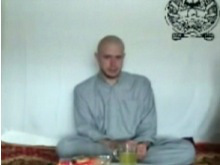

The White House again seems to be struggling with barriers of both language and logic as many raise comparisons between the controversial Bergdahl swap and the effort this week of Jordan to swap a terrorist for one of its downed pilots with Islamic State. During a week where one of the five Taliban leaders released by the Administration has been found trying to communicate with the Taliban, the Jordanian swap has reignited the criticism of the swap for Army Sgt. Bowe Bergdahl, which violated federal law and released Taliban leaders with long and bloody records. The White House seems to be trying to argue that the Taliban are not terrorists in direct contradiction to its prior position that they are indeed terrorists. It shows the fluidity of these terms and how the government uses or withdraws designations as terrorists to suit its purposes. The familiarities between Islamic State (IS) and the Taliban appear to be something in the eye of beholder or, to quote a certain former president, “It depends on what the meaning of the word ‘is’ is.”
As a refresher, the Taliban has long been viewed as terrorists, even when they were in power. They have destroyed religious sites, art, and in one of the most infamous acts in modern history, blew up the giant ancient Buddhas at Bamiyan.The United Nations and human rights groups have documented a long list of civilian massacres and bombings carried out by the Taliban. One report described “15 massacres” between 1996 and 2001. The UN estimates that the Taliban were responsible for 76% of civilian casualties in Afghanistan in 2009, 75% in 2010 and 80% in 2011. The Human Rights Watch estimates that “at least 669 Afghan civilians were killed in at least 350 armed attacks, most of which appear to have been intentionally launched at non-combatants.” This includes the widespread use of suicide belts. The Taliban has always had a close alliance with al Qaeda.
That record was put into sharp relief with the swap for Bergdahl with ties to terrorism including one who was the head of the Taliban army, one who had direct ties to al-Qaeda training operations, and another who was implicated by the United Nations for killing thousands of Shiite Muslims. While we have always said that we do not negotiate with terrorists, we not only negotiated for Bergdahl but gave them what they wanted.
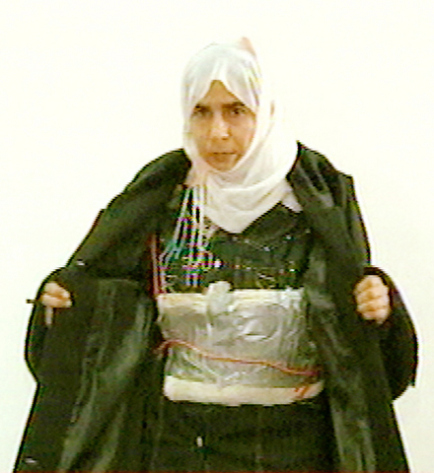
The Jordanian swap raised the same obvious concerns. Many have objected, for good reason, to the idea of releasing Sajida al-Rishawi, who participated with her husband in a terrorist attack on a wedding party at the luxury Radisson hotel in the Jordanian capital of Amman on Nov. 9, 2005. al-Rishawi hoped to be welcomed to paradise by walking into a wedding of 300 people enjoying a family gathering with children and murdering them in cold blood. Her husband’s bomb went off but not her bomb. It goes without saying that she is a hero to the murderous Islamic State for her effort to kill men, women, and children at a wedding.
The swap appears in part the result of pressure from Japan to secure the release of one of its citizens. In my view, such a propose swap was disgraceful. al-Rishawi is as bad as it gets as a terrorist. To yield to terrorists who engage in weekly demonstrations of beheading unarmed captives is morally wrong and practically suicidal. Just as the West is funding this terrorist organization through millions of ransom payments, the exchange of a terrorist only fuels their effort to capture and torture more Western captives.
This brings us back to the White House. When asked about the proposed swap with Islamic State, the White House was aghast. White House spokesman Eric Schultz stated “Our policy is that we don’t pay ransom, that we don’t give concessions to terrorist organizations. This is a longstanding policy that predates this administration and it’s also one that we communicated to our friends and allies across the world.”
The media understandably sought guidance on why the swap with Bergdahl was the right thing to do (despite the flagrant violation of federal law) while the swap for the pilot was not. The White House acknowledged that the Taliban are still on a terrorist list but then tried to rehabilitate the organization into something else. The White House is now referring to the Taliban as an “armed insurgency.” It notes that the Taliban are not listed by the State Department as a terrorist organization. However, they are listed as one of the “specially designated global terrorist” groups by the Department of the Treasury. Indeed, they have been on that list since 2002. Worse yet, the statement from the White House came in the same week that the Taliban claimed responsibility for killing three U.S. contractors.
John Earnest tried to thread the needle by explaining “They do carry out tactics that are akin to terrorism, they do pursue terror attacks in an effort to try to advance their agenda.” He seems to struggle to explain what is terrorist attacks and what are attacks “akin to terrorism.” Most people view suicide belts and civilian massacres to be a bit more than “akin to terrorism.”
Earnest also note that, while the Taliban has links to al Qaeda, they “have principally been focused on Afghanistan.” However, “Al Qaeda is a terrorist organization that has aspirations that extend beyond just the border between Afghanistan and Pakistan.” That is diametrically opposed to the position of the Administration in claiming sweeping powers to strike targets around the world against any forces linked to al Qaeda and many who have few such links. Indeed, while referencing to the authorization to attack al Qaeda, the Administration attacked Islamic State, which was actively fighting with al Qaeda.
The spin of the White Hosue also ignores the role of the Taliban-aligned Haqqani network in holding Bergdahl, a well-known terrorist group.
There are obviously arguments to make for the Bergdahl swap (though I find little compelling in the arguments that justify the violation of federal law by the White House). However, the argument must acknowledge that we negotiated with a group of hostage taking terrorists and we need to address the implications of that fact. Alternatively, if the White House now believes that the Taliban is no longer a terrorist organization, it needs to take it off its listing of such groups (a listing that subjects people to criminal charges for material support or assistance with the group). It cannot have it both ways and call it a terrorist group unless such a label is inconvenient.
Swapping Prisoners with Terrorists, National Review Online, Andrew C. McCarthy, January 29, 2015
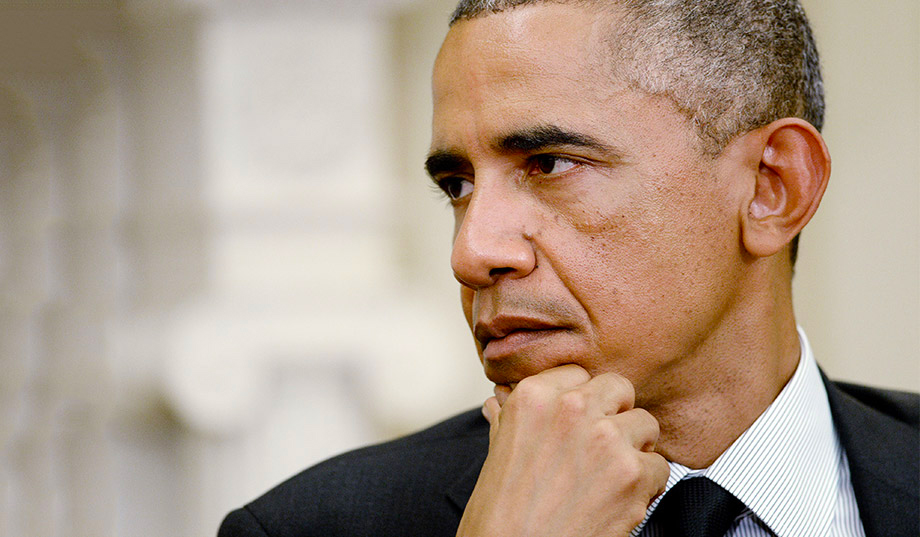
Obama’s disastrous policy dates back to his earliest days in office.
Suddenly, there is outrage in the land over President Obama’s policy of negotiating prisoner swaps with terrorist organizations, a national-security catastrophe that, as night follows day, is resulting in more abductions by terrorist organizations.
Well, yes, of course. But what took so long? Sorry if I sometimes sound like I work the “I Told You So” beat at the counter-jihad press. But as recounted in these pages, immediately upon assuming power in 2009, Obama started negotiating exchanges of terrorists — lopsided exchanges that sell out American national security for a net-zero return.
Critics now point to the indefensible swap Obama negotiated with our Taliban enemies in 2012 as if it were the start of the problem. In reality, the springing of five top Taliban commanders in exchange for the Haqqani terror network’s release of U.S. soldier Bowe Bergdahl was fully consistent with what was by then established Obama policy. There was nothing new in our president’s provision of material support to terrorists even as those terrorists continued to conduct offensive terrorist operations against our troops.
Clearly, the Bergdahl–Taliban swap was a disaster. As I’ve previously noted, it would be a profound dereliction of duty for a commander-in-chief to replenish enemy forces in this manner even if the captive we received in exchange had been an American war hero. To the contrary, Obama replenished our enemies in exchange for a likely deserter who may have voluntarily provided intelligence to the enemy and whose treachery cost the lives of American soldiers who tried to find and rescue him.
Even the conservative media are now suggesting it was the Bergdahl–Taliban swap that marked Obama’s reckless departure from longstanding American policy against negotiation with terrorists, and in particular against exchanging captured terrorists for hostages. This policy reversal has indeed incentivized jihadists to capture more Westerners, and prompted state sponsors of jihadists, such as Qatar, to propose more prisoner swaps. Moreover, the Obama strategy has deprived the U.S. of any moral authority or leadership influence to dissuade other countries, such as Jordan, from releasing anti-American jihadists in similar prisoner exchanges.
But the disaster did not begin with the Bergdahl–Taliban swap.
As I detailed in a column soon after Obama took office — specifically, on June 24, 2009 (“Negotiating with Terrorists: The Obama administration ignores a longstanding — and life-saving — policy”):
Even as the mullahs [i.e., the rulers of Iran’s Shiite regime] are terrorizing the Iranian people, the Obama administration is negotiating with an Iranian-backed terrorist organization and abandoning the American proscription against exchanging terrorist prisoners for hostages kidnapped by terrorists. Worse still, Obama has already released a terrorist responsible for the brutal murders of five American soldiers in exchange for the remains of two deceased British hostages.
To summarize: The Iranian government implanted a network of Shia jihadist cells in Iraq in order to spearhead the terror campaign against American troops. The point was to duplicate the Hezbollah model by which Iran controls other territory beyond its borders. In fact, the network of cells, known as Asaib al-Haq (League of the Righteous), was organized by Hezbollah veteran Ali Musa Daqduq.
The network was run day-to-day by two brothers, Qais and Layith Qazali. Both brothers and Daqduq were captured by U.S. forces in Basrah after they orchestrated the assassination-style murders of five American soldiers abducted in Karbala on January 20, 2007.
A few months later, in May 2007, the terror network kidnapped five British civilians. As American troops put their lives on the line to protect Iraq, the terrorist network told Iraq’s Iran-friendly prime minister, Nouri al-Maliki, that they would release the Brits in exchange for Daqduq and the Qazali brothers. The Bush administration refused the offer.
But soon after entering office in 2009, President Obama decided to change course and entertain the offer. The new administration rationalized that the trade could serve the purpose of Iraqi political reconciliation — which is to say: Obama, in the midst of pleading for negotiations with the “Death to America” regime in Tehran, prioritized the forging of political ties between Iraq and an Iran-backed terror network over justice for the murderers of American soldiers.
Conveniently, Iran’s influence over Maliki ensured that Iraq would play ball: Maliki’s government would serve as the cut-out, enabling Obama to pretend that (a) he was negotiating with Iraq, not terrorists; and (b) he was releasing terrorists for the sake of Iraqi peace, not as a ransom for hostages.
Layith Qazali was released in July. This failed to satisfy the terror network, which continued to demand the release of Daqduq and Qais Qazali. The terrorists did, however, turn over two of the British hostages — or rather, their remains.
I know you’ll be shock-shocked to hear this, but while Obama’s minions were practicing their so-very-smart diplomacy, the jihadists were killing most of their hostages. At least three of the Brits were murdered. Yet even that did not cause Obama to reconsider his position.
In late 2009, the administration released Qais Qazali in a trade for the last living British hostage, Peter Moore. As The Long War Journal’s Bill Roggio reported at the time, an enraged U.S. military official aware of the details of the swap presciently observed: “We let a very dangerous man go, a man whose hands are stained with U.S. and Iraqi blood. We are going to pay for this in the future.”
Meanwhile, as I related in July 2009, Obama released the “Irbil Five” — five commanders from the Iranian Revolutionary Guard’s Quds force. Like Daqduq, the Quds force was coordinating Iran’s terror cells in Iraq. At the time, General Ray Odierno, then the top U.S. military commander in Iraq, publicly stated that Iran was continuing to support, fund, and train the terrorists attacking American and allied forces.
As Michael Ledeen pointed out, the release of the five Iranian terrorist commanders – three years before Obama’s release of the five Taliban commanders – was the price the mullahs had demanded to free Roxana Saberi, a freelance journalist the mullahs had been holding. The Obama administration, naturally, claimed that it was not negotiating with terrorists but with sovereign governments (just as it claimed only to be negotiating with Qatar as it cut the Bergdahl deal with the Taliban and the Haqqanis). Besides, said the administration, the president’s hands were tied by the status-of-forces agreement, which purportedly required turning prisoners over to the Iraqi government (for certain return to Iran) — even prisoners responsible for killing hundreds of Americans, even prisoners sure to persevere in the ongoing, global, anti-American jihad.
And then there was Daqduq. His comparative notoriety, coupled with a smattering of negative publicity over the other terrorist negotiations and swaps, caused a delay in his release. But in July 2011, with the Beltway distracted by the debt-ceiling controversy, the Obama administration tried to pull off Daqduq’s stealth transfer to Iraq.
As I noted at the time, however, the Associated Press got wind of the terrorist’s imminent release, and its short report ignited fury on Capitol Hill. Several senators fired off a letter, outraged that the United States would surrender “the highest ranking Hezbollah operative currently in our custody” — a man who would surely return to the jihad “to harm and kill more American servicemen and women” when Iraq inevitably turned him over to Iran, as it had done with other released terrorists.
The administration retreated . . . but only for the moment. Realizing it would be explosive to spring Daqduq during his reelection campaign, Obama waited until the Christmas recess after the election. The president then had the terrorist quietly handed over to Iraq, which, after acquitting Daqduq at a farce of a “trial,” duly released him to Hezbollah in Lebanon.
There is a reason why the Arab press was reporting that the Obama State Department was entertaining discussions with Egyptian authorities about freeing the Blind Sheikh — Omar Abdel Rahman, the convicted terrorist serving a life sentence for running the jihadist cell that bombed the World Trade Center and plotted other attacks against New York City landmarks. There is a reason why, when he assumed power in 2011, Muslim Brotherhood–leader-turned-Egyptian-president Mohamed Morsi proclaimed that his top priorities included pressuring the United States to return the Blind Sheikh to Egypt.
Long before the Bergdahl–Taliban swap, it was well known that the Obama administration was open for business — if the business meant releasing terrorists.
Are Liberals Actually Admitting Islamic Terrorists Exist?!? PJ Media Trifecta via You Tube, January 29, 2015
(The phrase “literal Islam” is an excellent substitute for “radical Islam.” Literal readings of the Koran and other Islamic “holy” texts support and demand what so called “radical Islamic extremists” do. Perhaps Obama and others who claim that Islam is “the religion of peace” should be labeled “extremist” and/or “radical” because they — rather than the Islamic State, et al — pervert the basic teachings of Islam. They apparently want us to believe, all evidence to the contrary notwithstanding, that Islam is just another peaceful religion much like others and is therefore not a problem for secular societies. — DM)
By: J. E. Dyer
Published: January 30th, 2015
via The Jewish Press » » Bibi, Iran’s Nukes, and Military Force in a Changed Middle East.

{Originally posted on author’s website, Liberty Unyielding}
Over at The Atlantic, there’s a comprehensive worldview being built on the question of whether there’s a “military solution” to the Iran nuclear problem, and how Benjamin Netanyahu has Israel positioned vis-à-vis the problem in general.
Jeffrey Goldberg thinks Netanyahu has Israel positioned very poorly indeed.
James Fallows’ conclusion, agreeing with Goldberg on the worldview, is encapsulated in a quote from a war-game director and retired Air Force officer in 2004:
“After all this effort, I am left with two simple sentences for policymakers,” our main war-game designer, retired Air Force colonel Sam Gardiner, said at the end of our 2004 exercise. “You have no military solution for the issues of Iran. And you have to make diplomacy work.” That was true then, and truer now.
I don’t doubt at all the sincere belief Fallows has in this conclusion. But if you unpack the work that led to it 2004, you find that it was based on a fatally flawed premise. (More on that in a moment.)
Moreover, the situation of 2004 no longer obtains. That means that the calculations of two major players must now be different. One is Israel; the other is the United States. The calculations I refer to include not merely the consequences of each party’s actions, and whether the parties’ capabilities are sufficient for the necessary task. They also include what the threat has become, and the fact that it is graver now than in 2004.
Don’t make assumptions about what I mean by that. It may not be what you think.
Why the 2004 conclusion about “military force” is flawed
I’ll begin by explaining my point that the premise of the 2004 war game sponsored by The Atlantic was flawed. There are several criticisms that can be levied, but this is the one that matters most. (And I don’t mean to impugn the care and diligence that went into the war game. You’ll see, however, why I found it fatally flawed at the time – before I was an active blogger – and still do.)
To illustrate what I’m talking about, I’ll quote a key passage from the 2004 war-game summary. Several players were assembled to act out the roles of the Principals Committee of the National Security Council, and James Fallows narrates the events of the game:
The President wanted to understand the options he actually had for a military approach to Iran. The general and his staff had prepared plans for three escalating levels of involvement: a punitive raid against key Revolutionary Guard units, to retaliate for Iranian actions elsewhere, most likely in Iraq; a pre-emptive air strike on possible nuclear facilities; and a “regime change” operation, involving the forcible removal of the mullahs’ government in Tehran. Either of the first two could be done on its own, but the third would require the first two as preparatory steps. In the real world the second option—a pre-emptive air strike against Iranian nuclear sites—is the one most often discussed. Gardiner said that in his briefing as war-game leader he would present versions of all three plans based as closely as possible on current military thinking. He would then ask the principals to recommend not that an attack be launched but that the President authorize the preparatory steps to make all three possible.
The fatal flaw here is posing the problem set by the president as one of creating options for a “military approach” to Iran. That’s why the options end up being, respectively, useless, vague, and appalling.
Asking what a “military approach to Iran” would look like is asking the wrong question. The first question – the right question – is always what the objective is. If you read through the war-game summary, I believe you’ll agree with me that no strategic objective was ever set for the players. The three options outlined above imply three different objectives. If I were the president, and those three options were presented to me, I would ask what could have possessed my staff to forward options one and three.
Fallows relates that the Principals Committee players spent most of their time thinking of reasons why option three was bad. Of course they did. But why they were even discussing it is the real question.
They spent very little time on option two, according to Fallows, which is the only option that would have fit the objective as most Americans understood it: to prevent Iran from getting nuclear weapons by inflicting destruction on her nuclear program. This is his account of the time they gave to it:
The participants touched only briefly on the Osirak-style strike [i.e., option two] during the war game, but afterward most of them expressed doubt about its feasibility.
This is by no means the only reason to dispute the conclusion the war-gamers came to. But it’s the most important one. They were not asked to respond to a specific objective with options for accomplishing it. In particular, they weren’t told to focus on the objective that was relevant and widely understood to be the potential purpose of military operations – and they didn’t focus on it!
They were asked, in the absence of a specific objective, to discuss some random options for using military force. That tells us nothing about the efficacy of military force. It tells us that the planning process asked the wrong question.*
Fast-forward to 2015
In 2015, we are no longer in the situation of 2004. Three important conditions have changed since then. The importance of these conditions can’t be overstated, in fact, because they change both what’s possible, and what matters.
Jeffrey Goldberg wrote the following on Tuesday (emphases below are added by James Fallows):
Whatever the case, the only other way for Netanyahu to stop Iran would be to convince the president of the United States, the leader of the nation that is Israel’s closest ally and most crucial benefactor, to confront Iran decisively. An Israeli strike could theoretically set back Iran’s nuclear program, but only the U.S. has the military capabilities to set back the program in anything approaching a semi-permanent way.
Fallows disagrees with him, invoking the 2004 war game to assert that “military force,” per se, just can’t get the job done:
Israel doesn’t have the military capacity to “stop” Iran from getting a nuclear weapon, and neither does the United States, at least not in circumstances short of total war.
The key problem with working off of either of these premises, Goldberg’s or Fallows’, is that their framing is stuck in 2004. Here are the three conditions that have changed since then:
(1) The U.S. no longer has the conventional military capability to “set back Iran’s nuclear program in something approaching a semi-permanent way.” This is a relative condition, and it’s because of the loss of readiness in our armed forces, independent of any other reason.
(2) Iran’s nuclear program is considerably advanced from 2004, and setting it back has a different definition now. This doesn’t mean it’s infeasible, but it does mean that no one now has the capability to use a conventional strike campaign to set Iran’s program back to where it was ca. 2004 or earlier. A setback can only be to some much more advanced point in Iran’s progress.
(3) Iran’s geopolitical posture in the Middle East has changed materially since 2004. The regime’s intentions have never changed, but the facts on the ground about what territory Iran can use to menace her neighbors – as well as U.S. interests – have changed dramatically.
I’ll discuss each of these factors in turn.
Decline in U.S. military capabilities
Here is the thing to keep in mind about U.S. capabilities. In 2004, it was correct to say that the capabilities we had were sufficient to contemplate destroying every Iranian facility related to the nuclear weapons program, using conventional means. Not only did we have the weaponry; the weapon systems were in a readiness state high enough to be deployed and used.
There was a political question, certainly, about how hard we wanted to hit Iran. There were a number of factors to consider, and valid reasons why it was not done. But it was feasible to do it, with the arsenal we had readily available.
In 2015, we could no longer conduct that same attack: the attack that was necessary in 2004, against a smaller and less advanced nuclear program. We don’t have the same assets available now, because our strike-fighters, in the Air Force and Navy, are unable to maintain the same level of force-wide readiness they could in 2004. When they’re not deployed or within 3-5 months of deploying, our strike fleet aircrew and aircraft now fall to the lowest level of readiness, and can’t be “worked up” on a short timeline.
There are no extra ready squadrons to call on today, and fewer are routinely present in the CENTCOM area of responsibility than in 2004. The same is true of aircraft carriers and Tomahawk missile shooters. (Read more about how we got to this point here, here, here, here, and here.)
If the president wanted to assemble a force to attack Iran, the force would be smaller than what he would have had in 2004, and any “build-up” would involve pulling assets off the front line in other theaters: Europe, where NATO is trying to deter Russia with an enhanced military presence, or the Far East, where we are trying to deter North Korea and China.
Alternatively, the president could ask Congress for the funding to increase force readiness so that there would be more of the strike fleet available at a given time. Implementing that approach would take at least six months to see the first effects: e.g., one or two squadrons at improved readiness. The issue isn’t just things like pilot qualifications; it’s things like non-deployed aircraft being cannibalized for parts, and the whole fleet being backed up with deferred maintenance.
We continue to keep our global strategic bombers – B-2s and B-52s – at a generally higher level of readiness, and could use them to attack Iran with conventional ordnance. Their operations would be constrained, however, by the limitations of strike-fighter readiness and specialty aircraft (e.g., the Navy F/A-18 “Growlers” that provide electronic warfare support). The bombers need escorts, as they need in-flight refueling; having enough ready bombers isn’t the same thing as having enough ready capability.
Moreover, the U.S. could expect to have limited access to airfields in the Persian Gulf region. It became clear as early as 2010 that Gulf nations would seek to restrain U.S. operations against Iran from their bases, and today, we should expect the Gulf emirates to be very picky about what they allow. They won’t buy into tentative, non-decisive military operations that leave Iran able to retaliate against them. If they fear that we aren’t going to act decisively enough, it’s likely that all three of our major hosts – Bahrain, Qatar, and Kuwait – would deny us the use of their bases for an operation against Iran.
That limiting condition would take out the Air Force as a source of strike-fighters, and make it much harder to operate tankers, reconnaissance aircraft, and AWACS.
Add in factors like the uncertain future of the Tomahawk missile (the Obama administration proposed to end production in 2014), and what we have today is a much more limited set of options than we had in 2004. Although we still have a capability to attack Iran’s nuclear-related facilities, we can’t mount the kind of crippling attack we could have in 2004. What we could achieve now is limited to a smaller effect.
Put it this way: in 2004, the five-day attack described in option two of the Atlantic war game was less than what was needed to impose that “semi-permanent setback” referred to by Jeffrey Goldberg. But we could have mounted that option two attack with negligible inconvenience to ourselves. It was well within our capabilities. We also had the means, by deploying more force, to bring off the larger attack required to administer the “semi-permanent setback.”
In 2015, something like the five-day attack is the very most we could bring off. It was less than what was needed to achieve a semi-permanent setback to Iran’s program in 2004 – and today, it is far less.
Advances in Iran’s nuclear and missile programs
Iran has made significant advances in her nuclear and missile programs since 2004, demonstrating the ability to enrich uranium to near-weapons-grade purity; demonstrating the ability to enrich uranium on an industrial scale; acquiring enough enriched-uranium stock for 7-8 warheads; and demonstrating the ability to boost a payload into orbit, and therefore, inevitably, a ballistic missile to ICBM ranges. Iran had none of these capabilities in 2004, and in fact was not even close to having them.
(It is worth noting that the January 2015 appearance in Iran of a launch platform capable of supporting an ICBM has occurred right on schedule, in terms of when analysts in the last decade thought it would. As of 2015, we have seen most of the developments that were predicted in the Iranian nuclear program in the 2005 NIE – see here as well – and the missile-system developments predicted in that NIE and an East-West Institute analysis published in 2009.)

ICBM-capable launcher observed near Tehran in Jan 2015. (Israel Ch. 2)
The Iranians have also installed missile silos for their medium-range ballistic missiles (MRBMs) – hardening them against attack – and, according to British intelligence, successfully launched a solid-fuel mobile MRBM to a range of 2,000 km (1,200 statute miles) in 2011. The latter feats mean Iran has a no-notice, shoot-and-scoot MRBM capability that can reach well into Europe.
These various advances, and other related ones, have two significant implications. One is that the “bottleneck” of Iran’s nuclear weapons program – the part of it we would get the highest payoff from attacking – has shifted.
There are other, related implications, such as the right way to attack elements of the program. It wouldn’t be enough today to simply blast away at the Natanz uranium enrichment complex, for example; we would have to follow through afterward and actively prevent Iran from rebuilding a uranium enrichment capability, which the Iranians now have more than ample expertise to do. In 2004, it would have been a tremendous setback to them to lose Natanz. They still couldn’t absorb such a loss easily, but their recovery now would be a matter of time and money, not rebuilding from scratch.
At any rate, the bottleneck, or critical node, in their program shifted some time ago, from uranium enrichment, which Iran has mastered, to weaponization of a warhead: that is, fitting a functioning warhead to a delivery system (presumably a ballistic missile, at least to begin with. Cruise missiles would come later). Although we have a reasonable idea of which sites to hit to attack that “weaponization” bottleneck, it is the most shadowy aspect of the Iranian nuclear program. Our confidence in what to hit is slightly lower than it is for the uranium chain or the missile design and production chain.
The other key implication about Iran’s advances is, of course, that the threat has increased. It is greater today, and it’s more imminent. We can less afford to do nothing about it than we could in 2004.
And what that means is that even if we can only do less now than we would prefer, the urgency of doing it has increased.
Iran’s geopolitical posture and the resulting threat
That is one facet of the situation faced by Israel. It’s also a situation faced by the United States, now that Iran is ten years closer to having an ICBM capability, and at the very least could soon be able to hold every partner we have in the Middle East hostage with nuclear-armed MRBMs.
For Israel, however, it isn’t possible to separate the security implications of the nuclear-missile problem from the geopolitical problem. Both work together to change Israel’s security conditions – which is what Iran intends.
Jeffrey Goldberg wrote his piece Tuesday as if nothing has changed for Israel, other than that there are now face-to-face negotiations between the U.S. and Iran. But since January 2011, Israel’s security situation has changed significantly, and Iran is one of the biggest factors in that.

Graphic used by retired Gen. Jack Keane to brief Congress 27 Jan on 4-fold increase in radical Islamic threat since 2010. (Graphic: Institute for the Study of War; CSPAN video)
It’s particularly meaningful to frame the issue by starting from the fact that Israel’s capability against the Iranian nuclear program has always been more limited than America’s. (Stay with me; this does relate to the Iranian geopolitical posture.) It’s possible for America to recover the ability to pressure and intimidate Iran into a level of compliance, along the lines of the strategy outlined in my footnote below. It will never be possible for Israel to do that.
If Israel is going to act, it will have to be with an actual attack. And that means that what Iran has to do is make it as hard as possible for Israel to bring off such an attack. That is a driving facet of the geopolitical problem Iran sets for herself. Iran has larger designs on the region; her plans against Israel “nest” into them. But the focus on Israel is unmistakable, and one of the key reasons is that hemming Israel in with threats will dilute Israel’s capability to mount an attack against Iran’s high-value facilities.
As little as five years ago, Iran’s options for servicing this requirement were quite limited. Hamas and Hezbollah could launch rockets and dig tunnels from Gaza and southern Lebanon. Hezbollah had successfully used an Iranian-supplied anti-ship missile in 2006, but there was little likelihood of such an attack being brought off again.
Iran, however, had begun sending warships to the Horn of Africa for antipiracy operations as early as December 2008, and with the onset of the Arab Spring, her military profile across the region metastasized. The presence of Iranian warships has become routine in the Red Sea, and in 2011, Iran sent warships through the Suez Canal for the first time since the 1979 revolution. Iran has announced deploying submarines to the Red Sea as well. Every new weapon the Iranian navy tests or drills with in the Persian Gulf – including cruise missiles and high-speed torpedoes – it intends to use in its forward patrol areas, which now include the waters of the Red Sea, and potentially the Eastern Mediterranean.
Meanwhile, Iran now has Special Forces deployed in Iraq, as well as wherever the Assad regime is in (nominal) control of territory in Syria. There is intriguing evidence that the Iranians have taken over a nuclear-related facility in western Syria: in fact, that they arranged for Hezbollah to “liberate” it from Sunni jihadists because it’s a nuclear facility, and is being used for Iran’s purposes.

Iran’s aggressively expanding posture across the region. (Google map; author annotation.)

Google map; author annotation. Inset: Wikimedia Commons, author annotation)
It’s important to understand that Iran’s campaign serves multiple purposes, because its implications for Israel are therefore bigger. Israel isn’t just concerned now about Iran’s nuclear program. Netanyahu has to be concerned about what Iran, with or without nuclear arms, will do with her expanding territorial leverage in the region. Iran gaining a foothold in Yemen with the Houthi coup there is the latest disturbing development, one that could give the Iranians a base from which to deploy midget submarines into the Red Sea, for example, or base military aircraft, or position missile launchers to complicate Israel’s missile defense picture. Yemen could certainly become a waypoint for the flow of illicit arms from Iran to a variety of recipients. Where once Israeli intelligence could focus on ports in Sudan, it now may have the entire western coast of Yemen to contend with.
The brewing crisis in the Golan may by itself be enough to present Israel with a matrix of game-changing decision points in the next 12 months. There’s a limit to how much harassment Israel can afford to live with and retain viability as a free and secure nation, making a good life possible for her people. The confrontation with Iran is growing in more than one dimension, and Israel can’t treat the Iranian nuclear program as a theoretical, specialized threat, separate from the overall menace Iran presents to her.

right, IRGC General Mohammad Ali Allahdadi, one of two IRGC general officers and six Iranians conducting reconnaissance in the Golan Heights on 18 Jan 2015, when their convoy was struck by (presumably) the IDF. Allahdadi is seen here hanging with former President Khatami in 2009. (Image: Iranian TV via Twitter)
It’s not 2004 anymore
The profile of Iran’s activities makes it abundantly clear that none of what she does is “about” Israel making concessions on West Bank settlements, or otherwise falling in with proposals made by the Obama administration for a final status agreement. Iran is all over the region – Iraq, Syria, Lebanon, Yemen, Sudan – taking advantage of the opportunities created by the aftermath of the Arab Spring.
Jeffrey Goldberg suggests that Israel should strengthen Obama’s negotiating position by making more concessions to the Palestinian Arabs. But in 2015, nothing in the region’s main dynamic is even about that anymore. The main dynamic is the feeding frenzy for the territory of Syria and Iraq. The various actors are shaping up to be Iran, ISIS, the Kurds, and some combination of others who still retain a legacy set of “status quo” objectives (including, e.g., the U.S., Saudi Arabia, and perhaps Turkey).
Not one of those actors can be deterred or influenced by artificially forced developments in the now-defunct Oslo process. But at least two of the actors – Iran and ISIS – will exploit Israel however they have to, to gain advantage for themselves. That’s what Iran is doing with her foray into the Golan, which gives “top cover” to her nuclear program, but also has the real potential to become as much of an existential threat to Israel as an Iranian bomb.
Israel can’t afford to ignore the fact that the whole unfolding strategy interlocks. In essence, Iran has already begun a new phase in her long-running campaign against Israel, and the Obama administration is asking Israel to behave toward the negotiations with Iran as if that hasn’t happened: as if it’s still 2004, and everyone still has the same situation and the same options.
An emerging trigger point
Israel doesn’t. It’s not 2004 anymore. There was a time, as little as a year ago, when the triggers for Israel to have to attack boiled down mainly to these two: either Iran was about to cross the “red line” Bibi briefed to the UN in 2012, or the Iranians were about to deploy a modern anti-air missile system that would make it too difficult for Israel to pull the attack off, once it was in place.
But we’re past that point now. Developments in the nuclear program, or inside Iran, aren’t Israel’s only concern. The Israelis may well have to execute a preemptive strategy that baffles and blunts Iran’s whole package of activities in the Israeli security perimeter. Attacking the Iranian nuclear program – facilities in Iran – will probably form some element of that, but it won’t be enough.
And the trigger matrix has changed. The intolerable juncture for Israel is likely to be connected with Iran’s emerging campaign in the Golan. Neither the prompts for military action, nor its purpose and targets, will be bounded by the old outlines of the “Iranian nuclear” problem. The problem is bigger now: simultaneously more threatening and immediate, and more diffuse. A strike campaign against Iranian nuclear facilities, with F-15s, is no longer the main mental picture we should have.
Like the Oslo-legacy negotiations, the Obama administration’s negotiations with Iran have little relevance to the security conditions Israel faces today. One of the most important things the U.S. could do to reset the clock is now out of reach: that is, pacify and effectively settle the situation in Syria and Iraq, where Iran, like ISIS, is gaining strength and position from conflict. The Obama administration doesn’t seem aware that the situation has changed, and with it the motives and concerns of everyone in the region. Netanyahu has to deal, nevertheless, with a reality that’s changing under our feet with each passing day.

Center, with scarf: Iranian Qods Force commander Gen. Qassem Soleimani, with local Iraqi military leaders in Iraq in 2014. A U.S. defense official said in 2013 that Soleimani was “running the whole Syrian war by himself.” (Quoted by Dexter Filkins in “Shadow Commander,” The New Yorker, 30 Sep 2103. Image via Twitter)
* I’m fully aware, incidentally, that policy is sometimes made in just this way. But that doesn’t mean that we can accurately judge whether military force would be effective by approaching our evaluation through an inherently flawed policy-making process.
An objective and a strategy
For what it’s worth, this is what I would have asked the NSC and principals to look at back in 2004. The strategic objective would have been to rope Iran into a heavily and genuinely supervised mode with her nuclear program, understanding that political change in Iran might be encouraged that way (alongside other methods), through frustrating the regime and weakening its reputation, but would ultimately have to come in other ways from the Iranian people. Outreach to reformers in Iran would have been the highest American priority overall.
The objective of using military force would have been to set Iran’s nuclear program back significantly – by at least 24 months – and inflict some level of additional damage as a deterrent, against both immediate retaliation and future activities.
I would have wanted a process of escalating pressure on Iran with a concurrent military build-up in the Gulf region, designed to force Iran to open up all the facilities identified by the IAEA and Western intelligence as suspect. If Iran didn’t comply in good faith by a deadline, the strikes would start. The strike threat would have been implied, not spelled out. The deadline would have been a short one (30-45 days), only long enough to accommodate the build-up, but not so long that Iran could change all her program arrangements to evade attack.
The scope of military strikes for which the build-up was designed would have included the significant “bottleneck,” or critical node, of Iran’s program at the time – the uranium enrichment complex at Natanz – as well as the suspicious special-use facilities in the Parchin area southeast of Tehran.
There would have been some other targets in the nuclear and missile programs, but those two installations would have been the top priorities. Equally important targets would have been the IRGC assets most useful for projecting power outside Iran’s borders, including ballistic missiles, coastal cruise missiles, and submarines, as well as the IRGC’s paramilitary organization. Attacking the air defense network and national command and control nodes would have been necessary to hold air superiority for U.S. forces while they were operating in Iranian air space.
Ideally, the preparations for this, and the escalating pressure on Iran (very possibly including intense economic pressure), would have gotten Iran to make some meaningful concessions at the time. We need not oversell what we could have wrested from Iran without an attack, but odds were better than even that we could have gotten meaningful concessions: concessions that justified the effort, even if they weren’t everything we wanted. Rinsing and repeating would almost certainly have been necessary.
My own preference would be for an extended process in which we could force Iran’s program more into the open, and keep pushing Iran back, without having to strike. Instead of letting Iran play for time, we should be playing for time: time for Iranian reformers, who poked their heads up in 2009, and who are still there to be worked with.
About the Author: J.E. Dyer is a retired US Naval intelligence officer who served around the world, afloat and ashore, from 1983 to 2004.




 WarSclerotic
Recent Comments