Archive for December 2014

Iranian Desire to Lift Sanctions Dominates Agenda at Geneva Nuclear Talks

December 17, 2014

Iranian Desire to Lift Sanctions Dominates Agenda at Geneva Nuclear Talks, Algemeiner, Ben Cohen, December 16, 2014

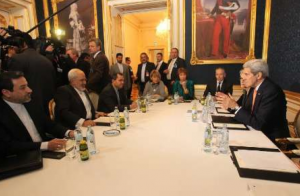
Back where they startedBack where they started: Iranian and American negotiators in Geneva this week. Photo: Twitter

Rouhani’s determination to lift the sanctions has worried some analysts, who posit that the Obama Administration may back down on key verification demands in order to boost the regime’s “moderate” faction.

“[W]e are down to just discussions on how to remove sanctions in exchange for a short term enhanced inspection arrangement that cannot possibly be relied upon to discover undeclared facilities,” Ottolenghi said. “Unfortunately, the Obama Administration is trading long term security for a short term diplomatic victory.”

**************

As nuclear talks between international negotiators and Iranian representatives got underway in Geneva today following two days of direct US-Iranian bilateral negotiations, the Tehran regime again stressed the importance of lifting sanctions against it, leading some analysts to express concern that sanctions relief may be applied even in the absence of a deal that satisfies western powers.

Iranian chief negotiator and deputy foreign minister Abbas Araghchi described the atmosphere at the bilateral negotiations as having “proceeded in a good ambience.” Aragchi stressed that “there were elaborate discussions on all topics, especially sanctions” – the issue that the Iranian regime is most concerned about.

A New York Times report today portrayed the sanctions issue as the dividing line between Iranian conservatives who reject a deal and the putative moderates, led by President Hasan Rouhani, who see a nuclear deal and the lifting of sanctions as the price to pay for Iran’s full participation in international affairs.

“Mr. Rouhani came to office this year promising not just to strike a nuclear deal that would lift economic sanctions but to end Iran’s isolation from the world economy and to promote individual freedoms,” The Timesobserved.

Rouhani’s determination to lift the sanctions has worried some analysts, who posit that the Obama Administration may back down on key verification demands in order to boost the regime’s “moderate” faction.

“Iranian officials have a vested interest in presenting the talks as proceeding according to their list of desiderata,” Michael Doran, a former deputy assistant secretary of defense in the George W. Bush Administration who now works for the Hudson Institute think-tank in Washington DC,  told The Algemeiner. “That said, the Obama administration has shown a disturbing tendency to back away from previous red lines, of which forcing Iran to divulge the possible military dimensions (PMD) of its nuclear program is one of the most important – precisely because it is a prerequisite for effective monitoring.”

Any deal that offered sanctions relief before Iran has satisfied the International Atomic Energy Agency’s (IAEA) concerns about the military aspects of its nuclear program “is a very bad deal,” Doran said.

Emanuele Ottolenghi, a Senior Fellow at the Foundation for Defense of Democracies, told The Algemeinerthat Iran had persuaded the P5+1 – the five permanent members of the UN Security Council plus Germany –”that neither its missile program nor the possible military dimensions of it nuclear research should be part of a final deal.”

“Instead, we are down to just discussions on how to remove sanctions in exchange for a short term enhanced inspection arrangement that cannot possibly be relied upon to discover undeclared facilities,” Ottolenghi said. “Unfortunately, the Obama Administration is trading long term security for a short term diplomatic victory.”

Iran Is Basically Running The Iraqi Government’s Air War Against ISIS

December 17, 2014

Iran Is Basically Running The Iraqi Government’s Air War Against ISIS, Business Insider, Joel Wing, December 16, 2014

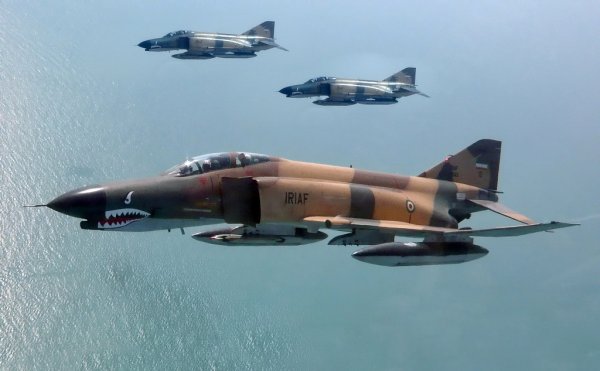
Iranian air forceIran Air Force F 4 Phantom II

Tehran is now considered one of the main defenders of the country and Iraqi politicians regularly praise its help and give it cover for its operations. It has also garnered popular support as well amongst some Iraqis.

This will all go a long way to make sure that Iran maintains its power within the country after the war is over.

***********

In November 2014 an Iranian jet was filmed carrying out a bombing mission in Iraq’s Diyala province. Iran was already known to have mobilized its militia allies, sent in advisers and military equipment, and brought in Lebanon’s Hezbollah to help Baghdad.

General Qasim Suleimani, the head of the Iranian Revolutionary Guards’ Quds Force, is all over social media with pictures showing him providing leadership to Iraqi forces.

Sending in air support seemed like the next natural step for Iran’s strategy in Iraq.

Iranian planes supported an Iraqi military operation to retake two villages from the Islamic State (ISF) in Diyala. In the middle of November Iraqi Security Forces, militias, and the peshmerga started a campaign to retake Jalawla and Sadiya in northeast Diyala, which was completed on November 23.

During that period Al Jazeera filmed an Iranian F-4 Phantom jet flying over the area. According to an Iranian military expert, Tehran was carrying out air missions there from November 18-23 using F-5 and F-4 jets as well as UAVs.

The planes were said to be flying out of Kermanshah air base in Iran. An Iranian politician was quoted in the Los Angeles Times saying that Tehran considered the Sadiya and Jalawla area a buffer zone because it is close to the border, thus explaining Iranian intervention there.

This was the first hard evidence that Iran had committed air assets to the fight in Iraq. But they had been there for some time and still continue to operate.

Iranian air power was supposedly part of a security agreement between Iraq and Iran. After the fall of Mosul Prime Minister Nouri al-Maliki allegedly signed a deal with Tehran to provide military assistance to the Iraqi forces, including through air assets.

By the end of June there were the first reports of Iranian drones based out of Baghdad flying over Iraq to collect intelligence. In July several Su-25 fighter-bombers were delivered to Iraq from Russia. But that included planes from Iran as well.

That same month an Iranian Revolutionary Guards pilot named Shojat Almdari was killed in the Samarra area of Salahaddin. He was probably acting as a forward air controller for air strikes there.

Iranians were carrying out many of these missions and flying the Su-25s as well. In November an Iraqi pilot told the Guardian that Iranians were regularly manning Iraqi air force planes and helicopters in combat and supply missions.

He said they were operating out of Rasheed air base in Baghdad. There were more reports of bombing and close air support missions on November 29 and 30 and December 1 and 2 in Iraq. Iranians are supposedly in the air in Salahaddin and flying in support of ongoing ISF and militia operations there.

Finally, Iran is providing training to Iraqi pilots on Su-25s, and MiG-23s and 29s at the Kermanshah air base. The Iraqi Air Force is undermanned and lacks fighter jets and trained pilots. Given that situation and all the other military support Iran has already given it was no surprise that it would send in some of its air power as well to help Baghdad.

Only now is the extent of this support becoming public. But Iran should have been expected this to happen.

Iran has a two-fold strategy in Iraq. First, it wants to provide military assistance to make sure that the Islamic State is turned back and eventually defeated. It also wants to expand its influence within the Iraqi state through the military and bureaucracy.

It is currently achieving both of these goals. Tehran is now considered one of the main defenders of the country and Iraqi politicians regularly praise its help and give it cover for its operations. It has also garnered popular support as well amongst some Iraqis.

This will all go a long way to make sure that Iran maintains its power within the country after the war is over.

Apologies Empowering Our Enemies

December 16, 2014

Apologies Empowering Our Enemies, You Tube, December 16, 2014

Happy Hanukkah from the IDF !

December 16, 2014

Happy Hanukkah from the IDF! – YouTube.

Today we begin the eight day celebration of the festival of lights. Here is a special blessing from the IDF’s Golan Regional Brigade. We wish you a bright and happy Hanukkah!

Formally Recognizing Israel’s Jewishness Will Not Set Back Peace

December 16, 2014

By: Morton A. Klein

Published: December 11th, 2014

via The Jewish Press » » Formally Recognizing Israel’s Jewishness Will Not Set Back Peace.


Morton A. Klein
Morton A. Klein

Legislation is under consideration in Jerusalem that formalizes Israel as the nation state of the Jewish people. We at the Zionist Organization of America support it.

Why? Because it is historically, legally, politically, and religiously the case that Israel is the Jewish nation state. The Balfour Declaration, later incorporated into the League of Nations Mandate for Palestine, recognized the historical fact that what later became Israel was indeed the “Jewish homeland.”

The 1947 United Nations General Assembly Resolution 181 encompassed the creation of a “Jewish state” and most of the world has called it that ever since its emergence in 1948.

In short, this legislation correctly recognizes that Israel was and is the Jewish state. The founder of political Zionism, Theodor Herzl, and every other major Zionist leader from that time forward were dedicated to establishing a Jewish state.

The Jewish homeland in which Israel today thrives and flourishes has been recognized for centuries by Bible-believing Jews and Christians as holy land given to the Jewish people by God.

The land of Israel has been called for centuries the “Promised Land.” Who promised the land and to whom was it promised? In Genesis, it is promised by God to the Jewish people.

It was precisely because this is the Jewish homeland that the Zionist movement turned down proposals of Jewish statehood elsewhere – Uganda, for example.

Zionism is not just about Jewish statehood, it is also about the reconnection of the Jewish people with its biblical and religious homeland. That is why David Ben-Gurion, the Zionist leader and Israel’s first prime minister, told the 1936 Peel Commission that “Our Mandate is the Bible.”

Israel is scarcely alone in describing itself as the state of a particular group, religion, or ethnicity.

In the same region can be found the Arab Republic of Egypt, the Hashemite Kingdom of Jordan, the Syrian Arab Republic, and the Islamic Republic of Iran. Despite the vicious discrimination against, and persecution of, minorities in these states, no one has said that these states cannot affirm their national identity and purpose. Why then should Israel, the only Middle Eastern country that actually respects and protects minorities, not do so?

No one expects Britain to remove the Union Jack (which features two crosses) from its flag just because its citizenry includes Muslims, Hindus, and Jews.

No one tells Scandinavian countries to remove the crosses that adorn their flags.

And no one has told Muslim majority states to remove the Islamic crescent from their flags.

The flags of over 40 countries possess either the cross or the crescent. Only in the case of Israel’s star do we hear it is unacceptable.

The U.S. pledge of allegiance speaks of “One Nation under God.” Must this be changed in deference to the views of atheists? Should we discard national heritages simply because not every citizen sees his or her own views reflected in them? Of course not.

Importantly, this legislation does not discriminate against Israel’s rich tapestry of minorities. The rights and liberties of Israelis of different religions and ethnicities would remain unaffected by this bill. They will continue to play, as they have been doing, an important role at all levels of Israeli life.

Non-Jewish citizens reside and are welcome in Israel, but the Israeli state – its institutions, laws, flag, and anthem – reflects the history and aspirations of the people who founded it with their labor, resources, and blood.

It is said that this legislation will set back the prospects for peace. This is untrue. Tragically, Palestinian terrorists will continue to try and murder Jews whether or not Israel passes this legislation.

The prospects of peace are set back by continued Palestinian Arab and wider rejection of Israel as a Jewish state within any borders – and by the Palestinian Authority’s refusal to fulfill its obligations under the Oslo agreements to disarm, outlaw and arrest terrorists and to end incitement to hatred, and murder – not because Israel is duly affirming itself as the Jewish nation state.

Peace is also set back by countries, including some of Israel’s friends, that are silent on PA incitement and pro-terror, anti-peace actions; that fail to demand of the Palestinians that they amend or rescind the Fatah and Hamas charters, which deny Jewish peoplehood and call for Israel’s destruction; that choose not to insist that the Palestinians live up to their Oslo commitments; and that refuse to penalize Mahmoud Abbas’s PA by terminating aid and diplomatic support for it as a result of these failures.

There is no reason to object to this legislation’s purpose – the formal recognition of Israel as the nation state of the Jewish people, as virtually the entire world recognizes it to be.

A UN Timetable for Israel’s Destruction

December 16, 2014

A UN Timetable for Israel’s Destruction

December 16, 2014

by Joseph Klein

via A UN Timetable for Israel’s Destruction | FrontPage Magazine.


The Obama administration is shamelessly outsourcing the United States’ historic leadership in facilitating negotiations between the Palestinians and Israel of a workable, secure two-state solution to the United Nations and European governments. In putting its trust in these two centers of anti-Israel sentiment, the Obama administration refuses to say categorically that it would veto a UN Security Council resolution setting some sort of deadline for the creation of a Palestinian state and Israeli withdrawal to the pre-June 1967 lines.

In the words of an unnamed senior U.S. State Department official quoted by Reuters, “These things are all very much in flux, it’s not as if we’re being asked to take a position on any particular Security Council resolution right now. It would be premature for us to discuss documents that are of uncertain status right now.”

Any Security Council resolution the Obama administration would agree to, which imposes pressure only on Israel to make more unilateral concessions for an illusionary “peace,” will serve to legitimize a United Nations timetable for Israel’s surrender to forces that wish to destroy it. The Gaza debacle following Israel’s decision to unilaterally withdraw from Gaza in 2005 and give the Palestinians a chance to build a prototype Palestinian state illustrates the danger Israel would face from being pressured into more withdrawals at this time.

The Palestinian Authority leadership is pressing for action on just such a Security Council resolution as early as this Wednesday, according to a Palestine Liberation Organization official and Palestinian U.N. Ambassador Riyad Mansour. The Palestinian resolution, to be sponsored by Jordan (a non-permanent member of the Security Council), would reportedly set a two year deadline for complete Israeli withdrawal from all “occupied” territories, although Jordan’s UN ambassador told reporters it was news to her that any action to vote on the resolution would be taken as soon as the Palestinians are demanding. There is some speculation amongst UN insiders that a vote on a Palestinian resolution could be put off until early in the new year. The Security Council makeup will then be even more inclined towards the Palestinian position, because Malaysia will be replacing South Korea as a non-permanent member of the Security Council.

The Palestinians are finding a very receptive audience in Europe for their use of the United Nations to sidestep direct negotiations with Israel. As the tide of anti-Semitism is rising to the surface and spreading once again throughout Europe, a number of European countries’ parliaments have adopted non-binding resolutions calling upon their respective governments to recognize a Palestinian state. Sweden went further with official recognition of a state of Palestine. France, a permanent member of the UN Security Council, is taking the lead in crafting a European version of a Palestinian state resolution. The idea reportedly would be to set out an expectation for a final peace agreement to achieve a two-state solution within two years. During the two year interval, the United Nations might accord full UN membership rights to an officially recognized Palestinian state. The text is still a subject of consultations in European capitals, according to the United Kingdom’s UN Ambassador Lyall Grant.

The Obama administration, which would like nothing better than to see its nemesis Israeli Prime Minister Benjamin Netanyahu defeated in the upcoming March 2015 Israeli elections, is calibrating a position that appears intended to send a pointed message to the Israeli electorate. This message is not to count on the administration standing steadfastly with Israel on sensitive security concerns if Prime Minister Netanyahu is re-elected. The Obama administration is willing to consider a “compromise” Security Council resolution to pressure Israel into resuming negotiations against a backdrop of a framework withdrawal timetable, so that the administration can say it did all it can to avoid an immediate two year deadline and thereby not have to use its veto power to “protect” Israel.

Thus, Secretary of State John Kerry is meeting early this week with European foreign ministers, Arab League officials, and Israeli and Palestinian officials to “hear from and engage with other stakeholders…and to the best of our ability work toward a common path forward,” according to a senior State Department official.

Israeli civilians under relentless attack by Palestinian jihadists are the main “stakeholders” whom the United States should be worried about. If there is to be a “common path forward” to peace, it requires Palestinian negotiating partners who are willing to publicly give up their claim to a right of return of millions of so-called Palestinian refugees to pre-June 1967 Israeli cities and towns, and who recognize Israel’s right to self-determination as a Jewish state that can co-exist securely side by side with a peaceful Palestinian state. There has been no such partner to engage in genuine negotiations for more than six decades. There remains no such partner today, nor is there likely to be one in the foreseeable future.

Hamas has made clear its intention time again, by word and deed, to destroy the state of Israel and kill as many Jews as possible. Following, for example, are excerpts from an interview with Hamas MP and cleric Yunis Al-Astal, which aired on Al-Aqsa TV on May 11, 2011 (courtesy of MEMRI):

The [Jews] are brought in droves to Palestine so that the Palestinians – and the Islamic nation behind them – will have the honor of annihilating the evil of this gang…All the predators, all the birds of prey, all the dangerous reptiles and insects, and all the lethal bacteria are far less dangerous than the Jews…When Palestine is liberated and its people return to it, and the entire region, with the grace of Allah, will have turned into the United States of Islam, the land of Palestine will become the capital of the Islamic Caliphate, and all these countries will turn into states within the Caliphate.

Hamas’s barrage of rocket attacks launched from Gaza against Israeli civilians since Hamas took control of Gaza in 2007 attests to its deadly intentions. Just last Sunday, Hamas marked its 27th anniversary by parading 2,000 of its armed fighters and truck-mounted rockets. A senior Hamas leader Khalil al-Hayya said: ‘This illusion called Israel will be removed.”

Palestinian Authority President Mahmoud Abbas has thrown in his lot with Hamas in forming a so-called “unity reconciliation” government and has himself incited sectarian violence in and around Jerusalem with incendiary rhetoric.  But even Abbas has expressed frustration with what he called Hamas’s continued “shadow government… running the territory” in Gaza on its own.

In the real world, which is alien to the United Nations, the Arab world, European governments and the Obama administration, simply saying something is so doesn’t make it so. Diplomatic recognition of a Palestinian state does not change the reality on the ground. Nor does a pie-in-the-sky declaration of a “unity” or “reconciliation” Palestinian government that exists only on paper. For example, in delivering his regular briefing to the Security Council on the situation in the Middle East, Robert Serry, the UN Special Coordinator for the Middle East Peace Process, admitted to Security Council members on December 15th the lack of a functioning Palestinian reconciliation unity government to replace Hamas’s governance in Gaza. He said that delivery of thousands of tons of construction materials into Gaza is being permitted by Israel under the temporary Gaza Reconstruction Mechanism agreed upon by Israel, the so-called Palestinian Government of National Consensus and the UN, even though the “Government of National Consensus in Gaza has still not taken up its rightful governance and security function” that is a critical part of the arrangement.

The Palestinians’ own internal power struggle between Hamas, which governs Gaza, and the Palestinian Authority, which currently dominates the West Bank, means that there is no real unified state government apparatus. Hamas won’t give up its military control in Gaza and is seeking to expand its influence in the West Bank at the Palestinian Authority’s expense. There can be no real foundation for a workable Palestinian state under international law when there is no single governing authority in a position to effectively exert sovereign control over all of a putative Palestinian state’s territory and people. Nor can there be a real state under international law that does not have the capacity to ensure compliance with any bilateral or international agreements such a state may enter into in the future.

No matter what kind of “common path” Secretary of State Kerry thinks he can achieve with the Palestinians and their Arab and European supporters on a Security Council timetable resolution, Israel must reject the path of forced withdrawal that could lead to its own destruction. As Prime Minister Netanyahu said during the regular Israeli cabinet meeting on Sunday, a UN Security Council-imposed deadline for Israeli withdrawal to the pre-June 1967 lines would bring “Islamic extremists to the suburbs of Tel Aviv and to the heart of Jerusalem. We will not allow this. We will rebuff this forcefully and responsibly. Let there be no doubt, this will be rejected.”

In Nuke Talks, Obama Still Iran’s Best Asset

December 16, 2014

In Nuke Talks, Obama Still Iran’s Best Asset, Commentary Magazine, December 14, 2014

President Obama’s goal is not so much to fulfill his campaign promise about the nuclear threat as it is to launch a new détente with the Iran. This is a crucial point since it not only makes him more reluctant to stick to Western demands about nuclear issues but makes it impossible for him to contemplate abandoning the negotiations.

**************

For the first time since the Iran nuclear talks were extended for the second time last month, the United States and its allies will meet again with Tehran’s negotiators in Vienna on Wednesday. To listen to public statements from the Obama administration, the allied team will be there to insist on a deal that will prevent Iran from getting a nuclear weapon. But the same factors that have tilted these negotiations in Iran’s direction throughout the process still seem to be pushing the outcome toward an agreement that will be touted as a desperately needed foreign-policy triumph for the administration. With both the French becoming more vocal about their dissatisfaction with America’s leadership in the talks and the Islamist regime making no secret of their unwillingness to make more concessions, the question facing the negotiators is not so much whether a deal is possible, but whether the U.S. is able to resist the temptation to continue giving ground to the Iranians in order to get a deal at virtually any price.

As the next round of talks begins, observers need to think back to the allies’ position prior to the signing of the interim deal to understand just how far the U.S. has retreated from its current perilous position. In 2012 when he was running for reelection, President Obama vowed during his foreign-policy debate with Mitt Romney that any deal must end Iran’s nuclear program. The allies were similarly united behind a position that Iran had no right to enrich uranium for nuclear fuel under any circumstances and that its plutonium plant at Arak must be dismantled.

Since then, the U.S. has accepted the notion that Iran has the right to a nuclear program and that its infrastructure will remain largely in place no matter what the terms of an agreement might say. It has also tacitly recognized Iran’s right to enrichment while claiming that the low levels permitted freeze its progress toward a bomb even though everyone knows these restrictions can easily be reversed. The U.S. has also given every indication it will allow Iran to keep its centrifuges as well as showing no sign that it will press Tehran to give up its plutonium option or stop producing ballistic missiles whose only purpose would be to deliver nuclear warheads. Even worse, the administration seems to be giving up any effort to find out just how much progress the Iranians have made toward weaponizing their nuclear project or to force them to admit International Atomic Energy Agency inspectors to get the answers to this vital question.

Based on the experience of the last year and a half of talking with Obama’s envoys, Iran’s negotiators know they only have to stand their ground and it’s only a matter of time until the Americans give in to their demands one by one until they get terms that will let them become a nuclear threshold power as well as lifting the economic sanctions that continue to cripple Iran’s economy.

That the Iranian people are clamoring for an end to the sanctions is clear. As the New York Times reported on Friday, anticipation of the collapse of the restrictions is the talk of Tehran. The eagerness of their would-be European trading partners is just as vocal. In theory, this desire to reconnect Iran to the global economy ought to give the U.S. the leverage to make the Iranians give up their nuclear ambitions. On top of that, the collapse of the price of oil should have Iran even more desperate and the position of the allies even stronger.

But the Iranians know whom they are dealing with. As has become increasingly clear in the last year in which the talks went into two overtime periods despite administration promises that the talks would be finite in length, President Obama’s goal is not so much to fulfill his campaign promise about the nuclear threat as it is to launch a new détente with the Iran. This is a crucial point since it not only makes him more reluctant to stick to Western demands about nuclear issues but makes it impossible for him to contemplate abandoning the negotiations. That means that the Iranians know the president isn’t even thinking, as he should be, of ratcheting up the economic pressure with tougher sanctions, or of making the Islamists fear the possibility that the U.S. would ever use force to ensure the threat is eliminated.

Under these conditions the chances of the U.S. negotiating a deal that could actually stop Iran from ever getting a bomb are slim and none. Instead, the only question remains how far the Iranians are willing to press the president to bend to their will in order to let him declare a victory and welcome this terrorist-sponsoring regime moving closer to regional hegemony as well as a nuclear weapon.

Rather than the renewed diplomacy being a signal for congressional critics from both parties of the president’s policy to pipe down, the new talks should encourage them to work harder to pass the sanctions the president claims he doesn’t need. Unless they act, the path to appeasement of Iran seems to be clear.

The Land of Magical Thinking: Inside Putin’s Russia

December 16, 2014

The Land of Magical Thinking: Inside Putin’s Russia
BY: P. J. O’Rourke via World Affairs


(Not a pretty picture. Seems like life in Russia a just another hell on earth. A ‘must read’ for us all and a stark reminder of what we’re dealing with.-LS)

Nothing Is True and Everything Is Possible: The Surreal Heart of the New Russia
Peter Pomerantsev (New York: Public Affairs, 2014)

This is the strangest book of note I have ever read. And that’s as it should be, since the subject is Russia, the strangest country of note I have ever visited.

Peter Pomerantsev has written the most bitter indictment of a nation’s politics and society going wrong since William Shirer’s 1941 Berlin Diary. Pomerantsev has also written a calm and incisive report on the current state of affairs in Russia. Yet it reads like a comedy of manners, a dark and grotesque comedy of manners, a State Department white paper co-authored by Evelyn Waugh and Franz Kafka. And not only that, but Nothing Is True is a bildungsroman, too.

Peter Pomerantsev | essay


Russia today is not as strong as the Soviet Union once was, but Vladimir Putin has used energy and financial leverage, along with propaganda, to snatch power from the jaws of weakness.

Pomerantsev was born in the Soviet Union, though barely. His parents emigrated to England in 1978, when he was ten months old. He speaks Russian. He thought he was Russian. After college he went to Russia. And he spent nine years there discovering that, on points of honor and decency, he’s an English gentleman after all.

Pomerantsev becomes a reality TV producer in a place where, as his title and subtitle indicate, there isn’t any reality. Or, at least, everyone wishes there weren’t.

Soviet stagnation led to perestroika, which led to the collapse of the Soviet Union, liberal euphoria, economic disaster, oligarchy, and the mafia state. How can you believe in anything when everything around you is changing so fast?

Pomerantsev, however, is all too believable in the bad news he brings us from Russia. His reporter’s straightforward and unlimited curiosity, his willingness to plow and harrow the widest fields for facts, and his exacting descriptive details give him credibility. Plus, what he tells us is so incredible. As reporters say, “You just can’t make these things up.”

In Russia, “corrupt” is not an adjective. Corrupt is a noun, a proper noun, the word for the name and nature of the place.

Corrupt crony capitalism is familiar everywhere. But in Russia the corruption is so pervasive that even the cronies have to pay bribes, not just to the higher-ups but to the lower-downs.

Pomerantsev visits a TV studio owned by Kremlin-connected moguls. It’s in a shabby warehouse on the wrong side of town. There’s no sign or address on the metal door. Inside is a dirty little room with a drunk guard.

Pomerantsev goes down a dark corridor and up two flights of dingy stairs to another unmarked metal door. Behind that is a modern, well-lit, busy Western-style production facility. But there’s an inconspicuous door here as well, with a secret code pad. And behind thatis a more modern, better-lit, even busier production facility with an even less conspicuous door with an even more secret code leading to the real offices of the moguls, where the real business accounts are kept.

All this is to foil the tax police. Who come anyway. One of the moguls tells Pomerantsev that “the tax police were much happier taking bribes than going to the trouble of stealing money that had been paid in the orthodox fashion.”

Pomerantsev tells the story of Yana Yakovleva, a businesswoman who imported chemicals to make cleaning supplies. She spent seven months in prison because chemicals to make cleaning supplies were suddenly declared “an illegal narcotic substance.”

Usually this kind of abrupt, arbitrary arrest has to do with competitors bribing legislators in order to abscond with someone’s business. Usually the solution is to bribe judges.

But Yana had gotten tangled in the Kremlin machinations of political figures so crooked that they can’t get a bribe straight.

Viktor Cherkesov, head of the FDCS, the Federal Drug Control Service, was attempting to take over Russia’s chemical industry as part of his power struggle with Nikolai Patrushev, head of the FSB, the Federal Security Service, successor agency to the KGB. Vladimir Putin encouraged Cherkesov. Vladimir Putin encouraged Patrushev.

The FDSC uncovered FSB corruption in Chinese customs duty rake-offs. The FSB uncovered FDSC corruption in chemical company seizures. The FDCS arrested FSB generals on the Chinese border. The FSB arrested FDCS generals at Moscow’s Domodedovo airport.

And Yana doesn’t get out of jail until Cherkesov and Patrushev have destroyed each other and Putin is rid of both potential rivals.

It’s an interesting moral atmosphere in Russia.

In Russia, small town girls go to the big city and get ruined, but that’s what they’re trying to do. Really trying. They go to school for it.

The students take notes in neat writing. They have paid a thousand dollars for each week of the course. There are dozens of such “academies” in Moscow and St. Petersburg, with names such as “Geisha School” or “How To Be a Real Woman.”

If a girl with potential studies hard, “she earns the basic Moscow mistress rate: the apartment, $4,000 a month, a car, and a weeklong holiday in Turkey or Egypt twice a year.”

In return, she’s available to her “sponsor,” as he’s called, any time, any day.

Nice girls, of course, don’t do this. They go to the big city and become supermodels. Like Ruslana did. She was an ethnic Russian from Almaty, Kazakhstan. Ruslana was “discovered” at sixteen, world-famous at nineteen, and two days before her twenty-first birthday she jumped off a roof in New York. Pomerantsev gives us (although, in a way, he almost doesn’t need to) the heart-breaking particulars in between.

Pomerantsev himself is not immune to the corruption.

I phoned TNT, excited. [TNT is the Russian television network for which Pomerantsev is working.] It was the story that had everything. There would be supermodels, suicide, and parties . . . Glamour and tragedy. It was the easiest commission I ever had. I was even given a larger advance than usual . . .

“But don’t make it too dark,” TNT said, “Remember we need positive stories.”

Pomerantsev gets a Russian drivers license. “I would never pass . . . if I didn’t pay the bribe (this month $500, but about to jump to $1,000 if I didn’t hurry).” He scores eighteen out of twenty on his written test, enough to pass. Then realizes all the other license applicants had also scored eighteen out of twenty. “Everyone in the room had paid for the right result.”

He takes his road test in an instructor’s car with two sets of controls. Pomerantsev does not, in fact, know how to drive. “I couldn’t get the pedals right and kept on stalling. The traffic cop smiled . . . ‘Put your hands on the wheel and pretend to drive.’”

The corruption doesn’t poison the state, it feeds it. Pomerantsev recounts the ordeals of dodging the draft in Russia. And it must be dodged.

Where he will be sent depends on the bribe the soldier pays. Some will go to Chechnya, to Ossetia, to the death zones . . . But if you pay in time, you’ll avoid those. What no one will be safe from is hazing . . . dozens of conscripts are killed every year, hundreds commit suicide, and thousands are abused. (Those are just the official statistics.)

There’s the “most desperate and most expensive remedy: the bribe to the military command.” Or a week every year pretending to be sick or injured. “Annually the hospitals fill up with pimply youths simulating illness.” But you have to pick the right disease or disability “because the ailments that can get you off change all the time.” Alternatively, you can stay in college until you’re too old for the draft. “Russian males take on endless master’s degree programs until their late twenties.” Not a good student? There are schools for that as well as for mistresses. “Dozens of new universities that have opened . . . to service the need to avoid the draft.” You can even spend a month in a psychiatric clinic. “But you will also have a certificate of mental illness hanging over you for the rest of your career.”

But all these options are only available for those with money and connections. For the others, for the poorer ones, it’s hide and seek . . . And every time you go into a the subway, every time you cross a main road, any time you leave your little yard, life becomes full of trepidation.

This is the genius of the system: even if you manage to avoid the draft, you . . . become part of the network of bribes and fears and simulations; you learn to become an actor playing out his different roles in his relationship to the state . . . and that’s fine for the system: as long as you’re a simulator you will never do anything real, you will always look for your compromise with the state, which in turn makes you feel just the right amount of discomfort.

Thus a state that is calculated to make its citizens crazy. And Pomerantsev is clear about the calculation.

He presents the case of Vladislav Surkov. He has been deputy head of the presidential administration, deputy prime minister, and assistant to the president on foreign affairs. He is known as the “Kremlin demiurge” and the “political technologist of all of Rus.”

Surkov dresses in jeans and a leather jacket. “He is an aesthete who pens essays on modern art, an aficionado of gangsta rap who keeps a photo of Tupac on his desk next to that of the president.”

One moment Surkov would fund civic forums and human rights NGOs, the next he would quietly support nationalist movements that accuse the NGOs of being tools of the West. With a flourish he sponsored lavish arts festivals for the most provocative modern artists in Moscow, then supported Orthodox fundamentalists . . . who in turn attacked the modern art exhibitions.

Surkov also seems to be the author of an anonymous novel Almost Zero. He as much as admits he is in a preface he wrote for the book, calling the work “a satire of contemporary Russia whose hero, Egor, is a corrupt PR man.”

Pomerantsev says, “‘Everything is PR’ has become the favorite phrase of the new Russia.”

Among that everything is PR used to promote cults. “As the Soviet Union sank,” says Pomerantsev, “so sects had bubbled to the surface. Indeed it was the Kremlin that had given them an impetus.”

This was in 1989, when a hypnotherapist named Anatoly Kashpirovsky, “with 1970s porn star looks,” appeared on a Kremlin-controlled TV network and intoned to viewers, “Close your eyes. You can cure cancer or alcoholism or any ailment with the power of thought.” Millions attempted to do so.

A former postman named Vissarion is convinced he’s Christ and has a colony called “The Abode of Dawn City” on the Mongolian border inhabited by “minor bohemians, actors, rock musicians, painters.”

“The Golden Way” guru Boris Zolotov conducts “experiments in which his followers would penetrate to the new level of conscious: sweating orgies where the old, ugly, young, and beautiful rub and kiss and caress each other in a communal bliss.”

The Night Wolves are a motorcycle gang with five thousand members devoted to religious patriotism who ride “through Moscow on Harleys with icons of Mary the Mother of God and Stalin.”

Poor Ruslana the supermodel was involved in something called “The Rose of the World” run by “life trainers” who lock crowds of people who don’t have a life in a room and train them to pronounce “inner monologues.”

“Who remembers that girl Ruslana?” says the life trainer. “The model who killed herself? Jumped from a skyscraper. I knew her well. Her ‘inner monologue’ was ‘suicide.’”

Insanity pervades the culture.

There is a spate of prime-time documentaries [featuring] secret service men who inform the audience about the psychic weapons they have developed. The Russian military has “sleepers,” psychics who can go into a trance and . . . penetrate the minds of foreign statesmen . . . One has entered the mind of the US president . . .

Well, now that I think about it . . .

Anyway, this brings us to the frightening question posed by Pomerantsev’s book, a question he only implicitly asks.

What do we do about a gigantic, depraved, immoral, lunatic country armed with nuclear warheads?

We may not have to do much is the fortunate answer.

The Russians are crazy but they aren’t stupid. This is a country where chess is a spectator sport. The Russians aren’t going to make a Queen Pawn opening with their nukes that traps the queen’s bishop behind the knight. Or, to put it in American terms, they aren’t going to throw a Hail Mary on fourth-and-impossible from their own five-yard line.

Russia is a demographic disaster. Nicholas Eberstadt, who holds the Henry Wendt Chair in Political Economy at the American Enterprise Institute, has been studying Russia for decades. His research indicates that that the birth rate per Russian woman is twenty percent below replacement level.

In the first ten years after the collapse of the USSR, Russian population fell by about six and a half million. It is rebounding slightly now but only because of high birth rates in Muslim ethnic regions like Chechnya and Dagestan and immigration from former Soviet republics in Central Asia. These are not places Russia wants its Russians to come from.

Russia’s mortality rate is horrific. According 2012 World Health Organization statistics, a fifteen-year-old Russian male has a life expectancy that’s three years less than a fifteen-year-old Haitian boy’s.

The life expectancy of a fifteen-year old Russian female is sixty-one, three years less than in Cambodia.

Russians die from cardiovascular disease and from accidents, murder, and suicide. They smoke, they drink, they despair.

Russia’s great wealth is based on extraction of oil and gas. Even so, the value of Russia’s exports in 2013 barely exceeded Belgium’s. And energy prices are falling.

The likelihood of the economy being transformed from extractive to knowledge-based is slim in a country rife with slogans like “How can you believe in anything?” and “Everything is PR.”

“Long-term economic progress,” says Eberstadt, “depends on improving productivity through new knowledge . . . Patent awards and application provide a crude but telling picture . . . Consider applications under the Patent Cooperation Treaty . . . Russia comes in No. 21—after Austria—racking up less that 0.6 percent of the world’s total. The population of Russia is more than fifteen times that of Austria. Russia’s ‘yield’ of patents per university graduate is vastly lower than Austria’s—thirty-five times lower. By this particular metric Russia is only fractionally better placed than Gabon.”

So what we need to do is this. Start with a little bit of George Kennan’s Containment Policy. Leaven that with a large dose of Reagan Doctrine, arming the dickens out of Ukraine, Georgia, Latvia, Lithuania, Estonia, and any other sane polity feeling pressure from the Evil Post-Empire. Mix these with the black humor of Peter Pomerantsev’s Nothing Is True and Everything Is Possible. And sit back and watch the Putin regime rot.

P. J. O’Rourke is the author of fifteen books including, most recently, The Baby Boom: How It Got That Way . . . And It Wasn’t My Fault . . . And I’ll Never Do It Again.
Hamas marks 27 years with vow: ‘The Zionist entity will disappear’

December 15, 2014

Hamas marks 27 years with vow: ‘The Zionist entity will disappear,’ Israel Hayom, December 15, 2014

141863621434798889a_b

Terrorist group marks anniversary with parades and weapons displays, including Gaza-made drone • “Hamas is here and Hamas is stronger than ever,” official Khalil al-Haya says • He warns that Hamas can invade Israel “by sea, by land, and by air.”

**************

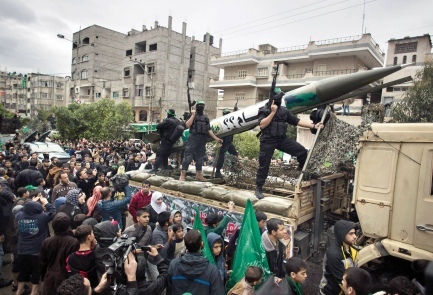
The Hamas terrorist group celebrated on Sunday the 27th anniversary of its founding in a series of showy demonstrations that included parades by its military wing and a display of weapons and ammunition, including a drone manufactured in Gaza.

After radars picked up the drone’s demonstration flight, the Israeli Air Force went on alert, concerned that it might indicate an attempt to penetrate Israeli air space.

In addition, a film clip screened at one of the demonstrations showed a silhouette that the Palestinians claimed was the head of Hamas’ military wing, Mohammed Deif, whom Israel tried to assassinate during Operation Protective Edge this past summer. The fate of Deif, who has survived several previous attempts on his life by Israeli forces, is unknown. The film clip did not feature Deif’s actual voice, only a recording of him speaking during Operation Pillar of Defense in 2012.

The Hamas show of strength also featured speeches against Israel and the Palestinian Authority by senior officials.

“After 27 years, Hamas is here and Hamas is stronger than ever. We have missiles and airplanes and we have the ability to invade the enemy by sea, by land, and by air,” said Hamas official Khalil al-Haya.

“Anyone who things [sic] that Israel is here to stay is mistaken. All of occupied Palestinian will be freed, and the Zionist entity will disappear,” al-Haya said.

Senior Hamas figure Mahmoud al-Zahar called on PA President Mahmoud Abbas to stop coordinating with Israel on security matters, and said that security cooperation between Israel and the Palestinian systems was “a knife in the back.”

The spokesman for Hamas’ military wing, Abu Obeidah, said that the continued “siege” on the Gaza Strip, as well as continued delays in its rehabilitation, could spark another clash.

“Our patience is running out. We won’t agree to more suffering and lack of rehabilitating Gaza from the crimes of Zionist aggression,” Abu Obeidah said.

The military leader also hinted at a possible deal in which Israel would trade Palestinian prisoners for bodies of Israeli soldiers held by Hamas, and expressed thanks to Turkey, Iran, and Qatar for their financial and military assistance.

Saudi Government Daily: U.S. Secretly Cooperating With Iran At Arabs’ Expense

December 15, 2014

Saudi Government Daily: U.S. Secretly Cooperating With Iran At Arabs’ Expense, MEMRI, December 14, 2014

(Fact, fiction or a mix of both? — DM)

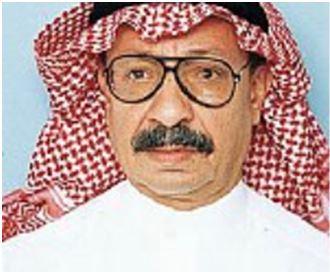
Yousuf Al-Kuwailit, who writes the editorials of the Saudi government daily Al-Rai, opined in a December 7, 2014 editorial that, despite the tension that has ostensibly prevailed between the U.S. and Iran ever since the Islamic Revolution, in practice there is secret cooperation between them. As part of this cooperation, he said, Iraq has become nothing but an arena for assuring the interests of these two countries, and Iran has been granted freedom of action in Syria and Lebanon.

Referring to the U.S.-Iran nuclear talks, he said they were a farce that would end in contracts and deals, and perhaps even an alliance, between the two countries. He therefore called on the Arabs not to regard the U.S. as a reliable ally, and warned that the U.S. may force the Gulf states to reconcile with Iran, to the detriment of their interests.

The following are excerpts from the article: [1]

21428Yousuf Al-Kuwailit

“The U.S. appointed the Shah as policeman of the Arab Gulf, turned Iran into a base for conflict with the USSR, and provided Iran with up-to-date weaponry and a nuclear reactor. [Iran, for its part] attempted to take advantage of this situation, as it saw itself as a superpower. [Only] the strength of the USSR… prevented Iran from undertaking military adventures outside its own borders. With [the rise to power of Ayatollah Ruhollah] Khomeini, despite everything that happened at the U.S. Embassy [in Tehran in 1980], when dozens of its staffers were taken hostage and [then-U.S. president Jimmy] Carter carried out a reckless and unsuccessful operation [in attempt to free them]… [despite all this] nothing spoiled the U.S.’s relationship with this country, which it considers one of its strategic and economic outposts by virtue of its location and its history. So the farce… about Iran’s nuclear reactors and non-conventional weapons has taken a clear and final direction, in the form of several deals [between the two countries]…

“Cyrus [the Great],[2] who attacked and destroyed the Arabs, is the spiritual father of the Nazi trend that has characterized Iran’s governments, whether secular or religious. Racial supremacism vis-à-vis the Arabs is a popular [Iranian] obsession. It exists and it is eternal, and even if the mullahs don black turbans [indicating that they are] descendants of the Prophet and have Arab roots, they do not really recognize these roots, but do this only in order to market their national policy to us, prior to marketing their religious school of thought [i.e. the Shi’a]. Anyone who thinks that diplomatic arrangements are aimed at anchoring coexistence between the Arabs and the Iranian ‘Aryans’ is disregarding the nature of the historical reasons [for the tension between the two sides] and its deep roots in the [Iranian] public mentality.

“In order to better understand the unfolding of events, [we need to realize that]  the U.S. and its allies set out the initial plan to divide the Arab [regions] a long time ago, and that the Sikes-Picot agreement is only the first outcome [of that plan]. [We must also realize] that handing over Iraq [to Iran], and annexing Syria and later Lebanon to it, and the [silent] agreement [between the two countries] that Iran would have a free hand in these countries – all these  are only a prelude to  more dangerous activity.

“[Accordingly], relying on the U.S. or thinking it a reliable ally without properly understanding the strategic changes and aims, place us in a situation [of self-delusion], because all the historic elements of power see how positions and policies change but interests remain. This principle will be ultimately applied to all the countries that have a relationship with the U.S., whether economic or strategic, because the Arabs are part of a geographic area whose borders are changing, including through the disappearance of the centrally[-ruled] state in favor of states [based on] sect or nationality.

“One simple event in recent days is the Iranian Air Force’s incursion into Iraq to attack ISIS positions, which the U.S. confirmed but Iran denied. At the same time, the U.S. also ignores the incursion of [Iranian] ground troops under the command of [IRGC Qods Forces commander] Qassem Soleymani into Iraq, [which has been taking place] ever since the U.S. first started managing [Iraq’s] affairs… [In fact,] U.S. Secretary of State John Kerry stated that any Iranian military attack on ISIS was positive. This exposes the significant coordination between the two countries, and belies the statements of U.S. military circles denying any cooperation or coordination [with Iran] in the war on ISIS…

“In the era of [former Iraqi prime minister Nouri] Al-Maliki, Iraq become nothing but an arena for assuring the interests of two players: Iran and the U.S. This came about as part of an agreement that began with [head of the occupational authority of Iraq after the 2003 invasion Paul] Bremer, and no Iraqi government will put an end to it, unless the Iraqis [dare to] oppose their homeland’s dependence on another country – something that is difficult and complicated to do.

“Ultimately, even if the talk about the American-Iranian hostility is true, everything points towards new contracts between the two which are likely to turn into alliance. We could possibly see catastrophic days if the U.S. forces the Gulf states to reconcile with Iran, which will end in a way that will not serve our interests. This is an outcome that should not surprise us, if the reality of [U.S.-Gulf] friendship evolves into [U.S.] dictates [to the Gulf states].”


Endnotes:

[1] Al-Riyadh  (Saudi Arabia), December 7, 2014.

[2] Cyrus the Great founded the Achaemenid Empire, circa 600 BCE.