Archive for December 2014

The Anatomy of a Scourge

December 26, 2014

Articles: The Anatomy of a Scourge.

By Isaac Yetiv

In the 19th century, Wilhelm Marr, known as “the father of modern anti-Semitism,” coined the word “anti-Semitismus.”  But the pathological hatred of Jews has a long history.

In the antiquity, the Pharaoh who ‘didn’t know Joseph” decreed to kill all the Jewish newborn males; and Haman, centuries later, convinced his Persian king Ahasverus to exterminate this “people whose religion and language are different.” Christian anti-Semitism, while benign in its beginnings when the early followers of the Jew Jesus were themselves a persecuted minority in the Roman world,  became ferociously violent after the Council of Nicaea, in the year 325, adopted the dogma, then very controversial, of the divinity of Christ. With  Emperor Constantine embracing Christianity, the whole Roman world, especially in Europe, followed suit, and the minorities of Jews dispersed among them were soon accused of being “the people deicide,” the killers of God, an anathema that have persisted for almost 17 centuries, until Vatican II, in our times, erased it.

Napoleon’s conquest of Europe brought with it the end of the ghettoes and the emancipation of the Jewish communities. The Jews could now attend universities, enter the liberal professions and commerce and excel in them, which added a new layer to the traditional religious anti-Semitism. The Jews now “dominate the trade, the media, the banks, etc.” They became more hated and despised and the vile objects of the infamous blood libels and the “Protocols of the Elders of Zion,” the Dreyfus Affair, and the pogroms, which paved the way for the eventual advent of Hitler and culminated in the Holocaust.  And, in the greatest irony of history, they also led to the establishment of the State of Israel.

For about half a century after the horrors of the Holocaust, anti-Semitism remained dormant if not nonexistent. The Jewish state repeatedly defeated the military assaults of its coalesced Arab neighbors and generated sympathy in the world that saw it as David fighting Goliath. But, after making peace with Egypt and Jordan, and after the constant rejection of peace offers by the Palestinians, their threats to destroy Israel by force and their actual acts of terrorism, (in the context of more menacing terror organizations inspired and financed by Iran, today’s archenemy of Israel and an aspiring nuclear power,)  Israel had no choice but to aggressively defend itself and protect its citizens. In the eyes of the “world” it became, falsely, the Goliath of the tragedy. Arab propaganda has succeeded by default because Israel’s counterpropaganda was nowhere to be found.

It seems futile to denounce anti-Semitism emanating from those with whom Israel is at war. But it is absolutely essential to fight it tooth and nail when it affects third parties, especially the good people in the world, the dupes of Arab propaganda who only heard one side of the story.  Attacking Jews outside of Israel because of alleged bad behavior of Israel is outrageous but it confirms the fact that, today, the hypocritical and cowardly excuse that “I am not anti-Semitic but ant-Zionist” has lost its currency. You can’t be anti-Israel without hating the Jews. I know: There are Jews who hate Israel, but we are not dealing with pathology here.

Although the two most vicious nests of “third-party anti-Semitism” today are at the UN and in Europe, the policies of the U.S. government aid and abet the perpetrators of this crime:

The UN: is now investigating Israel for “war crimes;” not North Korea, not Iran, not Syria where the victims count in hundreds of thousands, not the Gazans who deliberately attack Israeli civilians and launch their rockets from schools and hospitals and use their own children as human shields, but Israel, the only open-society democracy in the Middle-East, for taking very measured defensive measures to protect its people.

The UN is also considering a very anti-Israel resolution that will divide Jerusalem, force Israel to withdraw to indefensible borders, and put the Christian holy sites under the control of terrorists.

It is fitting to remember that we, U.S. taxpayers, pay the UN $1.2 billion dollars in “dues” plus $2.2 billion to the UN peacekeeping budget and we volunteer more money for specific projects (Recently, Obama asked Congress for $6 billion dollars to fight Ebola in Africa.) All added, the US pays 77% of the UN budget, and, after Israel, it is the most hated country at the UN.

In Europe, the recrudescence and intensity of anti-Semitism are stunning even for the most pessimistic observers: beatings of Jews wearing yarmulkes or a necklace with the Star of David, swastikas painted on Jewish property, signs all over with slogans like “burn the Jews,” but also murders of innocent passersby. The Jewish community lives in fear and thousands have emigrated to Israel. What happened here? In my view, there has always been an atavistic, knee-jerk resentment, even hatred, of the Jews, but the demographic revolution brought by the mass migrations from Islamic countries, coupled with the lies and distortions of the Arab propaganda, have revived and exacerbated the latent and dormant anti-Semitism that prevailed after the Holocaust.

It is true that the majority of perpetrators are Arab Muslim immigrants who fled the oppressive regimes in their country of origin and feel marginalized and alienated in Europe. Their numbers have increased immensely, which led many observers to speak of “the Islamization of Europe,” a frightening prospect to Jews and Christians alike. In Marseilles, Muslims make 35% of the population.

In Spain, there are places with 40% Muslims. In Brussels, the capital of the European Union, they are 30%, and the name Mohamed is the number one among the registered births. In Amsterdam, 25%. Even in the Scandinavian countries without a history of colonization, their number is quite significant: In Sweden, 30% of Malmo is Muslim and in Stockholm, 20%.

And they vote in these democracies, which they never did back home. They are courted by the candidates, which gives them much clout and the benefit of political correctness. It was reported that Francois Hollande, the Socialist Prime Minister of France, received 93% of the Muslim vote. And their leaders now aspire to be elected. The mayor of Rotterdam (Netherlands), M. Abutaleb from Morocco, was elected in 2009 and is still serving (In his city, 80% of the Muslim population are on welfare.)

Paradoxically, the “islamization of Europe,” while causing fear, anxiety, and contempt among the indigenous Europeans, has resulted in an unholy alliance, in Europe and to a lesser degree in the in the U.S., between the extreme Left and the Islamic purveyors of terror; unholy because the sacred cows of the Left are slaughtered by the radical Islamists ((treatment of women and homosexuals, honor killings, using children as human shields, for example.)

In the U.S.: The Obama administration’s confused policy in the Middle East does not help fight the scourge of anti-Semitism in the UN and in Europe; it also emboldens the Palestinians in their refusal to make a compromise for peace. The open hostility toward PM Netanyahu, the unbearable pressure on Israel to make all the concessions for the elusive “peace,” the veiled threats to not use the veto at the UN, and most recently, the leaked information that ” the White House and the State Department had held secret talks about the possibility of imposing sanctions on Israel”  (ironically, after they lifted them from Iran) and the contemptuous way of handling the “denial” (First, “we do not confirm nor deny” by the White House spokesman, but then, after a strong letter signed by 47 congressmen, the same spokesman completely denied it.)  This silly game does not endear Obama to the citizens of “the best U.S. ally and friend in the only democracy in the Middle-East. The U.S. government allied itself with the enemies of Israel in Europe. Like the Europeans, they recognize the right of Israel to defend itself — thank you very much — but not to exercise that right. Even after bloody terror attacks that kill and maim Jews, the State Department spokeswoman “deplores the cycle of violence and calls on both sides to show restraint.”

Meantime, the U.S. treasury is pouring money, and more money  borrowed from China, in the coffers of the Palestinian Authority and Hamas: The U.S. taxpayer may not know that we are giving the PA 665 million dollars a year, not counting the huge portion of the 5.4 billion to “reconstruct Gaza” after the periodic war started by Hamas. To date, the U.S. has given the PA more than 5 billion dollars.

Where did all this money go? It was reported that Abbas makes a million a month and that there are 1,700 millionaires in “poor Gaza.” They are laughing at their benefactor all the way to the Swiss bank, having tricked and duped the “Great Satan.” As the Arab proverb goes, “Eat the fruits, and curse those who gave them to you.” The problem is that by enriching and emboldening the PA and its partner Hamas, and by acceding to their demands, the U.S. ipso facto makes them more recalcitrant, which decreases the chances for real peace and increases anti-Semitism in the Middle East, in the UN, and in Europe.

What needs to be done?

This state of affairs should not be allowed to endure. What is absolutely necessary is a “Campaign for the truth,” to debunk the lies of the Arab propaganda. As Nazi Goebbels infamously said, “a lie repeated 1000 times becomes the truth.” One can’t blame honest and uninformed people for believing one side of the story when the other side is absent.

Can you believe that the “diplomatic” budget of Israel is less than half that of the PA, which is not even a country?

It is incumbent upon the sovereign state of Israel to take the lead of this project. Israel has shown how it had successfully countered the violent terrorism; it must now openly and ferociously combat the more insidious scourge of anti-Semitism. It should be done dramatically, through speeches to the world in the Knesset by no less than the Prime Minister or the President, to condemn in no uncertain terms the purveyors of abject lies and those who blindly support them. Let them be shamed in public. Let it be the talk in the press and the radio and TV broadcasts. Israel has nothing to hide, and does not hide anything. It should counter the narrative of lies with a counter-narrative of truth, and it will be aided in that endeavor by the Jewish organizations, the millions of Christian friends of Israel, and the huge majority of the U.S. Congress.

Israel is not perfect but it should be judged with the same yardstick as all other nations, especially when it is besieged with enemies sworn to its destruction, and not singled out for its peccadilloes, all done sub signo martis  (under the sign of war) and in self-defense when its neighbors commit every day atrocious crimes with impunity.

Even when under attack, with thousands of rockets raining on its civilians, Israel continued to supply its ferocious enemies with fuel, food, and medicines. Its hospitals continue to care for its enemies (including the daughter and mother-in-law of Ismail Haniyeh  the dictator of Hamas who started the war.)  Ichilov Hospital alone provided medical care to 1000 Palestinians in the year 2013. At one time, one quarter of the Safed hospital patients were Syrians, the victims of the internecine war fomented by their leaders.

As for the status of the Arab minority in Israel which, according to the anti-Semites, both the malicious enemies and the dupes of propaganda, are oppressed and discriminated against as second-class citizens, the projected counterpropaganda project will show that the Arabs in Israel are the only Arabs in the Middle East who vote and are elected, and serve in the Knesset where they enjoy unrestricted freedom of speech. They are doctors, lawyers, judges, and civil servants in the ministries and in the diplomatic corps.

Israeli Arabs are the best educated in the Middle East, and their standards of living are five to ten times that of their brethren in the neighboring countries. No wonder than when offered to be “repatriated” to a future “Palestinian state,” not even 2% agreed. Recently, an Israeli colonel, member of the Druze community, wrote: “The Israeli Arabs make 20% of the population and receive 5O% of the Bituah Leumi (National Insurance.) They don’t pay taxes, national and local. They live in villas (!?). They build illegal buildings which the government is reluctant to force them to demolish (as it does with Jewish builders.) They vote and elect and enjoy full civil rights. They demonstrate against the State and even threw Molotov cocktails. Many of them identify with the enemies of Israel, Hamas, Hizb’allah, and Iran.”

Is that the profile of an “apartheid state” as the shameless demonizers of Israel and promoters of radical anti-Semitism would have you believe?

Merry Christmas from the Miller family in Panama

December 25, 2014

Merry Christmas from the Miller family in Panama, Dan Miller’s Blog, December 25, 2014

Here we are in front of our Christmas tree. I write the articles for my blog, Jeanie sometimes previews them and the pups (Sunshine is in front and Ruff is next to Jeanie) always chew on everything I post there and at Warsclerotic prior to publication.

IMG_0297

One member of our family, Princess, died in September and this is our first Christmas in eight years without her. We miss her very much.

OLYMPUS DIGITAL CAMERA

Nevertheless, on the whole it’s been a pretty good year.

ISIS capture of Jordanian pilot puts US and Jordan in conflicting dilemmas, may be pivotal to anti-terror war

December 25, 2014

ISIS capture of Jordanian pilot puts US and Jordan in conflicting dilemmas, may be pivotal to anti-terror war, DEBKAfile, December 25, 2014

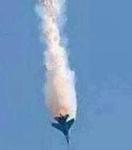
F-16_down_Syria_24.12.14A Jordanian air force F-16 downed over Syria

DEBKAfile’s military and intelligence sources add that Middle East military and aviation control centers are quite sure that the Jordanian warplane was hit by an ISIS missile, while making low passes over the terrorist organization’s Syrian headquarters at Raqqa in violation of the pilot’s orders.

*****************

The US military is going to great lengths to deny any evidence that ISIS shot down the Jordanian Air Force F-16 which came down Wednesday, Dec. 24 over the northern Syrian town of Raqaa. First Lieutenant Muath al-Kasaesbeh, aged 27, was the first Arab pilot to be taken prisoner by the Islamic State. The US Central Command statement said: “We can say with certainty that it was an aircraft crash and the plane was not downed by ISIL as was claimed by the terrorist organization.”

This contradicted an earlier statement by the Jordanian Information Minister Mohammad Momani that the plane had crashed after being hit by a ground-air missile. DEBKAfile’s military and intelligence sources add that Middle East military and aviation control centers are quite sure that the Jordanian warplane was hit by an ISIS missile, while making low passes over the terrorist organization’s Syrian headquarters at Raqqa in violation of the pilot’s orders.

The Jordanians are making intense efforts to deter the jihadis from harming 1st Lt. Kasaesbeh.The Hashemite Kingdom’s armed forces warned that “IS and its supporters would be held responsible for the pilot’s safety and his life.”

The pilot belongs to the Bedouin tribe of Bararsha near Kerak in southern Jordan, which boasts several army generals. They and the tribal chiefs are bringing all their influence to bear to obtain his release.

American military is joining the effort to save the Jordanian pilot – from different motives, which are geared more to sustaining the goals and tactics pursued by the US and the coalition in the war on the Islamic State.
Thursday, Central Command chief Gen. Lloyd J. Austin, who is in charge of US and coalition operations in Iraq and Syria, released a long communiqué praising Jordan for its military actions in the battle, adding: “We will not tolerate ISIL’s attempts to misrepresent or exploit this unfortunate aircraft crash for its own purposes.”

The US general’s message was designed to reassure Jordanian Air Force pilots and dissuade them from dropping out of the coalition air campaign for fear of being shot down by an ISIS missile. The three other Arab coalition members, Saudi Arabia, Bahrain and the United Arab Emirates, must also be kept from quitting.

The share of the four Arab air forces in the war is too weighty to forfeit.

ISIS leader Abu Bakr Al Baghdadi has not doubt calculated his stake in keeping the Jordanian pilot alive and at risk to scare fellow Arab pilots from continuing to take part in US-led bombing missions against his forces.

Furthermore, the Bararsha, like other South Jordanian Bedouin tribes, is known around the region for producing fierce fighters and their relentless pursuit of blood revenge.

Al Baghdadi may opt to avoid antagonizing them for this reason, as well as in the hope of a tangible benefit: ISIS is already using the smuggling routes of southern Jordan as channels to the groups his organization has planted in Sinai, Egypt and eastern Libya. He may decide to go one better and build an alliance with those very tribes behind the backs of the Americans and Jordan’s Abdullah II.

Such an eventuality would add a new dimension to the war on the Islamist terrorists.

Kurdistan: More Like Israel, Less Like Iraq

December 25, 2014

Kurdistan: More Like Israel, Less Like Iraq, Gatestone Institute, Lawrence A. Franklin, December 25, 2014

It is a society that rejects religious zealotry. Most Kurds are Sunni Muslim and one can hear the five-times-a-day Muslim call to prayer, but it is muted and ignored by most.

Like Israel, Kurdistan is more democratic than any of its neighbors. Like Israel, Kurdistan is surrounded by enemies that wish it did not exist. Like Israel, Kurdistan looks West. And like Israel, Kurdistan has maintained an internal equilibrium though all the world betrays it.

Iraqi Kurdistan is full of surprises. Probably, the most unexpected discovery is how normal life is in its capital city, Erbil. Despite a late summer scare by Islamic State [IS] military gains north of Mosul and the threat of suicide bomber attacks, the social discipline of Kurdistan’s citizens is admirable. There is a relaxed state of tension. It is “business as usual.”

There is also a sense of optimism, pervasive and infectious. Entrepreneurial spirit is alive and well. While there was an exodus of foreign businessmen after the initial territorial gains by the IS, foreign investors are filtering back. The Kurdistan Regional Government [KRG] has already drawn up plans for large-scale projects to improve the infrastructure. Heavy-duty construction vehicles are everywhere. The most visible project is the beltway being built around the city.

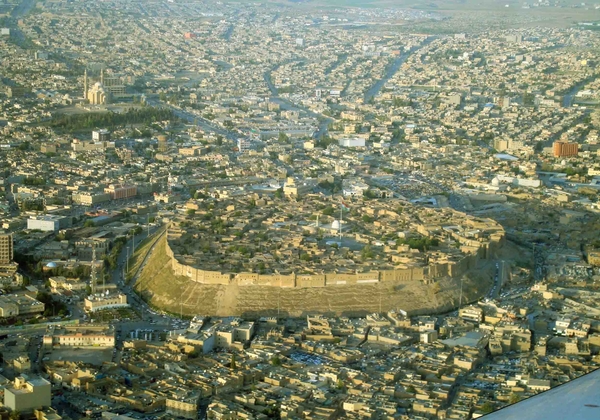
853An aerial view of Erbil, in Iraqi Kurdistan, featuring the ancient Erbil Citadel in the center. (Image source: Wikimedia Commons/Jan Kurdistani)

Political pluralism has come to the Kurdish north as well. While the Kurdistan Democratic Party [KDP] and the Patriotic Union of Kurdistan [PUK] respectively remain the one-two political powerhouses, they now have plenty of company. No one party dominates the parliament. There is plenty of horse-trading on issues, fleeting coalitions, and new political personalities are being heard. Nevertheless, the most influential and respected leaders still come from the Barzani extended family, which run the KDP. The late Mustafa Barzani (1903-1979) is revered as the warrior-godfather of modern Kurdistan.

Kurds, for the most part, are a welcoming lot. The methodical and rapid settlement of tens of thousands of refugees from IS-controlled Iraq required bold leadership by the Barzani-led government and especially from the Catholic hierarchy of Kurdistan. This success also reflects the compassion of a self-confident people. The population of the Dohok region, for example has doubled due to the influx of refugees. There is no observable tension between the newcomers and the population of the host country. Despite the inveterate resentment of the excesses of past Arab regimes, Kurdistan is a multi-ethnic and multi-religious society. It has become even more so with the emigration from other parts of Iraq of Turkmen, Yezidis, and Christian Assyrians and Arabs. It is also a society that rejects religious zealotry. Most Kurds are Sunni Muslim and one can hear the five-times-a-day Muslim call to prayer, but it is muted and ignored by most.

Men, mostly, walk on the streets of Erbil, Dohok, and Zako, especially at night. Kurdistan is not, however, a society that represses women. There are many in parliament, and they are outspoken on the issue of violence to females in Kurdish society. At one conference in mid-November, at least half of the speakers were women prominent in Kurdistan. Women military volunteers are widely admired. The Kurdish media celebrates the Kurdish Peshmerga‘s female fighters. One woman — a veteran of the fierce battle to save the Syrian Kurdish town of Kobane (near Turkey’s border) from an IS takeover — who recently visited Erbil, was received as a national hero. Female Yezidis who have escaped after torture by IS operatives are deeply admired too.

Zako, once the center of Kurdistan’s Jewish population, still invites back descendants of those who long ago left for Zion. Zako’s isolated villages are the wild west of Kurdistan. Its stark beauty against a ring of mountain chains may become a tourist magnet both for its ancient historical attractions and recreational possibilities.

For all of the above reasons, Kurdistan reminds one of Israel. Like Israel, Kurdistan is not dominated by the Arab, nor by Islam. Like Israel, Kurdistan is more democratic than any of its neighbors. Like Israel, Kurdistan is surrounded by enemies that wish it did not exist. Like Israel, Kurdistan looks West. And like Israel, Kurdistan has maintained an internal equilibrium though all the world betrays it.

Israel’s need for Jordan’s king diminishing

December 25, 2014

Op-Ed: Israel’s need for Jordan’s king diminishingIn the wake of the Hashemites aligning themselves with the Muslim Brotherhood to stay in power, promoting anti-Israel resolutions at the UN Security Council, and possessing structural weaknesses in their Air Force, is Jordan a reliable ally for Israel?

Dec 25, 2014, 02:09 PM | Rachel Avraham

via Israel News – Op-Ed: Israel’s need for Jordan’s king diminishing – JerusalemOnline.


Yarmoul TV, the official Muslim Brotherhood channel, which is licensed by the Jordanian king and broadcasts to the entire world from Jordan, broadcasted a song titled “Run over that settler” which was an even bigger hit in the Arab world than the PA version.

Many people in Israel falsely believe that supporting the Hashemite Monarchy is critical for Israel’s security needs, as Jordan possesses the longest border with Israel and they believe that the Hashemites are an ally in the war against Islamic State and other Islamist radical groups.     However, in the wake of the Hashemites aligning themselves with the Muslim Brotherhood to stay in power, promoting anti-Israel resolutions at the UN Security, and Islamic State capturing a 24-year-old Jordanian pilot, one should ponder whether the Hashemites are a reliable partner for Israel and if it is a wise policy to continue relying upon Jordan’s king to keep the Islamists out of power in Jordan.

While the international community has been disturbed by the gruesome images emerging of a 24-year-old Jordanian pilot being taken hostage by Islamic State after his F-16 fighter jet was reportedly shot down by the terror group, few have pondered the broader issue of whether Jordan’s king can be a trusted ally in the War against Terrorism. Jordanian Palestinian journalist Mudar Zahran noted: “From a technical point of view, let us examine the capability of the Jordanian Air Force which is involved in the war on IS.”

“The Jordanians have a fleet of F-16s, approximately 60 of which have been delivered by the US over the last 10 years,” he noted. “Those jets are not modern ones. They are basically F-16’s type A and B, which represent the early model of the jet. Nevertheless, they have been upgraded by the Dutch and Belgium Air Force which conducted what is known as mid-life upgrades to the F-16 models, which gave them more stability and made them comparable to later models such as the F-16 C and D. While the Jordanians have received modern jets from the US, they still hold the world’s record on crashed F-16’s. Officially, Jordan has admitted that 9 jets fell during regular training missions. Given that their fleet size is 60; that is a very high number.”

Zahran believes that the reason why so many Jordanian F-16s crash is because the Jordanian Air Force recruits based on who is a political favorite of the monarchy rather than solid qualifications or even physical strength: “For starters, the Jordanian Air Force allows high school graduates who concentrated in literature enter, even though they have less knowledge of math and science, despite the fact that an understanding of aerodynamics is essential. At the same time, the minimum grade point average required to enter the Jordanian training program for pilots is 60%, basically a D average.”

Rhaed Khames, the Shadow Secretary of Defense for the Jordanian Coalition of Opposition who for 20 years was a commander in the Jordanian Army, commented that the quality of Jordanian trainees is not proper. He stressed that “like everything else in Jordan, it is based on whether the king likes your family or not and the hot shots make their children become pilots.” Furthermore, Khames noted that “if you think those operating the Jordanian jets and even managing the Jordanian Air Force are all moderates, think again.” He noted that Captain Majali, a cousin to the king’s security chief and who was formerly in the Jordanian Air Force, defected from his job and joined Islamic State. He died while fighting for Islamic State five months ago. Given this, Zahran questions how useful the Jordanian Air Force can potentially be in the War against Islamic State and other Islamist groups.

However, the problem with Jordan being relied upon as an ally for Israel and the west does not end with the weaknesses of the Jordanian Air Force. CNN confirmed that Jordan is one of the biggest purchasers of IS oil on the black market. One must ponder, does Jordan’s king use the oil it purchases from Islamic State to fuel those F-16 fighter jets? And given that the Hashemites are relying upon the Muslim Brotherhood to stay in power and that the Muslim Brotherhood openly supports Islamic State, facts that were previously reported on JerusalemOnline, how can Israel view the Jordanian monarchy as a reliable partner?

It should be noted that Yarmoul TV, the official Muslim Brotherhood channel, which is licensed by the Jordanian king and broadcasts to the entire world from Jordan, broadcasted a song titled “Run over that settler” which was an even bigger hit in the Arab world than the PA version. Zahran noted that the anti-Israel incitement in the Jordanian media is worse than it is in the Palestinian Authority. For example, Khalil Ateyeh, a MP loyal to the Jordanian King, stated specifically, “I hate the Jews.”

Additionally, YNEWS reported that the Jordanian King was the one who proposed to Kerry a peace plan that calls upon Israel withdrawing to the 1967 borders, which many have noted are not the “secure and recognized borders” envisioned by UN Security Council Resolution 242 and contradict understandings reached between former US President George Bush and former Israeli Prime Minister Ariel Sharon. The Hashemites have also supported Palestinian unilateral efforts that violate previous agreements the Palestinians reached with Israel and Jordanian Ambassador to the US Alia Bouran boasted how Jordan is behind the anti-Israel resolution presently at the UN Security Council.

Upon reading these facts, many may wonder, given this, what alternative does Israel have other than to support the Jordanian king? Many fear that the only choices are between the Hashemites on the one hand and Islamic State/Muslim Brotherhood on the other. For these peoples, it is critical to note that Jordan is not Egypt. In Jordan, the Muslim Brotherhood supports the king staying in power, preferring to reform the regime rather than topple it. For this reason, Zahran does not believe that IS views toppling the Hashemites to be a priority, as they view time to be on their side.   They merely have to wait until the country radicalizes more by the Muslim Brotherhood before getting rid of the Hashemites.

However, in a recent article published in the Jewish Press, Zahran warned: “At the right time, IS could capitalize on the anger and frustration of Jordanians, including the majority of Palestinian heritage. Under this king, Jordanians of Palestinian origins are denied state jobs, education and healthcare and are forced to pay taxes which others do not pay. They are also under-represented in the parliament and discriminated against on business opportunities. All of this has led to a wide spread frustration.”

“In addition, the Jordanian East Bankers have been particularly disgruntled by the king’s incredibly lavish life style and the way he treats them, for example, confiscating their vast tribal lands and registering those in his name,” Zahran wrote. “In other words, the Jordanian public is a fertile ground of anger that could be easily exploited by IS. While the American establishment-US Department of State in particular- has failed to establish connections to Jordan’s secular /pro-peace opposition, Jordanians are left abandoned with nobody to turn to and desperate for any change. That thrust for “change” might be abused by IS.”

Jordanian East Bank opposition leader Muhammad Mubaideen told the Jewish Press: ”People are so desperate; they are now hoping IS would come and change their conditions. They have nothing to lose and they want to try anyone other than this king.” Emad Tariffi, member of the Jordanian Coalition of Opposition-who is now in jail, reported similar things: “People have lost any hope for change under the king; most of them hope IS could topple the king now.”

In other words, the international community is repeating the same mistake in Jordan that they made in Syria. At the beginning of the Syrian Revolution, there were pro-democracy activists who were fighting against Assad that sought to create a viable democracy within their country. They were not hostile towards the west and would have at the very least kept the status quo with Israel. However, the world was silent and did not support them. As the revolution waged on in Syria, these people were either killed off, forced to flee for their lives or to go underground, as mostly Islamists took over the Syrian Revolution. It got to the point where now, outside of the Kurdish areas, the two strongest groups are Assad backed by Iran and the Muslim Brotherhood, Islamic State and other Islamist groups.

Now, the Jordanian opposition is dominated by secular pro-democracy activists that greatly admire General Sisi in Egypt. They want to maintain the peace treaty with Israel and are very much opposed to the Islamists. However, these people are routinely persecuted by the monarchy and without outside assistance, the moment that IS decides to overthrow the Hashemites, the seculars who have faced persecution that the Muslim Brotherhood never experienced within the country will be at a disadvantage, which could lead to the Islamists taking over Jordan. For Israel and the west, remaining silent and not supporting the Jordanian secular opposition has not been a prudent move. Will the Israeli leadership change course before it is too late?

Netanyahu and Jordan's king

Netanyahu and Jordan’s king Photo Credit: Government Press Office

Prime Minister Benjamin Netanyahu’s Christmas Greeting – 2014

December 25, 2014

▶ Prime Minister Benjamin Netanyahu’s Christmas Greeting – 2014 – YouTube.


Merry Christmas to all our readers !

Joseph Wouk


The unlikely founding fathers of the Islamic State

December 24, 2014

The unlikely founding fathers of the Islamic State

 By Missing Peace

via The unlikely founding fathers of the Islamic State | Missing Peace | missingpeace.eu | EN.


Islamic State

The rise of the Islamic State (sometimes called ISIL) is commonly seen in the West as something that emerged more or less out of the blue. US President Obama for instance has said the dramatic rise of IS was not anticipated by the intelligence services of the US.

That’s not true, however. At about the time that Obama made this claim, European diplomats stationed in Syria told a journalist working for an Asian newspaper that the CIA had repeatedly warned the US government of the danger posed to America by the IS. The CIA termed it the greatest threat to the US since the Second World War, according to the diplomats.

So it may be more accurate to say it was Obama himself who underestimated the danger of the Islamist movement, and who chose to ignore the CIA’s warnings.

Why? Because heeding those CIA warnings would have meant admitting that US policy in Syria and Iraq had failed, and that his disengagement policy in the Middle East needed significant adjusting.

Von Oppenheim’s Jihad strategy

As we will see,the Islamic State ‘s current campaign of Jihad is not only unsurprising but is in large measure the result of a strategy that has been known for  more than a hundred and twenty years and was devised by a German diplomat of Jewish origin.

That diplomat was Max von Oppenheim, born in Cologne in 1860 to a Jewish banking family whose members converted to Catholicism after his birth.

Von Oppenheim traveled throughout the Middle East in the last years of the 19th century, visiting Syria, Mesopotamia (now called Iraq), the Persian Gulf, Morocco and Egypt. After his return to Germany, he published his observations in a two-volume book. He studied law and, later, Arabic in Egypt, and in 1896 was became an attaché at German’s embassy in Cairo, Egypt.

During that Egyptian stint, von Oppenheim authored 467 reports on the Middle East, including a lengthy report on the rise of the Pan-Islamic movement. These influenced and to an extent even determined German policies in the region. He eventually became a key adviser to the German emperor Wilhelm.

On the eve of Wilhelm’s visit to the Middle East in 1889, von Oppenheim recommended that Germany support the emerging Islamist movement. This, he argued, would benefit German interests in the region. On one hand, the Germans were without colonies in the Middle East. On the other, the area’s Muslims sought an end to the dominance of the Christian powers – Great Britain, France and Russia – in a region with a Muslim-majority population. There was therefore a shared interest. The Muslims alone were not able to bring an end to foreign domination. And German was anxious to expand its influence in the Middle East at the expense of the French and British.

In his report to the emperor on Pan-Islamism, Von Oppenheim explained that the Muslims already had established a Caliphate, an overarching state, in the Middle East in the seventh century and that state had existed for centuries. The German diplomat argued that the Ottoman Turks had managed to breathe new life into this state and had succeeded in attracting Muslimloyalty to the Sultan/Caliph.

The Muslim masses increasingly viewed the Ottoman leader as the protector of Islam and its holy sites, Von Oppenheim wrote. He concluded that if the Sultan would issue a fatwa calling for Jihad, three hundred million Muslims could be counted upon to rise in revolt and put an end to Anglo-French dominance in the Middle East.

The mission, in his words, was therefore “to unleash Muslim fanaticism that would border on madness”.

Von Oppenheim’s plan led to a pact between Germany and the Ottoman Empire.  However, the concept of a massive jihad that might have produced a German-Turkish victory over the Allies in the First World War failed completely.

Mainly, this was the result of fundamental errors in his analysis. Von Oppenheim ignored the internal divisions in the Muslim world, for instance. And he over-estimated the extent of Arab acceptance of the Turkish Caliph’s authority.

But along with a group of German Middle East experts, Von Oppenheim succeeded in establishing Islamist groups that did in fact begin to execute the planned Jihad in certain Muslim countries.

In November 1914, he dispatched a 136-page plan entitled “Revolutionizing the Islamic territories of our enemies” to his emperor. The plan was quickly approved and Von Oppenheim’s team was provided with the necessary funds. Shortly afterwards, Von Oppenheim’s terrorist groups began deploying suicide attacks as a means of achieving their goals. In India, for instance, a group of 25 Jihadists attacked British targets.

German experts

The German experts recognized that there was a risk the forces of jihad would eventually be out of control and turn into an offensive against the West. The unfolding of events after the defeat of Germany and Turkey in World War I and the emergence of Franco-British domination over the Middle East resulting in the Sykes Picot agreement proved them right.

Sykes-Picot, in particular, resulted in a redefined Middle East of states whose borders were drawn by the French and British. These borders however failed to take account of the tribal nature that had long characterized the Middle East. They also ignored the sharp divisions between Sunni and Shiite Muslims.

The so-called Arab Spring in 2010 represented a kind of turning point. Dictatorships in the area had prevented some of the states that emerged under British-French influence from falling apart. Their leaders had more or less succeeded in curbing sectarian violence within their borders.

But then came the fall of dictators like Iraq’s Saddam Hussein, Egypt’s Hosni Mubarak and Gaddafi of Libya. These changes, plus the uprising against Assad in Syria and the reduction in the United States’ Middle East influence finally offered Islamists the opportunity to establish a new order based on their interpretation of Islam.

Immediately after proclaiming the establishment of an Islamic State in Iraq and Syria, ISIL was able to triumphantly announce – with a certain degree of justification – that the Sykes-Picot era had finally come to an end.

Hitler and Husseini

Following the failure of Von Oppenheim’s plan in World War I, a second German attempt was made by Hitler through his alliance with the Islamist, Haj Amin al-Husseini.

Husseini originally harbored pan-Arab ambitions, aspiring to become the leader of the Arab world. He eventually settled for becoming the Grand Mufti of Palestine and the de facto leader of the Palestinian Arabs.

Husseini and Hitler shared a deep hatred of the Jews and other common interests. Hitler sought an Arab leader who would promote his agenda of world domination in the Middle East. Husseini in turn needed a Western ally who would prevent the creation of a Jewish state in Palestine and put an end to Western domination of Muslim countries.

Husseini’s collaboration with the Nazis is well known. It went well beyond preventing the emergence of a Jewish state in the Middle East. For example, Hitler took the decision to embrace the so-called ‘Entlosung ’, the strategy of systematically exterminating European Jewry, a few hours after a meeting with Husseini. During that meeting, Husseini had exerted pressure on Hitler to solve the “Jewish problem” once and for all.

In 1944, Husseini succeeded in preventing a deal between the Germans and the Allied forces in which 5,000 Jewish children would be exchanged for Allied prisoners of war, and frustrated the escape of 14,000 Jewish children from Hungary. Almost all of these children were later murdered in the Nazi death camps.

Husseini spent much of World War II living in Berlin, establishing his headquarters in a confiscated Jewish mansion. The Nazis provided him with funds to undertake a range of Islamic projects in Europe and beyond.

He developed a plan to establish death camps in Arab countries for the intended extermination of the Jews in the Middle East. This failed because of the 1942 defeat of the advancing German army at El Alamein, Egypt and the collapse of Hitler’s Africa Korps.    Most of the Middle East’s Jews thus escaped the Holocaust.

Husseini escaped prosecution for war crimes after World War II, largely for political reasons. He was thus able to continue to lead the jihad against Israel and keep the Islamist movement alive. In May1946, carrying a false passport, he escaped from French custody and fled to Egypt. Once in Cairo, he founded a new army al-Jihad al-Muqaddas, under the leadership of another Nazi collaborator, al-Qawuqii. With a training camp near the Libyan border, its soldiers prepared for the ”struggle against the Zionists” and participated in the War of Independence in 1948.

Following the Arab defeat in the 1948 war, Husseini united the Islamists under his leadership in a new organization called the Islamic World Congress (IWC). Among its other prominent members: Sayyid Qutb, the ideologue of the Muslim Brotherhood; and the Iranian Islamic spiritual leader Abd al-Qasim al-Kashani. One of Kashani students was Ruhollah Khomeini who went on in 1979 to lead Iran’s Islamic revolution.

Husseini moved the headquarters of the Islamic World Congress (IWC) to Karachi, Pakistan,in 1949. He appointed Dr. Inamullah Khan as its Secretary General. Khan, known for his hatred of Jews, nevertheless became the recipient of the prestigious 1988 Templeton Prize for Progress in. This prize had been awarded in previous years to Mother Teresa and Aleksandr Solzhenitsyn.

Syrian Islamist Maaruf al-Dawalibi, who had also collaborated with the Nazis, was Husseini’s successor. In 1984, he declared at a United Nations seminar that Hitler had been right when he wanted to exterminate the Jews because of their belief that they were God’s chosen people. In the same speech, he repeated the classic anti-Semitic blood libel that the Talmud commands the Jews to drink the blood of non-Jews at Passover.

Jihad in Europe

Said Ramadan, the son-in-law of the founder of the Muslim Brotherhood, Hassan al-Banna, was asked by Husseini to spread the Islamist ideology in Europe. In 1958, Ramadan fled to Geneva due to the repression of the Muslim Brotherhood in Egypt and Syria. In 1959, Ramadan wrote a dissertation on Islamic Sharia law called “Islamic Law: Its Scope and Equity” for the University of Cologne in which he called upon European Muslims to fight against Western secular culture in Europe.

Ramadan, aided by money from al-Husseini’s Nazi funds and later with the financial help of Saudi Arabia, began a process whereby local Muslim communities in Europe came under the control of the IWC and the Muslim Brotherhood. By 2000, many Muslim communities in Europe had adopted the Islamist ideology of the Muslim Brotherhood and were led by members of the organization.

After Ramadan’s death, Ali GhalebHimmat, one of his lieutenants, became the leader of one of Europe’s most important beachheads of radicalIslam – a mosque in the German city of Munich. The mosque had beenestablished by Muslims who had fought for the Nazis.

Together with the Syrian Islamist Yusuf Mustafa Nada Ibada, Himmat built a global financial network for the Muslim Brotherhood. In 1988, they founded the al-Taqwa bank that was involved in financing the Al Qaeda attack on the United States on 11 September 2011. The main architect of the attack on the US was Aiman al-Zawahiri, the current leader of Al Qaeda. He is the grandson of Abd al-WahhabAzzam, who was the spiritual leader of Hajj Amin al-Husseini. Al-Wahhab was the brother of Abd al-Rahman Azzam , the first Secretary General of the Arab League. During World War II, Abd al-Rahman Azzam worked as a secret agent for the Nazis under al-Husseini.

From Hassan al-Banna to ISIL

Prior to his membership of Al-Qaeda, the Egyptian Al-Zawahiri was the leader of Tanzim al-Jihad, the group responsible for the assassination of President Anwar Sadat. He was strongly influenced by Sayyid Qutb, the ideologue of the Muslim Brotherhood.

In one of his writings, he wrote that Qutb started the Islamic revolution against the enemies of Islam in the Middle East and beyond. This bloody revolution continues up to this day, wrote Al-Zawahiri. He fully endorsed Qutb’s view that the establishment of the kingdom of Allah on earth cannot be achieved through prayer and preaching alone. In order to reach this goal, it was necessary that those who did not recognize Allah’s authority should be killed.

According to Qutb and al-Zawahiri, Islam permits killing people in Jihad for Allah.

Al-Zawahiri also explained the importance of the mobilization for Jihad against the enemies of Islam. Since the end of the Anglo-French domination in the Middle East, these enemies had been replaced by the United States and Israel.

This Jihad is not – like the Sufi version of Islam says – a spiritual struggle of the Muslim, but is the ultimate battle between Islam and the infidels and their societies. This is the main theme that connects all Islamist groups and that is practiced by Al Qaeda, Hamas, Hezbollah, Islamic State, Boko Haram (whose name means Western education is forbidden) and many other Islamist movements.

In this view, Jihad against the Jews (and other infidels) becomes a primary religious duty. In this respect, there is no difference between the ideas of Khomeini, Khamenei, Al Qutb, Bin Laden, Al-Zawahiri, al-Husseini, IS leader al-Baghdadi, the current Brotherhood ideologue Yusuf al-Qaradawi and Hamas leaders.

All have said publicly that the Jews control the world and that they are the enemies of Allah and must be expelled from Muslim land (meaning Palestine) or they are to be killed. They also stated that Jihad should continue until Islam rules the world.

So the ideology of the Islamic State is not new. It is rooted in the ideology of Islamists who previously, not coincidentally, collaborated with the Nazis.

The similarities between the methods of IS and those of the Nazis are striking as well as the ideology that underlies those methods. For Islamic State, the ‘ubermensch’ is a Muslim who has abandoned the state of barbaric negligence (Jahaliyah) which in IS view also prevails in Arab countries and that is typical of the West. Jahaliyah existed before the advent of Muhammad and the goal of Islamists is to bring the Umma, the Islamic world community, back to the early days of Islam and the path of the upright Caliphs who led the Islamic empire at the time.

Muslim Brotherhood founder Hassan al-Banna, who was an admirer of Hitler and Mussolini, had the model of the SS in mind when he founded the so-called shock battalions. These battalions intended to do what ISIL is now doing in Iraq and Syria. So it comes as no surprise that a variation on al-Banna’s slogan can now be seen on the black flags of Islamic State: ‘Allah is our objective, the Koran is our constitution, the Prophet our leader; struggle is our way and death for Allah is our highest aspiration. ‘

This article is partly based on research by Middle East expert professor Barry Rubin

Beating Bibi: Obama’s Last Campaign

December 24, 2014

Beating Bibi: Obama’s Last CampaignThe real goal of the Obama administration is to bring Netanyahu down.

by Rich Baehr

December 23, 2014 – 10:47 pm

via Beating Bibi: Obama’s Last Campaign | PJ Media.


Barack Obama has proven to be a determined man when it comes to achieving goals he really cares about. He may not get everything he wants when he wants it, but he has shown that there is often more than one way to advance his agenda, and he can be patient when the political environment is unfavorable. This has been true on both the domestic front and in foreign policy.

Obama has used federal agencies such as the EPA and NLRB to move aggressively to favor Obama interests (bashing coal producers, making it easier for workers to organize into unions) when Congress did not adopt climate change legislation or “card check” legislation. The Department of Health and Human Services has regularly changed the rules of Obamacare, seemingly making the rules up as they go along when it became clear that certain provisions were either very badly conceived or politically unpalatable to important Obama interest groups.

There has also been subterfuge to make it seem that the abuse of the separation of powers and routine bypassing of Congress has not really occurred. The president says he has issued far fewer executive orders than prior presidents, when in fact he has issued far more when you include his memoranda – which serve the same purpose.

In foreign policy, the administration has pursued several policies with the same doggedness. One of these has been to damage the historically close ties between Israel and the United States. The alternative way to say this is that so long as Israel elects leaders who do not see things the way the administration does, it will be very much out of favor with the White House.

Over the first six years of the Obama administration, there is little that Israel under the leadership of Prime Minister Bibi Netanyahu has ever done right according to the White House or the State Department. Conversely, almost nothing the Palestinians have done has been called out for similar criticism. Meanwhile, the administration has pursued a new relationship with Iran (much as it has with Cuba), signaling that traditional alliances and enmities were out the window with this administration. The obsession of Secretary of State Kerry with pushing the Israeli-Palestinian peace negotiations and the Iranian nuclear negotiations seems to be a mix of legacy-building for both Kerry and Obama, but also part of the shift away from the traditional alliance with Israel.

A goal of the White House seems to have been to break the bipartisan support for a strong U.S-Israel relationship in Congress by making it far easier for Democrats to go their own way. In essence, the White House has facilitated a transition within the party to better reflect the views of the Democratic Party’s base, now heavily made up of younger voters and minorities, among whom there is not nearly as much support for Israel as in the past. The Obama administration has set in place a longer-term process to separate Democrats in Congress from their historic role as strong supporters of Israel.

Whether Obama is following his base on this issue or leading it is a different question. As the single most visible political figure in government, when a president is viewed as being engaged in a bitter feud with a foreign leader, as the press has dutifully reported is the case between Netanyahu and Obama, a strong message has been delivered. This message particularly gets to those who support the president in general, and on pretty much all specific issues. The president has also blessed and opened the White House’s door to J Street, an organization allegedly committed to both Israel and peace. In reality, the group is a “blocking back for the White House,” as its own leaders have admitted, for the regular Israel-bashing and pressure campaign that has been underway since both Obama and Netanyahu took office in 2009. If one looks for instances of J Street uttering a kind word about Netanyahu, you will find even fewer than those from the president himself.

Prime Minister Netanyahu’s government has collapsed following the firing of two ministers from parties in his coalition that had broken with his government. New elections have been called for March 17. The Israeli election system is a parliamentary one, although one without legislative districts. Parties nominate slates and determine the order of their candidates. If a party wins 20 of 120 seats in the Knesset, based on their share of the overall vote among the parties who register at least 3.5% of the total vote, then the first 20 names on that party’s list will become Knesset members.

Thirteen parties hold seats in the current Knesset (the hurdle until this current election  had been only 2% of the total vote for representation for a party), an indication of the fragmentation of the current system. After the Knesset elections are held, since no single party ever wins a majority on its own or even comes close, the country’s president picks the leader of a party that he thinks has the best chance of putting together a coalition of parties to get to at least 61 seats, a Knesset majority. That has been Netanyahu for two consecutive elections, though a third victory is not assured.

A recent poll shows right-wing parties winning 40 seats, left-wing and Arab parties winning 40 seats, and 40 seats up for “sale” (or persuasion), though many of these would be with religious parties generally more comfortable as part of a right-wing government.

One of the issues Bibi has to deal with is that many Israeli voters are concerned about deteriorating U.S.-Israei relations. Israel has few allies beyond America, Canada under Stephen Harper, and Australia most of the time. Among these three, of course American support has always mattered most, given the history of foreign aid, weapons supply, and the Americans’ Security Council veto. European behavior, on the other hand, has become  more viper-like every week. Most Israelis are smart enough to understand that whatever Netanyahu’s faults, the problems in the relationship the last few years have been largely created by the Obama administration. Though there are some who are right-of-center on security issues who might think that someone other than Bibi might be better able to shepherd the country through the rocky last two years of the Obama administration, since any new president after Obama is unlikely to be so hostile.

When Bill Clinton was president, he allowed his campaign team, including pollster Stanley Greenberg, Bob Shrum, current J Street operative Jim Gerstein, and Jim Carville, to assist Labor party leader Ehud Barak and to help bring down Netanyahu’s government  in 1999. Greenberg is going back to Israel to help the Labor Party again. Surely, this has the Obama seal of approval.

The Obama team may have overplayed its hand when it allowed a rumor to get out that sanctions against Israel over its settlement building had been discussed at the White House. Congressional Democrats pushed back hard against the idea, and the administration denied it had ever come up. A few weeks back, a reporter close to the White House had repeated various obscenities which top administration figures had used to describe Netanyahu, including “chickens**t.”

This week, Secretary of State Kerry seems to be trying a different approach, by reassuring Israel that the U.S. will use its veto in the Security Council (if it has to, assuming the Palestinians collect nine votes) to prevent the Palestinian Authority from getting its resolution passed on a two-year deadline for statehood within the 1967 borders. Of course, Kerry has generally been milder in his public criticisms of Israel than the off-the-record amateurs at the White House. At the same time, Kerry has let slip that Israeli leaders from the left believe a debate and vote on a PA resolution at the UN now will only solidify support for Netanyahu and right-wing parties, so he is loathe to give Bibi an assist.

In any case, the administration seems to be trying to deliver two messages: things could get far worse for Israel in the next two years (we won’t use our veto at the UN next time), or there could be more support if Israel is more forthcoming and accepts the American approach (offering concessions to the Palestinians and not opposing a U.S.-Iran nuclear deal). Of course, since Bibi Netanyahu is unlikely to become a J Street prime minister, the real goal of the administration, as was the case in the Clinton administration, is to bring him down.

IS captures Jordanian pilot after warplane crashes in Syria

December 24, 2014

IS captures Jordanian pilot after warplane crashes in Syria

via BBC News – IS captures Jordanian pilot after warplane crashes in Syria.


Photo posted online by Raqqa Media Center purportedly showing Jordanian pilot Flight Lieutenant Moaz Youssef al-Kasasbeh captured by Islamic State militants near the Syrian city of Raqqa (24 December 2014)
The pro-IS Raqqa Media Center posted photos purportedly showing the captured Jordanian pilot

slamic State (IS) militants have captured the pilot of a Jordanian warplane that crashed in northern Syria, Jordan’s military has confirmed.

The jihadist group claimed it had shot down the jet with a heat-seeking missile near the city of Raqqa.

It published photographs showing the pilot, who has been named as Flight Lieutenant Moaz Youssef al-Kasasbeh.

This is the first US-led coalition aircraft to be lost on IS territory since air strikes began in September.

Jordan is one of four Arab states which have bombed targets in Syria.

Plea for mercyThe confirmation that a Jordanian pilot had been captured came in a statement carried by the state news agency, Petra.


Photo published by Raqqa Media Center purportedly showing wreckage of downed Jordanian warplane near IS-held Syrian city of Raqqa (24 December 2014)
IS fighters were shown loading the wreckage of the Jordanian aircraft on to a vehicle
Photo published by Raqqa Media Center purportedly showing wreckage of downed Jordanian warplane near IS-held Syrian city of Raqqa (24 December 2014)
Jordan’s military said the jet was one of several involved in a raid on IS hideouts in the Raqqa region
Photo published by Raqqa Media Center purportedly showing wreckage of downed Jordanian warplane near IS-held Syrian city of Raqqa (24 December 2014)
The aircraft appeared to come down near a river or lake, outside the city of Raqqa

“During a mission Wednesday morning conducted by several Royal Jordanian Air Force planes against hideouts of the IS terrorist organisation in the Raqqa region, one of the planes went down and the pilot was taken hostage,” a military source was quoted as saying.

“Jordan holds the group and its supporters responsible for the safety of the pilot and his life,” the source added.

The source did not name the pilot, but Petra published a photo of Flt Lt Kasasbeh above its report.

line

Analysis: Jonathan Marcus, BBC defence correspondent

We do not know yet if the Jordanian aircraft suffered an engine failure or other technical problem, or if it was actually downed by IS air defences.

IS has been assumed to have a limited air defence capability – based not least on the sorts of shoulder-fired missiles that are rife in the region.

IS fighters have downed Iraqi and Syrian government aircraft and helicopters in the past. We also know that IS has overrun a number of Syrian air defence bases.

It is not clear if IS has personnel capable of operating any of these more sophisticated Soviet or Russian-supplied systems.

The US-led coalition permanently monitors the nature of the air defence threat and if the Jordanian aircraft was shot down then any potential lessons will be fed into the ongoing air campaign.

line

Earlier, the UK-based Syrian Observatory for Human Rights, said it had received reports from its network of activists that IS members had taken “an Arab pilot prisoner after shooting his plane down with an anti-aircraft missile near the city of Raqqa”.

The pro-IS Raqqa Media Center also posted a photo on its Facebook page showing armed men taking the pilot out of what appeared to be a lake or river.

The man appeared able to stand but was bleeding from the mouth. He was wearing only a white T-shirt and was soaking wet.

A caption identified him as Lt Kasasbeh and later a photo appearing to show his military ID card was published.


Moaz Youssef al-Kasasbeh

Photo on Moaz Youssef al-Kasasbeh's Facebook page showing him standing next to a Jordanian air force jet
  • Born in the city of Karak in Jordan in 1988, he is 26 years old
  • Has been a Royal Jordanian Air Force pilot for six years
  • Currently holds the rank of flight lieutenant
  • One of eight children, he got married in July
line

Lt Kasasbeh’s father, Youssef al-Kasasbeh, confirmed his son had been captured in Syria in an interview with the Jordanian newspaper, Saraya.

Youssef al-Kasasbeh said he found out the news after the head of the RJAF informed another of his sons.

He appealed to IS leaders: “May Allah plant mercy in your hearts and may you release my son.”

The air forces of Jordan, the US, UAE, Saudi Arabia, and Bahrain have carried out hundreds of air strikes on IS in Syria in the past three months.

Many of the targets have been in and around Raqqa, which is the de facto capital of the “caliphate” whose creation IS proclaimed in June.

German author Juergen Todenhoefer recently met Islamic State fighters in Raqqa and filmed daily life

Syrian government warplanes also regularly bomb Raqqa and the surrounding province. On Tuesday, an air strike killed more than 20 people, according to the Syrian Observatory.

Australia, Belgium, Canada, Denmark, France, the Netherlands and UK have joined the US in conducting air strikes on IS in neighbouring Iraq.

The BBC’s Jim Muir in Beirut says the latest news will raise concern among the coalition nations about the level of armament available to the militants and the defensive measures deployed by coalition jets.

It may further diminish the appetite of Arab nations to take part in such operation, our correspondent adds.

Map of IS areas of control

ISIS Closing in on Israel from the North and the South

December 24, 2014

SIS Closing in on Israel from the North and the South

The Fiscal Times

By Riyadh Mohammed December 23, 2014 6:30 AM

via ISIS Closing in on Israel from the North and the South – Yahoo Finance.


The war against ISIS is taking a dangerous, perhaps inevitable turn. The terror organization has been keen to expand to southern Syria and the Syrian capital of Damascus. Now it says it has recruited three Syrian rebel groups operating in the south of the country in an area bordering the Israeli occupied Golan Heights — that have switched their loyalties to ISIS.

This switch means that Israel, the U.S.’s closest ally in the Middle East, could be threatened from the southwest by the Egyptian ISIS group of Ansar Bait al-Maqdis in Sinai and by ISIS in southern Syria.

The ISIS war is not going well at all for the US-led alliance in Syria. ISIS and al-Nusra Front, al-Qaeda’s branch in Syria, are still the dominant rebel groups in the country. The U.S.-backed Free Syrian Army is still not a reliable fighting force.

Related: Reports of U.S. Ground Fighters Emerge as ISIS Gains in Iraq

The three rebel groups that just joined ISIS could make that situation even worse. Two of the groups are small in number, but the Yarmouk Martyrs Brigade has hundreds of fighters. The Yarmouk Brigades has been at odds with al-Nusra Front and switched now to join what leaders of all thrwee groups believe is the future of Islam.

“If Israel was attacked by ISIS, America would expect a proportionate response by Israel, which is militarily capable of defending itself,” said Geoffrey Levin, a professor at New York University. “America would counsel against sustained Israeli involvement because it could threaten the tacit alliance between America, Iran, Turkey, and several Arab states against ISIS.”

“More recent reports indicated a closer alliance with [the Islamic State] due to tensions with JN [al-Nusra Front],” said Jasmine Opperman, a researcher at Terrorism Research & Analysis Consortium (TRAC). She said al-Nusra attacked the headquarters of the Yarmouk Brigade in southern Syria in early December 2014 following clashes between the two groups.

Al-Yarmuk Martyrs Brigade controlled an area near the Jordan-Israel border in March 2013. That same month, the brigade took as hostages some of the United Nations peacekeeping mission soldiers. Even so, Israel reportedly allowed the brigade to have its wounded fighters treated in Israeli hospitals.

Related: Iraq’s ‘Bodyguards’ Subvert the War Against ISIS

ISIS has been known for launching surprise attacks and opening new battlefronts when it seems to be losing. ISIS also has been criticized by many Arabs and Muslims for not taking its fight to Israel and instead fighting fellow Arabs and Muslims. An attack aimed at Israel may boost ISIS’s popularity in the Arab world and refresh its recruitment and funding efforts.

On the other hand, some of ISIS’s top military commanders were former officers in Saddam Hussein’s army, and they may resort to what Saddam did in the 1991 Gulf War when he attacked Israel with mid-range rockets, hoping to drag the Israelis into a conflict that he was losing.

An Israeli retaliation in 1991 could have jeopardized the U.S-led coalition that then included Arab countries like Egypt, Syria and Saudi Arabia. The same is true now.

WHY THIS MATTERS

Despite some recent tensions between the countries, Israel remains America’s closest ally in the Middle East. Attacks on Israel by ISIS or affiliated groups could further escalate war in the region, or they could further strain ties between the Obama administration and the Israeli government.

Related: This Laser Could Take Out ISIS

“It would be more likely a sign of desperation, as were Saddam’s attempts to lure Israel into the 1991 war as a way of breaking the Arab coalition against him,” said NYU’s Levin. At that time, continuous pressure from the first Bush administration and the installation of the Patriot anti-rocket system convinced the Israelis to refrain from reacting to Saddam’s attack.

Israel could launch a preemptive attack to destroy or significantly damage these ISIS-affiliated units whether by air or by ground forces. Israel used its advanced air force to launch attacks in Syria several times since the beginning of Syrian civil war in 2011.

Meanwhile, Israel has recently boosted its defenses in the Golan Heights, saying its main concern was to prevent any major weapon transfer from Syria to Hezbollah, the Lebanese guerrilla organization that has engaged in several rounds of war with the Israelis since the 1980s.

This article was updated at 3 p.m. on Tuesday, Dec. 23.