Archive for December 25, 2014

Merry Christmas from the Miller family in Panama

December 25, 2014

Merry Christmas from the Miller family in Panama, Dan Miller’s Blog, December 25, 2014

Here we are in front of our Christmas tree. I write the articles for my blog, Jeanie sometimes previews them and the pups (Sunshine is in front and Ruff is next to Jeanie) always chew on everything I post there and at Warsclerotic prior to publication.

IMG_0297

One member of our family, Princess, died in September and this is our first Christmas in eight years without her. We miss her very much.

OLYMPUS DIGITAL CAMERA

Nevertheless, on the whole it’s been a pretty good year.

ISIS capture of Jordanian pilot puts US and Jordan in conflicting dilemmas, may be pivotal to anti-terror war

December 25, 2014

ISIS capture of Jordanian pilot puts US and Jordan in conflicting dilemmas, may be pivotal to anti-terror war, DEBKAfile, December 25, 2014

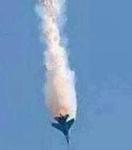
F-16_down_Syria_24.12.14A Jordanian air force F-16 downed over Syria

DEBKAfile’s military and intelligence sources add that Middle East military and aviation control centers are quite sure that the Jordanian warplane was hit by an ISIS missile, while making low passes over the terrorist organization’s Syrian headquarters at Raqqa in violation of the pilot’s orders.

*****************

The US military is going to great lengths to deny any evidence that ISIS shot down the Jordanian Air Force F-16 which came down Wednesday, Dec. 24 over the northern Syrian town of Raqaa. First Lieutenant Muath al-Kasaesbeh, aged 27, was the first Arab pilot to be taken prisoner by the Islamic State. The US Central Command statement said: “We can say with certainty that it was an aircraft crash and the plane was not downed by ISIL as was claimed by the terrorist organization.”

This contradicted an earlier statement by the Jordanian Information Minister Mohammad Momani that the plane had crashed after being hit by a ground-air missile. DEBKAfile’s military and intelligence sources add that Middle East military and aviation control centers are quite sure that the Jordanian warplane was hit by an ISIS missile, while making low passes over the terrorist organization’s Syrian headquarters at Raqqa in violation of the pilot’s orders.

The Jordanians are making intense efforts to deter the jihadis from harming 1st Lt. Kasaesbeh.The Hashemite Kingdom’s armed forces warned that “IS and its supporters would be held responsible for the pilot’s safety and his life.”

The pilot belongs to the Bedouin tribe of Bararsha near Kerak in southern Jordan, which boasts several army generals. They and the tribal chiefs are bringing all their influence to bear to obtain his release.

American military is joining the effort to save the Jordanian pilot – from different motives, which are geared more to sustaining the goals and tactics pursued by the US and the coalition in the war on the Islamic State.
Thursday, Central Command chief Gen. Lloyd J. Austin, who is in charge of US and coalition operations in Iraq and Syria, released a long communiqué praising Jordan for its military actions in the battle, adding: “We will not tolerate ISIL’s attempts to misrepresent or exploit this unfortunate aircraft crash for its own purposes.”

The US general’s message was designed to reassure Jordanian Air Force pilots and dissuade them from dropping out of the coalition air campaign for fear of being shot down by an ISIS missile. The three other Arab coalition members, Saudi Arabia, Bahrain and the United Arab Emirates, must also be kept from quitting.

The share of the four Arab air forces in the war is too weighty to forfeit.

ISIS leader Abu Bakr Al Baghdadi has not doubt calculated his stake in keeping the Jordanian pilot alive and at risk to scare fellow Arab pilots from continuing to take part in US-led bombing missions against his forces.

Furthermore, the Bararsha, like other South Jordanian Bedouin tribes, is known around the region for producing fierce fighters and their relentless pursuit of blood revenge.

Al Baghdadi may opt to avoid antagonizing them for this reason, as well as in the hope of a tangible benefit: ISIS is already using the smuggling routes of southern Jordan as channels to the groups his organization has planted in Sinai, Egypt and eastern Libya. He may decide to go one better and build an alliance with those very tribes behind the backs of the Americans and Jordan’s Abdullah II.

Such an eventuality would add a new dimension to the war on the Islamist terrorists.

Kurdistan: More Like Israel, Less Like Iraq

December 25, 2014

Kurdistan: More Like Israel, Less Like Iraq, Gatestone Institute, Lawrence A. Franklin, December 25, 2014

It is a society that rejects religious zealotry. Most Kurds are Sunni Muslim and one can hear the five-times-a-day Muslim call to prayer, but it is muted and ignored by most.

Like Israel, Kurdistan is more democratic than any of its neighbors. Like Israel, Kurdistan is surrounded by enemies that wish it did not exist. Like Israel, Kurdistan looks West. And like Israel, Kurdistan has maintained an internal equilibrium though all the world betrays it.

Iraqi Kurdistan is full of surprises. Probably, the most unexpected discovery is how normal life is in its capital city, Erbil. Despite a late summer scare by Islamic State [IS] military gains north of Mosul and the threat of suicide bomber attacks, the social discipline of Kurdistan’s citizens is admirable. There is a relaxed state of tension. It is “business as usual.”

There is also a sense of optimism, pervasive and infectious. Entrepreneurial spirit is alive and well. While there was an exodus of foreign businessmen after the initial territorial gains by the IS, foreign investors are filtering back. The Kurdistan Regional Government [KRG] has already drawn up plans for large-scale projects to improve the infrastructure. Heavy-duty construction vehicles are everywhere. The most visible project is the beltway being built around the city.

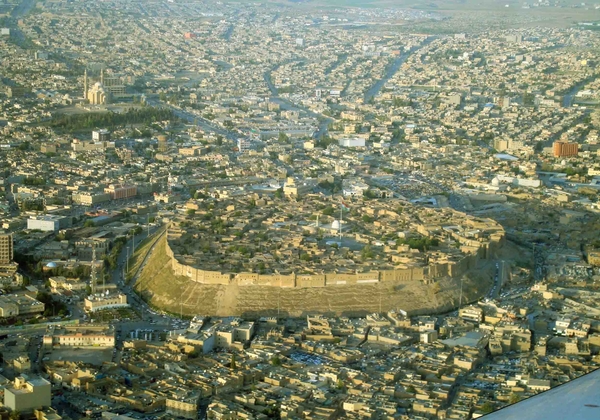
853An aerial view of Erbil, in Iraqi Kurdistan, featuring the ancient Erbil Citadel in the center. (Image source: Wikimedia Commons/Jan Kurdistani)

Political pluralism has come to the Kurdish north as well. While the Kurdistan Democratic Party [KDP] and the Patriotic Union of Kurdistan [PUK] respectively remain the one-two political powerhouses, they now have plenty of company. No one party dominates the parliament. There is plenty of horse-trading on issues, fleeting coalitions, and new political personalities are being heard. Nevertheless, the most influential and respected leaders still come from the Barzani extended family, which run the KDP. The late Mustafa Barzani (1903-1979) is revered as the warrior-godfather of modern Kurdistan.

Kurds, for the most part, are a welcoming lot. The methodical and rapid settlement of tens of thousands of refugees from IS-controlled Iraq required bold leadership by the Barzani-led government and especially from the Catholic hierarchy of Kurdistan. This success also reflects the compassion of a self-confident people. The population of the Dohok region, for example has doubled due to the influx of refugees. There is no observable tension between the newcomers and the population of the host country. Despite the inveterate resentment of the excesses of past Arab regimes, Kurdistan is a multi-ethnic and multi-religious society. It has become even more so with the emigration from other parts of Iraq of Turkmen, Yezidis, and Christian Assyrians and Arabs. It is also a society that rejects religious zealotry. Most Kurds are Sunni Muslim and one can hear the five-times-a-day Muslim call to prayer, but it is muted and ignored by most.

Men, mostly, walk on the streets of Erbil, Dohok, and Zako, especially at night. Kurdistan is not, however, a society that represses women. There are many in parliament, and they are outspoken on the issue of violence to females in Kurdish society. At one conference in mid-November, at least half of the speakers were women prominent in Kurdistan. Women military volunteers are widely admired. The Kurdish media celebrates the Kurdish Peshmerga‘s female fighters. One woman — a veteran of the fierce battle to save the Syrian Kurdish town of Kobane (near Turkey’s border) from an IS takeover — who recently visited Erbil, was received as a national hero. Female Yezidis who have escaped after torture by IS operatives are deeply admired too.

Zako, once the center of Kurdistan’s Jewish population, still invites back descendants of those who long ago left for Zion. Zako’s isolated villages are the wild west of Kurdistan. Its stark beauty against a ring of mountain chains may become a tourist magnet both for its ancient historical attractions and recreational possibilities.

For all of the above reasons, Kurdistan reminds one of Israel. Like Israel, Kurdistan is not dominated by the Arab, nor by Islam. Like Israel, Kurdistan is more democratic than any of its neighbors. Like Israel, Kurdistan is surrounded by enemies that wish it did not exist. Like Israel, Kurdistan looks West. And like Israel, Kurdistan has maintained an internal equilibrium though all the world betrays it.

Israel’s need for Jordan’s king diminishing

December 25, 2014

Op-Ed: Israel’s need for Jordan’s king diminishingIn the wake of the Hashemites aligning themselves with the Muslim Brotherhood to stay in power, promoting anti-Israel resolutions at the UN Security Council, and possessing structural weaknesses in their Air Force, is Jordan a reliable ally for Israel?

Dec 25, 2014, 02:09 PM | Rachel Avraham

via Israel News – Op-Ed: Israel’s need for Jordan’s king diminishing – JerusalemOnline.


Yarmoul TV, the official Muslim Brotherhood channel, which is licensed by the Jordanian king and broadcasts to the entire world from Jordan, broadcasted a song titled “Run over that settler” which was an even bigger hit in the Arab world than the PA version.

Many people in Israel falsely believe that supporting the Hashemite Monarchy is critical for Israel’s security needs, as Jordan possesses the longest border with Israel and they believe that the Hashemites are an ally in the war against Islamic State and other Islamist radical groups.     However, in the wake of the Hashemites aligning themselves with the Muslim Brotherhood to stay in power, promoting anti-Israel resolutions at the UN Security, and Islamic State capturing a 24-year-old Jordanian pilot, one should ponder whether the Hashemites are a reliable partner for Israel and if it is a wise policy to continue relying upon Jordan’s king to keep the Islamists out of power in Jordan.

While the international community has been disturbed by the gruesome images emerging of a 24-year-old Jordanian pilot being taken hostage by Islamic State after his F-16 fighter jet was reportedly shot down by the terror group, few have pondered the broader issue of whether Jordan’s king can be a trusted ally in the War against Terrorism. Jordanian Palestinian journalist Mudar Zahran noted: “From a technical point of view, let us examine the capability of the Jordanian Air Force which is involved in the war on IS.”

“The Jordanians have a fleet of F-16s, approximately 60 of which have been delivered by the US over the last 10 years,” he noted. “Those jets are not modern ones. They are basically F-16’s type A and B, which represent the early model of the jet. Nevertheless, they have been upgraded by the Dutch and Belgium Air Force which conducted what is known as mid-life upgrades to the F-16 models, which gave them more stability and made them comparable to later models such as the F-16 C and D. While the Jordanians have received modern jets from the US, they still hold the world’s record on crashed F-16’s. Officially, Jordan has admitted that 9 jets fell during regular training missions. Given that their fleet size is 60; that is a very high number.”

Zahran believes that the reason why so many Jordanian F-16s crash is because the Jordanian Air Force recruits based on who is a political favorite of the monarchy rather than solid qualifications or even physical strength: “For starters, the Jordanian Air Force allows high school graduates who concentrated in literature enter, even though they have less knowledge of math and science, despite the fact that an understanding of aerodynamics is essential. At the same time, the minimum grade point average required to enter the Jordanian training program for pilots is 60%, basically a D average.”

Rhaed Khames, the Shadow Secretary of Defense for the Jordanian Coalition of Opposition who for 20 years was a commander in the Jordanian Army, commented that the quality of Jordanian trainees is not proper. He stressed that “like everything else in Jordan, it is based on whether the king likes your family or not and the hot shots make their children become pilots.” Furthermore, Khames noted that “if you think those operating the Jordanian jets and even managing the Jordanian Air Force are all moderates, think again.” He noted that Captain Majali, a cousin to the king’s security chief and who was formerly in the Jordanian Air Force, defected from his job and joined Islamic State. He died while fighting for Islamic State five months ago. Given this, Zahran questions how useful the Jordanian Air Force can potentially be in the War against Islamic State and other Islamist groups.

However, the problem with Jordan being relied upon as an ally for Israel and the west does not end with the weaknesses of the Jordanian Air Force. CNN confirmed that Jordan is one of the biggest purchasers of IS oil on the black market. One must ponder, does Jordan’s king use the oil it purchases from Islamic State to fuel those F-16 fighter jets? And given that the Hashemites are relying upon the Muslim Brotherhood to stay in power and that the Muslim Brotherhood openly supports Islamic State, facts that were previously reported on JerusalemOnline, how can Israel view the Jordanian monarchy as a reliable partner?

It should be noted that Yarmoul TV, the official Muslim Brotherhood channel, which is licensed by the Jordanian king and broadcasts to the entire world from Jordan, broadcasted a song titled “Run over that settler” which was an even bigger hit in the Arab world than the PA version. Zahran noted that the anti-Israel incitement in the Jordanian media is worse than it is in the Palestinian Authority. For example, Khalil Ateyeh, a MP loyal to the Jordanian King, stated specifically, “I hate the Jews.”

Additionally, YNEWS reported that the Jordanian King was the one who proposed to Kerry a peace plan that calls upon Israel withdrawing to the 1967 borders, which many have noted are not the “secure and recognized borders” envisioned by UN Security Council Resolution 242 and contradict understandings reached between former US President George Bush and former Israeli Prime Minister Ariel Sharon. The Hashemites have also supported Palestinian unilateral efforts that violate previous agreements the Palestinians reached with Israel and Jordanian Ambassador to the US Alia Bouran boasted how Jordan is behind the anti-Israel resolution presently at the UN Security Council.

Upon reading these facts, many may wonder, given this, what alternative does Israel have other than to support the Jordanian king? Many fear that the only choices are between the Hashemites on the one hand and Islamic State/Muslim Brotherhood on the other. For these peoples, it is critical to note that Jordan is not Egypt. In Jordan, the Muslim Brotherhood supports the king staying in power, preferring to reform the regime rather than topple it. For this reason, Zahran does not believe that IS views toppling the Hashemites to be a priority, as they view time to be on their side.   They merely have to wait until the country radicalizes more by the Muslim Brotherhood before getting rid of the Hashemites.

However, in a recent article published in the Jewish Press, Zahran warned: “At the right time, IS could capitalize on the anger and frustration of Jordanians, including the majority of Palestinian heritage. Under this king, Jordanians of Palestinian origins are denied state jobs, education and healthcare and are forced to pay taxes which others do not pay. They are also under-represented in the parliament and discriminated against on business opportunities. All of this has led to a wide spread frustration.”

“In addition, the Jordanian East Bankers have been particularly disgruntled by the king’s incredibly lavish life style and the way he treats them, for example, confiscating their vast tribal lands and registering those in his name,” Zahran wrote. “In other words, the Jordanian public is a fertile ground of anger that could be easily exploited by IS. While the American establishment-US Department of State in particular- has failed to establish connections to Jordan’s secular /pro-peace opposition, Jordanians are left abandoned with nobody to turn to and desperate for any change. That thrust for “change” might be abused by IS.”

Jordanian East Bank opposition leader Muhammad Mubaideen told the Jewish Press: ”People are so desperate; they are now hoping IS would come and change their conditions. They have nothing to lose and they want to try anyone other than this king.” Emad Tariffi, member of the Jordanian Coalition of Opposition-who is now in jail, reported similar things: “People have lost any hope for change under the king; most of them hope IS could topple the king now.”

In other words, the international community is repeating the same mistake in Jordan that they made in Syria. At the beginning of the Syrian Revolution, there were pro-democracy activists who were fighting against Assad that sought to create a viable democracy within their country. They were not hostile towards the west and would have at the very least kept the status quo with Israel. However, the world was silent and did not support them. As the revolution waged on in Syria, these people were either killed off, forced to flee for their lives or to go underground, as mostly Islamists took over the Syrian Revolution. It got to the point where now, outside of the Kurdish areas, the two strongest groups are Assad backed by Iran and the Muslim Brotherhood, Islamic State and other Islamist groups.

Now, the Jordanian opposition is dominated by secular pro-democracy activists that greatly admire General Sisi in Egypt. They want to maintain the peace treaty with Israel and are very much opposed to the Islamists. However, these people are routinely persecuted by the monarchy and without outside assistance, the moment that IS decides to overthrow the Hashemites, the seculars who have faced persecution that the Muslim Brotherhood never experienced within the country will be at a disadvantage, which could lead to the Islamists taking over Jordan. For Israel and the west, remaining silent and not supporting the Jordanian secular opposition has not been a prudent move. Will the Israeli leadership change course before it is too late?

Netanyahu and Jordan's king

Netanyahu and Jordan’s king Photo Credit: Government Press Office

Prime Minister Benjamin Netanyahu’s Christmas Greeting – 2014

December 25, 2014

▶ Prime Minister Benjamin Netanyahu’s Christmas Greeting – 2014 – YouTube.


Merry Christmas to all our readers !

Joseph Wouk