Archive for November 2014

A Nuclear Deal for U.S. and Iran Slips Away Again – NYTimes.com

November 25, 2014

A Nuclear Deal for U.S. and Iran Slips Away Again – NYTimes.com.

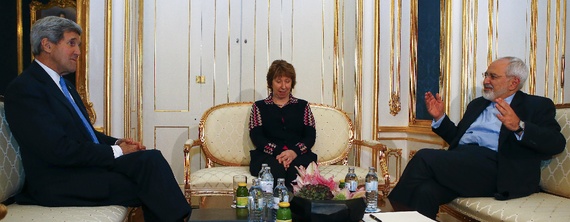
Secretary of State John Kerry, left, gestures toward Iranian Foreign Minister Mohammad Javad Zarif while posing with other diplomats Monday during their meeting in Vienna. Credit Pool photo by Joe Klamar

VIENNA — By the time Secretary of State John Kerry and his Iranian counterpart checked into a luxury hotel near the famous beaches of Oman earlier this month, a long-sought deal that has eluded the last two American presidents to roll back Tehran’s nuclear program seemed to be slipping out of reach.

With a deadline approaching, Mr. Kerry thought the opportunity could be lost unless the Iranians finally offered a breakthrough compromise. But Mohammad Javad Zarif, the Iranian foreign minister, came with little new. Frustrated, Mr. Kerry said there was no way the United States would accept a deal that did not curb Iran’s ability to produce enough fuel for a bomb within a year.

The conversation grew heated. The two men, patricians in their own cultures and unaccustomed to shouting, found themselves in the kind of confrontation they had avoided during multiple negotiating sessions over the past year. “This was the first time there were raised voices and some unpleasant exchanges,” said an American official, who like others requested anonymity to describe secret diplomacy.

On Monday, as the deadline finally arrived, Mr. Kerry left another negotiating table in Vienna, having failed to bridge the divide.

The last-minute offers he expected never arrived. And yet the two diplomats agreed that they may yet agree, and so they settled for a seven-month extension of the deadline in hopes that a new approach might enable them to find the middle ground that has escaped them.

If anything, the last few weeks underscored a larger conclusion about the negotiations: If the deal had been left to Mr. Kerry and Mr. Zarif, and to their respective teams, it probably would have happened. The two men have developed a strong working relationship, and the flare-up in Oman a couple weeks ago underscored how much each wanted to get to a deal but could not.

In the end, both were constrained by hard-line politics at home. Mr. Zarif, while friendly, outgoing and Westernized, had pushed to the very limits of his brief; he often warned that the final decision would be in the hands of the supreme leader, Ayatollah Ali Khamenei. And Ayatollah Khamenei, American intelligence officials had told President Obama and Mr. Kerry, was heavily influenced by the Revolutionary Guard Corps and his own distrust of the Americans.

For his part, Mr. Kerry’s position was complicated by the Republican midterm election victory and the fear of feeding the narrative that Mr. Obama was a weakened president. The bipartisan talk in Congress about new sanctions hung over the American negotiating team. And so did Israel’s constant warnings that Mr. Obama was at risk of being duped. If Israel condemned any outcome as a bad deal, the label could stick in Congress.

An agreement with Iran has hovered achingly out of reach throughout Mr. Obama’s presidency, the foreign policy goal that could transform American relations with one of its most persistent adversaries and reshape the world’s most volatile region. From the start, the story of the talks has been one of hopeful signs and dashed expectations, bursts of optimism occasionally piercing clouds of skepticism.

Mr. Obama began reaching out shortly after taking office in 2009, writing the first of what would be four letters to Ayatollah Khamenei. It was not until last year’s election of Hassan Rouhani, followed by his choice of Mr. Zarif, that doors really began to open and Mr. Obama authorized a secret channel to the two men through Oman.

His envoys, William Burns and Jake Sullivan, both then top administration officials, traveled with little or no entourage, slipping into the back doors of hotels. Israel was kept in the dark for months, as were the French. The talks moved to New York in September 2013 under the cover of the United Nations’ annual meeting. Mr. Zarif met Mr. Kerry in a closet-size room near the Security Council chamber, and the two exchanged private telephone numbers and email addresses, a channel they have used more than either has publicly admitted. Mr. Zarif helped engineer a telephone call between Mr. Obama and Mr. Rouhani, the first direct contact between American and Iranian leaders since the 1979 revolution. “It cost us when we got home,” Mr. Zarif later noted.

But the talks led to a deal last November to freeze much of Iran’s nuclear activity in exchange for some sanctions being lifted while formal talks for a broader agreement were held. Wendy Sherman, the under secretary of state, led the new negotiations so persistently that she kept going even after rupturing a finger in a fall and later breaking her nose on a glass door in Vienna.

Iran threw several curveballs. Ayatollah Khamenei said in a speech that Iran would ultimately increase its capacity to produce enriched uranium tenfold, rather than decrease it. “Zarif all but told us he didn’t see that coming,” an American official said.

Mr. Zarif then surprised Mr. Kerry in July by proposing in an interview with The New York Times that Iran would simply continue the temporary freeze for seven years or so but dismantle nothing. “He’s negotiating in public,” Mr. Kerry fumed. Another American official said “it didn’t even accord with what he was saying to us” privately. But it helped give Mr. Zarif room with hard-liners at home to extend the first deadline.

Negotiators reconvened in late September in New York, but the Iranians told the Americans they would not consider real offers until after the midterm elections. The Americans said that was silly; the talks were not an issue in the elections. Mr. Kerry became more heavily involved. He began meeting with Mr. Zarif, either alone or, to keep the other partners in the loop, in three-way meetings with Catherine Ashton, the European Union envoy to the negotiations.

As his party headed to defeat in the November elections, Mr. Obama gathered his team for several meetings in the Situation Room to consider his negotiating positions and opted to write another letter to Ayatollah Khamenei. With those positions finalized, Mr. Kerry and his team were empowered to press and see how far they could take the negotiations, in effect testing the Iranians.

Mr. Kerry agreed to meet Mr. Zarif in Muscat, Oman, where the secret diplomacy had started. The Americans arrived in mid-November armed with a confidential eight-page paper outlining American ideas for closing the remaining gaps in many areas, which the Iranians were given to read but not to keep.

The Americans had initially proposed to limit the number of operational centrifuges Iran would be allowed to retain to 1,500, down from the 10,000 spinning today. But with a side deal developing for Iran to ship much of its fuel to Russia, where it would be turned into fuel rods for the Bushehr nuclear plant, Iran’s only operating commercial reactor, that number could rise to as many as 4,500 centrifuges.

That was a function of “mathematics, not politics,” one Western official said. “Essentially we were saying, ‘We’ll meet you halfway.’ ” But the Iranian side would not budge, leading to the ominous confrontation between Mr. Kerry and Mr. Zarif. Mr. Kerry flew to Vienna on Thursday for a final shot at meeting the deadline. The Americans sensed that Mr. Zarif had little leeway. Mr. Zarif and his aides warned that after the first meeting, the foreign minister would fly back to Tehran to get a bottom line from the clerics and military elite. The Americans said Mr. Kerry would also be leaving and told reporters to pack their bags.

But in the opening session, Mr. Zarif told Mr. Kerry that there was no point in going back to Tehran if there were no new American offers on the table. Sounding frustrated, Mr. Zarif told the official IRNA news agency, “There were no remarkable offers and ideas to take to Tehran.”

To the Americans, Mr. Zarif’s tactic looked like a squeeze play that was designed to elicit some last-minute concessions. There was debate among Mr. Kerry’s team on how to respond, and some officials argued the secretary of state should call Mr. Zarif’s bluff and leave for Paris anyway. He did not.

“We’re stuck,” Mr. Kerry confided to Frank-Walter Steinmeier, the German foreign minister, as they convened on Saturday at the ornate Imperial Hotel. “We were ready to go.”

“These are the hours of truth,” Mr. Steinmeier said. “We have to check now if Iran is really ready to move in the right direction.”

As the clock wound down, the pace intensified. The French foreign minister returned to the talks. Sergey V. Lavrov, the Russian foreign minister, flew in, as did Saud al-Faisal, the Saudi foreign minister. But there was no breakthrough, just a set of “new ideas” for future discussions. On Monday evening, Mr. Zarif sounded preternaturally optimistic. He suggested the differences could be bridged in a few months. “The major problem is a compounded mistrust,” he said, suggesting that had been gradually chipped away over the past year, though more among the negotiators, he seemed to say, than among their colleagues back in Washington and Tehran. But he added a warning: No one should treat this like a Cold War game. “If you are looking for a zero-sum game in nuclear negotiations,” he said, “you are doomed to failure.”

David E. Sanger and Michael R. Gordon reported from Vienna, and Peter Baker from Washington.

Foreign Policy: What Hagel Got Right

November 25, 2014

What Hagel Got Right.

“Scapegoat,” the term Peter Feaver employed in reacting to the firing of Secretary of Defense Chuck Hagel, actually was a goat that the Bible tells us carried the sins of the Israelites with it as it was sent off to meet its death in the desert. And scapegoat is the perfect simile for this decent man who never had a chance in the dysfunctional Obama administration.

His performance at his confirmation hearings notwithstanding, Hagel performed creditably as secretary, despite the fact that, like Jim Jones, he was shut out of the president’s inner circle from his very first day in office.

Hagel clearly had been chosen over other possible candidates precisely because he was not part of the defense community. The White House wanted someone who would implement its strategy, not help to formulate it. It wanted someone who would not protest against defense budget cuts, driven by a desire to have defense contribute its “fair share” toward deficit reduction. Hagel complied, which to a large part explains his silence at White House meetings. After all, what was the point of speaking out if the inner circle was not going to listen to him anyway?

Where Hagel was given some leeway he performed far better than many pundits anticipated, and for which he has received little credit. Take relations with Israel, for example. Hagel was bitterly attacked as someone who was anti-Israel, and some even went so far as to call him anti-Semitic. The latter accusation was pure rubbish. And Hagel maintained a close relationship with his Israeli opposite number, Defense Minister Bogie Yaalon, even as the president made it obvious that he couldn’t stand Bibi Netanyahu, and his White House staff was calling the prime minister a “chickenshit.”

Hagel also kept lines open to the Egyptian military even as the White House was making a hash of American relations with Cairo. His ability to reach out to Abdel Fateh el-Sisi made all the difference when the general assumed the presidency of his country. Egypt is still the most important country in the Middle East, and Hagel deserves most of the credit for preventing the complete rupture of ties with Cairo.

Hagel strongly supported Under Secretary of Defense Frank Kendall’s defense reforms, and brought in a capable manager, Bob Work, as his deputy. He inveighed against the sequester, though his concerns, like those of his predecessors, fell on deaf ears when they reached the White House. He took a strong stand against sexual misconduct in the military, and, more generally was a forceful advocate for maintaining that those in uniform adhere to the highest ethical standards as a matter of course. And he related to ordinary troops as well as any of his predecessors had.

Hagel was not dismissed because he embodied a strategy that the White House wished to change. The White House continues to cling to the notion that it is doing everything right, and that what its strategy requires is minor tweaks, not a massive overhaul. Rather, Hagel was dismissed in order to protect those who really have been in charge of formulating a national security strategy that has been a dismal failure, namely, the handful of individuals who constitute the inner circle of presidential advisors. These are the people who are responsible for the premature withdrawal from Iraq; the premature announcement of a withdrawal from Afghanistan; the unfulfilled promise of the pivot to Asia; the red line on Syria that wasn’t; the confused response to Putin’s aggression in Ukraine and to the rise of the Islamic State.

None of these individuals shows any sign of moving on. The inner circle remains intact. The scapegoat has been sent on his way.

McCain: Failed Korea Nuke Negotiators Now Bringing You Iran Talks

November 24, 2014

McCain: Failed Korea Nuke Negotiators Now Bringing You Iran Talks, National ReviewMichael Auslin, November 24, 2014

Halifax — As news spreads that the failed Iranian nuclear talks require a second extension, this time for seven-months, U.S. officials at an international security conference here essentially admitted that North Korea was now a nuclear power, underscoring the failure of decades of high-level diplomacy. Yet the White House is doubling-down on its equally suspect negotiations with Tehran.

General Charles H. Jacoby, outgoing commander of U.S. Northern Command and NORAD, told the Halifax International Security Forum that he was treating North Korea as a “practical threat” due to its nuclear and ballistic missile capability that could potentially reach the U.S. homeland. Jacoby did not specify whether this meant that North Korea’s missiles and nukes were an operational threat, nor how he had changed NORAD’s operating posture, if at all. Admiral Cecil Haney, commander of U.S. Strategic Command (in control of all of America’s nuclear weapons), refused to answer whether he also considered Pyongyang a practical threat, but noted that he wanted more focus on trying to understand North Korean dictator Kim Jong-un. The generals’ comments came just weeks after General Curtis Scaparotti, commander of U.S. Forces Korea, testified before Congress that he believed Pyongyang could build a nuclear warhead and mount it on a ballistic missile.

There is little doubt that America’s policy towards North Korea has failed, and that Pyongyang has played Democratic and Republican administrations alike, promising concessions, making agreements, and playing for time. Time enough to be close to a nuclear break out, which may be imminent. When Pyongyang mates a functional nuclear warhead with a reliable long-range or intercontinental ballistic missile, then two things will happen: first, the nuclear balance in Asia will tip, second, the Iranians will be opening their checkbooks immediately for access to both technologies. Above all, Japan will begin thinking seriously about either dramatically expanding its strike capabilities or maybe even its own nuclear deterrent. After all, given that two decades of American diplomacy resulted in a rogue regime with nukes, how much can the U.S. nuclear umbrella be trusted? Will Washington really be willing to trade Los Angeles for Tokyo? Our ally won’t admit it publicly, but highly doubts it.

To paraphrase: Diplomacy has consequences. Unfortunately, it seems that Washington doesn’t quite get that. Instead, the dialogue dependency trap continues to ensnare our top officials, who convince themselves that talking is always better than the opposite, that rationality and self-interest will ultimately win out. That’s probably true, but the Obama administration’s problem (like the Bush administration’s) is that they don’t understand North Korean concepts of self-interest. Hence, an Asia about to get much more dangerous.

The real dangers of our failed diplomacy were summed up by Senator John McCain in Halifax, who bluntly stated that the North Koreans have nuclear weapons and delivery systems. “It’s a wake up call,” said McCain, who topped it off by looking at the greater danger of Iran. “The same people who negotiated with North Korea are now negotiating with the Iranians,” McCain explained, likely referring to Acting Deputy Secretary of State and Under Secretary of State for Political Affairs Wendy Sherman. Sherman, who is lead negotiator for the flailing Iranian talks, was the point person for talks with the North Koreans back in the Clinton administration, under Madeleine Albright. If McCain is right, then expect years more of failed negotiations and a nuclear Iran sometime this decade or next.

U.S. and Allies Extend Iran Nuclear Talks by 7 Months – NYTimes.com

November 24, 2014

U.S. and Allies Extend Iran Nuclear Talks by 7 Months – NYTimes.com.

Kerry Announces Extension to Iran Talks

Secretary of State John Kerry said officials have given themselves seven more months to reach an accord with Iran on its nuclear program, and that the talks had made “real and substantial progress.”

 VIENNA — A yearlong effort to reach an enduring accord with Iran to dismantle large parts of its nuclear infrastructure fell short on Monday, forcing the United States and its allies to declare a seven-month extension, but with no clear indication of how they plan to bridge fundamental differences.

In a news conference hours before a deadline on Monday night, Secretary of State John Kerry said a series of “new ideas surfaced” in the last several days of talks. He added that “we would be fools to walk away,” because a temporary agreement curbing Iran’s program would remain in place while negotiations continued. In return, Iran will receive another $5 billion in sanctions relief, enabling it to recover money frozen abroad — something that is likely to add to the threat of new sanctions from the newly-elected Republican Congress.

But the fundamental problem remained: Iran’s supreme leader, Ayatollah Ali Khamenei, has yet to signal that he is prepared to make the kind of far-reaching cuts in Iran’s enrichment capability that would be required to seal an accord. And it is unclear that his view will change before a March 1 deadline for reaching a political agreement, the first phase in the seven-month extension.

“Is it possible in the end we won’t reach an agreement?” Mr. Kerry said. “Absolutely.” But he also indicated that the United States and Iran, along with Britain, France, Germany, China and Russia would turn only then to the question of whether a diplomatic path that President Obama has so long insisted upon can succeed.

“These talks are not going to get easier just because we extend them,” Mr. Kerry acknowledged. “They are tough, they’ve been tough, and they are going to stay tough.”

Officials said little about the new approaches they were now exploring with Iran, other than to indicate that “experts” — presumably at the Energy Department’s national laboratories — would be studying them to see if they, in combination with other steps, would result in at least a year’s warning if Iran raced for a weapon. That is the standard that the United States has set.

That suggested the approach involves a combination of Iranian commitments to ship some of its nuclear stockpile to Russia, efforts to disconnect some of the country’s centrifuges in ways that would take considerable time to reverse, and limits on output that could be verified by international inspectors. “It’s a lot of moving parts,” said one European diplomat involved in the discussions, “and the question is what it adds up to.”

Mr. Kerry went out of his way to compliment the lead Iranian negotiator, Mohammad Javad Zarif, who American officials have described as a creative diplomat who is forced to navigate Iran’s treacherous politics — and uncertain how far the country’s supreme leader will let him go. He and Iran’s president, Hassan Rouhani, came to power promising an end to the sanctions that have reduced Iran’s oil revenue by roughly 60 percent, crashed its currency and made overseas financial transactions almost impossible.

But Mr. Zarif was also arguing, to the end here, that the sanctions must be lifted permanently and almost immediately, rather than being suspended, step by step, as President Obama has insisted. When Mr. Obama publicly rejected that approach in an interview broadcast Sunday on ABC’s “This Week,” it seemed to drive home the fact that an accord was simply impossible.

For many opponents of the deal — in Iran, in Congress, in Israel and in the Arab states — the result was a relief. The extension had not even been announced when Prime Minister Benjamin Netanyahu of Israel celebrated it as the least-bad outcome.

“No deal is better than a bad deal,” he said to the BBC, hours after speaking with Mr. Kerry by phone. “The right deal that is needed is to dismantle Iran’s capacity to make atomic bombs and only then dismantle the sanctions. Since that’s not in the offing, this result is better, a lot better.”

In Iran, the calculus is more complex. With oil prices dropping, the economic damage done by the sanctions is being amplified. But those supporting President Rouhani insisted that the extension did not mean failure, and some argued that extra time works in Iran’s favor.

Saeed Laylaz, an economist connected to the government, argued that Mr. Rouhani was managing the country more efficiently than his fiery predecessor, Mahmoud Ahmadinejad.

“With prudence and wisdom we can run the country, and at least we are now assured of $700 million income each month, which we can inject into the economy,” Mr. Laylaz said. That is the amount Iran will receive in the additional sanctions relief.

Those who have been critical of the government’s outreach to what they see as its archenemy, the United States, also welcomed the outcome, saying it showed that the negotiators had been under the control of the supreme leader, and that Iran had lost nothing — because its nuclear infrastructure remained intact.

The negotiations are to resume next month. The location for the December talks has yet to be announced, but since the long dance to today’s failed deadline began they have been held in Muscat, Oman; Geneva and here in Vienna.

Reports: Top Iranian Negotiator ‘Frequently Shouts’ at Kerry, Western Officials

November 24, 2014

Reports: Top Iranian Negotiator ‘Frequently Shouts’ at Kerry, Western Officials
BY: Adam Kredo November 23, 2014 12:30 pm Via The Washington Free Beacon


(Apparently, the Iranians don’t grasp the urgency of the situation.  They continue to bargain from a position of perceived strength when in reality, they stand to lose so much more than the US and other parties.  Being the masters of deception that they are, it’s easy to see how they continue to mislead everyone and even themselves.  Bottom line, the US needs more teeth in the fight.  Only problem is Iran will bow out, so what’s the point?  In my humble opinion, the Obama administration does not want Israel taking military action during Obama’s remaining term in office.  His war is strictly domestic and he cannot afford the time required to deal with foreign affairs, much less another Mideast war.-LS)

VIENNA—Iran’s foreign minister and lead negotiator in nuclear talks is known to frequently scream and shout at Western diplomats, including Secretary of State John Kerry, a practice that has caused alarm among bodyguards stationed outside the negotiating room, according to a member of the Iranian diplomatic team who spoke to the Farsi-language press.

Iranian Foreign Minister Javad Zarif—who is scheduled to hold one-on-one talks with Kerry this evening in Vienna—”frequently shouts at Western diplomats” in such a forceful manner that bodyguards have hurriedly entered the negotiation room on occasion worried that an incident might occur, according to one Iranian diplomat involved in negotiations who spoke anonymously with the Iranian press earlier this week.

On one occasion, Zarif’s shouts were so loud that a member of the Iranian delegation entered the negotiation room to check on the players, according to the report, which was independently translated for the Free Beacon.

Upon entering, the Iranian official was informed by European Union Foreign Policy Chief Catherine Ashton, a chief western negotiator, that Zarif was just shouting and she had gotten used to it, according to an independent translation of the report.

The report of Zarif’s aggressive behavior is consistent with previous reports claiming that Iranian negotiators tend to treat their Western counterparts—particularly the Americans—with scorn.

Iranian diplomat Abbas Araghchi, another member of the negotiating team, is reported to have said in an interview that during past negotiations in Geneva, Zarif “shouted” at Kerry and spoke to him in a way that was likely “unprecedented” in the history of U.S. diplomacy.

Araghchi went on to claim that he and Zarif play the roles of “good cop, bad cop,” according to the report, also in Farsi. The two often exchange these roles in a bid to “baffle the Western diplomats” and keep them uneasy, the report claims.

Araghchi further claimed that Kerry said very little after being shouted at by Zarif, except for “one or two very respectful sentences.”

Meanwhile, negotiations in Vienna over a final deal continue just one day before a self-imposed deadline for the talks.

While some Iranian officials have said that they refuse to extend the talks any further, Western officials, including Kerry, maintain that serious divisions remain between the two sides.

Both sides appear convinced that it will be impossible to reach a final deal before the Monday deadline.

“Given the limited time left, reaching a comprehensive agreement seems unlikely,” an Iranian diplomat told the country’s state-controlled media early Sunday.

Desperation on the part of the United States has led to a situation in which Iran feels that it has the upper hand and can act brazenly in talks, according to Saeed Ghasseminejad, an Iranian dissident and associate fellow at the Foundation for Defense of Democracies (FDD).

“The problem with the nuclear negotiations is that everybody knows how desperately this administration wants a deal,” Ghasseminejad said. “Nothing good comes out of such a situation. Actually it is [Iranian President] Rouhani who should be desperate to reach a deal.”

The United States “has gone too far to meet [Iranian Supreme Leader] Khamenei’s excessive demands only because the administration wants to have a foreign policy legacy beyond the total chaos it has achieved till now; the problem is that what they do only makes things worse,” he said.


Netanyahu: Lack of Iran deal gives chance to stiffen economic sanctions

November 24, 2014

Netanyahu: Lack of Iran deal gives chance to stiffen economic sanctions.

“This result is better, a lot better,” PM tells BBC, in response to news the Vienna talks were likely to break off and resume next month.


With the world powers and Iran unlikely to conclude a nuclear deal by the midnight deadline Monday, Prime Minister Benjamin Netanyahu said there is now an opportunity to continue and toughen economic pressure against Tehran.

Netanyahu’s comments came during a BBC interview in which he said the current stalemate in the talks is a “lot better” than the deal that he said Iran was pushing for. That deal, which he described not as a “bad deal,” but rather a “horrible deal,” would have “left Iran with the ability to enrich uranium to an atom bomb while removing sanctions.”

The deal that the world should be pushing for, he added, was to “dismantle Iran’s capacity to make atomic bombs, and then only to dismantle the sanctions.”

Netanyahu dismissed Iran’s oft-heard argument that it has the “natural right” to enrich uranium, saying “there is no right to enrich. What do you need to enrich uranium for if you are not developing an atomic bomb?”

Netanyahu said Iran’s development of intercontinental ballistic missiles is a clear sign that it is seeking nuclear weapons. The only reason you build ICBMs is to launch a nuclear warhead. So Iran, I think everyone understands, is unabashedly seeking to develop atomic bombs. And I think they shouldn’t have the capacity either to enrich uranium or to deliver nuclear warheads. And I think that is the position the P5+1 should take.”

Netanyahu said one of the justifications for not taking that position was that to do so would “offend Iranian pride.”

“So what,” he said. “If this position was taken in the 1930s against Germany, it would have offended German pride, but saved millions and millions of lives.”

Netanyahu said the world must not give atomic bombs to “this medievalist regime in Iran that throws acid in the faces of women, that oppresses gays, that subjugates entire populations, that exports terrorism far and wide.”

Netanyahu said now since an agreement was not reached, he hoped the pressure on Tehran would continue.

“The fact that there is no deal now means there is an opportunity to continue the economic pressure that has proven the only thing that has brought Iran to the table,” he said.

Advocating continuing and toughening the economic sanctions, Netanyahu said,  “I think that is road that has to be taken. But of course Israel is watching very carefully what is happening here, and Israel always, always, reserves the right to defend itself.”

Iran, world powers said to extend talks after failing to seal deal

November 24, 2014

Iran, world powers said to extend talks after failing to seal deal | The Times of Israel.

( Surprise, surprise… – JW )

Diplomats say progress made toward pact ahead of midnight deadline; talks to resume next month, possibly in Austria or Oman

November 24, 2014, 1:33 pm
Foreign Ministers from the P5+1 nations - Philip Hammond of the United Kingdom, Frank-Walter Steinmeier of Germany, Wang Yi of China, Baroness Catherine Ashton of the European Union, Sergey Lavrov of Russia, John Kerry of the United States, and Laurent Fabius of France - look for their place mark before taking a "family photo" in Vienna, Austria, on November 24, 2014. (photo credit: US State Department)

Foreign Ministers from the P5+1 nations – Philip Hammond of the United Kingdom, Frank-Walter Steinmeier of Germany, Wang Yi of China, Baroness Catherine Ashton of the European Union, Sergey Lavrov of Russia, John Kerry of the United States, and Laurent Fabius of France – look for their place mark before taking a “family photo” in Vienna, Austria, on November 24, 2014. (photo credit: US State Department)

The US and Iran are making last-minute progress at nuclear talks but will need to extend negotiations to next month, Western diplomats said Monday, after the sides failed to come to terms before a midnight deadline.

Their comments matched earlier word that negotiations had now turned two-track, with the sides still racing to reduce differences at the negotiating table but also working on how long to extend the talks.

A Western diplomat spoke of “progress made this weekend,” adding that the talks would reconvene in December, with the venue yet to be decided.

An unidentified source told the Reuters news agency that the sides had agreed to renew talks next month, possibly in Austria or Oman.

As part of the agreement to extend talks, which was still being worked out by officials as of Monday afternoon, Iran would see no additional easing of sanctions, the source said.

US Secretary of State John Kerry and Iranian Foreign Minister Mohammad Javad Zarif agreed Sunday to start discussion on continuing the talks past the target date.

But Chinese Foreign Minister Wang Yi said Monday negotiators were still having “consultations” on a final agreement that meets both US demands for strict curbs on Tehran’s nuclear program and Iran’s push for sanctions relief, also suggesting that moves toward an immediate deal had not yet been abandoned.

International negotiators are worried that Iran is using its nuclear development program as a cover for developing nuclear weapons, and they have imposed economic sanctions on Tehran. Iran denies that, saying it is only interested in producing power.

Wang arrived Monday, joining the foreign ministers of the other countries negotiating with Iran — the US, Russia, Britain, France and Germany, in a top-level diplomatic effort to push the talks forward.

The five permanent members of the UN Security Council and Germany have been locked in talks with Iran for months, seeking to turn an interim deal that expires at midnight on Monday into a lasting accord.

Such an agreement, after a 12-year standoff, is aimed at easing fears that Tehran will develop nuclear weapons under the guise of its civilian activities, an ambition it strongly denies.

It could see painful sanctions on Iran lifted, silence talk of war and represent a much-needed success for both US President Barack Obama and his Iranian counterpart Hassan Rouhani.

“What a deal would do is take a big piece of business off the table and perhaps begin a long process in which the relationship not just between Iran and us but the relationship between Iran and the world, and the region, begins to change,” Obama said in an ABC News interview Sunday.

The discussions over an extension came after Kerry met Zarif for the sixth time since Thursday but again apparently failed to break the deadlock.

British Foreign Secretary Philip Hammond said however that the parties would still make a “big push tomorrow (Monday) morning to try and get this across the line.”

Wang arrived in the Austrian capital early Monday, completing the line-up of all the six powers’ foreign ministers including Laurent Fabius of France and Germany’s Frank-Walter Steinmeier.

This included Russian Foreign Minister Sergei Lavrov, a key player in the talks. President Vladimir Putin was due to talk to Rouhani by phone later Monday, ITAR-TASS reported.

Gaps on uranium and sanctions

Diplomats on both sides say that despite some progress, the two sides remain far apart on the two crucial points of contention: uranium enrichment and sanctions relief.

Enriching uranium renders it suitable for peaceful purposes like nuclear power but also, at high purities, for the fissile core of a nuclear weapon.

Tehran wants to massively ramp up the number of enrichment centrifuges — in order, it says, to make fuel for a fleet of power reactors that it is however yet to build.

The West wants them dramatically reduced which together with more stringent UN inspections and an export of Iran’s uranium stocks would make any attempt to make the bomb all but impossible.

Iran wants painful UN and Western sanctions that have strangled its vital oil exports lifted, but the powers want to stagger any relief over a long period of time to ensure Iran complies with any deal.

Extension

In view of the difficulties, many experts have long believed that the negotiators would put more time on the clock, although how this might work is unclear.

The terms of 2013’s interim deal — under which Iran froze certain activities and got limited sanction relief — could be rolled over for a certain period of time.

Alternatively there could be a new interim deal or “political framework,” adding certain measures but leaving sanctions and enrichment until later.

An Iranian source told AFP on Sunday that the extension could be “six months or a year.”

Another extension — as happened with an earlier deadline of July 20 — however carries risks of its own, including possible fresh US sanctions that could lead Iran to walk away.

It will also fuel accusations from Israel, the Middle East’s sole if undeclared nuclear-armed state, that its arch foe Iran is merely buying time to get closer to the bomb.

Arms Control Association analyst Kelsey Davenport told AFP that any extension “will have to be very short because there are too many hardliners, particularly in Washington and Tehran, that want to sabotage this deal.”

AP contributed to this report.

The Many Iranian Obstacles in the Way of a Strong Nuclear Deal

November 23, 2014

The Many Iranian Obstacles in the Way of a Strong Nuclear Deal, The Atlantic, November 23, 2014

(Assuming an eventual bad nuke deal, will the U.S. Congress be able to kill it? In a reasonably bipartisan fashion?– DM)

I just want this much‘I just want this much enriched uranium’ (Reuters)

It will be near-impossible, especially after the immigration debate, to sell the Republican-controlled Congress on whatever Iran deal Obama negotiates. But the Democrats won’t be an easy sell, either.

***********

The other day I fell into conversation with a very smart congressman named Ted Deutch, a Democrat from Florida, about his minimum requirements for an Iran nuclear deal. Deutch, who sits on the House Foreign Affairs Committee, is—like a large number of Democrats—fairly-to-very dubious about the possibility of a true breakthrough with Iran, and fairly-to-very worried about the consequences of a bad deal. (It seems likely, at this moment at least, that the Iran talks will be extended for several more months.)

Democrats such as Deutch will need to be convinced by the Obama administration that it hasn’t been outplayed by Iran. If an accord is eventually reached, and if Obama cannot convince the Democrats that he has delivered to them the toughest possible deal, then Congress will do everything in its power to undo the agreement. The Republicans, of course, are itching to subvert an Obama-negotiated deal, and Democratic support will be important to them as they make their case.

As I’ve written previously, I support a diplomatic solution to the challenge posed by the Iranian nuclear program because such a solution could theoretically achieve, without bloodshed, what a military strike might not achieve with bloodshed. But as I outline in this column, I don’t believe that either the diplomatic solution, or a solution that requires crushing sanctions and the credible threat of force, are overly likely to neutralize this threat. (And yes, it is a threat. An Iran with nuclear weapons would pose an acute challenge to pro-American moderates across the Middle East, and to the cause of nuclear non-proliferation, in particular in the world’s most volatile region. And it would pose a genocidal threat to Israel; please see, in case you haven’t read it yet, John Kerry’s condemnation of Iranian Supreme Leader Ayatollah Khamenei’s recently tweeted nine-point plan for Israel’s destruction.)

(One more parenthetical: Of course the Iranian regime wants a nuclear capability. Iran is surrounded by enemies—imagined, in some cases, but real, in others—and it is completely rational for Iran’s leaders to want to deter these enemies with nuclear weapons. Its leaders see what happened to Saddam Hussein and Muammar Qaddafi, who didn’t have nuclear weapons. And these leaders also have pretensions of empire, by the way.)

The goal of a deal is to make it as hard as possible for Iran to reach the nuclear threshold. Deutch’s analysis focuses on three potential weaknesses. The first is the notion that any agreement to curtail Iranian uranium-enrichment activities would one day expire. “I worry about a time-limited deal, one which remains in place for a 10- or 15-year term,” he said. “What happens after that period? Does Iran then have a free path to a bomb?”

The answer is, yes, Iran would have a free path to the bomb. Ten or 15 or even 20 years might seem like a long time in the U.S., but the people of the Middle East are patient. Any agreement that contains an expiration date is an inadequate agreement, because it will, in essence, grant Iran time-delayed permission to build nuclear weapons.

Deutch’s second concern relates to sanctions relief: “I don’t want to see the Iranian economy prematurely bolstered.” A legitimate fear on the part of skeptics is that the U.S. will agree to lift the most biting sanctions now in place before guaranteeing real progress in the deconstruction of Iran’s nuclear program. “The third issue,” Deutch went on to say, “concerns our ability to access any enrichment, research, or military sites.” He makes the point that the Iranian regime had kept hidden from the world at least two uranium-enrichment facilities, at Natanz and Fordow. “We need access to sites like Parchin which have military dimensions and which the Iranians prohibited us from seeing. If we can’t become comfortable in our knowledge about what they’re doing in nuclear-weapons development, then I’m not comfortable with a deal.”

It seems unlikely that the Iranians will share with the West the true scope of their nuclear-weapons development work. And unfortunately, it seems as if the West is willing to let Iran slide on this important issue. From Reuters:

World powers are pressing Iran to stop stonewalling a U.N. atomic bomb investigation as part of a wider nuclear accord, but look likely to stop short of demanding full disclosure of any secret weapon work by Tehran to avoid killing an historic deal.

Officially, the United States and its Western allies say it is vital that Iran fully cooperate with a U.N. nuclear agency investigation if it wants a diplomatic settlement that would end the sanctions severely hurting its oil-based economy. …

A senior U.S. official stressed that the powers had not changed their position on Iran’s past activities during this week’s talks: “We’ve always said that any agreement must resolve the issue to our satisfaction. That has not changed.”

Privately, however, some officials acknowledge that Iran may never be prepared to admit to what they believe it was guilty of: covertly working in the past to develop the ability to build a nuclear-armed missile—something it has always denied.

Deutch’s position on the matter of Iranian concealment is not particularly hawkish for his party. He is fairly representative of a broad swath of Democratic thinking and, in fact, on important issues he scans less hawkish than the (putatively) most important Democrat, Hillary Clinton. Given what Clinton told me in an interview over the summer, I can’t imagine that she’s overjoyed by reports coming out of the nuclear talks this week. “I’ve always been in the camp that held that they did not have a right to enrichment,” she said. “Contrary to their claim, there is no such thing as a right to enrich. This is absolutely unfounded. There is no such right. I am well aware that I am not at the negotiating table anymore, but I think it’s important to send a signal to everybody who is there that there cannot be a deal unless there is a clear set of restrictions on Iran. The preference would be no enrichment. The potential fallback position would be such little enrichment that they could not break out. So, little or no enrichment has always been my position.”

It will be near-impossible, especially after the immigration debate, to sell the Republican-controlled Congress on whatever Iran deal Obama negotiates. But the Democrats won’t be an easy sell, either.

Iran: Inspectors may access suspect nuclear site

November 23, 2014

Iran: Inspectors may access suspect nuclear site, Times of Israel, November 22, 2014

(Why not Parchin? Please see also, West seen easing demands on Iran atom bomb ‘mea culpa’ in deal. — DM)

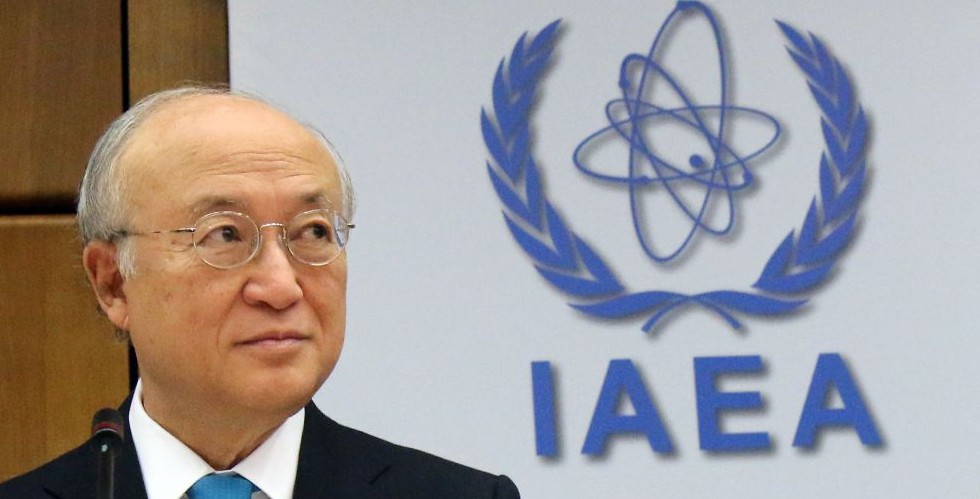
Austria-Iran-Nuclear_Horo-e1401748045152Yukiya Amano of Japan, director general of the International Atomic Energy Agency (IAEA) awaits the board of governors meeting at the International Center in Vienna, Austria, Monday, June 2, 2014. (photo credit: AP/Ronald Zak)

IAEA says ‘large-scale, high-explosive experiments’ may have been conducted at the Marivan military base.

As well as Marivan, IAEA inspectors are also interested in the Parchin military base, where they suspect tests that could be applied to a potential nuclear site have been carried out.

Iran has so far denied access to Parchin.

********************

TEHRAN, Iran – Tehran is ready to allow nuclear inspectors access to its Marivan military site, an Iranian official said Saturday, a facility long suspected of being used to develop explosive weapons.

The declaration comes as Iran and six world powers hold talks in Vienna to reach a lasting agreement on Tehran’s disputed nuclear program before November 24.

Such a deal, after 12 years of rising tensions, is aimed at easing fears that Tehran will develop nuclear weapons under the guise of its civilian activities — an ambition the Islamic Republic has always fiercely denied.

The Marivan site, close to the Iraqi border, was mentioned in a 2011 report by the International Atomic Energy Agency (IAEA) on Iran’s alleged pursuit of nuclear weapons.

The UN agency suggested at the time that “large scale high explosive experiments” may have been carried out at the complex.

Britain, China, France, Russia, the United States and Germany have been locked in talks with Iran since February after an interim accord gave it some relief from economic sanctions in return for nuclear curbs.

“We are ready to allow the IAEA controlled access to the Marivan site,” Behrouz Kamalvandi, spokesman for Iran’s Atomic Energy Organisation, was quoted as saying by the IRNA news agency.

He said the IAEA’s view of Marivan was based on “false” information.

IAEA spokeswoman Gill Tudor said the watchdog “will discuss the offer” with Tehran.

“The situation regarding a visit to the Marivan region is not as simple as that conveyed by Iran,” she told AFP.

As well as Marivan, IAEA inspectors are also interested in the Parchin military base, where they suspect tests that could be applied to a potential nuclear site have been carried out.

Iran has so far denied access to Parchin.

Iran said to give Hezbollah missiles that ‘can reach Dimona’

November 23, 2014

Iran said to give Hezbollah missiles that ‘can reach Dimona’ | The Times of Israel.

Revolutionary Guard general says Israel’s nuclear reactor ‘an easy target’ for Lebanese terror group

November 22, 2014, 6:07 pm
Illustrative photo of a Fateh-110 ballistic missile, taken at an Iranian armed forces parade in 2012. (photo credit: military.ir/Wikimedia Commons)

Illustrative photo of a Fateh-110 ballistic missile, taken at an Iranian armed forces parade in 2012. (photo credit: military.ir/Wikimedia Commons)

Iran has supplied Lebanese terror group and Iranian proxy Hezbollah with missiles “that can reach Dimona,” according to a new report in the semi-official Fars news agency.

The report said the Iranian Revolutionary Guards delivered a new class of missiles, “Fateh,” with ranges of 250-350 kilometers and which can fit a 500kg warhead.

Iranian Revolutionary Guards Brigadier-General Sayed Majid Moussavi told the news agency that the new missiles will allow Hezbollah to hit any place in Israel, “including targets in the south of the occupied territory.”

The Israeli nuclear facility at “Dimona is an easy target,” he was quoted as saying.

Iran’s muscle-flexing comes as negotiations are underway in Vienna between world powers and Tehran aimed at curbing Iran’s nuclear program in exchange for the lifting of sanctions. The deadline for an agreement is November 24.

Last week, the same Iranian general issued a similar threat to Israel, warning that Palestinian terror groups, in addition to Hezbollah, also had advanced Iranian weapons.

“Considering the range of their missiles, they are able now to attack all targets from southern to northern parts of [Israel],” Moussavi said last week.

Israel allegedly struck on several occasions last year weapons depots in Syria containing Fateh-class missiles en route to Hezbollah, according to foreign media reports. Israel never officially took responsibility for the attacks.

Uzi Rubin, a missile expert and former Defense Ministry official, told the Associated Press in May last year that Fateh-110 rockets would constitute a “game-changer” if they were to fall into the wrong hands.

Launched from Syria or south Lebanon, such missiles could reach almost anywhere in Israel with high accuracy, he noted in response to reports of Israeli strikes around Damascus.

“If fired from southern Lebanon, they can reach Tel Aviv and even [the southern city of] Beersheba,” Rubin said.

The rockets are five times more accurate than the Scud missiles that Hezbollah has fired in the past, according to Rubin.

“It is a game-changer because they are a threat to Israel’s infrastructure and military installations,” he said.