Archive for October 26, 2014

A virus worse than Ebola is spreading across the world

October 26, 2014

A virus worse than Ebola is spreading across the world, Dan Miller’s Blog, October 26, 2014

It’s called “insanity” and becomes more virulent and more contagious daily.

Lunatic assylum

Lunatic asylum

Here’s a definition of insanity:

Insanity, craziness or madness is a spectrum of behaviors characterized by certain abnormal mental or behavioral patterns.

Although the definition references “abnormal mental or behavioral patterns” [emphasis added], the behaviors here involved have become increasingly “normal.” Multicultural linguistics are part, but only part, of the problem.

Insane responses to Iran nukes, terrorism support and human rights

As the P5+1 negotiations continue under Obama’s guidance, Iran appears increasingly likely to get or keep nukes. Iran knows Obama.

The Iranian president’s senior advisor has called President Barack Obama “the weakest of U.S. presidents” and described the U.S. leader’s tenure in office as “humiliating,” according to a translation of the highly candid comments provided to the Free Beacon. [Emphasis added.]

. . . .

And with the deadline quickly approaching on talks between the U.S. and Iran over its contested nuclear program, Younesi’s denigrating views of Obama could be a sign that the regime in Tehran has no intent of conceding to America’s demands.

. . . .

“Americans witnessed their greatest defeats in Obama’s era: Terrorism expanded, [the] U.S. had huge defeats under Obama [and] that is why they want to compromise with Iran,” Younesi said.

. . . .

“We [the Islamic Republic] have to use this opportunity [of Democrats being in power in the U.S.], because if this opportunity is lost, in future we may not have such an opportunity again,” Younesi said. [Emphasis added.]

. . . .

The criticism of Obama echoes comments made recently by other world leaders and even former members of the president’s own staff, such as Former Defense Secretary Robert Gates.

Do enough of us, and of perhaps greater importance enough of our “leaders,” know Him as well as Iran does?

The P5+1 negotiations were a scam from the beginning and the scam continues, enhanced by perceived needs to work with the (Shiite) Islamic Republic of Iran to degrade the Sunni (but “non-Islamic”) Islamic State and otherwise to “degrade” terrorism.

The Iranian government is well known for its funding of terrorism. The U. S. Government has long been well aware of it.

The United States State Department describes Iran as an “active state sponsor of terrorism.”[2] US Secretary of State Condoleezza Rice elaborated stating, “Iran has been the country that has been in many ways a kind of central banker for terrorism in important regions like Lebanon through Hezbollah in the Middle East, in the Palestinian Territories, and we have deep concerns about what Iran is doing in the south of Iraq.”[1]

So is the Obama Administration.

In July 2012, the United States State Department released a report on terrorism around the world in 2011. The report states that “Iran remained an active state sponsor of terrorism in 2011 and increased its terrorist-related activity” and that “Iran also continued to provide financial, material, and logistical support for terrorist and militant groups throughout the Middle East and Central Asia.” The report states that Iran has continued to provide “lethal support, including weapons, training, funding, and guidance, to Iraqi Shia militant groups targeting U.S. and Iraqi forces, as well as civilians,” despite pledging to support the stabilization of Iraq, and that the Qods Force provided training to the Taliban in Afghanistan on “small unit tactics, small arms, explosives, and indirect fire weapons, such as mortars, artillery, and rockets.” The report further states that Iran has provided weapons and training to the Assad regime in Syria which has launched a brutal crackdown on Syrian rebels, as well as providing weapons, training, and funding to Hamas, Palestinian Islamic Jihad, and the Popular Front for the Liberation of Palestine-General Command, among others, and has assisted in rearming Hizballah. [Emphasis added.]

Iran hangings by crane

Iran is also remarkable for its failure to provide even minimal human rights. For example, it has been reported that Iran executed more than four hundred people during the first half of 2014. That’s more than two per day.

Despite Iran’s state anti-Semitism, the recent arrest of U.S. journalists, and the continued oppression of women, the Obama administration has been attempting a rapprochement with the Iranian regime. Fending off Iran hawks in Congress and the D.C. punditocracy, the administration has argued for a policy of constructive engagement, pursuing diplomacy over military action to halt Iran’s nuclear program. The execution of two gay men, while it may not be surprising, certainly doesn’t make that “engagement” any easier.

Iran’s cooperation also is seen as essential to managing the chaos in Iraq and the Islamic State. With U.S. airstrikes against the Sunni militants, on-off (now definitely off) support of Iraq’s Shiite (ex-) Prime Minister Nouri al-Maliki, and the possible disintegration of Iraq, this cooperation—or at least not overt opposition—is surely of more strategic importance than the latest human rights abuse. [Emphasis added.]

The execution of Rayhaneh Jabbari is the most recent of such atrocities announced by Iran. Please see also Iran’s “Hanging Machine” to Execute Reyhaneh Jabbari and “Goodbye, Dear Mum”: Iran Executes Rayhaneh Jabbari — UPDATED.

eg2vzynw_400x400

Iran’s support for terrorism, abysmal violation of even the most basic human rights — and what these Iranian characteristics suggest that Iran is likely to do with its nukes — appear to be deemed of no importance by the P5+1 negotiators.

Domestic terrorism

Terrorism is often labeled “workplace violence,” a “traffic accident or just about anything but IslamicThis is from Jihad Watch:

A traffic incident in Jerusalem. Another traffic incident in Canada just a few days ago. Odd coincidence: both drivers were devout Muslims who killed Infidels “in the name of Allah” (as the Canadian bad driver put it). Meanwhile, also in Canada, a mentally ill man shoots up the Parliament building and murders a soldier. And in New York City, a man wielding a hatchet injures several police officers. Another odd coincidence: both the Canadian mentally ill man and the New York hatchet-wielder were also devout Muslims. The father of the former waged jihad in Libya, and the latter called for armed revolt in the U.S. But you must put all of these odd coincidences out of your mind right now. We know that none of this can have anything to do with Islam, and that greasy Islamophobes are the only ones who think otherwise.

“Memo from US Consulate refers to Jerusalem terror attack as ‘traffic incident,’” by Itamar Eichner, Ynet News, October 24, 2014 (thanks to Hamish):

Hours after a Palestinian terrorist drove his car into a crowd waiting at a light rail station in Jerusalem, the US consulate in the city issued a memo referring to the attack as a “traffic incident”.

A three-month-old baby was killed and seven other people were wounded when Abdel Rahman a-Shaludi drove his car across incoming traffic to strike the people waiting at the station. The baby girl, Chaya Zissel Braun, had American citizenship.

The memo was sent to employees of the American consulate, which is based in East Jerusalem. It asks staff to report “any emergency.”

AnneinPT (Israel) provides an actual Associated Press news headline about the “traffic accident.” “Israeli police shoot man in east Jerusalem.”

Here’s how the AP, consistently with its customary reporting on things Israeli, might treat Palestinian rockets thwarted by Israel’s Iron Dome defense system: “Palestinian rockets damaged beyond repair by Israeli counter-measures.”

Lone wolf” Islamic terrorists are exceedingly rare.

[N]umerous examples show that terrorist actors are almost always part of a network who were involved in recruiting and tasking terrorist activity. As Max Abrahms at Northeastern University has observed:

Since the advent of international terrorism in 1970, none of the 40 most lethal terrorist attacks has been committed by a person unaffiliated with some terrorist group, according to publicly available data from the National Consortium for the Study of Terrorism and Responses to Terrorism, which is funded by the Department of Homeland Security and stored at the University of Maryland. In fact, lone wolves have carried out just two of the 1,900 most deadly terrorist incidents over the last four decades.

So why “lone wolf”? Simply, it was a mechanism promulgated by the CVE [countering violent extremism] industry, with willing cooperation from law enforcement and intelligence officials, to exonerate themselves when a terrorist attack happened. At its core is terror agnosticism: “There is possibly no way to predict who will turn to terrorism, so therefore we can’t be held responsible when it happens. Oh, and give us more money so we can better improve how we won’t be able to predict terror attacks.” [Insert added.]

It’s Islamic terrorism all the way down:

Yet there has been great reluctance to associate terrorist attacks with the “religion of peace.” Here are examples of media and official reactions to the recent terrorist attacks in Canada: “CBC’s Derek Stoffel tweeted: ‘Amid the speculation in the #OttawaShooting in #Canada, it’s important to remember #ISIS hasn’t shown interest in attacks abroad.’” However,

Stoffel should have known that in late September, the Islamic State’s spokesman, Abu Muhammad Al-Adnani, urged Muslims to murder non-Muslims in the West. “Rely upon Allah,” he thundered, “and kill him in any manner or way however it may be. Do not ask for anyone’s advice and do not seek anyone’s verdict.

“The hard-Left Vox reacted to the revelation that Zehaf-Bibeau was a Muslim by dismissing the fact as irrelevant.”

Not to be outdone in multicultural empathy,

In the wake of the shootings in Ottawa, the police chiefs of Toronto and Ottawa wrote to local Muslim leaders, assuring them of their good will and urging Muslims to contact them in case of a “backlash.” These politically correct cops appear to have learned their lesson well: after every jihad attack, Muslims are the victims, and need special reassurances.

Eventually, the Canadian terrorist attacks were labeled “terrorism.” Even the White House called them “despicable terrorist attacks,” without mentioning the words “Islam” or “Islamist.”

Reid-knows-Terrorist

Finally, NY hatchet attack was terror according to police commissioner. But again, not Islamist terrorism.

Voting fraud

In 2008 we the people elected Obama as “our” President. We did it again in 2012. He was viewed by many as the one for whom they had been waiting.
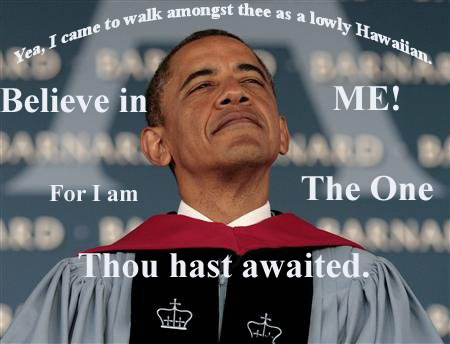
Obama Banard College REV

He was seen as the “God of all things.”

ObamaGod

Fortunately, some seem to be recovering from their dementia.

tatoo removal

However, all too many are still infected with insanity and continue to be contagious. Here’s a video of James O’Keefe talking with college students about vote fraud:

Vote fraud is apparently good when done for a “good” purpose.

When Obama spoke about Democrats running for reelection appearing to desert but really supporting him, he said

“So this isn’t about my feelings being hurt. These are folks who are strong allies and supporters of me. And I tell them, I said, ‘You know what, you do what you need to win. I will be responsible for making sure that our voters turn out.'” [Emphasis added.]

He may not have intended to encourage voter fraud, but “you do what you need to win” may well have been taken seriously by Obamabots. It has, as a minimum, an unpleasant odor.

According to a Washington Post study, non-citizens could decide the vote in November 2014.

How many non-citizens participate in U.S. elections? More than 14 percent of non-citizens in both the 2008 and 2010 samples indicated that they were registered to vote. Furthermore, some of these non-citizens voted. Our best guess, based upon extrapolations from the portion of the sample with a verified vote, is that 6.4 percent of non-citizens voted in 2008 and 2.2 percent of non-citizens voted in 2010. [Emphasis added.]

. . . .

Because non-citizens tended to favor Democrats (Obama won more than 80 percent of the votes of non-citizens in the 2008 CCES sample), we find that this participation was large enough to plausibly account for Democratic victories in a few close elections. Non-citizen votes could have given Senate Democrats the pivotal 60th vote needed to overcome filibusters in order to pass health-care reform and other Obama administration priorities in the 111th Congress. Sen. Al Franken (D-Minn.) won election in 2008 with a victory margin of 312 votes. Votes cast by just 0.65 percent of Minnesota non-citizens could account for this margin. It is also possible that non-citizen votes were responsible for Obama’s 2008 victory in North Carolina. Obama won the state by 14,177 votes, so a turnout by 5.1 percent of North Carolina’s adult non-citizens would have provided this victory margin.

. . . .

We also find that one of the favorite policies advocated by conservatives to prevent voter fraud appears strikingly ineffective. Nearly three quarters of the non-citizens who indicated they were asked to provide photo identification at the polls claimed to have subsequently voted. [Emphasis added.]

voting

According to Watchdog Org,

With early voting starting Thursday, North Carolina’s election board found 154 ineligible voters on its poll lists — and officials are examining thousands more questionable registrations.

The illegal immigrants landed on the state’s voter rolls, courtesy of the Obama administration’s Deferred Action for Childhood Arrivals program.

The State Board of Elections said late Tuesday that more than 9,000 additional voters’ names are being checked for legal status. They do not expect to finish checking before early voting starts Thursday.

It’s necessary for Republicans to win outside the “margin of fraud,” and there have already been signs of voter fraud. In Arizona,

A Republican party official in the largest county in Arizona says surveillance tape shows a progressive Hispanic activist blatantly and openly engaging in vote fraud.

. . . .

Between 12:54 and 1:04, LaFaro said, he observed a man wearing a “Citizens for a Better Arizona” T-shirt loudly drop a box containing hundreds of early-voting ballots on a table.

Citizens for a Better Arizona is a progressive group.

The man then began “stuffing the ballot box,” LaFaro said. “I watched in amazement.”

In Chicago, Republican state representative candidate Jim Moynihan’s votes for Republican candidates, including for himself, were registered as having been cast for Democrats. He noticed the problem before pulling the ultimate lever and it was determined that the machine had been “improperly calibrated.” There is no indication in the linked article whether other machines were also “improperly calibrated” or whether any of them were examined to find out. Obviously, voters need to check for whom the machines say they have voted before pulling the lever. How many will bother to do so?

Since voter fraud may be insufficient, President Obama has diligently prevented voters from understanding what He intends to do about immigration soon after the election. Jonathan Turley, Esq., a “liberal” in the old fashioned sense rather than a leftist, wrote this about Obama’s refusal to disclose or even discuss His post-election plans for immigration “reform.”

[Y]esterday [October 23d] White House CBS reporter Major Garrett broke from the mainstream pack and pressed White House Press Secretary Josh Earnest on a report that the Administration has order material for a “surge” of immigration IDs of up to 9 million in one year. Ernest called the questions “crazy” and encouraged everyone not to speculate . . . before the election obviously. [Emphasis added.]

[T]his Administration is openly withholding any information in its plans for unilateral presidential action despite the President’s pledge to take action after the election and before the New Year — only a matter of weeks. It is a cynical decision to prevent voters from being fully informed of the plans in a major policy area. Regardless of how one feels about immigration policies, it should be condemned by people across the political spectrum. [Emphasis added.]

More importantly, the media has to show some independence from the White House in this and other stories. Garrett is one of the few such reporters to press the point. His extraordinary exchange however was not covered by the mainstream press and, once again, the stonewalling on the issue was again dropped. I expect given the record of the White House corp, such questioning from Garrett does seem “crazy.” After all, disclosure of such plans might harm the White House in the upcoming election and only a “crazy” reporter would pursue such a story. [Emphasis added.]

Get your excuses for not voting prepared if you like the status quo:

If you don’t like the status quo, vote and remind your friends to do so as well.

Conclusions

From the P5+1 negotiations with Iran and the failure of our “leaders” even to pause on their path to Iranian nukes due to Iran’s abysmal human rights record, its support for terrorism and the dangers Iran already poses for what’s left of the free and democratic world — and will pose in even greater measure with nukes — to rampant antisemitism to Islamic attacks on and persecution of Christians qua Christians, to domestic Islamic terrorism to voting fraud, far too many are either insane or extraordinarily devious. Those who appear to be insane either do not recognize the nature of our enemies or do not care. Some are perhaps complicit.

As this insidious form of insanity spreads we seem to have no antidote more powerful than reason and common sense, both increasingly rare. Will our enemies have to provide a more effective antidote in the form of an attack on the United States so severe, clear and obvious that insanity can no longer be ignored even by our lunatics?

An interview with Israeli Defense Minister Moshe Yaalon – The Washington Post

October 26, 2014

An interview with Israeli Defense Minister Moshe Yaalon – The Washington Post.

October 24

 Lally Weymouth is a senior associate editor at The Washington Post.

Israeli Defense Minister Moshe Yaalon, known as a hawk, heightened U.S.-Israeli tensions earlier this year by criticizing John Kerry, saying the U.S. secretary of state had a “misplaced obsession and messianic fervor” about the peace process. On a trip to the United States this past week during which he met with Defense Secretary Chuck Hagel, Yaalon spoke with The Washington Post’s Lally Weymouth about the threat he sees from Iran, the Islamic State (also known as ISIS) and the Israeli-Palestinian conflict. Excerpts:

Q. You caused quite a stir with your remarks about Secretary Kerry.

A. We overcame that.

Secretary Kerry recently said the lack of resolution of the Israeli-Palestinian issue is leading to street anger and recruitment for the Islamic State. What is your response?

Unfortunately, we find the Israeli-Palestinian conflict is dominated by too many misconceptions. We don’t find any linkage between the uprising in Tunisia, the revolution in Egypt, the sectarian conflict in Iraq and the Israeli-Palestinian conflict. Mainly, these come from the Sunni-Shia conflict, without any connection to the Israeli-Palestinian conflict.

The core of the conflict is their reluctance to recognize our right to exist as a nation state of the Jewish people — whether it is [Palestinian Authority President] Abu Mazen or his predecessor [Yasser] Arafat. There are many who believe that just having some territorial concessions will conclude it. But I don’t think this is right.

Will territorial concessions bring peace?

No, they would be another stage of the Palestinian conflict, as we experienced in the Gaza Strip. We disengaged from the Gaza Strip to address their territorial grievances. They went on attacking us. The conflict is about the existence of the Jewish state and not about the creation of the Palestinian one. Any territory that was delivered to them after Oslo became a safe haven for terrorists.

Bearing that in mind, to conclude that after the [recent] military operation in Gaza this is a time for another withdrawal from Judea and Samaria [the West Bank] is irrational. If we withdraw now from Judea and Samaria, we might face another Hamastan.

So you think Hamas would take over the West Bank?

Sure. We just recently intercepted a terror network in the area of Ramallah. We arrested 96 Hamas terrorists.

They were supposed to be staging a coup to overthrow Abu Mazen?

Yes. They were operated and recruited by Saleh al-Arouri from Istanbul. We saved Abu Mazen from them overthrowing him. It might have become a Hamas-governed entity with Iranian arms.

Last summer, you and Prime Minister [Benjamin] Netanyahu decided to limit the operation in Gaza — not to reoccupy Gaza.

Yes.

Was that the right decision?

Absolutely. It was the right decision. From the very beginning, we understood it might be a tremendous mistake to send our troops to take over and occupy the Gaza Strip. That’s why we decided to avoid it and to direct our military operation toward the endgame, which was the Egyptian initiative [a cease-fire with no preconditions].

Why did the operation take 51 days?

Hamas is not marginal. It is a well-equipped militia and has 10,000 rockets, and the know-how and indigenous capabilities to produce rockets [which they got] from Iran. This is not just a terror organization.

How do you see the threat from ISIS?

ISIS is a new phenomenon, originating from al-Qaeda. This is not a threat for us. This is a threat to the free world as they actually claim to [want to] defeat all those who are not ready to follow their religious, Islamic way — whether they are Muslims, Christians, Kurds, Alawites, Shias or Jews. The idea to confront them by creating a coalition is an awakening. . . . Hopefully the coalition led by the United States will contain them.

Kobane [a Syrian town near the Turkish border] is about to fall. The ground forces seem to be weak.

I hope it is not too late to deal with it. Air superiority is very important.

It is important, but is it enough?

It is not enough. Don’t misunderstand me — I don’t recommend Western troops to be deployed. But the troops on the ground, whether they are Kurds, Iraqi armed forces or Syrian militias that are not extremists, should be supported by the West in order to be able to defeat ISIS.

Is it too late in Syria?

It is never too late. Syria is a microcosm of the region. What we see now is fragmentation, the collapse of the nation-state.

So you see a breakup in Syria?

Yes. We have Alawistan — an Alawite enclave led by President Bashar al-Assad, who controls 25 percent of the Syrian territory. We have Syrian Kurdistan in the northeastern part [of the country]. We have many Sunni enclaves. But the Sunnis are divided — we have Muslim Brotherhood Sunnis, we have ISIS, we have Jabhat al-Nusra. We have the Free Syrian Army, which we believe should be supported.

What is Israel’s strategy in Syria?

We don’t want to be involved. We enjoy a relatively calm situation on the border of the Golan Heights. They understand that if they violate our sovereignty, we immediately respond.

How are you going to ensure that in rebuilding Gaza, Hamas does not build more tunnels?

We believe there is the potential to keep a calm situation along the border with Gaza [since] Hamas and Palestinian Islamic Jihad paid a heavy price [in] our military operation last summer. We understand there is a problem in Gaza — an economic problem, the need for reconstruction.

Part of our interest is to pave the way for the Palestinian Authority to get into the Gaza Strip. I’m not sure Abu Mazen is ready to take responsibility.

Right now doesn’t the Palestinian Authority have responsibility only for the crossings?

Not yet. But the opening of the Rafah crossing point is conditioned on the deployment of the Palestinian Authority troops. We proposed for them to be deployed on the Palestinian side of our crossing points as well.

Do you believe in a two-state solution?

You can call it the new Palestinian empire. We don’t want to govern them, but it is not going to be a regular state for many reasons.

What does that mean — the Palestinian empire?

Autonomy. It is going to be demilitarized.

In Gaza and the West Bank?

It is up to them. According to the agreement, they should be demilitarized. It is up to Abu Mazen if he is able or if he wants to demilitarize Gaza. Otherwise, we are not going to talk about any final settlement.

Is Abu Mazen the best Palestinian leader you’re going to get?

I don’t know, but he is not a partner for the two-state solution. He doesn’t recognize the existence of the Jewish state.

He says he is against violence.

Fine. But this is a tactical consideration. He believes he might get more by what he calls “political resistance” — going to the United Nations or to international bodies to delegitimize us. He prefers it to violence because in his experience, terror doesn’t pay off.

Is that why you said Secretary Kerry should just get a Nobel Prize and go home? Do you think the West just doesn’t get it?

I spoke about misconceptions. It is a misunderstanding, without naming anyone. It might be naivete or wishful thinking — ‘We the Westerners know what is good for the Arabs.’ To believe that you can have democratization with elections . . . it is collapsing in front of us. And part of it is ignorance, yes.

Israeli-U.S. relations are in terrible shape. Prime Minister Netanyahu and President Obama had a bad meeting this month. During the Gaza operation, for the first time, missile shipments didn’t go through automatically.

The issue of Hellfire missiles has been solved. It was a bureaucratic issue.

It doesn’t look like an unbreakable bond if, in the middle of a war, the administration decides to review what has always been military-to-military arms transfers.

I can tell you that between the Pentagon and the Israel Defense Forces there is an unbreakable bond.

What about the politicians?

We have disputes.

It seems to be a deep dispute.

With all the disputes, the United States is Israel’s strategic ally.

The Nov. 24 deadline for an Iranian nuclear agreement is approaching. Prime Minister Netanyahu has said that no deal is better than a bad deal. What do you hope comes out of these talks?

We are concerned about the potential deal. Because the framework of this deal is about how many centrifuges should this regime have. Why should they have the indigenous capability to enrich uranium? If they need it for civilian purposes, they can get enriched uranium from the United States or from Russia. Why do they insist on having the indigenous capability? Because they still have the aspiration to have a nuclear bomb.

With a bad deal — saying, ‘We will keep this regime from having a bomb for a year or year and a half’ — what does that mean? What about the missile delivery systems, which are not discussed? Why should they have missiles ready to adopt nuclear warheads?

And they do?

Yes, hundreds of them. And what about their being a rogue regime instigating terror all over the Middle East and beyond? They are not involved in Afghanistan, Iraq, Syria or Yemen to serve American interests. This is not discussed. By rehabilitating the economy, they might feel confident to go on with these rogue activities, and at a certain point decide to break out from the deal and to have a bomb. That’s why our prime minister said that no deal is better than a bad deal.

And you agree with him?

Of course. In a deal they are going to get rid of any pressure. In the end, we should be able to defend ourselves by ourselves.

Does that mean Israel alone would consider using a military option?

It’s enough to say we should be ready to defend ourselves by ourselves.

As long as Benjamin Netanyahu wants to run for office, will you not run for prime minister?

As long as he is going the right way, why should I challenge him?

Do you intend to run for prime minister one day?

I don’t know. If the people of Israel want me, I will have to consider it.

For Israel and the US, trouble in paradise

October 26, 2014

For Israel and the US, trouble in paradise | The Times of Israel.

While Netanyahu has likened himself and Obama to an ‘old couple,’ recent rhetoric leaves little room for doubt — they’re fantasizing about divorce

October 26, 2014, 8:50 am

US President Barack Obama, right, speaks with Prime Minister Benjamin Netanyahu during a bilateral meeting at the White House in Washington, DC, October 1, 2014 (photo credit: AFP/ Jim WATSON)

US President Barack Obama, right, speaks with Prime Minister Benjamin Netanyahu during a bilateral meeting at the White House in Washington, DC, October 1, 2014 (photo credit: AFP/ Jim WATSON)

WASHINGTON — Ask anyone on the record in Washington, and they’ll tell you there is no crisis. During his visit here this week, Defense Minister Moshe Ya’alon said as much – even while he was snubbed by Secretary of State John Kerry and Vice President Joe Biden.

Lobbyists say it when they’re asked about the slow resupply of Israel with arms during and following the war in Gaza over the summer.

Earlier this month Prime Minister Benjamin Netanyahu and President Barack Obama were at pains to show their friendliness – literally hours before the administration issued an unusually harsh condemnation of Israeli building plans in a contested Jerusalem neighborhood.

You’d think the special friendship was as ironclad as ever, and it’s business as usual. Only it isn’t.

Finance Minister Yair Lapid called a crisis a crisis this week, and although he may have done so largely as a jibe at his own coalition partners, the simple fact remains: ties between Jerusalem and Washington are at a nadir. Hardly a week – and certainly not a month – goes by without insults and recriminations. Diplomatic snubs, critical press secretaries, censorious ministers, and tension-spurring tweets have all conspired to create an atmosphere that is unmistakable – at least in Washington.

If Netanyahu truly thinks that he and Obama are like “an old couple,” as he stated when he was last here a month ago, perhaps the most apt comparison would be to one of those couples that, after weathering 50 rocky years of quarrels, is now fantasizing about divorce. Israel and the US can no longer be mistaken for one big, happy family.

On Iran, for instance, the president and the prime minister are the couple who talk to each other but don’t necessarily listen. An Iran deal is simmering on the stove, and so far, the US has been impervious to Israel’s demands that any comprehensive agreement ensure an enrichment-free Iranian nuclear program. The US’s top nuclear negotiator, Undersecretary of State Wendy Sherman, took the time this week to pillory in a speech those who do not want a nuclear agreement with the Islamic Republic. Yes, the administration has been consulting with Israel; no, it does not seem to be interested in Israel’s big message.

US Secretary of State John Kerry speaks during a joint press conference with Egyptian Foreign Minister Sameh Shukri in Cairo, Egypt, on Saturday, Sept. 13, 2014 (photo credit: AP/Brendan Smialowski, Pool)

The past few weeks have been characteristic of the recent period in the relationship, with an endless back-and-forth of snipes and barbs. Ten days ago, Kerry spoke at a festive dinner and said that leaders in the Middle East had expressed concern that the Israeli-Palestinian conflict “was a cause of recruitment” — for groups like the Islamic State — “and of street anger and agitation.”

Israel’s Economy Minister Naftali Bennett promptly played the anti-Semitism card in response to the perceived affront, complaining that “even when a British Muslim decapitates a British Christian, there will always be someone to blame the Jew. There is no justifying terror, only fighting it. To say that the Israeli-Palestinian conflict is strengthening the Islamic State is encouraging global terror.”

Gilad Erdan, the communications minister in Netanyahu’s cabinet, also jumped into the fray, saying that “Kerry is breaking records for a lack of understanding of what is going on in our region.”

Former peace negotiator Martin Indyk fired back a tweet: “There they go again: Israeli rightist ministers attack Kerry for wanting Israeli-Palestinian peace to help fight IS.”

You know things are going badly when it is the often-acerbic Foreign Minister Avigdor Liberman who sounds the voice of calm, talking up the many virtues of the relationship with the US.

For a few days, things seemed to be back on track. Ya’alon came to Washington sounding uncharacteristically conciliatory, but was denied requests to meet with a number of officials. And on Friday, the Washington Post published an interview with the minister, who implied that the United States was way out of its depth in the Middle East.

Defense Minister Moshe Ya'alon (photo credit:Flash90)

Meanwhile, with sensitivities running high, the State Department dragged its legs before acknowledging that a baby killed in a Jerusalem terror attack on Wednesday was a US citizen; then, much to the consternation of pro-Israel commentators, it wasted little time in announcing that Israeli security forces had shot and killed a Palestinian-American youth who was throwing Molotov cocktails.

The State Department soft-pedaled questions as to why Washington did not call on Palestinian Authority President Mahmoud Abbas to condemn Wednesday’s terror attack, but did quickly express its “condolences to the family” of the teenager killed by security forces and called for Israel to conduct “a speedy and transparent investigation” into the incident.

And that wasn’t even close to being the most strident US criticism of Israeli actions in recent months. During the war in Gaza, the State Department deplored the reported Israeli shelling of an UNRWA school as “appalling” and “disgraceful.”

And yet almost everyone but Lapid is reiterating that everything is more or less fine, as if repeating it, like a soothing mantra, will make it so.

Still, it’s important to bear in mind that this isn’t the first time relations have hit the skids in a big way. Under president George H. W. Bush, $10 billion in loan guarantees were held up by Washington in protest of prime minister Yitzhak Shamir’s settlement policy. Then, as now, leaders on both sides stressed the strength of the historical friendship between the two states.

During George W. Bush’s second term, relations also took a turn for the worse – in spite of some very friendly rhetoric – following the Second Lebanon War, when the administration delayed transferring weapons requested by Israel to replenish stockpiles, including the Joint Direct Attack Munition, which turns unguided munitions into “smart bombs.” During that dust-up, the US went so far as to block military contractor Northrop Grummond from revealing details on US-made missile defense technology that Israel hoped to purchase, effectively suspending the deal altogether. An Israeli military delegation’s trip to the US was canceled as media reported that relations had hit an all-time low for the Bush administration.

Then-US president George W. Bush welcomes then-prime minister Ehud Olmert to the Oval Office of the White House in Washington in May of 2006. (photo credit: Avi Ohayon/GPO/Flash90)

Then, as now, both sides appeared to share a vested interest in publicly downplaying the rift. Indeed, the amiable rhetoric averted a larger crisis. But can this latest crisis have a similar outcome?

During the current rough patch, a number of factors have come into play. Kerry has taken the failure to achieve an Israeli-Palestinian peace deal, and all of the rhetoric surrounding it, personally, and the Obama administration has certainly signaled repeatedly that it is unhappy with the vocal right flank of Netanyahu’s coalition. On the other hand, Democrats are particularly concerned about the possibility of losing the Senate in the upcoming November elections, and are not particularly eager to see the administration do anything that could alienate even a single voter in a number of key states. Meanwhile, support for Israel on Capitol Hill is as emphatic as ever, and a number of representatives have signaled their willingness to go head-to-head with the administration over its policies in the Middle East.

In the meantime, Israel also has to play nice. There is simply too much riding on the friendship in the near future – the Iranian nuclear deal, Washington’s support of Israel in UN forums where Abbas is trying to score easy goals – to risk calling a crisis a crisis.

Will Lapid’s very public acknowledgment of the truth make the situation any different? That is unlikely, given his own very clear, and very internal, political motivations. With no resolution in sight, the “old couple” seems set to continue to bicker behind closed doors, and while the president and the prime minister may try to keep their voices down, it will remain patently clear to anyone standing outside that there’s deep trouble in paradise.

Israeli soldiers sing and dance during 3 hr break from the battle

October 26, 2014

Israeli soldiers sing and dance during 3 hr break from the battle – YouTube.

10,113 views !!!

From the comments:

“No other army praises Hashem in the middle of a battle like this! May Hashem always protect our men and women risking their lives fighting to protect our land and people!
Am Yisrael Chai!!!”


The song they are singing is titled, “THE ONE WHO BELIEVES.”

(Translated lyrics)

Every place, all the time
The old and young has
Beautiful and less beautiful days
Among them answers to all the questions

There is one mighty God
He gives us everything in this world
Between darkness to a sun beam
We only need to choose the path

It is known life is a gift
All is expected and is allowed

The one who believes is not afraid
To lose faith
We all have the King of the universe
Who guards us from it all

This nation is a family
One and one more is the secret of success
The nation of Israel will never give up
We will always stay on the map

It is known life is a gift
All is expected and is allowed

The one who believes is not afraid
To lose faith
We all have the King of the universe
Who guards us from it all

בכל מקום, כל הזמן
יש לכולנו מגדול ועד קטן
ימים יפים, וגם פחות
ובניהם תשובה לכל השאלות

יש אלוהים אחד גדול
הוא בעולם הזה נותן לנו הכל
בין אפלה לקרן אור
את הנתיב אנחנו רק צריכים לבחור

וזה ידוע החיים הם מתנה
הכל צפוי והרשות נתונה

מי שמאמין לא מפחד
את האמונה לאבד
ולנו יש את מלך העולם
והוא שומר אותנו מכולם

העם הזה הוא משפחה
אחד ועוד אחד זה סוד ההצלחה
עם ישראל לא יוותר
תמיד על המפה אנחנו נשאר

וזה ידוע חיים הם מתנה
הכל צפוי והרשות נתונה

מי שמאמין לא מפחד…

מצוה גדולה להיות בשמחה
להיות בשמחה תמיד

מי שמאמין לא מפחד


