Archive for October 13, 2014

Germany’s Islamic State problem

October 13, 2014

Germany’s Islamic State problem, Long War Journal, Benjamin Weinthal, October 13, 2014

(Might German antisemitism be a factor? “[T]he ugly truth that many in Europe don’t want to confront is that much of the anti-Jewish animus originates with European people of Muslim background.” — DM)

German officials are tangled up in knots over Islamic State. While they recognize the threat, there has been little appetite over the years to clamp down on jihadist networks in the country. In short, Berlin’s lax policies toward terrorist groups have contributed to its Islamic State crisis.

An estimated 150 radical Islamists have returned from the Middle East war theater to Germany.

****************

There is a growing sense among leading German politicians that the Federal Republic’s preoccupation with the NSA surveillance scandal should not overshadow the pressing need to confront the Islamic State.

“German worry over Islamist attack eclipses spy scandal,” Bloomberg News headlined its Oct. 8 report on the issue. A new reality appears to be sinking in. Roderich Kiesewetter, a Bundestag deputy from Chancellor Angela Merkel’s Christian Democratic Union and a former army colonel, was quoted as saying, “In the German public, there is more of an awareness that our intelligence services need information to confront these terror threats.”

Some German politicians from powerful opposition parties, the Greens and the Left Party, have called for US airstrikes on Islamic State positions near the besieged city of Kobane in northern Syria. This call has come despite the Greens’ and the Left Party’s traditional anti-Americanism and hardline anti-intervention policies.

According to German authorities, an estimated 450 German Muslims have gone to fight against the Syrian regime. Most of the 450 sought membership with Islamic State. Roughly 40 women and a 13-year-old boy are among those who have departed for Syria. Die Welt provides a helpful systematic breakdown of “German Jihadists in Syria.”

A spokeswoman for Germany’s intelligence agency told this writer that the government cannot track individuals traveling to Turkey because the country does not require visas. European jihadists frequently use southern Turkey as an entry point into Syria.

Germany’s interior ministry is struggling to modernize its counterterrorism policies. On Oct. 2, Interior Minister Thomas de Maiziere acknowledged, “The situation has changed over the last few months.” Germany outlawed Islamic State activities in September. In the same month, a Frankfurt court started the trial of 20-year-old Kreshnik Berisha for membership in the Islamic State; it is the first terrorism trial of an Islamic State member in Germany. Berisha, who was born in Germany to Kosovan parents, was arrested in December 2013.

De Maiziere stressed the need for more sophisticated surveillance mechanisms to track Islamist combatants. He cited revocation of passports and identity cards as ways to combat terrorism.

German officials are tangled up in knots over Islamic State. While they recognize the threat, there has been little appetite over the years to clamp down on jihadist networks in the country. In short, Berlin’s lax policies toward terrorist groups have contributed to its Islamic State crisis.

It is worth recalling that Hezbollah’s so-called political wing is legal in the country. According to Germany’s national domestic intelligence report covering 2013, and published in June 2014, Hezbollah has 950 active members in the Federal Republic. There are also roughly 6,300 radical Islamists in Germany who are supporters of the Sunni branch of Salafism, Interior Minister de Maiziere said last week. Many of these Salafists are connected to the ideologies of al Qaeda, Shabaab, or the Islamic State.

Germany’s latest domestic intelligence report described the growth of Salafists as the most “dynamic Islamic movement” in Germany.

An estimated 150 radical Islamists have returned from the Middle East war theater to Germany. In recent days, the battle for the northern Syrian town of Kobane, where Islamic State fighters are carrying out an assault on Kurdish civilians and fighters, has had repercussions in Germany. On Oct. 7, pro-Islamic State Muslims fought Kurds in the city of Hamburg, resulting in 14 people being injured and 22 arrests. The police used water cannons to disperse the street battle [see video from Online Focus].

In an eye-popping report last week, Germany’s ARD television station stated that over the years authorities allowed — and even encouraged — the travel of German Islamists to foreign countries. The policy appeared to be a kind of “export of terror” designed to reduce the risk domestically. “Persons who are dangerous and could launch attacks are brought outside of the country,” a government official said.

“Germany is on the way to be world champion in terrorism export,” one commentator wrote in Die Welt newspaper in 2010. The author was not referencing the green light from German authorities for jihadists to leave for the Afghanistan and Pakistan war theaters, but rather the sheer number of radical German Muslims departing for conflict zones. The ARD report helps to explain why so many radical German Islamists have enjoyed unrestricted movement.

The chief destination for German jihadists now is to fight in Syria, Die Welt reported last week. German intelligence agencies also believe that jihadists who were based in terror camps in Afghanistan and Pakistan are now in Syria or on their way there. Pakistani jihadist networks — ranging from al Qaeda to the Taliban to the Islamic Movement of Uzbekistan — have attracted German Muslims to Pakistan and Afghanistan. The large number of Germans gave rise to so-called “German colonies” in the region.

According to German security information obtained by Die Welt, the German-Moroccans Yassin and Mounir Chouka and their wives, Nele Ch. and Luisa S., as well as Seynabou S. from Hamburg, along with children, relocated from Pakistan to Syria. It is unclear if the terrorists made it to Syria. Some of the group’s children were born in terror camps in Pakistan. While in Pakistan, the Choukas joined the Islamic Movement of Uzbekistan. Now, they have declared allegiance to Islamic State.

The Choukas, who are originally from the western German city of Bonn, motivated Arid Uka, a 24-year-old radical Islamist and Kosovo native who worked at Frankfurt’s airport, to murder two American airmen and wound two others in March 2011. Uka was sentenced to life in prison but Germany’s liberal judicial system may release him after 18 years of prison time.

Another German jihadist, former rapper Denis Cuspert a.k.a. singer Deso Dogg, is said to be in Syria and has been linked to both the Islamic State and al Qaeda’s Al Nusrah Front. Germany plans to submit his name for inclusion in the UN’s sanctions list, Der Spiegel reported on Oct. 5.

While issuing rhetorical support for strikes on Islamic State, the Merkel administration decided not to join US president Barack Obama’s airstrike coalition in Iraq and Syria to knock out Islamic State fighters and sites. Merkel did, however, send military arms to the Kurds and military personnel to train the Kurdish fighters.

It is unclear why President Obama chose not to twist Germany’s arm to join his anti-Islamic State airstrike coalition. Commentators in Germany believe the Merkel administration could do much more to stem Islamic State violence. In a late September commentary in Germany’s mass circulation paper Bild, the headline screamed, “All Talk, no action!”
 

Isis fighters seize key military base in Iraq’s Anbar province

October 13, 2014

Isis fighters seize key military base in Iraq’s Anbar province, Financial Times, Borzou Daragahi, October 13, 2014

“The clashes started in early October, and now the armed groups have taken full control of the town,” said a university professor who fled Hit for a nearby town with his wife and three children three days ago. Speaking by phone, he asked that his name not be published. “The problem was the air strikes; they were shelling houses and residential areas, which led to about 50 per cent of the population fleeing.” [Emphasis added.]

***************

Islamist insurgents on Monday seized control of a key military garrison and town in western Iraq, allowing them to surround the provincial capital.

Witnesses and officials reported that Iraqi forces abandoned the military base in Hit, a rural enclave of about 100,000 people on the Euphrates River in Anbar province, to the surging forces of the Islamic State of Iraq and the Levant, or Isis, after days of fierce clashes and US and Iraqi air strikes that sent residents fleeing for safety.

“The clashes started in early October, and now the armed groups have taken full control of the town,” said a university professor who fled Hit for a nearby town with his wife and three children three days ago. Speaking by phone, he asked that his name not be published. “The problem was the air strikes; they were shelling houses and residential areas, which led to about 50 per cent of the population fleeing.”

The news of Hit’s fall came as Philip Hammond, the UK foreign secretary, arrived in Baghdad for meetings with politicians and security officials. The UK has joined the US in conducting aerial combat and intelligence missions against Isis, as well as training Iraqi troops.

“The action the UK has taken to date, including air strikes and surveillance flights, shows the UK will play its part in standing with the Iraqi people in their fight against Isil,” he said, according to an announcement.

Despite the US-led air strikes, Iraq has been struggling to fend off Isis advances in Iraq’s Anbar province. The group and its allies have been battling Iraqi forces for control of the sparsely populated province for months, and already control the city of Fallujah, 50km east of Anbar’s capital, Ramadi, and 55km west of Baghdad.

A security source in Iraq described the loss of Hit as a “tactical withdrawal” by the Iraqi army unit that controlled the base and protected the town. It is the latest military base to fall in Anbar.

Jassim Assal, the deputy governor of the province, insisted in comments made to Baghdad TV that the police and army retain “almost compete control” over the provincial capital of Ramadi, despite the withdrawal and the assassination on Sunday of the province’s police chief.

Hit lies well away from the strategic international highway linking Baghdad to the Jordanian border. But Isis’s control of the town would put it in a position to attack Ramadi from two sides.

US forces have in recent days struck numerous targets in and around Hit. The Iraqi defence ministry issued a statement saying the Baghdad government had launched 500 air strikes against Isis’s “dens” in four provinces, including Anbar, in the past week.

But Iraq’s ground forces have proved largely incapable of capitalising on the air strikes to hold territory or take new ground and have watched their control over the province erode week after week since Isis’s June sweep through much of northern and western Iraq.

In recent days, Anbar’s members of parliament have described dire conditions in Hit and warned of an impending massacre similar to when Isis captured and executed dozens of soldiers in Saqlawiyah, or Tikrit.

Iraqi officials say Isis now controls 80 per cent of Anbar province, which is mostly uninhabitable desert. Some Iraqi officials have warned that Ramadi could fall within two weeks to Isis, giving it near full control of the province, which is adjacent to the capital.


Diplomat Warns Obama May Be Holding Secret Iran Talks

October 13, 2014

Diplomat Warns Obama May Be Holding Secret Iran Talks, Israel National News, Ari Yashar, October 13, 2014

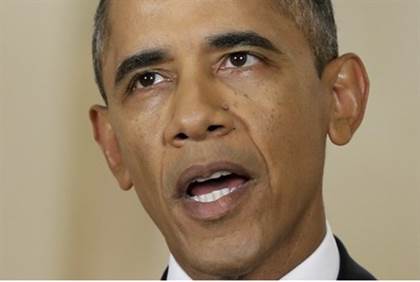
img443859Barack Obama Reuters

Obama likely to extend Iran nuclear talks and flex on demands says senior Israeli source, even as Egypt wages diplomatic war on Israel.

**************

According to a senior diplomatic source in Jerusalem, the chances of a deal being reached on Iran’s nuclear program between it and world powers before the November 24 deadline are slim – but US President Barack Obama is liable to flex on several points, including the deadline.

“When there’s a will on the part of both leaders everything is possible, but Israel needs to stand guard so that a bad deal won’t be made,” the source told Walla!, warning against a deal that will leave the Islamic regime with thousands of centrifuges and breakout capability to quickly create a nuclear bomb.

The source further warned that the current American-led coalition against Islamic State (ISIS) terrorists in Iraq and Syria may impact the deal with Iran, as Obama’s administration has already backtracked about possible military cooperation with Iran.

There is a real danger that the US will hold secret talks with Iran and make agreements against Israeli interests, warns the source.

Indeed, Obama was revealed last November to have been holding secret talks with Iran for over half a year which led to a temporary agreement, and likewise reportedly had been easing sanctions on Iran for five months ahead of the deal.

“Iranian boastfulness has taken over their minds and they aren’t hurrying to reach an agreement that will contradict their red lines and add to their sanctions. That’s their real concern,” the source said of Iran.

On the other side, he added “the Americans want to reach a deal, and the true danger is that they will flex their position for the Iranians.”

“A nuclear Iran will undermine all of the balance in the region,” warned the source against a bad deal. “The Arabs won’t agree – not Saudi Arabia and not Egypt. The Egyptians already said officially that they will arms themselves with nuclear weapons (in the case of a deal). These are the dangers that senior officials are repressing.”

Egypt has also been increasingly hostile towards Israel according to the source, who says the Nile state backed by other Arab countries is pushing an initiative to have Israel recognized as a nuclear capable state – a process that is part of the diplomatic war on Israel.

“It doesn’t even interest anyone in Israel and that is serious,” warned the source. “Their goal is to weaken Israel.”

Cairo has been holding host to the truce talks between Israel and the Hamas terror organization, and just on Sunday hosted an international donor conference that saw world states pledge $5.4 billion for Gaza.


Rice Defends US Islamic State Strategy

October 13, 2014

Rice Defends US Islamic State Strategy, Washington Free Beacon, October 12, 2014

(Here’s a video clip of Susan “Blame it on the Video” Rice talking about Obama’s Islamic State strategy.

Does Obama have a problem? Do we? — DM)


Susan RiceSusan Rice / AP

While Rice insisted that there would not be any U.S. ground troops, or recommendations for them, statements by current and former military advisors suggested the comment was premature.

******************

On Sunday, National Security Advisor Susan Rice said the United States would not reevaluate the strategy to “degrade and destroy” the Islamic State of Iraq and the Levant (ISIS or ISIL), despite its recent territorial advances, and said that the Obama administration is still not considering boots on the ground.

“This is very early days of the strategy. The strategy is very clear. We’ll do what we can from the air. We will support the Iraqi security forces, the Kurds, and ultimately over time, the moderate opposition in Syria to be able to control territory and take the fight to ISIL,” Rice told NBC’s “Meet the Press.”

“There has been no recommendation from the American military commanders, either on the ground or here in Washington, that the United States put any ground combat forces into Iraq. That has not come up the chain to anyone at the White House and I don’t anticipate that it will,” Rice said. “The president has been very plain that this is not a campaign that requires, or even would benefit from, American ground troops in combat again.”

Rice’s defense of the American strategy came as many question its effectiveness as the Islamic State makes advances in Anbar province, a region that neighbors Baghdad, and Kobani, a Kurdish town in northern Syria, despite weeks of US-led airstrikes.

While Rice insisted that there would not be any U.S. ground troops, or recommendations for them, statements by current and former military advisors suggested the comment was premature.

Joint Chiefs of Staff General Martin Dempsey pointed to Mosul as an instance where U.S. ground troops may be recommended.

ABC’s Martha Raddatz asked Dempsey, “Would we be more effective against ISIS if we had U.S. troops on the ground spotting targets?”

“Yeah. There will be circumstances when the answer to that question will likely be yes, but I haven’t encountered one right now,” Dempsey said.

“Mosul will likely be the decisive battle in the ground campaign at some point in the future. When [the Iraqi Security Forces] are ready to go back on the offensive. My instinct at this point is that that will require a different kind of advising and assisting because of the complexity of that fight.”

Former Secretary of Defense Leon Panetta seemed to broadly echo that sentiment on CBS’s “Face the Nation,” and warned against taking options off the table.

“I’ve always felt that the President of the United States ought to keep every option available in dealing with this kind of enemy… I think you want to protect every possible option because we are dealing with a very resilient enemy and the only way you deal with a resilient enemy is with flexibility, adaptability, and the kind of determination that we’re going to need if we’re ever going to win this war.”

The overall strategy will take time, Panetta noted, but airstrikes alone will not win the war against ISIS.

“These airstrikes can help to a degree, I think they’ve helped kind of stifle some of the momentum in ISIS, but to make these airstrikes work you’ve got to have information on targets and you’ve got to be able to pinpoint where the enemy location is and that, frankly, is going to take time.”

“You’ve got to have boots on the ground,” Panetta continued, “maybe it doesn’t have to be American boots on the ground, but you have got to have people on the ground who can identify targets and who can help us develop the kind of effective airstrikes that are going to be needed if we’re going to be able to undermine, destroy this vicious enemy that we’re dealing with.”

Rice defended the air campaign, arguing that it was in the early stages, but “off to a strong start.”

“Our efforts have various, different lines of effort, as we call them. On the one hand, we’re trying to build up the capacity of the Iraqis, which means the Iraqi army, the Kurds – the Peshmerga inside of Iraq… we’re building up that capacity and we have seen some success in that regard. On the Syrian side, we also have a longer-term challenge of supporting the moderate opposition, and giving them, while they have great will, greater capacity to fight Assad and to fight ISIL.”

“So, this is going to take time,” Rice continued. “Our air campaign is off to a strong start… it can’t be judged by merely what happens in one particular town or in one particular region.”

Obama’s Vietnam

October 13, 2014

Obama’s Vietnam, American ThinkerBruce Walker, October 13, 2014

(The Korean mess was similar, particularly after China entered the conflict in mid – late 1950. Political attempts to end the conflict (1951 – 1953) by putting things back where they had been before the Russian sponsored June 25, 1950 invasion of South Korea resemble current negotiations with Iran over its nukes.

In Korea and Vietnam, we were not fighting for our homes and mothers; they were not at risk. In Korea, after China joined the conflict against us, we were fighting to maintain our status quo as a world power against alien cultures (mainly China) and to bring as many of our “boots on the ground” back home alive as possible. After initial successes and attempts to win, we no longer sought victory. Victory was not politically useful and had ceased to be an objective.

Have we learned much since then? It does not appear that we, or our “leaders,” have. Here we go again, this time with (as Obama has often pledged) no boots on the ground against the “not Islamic” Islamic State although it may in time threaten our homes and mothers, and with little interest in keeping Iran from getting (or keeping) nukes. — DM)


The “grand strategy” of Obama in the Middle East is an indecent flux of poll numbers and sound bites.  It is to react to crises that affect American public opinion until the media and the voters are lulled into thinking that he has done something.  The purpose of American national security policy is to make Barry look good.

The price for such selfishness is that innocent blood is spilt for ignoble vanities.  Today it is Kurdish blood, but because ISIS is the sort of existential threat to Western values that in time will demand either its defeat or our surrender, inevitably it will be the blood of our best and bravest that will wash away the venality of Obama and his Vietnam.

***************

Vietnam has long been recognized as a failure caused by political meddling in military operations, coupled with lying by Democrat presidents anxious to protect their image and popularity.  Although many Americans – count me in that group – believed that the cause of freedom demanded that communist aggression in Southeast Asia be stopped, implementing this policy demanded presidential leadership.  The man in the White House had to tell us why spending treasure and blood to win a war was in our nation’s interest, and he had to explain, at least in broad terms, how we were going to win.

Vietnam was a winnable war.  The idea that American military power could not stop a communist attack from the north and a guerrilla war from within South Vietnam was absurd.  As Goldwater accurately explained during his 1964 presidential campaign, our command of the air meant that if we let military leaders decide the targeting in North Vietnam, we could “bomb them back to the Stone Age.”  (This phrase was twisted by leftists to imply that he wanted to use nuclear weapons.)

Our four Iowa-class battleships – each with nine sixteen-inch guns, which could hit targets in 90% of North Vietnam with perfect precision – if all four were brought out of mothballs, had a combined rate of fire of one sixteen-inch shell every two seconds.  Every factory, every bridge, every railway, every anti-aircraft battery, every North Vietnamese Army post, every power generation plant – everything of any military, political, or economic value – could have been utterly destroyed in a few months.

Our minelayers, our bombers, and our submarines had the capacity to completely blockade Haiphong Harbor, where nearly all the munitions, weapons, and supplies the North Vietnamese came through, with an airtight quarantine.  The Ho Chi Minh Trail, if hit at irregular intervals by different types of attacks, could have been stopped cold.  The very preventable Holocaust that Cambodia and Vietnam endured happened because of gutless American presidents and in spite of the courage and honor of our fighting men.

Whatever the faults of George H. Bush, he fully grasped the reasons we failed in Vietnam, and he scrupulously avoided those in Desert Storm, a war against a much more powerful Iraq (we tend to forget that the battle-tested Iraqi army had outfought, in a decade-long war, an Iranian army three times as big.)  We had a specific goal, and we used every weapon we had to achieve that goal.  Leftists at the time predicted that this would be “another Vietnam,” but they were utterly and pathetically wrong.

Obama, now, is demonstrating that it is possible to repeat all the mistakes of Vietnam.  He is following what fifty years ago was called “escalation,” or the incremental response with American military power to communist aggression with the vague intention of raising the costs high enough so that the rational actors who were leading enemy forces would decide that peace was in their best interest.  ISIS leaders, like communists and like similar radical Islamists, are madmen obsessed with the destruction of those they cannot conquer.  These are the folks who successfully recruit suicide bombers.

Obama also fails to tell us what victory will look like.  Will we establish and support a free Kurdistan?  Is our goal to both defeat ISIS and the Assad regime and create a functioning democracy in Syria?  Are we trying to prevent a general conflagration in West Asia?  Obama doesn’t say, and, scary as this sounds, his dull-witted advisers – truly embarrassingly dumb folks – don’t know any more than he does what we are trying to do.

The “grand strategy” of Obama in the Middle East is an indecent flux of poll numbers and sound bites.  It is to react to crises that affect American public opinion until the media and the voters are lulled into thinking that he has done something.  The purpose of American national security policy is to make Barry look good.

The price for such selfishness is that innocent blood is spilt for ignoble vanities.  Today it is Kurdish blood, but because ISIS is the sort of existential threat to Western values that in time will demand either its defeat or our surrender, inevitably it will be the blood of our best and bravest that will wash away the venality of Obama and his Vietnam.


