Archive for September 2014

Russia Says US-Israeli Iran Missile Test Failed

September 9, 2014

Russia Says US-Israeli Iran Missile Test Failed – Defense/Security – News – Arutz Sheva.

Russia claims to have found missile meant to be shot down in Arrow 2 missile defense test in Mediterranean Sea.

First Publish: 9/9/2014, 6:55 PM

Defense Minister Moshe Ya'alon at Arrow 2 test

Defense Minister Moshe Ya’alon at Arrow 2 test
Flash 90

Russian Defense Ministry spokesperson Maj. Gen. Igor Konashenkov claimed on Tuesday that the joint Israeli and American test of an Arrow (Hetz) 2 interceptor missile, conducted in a simulated ballistic missile attack by Iran, failed.

According to Konashenkov the target missile, which was supposed to be shot down in the test, was found by Russia in the Mediterranean Sea 300 kilometers (over 180 miles) away from Tel Aviv, reports Walla!.

Earlier on Tuesday an Israeli source close to the test told the Hebrew-language news source that the test, which was conducted over the sea, was a “partial success.”

The test was conducted by the Israeli Defense Ministry, together with the American Missile Defense Agency (MDA). The Defense Ministry said in a statement “an Arrow 2 missile was launched and performed its flight sequence as planned. The results are being analyzed by program engineers.”

In the test, a target Ankor (Sparrow) missile was fired over the Mediterranean, with an Arrow 2 fired to intercept it. According to the Russian claims the Ankor escaped the test unharmed, landing in the sea.

A senior security source said “the final results (of the test) still can’t be determined. Several days will be required to process the figures.”

The Arrow missile defense system is designed to intercept long-range ICBM (Inter-Continental Ballistic Missiles) of the type held by Iran; the Islamic regime has been continuing its nuclear program despite ongoing talks with world powers, with Israel warning it is “closer than ever” to obtaining a nuclear weapon.

The Arrow 2, tested in the Tuesday simulation, is built for interception within the atmosphere, whereas the new Arrow 3, still in stages of development, operates at even higher altitudes by taking out missiles before they even reenter the earth’s atmosphere.

Obama’s ISIS Strategy Wednesday Speech here:

September 9, 2014
Obama West Point
President Obama has said the U.S. is “reviewing options” in Iraq. REUTERS/Kevin Lamarque

For the past two weeks, President Obama and other senior U.S. administration officials have been putting together an international coalition to fight the Islamic State in Iraq and Syria, but have revealed few details about how that coalition will function. Obama said in an interview with MSNBC’s Meet the Press on Sunday that he would finally reveal his strategy in a speech Wednesday.

“I just want the American people to understand the nature of the threat and how we’re going to deal with it and to have confidence that we’ll be able to deal with it,” he said in the interview broadcast Sunday.

Given what we have heard so far, what can we expect in Obama’s speech Wednesday about the international coalition’s strategy to “degrade and destroy” ISIS?

1.   More funds and weapons for local fighters

In the case of Iraq, U.S. and other international coalition partners, including other western countries such as Britain, may ramp up funding and distribute more weapons to the Iraqi and Kurdish (peshmerga) military forces to fight ISIS in Iraqi Kurdistan and Anbar Province. Last week Obama approved the deployment of an additional 350 U.S. troops to the country, bringing the total to 1,100. The troops stationed in Iraq will serve no combat role, he said, but would work with the Iraqi and Kurdish military as advisors. The U.S. will continue to work with these forces in Iraq and work toward pushing back ISIS from key areas including those near Kirkuk, a major oil-producing city, and dams.

2.    U.S. airstrikes on ISIS convoys and military strongholds

Those are already happening in Iraq — but not in Syria. The U.S. has already launched more than 100 airstrikes in Iraq on ISIS convoys and other targets. Obama has said those airstrikes will continue as long as ISIS still poses a threat to Americans in the country. Obama will most likely provide an update on the exact number of strikes launched in Iraq and how much more we can expect.

3.    Addressing the humanitarian crisis in Sinjar

Yazidis have been besieged there by ISIS, and the persecution of other ethnic minorities in Iraq. One of the reasons Obama authorized targeted strikes against ISIS was to prevent a “potential genocide” against the Yazidi people living in the Sinjar Mountains.

4.    Naming all, or some, of the partners who have signed on to the international coalition to fight ISIS 

Obama, as well as spokespeople at the State Department and Pentagon, have alluded to the fact that several countries in the Middle East, and some in the west, had already agreed to sign on to the coalition. But it is not yet known in what capacity they will help in the fight against ISIS.

“We are going to systematically degrade their capabilities. We’re going to shrink the territory that they control. And ultimately we’re going to defeat them,” Obama said in his interview with Meet The Press.

The Arab League on Sunday agreed to take all necessary measures to confront the Sunni militant group. The group did not explicitly back U.S. military action against the group, but did endorse a U.N. resolution issued last month that imposes sanctions on a number of the group’s fighters and “act to suppress the flow of foreign fighters, financing and other support to Islamist extremist groups in Iraq and Syria.”

U.S. rhetoric between the president’s speech at West Point in May and now could give us an indication of how the U.S. and the international coalition will play out.

“We should not go it alone,” Obama said in his speech at West Point in May. “We need to mobilize allies and partners to take collective actions. We need to broaden our tools to include diplomacy and development, sanctions and isolation, appeals to international law and, if just and effective, multilateral military action.”

State Department Spokeswoman Jen Psaki said in a press briefing Monday that more than 40 countries have already contributed to the effort in Iraq over the past several months. She said the U.S. would build on this already established effort. Psaki gave some indication in her briefing of countries that are already helping fight ISIS in Iraq, but said that the U.S. did not consider Iran as one of them. She said some Arab League members are already involved in the fight against ISIS in Iraq.

U.S. officials have said that Britain and Australia were potential candidates to include in the new coalition, as well as Turkey, France, Saudi Arabia, Qatar, the United Arab Emirates, Jordan and Germany.

5. Setting a timeline for the international coalition’s fight against ISIS 

President Obama said in his speech at West Point in May that “for the foreseeable future the most direct threat to America at home and abroad remains terrorism.” Obama will most likely lay out a loose timeframe for when the international coalition will begin the offensive against ISIS, and how long it will last.

6. Details on how the international coalition will operate and in what capacity

The international coalition could align with the strategy Bush adopted in 2001 to fight al Qaeda. His policy included a coalition that would fight terrorists diplomatically and militarily, and would work to stop finances from flowing to the terrorists. The coalition would most likely include countries that could help quell the ISIS threat not only militarily, but also by cutting off aid or ramping up efforts to secure border crossings.

7. Reliance on Sunni counterparts in the Middle East for possible military intervention in Syria 

Last week Obama noted that the international coalition would rely heavily on Sunni partners in the region “that reject the extremists, that say that it is not what Islam is about.” In the past, the U.S. has relied on Jordan and Saudi Arabia to support its mission of propping up the moderate opposition in Syria. Both countries could be key partners in the fight against ISIS, along with other Gulf states like Qatar and the United Arab Emirates, experts say.

8. Helping the moderate opposition in Syria 

The U.S. administration has been training and giving weapons to the moderate opposition in Syria for more than a year. During that time, leaders of the Free Syrian Army have asked that the CIA-led U.S. program provide more sophisticated weaponry such as MANPADS, portable anti-aircraft missile launchers. But so far, the U.S. has not fulfilled that request for fear that powerful weapons could fall into the wrong hands. In his speech Wednesday, Obama is most likely to address the need to send more money to the moderate opposition in Syria, but he will most likely not approve the deployment of MANPADS.

9. Counterterrorism funds

At his speech at West Point in May, Obama called on Congress to approve a $5 billion counter terrorism partnerships fund. According to the White House, the fund would “build on existing tools and authorities” to establish a “more sustainable and effective” counterterrorism approach, focusing on building the counterterrorism capacity of partners worldwide through “train-and-equip” and other activities. The White House said Monday that Obama wants Congress to inject money into that fund.

President Obama meets with President Edrogan of Turkey, Sep 5

September 9, 2014

VOA: Turkey Unlikely to Sign Gas Pipeline Deal With Israel

September 9, 2014

VOA: Turkey Unlikely to Sign Gas Pipeline Deal With Israel

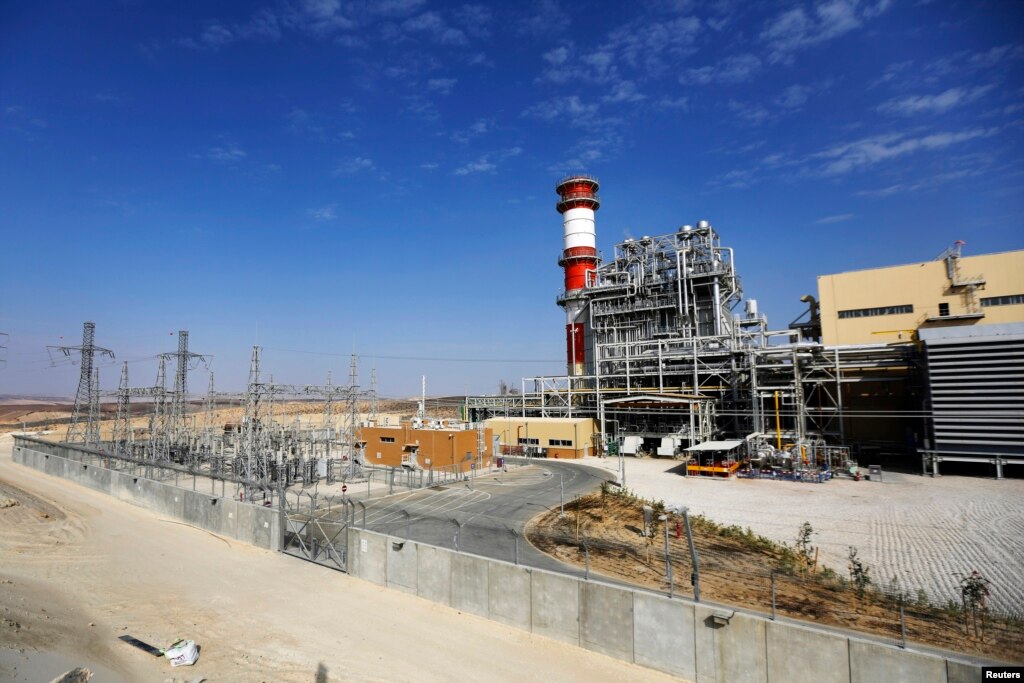
FILE - OPC Rotem, Israel's biggest private power plant that runs on gas from the Tamar field, is located in Mishor Rotem industrial area, southern Negev desert, Israel.

FILE – OPC Rotem, Israel’s biggest private power plant that runs on gas from the Tamar field, is located in Mishor Rotem industrial area, southern Negev desert, Israel.

Reuters
Turkey is unlikely to sign any energy deals with Israel for the construction of a gas pipeline to Turkey because of a deepening political rift over Israel’s Gaza offensive, Turkish Energy Minister Taner Yildiz said on Tuesday.

Ties were severely damaged following a deadly raid by Israeli commandoes on a Turkish yacht carrying pro-Palestinian activists defying a Gaza blockade in 2010. But Israeli firms had more recently held fruitful talks with Turkish private companies and energy officials as part of a tentative rapproachment.

However, Israel’s Gaza offensive in July that killed more than 2,000 people undermined those efforts and infuriated President Tayyip Erdogan, who likened Israel’s actions to those of Hitler.

Israeli gas fields

Israel has turned into a potential gas exporter overnight with the discovery of Tamar and Leviathan, two of the largest gas finds in the past decade. Tamar began production in March 2013, and its partners have already signed a number of lucrative deals in Israel.

Talks between the Leviathan consortium and Turkish counterparts have seen slow progress over the last year. A political solution has always been the condition for an ultimate deal.

“For energy projects to proceed, the human tragedy in Gaza will have to be stopped and Israel will have to instate a permanent peace there with all elements,” Minister Yildiz said in Ankara.

“It is out of question to proceed on any energy project unless a permanent peace is established, with contribution from all sides and with necessary conditions. A human tragedy unfolded [in Gaza], it is all too easily forgotten.”

Turkey was once Israel’s closest strategic ally in the region. But Erdogan has been a strident critic of Israel’s policy on the Palestinians and has been highly critical of the Jewish state since the Gaza hostilities erupted.

Pro-Palestinian

Pro-Palestinian sentiment runs high in mostly Sunni Muslim Turkey and protestors have repeatedly taken to the streets in July to demonstrate against Israel’s offensive, prompting Israel to reduce diplomatic presence in Turkey.

The talks between Israel and Turkey have focused on building a 10 billion cubic meter (bcm) sub-sea pipeline at an expected cost of $2.2 billion, giving Israel access to a major emerging market and one of Europe’s biggest power markets by 2023.

Despite the opposition in political and business circles in Turkey, Israeli businessmen are still holding out hope that a deal may be struck in time.

Yitzhak Tshuva, the billionaire owner of Delek Group, the main partner in Leviathan, told Reuters this week that he remained optimistic about a deal being struck with Turkey once the current political chill passes.

“I believe, yes, and I want [an agreement],” he said.

Obama’s Foreign Policy of Empty Words

September 9, 2014

Obama’s Foreign Policy of Empty Words, Front Page Magazine, September 9, 2014

(Obama’s words have rarely contained substance, even facially. 

Suppose Obama were to surprise the world with words not empty but full of apparent substance. His words, at times, appeared to be substantively meaningful but turned out not to have been. Might it be too late for him to sway the decreasingly free and democratic world now, regardless of what he might say? Perhaps we will find out on Wednesday, when he makes a speech about dealing with the Islamic State. — DM)

Obama's empty words

To paraphrase Demosthenes, the greater this administration’s ready tongue, the greater distrust it inspires in our allies, and the greater boldness it creates in our enemies. Or to put it in my old man’s more earthy terms when I smarted off, “Don’t let your mouth write checks your ass can’t cash.” Obama has been bouncing foreign policy checks from Ukraine to the South China Sea, and most points in between.

**************************

That line from John Ford’s classic The Man Who Shot Liberty Valance contains wisdom everyone from peasant to king knew before our modern age and its smug illusions. Go back 2,400 years, and you can hear it from the Athenian orator Demosthenes as he chastises his fellow citizens for responding to Macedonian aggression by “forever debating the question and never making any progress” and issuing “empty decrees.” “All words, apart from action,” Demosthenes warned, “seem vain and idle, especially from Athenian lips: for the greater our reputation for a ready tongue, the greater the distrust it inspires in all men.” We’ve had several years now of watching Obama and his foreign policy team prove this eternal truth as they have feebly and fecklessly responded to crisis after crisis in Ukraine, Syria, and a dozen other venues.

Just in the last few weeks we have heard a lot of bluster about Islamic State, the rampaging jihadists in northern Iraq who have left in their wake a trail of traditional Muslim mayhem–- sectarian cleansing, forced conversion, slaving, rape, torture, slaughter, and Koran-inspired beheadings, including two American journalists. In response to these decisive deeds, Obama has thundered that he will “degrade and destroy” the “cancer.” In an op-ed co-written with British Prime Minister David Cameron, he has vowed that the allies “will not be cowed by barbaric killers.” His vice president Joe Biden, with his usual trite hyperbole, has threatened, “We will follow them to the gate of hell until they are brought to justice.” And Secretary of State John Kerry, after the beheading of journalist James Foley, has warned, “The world must know that the United States of America will never back down in the face of such evil. ISIL and the wickedness it represents must be destroyed, and those responsible for this heinous, vicious atrocity will be held accountable.” “By whom” is the question the passive voice artfully leaves unanswered.

To paraphrase Demosthenes, the greater this administration’s ready tongue, the greater distrust it inspires in our allies, and the greater boldness it creates in our enemies. Or to put it in my old man’s more earthy terms when I smarted off, “Don’t let your mouth write checks your ass can’t cash.” Obama has been bouncing foreign policy checks from Ukraine to the South China Sea, and most points in between.

Indeed, the deeds necessary to back these loud boasts have been few. That should not surprise us, since Obama has said and done much to tell the world that we will not act decisively, relying instead on verbal processes and gestures of force like bombing some trucks to create a telegenic illusion of action. He started his presidency with the “apology tour,” on which he called the U.S. “arrogant, dismissive, derisive,” confessed that we are “still working through some of our own darker periods in our history,” proclaimed that we “will be willing to acknowledge past errors where those errors have been made,” confessed that “too often we set [our] principles aside as luxuries that we could no longer afford” and so “we went off course,” and promised that we “are working to improve our democracy.” How could such a tainted and flawed state have the moral authority to act with the confidence and decisiveness that his recent rhetoric implies?

Likewise his domestic deeds have undercut the capacity to enforce his tough foreign policy words. Because of cuts to the military budget––inspired in part by his desire to reduce the U.S. to merely one unexceptional member of an international coalition that supposedly can maintain global order and create collective security––our military capacity is destined “to be an increasingly hollow force,” as Bret Stephens writes, “with the Army as small as it was in 1940, before conscription; a Navy the size it was in 1917, before our entry into World War I; an Air Force flying the oldest—and smallest—fleet of planes in its history; and a nuclear arsenal no larger than it was during the Truman administration.”

Commensurate with this undercutting of America’s armed forces have been Obama’s empty bluster and careless language, something dangerous coming from the Commander-in-Chief of the greatest military power in history. “Leading from behind” in Libya, the vanishing “red line” in Syria, the juvenile scolding of Putin “that in the 21st century, the borders of Europe cannot be redrawn with force, that international law matters,” the “no strategy” gaffe about the “jayvee” jihadists of the Islamic State–– all were instantly refuted and discredited by facts on the ground created by hard men of brutal action. Libya is not a democracy, but the jihadist version of Road Warrior. Syria’s Bashar al Assad is winning in Syria by slaughtering close to 200,000 men, women, and children. The Islamic State still controls northern Iraq and Syria, and still sits at the gates of Baghdad. And Putin has snatched Crimea and is closing in on eastern Ukraine. Throw in Obama’s penchant for berating allies like Israel, ignoring the interests of others like Jordan, Egypt, and Saudi Arabia, undercutting vulnerable states like Poland and the Czech Republic, and appeasing genocidal mullahs in Iran, and is it any surprise that his words “inspire greater distrust” in everyone except our enemies?

Of course, Obama’s habit of using words to substitute for politically risky deeds is universal in the West. We just saw a NATO confab in which a lot of big talk for the reporters end up so much smoke when the details are parsed. NATO leaders have agreed “to establish a so-called spearhead force of several thousand troops designed to move into trouble spots at short notice,” as The Wall Street Journal reported. Talk about closing the barn door after the Russian bear has got loose. I’m sure Putin is trembling over the thought of “several thousand” NATO troops that someday might materialize to stop his adventurism. If NATO isn’t acting now, what makes anyone think this special “spearhead force” will act in the future, even if NATO members do create it? As Charles Krauthammer writes, the force “is a feeble half-measure. Not only will troops have to be assembled, dispatched, transported and armed as the fire bell is ringing, but the very sending will require some affirmative and immediate decision by NATO. Try getting that done. The alliance is famous for its reluctant, slow and fractured decision-making.”

And haven’t we heard this sort of braggadocio before from Europe? Remember the 60,000-man “rapid reaction force” the EU was going to create so that they could avoid any further embarrassment of having “cowboy” Americans pull their foreign policy irons out of the fire, as happened in Bosnia and Kosovo? Given that only three European NATO members honor the 2% of GDP minimum for military spending, it’s unlikely that the money for creating this alleged “deterrent” will ever be budgeted, not with EU economies in the doldrums, and widespread grumbling over “austerity” budgets. No wonder that, as the Journal reports, “most details of the force . . . remained to be settled.” But don’t worry, NATO leaders have “committed” to spending the 2% on defense they “committed” to in 2002 and subsequently ignored. Better read the fine print: the commitment is non-binding and will be implemented over a 10-year period. Who knows how much more of the old Soviet Empire Vladimir will have taken back by then.

“Word, words, words,” as Hamlet says. But words useful for politicians who want to avoid the risk and uncertainty of action, and don’t want to face disgruntled voters at the polls. And when this perennial calculus is joined to the progressive belief that an exploitative, racist, neo-imperialist America is disqualified by its sins from being the guarantor of global order and stability, you get the world we are rapidly becoming––a Darwinian jungle of feral violence, illiberal hegemons, thug-nations, and nuclear-armed terrorist states.

UN Human Rights Council Is Abusing Human Rights for Political Ends

September 9, 2014

UN Human Rights Council Is Abusing Human Rights for Political Ends – David Pannick (The Times-UK)

  • On July 23, the UN Human Rights Council adopted (by 29 votes to 1, with 17 abstentions, including the UK and the other EU states) a resolution condemning “widespread, systematic and gross violations of international human rights and fundamental freedoms arising from the Israeli military operations” carried out in Gaza. The resolution decided to “dispatch an independent, international commission of inquiry” to investigate violations of international humanitarian law in Gaza. The commission is to report by next March.
  • The resolution was remarkable in two respects. First, that the Human Rights Council should condemn before receiving the report of the inquiry that it had commissioned to investigate. And second, that the condemnation does not mention Hamas, which has been responsible for appalling human rights violations including public executions of opponents of the regime.
  • The EU refused to support the resolution, concluding that it was “unbalanced, inaccurate, and prejudges the outcome of the investigation.” The EU added that the resolution “fails to condemn explicitly the indiscriminate firing of rockets into Israeli civilian areas as well as to recognize Israel’s legitimate right to defend itself.”
  • Gaza poses difficult questions of international human rights law. In particular, what are the limits on proportionate action by a state under attack by a neighboring government dedicated to its destruction by all possible means, and which launches attacks from civilian centers without concern for its own people? Unfortunately, clear-sighted answers to the legal questions will not come from the UN Human Rights Council or its inquiry.
  • The determination of the council, and many of its members, to abuse human rights for political purposes is undermining the role of international law.

    Lord David Pannick, QC, former Deputy High Court Judge, is a leading human rights lawyer in the UK.


Hamas: Give Us West Bank So We Can Destroy Israel

September 9, 2014

Henry Kissinger: Iran is a bigger problem than ISIS

September 9, 2014
September 06, 2014 7:50 AM ET
Former Secretary of State Henry Kissinger celebrates his 90th birthday, last year in Berlin. In a recent interview with Scott Simon, he gave his thoughts on ISIS, Ukraine and Iran.

Former Secretary of State Henry Kissinger celebrates his 90th birthday, last year in Berlin. In a recent interview with Scott Simon, he gave his thoughts on ISIS, Ukraine and Iran.

Gero Breloer/AP

Henry Kissinger was a Harvard scholar before he became a mover and shaker in the world of foreign policy. And in his new book, World Order, the former secretary of state under Presidents Nixon and Ford gives a historian’s perspective on the idea of order in world affairs.

Nations are always trying to establish systems to make the world a more orderly place, but they rarely last for long. His book stretches from China under the emperors, Rome surrounded by barbarians and Islam encircled by infidels, to the treaties of Europe and the pivotal positions of Russia and Iran.

On current affairs, Kissinger tells NPR’s Scott Simon why a conflict with the Islamic State, also known as ISIS, is more manageable than a confrontation with Iran, what he would do about the Islamic State, and what he thinks the best solution is for the crisis in Ukraine.


Interview Highlights

On why he views Iran as a “bigger problem than ISIS”

There has come into being a kind of a Shia belt from Tehran through Baghdad to Beirut. And this gives Iran the opportunity to reconstruct the ancient Persian Empire — this time under the Shia label.

From a geo-strategic point of view, I consider Iran a bigger problem than ISIS. ISIS is a group of adventurers with a very aggressive ideology. But they have to conquer more and more territory before they can became a geo-strategic, permanent reality. I think a conflict with ISIS — important as it is — is more manageable than a confrontation with Iran.

On what he would do about ISIS

They have cut the throat of an American on television. This is an insult to the United States, which requires that we demonstrate that this is not an act that is free. I would strongly favor a strong attack on ISIS for a period that is related to the murder of the American.

Then, we have to go into the long-range problem. I think when we are dealing with a unit like ISIS, we should not get into a position where they can lead us by establishing ground forces. But we should set strategic objectives where we thwart any goal they set themselves, which we should be able to do by superior air power. And then, if we can enlist other countries, or other more local groups to do the ground fighting, we might actually destroy them.

On the “Russian enigma” and what he thinks Putin’s Russia wants

The attitude of the West and of Russia towards a crisis like Ukraine is diametrically different. The West is trying to establish the legality of any established border. For Russia, Ukraine is part of the Russian patrimony.

A Russian state was created around Kiev about 1,200 years ago. Ukraine itself has been part of Russia for 500 years, and I would say most Russians consider it part of Russian patrimony. The ideal solution would be to have a Ukraine like Finland or Austria that can be a bridge between these two rather than an outpost.

Kissinger’s reaction to naysayers because of his role during the war in Vietnam, especially the bombing of Cambodia and Laos

They should study what is going on. I think we would find, if you study the conduct of guerrilla-type wars, that the Obama administration has hit more targets on a broader scale than the Nixon administration ever did. …

B-52s have a different bombing pattern. On the other hand, drones are far more deadly because they are much more accurate. And I think the principle is essentially the same. You attack locations where you believe people operate who are killing you. You do it in the most limited way possible. And I bet if one did an honest account, there were fewer civilian casualties in Cambodia than there have been from American drone attacks.

The Vietnam War was a great tragedy for our country. And it is now far enough away so that one can study [it] without using the slogans to see what really happened. And I believe you would find — my position was that of the chief of staff of the president — that the decisions that were taken would almost certainly have been taken by those of you who are listening, faced with the same set of problems. And you would have done them with anguish, as we did them with anguish.

On whether he thinks Hillary Clinton would be a good president

I know Hillary as a person. And as a personal friend, I would say yes, she’d be a good president. But she’d put me under a great conflict of interest if she were a candidate, because I intend to support the Republicans. …

Yes, I’d be comfortable with her as the president.

Egypt: Establish Palestinian State in Sinai

September 9, 2014

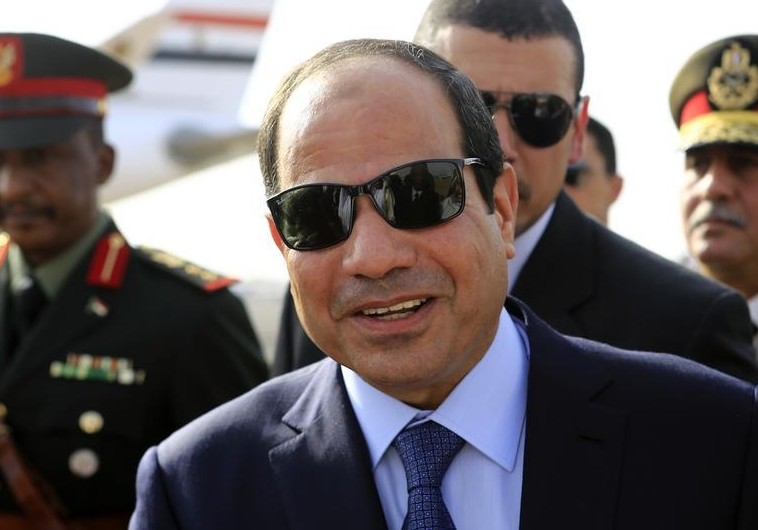
Egypt’s President General Abdel Fattah al-Sisi has come up with a new and surprising solution to resolving the Israeli-Palestinian conflict: Establish a Palestinian state in the Sinai.

Egyptian President Gen. Abdel Fattah al-Sisi has reportedly proposed to Palestinian Authority (PA) head Mahmoud Abbas to extend the Gaza Strip into the Sinai area and establish a Palestinian state there.

According to the plan, Egypt would provide a 1,600-square-kilometer area in the Sinai Peninsula near the Gaza Strip, making the Strip five times its size, where a Palestinian state would be established under full control of the PA. The Palestinian refugees would go to that state, which would be demilitarized.

In addition to the new state south of Gaza there would be full Palestinian autonomy in PA-administered cities Judea and Samaria. In return, Abbas would relinquish the Palestinian demand for a return to the ’67 borders.

Palestinian Authority Head Mahmoud Abbas at a conference in June

According to IDF Radio, al-Sisi told Abbas that if he does not take this offer, those who succeed him will take it, but Abbas was not convinced and rejected the proposal. IDF Radio further reports that the Americans are also in the picture and have given a green light to the plan.

Prime Minister Benjamin Netanyahu was reportedly advised of the program, but according to a preliminary investigtion by the radio station, he has not updated his staff on the proposed solution.

The radio journalist pointed out that a similar program had been suggested by Israeli academics in the past as well as by former National Security Council head Giora Eiland. Eiland claimed at the time that the area of Gaza is too small to support more than a million residents and therefore must be increased at the expense of the Sinai. However, when this idea was presented a few years ago, Egypt rejected it outright.

Serious Responses to the Egyptian Proposal

Responding to the offer on IDF Radio, Member of Knesset Yaakov Perry said that al-Sisi’s generosity was surprising but that there were many issues outstanding. “Questions must be asked, and we do not yet have enough details, regarding the status of Judea and Samaria and Jerusalem. We should address the offer seriously, even if Abu Mazen (Abbas) has turned it down,” Perry, who is a former head of the Shabak (Israel’s Security Agency), said.

Minister of Transportation Yisrael Katz welcomed al-Sisi’s proposal, which he praised as “the Egyption President’s amazing offer.”

“This is the End of Days. The Americans are in support [of the proposal]. All that is left is to convince Abu Mazen, who is in pursuit of the Palestinian right of return to Israel, and the Israeli Left, who are eager to relinquish land.”

Egypt and the PA Deny the Report

Egypt’s Foreign Ministry denies that al-Sisi ever made such an offer to the Palestinian Authority, i24 News reports.

Abbas’ office likewise denies the report. PA Secretary-General Al-Tayyib Abd Al-Rahim told the Palestinian Ma’an news agency that the report was “fabricated.” He added that Abbas would not accept any alternative to a Palestinian state on the 1949 Armistice lines with eastern Jerusalem as its capital. Abbas’s representative further claimed that Egypt shares the PA’s position on this issue.

Author: Aryeh Savir
Staff Writer, United with Israel

President Sisi’s gift

September 9, 2014

President Sisi’s gift.

Egypt and Jordan have already experienced the spillover of the Palestinian jihad.
Something extraordinary has happened.

On August 31, PLO chief and Palestinian Authority President Mahmoud Abbas told an audience of Fatah members that Egypt had offered to give the PA some 1,600 kilometers of land in Sinai adjacent to Gaza, thus quintupling the size of the Gaza Strip. Egypt even offered to allow all the so-called “Palestinian refugees” to settle in the expanded Gaza Strip.

Then Abbas told his Fatah followers that he rejected the Egyptian offer.

On Monday Army Radio substantiated Abbas’s claim.

According to Army Radio, Egyptian President Abdel Fattah el-Sisi proposed that the Palestinians establish their state in the expanded Gaza Strip and accept limited autonomy over parts of Judea and Samaria.

In exchange for this state, the Palestinians would give up their demand that Israel shrink into the indefensible 1949 armistice lines, surrendering Jerusalem, Judea and Samaria. Sisi argued that the land Egypt is offering in Sinai would more than compensate for the territory that Abbas would concede.

In his speech to Fatah members, Abbas said, “They [the Egyptians] are prepared to receive all the refugees, [and are saying] ‘Let’s end the refugee story.’” “But,” he insisted, “It’s illogical for the problem to be solved at Egypt’s expense. We won’t have it.”

In other words, Sisi offered Abbas a way to end the Palestinians’ suffering and grant them political independence. And Abbas said, “No, forget statehood. Let them suffer.”

Generations of Israeli leaders and strategists have insisted that Israel does not have the ability to satisfy the Palestinian demands by itself without signing its own death warrant. To satisfy the Palestinian demand for statehood, Israel’s neighbors in Egypt and Jordan would have to get involved.

Until Sisi made his proposal, no Arab leader ever seriously considered actually doing what must be done. Indeed, the rejection of this self-evident Israeli claim has been so overwhelming that in recent years, every Israeli suggestion to this effect was met with raised eyebrows and dismissal by Israelis and foreigners alike.

So what is driving Sisi? How do we account for this dramatic shift? In offering the Palestinians a large swathe of the Sinai, Sisi is not acting out of altruism. He is acting out of necessity. From his perspective, and from the perspective of his non-jihadist Sunni allies in Saudi Arabia and the United Arab Emirates, the Palestinian campaign against Israel is dangerous.

Facing the prospect of a nuclear-armed Iran, and the rise of jihadist forces from al-Qaida to the Islamic State to the Muslim Brotherhood, the non-jihadist Sunnis no longer believe that the prolongation of the Palestinian jihad against Israel is in their interest.

Egypt and Jordan have already experienced the spillover of the Palestinian jihad. Hamas has carried out attacks in Egypt. The Palestinian jihad nearly destroyed Lebanon and Jordan. Egypt and Saudi Arabia now view Israel as a vital ally in their war against the Sunni jihadists and their struggle against Iran and its hegemonic ambitions. They recognize that Israeli action against Sunni and Shi’ite jihadists in Hamas, Hezbollah and Iran serves the interests of non-jihadi Sunnis. And, especially after the recent conflict in Gaza, they realize that the incessant Palestinian campaign against Israel ultimately strengthens the jihadist enemies of Egypt and Saudi Arabia like Hamas.

Apparently, Sisi’s offer to Abbas is an attempt to help the Palestinian people and take the Palestinian issue out of the hands of Palestinian jihadists.

Unfortunately for Sisi and his fellow non-jihadist Sunnis, Abbas is having none of this.

In rejecting Sisi’s offer Abbas stood true to his own record, to the legacies of every Palestinian leader since Nazi agent Haj Amin el-Husseini, and to the declared strategic goal of his own Fatah party and his coalition partners in Hamas. Since Husseini invented the Palestinians in the late 1920s, their leaders’ primary goals have never been the establishment of a Palestinian state or improving the lives of Palestinians. Their singular goal has always been the destruction of the Jewish state, (or state-in-themaking before 1948).

Sisi offered to end Palestinian suffering and provide the Palestinians with the land they require to establish a demilitarized state. Abbas rejected it because he is only interested hurting Israel. If Israel is not weakened by their good fortune, then the Palestinians should continue to suffer.

For Israel, Sisi’s proposal is a windfall.

First of all, it indicates that the Egyptian-Saudi- UAE decision to back Israel against Hamas in Operation Protective Edge was not a fluke. It was part of an epic shift in their strategic assessments.

And if their regimes survive, their assessments are unlikely to change so long as Iran and the Sunni jihadists continue to threaten them.

This means that for the first time since Israel allied with Britain and France against Egypt in 1956, Israel can make strategic plans as part of a coalition.

Second, Sisi’s plan is good for Israel on its merits.

The only way to stabilize the situation in Gaza and comprehensively defeat Hamas and the rest of the terrorist armies there is by expanding Gaza.

If, as Sisi offered, the Palestinians of Judea and Samaria accept limited autonomy, Israel will no longer be demographically challenged. As a consequence Israel could apply its laws to Area C, ensuring its long-term security requirements and safeguarding the civil rights of all of its citizens.

Sisi’s plan is a boon for Israel as well because it calls Abbas’s bluff.

Abbas is genuflected to by the US and the EU who insist that he is a moderate. The Israeli Left insists that he is the only thing that stands between Israel and destruction.

Yet here we see him openly acknowledging that from a strategic perspective, he is no different from the last of the jihadists. He prefers to see his people wallow in misery and poverty, without a state to call their own, than to see Israel benefit in any way.

Abbas’s rejection of Sisi’s offer demonstrates yet again that he and his Fatah comrades are the problem, not the solution. Continued faith in the PLO as a partner in peace and moderation is foolish and dangerous. He would rather see Hamas and Iran flourish than share a peaceful future with Israel.

The only reason that Abbas is able to continuously reject all offers of statehood and an end to Palestinian suffering, while expanding his diplomatic war against Israel and supporting his coalition partner’s terror war, is because the US and Europe continue to blindly support him.

The final way that Sisi’s offer helps Israel is by showing the futility of the West’s strategy of supporting Abbas.

According to Army Radio’s report, both Prime Minister Binyamin Netanyahu and the Obama administration have been briefed on the Egyptian plan. The Americans reportedly support it.

Netanyahu’s position on the Egyptian proposal was not reported. But his recent statements indicate that he views the Egyptian proposal as a sea change that may facilitate a diplomatic breakthrough.

During his press conference following the conclusion of the cease-fire in Gaza a week and a half ago, Netanyahu was asked about the prospect of renewing the peace process with Abbas.

Netanyahu responded vaguely that prospects of the peace process are better now, in light of regional shifts. With the Egyptian proposal now out in the open, and assuming that this is what Netanyahu was referring to, his remarks were accurate.

Sisi’s offer, even with Abbas’s rejection of it is a gift to Israel. And Israel’s challenge in the weeks and months ahead is to make the most of it.

If the Americans force Abbas to accept Sisi’s offer, Israel and the Palestinian people will benefit.

And if Abbas successfully scuttles it, Sisi’s offer will show that Israel is correct that it cannot satisfy Palestinian demands on its own, and indeed, it demonstrates how unreasonable those demands are.

Sisi’s offer demonstrates that for non-jihadist Sunnis, not only is Israel not the problem in the Middle East, a strong Israel is a prerequisite for solving the region’s troubles. Here is a major Arab leader willing to stand with Israel even if it means discrediting the PLO .

As a consequence, Sisi’s offer is a challenge to the US and Europe.

Sisi’s offer shows Washington and Brussels that to solve the Palestinian conflict with Israel, they need to stand with Israel, even if this means abandoning Abbas.

If they do so, they can take credit for achieving their beloved two-state solution. If they fail to do so, they will signal that their primary goal is not peace, but something far less constructive.