Archive for September 2014

Republicans gallop toward ground war in Syria and Iraq

September 18, 2014

Republicans gallop toward ground war in Syria and Iraq
By Dana Milbank September 16, 2014 Via Washington Post 


(First of all, let me be perfectly clear. In my humble opinion, this is NOT OUR FIGHT. Except for pursuing Bin Laden and hitting the Taliban for supporting him, it NEVER was our fight. If we must do something regarding ISIS, then push them back into Syria. Let ’em fight, muslim against muslim.

Instead, we have this open ended pseudo war with a sketchy mission. Actually, what we really have is one big false flag scenario with its sights set on Syria. Let’s not forget that not long ago the media was in a flurry over Russian air defense systems installed in Syria along with Russian bases and a deadly arsenal of chemical weapons that were never fully accounted for. Pretty dangerous place to be tip toeing around bombing here and bombing there in pursuit of an enemy scrurrying around like cockroaches. Collateral damage anyone?

Now we see that Obama has set another red line with Syria in a token attempt to prevent them from shooting down our Air Force while attacking that ‘existential threat’ called ISIS, or whatever the hell they call them this week. Really?? Do they think we just blew into town after falling off a watermelon truck?

Of course, the low information voter in the US is taking all this in without objection. Afterall, the mainstream media has been hammering away endlessly about the threat from ISIS for months now. As a result, the polls have shifted in favor of engagement and the war hawks are jumping on the war wagon like Mexicans on a boat preparing to cross the Rio Grande.

So I say to all you moms and dads out there. Give your kids a good hug before they march off to war once again. I hope like hell they return safely and you don’t get that horrible knock on the door by two members of our military.

Thatisall.-LS)

At Tuesday’s hearing, Graham practically pleaded with Gen. Martin Dempsey, chairman of the Joint Chiefs of Staff, to endorse the use of U.S. ground troops against the Islamic State. “Do you agree that somebody’s got to go in on the ground?” he asked. “Can you envision a coalition of Arab states that have the capabilities . . . without substantial U.S. military support?” Finally, the senator challenged the general: “If you think they can do it without us being on the ground, just say yes.”

“Yes,” said Dempsey.

This was evidently not the answer sought by Graham, who then asked if Dempsey would recommend U.S. ground troops in Syria “if nobody else will help us.” Dempsey, not quite as categorical as Obama, pledged that if circumstances change to merit U.S. ground forces, he’ll recommend that.

The sudden desire for a ground war is a bit suspect, both because many Republicans adopted this view only after Obama came around to their previous view and because many Republicans oppose even the modest funding Obama has requested to train Syrian fighters. (Rep. Michele Bachmann (R-Minn.) said she opposed “giving even more money to the so-called vetted moderates who aren’t moderate at all.”)

It may be that Republicans embraced the boots-on-the-ground position because Obama rejected it. Whatever the cause, the militancy is spreading — even though polls indicate that while Americans favor military action against the Islamic State, they aren’t keen on ground troops.

House Speaker John Boehner, asked about Obama’s no-boots vow, replied: “I would never tell the enemy what I was willing to do, or unwilling to do.”

Backbencher Rep. John Fleming (R-La.) was more blunt. He told the Associated Press that, rather than depending on “undependable” foreigners, he favors “all-out-war” waged by American forces.

As the House kicked off its debate Tuesday on training Syrian rebels, Rep. Tom Cole (R-Okla.) declared that Obama “was far too quick to rule out options and tools that he in fact may need later.”

Said Rep. Jack Kingston (R-Ga.): “We have made this decision not to have ground troops. We do not need another half-pregnant war in the Middle East. If it’s important enough to fight, it’s important enough to win.” Kingston added that war in the former Yugoslavia ended only after a U.S. decision “to commit ground troops.”

The little bit of war-weariness that was voiced on the Senate Armed Services Committee Tuesday came from Democrats, particularly Joe Manchin (W.Va.).

The Republicans were almost unanimous in wanting a broader war than Obama outlined. Sen. Jim Inhofe (Okla.), called it “foolhardy” for Obama to rule out ground troops. “There was a collective sigh of relief at ISIS headquarters in Syria when they heard him say that,” Inhofe alleged, using an acronym for the terrorist group.

Sen. Kelly Ayotte (N.H.) said she didn’t see how the air strikes could work “without the assistance of our trained special operators on the ground.”

Sen. Roger Wicker (Miss.) said he didn’t think “five thousand trained in a year” would be sufficient. “I want us to win.”

And Sen. Jeff Sessions (Ala.) offered his opinion that Iraqi troops would be “more emboldened and encouraged” if they had U.S. troops embedded with them.

Dempsey suggested that Jordanian or Emirati forces might do that job.

“Well, if we all had horses, we’d take a ride,” snapped Sessions. “We don’t have that.”

Ah, but we do. The Republican Party has quickly assembled a veritable cavalry brigade of warhorses.

The Turkish AK Party and the Islamic State

September 18, 2014

ISIL through the eyes of the AK Party

ISIL through the eyes of the AK Party

Militant fighters take part in a military parade along the streets of Syria’s northern Raqqa province on June 30.(Photo: AP)

September 16, 2014, Tuesday/ 17:45:06/ MURAT AKSOY

The Justice and Development Party-led (AK Party) Turkey will definitely raise the greatest difficulty to the US in its efforts to muster a “global coalition” against the Islamic State of Iraq and the Levant (ISIL) — which emerged in Iraq to declare an Islamic caliphate and engage in violent attacks in the name of Islam — with a view to adding not only international legitimacy, but also increased effectiveness to its current operations against ISIL.

In the meeting held in the Saudi Arabian city of Jeddah in the wake of NATO summit talks in the UK, certain Islamic countries, particularly Saudi Arabia, agreed in principle to cooperate in the fight against ISIL and they issued a declaration. However, Turkey refrained from signing this declaration.

US Secretary of Defense Chuck Hagel and Secretary of State John Kerry paid visits to Turkey one after another to discuss Turkey’s potential position regarding ISIL.

The final declaration of the International Conference on Peace and Security in Iraq, held in Paris on Monday, produced the international commitment to provide Iraq with various kinds of help, including military assistance.


Turkey: a prisoner of ISIL

The media reports suggest that Turkey has certain drawbacks to any potential operation against ISIL and won’t actively participate in the coalition, but will lend logistical support. Turkey’s avoidance of active participation in this operation helps to reinforce Western perceptions of potential links between the AK Party and ISIL.

The Turkish government cites certain “sensitive matters” as excuses for not lending active support to the operation.

One of these matters is certainly the case of 46 Turkish citizens, including diplomats, who were taken hostage by ISIL some 100 days ago. With this move, ISIL took not only our diplomats, but also the whole of Turkey hostage.

Given the fact that ISIL sticks to a violence-centered interpretation of Islam, and is not willing to tolerate any divergent interpretation, even by Muslims, Turkey needs to act more carefully in connection with the hostages. We don’t know if the Turkish authorities have taken any concrete steps toward rescuing these hostages during the period since their being captured. When we ask if there might be any talks conducted in secret with ISIL or assess the statements the families of the hostages make, we hardly feel that we can say there have been any such moves.

 What’s at stake: just the hostages?

The AK Party’s sensitivity regarding the hostages is of course understandable, and can even be tolerated to a certain extent. But both the domestic and international public tend to question if the AK Party’s sensitivity is only due to the hostages. New pieces of intelligence or reports emerge every day.

One of the factors in the AK Party’s sensitivities regarding ISIL is that ISIL was one of the organizations the AK Party cooperated with in its plan to overthrow Bashar al-Assad, the president of Syria. Indeed, it is reported that in return for joining the international coalition against ISIL, Turkey wanted it to work toward the overthrowing of Assad.

The ruling AK Party’s hostility toward Assad — which has become part of its nature — has led to claims that the AK Party lends support to radical Islamic groups other than the Free Syrian Army (FSA), which is the legitimate representative of the Syrian opposition. Despite Turkey’s denials, claims that Turkey, along with Saudi Arabia and Qatar, is providing assistance to al-Qaeda-linked radical Islamic group the al-Nusra Front were and are hotly debated in the international media.

As it cooperated with al-Nusra until late 2013, ISIL has had its share of Turkey’s assistance. ISIL refused to comply with al-Qaeda leader Abu Mosab Zarkawi’s call to join al-Nusra and later moved the majority of its forces from Syria to Iraq.

What does the world think of the link between the AK Party and ISIL?

Currently, the world’s perceptions about the link between the AK Party and ISIL are no longer restricted to claims of unofficial assistance provided by the AK Party to ISIL. The world increasingly sees an ideological affinity between the two.

Although these two organizations have different interpretations of Islam, they justify their acts saying they are doing them in the name of Islam. The ruling AK Party refrains from labeling ISIL as a terrorist organization, and it has been trying to boost the public visibility of Islam using public resources. All these factors reinforce the world’s perceptions about the link between the AK Party and ISIL.

Actually, media outlets tend to disclose new documents with evidence of this link as well. Indeed, the Turkish authorities’ tolerance of ISIL’s activities near the common borders with Syria and Iraq, the flexibility afforded to Turks who want to join the ranks of ISIL, and the tolerance afforded to people and institutions that are ideologically close to ISIL are among the main reasons for the Western perceptions.

The AK Party’s sensitivity regarding ISIL can hardly be attributed to 46 hostages. Apparently, the AK Party believes in the end it can bring its Islamic identity into play to convince ISIL.


 ISIL’s threat to Turkey


In some respects, Turkey’s inclusion in the US-led coalition seems inevitable. Turkey should become part of this coalition even if it is a passive member.

This means that the AK Party and its members will have to confront their own future and what sort of country they dream of having.

Will the AK Party’s “new Turkey” be a softer version of the “Islamic State” that ISIL has established? Or will it be a pluralist, liberal, democratic and secular country?

Unfortunately, just as ISIL challenges the West with its weapons, the AK Party does the same thing with its democratic legitimacy but with a softer tone. The AK Party uses this democratic legitimacy to introduce anti-democratic regulations. But it seeks to regulate not only Turkey, but also the entire world.


 Intervention not enough


Let use try to answer the following question: will the US-led coalition’s intervention with ISIL be sufficient?

Such an intervention may undermine ISIL’s activities, but it won’t be enough to completely destroy it in the medium term. To eliminate ISIL as a terrorist organization, the primary course of action should be to destroy the causes that paved the way for its emergence. For instance, the Shiism-centered sectarian policies in Iraq must be abandoned and principles of equal citizenship and pluralism should be implemented. In this way, ISIL and similar organizations may become marginal and eventually disappear.

For any operation against ISIL to succeed, the Muslim countries which secretly lent support to such organizations must become part of this international coalition.


*Murat Aksoy is an author based in İstanbul.

Todays Zaman: Erdoğan slams New York Times for ISIL story

September 18, 2014

Erdoğan slams New York Times for ISIL story

Erdoğan slams New York Times for ISIL story

President Recep Tayyip Erdoğan and Prime Minister Ahmet Davutoğlu leave Hacı Bayram Veli Mosque in Hacıbayram neighhborhood of Ankara after Friday prayers on Aug. 22. (Photo: Today’s Zaman, Mevlüt Karabulut)

September 17, 2014, Wednesday/ 13:17:52/ TODAYSZAMAN.COM / ISTANBUL

President Recep Tayyip Erdoğan lashed out at The New York Times on Wednesday over a report saying the Islamic State in Iraq and the Levant (ISIL) has been steadily attracting Turkish recruits, calling the report “shameless.”

The New York Times ran the story on Monday with a photo of Erdoğan and Prime Minister Ahmet Davutoğlu leaving a mosque in the Ankara neighborhood of Hacı Bayram, which the report said has become a recruitment hub for ISIL.

“A media organization in the US accuses us of supporting terror organizations by posting a photo of me and Davutoğlu,” Erdoğan told a gathering of the Chamber of Turkish Tradesmen and Craftsmen’s (TESK). “This is, in the clearest of terms, shameless, ignoble and base.”

The New York Times report focused on Hacı Bayram, where it said about 100 people have joined the ranks of ISIL, indicating that its locals tried to approach Erdoğan and Davutoğlu to raise the issue of ISIL recruitment when the two went to the historic Hacı Bayram Veli Mosque in the neighborhood.

The report said as many as 1,000 Turks have joined the ranks of the extremist group, citing local media reports and Turkish officials.

Erdoğan had just on Tuesday targeted The New York Times for a separate report it published on Saturday that said the US cannot convince Turkey to stop the flow of ISIL oil, a major source of revenue for the extremist group.

“This newspaper [The New York Times] … is very skilled at fabricating false reports. I also told [US Secretary of State John] Kerry that the US media made up false reports. These [reports] aim not to show Turkey’s real face but to harm Turkey-US ties and Turkey’s relations with other countries. These are not true. These methods are evil-minded,” he said of the Saturday report.

On Wednesday, Erdoğan again denied allegations of oil trade with ISIL. “They say Turkey buys oil [from ISIL] and they [ISIL militants] are treated in Turkey. Such things are out of the question,” Erdoğan said.

Turkey, one of the most vocal opponents of the Syrian regime, has been accused of helping the expansion of ISIL by turning a blind eye to the passage of foreign fighters transiting its territory to join ISIL in Syria in order to tip the military balance against President Bashar al-Assad’s forces. Ankara vehemently denies allegations and says Western countries where ISIS recruits come from should cooperate more closely with Turkey to stem flow of foreign fighters.

Ankara is also reluctant to publicly confront ISIL because of concerns over the fate of 49 Turks who were seized by the group in June in Mosul, Iraq.

“For us, the 49 people who are held in Mosul are more important than anything. We have responsibilities; we have to be careful in our statements,” Erdoğan said, underlining the Turkish concern for the hostages.

Erdoğan also stated that what he called the “perception operation” to create a negative image of Turkey will be taken to the United Nations General Assembly in New York.

“Turkey is a great country that cannot drop to its knees before such false reports. For us, the 49 people [46 Turkish nationals and three others] who are held in Mosul are more important than anything. We have responsibilities; we have to be careful in our statements. I regret to state that some treasonous networks that don’t have this sensitivity carry water to the mill of the others [ISIL militants]… We will tell world leaders about this ugly perception operation during the UN General Assembly on Monday,” he said.

Turkey claims that its hands are tied due to the 46 Turkish nationals who were kidnapped by ISIL from the Turkish Consulate General in Mosul over three months ago. Turkish officials have imposed a gag order on Turkish media coverage of the hostage issue, claiming that they do not want news stories to put the hostages’ lives at risk.

Turkey also refused to sign an anti-ISIL communiqué at a counterterrorism meeting in Jeddah last week. A senior Turkish official said Ankara had refrained from signing the communiqué in part due to the sensitivity of efforts to free the 46 Turkish hostages captured by ISIL fighters in Iraq. However, pro-government elements of the Turkish media have run articles expressing broader skepticism about Obama’s plans.

Messy realities

September 18, 2014

Messy realities.

Ira Sharkansky

It’s been a week since the great speech, and there has been little beyond solemn statements of support, along with reservations about doing anything concrete. 

The President boasted of a multi-nation coalition. In one statement it was claimed that 40 nations had signed on, with no American boots on the ground.

So far there are no boots headed for the ground.

The coalition may now be down to 10 or a dozen, depending on who is talking, but with little more than talking involved. Several Muslim countries have offered their support, but without troops. Turkey has forbid that American planes use NATO facilities in Turkey for their missions.

Among the nastiness of various comments are

coalition of the uncertain
coalition of the unwilling to be identified by name
coalition of the willing and unable
lackluster coalition of the willing
how willing is Obama’s coalition?

It could have been predicted by all perhaps except the Secretary of State, noted for his ponderous platitudes that have produced a minimum of results here or throughout the Middle East.

UK Prime Minister David Cameron has weighed in with another blessing of Islam. Perhaps we should be forgive him, bothered as he must have been by the threat of Scotland’s secession along with the ugliness of his countryman’s beheading.

“They boast of their brutality. They claim to do this in the name of Islam. That is nonsense. Islam is a religion of peace. They are not Muslims, they are monsters,”

On the same day I had been on the fringe of a conversation between Muslim friends, which they conducted in Hebrew for my benefit.

One said that violence has been inherent in the history of Islam. Another said that Sunnis have generally been more peaceful than Shiites, but that there were too many factions within Islam for him to comprehend.

Arabic speaking Israeli commentators, supposedly experts of the subject, speak about a multitude of groups whose names they do not know for sure, competing for headlines, recruits, money and body counts across Syria and Iraq, as well as in the Sinai and various other spots across Africa and the Middle East.

The rest of us should admit that we cannot comprehend the continued blather of Cameron, Obama, and others about Islam being a religion of peace.

Sure, they do not want to ignite the millions of Muslims already among their voters, or the billion Muslims worldwide. At the same time, a simple standard of intellectual honesty suggests that they should avoid fibbing about the obvious. Cameron’s speech writers could have crafted something that condemned murder without that nonsense about a religion of peace.

The more honest among us should admit that none of the religions is without the blemish of violence in its history, doctrines, or the current practices by some of those claiming to be faithful. However, those saying that they are the most faithful of Muslims are now the most violent, brutal, or barbaric individuals operating under the umbrella of a religion.

We should not envy the task of Obama, Cameron, and whoever might join them, perhaps determined by whose citizens find themselves the center of a filmed beheading.

The coalition mentioned includes European countries with competing economic interests in the Middle East, and Muslim countries competing on a variety of theocratic and political issues.

Turkey, Iran, Egypt, Syria and Saudi Arabia are potential allies of the US with military assets to oppose ISIS and other extremists, but each have strong reservations about cooperating with one another or with the United States.

Those intent on understanding Turkey must reckon with its concern for Kurds, as well as whatever may happen right over its borders with Iraq and Syria. The Turks are most likely assessing the prospects, including the chance of American bungling.

Figuring out who to aid in Syria is its own set of mysteries, given the record of the Assad regime as well as the multitude of groups claiming to fight Assad and/or one another.

Obama’s promise of keeping American boots off the ground in Syria and Iraq may already be crumbling.

According to General Martin Dempsey, Chairman of the Joint Chiefs of Staff

“My view at this point is that this coalition is the appropriate way forward . . . I believe that will prove true. If it fails to be true and there are threats to the U.S., then of course, I would go back to the president and make the recommendation that may include the use of U.S. military ground forces.”

With no Muslim countries sending their boots to the American led coalition, one can imaging the tensions within the Obama White House with competing assessments and pressures about what is good for the President and for his country. The President followed Demsey’s comment with his own affirmation of not sending troops, but we have learned never to say never.

On another front, President Obama has announced plans to send 3,000 military personnel to Liberia to fight the spread of Ebola.

The mission is to construct and staff care centers and supply medical kits meant to protect from, or cure Ebola..

One can hope that Obama’s advisers have done the analysis that weighs the benefits of this action to the President and the United States, against the prospect of easing the passage of Ebola to the United States.

The director of the Center for Infectious Disease Research and Policy at the University of Minnesota has said that it is difficult to care for Ebola patients without becoming infected, and there is no proof that the kits being sent will work.

There is no shortage of messiness closer to home.

A Palestinian, UN, Israeli agreement on construction materials for Gaza, without a commitment to de-militarize the area, but with UN supervision to assure that they will be used for civilian purposes.

Israeli officials say that the move is meant to dampen the prospect of suffering among Gazans that would work to provoke further violence against Israel.

A missile landed in an Israeli field late on Tuesday, followed by Hamas claims of good intentions and the arrest of the perpetrators.

One measure of Gaza’s misery appears in the 15 migrants drowned on their way from Egypt to Italy. According to a report by Aljazeera, they were among the 10,000 Palestinians who have fled Gaza via tunnels under the Egyptian border.

We can couple our mourning for 15 dead Palestinians with the concern for still-functioning tunnels to Egypt, and worries about what flows in them to Gaza with munitions from Iran or Libya.

Assuming the UN will monitor the use of construction materials in Gaza is equivalent to declaring that Islam is a religion of peace.

In case no one noticed, UN personnel allowed their schools in Gaza to be used for storing weapons and fighters, as well as launching missiles toward Israel. And UN troops are the ones recently seen going to safety in Israel from their posts in Syria.


How Peace Negotiator Martin Indyk Cashed a Big, Fat $14.8 Million Check From Qatar, and No One Noticed

September 18, 2014

How Peace Negotiator Martin Indyk Cashed a Big, Fat $14.8 Million Check From Qatar, and No One Noticed – Tablet Magazine.

One Middle Eastern nation does indeed pay to influence U.S. foreign policy. Hint: It’s not Israel.

By Lee Smith|September 17, 2014 12:00 AM

Martin Indyk and John Kerry, 2013. (Paul J. Richards/AFP/Getty Images)

The New York Times recently published a long investigative report by Eric Lipton, Brooke Williams, and Nicholas Confessore on how foreign countries buy political influence through Washington think tanks. Judging from Twitter and other leading journalistic indicators, the paper’s original reporting appears to have gone almost entirely unread by human beings anywhere on the planet. In part, that’s because the Times’ editors decided to gift their big investigative scoop with the dry-as-dust title “Foreign Powers Buy Influence at Think Tanks,” which sounds like the headline for an article in a D.C. version of The Onion. There is also the fact that the first 10 paragraphs of the Times piece are devoted to that highly controversial global actor, Norway, and its attempts to purchase the favors of The Center for Global Development, which I confess I’d never heard of before, although I live in Washington and attend think-tank events once or twice a week.

Except, buried deep in the Times’ epic snoozer was a world-class scoop related to one of the world’s biggest and most controversial stories—something so startling, and frankly so grotesque, that I have to bring it up again here: Martin Indyk, the man who ran John Kerry’s Israeli-Palestinian negotiations, whose failure in turn set off this summer’s bloody Gaza War, cashed a $14.8 million check from Qatar. Yes, you heard that right: In his capacity as vice president and director of the Foreign Policy Program at the prestigious Brookings Institution, Martin Indyk took an enormous sum of money from a foreign government that, in addition to its well-documented role as a funder of Sunni terror outfits throughout the Middle East, is the main patron of Hamas—which happens to be the mortal enemy of both the State of Israel and Mahmoud Abbas’ Fatah party.

But far from trumpeting its big scoop, the Times seems to have missed it entirely, even allowing Indyk to opine that the best way for foreign governments to shape policy is “scholarly, independent research, based on objective criteria.” Really? It is pretty hard to imagine what the words “independent” and “objective” mean coming from a man who while going from Brookings to public service and back to Brookings again pocketed $14.8 million in Qatari cash. At least the Times might have asked Indyk a few follow-up questions, like: Did he cash the check from Qatar before signing on to lead the peace negotiations between Israel and the Palestinians? Did the check clear while he was in Jerusalem, or Ramallah? Or did the Qatari money land in the Brookings account only after Indyk gave interviews and speeches blaming the Israelis for his failure? We’ll never know now. But whichever way it happened looks pretty awful.

Or maybe the editors decided that it was all on the level, and the money influenced neither Indyk’s government work on the peace process nor Brookings’ analysis of the Middle East. Or maybe journalists just don’t think it’s worth making a big fuss out of obvious conflicts of interest that may affect American foreign policy. Maybe Qatar’s $14.8 million doesn’t affect Brookings’ research projects or what the think tank’s scholars tell the media, including the New York Times, about subjects like Qatar, Hamas, Israel, Turkey, Saudi Arabia, and other related areas in which Qatar has key interests at stake. Maybe the think tank’s vaunted objectivity, and Indyk’s personal integrity and his pride in his career as a public servant, trump the large piles of vulgar Qatari natural gas money that keep the lights on and furnish the offices of Brookings scholars and pay their cell-phone bills and foreign travel.

But people in the Middle East may be a little less blasé about this kind of behavior than we are. Officials in the Netanyahu government, likely including the prime minister himself, say they’ll never trust Indyk again, in part due to the article by Israeli journalist Nahum Barnea in which an unnamed U.S. official with intimate knowledge of the talks, believed to be Indyk, blamed Israel for the failure of the peace talks. Certainly Jerusalem has good reason to be wary of an American diplomat who is also, or intermittently, a highly paid employee of Qatar’s ruling family. Among other things, Qatar hosts Hamas’ political chief Khaled Meshaal, the man calling the shots in Hamas’ war against the Jewish state. Moreover, Doha is currently Hamas’ chief financial backer—which means that while Qatar isn’t itself launching missiles on Israeli towns, Hamas wouldn’t be able to do so without Qatari cash.

Of course, Hamas, which Qatar proudly sponsors, is a problem not just for Israel but also the Palestinian Authority. Which means that both sides in the negotiations that Indyk was supposed to oversee had good reason to distrust an American envoy who worked for the sponsor of their mutual enemy. In retrospect, it’s pretty hard to see how either side could have trusted Indyk at all—or why the administration imagined he would make a good go-between in the first place.

Indeed, the notion that Indyk himself was personally responsible for the failure of peace talks is hardly far-fetched in a Middle East wilderness of conspiracy theories. After all, who benefits with an Israeli-PA stalemate? Why, the Islamist movement funded by the Arab emirate whose name starts with the letter “Q” and, according to the New York Times, is Brookings’ biggest donor.

There are lots of other questions that also seem worth asking, in light of this smelly revelation—like why in the midst of Operation Protective Edge this summer did Kerry seek to broker a Qatari- (and Turkish-) sponsored truce that would necessarily come at the expense of U.S. allies, Israel, and the PA, as well as Egypt, while benefiting Hamas, Qatar, and Turkey? Maybe it was just Kerry looking to stay active. Or maybe Indyk whispered something in his former boss’ ear—from his office at Brookings, which is paid for by Qatar.

It’s not clear why Indyk and Brookings seem to be getting a free pass from journalists—or why Qatar does. Yes, as host of the 2022 World Cup and owner of two famous European soccer teams (Barcelona and Paris St. Germain), Doha projects a fair amount of soft power—in Europe, but not America. Sure, Doha hosts U.S. Central Command at Al Udeid air base, but it also hosts Al Jazeera, the world’s most famous anti-American satellite news network. The Saudis hate Doha, as does Egypt and virtually all of America’s Sunni Arab allies. That’s in part because Qataris back not only Hamas, but other Muslim Brotherhood chapters around the region and Islamist movements that threaten the rule of the U.S.’s traditional partners and pride themselves on vehement anti-Americanism.

Which is why, of course, Qatar wisely chose to go over the heads of the American public and appeal to the policy elite—a strategy that began in 2007, when Qatar and Brookings struck a deal to open a branch of the Washington-based organization in Doha. Since then, the relationship has obviously progressed, to the point where it can appear, to suspicious-minded people, like Qatar actually bought and paid for John Kerry’s point man in the Middle East, the same way they paid for the plane that flew U.N. Sec. Gen. Ban Ki-Moon around the region during this summer’s Gaza war.

Indeed, the Doha-Brookings love affair has gotten so hot that it may have pushed aside the previous major benefactor of Brookings’ Middle East program, Israeli-American businessman Haim Saban. The inventor of the Power Rangers will still fund the annual Saban forum, but in the spring Brookings took his name off of what was formerly the Haim Saban Center for Middle East Policy, so that now it’s just Center for Middle East Policy. Maybe the Qatari Center For Middle East Policy didn’t sound objective enough.

Another fact buried deep inside the Times piece is that Israel—the country usually portrayed as the octopus whose tentacles control all foreign policy debate in America—ranks exactly 56th in foreign donations to Washington think tanks. The Israeli government isn’t writing checks or buying dinner because—it doesn’t have to. The curious paradox is that a country that has the widespread support of rich and poor Americans alike—from big urban Jewish donors to tens of millions of heartland Christian voters—is accused of somehow improperly influencing American policy. While a country like Qatar, whose behavior is routinely so vile, and so openly anti-American, that it has no choice but to buy influence—and perhaps individual policymakers—gets off scot free among the opinion-shapers.

It turns out that, in a certain light, critics of U.S. foreign policy like Andrew Sullivan, John J. Mearsheimer, and Stephen Walt were correct: The national interest is vulnerable to the grubby machinations of D.C. insiders—lobbyists, think tank chiefs, and policymakers who cash in on their past and future government posts. But the culprits aren’t who the curator of “The Dish” and the authors of The Israel Lobby say they are. In fact, they got it backwards. And don’t expect others like Martin Indyk to correct the mistake, for they have a vested interest in maintaining the illusion that the problem with America’s Middle East policy is the pro-Israel lobby. In Indyk’s case, we now know exactly how big that interest is.

IS ‘mafia’ cash flow poses difficult target for West

September 18, 2014

IS ‘mafia’ cash flow poses difficult target for West

Western governments are facing an uphill battle trying to squeeze the finances of Islamic State militants, as the extremists operate like a “mafia” in territory under their control in Syria and Iraq, experts said Wednesday (Sep 17).

WASHINGTON: Western governments are facing an uphill battle trying to squeeze the finances of Islamic State militants, as the extremists operate like a “mafia” in territory under their control in Syria and Iraq, experts said Wednesday (Sep 17).

Unlike the Al-Qaeda network, which has relied almost exclusively on private donations, the IS group holds a large area in Syria and Iraq that allows it to generate cash from extortion, kidnapping and smuggling of both oil and antiquities, analysts said.

As a result, the group’s funding presents a much more difficult target for Western sanctions compared to Al-Qaeda’s finances, said Evan Jendruck, an analyst at IHS Jane’s consultancy.

A sanctions regime of more than 160 countries eventually succeeded in limiting Al-Qaeda’s ability to move funds through charities and banks, he said, but IS has its own sources of cash in areas under its grip.

“While such robust sanctions could somewhat limit the follow of funds to IS from outside Iraq and Syria, the groups organic funding inside its areas of control – oil fields, criminal networks, smuggling – are very difficult to curtail,” Jendruck told AFP.

Even conservative estimates portray IS as the world’s richest extremist organization, raking in at least a million dollars a day. US officials acknowledge the group has plenty of cash and is relentless about securing it.

“It is flush with cash from a variety of illicit activities such as extortion, kidnapping, robberies, and the like,” said a US intelligence official, who spoke on condition of anonymity.

The group is “merciless in shaking down local businesses for cash and routinely forces drivers on roads under its control to pay a tax,” the official said. “Its cash-raising activities resemble those of a mafia-like organization.”

IS has allegedly extracted multi-million dollar ransoms from some European governments after taking several reporters hostage, despite Washington’s appeals not to pay off the militants. The French government has denied making ransom payments.

Although IS is awash in cash, reports that the group got a hold of hundreds of millions of dollars from banks in Mosul are overstated and inaccurate, experts said.

OIL SMUGGLING NETWORK

The most crucial source of income for the group comes from an estimated 11 oil fields it has seized in eastern Syria and northern Iraq, allowing the militants to sell crude at cheap prices for cash or refined fuel products in neighboring countries.

The revenue from the oil sales could come to as much as US$2 million a day, according to Luay al-Khatteeb at the Brookings Doha Center.

Exploiting an area long known for smuggling, the oil is treated at rudimentary refineries, transported by truck, boat or mule to Iraq, Turkey, Iran and Jordan and sold at bargain basement prices – between US$25 to US$60 per barrel instead of the going world rate of about US$100, Khatteeb said.

“It has successfully achieved a thriving black market economy by developing an extensive network of middlemen in neighboring territories and countries to trade crude oil for cash and in kind,” Khatteeb wrote in a recent commentary.

The US Treasury Department has vowed to crack down on the group’s funding from oil smuggling, extortion and other criminal activity, without specifying how it will go about it.

Since 2003, Washington has imposed sanctions on more than 20 people affiliated with IS or its predecessor, Al-Qaeda in Iraq, and in recent months added two more names to the list, according to David Cohen, the Treasury Department’s undersecretary for terrorism and financial intelligence.

Washington also hopes to undercut IS’s access to the international financial system, Cohen said in a statement last week.

But it remains unclear if Gulf countries will fully back the effort. Qatar and Kuwait in particular have been widely accused of allowing money to be funnelled to the jihadists, despite denials from those governments.

TERRITORY HOLDS KEY

In any case, the IS does not rely heavily on rich donors, and financial sanctions hold little promise of shutting off its cash flow, said Howard Shatz, a senior economist at the RAND Corporation think tank.

Oil sales possibly could be restricted if Turkey and Jordan tightened border controls, or if middle men for the smuggling could be identified, he said.

The group is not invincible, however, and IS suffered setbacks in the past, said Shatz, who studied the ledgers of IS’s precursor organizations.

The militants started running out of money in 2009, after losing hold of territory amid an uprising by Sunni tribes and an offensive by Iraqi and US forces that killed senior leaders. “It does come down to territorial control,” Shatz said.

Todays Zaman: Turkish sanctuary for MB leaders may further strain regional relations

September 18, 2014

Turkish sanctuary for MB leaders may further strain regional relations

Former Prime Minister Erdoğan and Egyptian then-President Morsi of the Muslim Brotherhood are seen together in this file photo from 2012.(Photo: AP)

September 16, 2014, Tuesday/ 10:38:23/ DENİZ ARSLAN / ANKARA

President Recep Tayyip Erdoğan’s statement welcoming Egypt’s banned Muslim Brotherhood (MB) leaders, who have recently been asked to leave Qatar after pressure was placed on the oil-rich state by other Gulf Arab countries, is expected to further strain Turkey’s already troubled relations with Egypt, Saudi Arabia and the United Arab Emirates (UAE).

“If they [the Muslim Brotherhood leaders in exile in Qatar] request to come to Turkey, we will review these requests case by case,” Erdoğan was quoted as saying to a group of journalists late on Monday on his return flight from an official visit to Qatar.

According to international press reports, several members of the group are attempting to relocate after Qatar came under enormous pressure from other Gulf Arab states to cut support for the Islamist group.

Saudi Arabia, the United Arab Emirates and Egypt accuse Turkey and Qatar of supporting the Muslim Brotherhood and other Islamist groups in the region.

“If there are no reasons preventing them from coming to Turkey, we can facilitate their requests [to come to Turkey]. They can come to Turkey as any foreign guest comes,” Erdoğan was quoted as saying.

Turkey and Qatar are known as the two staunchest supporters of the MB, while other regional countries see the MB as a threat, especially after its role in the Arab Spring. Egypt’s President Abdel Fattah al-Sisi designated the MB as a terrorist organization last year.

A number of the MB’s exiled leaders have been living in Qatar since the ouster of Morsi, but after being asked to leave, they may relocate to Turkey. The MB insists it is a peaceful group.

Main opposition Republican People’s Party (CHP) Adana deputy Faruk Loğoğlu told Today’s Zaman on Tuesday that Erdoğan’s welcoming remarks may further strain Turkey’s regional relations.

“Qatar was finally forced to expel Egyptian Muslim Brotherhood leaders under pressure from Saudi Arabia and the United Arab Emirates. Now, President Erdoğan has opened the door for their admission to Turkey. Certainly we are a country with a tradition of extending our hand to those in need. However, national interests should prevail over other considerations in the case of political personalities,” said Loğoğlu.

Loğoğlu continued: “It is clear that hosting Egyptian Muslim Brotherhood leaders in Turkey would be source of added strain to our relations with Egypt, relations that are at their lowest point at the present time. Saudi Arabia, the UAE and perhaps others in the region might also express discomfort. Turkey needs friends, not new enemies. In short, granting refugee status to the persons in question would be counter to Turkey’s interests. Turkey cannot and should not be the protector of the Muslim Brotherhood ideology.”

Erdoğan’s ‘diplomatic statement’


Sinan Ülgen, a former Turkish diplomat who chairs the İstanbul-based Centre for Economics and Foreign Policy Studies (EDAM), has pointed out that Erdoğan’s statement on the MB has a “diplomatic tone.”

Speaking to Today’s Zaman on Tuesday, Ülgen said: “If you read his [Erdoğan’s] remarks carefully, there is no blank check. He welcomes them under certain conditions and says it will be evaluated case by case.”

Ülgen said that Erdoğan’s diplomatic tone is a sign that Turkey wants to leave its troubled relationship with Egypt in behind and start afresh to build a new relationship. Asserting that Turkey’s close ties with the MB was one of the factors behind the country’s troubled relationship with Egypt, Ülgen said: “Of course Turkey will not withdraw its support to the MB but it seems Turkey understands the need to pursue a more balanced foreign policy. They [AK Party officials] have long been supporting the MB and could not tell them not to come. But Erdoğan’s rhetoric was diplomatic and he said possible arrivals will be reviewed case by case, rather than embracing all without any conditions.”

Turkey has been very critical of the Egyptian administration, which came to power after the military ousted former President Mohamed Morsi, a politician from the MB, last summer. Turkey’s refusal to accept his ousting prompted the new Egyptian leadership to cut ties with Turkey and expel the Turkish ambassador to Cairo. Ankara responded in kind, declaring Egypt’s ambassador to Turkey persona non grata.

Nationalist Movement Party (MHP) Ankara deputy Özcan Yeniçeri has expressed support for Erdoğan’s welcoming of MB members who are asked to leave Qatar.

“It is the right approach for Turkey to embrace these people who can’t enjoy their democratic rights and freedoms,” Yeniçeri told Today’s Zaman on Tuesday.

Yeniçeri added that he thought it sad that MB members are being forced out of their own country just because they have different political views to an Egyptian government which came to power after a military coup.

Erdoğan has repeatedly said that it is not possible for him to accept the military coup in Egypt that took place only a year after Morsi was democratically elected.

On Tuesday, local media reported that a senior leader from the banned Freedom and Justice Party (FJP) of Egypt — a party affiliated with the MB — left Qatar and moved to Turkey.

In the meantime, the head of the Egyptian Judges’ Club, Ahmad El-Zend, lashed out at “terrorists” in reference to the MB, which is thought to be supported by Turkey and Qatar, the Al-Ahram news website reported on Sept. 11. El-Zend claimed that the MB is behind the recent deadly attacks against Egyptian judges.

“Go to Turkey and fill your bellies with money generated by prostitution, and it will lead you to hell. Go to Qatar and kneel at the feet of its rulers so you can obtain the crumbs of humiliation,” said El-Zend, addressing “terrorist groups” in his speech.

President Erdoğan was in Qatar on Sept. 14-15 for an official visit upon the invitation of Qatari Emir Sheikh Tamim bin Hamad Al Thani.

Erdoğan landed in Doha on Sunday evening. Energy Minister Taner Yıldız, National Intelligence Organization (MİT) head Hakan Fidan and Erdoğan’s senior advisers Binali Yıldırım and Yiğit Bulut accompanied Erdoğan during his first visit to the Arab world as president.

Before departing for Doha, Erdoğan described Turkey’s approach toward regional developments as closely aligned with Qatar’s.

Al Monitor: Turkish villages smuggle IS oil through makeshift pipelines

September 18, 2014

Villagers in Hacipasa lay new pipelines for the oil, September 2014. (photo by Fehim Taştekin)

Turkish villages smuggle IS oil through makeshift pipelines

HACIPASA, Turkey — For some time now, Turkey has been accused of either supporting or tolerating the activities of the Islamic State group (IS). Turkey’s hesitation to contribute to the coalition Washington is trying put together has only intensified the accusations. Since Turkey opened its borders without restriction to those fighting against the regime of Syrian President Bashar al-Assad, others have been exploiting the lax border control. More than facilitating the crossings of militants, the security loophole has also contributed to substantial financial resources for the armed groups dominating the liberated areas of Aleppo, Raqqa and Deir ez-Zor. The group profiting the most has been IS, which has been transporting to Turkey the oil it’s extracting with primitive methods in its occupied areas.

Анотация⎙ печать In the village of Hacipasa, almost every house is connected to an illegal oil pipeline smuggling IS oil into Turkey.
Автор Fehim TaştekinОпубликовано Сентябрь 15, 2014

In the Hacipasa village of Altinozu in Hatay province, the scope of this oil smuggling mechanism is clear. On the Turkish side of the Asi river, which forms the border with Syria, lies the village of Hacipasa, with the village of Ezmerin on the Syrian side. The saga of Hacipasa is surely one of the most telling outcomes of the Syria policy then Foreign Minister Ahmet Davutoglu so passionately defended in parliament when he boasted, “We will lead the wave of change in the Middle East. A new Middle East is being born. We will continue to be the owner, pioneer and servant of this Middle East.”

Here is how the oil trade fills IS coffers:

From Ezmerin, about 500 illegal oil pipelines, small-diameter plastic pipes normally used for irrigation, extend to the Turkish side of the Asi River. On the Turkish side, they are buried under agricultural fields to reach the village. Just like the village’s underground water distribution lines, oil pipelines crisscross under streets to reach the back yards of private houses. Diesel fuel pumped from a tanker on the Syrian side fills the private tanks. Simple “pump” and “stop” commands are given over cellular phones.

1

Villagers laying the makeshift pipeline. (photo by Fehim Taştekin)

Consumers come to the houses of sellers and buy the diesel for 1.25 Turkish lira per liter ($0.56). This is how the system worked for a long time.

The state began to intervene only after the international media started to question whether Turkey was supporting IS and whether IS oil was being sold in Turkey. At the end of March, soldiers that had until then been watching the goings on from a hilltop about 100 meters from the river began digging up the pipes from the fields and cutting the ones that lay visible in the streets. Checkpoints were established to prevent the diesel from leaving Hacipasa. But the smugglers always found ways to bypass the gendarmerie, the latest being shipping the fuel in barrels.

Confessions of smugglers

After seeing the pipelines, Al-Monitor’s correspondent spoke to a villager involved in the smuggling operation. From the balcony of his house, five or six pipelines are visible going into other houses. Six people in the house told Al-Monitor that some 80-90% of the village’s families are involved in the diesel fuel smuggling. Many pipelines have been cut, but some fuel still comes through, which is why the price went up to 3 lira ($1.36) from 1.25. There is a saying in the village: “If you have not been in smuggling, you won’t find a bride.”

The state knows what is going on, said the villagers. Everything was happening in front of its soldiers. Some people even imported machinery from Japan to dig and lay the pipes. That can’t be done secretly. Every day, about 30-50 tanker loads of diesel is transferred. In Hatay, there are 4,500 semi trucks. They all use this fuel. Trucks come from central Anatolia to buy cheap fuel.

One man said that he once got stuck in mud next to a pipeline, and soldiers came and towed him out. He said, “We were legal then but illegal now? What changed?”

2

Soldiers dismantle a pipeline (Fehim Taştekin)

When pipes and oil barrels were confiscated and some people were detained, there was popular reaction. The villagers demonstrated and soldiers beat up a few people.

The villagers said that when the Syrian refugees came, they opened their houses to them. They carried that burden for three years, they said, without any help. “We helped to transfer relief supplies over the Asi to Syria. We evacuated the wounded to hospitals. One night, there was a call from the minaret loudspeakers of our mosque asking for people with cars to go and evacuate wounded people from the river.” One man added, “That night, I transferred three casualties to the hospital. In return for all that, we made money from oil. Everyone looked the other way. Things changed after March. Soldiers now fire on people going near the border. People have been killed.”

People now watch for the changing of the guards, sometimes waiting up to three days for the right time to get to work.

They said, “We helped everyone in Syria. We even helped Turkish officials to cross the border but suddenly, we are criminals. Fine, they punished us, now they should leave us alone. They should allow us to return to our work, to our fields. But soldiers now want to see our land deeds to before they let us go to the fields. Not everyone has a land deed. Some of the deeds are under the names of their relatives in Syria. I am running around in courts for years to get my own deed.”

Free Syrian Army, not IS

The villagers of Hacipasa who voted for the ruling AKP in the last elections consider the illegal income they make from oil a fee for their support of Syrian refugees. When reminded that the oil smuggling has made IS rich, they object, protesting, “If it was illegal, why did the state allow it?” They prefer to think of the Free Syrian Army, not IS, as benefiting from the trade.

From Hacipasa, where the streets smell of diesel fuel, Al-Monitor went to Cilvegozu, a border crossing near Reyhanli, and spoke with truck drivers protesting the new restrictions. Their problem, they say, is that drivers who use smuggled oil and fuel are fined heavily. Those caught a second time can lose their trucks. Drivers say it is not only Hacipasa making money from smuggling, but also the village of Besaslan. One driver said, ”There still two pipelines operating in Besaslan. Villagers share the money they make. But because the flow of oil has decreased, you may have to wait two days.”

When asked, “You are objecting to the measures taken, but aren’t you uncomfortable with the money IS makes from this business?” their answer was: “Fine, let’s say they cut off the oil as a measure against IS. But militants are crossing the border freely. Go to Esentepe and you will see it.’’ Esentepe is a Reyhanli neighborhood where most cars have Syrian license plates. People believe many militants reside in that neighborhood.

In the province of Hatay, Altinozu and Reyhanli both carried the burden of the civil war in Syria and also made a living from it. Those whose incomes are now affected by the measures taken by the state talk nostalgically of the unique situation they dealt with and made a living from.


Turkey’s ILLEGAL trade deal with Iran

September 18, 2014

ABDULLAH BOZKURT

a.bozkurt@todayszaman.com

ABDULLAH BOZKURT
September 15, 2014, Monday

Turkey’s bad trade deal with Iran

The last action Parliament performed in terms of legislation before going into recess on Sept. 10 was to approve a controversial preferential trade agreement (PTA) with Iran when, in fact, a large number of crucial bills and international agreements had been piling up on the agenda, waiting to be debated.

The fact that the PTA with Iran represents the first concession agreement Turkey has ever committed to with any other country — with the exception of the customs union with the EU as part of accession talks and free trade agreements (FTA) with 17 countries — is by itself an indication of how the Iranian regime has accumulated a significant amount of political capital in the ruling Justice and Development Party (AKP) government, which is heavily dominated by political Islamist zealots.

The pro-Iranian lobby in the government has been silently pushing the legislation through the Turkish Parliament after Iran ratified it in its own legislature, or Majlis, in May. Cevdet Yılmaz, the development minister who made no secret of his love affair with the Iranian revolution, is the chief architect of this deal and has worked very hard to carry it through. As the co-chairman of the Turkey-Iran Joint Economic Commission, and with the blessing of his boss President Recep Tayyip Erdoğan, Yılmaz pushed the legislation through the bureaucratic channels and made it happen.

The agreement was signed during Erdoğan’s visit to Tehran at the end of January this year when he was still serving as the prime minister. It almost fell apart, though, when the Iranians played a last-minute Persian diplomacy trick. In fact, the whole saga was recorded by reporters. The scene captured on camera revealed how Economy Minister Nihat Zeybekçi, who was visibly uneasy at the ceremony, refused to sign the deal when Iranian Minister of Industries and Mines Mohammad Reza Nematzadeh produced no Turkish version of the agreement.

But in the end Zeybekçi had to put his name on the document, albeit reluctantly, after Erdoğan instructed him to do so with a hand signal in front of the Iranian delegation present at the bilateral meeting in Tehran. This was completely against established diplomatic protocols and received a harsh rebuke from Turkey’s main opposition party at the time.

The timing of the agreement also raised questions about Erdoğan, who openly called Iran his second home during this visit, despite a host of policy differences Turkey has with the country ranging from Syria to Iraq. Moreover, Erdoğan poked the eye of his key ally, the United States, by disregarding the friendly warning from Washington that was conveyed to his government by visiting US Under Secretary of the Treasury for Terrorism and Financial Intelligence David Cohen just a day before Erdoğan went to Tehran.

The US official urged Turkey to be cautious, saying there are still significant sanctions in place against Iran and that business deals with Iran should be postponed. “Iran is not open for business. Sanctions [on Iran] remain in place and are still quite significant, and businesses that are interested in engaging with Iran really should hold off,” he said publicly in Ankara. “The day may come when Iran is open for business, but that day is not today,” Cohen emphasized.

Negotiations on the agreement started in the first term of the AKP government and took 10 years to conclude. When looking at the details of the agreement, one may get the feeling that the Turkish side has been cheated and has offered more concessions than Iran.

For example, Iran received tariff and quota reductions on 140 agricultural products, while Turkey obtained discounts on only 125 industrial products. Considering the fact that in 2013 Turkey exported a total of $4 billion worth industrial goods to Iran, the agreement covers only $612 million worth of this trade (or some 15 percent of Turkish exports to Iran), leaving a substantial amount of industrial goods out of the scope of the PTA.

In fact, the percentage of goods covered by the PTA was higher in 2010 and 2011 (28 percent and 27 percent, respectively). That means Iran recognized an area where Turkey was already losing competitiveness and took advantage of it.

I’m not sure that what the Iranians say on paper will actually be enforced on the ground. Turkish firms have been facing significant red tape in Iranian markets despite the agreements to the contrary, and Turkish truckers have effectively given up crossing through Iran en route to Central Asia because of illegal fuel subsidies, fees and technical hindrance by Iran. The fact that the trade volume between Iran and Turkey is mostly based on hydrocarbons purchased by Turkey — and that it fails to reflect the true strength of both economies in terms of gross domestic product — is a testament to Iran’s consistent efforts to block Turkey’s penetration of Iranian markets.

The trade volume between Turkey and Iran was $14.6 billion in 2013 and dropped a sharp 47 percent from $21.9 billion in 2012, when Iran had moved gold through Turkey to circumvent financial sanctions. The trade imbalance heavily favors Iran, with a $6.2 billion surplus as of 2013 figures.

In the first seven months of 2014, the trade volume took another dive, declining 17 percent to $7.8 billion from $9.4 billion in the same period last year. As the trade volume dropped two consecutive years, the trade imbalance working against Turkey grew bigger. Under the circumstances, the target of reaching a trade volume of $30 billion by the end of 2015 — a target announced publicly by Erdoğan in 2009 and later reconfirmed during his January visit this year.

But this trade deal holds advantages for Tehran. It enables Iranian firms to get a firmer hold on the Turkish market, and many of the companies are simply fronts for the Iranian Revolutionary Guard Corps (IRGC). That is why the pro-Iranian lobby in the Turkish Parliament carefully navigated the deal through parliamentary commissions in order to not attract any noise. Since this is essentially a trade agreement, first and foremost, it should have gone through the parliamentary Commission on Industry, Trade, Energy, Natural Resources and Information Technology. Instead, it was sent to the parliamentary Foreign Affairs Commission on June 24, 2014 for review. The Planning and Budgetary Commission must have also examined the deal to conduct “impact analyses.”

That did not happen, either. Instead, the Foreign Affairs Commission debated the agreement and approved it on July 3, 2014. It was interesting that the commission met only to discuss this deal and that it was approved in half an hour without much debate, before Volkan Bozkır, the chairman of the commission (now the EU minister), closed the session.

The key person who managed the traffic between Erdoğan’s government and Parliament was Beşir Atalay, who served as deputy prime minister from 2011 until the end of last month, when he became the AKP deputy chairman and party spokesperson. Atalay has been a long-time Iranian sympathizer, according to the anonymous Twitter account @ACEMUSAKLARI, which posted documents, photographs and video footage of what appears to be the original investigation file into the deadly Iran-backed terrorist organization, Tawhid-Salam. The leak claims that Atalay’s family origins extend to Iran, even though his family settled in the Keskin district of Kırıkkale province, an hour’s drive to the east from Ankara.

Atalay’s family has been very active in the Shiite Bab-ı Ali (Ehl-i Beyt) İlim Vakfı foundation in the province. The contact address for this foundation in Kırıkkale is listed as the Çile Bookstore, whose owner, Bahattin Atalay, is the brother of Beşir Atalay. The file on Atalay revealed that he was exposed to Iranian propaganda throughout his youth. He even went to Iran to attend annual celebrations of the Iranian revolution.

A confidential police document dated Feb. 26, 1982 indicates that Atalay, at the time a research assistant in the department of sociology at the faculty of management and economy of Erzurum Atatürk University, went to Tehran to attend the third annual celebrations for the Iranian revolution. He was arrested on April 27, 1983 in Erzurum when police raided different cells of an Iranian-linked network in the eastern province. Police found Iranian revolutionary documents and materials in Atalay’s house. He told the police he had spent 12 days in Iran.

In 1984, police sent a confidential memo on Beşir Atalay to the rector’s office at Erzurum University, detailing his activities, which included seminars in student houses praising the Iranian revolution and recruiting for an Iranian group at the university. He reportedly espoused a doctrine claiming Turkey could also be saved through a similar revolution. The police also exposed Atalay’s links to then-Iranian Consul M. Tahari at the Iranian Consulate in Erzurum.

Atalay also served as the rector of Kırıkkale University between 1992 and 1997 and appointed pro-Iranian sympathizers to key positions at the university. The investigation file claims that he also established the Fifth Way group at Kırıkkale University, which was officially organized under the Fifth Season Association. Its members subscribe to a radical Shiite doctrine and praise Shiite ideology as the fifth true school of thought in Islamic law, which generally accepts the Maliki, Hanafi, Shafii and Hanbali schools as the leading Sunni schools of thought in Islamic jurisprudence.

Atalay is also believed to have been the architect of Turkey’s tilt toward Iran during AKP rule. He was identified as the key pro-Iranian official in helping Iran sympathizers move to senior positions in the Turkish government. Intelligence chief Hakan Fidan and Interior Minister Efkan Ala are among many of his protégés, according to @ACEMUSAKLARI. He publicly admitted in 2012 that he was the one who helped Fidan make a name for himself in the government.

Hence, Turkey’s trade agreement with Iran, though it appears to be an innocent deal at first glance, raises a lot of questions as to the way it was managed, how it was pushed through Parliament and the extent of involvement of pro-Iranian figures in Turkey. It smells bad, and I would say having no deal with Iran is certainly better than having a bad deal.

The Buckley Program Stands Up for Free Speech

September 17, 2014

The Buckley Program Stands Up for Free Speech, Front Page Magazine, September 17, 2014

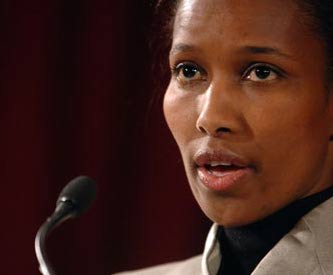
(When I was a Yale undergraduate (1959-63), I was proud of its then liberal (in the old fashioned sense of the word) affirmation that voices offensive to some should not on that account be banned. Things have changed since then, so I was encouraged by the decision to allow Ayaan Hirsi Ali to speak. Based on reports, there were three hundred in the audience, she received three standing ovations, and about one hundred students who wanted to attend could not because there was insufficient room in the auditorium. Three cheers for my Alma mater! There may still be hope for her.– DM)

6a00d83451c36069e20168eb9dbef6970c

The William F. Buckley Program at Yale University lately showed bravery unusual for an academic institution. It has refused to be bullied by the Muslim Students Association and its demand that the Buckley Program rescind an invitation to Ayaan Hirsi Ali to speak on campus September 15. Hirsi Ali is the vocal Somalian critic of Islamic doctrine whose life has been endangered for condemning the theologically sanctioned oppression of women in Islamic culture. Unlike Brandeis University, which recently rescinded an honorary degree to be given to Hirsi Ali after complaints from the Council on American-Islamic Relations, the Buckley Program rejected both the MSA’s initial demand, and a follow up one that Hirsi Ali share the stage with one of her critics.

The Buckley Program is a rare instance of an academic organization staying true to the ideals of free speech, academic freedom, and the “free play of the mind on all subjects,” as Matthew Arnold defined liberal education. Most of our best universities have sacrificed these ideals on the altar of political correctness and identity politics. Anything that displeases or discomforts campus special interest groups––mainly those predicated on being the alleged victims of American oppression–– must be proscribed as “slurs” or “hateful,” even if what’s said is factually true. No matter that these groups are ideologically driven and use their power to silence critics and limit speech to their own self-serving and duplicitous views, the modus operandi of every illiberal totalitarian regime in history. The spineless university caves in to their demands, incoherently camouflaging their craven betrayal of the First Amendment and academic freedom as “tolerance” and “respect for diversity.”

In the case of Islam, however, this betrayal is particularly dangerous. For we are confronting across the world a jihadist movement that grounds its violence in traditional Islamic theology, jurisprudence, and history. Ignoring those motives and their sanction by Islamic doctrine compromises our strategy and tactics in defeating the jihadists, for we cripple ourselves in the war of ideas. Worse yet, Islamic triumphalism and chauvinism–– embodied in the Koranic verse that calls Muslims “the best of nations raised up for the benefit of men” because they “enjoin the right and forbid the wrong and believe in Allah”–– is confirmed and strengthened by the way our elite institutions like universities and the federal government quickly capitulate to special interest groups who demand that we endorse only their sanitized and often false picture of Islam. Such surrender confirms the jihadist estimation of the West as the “weak horse,” as bin Laden said, a civilization with “foundations of straw” whose wealth and military power are undermined by a collective failure of nerve and loss of morale.

This process of exploiting the moral degeneration of the West has been going on now for 25 years. It begins, as does the rise of modern jihadism, with the Ayatollah Khomeini and the Iranian Islamic revolution. The key event took place in February 1989, when Khomeini issued a fatwa, based on Koran 9.61, against Indian novelist Salman Rushdie for his novel The Satanic Verses, which was deemed “against Islam, the Prophet, and the Koran,” as Khomeini said. Across the world enraged Muslims rioted and bombed bookstores, leaving over 20 people dead. More significant in the long run was the despicable reaction of many in the West to this outrage against freedom of speech and the rule of law, perpetrated by the most important and revered political and religious leader of a major Islamic nation.

Abandoning their principles, bookstores refused to stock the novel, and publishers delayed or canceled editions. Muslims in Western countries publicly burned copies of Rushdie’s novel and encouraged his murder with impunity. Eminent British historian Hugh Trevor-Roper suggested Rushdie deserved such treatment. Thirteen British Muslim barristers filed a formal complaint against the author. In their initial reactions, Western government officials were hesitant and timorous. The U.S. embassy in Pakistan eagerly assured Muslims that “the U.S. government in no way supports or associates itself with any activity that is in any sense offensive or insulting to Islam.”

Khomeini’s fatwa and the subsequent violent reaction created what Daniel Pipes calls the “Rushdie rules,” a speech code that privileges Islam over revered Western traditions of free speech that still are operative in the case of all other religions. Muslims now will determine what counts as an “insult” or a “slur,” and their displeasure, threats, and violence will police those definitions and punish offenders. Even reporting simple facts of history or Islamic doctrine can be deemed an offense and bring down retribution on violators. Ayaan Hirsi Ali, for example, earned the wrath of Muslims in part for her contribution to Theo van Gogh’s film Submission, which projected Koranic verses regarding women on the bodies of abused women. Van Gogh, of course, was brutally murdered in the streets of Amsterdam. And this is the most important dimension of the “Rushdie rules”: violence will follow any violation of whatever some Muslims deem to be “insulting” to Islam, even facts. In effect, Western law has been trumped by the shari’a ban on blaspheming Islam, a crime punishable by death.

The result is the sorry spectacle of groveling and apology we see almost daily from our government, the entertainment industry, and worse yet, universities. Trivial slights and offenses that civilized nations leave to the market place of ideas to sort out are elevated into “slurs” and “hate speech” if some Muslim organization deems them so. A reflexive self-censorship has arisen in American society, one based on fear of violent retribution or bad publicity harmful to profits and careers.

Thus the government officially proscribes words like “jihad” or “Muslim terrorist” from its documents and training materials in order to avoid offending Muslims. Similarly the Muslim terrorist, a fixture in recent history since the PLO started highjacking airliners in the 60s, has nearly disappeared from television and movies, replaced by Russians, white supremacists, and brainwashed Americans. And when a Muslim terrorist does appear, his motivations and violence are rationalized as the understandable response to the grievous offenses against his faith and people committed by the U.S. and Israel. Islam is airbrushed from the plot, as in the recent series Tyrant, a dramatization of a fictional Arab Muslim state that somehow manages to ignore Islam as a political force. More seriously, universities disinvite speakers at the faintest hint of protest from Muslim organizations, even as they accept Gulf-state petrodollars to create “Middle East Studies” programs that frequently function as apologists and enablers of terrorist violence.

“Free men have free tongues,” as the Athenian tragedian Sophocles said. One of the pillars of political freedom is free speech. When the ability to speak freely in the public square is extended beyond an elite to a large variety of people with clashing views and ideals, speech necessarily becomes rough and uncivil. Feelings get hurt, passions are aroused, and language becomes coarse and abusive. That’s the price we pay for letting a lot of people speak their minds, and for creating a process in which truth and good ideas can emerge from all this rambunctious, divisive conversation. But when we carve out a special niche for one group, provide it with its own rules, and protect it even from statements of uncomfortable facts, then we compromise that foundational right to have our say without any retribution other than a counterargument. So three cheers for the Buckley Program. It has stood up against intimidation and defended one of our most important and precious freedoms.