Archive for September 2014

EU calls on Iran to cooperate with IAEA

September 19, 2014

EU calls on Iran to cooperate with IAEA | The Times of Israel.

Tehran envoy denies country missed deadline for supplying UN watchdog with information

September 19, 2014, 10:21 am

Yukiya Amano of Japan, director general of the International Atomic Energy Agency (IAEA) awaits the board of governors meeting at the International Center in Vienna, Austria, Monday, June 2, 2014. (photo credit: AP/Ronald Zak)

Yukiya Amano of Japan, director general of the International Atomic Energy Agency (IAEA) awaits the board of governors meeting at the International Center in Vienna, Austria, Monday, June 2, 2014. (photo credit: AP/Ronald Zak)

Iran’s cooperation with UN watchdog investigators is “urgent and essential,” the European Union said Thursday ahead of a new round of talks between Tehran and world powers slated to begin Friday over its nuclear program.

“The EU is disappointed with the very limited progress on [possible military dimensions],” it wrote in a statement to the International Atomic Energy Agency, according to Reuters.

“It is essential and urgent that Iran cooperates fully and in a timely manner with the agency regarding all relevant issues. We urge Iran to demonstrate its cooperation by providing the agency with access to all the people, documents and sites requested, and encourage it to facilitate this cooperation through the issuance of visas.”

Western powers have leveled crushing sanctions against Iran over its nuclear program, which they suspect is aimed toward developing nuclear weapons. Iran denies the allegations, but a 2011 IAEA intelligence report indicated that Tehran had a nuclear weapons research program until at least 2003, and may have restarted the program since.

Earlier this month, Iran failed to meet a deadline to provide answers about its controversial nuclear program, according to the IAEA. Tehran had agreed to provide information to allay concerns it was developing nuclear weapons, including a type of detonator that could potentially be used in a bomb.

Iran's ambassador to the International Atomic Energy Agency (IAEA), Reza Najafi, arrives in Vienna for a new round of nuclear talks on Monday, May 12, 2014. (photo credit: Dieter Nagl/AFP)

Iran’s envoy to the IAEA, Reza Najafi, told reporters that “the so-called ‘missing the deadline’ is totally inaccurate,” but said that Iran expected to hold a new meeting with the IAEA soon.

Until last November, Iran had rejected all the claims out of hand, saying they were based on faulty intelligence provided by Israel’s Mossad and the CIA, which it complained it was not even allowed to see.

But in February, Iran promised to share information on its development of a type of detonator with various uses, such as mining, but also in a nuclear bomb. The IAEA is currently analyzing this data.

And in May, Tehran also agreed to exchange information on two other areas: large-scale tests of explosives that could be used in a nuclear bomb; and calculations on the size of a nuclear explosion.

The US State Department has said that the investigation is a “key component of what needs to be discussed” by Iran and the six powers.

Iran and the six world powers will return to the negotiating table on Friday with only two months left to reach a deal on ensuring Tehran’s nuclear program poses no military threat.

It will be the first meeting between Iran and the so-called P5+1 — comprised of Britain, China, France, Russia, the United States plus Germany — since July, when they decided to extend the deadline for a deal to November 24.

However, no major breakthroughs are expected at the talks, which are to continue until the end of next week, as western officials have expressed little optimism.

Negotiators say hurdles remain in the way of a deal, but that holding talks in New York on the sidelines of the UN General Assembly will allow for some high-powered diplomacy to come into play.

Outgoing EU foreign policy chief Catherine Ashton will open the talks with Iranian Foreign Minister Mohammad Javad Zarif before handing over to political directors for negotiations.

A ministerial-level meeting of the P5+1 with Iran is expected next week and US Secretary of State John Kerry is scheduled to hold bilateral talks with Zarif.

Western nations agreed to lift some sanctions against Iran last year in exchange for agreement from Tehran to curb nuclear activities and to get to work on a comprehensive agreement.

Negotiators failed to meet a deadline of July 20, but all parties agreed to extend the agreement to November 24 in the hope of getting a final settlement.

While the sides have not ruled out the possibility of another extension, the focus is clearly on beating the clock with a deal by the end of November.

The main sticking point remains Western concern over Iran’s capacity to enrich uranium, a process that can make fuel for peaceful nuclear uses but is also the core of an atomic bomb.

Discussions have revolved around scaling back Iran’s uranium-enrichment capacity to prevent Tehran from “breaking out” and producing a nuclear weapon.

AFP contributed to this report.

Israel envoy: Nuclear Iran ‘a thousand times’ more dangerous than Islamic State

September 19, 2014

Israel envoy: Nuclear Iran ‘a thousand times’ more dangerous than Islamic State | The Times of Israel.

Ron Dermer cautions US against working with Islamic Republic to combat jihadist group in Syria and Iraq

September 19, 2014, 12:48 am

WASHINGTON (JTA) — Saying a nuclear Iran would be a “thousand times” greater threat to the world than the Islamic State, Israel’s ambassador to the United States warned against including Iran in any coalition to derail the jihadist group.

Ron Dermer, speaking Wednesday to guests at a pre-Rosh Hashanah reception at his residence in suburban Maryland, also cautioned the US against accommodating Iran during the current effort to degrade IS.

His urgent tone was the latest sign of a split between the Obama and Netanyahu governments over how to deal with Iran’s role in stopping IS, which is seizing swaths of Iraq and Syria.

Dermer noted the presence of Obama administration officials at the event and praised the American president for leading a coalition to defeat the terror group. He said, however, that Iran must not be a partner in this effort.

“Now I know there is still some absurd talk in certain quarters about Iran being a partner in solving problems in the Middle East,” Dermer said. “They are not a partner, they were not a partner, they never will be a partner. Iran as a nuclear power is a thousand times more dangerous than ISIS,” he added, using a dated abbreviation for the jihadist group.

An image grab taken from an AFPTV video on September 16, 2014 shows a jihadist from the Islamic State (IS) group standing on the rubble of houses after a Syrian warplane was reportedly shot down by IS militants over the Syrian town of Raqa. (photo credit: AFP/AFPTV / STR)

Iran has assisted the Iraqi and Syrian governments, and US Secretary of State John Kerry has said that Iran and the United States should communicate — but not coordinate — their respective efforts in the battle against IS.

Kerry said earlier this week that such communication could take place on the sidelines of nuclear talks currently underway between the major world powers and Iran. The Iranians have resisted such overtures, apparently holding out for an elevated level of cooperation.

Israeli officials have said that any cooperation with Iran would be counterproductive.

“The [nuclear] talks are going in the wrong direction,” Yuval Steinitz, Israel’s intelligence minister, said in a statement Wednesday emailed to reporters. “We support the coalition against ISIS and terrorist organizations, but this should not come at the expense of a nuclear Iran.”

No US official has said that Iranian cooperation on IS would influence the outcome of nuclear talks.

Just this week Wendy Sherman, the undersecretary of state leading talks with Iran, suggested in a speech that the United States remained as committed to keeping Iran from acquiring nuclear weapons as it was in confronting IS.

“Defeating violent extremists” in Iraq and Syria “and ending Syria’s civil war are two crucial elements to the construction of a stable and forward-looking Middle East,” Sherman said Tuesday in a talk at Georgetown University.

An Islamic State gunman walks past a pick up truck loaded with the wreckage of a Syrian government aircraft shot down by militants over the Syrian town of Raqqa on September 16, 2014. (photo credit: STR/AFP)

Sherman, who is now in New York attending the Iran nuclear talks on the sidelines of the UN General Assembly, added: “Ensuring the wholly peaceful nature of Iran’s nuclear program is a third — not necessarily in any priority order.”

Kerry met Wednesday with Avigdor Liberman, Israel’s foreign minister, who in a statement also warned against accommodation with Iran, which he called “the No. 1 exporter of terror in the world.” Liberman did not, however, suggest that Iran was the greater threat and instead said the IS and Iran crises were interrelated.

An Israeli Foreign Ministry statement said Liberman told Kerry that “Israel supports the United States in its efforts to form a broad international front against IS, and stands ready to help in this task should it be asked, taking into consideration the sensitivities of the states taking part and the needs of the United States.”

Foreign Minister Avigdor Liberman speaks during the Foreign Affairs and Security Committee meeting at the Knesset discussing Operation Protective Edge on August 4, 2014. (photo credit: Flash 90)

Obama administration officials say that should the major powers and Iran reach an agreement regarding its nuclear program by the Nov. 24 deadline, the pact would likely allow some uranium enrichment — an outcome Israel is working hard to mitigate.

Liberman said that in his meeting with Kerry, he also lobbied his US counterpart to moderate State Department warnings against travel to Israel now that Israel and Hamas have achieved a cease-fire agreement following this summer’s war.

The most recent warning, issued earlier this month, warns of the “risks” of traveling to the region “due to the complex security environment there and the potential for violence and renewed hostilities.”

Islamic State assaults city in Syrian Kurdistan

September 19, 2014

Islamic State assaults city in Syrian Kurdistan, Long War Journal, Caleb Weiss & Bill Roggio, September 18, 2014

Kurdish fighters from the People’s Protection Units (YPG) engage Islamic State Humvees in the battle for Kobane in northern Syria.

The northern Syrian city of Kobane, or Ayn al Arab, is under heavy siege by Islamic State militants for the third consecutive day. The Islamic State is reported to have taken control of 21 villages outside of Kobane.

Since 2012, Kobane has been controlled by the People’s Protection Units (YPG), a Kurdish force affiliated with the Turkish Kurdistan Workers Party (PKK), a US-designated Foreign Terrorist Organization. The YPG have since considered Kobane to be part of Rojava, or Syrian Kurdistan.

The Islamic State first tried to seize Kobane in July, but was fended off by the YPG, with the likely help of the PKK. Since then, there has been sporadic fighting between Kurdish forces and the Islamic State in the surrounding villages.

Three days ago, the Islamic State initiated another attempt to seize the city. Videos of the battle for Kobane indicate that the Islamic State has launched a full assault to take over the city. The videos show Islamic State fighters deploying tanks as well as several Humvees captured during recent advances in Iraq.

Kurdish fighters from the People’s Protection Units (YPG) engage an Islamic State tank in Kobane.

According to some Kurdish activists on Twitter, the Islamic State’s assault is three-pronged: it appears that the IS is attacking Kobane from the east, south, and west of the city. Additionally, the IS assault force is shelling the city, likely with mortars and rockets.

Aftermath of the Islamic State’s shelling of Kobane.

Islamic State continues to advance in Aleppo province

While the Islamic State’s advance in northern and central Iraq has been halted since the US intervened with airstrikes on Aug. 7, the group’s momentum in Syria has not been checked.

The battle for control of Kobane is the latest in the Islamic State’s campaign to extend its control of Aleppo province and seize several of the major border crossings to Turkey.

Since mid-August, the Islamic State has been pressing the Al Nusrah Front, al Qaeda’s official branch in Syria, as well as Ahrar al Sham, the Islamic Front, and other rival jihadist groups in northern Aleppo. [See LWJ report, Islamic State advances against jihadist foes in Aleppo.] Islamic State fighters have reached the outskirts of Marea, about 15 miles north of the city of Aleppo.

The Islamic State currently controls the Jarabulus crossing to the west and the Tal Abayd crossing to the east. Control of the crossings allows the IS to control the flow of weapons, recruits cash, and material coming in from Turkey, and also restricts the Kurdish rebels’ access to northern Aleppo and Raqqah provinces.

(Please see map at linked source — DM)


ISIS Just Attacked Iran (June 2014)

September 18, 2014

ISIS Just Attacked Iran
Jassem Al Salami on Jun 22, 2014 Via Medium dot Com


(Happened back in June, but interesting to note that Iran got ‘slapped in the face’ by ISIS.-LS)

On June 19, militants from the Islamic State of Iraq and Syria attacked Iranian border guards near Iran’s border city of Qasre Shirin, according to Iranian social media.

A photograph showed the bodies of at least two Iranian officers apparently killed in the skirmish. Iran’s state-controlled media didn’t initially report the clash at Qasre Shirin, as Tehran routinely censors violent border incidents.

But Iranian officials took an unusual step and eventually talked about this particular incident. The first official to react was Fath Allah Hosseini, Qasre Shirin’s representative in the Iranian parliament. Hosseini insisted that residents were not afraid of ISIS, which has captured much of northwestern Iraq in recent weeks.

Then on June 21, Brig. Gen. Ahmad Reza Pourdastan—the Iranian army’s senior ground force commander—confirmed to the state-run YJC news agency that the incident took place. But Pourdastan said that the attackers were from the Kurdish militant group Party for Free Life of Kurdistan, also known by its Kurdish acronym PEJAK.

But this an odd claim given the intensity of the attack and the location.

For one, Kurdish troops are battling ISIS forces 12 miles to the south near the Iraqi city of Khanaqin. Kurdish militia groups are scrambling to fortify their territory against further attacks. It seems unlikely they would open a second front by hitting Iran.

It’s possible that by mentioning PEJAK, Pourdastan is attempting to ease fears of an ISIS attack inside Iran. Pourdastan did not confirm Iranian casualties—a standard practice for Iranian officials.

He added that Iranian military units along Iran’s western borders are on full alert, including Iranian army aviation units equipped with AH-1 Cobra and Bell-214 Isfahan helicopters. Last week, Iranian state media also reported that the Iranian air force is on alert and ready to carry out expeditionary missions into Iraq.

Iran has previously benefited from ISIS—at least when the terror group stayed put in Syria. In 2013, when ISIS forces began attacking other rebel positions south of Aleppo, Iranian-backed forces took the opportunity to capture the city of Al Safirah, which commanded a critical supply route for Syrian dictator Bashar Al Assad’s troops.

But tensions between Tehran and ISIS have been building in recent months. Previously, ISIS announced it wouldn’t attack Iranians, in order to maintain its supply routes through Iran. But in May, amid the ongoing fighting with Al Qaeda-linked rebel groups such as Jabhat Al Nusrah and Islamic Front, ISIS retracted the assurance.

After the announcement, ISIS launched a wave of suicide attacks targeting Iranian nationals in Iraq. Last week, ISIS also began publicizing battle reports in Farsi.

As Iranian regular forces brace for a confrontation with ISIS, Iran’s special operations expeditionary unit—the Quds Force—could arm, organize and command Shia militias in Iraq.

With the attack on Qasre Shirin, it appears ISIS is striking back.

Armed Shi’ite rebels push into Yemen’s capital

September 18, 2014

Armed rebels take new part of Yemen’s capital

Houthi fighters have infiltrated another area near the capital city, according to officials. The Shiite rebel group has staged mass demonstrations for months, demanding the resignation of the government.

Jemen - Demonstrationen gegen die Regierung

Houthi fighters have reached a suburb of Yemen’s capital Sanaa, according to security officials. The armed Shiite rebels are fighting Sunni militias and holding Iman University, a Sunni-run institution.

Authorities say over 40 people have been killed in fighting over the past two days.

Mass demonstrations led by the Houthi minority have been going on in or around the capital for over four weeks, with the armed rebels and their supporters demanding the resignation of the government, which it accuses of widespread corruption. Earlier this month, police forces used water canon and tear gas to dispel a crowd of sit-in protesters blocking the capital’s airport.

Political and economic instability have gripped Yemen since early 2012, when its long-time leader Ali Abdullah Saleh was forced from power. The government has struggled since then against an al Qaeda insurgency and a secessionist movement in the country’s south.

In recent months, a Zaidi Shiite rebel group led by Abdel-Malek el-Houti has expanded its influence in the north of Yemen, where they form the majority.

Their calls for a departure from the current unity government escalated in August with protests in Sanaa. What began as protest camps near key ministry buildings and the Sanaa international airport turned into mass demonstrations.

The Yemini government has accused Iran of backing the group.

sb/nm (AP, Reuters)

Islamic State seizes villages in Syria

September 18, 2014


Published on Sep 18, 2014

Subscribe: http://smarturl.it/reuterssubscribe

Islamic State fighters encircled a Kurdish city in northern Syria near the border with Turkey on Thursday after seizing 21 villages in a major assault that prompted a commander to appeal for military aid from other Kurds in the region. Mana Rabiee reports.


Police: Random beheading plot ‘disrupted’

September 18, 2014

U.S. ready to strike ISIS in Syria, military officials say

September 18, 2014

U.S. ready to strike ISIS in Syria, military officials say
By Barbara Starr, CNN Pentagon Correspondent
updated 1:55 PM EDT, Thu September 18, 2014


(“War is like a big machine that no one really knows how to run and when it gets out of control it ends up destroying the things you thought you were fighting for, and a lot of other things you kinda forgot you had.”-LS)

Washington (CNN) — The U.S. military has everything it needs to strike ISIS inside Syria and is awaiting President Barack Obama’s authorization to do so, U.S. military officials tell CNN.

For weeks, intelligence and military targeting specialists have been working around the clock on a list of targets. It’s expected the list will be presented to the President one more time, with some analysis of the risks of bombing inside Syria, as well as possible rewards in terms of destroying and degrading ISIS, according to the officials.

It is most likely that the target list will be broadly described to the President, with some analysis about what would be accomplished. Presidents generally do not review each and every target before a strike. The broad guidance is given and then the military selects the time, date, place — after the President makes the political decision to proceed.

Secretary of Defense Chuck Hagel told the House Armed Services Committee on Thursday that he and Chairman of the Joint Chiefs of Staff Martin Dempsey signed off on plans to strike ISIS in Syria.

He said Gen. Lloyd Austin, the commander of the U.S. Central Command, briefed Obama on Wednesday on the plan for striking ISIS in Syria.

“CENTCOM’s plan includes targeted actions against ISIL safe havens in Syria — including its command and control, logistics capabilities, and infrastructure,” Hagel said. “Our actions will not be restrained by a border that exists in name only.”

Obama is “actively” reviewing options and has “offered guidance” to the Department of Defense about the target sets that he’s reviewed, White House spokesman Josh Earnest said last week. But Earnest said that Obama is not signing off on each strike.

“These are very difficult operational decisions that will have to be made on a case-by-case basis. Many of them don’t rise to a presidential level, to the level of the commander in chief,” Earnest said.

In the “old days,” there were literally target “folders.” The military would thumb through a sheaf of classified papers detailing the target, and what aircraft and bombs would be used to strike it. Nowadays, it’s all computerized, of course. The goal, if not the process, is largely the same.

The United States has been flying drones over Syria, looking at areas where ISIS operates. The drones are looking for personnel, equipment depots, training camps, and the locations of the group’s leaders. U.S. officials tell CNN if top leadership can be located, they will be on the target list to strike. If past strike procedures against terrorist leaders in Pakistan, Yemen and Somalia are used again, the President would preauthorize strikes against the leaders, by name, and then they would be hit when located.

Intelligence is also collected by intercepting cell phone calls and monitoring social media sites that ISIS frequents. All of this is being repeatedly collected over a period of days because the Washington also wants to see any patterns of movement. Many of the targets are mobile, so they have to track them repeatedly. Intelligence also has to be collected on any regime forces, or air defenses in the area where the U.S. will fly. One important challenge: figuring out where civilians are located. Intelligence indicates ISIS has been moving into towns, hoping to blend in and keep safe from potential U.S. airstrikes.

All of this data is assembled for each target. Then the U.S. Central Command determines which type of aircraft and which type of bomb is best to strike the target. Strikes are expected to use precision-guided weapons in order to minimize collateral damage, especially in towns and villages. Those type of weapons can even be used to hit a precise part of a building rather than destroy an entire structure.

Each target on the list will include an assessment of the risk of flying into that area of Syria and hitting it, but also an assessment of how the destruction could impact ISIS. The Pentagon is looking for targets to make a significant impact on ISIS, not just destroy small groups of personnel or weapons, military officials tell CNN.

(Note: In another article, Kerry says Syrian President is using chlorine weapons. “On Thursday, Secretary of State John Kerry began testifying before the House Foreign Affairs Committee. He said that while Syria had removed most of its chemical weaponry, President Bashar al-Assad continues to use chlorine weapons and is “in violation” of a treaty against the use of such weapons.”-LS)

In Search of the ‘Moderate Islamists’

September 18, 2014

In Search of the ‘Moderate Islamists,’ Accuracy in Media, Andrew McCarthy, September 18, 2014
timthumb

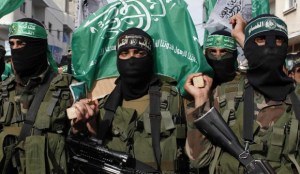
It is not out of ignorance that President Obama and Secretary Kerry are denying the Islamic roots of the Islamic State jihadists. As I argued in a column here last week, we should stop scoffing as if this were a blunder and understand the destructive strategy behind it. The Obama administration is quite intentionally promoting the progressive illusion that “moderate Islamists” are the solution to the woes of the Middle East, and thus that working cooperatively with “moderate Islamists” is the solution to America’s security challenges.

I wrote a book a few years ago called The Grand Jihad: How Islam and the Left Sabotage America that addressed this partnership between Islamists and progressives. The terms “grand jihad” and “sabotage” are lifted from an internal Muslim Brotherhood memorandum that lays bare the Brotherhood’s overarching plan to destroy the West from within by having their component organizations collude with credulous Western governments and opinion elites.

The plan is going well.

As long as the news media and even conservative commentators continue to let them get away with it, the term “moderate Islamist” will remain useful to transnational progressives. It enables them to avoid admitting that the Muslim Brotherhood is what they have in mind.

As my recent column explained, the term “moderate Islamist” is an oxymoron. An Islamist is a Muslim who wants repressive sharia imposed. There is nothing moderate about sharia even if the Muslim in question does not advocate imposing it by violence.

Most people do not know what the term “Islamist” means, so the contradiction is not apparent to them. If they think about it at all, they figure “moderate Islamist” must be just another way of saying “moderate Muslim,” and since everyone acknowledges that there are millions of moderate Muslims, it seems logical enough. Yet, all Muslims are not Islamists. In particular, all Muslims who support the Western principles of liberty and reason are not Islamists.

If you want to say that some Islamists are not violent, that is certainly true. But that does not make them moderate. There is, moreover, less to their nonviolence than meets the eye. Many Islamists who do not personally participate in jihadist aggression support violent jihadists financially and morally – often while feigning objection to their methods or playing semantic games (e.g., “I opposeterrorism but I support resistance,” or “I oppose the killing of innocent people . . . but don’t press me on who is an innocent“).

Understandably, the public is inclined to give the benefit of the doubt to people the government describes as “moderates” and portrays as our “allies.” If transnational progressives were grilled on these vaporous terms, though, and forced to concede, say, that the Muslim Brotherhood was the purportedly “moderate opposition” our government wants to support in Syria, the public would object. While not expert in the subject, many Americans are generally aware that the Brotherhood supports terrorism, that its ideology leads young Muslims to graduate to notorious terrorist organizations, and that it endorses oppressive Islamic law while opposing the West. Better for progressives to avoid all that by one of their dizzying, internally nonsensical word games – hence, “moderate Islamist.”

I rehearse all that because last week, right on cue, representatives of Brotherhood-tied Islamist organizations appeared with Obama-administration officials and other apologists for Islamic supremacism to ostentatiously “condemn” the Islamic State as “not Islamic.”

As I recount with numerous examples in The Grand Jihad, this is the manipulative double game the Brotherhood has mastered in the West, aided and abetted by progressives of both parties. While speaking to credulous Western audiences desperate to believe Islam is innately moderate, the Brothers pretend to abhor terrorism, claim that terrorism is actually “anti-Islamic,” and threaten to brand you as an “Islamophobe” racist – to demagogue you in the media, ban you from the campus, and bankrupt you in court – if you dare to notice the nexus between Islamic doctrine and systematic terrorism committed by Muslims. Then, on their Arabic sites and in the privacy of their mosques and community centers, they go back to preaching jihad, championing Hamas, calling for Israel’s destruction, damning America, inveighing against Muslim assimilation in the West, and calling for society’s acceptance of sharia mores.

The Investigative Project’s John Rossomando reports on last Wednesday’s shenanigans at the National Press Club. The Islamist leaders who “urged the public to ignore [the Islamic State’s] theological motivations,” included “former Council on American-Islamic Affairs (CAIR) Tampa director Ahmed Bedier, [who] later wrote on Twitter that IS [the Islamic State] ‘is not a product of Islam,’ and blamed the United States for its emergence.”

Also on hand were moderate moderator Haris Tarin, Washington director of the Muslim Public Affairs Council (MPAC); Imam Mohamed Magid, former president of the Islamic Society of North America (ISNA); and Johari Abdul-Malik, an imam at the Dar al-Hijrah Islamic Center in Falls Church, Va. All of these Islamists are consultants to the Obama administration on policy matters; Magid is actually a member Obama’s Homeland Security Advisory Council.

Where to begin? CAIR, as I’ve repeatedly pointed out, is a Muslim Brotherhood creation conceived to be a Western-media-savvy shill for Islamic supremacism in general, and Hamas in particular. At the 2007-08 terrorism-financing prosecution of Hamas operatives in the Holy Land Foundation case – involving a Brotherhood conspiracy that funneled millions of dollars to Palestinian jihadists – CAIR was proven to be a co-conspirator, albeit unindicted. Mr. Bedier, who is profiled by the Investigative Project here, is a notorious apologist for Hamas – the Brotherhood’s Palestinian branch, which is formally designated as a terrorist organization under U.S. law. He also vigorously championed such terrorists as Palestinian Islamic Jihad’s Sami al-Arian (who pled guilty in 2006 to conspiring to provide material support to terrorism).

I’ve profiled MPAC here. It was founded by disciples of Brotherhood founder Hassan al-Banna and champions of both Hezbollah and the Sudanese Islamists who gave safe-haven to al-Qaeda during the mid Nineties. After the atrocities of September 11, 2001, MPAC’s executive director, Salam al-Marayati, immediately urged that “we should put the state of Israel on the suspect list.” Without a hint of irony, MPAC’s main business is condemning irrational suspicion . . . the “Islamophobia” it claims Muslims are systematically subjected to. Like many CAIR operatives and other purveyors of victim politics, MPAC officials tend to double as Democratic-party activists.

Magid’s organization, ISNA, is the most important Muslim Brotherhood organization in the United States. I have profiled it in these pages a number of times. As detailed in The Grand Jihad, it is the Islamist umbrella organization that traces its origins to the Muslim Students Association, the foundation of the Brotherhood’s American infrastructure.

The MSA, which indoctrinates students in the jihadist-lauding works of Banna and Sayid Qutb, has not surprisingly been the launch point for several prominent terrorists – Patrick Poole provides the scorecard here, which includes al-Qaeda founder Wael Julaidan; al-Qaeda operative Anwar al-Awlakial Qaeda financier and Hamas/Hezbollah champion Abdurrahman Alamoudi; and Aafia Siddiqui, the notorious “Lady al-Qaeda” who was captured apparently plotting a terror rampage targeting New York City, who attempted to murder as U.S. Army captain while in custody, and whose release the Islamic State has been demanding. (Other MSA alumni include ousted Egyptian president and Muslim Brotherhood leader Mohamed Morsi, and top Hillary Clinton aide Huma Abedin.)

I profiled the Dar al-Hijrah mosque and Johari Abdul-Malik, one of its very interesting imams, in both The Grand Jihad and a 2010 column. At a 2001 conference hosted by the Islamic Association of Palestine – an organization the Muslim Brotherhood established to promote Hamas in the United States – Abdul Malik advised that Muslims could “blow up bridges” and “do all forms of sabotage” as long as they avoided “kill[ing] people who are innocent on their way to work.” As he works to make Islam “the dominant way of life” in America (as he put it in a Friday “sermon” in 2004), he shrugs off the mosque’s history of praising violent jihad, comparing jihadist “martyrs” to the United States Marines.

One of the founders of Dar al-Hijrah was Ismail Elbarasse, a Muslim Brotherhood operative who was a friend and business partner of Mousa abu Marzook – a high Hamas official who, before being deported, actually ran that terrorist organization from his Virginia home. It was from Elbarasse’s home that the FBI seized the 1991 Brotherhood memo from which I derived the title of The Grand Jihad: How Islam and the Left Sabotage America – a document in which the Brotherhood described its “work in America” as a kind of grand jihad in eliminating and destroying the Western civilization from within and “sabotaging” its miserable house by their hands and the hands of the believers, so that it is eliminated and God’s religion is made victorious over all other religions.

Dar al-Hijrah’s imams and board members have included a who’s who of the jihad:

  • Anwar al-Awlaki, the aforementioned al-Qaeda operative;
  • Mohammed al-Hanooti, a former Islamic Association of Palestine leader and major Hamas fundraiser;
  • Mohammed Adam El-Sheikh, a founder of the Muslim American Society (the Brotherhood’s quasi-official presence in the U.S.) who ran the Baltimore office of the Islamic American Relief Agency until that charity was shut down by the Treasury Department for supporting al-Qaeda;
  • Abdelhaleem Asquar, serving a federal prison sentence for obstructing an investigation of Hamas’s American support network;
  • Samir Salah, who helped Osama bin Laden’s nephew set up another charity (Taiba International Aid Association) that was shut down for bankrolling terrorism;
  • Esam Omeish, a Democrat who was forced to resign from a state-government immigration panel after the emergence of videos showing his praise for “the jihad way” against Israel.

With such a cast of characters, the mosque has predictably attracted some notorious attendees, including the aforementioned terrorists Marzook and Alamoudi; Nidal Hasan, the jihadist who murdered 13 American soldiers at Fort Hood; Omar Abu Ali, the one-time valedictorian at Virginia’s Islamic Saudi Academy who is now serving a life sentence after joining al-Qaeda and conspiring to murder President George W. Bush; and 9/11 suicide hijackers Nawaf al-Hazmi and Hani Hanjour – Awlaki’s ofttimes companions whose presence cannot be all that surprising since an al-Hijrah Islamic Center phone number was found in the Hamburg apartment shared by 9/11 ringleaders Mohammed Atta and Ramzi bin al-Shibh.

By appearing with leaders of Dar al-Hijrah, ISNA, MPAC, and CAIR, the Obama administration and its allies are telling us that these purportedly “moderate Islamists” are the allies America needs to defeat the Islamic State.

Seriously?

Aussie Jews urged to be vigilant following beheading scare

September 18, 2014

Aussie Jews urged to be vigilant following beheading scare | The Times of Israel.

Pre-dawn operations in Sydney and Brisbane net one suspect; terror alert level set to ‘high’

September 18, 2014, 7:40 pm
Forensic experts collect evidence from a house in the Guildford area of Sydney on September 18, 2014. Australia's largest ever counter-terrorism raids detained 15 people and disrupted plans to "commit violent acts", including against random members of the public that reportedly involved a beheading on camera. AFP PHOTO / Saeed Khan

Forensic experts collect evidence from a house in the Guildford area of Sydney on September 18, 2014. Australia’s largest ever counter-terrorism raids detained 15 people and disrupted plans to “commit violent acts”, including against random members of the public that reportedly involved a beheading on camera. AFP PHOTO / Saeed Khan

In the wake of Australia’s counter-terrorism raids on Thursday that detained 15 people and foiled an alleged beheading plot by Islamic State jihadists, Jewish community groups called on Australian Jews to remain vigilant during the High Holidays.

A security bulletin released by the Community Security Group, which works with national and local Jewish groups on security issues, urged Jews to remain alert during the upcoming holidays, when synagogues will likely be filled to capacity.

The major pre-dawn operation was carried out across Sydney and Brisbane by more than 800 officers in possession of 25 search warrants. One person has so far been charged with grave terrorism-related offenses.

At least one gun was seized, along with a sword.

Omarjan Azari, 22, appeared in a Sydney court and was remanded in custody, charged with planning a terrorist act which prosecutors alleged was designed to “shock, horrify and terrify” the community.

The court heard he was instructed in a recent phone call by the most senior Australian member of Islamic State, Afghan-born Mohammad Baryalei, to commit the atrocity.

Prosecutor Michael Allnutt alleged the plan involved the “random selection of persons to rather gruesomely execute” on camera and involved “an unusual level of fanaticism.”

The Australian Broadcasting Corporation said the video was then to be sent back to IS’s media unit in the Middle East, where it would be released to the public.

Islamic State jihadists have in recent weeks broadcast video footage of three foreign nationals being beheaded in Syria.

The raids, which spanned multiple suburbs, came barely a week after Australia boosted the terror threat level to “high” for the first time in a decade amid growing concern about militants returning from fighting in Iraq and Syria.

Prime Minister Tony Abbott said he had been briefed on intelligence reports that public beheadings had been ordered by Islamic State militants.

“That’s the intelligence we received,” he said, prompting comparisons to the murder of British soldier Lee Rigby, who was hacked to death in a random attack on a street in England last year by two Muslim converts.

“The exhortations, quite direct exhortations, were coming from an Australian who is apparently quite senior in ISIL to networks of support back in Australia to conduct demonstration killings here in this country,” added the prime minister.

“So this is not just suspicion, this is intent and that’s why the police and security agencies decided to act in the way they have.”

The Australian government believes up to 60 Australians are fighting alongside jihadists for IS, while another 100 were actively working to support the movement at home.

“These people, I regret to say, do not hate us for what we do, they hate us for who we are and how we live. That’s what makes us a target,” said Abbott.

“It’s important that our police and security organizations be one step ahead of them and this morning they were.”

The latest raids followed the arrests of two people last week in Brisbane who were charged with allegedly recruiting, funding and sending jihadist fighters to Syria.

One of the men was allegedly planning on-shore “terrorist action,” Queensland Premier Campbell Newman said Thursday, without giving further details.

And, on Wednesday, a Sydney-based money transfer business was shut down amid concerns that it was being used to funnel funds to the Middle East to finance terrorism.

New South Wales Police Commissioner Andrew Scipione urged calm.

“Right now is a time for calm. We actually need to let people know that they are safe,” he said, adding that 220 police would now participate in Operation Hammerhead to monitor transport hubs and important and iconic sites.

Last week’s decision to increase the terror threat level after years on “medium” officially means a “terrorist attack is likely,” and comes after repeated government warnings that attacks could happen.

The raising of the threat level was “not based on knowledge of a specific attack plan but rather a body of evidence that points to the increased likelihood of a terrorist attack in Australia,” Abbott said at the time.

The “high” alert is just below “extreme” — the top level — which would indicate a “terrorist attack is imminent or has occurred.”

In light of the high alert level, the Community Security Group promises to continue monitoring Australia’s security environment and has asked the public to report hate crimes and anti-Semitic incidents to a CSG hotline.


