Archive for September 17, 2014

The Buckley Program Stands Up for Free Speech

September 17, 2014

The Buckley Program Stands Up for Free Speech, Front Page Magazine, September 17, 2014

(When I was a Yale undergraduate (1959-63), I was proud of its then liberal (in the old fashioned sense of the word) affirmation that voices offensive to some should not on that account be banned. Things have changed since then, so I was encouraged by the decision to allow Ayaan Hirsi Ali to speak. Based on reports, there were three hundred in the audience, she received three standing ovations, and about one hundred students who wanted to attend could not because there was insufficient room in the auditorium. Three cheers for my Alma mater! There may still be hope for her.– DM)
6a00d83451c36069e20168eb9dbef6970c

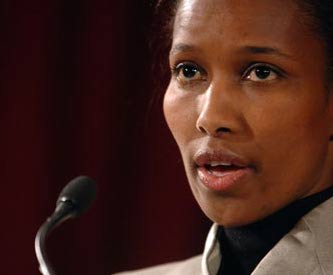
The William F. Buckley Program at Yale University lately showed bravery unusual for an academic institution. It has refused to be bullied by the Muslim Students Association and its demand that the Buckley Program rescind an invitation to Ayaan Hirsi Ali to speak on campus September 15. Hirsi Ali is the vocal Somalian critic of Islamic doctrine whose life has been endangered for condemning the theologically sanctioned oppression of women in Islamic culture. Unlike Brandeis University, which recently rescinded an honorary degree to be given to Hirsi Ali after complaints from the Council on American-Islamic Relations, the Buckley Program rejected both the MSA’s initial demand, and a follow up one that Hirsi Ali share the stage with one of her critics.

The Buckley Program is a rare instance of an academic organization staying true to the ideals of free speech, academic freedom, and the “free play of the mind on all subjects,” as Matthew Arnold defined liberal education. Most of our best universities have sacrificed these ideals on the altar of political correctness and identity politics. Anything that displeases or discomforts campus special interest groups––mainly those predicated on being the alleged victims of American oppression–– must be proscribed as “slurs” or “hateful,” even if what’s said is factually true. No matter that these groups are ideologically driven and use their power to silence critics and limit speech to their own self-serving and duplicitous views, the modus operandi of every illiberal totalitarian regime in history. The spineless university caves in to their demands, incoherently camouflaging their craven betrayal of the First Amendment and academic freedom as “tolerance” and “respect for diversity.”

In the case of Islam, however, this betrayal is particularly dangerous. For we are confronting across the world a jihadist movement that grounds its violence in traditional Islamic theology, jurisprudence, and history. Ignoring those motives and their sanction by Islamic doctrine compromises our strategy and tactics in defeating the jihadists, for we cripple ourselves in the war of ideas. Worse yet, Islamic triumphalism and chauvinism–– embodied in the Koranic verse that calls Muslims “the best of nations raised up for the benefit of men” because they “enjoin the right and forbid the wrong and believe in Allah”–– is confirmed and strengthened by the way our elite institutions like universities and the federal government quickly capitulate to special interest groups who demand that we endorse only their sanitized and often false picture of Islam. Such surrender confirms the jihadist estimation of the West as the “weak horse,” as bin Laden said, a civilization with “foundations of straw” whose wealth and military power are undermined by a collective failure of nerve and loss of morale.

This process of exploiting the moral degeneration of the West has been going on now for 25 years. It begins, as does the rise of modern jihadism, with the Ayatollah Khomeini and the Iranian Islamic revolution. The key event took place in February 1989, when Khomeini issued a fatwa, based on Koran 9.61, against Indian novelist Salman Rushdie for his novel The Satanic Verses, which was deemed “against Islam, the Prophet, and the Koran,” as Khomeini said. Across the world enraged Muslims rioted and bombed bookstores, leaving over 20 people dead. More significant in the long run was the despicable reaction of many in the West to this outrage against freedom of speech and the rule of law, perpetrated by the most important and revered political and religious leader of a major Islamic nation.

Abandoning their principles, bookstores refused to stock the novel, and publishers delayed or canceled editions. Muslims in Western countries publicly burned copies of Rushdie’s novel and encouraged his murder with impunity. Eminent British historian Hugh Trevor-Roper suggested Rushdie deserved such treatment. Thirteen British Muslim barristers filed a formal complaint against the author. In their initial reactions, Western government officials were hesitant and timorous. The U.S. embassy in Pakistan eagerly assured Muslims that “the U.S. government in no way supports or associates itself with any activity that is in any sense offensive or insulting to Islam.”

Khomeini’s fatwa and the subsequent violent reaction created what Daniel Pipes calls the “Rushdie rules,” a speech code that privileges Islam over revered Western traditions of free speech that still are operative in the case of all other religions. Muslims now will determine what counts as an “insult” or a “slur,” and their displeasure, threats, and violence will police those definitions and punish offenders. Even reporting simple facts of history or Islamic doctrine can be deemed an offense and bring down retribution on violators. Ayaan Hirsi Ali, for example, earned the wrath of Muslims in part for her contribution to Theo van Gogh’s film Submission, which projected Koranic verses regarding women on the bodies of abused women. Van Gogh, of course, was brutally murdered in the streets of Amsterdam. And this is the most important dimension of the “Rushdie rules”: violence will follow any violation of whatever some Muslims deem to be “insulting” to Islam, even facts. In effect, Western law has been trumped by the shari’a ban on blaspheming Islam, a crime punishable by death.

The result is the sorry spectacle of groveling and apology we see almost daily from our government, the entertainment industry, and worse yet, universities. Trivial slights and offenses that civilized nations leave to the market place of ideas to sort out are elevated into “slurs” and “hate speech” if some Muslim organization deems them so. A reflexive self-censorship has arisen in American society, one based on fear of violent retribution or bad publicity harmful to profits and careers.

Thus the government officially proscribes words like “jihad” or “Muslim terrorist” from its documents and training materials in order to avoid offending Muslims. Similarly the Muslim terrorist, a fixture in recent history since the PLO started highjacking airliners in the 60s, has nearly disappeared from television and movies, replaced by Russians, white supremacists, and brainwashed Americans. And when a Muslim terrorist does appear, his motivations and violence are rationalized as the understandable response to the grievous offenses against his faith and people committed by the U.S. and Israel. Islam is airbrushed from the plot, as in the recent series Tyrant, a dramatization of a fictional Arab Muslim state that somehow manages to ignore Islam as a political force. More seriously, universities disinvite speakers at the faintest hint of protest from Muslim organizations, even as they accept Gulf-state petrodollars to create “Middle East Studies” programs that frequently function as apologists and enablers of terrorist violence.

“Free men have free tongues,” as the Athenian tragedian Sophocles said. One of the pillars of political freedom is free speech. When the ability to speak freely in the public square is extended beyond an elite to a large variety of people with clashing views and ideals, speech necessarily becomes rough and uncivil. Feelings get hurt, passions are aroused, and language becomes coarse and abusive. That’s the price we pay for letting a lot of people speak their minds, and for creating a process in which truth and good ideas can emerge from all this rambunctious, divisive conversation. But when we carve out a special niche for one group, provide it with its own rules, and protect it even from statements of uncomfortable facts, then we compromise that foundational right to have our say without any retribution other than a counterargument. So three cheers for the Buckley Program. It has stood up against intimidation and defended one of our most important and precious freedoms.
Syrian Brotherhood Stands Nearer to ISIS Than to U.S.

September 17, 2014

Syrian Brotherhood Stands Nearer to ISIS Than to U.S., The Investigative Project on Terrorism, Ravi Kumar, September 16, 2014

(Wouldn’t it be grand if our dear leaders knew what they are doing, why and what they hope to accomplish? — DM)

1063

Yusuf Al Qaradawi, an influential Brotherhood cleric living in Qatar, joined in criticizing the American military campaign against ISIS. “I totally disagree with [ISIS] ideology and means,” he wrote on Twitter, “but I don’t at all accept that the one to fight it is America, which does not act in the name of Islam but rather in its own interests, even if blood is shed.”

***************

While the United States tries to build a coalition of Arab allies to join the fight against the terrorist group ISIS, now known as the Islamic State, one group which stands to benefit directly is coming out against Western intervention and expressing unity with other radical jihadists.

A Syrian Muslim Brotherhood spokesman says attacks on the Islamic State by the United States and its allies are not the answer.

“Our battle with ISIS is an intellectual battle,” Omar Mushaweh said in a statement published Sept. 9 on the Syrian Brotherhood’s official website, “and we wish that some of its members get back to their sanity, we really distinguish between those in ISIS who are lured and brainwashed and they might go back to the path of righteous, and between those who has foreign agendas and try to pervert the way of the [Syrian] revolution.”

Rather, the first target for any Western intervention should be dictator Bashar al-Assad’s regime, Mushaweh asserts, according to a translation of his comments by the Investigative Project on Terrorism.

Such comments should reinforce Western concerns about the Syrian Brotherhood, whose members are prominent among the Free Syrian Army (FSA), one of the supposedly moderate factions in the Syrian civil war which receive U.S. training and weapons. And it shows the challenge of finding truly moderate allies on the ground in Syria. Compared to ISIS, the FSA might be considered moderate. Then again, ISIS was so ruthlessly violent that al-Qaida disavowed the group in February.

In addition, the Syrian Brotherhood openly mourned the death last week of a commander in Ahrar Al Asham, a Syrian faction with ties to al-Qaida.

Mushaweh’s views about the U.S. intervention are shared by other Brotherhood members. Another Brotherhood leader, Zuher Salem, minimized the ISIS threat by comparing current American rhetoric to that which preceded the 2003 Iraq invasion.

“All of these tales that are being told by America about the primitive, terrorist and threatening nature of the Islamic State are similar to the tales that have been told in regard to the Weapons of Mass Destruction in Iraq, and about the crimes against humanity,” Salem wrote in an article published Sept. 13 by the Arab East Center, a think tank associated with the Muslim Brotherhood. “It is trifling to race with others to condemn terrorism and the killing of the American journalist, because we should be aware the aim of this anti ISIS coalition is to pave the way for an Iranian hegemony over the region.”

Yusuf Al Qaradawi, an influential Brotherhood cleric living in Qatar, joined in criticizing the American military campaign against ISIS. “I totally disagree with [ISIS] ideology and means,” he wrote on Twitter, “but I don’t at all accept that the one to fight it is America, which does not act in the name of Islam but rather in its own interests, even if blood is shed.”

While both are Sunni Muslim movements, each seeking to establish a global Islamic Caliphate, ISIS views the Brotherhood as too passive, while the Brotherhood sees ISIS as being unnecessarily violent in pursuing its aims.

The two have common enemies, however, including the ruling regimes of Saudi Arabia, Egypt, United Arab Emirates, and Jordan, which have worked to cripple the Brotherhood, and which ISIS considers infidel regimes which should be toppled in pursuit of a broader Islamic Caliphate.

In another indication the Syrian Brotherhood is no moderating force, it issued a statement on its website Sept. 10 mourning the killing of Ahrar Al Asham leader Hassan Aboud in a suicide bombing.

“Syria has given a  constellation of the best of its sons, and the bravest leaders of the Islamic front and Ahrar Al Sham,” the head of the Brotherhood’s political bureau, Hassan Al Hashimi, said in the statement translated by the IPT. “We consider them Martyrs.”

Ahrar Al Sham is a radical group co-founded by Abu Khaled al-Suri, who was al-Qaida chief Ayman al-Zawahiri’s designated representative in Syria. Al-Suri was killed in February in a suicide bombing believed to be carried out by ISIS.

Aboud made clear his ideological links to al-Qaida clear in a July 2013 Twitter post. “May God have mercy on the Mujahid Sheikh Abdullah Azzam. He was a scholar of Jihad and the morality.” Azzam was considered a mentor to Osama bin Laden, and pushed conspiracy theories involving Jewish and Christian plots against Islam.

The Brotherhood official mourning Aboud, Al Hashimi, has visited the United States a couple of times since the Syrian civil war started.

He spoke at the controversial Dar al-Hijrah mosque in northern Virginia on Nov. 17, 2013, as part of a program organized by the Syrian Emergency Task Force (SETF). The SETF has worked closely with Muslim Brotherhood members and some of its officials have expressed anti-Semitic statements and solidarity with Hamas.

Still, the SETF has partnered with the State Department to implement training projects in Syria. Last December, the SETF’s executive director endorsed working with a coalition of Syrian opposition groups called the Islamic Front, even though several entities involved, including Ahrar Al-Sham, had fought with ISIS and the radical Jabhat al-Nusra, or al-Nusra Front. Four Islamic Front affiliates also endorsed a declaration calling for “the rule of sharia and making it the sole source of legislation” in a post-Assad Syria.

The announcement of the event was distributed to the Dar Al Hijrah mailing list, but without mentioning that Al Hashimi is the head of the political bureau of the Muslim Brotherhood.

Gaza Imam Exposes the True Face of Hamas

September 17, 2014

ISIS Releases Professional Looking ‘Movie Trailer’

September 17, 2014

ISIS Releases Professional Looking ‘Movie Trailer’ Truth Revolt, Larry O’Connor, September 17, 2014

(Please see also Obama: U.S. forces will not have ‘combat mission’. He keeps saying it, but . . .  — DM)

‘Flames Of War’ features images of US troops and the White House.

ISIS has released a very professional looking “movie trailer” titled Flames of War via YouTube.

The 52-second video includes films of American troops involved in heavy fighting in what appears to be Iraq. With many quick edits and slow-motion explosions, the trailer then focuses on exterior shots of the White House and President Barack Obama speaking about America’s engagement in Iraq.

The concluding title image has the words “Flames of War” set ablaze with a subtitle reading “Fighting has just begun.”

The final image is a black background with white text saying “Coming Soon.”

As the AP points out, the timing of the video’s release is probably not coincidental:

The video’s timing, released Tuesday, suggests it was a response to Gen. Martin Dempsey, the chairman of the Joint Chiefs of Staff, who said in testimony to the Senate Armed Services Committee that if the current Iraq strategy doesn’t prevail, he may recommend the use of ground troops.

Israel ‘concerned’ while Iran belittles US ahead of nuclear talks

September 17, 2014

Israel ‘concerned’ while Iran belittles US ahead of nuclear talks – Israel News, Ynetnews.

On eve of talks to reach nuclear deal with Iran, Iran highlights gripes with US in number of infographics, as Israel express concern.

Attila Somfalvi, AFP

“Israel is very concerned. We feel that the negotiations with Iran are going in the wrong direction,” Minister of Strategic Affairs Yuval Steinitz said Wednesday ahead of a meeting between EU foreign affairs head Catherine Ashton and Iranian Foreign Minister Mohamad Javad Zarif for further talks on Tehran’s contested nuclear program.

Meanwhile, the office of Iran’s supreme leader published a series of graphics on Wednesday highlighting how little he believes the country has gained from dialogue with Washington as nuclear talks resume.

The graphics posted on Ayatollah Ali Khamenei’s official website include a cartoon of US Secretary of State John Kerry standing and pounding the negotiating table flanked by aides.

“The military option is still on the table if Tehran wants to relaunch its uranium enrichment program,” the cartoon Kerry thunders.

“Dialogue with the Americans has not reduced their animosity and has not been useful,” the graphic complains, quoting Khamenei’s words in an August 13 speech.

“The Americans’ tone has become tougher and more insulting.”

A separate graphic sets out the US economic sanctions still in force against Iran and the fines totaling 9.5 billion dollars (7.3 billion euros) imposed on international firms for breaching them.

Khamenei’s office did stress he had authorized the continuation of nuclear talks with major powers that are to resume in New York on Thursday, despite his misgivings about the lack of benefits from the dialogue with the United States.

President Rouhani opened the dialogue with an historic telephone conversation with President Barack Obama on the sidelines of the UN General Assembly last September.

It is still unclear whether Rouhani will attend this year’s General Assembly which opens next week.

Khamenei has the final word on all matters of state in Iran.

Israel must prepare for third Lebanon war

September 17, 2014

Israel must prepare for third Lebanon war, Al MonitorBen Caspit, September 16, 2014

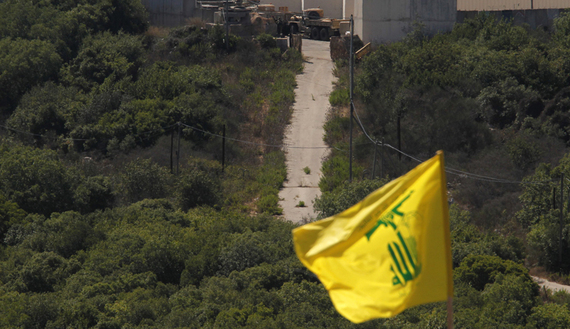
Israeli soldiers and trucks are seen from the southern Lebanese village Marwaheen, as a Hezbollah flag flutters during a protest in solidarity with Palestinian people in Gaza near the Lebanese-Israeli borderIsraeli soldiers and trucks are seen from the southern Lebanese village Marwaheen, as a Hezbollah flag flutters near the Lebanese-Israeli border, July 25, 2014. (photo by REUTERS/Ali Hashisho)

Israel must prepare for an eventual third Lebanon war, where it will be confronted with much stronger and more organized forces, perhaps equivalent in equipment to other Arab armies, capable of penetrating Israeli territory.

*****************

Not since the War of Independence, which broke out one day after Israel’s establishment was proclaimed in October 1947, has the sovereignty of the Jewish state been in such real peril. During that war, communities and territories frequently exchanged hands. Once the campaign stabilized and the picture became clearer, the Green Line was born. To date, this remains the only recognized international border between Israel and its Arab surroundings.

Since 1948 until today — over 66 years — none of Israel’s enemies posed a real threat to its territorial integrity. No Israeli community has ever been conquered nor have military raids into the country been carried out. The only exception occurred during the 1973 Yom Kippur War, when the Egyptian and Syrian armies mounted a surprise invasion. However, the areas they seized had been conquered by Israel during the 1967 Six-Day War and were beyond the Green Line.

Israel’s defense doctrine is predicated on one patently clear and solid principle: Warfare should be shifted into the enemy’s territory as quickly as possible. This principle stems from reality’s constraints: Israel is a tiny state, whose width in some areas does not exceed 10 miles. As a result, it doesn’t have the luxury of conducting campaigns in its own territory. This principle has been upheld throughout the state’s existence. Israel’s wars have always been conducted in the enemy’s territory.

When a senior officer from the Northern Command of the Israel Defense Forces (IDF) briefed reporters on Sept. 14, he dropped a journalistic bombshell. During the next round of hostilities between Israel and Hezbollah, the officer said, it is possible that Hezbollah will take over an Israeli community or carry out a land grab for a certain period of time. Intimations to this effect had been previously heard here and there (including in my article for Al-Monitor from August 2013). Yet, when this topic starts dominating the headlines in Israel, it constitutes a watershed. The IDF is well aware of the fact that Hezbollah may have changed its warfare doctrine and that it has accumulated more self-confidence, knowledge and fighting experience. The organization is now able to carry out an armed and violent raid into Israel, relying on a force consisting of a “few dozen to several hundred combatants,” as the officer put it.

A serious coalition crisis is currently raging in Israel between Prime Minister Benjamin Netanyahu and Finance Minister Yair Lapid. The linchpin of the dispute is the 2015 state budget, and more specifically, the defense budget. The events of Operation Protective Edge have shaken Israel’s self-confidence. For the first time, Israel encountered an aggressive and proactive Hamas, which repeatedly incurred into its communities in a bid to “shift the war into its territory.”

There’s no way the IDF can deploy all along the country’s borders, from the north (Hezbollah) to the Golan Heights (the al-Qaeda-affiliated Jabhat al-Nusra) to the Egyptian border (Ansar Bayt al-Maqdis) and Gaza (Hamas and Islamic Jihad).

A foreign military force that wants to raid an enemy territory along a vast and winding border will always manage to find the most vulnerable point where the defense contingency is small.

This is Israel’s greatest concern ahead of a “third Lebanon war.” Nobody knows when it will break out, yet everyone is sure it eventually will. To date, Hezbollah has adopted a fairly simple warfare doctrine. Based on massive rocket fire at the Israeli home front that aims to disrupt life, deal a blow to the economy and inflict casualties, it is combined with guerrilla warfare against the IDF in mountainous terrain — either forested or built up — using its weapons of choice: antitank fire, powerful improvised explosive devices and ambushes. That’s the name of the game when guerilla forces are pitted against a regular army.

From now on, however, it’s a whole different ball game. Israeli military officials emphasize that while Hezbollah is indeed preoccupied in Syria and northern Lebanon and is deployed along a vast sector and is bleeding profusely, it is nevertheless well organized and trained. It is also being run prudently and sensibly, gathering military experience and self-confidence. According to Israeli sources, Hezbollah is training its commando forces to make a surprise incursion into Israel, take over a community (such as a kibbutz or a moshav — a cooperative community — or even a small town like Shlomi). It will try to inflict as much damage as possible and hold out for as long as possible, taking hostages that will allow its troops to pull back safely home into Lebanon.

The current Israeli assessment is that Hezbollah’s Secretary-General Hassan Nasrallah has no reason for the moment to be caught up in another confrontation with Israel. On the other hand, he continues his organization’s long-term massive buildup, while improving its capabilities and training, and stockpiling means that will allow him, in the next round, to stage a different kind of warfare, the likes of which we have yet to see. According to a senior Israeli source, Hezbollah is already as strong as any other regular Arab army. Its ORBAT (Order of Battle), according to one of the intelligence officials I spoke with, is bigger than Jordan’s, even at the time when it was considered Israel’s bitter rival. For all intents and purposes, Hezbollah operates like a regular army. It is building intelligence capabilities. Equipped with unmanned airborne vehicles, it also has surveillance stations and manages a modern communications network.

Next time, to have its victory photo and an unprecedented psychological achievement, it will try, as noted, to seize an Israeli community. If that were the case, it would be a first since 1948. This could seriously compromise the sense of security among Israelis, crushing the Jewish-Israeli population in the northern Galilee and causing much greater damage to Israelis living there than what Hamas’ incursion attempts during Operation Protective Edge did to the residents of the Gaza periphery.

The IDF is bracing for such an eventuality. The battle over the defense budget illustrates the degree of seriousness that Netanyahu attaches to the “growing security challenges around us,” as he put it on Sept. 15. My sources indicate that there is already talk in security circles about significantly expanding elite units such as YAMAM (a highly trained counterterrorism police unit) and deploying them in war-prone areas by way of “first responders.”

When it comes to events such as those described above, whereby an organization such as Hezbollah or Hamas is trying to infiltrate Israel, intelligence and time are of the enormous essence. During Operation Protective Edge, all of the IDF’s top-notch infantry units were dispatched to the communities in the Gaza periphery. They deployed across the border fence, charging every territorial compartment with regard to which there was a warning about a possible ”tunnel assault.” Back then, it worked. Hamas terrorists scored no significant success in their operations against Israeli communities. However, they did inflict significant losses to the IDF during its engagements with Israeli troops. When it comes to a much longer and far more complicated front, will the IDF also succeed against a semi-military organization such as Hezbollah that’s much more powerful than Hamas?

Meanwhile, on Sept. 14, the Counterterrorism Bureau issued a travel advisory ahead of the upcoming Jewish holiday season. In addition to all the usual warnings, the travel advisory to Western Europe came as a surprise. There’s a threat — the statement read — that Islamic State (IS) terrorists will carry out attacks against Jewish or Israeli objectives in the countries from which they originally set out to join IS ranks. We’re talking about countries such as Belgium, France, Sweden, Great Britain and others.

This travel advisory took flak from different directions. Terrorist threats exist also in Israel and the United States. In fact, they exist almost anywhere around the globe, a well-versed Israeli source told me. We, of all people, who get upset whenever the Europeans or Americans issue a travel advisory about Israel, need to be more sensitive and realize that not everything merits an official travel advisory.

Either way, the number of Israeli tourists visiting their favorite European capitals during the Jewish holidays of Rosh Hashanah, Yom Kippur and Sukkoth is not expected to plummet. Even Beyonce’s two evenings of concerts in Paris saw thousands of Israeli spectators. Israeli tourists read those travel advisories, file them away in their mind and take off. From their standpoint, danger is an inherent part of their normal existence.

Fight against IS helps PKK gain global legitimacy

September 17, 2014

Fight against IS helps PKK gain global legitimacy, Al MonitorAmberin Zaman, September 16, 2014

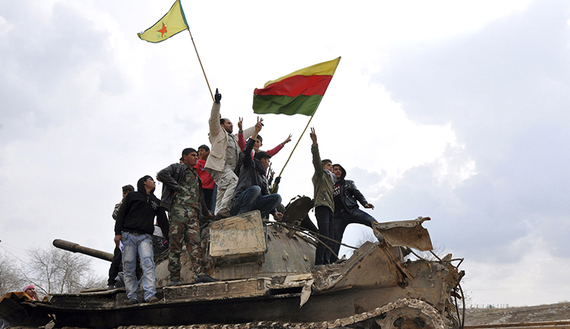
Civilians and members of the YPG gesture and raise flags atop a tank that belonged to fighters from the ISIL, in al-Manajeer village of Ras al-Ain countrysideCivilians and members of the Kurdish People’s Protection Units (YPG) gesture and raise flags atop a tank that belonged to fighters from the Islamic State of Iraq in al-Manajeer village of Ras al-Ain countryside, Jan. 28, 2014. (photo by REUTERS/Rodi Said)

Western officials say that given the Islamic State threat, it is only a matter of time before their governments initiate formal ties with the Kurdistan Workers Party and the Democratic Union Party, despite objections from Turkey.

****************

As the United States presses ahead with assembling an international coalition to “degrade and destroy” the Islamic State (IS), two potentially critical players are coming to the fore: the Kurdistan Workers Party (PKK) and its Syrian Kurdish franchise, the People’s Protection Units (YPG). Their ascent has been amply chronicled by Al-Monitor columnist Kadri Gursel and Al-Monitor contributor Mohamed A. Salih.

The PKK and YPG have proven to be the most effective forces in the battle against IS both in Iraq and in Syria, never so much as when they shepherded tens of thousands of Yazidi Kurds marooned on Mount Sinjar, in northwestern Iraq, to safety and helped Iraqi peshmerga retake the town of Makhmour.

The PKK and YPG are pro-secular, if quasi Marxist, in ideology. The latter has never targeted the West, and although the PKK has been fighting Turkey, a NATO member, on and off since 1984 for Kurdish self-rule, a cease-fire declared in March 2013 remains in effect. Moreover, both groups claim they are eager to cooperate with the West. So, what better local partners for the anti-jihadist alliance than them? This question is being pondered by European Union (EU) governments and US officials, senior Western officials speaking on condition of anonymity told Al-Monitor. All stressed, however, that for now the debate was, as one put it, “of a purely ‘what if’ nature.”

“The problem is Turkey,” explained one of the officials, echoing concerns of a likely backlash from the Turkish government. Turkey branded the PKK as “terrorists,” and the label was adopted by the EU and Washington. The PKK is on both their lists of officially designated terrorist groups and has been accused of money laundering and drug trafficking. IS’ dizzying gains, however, have dramatically altered the security landscape across Syria and Iraq. “You’ve got to pick your poison. It’s either [IS] or the PKK,” the same official stated.

Turkey has not helped matters by refusing to join the anti-IS front, saying its contribution would be limited to humanitarian missions. IS continues to hold 49 workers from the Turkish Consulate in Mosul hostage, which is the main stated reason for its reticence. After all, Turkey has been holding direct peace talks with the imprisoned PKK leader, Abdullah Ocalan, for at least five years. Thus, US and European policymakers who are pushing for a dialogue with the PKK/YPG argue that Turkey can hardly complain about Western engagement with them when it is talking to the rebels itself.

Ankara’s peace negotiations with the PKK were effectively formalized with legislation rammed through parliament by the ruling Justice and Development Party (AKP) earlier this year. In a further dramatic shift, AKP officials say they are finally ready to talk to PKK commanders in Iraqi Kurdistan. All of this ought to make it easier for Western governments to delist the PKK, but Turkey argues that until a lasting peace agreement is struck with the rebels, any Western moves to legitimize the group would weaken the government’s hand.

Engagement with the PKK and the YPG’s political arm, the Democratic Union Party (PYD), is already being advocated by some influential think tanks in Washington. Michael Werz, a senior fellow at the Center for American Progress, co-authored a recent report calling on the Obama administration “to deal with Kurdish organizations that are helping define the reality on the ground [in Syria], such as the militant Democratic Union Party, or PYD.” Unlike Turkish officials, Werz believes that dangling the carrot of delisting can help move the peace talks forward.

Another part of the problem is Turkey’s insistence that the rebels surrender their arms and disband as part of any final deal. This is utterly unrealistic given the spiraling IS threat. If anything, the PKK is looking to expand its forces and upgrade its weapons. Indeed, it is the PKK’s prowess on the battlefield, rather than its peace overtures to Turkey, that is propelling it to international legitimacy.

Marietje Schaake, an EU parliamentarian who closely follows Turkish affairs, argues against such expediency. “The Middle East has suffered enough from ‘your enemy’s enemy is your friend’ type of thinking, which has often had disastrous consequences. Instead, the IS threat should create a sense of urgency for a negotiated solution [to Turkey’s Kurdish] problem,” Schaake told Al-Monitor.

Another hurdle to Western dialogue with the PKK and the YPG is the Iraqi Kurds. Massoud Barzani, head of the Kurdistan Democratic Party (KDP), sees himself as the true leader of the world’s 40 million or so Kurds and resents any suggestions that Ocalan and the PKK might have a similar claim. His peshmerga, however, put up no resistance and fled when IS forces stormed Sinjar in August, casting them in an unfavorable light compared with the battle-hardened PKK/YPG.

PKK sources who asked not to be identified confirmed that they have already had informal contact with “junior level” US Army officials and CIA operatives on Mount Sinjar. “These interactions would be unthinkable absent the [IS] threat,” Werz told Al-Monitor. “That said, the US government is very risk averse and will proceed cautiously. Many officials are afraid of jeopardizing their careers by being seen to cooperate with anyone linked to the PKK,” he said. This and unremitting Turkish pressure may explain why the United States continues to deny a visa to Salih Muslim, the PYD co-chair, and shuns official contact with him.

Undaunted, the PKK and the PYD/YPG are continuing their battle for global acceptance. In a move apparently calculated to provide the Obama administration with a fig leaf for future cooperation, the YPG recently sealed an anti-IS alliance with various groups affiliated with the Free Syrian Army (FSA), founding what they call the Joint Action Center. Its purported goal is to liberate all territories held by IS in Syria. Barzan Iso, a Syrian Kurdish activist, explained to Al-Monitor, “We cannot fight IS alone. We need to join hands with the Arabs.”

It remains unclear how this sits with the YPG’s policy of nonconfrontation with the regime of Bashar al-Assad. YPG sources confirm that they have already begun training FSA-linked fighters from Liwa al-Tawhid, Shams Shamal and Liwa al-Siwar al-Raka, among others, in and around the town of Azaz, a logistical hub for weapons and other materiel flowing to so-called moderate rebels vetted by the CIA. The end goal for the YPG is to be part of the fresh batch of moderates the Obama administration says it is planning to arm and train to fight IS.

On June 5 and July 5, the PYD/YPG signed three “deeds of commitment” with Geneva Call, a nonpartisan Swiss-based nongovernmental organization dedicated to promoting respect by what it calls armed nonstate actors (ANSAs) for “international humanitarian norms in armed conflict.” Under the terms of the agreement, the YPG pledged to ban anti-personnel mines, work against gender discrimination and sexual violence and not use children under the age of 18 to fight in its ranks. By July, the group had demobilized 149 child soldiers. Geneva Call has wrested similar pledges from the PKK and its armed unit, the People’s Defense Force.

Though there have been alleged violations of the accords, Anki Sjoeberg, program director for Geneva Call, told Al-Monitor, “Geneva Call has found that both the PKK/HPG and the PYD/YPG have proven a willingness to implement them.” She further stated, “We have also worked with both organizations on the respect of international humanitarian law, and they did show a keen interest in learning more about international standards and practices.”

Human Rights Watch (HRW), the New York-based rights advocacy group, had a similarly favorable experience with the PYD/YPG. When HRW published a report cataloguing alleged rights abuses by the PYD/YPG, the Syrian Kurds’ reaction was unexpectedly measured. While they claimed there were “inaccuracies” in the report, YPG spokesman Redur Xelil acknowledged in a tweet that they had to do “a better job.” Emma Sinclair-Webb, HRW’s senior Turkey researcher, told Al-Monitor, “We were encouraged by their response.”

Western officials, meanwhile, predict that it is only a matter of time before their governments initiate formal ties if not with the PKK then certainly with the PYD and the YPG, because the latter two outfits are not on a terrorist list. Nihat Ali Ozcan, a Turkish security analyst who focuses on the Kurds, reckons that Turkey may well ditch its demand that the Syrian Kurds take up arms against the Assad regime as a condition for dialogue and join hands with them, albeit tacitly, against IS as well. “It’s an open secret that the PKK and the YPG are branches of the same tree, but under the circumstances, Turkey will likely resort to pragmatism and treat them differently, at least until the IS threat subsides,” Ozcan told Al-Monitor.


US strikes in Syria won’t turn locals against Islamic State

September 17, 2014

US strikes in Syria won’t turn locals against Islamic State, Al MonitorEdward Dark, September 16, 2014

(The Islamic State appears to be an at least nascent government within a failing state. It’s “non Islamic” religious (according to Obama, et al) and political ambitions seem not to distress the locals significantly. What can the United States and its coalition of the unwilling do to defeat the IS and its “extremist” ideology? — DM)

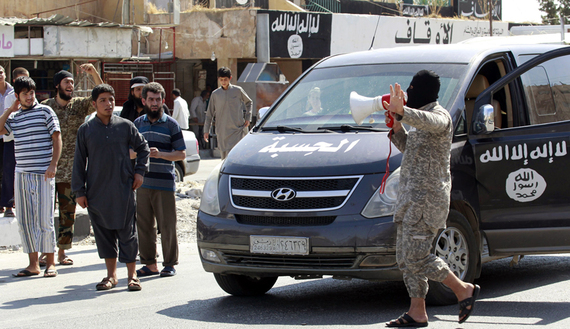
Islamic State militant uses a loud-hailer to announce to residents of Tabqa city that Tabqa air base has fallen to Islamic State militants, in nearby Raqqa cityAn Islamic State militant uses a megaphone to announce to residents of Tabqa city that Tabqa air base has fallen to Islamic State militants, in nearby Raqqa city, Aug. 24, 2014. (photo by REUTERS)

Contrary to widespread belief, the Islamic State has largely succeeded in winning hearts and minds in the areas it rules by providing services and order.

***************

AL-BAB, Syria — Hell is inescapable. With the terror of living under regime or rebel bombing, Islamic State (IS) barbarism and the nightmarish destitution of refugee camps and death boats adrift at sea, hell is the price of being Syrian today. “This is the Syrian’s lot,” Abu Riad told Al-Monitor, “we are destined never to find peace except in our graves.”

Abu Riad is a relative I recently visited near the town of Al-Bab east of Aleppo in the heart of IS territory. He echoed the fear of many others now that the United States has put together a collation to wage war on the terror group, a war that will likely involve airstrikes against targets in Syria and inevitably cause more carnage and loss of innocent life.

In Abu Riad’s words, “We have been living in absolute terror for a week now under regime airstrikes. Now we have the Americans coming to bomb us too. Where do we go? Why is everyone killing us; what have we done to deserve this?” Indeed, Al-Bab has suffered heavy barrel bombing in the past few days, resulting in many casualties, which prompted me to avoid going to the town altogether and remain in the relative safety of rural areas. Caught between the hammer of regime bombings and the anvil of imminent US airstrikes, many people have started doing the same, fleeing the towns for safer areas. Even IS, as reported by the Syrian Observatory for Human Rights, has begun to evacuate its headquarters to avoid putting people’s lives at risk, or at least that is what the group claims.

Regardless, it would be foolish to believe that US military action against IS is popular here or will go down well, especially when civilian casualties start to mount. On the contrary, it will most likely prove counterproductive, stoking anti-Western resentment among the population and increasing support for IS, driving even more recruits to its ranks.

The terror group knows this well, which is why it is secretly overjoyed at the prospect of military action against it. In its calculations, the loss of fighters to strikes is more than outweighed by the outpouring of support it expects both locally and on the international jihadist scene. And its fighters are not afraid of martyrdom by US bombs. In fact, the chance for martyrdom is why many of them came to fight in Syria in the first place.

The US strategy of arming moderate rebel groups to fight extremists on the ground in Syria seems to be an abject failure, yet it is resurrected time and time again. The most recent bombshell was dropped by Jamal Maarouf, the warlord head of the Syrian Revolutionary Front, who has signed a non-aggression pact with IS, prompting serious questions about the reliability and viability of such rebel partners.

In reality, the war against IS will be won and lost on the ground through hearts and minds, not through missiles and bombs. This is something I felt acutely while talking to the people of Al-Bab, who almost unanimously sang the praises of IS’ administration and the services the group brought to the areas under its control after years of turmoil.

“My business had never been this good under the local rebels, some of whom were my relatives,” said Abu Riad. “They brought law and order; they went after the criminals and bandits and cleaned up the town. Under the rebels, it was chaos and lawlessness. Now I can be sure my merchandise is safe and I can transport it safely as no one dares steal here anymore,” he added. Even more extraordinary is that some of Aleppo’s industrialists and factory owners opted to move their machinery from the Sheikh Najjar industrial zone into IS territory in Al-Bab, as they knew it would be safe from looting there.

Law and order aren’t the only advantages of being under IS rule. The group also provides many services, mostly free of charge. “They fixed roads and power lines; they gave out food to the needy. They have traffic police and free religious schools. The rebels never did that. All they did was steal and fight each other,” said Abu Raid. When I asked him about what hardships under the austere rule of IS, he said, “Yes, they have very strict laws, but they won’t harm or bother you unless you cross the red lines. For me, the only difficulty I had was not being able to smoke in public. The rest wasn’t too bad; we are a very conservative town, after all.”

Ironically, Abu Raid claims the foreign IS fighters are more tolerant and respectful than the local recruits, saying, “They give you a sermon when they see you breaking the rules and try to advise you to change, while the local Syrian ones are belligerent and want to arrest you and take you to court immediately.”

The rise and popularity of IS seems to have more to do with the failings of the Syrian opposition and the fractious rebel factions than with IS’ own strength. For almost three years, the opposition and the local rebels had failed to provide any semblance of civil administration or public services to the vast areas they controlled. This lawless chaos added to the people’s misery, already exacerbated by the horrors of war. In the end, they rallied around the only group that managed to give them what they wanted: the Islamic State. But now, it seems a new fear is rising among the people: the specter of war against IS, a war they feel threatens not only their lives, but also their livelihoods and the tenuous normality they’ve grown accustomed to.

It is the failed and ill-considered policies of the United States and its allies in Syria that helped create today’s mess, and it’s those very same policies that seem set to perpetuate it now. The Syrian people are tired of war, of all the destruction and killing. They’ve reached breaking point. All they want is peace and stability, and they will rally around whoever can provide that. But no one is talking about a resolution to the conflict now, but only more bloodshed and killing as they cynically pursue their own agendas at our expense.

The Enemy of Our Enemy: Iran and ISIS on a Collision Course

September 17, 2014

The Enemy of Our Enemy: Iran and ISIS on a Collision Course
by Chuck Pfarrer 17 Sep 2014, 6:43 AM PDT Via Breitbart


(Iran verses ISIS…poetic justice.-LS)

President Obama’s pledge to dismantle ISIS, drive it from Iraq, and to strike at its bases in Syria has Secretary of State John Kerry embarking on a coalition-building tour of Gulf and Arab capitals. Kerry’s task is complicated not only by a fast moving military situation, but by an intricate milieu of sectarian hatred, ambiguous allies and conflicting national interests.

Machiavellian though it may be, one avenue open to the United States is to allow one of its old enemies, Iran, to fight one of its newest enemies, the Islamic State. Win, lose or draw, the blood spilled by Iran and the Islamic State will not be American. But is the United States far-sighted and calculating enough to allow this to happen?

(Damned good advice if you ask me.-LS)

Iran has no option but to engage against the Islamic State, and will do so whether or not the United States chooses to commit forces to fight in Iraq. A stable Syria under Assad is the lynchpin of Tehran’s dream of regional hegemony. Iran must defeat the Islamic State and eject it from Iraq in order to support not only Assad, but to maintain and arm Tehran’s military surrogate in Lebanon, Hezbollah. Iran has no other contiguous allies; it must act militarily against the Islamic State to support the only two friends it has.

(That’s right… let Hezbollah get chewed up in the process.-LS)

Ironically, Tehran is facing a problem of its own making. Iran supplies not only weapons to prop up the Assad regime, but ground troops as well. Members of Iran’s Revolutionary Guard Corps (IRGC) advise Syrian military commanders, and coordinate the actions of the Assadist paramilitaries that conduct counter-insurgency operations in the Syrian countryside. In supporting and facilitating Assad’s brutality, Iran created the conditions in which ISIS grew and thrived. Numbering approximately 30,000 fighters, the Islamic State terrorist group is a cross-pollenated creation of the Iraqi insurgency and the Syrian civil war.

(I like to refer to it as Karma.-LS)

Merged from a pro-Al Qaeda jihadi group, The Islamic State of Iraq, and the Syrian jihadist faction Jabhat al-Nusra, ISIS fights in Syria as one of twenty or so military, civil, and religious entities combatting the regime of Bashir al Assad. By dint of military competence and the ruthless suppression of the civilian population, ISIS succeeded in inflicting itself on a strip of Northeastern Syria, an area amounting to perhaps a quarter of that country. Using captured Syrian territory as both incubator and springboard, ISIS re-exported jihad into Iraq, where it controls a swath of territory virtually overlapping the traditionally Sunni areas of the country. The area under the Islamic State’s control includes not only the bulk of Iraq’s Sunni minority, but petroleum reserves sufficient to finance jihad for decades to come. Iran cannot afford to ignore an enemy camped on its border, an especially one who shows every appearance of thriving.

(When you think of it, the only true obstacle facing ISIS in their effort to consolidate the Mideast is Iran, who as we know, has the same aspirations.-LS)

The coincidence that two of America’s enemies must fight each other should not compel the United States into anything like an alliance— nor even an alliance of convenience— with Iran. Tehran is no friend of the Untied States. For once, the ironic dynamics of middle-eastern politics favors, rather than frustrates, the interests of the United States. Washington has a unique opportunity to utilize the facts on the ground to diminish one familiar foe and thwart the growth of a potentially global enemy.

(‘Untied States’…I wonder if this is just a typo by the publisher or a Freudian slip?-LS)

America’s air-centric intervention should interdict Islamic State concentrations and bases only within Syria; this will have the combined effect of weakening ISIS vis a vis more moderate Syrian rebel groups, and place pressure on ISIS to logistically support its occupation of Iraq.

By focusing American air power– not on the Islamic State in Iraq, but on ISIS’s lines of communication within and from Syria– the US can shift responsibility for ground combat in Iraq to the shoulders of the Iraqi armed forces. Should the Iraqis prove inadequate to the task of ejecting the Islamic State, it will be the Iranians who will be forced to urgently take up the slack. Drawn into two morasses, Syria and Iraq, Iran will be less able to engage in world-wide jihad, less able to defend the regime of its Syrian ally Bashir Assad, and less able to hold Lebanon hostage with its cat’s paw Hezbollah.

(ISIS should, in my humble opinion, be pushed back into Syria where they can do the most harm to Iran and their boy-toy Assad.-LS)

And what if Iran should wind up defeating the Islamic State? What then? It is unlikely that Iran could engage and destroy ISIS in the short, or even medium term. Now equipped with artillery, armor and heavy weapons gleaned from Syrian battlefields, ISIS has made itself into one of the most capable players in the Syrian battle space. It will take Iran’s conventional forces considerable effort, time, blood and treasure to evict the Islamic State from Iraq.

(Iran can always nuke’em….right?-LS)

Recent intelligence indicates that the Islamic State is shifting it weapons into difficult to bomb locations, and embedding itself into civilian population centers, thus preparing itself for a drawn out contest. By modulating both its airstrikes and the US of American ground power, Washington has an opportunity to force Iran to engage a near enemy in a drawn out war of attrition. Tehran’s resources, already strained by three years of war in Syria, may be stretched to the breaking point. Any move that weakens Iran militarily is in the best interests of America and its regional allies. In the unlikely event that Iran should defeat the Islamic State precipitously, it would have done the United States a favor. A moribund or greatly weakened Islamic State would clear the pitch for more the moderate Syrian opposition groups that the United States hopes will succeed in overthrowing Assad.

The Islamic State and Iran are on a collision course; America should do nothing to prevent the crash. Long the exporters of jihad and chaos, Tehran now finds found that is has reaped the whirlwind. America should position itself to derive maximum benefit from Iran’s folly.

Jihadi Work Accident: 14 ISIS Fighters Killed When Rocket They Were Filling With Chlorine Explodes Prematurely

September 17, 2014

ISIS Boobs Killed When Chemical Warfare Device Backfires
IANS September 16, 2014


(Kind of makes you think. With all the billions in stolen cash and oil revenue ISIS is reported to have according to our illustrious mainstream media, you have to ask yourself, ‘What next?’.-LS)

Baghdad, Sep 16 (IANS/EFE) At least 14 members of the Islamic State (IS) terrorist group were killed Tuesday near Baghdad when a rocket whose warhead they were filling with chlorine gas exploded.

Iraqi security officials said seven more IS militants were injured in the incident, which occurred near the town of al-Dhuluiya, about 90 km north of Baghdad.

Al-Dhuluiya was also where four members of the Iraqi security forces and Shiite militiamen suffered symptoms of asphyxiation after inhaling chlorine gas released by two improvised explosive devices.

It was the first time that chlorine has been used as a weapon in Iraq, although it is not uncommon in neighbouring Syria, where the regime’s use of it has been denounced by the Organisation for the Prohibition of Chemical Weapons (OPCW).

Meanwhile, Iraqi troops killed 18 jihadists and destroyed five of their vehicles in clashes at the Biji refinery, Iraq’s largest.

At the same time, Kurdish peshmerga troops regained control of three villages in Qara Teba, in the eastern Diyala province, which had been overrun by the IS. Three IS militants and four Kurdish soldiers were wounded in the fighting.

These clashes came a few hours after US warplanes launched their first bombing raids at IS positions near Baghdad since an international conference wrapped in Paris Monday after a number of world leaders pledged to defeat and destroy the IS.