Archive for September 13, 2014

West has ‘sacrificed its values’ in talks with Iranian regime

September 13, 2014

.

UN Chief blasts Iran for human rights violations

Ban Ki-moon report highlights high number of executions, corpral punishment and lack of media freedom

UN Secretary-General Ban Ki-moon on Tuesday expressed deep concern over the human rights situation in Iran, and called on its president Hasan Rouhani to take action to reduce the number of violations, noting particularly the regime’s common practice of executing or maiming criminals.

In a report to the United Nation’s Human Rights Council, Ban expressed alarm at “the sharp rise in executions in the Islamic Republic of Iran,” noting that despite his reputation as a moderate, the Rouhani government elected into office in June “has not changed its approach regarding the application of the death penalty and seems to have followed the practice of previous administrations, which relied heavily on the death penalty to combat crime.”

“An escalation in executions, including of political prisoners and individuals belonging to ethnic minority groups such as Baloch, Ahwazi Arabs and Kurds, was notable in the second half of 2013. At least 500 persons are known to have been executed in 2013, including 57 in public,” noted ban. He added that according to some human rights group, the number of those executed was as high as 625. “Those executed reportedly included 27 women and two children . The majority of the executions were carried out in relation to drug-related offences,” said Ban.

The secretary general also blasted the “recurrence of cruel, inhuman or degrading punishment, such as amputation of limbs and flogging,” saying it remains a cause for concern.

“The judiciary has frequently applied punishments which are prohibited by the International Covenant on Civil and Political Rights, to which Iran is a State party,” Ban said.

Despite recent statements by Rouhani against the stifling of the media in Iran — last week he defended what he called “freedom of the press with responsibility” and criticised the practice of shutting down offending newspapers — Ban said not enough was being done to protect free speech.

“The new administration has not made any significant improvement in the promotion and protection of freedom of expression and opinion, despite pledges made by the president during his campaign and after his swearing-in,” said Ban. “Both offline and online outlets continue to face restrictions including closure. Individuals seeking to exercise or promote freedom of expression and opinion for dissenting views or beliefs continue to face arrest, prosecution and sanctions by the state.”

The UN Chief also lamented the “large number of political prisoners, including high-profile lawyers, human rights activists, women rights activists and journalists,” who continue to serve sentences for charges he claimed are linked to the exercise of their freedoms of expression.

“The Special Rapporteur on the rights to freedom of peaceful assembly and of association, in his latest report to the Human Rights Council noted that the Government, similar to several other countries, repressed peaceful assemblies because the messages conveyed did not please them, and where organizers and participants were often charged with sedition and rioting,” he said.

Ban also blasted Iran for failing to improve the situation of religious and ethnic minorities, notably Christians and Bahai.

“Religious minorities such as Baha’is and Christians face violations entrenched in law and in practice. Harassment, home raids and incitement to hatred are reportedly commonly applied by the authorities to suppress the Baha’i community,” he stressed.

Ban concluded by calling on Iran to address the concerns of his and previous reports, establish an independent national human rights institution and admit the visit of a UN Special Rapporteur on human rights.
Turkey carefully weighing role in IS coalition

September 13, 2014

Kerry rules out Iran joining war against the Islamic State

September 13, 2014

Kerry rules out Iran joining war against the Islamic State

US Secretary of State says in is ”not appropriate” for Iran to participate in talks

John Kerry, the U.S. Secretary of State, has said it was ”not appropriate” for Iran to join talks on confronting Islamic State militants, as he appeared to play down how fast countries can commit to force or other steps in an emerging coalition.

Mr Kerry met Turkish leaders to try to secure backing for U.S.-led action against Islamic State militants, but Ankara’s reluctance to play a frontline role highlighted the difficulty of building a willing coalition for a complex military campaign in the heart of the Middle East.

As he tours the region to gather support for President Barack Obama’s plan to strike both sides of the Syrian-Iraqi frontier to defeat Islamic State Sunni fighters, Kerry said Shi’ite Iran should have no role in talks on how to go about it.

Accusing Iran of being ”a state sponsor of terror” and backing Syria’s brutal regime, Mr Kerry said it would be inappropriate for Iranian officials to join an Iraq conference in Paris on Monday to discuss how to curb a jihadist movement that has seized a third of both Iraq and Syria. Tehran has described the coalition as ”shrouded in serious ambiguities”.

”Under the circumstances, at this moment in time, it would not be right for any number of reasons. It would not be appropriate given the many other issues that are on the table in Syria and elsewhere,” he told a news conference in the Turkish capital Ankara.

Faced with disparate interests and goals among the region’s often squabbling nations, Mr Kerry said it was too early to say publicly what individual countries were prepared to do in a broad front to cut off funds to the militants, encourage local opposition and provide humanitarian aid.

The Secretary of State won backing on Thursday for a ”coordinated military campaign” against Islamic State from 10 Arab countries – Egypt, Iraq, Jordan, Lebanon and six Gulf states including rich rivals Saudi Arabia and Qatar.

But it remains far from clear what role individual nations will play. While he confirmed France’s commitment to use military force in Iraq, he declined to say whether France would join strikes in Syria.

That follows conflicting reports in key ally Britain over its potential role, with David Cameron on Thursday saying he has not ruled out military action in Syria after his foreign secretary said Britain would not take part in any airstrikes there.

”It is entirely premature and frankly inappropriate at this point in time to start laying out one country by one country what individual nations are going to do,” said Mr Kerry, who travels to Cairo on Saturday, adding that building a coalition would take time.

”I’m comfortable that this will be a broad-based coalition with Arab nations, European nations, the United States, others,” e said. ”At the appropriate time, every role will be laid out in detail.”

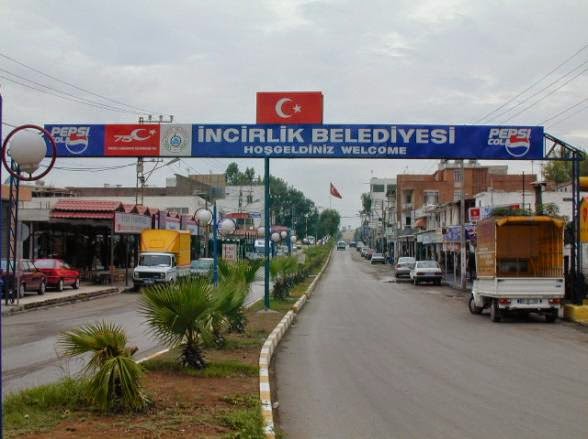
Turkey, which has the second-largest armed forces in the NATO military alliance after the United States and hosts a major U.S. Air Force base at Incirlik in its south, has so far conspicuously avoided committing to any military campaign.

Mr Ahmet Davutoglu, the Turkish Prime Minister, who did not join the news conference with Mr Kerry, told Turkish television hours after their meeting that U.S. action in Iraq would not be enough on its own to bring political stability.

U.S. officials played down hopes of persuading Ankara to take a significant role in any military involvement, saying Friday’s talks were focused on issues including Turkey’s efforts to stem the flow of foreign fighters crossing its territory and its role in providing humanitarian assistance.

”The Turks have played an extraordinary role on humanitarian aspects of the situation … and they are going to play and have been playing a pivotal role in our efforts to crack down on foreign fighter facilitation and counter terrorist finance,” a senior U.S. State Department official said before the talks.

President Obama’s plan to fight Islamic State simultaneously in Iraq and Syria thrusts the United States directly into the midst of two different wars, in which nearly every country in the region has a stake, alliances have shifted and strategy is dominated by Islam’s 1,300-year-old rift between Sunnis and Shi’ites.

Islamic State is made up of Sunni militants, who are fighting against a Shi’ite-led government in Iraq and a government in Syria led by members of a Shi’ite offshoot sect. It also battles against rival Sunni Islamists and more moderate Sunni groups in Syria, and Kurds on both sides of the border.

From the early days of the Syrian conflict, Turkey has backed mainly Sunni rebels fighting against President Bashar al-Assad. Although it is alarmed by Islamic State’s rise, Turkey is wary about any military action that might weaken Assad’s foes.

It is also concerned about strengthening Kurds in Iraq and Syria. Turkey’s own Kurdish militants waged a three-decade insurgency against the Turkish state and are engaged in a delicate peace process.

Turkey – Not a US ally anymore?

September 13, 2014

Not a US ally anymore?

Shavua tov, a good week to everyone.

Turkey – led by President Hussein Obama’s best friend forever – is refusing to collaborate with the United States against the Islamic State terror organization (Hat Tip: Joshua I). But Obama is loyal to Recep Tayyip Erdogan – unlike his attitude toward the United States’ real allies. Instead of punishing Turkey for its obstinence, within 24 hours of Turkey’s refusal to join, US Secretary of State John Kerry was in Ankara meeting with Erdogan.

After a two-and-a-half hour meeting, the pair emerged to announce that they had decided to cooperate “against all terrorist movements in the region,” rather than just against IS.

The announcement, which was brief and contained almost no details, was a signal that Turkey and America will not permit an open rift over Turkey’s reluctance to join the US-led coalition. Instead, Turkey and the US will continue to help the Syrian opposition and to share intelligence. Neither of these developments should come as a surprise.

The compromise is considerably less than the US had hoped for at the beginning of the week.

Thursday’s conference of Arab nations and the United States in Jeddah marked the point when it became clear that Turkey – even though it is the only NATO member in the region – would not be a full member of the coalition. For some observers the realization brought home claims made earlier this week by Congresswoman Ileana Ros-Lehtinen that Turkey and Qatar were neither definite friends nor enemies, but ‘frenemies’.

The Turkish delegation seems to have had the package of US military measures unveiled to them in Jeddah. But when Turkey’s foreign minister, Mevlut Cavusoglu, phoned home for further instructions, he was told not to sign.

Sabah, a newspaper close to the Erdogan government outlined what it says is the “partial support” that Turkey will give the US-led coalition; humanitarian assistance, intelligence, and border security.

On the face of it, this package adds little or nothing particularly new. Work is already well underway in all three areas. Turkey is a refuge for around one million Syrian refugees and it now recognises that it needs to prepare its borders against possible incursions from IS-occupied areas. Turkish forces are also doing what they can to make the highly porous frontier between Syria and Turkey and between Turkey and Iraq more secure, although with a border stretching more than 820 km with Syria and 350-km border with Iraq this is an extremely difficult task.

Quite apart from a sense of comradery with Sunni activists in Syria and Iraq, Turkey’s hands are also tied by another issue that hung over the talks.

As long as 49 Turkish hostages, diplomats, family and staff from the consulate-general, are being held in Mosul by IS, Turkey cannot take strong moves against the militants without endangering the lives of the captives.

While this consideration was not been openly stated, it was brought up immediately by Turkish officials, who began discussing the problem immediately after their country failed to sign the Jeddah communiqué on Thursday.

It is possible that Turkey is clandestinely providing more support to the anti-IS alliance than it openly admits. Indeed, there are claims that US drones from Incirlik air-base are taking part in strikes on Iraq, but there has so far been no confirmation of this and if Kerry has extracted assistance of this sort, there was no hint of it today. Instead, for the time being, the US and Turkey seem mainly to have agreed to paper over the cracks in a difficult relationship.

In a Saturday editorial, the Wall Street Journal said that Turkey is not a US ally and that the US ought to move its airbase out of Incirlik. Incirlik is less than 100 miles from Turkey’s border with Syria.

US daily The Wall Street Journal has claimed in its editorial on Saturday that it is the “unavoidable conclusion” that the US needs to find a better regional ally to fight the self-proclaimed Islamic State (ISIL) than Turkey, suggesting that the air base Turkey is currently hosting should be moved somewhere else.

Recalling Turkey’s reluctance in joining the anti-ISIL coalition, the editorial said not only will Ankara take no military action, it will also forbid the US from using the US air base in İncirlik—located fewer than 100 miles from the Syrian border—to conduct air strikes against the terrorists.

“That will complicate the Pentagon’s logistical and reconnaissance challenges, especially for a campaign that’s supposed to take years,” it added.

The newspaper said the US military will no doubt find work-arounds for its air campaign, just as it did in 2003 when Turkey also refused requests to let the US launch attacks on Iraq from its soil in order to depose Saddam Hussein. It said Turkey shares a 910-km border with Syria and Iraq, meaning it could have made a more-than-symbolic contribution to a campaign against ISIL.

The daily described it as a “reality” that the Turkish government, a member of NATO, long ago stopped acting like an ally of the US or a friend of the West. The editorial quoted former US Ambassador to Turkey, Francis Ricciardone, who said this week that the Turkish government “frankly worked” with the al-Nusrah Front—the al Qaeda affiliate in Syria—along with other terrorist groups. It claimed that Ankara also looked the other way as foreign radical groups used Turkey as a transit point on their way to Syria and Iraq.

The WSJ noted that İncirlik air base has been a home for US forces for nearly 60 years, but perhaps it’s time to consider replacing it with a new US air base in Kurdish territory in northern Iraq.

Don’t expect Obama to listen to that advice. What could go wrong?

Egypt has key role in fight against Islamic State -John Kerry

September 13, 2014


Kerry seeks Egypt’s support for coalition against ISIS

Lara Jakes And Mariam Rizk, Associated Press | September 13, 2014 2:59 PM ETU.S. Secretary of State John Kerry, left, shakes hands with Egyptian Foreign Minister Sameh Shukri at the end of a joint press conference in Cairo, Egypt, on Saturday, Sept. 13, 2014.

AP Photo/Brendan Smialowski, PoolU.S. Secretary of State John Kerry, left, shakes hands with Egyptian Foreign Minister Sameh Shukri at the end of a joint press conference in Cairo, Egypt, on Saturday, Sept. 13, 2014.

CAIRO, Egypt — U.S. Secretary of State John Kerry on Saturday hailed Egypt as an “important partner” in the emerging coalition aimed at beating back the extremist ISIS, while stressing that the need for Cairo’s support would not lead Washington to ignore human rights concerns.

During a visit to Cairo, Kerry referred to Egypt as “an intellectual and cultural capital to the Muslim world,” saying it has a “critical role” to play in denouncing the harsh ideology of ISIS, which has seized much of northeastern Syria and northern and western Iraq.

Egypt is home to Al-Azhar University, one of the oldest and most revered centres of religious learning for Sunni Muslims. It has issued several statements and religious edicts condemning ISIS and its self-styled caliphate.

Kerry spoke after meeting with President Abdel-Fattah el-Sissi on how Egypt might contribute to the coalition. The top U.S. diplomat did not elaborate about what they had discussed.

“Almost every country has an ability to play some kind of role in this fight against [ISIS], and to join this coalition one way or the other,” Kerry said.

“The bottom line is that terrorists like [ISIS] have no place in the modern world. But it’s up to the world to enforce that truth.”

Nearly 40 nations have agreed to contribute to what Kerry said would be a worldwide fight to defeat the militants.

Egypt is unlikely to send troops to battle the ISIS but could provide logistical and intelligence support to the coalition.

Egypt’s Foreign Minister Sameh Shukri told the Egyptian daily Seventh Day earlier this week that Egypt’s participation in the coalition “doesn’t necessarily mean that we will participate in a military action.”

Kerry’s visit comes two days after representatives from 10 Arab countries, including Egypt, met with the top American diplomat in the Saudi city of Jiddah promising to “do their share” to fight ISIS militants.

NATO member Turkey has refused to join, while the United States has said it will not partner with Iran or Syrian President Bashar Assad’s government, despite the fact that both view ISIS as a major threat.

When asked whether the coalition should be limited to Sunni Arab nations or if it should include Iran, Shukri said “we believe that this action and the elimination of terrorism is a collective responsibility for all members of the international community.” He did not mention Iran by name.

He pledged that Egypt will work on preventing, “any form of funding or communication in any form between these organizations and also to fight the ideas of these extremist organizations.”

U.S.-Egypt ties have been strained since July 2013, when el-Sissi, then the army chief, overthrew Islamist President Mohammed Morsi amid massive protests demanding his resignation.

The U.S. has criticized Egypt’s subsequent massive crackdown on Morsi’s supporters and withheld some military aid while urging Cairo to press ahead with a democratic transition and respect human rights.

Kerry called Egypt a friend and an ally, and said the U.S. wants the government in Cairo to succeed. He acknowledged that “sometimes friends have disagreement over one thing or the other” but insisted decades-long ties between Washington and Cairo would endure.

When asked about Egypt imprisoning journalists from the Qatar-based Al-Jazeera network over terrorism-related charges, Kerry said he had raised those concerns with el-Sissi on Saturday. He insisted the U.S. “does not ever trade its concerns for human rights for any other objective.”

Coalition of the Unwilling

September 13, 2014

Coalition of the Unwilling, Steyn on line, Mark Steyn, September 12, 2014

946

I was overseas when Obama gave his momentous Isis address, but figured I could pretty much guess how things would go. Despite being the greatest orator of the last thousand years, he’s a complete bust at selling anything but himself, as comprehensively demonstrated in his first couple of years: see his rhetorical efforts on behalf of ObamaCare, or Massachusetts Senate candidate Martha Coakley, or Chicago’s Olympics bid. When it comes to war, he suffers from an additional burden: before he can persuade anybody else, he first has to persuade himself. And he can’t do it. So he gave the usual listless performance of a surly actor who resents the part he’s been given. It’s not just the accumulation of equivocations and qualifications – the “Islamic State” is not Islamic, our war with them is not a war, there’ll be no boots on the ground except the exotic footwear of a vast unspecified coalition – but something more basic: What he mainly communicates is that he doesn’t mean it.

That’s what the jihadist militias now in control of Tripoli understood about his “leading from behind”. That’s what Putin grasped about Obama’s “red line” in Syria. And that’s what any Isis member who took time out of his beheading schedule to watch the President on CNN International will have taken away from this week’s speech.

As for the “coalition”, they seem to intuit that, with a leader leading from this far behind, you want to stand even further back. From the mellifluously named Jacaranda FM:

Turkey will refuse to allow a US-led coalition to attack jihadists in neighbouring Iraq and Syria from its air bases, nor will it take part in combat operations against militants, a government official told AFP Thursday.

So much for the only Nato member to border Isis. What of the other Atlantic allies?

Foreign Minister Frank-Walter Steinmeier told journalists on Friday that Germany will not take part in US-led air strikes against Islamic extremists Isis in Syria.

The United Kingdom’s position is more, ah, nuanced. First, the Foreign Secretary:

Asked about plans for an open-ended bombing campaign, Mr Hammond said: ‘Let me be clear – Britain will not be taking part in any air strikes in Syria. We have already had that discussion in our parliament last year and we won’t be revisiting that position.’

On the other hand, the Queen’s first minister:

Hours after Mr Hammond’s appearance in Germany, the Prime Minister’s official spokesman insisted Mr Cameron was ‘not ruling anything out’.

What about American allies closer to the action?

There is a disinclination to believe his promises, said Mustafa Alani of the Gulf Research Center in Dubai.

“We have reached a low point of trust in this administration,” he said. “We think in a time of crisis Mr. Obama will walk away from everyone if it means saving his own skin.”

Different countries are suspicious of the United States for different reasons, but all feel betrayed in some way by recent U.S. policies, said Salman Shaikh of the Brookings Doha Institute in Qatar.

They, too, take “the leader of the free world” at face value: If he can’t sell it to himself, why should they buy it? The good news is that there is one nation state interested in signing on in a big way:

US Opposes Iran Role in Coalition Against Islamic State

One sympathizes with Obama at having to pretend to be interested in tedious briefings about which set of unlovely ingrate natives we should back against the other. He was elected to be the post-war president – Clement Attlee to Bush’s Winston Churchill, an analogy that’s almost perfect except for the minor detail that in this case the enemy did not acceot that the war was over. Still, it takes two to tango, and Obama’s principal dance move is to stand at the side of the floor looking cool. The Obama Doctrine – “Don’t do stupid sh*t” – has been rendered in non-PG version as “Don’t do stupid stuff”. But it should be more pithily streamlined yet: Don’t do. The Obama “Doctrine” attempts to dignify inertia as strategy. As Noemie Emery writes:

It implies in effect that wisdom is measured in negative energy, that by declining to act one can stay out of trouble, that passivity is the key to a guilt-free existence and a serene and an untroubled world.

Never use force, don’t threaten force, and no one will blame you for anything. Pull out of wars and your foes will stop fighting. Don’t send men to war and your hands will be clean.

And so the President assures us that his determination to “destroy” Isis won’t be anything like Iraq and Afghanistan, but more on the lines of Yemen and Somalia – that’s to say, one more failed state we’ll drone now and again. Can you really treat one of the world’s deepest pools of oil as just another piffling fringe-of-the-map basket-case? Don’t worry about it. For the modern progressive, the entire planet is fringe-of-the-map. Real politics is about free contraceptives for thirtysomething college students, and transgender bathrooms for grade-schoolers. “Foreign policy” is something old bitter white men do.

And so it was that Barack Obama observed the anniversary of 9/11 by visiting something called Ka-BOOM!, a non-profit that helps build playgrounds for children. Neither the President nor the First Lady nor anyone else in the 40-car motorcade appears to have thought it odd that, on the day the Twin Towers went Ka-BOOM!, America’s Commander-in-Chief should behelping put children’s toys in backpacks marked Ka-BOOM! From Kabul to Madrid, Bali to London, a lot of backpacks have gone Ka-BOOM! over the past 13 years, but evidently the thought did not discombobulate those who manage what the President calls his “optics”. And so a day in which Islamic imperialists killed thousands of Americans by flying planes into skyscrapers has somehow devolved into a day for raising awareness of the need for better play facilities for children. Did he also visit Habitat for Humanity and help hang a new window treatment? Did he plant a tree?

In the land of micro-aggressions, macro-aggressions are so last century.

(Here’s the micro-aggression video — DM)

Iran: US playing with fire with Islamic State

September 13, 2014

Iran: US playing with fire with Islamic State – Israel News, Ynetnews.

After Kerry rules out Iranian invovlment in fight against Islamic State, Iranian officials say US policy for destroying group will not work, and could start ‘huge fire’ in region.

Ynetnews

Published: 09.13.14, 17:11 / Israel News

Iranian officials slammed the US’ policy for fighting Islamic State forces currently ravaging Iraq and Syria. The comments came after US Secretary of State John Kerry ruled out Iranian involvement in a broad coalition forming to fight the radical group.

Iran’s Parliament Speaker Ali Larijani told Iranian media that “the US logic for annihilating the ISIL (an acronym for the Islamic State) will not result in reforms in the Middle-East and won’t destroy the ISIL, rather it will cause an overwhelming fire of hatred in this region,”

Islamic State militants in Raqqa, Syria (Photo: AP)

According to him “The US is pursuing its own interests in the region, but the country should know that the nations of the region are awake and Washington’s game may result in a huge fire.

“Certainly, the ISIL won’t be annihilated by the US air attacks,” he said.

US Secretary of State John Kerry said on Friday his country is opposed to Iran’s participation because of its “engagement in Syria and elsewhere.”

US President Barack Obama (Photo: AFP)

The secretary of Iran’s Supreme National Security Council also accused the US of violating the sovereignty of nations on the “pretext of fighting terrorism” in Iraq and Syria.

“On the pretext of fighting terrorism, the United States want to pursue their unilateral policies and violate the sovereignty of states,” Ali Shamkhani said, quoted by the official IRNA news agency.

He said Washington was “trying to divert the eyes of the world from its pivotal role in supporting and equipping the terrorists in Syria in a bid to topple the legitimate regime.”

Shamkhani was the latest Iranian official to criticize an international coalition the United States is building against the jihadist Islamic State group, which has captured large parts of Iraq and Syria.

On Thursday, foreign ministry spokesperson Marzieh Afhkham cast doubt on the “sincerity” of the coalition.

Last week, Foreign Minister Mohammad Javad Zarif accused the United States of not taking the threat from IS militants in Iraq and Syria seriously.

He also charged that US aid had previously helped the jihadists, alluding to support given by Washington to other rebel groups in Syria, some of which has found its way into the hands of IS.

Iran has been Syrian President Bashar Assad’s main ally since the revolt against his rule erupted in March 2011 and has also provided military advisers to the Shiite-led government in Iraq to help it battle the jihadists.

Shamkhani’s comments come as France prepares to host a conference on Iraq in Paris on Monday to which Iran has not been invited.

AFP contributed to this report

US Gen. John Allen named to lead coalition war on ISIS, but allies deterred by Obama’s ambiguities

September 13, 2014

US Gen. John Allen named to lead coalition war on ISIS, but allies deterred by Obama’s ambiguities, DEBKAfile, September 13, 2014

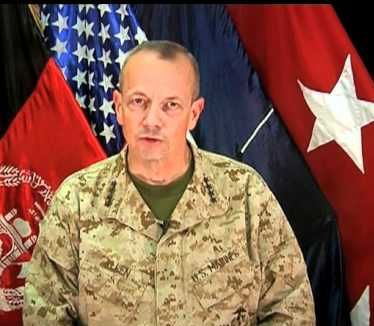
Gen._John_R._Allen-ISIS_12.9.14US Gen. John Allen to lead war on ISIS

All this leaves President Obama and Gen. Allen on the threshold of a war on Islamist terrorists, which everyone agrees needs to fought without delay, but without enough political leverage for going forward or much chance of mustering the right troops to lead – even into the first battle.

*********************

“We’re going to build the kind of coalition that allows us to lead, but also isn’t entirely dependent on what we do,” said US President Barack Obama at a fundraiser at the home of former AIPAC head Howard Friedman in Baltimore Friday, Sept. 12. One wag translated this as meaning that the Middle East could go its own way so long as it retained a “US flavor.”

That was one way of defining the turbulent cross-currents set off in the Middle East by the US president’s launch last Wednesday of his strategy for defeating the Islamic State of Iraq and the Levant with a broad coalition.

That was also exactly the kind of ambiguous comment, which the governments America is wooing to join the coalition, find so off-putting. The response of 10 Arab and Muslim leaders to Secretary of State John Kerry’s recruitment bid in Jeddah last Thursday, Sept.11, was therefore just as equivocal.

The “participating states agreed to do their share in the comprehensive fight against ISIL, including… as appropriate joining in the many aspects of a coordinated military campaign against ISIL,” they said.

Obama spoke of a “silver lining” in describing how Arab neighbors were focused for the first time on the “need to completely distance from and effectively snuff out this particular brand of Islamic extremism.” But the lining is not all that bright.

Iraq has no army left to speak of after ISIS’s rampage, and its small air force can hardly make a difference in the battle against the Islamists’ territorial sweep.

Turkey has opted out – and not just out of military operations against jihadists. Ankara has closed its territory and air bases to the transit of US and coalition forces for striking the Islamists in northern Iraq.

Jordan has renounced any part in the military operations against the Islamic State – and so has Egypt, as Kerry learned before he landed in Cairo Saturday, Sept. 13.

Germany, while sending arms to the Kurdish army fighting in the front line against the Islamists, refuses to take part in combat action in Iraq or Syria.

Britain, which sent a shipment of heavy machine guns and half a ton of ammunition to Irbil for the Kurdish Peshmerga, refuses to join the US in air strikes over IS targets in Syria.

French President Francois Hollande, who flew to Baghdad Friday with four arms shipments and 60 metric tons of humanitarian equipment, will host the founding of the coalition in Paris next Monday, Sept. 15 – in competition to the American initiative. He has crossed Washington by inviting Iran.

Kerry said publicly that it would be “inappropriate” for Iranian officials to be invited to the Paris conference, since Iran is “a state sponsor of terror” and “backs Syria’s brutal regime.”

Friday, Obama appointed Gen. John R. Allen, former commander in Afghanistan and western Iraq, to lead the coalition forces in the war on the Islamic State of Iraq and the Levan.

It is hard to see what combat forces he will lead, in view of the mixed international responses so far to Washington’s appeals for a global coalition to combat terror.

In the years 2006-2008, Gen. Allen commanded the US II Marine Expeditionary Force, which successfully fought Al Qaeda under Musab Zarqawi’s leadership in western Iraq’s Anbar province. He led what was then dubbed the “Awakening” project, which rallied the region’s Sunni tribes to the fight.

President Obama appears to be hinging his campaign against the new Islamist scourge on Gen. Allen repeating that success.

DEBKAfile’s military experts find the prospects of this happening in 2014 fairly slim, because the circumstances are so different:

1. To support the Sunni Awakening venture, President George W. Bush authorized the famous “surge” which placed an additional 70,000 US troops on the Iraqi battlefield. However, Obama has vowed not to send US combat troops back to Iraq in significant numbers, and has approved no more than a few hundred American military personnel.

2.  In 2006, Iraqi Sunnis trusted American pledges. They agreed to turn around and fight fellow Sunni Al Qaeda after being assured by Washington that they would not lose their status and rights in Baghdad, and that the US would give them weapons and salaries.

In 2009, they realized that the Obama administration would not stand by the Bush administration’s assurances. Their disillusion with America and the rise of a Shiite-dominated regime in Baghdad pushed them into the arms of ISIS.

3. Since then Iraq’s Sunni leaders have learned not to trust anyone.

Today, they are hedging their bets, their tribal leaders split into two opposing camps between Saudi Arabia, on the one hand, and the Islamic State, on the other. For the first time since the US invasion of Iraq to topple Saddam Hussein 11 years ago, Iraq’s Sunni leaders feel they are in the saddle and in a position to set a high price for their support.

All this leaves President Obama and Gen. Allen on the threshold of a war on Islamist terrorists, which everyone agrees needs to fought without delay, but without enough political leverage for going forward or much chance of mustering the right troops to lead – even into the first battle.

Syrian rebels said to control most of the border with Israel

September 13, 2014

Syrian rebels said to control most of the border with Israel, Times of Israel, September 13, 2014

(How many and what types of weapons will “vetted, moderate” Syrian rebels on Israel’s border receive in support of Obama’s “war” against the Islamic State? — DM)

UN evacuates equipment from main HQ into Israel as insurgents capture two more towns; Qatar reportedly paid high ransom for release of Fijian troops

Mideast-Israel-Al-Qai_Horo2-e1409938780328-635x357Smoke rises following an explosion in Syria’s Quneitra province as Syrian rebels clash with President Bashar Assad’s forces, seen from the Israeli-controlled Golan Heights, on August 28, 2014. (photo credit: AP/Ariel Schalit, File)

Syrian rebels are in control of almost the entire Syrian border with Israel, a monitoring group and the Al-Arabiya news network reported Saturday.

According to the report quoted by Israel’s Channel 10, rebel forces on Friday gained control of two additional villages near Quneitra, the war-torn nation’s solitary border crossing with Israel, leaving only one village in the Syrian army’s hands.

The report added that the towns of Rawadi and Hamidiyah were taken after heavy fighting between the rebels and the army, loyal to President Bashar Assad.

“The regime is on the retreat before the advancing rebels,” Syrian Observatory for Human Rights director Rami Abdel Rahman told AFP. “The regime has now lost control of about 80 percent of towns and villages in Quneitra province.”

On Friday night a mortar shell exploded on the Israeli side of the Golan Heights, in what authorities believe was a stray from fighting across the border. There were no reports of injuries or damage.

Meanwhile Israel Radio reported that UN peacekeepers were evacuating the equipment from Camp Faouar, their main headquarters in Syria, to Israel. UN troops were bringing their gear over the border via special gates opened for them by the IDF, according to the report, and not through Quneitra which is now under rebel control. Only a small Fijian force is expected to remain at the base in a few days.

A-Sharq al-Awsat, quoting Syrian opposition sources, reported Saturday that the Qatari government paid a heavy ransom to rebels for the release of 45 captive UN peacekeepers freed Thursday.

According to the report Doha paid somewhere between $20-$45 million to the al-Qaeda-linked Nusra Front which had held the troops since August 28. Qatar took credit for negotiating the release on Friday, though it made no mention of a ransom.

Fighters from the Nusra Front group captured the Fijian troops late last month in the Golan Heights, where a 1,200-strong UN force monitors the buffer zone between Syria and Israel.

In exchange for the Fijians’ release, Nusra Front had demanded removal of the group from the UN terrorist list, the delivery of humanitarian aid to parts of the Syrian capital of Damascus, and compensation for three of its fighters who, it claims, were killed in a shootout with UN officers.

The capture of the 45 came during heavy fighting between rebels groups and Syrian army soldiers around the Quneitra crossing. Dozens of other peacekeepers from the Philippines managed to escape the group during a firefight.

The Nusra Front has accused the UN of doing nothing to help the Syrian people since the uprising against Assad began in March 2011. It said the Fijians were seized in retaliation for the UN’s ignoring “the daily shedding of the Muslims’ blood in Syria” and even colluding with Assad’s army “to facilitate its movement to strike the vulnerable Muslims” through a buffer zone in the Golan Heights.

Last week, several mortar shells exploded in an open area in the Golan Heights, apparently the result of inadvertent spillover from fighting in Syria, according to the IDF. Israel responded by firing a Tamuz missile at the origin of the attack. An IDF spokesperson said the strike was successful.

Artillery from Syria has landed frequently on the Israeli side of the Golan Heights for the past few weeks as regime and rebel forces fight over the Quneitra crossing.

Turkey’s Frankenstein Monster

September 13, 2014

Turkey’s Frankenstein Monster, Gatestone InstituteBurak Bekdil, September 13, 2014

(Please see also Turkey’s ties to Hamas no obstacle in war on Islamic State.– DM)

Last June, Turkey’s own Frankenstein, who went by the name of ISIS, attacked the Turkish consulate compound in Mosul, and took 49 Turks, including the consul general, hostage.

The hostages are still in captivity. So is Turkey.

For each [Islamic] sect, the other is “not even Muslim.”

It all began when Turkey’s leaders thought they could build a Sunni belt under Turkish hegemony, and resting geographically under the Crescent and Star. For that to actually happen, Tunisia, Libya, Egypt, Lebanon, Syria and Iraq had to be ruled by Sunni — preferably Muslim Brotherhood-type — leaderships subservient to Ankara.

This Turkish gambit came at a time when the turbulent Middle East was even more turbulent than it always is: the Arab Spring had unmasked a 14-century-long hatred between Islam’s two main sects, a schism started by rival clans in the Prophet Muhammad’s tribe, the Quraysh. This is a feud that would survive beyond even their imagination.

Syria, with which Turkey shares a 500-mile border, was sadly being ruled by a Nusayri (Syrian Alawite), an offshoot of the Shia faith. Bashar al-Assad soon became, as the Sicilians say, “a stone in (then Prime Minister, now President) Recep Tayyip Erdoğan’s shoe.”

In the background, the Sunni-Shia feud was heating up. The Turks failed to get the message. In 2013, Iraq’s acting defense minister, Saadoun al-Dulaimi, accused Turkey of controlling Sunni anti-government protests in (Shia majority) Iraq.

For some time the United States even toyed with the idea of creating a “moderate crescent” of Sunni nations in order to contain Shia Iran, Shia-controlled Iraq and Lebanon’s Hizbullah.

The sectarian blindness explained a lot of complexities: Why, for instance, King Abdullah of Saudi Arabia fiercely supported the Syrian opposition, or sent troops across the border into neighboring Bahrain to help stamp out a Shia uprising there; why al-Qaeda’s leaders called on jihadists to join the fighting in Syria; or why, for Erdoğan, al-Assad was the “butcher of Damascus,” while Sudan’s Sunni leader Omar al-Bashir, with an international arrest warrant for crimes against humanity and the killing of hundreds of thousands, was “just an innocent friend.” The hatred explains, even to this date, why the Shia and Sunnis in Iraq kill each other by the thousands every month and bomb each other’s mosques.

The Wahhabis are virulently anti-Shia, and vice versa. They view the Shia as satanic “rejectionists.” And, for their part, the Shia view the Wahhabis as simply perverted. For each sect the other is “not even Muslim.” Saudi schools teach pupils that Shi’ism is simply a Jewish heresy.

In 2006, senior Wahhabi cleric Abdul Rahman al-Barrak released a fatwa which stated that the Shia are “infidels, apostates and hypocrites … [and] they are more dangerous than Jews or Christians.” Al-Qaeda’s younger twin, al-Nusrah, declared in 2012: “The blessed operations will continue until the land of Syria is purified from the filth of the Nusayris and the Sunnis are relieved from their oppression.”

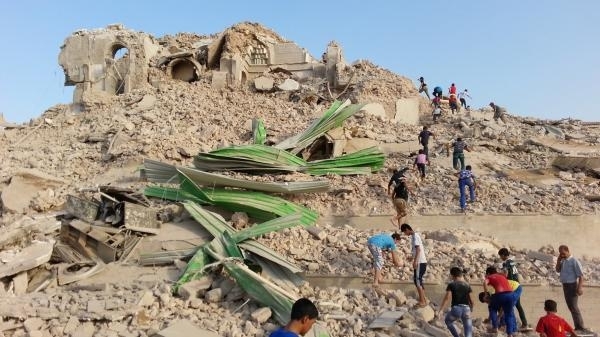
690The wreckage of the Shrine of Jonah, in Mosul, Iraq, which was destroyed by insurgents of the Islamic State in July 2014.

The Sunni supremacist Erdoğan would therefore even shake hands with Satan for the downfall of the Nusayri al-Assad. And he did. Turkey quickly became the mentor of all Syrian opposition groups which, ideally, would first defeat al-Assad, then form an Islamist government and volunteer to become a de facto colony of the emerging Turkish Empire.

At the outset, Turkey’s support was about policy and planning: conference after conference, meeting after meeting, declaration after declaration. The innocent Turks were merely expending diplomatic efforts to end the bloody civil war in a neighboring country.

In reality, Ankara slowly made Turkey’s southeast a hub for every color of radical Islamist militant arriving from dozens of different countries, including thousands from Europe. The militants would cross the border into Syria, fight al-Assad’s forces, go back to Turkey, get medical treatment there if necessary, replenish their weapons and ammunition and go back to fight again. In an audio recording leaked on the internet in March, Turkey’s top intelligence officer admits that, “Turkey has so far sent 2,000 trucks full of weapons and ammunition into Syria.”

Last June, Turkey’s own Frankenstein monster, who went by the name of the Islamic State of Iraq and Syria [ISIS] — later reflagged as “The Islamic State” [IS] — appeared at its old master’s doors. IS attacked the Turkish consulate compound in the northern Iraqi city of Mosul, after having captured large swathes of Syrian and Iraqi territory. It also took 49 Turks, including the consul general, hostage.

Ironically, only a day before the attack on the Turkish consulate, an opposition parliamentarian, speaking in parliament, warned that the consulate was exposed to the risk of an attack from ISIS — to which the government benches replied loudly: “Stop telling lies!” And only 20 hours before the Turkish consulate was attacked, Turkey’s then-Foreign Minister, Ahmet Davutoglu, tweeted that “We have taken all precautions at the Mosul consulate general.”

The hostages are still in captivity. So is Turkey, strategically and militarily. When U.S. Secretary of Defense Chuck Hagel arrived in Ankara on Sept. 8 to discuss a joint methodology to fight IS, and asked the Turks what services they could offer, the most important Turks in Ankara, including Erdoğan, shyly looked in the air and explained why they could not actively or publicly engage IS. And so 49 unfortunate Turks are still in the hands of the Turkish Frankenstein.

More than two years ago Davutoglu prophesized that al-Assad’s days in power were numbered. In a span of weeks, he predicted, the “butcher of Damascus would go.” But there is another man who can compete with Davutoglu in any “Realistic Guesses on the Future of the Middle East” competition. At the end of 2011 when the last US troops left Iraq, President Barack Obama described Iraq as “sovereign, stable and self-reliant.”