Archive for September 2, 2014

US airstrikes in Amerli supported deadly Shia terror group

September 2, 2014

US airstrikes in Amerli supported deadly Shia terror group, The Long War Journal, Bill Roggio, September 2, 2014

While helping Iraqi forces to break the Islamic State’s siege of Amerli, the US Air Force supported a deadly Shia militia that is responsible for killing hundreds of US soldiers. The Shia militia, known as Asaib al Haq, or the League of the Righteous, has also captured and executed US soldiers and British citizens in the past.

Iraqi forces, supported by “paramilitary forces” such as the League of the Righteous, advanced on Amerli late last week and reached the town by Aug. 31, The Washington Post reported. By Sept. 1, the siege, which lasted for more than two months, was lifted.

Na’im al Aboudi, the spokesman for the League of the Righteous, confirmed that his group is operating in Amerli and in surrounding villages.

As of Aug. 31, the US military launched four airstrikes against Islamic State forces in Amerli, according to US Central Command, or CENTCOM.

“At the request of the Government of Iraq, the US military conducted airstrikes in support of an operation to deliver humanitarian assistance to address the humanitarian crisis and protect the civilians trapped in Amerli, Iraq at approximately 8:30 p.m. EDT today [Aug. 30],” CENTCOM reported. Three airstrikes and a humanitarian aid drop were conducted on Aug. 30, and another on Aug. 31.

A seasoned Shia terror group

The League of the Righteous is not a newly-formed Shia militia that rose up in the wake of the Islamic State’s takeover of much of Western, central, and northern Iraq this year. The League of the Righteous was formed in 2006 as an offshoot of Muqtada al Sadr’s Mahdi Army. The militia was the largest and most powerful of what the US military called the Special Groups, or Shia militias backed by Iran. The group was at the forefront in using EFPs, or explosively formed penetrators, the deadly landmines that can penetrate US armored vehicles. Hundreds of US soldiers were killed in EFP attacks.

Asaib al Haq was directly implicated by General David Petraeus in the January 2007 attack on the Provincial Joint Coordination Center in Karbala. Five US soldiers were killed during the Karbala attack and subsequent kidnapping attempt. The US soldiers were executed by League of the Righteous fighters after US and Iraqi security forces closed in on the assault team.

The attack on the Karbala Provincial Joint Coordination Center was a complex, sophisticated operation. The assault team, led by tactical commander Azhar al Dulaimi, was trained in a mock-up of the center that was built in Iran. The unit had excellent intelligence and received equipment that made them appear to be US soldiers. Some of the members of the assault team are said to have spoken English.

Two months after the attack in Karbala, Qais Qazali, who leads the League of the Righteous, his brother Laith, and a senior Hezbollah military commander known as Musa Ali Daqduq were all captured during a raid in Basra. Qais and Laith were freed by the US in 2009 along with hundreds of members of the Asaib al Haq, in exchange for Peter Moore, a captured British hostage, and the remains of four Brits who were kidnapped and subsequently executed by the group. The US justified their release by claiming that the League of the Righteous was reconciling with the Iraqi government. After his release, Qais threatened to attack US interests in Iraq.

Trained by Iran, Hezbollah

Daqduq, who previously served as the head of Hezbollah’s special forces as well as the commander of Hassan Nasrallah’s guard, was listed by the US as a Specially Designated Global Terrorist in November 2012, less than a year after he was released from US custody. Daqduq was released to Iraqi custody in December 2011 as the US withdrew from Iraq with the promise that he would be tried for his war crimes. But in 2012, he was freed by the Iraqi government. US intelligence officials contacted by The Long War Journal said that Daqduq is involved with supporting Iraqi militias who are fighting in Syria.

In its designation of Daqduq as a global terrorist in November 2012, the US Treasury Department said that sometime in 2005, “Iran asked Hezbollah to form a group to train Iraqis to fight Coalition Forces in Iraq.” The designation stated: “In response, Hassan Nasrallah [Hezbollah’s leader] established a covert Hezbollah unit to train and advise Iraqi militants in Jaish al Mahdi (JAM) [or Mahdi Army] and JAM Special Groups, now known as Asaib Ahl al Haq [the League of the Righteous],” a Mahdi Army faction.

“As of 2006, Daqduq had been ordered by Hezbollah to work with IRGC-QF [Iranian Revolutionary Guards Corps-Qods Force] to provide training and equipment to JAM Special Groups to augment their ability to inflict damage against US troops,” Treasury continued.

Three top leaders of the League of the Righteous are also on the US’ list of Specially Designated Global Terrorists.

Abu Dura, whose real name is Ismail Hafiz al Lami, is known as the “Shia Zarqawi” for his propensity to torture his captives. He was listed as a global terrorist in January 2008along with Ahmad Foruzandeh, the former commander of the Iranian Islamic Revolutionary Guard Corps-Qods Force, for supporting the Iraqi insurgency.

Also designated with Abu Dura and Foruzandeh was Mustafa al Sheibani, who led the so-called Sheibani Network, which is part of the League of the Righteous.

Both Abu Dura and Sheibani are believed to have returned to Iraq in the summer of 2010. [See LWJ reports, Iran sends another dangerous Shia terror commander back to Iraq and ‘Shiite Zarqawi’ returns to Baghdad from Iran: report.]

Akram Abbas al Kabi, the current military commander of the League of the Righteous who served as the group’s leader while Qazali was in US custody, was added to the list of global terrorists in September 2008. Also designated with Kabi was Abdul Reza Shahlai, a deputy commander in Iran’s Qods Force who was involved in the planning and execution of the attack on the Karbala Joint Provincial Coordination Center. [ See LWJ report, US sanctions Iranian general for aiding Iraqi terror groups.]

Kabi directed attacks against US and Iraqi forces during the so-called Mahdi cease-fire imposed by Sadr in the spring of 2008. He provided weapons “for large-scale military operations against Coalition Forces” in early 2008. Kabi likely aided the Mahdi Army and other Shia terror groups in attacking US and Iraqi troops as they built the security barrier around a large segment of Sadr City. More than 1,000 Mahdi Army fighters were killed during the fighting in Baghdad from April until the Mahdi Army quit the fight in June of that year.

The Iraqi government, which targeted the Special Groups, including the League of the Righteous, in military operations from 2007 to 2009, began to soften its stance on the Iranian-backed groups as the US government and military began disengaging from Iraq. Then as the Syrian civil war heated up and the Islamic State of Iraq began regaining its strength, the government began to rely on the Shia militias to provide security in Shia areas. And as the Iraqi military melted away in the Islamic State’s June offensive in Ninewa, Salahaddin, and Diyala provinces, the Shia militias, including League of the Righteous, were critical in propping up Iraq’s security forces.
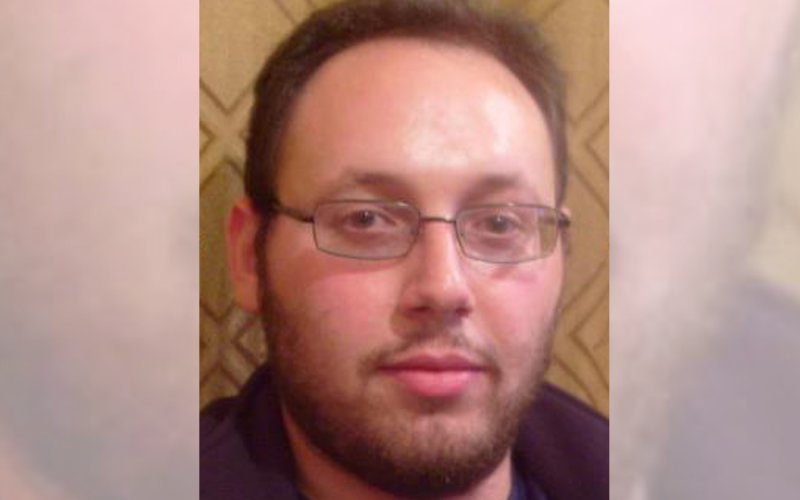
Was U.S. Journalist Steven Sotloff a Marked Man?

September 2, 2014

Was U.S. Journalist Steven Sotloff a Marked Man? The Daily Beast, Ben Taub, August 2, 2014

1409677961313.cachedThe Daily Caller

Today the Islamic State has not just Sotloff, but the entire global media in its clutches. They kidnap, ransom, and kill journalists, and therefore have a near-complete monopoly on information from within their boundaries. They decide which pictures get released, and even threaten local photographers with death if they do “anything that damage[s] IS’s reputation”. Earlier this month, Vice News aired an extraordinary five-part documentary with unprecedented access within the “Caliphate,” but remains silent on what degree of editorial control the Islamic State may have had over the raw footage.

And now—after  a year of measured silence within the international media, a year during which not one major news outlet announced “American journalist Steven Sotloff was kidnapped in Syria”—the Islamic State superseded his family’s wishes and ended the media blackout on its own terms.

***************

When pro-regime and anti-government factions started killing each other in the 8,000-year-old Syrian city of Aleppo, a little town in Turkey called Kilis blossomed into relevance at their expense. Located just four miles north of the Syrian border, Kilis became a vital crossing point in and out of a rapidly devolving war.

If you were to wander into the decrepit Hotel Istanbul in the center of Kilis last summer and sit in the lobby for a few hours, you’d trade wary glances with bomb-chasing photographers, ragged aid workers, desperate Syrian refugees, war tourists, and a couple of European Muslims looking to join what was then known as the Islamic State of Iraq and al-Sham. From the hotel’s upper floors, you could see smoke billow on the horizon from airstrikes and shelling light up the sky at night. If you entered a guest room, the pungent odor of the air freshener dangling from the grimy mirror might lead you to discover that it was, in fact, a urinal cake. A German magazine called it the “Hotel of Madness,” and at times, the place really did better resemble an asylum than professional lodging.

Steven Sotloff checked into Room 303 at the Hotel Istanbul on August 1, 2013. It was a dodgy time to be at the Turkish-Syrian border. Jihadist fighters had recently snatched several Western journalists and aid workers on the road connecting Kilis to Aleppo, and rumors were flying that Westerners might even be under surveillance in Kilis. It was said that spies on the Turkish side could be tipping off jihadis and criminal gangs on the Syrian side. Those groups were eager to get their hands on anyone who could be used for ransom or political sway.

By the time Sotloff arrived in town, the flow of journalists in and out of Aleppo had diminished to less than a trickle. Local fixers were hurting for business, especially those whose clients had been previously targeted for kidnapping attempts. Many of them started taking some of the odd jobs in town just to stay afloat.

One fixer, whom I’ll call Mahmoud (not his real name), even took the mother of a dead Italian jihadist to Aleppo’s front lines so that she could see her son’s corpse decaying in the street, irretrievable and surrounded by government snipers. Other fixers had taken in various war tourists and crazies, but were growing increasingly nervous that a fool might take out a camera at the wrong checkpoint and get them both in trouble with the Islamic State.

Sotloff had been to Kilis before. He’d been to Syria in wartime, too. And in the recent years leading up to the date of his abduction, he’d also reported courageously in Libya, Egypt, and Yemen. He was experienced. He could speak Arabic. He was careful. And he told me he had had enough.

When pro-regime and anti-government factions started killing each other in the 8,000-year-old Syrian city of Aleppo, a little town in Turkey called Kilis blossomed into relevance at their expense. Located just four miles north of the Syrian border, Kilis became a vital crossing point in and out of a rapidly devolving war.

If you were to wander into the decrepit Hotel Istanbul in the center of Kilis last summer and sit in the lobby for a few hours, you’d trade wary glances with bomb-chasing photographers, ragged aid workers, desperate Syrian refugees, war tourists, and a couple of European Muslims looking to join what was then known as the Islamic State of Iraq and al-Sham. From the hotel’s upper floors, you could see smoke billow on the horizon from airstrikes and shelling light up the sky at night. If you entered a guest room, the pungent odor of the air freshener dangling from the grimy mirror might lead you to discover that it was, in fact, a urinal cake. A German magazine called it the “Hotel of Madness,” and at times, the place really did better resemble an asylum than professional lodging.

Steven Sotloff checked into Room 303 at the Hotel Istanbul on August 1, 2013. It was a dodgy time to be at the Turkish-Syrian border. Jihadist fighters had recently snatched several Western journalists and aid workers on the road connecting Kilis to Aleppo, and rumors were flying that Westerners might even be under surveillance in Kilis. It was said that spies on the Turkish side could be tipping off jihadis and criminal gangs on the Syrian side. Those groups were eager to get their hands on anyone who could be used for ransom or political sway.

By the time Sotloff arrived in town, the flow of journalists in and out of Aleppo had diminished to less than a trickle. Local fixers were hurting for business, especially those whose clients had been previously targeted for kidnapping attempts. Many of them started taking some of the odd jobs in town just to stay afloat.

One fixer, whom I’ll call Mahmoud (not his real name), even took the mother of a dead Italian jihadist to Aleppo’s front lines so that she could see her son’s corpse decaying in the street, irretrievable and surrounded by government snipers. Other fixers had taken in various war tourists and crazies, but were growing increasingly nervous that a fool might take out a camera at the wrong checkpoint and get them both in trouble with the Islamic State.

Sotloff had been to Kilis before. He’d been to Syria in wartime, too. And in the recent years leading up to the date of his abduction, he’d also reported courageously in Libya, Egypt, and Yemen. He was experienced. He could speak Arabic. He was careful. And he told me he had had enough.

It was the very end of July, and the Islamic State of Iraq and al-Sham had proven its effectiveness in infiltrating once-moderate areas and implementing a brutal interpretation of Sharia law. Many of the European fighters in the Islamic State kept social media accounts to document their trips, and used them to encourage other young extremists to join them in Syria.

Sometimes they’d post pictures of themselves in swimming pools, fancy cars, and looted villas, advertising Syria as a “Five-Star Jihad.” Other times they’d share photographs of themselves holding—even kicking around—the decapitated heads of Shia Muslims, posting with hashtags like #mujahideen#kafir (infidel) #jihad and #ISIS. And when Alex came to town, the Islamic State had an established presence in A’zaz, Syria, within sight of the border.

Alex told me he had asked journalists with Syria experience to connect him to their fixers, but none had delivered. They told him not to go to Syria, he said. Syria was never really a war for first-timers, and least of all by mid-2013.

He then asked if I knew any fixers. There was one I trusted immensely, Mahmoud, the fixer who had taken the Italian jihadist’s mother to the front lines. And since Alex intended to go into Syria despite the warnings, better that it be with someone trustworthy.

But Mahmoud declined on account of the Alex’s lack of experience. “Three months ago, fine,” Mahmoud said. “But now we’ve got the Islamic State at every checkpoint between here and Aleppo, and I’d be risking my life if he does something stupid.”

It didn’t really matter, though, because Alex told me he had already turned to Facebook and made arrangements to go into Syria with someone he’d never met. Alex and I decided to meet up for a final cup of tea the night before his expected crossing.

At the café, Alex detailed his method for finding this new fixer. He said he had written to approximately 30 Syrians he found through Facebook, selecting those who displayed guns or opposition flags in their profile pictures. He told them he was a photographer and wanted to go to Aleppo, and asked if they could help. A dozen or so wrote back.

Fortunately, Alex decided to work with X, who was an established fixer with a clean safety record, and who worked at the rebel-aligned Aleppo Media Center. But Alex also told me that he’d subsequently written to all the other men to inform them that he no longer needed their services because he had already made arrangements to cross with X the next day at 10 a.m.

Up to that point, I had been patient with Alex. But now X’s life was also on the line, and he didn’t even know it. Aggressive berating fell on deaf ears.

“I already spent $1,500 to fly here,” he said decisively. “I’m going in.”

I went back to the Hotel Istanbul and wrote to a journalist in London who had far better Aleppo connections than I. Early the next morning, she forwarded me a response from an Aleppo source with whom she had been in touch about Alex’s situation:

“He’s under a [sic] big danger if he enters Syria, some of my contacts told me that some people are getting some informations [sic] about him, about his nationality, they know where he’s staying in Kilis, and they know that he’s supposed to come with X as a fixer tomorrow in Aleppo… tell him to be careful and that he’s under danger and people are monitoring him.”

The journalist in London forwarded the warning to Alex, too, and he finally decided to go home. I breathed an enormous sigh of relief when Alex left Kilis that morning, just two hours before his 10 a.m. appointment with modern terrorism.

X was then warned of the near miss via a correspondent who had worked with him in the past.

***

Two days after Alex left town, Steven Sotloff asked what I knew about X. Was he a good fixer? So I’d been told. Trustworthy? Apparently, yes. Safe? Unlikely, given the preceding days. I told him about what had happened with Alex.  Mahmoud, the other fixer I trusted, hadn’t been compromised, and his record remained unblemished. So I passed Sotloff his contact information. We drained our glasses and called it a night.

On August 5, I had dinner with an Italian journalist fresh out of Aleppo. The Islamic State was closing in on the media center, she said, still trembling from a mix of adrenaline and fear. They had to leave two days early. And now the jihadis had a checkpoint within sight of the border. That wasn’t there when the journalists crossed into Syria a week ago.

She asked if I had heard anything about the fixer, X. I had not. She was concerned because his wife had come looking for him at the Aleppo Media Center. X’s wife told the Italian that he had gone to meet an American journalist.

By the following afternoon, confirmation trickled in that Sotloff and X had been kidnapped together within minutes of crossing the border on August 4. Nobody knew exactly who had them, but the recent alerts of spontaneous Islamic State checkpoints and increasingly frequent abductions made that group a likely suspect.

I don’t know what happened between our meeting in the late hours of August 1 and Steven’s ultimate decision to go into Syria with X two days later than originally planned.

***

The relevant people informed Steven’s family of his disappearance, and his family ultimately decided to keep a media blackout on the case for a multitude of reasons related to strategies for negotiating his release. A few Syrian activists tweeted about his abduction last August, but online nudges got most of those early tweets taken down. Meanwhile, the international press stayed diligently silent.

That is, until Tuesday, when the Islamic State released a gruesome video that apparently showed a fighter with a British accent murdering James Foley, a well-known freelancer whose disappearance in 2012 was widely publicized. According to those who have seen the video, the Islamic State subsequently displays a man who they claim is Sotloff, threatening that he will be next if the United States continues its military operations in Iraq.

Today the Islamic State has not just Sotloff, but the entire global media in its clutches. They kidnap, ransom, and kill journalists, and therefore have a near-complete monopoly on information from within their boundaries. They decide which pictures get released, and even threaten local photographers with death if they do “anything that damage[s] IS’s reputation”. Earlier this month, Vice News aired an extraordinary five-part documentary with unprecedented access within the “Caliphate,” but remains silent on what degree of editorial control the Islamic State may have had over the raw footage.

And now—after  a year of measured silence within the international media, a year during which not one major news outlet announced “American journalist Steven Sotloff was kidnapped in Syria”—the Islamic State superseded his family’s wishes and ended the media blackout on its own terms.

The release of Foley’s murder tape, and the subsequent threat that Sotloff could be next, is not directed at the American government. The State Department has known about Sotloff’s disappearance for over a year. It is an attack on the American public, to whom the now-viral revelation of his abduction is brand new and utterly shocking, especially following Foley’s gruesome murder.

Twelve days after their initial disappearance, X, the fixer, was released by his captors, and allowed to return to his wife in Aleppo. By that point, I had left Kilis and was pleading with the Canadian photographer to share the list of Syrian strangers he allegedly contacted while trying to make his own arrangements to visit Aleppo, as well as his communications with them. Perhaps X and the people working on Sotloff’s abduction case could identify the ISIS informant from those conversations.

But suddenly Alex grew reluctant to talk. His final message before blocking me on Facebook in late August last year read: “I don’t have time for that, stop bothering me, I have nothing interesting for you anyway.”

Al Qaeda’s 9/11 anniversary attacks ready to go. New undetectable explosive may be used

September 2, 2014

Al Qaeda’s 9/11 anniversary attacks ready to go. New undetectable explosive may be used.

Debka

Credible information has reached Saudi, British and Australian agencies that two al Qaeda branches – IS in Iraq and Syria and AQAP at its base in Yemen – have wrapped up plans to roll out coordinated terrorist spectaculars around the 13th anniversary of the September 11, 2011 attacks on New York and Washington.

According to debkafile’s counterterrorism sources, they are preparing to strike simultaneously in the Middle East and a West European city. Next, they will go for US targets in the Middle East and Europe.

In the estimate of Islamist experts, the IS and AQAP have decided to delay direct terrorist action in the United States, calculating that an attack on America will have a greater shock impact some time after the first cycle of outrages, toward the end of 2014 or early 2015.
It was this information that galvanized Saudi King Abdullah into warning the West that Al Qaeda’s plans were imminent. “If neglected,” he said strongly last week, “I am certain that after a month they will reach Europe and, after another month, America.”
The king issued his warning on the occasion of the US Ambassador to Riyadh, Joseph W. Westphal’s formal presentation of credentials. This gave his warning added weight, because it was a fabricated opportunity. In the two years that Ambassador Westphal has officiated in the Saudi capital, the king has never found time to confirm his accreditation. This cold shoulder reflected the nonagenarian Saudi ruler’s opinion of US President Barack Obama’s Middle East policies and what appears to Riyadh to be his lackadaisical attitude towards fighting Islamist terror.
Sharing the view that this peril is too grave to be ignored any longer, the prime ministers of Britain and Australia, David Cameron and Tony Abbott, appear to have prevailed on the Saudi king to signal this indirect warning to Washington – especially since Saudi intelligence shares the view that a great number of lives are at stake if Al Qaeda consummates its plans.
Our intelligence and counterterrorism sources disclose that the data on the two Al Qaeda groups’ plans to mark the 9/11 anniversary with major attacks has been in the hands of Middle Eastern, European and US security agencies since the second week of May, i.e., five months ago.

They were also anxiously aware that Al Qaeda’s top bomb-maker, Ibrahim Hassan A-Asiri, who works out of Yemen, had developed a secret explosive substance that can pass undetected through the screening devices and security measures currently in use at international airports and public places in the West and the Middle East.

Intelligence experts believe that this novel substance, when hidden in special shoes or electronic devices like iPhones and Samsung Galaxy phones, can beat even tight security scrutiny. However, information has also been received about the new undetectable explosive substance being implanted in the bodies of suicide jihadists, to produce the ultimate “body bombs.”

It is feared that this hazard is already in place and that a surgical procedure may have been carried out to implant it on carriers of American or European passports, at a secret clinic in Yemen or a Gulf emirate by a surgeon dedicated to the radical Islamist cause. These human bombs will have been able to travel through Jordan or Iraq through Turkey to their targeted destinations. Such carriers of invisible bombs may be Americans, Belgians, Britons, Australians, French citizens or Germans, and already on standby for the prearranged signal to push a certain button and demolish a selected target.

The novel invention has made it infinitely easier for terrorists to move around and approach their targets, unnoticed and without arousing suspicion.
Prime Minister Cameron has woken up to the peril. He announced Tuesday, Sept. 22, he would ask parliament to urgently approve sweeping legislation to combat the “scourge of extremism” – including the power to seize passports of an estimated 500 British Muslims known to be frequent travelers to Turkey, Syria and Iraq and strongly suspected of identifying with Al Qaeda’s jihadist ideology.

Most counterterrorism experts fear that these measures if approved would come too late to pre-empt Al Qaeda’s 9/11 anniversary plot.

Egypt court gives 8 Brotherhood leaders life sentences

September 2, 2014

Egypt court gives 8 Brotherhood leaders life sentences

 badie.jpg
Muslim Brotherhood’s Supreme Guide Mohamed Badie (R) is seen during his trial at a court in Cairo in this May 18, 2014 file picture. (Reuters/Al Youm Al Saabi Newspaper)


Another Journalist Reportedly Beheaded

September 2, 2014

Another Journalist Reportedly Beheaded

(CNN) — The ISIS terror group has published a video titled “A second message to America,” showing the beheading of American journalist Steven Sotloff.

The video also threatens the life of British captive, David Haines.

Sotloff speaks to the camera before he is killed, saying he is “paying the price” for U.S. intervention.

The masked ISIS figure in the video speaks to U.S. President Barack Obama, telling him, “Just as your missiles continue to strike our people, our knife will continue to strike the necks of your people.”

Last week, Sotloff’s mother Shirley Sotloff released a video pleading with ISIS leader Abu Bakr al-Baghdadi not to kill her son.

“Steven is a journalist who traveled to the Middle East to cover the suffering of Muslims at the hands of tyrants. Steven is a loyal and generous son, brother and grandson,” she said. “He is an honorable man and has always tried to help the weak.”

Sotloff appeared last month in an ISIS video showing the decapitation of another American journalist, James Foley. The militant in the video warned that Sotloff’s fate depended on what President Barack Obama did next in Iraq.

Steven Sotloff disappeared while reporting from Syria in August 2013, but his family kept the news secret, fearing harm to him if they went public.

Out of public view, the family and a number of government agencies have been trying to gain Sotloff’s release for the past year.

Sotloff, 31, grew up in South Florida with his mother, father and younger sister. He majored in journalism at the University of Central Florida. His personal Facebook page lists musicians like the Dave Matthews Band, Phish, Miles Davis and movies like “Lawrence of Arabia” and “The Big Lebowski” as favorites. On his Twitter page, he playfully identifies himself as a “stand-up philosopher from Miami.”

In 2004, Sotloff left UCF and moved back to the Miami area.

He graduated from another college, began taking Arabic classes and subsequently picked up freelance writing work for a number of publications, including Time, Foreign Policy, World Affairs and the Christian Science Monitor. His travels took him to Yemen, Saudi Arabia, Qatar and Turkey — among other countries — and eventually Syria.

CNN’s Christiane Amanpour said that Sotloff’s killing will step up pressure on Obama to devise a strategy to combat ISIS.

On Friday, Obama said it’s too soon to discuss what steps the U.S. would take against the militant group inside Syria. On how to deal with the group in Syria — where it was born and has a safe haven, mostly in the city of Raqqa — the president said: “We don’t have a strategy yet.”

Obama said on Friday that he has asked America’s top defense officials to prepare “a range of options.”

ISIS release video that claims to show the beheading of American journalist Steven Sotloff

September 2, 2014

ISIS release video that claims to show the beheading of American journalist Steven Sotloff
By James Nye for MailOnline Published: 12:16 EST, 2 September 2014 Updated: 12:59 EST, 2 September 2014


(Taunting the West with yet another poor soul.-LS)

ISIS has released a video that shows the beheading of U.S. journalist Steven Sotloff and says the murder is retaliation for the Obama administration’s continued airstrikes in Iraq.

Sotloff is the second American journalist to be killed by ISIS, and his death comes two weeks after James Foley was executed in a similar video.

In the video entitled ‘A Second Message to America,’ Sotloff appears in a orange jumpsuit before he is beheaded by an Islamic State fighter.

The executioner appears to be the same man who killed Foley – known as ‘Jihadi John’ – and tells the camera: ‘I’m back, Obama, and I’m back because of your arrogant foreign policy towards the Islamic State.”

Sotloff calmly read a statement moments before his murder: ‘I’m sure you know exactly who I am by now and why I am appearing.;

He tells the camera: ‘Obama, your foreign policy of intervention in Iraq was supposed to be for preservation of American lives and interests, so why is it that I am paying the price of your interference with my life?’

While he speaks, a militant calmly holds a knife at his side and stands next to Sotloff.

The man believed to be Jihadi John also says: ‘As your missiles continue to strike our people, our knife will continue to strike necks of your people.’

Prime Minister David Cameron said the Islamic State video showing an apparent beheading was an ‘absolutely disgusting, despicable act’, and he would be making a statement later.

Foley’s family released a statement after Sotloff’s execution, calling it ‘just horrific,’ according to WHDH-TV.

On Thursday, Sotloff’s mother Shirley Sotloff went on television to make a direct appeal for her son’s life. She addressed Abu Bakr al-Baghdadi, the self-claimed caliph of ISIS.

‘My son is in your hands,’ Ms Sotloff said. ‘As a mother I ask Your Justice to be merciful and not punish my son for matters he has no control over. I ask you to use your authority to spare his life.’

The White House didn’t immediately comment on how and when Obama heard about Sotloff’s reported death.

The president was in the White House when news erupted, preparing for a mid-afternoon departure for Estonia and then Wales, where he will attend a NATO summit.

White House Press Secretary Josh Earnest was taken by surprise when a reporter asked him about the video during a regular Tuesday press briefing.

The initial reports had surfaced, President Obama’s chief spokesman suggested, while he was already speaking to reporters.

‘This may have just happened in the last few minutes while I’ve been standing up here,’ Earnest said.

‘This is something that the administration has obviously been watching carefully since this threat against Mr. Sotloff’s life was originally made a few weeks ago,’ he added.

‘I’m not in a position to confirm the authenticity of that video, or reports, obviously,’ he cautioned, ‘since I just walked out here.’

‘But if there is a video that has been released, it is something that will be analyzed very carefully by the U.S. government and our intelligence officials to determine its authenticity.’

Despite hearing about the video release for the first time, Earnest pivoted to expressing the sympathies of the White House.

‘Our thoughts and prayers, first and foremost, are with Mr. Sotloff and Mr. Sotloff’s family and those who worked with him,’ he said. ‘The United States, as you know, has dedicated significant time and resources to try and rescue Mr. Sotloff.’

Pentagon Unaware that Qatar Funds Terrorism

September 2, 2014

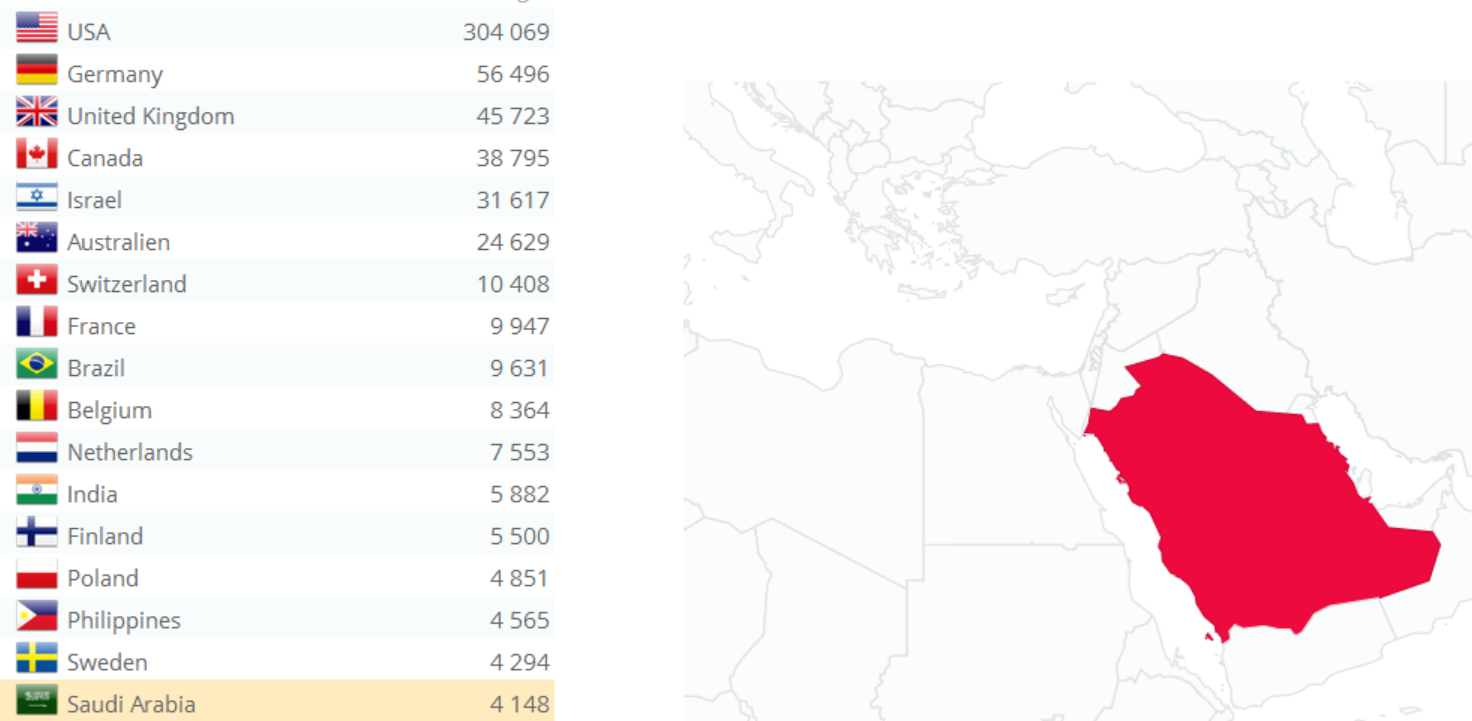
Many Saudis follow this blog – SA among the top 17 last 12 months

September 2, 2014

warsclerotic popularity 2

Moderate Islam Is Multiculturalism Misspelled

September 2, 2014

Moderate Islam Is Multiculturalism Misspelled, Front Page Magazine, Daniel Greenfield, September 2, 2014

Koran

I have been searching for moderate Islam since September 11 and just like a lost sock in the dryer, it was in the last place I expected it to be.

There is no moderate Islam in the mosques or in Mecca. You won’t find it in the Koran or the Hadiths. If you want to find moderate Islam, browse the newspaper editorials after a terrorist attack or take a course on Islamic religion taught by a Unitarian Sociologist wearing fake native jewelry.

You can’t find a moderate Islam in Saudi Arabia or Iran, but you can find it in countless network news specials, articles and books about the two homelands of their respective brands of Islam.

You won’t find the fabled land of moderate Muslims in the east. You won’t even find it in the west. Like all myths it exists in the imagination of those who tell the stories. You won’t find a moderate Islam in the Koran, but you will find it in countless Western books about Islam.

Moderate Islam isn’t what most Muslims believe. It’s what most liberals believe that Muslims believe.

The new multicultural theology of the West is moderate Islam. Moderate Islam is the perfect religion for a secular age since it isn’t a religion at all.

Take Islam, turn it inside out and you have moderate Islam. Take a Muslim who hasn’t been inside a mosque in a year, who can name the entire starting lineup of the San Diego Chargers, but can’t name Mohammed’s companions and you have a moderate Muslim. Or more accurately, a secular Muslim.

An early generation of Western leaders sought the affirmation of their national destinies in the divine. This generation of Western leaders seeks the affirmation of their secular liberalism in a moderate Islam.

Even if they have to make it up.

Without a moderate Islam the Socialist projects of Europe which depend on heavy immigration collapse. America’s War on Terror becomes the endless inescapable slog that the rise of ISIS has once again revealed it to be. Multiculturalism, post-nationalism and Third World Guiltism all implode.

Without moderate Muslims, nationalism returns, borders close and the right wins. That is what they fear.

If there is no moderate Islam, no moderate Mohammed, no moderate Allah, then the Socialist Kingdom of Heaven on Earth has to go in the rubbish bin. The grand coalitions in which LGBT activists and Islamists scream at Jews over Gaza aren’t the future; they’re the Weimar Republic on wheels.

Flash back to Obama in his tan suit wearily saying that he has no strategy for ISIS. The original plan was to capture Osama alive, give him a civilian trial, cut a deal with the moderate Taliban and announce the end of the War on Terror before the midterm elections.

So much for that.

Moderate Islam is a difficult faith. To believe in it you have to disregard over a thousand years of recorded history, theology, demographics and just about everything that predates 1965. You have to ignore the bearded men chopping off heads because they don’t represent the majority of Muslims.

Neither does Mohammed, who did his own fair share of headchopping.

The real Islam is a topic that non-Muslims of no faith who hold sacred only the platitudes of a post-everything society are eager to lecture on without knowing anything about it.

Their Islam is not the religion of Mohammed, the Koran, the Hadiths, the Caliphs or its practitioners in such places as Saudi Arabia, Pakistan, Iran, Iraq or Indonesia. Their Islam is a religion that does not exist, but that they fervently believe must exist because without it their way of life is as doomed as the dodo.

They aren’t Muslims. They have no faith in Allah or the Koran. Instead they have faith in the goodness of an Islam that exists without resort to scriptures, theology or deity. This may seem strange to actual believers, but after all their own poor tattered scraps of Christianity or Judaism don’t bother paying too much attention to deities or scriptures except when it comes to cherry-picking quotes about tolerance.

Is it any wonder that they treat Islam the same way?

The true moderate Muslims are secular liberals of loosely Christian and Jewish persuasion who have invented and believe in a moderate Islam that doesn’t exist outside of their own heads. This secular Islam, which values all life, is dedicated to social justice and universal tolerance, is a counterpart of their own bastardized religions. And they are too afraid to wake up and realize that it doesn’t exist.

When American and European leaders insist that Islam has nothing to do with the latest Islamic atrocity, they are not referencing a religion practiced by Muslims, but an imaginary religion that they imagine Muslims must practice because the alternative is the end of everything that they believe in.

Their moderate Islam is light on the details, beyond standing for social justice, fighting Global Warming and supporting gay rights, because it is really multiculturalism wearing a fake beard. When a Western leader claims that the latest batch of Islamic terrorists don’t speak for Islam, he isn’t defending Muslims, he’s defending multiculturalism. He assumes that Muslims believe in multiculturalism because he does.

Moderate Islam is just multiculturalism misspelled. Its existence is a firm article of faith for those who believe in multiculturalism.

Dissuading a believer in moderate Muslims from his invented faith by citing the long trail of corpses or the hateful Hadiths that call for mass murder is futile because these are not the roots of his religion. He doesn’t know what a Hadith is nor does he care. As a social justice man in good standing, he attributes the violent track record of Islam to European colonialism and oppression.

He has never read the Koran. He has read a thousand articles about how Muslims are oppressed at the airport, in Gaza, in Burma and in Bugs Bunny cartoons. They are his new noble savages and he will not hear a word against them. Having colonized their identities in his imagination (despite the marked up copy of Edward Said’s Orientalism that he keeps by his bedside) he treats them as reflections of his ego.

When you say that moderate Muslims don’t exist, you are calling him a bad person. When you challenge Islam, you are attacking multiculturalism and he will call you a racist, regardless of the fact that Islam is as much of a race as Communism, Nazism or the Mickey Mouse Fan Club were races.

The moderate Muslim is an invention of the liberal academic, the secular theologian, the vapid politician and his shrill idiot cousin, the political activist. Like the money in the budgets that underpin their plans and the scientific evidence for Global Warming, he does not exist.

And it is not necessary that he should exist. It is only necessary that we have faith in his existence.

The degraded lefty descendants of Christians and Jews wait for a moderate Muslim messiah who will reconcile the impossibilities of their multicultural society by healing the conflicts between Islam and the West. Until then they find him, it necessary to believe, not in a divinity, but in the moderate Muslim.

Iran says it foiled foreign ‘nuclear plots’

September 2, 2014

Iran says it foiled foreign ‘nuclear plots’ | The Times of Israel.

Unnamed countries tried to sabotage nuke program, claims senior official, warning of ‘serious’ response to ‘such jokes’

September 2, 2014, 7:05 pm 0
Atomic Energy Organization of Iran head Asghar Zarean points at parts he says were exported to the country with alleged purpose of sabotage and spying on Iran’s nuclear facilities, in Tehran, Iran. (AP Photo/Vahid Salemi)

Atomic Energy Organization of Iran head Asghar Zarean points at parts he says were exported to the country with alleged purpose of sabotage and spying on Iran’s nuclear facilities, in Tehran, Iran. (AP Photo/Vahid Salemi)

TEHRAN, Iran (AP) — Iran has disrupted plots by foreign spies to recruit its nuclear experts and stopped sabotage attempts through faulty foreign equipment supplied for its facilities, the deputy head of the Islamic Republic’s nuclear department told The Associated Press.

The comments by Asghar Zarean, who is in charge of security for Iran’s nuclear program, came during a visit by an AP team to Iran’s Atomic Energy Organization in Tehran organized by state officials. It also comes as Iran continues negotiations with world powers over its contested nuclear program and after authorities said they shot down a purported Israeli drone near one of its atomic facilities.

“We aim to raise awareness about the enemy, who is more hostile to us every day,” Zarean said in an interview Monday, without naming the countries that authorities believe are behind the sabotage and the recruitment effort.

Iran’s nuclear program has been the target of sabotage in the past. In 2010, the so-called Stuxnet virus temporarily disrupted operation of thousands of centrifuges, key components in nuclear fuel production, at Iran’s Natanz uranium enrichment facility.

Iran says it and other computer virus attacks are part of a concerted effort by Israel, the US and their allies to undermine its nuclear program through covert operations. Israel has never commented on the allegations but is widely believed to have been involved in the Stuxnet attack.

In the interview Monday, Zarean said foreign intelligence agencies targeted the experts when they traveled abroad and that the experts informed their superiors about the contact when they returned home. He did not elaborate on number of the attempts and destinations where the alleged contact occurred.

Zarean also showed AP journalists parts and equipment, including modems and pumps, which he said had been deliberately tampered with to sabotage Iran’s nuclear program. He described the items on display, which he said had been manufactured in Western and Asian countries, as only a small sample of Western sabotage.

In this Monday, Sept. 1, 2014 photo, an Iranian nuclear technician shows a part of a machine of the country's nuclear facilities that Iran says was exported to the country with the alleged purpose of sabotage. (AP Photo/Vahid Salemi)

Experts also demonstrated what they described as a real-time monitoring system that detects malware and cyberattacks on its nuclear program, without elaborating on its abilities. AP journalists weren’t allowed to tour a nearby nuclear research reactor that went online with American help in 1967 — before Iran’s 1979 Islamic Revolution strained ties between the two countries.

The US and its allies fears Iran’s nuclear program could allow it to build atomic weapons. Iran says its nuclear program is for peaceful purposes, like generating electricity and medical research.

Last November, Iran reached an interim deal with world powers over its nuclear program, agreeing to limit some of its uranium enrichment in exchange for some sanctions to be eased. The Islamic Republic now faces a November deadline to negotiate a final deal with world powers.

Despite the negotiations, Zarean said its program remains a target for foreign spies, pointing at Iran’s powerful Revolutionary Guard shooting down a purported Israeli drone last month near the uranium enrichment facility in Natanz, some 240 kilometers south of the capital, Tehran. Israel has not comment on the drone, which Iranian officials said came from a northern country that once was part of the Soviet Union.

“With the dominance, resistance and vigilance that our defense system has shown, any flying object aiming to approach our nuclear sites will be targeted,” Zarean said. “We are not joking with anyone. From now on they will see that (our response) to such jokes will be serious.”

Copyright 2014 The Associated Press.