Archive for August 2014

Despite sanctions relief, Iran aids Hamas with missile technology

August 19, 2014

http://www.washingtontimes.com/news/2014/aug/18/despite-less-sanctions-iran-backs-hamas/
By Guy Taylor and Maggie Ybarra – The Washington Times – Updated: 7:04 a.m. on Tuesday, August 19, 2014 via The Washington Times


(Why am I not surprised?-LS)

When President Obama announced last year the easing of U.S. sanctions on Iran in return for concessions on its nuclear program, he cautiously hailed the deal as a “real opportunity to achieve a comprehensive, peaceful settlement” with Tehran. But while both countries work overtime on thorny nuclear issues, fresh evidence suggests Iran continues to support the Palestinian terrorist organization Hamas, which went to war anew this summer with Israel.

U.S. and Israeli officials offer varying assessments on the depth of the current level of material support being provided to Hamas by Tehran, although sources in both Washington and Jerusalem say longtime Iranian assistance is what ultimately helped the Palestinian group build the thousands of rockets it fired at Israeli targets from Gaza starting in July.

And at least one influential Iranian official has appeared eager to stick a thumb in America’s eye in recent weeks, claiming Hamas was able to fire missiles into Israel specifically because of technology provided by Iran, and that Tehran should get serious about continuing to provide new assistance.

“Palestinian resistance missiles are the blessings of Iran’s transfer of technology,” the secretary of the Expediency Discernment Council, Mohsen Rezaei, told Al-Alam, the Arabic channel of Iran’s state TV, on Aug. 4. “We need to transfer defensive and military technology to Palestinians so that they can build weapons under the blockade and defend themselves.”

According to a report on his comments by The Associated Press, Mr. Rezaei publicly called on Iranian President Hassan Rouhani to provide air defense systems to Hamas to protect against airstrikes on Gaza from Israeli forces.

What remains unclear, according to U.S. officials who spoke with The Washington Times, is the extent to which Mr. Rouhani, who has played an essential role in pursuing a warming of relations with Washington during recent months, heeded Mr. Rezaei’s recommendation.

The officials said there is substantial evidence Iran has provided weapons and missile-building know-how and technology to Hamas over the past decade, even as the extremist group was building on its own the vast majority of rockets that it fired into Israel over the past two months.

“Hamas has been working on rocket technology for over a decade, and most of the rockets used in the recent wave of attacks against Israel appear to be homemade,” said one U.S. intelligence official, who spoke on condition of anonymity with The Times due to the sensitive nature of information relating to Hamas‘ inner workings.

The comments come against the backdrop of cooled relations between Iran and Hamas over the past two years, following the latter’s decision in 2012 to oppose Syrian President Bashar Assad, a close Iranian ally.

While Israeli sources who spoke with The Times agreed the majority of the rockets fired from Gaza during the latest round of violence were actually homemade by Hamas, they say at least a small number were actually long-range M302 rockets believed to have been made in Syria but provided to the Palestinians by Iran.

“Based on findings from the points of impact, the long-range rockets that were being used were M302s,” said Lt. Col. Peter Lerner, the top spokesman for the Israeli Defense Forces.

More than 60 Israelis and 1,800 Palestinians have died in this summer’s clashes.

Lt. Col. Lerner said in a telephone interview Monday that it was not clear exactly how many M302s were fired, nor was there certainty over exactly how long the rockets have been in Hamas‘ possession in Gaza but that “the sense is that they got there from the Iranians.”

The M302s have a range about 10 times longer than what existed in Hamas‘ prior arsenal, making such rocket attacks more threatening to Israel’s civilian population.

Israeli officials have asserted that Iran has attempted to ship long-range M302 rockets to Hamas over the past two years — despite the perceived cooling of relations between Tehran and Gaza and the geopolitical risks associated with such activities in the shadow of high-stakes nuclear talks with the United States and other international powers.

Seized shipment

Most notably, Israel intercepted a clandestine naval shipment of M302 rockets that Lt. Col. Lerner and others have argued was en route to the Gaza Strip courtesy of Iran. The shipment was revealed in March — a full four months after the November 2013 warming of relations between Tehran and Washington had ushered in a supposed era of better relations.

Israeli navy commandos seized the rockets as they were traveling via a Panamanian-flagged ship across the Red Sea. Israeli Prime Minister Benjamin Netanyahu said at the time that the rockets, concealed in 20 containers on the ship, were proof that Iran had “not abandoned its deep involvement in terrorism or systematic efforts to undermine peace and security.”

In June, an investigation into the incident by a U.N. panel of experts concluded that the weapons shipment represented a violation of an existing U.N. arms embargo on Tehran.

Reuters, which first reported on the U.N. finding, noted that it had arrived just days ahead of a meeting in Vienna between Iran and six world powers aimed at securing a deal that would gradually lift international sanctions on Tehran — including the arms embargo — in exchange for curbs on the controversial Iranian nuclear program.

Despite Israel’s public statements that the seized arms were destined for Gaza — which Hamas has angrily denied — the U.N. panel compiled a 14-page report determining that the rockets were actually headed to Sudan.

The extent to which the panel’s findings affected the nuclear talks remains a subject of debate. While the arms embargo remains in place, the talks are ongoing and were extended past an initial deadline in July with Iran and the United States agreeing to continue working toward a peaceful agreement.

The suspicion that Tehran may have violated the embargo has left some lawmakers in Congress questioning the concessions that the Obama administration has been willing to make in easing sanctions against Iran over the past nine months.

Some U.S. lawmakers briefed on intelligence relating to Iran’s conduct strongly question Tehran’s commitment to peaceful resolution with the West.

“The failure of the government in Iran to adjust its behavior gives us pause on how much seriousness they’re putting into these negotiations,” House Foreign Affairs Chairman Edward R. Royce told reporters in late July just before Congress left town for its recess.

“It’s a reminder that whatever negotiations we have ongoing with Iran, there is this history of deception, which was shared with us by the international agencies which conduct oversight with respect to the attempts to get Iran to comply with the U.N. Security Council resolutions and with international norms and behavior,” Mr. Royce said.

Questions, meanwhile, have swirled recently among U.S. national security and foreign policy analysts over the extent to which Hamas‘ willingness to take on Israel so directly this summer may be affecting Iran’s calculus toward the Palestinian group.

The U.S. State Department has listed Hamas as a foreign terrorist organization since 1997, and some suggest that weapons delivery patterns from Iran to Gaza show a cyclical relationship between the group and Tehran.

“You get a sense that we’re on a two-year cycle right now, where Iran helps build up the military capabilities of Hamas by smuggling, and the Israelis catch wind of it, and they [then] seek out and destroy these capabilities,” said Jonathan Schanzer, who focuses on the Middle East as vice president of research for the Foundation for Defense of Democracies.

Others are more circumspect and say there is little actual evidence of a connection between Iran and Hamas.

Despite Mr. Rezaei’s comments, some argue that neither Israel nor the United States has the evidence to prove that Iran’s claims are true.

Reza Marashi, the head researcher for the National Iranian American Council, a Washington, D.C.-based group that describes itself as dedicated to advancing the interests of the Iranian-American community, said that if Iran is actually supporting Hamas, his group would seek to draw attention to it.

“It’s in our interest to call them out very publicly if they are doing it,” said Mr. Marashi, who added that he believes Israel’s “vested interest” is to make sure they are winning the public relations war, not just the actual war.

Report: ‘Hundreds’ of Anti-Aircraft Weapons in Syrian Terrorist Hands

August 19, 2014

Syria has been a dangerous place for years; anti-aircraft weapons simply mean the sky is now the limit

By: Hana Levi Julian

Published: August 19th, 2014

via The Jewish Press » » Report: ‘Hundreds’ of Anti-Aircraft Weapons in Syrian Terrorist Hands.


Gunfire in Syria seen from Israel on the Golan Heights border.
Photo Credit: Tazpit News Agency
 

A Swiss research group has published a report that explains why the U.S. Federal Aviation Administration has banned U.S. flights through Syria air space.

The Switzerland-based Small Arms Survey research organization released a report Tuesday warning that armed terror groups in Syria possess portable anti-aircraft weapons.

The weapons present a risk to aircraft like Malaysia Airlines Flight #17, which was shot down over eastern Ukraine on July 17, 2014, allegedly by pro-Russian separatist rebels.

The Swiss group analyzes the global flow of weapons. It estimated the terrorists have access to several hundred of the anti-aircraft missiles.

Its report focused on launchers and missiles known as “man-portable air defense systems,” or MANPADS, which are dangerous to aircraft upon takeoff and departure, and that fly at lower altitudes.

The weapons could also easily be smuggled to other terrorist organizations, the group noted.

The revelation raises red flags for neighboring Israel, already on alert due to incidents in which Syrian mortar and gunfire have been aimed at its northern region.

The Islamic State — formerly known as ISIS (Islamic State in Iraq and Syria) or ISIL (Islamic State in Iraq and the Levant) — has been operating in Syria for some time. The group has conquered wide swathes of territory both there and in Iraq, including two border crossings between Iraq and Syria, and one border crossing between Iraq and Jordan.

It is alsos not clear which group has possession of the anti-aircraft weaponry.

The report was released just hours after the U.S. Federal Aviation Administration had banned all U.S. flights from flying in Syrian air space.

Armed extremists in Syria are “known to be equipped with a variety of anti-aircraft weapons which have the capability to threaten civilian aircraft,” the FAA stated in its notice. In previous alerts, the FAA had warned against flying over Syria but had not issued an outright ban.

Update: Israel Denies It Agreed to Large-Scale Concessions

August 19, 2014

Israel waited 12 hours to deny an agreement.

Abbas talked with Mashaal while Shin Bet busted coup plot.

By: Tzvi Ben-GedalyahuPublished: August 19th, 2014

via The Jewish Press » » Update: Israel Denies It Agreed to Large-Scale Concessions.


Mahmoud Abbas and Hamas leader Khaled Mashaal, the terrorist on the left.
Photo Credit: Mohammed al-Hums / Flash 90
 

Israel denied Tuesday morning that it has agreed to large-scale concession to Hamas and stated that no final agreement has been reached.

Egypt announced shortly before midnight Monday that the five-day cease-fire is being extended for another 24 hours.

Palestinian Authority chairman Mahmoud Abbas traveled to Qatar Monday to talk with Hamas’ top dog Khaled Mashaal at almost the same time Israeli security officials announced they busted a Hamas plot to carry out terrorist attacks from Judea, Samaria and eastern Jerusalem and then stage a coup to oust Abbas from power in Ramallah.

Palestinian Authority and Egyptian sources managed to convince media Monday night that a final agreement was in the works. Shortly before the five-day cease-fire was to expire, Hamas, as usual, denied that there was an agreement and blamed Israel for the failure to come to terms for a longer-term truce.

The 24-hour extension indicates that all sides are close to agreeing to the main points of a longer-term truce.

One thing that is for sure is that the truce will be dangerous for all sides, including Abbas but except for Hamas.

Abbas wants to exploit the unity government with Hamas to promote his aim of peacefully doing away with Israel piece by piece. His problem is that Hamas wants to get rid of Abbas, not through peace and not piece by piece.

Israel wants peace and quiet for its citizens and has surrendered its previous condition for peace that Hamas, Islamic Jihad and other terrorists must surrender their weapons before any agreement can be made.

Prime Minister Binyamin Netanyahu and Defense Minister Moshe Ya’alon Monday night again threatened to deliver another heavy blow to Hamas if attacks on Israel resume.

They apparently figure that the heavy bombing of terrorist targets in Gaza during the war was enough to keep Gaza terrorists in their place, even if they hold onto their rockets, anti-tank missiles and other advanced weapons that include anti-aircraft missiles that can take down a commercial airline.

Israel reportedly has promised Hamas that the permitted fishing zone will be doubled to six nautical miles and that border crossings on land will be opened. Contrary to the libel of the “siege,” Israel has operated the Kerem Shalom crossing on a daily basis except when Hamas rocket fire endangered security personnel and truck drivers.

Egypt also has agreed to keep open the crossing at the Rafah border.

Israel was said to have  nodded its head in approval to allow Hamas to build and operate a deep-sea port and to resume delivery of “dual-purpose” materials, such as cement, which was used to build tunnels for terror. International supervisors would make sure the dual-purpose materials are earmarked for peaceful purposes, but once Hamas gets its hands on the cement, or fertilizer that can be used for explosives, it is nearly impossible to keep track.

Israel’s denial on Tuesday of the concessions was not official and was attributed to “sources,” leaving open the possibility that negotiators from Jerusalem indeed agreed to concessions but then changed their minds after Hamas balked. Alternatively, Israel simply may have been holding its cards close to the chest to see if Hamas is willing to stop its usual game of agreeing in private and then undermining the agreement by going public with more demands.

Enter Mahmud Abbas, whose security forces are supposed to be deployed in Gaza to maintain peace, if Hamas agrees.

Qatar gave Hamas $100 million for terrorist activities, such as building tunnels, Israel’s U.N. Ambassador Ron Prosor told the United Nations Monday.

Hamas is a threat to Abbas as well as it is to Egypt and Israel. The Israel Security Agency (Shin Bet) revealed on Monday that it busted a huge Hamas terrorist network that had been set up in eastern Jerusalem, Judea and Samaria to stage terrorist attacks on Israelis and de-stabilize the Palestinian Authority to pave the way to oust Abbas and replace him with Hamas leader Mohammed Deif.

Abbas, in a gross understatement Tuesday, said that the plot is “serious.” He is learning, as Israel knows, that playing cards with Hamas is harmful to his life.

Everyone has a lot to lose with the truce agreement that is taking shape. Hamas would lose control of Gaza but regain a new lease on life. Egypt and Israel would lose the opportunity for the time being, to wipe Hamas off the face of the earth. Abbas would face the threat of a rejuvenated Hamas undermining his position of power.

They also have everything to lose if there is no agreement. Hamas would lose an opportunity to gain some respect in the international community, which it would exploit to undermine Abbas and crawl its way back into a position where it can attack Israel.

Egypt would lose its position of power and face the unwanted presence of European and American officials forcing themselves on the scene and taking charge of negotiations and even supervision of borders.

Israel would end up with having made concessions that would be the basis for further surrenders in the next round of negotiations

No one really know what pressures Netanyahu is facing from the Obama administration, but it is a fair presumption that Washington is buying off the Prime Minister with promises to make sure the Palestinian Authority does not go to the International Criminal Court with claims of war crimes against Israel.

If an agreement is not signed tonight, a cease-fire might continue on a de facto basis.

If a truce is signed, it will give U.S. Secretary of State John Kerry an opportunity to make things worse and try again to help Abbas create the Hamas-Fatah Palestinian Authority as a country.

Whether there is or is not an agreement, everyone has a rough ride ahead.

Israel coordinated with US on gradual end of Gaza blockade

August 19, 2014


Israel coordinated with US on gradual end of Gaza blockade

Attila Somfalvi Published: 08.19.14, 00:44 / Israel News


Govt. sources claim that John Kerry helped reach a series of agreements with Benjamin Netanyahu to slowly lift the Gaza blockade. (Photo: Motti Milrod)


(Someone’s been pulling strings.-LS)

Sources in Jerusalem claim Israel, America secretly agreed on steps to ease humanitarian hardship in Gaza by opening crossings.

Sources in Jerusalem said late Monday night that Israel had coordinated with the US to define the details of a future permanent accord with Hamas.

The sources claimed that US Secretary of State John Kerry is expected to arrive in Israel next week in a show of support for Israel and Prime Minister Benjamin Netanyahu, and in order to demonstrate that the two allies’ relationship is not in crisis.

The same sources added that Israel and the US secretly decided that Israel will agree to a gradual lifting of the blockade on Gaza Strip, starting with the land crossings and eventually opening up sea traffic.

Under the agreement, Israeli will not oppose the transfer of salaries to Hamas civil workers in Gaza and will allow for the rehabilitation of the Strip with the use of international assistance.

The issue of the Strip’s demilitarization, which Israel demanded during Operation Protective Edge, will most likely not be included in the accord developing in Cairo, though the US will support the Israeli demand for the prevention of Hamas and other terror organization’s efforts to rearm. Israel said it would actively work to promote the issue on the international arena.

(So much for disarming Hamas.-LS)

Though there has been no official American confirmation of the agreement, according to Israeli officials Kerry and Netanyahu will announce in a joint statement that the ties between the two countries are strong, and that the disagreements between them are only on certain points.

(In other words, military aid for Israel is up and running again.-LS)

The statement would reiterate America’s commitment to Israel’s right to defend itself and to prevent rocket fire from Gaza towards Israel.

(As long as no civilians get hurt.-LS)

Meanwhile, a senior political source told Ynet on Monday night that the US has agreed to take part in an international donor conference on the rehabilitation of Gaza.

(Of course, more aid to Hamas!-LS)

Senior Israeli sources have already been working with the Americans on the issue; in the coming days intensive diplomatic efforts are expected to occur in Israel and in Europe to assure the conference takes place.

Meanwhile, Israel announced late Monday night that it had agreed to extend a temporary truce in Gaza for 24 hours while – at Egypt’s request – it continued to negotiate a permanent agreement with the Palestinian delegation in Cairo.

In a statement, Egypt confirmed a deal had not been reached but that talks on a long-term arrangement in Gaza Strip would continue.

“Palestinians and Israelis agreed on extending ceasefire to 24 hours to continue current negotiations,” Egypt’s official news agency said, quoting an official statement.

“The delegation in Cairo represents all of us. We will not renew fire given the announcement of a 24-hour ceasefire extension,” said a spokesman for the military wing of the Popular Resistance Committees – which had earlier declared it would resume rocket fire if an official agreement was not announced.

Elior Levy and Roi Kais contributed to this report.

Kurds Sending All-Female Units To Battle ISIS: “Jihadists Think If They’re Killed By A Female They Won’t Go To Heaven”…

August 19, 2014

Kurds Sending All-Female Units To Battle ISIS
Via Wall Street Journal


(This will make you smile.-LS)

Battle-hardened after two years fighting Islamic State and other Islamist rebel groups in the multi-sided Syrian civil war, Kurdish guerrillas linked to the PKK have in recent weeks made a series of military gains that have spotlighted their growing sway.

The Kurdish region of Syria was largely left to its own devices by the army of Syrian President Bashar al-Assad, drawing accusations the PKK’s Syrian branch was in league with Damascus. PKK officials in Syria have denied those accusations.

Last week, the PKK’s Syrian-based units advanced into Iraq and punctured Islamic State lines to help tens of thousands of Yazidis escape an encircled Mount Sinjar. […]

Syrian commanders say the security and quality of life is improving as their guerrilla forces expand rapidly, propelled by thousands of young volunteers. Recruitment is boosted by the deployment of women soldiers on the front line, often in all-female units.

“The jihadists don’t like fighting women, because if they’re killed by a female, they think they won’t go to heaven,” said one female fighter.

Aldar Khalil, a top PKK official in Syria, said the guerrillas don’t have vast stocks of heavy weapons but can easily buy lighter arms—mostly guns, ammunition and rocket propelled grenades—on the black market from well-established smuggling networks, using contributions from citizens and donations from Europe.

After Islamic State onslaught, Iraqi Christians have ‘no way back’

August 19, 2014

After Islamic State onslaught, Iraqi Christians have ‘no way back’, Haaretz, August 19, 2014

The Islamic State is displacing and massacring the dwindling Christian community, but Andrew White, head of Iraq’s only Anglican church and a stalwart friend of Israel, says he’s not leaving Baghdad.

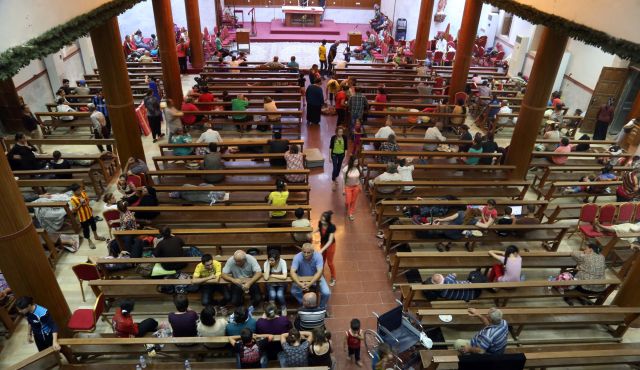
displaced Christians in IraqDisplaced Iraqi Christians settle at St. Joseph Church in Irbil, northern Iraq, Thursday, Aug. 7, 2014. Photo by AP

There is another minority group IS would dearly love to get its hands on, White said, although he doubts the Islamic movement knows of its existence: That’s the tiny remnant of the once-great Jewish community of Iraq.

Last time White spoke to Haaretz, two years ago, there were seven Jews still living in Baghdad. Since then, one has died.

“Four are old and housebound, the other two are able-bodied and still relatively young,” he said. “They are both doctors and working flat-out in their professions. They all come together on Friday night for Kiddush, if they can.”

Not surprisingly, there is deep hostility toward Israel among Iraqis today, White noted, although many recall their former Jewish neighbors with affection. At one time, Baghdad’s population was one-third Jewish: “People do remember them. People say, ‘Our Jews were great. They were our top government ministers and best doctors, but then Israel took them. And they became bad.’”

***************

The future of Iraqi Christians is “seriously in doubt,” says the leader of the country’s only Anglican church, describing scenes of horrific slaughter as Islamic State fighters continue their push into Iraq.

“It’s absolutely horrendous,” said Canon Andrew White, who has headed St. George’s Anglican Church in Baghdad since 2005. “Every Christian has been ousted from Kirkuk and Nineveh, once the traditional homeland of Iraqi Christians. Many were told their choice was to convert to Islam, be killed or pay the jizya tax [to ensure protection of non-Muslim minorities]. Those who didn’t were shot dead, and a lot were killed in ghastly ways.”

A 5-year-old boy that White had baptized several years ago in Baghdad – the child was named Andrew in his honor – was brutally murdered, cut in half by IS attackers in the Christian village of Qaraqosh. The boy’s father had been one of the founding members of White’s congregation. Another family of eight were shot in the face for refusing to convert.

The survivors of these atrocities have all fled, White told Haaretz in a phone interview Sunday from England, in advance of his return to Baghdad.

“There is no way they will ever go back, everything has been destroyed, all their churches have been turned into IS offices, all the crosses on their roofs ripped off and replaced with the IS flag. The future of Christianity in Iraq is seriously in doubt,” he declared.

Two months ago, IS fighters began their push into Iraq from territory they held in Syria. Tens of thousands of people have been displaced, including many Christians as well as people affiliated with the minority Yazidi sect.

White said that Christians in northern Iraq are working hard to deal with the massive influx of refugees. “The Christian community will cram people into their homes. In Dohuk and Alqosh, the main places for Christians in Kurdistan, with some in Erbil, they are living five families in a house.”

From Kurdistan, many will try to appeal for refugee status in Europe or North America. One place they will not find sanctuary, however, is the United Kingdom, which does not offer asylum to Iraqis. White is highly critical of this decision, but understands that it stems from the fear of importing extremism.

“We are afraid,” he explained. “The problem is that there is this fear, you don’t really know what’s going to happen. You live among these people, trust them, they are your friends, but at any moment they could turn against you. This is the risk.”

White says he has personal experience of this, and is at pains to stress that “these extremists did not just gather up overnight.” Their rise, he noted, is a result of the failed policies of former Prime Minister Nouri al-Maliki and of the Shi’a-led regime that left Sunnis increasingly sidelined.

White: “I know a few people, my friends, Sunnis who were on our side and working for reconciliation at one stage, coming to meetings – and they have gone over to IS, in Fallujah and Ramadi mainly. The Sunnis felt so disenfranchised and forgotten about that they went over to the extremists.”

He estimates that the Christian population in Iraq has dropped from 1.5 million, during the 2003 invasion, to around 300,000. Of this number, there are some 50,000 in Baghdad, living in relative safety – for now.

“Baghdad is still quite well protected and functioning normally as the capital, but IS are on the doorstep,” said White. “Their aim without doubt is to get to Baghdad; that would be the ultimate achievement. The Americans say they will bomb Baghdad to stop them getting in. I hope they do: If IS get into Bagdad, then the whole country has fallen.”

Six Jews in Baghdad

There is another minority group IS would dearly love to get its hands on, White said, although he doubts the Islamic movement knows of its existence: That’s the tiny remnant of the once-great Jewish community of Iraq.

Last time White spoke to Haaretz, two years ago, there were seven Jews still living in Baghdad. Since then, one has died.

“Four are old and housebound, the other two are able-bodied and still relatively young,” he said. “They are both doctors and working flat-out in their professions. They all come together on Friday night for Kiddush, if they can.”

Not surprisingly, there is deep hostility toward Israel among Iraqis today, White noted, although many recall their former Jewish neighbors with affection. At one time, Baghdad’s population was one-third Jewish: “People do remember them. People say, ‘Our Jews were great. They were our top government ministers and best doctors, but then Israel took them. And they became bad.’”

White himself has enormous affection for Judaism and Israel, where he is a regular visitor, long involved in a number of interfaith projects dating back to the 2002 Alexandria Process, between Jewish, Muslim and Christian leaders in the Holy Land.

Born in southeast London in 1964, White studied medicine before focusing on religion, although he remembered that while at the University of Cambridge, he found Christian theology terribly dull and turned to Jewish studies instead “because it was much more interesting.”

He studied at Cambridge under Nicholas de Lange, a Reform rabbi and professor of Hebrew and Jewish studies. Although de Lange was far more liberal-minded than the distinctly conservative priest, “I loved him so dearly and I am still in contact with him,” White recalled affectionately.

White went on to enrol in the Hebrew University of Jerusalem in order to study Judaism, but felt he was yet to find his religious comfort zone.

He remembers a conversation with someone on a street in Jerusalem whom he thought looked like an Orthodox rabbi, and who told him: “‘You’re frum [religious]. Don’t go to Hebrew University, they’re woolly liberals. Come to my yeshiva.’” That took White to the Karlin Yeshiva in Jerusalem’s ultra-Orthodox Mea She’arim quarter, where he describes himself as the first-ever “goy” at that yeshiva.

White’s ties to Israel remain strong – he delights in sprinkling Hebrew phrases into his conversation – and he has little sympathy for its opponents.

“I think the war in Gaza and the way it was performed was wrong,” he commented, “but if Hamas in Gaza cared for its people it would not have shot rockets into Israel.”

There was another side-effect of that particular conflict, he said: “Gaza was a very bad distraction because horrendous things were happening in Iraq and nobody seemed to be caring about it.”

Of the attitude toward Christians still living in the Strip, he dismisses the Hamas government’s claims of mutual respect and support for coexistence.

“There are three congregations I know about in Gaza and things are really difficult for them. Even though they are supposed to live in peace, they don’t really, even though Hamas leaders say they do,” he explained.

White carries on his work undeterred by the dangers of life in Baghdad and by the speech and mobility problems he suffers as a result of multiple sclerosis, with which he was diagnosed 16 years ago. Despite the deep commitment, however, he admits that the situation for Iraqi Christians looks increasingly bleak.

“My congregation in Baghdad has gone down from thousands to about 400, most are trying to leave,” said White. “I used to say to them: I’m not leaving you, don’t you leave me. But now I can’t say that, because that is [like] saying: Stay and be killed. All I can promise is that I will be there until the very last Christian.”

Cairo draft accord may embody Israeli concessions on security in return for Hamas truce

August 18, 2014

Cairo draft accord may embody Israeli concessions on security in return for Hamas truce, DEBKAfile, August 19, 2014

(The operative word is “may.’  “We dance around in a ring and suppose but the secret sits in the middle and knows.” Robert Frost — DM)

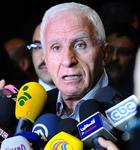
Azzam_al-AhmadPA negotiator Ahmad al-Azzam

DEBKAfile’s intelligence sources disclose that the Egyptian-brokered draft deal Israeli and Hamas delegates inked in Cairo Monday night, Aug. 18, contained, in return for a Hamas commitment to withhold rocket fire on the Israeli population for an extended, though unspecified, period, a number of Israeli concessions and waivers. They are subject to endorsement by the Israeli security cabinet, which does not convene until Tuesday. The Egyptian foreign ministry later Monday announced that the two parties had agreed to extend the Gaza truce for 24 hours “to complete negotiations.”

These provisions of this draft, according to Egyptian sources – though not confirmed by Israeli officials – are disclosed here for the first time:

1. Palestinian fishing rights are extended from 3 to 12 miles.
2. Israel will restore the Gaza Strip’s electrical power capacity within a year.
3. The Palestinian Authority based in Ramallah will oversee and administer all the rehabilitation operations to be performed in the Gaza Strip.
4. An international mechanism will be formed to monitor the building materials delivered to Gaza.
5. Israel will lift its financial restrictions on Gaza’s banks.
6. Israel and Hamas will begin discussing the building of a deep sea port and international airport for the Gaza Strip in a month’s time.
7. They will also embark on parallel negotiations for the release of Palestinians in Israeli security prisons.
8. An extension of the truce and cessation of hostilities between the two parties will take place.

DEBKAfile’s sources report an attempt by some Israeli officials to present the draft as incorporating a process which separates the humanitarian and security issues.

However, it may be that Prime Minister Binyamin Netanyahu and Defense Minister Ya’alon are looking for a pretext to explain the concessions that were made for the sake of a ceasefire for an indefinite period – or else they are trying to ward off Egyptian-Palestinian browbeating for a deal.

According to the disclosures so far, the draft agreement – if it is approved by the cabinet – will embody four major Israeli concessions:
—  Waiving demilitarization of the Gaza Strip and disarmament of Hamas’s rockets and terror tunnels at this point.
—  Lifting the  blockade of the Gaza Strip – economically and by the establishment of ports.
—  Reversal of a government decision to abstain from negotiating the release of convicted Palestinian terrorists from jail, which the Israeli public will never accept.
—  Rehabilitation of the Gaza Strip before any steps are taken towards disarming Hamas.

The danger of this waiver is already apparent in the announcement by the radical Popular Committees faction that it is not bound by any Hamas commitment to suspend rocket attacks. In any case, according to a Egyptian foreign ministry statement late Monday: Israel and the Palestinians have only agreed to a 24-hour ceasefire extension – i.e., until Tuesday midnight, for further negotiations.

Something different

August 18, 2014

WB Yeats – The Second Coming

Turning and turning in the widening gyre
The falcon cannot hear the falconer;
Things fall apart; the centre cannot hold;
Mere anarchy is loosed upon the world,
The blood-dimmed tide is loosed, and everywhere
The ceremony of innocence is drowned;
The best lack all conviction, while the worst
Are full of passionate intensity.

Surely some revelation is at hand;
Surely the Second Coming is at hand.
The Second Coming! Hardly are those words out
When a vast image out of Spiritus Mundi
Troubles my sight: somewhere in sands of the desert
A shape with lion body and the head of a man,
A gaze blank and pitiless as the sun,
Is moving its slow thighs, while all about it
Reel shadows of the indignant desert birds.
The darkness drops again; but now I know
That twenty centuries of stony sleep
Were vexed to nightmare by a rocking cradle,
And what rough beast, its hour come round at last,
Slouches towards Bethlehem to be born?

Hat tip

http://ejbron.wordpress.com/

UPDATE: Israel Denies Ceasefire Report

August 18, 2014

UPDATE: Israel Denies Ceasefire Report

A member of the Palestinian delegation in Cairo stated that the ceasefire will be extended for another 24 hours.

Israeli official: “At this moment, there is no agreement. The cabinet has not yet convened and there is a doubt if there is such a need.”

Palestinians: It was agreed to open up at least five crossings.

Aug 18, 2014, 11:38PM | Dana Nasi

via Israel News – UPDATE: Israel Denies Ceasefire Report – JerusalemOnline.


Will the ceasefire be extended? Photo Credit: Channel 2


The ceasefire will last past midnight, as an agreement was reached between the two sides, according to Palestinian sources.  According to the sources, the Israeli delegation returned to Israel, in order to present the agreement to the cabinet.

A member of the Palestinian delegation, who is part of Hamas, Izzat El Rishik, stated this evening that the “hudna was extended only 24 hours because the work has not yet been completed.”

An Israeli official stated that “until now, there is no agreement. The cabinet has not yet convened and it is doubtful whether it is necessary to convene tonight.” According to Al Jazeera, an agreement was reached related to fishing zones. Israel has agreed to extend the fishing area six miles today and then to 12 within one year.

Hamas and Islamic Jihad fully control UN agency for “Palestinian” “refugees”

August 18, 2014

Hamas and Islamic Jihad fully control UN agency for “Palestinian” “refugees”

Robert Spencer Aug 18, 2014 at 11:18am

via Hamas and Islamic Jihad fully control UN agency for “Palestinian” “refugees” : Jihad Watch.


Hamas’ takeover of the UNRWA institutions and UNRWA staff should set off alarms regarding the possibility of funding given by donor countries — primarily the United States — finding its way to financing the salaries of Hamas and Islamic Jihad activists.” Yep.

“Report: Hamas Jihad fully controls UN agency for Palestinians refugees,” World Tribune, August 17, 2014:


WASHINGTON — Hamas and Islamic Jihad have effectively captured the United Nations agency to care for Palestinian refugees, a report said.

The Center for Near East Policy Research asserted that Hamas and Jihad controlled the UN Refugee and Works Agency in the Gaza Strip. In a report, the U.S.-based center said Hamas operatives were in control of UNRWA’s labor union and that refugee camps served as a recruiting ground for Islamist fighters.

“Over the years, UNRWA has become a convenient surrogate for terrorist organizations, led by Hamas, which unrestrictedly dominates the UNRWA workers union, and its men — along with educators from the Islamic Jihad and other groups — are the ones who educate generations of descendants of Palestinian refugees about the values of jihad against Israel and all infidels,” the report, titled “The UNRWA-Hamas Axis,” said.

Author Jonathan Halevi, a leading Israeli analyst on Palestinian affairs, cited the discovery of rocket caches in several UNRWA schools during the Hamas war with Israel in July and August 2014. Halevi also said Hamas built an attack tunnel from a UN health clinic and boobytrapped the facility.

The report said the UNRWA union has been under control of Hamas operative Suheil Al Hindi, who won a landslide victory in elections in 2012. The 11,500 employees gave Hamas all 11 seats in UNRWA’s teachers’ union and 14 out of 16 seats in the employees and service sectors.

“Al Hindi, who in the past also headed the teachers’ sector at UNRWA, does not hide his affinity for the Hamas organization and takes part in overt political activities as its representative,” the report, released in August 2014, said. “In his capacity and as a supervisor of student summer camps, Al Hindi has a tremendous impact on the UNRWA education system and the contents taught in it.”

“UNRWA’s management is well aware, at least since 2004, of the fact that Suheil Al Hindi, who headed the UNRWA teachers sector, is a senior Hamas activist who supports jihad against Israel and suicide bombings,” the report said.

Another leading Hamas figure in UNWRA was identified as Issa Abdul Hadi Al Batran. The report said the 41-year-old Al Batran has been a senior member of Hamas’ Izzedin Kassam military wing. In 2009, Al Batran was fired after he was seriously injured when a bomb developed for Hamas prematurely exploded.

Other leading insurgents employed by UNRWA included Awad Al Qiq, a principal at a UN school as well as head of Jihad’s weapons production unit. Said Siyam served as a teacher for UNWRA for 23 years until he became Hamas interior minister.

“Despite being a well-known senior activist in Hamas, UNRWA did not take steps to remove him [Siyam] from its ranks,” the report said.

In all, dozens of Hamas military commanders were said to have begun as employees for UNRWA. The report said Jihad also infiltrated the UN agency.

“Hamas’ takeover of the UNRWA institutions and UNRWA staff should set off alarms regarding the possibility of funding given by donor countries — primarily the United States — finding its way to financing the salaries of Hamas and Islamic Jihad activists,” the report said.