Archive for August 27, 2014

US may no longer have strategic interest resolving Israeli-Palestinian conflict

August 27, 2014

US may no longer have strategic interest resolving Israeli-Palestinian conflict, Jerusalem PostMichael Wilner, August 27, 2014

Former US diplomat: Obama was “enraged” by Israeli moves, treatment of Kerry; Palestinians witness Hamas, Islamic State effective use of violence.
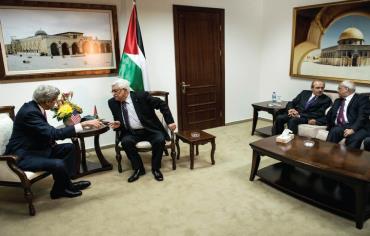
buncha guysUS SECRETARY of State John Kerry and Palestinian Authority President Mahmoud Abbas talk while PLO Executive Committee member Yasser Abed Rabbo and Palestinian negotiator Saeb Erekat talk on the side during a meeting at the presidential compound in Ramallah. Photo: REUTERS

Palestinians both in Gaza and the West Bank “see Hamas resisting Israel and they see ISIS [the Islamic State] using violence to establish its Islamic State over in Iraq, and all Abu Mazen has to offer is negotiations as the way to achieve Palestinian statehood.

****************

Gaza has had “very negative impact” on US-Israel relations, said Martin Indyk,  former US special envoy to the Middle East process, in an interview published this week.

“It’s very hard to make the argument that America now has a strategic interest in resolving the Israeli-Palestinian conflict,” he said.

“The personal relationship between the president and the prime minister has been fraught for some time and it’s become more complicated by recent events.” Peace talks ended in April without any progress after Kerry and Indyk forged an aggressive effort first for a comprehensive peace accord, and later for a framework for the continuation of negotiations, which the US never published.

Speaking extensively on US relations with Israel since the end of the latest round of peace talks between Israel and the Palestinians last April, and throughout Operation Protective Edge, a candid Indyk said at times US President Barack Obama has become “enraged” at the Israeli government, both for its actions and for its treatment of his chief diplomat, US Secretary of State John Kerry.

Some of that criticism, targeted at Kerry during his efforts to forge a ceasefire with Hamas through Qatar last month, “enraged” the president, Indyk asserted.

“The United States will do fine without a resolution of this particular conflict. As time goes on and other issues come to dominate our agenda and our interests shift, really the only reason we have left to pursue a settlement of the Israeli-Palestinian conflict is because of our concern about Israel’s future,” Indyk said.

The former ambassador, a veteran of the conflict for enmeshed in its politics for over forty years, said that Prime Minister Benyamin Netanyahu’s standard for an end to hostilities with Hamas— a prescribed return to quiet for quiet— “is not a victory and probably isn’t going to be attainable.”

Palestinians are taking notice of the effectiveness of extremist, violent resistance movements against the governments of Israel and Iraq, says Martin Indyk, former US special envoy to the Middle East process, in an interview published this week.

Palestinians both in Gaza and the West Bank “see Hamas resisting Israel and they see ISIS [the Islamic State] using violence to establish its Islamic State over in Iraq, and all Abu Mazen has to offer is negotiations as the way to achieve Palestinian statehood. And negotiations don’t have any credibility anymore, 20 years after Oslo and with over 300,000 Israeli settlers in the West Bank,” Indyk said. Responding to the interview, the State Department— Indyk’s former employer— said that Indyk is now a private citizen who speaks for himself.

Before resigning his post, Indyk gave a speech to the Washington Institute for Near East Policy chiding both sides for their unwillingness to make political concessions. Israelis and Palestinians alike said that Indyk, and his team, shared in the blame, often contributing to a toxic environment for negotiators.

In the interview with Foreign Policy magazine, Indyk characterizes harsh Israeli criticism from its political right “hubris,” contributing to a “bubble of illusion” that the Jewish state is not reliant on the US.

But “if Israel becomes a partisan issue in American politics, the US-Israel relationship will then be weaker as a result.”

McCarthy: Obama Administration ‘Ideologically Entrenched’ in Not Calling IS a Serious Threat

August 27, 2014


Benjamin Netanyahu’s cabinet in revolt over Gaza ceasefire

August 27, 2014

Benjamin Netanyahu’s cabinet in revolt over Gaza ceasefire
By Inna Lazareva, Tel Aviv 2:45PM BST 27 Aug 2014 Via The Telegraph


Mr Netanyahu produced a legal opinion which stated that a vote on the Gaza ceasefire was not necessary Photo: Getty Images


(“Distant water cannot extinguish nearby fire.”-LS)

Israel’s fragile coalition government is threatened by the Gaza ceasefire, which the prime minister agreed without putting it to a vote .

Israel’s acceptance of an Egyptian ceasefire proposal may have temporarily ended the war with Hamas – but the move has sparked a row within Israel’s security cabinet that now threatens the future of the country’s coalition government.

Over half of Israel’s cabinet members are said to have opposed the ceasefire deal which entered into effect on Tuesday evening, with many members furious that Mr Netanyahu opted not to bring it up to a vote.

Discussions over the ceasefire between Israel, Egypt and the Palestinians have been going over the weekend – but during this time, Mr Netanyahu is said to have kept his cabinet out of the loop, Israeli daily Haaretz reported.

Only once news of the ceasefire agreement had been reported by the Arab media were Israeli cabinet ministers briefed over the phone of the development, writes Haaretz’s Diplomatic Correspondent Barak Ravid.

Naftali Bennett, the economy minister, formerly an adviser of Mr Netanyahu and now one of the prime minister’s key critics, even sought to bring the ceasefire decision to a vote upon realising that many of the cabinet members were against the deal.

However, Mr Netanyahu produced a legal opinion which stated that a vote was not necessary.

Mr Netanyahu has faced growing opposition from his cabinet over his handling of the war with Hamas during the 50-day campaign.

Avigdor Lieberman, the foreign minister, who had recently pulled out his party from an alliance with Mr Netanyahu’s Likud, has ceaselessly called for a reoccupation of the Gaza strip and a crushing of Hamas, whilst criticising Mr Netanyahu for not acting with enough force.

Last month, Mr Netanyahu fired his deputy defence minister, Danny Danon, after he criticised a previous ceasefire acceptance by Mr Netanyahu. Mr Danon described it as a “humiliating” decision for Israel.

But since the latest ceasefire had gone into effect, even those close to the centre of the Israeli political spectrum have levelled criticism at Mr Netanyahu’s decision.

Members of Yesh Atid, a centre-Right party which is a key member of Mr Netanyahu’s coalition, issued a veiled threat to topple Mr Netanyahu’s coalition by pulling out its support.

“The Yesh Atid party will re-examine its future in the government, based on the political decisions the prime minister makes. Even those who support an agreement, like us, will reconsider their future in the government”, said MK Ofer Shelah.

Due to Israel’s political system, its coalition governments are notoriously unstable and rarely last their full terms.

Mr Netanyahu was also lambasted from the Left, by the head of Israel’s Meretz party.

“The ceasefire came too late and its conditions prove, finally, that Operation Protective Edge is a strategic failure for Netanyahu – who went to war without any goals. And ended it with a great achievement for Hamas at the expense of the residents of the south,” said Zehava Galon, leader of Meretz.

“It is now clear that the suffering of the residents of the south in the last few weeks, as with all the hardships that the residents of Israel have endured, was forced on us by an irresponsible government without any thinking, without any long term planning, and without any results,” she added.

Jihadism and ‘the language of good and evil’‎

August 27, 2014

Jihadism and ‘the language of good and evil’‎, Israel Hayom, Clifford D. May, August 27, 2014

“The battle of Waterloo,” the Duke of Wellington is supposed to have said, “was won on ‎the playing fields of Eton.” The battle against the Islamic State could be lost on the ‎campuses of American universities.‎

Among the reasons: The dominant ideology in academia is multiculturalism. To a ‎multiculturalist, being judgmental is a cardinal sin — not least when it comes to those ‎whose goal is to defeat and destroy the United States and its allies. It therefore should ‎come as no surprise to see The New York Times giving space for an op-ed by Michael J. ‎Boyle, an associate professor of political science at La Salle University. His theme: the ‎‎”disturbing return of the moralistic language once used to describe al-Qaida in the ‎panicked days after the 9/11 attacks.”‎

Professor Boyle is particularly exercised by U.S. President Barack Obama’s reference to the Islamic State ‎as “a ‘cancer’ spreading across the Middle East.” He hears in that “an eerie echo of ‎President George W. Bush’s description of the global war on terrorism as a campaign ‎against ‘evildoers.'”‎

Why is that a problem? It led to “foreign wars begun in the name of stamping out ‎‎’evildoers'” — wars that incurred “huge costs and reputational damage.” So the preferable ‎option would have been to do what — refer Osama bin Laden to the U.N. Human Rights ‎Council?‎

In any case, Boyle doesn’t think the Islamic State (also known as the Islamic ‎State in Iraq and the Levant, abbreviated “ISIS” or “ISIL”) is as malevolent as charged. In his considered opinion, it ‎‎”operates less like a revolutionary terrorist movement that wants to overturn the entire ‎political order in the Middle East than a successful insurgent group that wants a seat at ‎that table.”‎

And how could anyone be so moralistic as to deny the Islamic State a place to sit — just ‎because its warriors mass-murder minorities, enslave women and sever journalists’ heads?‎

The professor adds: “The language of good and evil may provide a comforting sense of ‎moral clarity, but it rarely, if ever, produces good policy.”‎

Hmmm. One wonders whether Boyle has ever taught — or even taken — a course on ‎World War II. During that conflict, Winston Churchill frequently employed the “language of good ‎and evil,” for example referring to Hitler as a “monster of wickedness, insatiable in his ‎lust for blood and plunder.”‎

Would Churchill’s policies have been improved had he toned the rhetoric down and ‎offered the fuehrer a “seat at the table”? To the contrary: Churchill’s moral clarity ‎contributed to his strategic clarity, leading him to oppose appeasement and insist on ‎unconditional surrender and the delegitimization of Nazi ideology.‎

With that as context, I was encouraged to hear Obama unequivocally condemn ‎those wreaking havoc in what used to be Iraq and Syria. What did not ring true was his ‎assertion that the “entire world is appalled by the brutal murder of Jim Foley,” adding for ‎emphasis that this crime “shocks the conscience of the entire world.”‎

Actually, I’m pretty certain that at this moment a significant number of individuals — ‎Europeans and Americans among them — are watching the video of Foley’s ‎beheading and feeling inspired to volunteer to serve Abu Bakr al-Baghdadi, the self-‎proclaimed caliph (the term implies a successor to the Prophet Muhammad) of the Islamic ‎State.‎

Some such people may be sociopaths. Some may be lost boys, desperate for meaning and ‎a transcendent cause. But not all.‎

According to a biography posted on jihadi forums, the new ruler has a doctorate in ‎Islamic studies from the University of Baghdad. We can deduce that Dr. Baghdadi is ‎among those who believe that the collapse of the Ottoman Empire and the Islamic ‎caliphate following World War I was a terrible injustice; that Christians, Jews, Hindus ‎and insufficiently militant Muslims are “enemies of God”; that Americans don’t deserve ‎the power they wield; that Muslims are obligated to restore Islamic domination of the ‎world; and that nothing that helps achieve that goal — however barbaric and diabolical in ‎infidel eyes — is impermissible.‎

Which brings us to another statement by Obama last week: “One thing we can all ‎agree on is that a group like ISIL has no place in the 21st century.” In fact, we don’t all ‎even agree that this is the 21st century. According to the Islamic calendar, 1435 is the ‎date you should be writing on your checks. And if you’re a jihadist, the 21st century is no ‎improvement over the seventh century, the era when Islamic armies began to create one of ‎history’s greatest empires.‎

The president concluded by predicting that the Islamic State would “ultimately fail … ‎because the future is won by those who build and not destroy and the world is shaped by ‎people like Jim Foley.”‎

Once upon a time, Western leaders knew better. Churchill and Franklin D. Roosevelt understood that ‎the course of history is not predetermined and that enormous sacrifices would be required ‎to defeat the forces fighting for German domination. Their job was to explain why those ‎sacrifices were necessary.‎

Let me end with a word of praise for Obama: In recent days, he has deployed air ‎power and Special Forces to prevent Baghdadi’s forces from butchering as many ‎Yazidis, Christians, Kurds and disobedient Muslims as they intended, and expanding ‎their territories as much as they planned. That’s by no means all that needs to be done — ‎but it could represent a good, if belated, start.‎

Boyles disagrees. He writes that what began as a response to a humanitarian crisis ‎has “morphed into an effort to roll back, or even defeat” the Islamic State. And how ‎could any postmodern, multicultural professor on an American campus possibly support ‎that?‎

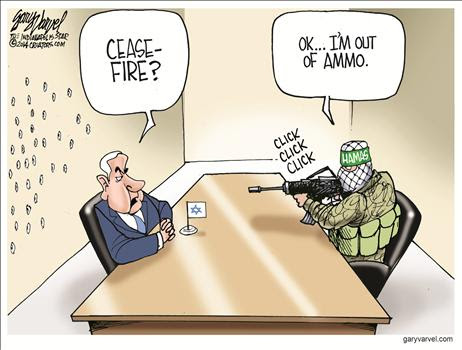
Cartoon of the day: Cease Fire(?)

August 27, 2014
unnamedTown Hall Conservative cartoon of the day

The Dark State Rises: Who’s to Blame for the Brutal New Caliphate? (Pt. 1)

August 27, 2014

The Dark State Rises: Who’s to Blame for the Brutal New Caliphate? (Pt. 1), PJ Media, August 26, 2014

Experts: Alliance with Syria’s Assad an “Ambush” for U.S.

August 27, 2014

Experts: Alliance with Syria’s Assad an “Ambush” for U.S., Washington Free Beacon, August 27, 2014

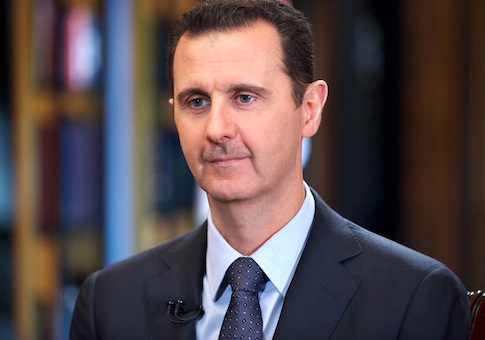
Bashar AssadBashar al-Assad / AP

Experts continue to warn against a U.S. alliance with Syrian President Bashar al-Assad to defeat Islamic militants as the Obama administration looks for partners in the regional fight.

Both White House and State Department officials on Tuesday ruled out a direct partnership with Assad to strike the Islamic State of Iraq and the Levant (ISIL or ISIS). The Washington Post reported that “such strikes would be a strategic benefit to Assad” whether the United States cooperated with him or not. Assad has largely avoided attacking ISIL in Syria during a three-year civil war, focusing most of his efforts on eliminating the moderate rebel opposition.

Assad even helped facilitate the rise of the jihadist group that now threatens U.S. and European security, a main reason why many experts have strongly cautioned against U.S. officials working with the Syrian leader. Syrian journalist Hassan Hassan noted recently that Assad’s forces declined to engage ISIL in the northern city of Raqqa:

Raqqa was saved the fate of Deir Ezzor, Aleppo, Homs, and Deraa. ISIS soon controlled the province, painted government buildings in black and turned them into bases. The group’s bases were easy to spot, for about a year and a half. Elsewhere, too, Assad allowed ISIS to grow and fester. The regime has been buying oil from it and other extremist groups after it lost control of most of the country’s oilfields and gas plants.

Frederic Hof, a resident senior fellow at the Atlantic Council and former Obama administration adviser on Syria, wrote on Tuesday in the New Republic that Assad could lure the United States into an “ambush.” The authoritarian leader will “allege coordination and collaboration when none exists,” Hof said:

How to avoid the ambush? Demonstrate real hostility toward Assad, whose removal for the sake of neutralizing ISIS is even more justified than the ouster of Iraq’s Nouri Al Maliki. If, in the course of U.S. anti-ISIS air operations over Syria, regime air defense radars lock onto U.S. aircraft, the relevant air defense site or sites should be engaged decisively. Robust and timely aid for Syrian nationalist rebels fighting both the regime and ISIS is a must. Relevant security assistance for a Syrian National Coalition trying to set up an alternate governing structure in non-Assad, non-ISIS Syria is mandatory. Building an all-Syrian national stabilization force in Turkey and Jordan for eventual anti-regime and anti-ISIS peace-enforcement is essential. American leadership in creating mechanisms that can one day bring Bashar Al Assad and his principal enforcers to trial for war crimes and crimes against humanity is vital. These are the steps that can put the lie to Assad’s libel.

A who’s who of the good guys and bad guys in the new Jihad

August 27, 2014

A who’s who of the good guys and bad guys in the new Jihad, Breitbart, , August 26, 2014

(There are more bad guys than good guys and many of the good guys are ineffectual or worse. — DM)

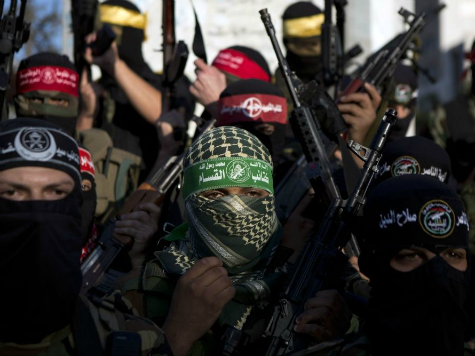
miscellaneous-jihadis-afp

(See Bloomberg video at the link. — DM)

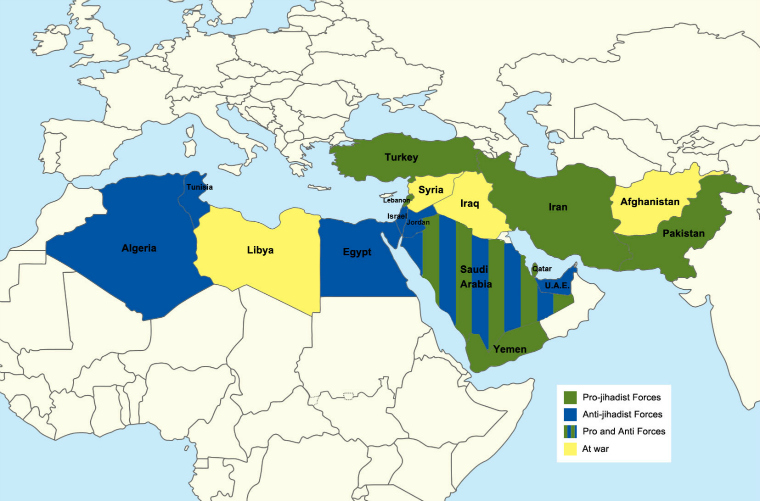
Wars are never simple. With the incredible success of the terrorist group ISIS, now called the Islamic State, and the recent news that Egypt and UAE have engaged in air strikes against the jihadists in Syria, Breitbart News has decided to cut away some of the fog of war and explain who stands where in this latest Holy War for the future of the Middle East and North Africa.

Breitbart mapImage: John Sexton. For a bigger and more legible map right click and open in a new tab.

Afghanistan: Continually deteriorating alliance with the United States. Taliban insurgency continues to usurp power and territory from the vacuum left behind by US forces’ departure from Kabul. Multi-ethnic society under one ​impossible-to-maintain central administration has created the conditions for constant clashes between tribes. Home to Osama bin Laden and al Qaeda in the ’80s and ’90s.​

Algeria: Home to Africa’s third-biggest oil reserves and 10th in the world in natural gas reserves. Dealing with widespread poverty and Islamist radicals infiltrating the government. 99% Sunni Muslim.

Al Qaeda: Salafist Sunni terror group now run by the Egyptian Ayman al Zawahiri, with various offshoots spread all over the region. The Islamic State – formerly ISIS – is a break-off of Al Qaeda in Iraq.

Bahrain: Tiny country primarily populated by Shiite Muslims but ruled by Sunnis, which has often led to political unrest and anti-regime protests.

Egypt: Run by the government of President Abdel Fattah el Sisi, the former Commander of the Armed Forces. The government has declared the Muslim Brotherhood a terrorist organization and is fighting jihadi elements in major cities, especially the Sinai.

Hamas: Palestinian terror organization at war with Israel. The Palestinian arm of the Muslim Brotherhood, its charter commits its members to “dying in the way of Jihad.”

Hezbollah: Iran-backed Lebanon-based terrorist group. Engaged in “holy war” with Sunni terrorist group The Islamic State in Syria, and according to latest reports, now in Iraq also. Led by Hassan Nasrallah.

Iran: Leader of the Shiite Islamic world. Ruled by theocratic dictator Ayatollah Ali Khamenei. Known financier of Hezbollah and Hamas terror groups and ally of Syria’s Assad. Committed to exporting its theocratic revolution.

Iraq: At war with the Islamic State (IS). The new government has lost control of several major cities to IS. Weakened by crumbling defense forces and lack of US forces in the country.

The Islamic State: Formerly known as Al Qaeda in Iraq, and the Islamic State of Iraq and al-Sham. Lead by the newly announced “caliph” Abu Bakr al-Baghdadi. Controls a large swath of territory that spans much of Iraq and Syria. In terms of numbers of fighters, weapons, and available funds, far outstrips the capabilities of Al Qaeda (even at its most powerful on 9/11).

Israel: Only liberal democracy in the Middle East. At war with Iran-sponsored Hamas, an arm of the Muslim Brotherhood. De facto alliance with Egypt. Closest formal ally to the US in the region

Jordan: Monarchy ruled by King Abdullah II, part of the Hashemite dynasty said to be descended from Mohammad. A moderate Islamic country compared to its Arab neighbors and a close ally of the United States. Threatened as a potential prime target for the Islamic State for both of these reasons. Inherently unstable due to a very large Palestinian population and enormous influx of refugees from Syria and Iraq. Has a small but very capable military and intelligence service.

Kuwait: Home to US military bases. Top officials recently suspected of financing terror. Ruling party dealing with allegations of massive corruption. Emir controls all political power. Recent reports say that Kuwait may be turning against the jihadi movement.​

Lebanon: Although its ​governmental system is technically equally divided between Shiite, Sunni, and Maronite Christians, in reality, both domestic and foreign policy is dominated by ​the ​Shiite terror group and Iran-proxy Hezbollah.

Libya: Ruling party at war with anti-Islamist general Haftar. Country in a state of lawlessness. The Al Nusra Front, an Al Qaeda-offshoot that was responsible for 9/11/2012 attack on US consulate, is still at large.

Pakistan: Home to the Haqqani network and the country where Osama bin Laden was hiding. Pakistan’s Inter-Services Intelligence (ISI) is known to have been infiltrated by ​and supportive of ​radical fundamentalist interests. Fundamentally dysfunctional, Pakistan has never come to terms with its Islamic identity or its paranoia for India.

Qatar: Oil-rich gulf state that controls the Al Jazeera Media Network, which is known as an informal propaganda arm of the Muslim Brotherhood. Qatari officials have been accused by international leaders of financing terrorism, particularly The Islamic State terror group. Along with Turkey suspected of being the largest supporter of jihadists in Syria and Iraq.

Syria: In the midst of a civil war between President Bashar al-Assad’s Syrian Army and Islamist factions of varying radicalism. Current death toll estimates around 200,000. A client state of Iran.

Turkey: Previously a stable, secular Muslim state whose democracy was vouched safe by the military. Now ruled by Muslim Brotherhood-friendly leadership. Strongly aligned with Hamas despite being a member of NATO. Along with Qatar suspected of being supporter of jihadists in Syria and Iraq.

Tunisia: Recognized as the catalyst of the “Arab Spring” revolts that changed the map of the Middle East. Recently removed from power Muslim-Brotherhood government.

Saudi Arabia: Ruled as a theocratic absolute monarchy. Preaches Wahhabism, a salafist fundamentalist branch of Islam. Known for Mecca and Medina, the two holiest Islamic sites. Top officials have been accused of aiding and abetting of Al Qaeda and its offshoots. Recently reassessing the threat of extremists to its own system, it has moved closer to Israel.

United Arab Emirates: Carried out airstrikes on Libya last week against Islamist militants. Federation of seven emirates, each governed by an emir who come together to form the Federal Supreme Council, which makes executive decisions on behalf of the UAE. Abu Dhabi and Dubai are two emirates known for being commercial hubs. Interested in defeating the jihadi threat.

Yemen: Home to Al Qaeda in the Arabian Peninsula, arguably the fiercest branch of AQ. Large US drone presence to combat radical entities. Fragile government threatened by jihadists as well as tribal Houthi insurgents.

Al Qaeda on Israel’s Doorstep as Syrian Rebels Take Golan Crossing

August 27, 2014

Al Qaeda on Israel’s Doorstep as Syrian Rebels Take Golan CrossingWednesday, August 27, 2014 | Israel Today Staff

via Al Qaeda on Israel’s Doorstep as Syrian Rebels Take Golan Crossing – Israel Today | Israel News.


An Al Qaeda-linked Syrian rebel group seized control of the Quneitra Crossing between Israel and Syria on Wednesday.

Israeli authorities ordered farmers and other civilians in the northeastern part of the Golan Heights to evacuate earlier in the day, as Syrian government forces battled the Al-Nusra Front near the border region.

As the fighting raged, a number of mortar shells landed in Israel, and wayward gunfire from Syria wounded an Israeli army officer. The IDF responded with targeted artillery fire.

The Al-Nusra Front has repeatedly acknowledged its allegiance to Al Qaeda. At one point, al-Nusra was working together with the Islamic State (formerly ISIS), but the two groups later began fighting one another when Islamic State leader Abu Bakr al-Baghdadi tried to force a merger.

PHOTO: Mortar shells from Syria land in Israel’s Golan Heights, as Syrian government forces battle Al Qaeda-linked jihadists just across the border.

Tonight: PM Netanyahu To Address the End of the Operation

August 27, 2014

Tonight: PM Netanyahu To Address the End of the Operation

While throughout the government there are voices of disappointment over the end of Operation Protective Edge, the prime minister is expected to address the operation and results of the cease-fire agreement.

The defense minister and chief of staff are expected to speak as well.

via Israel News – Tonight: PM Netanyahu To Address the End of the Operation – JerusalemOnline.


Yaalon and Netanyahu Channel 2 News
 

Aug 27, 2014, 04:43PM | Gal Cohen

Against the background of growing criticism of the government from the public and the government regarding the operation, Netanyahu is expected to hold a press conference this evening (Wednesday), in which he will address the end of the operation.  The defense minister and chief of staff will also speak.

The decision to accept a cease-fire with Hamas, drew sharp criticism from the government and cabinet ministers, as well as many residents of the communities on the Gaza border who have expressed uncertainty about returning to their homes. MK Danny Danon, who was fired from his post as Deputy Defense Minister by the Prime Minister during the operation, said earlier today that the Likud Committee will convene to discuss the fighting that has caused the public to feel “confused and disappointed”.

“The policy of the government during the operation is not compatible with the policies of Likud, this isn’t the spirit of the party,” Danon said in a conversation with Channel 2 News Online. “We were chosen on another platform – that we will be strong against Hamas, we will topple it if necessary. Unfortunately this did not happen, due to the prime minister choosing to go in a spirit of Tzipi Livni, a complaisant and timid spirit.  Whether the response was determined at the outset, there is no question who won.”

The decision of Prime Minister Netanyahu and the Attorney General to accept the proposed outline for a cease-fire without the approval of the Cabinet, but only to update the members, was harshly criticized. Opponents of the decision are some of the most prominent cabinet ministers – Lieberman, Bennett, and Aharonvitch.  It is not yet clear whether the outrage will translate to the dismantling of the government, but it seems that the coalition led by Netanyahu may find itself facing upheaval soon.