Europe’ Last Stand “World Premiere Sept 24”
Syrian civil war death toll rises to more than 191,300, according to UN Human rights office says figure includes additional killings from earlier periods as well as deaths since last report in July 2013
Associated Press in Geneva theguardian.com, Friday 22 August 2014 11.22 BST

The death toll from Syria‘s civil war has risen to more than 191,300 people, the United Nations has said.
The figures for March 2011 to April 2014 are the first to issued by the UN’s human rights office since July 2013, when it documented more than 100,000 killed.
The UN’s top human rights official, Navi Pillay, who oversees the Geneva-based office, said the figures are so much higher because they include additional killings from earlier periods, as well as deaths since the last report. The exact figure of confirmed deaths is 191,369, Pillay said.
“As the report explains, tragically it is probably an underestimate of the real total number of people killed during the first three years of this murderous conflict,” she said.
Pillay, the UN high commissioner for human rights, criticised what she described as the world’s “paralysis” over the fighting in Syria, which “has dropped off the international radar” in the face of so many other armed conflicts.
In January, her office said it had stopped updating the death toll, blaming a lack of access in Syria and its inability to verify source material. It was unclear why it has released new figures now.
The UN also would not endorse anyone else’s count, including the widely quoted figures from the Britain-based Syrian Observatory for Human Rights, which has closely counted the deaths since Syria’s crisis began in March 2011. On Thursday, the observatory said the number of deaths has reached 180,000.
Gen. Dempsey: ISIS Cannot be Defeated Without Going Into Syria
Friday, 22 Aug 2014 08:38 AM
By Melissa Clyne
via Gen. Dempsey: ISIS Cannot be Defeated Without Going Into Syria.
And for hamas is it different ?
Without confronting the Islamic State of Iraq and Syria (ISIS) inside Syria, the United States cannot defeat the militant terror organization that recently beheaded kidnapped American journalist James Foley, says Joint Chiefs of Staff Chairman Gen. Martin E. Dempsey.
“This is an organization that has an apocalyptic end-of-days strategic vision that will eventually have to be defeated,” said Dempsey, who spoke alongside Defense Secretary Chuck Hagel at press conference, according to the New York Times.
“Can they be defeated without addressing that part of the organization that resides in Syria? The answer is no.”
Thus far, President Barack Obama has restricted airstrikes and military action to Iraq but there are growing concerns about ISIS’ ability to maintain a safe haven inside Syria, which borders Iraq. And the calls to act against ISIS militarily are growing.
Hagel indicated that strategy could be changing course, saying the administration is “looking at all options” concerning airstrikes on ISIS targets in Syria.
Dempsey characterized the border between Iraq and Syria as “nonexistent” and noted that that the battle to root ISIS out will be a lengthy one that must be fought by “a coalition in the region,” according to the Associated Press.
“ISIS will only truly be defeated when it’s rejected by the 20 million disenfranchised Sunni that happen to reside between Damascus and Baghdad,” Dempsey said.
With the use of captured American equipment, including Humvees, at least one heavily armored troop transport vehicle, and 20 Russian tanks in Syria, ISIS is well-equipped to wreak havoc on the region, according to the Times. The group, an offshoot of al-Qaida, is operating with a “decentralized command and control,” and has the ability to seamlessly replenish its ranking members with experienced militants, according to the Times.
“They are beyond just a terrorist group. They marry ideology, a sophistication of strategic and tactical military prowess,” Hagel said. “…This is beyond anything we have seen, and we must prepare for everything. And the only way you do that is that you take a cold, steely hard look at it and get ready.”
“If there is anything (ISIS) has learned from its previous iterations as al-Qaida in Iraq, it is that they need succession plans because losing leaders to counterterrorism operations is to be expected,” an intelligence official told the Times. “Their command and control is quite flexible as a result.”
Obama may have to authorize an expanded military action against, ISIS, the Associated Press reported.
The president may continue helping Iraqi forces try to reverse the group’s land grabs in northern Iraq by providing more arms and American military advisers and by using U.S. warplanes to support Iraqi ground operations.
But what if the militants pull back, even partially, into Syria and regroup, as Hagel on Thursday predicted they would, followed by a renewed offensive?
“In a sense, you’re just sort of back to where you were” before they swept into Iraq, said Robert Ford, a former U.S. ambassador to Syria who quit in February in disillusionment over Obama’s unwillingness to arm moderate Syrian rebels.
“I don’t see how you can contain the Islamic State over the medium term if you don’t address their base of operations in Syria,” he said in an interview before an intensified round of U.S. airstrikes this week helped Kurdish and Iraqi forces recapture a Tigris River dam near Mosul that had fallen under control of Islamic State militants.
On the other hand, Obama has been leery of getting drawn into the Syrian civil war, which began in 2011.
More immediately perhaps, Obama faces choices in Iraq, whose sectarian divisions and political dysfunction created the opening that allowed Islamic State fighters to sweep across northern Iraq in June almost unopposed. They captured U.S.-supplied weapons that Iraqi forces left behind when they fled without a fight.
Among his options:
—Sending more troops to Baghdad to strengthen security for the U.S. Embassy, as requested by the State Department. Officials said the number under consideration is fewer than 300. They would be in addition to the several hundred U.S. troops already in the capital to help protect U.S. facilities and personnel.
—Speeding up the arming of Iraqi and Kurdish forces. The administration has been supplying Iraqi government forces with Hellfire missiles, small arms and ammunition, but critics say the pace has been too slow. The administration has been reluctant to openly arm the Kurds, since their militia, known as the peshmerga, is a semi-autonomous force seen in Baghdad as a threat to central government authority.
—Increasing the number and expanding the role of the dozens of U.S. military advisers who are in Baghdad and the Kurdish capital of Irbil to coordinate with Iraqi forces. They could be given more direct roles in assisting the Iraqis on the ground by embedding with Iraqi or Kurdish units in the field or scouting targets for U.S. airstrikes.
—Committing U.S. ground troops in Iraq. Obama has said repeatedly he would not do this. “We’re not the Iraqi military. We’re not even the Iraqi air force,” Obama said Monday. “I am the commander in chief of the United States armed forces, and Iraq is going to have to ultimately provide for its own security.”
—Extending the Iraq air campaign to Islamic State targets in Syria. Stretches of eastern Syria are a sanctuary for the group, also known by the acronyms ISIL or ISIS. The U.S. has warplanes available in the Middle East and Europe that could vastly increase the number and intensity of strikes in eastern Syria if Obama chose.
At a Pentagon news conference Thursday, Hagel appeared to leave the door open to extending U.S. strikes into Syria.
“We’re looking at all options,” he said when asked whether airstrikes inside Syria were a possibility.
This is hardly the first time Obama has faced options for military action in Syria.
The White House on Wednesday disclosed that Obama authorized a covert mission this summer to rescue American hostages in Syria, including journalist James Foley. The mission failed because the hostages had been moved before the rescuers arrived, officials said. On Tuesday, the militants released a video showing the beheading of Foley and threatened to kill a second hostage if U.S. airstrikes in Iraq continued.
A year ago, Obama put on hold a plan to attack Syria for its alleged use of chemical weapons, arguing that he would not act until Congress had a chance to vote on the use of military force. The vote never came, however, because the government of President Bashar Assad accepted a U.S.-Russian brokered deal to destroy Syria’s chemical arsenal.
The Associated Press contributed to this report.
Message From President Abbas’ Fatah Party—It’s OK To Slaughter Jews In Settlements”Our political decision is resistance in the occupied territories in order to bring an end to the occupation [using] all forms of resistance.”
8.21.2014 News Jeff Dunetz
via Message From President Abbas’ Fatah Party—It’s OK To Slaughter Jews In Settlements | Truth Revolt.
Are this the people where Israel wants to work with, like safeguarding border crossings ?
Once again proving that Palestinian leadership talks peace in English but war in Arabic, Jibril Rajoub, the Deputy Secretary of the Central Committee for President Mahmoud Abbas’ “Moderate” Fatah Party, appeared on independent Palestinian TV Station Awdah announcing that Fatah has made a “political decision” to support slaughtering of Jews who live in settlements.
I’m telling everyone: Fatah has decided that our relations with the Israelis are relations between enemies. There is no kind of coordination between the Israelis and us. Everyone can be certain that any form of mutual coordination ended a day after they declared war on the National Unity Government… OK, brother, here is the occupation, am I stopping you from slaughtering a settlement? No one is stopping anyone. Don’t lie and tell me: ‘the [PA] Security Forces and Mahmoud Abbas,’ and so on [stop you]. Drop it, OK? No one is stopping anyone. Our political decision is resistance in the occupied territories in order to bring an end to the occupation [using] all forms of resistance.
Source: Palwatch
Exclusive: Militants, weapons transit Gaza tunnels despite Egyptian crackdown
AL-SARSOURIYA Egypt Thu Aug 21, 2014 6:55pm BST
via Exclusive: Militants, weapons transit Gaza tunnels despite Egyptian crackdown | Reuters.
(Reuters) – A third of the houses on the main street of this Bedouin town near Egypt’s border with Gaza look derelict, but inside they buzz with the activity of tunnel smugglers scrambling to survive a security crackdown by the Egyptian army.
Smugglers and tunnel owners, who once publicly advertised their services, have taken over the nearly two dozen single-storey concrete structures and boarded up their doors and windows to avoid the attention of the authorities.
While tunnels used by Gaza’s dominant Hamas militants to infiltrate Israel were a priority target of an Israeli offensive in the Palestinian enclave this summer, many smuggling conduits into Egypt have skirted detection.
That has allowed transports of weapons, building materials, medicine and food to continue to and from the small, coastal territory that is subject to blockade by both Israel and Egypt, tunnel operators say and Egyptian security sources acknowledge.
“During the Gaza war, business has flourished,” said a Bedouin guide who gave Reuters access to one of the tunnels and a rare look at how the illicit, lucrative industry has evolved since Egypt began trying to root out the passages in 2012.
Egypt sees a halt to the flow of weapons and fighters as important to its security, shaken in the past year by explosions and shootings by an Islamist insurgency based mainly in the Sinai Peninsula bordering Gaza and Israel.
Humanitarian supplies and building materials headed in the other direction have provided a vital lifeline to the 1.8 million Palestinians in Gaza who have been living under the Israeli-imposed blockade since Hamas seized the enclave in 2007.
Cairo mediated talks this month between Israel and Palestinian factions led by Hamas to try to end the war in Gaza but refused to discuss easing its tight control of the Rafah border crossing as part of the deal Hamas seeks.
A 10-day ceasefire expired on Tuesday without a deal to extend it indefinitely, with Israel resuming air strikes on Gaza and Hamas and other Islamist militants their rocket salvoes into the Jewish state.
The guide who accompanied Reuters and requested anonymity estimated the total number of functional tunnels in about 10 border villages like Al-Sarsouriya at nearly 500 – down from about 1,500 before the Egyptian clampdown began.
Most of the bigger tunnels – the kind that can accommodate cars and even trucks – have been destroyed by the Egyptians, but smaller ones ranging 1-2 meters (yards) in diameter survive.
The guide said that as many as 200 new tunnels had been built in the past two years, dodging Egyptian security sweeps, with new ones coming onboard each week.
The smaller tunnels are still big enough to allow weapons, building materials and humanitarian supplies to pass under the heavily guarded land crossing.
“Each day, about 3 or 4 people cross with weapons, and each one carries about 6 or 7 guns,” the Bedouin guide said, without specifying what type of arms were being transported.
A senior Egyptian security officer confirmed that while the biggest and longest tunnels were no more, smaller ones remain operational.
“The situation is much more controlled. It’s not 100 percent but we are trying to reach this percentage,” he told Reuters. He said the army had achieved a noticeable reduction in smuggling of weapons, fuel, food and drugs over the past two years.
Egypt accuses the Islamist Hamas of supporting the Sinai insurgents, which Hamas denies. For its part, Israel has long wanted Egypt to end arms smuggling from Sinai to Gaza militants.
LUCRATIVE TUNNEL BUSINESS BEHIND SHOWER CURTAIN
A shower curtain is all that conceals the entrance ramp to the tunnel which Reuters visited. Two sheep and a cart in an adjacent room gave the impression that the house was abandoned, should security forces come searching.
The tunnel owner and his teenage son sat on cushions around a small wooden table beside the curtain. A photograph of the pair hung on the wall overlooking their cash cow.
The concrete-lined entrance to the 600-metre (0.37 miles) tunnel turns to dirt after a few steps. Posts support a wooden ceiling as deep as 10 meters (33 feet) below the surface, and energy-saving bulbs every few meters light the way.
The Egyptian owner accompanies passengers to the midpoint where a sentry checks on the security situation on the other side and then brings them to meet the Palestinian co-owner.
“This tunnel is a partnership between us,” said the Egyptian. “Building it cost us $300,000. He paid half and I paid half. The profit is split between us 50-50.”
The tunnel regularly brings the men profits of $200 a day. Shipping rates vary, starting at $12 for one-metre crates of medicine or food and topping out at $150 for weapons, building supplies or fuel.
People can pass for $50 each but the rate increases if they are armed. Most of the passengers are men, the owner said, but women and children also use the tunnels. Farm animals occasionally make the journey as well.
“If someone is passing with one or two guns, we charge $60 to $70. But if someone has more weapons, it’s a special operation and might cost as much as $1,000 or $2,000 depending on the type of weapon,” the Egyptian owner told Reuters.
He said he does not check the identification of people who pass and even allows masked men to use his tunnel if his Palestinian partner vouches for them. “As long as they give me $50, I let them through,” he said.
The owner said he also does not seek to know the affiliation or destination of militants and weapons for fear that displeased customers will use another tunnel or report him to the security forces. “I just deliver the weapons and take the money,” he said. “I’m not concerned with where they’re going.”
In Gaza, Hamas has disputed Israel’s claim that it demolished all of the militants’ infiltration tunnels during the current conflict, and granted a rare tour to a Reuters news team last week to back up its assertion.
(The name of the correspondent is being withheld for security reasons; Additional reporting by Yasmine Saleh in Cairo; Writing by Stephen Kalin; Editing by Mark Heinrich)
By: Shalom BearPublished: August 22nd, 2014
via The Jewish Press » » UPDATE: Hamas Executes 21 Arabs in Gaza.

It is believed that this is a photo from the Friday afternoon execution outside a Gazan mosque.
Please see important update at the end of the article regarding the photos originally published here.
The Islamic terror organization, Hamas, publicly executed 11 Gazans in Gaza City on Friday morning at 10am.
UPDATE 2:15pm: 7 more Gazans were executed on Friday afternoon. We just learned that 3 Gazans were executed yesterday. for a total of 21 Gazans executed by Hamas in the past 24 hours.
The 11 executed Arabs were accused of treason by Hamas. A Hamas security official claims the 11 had been tried in a Hamas court.
Hamas accused them of trying to overthrow Hamas by collaborating with Israel.
Hamas has warned Gazans to not publicize the names of the executed, as presumably they want to include them in the list of people killed in Operation Protective Edge. Their bodies were moved to Shifa hospital after the executions.
Hamas is currently running an internal operation to seek out and execute every Gazan they suspect is trying to overthrow Hamas or collaborate with Israel, which of course is a good cover for killing off any political opponents.
On Friday afternoon, Hamas executed an additional 7 Gazans outside the Omari Mosque after prayers.

It’s important to note, that unlike ISIS, Hamas did not behead their victims when killing them. They shot some.
Apparently to some, this is a very important distinction.
CORRECTION AND UPDATE
The photos originally posted here originated from various Hamas supporter and affiliate site and pages.
We have removed them for the following reasons:
1) Photo was from an earlier execution, apparently by Hamas in Gaza, but a few years ago.
2) Photo was from a 2006 execution by Islamic Jihad in Jenin (Shomron).
3) Photo was an execution from a different Islamic conflict.
We thank our readers for helping us clarify the source of the photos, and to ensure the accuracy of our reports.
Relations are strained over Gaza but US support for Israel remains strong
By Chris McGreal in Washington The Guardian
Relations are strained over Gaza but US support for Israel remains strong, Sunday 10 August 2014 14.28 EDT

(Somehow I suspect America will be around long after Obama is just a smudge on the pages of American history.-LS)
Even before the smoke clears in Gaza, the damage assessment has begun.
On the face of it, relations between the Obama administration and Binyamin Netanyahu’s government, already marked by antipathy and distrust, have been driven to a new low by very public sniping over Israel’s bloody assault on the Palestinian enclave.
The administration’s public declaration that it was “appalled” by Israel’s “disgraceful” shelling of a UN school, which killed 10 people, and US secretary of state John Kerry’s unguarded mocking of Netanyahu’s claims to be carrying out pinpoint operations to avoid civilian casualties, was a marked break from the largely unquestioning support for military operations the Jewish state has come to expect from Washington. So was Barack Obama’s observation that the deaths of innocent civilians in Gaza “have to weigh on our conscience”.
In contrast, the US Senate gave unanimous backing to a resolution giving unequivocal support to Israel without even mentioning the loss of Palestinian lives.
In Jerusalem, Netanyahu railed against American pressure for a ceasefire, at one point calling the US ambassador to pass on a message to the White House “not to ever second-guess me again”. Israeli press quoted anonymous officials pouring contempt on Kerry.
All of this came after months of tension as the US secretary of state pressed a reluctant Israeli prime minister to take peace negotiations with the Palestinians seriously, and then watched his efforts collapse. The Israeli leadership’s true feelings were laid bare when the defence minister, Moshe Ya’alon, branded Kerry “obsessive and messianic”.
Kerry angered the Israelis further by warning, albeit in a private meeting, that the Jewish state risked becoming “an apartheid state” if it maintained the occupation.
Yet, even as what is now regularly described as a dysfunctional relationship between Obama and Netanyahu is increasingly played out in public, those who have viewed US-Israeli dealings from the inside say the airing of frustration and contempt will not, for now at least, change any of the fundamentals about how Washington deals with the Jewish state.
Daniel Levy, a former adviser to Ehud Barak, then Israeli prime minister, and an ex-delegate to peace negotiations with the Palestinians, said the US’s decision to resupply Israel with tank shells, mortars and other weapons to continue the very killings the president and Kerry were questioning said more than the criticisms thrown back and forth.
“The American support in munitions, even in the middle of the Gaza operation, when UN shelters and schools were being hit, and just as European countries were beginning to question their arms exports to Israel, speaks to the fact that we’re more in the arena of continuity than change,” he said.
Still, Levy added that the friction might not be entirely without cost to Israel. “I think there’s going to be far less American willingness to go out of their way to say: ‘How do we help the Israelis in this situation?’. When the cameras are on, America will still do what it feels it needs to do. But I think there are all kinds of areas where they could go the extra mile and they will be less enthusiastic to do that,” he said. “I feel it has weakened Israel’s position when it comes to Iran.”
Aaron David Miller, who served six US secretaries of state as an adviser on Arab-Israeli negotiations, said he has watched relations ebb and flow between several US administrations and Israel. The principal issue for Obama, he said, had been the scale of the killing seen on US TV screens.
“Civilian casualties is in essence the major problem the president has. Make the bad pictures of innocent Palestinians dying go away – that’s the pressure,” said Miller. “Unlike John Kerry, the president’s not interested in transforming this into some major peace deal. He’s preoccupied with so many other issues. He has less than a thousand days left in his presidency. He cares more about the middle class than he does about the Middle East.”
Obama told the New York Times last week that he was not optimistic about the chances of a peace deal because Netanyahu is popular with Israeli voters. The Israeli prime minister doesn’t feel the pressure to reach an agreement, while the Palestinian leader, Mahmoud Abbas, is “too weak”. The president said that worried him because while he has no doubt Israel will survive, its “democratic and civic traditions” are threatened by continuing the occupation.
Kerry has not given up trying to revive long-term peace talks and may see the latest war in Gaza as the beginnings of a path to fresh negotiations. But Miller said there’s little enthusiasm in the White House for the peace process.
“It’s closed for the season right now,” he said. “The president’s seen this movie with Netanyahu before. It’s presented a losing hand to him every single time.”
Yousef Munayyer, director of the Palestine Centre in Washington, said he would be surprised if the US expended more effort on trying to engineer a peace agreement because Obama and Kerry have “learned the hard way that Netanyahu is not going to cooperate in any meaningful way” when much of his cabinet is either opposed to a Palestinian state or to the concessions necessary to bring it about.
“It’s hard to see it really happening again because current political trends in Israel are really on course for right wing governments for the foreseeable future. So there’s really no reason to expect that you’re going to have an Israeli government that’s more conducive to a peace agreement than the Netanyahu government that you have now – and he’s certainly not,” said Munayyer. “At the same time, the United States is not in a position yet where it’s ready to bear the political cost of putting the kind of pressure on the Israelis that’s necessary to get them to change their behaviour. The calculation that they’re probably making is that it’s not worth it to engage right now and that if the Israelis want to drive themselves into international isolation they’re not going to hold them back.”
But the assault on Gaza did highlight a trend that may come to change the political equation about Israel in the US.
Polls show a gradual shift in American public opinion, mostly generational. While a clear majority of Americans overall support Israel’s assault on Gaza as self-defence, a Pew poll last month showed diminishing support for Israel among younger Americans. Over-65s backed Israel over the Palestinians by nearly seven to one. Among young adults, aged 18-29, that support fell to just two to one in favour of Israel.
That appears in part to be because younger Americans are getting their news from sources other than mainstream television and newspapers. Israel’s 2009 assault on Gaza helped boost support for the Palestinian cause on US college campuses because the internet offered access to a much greater variety of reports, analysis and opinion, much of it from outside the US.
Technology widened the field further during the latest conflict in Gaza with many more pictures and eyewitness accounts from Palestinians living under the bombs.
“You have these forums where a girl in the Gaza strip who’s 16 years old can tweet images of bombs falling outside of her house to 160,000 people,” said Munayyer. “That kind of access to disseminating information has never existed before and it’s a game changer. That changes public opinion and ultimately that will change the way policymakers act on this issue but that’s a way down the road.”
Defender of The Faith, Power Line,
Like Hezbollah, Hamas, al Qaeda, Islamic Jihad and all the rest, the Islamic State promotes the imposition of Sharia law in the name of Islam. They all understand themselves to be Muslims acting on behalf of the faith. Yet Obama makes a special point of standing up for the good name of Islam, such as it is.
*************
In his statement on the beheading of James Foley by devotees of the Islamic State (referred to in his statement as ISIL) yesterday, Obama spoke up on behalf of Islam:
Let’s be clear about ISIL. They have rampaged across cities and villages — killing innocent, unarmed civilians in cowardly acts of violence. They abduct women and children, and subject them to torture and rape and slavery. They have murdered Muslims — both Sunni and Shia — by the thousands. They target Christians and religious minorities, driving them from their homes, murdering them when they can for no other reason than they practice a different religion. They declared their ambition to commit genocide against an ancient people.
So ISIL speaks for no religion.
Obama continued in a theological vein:
Their victims are overwhelmingly Muslim, and no faith teaches people to massacre innocents. No just God would stand for what they did yesterday, and for what they do every single day. ISIL has no ideology of any value to human beings. Their ideology is bankrupt. They may claim out of expediency that they are at war with the United States or the West, but the fact is they terrorize their neighbors and offer them nothing but an endless slavery to their empty vision, and the collapse of any definition of civilized behavior.
ISIL is of course an acronym for the Islamic State in the Levant. It purports to have created or restored an Islamic caliphate in the territory under its control. How do you edit Islam out of the Islamic State?
Like Hezbollah, Hamas, al Qaeda, Islamic Jihad and all the rest, the Islamic State promotes the imposition of Sharia law in the name of Islam. They all understand themselves to be Muslims acting on behalf of the faith. Yet Obama makes a special point of standing up for the good name of Islam, such as it is.
We can compare and contrast Obama’s words regarding “ISIL” and Islam with his recent remarks declaring that “we tortured some folks.” He asserted: “When we engaged in some of these enhanced interrogation techniques, techniques that I believe and I think any fair-minded person would believe were torture, we crossed a line. And that needs to be understood and accepted.”
While he declared us guilty of “torture,” Obama instructed that the torture we committed was “contrary to our values.” So we have that going for us. Like true Islam, according to Obama, “our values” are worthy. The Bush administration officials who countenanced the “torture” and the CIA officers who undertook it on our behalf stand outside the American creed like the bloodthirsty maniacs of the Islamic State.
All is not lost. Obama has come to redeem the time. Like a merciful God who understands all, Obama allowed: “I understand why it happened. It’s important when we look back to recall how afraid people were.” Obama does not purport to understand the devotees of the Islamic State, but his reticence in this case serves the reputation of Islam.
COLUMN ONE: Understanding the Israeli-Egyptian-Saudi alliance, Jerusalem Post, Caroline B. Glick, August 21, 2014
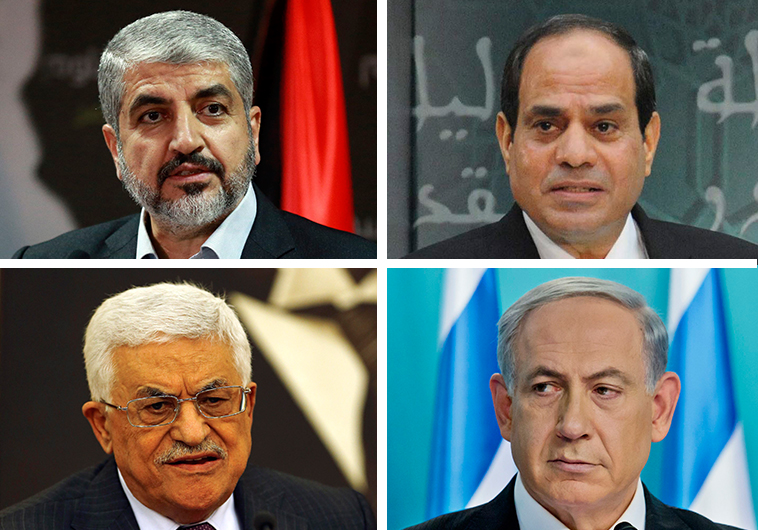 Photo by: REUTERS
The partnership that has emerged in this war between Israel, Egypt and Saudi Arabia is a direct consequence of Obama’s abandonment of the US’s traditional allies. Recognizing the threat that Hamas, as a component part of the Sunni jihadist alliance, constitutes for their own regimes, and in the absence of American support for Israel, Egypt and Saudi Arabia have worked with Israel to defeat Hamas and keep Gaza’s borders sealed.
If the US and the EU are able to coerce Egypt and Israel to open their borders with Gaza, then the Western powers will hand the jihadist axis a strategic victory.
The Israeli-Egyptian-Saudi alliance can ensure that all members survive the Obama era. And if [it] lasts into the next administration, it will place all of its members on more secure footing with the US, whether or not a new administration decides to rebuild the US alliance structure in the Middle East.
***********
The partnership that has emerged in this war between Israel, Egypt and Saudi Arabia is a direct consequence of Obama’s abandonment of the US’s traditional allies.
Hamas’s war with Israel is not a stand-alone event. It is happening in the context of the vast changes that are casting asunder old patterns of behavior and strategic understandings as actors in the region begin to reassess the threats they face.
Hamas was once funded by Saudi Arabia and enabled by Egypt. Now the regimes of these countries view it as part of a larger axis of Sunni jihad that threatens not only Israel, but them.
The Muslim Brotherhood in Egypt, and its state sponsors Qatar and Turkey, are the key members of this alliance structure. Without their support Hamas would have gone down with the Muslim Brotherhood regime in Egypt last summer. As it stands, all view Hamas’s war with Israel as a means of reinstating the Brotherhood to power in that country.
To achieve a Hamas victory, Turkey, Qatar and the Muslim Brotherhood are using Western support for Hamas against Israel. If the US and the EU are able to coerce Egypt and Israel to open their borders with Gaza, then the Western powers will hand the jihadist axis a strategic victory.
The implications of such a victory would be dire.
Hamas is ideologically indistinguishable from Islamic State. Like Islamic State, Hamas has developed mass slaughter and psychological terrorization as the primary tools in its military doctrine. If the US and the EU force Israel and Egypt to open Gaza’s borders, they will enable Hamas to achieve strategic and political stability in Gaza. As a consequence, a post-war Gaza will quickly become a local version of Islamic State-controlled Mosul.
In the first instance, such a development will render life in southern Israel too imperiled to sustain. The Western Negev, and perhaps Beersheba, Ashkelon and Ashdod, will become uninhabitable.
Then there is Judea and Samaria. If, as the US demands, Israel allows Gaza to reconnect with Judea and Samaria, in short order Hamas will dominate the areas. Militarily, the transfer of even a few of the thousands of rocket-propelled grenades Hamas has in Gaza will imperil military forces and civilians alike.
IDF armored vehicles and armored civilian buses will be blown to smithereens.
Whereas operating from Gaza, Hamas needed the assistance of the Obama administration and the Federal Aviation Administration to shut down Ben-Gurion Airport, from Judea and Samaria, all Hamas would require are a couple of hand-held mortars.
Jordan will also be directly threatened.
From Egypt’s perspective, a Hamas victory in the war with Israel that connects Gaza to Sinai will strengthen the Muslim Brotherhood and its Islamic State and other allies. Such a development represents a critical threat to the regime.
And this brings us to Islamic State itself. It couldn’t have grown to its current monstrous proportions without the support of Qatar and Turkey.
Islamic State is obviously interested in expanding its conquests. Since it views itself as a state, its next move must be one that enables it to take over a national economy. The raid on Mosul’s central bank will not suffice to finance its operations for very long.
At this point, Islamic State wishes to avoid an all-out confrontation with Iran, so moving into southern Iraq is probably not in the cards. US forces in Kuwait, and the strength and unity of purpose of the Jordanian military, probably take both kingdoms off Islamic State’s chopping block for now.
This leaves Saudi Arabia, or parts of it, as a likely next target for Islamic State expansion.
Islamic State’s current operations in Lebanon, which threaten the Saudi-supported regime there, indicate that Lebanon, at a minimum, is also at grave risk.
Then there is Iran. Iran is not a member of the Sunni jihadist axis. But when it comes to Israel and the non-jihadist regimes, it has cooperated with it.
Iran has funded, trained and armed Hamas for the past decade. It views Hamas’s war with Israel in the same light as it viewed its Lebanese proxy Hezbollah’s war with Israel eight years ago.
Both in Iraq and Syria, Iran and Islamic State have shown little interest in making one another their primary target. Turkey and Qatar have often served as Iran’s supporters in the Sunni world.
This is the context in which Israel is fighting its war with Hamas. And due to this context, two interrelated strategically significant events have occurred since the war began.
The first relates to the US.
The Obama administration’s decision to side with the members of the jihadist axis against Israel by adopting their demand to open Gaza’s borders with Israel and Egypt has served as the final nail in the coffin of America’s strategic credibility among its traditional regional allies.
As the US has stood with Hamas, it has also maintained its pursuit of a nuclear deal with Iran. The US’s position in these talks is to enable the mullocracy to follow North Korea’s path to a nuclear arsenal. The non-jihadist Sunni states share Israel’s conviction that they cannot survive a nuclear armed Iran.
Finally, President Barack Obama’s refusal to date to take offensive action to destroy Islamic State in Iraq and Syria demonstrates to Saudi Arabia and the other Gulf states that under Obama, the US would rather allow Islamic State to expand into their territory and destroy them than return US military forces to Iraq.
In other words, Obama’s pro-Hamas-, pro-Iran- and pro-Muslim Brotherhood-axis policies, along with his refusal to date to take effective action in Iraq and Syria to obliterate Islamic State, have convinced the US’s traditional allies that for the next two-and-a-half years, not only can they not rely on the US, they cannot discount the possibility of the US taking actions that harm them.
It is in the face of the US’s shift of allegiances under Obama that the non-jihadist Sunni regimes have begun to reevaluate their ties to Israel. Until the Obama presidency, the Saudis and Egyptians felt secure in their alliance with the US. Consequently, they never felt it necessary or even desirable to consider Israel as a strategic partner.
Under the US’s strategic protection, the traditional Sunni regimes had the luxury of maintaining their support for Palestinian terrorists and rejecting the notion of strategic cooperation with Israel, whether against Iran, al-Qaida or any other common foe.
So sequestered by the US, Israel became convinced that the only way it could enjoy any benefit from its shared strategic interests with its neighbors was by first bowing to the US’s long-held obsession with strengthening the PLO. This has involved surrendering land, political legitimacy and money to the terror group still committed to Israel’s destruction.
The war with Hamas has changed all of this.
The partnership that has emerged in this war between Israel, Egypt and Saudi Arabia is a direct consequence of Obama’s abandonment of the US’s traditional allies. Recognizing the threat that Hamas, as a component part of the Sunni jihadist alliance, constitutes for their own regimes, and in the absence of American support for Israel, Egypt and Saudi Arabia have worked with Israel to defeat Hamas and keep Gaza’s borders sealed.
Most Israelis have yet to grasp the strategic significance of this emerging alliance. This owes in large part to the Left’s domination of the public discourse.
The Israeli Left sees this new partnership. But it fails to understand its basis or significance. For the Left, all developments lead to the same conclusion: Whatever happens, Israel must strengthen the PLO by strengthening Palestinian Authority Chairman and PLO chief Mahmoud Abbas.
Failing to recognize the basis for Israel’s emerging strategic partnership, led by Finance Minister Yair Lapid and Justice Minister Tzipi Livni, the Left is advocating using our new ties with Saudi Arabia and Egypt as a means of strengthening Abbas by organizing a regional peace conference.
What they fail to understand is that such a move would destroy the partnership.
Israel’s strategic cooperation with Egypt and Saudi Arabia owes to their shared interests. It cannot extend beyond them. And they have no shared interests in regard to the PLO.
Threatened by the axis of jihad, no Muslim government can be seen publicly with Israelis. Asking Egyptian and Saudi leaders to have their pictures taken with Israelis is like asking them to sign their own death warrants.
Moreover, Israel’s required end-state in negotiations with the PLO – defensible borders and recognition of its sovereign rights to Jerusalem – is something that no Muslim regime can publicly accept – especially now.
So far from building on our new cooperative relationship, if the government heeds the Left’s advice and uses our incipient ties with the Saudis and Egyptians to strengthen the PLO, it will highlight and exacerbate conflicting interests and so destroy the partnership.
Moreover, the fact is that the PLO can play no constructive role for any of the sides in weakening our common foes. As he has for the past decade, during the current war Abbas has demonstrated that he is utterly worthless in the fight against the forces of jihad – both of the Sunni and Shi’ite variety.
At least for the duration of Obama’s presidency the interests that Egypt, Saudi Arabia and Israel share in preventing Iran from developing nuclear weapons and defeating the Muslim Brotherhood/Islamic State as military and political threats can only be advanced through joint action.
The Obama administration would have forced Israel to bow to Hamas’s demands weeks ago if the Egyptians and Saudis hadn’t opposed a Hamas victory.
Without Israeli military action, Iran will become a nuclear power. In light of the US’s backing of Iran’s nuclear program, such an Israeli operation is effectively impossible without regional support.
As to Islamic State, right now the US is interested in cooperating with Iran in fighting the barbaric force.
In exchange for Iranian cooperation, the US is liable to cede Basra and the Shatt al-Arab to Iran.
Effective cooperation between Israel, the Kurds and the Sunnis could contain, and perhaps defeat, Islamic State while reducing Iran’s chances of securing the strategically vital waterway.
Since the emerging partnership between Israel, Egypt and Saudi Arabia is a direct result of the Obama administration’s destruction of US strategic credibility, it is fairly clear that if properly managed, it can last until January 2017. Until then, in all likelihood, the US will be unwilling and unable to rebuild its reputation.
And until then, the parties are unlikely to find alternative means of securing their interests that are more effective than joint action.
Given the stakes, and the complementary capabilities of the various parties, Israel’s primary task today must be to work quietly and diligently with the Saudis and Egyptians to expand on their joint achievements in Gaza.
The Israeli-Egyptian-Saudi alliance can ensure that all members survive the Obama era. And if [it] lasts into the next administration, it will place all of its members on more secure footing with the US, whether or not a new administration decides to rebuild the US alliance structure in the Middle East.




 anneinpt
 artaxes
 danmillerinpanama
 davidking1530
 Peter Hofman
 Joseph Wouk
 Peter
Peter Louisiana Steve
 WarSclerotic
Recent Comments