Archive for August 13, 2014

Israel and Hamas Agree to Extend Ceasefire

August 13, 2014

Israel and Hamas Agree to Extend Ceasefire, Israel National News, Elad Benari, August 13, 2014

(Is the yo-yo going up and down,  left and right or in all directions simultaneously? Apparently. — DM

Just as Hamas violates ceasefire which was set to expire at midnight, the sides announce it will be extended for another five days.

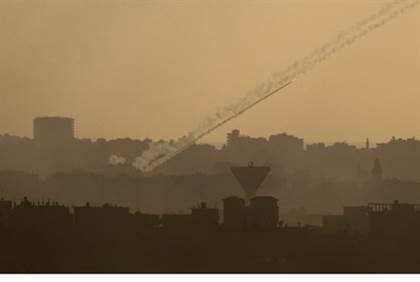
Rocket barrage from GazaRocket barrage from GazaReuters

Israel and the Palestinian Arabs agreed late Wednesday to extend a ceasefire in Gaza after failing to reach a long term agreement in Cairo-mediated talks, an Egyptian official said, according to AFP.

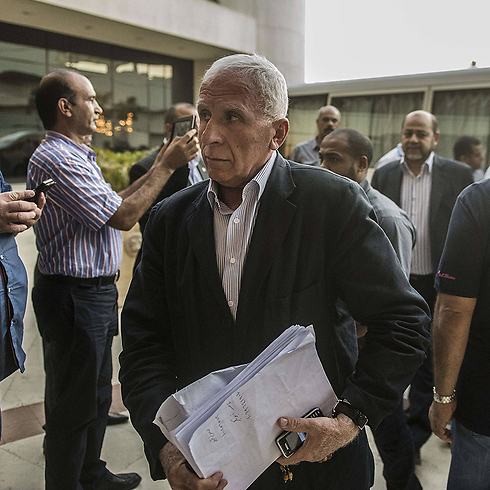
The new ceasefire will last five days, said senior Palestinian negotiator Azzam al-Ahmed, after he and other officials initially spoke of another 72-hour lull.

“It will last for five days,” he said, adding more time was needed to discuss “some” remaining disputes with Israel over a long-term truce.

An Egyptian official said Israel also accepted the proposal. Israel had earlier said it would back an extension of the lull.

A previously agreed three-day ceasefire was set to expire on Wednesday at midnight, though Hamas violated it just after 9:00 p.m. when it fired at least one rocket towards the Hof Ashkelon area.

Hamas spokesman Sami Abu Zuhri denied, however, that the group fired any rockets at Israel.

Just as the announcement of the extension of the ceasefire was made, another siren sounded in southern Israel.

A rocket exploded in an open area in the Eshkol region, causing no physical injuries or damages.

Earlier on Wednesday, Hamas said that it will not agree to lengthen the lull unless “real progress” is made in the negotiations being held in Cairo.

“We face decisive hours,” said a Hamas spokesman. “All options are open at the moment.”

AQAP ideologue praises jihadi victories in Iraq, comments on Berghdal release

August 13, 2014

AQAP ideologue praises jihadi victories in Iraq, comments on Berghdal release, Long War Journal, Oren Adaki, August 13, 2014

New AQAP video titled “A Talk About the Events.” Source: YouTube.

A new video released on Aug. 12 by the al-Malahim Media Foundation, the media wing of al Qaeda in the Arabian Peninsula (AQAP), features the terrorist organization’s chief ideologue and theologian, Ibrahim al Rubaish, commenting on a variety of current events. In the video, entitled “A Talk About the Events,” Rubaish discusses recent mujahideen victories in Iraq, the prisoner swap in which the Afghan Taliban released American soldier Bowe Bergdahl, and the latest round of fighting between Israel and Hamas in the Gaza Strip.

Reminding viewers of the need to stay stay abreast of current events in the Muslim world, Rubaish prefaces his discussion by emphasizing that “the brotherhood among the believers is stronger than the ties of kinship.” He explains that the Muslim nation is “as one house: its success and failure affects the entire family.”

After that introduction, Rubaish then turns to recent developments in Iraq. He congratulates the mujahideen as well as the entire Muslim community “for the victories achieved by our brothers in Iraq,” without explicitly mentioning the Islamic State by name. Rubaish notes that these military victories are a “grace from Allah” and stresses the importance of giving thanks for such blessings.

Rubaish shows a keen awareness of the fact that the dust has not yet settled on the Iraqi battlefields, however. He calls on all Muslims to pray to Allah “to make the victory completed” and to rid their community of those who wish to “turn our victory into defeat.” He beseeches the Sunni mujahideen to stop all infighting and to battle for the implementation of Islamic law as a united front.

Wrapping up his analysis of Iraqi developments, Rubaish suggests that if the Sunnis of Yemen follow the lead of their coreligionists in Iraq and act as “one hand,” they could recreate the victories of Iraq and repel the Houthi advance on Sana’a.

Rubaish’s comments on Iraq are in line with his previous pronouncements on the subject, which appear to be equivocal by design. In a video released last month called “Responsibility of the Word,” Rubaish and Harith bin Ghazi al Nadhari, another AQAP ideologue, condemned the vicious infighting between the Islamic State and its rivals in Syria without mentioning specific events or parties. Nevertheless, their messages were quickly trumpeted on Twitter at that time by rivals of the Islamic State in the al Nusrah Front while they were condemned by another AQAP ideologue supportive of the Islamic State.

Turning to the release of US soldier Bowe Bergdahl, Rubaish congratulates the Muslim community for the success of the deal which released five Taliban commanders. In his exaltation, Rubaish exclaims, “Who would have ever though that the American pride would break in front of the demands of the mujahideen!”

Rubaish next addresses the recent fighting between Israel and Hamas in the Gaza Strip, explaining that the Saudis hired Egyptian president Abdel Fattah al Sisi to tighten the siege on Gaza and close the border crossings during the Israeli operation. Rubaish continues with a long rant excoriating Muslim “traitors” who aid or facilitate Israeli operations against Hamas. At one point, he likens Israel to a chair held up by legs representing Arab traitors. “If the legs break,” he says, “or one of them, the chair would fall, Allah permitting.”

At the conclusion of his 11-minute video, Rubaish comments on the July 4 AQAP attack on the Wadia border crossing between Saudi Arabia and Yemen that spilled into the Saudi town of Sharurah. He notes that Saudi authorities did not negotiate at all for the soldiers kidnapped by AQAP during the attack who were subsequently killed. He accuses the Saudi Ministry of Interior of exploiting its soldiers to do its bidding and then deluding their families after their deaths by calling them “martyrs.”


BBC: Rocket fired from Gaza hits Israel

August 13, 2014

Rocket fired from Gaza hits Israel

Israeli bomb disposal expert collects remains of rocket fired by Gaza militants 29/07/2014Thousands of rockets have been fired at Israel by Gaza militants in the past five weeks – file photo

A rocket fired from Gaza has hit southern Israel just hours before a three-day ceasefire was due to expire, police say.

The rocket came down in an open area near Ashkelon, but caused no casualties or damage, a spokeswoman said.

Hamas militants denied they had fired any rockets, Reuters reported.

Israeli and Palestinian negotiators have been involved in indirect talks in Egypt aimed at finding a long-term solution to the Gaza conflict.

About 2,000 people have died since the fighting in Gaza began on 8 July.

Those killed include more than 1,900 Palestinians, mostly civilians, according to the United Nations.

Sixty-four Israeli soldiers have been killed in the violence and three civilians in Israel have also died.

The rocket, which landed in Israel late on Wednesday, was the first to be fired since the current ceasefire began on Monday.

Map showing potential range of rocket attacks from Gaza

Warning rocket sirens in southern Israel end three-day ceasefire Wednesday. Cairo talks fail

August 13, 2014

Warning rocket sirens in southern Israel end three-day ceasefire Wednesday. Cairo talks fail, DEBKAfile, August 13, 2014

Two hours before the Gaza truce was due to end Wednesday midnight, Palestinian rockets were fired from the Gaza Strip at large parts of southern Israel, including Ashkelon, Kiryat Gath, Yoav District, Shear Hanegev. Two were intercepted. No casualties were reported. Hamas envoys said that the Cairo talks had broken down and the truce would not be renewed unless their conditions were met. They called off a scheduled news conference without explanation. Hamas went back to launching rockets after Israel nodded its acceptance of a further truce, while at the same time concentrating armored forces on the Gaza border in case the Palestinians against fired rockets. Wednesday afternoon, IDF reservists were called up, as columns of tanks, tank carriers and APCs thundered down the roads leading to the Gaza border.

DEBKAfile reported Tuesday: The seventh truce in the ongoing Israel-Hamas passage of arms is generally expected to end Wednesday night Aug. 13, in a fresh outbreak of hostilities triggered by resumed Hamas rocket fire. The general media trend predicted a further ceasefire.

Our sources also reported that the indirect Egyptian-brokered talks between the parties in Cairo never got off the ground. From the start, all three realized that the gaps between Israel and the Palestinians were unbridgeable and, moreover, that Hamas and the Palestinian Authority were totally at odds on a common negotiating stance.

DEBKAfile’s intelligence sources learned that Egyptian intelligence mediators presented separate papers to the Israelis and Palestinians, knowing – as they acknowledged behind the scenes – that the two papers were miles apart but they were not overly concerned about the lack of headway.

Our military sources say that Israel’s government and military leaders were braced for the next stage of the confrontation with Hamas, which will be a lot tougher, deeper and broader than a few restrained air strikes.

Hamas source: Negotiations have failed

August 13, 2014

Hamas source: Negotiations have failed, Ynet News, Elior Levy, Attila Somfalvi, August 13, 2014

(Confusing? — DM)

Haniyeh says ‘long-term ceasefire possible only if Israel lifts siege’, Netanyahu, Obama talk ceasefire, but chances of deal being reached seem slim with lull set to expire midnight.

Head of the Palestinian delegation, Azzam al-Ahmed, said Wednesday that talks in Cairo have ended, but did not say if a deal had been reached. Meanwhile a Hamas source said negotiations have failed and that the Palestinian delegation will announce it is leaving. Israel has reportedly accepted the deal.

A source within the Palestinian delegation confirmed that the Israeli delegation has left and since landed back in Israel, but said that “last minute efforts are still underway.” The Palestinian delegation was expected to hold a press conference at 9:30 pm (local time) and announce the results of negotiations, but the conference has since been postponed.

AzzamAzzam al-Ahmed (Photo: AFP)

Hamas’ political bureau chief Ismail Haniyeh reiterated Hamas demands for a long-term ceasefire as parties met to discuss the extension of the current three day ceasefire set to expire midnight Wednesday.

Meanwhile, the White House says Obama and Netanyahu spoke about a possible Gaza ceasefire in phone conversation Wednesday. Earlier, the IDF said it was repositioning its forces near Gaza, in case no deal is reached an fighting resumes.

Nonetheless, Haniyeh’s comments seem to indicate that the current round of talks will not yield a long lasting deal, but could possibly see another 72-hour extension to the current lull in fighting. This scenario was confirmed as likely by a source close to the talks.

The Israeli delegation to ceasefire talks has left Cairo and is on its way back to Jerusalem. Meanwhile, sources in the Palestinian envoy said that a press conference would be held at 9:30pm local time to announce the products of the negotiations.

Pal delegationPalestinian delegation (Photo: Reuters)

Turkish opposition charges government knew of ISIL training, recruiting

August 13, 2014

Turkish opposition charges government knew of ISIL training, recruiting

Special to WorldTribune.com

ANKARA — Despite assurances to the West, Turkey has retained the presence of Islamic State of Iraq and the Levant.

Opposition sources said ISIL has continued to operate in Turkey amid the Al Qaida wars in neighboring Iraq and Syria. They said ISIL was recruiting and training its fighters in remote areas of Turkey with the knowledge of the intelligence community.

Sezin Tanrikulu

On July 30, an opposition parliamentarian demanded that the government of Prime Minister Recep Tayyip Erdogan confirm details of ISIL training in Turkey.

Sezin Tanrikulu, a member of the main opposition Republican People’s Party, said ISIL was operating several training camps, including one near Istanbul.

“Is the claim [correct] that the group alleged to have been the Turkish branch of the Islamic State of Iraq and the Levant has been allocated a camp ground or other places in Istanbul?” Tanrikulu asked.

Tanrikulu directed his questions to Interior Minister Efkan Ala and cited a video that showed alleged ISIL members training in Turkey. The online video, released by a Turkish website close to Al Qaida, showed hundreds of purported ISIL fighters praying during Id Al Fitr on July 28.

“Who is this group?” Tanrikulu said. “What does it consist of?”

The opposition, echoing assertions by NATO, has accused Erdogan of tolerating ISIL. The ISIL presence was said to have been overseen by Turkish intelligence community chief Hikan Fidan, deemed close to Erdogan.

In the video, ISIL fighters pledged to conduct holy war in Turkey. Over the last year, officials have reported several alerts of imminent ISIL attacks. In June 2014, ISIL stormed the Turkish consulate in the northern Iraqi city of Mosul and took 49 hostage, including consul-general Ozturk Yilmaz.

“Is it true that Istanbul Provincial Police Department and Gendarmerie Command were ordered not to interfere when the group, the extension of a terrorist organization, was calling for jihad in Istanbul?” Tanrikulu asked. “Who gave these orders?”

Salvo fired at south hours before ceasefire set to end

August 13, 2014

Salvo fired at south hours before ceasefire set to end, Ynet News, Ilana Curiel, August 13, 2014

Two hours before ceasefire set to end, and with parties still working in Cairo to extend lull, Gaza militants break truce, fire rockets at Israel.

Rockets were fired at Israel from Gaza Strip Wednesday evening, two hours before a 72-hour ceasefire was set to expire at midnight.

A rocket from Gaza fell in an open area in the Hof Ashkelon Regional Council and another was reportedly intercepted.

Code red sirens were heard throughout the south Wednesday evening, including the area of Kiryat Gat and the Hof Ashkelon, Sha’ar Hanegev and Yoav regional councils.

The news came as Israeli and Palestinian delegations were working to extend the three day old ceasefire in Gaza.

Head of the Palestinian delegation, Azzam al-Ahmed, said Wednesday that talks in Cairo have ended, but did not say if a deal had been reached. Meanwhile a Hamas source said negotiations have failed and that the Palestinian delegation will announce it is leaving. Israel has reportedly accepted the deal.

A source within the Palestinian delegation confirmed that the Israeli delegation has left and since landed back in Israel, but said that “last minute efforts are still underway.”

The Palestinian delegation was expected to hold a press conference at 9:30 pm (local time) and announce the results of negotiations, but the conference has since been postponed.

Only Sunday morning, before the ceasefire came into effect, six rockets hit Israel’s south, contributing to growing anger in Israel at the government and IDF who told residents they could return last Thursday, under the assumption the ceasefire would hold.

Responding to criticism that Israel was quick the declare an end to the fighting and told citizens it can return to the south, Defense Minister Moshe Ya’alon said “We will not compromise until rocket fire and terror completely stop. We see the overarching political and military picture and will not finish the operation until quiet and security are returned to Israel’s citizens.”

Why is Turkey Supporting Islamic State Fighters in Iraq?

August 13, 2014
By David L. Phillips

Now that U.S. forces are engaged in combat operations against Islamic State fighters in Iraq, the Obama administration must press ISIS on all fronts, targeting its financing, logistics, and weapons providers. Turkey — America’s ally and NATO member — is allegedly involved. Clarifying Turkey’s role would serve U.S.-Turkey relations.

During my visit recent to Turkey, members of Turkey’s parliament and prominent personalities described connections between Turkey, Turks and militant Sunni organizations, such as the Islamic State in Iraq and Syria (ISIS). They allege a prominent role for Turkey’s Foundation for Human Rights and Freedoms and Humanitarian Relief (IHH), an Islamic charity with a history of assisting extremist groups. Bilal Erdogan, President-elect Recep Tayyip Erdogan’s son, has ties to the IHH board, and allegedly uses his father’s political network to raise funds for the organization. Some sources say Bilal has served on the IHH board, but the IHH web site does not currently list him as a board member.

Cengiz Candar, one of Turkey’s most respected journalists recently wrote that Turkey’s Intelligence Agency (MIT) was the “midwife” that helped birth the Sunni armed movement. Beginning in 2012, according to Candar, Turkey provided weapons and logistical support to jihadis fighting the Syrian regime and to abort the birth of an autonomous Kurdistan in Syria.

President-elect Erdogan was outraged by atrocities committed against Sunni Muslims in Syria. He became the chief critic of Syria’s President Bashar al- Assad, hosting opposition groups and the Free Syrian Army’s headquarters in Gaziantep. The West’s failure to support the Free Syrian Army further incensed Erdogan. Saudi Arabia, Qatar, and the United Arab Emirates provided funds, while Turkey coordinated the travel, payments, and weapons supplies for ISIS, Al-Nusra, and the Islamic Front.

According to a March 2010 report of the International Institute for Counter-Terrorism, IHH had an annual budget of $100 million with field operations in 120 countries. IHH works with Muslim Brotherhood affiliates worldwide. The first known shipment of weapons to “Brothers” in Syria occurred in September 2012. Free Syrian Army commanders learned that a boat loaded with weapons docked in Syria. It was registered to members of IHH.

Major contributors to Recep Tayyip Erdogan’s AK Party are “encouraged” to make contributions, lest they fall from favor and lose government contracts. IHH also receives money from international sponsors. IHH is financed by Yasin Al-Qadi, a wealthy al Qaeda-linked Saudi businessman with close ties to Erdogan. IHH is an affiliate of the Saudi-based “Union of Good.” Sheikh Yusuf Qaradawi, an advocate of suicide attacks in Israel, chairs the “Union of Good.” Abdul Majid al-Zindani, a radical cleric and “Specially Designated Global Terrorist” by the United States in 2004, serves on its board. In 2010, the German branch of IHH was banned for links to jihadist activity. The U.S. Department of State listed the Union of Good as a Foreign Terrorist Organization (FTO).

Israel banned IHH in 2008 for money laundering funds to Hamas. IHH became known to the international community for organizing the 2010 Gaza flotilla, a stunt to draw attention to the plight of Palestinians and provoke the Israeli Defense Forces.

President-elect Erdogan and Foreign Minister Ahmet Davutoglu tried to diversify Turkey’s alliances in the Middle relying on Muslim Brotherhood chapters around the region and surrogates like IHH. From the West, Turkey looks like a Middle Eastern country. But from the Middle East, Turkey appears decidedly Western. Erdogan’s outreach to ISIS was a fool’s errand. Turkey thought it could control ISIS, but Erdogan was mistaken.

In May 2013, twin bombings in Reyhanli, a Turkish town in Hatay Province near the Syrian border, killed 52 people and injured 146. The Turkish government accused Syria of plotting the attack. But ISIS claimed responsibility.

After Reyhanli, Turks grew wary of entanglements in Syria’s civil war. They also resented the $1.5 billion cost of providing for 800,000 Syrian refugees. Ankara tried to distance itself from ISIS. Suspending support was easier said than done.

Former President and seven-time Prime Minister Suleyman Demirel said, “It is fundamental principle that there is one state. In our country there are two.” He was referring to the so-called “Deep State,” a shadowy network of bureaucrats, intelligence and security officials, and members of organized crime who are involved in arms and drug smuggling and have a history of targeted killings and political assassinations. With or without Erdogan’s knowledge, the ISIS gravy train continued.

An IHH truck was stopped by the gendarmerie near Adana in Hatay on January 1, 2014. It was loaded with arms and ammunition headed for Syria. The Hatay public prosecutor tried to launch an investigation, but was blocked. When he filed a criminal complaint alleging obstruction of justice by Turkey’s Interior Minister and MIT, he was dismissed. Police who stopped the vehicle were fired. The Hatay governor said the operation was a “state secret.”

Ammunition was also found on two passenger buses heading to Syria. Officers from the antiterrorism branch of the Adana Police Department released photos of ammunition on the buses to the media. They, too, were fired.

In an effort to clear Turkey’s name, the government cracked down on IHH in early January 2014. Turkish authorities arrested 23 people, including senior al-Qaeda operatives, associated with IHH, including al-Qaeda’s Middle East deputy leader ?brahim ?en, who is a former Guantanamo Bay detainee, and Al Qaeda’s Turkey representative, Halis Bayancuk. The move against IHH came just weeks before Geneva II, a major international conference aimed at stopping Syria’s civil war, where Turkey was envisioned to play a leading role.

Members of Turkey’s parliament allege that the government still supports jihadis — facilitating their travel at border crossings between Turkey and Syria, providing truckloads of weapons, and offering health care at Turkish state hospitals to wounded warriors.

Parliamentarians wrote President-elect Erdogan and Davutoglu asking for an official explanation of government ties to ISIS, and its knowledge about IHH activities. The letters were conveyed through Parliament Speaker Cemil Cicek. The government did not respond.

Deputies report the steady flow of unmarked trucks in Adana, Kilis, Gaziantep, and Kayseri — towns near the border with Syria. They believe the trucks are transporting weapons. Residents of Kilis describe routine interaction between Turkish officials on one side of the border and ISIS on the other.

According to a Turkish doctor, Turkish ambulances deliver war-wounded to Turkish hospitals on the border with Syria. They have no papers or identification. The Ministry of Health covers their expenses. The notorious ISIS commander, Abu Muhammed, was photographed receiving treatment at Hatay State Hospital in April 2014.

Not all ISIS fighters are foreign fighters. About 10 percent are Turkish citizens, according to a well-known Turkish scholar.

Some Islamist Turks sympathize with ISIS and support its conservative values. Deputy Prime Minister Bulent Arinc recently said, “A woman will know what is haram [forbidden] and not haram. She will not laugh out loud in public.”

Devotion to Islam is one thing. Assisting Islamists to commit genocide in the name of God is another.

Instead of excuses and denial,Turkish officials should condemn the Islamic State. To show the world it is serious about fighting terrorism, Turkey should establish a joint border monitoring mechanism with the UN to make sure no weapons are transferred to ISIS.

Bilal Erdogan should disassociate from the IHH. IHH’s Special Consultative Status with the United Nations Economic and Social Council should be suspended, pending an investigation into its activities.

To this end, the U.S. Congress should hold hearings on Turkish ties to ISIS. If IHH is implicated, it should be listed as an FTO. Listing would freeze IHH assets and impose travel bans on IHH principals.

Turkey has stood side by side with the United States in the fight against terrorism. At this critical juncture, Turkey must play a helpful role stabilizing Iraq and protecting Iraqi Kurdistan. It is important that Turkey rejoin the coalition of nations in good-standing who oppose violence and extremism.
IDF mobilizing forces along Gaza border as clock ticks on temporary cease-fire

August 13, 2014

IDF mobilizing forces along Gaza border as clock ticks on temporary cease-fire, Jerusalem Post, August 13, 2014

Military calling up reservists as threat of renewed fighting looms with no sign of permanent truce apparent at tail end of 3-day cease-fire.

IDF near borderIDF soldiers stand atop a tank near the border with Gaza. [File] Photo: REUTERS

The IDF was mobilizing forces along the border with Gaza on Wednesday ahead of the expiration of a three-day cease-fire at 12 a.m. Thursday, Channel 2 reported.

The threat of renewed fighting loomed as it remained uncertain whether Israeli and Palestinian negotiators engaged in indirect talks in Cairo would forge a long-term truce to take effect following the temporary one.

The IDF also deployed nine Iron Dome batteries throughout the country as Israel was bracing for the possibility of Gazan terrorists resuming rocket attacks in the event that cease-fire negotiations break down, Channel 2 cited a senior Air Force official as saying.

The military was also reportedly calling up addition reservists to bolsters the soldiers positioned near the Gaza border.

Palestinian officials said that they are seriously considering agreeing to extend talks past the 72-hour deadline.

On Wednesday, the clock ticked toward the end of a the temporary cease-fire with no sign of a breakthrough in indirect talks in Cairo.

It was reported by Reuters that President Barak Obama spoke to Prime Minister Binyamin Netanyahu on Wednesday evening.

A Palestinian official with knowledge of the negotiations said Egypt had presented a new proposal for a permanent truce agreement that addressed a major Palestinian demand for a lifting of the Israeli and Egyptian blockades of the Gaza Strip.

Israel and Egypt harbor deep security concerns about Hamas, the dominant Islamist group in the small, Mediterranean coastal enclave, complicating any deal on easing border restrictions.

It was unclear from the official’s remarks how those worries, along with Israel’s demand for Gaza’s demilitarization, would be dealt with. Hamas spokesman Sami Abu Zuhri said disarming was not an option.

Israeli negotiators returned to Egypt after returning overnight to Israel with the truce in the month-old hostilities due to expire.

Palestinian delegates and Egyptian intelligence officials reconvened for talks that could go down to the wire.

BBC: Why Iran has finally let go of Maliki

August 13, 2014

Why Iran has finally let go of Maliki

File photo of Nouri Maliki and Ayatollah Ali KhameneiPM Nouri Maliki was seen as being close to Iran during his time in office

Less than two months ago, Iran’s Supreme Leader, Ayatollah Ali Khamenei, spelled out his position on Iraq.

Iran was against US intervention, he said, and the world should respect the results of Iraq’s April election which saw victory for Nouri Maliki’s alliance.

But the ayatollah has been overtaken by events.

“Start Quote

When Maliki started losing and alienating Kurds and Sunnis, Iran didn’t like it”

Ghassan AttiyahAnalyst

The past week has seen the US launch air strikes against Islamic State (IS) militants in northern Iraq, while in Baghdad Mr Maliki has failed in his bid to return to the prime minister’s office.

Although this all goes contrary to Iran’s stated wishes, officials in Tehran have said almost nothing.

“Iran’s silence shows they are happy with what’s happening in Iraq,” says Ghassan Attiyah, president of the Baghdad-based Iraqi Foundation for Development and Democracy.

Mr Attiyah says that Iraq’s new Prime Minister Haider Al-Abadi has strong ties to Iran and for this reason the Iranians have not tried to block his nomination.

“They were not happy with Maliki from the beginning but they accepted him because the Shia bloc supported him in parliament,” he says.

“But when he started losing and alienating Kurds and Sunnis, Iran didn’t like it.”

Weapon handlers carry an air to air missile on the aircraft carrier USS George H.W. BushThe US has carried out air strikes in Iraq – but there has been no angry respnse from Iran

Change in tone

Iran has also confounded expectations that it would issue an angry condemnation of the US air strikes this week on IS positions in northern Iraq.

In fact, in a striking change of tone, an advisor to Iranian Foreign Minister Mohammad Javad Zarif said on Monday that Iran and the US should work together to counter IS in Iraq.

Observers say the realisation that the militants are now just 25km (16 miles) from Iran’s western border may well have influenced thinking in Tehran.

It is clear that the threat posed by the Islamic State is another factor in Iran’s decision not to actively oppose the appointment of Mr Abadi as Iraq’s new prime minister.

Unlike US President Barack Obama, Iran’s president has yet to congratulate Mr Abadi on his appointment.

But in a phone call on Monday to congratulate another newly elected leader in the region, Turkey’s Recep Tayyip Erdogan, Iranian President Hassan Rouhani said a government must be formed in Iraq “as soon as possible”, and that Iran would support “the person who is approved by the majority of Iraqi lawmakers”.

It was the first clear indication that Iran was not intending to stand firmly behind Mr Maliki as it has done for its other regional protege, Syrian President Bashar al-Assad.

Supporters of Iraqi Hezbollah brigades Groups supported by Iran hold considerable sway in Iraqi politics and society


Time’s up

There was more bad news for Mr Maliki on Tuesday when the secretary of Iran’s Supreme National Security Council, Ali Shamkhani, also voiced support for the move in Baghdad to choose a new prime minister.

“Start Quote

Maliki won’t leave easily”

Mohsen MilaniDirector of the Center for Strategic and Diplomatic Studies

Mr Shamkhani’s call for all Iraqi groups and coalitions to keep united and work together to protect national unity seemed like a coded message to Mr Maliki that his time was running out.

The hardline Javan newspaper, affiliated to Iran’s Revolutionary Guard, adopted a similar tone.

In an editorial, it called on him to show “selfless compliance” to the Iraqi president’s decision.

The final nail in the coffin was Ayatollah Khamenei lending his support to Mr Abadi’s appointment on Wednesday.

“I hope the designation of the new prime minister in Iraq will untie the knot and lead to the establishment of a new government and teach a good lesson to those who aim for sedition in Iraq,” Ayatollah Khamenei said in a speech to foreign ministry officials and diplomats.

“Maliki won’t leave easily,” says Mohsen Milani, the Iranian-born director of the Center for Strategic and Diplomatic Studies in Washington.

“But if both Iran and the US support the new government, he has to go.”

Mr Maliki said Mr Abadi’s nomination was a “violation of the constitution” but for Iran what is important at the moment is to see a unified Shia bloc in Iraq and a new government formed without further delay.

And if Mr Maliki cannot deliver either of these things, then as far as Iran is concerned, his time is up.