Archive for August 9, 2014

Egyptian ceasefire plan introduces PA control in Gaza

August 9, 2014

Egyptian ceasefire plan introduces PA control in Gaza, Ynet News, Ron Ben-Yishai, August 9, 2014

(Monitored by the PA? Please see Abbas is a charlatan. The PA would not be reliable. — DM)

Analysis: Israel seems prepared to accept passage of goods, people between Gaza, West Bank; diplomats considering release of prisoners withheld during peace talks.

Egypt’s intelligence chief, Major General Mohamed Ahmed Fareed Al-Tuhami, is taking action at ceasefire talks in Cairo to consolidate an initial agreement focused on a ceasefire and humanitarian relief.

According to the emerging agreement, Palestinian President Mahmoud Abbas and his Palestinian Authority (PA) will have control over the Philadelphi Route to prevent further construction of smuggling tunnels beneath the border between Egypt and Gaza.

By following this plan, Abbas and forces under the PA would be responsible for monitoring or destroying entrances to smuggling tunnels on the Palestinian side and the Egyptians would do the same from Sinai as they have done up till now.

CBS03_waUnder the Egyptian initiative, the PA would gain control of the Philadelphi Roue. (Photo: AFP)

These plans for the Philadelphi Route are all part of the Egyptian ceasefire plan which would include the opening of the Rafah border crossing under control of the PA and which Abbas’ negotiators seem ready to accept within the framework of their reconciliation government with Hamas, restoring some form of control and status to the PA in the Gaza Strip.

In accordance with the current outlines drawn up by the Egyptians, Israel is required to facilitate the movement of goods at the Kerem Shalom border crossing as well as the movement of people between Gaza and the West Bank through the Erez border crossing. Israel is prepared to agree to such a deal.

The Israelis have also signaled that they are prepared to grant the Palestinians expanded fishing rights off the Gaza coast, but demand that Israeli forces will be able to monitor a security parameter from the west to the fence surrounding the Strip in order to make sure that Palestinian organizations aren’t digging new smuggling tunnels.

It’s not completely clear if the Israelis are demanding a permanent presence in the security parameter or simply the right to enter the area when there is suspicion of a tunnel being dug and about to emerge in Israeli territory.

According to the Egyptian initiative, besides having control of the Philidelphi Route and the Rafah border crossing, the PA will act as a middle man, passing funds from Qatar to Hamas in the amount required to pay some 43,000 government officials who have not been paid for quite some time.

The efforts to reach an agreement are being held mainly in Cairo, but are also taking place by telephone between the Israelis, Egypt, the PA, the US, and a few countries representing EU interests. The UN envoy Robert Serry is also involved in these efforts.

These efforts are complex, but can be easily separated into two different political fronts or goals to be achieved.

1. The involved parties are working to achieve an immediate ceasefire that will allow for humanitarian relief to reach Palestinians in the Gaza Strip.

2. The general consensus is also that a long-term agreement needs to be reached that will include an international declaration to prevent Hamas’ military build up under either Palestinian or international supervision, and a large aid package to rebuild the Gaza Strip.

The Israeli delegation is not currently present in Cairo, mostly because their presence isn’t necessary for talks to continue. The envoy that returned to Israel on Friday already gave the Egyptians their stance on the initial agreement.

So far, Egyptian mediators have not phoned and asked the Israelis to change or reconsider any of their terms. Therefore, Prime Minister Benjamin Netanyahu can say without hesitation that he is not negotiating with Hamas while Israel remains under fire. At least for the time being, the Israeli envoy doesn’t seem to be preparing to return to Cairo, but such action is possible.

551286401000100490275noA rocket that fell near a town in the Eshkol Regional Council as fire from Gaza continued Saturday. (Photo: Eshkol Regional Council Spokesperson)

Israel, Egypt, and the PA all have mutual interests in the Egyptian initiative which intelligence chief Al-Tuhami is currently trying to sell to the Palestinians. At the moment, Hamas is standing by its demands, but according to assessments in Cairo and Jerusalem, the group will eventually agree to a ceasefire and the terms of the initial agreement. The sides will then sit and talk out the main diplomatic truce.

Prisoner release

Israel will most likely agree to release Palestinian prisoners that were denied their freedom during the last round of peace talks. This move will strengthen PA leader Abbas and at least partially meet Hamas’ demands to release certain prisoners. However, right-wing politicians in Israel deny reports regarding the possible release of prisoners who were released in the deal for Gilad Shalit and re-captured during Operation Brother’s keeper in the West Bank.

Bassam as-Salhi, a member of the Palestinian envoy to Cairo, said Saturday that the Palestinians have postponed Israel’s suggestion to release prisoners in exchange for the bodies of Israeli soldiers.

As-Salhi spoke to Ma’an News Agency on Saturday saying that the Palestinians are refusing to discuss the subject of the soldiers in the framework of the ceasefire talks. He said that the delegates would be ready to raise the issue after their other demands were met.
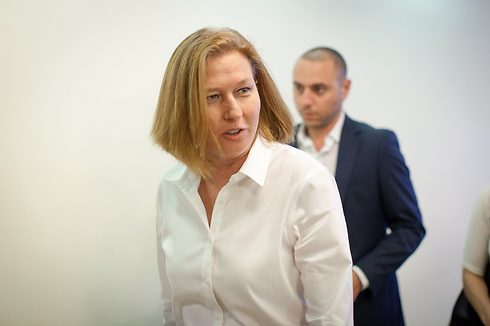
Livi 533620701000100490326noJustice Minister Tzipi Livni is making a push on the international front to come to an agreement in Gaza. (Photo: Emil Salman)

Meanwhile, in the international arena, Justice Minister Tzipi Livni is pushing for an agreement that will finance the rehabilitation of the Gaza Strip with funds from the US, EU and possibly even the UN while making sure to enforce strict inspection to prevent the military build up of Hamas and other Palestinian organizations in the Gaza Strip.

Hamas proactively continues to fire rockets at Israel in relatively small amounts. Even Hamas doesn’t want to anger the Egyptians and lose points in international and Palestinian opinion. Therefore, they are simply allowing Islamic Jihad to fire the rockets while seemingly putting limits on them.

This policy allows Hamas to keep its stockpile of rockets for another day. Israel is responding to rocket fire by hitting targets picked out by intelligence efforts during the fighting including operation and control centers which were already attacked but which Hamas is trying to reoccupy.

Israel is also attacking with comparative restraint in order no to upset Egyptian efforts to reach a stable ceasefire.


We’re not going to let ISIL create some caliphate: Obama

August 9, 2014

We’re not going to let ISIL create some caliphate: Obama

Obama on the world – US president talks about Iraq and Putin

President Obama’s hair is definitely greyer these days, and no doubt trying to manage in a world of increasing disorder accounts for at least half of those gray hairs. But having had a chance to spend an hour touring the horizon with him in the Map Room late Friday afternoon, it’s clear that the president has a take on the world, born of many lessons over the last six years, and he has feisty answers for all his foreign policy critics.

Obama made clear that he is only going to involve America more deeply in places like West Asia to the extent that the different communities there agree to an inclusive politics of no victor/no vanquished. The United States is not going to be the air force of Iraqi Shiites or any other faction. Despite Western sanctions, he cautioned, President of“could invade” at any time, and, if he does, “trying to find our way back to a cooperative functioning relationship with Russia during the remainder of my term will be much more difficult.” Intervening in Libya to prevent a massacre was the right thing to do, Obama argued, but doing it without sufficient follow-up on the ground to manage Libya’s transition to more democratic politics is probably his biggest foreign policy regret.

I began by asking whether if former Secretary of State Dean Acheson was “present at the creation” of the post-World War II order, as he once wrote, did Obama feel present at the “disintegration?”

“First of all, I think you can’t generalise across the globe because there are a bunch of places where good news keeps coming.” Look at Asia, he said, countries like Indonesia, and many countries in Latin America, like Chile. “But I do believe,” he added, “that what we’re seeing in the Middle East and parts of North Africa is an order that dates back to World War I starting to buckle.”

But wouldn’t things be better had we armed the secular Syrian rebels early or kept US troops in Iraq? The fact is, said the president, in a residual US troop presence would never have been needed had the Shiite majority there not “squandered an opportunity” to share power with Sunnis and Kurds. “Had the Shia majority seized the opportunity to reach out to the Sunnis and the Kurds in a more effective way, (and not) passed legislation like de-Baathification,” no outside troops would have been necessary. Absent their will to do that, our troops sooner or later would have been caught in the crossfire, he argued.

With “respect to Syria”, said the president, the notion that arming the rebels would have made a difference has “always been a fantasy. This idea that we could provide some light arms or even more sophisticated arms to what was essentially an opposition made up of former doctors, farmers, pharmacists and so forth, and that they were going to be able to battle not only a well-armed state but also a well-armed state backed by Russia, backed by Iran, a battle-hardened Hezbollah, that was never in the cards.”

Even now, the president said, the administration has difficulty finding, training and arming a sufficient cadre of secular Syrian rebels: “There’s not as much capacity as you would hope.”

The “broader point we need to stay focused on,” he added, “is what we have is a disaffected Sunni minority in the case of Iraq, a majority in the case of Syria, stretching from essentially Baghdad to Damascus. … Unless we can give them a formula that speaks to the aspirations of that population, we are inevitably going to have problems. … Unfortunately, there was a period of time where the Shia majority in Iraq didn’t fully understand that. They’re starting to understand it now. Unfortunately, we still have (the Islamic State in Iraq and the Levant), which has, I think, very little appeal to ordinary Sunnis.” But “they’re filling a vacuum, and the question for us has to be not simply how we counteract them militarily but how are we going to speak to a Sunni majority in that area … that, right now, is detached from the global economy.”

The only states doing well, like Tunisia, I’ve argued, have done so because their factions adopted the principle of no victor, no vanquished. Once they did, they didn’t need outside help.

“We cannot do for them what they are unwilling to do for themselves,” said the president of the factions in Iraq. “Our military is so capable, that if we put everything we have into it, we can keep a lid on a problem for a time. But for a society to function long term, the people themselves have to make decisions about how they are going to live together, how they are going to accommodate each other’s interests, how they are going to compromise. When it comes to things like corruption, the people and their leaders have to hold themselves accountable for changing those cultures…. We can help them and partner with them every step of the way. But we can’t do it for them.”

So, I asked, explain your decision to use military force to protect the refugees from ISIL (which is also known as ISIS) and Kurdistan, which is an island of real decency in Iraq?

“When you have a unique circumstance in which genocide is threatened, and a country is willing to have us in there, you have a strong international consensus that these people need to be protected and we have a capacity to do so, then we have an obligation to do so,” said the president. But given the island of decency the Kurds have built, we also have to ask, he added, not just “how do we push back on ISIL, but also how do we preserve the space for the best impulses inside of Iraq, that very much is on my mind, that has been on my mind throughout.

“I do think the Kurds used that time that was given by our troop sacrifices in Iraq,” Obama added. “They used that time well, and the Kurdish region is functional the way we would like to see. It is tolerant of other sects and other religions in a way that we would like to see elsewhere. So we do think it’s important to make sure that that space is protected, but, more broadly, what I’ve indicated is that I don’t want to be in the business of being the Iraqi air force. I don’t want to get in the business for that matter of being the Kurdish air force, in the absence of a commitment of the people on the ground to get their act together and do what’s necessary politically to start protecting themselves and to push back against ISIL.”

The reason, the president added, “that we did not just start taking a bunch of airstrikes all across Iraq as soon as ISIL came in was because that would have taken the pressure off of (Prime Minister Nuri Kamal) al-Maliki.” That only would have encouraged, he said, Maliki and other Shiites to think: ” ‘We don’t actually have to make compromises. We don’t have to make any decisions. We don’t have to go through the difficult process of figuring out what we’ve done wrong in the past. All we have to do is let the Americans bail us out again. And we can go about business as usual.'”

The president said that what he is telling every faction in Iraq is: “We will be your partners, but we are not going to do it for you. We’re not sending a bunch of US troops back on the ground to keep a lid on things. You’re going to have to show us that you are willing and ready to try and maintain a unified Iraqi government that is based on compromise. That you are willing to continue to build a nonsectarian, functional security force that is answerable to a civilian government. … We do have a strategic interest in pushing back ISIL. We’re not going to let them create some caliphate through Syria and Iraq, but we can only do that if we know that we’ve got partners on the ground who are capable of filling the void. So if we’re going to reach out to Sunni tribes, if we’re going to reach out to local governors and leaders, they’ve got to have some sense that they’re fighting for something.” Otherwise, Obama said, “We can run (ISIL) off for a certain period of time, but as soon as our planes are gone, they’re coming right back in.”

Clearly, a lot of the president’s attitudes on Iraq grow out the turmoil unleashed in Libya by Nato’s decision to topple Col Muammar el-Qaddafi, but not organise any sufficient international follow-on assistance on the ground to help them build institutions. Whether it is getting back into Iraq or newly into Syria, the question that Obama keeps coming back to is: Do I have the partners – local and/or international – to make any improvements we engineer self- sustaining?

“I’ll give you an example of a lesson I had to learn that still has ramifications to this day,” said Obama. “And that is our participation in the coalition that overthrew Qaddafi in Libya. I absolutely believed that it was the right thing to do. … Had we not intervened, it’s likely that Libya would be Syria. … And so there would be more death, more disruption, more destruction. But what is also true is that I think we [and] our European partners underestimated the need to come in full force if you’re going to do this.

Then it’s the day after Qaddafi is gone, when everybody is feeling good and everybody is holding up posters saying, ‘Thank you, America.’ At that moment, there has to be a much more aggressive effort to rebuild societies that didn’t have any civic traditions. … So that’s a lesson that I now apply every time I ask the question, ‘Should we intervene, militarily? Do we have an answer (for) the day after?'”


©2014 The New York Times News Service

Satire: Kerry heads to Iraq to start the peace process

August 9, 2014

Kerry heads to Iraq to start the peace process, Dan Miller’s Blog, August 9, 2014

Basking in the glow of his anticipated success in arranging peace among Israel, the Palestinian Authority, Hamas and others, Secretary Kerry now plans to work his magic in Iraq.

Kerry I'm an idiot

According to this racist rant by former Ambassador Bolton, the Obama Nation has no strategy:

There is a clear strategy: send Secretary Kerry to bring peace and prosperity to Iraq. That is the only strategy that can bring a lasting peace.

Here’s part of another racist rant from Half Baked Breitbart:

[W]ith Obama’s latest decision to launch airstrikes against the Islamic State in the Levant (ISIL or ISIS), the Obama Doctrine has now come into focus: pretend to give a damn about suffering of innocents when it hits the headlines, ignore it the rest of the time.

Because Obama doesn’t truly care. At all. He is a master emotional manipulator, capable of achieving effective posturing when it comes to the suffering of innocents. That’s why the media constantly swoon at his “tone” and his “attitude” during his press conferences. They repeatedly praise his “anger” or his “determination.” But they rarely ask just what he’s doing to fight evil. [Emphasis added.]

Any deployment of power will be short-term and ineffective. Obama will do all he can for innocents up until the moment when he doesn’t have to do so. Then he’ll leave them to die.

Nonsense. Secretary Kerry will be far more effective than any puny military action that could possibly be taken by Obama’s America. Indeed, it has not yet even been able to achieve full gender equality, so how could it possibly be expected to fight effectively in a foreign kinetic action?

Having witnessed Israel’s massively genocidal efforts in Gaza and elsewhere to expand its apartheid state, Secretary Kerry is well prepared to deal with the Islamic State’s moderate and only semi-genocidal efforts against Yazidi and the few remaining Christians now that all or nearly all of the Jews have left.

Secretary Kerry knows that terrorism alleged workplace violence has root causes — poverty, resentment, hatred, boredom, scabies and rabies. Just as there is no such thing as a bad boy, there is no such thing as a bad jihadist Sunni or Shia. They simply want to be understood and loved for what they really are, not hated because of how the ill-informed falsely portray them. Honorable, peace loving religious folk, they love little children to death. In the service of Allah, they seek only the best for them and their beloved but beleaguered families.

Secretary Kerry is presently en route to Iraq. Although he had hoped to conduct his negotiations at the U.S. Embassy in Baghdad, it keeps moving around and occasionally comes under hostile fire. That is no problem for a seasoned war hero such as John Kerry, but could prove bothersome for others, whom he bravely salutes nonetheless.

We who also serve salute you!

We who bravely served salute you!

The negotiations will, therefore, be held at the Iranian embassy, insha’Allah.

There, Secretary Kerry will first meet with the Iranian Foreign Minister, Mohamed Ben-Lyin, to explore common U.S. and Iranian interests in Iraq and to push forward with the P5 + 1 Iranian nukes for peace scam process. He will then meet separately with representatives of the Iraqi government, Kurdish authorities, leaders of the Yazidi sect and leaders of the Islamic State to arrange a ceasefire. During the ceasefire, the Islamic State will properly replenish its supply of weapons for peace. The others should nurse their ill and wounded, subdue their egos and try to become reasonable enough to find a common ground with the Islamic State. There is always a common ground, and Secretary Kerry will do his best to help them to find it.

In the final analysis, the Iraqi government, the Kurds, the Yazidi and the Islamic State should be able to agree on enough of the basic principles of Islam to form a unified caliphate and thereby bring eventual peace to the entire region, with the obvious exception of obstinate and therefore insignificant little Israel.

Secretary Kerry tried, thus far with only minimal success, to help Israel, Hamas, Islamic Jihad and Fatah find a similar common ground and attain his lofty goal of a fair and equitable unified government. Although he was not completely successful, there is always hope for humanitarian compromise. He will keep trying, bravely yet humbly, as always.

Kerry-Idiot-copy

Secretary Kerry is at his very best when arranging compromising situations. It is to be hoped that in Iran there will be no obstinate fools like Netanyahu to undermine his Herculean efforts. The times are changing. If in these circumstances he can’t produce a fair and equitable solution leading to peace and understanding, nobody can.

Gaza: The road not yet taken

August 9, 2014

Gaza: The road not yet taken

August 9, 2014, 8:50 am

via Gaza: The road not yet taken | Irwin Cotler | The Blogs | The Times of Israel.


he notion that truth is the first casualty of war has found expression in the ongoing fog of the current Israel-Hamas conflict – where truth is obscured or masked by oft-repeated clichés such as “cycle of violence,” false moral equivalences, or unconscionable allegations of Israeli “genocide.” If we want to prevent further tragedies in this conflict — let alone frame the basis for its resolution — then we have to go behind the daily headlines that cloud if not corrupt understanding, probe the real root causes of conflict, and finally travel the road not yet taken to its just resolution.

While the deliberate – and indiscriminate – bombardment of Israeli civilians, and the threat of abductions and mass killings from the terror tunnels, have been the trigger for this latest war, there is a longer and underlying proximate cause: the Hamas Terrorist War of Attrition against Israel since 2000.

Simply put, from 2000 to 2004, Hamas suicide bombers murdered over 1,000 Israelis – wounding some 3,000 – in a horrific and sustained terrorist assault that was defeated in part by the Israeli “Operation Defensive Shield” in 2002, and in part by the building of a security barrier, which dramatically reduced penetration by Hamas suicide bombers. In 2005, with the Hamas terrorist onslaught defeated, Israel moved to unilaterally disengage from Gaza. Accordingly, Israel withdrew all its soldiers and citizens, uprooted all its settlements and synagogues, but left behind 3,000 operating greenhouses and related agricultural assets, the whole as the basis for industrial and agricultural growth and development in Gaza.

How did Hamas respond? They destroyed the greenhouses, brutalized the Fatah opposition, effectively instituted a theocratic dictatorship in 2007, repressed its own people, and began the launching of more than 14,000 rockets and missiles targeting Israeli population centers. In effect, then, Hamas squandered the opportunity offered by Israel to live in peace, to utilize the industrial and agricultural assets, to engage in state-building; rather, Hamas preferred to divert resources for the building of a terrorist infrastructure that would punish its own people while threatening Israel.

In effect, then, this is the third Israel-Hamas war since the 2005 disengagement, with each prior truce or ceasefire only providing a basis and incipient trigger for the next war. In this latest conflagration, Hamas has repeatedly repudiated, yet again, a series of ceasefires arrangements and “humanitarian” pauses – while launching more than 3,000 rockets and missiles in the last month alone.

But while these unceasing terror attacks – and ongoing threats – have once again forced Israel to take action in self-defense and to target the terrorist infrastructure in Gaza, this ongoing proximate trigger does not tell the whole story. Rather, it is a symptom, or proxy, for the root cause – the unwillingness of Hamas to recognize Israel’s existence within any boundaries. And more: the public call in the Hamas Charter – and in its declarations – for the destruction of Israel and the killing of Jews wherever they may be.

Let there be no mistake about it, Hamas is a unique – and evil – manifestation of genocidal anti-Semitism. These are not words that I use lightly or easily, but there are no other words to describe the toxic convergence of the advocacy by Hamas of the most horrific of crimes – namely genocide – anchored in the most enduring of hatreds – namely antisemitism – with state-orchestrated terrorism as the instrumentality to pursue these goals.

UN Secretary General Ban ki-Moon said that one must seek the “root cause” of the Israel-Hamas conflict so as to enable us to resolve it. However politically incorrect it may be to say so, this culture of hatred – this genocidal anti-Semitism – is the root cause and has fueled the ongoing Hamas terrorist war of attrition.

Accordingly, what is so necessary now is not another ceasefire or humanitarian pause, but a ceasefire that is enduring and comprehensive, that will put an end to the Hamas Terrorist War of Attrition that has targeted Israel’s population and engulfed its own, and that will be protective of both Israeli and Palestinian civilians, as President Obama and other leaders have called for. Such a ceasefire will hopefully be the basis for an Israeli-Palestinian peace, anchored in two states for two peoples living side by side in peace and security. This will require traveling on the road not yet taken – an agreed upon, and guaranteed, set of international, legal, diplomatic, political, security, economic, and humanitarian undertakings and initiatives as follows:

  1. A comprehensive — and enduring — ceasefire framework not only to halt but to end hostilities must be put in place. For such a ceasefire to endure, the casus belli that triggered these latest hostilities – that has underpinned the Hamas War of Attrition – must be addressed and redressed. Simply put, Hamas must cease and desist from its policy and practice of targeting Israeli civilians and terrorizing Israeli civilian populations.
  2. The ceasefire must be accompanied by massive humanitarian and medical relief, the delivery of some of which has thus far been hindered by Hamas itself, as with Hamas’ refusal to allow Gazans to avail themselves of an Israeli field hospital. Clearly, after the tragic death and destruction, there must be mandated and comprehensive international humanitarian assistance.
  3. Hamas, Islamic Jihad, and other terrorist militias must be disarmed, as called for by EU Foreign Ministers, as a sine qua non for the cessation of hostilities.
  4. The Hamas military infrastructure – and related military and terrorist assets – rockets, missiles, launchers, mortars, munitions, and the like must be dismantled.
  5. There must be a complete closure – and destruction – of the Hamas terror tunnels – the standing instrument of terror and incipient mass murder. Indeed, captured Hamas battle plans reveal that Hamas was planning a mass terror attack during the Jewish New Year that would have threatened the lives of thousands. Even during the latest ceasefire, Hamas continued to threaten to deploy these terror tunnels.
  6. An end must be put to the Hamas capacity to manufacture rockets and other military assets. Simply put, there must be a supervised monitoring of the importation of building materials – like cement and steel – that have been used for the manufacture of weapons and tunnels, rather than the building of hospitals, schools, and mosques for which they were intended.
  7. The prohibition of the transfer or smuggling of weapons, like those advanced missiles from Iran, which both Hamas and Iran have boasted about, and with which Iran has threatened to re-supply Hamas in recent days. As senior Iranian official Mohsen Rezaei said this week “Palestinian resistance missiles are the blessing of Iran’s transfer of technology.”
  8. A robust international stabilization and protection force – with the necessary mandate, mission, and numbers – should be deployed to ensure that the ceasefire is respected; that Hamas and other terrorist militias are disarmed; that the military terrorist infrastructure is dismantled; that the terror tunnels are closed and destroyed – the whole to protect against the targeting of Israeli civilians and the use of Palestinian civilians as human shields. Indeed, while Israel has been forced to use weapons to protect civilians, Hamas has been using its captive civilian population to protect its weapons.
  9. This international protection force must also be empowered to secure a total interdiction of the transfer, import, or smuggling of weapons into Gaza – which is what triggered the blockade of Gaza in the first place after Hamas assumed power in 2007.
  10. An international framework – one of the most important initiatives of the road not yet travelled – will be necessary to secure and maintain the demilitarization of Gaza, while supervising the entry of people and goods into Gaza.
  11. The deployment of this international protection force – and the demilitarization of Gaza – can provide a basis for the reciprocal opening of border-crossings, the commensurate easing of the blockades, and the development of a Gaza sea port. Indeed, the movement of people, goods, commerce, trade, development, and evolving economic prosperity were precisely what was contemplated – and was clearly possible – when Israel withdrew from Gaza in 2005. There was then no occupation, no blockade, no Israeli presence – only the potential for Gaza to freely develop and help usher in a nascent peace with Israel and self-determination for its people.
  12. In particular, the dismantling of Hamas’ extensive military and terrorist infrastructure – which is embedded amongst Gaza’s civilian population – and the demilitarization of Gaza – can ultimately lead to a “Marshall Plan” for Gaza with the ultimate goal of securing economic growth, development, and a sustainable peace.
  13. With order restored, an international governing authority – possibly led by the PA, but including European, American, Canadian, and Egyptian representation – should be the mandated trusteeship authority for Gaza. This can serve as a state-building authority that can be the basis for the emergence of a peaceful, rights-protecting, Rule of Law Gaza that can ultimately travel the road not yet taken to a peaceful and democratic Palestinian State.
  14. The direct financing of Hamas which was put to military and terrorist purposes must end. The internationally mandated authority should ensure that banks in China, Turkey, and Qatar do not continue to finance Hamas, and that governments such as Qatar and Iran do not finance Hamas’ war crimes.
  15. A crucial point oft ignored: Palestinian society in Gaza must be freed from the cynical and oppressive culture of hate and incitement. This not only constitutes a standing threat to Israel, but undermines the development of authentic Palestinian self-determination, as in the cruel deployment of Palestinian child labour in the terror tunnels. No peaceful solution will be possible if massive resources continue to be poured into state-controlled media, mosques, refugee camps, training camps, and educational systems that serve the sole purpose of demonizing Israel and the Jewish people, and inciting to war against them.
  16. Indeed, Hamas’ militant rejectionism of Israel’s right to exist –its public call for Israel’s destruction and the killing of Jews wherever they may be – have threatened the safety and security not only of Israelis but of Palestinians too. Regrettably, the Gazan people’s desire – and right – to live in peace and security cannot be realized so long as Hamas continues to hold its own people hostage, and to pursue a strategy of terror and incitement. Indeed, this war in Gaza is not only one of self-defense for the Israeli people, but should lead to the securing of the legitimate aspirations of the Palestinian people, who deserve better than to be held hostage by a terrorist regime.

Admittedly, these initiatives, undertakings, and objectives may be difficult to secure. But the time has come – indeed it is long past time – to realize that if we want to protect the lives of both Israelis and Palestinians, this is the road we must travel now.

For Gaza critics, lessons from ISIS on genocide

August 9, 2014

For Gaza critics, lessons from ISIS on genocide, Jerusalem Post,  Michael Wilner, August 9, 2014

Can we expect mass protests in Vienna, Paris and Berlin calling for the protection of the oppressed of Iraq? Misrepresenting genocide does an injustice to all of its true victims.

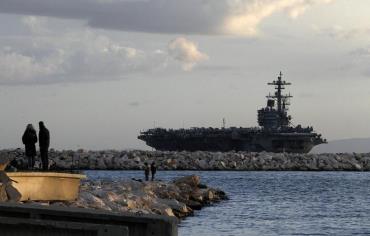
US aircraft carrierUS aircraft carrier [file] Photo: REUTERS

Unfortunately for Gazans, they are ruled by a government that, like ISIS, makes no secret of its intention to kill, systematically, on a massive scale. “For our struggle against the Jews is extremely wide-ranging and grave,” Hamas’ charter reads, “so much so that it will need all the loyal efforts we can wield, to be followed by further steps and reinforced by successive battalions from the multifarious Arab and Islamic world, until the enemies are defeated.”

Not two weeks ago, Hamas officials called for the killing of all Jews worldwide. And a week before that, Hamas’ leadership said that the objectives of the group, as listed in their charter, are more important than the cherished lives of the people in Gaza that they claim to represent.

Leadership of the Palestinian Authority, considered the moderate representation of the Palestinian people, have equated Israel’s operation in Gaza to ISIS’ operations in eastern Syria and northern Iraq.


WASHINGTON — Protestors against Israel’s operation in Gaza should pay close attention to what is happening tonight in northern Iraq. From a mountaintop, with a view over enemy combatants from a clear moral high ground, the United States is acting against the pending threat of actual genocide: the intentional, regime-sponsored systematic extermination of a people based on their identity.

Genocide is not a word often uttered by American presidents. In part, that is because genocide is an exceptionally rare crime. But when the act occurs, it is unmistakeable in its scale and its hallmarks: the world knows what has happened, because historically, its perpetrators hold a worldview that their murderous actions were justified.

In that tradition, the medieval Islamic State of Iraq and Syria, or ISIS, has made no secret of its goal to rule a “caliphate” full of zealot Sunnis, where women are enslaved and mutilated, and nonbelievers are tortured and beheaded. Tens of thousands of innocents have run for their lives from its warpath without much help from the international community— until now, from the United States, which has committed its military to the enforcement of that very basic international norm.

Can we expect mass protests in Vienna, Paris and Berlin calling for the protection of the oppressed of Iraq? The United Nations High Commissioner for Refugees says over 1 million have been displaced across Iraqi territory in the last month alone, with over 100,000 Christians, Yazidis, and many Muslims now seeking shelter.

This is what the threat of genocide looks like, for all those confused by its definition. Yazidi children are dying of thirst on the peak of a low mountain, without roofs over their heads to protect them from the August Iraqi sun, in flight from their homes because ISIS believes their families should submit and convert or perish. ISIS wants these people dead at their hands; the acute travesty unfolding in Iraq is just that simple.

International norms require the world make every effort to protect these innocent men and women stranded on Mount Sinjar, regardless of their religion, creed or ethnicity. Thankfully, due to the hard-fought successes of liberal democracies, that standard applies to all peoples, everywhere, including the Jews of Israel and of the diaspora, and the desperate Palestinians of Gaza.

Unfortunately for Gazans, they are ruled by a government that, like ISIS, makes no secret of its intention to kill, systematically, on a massive scale. “For our struggle against the Jews is extremely wide-ranging and grave,” Hamas’ charter reads, “so much so that it will need all the loyal efforts we can wield, to be followed by further steps and reinforced by successive battalions from the multifarious Arab and Islamic world, until the enemies are defeated.”

Not two weeks ago, Hamas officials called for the killing of all Jews worldwide. And a week before that, Hamas’ leadership said that the objectives of the group, as listed in their charter, are more important than the cherished lives of the people in Gaza that they claim to represent.

Nevertheless, this organization has mobilized the support of parties throughout Europe, after building an infrastructure with minimal resources that facilitates the indiscriminate targeting of not only Jews, but of all people throughout the lands of a sovereign neighboring state.

Quite transparently, the group seeks the targeted, regime-sponsored systematic extermination of a people based on their identity.

Terrorists in the Middle East today, driven perversely by Islamic fundamentalism, operate from a paradigm that does not value human life— and certainly not liberty, taken for granted by those demonstrating freely throughout the streets of Europe. A xenophobic interpretation of the Quran, instead, justifies to some the mass control and killing of men as the will of God.

Israel seeks the basic rights of a state, and has demonstrated its desire to protect Gazan civilians from military actions against those who attempt to deny those basic rights: sovereign borders, free from the daily threat of attacks against its people. And yet throughout the last month, Palestinian President Mahmoud Abbas, and PLO ambassador to the United Nations Riyad Mansour, have openly charged Israel with actions tantamount to this stark charge of genocide.

Put succinctly: Leadership of the Palestinian Authority, considered the moderate representation of the Palestinian people, have equated Israel’s operation in Gaza to ISIS’ operations in eastern Syria and northern Iraq.

“It is shameful and disgraceful that these terrorists are doing this in the name of religion, killing the people whose killing Allah has forbidden, and mutilating their bodies and feeling proud in publishing this,” Saudi Arabian King Abdullah said of Hamas’ tactics last month, at the height of the conflict. “They have distorted the image of Islam with its purity and humanity and smeared it with all sorts of bad qualities by their actions, injustice and crimes.”

Way too many people have died in Gaza, and the tactics and wisdom of Israel’s operation should be matters of fierce public debate. They surely will. But such cries of genocide, crimes against humanity and other war crimes are accusations of an intent among Israelis that go far beyond the reality of those supporting and executing Operation Protective Edge.

Genocide is what happens when a people are discriminated against, corralled, and led to slaughter; misrepresenting the deed does an injustice to all of its true victims, and complicates good-faith efforts to prevent the crime from happening again.

‘If demands not met by Sunday, we will attack Tel Aviv,’ says Hamas

August 9, 2014

‘If demands not met by Sunday, we will attack Tel Aviv,’ says Hamas | JPost | Israel News.

By JPOST.COM STAFF

LAST UPDATED: 08/09/2014 16:22

Hamas spokesman says resistance ready for long battle, will not waiver on demands, in particular opening of Gaza sea port.

Hamas

Hamas Photo: REUTERS

Hamas states on Saturday that it would continue attacks on Israel, if Palestinian demands it put forward in indirect talks in Cairo were not met.

Sources warned that if Israel did not cooperate with the Egyptian-mediated efforts, the Palestinian delegation would withdraw from Cairo. “If our demands are not met by Sunday, we will attack Tel Aviv,” the Ramallah-based Wattan TV network reported.

The Palestinians are demanding an end to the siege, border crossings to be reopened, and construction material to be allowed entry into the Gaza Strip. Other demands include free passage between the West Bank and Gaza, extended fishing rights, reopening the southern Gaza airport and creating a seaport.

Meanwhile, Hamas spokesman Mushir al-Masri said the group was prepared for a long battle, adding that the only way to achieve quiet was for Israel to agree to the group’s demands and those of the Palestinian delegation in Cairo. He said that the Gaza was no longer willing to be dependent and rely on the border crossings with Egypt, or the Rafiah crossing. In an interview with a TV station affiliated with Hamas, he said the the group demanded a port to enable the free movement of people and a free flow of trade.

Fawzi Barhoum, a Hamas spokesman said in another statement that it was not “going back” on the group’s demands, and that “the resistance would continue to fight with “all our strength.” He added they were not going to waiver any of their demands.

Palestinian negotiators were still in Egypt’s capital to try to reach a lasting agreement, despite the resumption in attacks between Israel and Hamas. The head of the delegation had previously stated that the team was set to continue efforts at brokering a deal, and that the Palestinian factions were united behind their basic demands to end fighting.

The Obama Doctrine: Pretend to Give a Damn–Until You Don’t Have To

August 9, 2014

The Obama Doctrine: Pretend to Give a Damn–Until You Don’t Have To
by Ben Shapiro8 Aug 2014 via Breitbart dot Com


(“Barack Obama is an emotional pro and a foreign policy dilettante. And that is an extraordinarily dangerous combination.: – LS)

For years, commentators have attempted to peg down just what the Obama Doctrine is. His allies have labeled the Obama Doctrine a form of realism about the limits of American power. His critics have labeled the Obama Doctrine “leading from behind.”

In 2009, President Obama came up with his own definition of an Obama Doctrine: “we’re only one nation… the problems that we confront, whether it’s drug cartels, climate change, terrorism, you name it, can’t be solved just by one country.” But Obama has also, at certain points, claimed to champion unilateralism in the service of human rights and internationalism in the service of diplomacy.

The Obama Doctrine has been difficult to pin down because there does not seem to be a common thread uniting his disparate policies – muscular interventionism in Libya, pushy paternalism with regard to Israel, eager abdication with regard to Syria and Ukraine.

But with Obama’s latest decision to launch airstrikes against the Islamic State in the Levant (ISIL or ISIS), the Obama Doctrine has now come into focus: pretend to give a damn about suffering of innocents when it hits the headlines, ignore it the rest of the time.

Because Obama doesn’t truly care. At all. He is a master emotional manipulator, capable of achieving effective posturing when it comes to the suffering of innocents. That’s why the media constantly swoon at his “tone” and his “attitude” during his press conferences. They repeatedly praise his “anger” or his “determination.” But they rarely ask just what he’s doing to fight evil.

Any deployment of power will be short-term and ineffective. Obama will do all he can for innocents up until the moment when he doesn’t have to do so. Then he’ll leave them to die.

That was certainly the case in Egypt, where Obama expressed extraordinary optimism about the ouster of Hosni Mubarak, then promptly allowed the Muslim Brotherhood to take over. He has since spent efforts attempting to undercut the Egyptian military, which launched a popularly-supported coup against Mohamed Morsi.

It has been the case in Iran, where Obama belatedly denounced the treatment of democracy protesters, then did nothing as they were shot in the streets.

It has been the case in Ukraine, where Vladimir Putin has annexed Crimea and invaded eastern Ukraine. Obama has expressed outrage; Putin has scoffed, and his rebel forces have shot down a passenger airliner, to approximately zero effective action from the West.

It has been the case in Nigeria, where after expressing upset over Boko Haram’s kidnapping of innocent girls and ensuring that the State Department endorse the “power of hashtag,” the Obama administration has done precisely nothing.

It has been the case in Syria, where Obama assured the world that should dictator Bashar Assad cross a red line with use of weapons of mass destruction, there would be consequences. There were none. Assad, who Obama said should go, just signed onto another seven-year term. In sum total, the number of dead in Syria now approaches 200,000.

Now, Obama has done the same in Iraq. He will drop a few bombs. He will bluster. Then the world’s attention will turn to some other crisis, and Obama will blithely move on, leaving erstwhile allies to die.

This is no groundbreaking revelation. President Obama has always cared far more about appearances than realities. He bobs like a cork on the waves of crisis, skipping to and fro, always carefully attuning his public emotions to achieve the most sympathetic effect. If brief shows of force are necessary, Obama is unafraid to engage in them. But he is unwilling to make any commitment to taking the lasting action that actually effects change. To do that, he would have to lead rather than follow.

He would have to care.

Barack Obama is an emotional pro and a foreign policy dilettante. And that is an extraordinarily dangerous combination. Popularity is the Obama Doctrine. Ironically, the end result is massive unpopularity – it turns out that world events require prolonged and sustained action rather than posturing. More importantly, the end result is massive casualties.

Obama: Netanyahu will compromise only if pressured

August 9, 2014

Obama: Netanyahu will compromise only if pressured

In special interview with New York Times on Middle East, Obama says PM Netanyahu is too strong, Abbas too weak to advance peace deal, adds that it is ‘hard’ to see PM able to make concessions.

Yitzhak Benhorin Published: 08.09.14, 11:52 / Israel News

via Obama: Netanyahu will compromise only if pressured – Israel News, Ynetnews.


“Netanyahu is too strong (and) in some ways Abu Mazen is too weak,” US President Barack Obama said in a comprehensive interview with New York Times columnist Thomas Friedman Friday, commenting on the balance of power between Israel and the Palestinians.

However, President Obama also noted that the high percentage of support for Prime Minister Netanyahu among the Israeli public proves to be a weak point for him. “If he doesn’t feel some internal pressure, then it’s hard to see him being able to make some very difficult compromises, including taking on the settler movement. That’s a tough thing to do.”


Relations that have seen ups and downs. Netanyahu and Obama at White House (Photo: AFP)
 

Obama also spared no criticism of Palestinian Authority President Mahmoud Abbas, and stated that “in some ways Abu Mazen is too weak,” while “Bibi is too strong.”

The American president told Friedman in the interview that the combination of the two leaders’ strengths and weaknesses makes it difficult “to bring them together and make the kinds of bold decisions that Sadat or Begin or Rabin were willing to make.”

According to Obama, the solution lies in the leaders’ own hands. Advancing towards a peace agreement will “require leadership among both the Palestinians and the Israelis to look beyond tomorrow. … And that’s the hardest thing for politicians to do is to take the long view on things.”


In some ways Abu Mazen is too weak’ (Photo: AFP)
 

In the interview, Obama outlined Israel’s development over the years. “It is amazing to see what Israel has become over the last several decades,” he said.


“To have scratched out of rock this incredibly vibrant, incredibly successful, wealthy and powerful country is a testament to the ingenuity, energy and vision of the Jewish people. And because Israel is so capable militarily, I don’t worry about Israel’s survival,” Obama explained.


“I think the question really is how does Israel survive. And how can you create a State of Israel that maintains its democratic and civic traditions. How can you preserve a Jewish state that is also reflective of the best values of those who founded Israel. And, in order to do that, it has consistently been my belief that you have to find a way to live side by side in peace with Palestinians. … You have to recognize that they have legitimate claims, and this is their land and neighborhood as well.”


 “Most sustained period of antagonism in Israel-US relations”


Ever since President Obama took office in January 2009, the relationship between the Israeli Prime Minister and the American President has seen many ups and downs. During Operation Protective Edge, it appeared that this conflict escalated even further.


The criticism from Israeli officials regarding Secretary of State John Kerry’s effort to achieve a ceasefire between Israel and Hamas and Netanyahu’s scolding of American ambassador to Israel Dan Shapiro led the New York Times to reach the conclusion earlier this week that it is unclear “how the relationship recovers as long as you have this president and this prime minister.”


Criticism of Secretary of State Kerry further escalated conflict (Photo: EPA)
 

The newspaper claimed that the US condemnation of Israel’s strike on a United Nations school in Rafah, that included within it words such as “appalled” and “disgraceful”, expressed the mounting American frustration towards the Israeli government in recent weeks.

According to the New York Times, American sources were left “to seethe on the sidelines”, after Netanyahu dismissed their efforts to end the current conflict in Gaza following Netanyahu’s dismissal. ”

“President Obama has had few levers to influence Prime Minister Benjamin Netanyahu’s government on the current conflict in Gaza,” the newspaper wrote.

Islamist fundamentalists gain tactical advantage over the US and Israel in Gaza and Irbil, 1,372 km apart

August 9, 2014

Islamist fundamentalists gain tactical advantage over the US and Israel in Gaza and Irbil, 1,372 km apart.

While different in many ways, the two most active Middle East conflicts, waged by the US in northern Iraq against the Islamic State, and by Israel against Hamas in the Gaza Strip, have strong common features:


1. Both stood idly by for years as Islamist fundamentalists, Al Qaeda’s IS in Iraq, and the Palestinian Hamas in the Gaza Strip, systematically built up military force for bringing forward their aggressive designs.

The Obama administration shrugged when al Qaeda started forging ahead, first in Syria and then in Iraq.

But for occasional air strikes against “empty sands” in Gaza, Binyamin Netanyahu’s government neglected to step in when Hamas built up a vast stockpile of rockets and an underground terror empire, as former AMAN director Amos Yadlin admitted publicly last week.
When, in mid-2013, IS commander Abu Bakr Al-Baghdadi executed a major tactical move by relocating his entire force from Syria to Iraq, Washington was unmoved – even when in Jan. 2014, the Islamists took over  the unresisting western Iraqi province of Anbar and a row of important towns, including Falluja and Tikrit.

The Iraqi army’s armored divisions, rather than resist the ruthless Islamists sweeping across the county, turned tail, bequeathing the conquering force the rich spoils of heavy, up-to-date American weaponry in mountainous quantities.

And still President Barack Obama saw no pressing cause to step in – even though, by then, it was obvious that this booty was destined not only for subjugating Baghdad, but being injected into the Syrian war and the IS arsenal in preparation for leaping on its next prey, Jordan, Saudi Arabia and at some point, Israel too.

The US president was finally jerked out of his unconcern when the soldiers of Allah started marching toward the gates of Irbil, capital of the semiautonomous Kurdish Republic of Iraq (KRG).

Friday, on Aug.8, a couple of US warplanes and drones went into belated action to curb their advance. According to the Pentagon statement, two FA-18 jets, launched from the USS George HW Bush aircraft carrier in the Gulf, dropped 500lb laser-guided bombs on a “mobile artillery piece” that was shelling Kurdish forces defending Irbil, “where US forces are based.”

A little more than one hour later, four F/A-18 aircraft hit a stationary convoy of seven vehicles and a mortar position near Irbil, wiping them out with eight bombs.

Gallons of water and tons of packaged meals were also air-dropped for the hundreds of refugees who had fled towns in northern Iraq that were mowed down by the Islamists, with nothing but the clothes they stood up in.
2. The US appears to be falling into the same error of judgment made by Israel’s war planners in the month-long Operation Defense Edge, i.e., that air strikes are capable of wiping out an Islamist terrorist peril. That lesson was there for Washington to learn in Afghanistan, Pakistan, Yemen and latterly Gaza.

3.  President Obama refuses to put American boots back in Iraq, specifically, special operations forces, because this would reverse what he considers his crowning foreign achievement, the withdrawal of the US army from Iraq.
For very different reasons, Israeli leaders abstained from sending special forces deep inside the Gaza Strip to eliminate the Hamas high command and main rocket stocks.

Because of these common factors, the two campaigns are destined to share a common outcome: IS will forge ahead in Iraq, and Hamas will continue firing rockets at the Israeli population, to force Jerusalem into submission. Neither conflict looks like ending any time soon.

4. Another less obvious common thread is to be found in Irbil. Two powerful patrons, the US and Israel, were responsible for shaping, training and funding the Peshmerga as the national army of the semiautonomous Kurdish Republic.

Both maintain military and intelligence missions in the KRG capital and may be presumed to be advising Kurdish generals on strategy for rebuffing the advancing Islamists.

Yet this menacing advance continues relentlessly, and the Kurdish army is showing the first signs of fallilng apart in the same way as the Iraqi divisions in earlier rounds of the IS onslaught. The sense of doom in Irbil is such that the US and Israel are preparing to evacuate their personnel.

It is becoming increasingly obvious that US warplanes and drones are the wrong weapons for stopping Al Qaeda’s jihadis, just as Israeli air strikes were never much good against Hamas, and will not stop the war of attrition the Palestinian fundamentalists launched Friday, Aug. 8.
5. Islamist fundamentalists, fighting on separate battlefields 1,327 km apart, have gained the tactical advantage in both over the US and Israeli armies. President Obama and Prime Minister Binyamin Netanyahu had better take a hard look at their tactics before it is too late.


How Israel was seduced by deceptive calm in Hamas’s Gaza

August 9, 2014

How Israel was seduced by deceptive calm in Hamas’s Gaza

The Netanyahu government preferred to ignore the tunneling and rocket-production as it sought ‘quiet above all’. Is it about to repeat the mistake?

By Avi Issacharoff August 8, 2014, 5:58 pm

via How Israel was seduced by deceptive calm in Hamas’s Gaza | The Times of Israel.


And then there was quiet again here, for a moment. Quiet again in Tel Aviv and Ashdod, quiet in Yehud and Beersheba. There were no sirens wailing in the center, in the south, or in the north. Even in Gaza there were no explosions, shelling, or Israeli attacks. For three days. “Just” burying the dead and pulling corpses out of buildings.

But then, at 8 a.m. on Friday morning, it was over.

The goals announced by Prime Minister Benjamin Netanyahu and his government at the outset of Operation Protective Edge a month ago were the weakening of Hamas, and restoring sustained calm for the people of Israel. Or as the prime minister himself put it, “quiet will be met with quiet.” As of Friday, Hamas was much weakened, but certainly had not been quieted.

It may be that the next few days see Hamas contenting itself with “symbolic” strikes, largely on the south, to show the Gaza public that it has not been broken. At the same time, it has declared its desire to continue the ceasefire talks in Gaza. It’s first goal for now: To defy Egypt’s framework, which conditions talks on a cessation of hostilities. Israel’s formal response: It won’t talk while the rockets are flying.

Hamas’s second goal is to get a seaport opened in Gaza. The spokesmen of its military wing are insisting there’ll be no long-standing ceasefire without it. Why the insistence on a seaport? As a symbol that the blockade has been broken. Even if such a port were overseen by international officials or the Palestinian Authority, Hamas would portray it as a breakthrough, a real achievement that justified the past month’s death and devastation. And also as a link to the outside world that does not pass through Egypt. Even if Hamas were to negotiate a ceasefire deal that saw the reopening of the Rafah border crossing, it would still be dependent on the Egyptians there; not so with a port (although Israel, of course, could always control access from the sea).

If, when, whenever, a more lasting ceasefire agreement can be forged, however, it seems unlikely that much of real substance will change. Both Netanyahu and Hamas may want a period of real quiet, but nothing more than that. Neither wants a serious peace agreement that would require substantive concessions. Neither, least of all Netanyahu, wants a deterioration into full-scale war.

From the moment he returned to office in 2009, Netanyahu has led Israel based on one clear strategy: quiet. Not peace, heaven forbid. And not war. Just general, unassuming calm, that would allow his government to survive and wouldn’t require him to take difficult political or diplomatic decisions.

The policies that Netanyahu and his associates have followed assume that while there is no solution to the Palestinian issue, it can be managed. The commander’s intent, as signaled by the Prime Minister’s Office, also influenced the defense establishment, which sought to maintain quiet with the Palestinians in the West Bank by almost every possible means: occasional concessions, maintenance of security cooperation with the PA, and the minimizing of friction with the local Palestinian population.

As regards Gaza, on the other hand, although there was a dangerous enemy in charge there openly calling for Israel’s destruction, a strange, secretive romance developed. Apparently it was comfortable for Jerusalem to deal with this enemy, Hamas, which didn’t hide its desire to wipe Israel off the map, and thus saved Netanyahu from the need to make difficult decisions about territorial compromises. Hamas had made clear since 2012 that it wasn’t interested in an escalation against Israel. Indeed Hamas, after the end of Operation Pillar of Defense in November that year, worked seriously to maintain the quiet. It stopped activists from other organizations who tried to fire rockets at Israel, and prevented an escalation in any way possible.

Israel under Netanyahu rather liked this arrangement. Here was an organization with which it didn’t need to negotiate, but with which it could cut deals. And thus was born the strange reality that prevailed from November 2012 until July 2014—no peace, and no war against Gaza. Just quiet.

But then came the kidnapping and killing of three Israeli teenagers in the West Bank on June 12.

The mistress who cheated

Until that dramatic incident, Israel had refused to internalize what its Gaza “mistress” was doing behind its back. True, we knew about the tunnels, the procurement of medium- and long-range rockets, and the plans for a variety of attacks. But the strategy of “quiet above all” led to tactics that involved ignoring all this in order to avoid escalation. Even in the IDF there was a tendency to regard Hamas as a relatively moderate party that prevented Gaza from falling into the hands of more radical Jihadists.

A backdoor channel via Egyptian intelligence even emerged from this arrangement: When Israel learned about rogue terrorist groups ignoring Hamas’s instructions and planning rocket attacks at Israel, the relevant information would be passed to Egypt, which would in turn tell Hamas in order for its men to thwart the launches. Sometimes it would cooperate, sometimes it would ignore the information.

When Hamas ignored the warnings, Israel would carry out an extremely limited punitive operation. Aircraft would fly into position for an attack on a Hamas training camp or command post, and would spend a long time in the air. Once Israel had verified that there were no Hamas operatives in the area, or any people at all for that matter, the aircraft would fire a missile or two at the target. The damage was sometimes significant, but no Hamas members were killed.

As bizarre as it sounds, this was the Israeli policy, including the army’s, toward Hamas and its people, even after intermittent rocket attacks on Israel.

But after Hamas signed its unity pact with Fatah, and formally gave up on governing Gaza, it felt more free to take more risks and sought to place itself back at the center of the Arab stage. That is the process that began on June 12, with the kidnapping of the three Israeli teens in Gush Etzion.

Hussam Kawasme, the commander of the cell responsible for killing Naftali Fraenkel, Gil-ad Shaar and Eyal Yifrach, received funding and assistance from Hamas in Gaza. Hussam’s brother, as I reported earlier this week, was a Hamas prisoner released from an Israeli jail as part of the Gilad Shalit deal, then deported to Gaza.

While Israel sought the killers and arrested dozens of Hamas operatives in the West Bank, a slow and steady deterioration against Israel occurred in Gaza. At first it was a drizzle of rockets fired by the rogue groups, then more fire from groups that serve as Hamas proxies. After the IDF accidentally killed a Hamas member on the border, the organization itself began firing rockets at Israel.

It is hard to say if Hamas had a master plan with a clear beginning and end. It could be that the organization wanted a limited escalation, but it’s not likely that it understood it would plunge itself into a month of heavy fighting against Israel, which would leave it battered and bruised, with basically no accomplishments on the ground, and much of Gaza in ruins.

Hamas still standing

Where does this now leave Israel? The conflict may not, at this point, have left the kind of deep scars on the country that the Second Lebanon War did in 2006. The IDF’s performance has been reasonable, sometimes even good. The army met the goals it set for itself. The home front didn’t show signs of breaking either.

Still, it seems like we are back where we were before the start of Operation Protective Edge, albeit with 30-plus Hamas tunnels smashed, at the terrible price of 64 IDF soldiers. Hamas is still standing in Gaza, without a desire for an escalation in the near future, but with military capabilities that will only improve with time, able to choose when next to attack.

It seems that the only way to change something in this equation (apart from conquering the Strip) would be for Israel to initiate a political process with the Palestinian Authority. There is not much that Israel can do with Hamas, except undermining it in the diplomatic sphere, by offering it everything — a seaport, an airport, a lifting of the blockade, a weekly pass to the amusement park in Tel Aviv… in exchange for the disarmament of Gaza and the destruction of the rest of the tunnels. In other words, to let Hamas’s leaders choose between the Gaza Underground they’ve built and the Gaza on the surface. Hamas would say no, and Israel would gain a few points.

But if it really wants to harm Hamas, to weaken it internally and in public opinion, the government of Israel would have to renew the peace talks, even at the expense of a settlement freeze. PA President Mahmoud Abbas proved a partner in fighting terror and stabilizing the region in recent months. Even the technocrat government he established, based on Hamas support, suddenly looks to Israel’s decision-makers like an entity it can work with (as opposed to being branded a terror government right after it was established).

But to be more realistic for a moment, the Netanyahu strategy of seeking quiet isn’t likely to change soon. Netanyahu doesn’t really want to drastically weaken Hamas, and he certainly doesn’t want to return to negotiations that would require him to make territorial concessions.