Archive for August 6, 2014

How CNN Mainstreamed the terrorist organization Hamas

August 6, 2014

How CNN Mainstreamed the terrorist organization Hamas, Breitbart, August 5, 2014

What will CNN do next, bring a clean-cut, fresh faced leader of the KKK on and browbeat him for washing his white sheets with detergent that harms the environment?


Earlier today I wrote about how the clip posted below proves that CNN is more civil to terrorists than to conservative Republicans. Today, though, CNN is making a huge deal out of the fact that Hamas spokesman Osama Hamdan won’t retract his comment about Jews putting Christian blood in matzoh — as though Hamdan isn’t a savage terrorist representing a savage terrorist organization but is instead a legitimate political organization that said something inappropriate, untoward, and insensitive.

It’s easy to laugh off CNN’s breathtaking moral cluelessness, but the agenda here — to mainstream Islamic terrorists whose written charter calls for the extermination of Israel and all Jews; to allow a terrorist spokesman to come on the air like just another talking head — is nothing less than CNN legitimizing a mob of theocratic, genocidal barbarians and no better than doing the same for al Qaeda, the KKK, or the Nazis.

Having Blitzer interview a spokesperson for a terror organization as though he’s just another newsmaker is one thing. Today CNN is further legitimizing Hamas by ignoring their KILL ALL JEWS charter to instead focus on a politically incorrect statement, as though that is not the very least of their sins.

What will CNN do next, bring a clean-cut, fresh faced leader of the KKK on and browbeat him for washing his white sheets with detergent that harms the environment?

Hot Air’s Noah Rothman is more generous to CNN than I, but makes some very good points: [emphasis original]

When you turn on “The Situation Room,” you expect to see James Carville and Newt Gingrich bickering over tax rates or whatever; you don’t expect to see this guy, dressed in proper western business attire and seeming for all the world like any other talking head, babbling about whether Jews put Christian blood in their matzohs or not. It’s a bizarre simulacrum of a standard cable-news interview: The guest runs through his talking points, the host tries to score a point or two with a tough question, and, oh, by the way, do you believe that Jews eat babies? All I could think of while watching it was that old Onion cable-news spoof featuring a debate between a 9/11 Truther and a member of Al Qaeda. Blitzer’s not trying to mainstream this guy — I think — but by treating him, in the interest of “equal time,” as a spokesman/spin doctor like any other, that’s the effect. That’s why the blood libel feels extra shocking; mainstream commentators don’t believe such wretched things. And like it or not, this turd is mainstream now. Does that mean blood libels are too?

CNN’s campaign to undermine Israel and prove its moral neutrality to the world community can’t stop hitting bottom.

And desperation makes you stupid and mean.

Hypocrisy over Gaza, Pat Condell

August 6, 2014

Hypocrisy over Gaza, You Tube, Pat Condell, August 5, 2014

World Ignores Christian Exodus from Islamic World

August 6, 2014

World Ignores Christian Exodus from Islamic World, Gatestone Institute, Raymond IbrahimAugust 6, 2014

“They were trying to kill us… because we were Christians.” — Teenage girl from Homs, Syria.

There have been house-to-house searches in Mali for Christians who might be in hiding, and people tortured into revealing Christian relatives. At least one pastor was beheaded.

It is to the media’s shame that those who slaughter, behead, crucify and displace people for no other reason than that they are Christian rarely get media coverage, while Israel, which kills only in the context of trying to defend itself from rocket attacks and terrorism, and not out of religious bigotry, is constantly demonized.

Paying jizya [special poll tax for non-Muslims] is not only about money. It is about subjugation.

While the world fixates on the conflict between Israel and Hamas—and while most mainstream media demonize Israel for trying to survive amid a sea of Arab-Islamic hostility—similar or worse tragedies continue to go virtually ignored.

One of the most ancient Christian communities in the world, that of Iraq—which already had been decimated over the last decade, by Islamic forces unleashed after the ousting of Saddam Hussein—has now been wiped out entirely by the new “caliphate,” the so-called Islamic State, formerly known by the acronym “ISIS.”

As Reuters reported:

Islamist insurgents have issued an ultimatum to northern Iraq’s dwindling Christian population to either convert to Islam, pay a religious levy or face death, according to a statement distributed in the militant-controlled city of Mosul….

It said Christians who wanted to remain in the “caliphate” that the Islamic State declared this month in parts of Iraq and Syria must agree to abide by terms of a “dhimma” contract—a historic practice under which non-Muslims were protected in Muslim lands in return for a special levy known as “jizya.”

“We offer them three choices: Islam; the dhimma contract—involving payment of jizya; if they refuse this they will have nothing but the sword,” the announcement said.

The amount of jizya-money demanded was $450 a month, an exorbitant sum for Iraq.

Hours after the demand for jizya was made, Islamists began painting the letter “n” on Christian homes in Mosul—in Arabic, Christians are known as “Nasara,” or “Nazarenes”—signaling them out for the slaughter to come.

Most Christians have since fled. A one-minute video in Arabic of their exodus appears here—women and children weeping as they flee their homes—a video that will not be shown by any Western mainstream media outlet, busy as they are depicting instead nonstop images of Palestinian women and children.

620Christian refugees, who fled or were expelled from Mosul, crowd around a truck distributing food aid. (Image source: Facebook video screenshot)

The Syrian Orthodox bishop of Mosul said that what is happening to the Christians of Mosul is nothing less than “genocide… not to mention the slaughters and rapes not being reported… Forcing more than a thousand Christian families out of Mosul, and turning Christian churches into Muslim mosques, is equivalent to genocide.” Of course, the word genocide means to kill or make extinct a people.

Others were not as lucky to flee. According to Iraqi human rights activist Hena Edward, a great many older and disabled Iraqis, unable to pay the jizya or join the exodus, have opted to convert to Islam.

Meanwhile, the jihadis continue destroying churches and other ancient Christian holy sites in the name of their religion, and murdering any Christians they can find. Among other acts, they torched an 1800 year old church in Mosul, stormed a fourth century monastery—formerly one of Iraq’s best known Christian landmarks—andexpelling its resident monks.

Most recently, in Syrian regions under the Islamic State’s control, eight Christians were reportedly crucified.

The Islamic State’s call for Christians to pay jizya is not simply about money. It is about subjugation. Most Western media reporting on this recent call for jizya have failed to explain the accompanying dhimma contract Christians must also abide by. According to the Islamic State, “We offer them [Christians] three choices: Islam;the dhimma contract—involving payment of jizya; if they refuse this they will have nothing but the sword.”

The “dhimma contract” is a reference to the Conditions of Omar, an Islamic text attributed to the caliph of the same name that forces Christians to live according to third class citizen status.

In fact, several months back, when the Islamic State was still ISIS, it applied the Conditions of Omar on the Christian minorities of Raqqa, Syria. The Islamic group had issued a directive

citing the Islamic concept of “dhimma”, [which] requires Christians in the city to pay tax of around half an ounce (14g) of pure gold in exchange for their safety. It says Christians must not make renovations to churches, display crosses or other religious symbols outside churches, ring church bells or pray in public. Christians must not carry arms, and must follow other rules imposed by ISIS… “If they reject, they are subject to being legitimate targets, and nothing will remain between them and ISIS other than the sword,” the statement said [emphasis added].

The persecution and exodus of Christians is hardly limited to Iraq. In 2011, the U.S. Commission on International Religious Freedom noted: “The flight of Christians out of the region is unprecedented and it’s increasing year by year.” In our lifetime alone “Christians might disappear altogether from Iraq, Afghanistan, and Egypt,” all Muslim majority nations.

Under Saddam Hussein, and before the 2003 U.S. “liberation” of Iraq, more than a million Christians lived in Iraq; Mosul had some 60,000 Christians. Today there are reportedly none thanks to the new Muslim “caliphate.”

In Egypt, some 100,000 Christian Copts fled their homeland soon after the “Arab Spring.” But even before that, the Coptic Orthodox Church lamented the “repeated incidents of displacement of Copts from their homes, whether by force or threat. Displacements began in Ameriya [62 Christian families evicted], then they stretched to Dahshur [120 Christian families evicted], and today terror and threats have reached the hearts and souls of our Coptic children in Sinai.”

In late 2012, it was reported that the last Christian in the city of Homs, Syria—which had a Christian population of some 80,000 before jihadis came—was murdered. One teenage Syrian girl said: “We left because they were trying to kill us… because we were Christians…. Those who were our neighbors turned against us. At the end, when we ran away, we went through balconies. We did not even dare go out on the street in front of our house.”

In the African nation of Mali, after a 2012 Islamic coup, as many as 200,000 Christians fled. According to reports, “the church in Mali faces being eradicated,” especially in the north “where rebels want to establish an independent Islamist state and drive Christians out… there have been house to house searches for Christians who might be in hiding, church and Christian property has been looted or destroyed, and people tortured into revealing any Christian relatives.” At least one pastor was beheaded.

One can go on and on:

Despite all these atrocities, exoduses, and even genocides, the mainstream media seems to spend every available moment airing images of displaced Palestinians and demonizing Israel for trying to defend itself. Yet Israel does not kill Palestinians because of their religion or any other personal aspects. It does so in the context of being rocketed and trying to defend itself from terrorism.

On the other hand, all the crimes being committed by Muslims against Christians are simply motivated by religious hate, because the Christians are Christian.

It is to the mainstream media’s great shame that those who slaughter, behead, crucify, and displace people for no other reason than because they are Christian, rarely if ever get media coverage, while a nation such as Israel, which kills only in the context of being self-defense, and not out of religious bigotry, is constantly demonized

The Results of Our Poll are In.

August 6, 2014

The Results of Our Poll are In.
by Louisiana Steve date August 6, 2014


Thanks to everyone who participated. We had a total of 59 responses. Of these, 7 of you felt the cease fire would only last a day or less. Another 7 gave it 2 days while only 4 gave it another day. The rest, who totaled a whopping 41, voted the cease fire will last for the full term of 72 hours. Clearly a lot of you out there feel the cease fire will hold. Please feel free to share your thoughts by posting a comment to this post. Thanks again. – LS

It’s Not What You Think: Hannity Explores Hamas Tunnel Into Israel

August 6, 2014

It’s Not What You Think: Hannity Explores Hamas Tunnel Into Israel, Daily SignalKelsey Harkness, August 5, 2014

(Hamas needs more construction materials as well as ample time and opportunity to use them. Hamas, an humanitarian organization, merely wants to care for the people of Gaza, unjustly, inhumanely and disproportionately slaughtered and impoverished by the vile aggressor Israel. Right. How will that song be sung in Cairo?– DM)

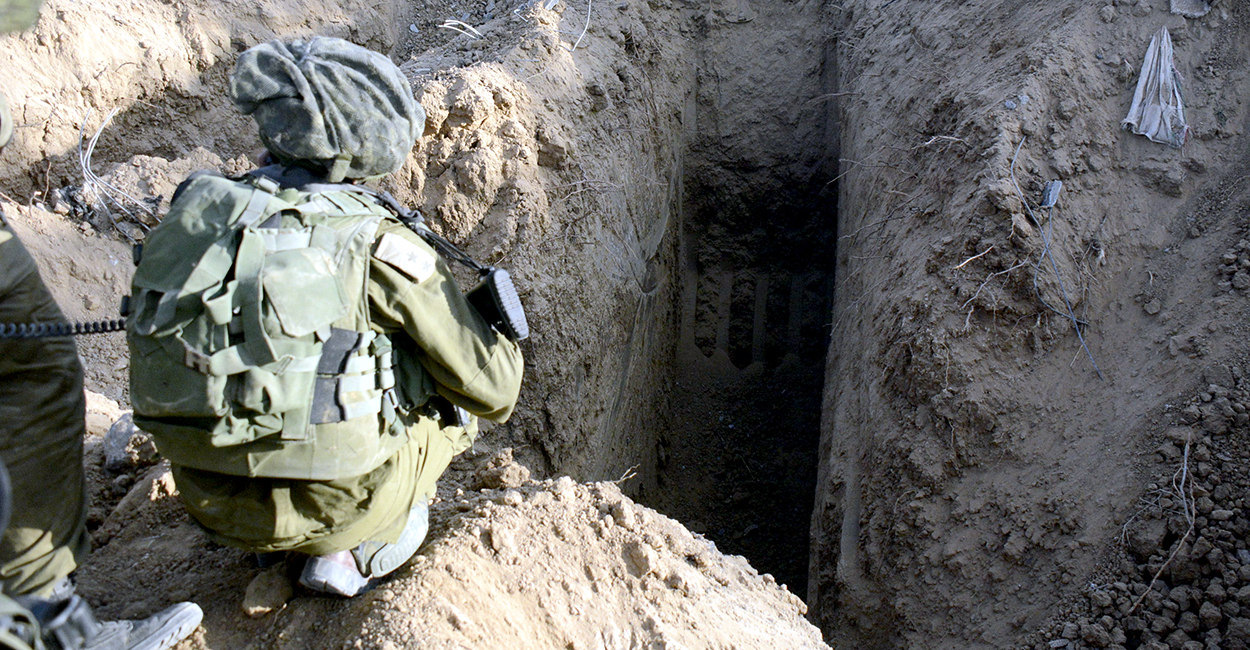
Want a look inside the secret tunnels that terrorist group Hamas has used to infiltrate Israel? Take a tour with Sean Hannity. The Fox News host traveled 40 feet underground with an Israel Defense Forces guide to explore one of the sophisticated passages. Among facts viewers learn: At a cost likely exceeding $2 million apiece, the three dozen known tunnels boast tracks, electricity, smooth surfaces and other advanced engineering.

>>> Commentary by James Phillips:  What Are These Tunnels Hamas Digs to Attack Israel?

[Mr. Phillips’ commentary dated July 25th is provided below]

Israeli army attacks Gaza

As part of the ongoing military campaign in Gaza, the Israeli military says it is now focused on destroying underground tunnels that Hamas is using to infiltrate Israeli soil.

Q: How sophisticated are these tunnels?

Many of the tunnels are extremely sophisticated, with concrete linings, electricity, telephone lines and electric lights. They are dug as deep as 90 feet below the surface and can contain offshoots that extend in many directions with multiple exits and entry points. Some of the command bunkers that protect Hamas leaders from Israeli retaliation for their rocket terrorism are equipped with water, toilets and sewage lines.

Q: How many are there?

The total number is unknown, probably even to Hamas, because other terrorist organizations and smuggling rings independently dig tunnels. The Israelis have found at least 36 tunnels running into Israel – and even this may be an underestimation. Hundreds more are believed to have been built underneath Gaza’s border with Egypt.

Q: How does Hamas use them?

The “offensive tunnels” are used to move Hamas commandos under the border to launch terrorist attacks against Israeli civilians and military attacks against Israeli soldiers. In 2006, Hamas militants used a tunnel to launch a surprise attack that captured an Israel soldier, Gilad Shalit, who was held as a hostage for five years before being exchanged for over one thousand Palestinian prisoners. Some of the Palestinians killed after exiting tunnels were found to be carrying handcuffs and tranquilizers, indicating that they hope to seize another Israeli hostage.

Tunnels also are used to store weapons and ammunition, protect Hamas personnel and provide fortified underground launching pads for firing rockets at Israel.

Hamas also uses tunnels to smuggle arms, including sophisticated Iranian rockets, into Gaza from Egypt. Tunnels also are used to smuggle people, contraband and consumer goods into Gaza. Hamas owns many of these smuggling tunnels, from which it makes tremendous profits, and also runs a protection racket in which it “taxes” goods smuggled through tunnels owned by other Palestinian groups.

Q: How long has Hamas been using them?

Hamas has been building tunnels for many years but the pace of building really accelerated after it seized power in Gaza a bloody 2007 coup.

Q: How are they built?

They are built with construction materials imported into Gaza, which is one reason that Israel has restricted the movement of materials across the border. Many Palestinians have had trouble building or repairing private homes because Hamas has diverted concrete, steel and other construction materials to make the tunnels. One tunnel discovered by the Israelis was a mile and a half long, contained an estimated 800 tons of concrete and cost approximately $10 million to build. Hamas puts a higher priority on building tunnels to kill Israelis than it does on building a Palestinian state or even protecting its own people by building bomb shelters.

Q: What is Israel doing about it?

Israel launched a ground offensive along the periphery of the Gaza strip in order to find and destroy the tunnel network, which is difficult to do from the air. The Israelis have discovered at least 36 tunnels and have advanced into the Shijaiyah neighborhood, where many tunnels reportedly converge.

Q: Does Israel use similar tunnels for attacks?

As far as I know, Israel does not use tunnels for offensive purposes.

Q: Do other countries use tunnels for strategic attacks?

Tunnel warfare has a long history, particularly in wars in which one side seeks to neutralize the air superiority of its adversary. During the Vietnam War, North Vietnam constructed a huge tunnel network to transport supplies southward and stage attacks on South Vietnam’s cities. North Korea has built an elaborate tunnel system, including one underneath the Demilitarized Zone that was big enough to disgorge 30,000 soldiers in an hour and another big enough for tanks to move through.

North Korea, which has developed world-class tunneling techniques, reportedly has helped Iran build underground facilities for use in its nuclear program. North Korea also helped Hezbollah, Iran’s terrorist proxy, build underground bunkers in Lebanon that Hezbollah used to bombard Israel with rockets. Just yesterday, North Korea was found liable by an American court for Hezbollah rocket attacks because of the advanced arms and construction assistance it provided to Hezbollah. It is likely that Hamas has received Iranian assistance in replicating the Hezbollah underground bunker strategy in Gaza.

Iran saving Hamas from bankruptcy

August 6, 2014

Iran saving Hamas from bankruptcy – Israel Opinion, Ynetnews.

Update:  2:02 PM – First volley of rockets since ceasefire.

Now called false alarm.

Analysis: Islamic organization is sacrificing Gaza’s residents in the battle against Israel in order to receive funds and weapons from Tehran.

Published:     08.06.14, 09:44 / Israel Opinion

Operation Protective Edge has increasingly weakened the Hamas organization and inflicted long-term damage on it.

Tunnels which have been dug for years were bombed by the IDF’s Engineering Corps within hours, dozens of the organization’s activists were killed every week, and missiles obtained with great effort were mostly “wasted” thanks to the Iron Dome system.

The civilian population in Gaza, which is paying the highest price, is accusing Israel outwardly, but knows very well that Hamas has sacrificed it to advance its goals.

If the defeat is in fact certain and Hamas has hardly reached any achievements, why did it avoid the “hudna” (truce) proposed by Egypt? Why, while the Arab world fails to stand by Hamas and its friends avoid getting involved, are the organization’s leaders insisting on their delusional conditions for a ceasefire? The only logical answer can be found in Iran.

Iranian efforts to spread Shia Islam in Gaza have been growing in recent years, quite unsuccessfully. One of the methods is an attempt to endow the city with a religious aura.

The Sunni Hamas organization has dealt more than once with the distribution of Shiite propaganda and even the establishment of Shiite prayer houses in the Gaza Strip.

The Shiite influence has increased since Hezbollah’s “victory” in the Second Lebanon War. Most of the Shiite propaganda goes through Hamas’ rival, the Islamic Jihad organization, which is ideologically loyal to the Islamic Revolution in Iran.

The Gazans are proud of the city’s Arab and Muslim heritage. According to Muslim tradition, Muhammad al-Shafi’I, the founder of one of the four schools of Sunni Islam, is believed to have been born in Gaza in the eighth century.

Hashim, the great-grandfather of Islamic prophet Muhammad, is buried in the ancient northern Gaza. The Hashemites are named after him. According to Sunni Islam, Hashim lived about two generations before the beginning of Islam and was an important and generous merchant. He was an idolater, however. Nonetheless, Sunni dynasties (the Mamluks and Ottomans) respected his heritage and built a mosque in Gaza which they named after him.

Although Gaza is referred to in Islam as “Hashim’s Gaza,” the Strip’s Sunni population is banned from worshipping his grave . Salafi groups in the Strip have attempted in recent years to prevent religious rituals at the gravesite and have even desecrated the tomb.

Shiite elements have tried in recent years to turn Hashim’s tomb into a pilgrimage site in order to give the fighting in Gaza a religious nature.

Assad Muhammad Qusayr, an influential Shiite Sheikh from the University of Qom in Iran, who appears on the Arab and Iranian media, called on Muslims to flock to Hashim’s grave in December 2013. According to the sheikh, Hashim did not die a natural death in the city on his way back from Mecca, but was murdered by Jews.

According to the Shia, Hashim was not an idolater but a monotheist and even a very righteous person. Several years ago, Hamas curbed a wave of pilgrimage by Shiites from India to Hashim’s grave.

Hamas’ struggle against the distribution of the Shia is embarrassing the organization and creating a rift with Iran.

The battle against the Shiite propaganda reflects the internal struggle in Gaza between Hamas, which belongs to the Sunni Muslim Brotherhood movement, and the Islamic Jihad, which is loyal to Iran.

There is no doubt that once the IDF operation in the Gaza Strip comes to an end, the tactical alliance between the two organizations will fall apart and the Islamic factions will resume the fighting against each other the Strip’s control.

Hamas’ betrayal of the Iranian-Sunni axis during the civil war in Syria sent the organization into a situation of economic and political isolation. Now that it is surrounded by enemies, Israel and Abdel Fattah al-Sisi’s Egypt, Hamas has no choice but to court Iran again.

The blocking of the Qatari aid by Saudi Arabia and Egypt and the Iranian failure to continue transferrin funds deepened the Gaza-ruling organization’s distress and forced its leaders to do everything in order to survive.

Iran was concerned that the “muqawama” (resistance) would die down as a result of Hezbollah’s fighting in Syria and began looking for a way to resume terror activities against Israel. Hamas’ only way of surviving was to accept Iran’s clear demand to resume the fighting against Israel.

This is the deal which likely explains the fighting in the south: Iranian weapons and funding in return for firing missiles at Israel.

According to different reports, the weapons’ journey from Iran to Gaza begins when they are loaded on ships which depart from the Bandar Abbas port in southern Iran to the Hormuz Island and travel around the Arabian Peninsula from the south to the Red Sea.

From there, the Syrian-bound shops continue through the Gulf of Suez, while the Gaza-bound vessels are unloaded in Sudan. The weapons are dismantled and led from Egypt and Sinai to through the tunnels to Gaza, where they are reassembled.

Israel has operated several times against ships disguised as commercial vessels. In 2002, Shayetet 13 commandos raided the Karin A ship, in 2011 it was the Victoria ship, and in March is was the Klos C ship in the Red Sea, which was carrying missiles and a lot of ammunition some 1,500 kilometers from the southern resort city of Eilat. Alongside the weapons, the commandos found instructions in Persian and Arabic.

Despite the advanced Israeli intelligence, the siege on Gaza is not hermetic and a lot of Iranian equipment has managed to reach the Strip. Most of it is believed to have been transferred during the term of the Muslim Brotherhood’s Mohamed Morsi as Egyptian president from the summer of 2012 to the summer of 2013.

Hamas politburo chief Khaled Mashal praised Iran in an interview from Cairo in November 2012 for its aid to Gaza during Operation Pillar of Defense. Iran’s Revolutionary Guards commander, Mohammad Ali Jafari, rushed to deny that Iran was supplying Gaza with missiles, including Fajr-5 missiles which are capable of reaching Tel Aviv and Jerusalem.

But Iranian Parliament Speaker Ali Larijani admitted recently that Iran was supplying Hamas with “weapon-building technology.” A huge poster hung on a wall in Gaza recently showed the Palestinian and Iranian flags along with gratitude messages to Tehran in four languages.

Iranian supreme leader Ali Khamenei called on the Palestinians in recent days to expand their struggle from Gaza to the West Bank. The Arab press has reported that Khamenei plans to issue a “fatwa” (Islamic decree) calling on all Muslims to launch a jihad (holy war) against “the Zionist enemy.”

Hamas is sacrificing the residents of Gaza in order to receive budgets and weapons from Iran and maintain its leadership among the Islamic factions. The war killing Gaza’s residents is saving Hamas from bankruptcy and loss of control.

Iran, Al Qaeda took note of curbs on IDF vanquishing Hamas, which now has core of a Palestinian army

August 6, 2014

Iran, Al Qaeda took note of curbs on IDF vanquishing Hamas, which now has core of a Palestinian army.

Debka

As the Israeli delegation arrived in Cairo for indirect talks with Hamas, at the end of the first 24 hours of a three-day ceasefire in the Gaza War, Israeli government spokesmen went to great lengths Tuesday night, Aug. 6, to convince the public that the Gaza war was over and the enemy seriously degraded.


Chief of Staff Lt. Gen. Benny Gantz went to so far as to declare: “We now move into a period of rehabilitation.” This was not exactly the message the soldiers wanted to hear from their commander as they headed out of the battlefields of Gaza after 28 days of hard fighting and heavy losses.
But government PR artists were already churning out a horror what-if scenario that depicted a theoretical operation for conquering the entire Gaza Strip.

This scenario, said to have been put before the security cabinet last week in the debate on tactics for the next phase of the operation, would have cost hundreds of lives of Israel soldiers and led to a five-year Israeli occupation for purging the territory of 20,000 terrorists and disabling their military machine.
This scenario was dreamed up to silence the malcontents, including citizens living within close range of the Gaza Strip, who were refusing to return home because the danger had not passed.

The alternatives which the cabinet considered never included full occupation of the Gaza Strip. The most serious option, which the ministers examined and rejected in the first week of the war, was to send troops in for a lightening strike to destroy Hamas’ command centers and core military structure and get out fast.  Had that option been pursued at an early stage in the conflict, instead of ten days of air strikes, it might have saved heavy Palestinian losses and property devastation, the extent of which troubles most Israelis too.

And this week again, the politicians running the war decided to cut it short, regardless of advice on feasible operations for bringing the counter-terror operation to a successful end and closure for the population living under Hamas terror for more than a decade.

The decision to go instead for a ceasefire and indirect talks with Hamas was a costly one for Prime Minister Binyamin Netanyahu at home and much criticized. On the first day of the ceasefire Tuesday, Prime Minister Binyamin Netanyahu’s rating in the polls dropped sharply to just over 60 percent, its pre-war rating, after soaring into the eighties at the peak of the operation.

The way Israel’s leaders handled and concluded the Gaza War has four consequences that transcend its immediate sphere:

1. The fact that, after taking a severe beating, Hamas is still standing and left with most of its military infrastructure unscathed, provides it with the core of a regular Palestinian army, which the Islamists did not have before the launch of Operation Defensive Edge on July 7.
This core is already an active fighting force with good combat training and national popularity – not just in the Gaza Strip but also in the Palestinian Authority’s West Bank domain.

So Hamas comes to the Cairo negotiating table with a freshly-minted military card.

2.  The prospects of a post-war accommodation that will change the Gaza Strip’s terrorist landscape are dim. Israeli government tacticians have hinted that Palestinian Authority Chairman Mahmoud Abbas might be a suitable figure for leading such an accommodation. This is a pipe dream. Hamas’ military wing would never contemplate giving this rival free rein in their territory. And, anyway, Abbas shows no inclination to fit into any Israeli schemes for Gaza.

3.  When Ban Ki-moon visited Jerusalem on July 22 to push for a ceasefire in Gaza and talks on the root causes of the Israeli-Palestinian dispute, Netanyahu burst out: You can’t talk to Hamas. They are Islamist extremists like Al Qaeda, IS, Taliban or Boko Haram!
Unnoticed by him, his words were picked up in that same Islamist world. Eyes there carefully tracked each stage of the Gaza conflict, after he was understood to have raised it to a level comparable to the war on Al Qaeda. So,after curtailing the operation against Hamas, Israel may find its hand has landed in a new wasps’ nest. At this moment, the Islamic State and Syrian Nusra Front are fighting to extend their Syrian and Iraqi footholds by a push into Lebanon. They may not stop there.
If the jihadists on the march were permitted to judge the IDF incapable of vanquishing Hamas, they might turn to Israel and pose it with an extremely dangerous new threat.

4. Iran too will have taken note of the fact that, twice in two years, Israel’s leaders abstained from bringing to a victorious conclusion a war started by military forces which Tehran had fortified, trained and funded – first Hizballah in the 2006 Lebanon war, which ended in a draw, and now the contest with the Palestinian Islamists which ended in similar fashion.

Fighting without silver bullets

August 6, 2014

Our World: Fighting without silver bullets | JPost | Israel News.

( “Prime Minister Netanyahu is correct. Iran’s nuclear weapons program is an existential threat to Israel. And it needs to be wiped out.” )

By CAROLINE B. GLICK

08/05/2014 23:01

There are no silver bullets. The price of freedom is hard work and vigilance.
West Bank

Rocket hits house in West Bank Photo: screenshot

Hours before Israel accepted the Egyptian-brokered cease-fire deal on Monday night, Prime Minister Binyamin Netanyahu traveled to the south to try to allay the fears of area residents.

It’s not at all clear how successful he was.

Residents of the communities bordering the Gaza Strip who evacuated their homes are skeptical of the IDF’s claims that it is safe for them to return.

In an interview with NRG website, Yael Paz-Lahiany, a mother of three young children from Kibbutz Nahal Oz just across the border from Gaza professed profound confusion and concern.

“I really don’t understand what is happening here and don’t know what to think. Just on Saturday we had 10 red alerts at Nahal Oz and I don’t know what to say. I also don’t understand what the prime minister said [Saturday].

I just know that I am staying at Kibbutz Dorot, and here too they are operating on emergency footing, the nurseries are only partially open, and no one is going back to normal. So if 10 kilometers from Gaza they haven’t returned to their routine, how are we supposed to go back to our lives 800 meters from the wire?” Israel’s operations in Gaza so far have been based on the hope that Hamas can be convinced to stand down.

Israel has destroyed its tunnels. The IDF killed hundreds of Hamas terrorists. The IDF destroyed Hamas’s bases.

Hamas’s missile arsenal is depleted. Its leaders are safe only so long as they remain hidden in their illegal bunkers under Shifa hospital. Hamas remains cash strapped and without access to resupply from Iran or other allies.

Assuming that Hamas maintains the 72-hour ceasefire that it requested, in negotiations that may ensue for a more detailed cease-fire agreement if the US is unable to coerce Israel and Egypt into agreeing to open the borders and save Hamas, Hamas will be destroyed through attrition.

If this happens, Israel will have won a great victory.

But if Hamas continues to attack southern communities at any level Israel will have no choice. It will have to send its forces back into Gaza with the mission of retaking control there.

There is only one thing worse than reasserting Israel’s military control over Gaza: Losing southern Israel. So long as residents of the south fear returning to their homes, Israel is losing southern Israel.

This looming prospect of having to retake Gaza would be bad enough if Israel only had to concern itself with Gaza. But Israel enjoys no such luxury.

Far more dangerous that Hamas is Hezbollah. Whereas Hamas’s missiles are unguided, Hezbollah has guided missiles that are capable of reaching every centimeter of Israeli territory. And their payloads are big enough to destroy high-rise buildings.

Unlike Hamas, Hezbollah has anti-aircraft missiles and anti-ship missiles capable of disrupting air and naval operations.

Hezbollah has drones that it has launched successfully.

And the possibility that Hezbollah has some level of unconventional weapons cannot be ruled out.

Hezbollah commanders and fighters have gained massive experience fighting in Syria and Iraq. They have sophisticated intelligence gathering capabilities including human intelligence and signals intelligence assets.

They have advanced command and control systems.

And by all accounts, Hamas’s terror tunnels are nothing in comparison to Hezbollah’s extensive network of tunnels that run beneath the border with Israel.

Hezbollah’s announced war plans involve invading and taking control over communities in the Upper Galilee.

In the face of Hamas’s repeated aggression in recent years, many Israelis are now looking wistfully at our quiet northern border. It was the massive destruction Israel wreaked on Lebanon during the 2006 war, they say, that is responsible for this tranquility. We deterred Hezbollah.

Unfortunately, this is dangerous nonsense that bespeaks a fundamental refusal by those that express this view to reconcile themselves with the nature of Hezbollah and its decision making process.

Hezbollah’s decision to go to war in 2006 was made in Tehran, by Hezbollah’s Iranian masters. The decision not to go to war since has also been made by Tehran.

Tehran decided to deploy Hezbollah to Iraq and Syria.

And Tehran will decide, based on its own sense of priorities, when Hezbollah and its massive arsenal of terror should attack Israel.

The only way that Israel’s operations in 2006 have impacted Hezbollah’s future aggression is by enabling it. Israel agreed to a cease-fire that enabled Hezbollah to rearm, reassert control over southern Lebanon and expand its influence over the Lebanese military and state. Had Israel routed Hezbollah in 2006 or refused to accept the pro-Hezbollah cease-fire terms embodied in UN Security Council resolution 1701 then the situation would be different.

This brings us to Iran, the hidden hand behind the 2006 war, and at least to some degree behind the present war with Gaza, and the direct threat that it constitutes for Israel.

Last month US President Barack Obama bought himself and Iran four more months. Iran can continue to develop its nuclear weapons until after the US midterm election unconstrained by international scrutiny.

Obama can pretend for four more months that he is going to achieve a nuclear deal that will prevent Iran from developing nuclear weapons.

Israel however, was not given four months.

Without the Iranian nuclear umbrella, Iran’s terror proxies in Gaza were able to develop weapons to attack nearly the entire country. What will they develop if that nuclear umbrella is instated? Prime Minister Netanyahu is correct. Iran’s nuclear weapons program is an existential threat to Israel. And it needs to be wiped out.

Given the threats from Lebanon and Iran, it is clear that Israel’s decision to try to limit its operations in Gaza was necessary. Israel cannot afford to tie its forces down indefinitely. And if Israel is forced to retake control over Gaza, it will need to deploy its forces in such a way that it maintains sufficient reserve capacity to handle Gaza, Lebanon and Iran simultaneously.

This would be challenging enough under the best of circumstances. Unfortunately, the situation is made all the more complicated by the Obama administration’s strategic aim of appeasing Iran by enabling it to develop nuclear weapons and by siding with Hamas against Israel and the US’s traditional Sunni Arab allies.

The administration’s unswerving devotion to this policy aim was again clarified on Monday when Palestinian sources at the Cairo talks told the media that the US had again joined forces with Hamas-supporting Qatar to achieve an alternate cease-fire, undercutting Egyptian efforts and giving Hamas reason to walk away from the table.

Just last week the US media lambasted Secretary of State John Kerry for supporting Hamas against Israel in cease-fire negotiations. The fact that the Obama administration continues to act in this manner suggests that it is completely committed to this course of action.

Israel can cope with all of these challenges and surmount them. But it won’t be easy.

In recent days a spate of government ministers and foreign supporters have recommended bevy of options that involve getting someone else to deal with Hamas for Israel. Foreign Minister Avigdor Liberman said Monday that Gaza should become a UN mandate.

Justice Minister Tzipi Livni and her colleagues on the Left, joined by former Bush administration deputy national security adviser Elliott Abrams say that Fatah can be brought into Gaza to fight Hamas for Israel.

These suggestions are all based on wishful thinking and an extraordinary capacity to ignore reality.

The UN is institutionally committed to delegitimizing and ultimately destroying Israel.

Fatah can only come into Gaza after Hamas has been destroyed completely and driven from leadership by Israel.

Under any other circumstance, Fatah will collaborate with Hamas against Israel, as it has always done. And if Hamas is routed and destroyed Fatah would only destabilize the situation.

The time has come for us to recognize that there are no easy answers for Israel. IDF operations in Gaza in recent weeks have dealt a harsh blow to Hamas. Perhaps the terror commanders have been deterred. Perhaps not.

Whatever the case may be, if Israel and Egypt are able to continue to block US attempts to open the borders for Hamas resupply until Kerry gets swept up in another major crisis, then Hamas can be defeated through attrition.

If not, then Israel will have no choice but to retake control of Gaza while maintaining enough forces in reserve to respond to a second front in the North, and finally end Iran’s dream of becoming a nuclear power.

There are no silver bullets. The price of freedom is hard work and vigilance.

Only if we act in full cognizance of the gravity of the moment and the absence of easy answers will we navigate the minefield we find ourselves in successfully and restore the safety of the south, the north, the east and the center of the country.

A Stronger Israel?

August 6, 2014

A Stronger Israel? National Review, Victor Davis Hanson, August 5, 2014

Big Israeli Flag

In postmodern wars, we are told, there is no victory, no defeat, no aggressors, no defenders, just a tragedy of conflicting agendas. But in such a mindless and amoral landscape, Israel in fact is on its way to emerging in a far better position after the Gaza war than before.

Analysts of the current fighting in Gaza have assured us that even if Israel weakens Hamas, such a short-term victory will hardly lead to long-term strategic success — but they don’t define “long-term.” In this line of thinking, supposedly in a few weeks Israel will only find itself more isolated than ever. It will grow even more unpopular in Europe and will perhaps, for the first time, lose its patron, America — while gaining an enraged host of Arab and Islamic enemies. Meanwhile, Hamas will gain stature, rebuild, and slowly wear Israel down.

But if we compare the Gaza war with Israel’s past wars, that pessimistic scenario hardly rings true. Unlike in the existential wars of 1948, 1956, 1967, and 1973, Israel faces no coalition of powerful conventional enemies. Syria’s military is wrecked. Iraq is devouring itself. Egypt is bankrupt and in no mood for war. Its military government is more worried about Hamas than about Israel. Jordan has no wish to attack Israel. The Gulf States are likewise more afraid of the axis of Iran, Hezbollah, Hamas, and the Muslim Brotherhood than of Israel — a change of mentality that has no historical precedent. In short, never since the birth of the Jewish state have the traditional enemies surrounding Israel been in such military and political disarray. Never have powerful Arab states quietly hoped that Israel would destroy an Islamist terrorist organization that they fear more than they fear the Jewish state.

But is not asymmetrical warfare the true threat to Israel? The West, after all, has had little success in achieving long-term victories over terrorist groups and insurgents — remember Afghanistan and Iraq. How can tiny Israel find security against enemies who seem to gain political clout and legitimacy as they incur ever greater losses, especially when there is only a set number of casualties that an affluent, Western Israel can afford, before public support for the war collapses? How can the Israelis fight a war that the world media portray as genocide against the innocents?

In fact, most of these suppositions are simplistic. The U.S., for example, defeated assorted Islamic insurgents in what was largely an optional war in Iraq; a small token peacekeeping force might have kept Nouri al-Maliki from hounding Sunni politicians, and otherwise kept the peace. Israel’s recent counterinsurgency wars have rendered both the Palestinians on the West Bank and pro-Iranian Hezbollah militants in Lebanon less, not more, dangerous. Hamas, not Israel, would not wish to repeat the last three weeks.

Oddly, Hezbollah, an erstwhile ally of Hamas, has been largely quiet during the Gaza war. Why, when the use of its vast missile arsenal, in conjunction with Hamas’s rocketry, might in theory have overwhelmed Israel’s missile defenses? The answer is probably the huge amount of damage suffered by Hezbollah in the 2006 war in Lebanon, and its inability to protect its remaining assets from yet another overwhelming Israeli air response. Had Hamas’s rockets hit their targets, perhaps Hezbollah would have joined in. But for now, 2014 looks to them a lot like 2006.

In the current asymmetrical war, Israel has found a method of inflicting as much damage on Hamas as it finds politically and strategically useful without suffering intolerable losses. And because the war is seen as existential — aiming rockets at a civilian population will do that — Israeli public opinion will largely support the effort to retaliate.

As long as Israel does not seek to reoccupy Gaza, it can inflict enough damage on the Hamas leadership, and on both the tunnels and the missile stockpiles, to win four or five years of quiet. In the Middle East, that sort of calm qualifies as victory. And the more the world sees of the elaborate tunnels and vast missile arsenals that an impoverished Hamas had built with other people’s money, and the more these military assets proved entirely futile in actual war, the more Hamas appears not just foolish but incompetent, if not ridiculous, as well.

After all the acrimony dies down, Gazans will understand that there was a correlation between blown-up houses, on the one hand, and, on the other, tunnel entrances, weapon depots, and the habitat of the Hamas leadership. Even the Hamas totalitarians will not be able to keep that fact hidden. As the rubble is cleared away, too many Gazans will ask of their Hamas leaders whether the supposedly brilliant strategy of asymmetrical warfare was worth it. Hamas’s intended war — blanketing Israel with thousands of rockets that would send video clips around the world of hundreds of thousands of Jews trembling in fear in shelters — failed in its first hours. The air campaign was about as successful as the tunnel war, which was supposed to allow hit teams to enter Israel to kidnap and kill, with gruesome videos posted all over the Internet. Both strategies largely failed almost upon implementation.

In terms of domestic politics, Israel has rarely been more united — akin to the United States right after 9/11. The Israeli Left and Right agree that no modern Western state can exist under periodic clouds of rockets and missiles. Similarly, the attrition of Hamas only plays into the hands of the Palestinian Authority, which understandably stayed out of the war and did not incite the West Bank to stage simultaneous attacks. Like it or not, after the Gaza war, Israel will be dealing in the near future with Palestinians who do not always think preemptive rocket and tunnel attacks work to their own strategic advantage.

In terms of economics, Israel is no longer subject to carbon-fuel blackmail. It will soon become a major exporter of natural gas, and political realities will reflect that commercial importance. If one cynically believes that much of the global tilt to the Palestinians began as an aftershock from the 1973 oil embargoes, then Israeli exports may soon be reflected in more favorable politics.

Is Israel politically isolated? It certainly seems that way, if one looks at the response to the Gaza war among Western journalists, academics, politicians, and popular culture. But public opinion in the United States remains staunchly pro-Israel in spite of the American elite culture’s romance with Hamas and the Palestinians. Moreover, the Democratic party is facing its own increasing existential crisis, as its establishment pro-Israel donors and politicians are appalled by the increasingly anti-Israel tones of its ever more radical base. After the Gaza war, some major Democratic supporters of Israel will quietly make the necessary adjustments, in recognition that both their party and the Obama administration seem to prefer Hamas to democratic Israel. The upcoming 2014 midterm election does not favor candidates who are anti-Israel, but rather pro-Israeli conservatives. After 2016 there is unlikely to be a president who shares the incoherent views of Barack Obama on the Middle East. Fairly or not, it appears that the administration is trying to hide its pro-Hamas sympathies and is doing so unprofessionally and ineptly.

Europe, of course, remains mostly hostile to Israel, a hatred that predates the Gaza war. But the current demonstrations of virulent anti-Semitic hatred do not reflect well on the European Union. At present, it appears that European nations either cannot or will not confront their own fascistic Islamic radicals, which leaves open the question of whether the Islamist message of the streets resonates with Europeans.The European hostility to Israel does not stem just from events on the ground in Gaza, but is more a reflection of Europe’s inability to deal with its 20th-century past. Demonization, the more virulent the better, of Israelis seems to ease guilt over the Holocaust — as if to imply that, while the genocide was regrettable, there was something innately savage in Jewish culture, now manifested in Gaza, that might understandably have incited past generations of more radical Europeans. Otherwise, Europeans simply mask with trendy ideology the more materialistic assessment that demography, oil, and the fear of terrorism weigh in favor of allying with the Palestinians. Either way, European anti-Semitism is a bankrupt ideology, one that manifests itself in sympathy for an undemocratic, misogynistic, homophobic, and religiously intolerant Hamas, along with selective unconcern with the many occupations, refugees, divided cities, and walled borders that exist in the wide world outside the Middle East.

The U.N. will emerge after the war in an even sorrier state. Secretary General Ban Ki-moon has offered mostly platitudes and buffooneries. Certainly, he would never take his own advice if North Korea were to move in the manner of Hamas. Hamas’s use of U.N. facilities to hide arsenals could not have occurred without U.N. complicity. What little credibility the U.N. had in the Middle East before the war is mostly shredded.

Iran is watching the war, and its surrogate is not doing well. There is no particular reason why an Israeli anti-missile system could not knock down an Iranian missile. Nor is Hezbollah as fiery in deed as in word these days. The message to Iran is that Israel will fight back in whatever way it finds appropriate against its enemy of the moment.

Gaza is a military and political minefield. But if Israel continues on its present course, it will emerge far better off than Hamas and better off than it was before Hamas began its missile barrage. And in the Middle East, that is about as close to victory as one gets. The future for Israel is not bleak, just as it is not bleak for any nation that chooses to defend itself from savage enemies that seek its destruction.

NDTV Reports: Watch Hamas in Action

August 6, 2014

NDTV Reports: Watch Hamas in Action, Power LineSCOTT JOHNSON, August 5, 2014

The journalists covering the war on Israel from Gaza haven’t captured much of Hamas’s activities and Palestinians of all stripes have promoted the theme of Israeli perfidy promoted by Hamas. The theme has even become the native tongue of the Obama administration. This morning, in any event, the Foreign Minister of the Palestinian Authority filed formal charges in Geneva accusing Israel of war crimes for targeting civilian areas in Gaza.

The Simon Wiesenthal Center draws attention to the report filmed by India’s NDTV (video below), showing Hamas deliberately setting up a launch site and firing a rocket from Gaza in a densely populated area next to hotels and apartment buildings. According to NDTV, Hamas mounted the attack minutes before the ceasefire went into effect this morning. That’s just how they roll.

NDTV’s report is posted here. The video is definitely worth a look.

Hamas of course uses civilians in the vicinity as human shields who will act as deterrent to an Israeli response, or become casualties of it. Hamas’s modus operandi itself violates the laws of war, not that the Obama administration is willing to handle this elementary fact.