Archive for July 2014

Border Police intercept Palestinian car bomb at Beitar Illit checkpoint

July 27, 2014

Border Police intercept Palestinian car bomb at Beitar Illit checkpoint | JPost | Israel News.

By JPOST.COM STAFF

 LAST UPDATED: 07/27/2014 11:57

Police thwart terrorist at Beitar Junction in the West Bank; sappers at the scene neutralizing the bomb; suspect resisted arrest, failed to stop vehicle when asked.

Beitar Ilit

Suspicious car in Beitar Ilit security incident Photo: COURTESY MOUNT HEBRON SPOKESMAN

Border police seized a vehicle rigged with a powerful explosive device at a checkpoint at the Beitar Junction in the West Bank on Sunday morning.

Following the discovery, Route 375 near Beitar Illit was closed to traffic.

The security forces identified the vehicle as it was approaching the checkpoint and thought it seemed suspicious that the driver was traveling especially slowly.

The driver was asked to stop the vehicle.

“He was acting suspiciously, so we had to question him,” the officer responsible for the checkpoint said.

Prior to his arrest the suspect stalled when he was asked to turn off the engine of his vehicle.

At this point, a border policeman put his hand on the keys to turn the vehicle off and the suspect began to drive while half of the policeman’s body remained inside.

After the vehicle proceeded for a few meters, the policeman drew his loaded personal weapon and pointed his gun at the suspect, ordering him to stop.

After the suspect was arrested, the security forces noticed he was wearing a wig. At this point they discovered the powerful device in the vehicle.

Border Police sappers were called to the scene to neutralize the device. The suspect was taken in for questioning.

UPDATED: Terror attack averted at Beitar Checkpoint

July 27, 2014

UPDATED: Terror attack averted at Beitar Checkpoint – The Jewish Press


The town of Beitar Ilit in Gush Etzion Photo Credit: Nati Shohat /Flash90.


10:45am Suspected Security Incident at Beitar Checkpoint (Gush Etzion). Road closed to alltraffic in both directions. The Beitar checkpoint is on the main highway, near the town of Beitar Ilit.

10:47am Walla reports that an Arab driver showed up at the checkpoint with multiple gas canisters inside his car. The road was shut down as the IDF inspects the car further.

11:00am According to Reshet Bet, the driver refused to stop at the checkpoint and the IDF blocked the car. The driver resisted arrest, and the IDF found multiple gas canisters inside the car.

Reshet Bet says a terror attack was averted.

IDF Resumes Ground Offensive in Gaza

July 27, 2014

IDF Resumes Ground Offensive in Gaza – Defense/Security – News – Arutz Sheva.

IDF warns civilians to steer clear of Gaza after responding to Hamas’s attacks on Israel.

By Uzi Baruch, Tova Dvorin

First Publish: 7/27/2014, 10:11 AM / Last Update: 7/27/2014, 10:24 AM

Ground offensive (illustrative)

Ground offensive (illustrative)

Flash90

Israel has resumed its ground and air offensive against Hamas terrorism in Gaza, the IDF Spokesperson’s Office announced Sunday morning, after Hamas fired a salvo of rockets on Israeli civilians during a “humanitarian ceasefire.”

“Following Hamas’ incessant rocket fire throughout the humanitarian window, which was agreed upon for the welfare of the civilian population in Gaza, the IDF will now resume its aerial, naval and ground activity in the Gaza Strip,” an army statement said.

“Due to flagrant violations of humanitarian remission by Hamas, the IDF is now resuming offensive activities,” army spokesman Peter Lerner wrote on Twitter.

“The IDF again urges the Palestinian population not to approach combat areas,” the IDF statement added, in its continued efforts to prevent civilian casualties.

Hamas fired at least eleven rockets on Israel Sunday morning, despite Israel’s announcement late Saturday that it would extend a humanitarian ceasefire called on Saturday until Sunday at 9:00 pm.

Several rockets were shot down over Petah Tikva, Ashdod, and Gan Yavne by the Iron Dome missile defense system; shrapnel was scattered over the greater Petah Tikva area. One motorcyclist was injured as he tried to pull to the side of the road during an air raid siren in the Sharon-area city.

At least five rockets also fell in open area in the South; one car was damaged, but no injuries were reported.

Updates to follow.

Haaretz: Kerry’s proposal empowered Hamas

July 27, 2014

IDF resumes naval, air strikes after hours of rocket fire from Gaza | The Times of Israel.

Haaretz, bastion of the Israeli left, has published the harshest critique of US Secretary of State John Kerry’s ceasefire attempt yet seen in the mainstream Israeli press.

The paper’s diplomatic correspondent Barak Ravid writes in a scathing tone about Kerry’s “embarrassing” performance and apparent dishonesty in the negotiations.

Some quotes:

The draft Kerry passed to Israel on Friday shocked the cabinet ministers not only because it was the opposite of what Kerry told them less than 24 hours earlier, but mostly because it might as well have been penned by Khaled Meshal. It was everything Hamas could have hoped for.

The document recognized Hamas’ position in the Gaza Strip, promised the organization billions in donation funds and demanded no dismantling of rockets, tunnels or other heavy weaponry at Hamas’ disposal. The document placed Israel and Hamas on the same level, as if the first is not a primary U.S. ally and as if the second isn’t a terror group which overtook part of the Palestinian Authority in a military coup and fired thousands of rockets at Israel.

The secretary of state’s draft empowered the most radical and problematic elements in the region – Qatar, Turkey, and Hamas – and was a slap on the face to the rapidly forming camp of Egypt, Israel, the Palestinian Authority, Jordan, Saudi Arabia, and the United Arab Emirates, who have many shared interests. What Kerry’s draft spells for the internal Palestinian political arena is even direr: It crowns Hamas and issues Palestinian President Mahmoud Abbas with a death warrant.

Kerry isn’t anti-Israeli; on the contrary, he’s a true friend to Israel. But his conduct in recent days over the Gaza cease-fire raises serious doubts over his judgment and perception of regional events. It’s as if he isn’t the foreign minister of the world’s most powerful nation, but an alien, who just disembarked his spaceship in the Mideast. For a few moments Friday one could not avoid recalling the things Defense Minister Moshe Ya’alon said about Kerry, and admit that despite the fact that it wasn’t appropriate, he may have had a point.

If Kerry did anything on Friday it was to thwart the possibility of reaching a cease-fire in Gaza. Instead of promoting a cease-fire, Kerry pushed it away. If this failed diplomatic attempt leads Israel to escalate its operation in Gaza, the American secretary of state will be one of those responsible for every additional drop of blood that is spilled.

Day 20: Hamas launches rockets on Israeli towns, IDF holds fire

July 27, 2014

Day 20: Hamas launches rockets on Israeli towns, IDF holds fire – Israel News, Ynetnews.

Hours after Israel declares extension of humanitarian ceasefire, barrage fired at towns in south and Shfela; Iron Dome intercepts over Hof Ashkelon, Ashdod; overnight, IDF reservist killed by mortar shell.

Matan Tzuri
Published:     07.27.14, 08:36 / Israel News

The 20th day of Operation Protective Edge began with a heavy barrage of rockets on cities and towns in southern and central Israel, several hours after Prime Minister Benjamin Netanyahu’s government declared the extension of the humanitarian ceasefire.

Code Red sirens sounded in the Sharon area, Petah Tikva, Ashdod, Gadera, Ashkelon and communities in Mateh Yehuda Regional Council. Iron Dome intercepted one Gaza rocket over Hof Ashkelon. At least one rocket was intercepted above Ashdod.

Netanyahu had extended Saturday’s ceasefire until midnight Sunday, despite the renewal of rocket fire by Hamas, which claimed the life of an Israeli.

The IDF has cleared for publication the name of Sgt. First Class (res.) Barak Refael Degorker, a 27-year-old from the town of Gan Yavne, as the soldier who was killed Saturday night by a mortar shell near the Gaza Strip border.

On Saturday, Israel agreed to extend a 12-hour ceasefire by four hours until midnight Saturday, even though Hamas and the Islamic Jihad refused to do so, firing rockets at Israel. Israeli tank fire killed a man in the southern Gaza Strip, a local official said.

United Nations Special Coordinator for the Middle East Robert H. Serry called Israel and Hamas to agree to extend the ceasefire by 24 hours, and this was the offer the cabinet accepted.

Amid Outcry Abroad, a Wealth of Backing in Israel for Netanyahu – NYTimes.com

July 27, 2014

Amid Outcry Abroad, a Wealth of Backing in Israel for Netanyahu – NYTimes.com.

JERUSALEM — Prime Minister Benjamin Netanyahu of Israel is stuck between mounting international outcry over civilian casualties from his assault on the Gaza Strip and intensifying calls at home to finish the job he started.

Several of his top ministers are pushing for a full takeover of Gaza, which the prime minister has opposed, while even Israel’s allies, led by Secretary of State John Kerry, have demanded an immediate halt to hostilities. Many Israelis, feeling more isolated than ever and outraged over the anti-Semitic tinge of pro-Palestinian demonstrations around the world, are wary of walking away before the tunnels into their territory uncovered by troops have been destroyed.

Mr. Netanyahu, known as a tough-talking but risk-averse hawk whose political life has been defined by security issues, agreed to a 12-hour pause in the fighting on Saturday, and then to a 24-hour extension, but not, so far, to Mr. Kerry’s broader cease-fire plan.

“When I see him on TV now, I see he is gray, you see he does not like the situation he is in,” said Yossi Verter, a political columnist for the Israeli newspaper Haaretz.

“He was always very tough with words and not tough with action — now he is tough with actions, but not so much tough,” Mr. Verter added. “He wants to end it, even though he knows he will pay a price.”

Israel’s 19-day air-and-ground assault on Gaza is by far the most significant military engagement of Mr. Netanyahu’s three terms in office. At first, he seemed to have built both unusual international leeway and a surprising consensus among his cabinet and constituents by embracing cease-fire initiatives, holding off a ground invasion and then setting a limited mission targeting the tunnels.

But with the Palestinian death toll rising to 1,139, and 42 Israeli soldiers killed in action, the ground seems to have shifted. World leaders who had coupled their condemnations of civilian casualties in Gaza with criticism of Hamas, the militant Islamist faction that dominates Gaza, have at least changed the emphasis. Yet the apparent loss of Israel’s already slim support abroad has had something of a backlash effect here.

Michael B. Oren, a former Israeli ambassador to the United States, invoked the Hebrew phrase “Im kvar az kvar,” roughly akin to “in for a dime, in for a dollar.”

“If we’re getting slammed, we might as well go all the way,” Mr. Oren said to sum up the Israeli mood.

“One of the big checks on Israel has been the fear of being isolated, the fear of being branded as immoral,” he said. “It’s having the exact opposite impact on policy — rather than being a check, it’s being a catalyst, it’s a motivating factor.”

Mr. Netanyahu, 64, is a former squad commander in the elite Sayeret Matkal special forces unit, and his brother was killed in Israel’s 1976 hostage rescue at Entebbe Airport in Uganda, giving him credibility both with the military and with the families of fallen soldiers.

After a trying spring in which his governing coalition fragmented amid the failure of American-brokered peace talks and his own standing suffered from his clumsy meddling in Israel’s presidential election, the prime minister has recalibrated his persona in the current crisis. His near-daily televised statements have included subtle rhetorical shifts.

Gone are references to the Jewish people or the Jewish state, and there has been no mention of the Holocaust since the operation began July 8. Gone, too, is criticism of Mahmoud Abbas, president of the Palestinian Authority, for his reconciliation with Hamas.

Instead, he has repeatedly accused Hamas of committing a “double war crime” by firing rockets “indiscriminately” at Israeli civilians and sacrificing Palestinians as “human shields.” And, always, “terrorism”: He used some derivative of the word five times in five sentences to open a speech the morning after the ground invasion began.

Several people who have been in the war room with Mr. Netanyahu said he was most enraged by the Federal Aviation Administration’s suspension of flights into Ben-Gurion International Airport after a rocket hit nearby, and by the opening of a war-crimes inquiry by the United Nations Human Rights Council.

He has prosecuted the campaign from his satellite office in the military’s Tel Aviv compound, where diplomatic visitors find a hallway filled with remnants of rockets and maps marking tunnels that troops have uncovered. He has not attended funerals, though his wife has quietly paid condolence calls.

Almost always by his side are his chief of staff, national security adviser and military attaché. Besides the defense minister, the politician spending the most time with Mr. Netanyahu is Tzipi Livni, the centrist justice minister who five years ago was his chief rival. Ms. Livni, a former foreign minister, is valued by the prime minister for her experience and standing among world leaders, several people around him said.

In his office and the cabinet room, where one session stretched more than seven hours, Mr. Netanyahu has set up his beloved white boards, and occasionally sketched diagrams of possible operations. He gives even those who disagree with him ample time to air their views — “sometimes maybe too much,” said Yuval Steinitz, the minister for strategic affairs. He rarely calls for votes, so far only to embrace Egypt’s initial cease-fire proposal on July 15, start the ground operation two days later and reject Mr. Kerry’s plan on Friday night.

“I can only compliment him, unfortunately,” said Yaakov Peri, a centrist minister and previous Netanyahu critic who sits in on the sessions. “It seems the steering is in the right hand in this conflict.”

Wars often quell political division, but Mr. Peri and others were still impressed by the breadth of backing. A poll of Israeli Jews conducted for Channel 2 News on Wednesday showed more than 8 in 10 were satisfied with Mr. Netanyahu, a 25 point jump from before the ground invasion began.

Over the past week, Mr. Netanyahu met in Israel with Mr. Kerry, Secretary General Ban Ki-moon of the United Nations and the foreign ministers of Britain, France, Italy and Norway. He visited troops preparing to enter Gaza on Monday, and those hospitalized with battle wounds on Tuesday. He did satellite interviews with four American news networks and two British channels that broadcast in Arabic over two days. (His office declined a request for an interview for this article.)

He sleeps at his Jerusalem residence, but sometimes naps at the Kirya, as the military’s Tel Aviv compound is called. There, the prime minister’s office is in an old house, where Mr. Netanyahu often has a cigar at hand. (Smoking is banned in the cabinet room, where late-night sessions are fueled by espresso and soft drinks.)

Yaakov Amidror, who served in the military with Mr. Netanyahu in 1969 and was his national security adviser until November, called him “a guy who has a historical view of events.”

“He understands that one of the most important differences between the past and the present is the ability of Jews to defend themselves,” Mr. Amidror said, using a frequent Netanyahu trope that has disappeared from his discourse these days. “If he feels that Israel might endanger its ability to defend itself because of the international community, he will decide to use the capabilities of Israel even against the international community.”

It was during one of the cabinet’s sessions last Sunday night that Mr. Netanyahu was handed a note with the news that Hamas claimed to have captured an Israeli soldier and had broadcast his name and identification number. He instructed his defense minister to inform the others, and then asked “if the family got all the information, which is very human,” said one person who was there. “And that’s it.”

By Friday night, the military had determined that the soldier was killed in action. His remains were not recovered, perhaps handing Hamas leverage in cease-fire negotiations. The prime minister did not issue any response.

IDF set for electronic and signals control of Hamas, Islamic Jihad command centers, after rocket fire

July 27, 2014

IDF set for electronic and signals control of Hamas, Islamic Jihad command centers, after rocket fire, DEBKAfile, July 26, 2014

Before it ended with Hamas rocket fire Saturday night, July 26, the 12-hour ceasefire between Israel and Hamas was used by both parties for regrouping, re-arming, strengthening fortifications and digging in current lines and positions while the sights and sounds of devastation in the Gaza Strip came fully to light.

The pause in hostilities also offered Israeli forces a valuable opportunity for collecting intelligence. In the heat of the fighting, the IDF and its clandestine arms were unable despite strenuous efforts to obtain electronic and SIGINT access to the hidden Hamas and Islamic Jihad command and control centers.

From the way they were constructed in deep, well-furnished bunkers, these centers are presumed to be well equipped with complex tactical and encrypted communications systems at a high algorithm level, with likely capabilities to perform dual functions: Linking the fighting, medium command and staff levels; and electronic interference and possible jamming of the signals of the IDF’s drones, or even their interception, as well as eavesdropping on the IDF’s communications and signals networks and visual devices.

It is highly likely that, deep under ground, Hamas has concealed in its bunkers a sophisticated intelligence production processing system. This breaks surface in the form of sensors and antennas which are installed on roofs and in residential apartments for monitoring IDF signals and feeding the data to the operational production staff underground.

According to, DEBKAfile’s military sources and cyber experts, an IDF plan to use those tunnels and their many turn-offs and offshoots to reach Hamas headquarters has not so far worked. The subterranean terrorist empire built by Hamas is estimated to run to more than 5,000 tunnels and sub-passages under the surface of the Gaza Strip. Their course and exits have never been fully mapped.

In the eight days of its ground operation, the IDF and combat engineers focused on finding and destroying the “terror tunnels” leading under the border into Israel. They can never be certain they have found them all.

On the Palestinian side, it must be said that many veterans of the extremist Hamas and Islamic Jihad campaigns of terror are familiar with Israeli social mores and modes of operation. Many spent years inside Israeli prisons and experienced many hours of interrogation; many more had jobs in Israel for long periods. They have fluent Hebrew. And so, with their help, Hamas can skip the time-consuming and expensive work of translating and processing the raw data falling into its hands and be sure that no distortions have crept in along the way. Hamas planners are therefore well equipped for going straight to the insights they need for striking the Israeli enemy.

For the Palestinians, the truce is a chance for respite, for sending intelligence and other key personnel up to the surface to assess the horrendous damage caused by the war, regroup and replenish their weapons and ammunition stores

But it also provides the IDF with a rare opportunity to see what Hamas is up to, decipher its plans and observe any changes in its operational and behavioral modes. These are pinpointed as vulnerabilities for future use in destroying the enemy.

Israel’s intelligence effort is hugely supported by the questioning of the hundreds of Palestinians taken prisoner in the eight days of ground combat and held at the Sde Teiman detention center in the Negev, northwest of Beersheba.

Some of these captives may jump at the chance to return to the Gaza Strip and work against the leaders who caused them to lose all their possessions and ditched them and their families. For guarantees of rewards in cash, medical aid or even asylum in Israel or other countries, these detainees may be willy to furnish Israeli intelligence with invaluble services as informants and active collaborators on the other side, provided they are carefully selected.

Long lines of prisoners in their underwear with bound eyes may have a momentary impact on Hams morale, but in the long term, as incentives for the enemy to surrender, these methods cause more harm than good.

‘Kerry told Hamas many of its demands would be met under ceasefire deal’

July 27, 2014

Kerry told Hamas many of its demands would be met under ceasefire deal,’ Times of IsraelAva Issacharoff, July 26, 2014

Secretary offered US guarantees, via Qatar, that key restrictions related to the ‘siege’ of Gaza would be eased, Palestinian sources say.

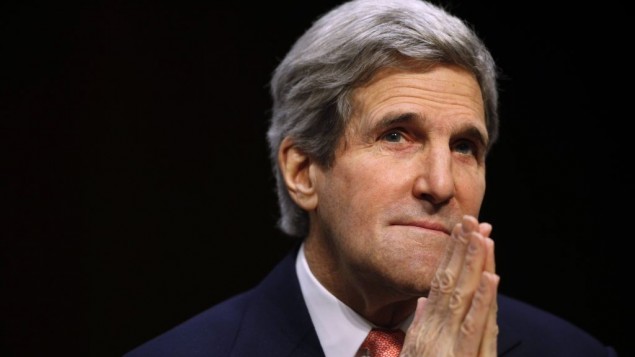
Kerry preysUS Secretary of State John Kerry (photo credit: AP/Charles Dharapak/File)

US Secretary of State John Kerry informed Hamas via Qatar last week that under his proposal for a ceasefire with Israel, based on the original Egyptian initiative, the US would guarantee the fulfillment of many of Hamas’s demands for an end to the war, Palestinian sources told The Times of Israel on Saturday.

Kerry’s handling of the ceasefire effort was castigated by Israeli sources on Friday and Saturday, and the Israeli security cabinet unanimously rejected his ceasefire proposal on Friday night.

The guarantees promised to Hamas by Kerry under a ceasefire, as relayed to The Times of Israel by the Palestinian sources, pertain to the following issues: an easing of restrictions on the passage of goods from Israel to Gaza; an easing of restrictions on the passage of traders and businessmen from Gaza to Israel; expansion of the permitted Gaza fishing zone to 12 miles off the coast; the opening of the Rafah crossing with Egypt, to be manned by Palestinian Authority officials; and a promise to ensure the transfer of salaries to Gaza’s government employees.

Kerry made no promises on the issue of the Hamas demand for the release of prisoners, other than a pledge to discuss the matter. There was also no mention of the establishment of a seaport in Gaza, as demanded by Hamas.

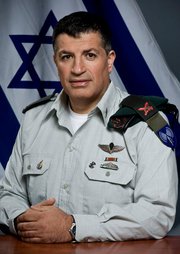
mordechaiYoav Mordechai (photo credit: IDF)

Many of these demands relating to easing “the siege”of Gaza — the security blockade imposed by Israel and Egypt to prevent the smuggling in of weapons and other terrorist infrastructure — were being weighed in Israel over the past weeks and months, before the current conflict began. The Coordinator of Government Activities in the Territories, Maj. Gen. Yoav Mordechai, recently met with a group of businessmen from Gaza to discuss the option of issuing more entry permits to Israel in order to allow for an expansion of trade. Additionally, in the past two years Israel had been holding talks with the Palestinian Authority and the European Union over the possibility of significantly expanding activity at the Kerem Shalom goods crossing to Gaza, and the EU had already agreed to finance the upgrade. Palestinian sources said one of the reasons for the holdup in building the expanded crossing had been Hamas’s refusal to construct the expanded crossing on Gaza territory, west of the current crossing.

On Friday the Times of Israel reported what Arab sources said were the details of Kerry’s ceasefire offer, which provides for an immediate halt to hostilities to be followed 48 hours later by the start of five-to-seven days of contacts between Israel, Palestinian and Egyptian delegations in Cairo. The Palestinian delegation, which would comprise representatives of various Palestinian factions including Fatah, Hamas and Islamic Jihad, would speak on behalf of Hamas.

Israeli sources slammed Kerry over the weekend for “capitulating” to Hamas’s ceasefire demands, and also for continuing his ceasefire consultations in Paris on Saturday with representatives of Qatar and Turkey, but not Israel, the PA or Egypt.

Kerry said in a statement during a meeting with his Turkish and Qatari counterparts in Paris late Saturday that the ceasefire proposal being negotiated involves arrangements for Israeli security, and for economic and social development for the Palestinians.

“I understand that Palestinians need to live with dignity, with some freedom, with goods that can come in and out, and they need a life that is free from the current restraints that they feel on a daily basis, and obviously free from violence,” Kerry said. “But at the same time, Israelis need to live free from rockets and from tunnels that threaten them, and every conversation we’ve had embraces a discussion about these competing interests that are real for both. And so we need to have a solution that works at this.”

“The tunnels have to be dealt with,” he added, referring to Hamas’s subterranean military infrastructure used to attack Israel. “We understand that; we’re working at that. By the same token, the Palestinians can’t have a ceasefire in which they think the status quo is going to stay and they’re not going to have the ability to be able to begin to live and breathe more freely and move within the crossings and begin to have goods and services that come in from outside.”

Israeli cabinet sources said Israel is demanding the dismantling of the Hamas rocket and tunnel infrastructure, and the deployment of Mahmoud Abbas’s PA forces at the Rafah border crossing, as part of any resolution to the current conflict, Channel 2 said late Saturday.


Satire: President Obama fires Secretary Kerry and excommunicates PM Netanyahu

July 27, 2014

President Obama fires Secretary Kerry and excommunicates PM Netanyahu, Dan Miller’s Blog, July 26, 2014

Kerry went to Martha’s Vineyard, boarded his yacht and left all further efforts to transform the world to Valerie Jarrett. PM Netanyahu commented only that Obama’s excommunication edict won’t work since he is not a Roman Catholic and that Obama’s issuance of a fatwa wouldn’t work either.

Kerry SalutesWe need to help Islam in its glorious quest for peace. The way is out there somewhere and aboard my yacht I’ll find it for sure!

On July 25th, the infamous Israeli Security Cabinet rejected the Secretary’s new  Humanitarian Missiles, Tunnels and Resupply for Peace plan. Later in the day, Israel and Hamas agreed to an humanitarian cease fire lasting only twelve hours. It has been reported that even that pitifully insignificant result was due to efforts by the United Nations.

What has been achieved for President Obama due to all of Kerry’s meager efforts? Bupkis Nothing! Secretary Kerry’s earlier Israeli – Palestinian peace process also failed and it was even necessary to extend the P5 + 1 negotiations with Iran for another four months to ensure that all of Iran’s demands are met.

The results demanded by President Obama won’t even come before the November congressional elections. A lot of good it will do for Him then!

Kerry tried to put a good face on the cease fire matter, promised to continue his efforts and noted at a press conference in Cairo that he had not even presented a formal proposal for consideration, leaving that up to Orgasms for Obama Organizing for Action, Hamas, Fatah and Islamic Jihad.

It’s all Blundering Kerry’s fault for not forcing Israel accept a deal — any deal.  The same is true of his other failures and Kerry has become a world class laughingstock. Worse, due to Kerry and his predecessor, Hillary Klingon, President Obama has as well. That must cease.


Since “war hero” Kerry could not convince Israel, the P5 + 1 clowns or anybody else to do even the little that he demanded, someone else is needed and Valerie Jarrett, guided by President Obama’s historically unparalleled charisma and unprecedented wisdom, is the logical candidate. The smartest person in any room, surely Obama will prod her as necessary from behind.

Accordingly, President Obama today fired Secretary of State Kerry and delegated all of Kerry’s former duties, as well as His own few remaining Presidential Duties — other than fund raising, photo ops and speeches blaming others for His misfortunes — to Valerie Jarrett. Highly qualified, she was born in Iran in 1956 and is

Senior Advisor to the President of the United States and Assistant to the President for Public Engagement and Intergovernmental Affairs . . .

President Obama took these steps in response to Kerry’s multiple inexcusable failures to implement His principal foreign policy objectives.

President Obama wants other heads of state merely to talk, favorably about Him, because most are far inferior and talking about anything else might lead to undesired results. It’s necessary that there be no results unfavorable to President Obama because that might (conceivably) encourage unfavorable press coverage, an important matter that Kerry would not or could not comprehend.

IranBombCartoon

Former Secretary Kerry was last seen aboard his yacht, The Ketchup, motoring briskly away from the marina. Although Kerry was not available for comment, a badly mutilated Obama doll was seen briefly on the bows of his modest yacht before the former secretary ripped it (the doll, not the yacht) to pieces and threw it overboard. He also threw overboard replicas of his(?) many awards for heroism in Viet Nam, Cambodia and other dangerous places where he may (or may not) have served.

Kerry yacht

Have a long and pleasant trip, Mr. Kerry, إن شاء الله.

18:30 GMT: Hamas has rejected extending the 12-hour truce till midnight, the group told AP.

July 26, 2014

21:46 – Massive rocket volley fired into central Israel.

Hamas claims rocket fire after truce crumbles

Hamas’s al-Qassam Brigades claims responsibility for firing rockets at southern Israel after a humanitarian truce crumbles. According to Al Aqsa TV in the Gaza Strip, Hamas’s armed wing fired five 107 rockets and a Qassam rocket.

There are also unconfirmed reports that the IDF recommenced shelling of targets in the Gaza Strip.