Archive for July 21, 2014

Abbas, Mashaal demand end to ‘Israeli aggression’

July 21, 2014

Abbas, Mashaal demand end to ‘Israeli aggression’, Times of Israel, July 21, 2014

Palestinian leaders, meeting for first time since IDF’s Gaza offensive began, urge lifting of blockade.

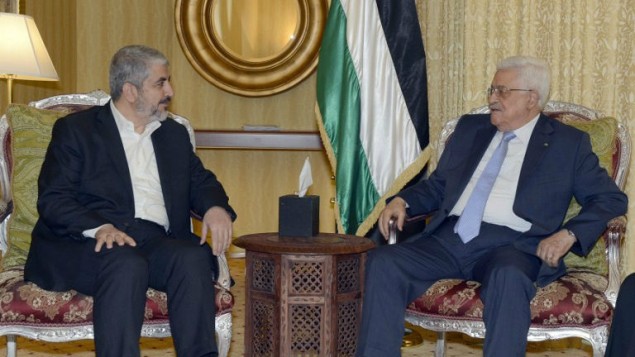
pall-635x357A handout picture released by the Palestinian Authority president’s office shows Mahmoud Abbas (R) in a meeting with the head of the political bureau of Hamas, Khaled Mashaal, in Doha, on July 20, 2014 (photo credit: AFP/ PPO / Thaer Ghanem)

Palestinian Authority President Mahmoud Abbas and Hamas leader Khaled Mashaal issued a joint appeal for an end to “Israeli aggression” in Gaza during talks in Doha on Monday.

Meeting for the first time since the start of Operation Protective Edge on July 8, the two men also called for Israel to lift its security blockade of the Hamas-controlled territory.

They “underlined the necessity of an end to the Israeli aggression and a lifting of the blockade,” chief Palestinian negotiator Saeb Erekat said.

He said the two men also “decided to hold further consultations with different Palestinian factions and contacts” on ceasefire efforts.

Israel and Egypt impose a security blockade on Gaza to prevent the import and export of weapons and the cross-border activities of terrorists.

Azzam al-Ahmed, a senior official in Abbas’s Fatah party, is to travel to Egypt, which last week proposed a ceasefire plan accepted by Israel, supported by the Arab League but rejected by Hamas, Erekat said.

Israel launched the operation to stop Hamas rocket fire on Israel, and has said it will continue until sustained quiet is achieved.

UN chief Ban Ki-moon arrived Monday in Cairo, where US Secretary of State John Kerry was also due later the same day, as international efforts to secure a ceasefire gathered pace.

Hamas has demanded the release of scores of prisoners from Israeli jails, the reopening of the Rafah border crossing with Egypt and an end to Israel’s blockade of Gaza.

“These are not conditions but engagements that Israel must honor,” Erekat said.

UN Secretary-General Ban, who arrived Monday in Cairo, is said to be weighing the possibility of announcing on Tuesday a long-term humanitarian ceasefire, in the presence of Abbas and Kerry, Palestinian sources told The Times of Israel.

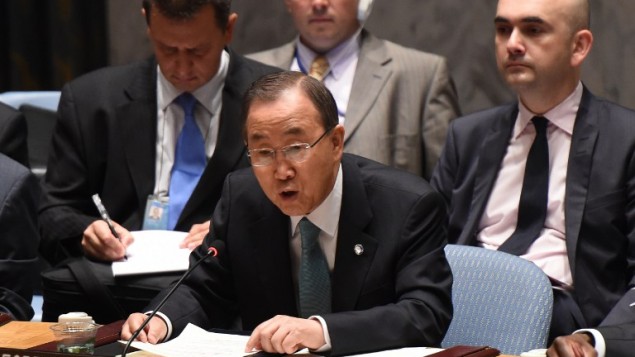
Moon moons IsraelUnited Nations Secretary-General Ban Ki-moon addresses the United Nations Security Council during an emergency meeting in New York to discuss the situation in the Middle East, July 10, 2014. (photo credit: Don Emmert/AFP)

The UN Security Council had expressed “serious concern” about Gaza’s rising civilian death toll and demanded an immediate end to the fighting following an emergency session.

Twenty-five Israeli soldiers, as well as two Israeli civilians, have been killed and over 100 injured since the conflict erupted two weeks ago. According to Gaza’s Health Ministry, at least 509 people were killed and 3,150 more were injured in the Strip during the same time. The United Nation’s refugee agency for Palestinians, UNRWA, reported that at least 83,000 Gazans are taking refuge in the organization’s schools.

Iran extension blasted — by ex-Obama senior officials

July 21, 2014

Iran extension blasted — by ex-Obama senior officials, Washington PostJennifer Rubin, July 21, 2014

(But the four month extension  puts the next extension (or whatever) well past the November 2014 U.S. elections. That’s important! — DM)

[T]he president doesn’t much care what experts, ex-advisers, Sunni Arab leaders and the Israeli government have to say. He’s got flunkies like senior adviser Valerie Jarrett and the hapless Secretary of State John Kerry telling him he’s been a great success. 


The announcement that the Iran talks would be continued — with additional sanctions relief on oil, petrochemicals, auto, aviation and gold — was met with predictably harsh bipartisan criticism.

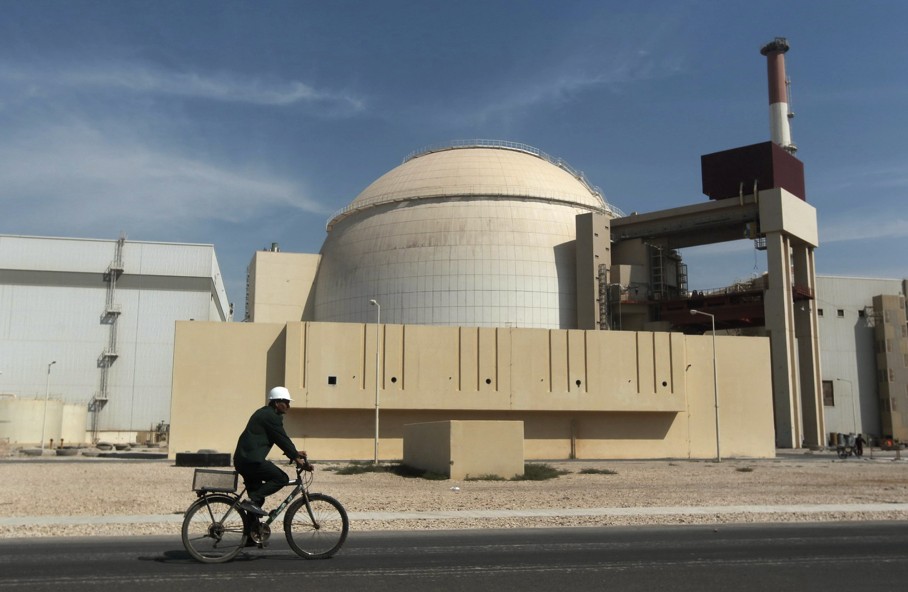
Bushehr reactorThe reactor building of the Bushehr nuclear power plant, just outside Bushehr, Iran. (Majid Asgaripour/Associated Press via Mehr News Agency)

Michael Makovsky, chief executive of the Jewish Institute for National Security Affairs (which recently put out its Iran task force report co-authored by the president’s former adviser on Iran, Dennis Ross) tells Right Turn, “The recent four-month extension of a January 20 interim deal with Iran, greased by the promised release of additional $2.8 billion in frozen Iranian assets, marks a significant but predictable failure for President Obama’s befuddling strategy of seeking diplomatic success through reduction of leverage — by eschewing tougher sanctions and a credible military option.” The result is the exact opposite of the president’s policy objective.” Iran feels less compelled to make concessions now than before the interim deal,” he explains. “It’s time for an intervention of sorts: Congress should impose new overwhelming sanctions and, more importantly, augment the military capability of Israel to strike Iran’s nuclear facilities. This would strengthen American diplomatic leverage, send a strong signal to Iran and our allies and, if needed, help Israel succeed in the role that the U.S. has seemingly abdicated.”

Many former policy experts agree. Former deputy national security adviser Elliott Abrams makes the case that “it is critical now for Congress to act, imposing crippling sanctions on Iran to go into effect in four months unless a good deal is reached. Iran must be told that it cannot stretch the talks out, one delay after another, and must abandon its nuclear weapons program or face economic privation starting this year. As of now they simply do not believe that.” The bipartisan United Against a Nuclear Iran (of which Ross is a member) also blasted the president. A statement co-authored by Gary Samore, Obama’s former coordinator for arms control and weapons of mass destruction, commonly referred to as the WMD “czar” read: “To date, the economic benefits accrued to Iran are greater than what was contemplated in the [Joint Plan of Action]. While the state of the Iranian economy remains in difficulty, Iran’s economy has improved and the regime’s diplomatic isolation has lessened. So far, however, Iran has not shown a willingness to dismantle any of its uranium enrichment capabilities and it continues to research and develop missile delivery systems and advanced centrifuges.” The statement continued:

The course of the negotiations has revealed a clear gap on the most important issue — the number and type of centrifuges. With its current enrichment capacity, Iran’s breakout time to produce fissile material for a bomb remains at a few months. However, Iran has been unwilling to consider a reduction in its current capacity, and the Supreme Leader recently proclaimed that Iran seeks a much larger enrichment program. This is unacceptable. If Iran remains unwilling to dismantle its nuclear infrastructure, forgo an industrial-scale enrichment program and address the ongoing questions about the military dimensions of its nuclear program, there is little potential for a diplomatic resolution.

They therefore recommend that P5+1 group of international powers continues to insist that “Iran remains closed for business and that the uncertainty surrounding these nuclear negotiations makes the business climate in Iran far too risky for responsible businesses to return; ensure existing sanctions are enforced more aggressively; and agree on decisive sanctions that would constitute a virtual economic blockade of Iran should Iran fail to agree to an acceptable deal over the term of the extended negotiation.” The UANI supports these steps so that the current “state of diplomatic inertia . . . [does] not become the new status quo.”

It is stunning that two of the president’s former top advisers on the subject have so obviously lost faith in the president’s handling of negotiations and have openly embraced the same measure virtually all Republicans and a large number of Democrats have advocated. The White House has called those pushing for additional sanctions to increase pressure on Iran “war mongers.” That is an untrue and vile accusation against his former senior aides and figures like Sen. Bob Menendez (D-N.J.) Rather than name-calling, the White House needs to listen to the broadest bipartisan majority on any topic these days, which is telling him that the Iranians are playing him and that his refusal to increase pressure on Iran makes a diplomatic agreement less, not more, likely.

I suspect, however, the president doesn’t much care what experts, ex-advisers, Sunni Arab leaders and the Israeli government  have to say. He’s got flunkies like senior adviser Valerie Jarrett and the hapless Secretary of State John Kerry telling him he’s been a great success. In any event, we’ve seen time and time again this president has not the nerve nor the spine to stand up to international bullies. We can only hope that a new Republican Senate majority will come along and allow a vote on sanctions, and this and the threat of Israeli military action is enough to prevent Iran from realizing its nuclear ambitions. Left to their own devices, Obama and Kerry will preside over a de facto policy of containment, which many of us suspected was the game plan all along.

UPDATE: AIPAC has weighed in as well with unusually strong language for this group. It pronounced itself “deeply disappointed” and in essence told the White House, “We told you so.” (“We have been concerned from the outset that Iran would drag out talks to improve its position, and Tehran has actually enjoyed some economic improvement as a result of sanctions relief in the Joint Plan of Action. In addition, during the last six months, Iran has continued both enriching uranium and conducting research and development on advanced centrifuges.  . . . We must find new means to step up pressure on Tehran. And Iran must verifiably dismantle its nuclear weapons program or face harsh consequences for its ongoing violations of treaty commitments and international law.)

Op-Ed: Those Gazans, What’s Their Story?

July 21, 2014

Op-Ed: Those Gazans, What’s Their Story? Israel National News, Oded Revivi — Mayor of Efrat, July 21, 2014

Gaza is the dilapidated backyard of the Palestinians. Nobody ever wanted Gaza or wants Gaza now and even Prime Minister Ariel Sharon, when he wanted to make a political concession to the Arabs, preferred to give them Gaza.


We have no more tears to shed with regard to the state of the Palestinian Arabs in general and that of the people of Gaza in particular. The 100 years of the Arab-Israeli conflict are primarily 100 years of Arab hatred and violence that have only brought them misery and poverty. But even though the Palestinians are to blame for their own plight, the people of Gaza are among the most wretched of people.

The curse “Go to Gaza” is an idiomatic phrase copied from Arabic and expresses accurately the contempt with which their Arab brothers regard them.

Gaza is the dilapidated backyard of the Palestinians. Nobody ever wanted Gaza or wants Gaza now and even Prime Minister Ariel Sharon, when he wanted to make a political concession to the Arabs, preferred to give them Gaza.

Up until 1967 Gaza was under Egyptian rule and was treated like an unwanted stepchild. After the Six Day War, Israel gained control and in 1982 when Israel returned to Egypt, as part of the Camp David Accords, what it had captured from Egypt in 1967, the Egyptians preferred to leave Gaza under Israeli control.

They preferred not to take responsibility for Gaza and with all due respect to the importance of liberating “Arab Lands”, the Egyptians had their red lines.

Since 2006, when Israel withdrew from Gaza, Gaza has remained stagnant. The option of independence granted by Israel has been funneled into fortifying its position as a terrorist entity.

The huge amounts of money that it has received from countries all around the world was invested in building tunnels, producing missiles and in training terrorists. Political control in Gaza passed from Fatah to even more radical Islamic organizations. Their energies are directed to smuggling weapons and munitions instead of building centers for industry and businesses. The beautiful Gaza coastline, which could have been turned into a tourist gem, has been turned into a smuggling area for ships carrying weapons.

Even Egypt, which allowed Gazans throughout the years, to make use of their common boundary, are fed up with the Gazan treachery, and closed their borders. Gaza found itself politically isolated from the Palestinian Arab leadership in Judea and Samaria, cut off from the Egyptian border and seaway and unable to import raw materials for production and industry.

You look at the Gazans and ask yourself, what’s their story? Why are they doing this to themselves? Why do they continue with aggressive provocations of war that they know from the outset will inflict upon themselves ongoing damage and destruction? Is it stupidity, cowardice of the local leadership or a primitive ideology that holds in contempt the disastrous consequences of their actions?

Is the idea of independence too much for them to handle? Are they afraid to take responsibility and instead flee to “holy wars”?

I have no doubt that there are Gazans who want to pass their days and nights in quiet and enjoy personal and economic security, but I wonder where they are. Why do they elect terrorist organizations that only cause them damage? Why don’t they demand a leadership that will free them from their many years of misery? Why is there not a local Gaza movementto protest the leadership’s endangering of their children’s lives?

Why do they not make a desperate call for a normal life?

Seven Israeli officers and men die in combat with Hamas. Number of Israeli fallen rises to 25

July 21, 2014

Seven Israeli officers and men die in combat with Hamas. Number of Israeli fallen rises to 25, DEBKAfile, July 21, 2014

Paratroopers_Gaza_7.14Israeli paratroops fighting in Gaza

Another seven IDF officers and men died in combat with Hamas Monday, July 21 on the fourth day of Israel’s ground operation in the Gaza Strip, raising the total of Israeli fallen in this operation to 25. Four men were killed guarding the Israeli side of the Gaza border by terrorists who jumped out of a tunnel 200 meters from Kibbutz Nir Am, disguised in IDF uniforms and flak vests. Ten were killed in a counter-attack and helicopter strike averting a mega terrorist attack of kidnap attempt. This was the fourth tunnel terrorist attack in three days.

Two more soldiers died in combat in the Shejaiya district of Gaza, and one by friendly fire.

There was no let-up in Hamas rocket barrages, two of which were carried out during Monday against a wide range of Israeli targets including the Tel Aviv metropolitan area. Iron Dome knocked out a large number.

DEBKAfile reported earlier Monday:

The IDF’s Shejaiya operation in the Gaza Strip continues apace, carried forward by five task forces now heading for the center of Gaza City amid casualties on both sides. Sunday, July 20, Israel’s crack Golani Brigades lost 18 fighters, without slowing down, compared with 170 Palestinian fatalities.

DEBKAfile’s military sources report that each task force, the size of half a division, is an integrated amalgam of air, armored, artillery and engineering forces, capable of operating almost autonomously in field combat. The buildup of the last 24 hours has expanded Israel’s fighting strength in the Gaza Strip to a total of 75,000 men, the largest ever fielded in this territory. Because of its scale, Israeli leaders are referring to Defensive Edge as a war rather than an operation.

The battle for Shejaiya waged Sunday burst into public prominence because of the heavy losses suffered by the Golani Brigades, but it is not the largest engagement underway at present. The other ongoing IDF battles, their progress, the units involved and their locations, are kept secret. We can only point to their general locations as being around Beit Hanoun in the north; Zeitun, south of Gaza City and the Shati refugee camp to the north.

More arenas are scheduled to be added to the list of battle zones Monday.

Rather than causing despondency, the high IDF casualty toll Sunday – the highest in a single engagement since the 2006 Lebanon War – has invigorated the fighting forces in the field, making them more determined than ever to get the better of Hamas with all possible speed.

Whereas their orders on Sunday were to advance warily and slowly, meanwhile testing the strength of Hamas resistance and observing their tactics, the tempo went into high gear at dawn Monday, when the troops were told to speed their advance from the outer fringes of Gaza City into its center.

Their performance in Shejaiya and other engagements Sunday deeply impressed Israel’s war leaders and made them confident enough to step up the rate of advance.

This upbeat mood was evident in the comments made Sunday night by Prime Minister Binyamin Netanyahu, Defense Minister Moshe Ya’alon and, from the field, by Chief of Staff Lt. Gen. Benny Gantz. While condoling deeply with the bereaved families of the 18 soldiers who died in combat, they were full of praise for the troops’ performance “in defense of our home” which outdid all expectations.

The following decisions were reached in consequence:

1. Gen. Gantz would stay in the field and lead the forces from there, rather than from staff headquarters in Tel Aviv.

2. The prime minister and defense minister would manage the war, without constant recourse to security cabinet sessions to obtain its approval of every stage of the plan of operation, the final goal of which DEBKAfile has learned, is Israel’s military takeover of the Gaza Strip.

3. As the military operation unfolded, the three war leaders were convinced more than ever that demolishing Hamas’ terror tunnel complex was not optional, any more than wiping out the rocket menace hanging latterly over five million Israelis and, for nearly a decade over the million people living directly in the shadow of the Gaza border. Publicity guidelines were to be built around this conclusion.

International statesmen are flitting busily around regional capitals, including Jerusalem, in search of an opening to broker a ceasefire in Gaza hostilities. UN Secretary General Ban Ki-moon has been holding meetings and US Secretary John Kerry will try and reach the Middle East in the coming days, according to a White House directive – unless he again cancels at the last minute.

According to DEBKAfile’s sources, the requisite political and military conditions for a ceasefire are not yet in place because of a number of circumstances, not least of which is Hamas’ refusal to contemplate a halt.

Israel, for its part, is fighting for the first time in its history with solid Arab backing from the Egyptian-Saudi-United Arab Emirates bloc. So determined are its members to obliterate the Muslim Brotherhood that they have virtually blacklisted Qatar for supporting the Brothers and for patronizing the Palestinian Hamas, regarded as the MB’s paramilitary arm.

This rift has put a spoke in the diplomatic effort to set in motion effective mediation for a Gaza ceasefire predicated on co-opting Qatar.

A bid to make Palestinian Authority chairman Mahmoud Abbas the bridge between the Egyptian-Saudi-UAE grouping and Qatar has likewise foundered. And there isn’t much Secretary Kerry can do if and when he comes over to try his hand.

US President Barack Obama’s suggestion, when he called Netanyahu Sunday, to build a new Gaza ceasefire around the 2012 formula concocted by the US, Egypt, Qatar and Turkey – and accepted by Israel and Hamas – for ending Operation Pillar of Defense, shows him to be cut off from the fundamentally altered diplomatic and military realities of the current Gaza conflict.

He declines to recognize the emergence of a powerful new Arab bloc. It will be necessary to twist the arms of each of its members, Egypt, Saudi Arabia and UAE, to gain their consent for a bid to cut the Israeli offensive short to rescue Hamas from defeat. And even then, they will stall.

And although anti-Israel demonstrations are being staged in some parts of the world, the most violent in Paris, hardly any world governments have openly condemned the Israeli operation – as yet.

The battle in Saja’iyya is not just against Hamas and Islamic Jihad

July 21, 2014

The battle in Saja’iyya is not just against Hamas and Islamic Jihad, Ynet News, July 21, 2014

Analysis: As the IDF tackles the heart of the terrorist groups’ presence in Gaza, Israel can also give a lesson in deterrence to Hezbollah and other enemies of Israel that may soon be on its doorstep.

Most of the fighting in Gaza is now in the suburb of Saja’iyya. On both Saturday and Sunday nights, Golani Brigade soldiers, primarily patrol troops, fought multiple battles with terrorists, as they worked to uncover the terrorist infrastructure.

And although Hamas is trying to spring some surprises in other sectors too – such as the infiltration Monday morning from northern Gaza – Saja’iyya is now the almost exclusive focus of the fighting on the ground. It has been identified as a hotspot for terrorism of all kinds and at all levels, both logistical and operational.

The moment the IDF went in there, Hamas and Islamic Jihad were delivered direct blow to the solar plexus. It is not by chance that rocket fire at distances of more than 40 km ceased shortly after the fighting in Saja’iyya began.

While a few tunnels shafts have also been exposed, but a third of the infrastructure in the area is still intact, and there is a lot of work still to do. As such, Defense Minister Moshe Ya’alon is under political pressure from heads of the communities surrounding Gaza not to end the operation before they can be assured that the tunnels have been dealt with, a move in line with his own comments on the situation Sunday night.

As Saja’iyya is the operational and logistical center for the two major terrorist organizations in the Gaza Strip (primarily because of its proximity to Israel’s Gaza-area communities, and the possibility it offers for firing on the central region), Hamas and Islamic Jihad have a significant presence there. This is quite different to their presence in, for example, the nearby Beit Lahiya, Beit Hanoun and Zeitoun neighborhoods; only Jabaliya and al-Shati are they stronger.

As noted by Nahum Barnea, Saja’iyya is to Hamas more or less what Bint Jbeil in southern Lebanon was to Hezbollah in the Second Lebanon War – both a symbol and a military stronghold. The destruction in Saja’iyya that I see in the pictures reminds me very much of what I myself saw in Bint Jbeil in 2006.

So the battle of the Gaza Strip will not be decided in Omar al-Mukhtar Square in the center of Gaza City, but in Saja’iyya. When the IDF completes its mission there – and if the political leadership gives it the time and freedom to act – Golani troops, backed by engineering and armored units, will be the decider.

If it is at all possible to have a deciding factor in a war against terrorism and guerrilla warfare, this will be the place.

Let’s put things into clearer perspective: What is at stake in Saja’iyya are not just the shafts from terror tunnels and the subterranean warfare system, nor is solely about the rocket launching systems. This is a battle for hearts and minds.

The IDF will make every effort to clearly demonstrate its can fight terrorism and win, thereby cementing itself in the enemy’s psyche as a beast one should not provoke.

And this objective is the essence of the deterrence that Israel is seeking, not just against Gaza but also against Hezbollah, and perhaps the global jihad organizations that may reach its borders to the north and the east. As such, the battle in Saja’iyya is critical and fateful; Hamas and Islamic Jihad know it too, and it will be bitter.

One ray of light is that in Golani, commanders live – and, sadly, die – by the principle that can be summed up in one shout: “Follow me!”

US Support Wavering? Obama Has ‘Serious Concern’ Over Gaza Casualties

July 21, 2014

US Support Wavering? Obama Has ‘Serious Concern’ Over Gaza Casualties, The Jewish PressHana Levi Julian, July 21, 2014

(A not yet viral rumor that President Obama intends to dispatch a brigade of his most persuasive unicorns to Gaza to discuss civilian casualties with Hamas, et al, has not yet been confirmed. However, his unicorn offensive may follow collapse of the cease fire negotiations Secretary Kerry hopes to play with advance. — DM)

Secy of State John Kerry is on his way to the region to begin efforts to force another ‘cease fire’ down Israel’s throat before the threat from Hamas is ended.

Obama-on-phone-aboard-Air-Force-OneUS President Barack Obama speaking on phone aboard Air Force One, July 17, 2014. Photo Credit: White House.gov

Israel’s ‘strongest supporter’ is already wavering. Doubts about the wisdom of continuing Operation Protective Edge are being expressed from the White House as soon as the IDF struck a decisive blow in a Gaza neighborhood where Hamas terrorists stored some of their most deadly missiles. The ordnance was, of course, stashed under civilian buildings — a mosque, a hospital, a children’s playround, and more.

For three days the IDF dropped flyers, called homes and sent SMS text messages warning residents to leave the area so they would not be harmed when the attack began. Hamas pressured its people not to. Some had the sense to flee the area, and others chose to remain as human shields. The brutal, bloody firefight in Seijaiya cost a lot of lives on both sides and panicked leaders around the world — including officials in the White House.

In his second call to Prime Minister Binyamin Netanyahu since Friday, U.S. President Barack Obama expressed “serious concern about the growing number of casualties” in Gaza.

Israel’s prime minister was also notified during the call that Obama was sending Secretary of State John Kerry back to the region. Kerry was boarding a plane to head for Cairo, where he would pressure Israel and Hamas to negotiate another cease fire.

According to a statement issued by the White House, the move was aimed at helping ‘protect civilians in both Gaza and Israel.’ United Nations Secretary-General Ban Ki-moon, meanwhile, has called on Israel to “exercise maximum restraint and do far more to protect civilians” without specifying exactly how the IDF should accomplish that task. He also called on Hamas to end its rocket fire from Gaza.

The IDF drops flyers warning civilians in every target neighborhood prior to an attack, calls homes and sends SMS text messages asking residents to leave the area hours and sometimes days before carrying out operations – all of which puts its own forces in danger and of course alerts the enemy to its plans. Not one armed force of any other nation in the world does the same.

Ban Ki-moon weighs long-term humanitarian ceasefire

July 21, 2014

Ban Ki-moon weighs long-term humanitarian ceasefire, Times of IsraelAvi Issacharoff, July 21, 2014

UN chief has plan based on Egyptian ceasefire, but for now, few are on board

The Hamas spokesman in Gaza, Sami Abu Zuhri, said Monday that the international efforts are meant to “save the defeated occupation. The Resistance will not respond to pressure, and will impose its demands.”

Ban Ki Moon JulyUnited Nations Secretary-General Ban Ki-moon addresses the United Nations Security Council during an emergency meeting in New York to discuss the situation in the Middle East, July 10, 2014. (photo credit: Don Emmert/AFP)

UN Secretary-General Ban Ki-moon is weighing the possibility of announcing on Tuesday in Cairo a long-term humanitarian ceasefire, in the presence of Palestinian Authority President Mahmoud Abbas and US Secretary of State John Kerry, Palestinian sources told The Times of Israel.

Ban plans to first present an initiative based on the Egyptian ceasefire proposal, with the addition of Egypt giving security guarantees for the opening of the Rafah crossing, with PA forces present. In addition, Gaza residents would enjoy the easing of restrictions on goods coming into the Strip from Israel. There would be a mechanism to transfer the salaries of Hamas government clerks in an organized fashion, distinguishing between those who worked in Hamas’s civil offices and those who work in its military wing.

But it’s not clear that the UN chief’s plan will be implemented. For now, there is no Egyptian agreement about border crossing guarantees, and Cairo again demanded that Hamas first stop firing, and only after would the other issues be discussed. Hamas is not responding positively to the initiative, either. It is still unclear whether Ban will declare his ceasefire on Tuesday.

But the UN secretary-general did manage to convince Abbas during their meeting to join his call for the truce.

In order to advance the initiative, Ban is expected to arrive in Israel Tuesday, after he met Sunday with Abbas and Qatar’s emir, Hamid bin Khalifa II. Ban will arrive Monday in Cairo to meet with President Abdal-Fattouh el-Sissi, at the same time US Secretary of State John Kerry arrives.

State Department Spokeswoman Jen Psaki said Sunday that the US is “deeply concerned about the risk of further escalation, and the loss of more innocent life.” She also said that her government believes that a ceasefire should begin as soon possible, based on the November 2012 understandings reached after Operation Pillar of Defense.

She added that Kerry is working to advance the Egyptian ceasefire framework, and will arrive in the region for that purpose.

In New York, the UN Security Council expressed “serious concern” about Gaza’s rising civilian death toll and demanded an immediate end to the fighting following an emergency session.

The Hamas spokesman in Gaza, Sami Abu Zuhri, said Monday that the international efforts are meant to “save the defeated occupation. The Resistance will not respond to pressure, and will impose its demands.”


Palestinians: The Arabs Betrayed Us – Again

July 21, 2014

Palestinians: The Arabs Betrayed Us – Again, Gatestone InstituteKhaled Abu Toameh, July 21, 2014

Since 1948, the Arab countries and government have been paying mostly lip service to the Palestinians.

“They have money and oil, but don’t care about the Palestinians, even though we are Arabs and Muslims like them. What a Saudi or Qatari sheikh spends in one night in London, Paris or Las Vegas could solve the problem of tens of thousands of Palestinians.” — Abdel Bari Atwan, Palestinian editor.

“Some Arabs were hoping that Israel would rid them of Hamas.” — Ashraf Salameh, Gaza City.

“Some of the Arab regimes are interested in getting rid of the resistance in order to remove the burden of the Palestinian cause, which threatens the stability of their regimes.” — Mustafa al-Sawwaf, Palestinian political analyst.

“Most Arabs are busy these days with bloody battles waged by their leaders, who are struggling to survive. These battles are raging in Yemen, Syria, Iraq, Egypt, Libya and the Palestinian Authority.” — Mohammed al-Musafer, columnist.

“The Arab leaders don’t know what they want from the Gaza Strip. They don’t even know what they want from Israel.” — Yusef Rizka, Hamas official.


Every now and then, the Palestinians are reminded of the fact that most Arabs don’t care about them and their problems.

Arab “indifference” and “silence” toward the current war between Israel and Hamas has once again reminded Palestinians of the “betrayal” by their Arab brethren.

It is not that Palestinians were expecting the Arab countries to send their armies to fight Israel and prevent an IDF ground invasion of the Gaza Strip.

Moreover, Palestinians say they were not even expecting the Arab governments to send money and medicine to thousands of families inside the Gaza Strip.

The Palestinians in general and Hamas in particular feel that the Arab world simply does not care about them and does not even want to hear from them.

Some Palestinians argue that the Arab world was perhaps too busy with the 2014 Mondial [Soccer World Cup] or Ramadan feasts to pay enough attention to the war in the Gaza Strip. But the Mondial has ended and most Arabs still don’t seem to be interested in what is going on between Palestinians and Israel.

True, there have been some marches in a number of Arab countries in solidarity with the Palestinians and in protest against the war in the Gaza Strip. Still, Palestinians say they are still disappointed at the small number of participants. They are also disappointed that the Arab governments had moved quickly to suppress any show of support for Palestinians.

“The Arab regimes hate us and this is not new,” said Palestinian political analyst Ali Hableh. “It took Saudi Arabia seven days to issue a statement condemning the current Israeli attack on the Gaza Strip. Palestinians have always known that they could never rely on their Arab brothers who have turned their backs on us.”

For Hableh and many Palestinians, the Arab “betrayal” dates back to 1948, when the state of Israel was created. They are convinced that Arab “collusion” and “treason” contributed to the defeat of the Arab armies and the subsequent creation of Israel.

Since then, the Arab countries and governments have been mostly paying lip service to the Palestinians.

And this is what is exactly happening these days, Palestinians point out.

Almost every Palestinian is today talking about the sense of betrayal by the Arab world. It is a feeling that has increased Palestinians’ hostility and mistrust toward their Arab brethren.

Palestinian cartoonist Umaya Juha expressed Palestinian feelings toward the Arab “betrayal” in a drawing that shows an Arab and Islamic arm stabbing a Palestinian woman from the back – while she had also been stabbed in the chest by Israel.

Prominent Palestinian editor Abdel Bari Atwan said it was “shameful” for the Arabs that the UN Security Council convened to discuss the Israeli military offensive in the Gaza Strip before Arab foreign ministers gathered in Cairo.

The Palestinians, he said, have given up on the Arab leaders and governments a long time ago. He also accused the Arab governments of starving the Palestinians and participating in the blockade on the Gaza Strip.

“The Palestinian people’s problem with their Arab brothers is much bigger than their problem with the Israelis,” Atwan explained. “The Palestinians can resist Israel and fire rockets at it, but they don’t want to do the same against their Arab executioners because they continue to regard them as brothers.”

A Palestinian human rights activist in the West Bank also talked about the “historic” betrayal of the Arabs.

“We never expected anything good from the Arabs,” he said. “They have money and oil, but don’t care about the Palestinians even though we are Arabs and Muslims like them. What a Saudi or Qatari sheikh spends in one night in London, Paris and Las Vegas could solve the problem of tens of thousands of Palestinians. Only an idiot would have expected the Arab world to rise against Israel for attacking the Gaza Strip. We saw more protests in Europe against the war than in the Arab countries.”

The sense of being betrayed has driven some Palestinians to openly accuse Arab governments of being part of the “Zionist aggression” on the Gaza Strip.

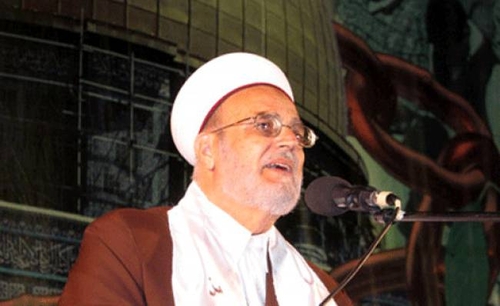
Sheikh Ekremah Sabri, the former mufti of Jerusalem who currently serves as a leading preacher of Al-Aqsa Mosque, claimed that the three wars waged by Israel against Hamas have been “coordinated” with the Arab countries.

Sheikh Sabri went on to claim that some Arabs have even covered the expenses of the Israeli military operations.

Voicing widespread resentment and disappointment among Palestinians over Arab “silence,” the top Islamic official stated: “The Arabs work for Israel.”

It now remains to be seen whether Sheikh Sabri will be permitted to set foot in any Arab country that feels itself targeted by his fiery rhetoric.
589Sheikh Ekremah Sabri, the former mufti of Jerusalem and a leading preacher of Al-Aqsa Mosque, claims that the three wars waged by Israel against Hamas have been “coordinated” with the Arab countries

As he was speaking abut Arab “betrayal,” the Palestine Scholar’s Council issued a strongly-worded statement in which it lashed out at the Arab world for failing to take action to save the Palestinians in the Gaza Strip.

“When will the Arabs wake up? Why aren’t the Arabs providing the Gaza Strip with any assistance?” the statement wondered.

“The absence of an Arab response to the aggression is frustrating,” Ashraf Salameh, of Gaza City, said. “The aggression has shown that some Arabs were hoping that Israel would rid them of Hamas.”

Another Gaza Strip resident, Mohammed Aref, was quoted as saying that Palestinians are very disappointed with the stance of the Arabs and Muslims toward the war in the Gaza Strip. “We didn’t expect this silence,” he said.

Hamas official Yusef Rizka also denounced the Arab world for failing to help the Palestinians. “Gaza is facing the aggression alone,” he complained. “This is the bitter truth. The Arab leaders don’t know what they want from the Gaza Strip. They don’t even know what they want from Israel.”

Jordanian columnist Tamara al-Darawsheh said that the war in the Gaza Strip has seriously embarrassed the Arabs. “As the war continues, we see some marches here and there (in the Arab countries),” she wrote.

“As usual, these marches were suppressed. We didn’t hear anything new from the Arabs other than sheepish condemnations. Gaza has embarrassed us, because we have been busy with the Mondial and Ramadan feasts and TV dramas.”

Another columnist, Mohammed al-Musafer said that Israel has nothing to worry about as it attacks the Gaza Strip.

“Israel knows that (President Abdel Fattah) Sisi’s Egypt is not opposed to the destruction of the spirit of resistance in the Gaza Strip and silencing it for ever,” he remarked. “Most Arabs are busy these days with bloody battles waged by their leaders, who are struggling to survive. These battles are raging in Yemen, Syria, Iraq, Egypt, Libya and the Palestinian Authority.”

Hamas and many Palestinians are now convinced more than ever that they could never rely on their Arab brothers for any kind of assistance. In fact, a growing number of Palestinians are beginning to place some Arab regimes on the side of Israel.

According to noted Palestinian political analyst Mustafa al-Sawwaf: “Some of the Arab regimes are interested in getting rid of the resistance in order to remove the burden of the Palestinian cause, which threatens the stability of their regimes.”

Another analyst, Adnan Abu Amer, expressed fear that the Arab “silence” has already reached the level of “collusion” with Israel.

He pointed out the failure of the Arab heads of state to hold a summit to discuss the war in the Gaza Strip while many international organizations have been holding meetings to voice solidarity with the Palestinians.

“Some Arab countries don’t want to exert pressure on Israel because they want to give it time to achieve its mission and destroy the Gaza Strip,” Abu Amer said. “The Arab people are too busy with their own problems and don’t have time to put pressure on their regimes. This encourages the Arab governments to remain silent.”
Pursue decisive results

July 21, 2014

Pursue decisive results, Israel Hayom, Zvika Fogel, July 21, 2014

War is a compilation of dangerous battles and complex missions, and it is full of ups and downs, successes and casualties. Each battle entails its own set of circumstances and emotional toll, but the result of the military campaign as a whole will be the one to determine the future of Israel.

We cannot afford another round of violence and we have the moral right to do whatever it takes not to be held hostage by radical fanatics. We must use this opportunity to indicate to others that when it comes to the threat of terror, our patience has worn out.

***********

Today, one can only hope, the war outlined by Hamas leaders Mohammed Deif, Marwan Issa and their Islamic Jihad counterparts, is clear to all. Ten thousand rockets, thousands of mortal shells, dozens of terror tunnels, hundreds of tons of explosives, drones, amphibian terror cells, and thousand of murderous terrorists, all aimed against the Israel Defense Forces and Israel as a whole.

The terrorists meant to overrun communities near the border, commit mass murder, carry out abductions and wreak havoc in their wake. Hamas has been training for such attacks since it seized control of the Gaza Strip in 2007. Hamas has never recognized our right to live here and has gone to great lengths to exhaust its nefarious intents.

This horrific scenario was outlined by hate-filled minds immediately after 2008’s Operation Cast Lead was concluded, when Israel’s aerial superiority became clear. Hamas’ plans was upset slightly by 2012’s Operation Pillar of Defense and Abdel Fattah el-Sissi rise to power in Egypt, but the original outline was always clear in Hamas leaders Khaled Mashaal’s and Ismail Haniyeh’s minds.

The Islamic bloodlust coursing through their veins was realized mostly due to our inability to put the pieces of the intelligence puzzle completely together. The funds, donations, and raw materials funneled to Gaza by Israel and many other nations to facilitate the Gazans’ hope for a better future were seized and used by Hamas leaders to create the military and human infrastructure of their terrorist venture.

We had preferred to believe that the Palestinian population in Gaza Strip would not allow Hamas to drag it into yet another bloody campaign. “Hamas has no interest in an escalation at this time,” various Israeli experts claimed, presuming to know what Hamas has planned for our future.

We were wrong, and only the ability to admit that will enable us to understand the need to seize the opportunity at hand, make the right decision and segue from an operation into all out war; one meant to target Hamas’ very centers of gravity, and defeat it in a way that would leave it unable to realize its plans in the foreseeable future.

War is a compilation of dangerous battles and complex missions, and it is full of ups and downs, successes and casualties. Each battle entails its own set of circumstances and emotional toll, but the result of the military campaign as a whole will be the one to determine the future of Israel.

We cannot afford another round of violence and we have the moral right to do whatever it takes not to be held hostage by radical fanatics. We must use this opportunity to indicate to others that when it comes to the threat of terror, our patience has worn out.

Report: Alleged Israeli strike on Sudanese weapons arsenal

July 21, 2014

Report: Alleged Israeli strike on Sudanese weapons arsenal | JPost | Israel News.

By YASSER OKBI/ MAARIV HASHAVUA

07/21/2014 11:53

Arsenal reportedly held long range missiles for Hamas; Sudanese officials deny Israeli strike weeks after Sudan’s president met with Mashaal in Qatar.

An Israel Air Force jet

An Israel Air Force jet Photo: REUTERS

Sources in Khartoum claimed on Monday that Israeli forces struck a weapons arsenal which held long range missiles for Hamas.

The Arabic-language UK-based newspaper Al-Arab reported that the government in Sudan is not confirming the incident in order to cover up relations with the terrorist organization in Gaza. Such ties could entangle the country’s president Omar al-Bashir with an accusation of supporting terrorism from the US and Western nations.

The attack came only hours after Israel accused the Sudanese government of storing long range missiles for Hamas.

Eye witnesses claimed to have seen a “huge explosion” and billows of smoke before ambulances and firefighters arrived at the scene. Six people were allegedly wounded in the attack.

Sudanese security forces stated that the huge explosion in a weapons arsenal was the result of a fire that broke out and took place on Friday morning in the al-Jili neighborhood of the capital.

The Sudanese Army Spokesman Khaled Sa’ad denied all connections in the incident to an attack by foreign forces.

Two weeks before the alleged Israeli strike, Sudan’s President al-Bashir was seen meeting with Hamas chief Khaled Mashaal in Qatar.