Archive for July 16, 2014

Israel agrees to UN request for six-hour cease-fire in Gaza

July 16, 2014

Israel agrees to UN request for six-hour cease-fire in Gaza, Jerusalem Post, July 16, 2014

Update: Rockets fired into Israel after 2 hrs.

(Is the six-hour cease-fire a condition precedent for going ahead with a ground operation in Gaza? — DM)

Justice Minister Tzipi Livni told Channel 2 on Wednesday that Israel will have no choice but to launch a ground incursion into the Hamas-ruled Gaza Strip if rocket fire against Israeli towns continues.

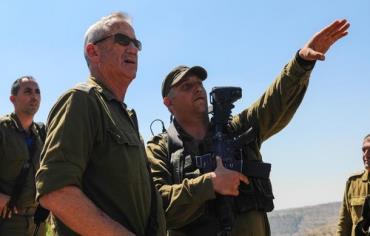
Benny Gantz in JuneDF Chief of Staff Lt.-Gen. Benny Gantz, June 24, 2014. Photo: IDF SPOKESMAN’S OFFICE

Israel on Wednesday agreed to a proposed six-hour cessation of hostilities in the Gaza Strip for humanitarian reasons, a Israeli senior official told Reuters.

The official, speaking on condition of anonymity, said it had not yet been decided when the lull would take place. Hamas had no immediate comment.

The appeal was made by a United Nations official, the official said, confirming Israeli media reports, shortly after Hamas rejected an Egyptian-proposed ceasefire to end the nine-day war in which 215 Palestinians and an Israeli have died.

Justice Minister Tzipi Livni told Channel 2 on Wednesday that Israel will have no choice but to launch a ground incursion into the Hamas-ruled Gaza Strip if rocket fire against Israeli towns continues.

Livni’s comments came just hours after the cabinet authorized the call-up of 8,000 additional reservists to assist in the military operations along the Gaza frontier.

The IDF has already called up 48,000 reserves, bringing the total number to 56,000, once the additional forces are called up.

Last week, the IDF began actively calling up the 40,000 reserves approved to it by the cabinet for Operation Protective Edge.

IDF chief of Staff Lt.-Gen. Benny Gantz requested the call-up of 40,000 reserves in order to replace conscripted forces in the West Bank, and enable their deployment to the Gaza border.

The cabinet approved the request and the IDF has already begun issuing reserve notices.

Prime Minister Binyamin Netanyahu gave no indication of whether the campaign was nearing its end or whether Israel is on the verge of a ground operation.

Netanyahu on Wednesday repeated his position that “Israel will continue to do what it needs to do to defend itself until peace and quiet are restored.”

The premier spoke at a joint news conference with Italian Foreign Minister Federica Mogherini at the Knesset on Wednesday.

Netanyahu called on the international community to condemn Hamas for committing the “double war crime” of firing on Israeli civilians and using Palestinian noncombatants as human shields. He also said that the “most important step for the international community to insist on” is “the demilitarization of Gaza.”

The premier noted that while Israel accepted the Egyptian ceasefire proposal, Hamas rejected it.

Turning to the Italian foreign minister, Netanyahu said, “Imagine in Rome, Florence, and Milan were rocketed. You wouldn’t accept that. You’d fight back. Those firing the rockets aren’t seeking a political solution.”

Mogherini commended Netanyahu for accepting the ceasefire while calling on both sides to refrain from civilian casualties. She also expressed concern for the humanitarian situation in Gaza.

Pondering amidst uncertainties

July 16, 2014

Pondering amidst uncertainties | Jerusalem Post – Blogs.

Ira Sharkansky

We went to bed with the rain of missiles from Gaza and the operation of the IDF in full tilt. We woke to a media blitz focused on a cease fire-then-negotiations proposed by Egypt.

Hamas initially rejected the idea, but observers should view any of its statements with considerable salt.

Israel’s right wing, including its representatives in the government joined that rejection.

But both sides were declaiming to continue the fight until achieving their goals. Hamas spoke about its power, and is demanding an end to the blockades on Gaza. The Israeli right wing spoke about the complete destruction of Hamas.

Israel’s government, led by the Prime Minister and the Defense Minister, accepted the Egyptian proposal, with the reservation of continuing to operate in response to Gazan aggression. The government majority sees saw an opportunity to avoid a costly ground operation. It is satisfied with the destruction achieved and its message sent to Hamas. It desires that Hamas stay in control, while knowing quietly that it lost badly, but willing and  able to control those even more intense about killing Jews in order to avoid yet another round of Israeli destruction.

No one would be able to declare victory in the style of V-E or V-J days.

However, no other government has been justified in claiming anything like that since 1945.

Opponents to both Hamas and the centrist Israeli government will declare something like shameful defeat.

I’ve heard from critics that any acceptance of an imperfect cease fire would be appeasement.

Such people should learn the languages and culture of this region, as well as how the US and other great powers have ratcheted down from imperfect endings to their wars.

Realities are imperfect.

It is not likely to be a smooth transition. Missile attacks and the IDF may peter out. There have been missiles fired since the cease fire deadline.

We have been in this performance numerous times. Involved in the frictions are the pride of the weak party, the willingness of the strong to let them score a few points for the sake of quiet, but a limited tolerance of any serious continuation of the missile rain.

It won’t be neat, and many will not understand the logic, or the elements of political theater involved.

The background includes what follows. Nothing is close to certain, but these are among the considerations relevant to understanding what has happened.

Hamas is isolated amidst the chaos that has erupted throughout the Middle East. One can argue to what extent that chaos resulted from the Arab Spring, is the birth pangs of democracy, or is a product of Barack Obama Cairo’s speech that won a Nobel Peace prize, but was widely received with wonder and ridicule throughout the Middle East.

Egypt is the closest geographically to Hamas, and perhaps the most intense antagonist/enemy, leaving aside the animosity expressed by Hamas’ Palestinian rivals.

We should view Egyptian expressions of support for their Palestinian brothers as the lip service obligatory among Muslims, who hate one another no less than they distrust others. Look again at Syria, Libya, and Iraq for current examples.

Egyptian media have accused Hamas of responsibility for attacks against Egyptians in the Sinai, and have expressed an understanding of Israel’s attacks against Gaza.

Saudi Arabia is busier elsewhere. Likewise Iran and Hezbollah. All those former suppliers of money, technology, and political support are involved in their own problems, most prominently on the territory of Syria and Iraq.

The Fatah regime of the West Bank is getting the humanitarian mileage out of the suffering in Gaza, but one can doubt its concern for Hamas.

US is close to a laughing stock. The style of Obama and Kerry, in particular, is widely derided, and seen as reducing whatever was left of American leverage after the presidency of George W. Bush. See this as an example.

Turkey’s offer to mediate is easy to dismiss, given its anti-Israel postures.

Qatar remains Hamas’ principal supporter and provider of money. Qatar’s al-Jezeera has some weight in international politics, but the news media and the Qatar leadership is on the outs with Egypt and Saudi Arabia. Moreover, its money does not come as promised. A Gazan health official has complained that international medical suppliers have stopped shipping due to debts that remain unpaid on account of donations waiting delivery.

Israelis are tired of partial solution, and want more than achieved by earlier rounds of conflict. The second Lebanon War (2006) is mentioned as an example. With all the criticism of details of Israel’s management of that war, the considerable destruction of Hezbollah areas of Lebanon are thought to have contributed to 8 years of relative quiet on Israel’s northern border.

Optimists see a repeat of that model in what Israel has done to Gaza.

Hamas bet a great deal on this round, and lost badly. Its escalation of missile attacks on Israel recalls the image of a Hail Mary pass in American football, going for the all in a desperate effort to turn aside an impending loss. Against Gazan deaths approaching two hundred and more than a thousand wounded, most Israeli casualties have been defined as stress, or injuries caused by tripping on the way to shelter. The majority of Gazan missiles land on nothing; some do not make it out of Gaza; and most of those calculated as likely to land on populated areas have been destroyed by Israel’s Iron Dome.

Two of the missiles sent toward Jerusalem landed in or near Arab areas of Bethlehem and Hebron. Perhaps Iron Dome is not programmed to deal with what is seen as overflying Israel’s population.

Hamas is left with the public relations asset of one sided international media. We’ve seen fiercely anti-Israel clips from CNN and BBS, meant to generate pathos or anger about civilian suffering without questioning Hamas policy of storing munitions in or alongside hospitals, mosques, or housing, its opposition to people leaving areas in response to IDF warnings, or the source of the conflict in Gazan missiles fired in the direction of Israeli civilians. For some, alas, the source of the conflict is Israel’s existence.

UN sources report the percentage of children among the dead. IDF sources report the percentage of fighters.

Compared to animosity from international media, Israeli observers have noted relatively little pressure from western governments that Israel must stop the operation.

While Hamas has sought to keep its people near targets in order to protect them or embarrass Israel, Israel has provided layers of warning and protection. Several times while writing this note my computer has signaled me with a warning sound and message. My cell phone is has an IDF-supplied application that lets me know when something is headed my way.

There have been protests of Israeli actions in the West Bank and among Israeli Arabs, but the larger picture may be persuading many to keep a low profile.

Some Israeli commentators see an Israelization of Israel’s Arabs, perhaps set back by recent events. There are signs of accommodation is the language of Israeli Arabs, whose Hebrew is in many cases better than their Arabic,with many reading and listing to Hebrew more often than Arabic language media. Israeli Arabs recognize their advantages from Israeli education, other public services and economic opportunities, despite complaints that they receive lesser shares than the Jews of Israel. Public opinion polls show support for Palestine among Israeli Arabs (and the Arabs of Jerusalem), but a preference for remaining Israeli.,

Against those signs are what appears to be an increase in the religiously promoted, modest dress of young Arab women.

There is talk of cease fire, but it’s a time for pondering, rather than predicting.
 

Analysis: From a distance, Mashaal vetoes Gaza cease-fire proposal

July 16, 2014

Analysis: From a distance, Mashaal vetoes Gaza cease-fire proposal | JPost | Israel News.

By YAAKOV LAPPIN

07/16/2014 20:29

According to assessments in Israel, Khaled Mashaal was the voice that ensured that Hamas continues to fire rockets at Israeli cities instead of accept the cease-fire agreement.

idf apc

IDF armored personnel carriers (APCs) drive outside the Gaza Strip. Photo: REUTERS

Hamas’s political bureau chief, Khaled Mashaal, has ordered his organization in Gaza to reject Israel’s truce offer, according to the latest evaluations in the Israeli defense establishment.

Mashaal, who is comfortably based in Qatar, far from the fighting, as well as two Hamas leaders in Gaza – Muhammad Deif, head of Izzadin Kassam, Hamas’s military wing, and Ismail Haniyeh, who heads Hamas’s political wing – are the triangle of decision-makers who plot the organization’s next moves.

According to assessments in Israel, Mashaal was the voice that ensured that Hamas continues to fire rockets at Israeli cities.

This despite the fact that Hamas has lost some 100 members, including senior field commanders, and that its offensive rocket-firing capabilities have sustained a serious blow in nine days of Israel Air Force strikes, each based on quality intelligence data.

Hamas lost many of its rocket-production facilities, more than a third of its rocket arsenal, and a series of command and control bases hidden in the homes of its battalion and brigade commanders.

Yet Hamas is keen on proving to Israel that it has retained its offensive capabilities and has not lost its will to use them to terrorize Israeli civilians. It has rejected the terms offered to it by Egypt, which, in Hamas’s view, have failed to address financial concerns (which go to the heart of Hamas’s ability to maintain power) and its need to pay its members in Gaza $20 million a month.

Hamas’s firepower has been rendered highly ineffective thanks to the advanced Iron Dome air-defense system. The terrorist organization’s carefully planned underground tunnel attacks, and naval raids, all ended in failure.

As a result, its ability to send millions of Israelis fleeing for cover and disrupt daily life here is the only semblance of a “victory” picture it has been able to achieve.

Now, it seems, Hamas wishes to drive home the point that it can continue doing this despite Israel’s devastating firepower. That creates considerable difficulties for Israel’s doctrine of deterrence.

Hamas’s own doctrine, designed for guerrilla-terrorist warfare, holds that the organization must be able to maintain rocket fire on Israel for at least two weeks, and it is five days short of achieving that goal, despite the misery it has brought to the civilian population of Gaza, which it uses mercilessly as a human shield.

Thus far, the IDF’s goal in this operation has not been to destroy all of Hamas’s rocket-firing capabilities but, rather, to inflict sufficient damage so that Hamas loses the incentive to stay in the ring or to return to it for years to come.

The fact that Hamas has chosen to keep going, despite bleeding profusely, is a challenge to the deterrence doctrine – a challenge that is being carefully watched by Hezbollah in Lebanon, whose rocket arsenal dwarfs that of Hamas.

This appears to leave little option for Israel but to proceed to stage two of its operation. Stage two is not limited to the goal of reinstating Israeli deterrence. Rather, it is aimed at systematically destroying Hamas’s assets and ability to attack Israel. The use of ground forces is an intrinsic component in realizing this goal.

While guided air force missiles can do much, Israel will not fire them if dozens of civilians in an apartment building are being used by Hamas to protect rocket launchers and senior Hamas leaders.

Additionally, air power has its limitations against the growing threat of tunnels. Hamas has dug a network of bomb-filled tunnels around the border area with Israel, and plans to use them to infiltrate the South, massacre civilians, and attack military positions.

The deployment of ground forces is itself a phased process. The broader the military operation against Hamas becomes, the more Israel’s goal shifts from deterrence to outright military victory over Hamas.

The experience of Israel’s military planners tells them that toppling the Hamas regime, while emotionally satisfying to many Israelis fed up with being terrorized, is not necessarily in Israel’s long-term strategic interests. It remains far from clear who might replace Hamas, and Gaza could turn into a Somalia-like strip of land filled with Islamic State militias that cannot be deterred at all.

Nevertheless, if Hamas continues to push the envelope, it may force Israel to not only launch a limited ground operation but, eventually, to expand it and go all the way, uprooting the whole of Izzadin Kassam from Gaza. This process could take up to two years.

Once the IDF is ordered by the government to initiate the second stage of the operation, Hamas will lose the ability to seek an end to the conflict. If it continues to rain down rockets on Israel, it might end up losing its military wing altogether, and whatever concerns over who might replace it would become secondary to the IDF’s obligation to silence the rockets.

Hamas Tries to Pass Off “Final Destination” Horror Movie as Israeli Atrocity

July 16, 2014

Hamas Tries to Pass Off “Final Destination” Horror Movie as Israeli Atrocity, Front Page Magazine, Daniel Greenfield, July 16, 2014

(Hamas gets an “A” for plagiaristic creativity. — DM)

The-Final-Destination-stephanie-honore-23070297-580-371-450x287It’s the Zionist FX department!

Final Destination 4 may be bad. It may even be an atrocity, but that’s not Netanyahu’s fault. Blame it on the Anti-Zionist Weinstein brothers.

Israel advocacy group StandWithUs on Tuesday posted a clip from Hollywood horror flick ‘The Final Destination 4′ that was used to create another fake that circulated widely on Facebook falsely depicting Israel killing civilians.

In the scene, a group of young Americans are thrown into chaos when a projectile lands on an actress’s head.

The next shot, of the girl lying dead on the ground, with her head next to her, became a Hamas propaganda pic that was shared across social media. It was captioned, “Israeli Air Force kills children in Gaza – BBC,” and translated into Russian, French and Arabic.

The Gaza “child” is veteran horror movie actress Stephanie Honoré who is thirty. The whole point of these bloody photos is to shortcut rational thinking and push an emotional reaction to the fore.

Hamas and its Western defenders know that it doesn’t matter where they get their photos or whether they’re real. They know that if they saturate social media with enough of them, they can create the emotional reality of an atrocity.

(Warning: Bloody special effects)

The war that Kerry and Indyk began

July 16, 2014

The war that Kerry and Indyk began, Israel Hayom, Gerald M. Steinberg, July 16, 2014

Learning nothing from history, the would-be peace brokers forgot that the first rule for peace-makers, inspired by the Hippocratic Oath for doctors, is “first, do no harm.” Instead, as a result of their arrogance and ineptness, millions of Israelis are being targeted in waves of missile barrages, while Palestinians in Gaza are hit in counterattacks against the concrete bunkers where the weapons are stored, below houses, schools and mosques.

****************

One year ago, U.S. Secretary of State John Kerry, former Ambassador Martin Indyk and, in the background, President Barack Obama , set out on the latest quest to bring peace to the Israelis and Palestinians. Like so many others (including the architects of Oslo Accords 20 years ago), they failed. And now, even if the cease-fire between Israel and Hamas finally holds, the Americans will get no credit.

Learning nothing from history, the would-be peace brokers forgot that the first rule for peace-makers, inspired by the Hippocratic Oath for doctors, is “first, do no harm.” Instead, as a result of their arrogance and ineptness, millions of Israelis are being targeted in waves of missile barrages, while Palestinians in Gaza are hit in counterattacks against the concrete bunkers where the weapons are stored, below houses, schools and mosques.

Looking back to July 2013, relations between Israel and the Palestinian Authority were about as good as they ever get. Hamas was isolated, and limited to a few sporadic rocket attacks. On the West Bank, despite conflict over settlements and Palestinian incitement, cooperation was quietly growing, with the emphasis on constructive economic development. While most of the Middle East was in the midst of major turmoil and instability, including Syria, Iraq, Lebanon, Libya and Egypt, Israeli-Palestinian relations were notably calm.

But Kerry and Indyk could not leave well enough alone — whether due to their own egos or a total misunderstanding of Middle East realities, they orchestrated and imposed yet another misguided “peace process.” The Palestinians demanded Israeli “gestures” and “confidence building measures” as the price for participation, and under American pressure, Netanyahu agreed, in the form of releasing another group of Palestinian terrorists from Israeli jails. The alternative, to freeze construction over the Green Line, was strategically and politically unacceptable.

When, after seven months, the negotiations reached the predictable impasse, and it was clear that the confidence building moved in only one direction, Israel stopped further releases. Palestinians prisoners began a hunger strike as part of an international campaign to pressure Israel. This campaign was pursued in coordination with a network of pro-Palestinian nongovernmental organizations claiming to promote human rights, and largely funded by the European Union and individual governments. But Israel withstood this pressure.

Following the failure of the diplomatic strategy, via Kerry and Indyk, to free more terrorist “heroes,” Hamas seized the opportunity to act, and after aborted attempts, succeeded in kidnapping and killing Gil-ad Shaer, Eyal Yifrach and Naftali Frenkel. Brutality led to brutality, with the kidnapping and murder of Muhammed Abu Khdeir.

The bloodshed then spiraled quickly, as Hamas and its allies expanded the violence by launching massive rocket attacks targeting Israeli cities. Instead of peace, Israelis and Palestinians were back in another round of brutal violence. The relative stability and quiet of a year earlier, that distinguished this corner of the Middle East from the insane mass carnage in Syria and Iraq, was totally erased.

Indyk has been dismissed, but continues to give interviews in which he spins his version of events, blaming others while conveniently omitting his central role in the debacle. Obama and Kerry are busy with other issues — including what appears to be another negotiation failure with Iran — and when Abbas and the Hamas leadership formed a unity government, the Americans yawned, using the excuse that since no visible Hamas members were named as members of the government, nothing important had changed, and the massive U.S. aid would continue.

After the latest war began, Kerry did make a brief attempt to mediate, announcing that he was going to Cairo, but almost immediately turned around. When the cease-fire finally takes hold, it will not be due to any contribution from Washington, which has shown a consistent lack of credibility in all issues related to peace making and negotiation.

As in the previous Arab-Israeli wars, there are many lessons to be learned, although it appears that the eager peacemakers are unable to see them. If, in contrast to Indyk and Kerry, there are diplomats capable of learning from history, the most important point is to recognize the huge cost of failure. Like doctors, who deal with life and death on an individual level, political leaders who deal with fates of nations must be bound by the terms of the Hippocratic Oath: “First, do no harm.”

‘The Kelly File’ Coverage of Hamas Rocket Fire 7/15/14

July 16, 2014

The Kelly File’ Coverage of Hamas Rocket Fire 7/15/14, You Tube, July 15, 2014

PJTV Special: Roger L. Simon Sits Down with Israeli Consul General David Siegel

July 16, 2014

PJTV Special: Roger L. Simon Sits Down with Israeli Consul General David Siegel, July 15, 2014

(Mr. Siegel is the Consul General of Israel for LA. — DM)


Obama at arm’s length

July 16, 2014

Obama at arm’s length, Israel Hayom, Prof. Abraham Ben-Zivi, July 16, 2014

U.S. foreign policy in the early 20th century and the international posture it has assumed some 100 years later are worlds apart. Under President Barack Obama, the U.S. has been in decline; its hegemony has been constantly eroding. The U.S. has been losing its dominance on the world stage; no longer can it easily set the international agenda.

After months of mock negotiations between Israel and Palestinian Authority, with U.S. Secretary of State John Kerry making every possible mistake on his way to a known failure, one cannot blame him for his lethargic and reluctant stance when it comes to this time-consuming and charged issue, even though the situation on the ground has changed. Under Obama, America no longer considers it necessary to be at the forefront of diplomacy, discarding its role as the chief overseer of strategic policy-making abroad. Therefore one cannot expect it to show leadership in this current crisis, since the violence poses no immediate threat on America’s core interest.

In July 1905, then-U.S. President Theodore Roosevelt brokered the treaty that would eventually end the Russo-Japanese War. The treaty was a culmination of an international conference he had convened in Portsmouth, New Hampshire.

By presiding over this mediation effort he signaled that Washington wanted to become a force to be reckoned with on the world stage. America had embarked on a new path that would ultimately have it intervene in World War I under President Woodrow Wilson 12 years later.

U.S. foreign policy in the early 20th century and the international posture it has assumed some 100 years later are worlds apart. Under President Barack Obama, the U.S. has been in decline; its hegemony has been constantly eroding. The U.S. has been losing its dominance on the world stage; no longer can it easily set the international agenda.

This has been all the more noticeable over the past week, during which the U.S. has played a minor, very minor, role in the cease-fire negotiations. Cairo has been performing the diplomatic heavy lifting — and even produced a cease-fire that stayed on paper for now — whereas “all the president’s men” have stayed in the shadows. The American public has been, until the past few days, largely uninterested in this recent flare-up, with the administration facing no significant pressure to intervene. But this cannot be the only reason behind Obama’s passivity.

Until not so long ago, U.S. intervention in various conflicts was a function of its role as the world’s shock absorber. It considered itself responsible for making sure things did not boil over or threaten the existing international order. But the Obama White House has viewed U.S. interests abroad through a narrow prism. Accordingly, it has been reluctant to wield its power to safeguard such interests. Moreover Uncle Sam, who has had to grapple with ongoing and ever-increasing defense cuts, could hardly be expected to go out of his way to deal with every regional conflagration. To that one must add the fact that Obama has emerged somewhat bruised by his recent ill-fated attempt to strike a deal between Israel and the Palestinians.

After months of mock negotiations between Israel and Palestinian Authority, with U.S. Secretary of State John Kerry making every possible mistake on his way to a known failure, one cannot blame him for his lethargic and reluctant stance when it comes to this time-consuming and charged issue, even though the situation on the ground has changed. Under Obama, America no longer considers it necessary to be at the forefront of diplomacy, discarding its role as the chief overseer of strategic policy-making abroad. Therefore one cannot expect it to show leadership in this current crisis, since the violence poses no immediate threat on America’s core interest.

Kerry has not bothered showing up in Cairo this week. A Kerry visit would have been a symbolic show of support for Egyptian President Abdel-Fattah el-Sissi and his mediation efforts. But the fact that he forwent that option says it all; it speaks volumes on the devaluation of the world’s nominal superpower.

This foreign policy inaction is only magnified by its contrast to the intense shuttle diplomacy undertaken by former U.S. Secretary of State Henry Kissinger’s in the wake of the 1973 Yom Kippur War.

He traveled all over the region in 1973-1974, but the U.S. mediation efforts took off only after the Egyptian-Israeli peace process saw dramatic breakthrough in November 1977, when the Egyptian president made a historic visit to Jerusalem. Similarly, the challenges that would surely arise as the two sides try to implement a cease-fire might result in a re-engaged American mediator, who will try to compensate for some of its past lapses, with the help of other international players.

Israel Weighs Ground Offensive as Rockets Rain

July 16, 2014

Israel Weighs Ground Offensive as Rockets Rain – Defense/Security – News – Arutz Sheva.

Experts: Israel has ‘no choice’ but to enter Gaza to meet bare-minimum goal of stopping Hamas rocket fire; 8,000 more reservists called up.

By Tova Dvorin and AFP

First Publish: 7/16/2014, 4:28 PM / Last Update: 7/16/2014, 5:53 PM

IDF soldiers in an armored personnel carrier near the Gaza border (7 July 2013)

IDF soldiers in an armored personnel carrier near the Gaza border (7 July 2013)

Reuters

A ground offensive is in the works, AFP reports Wednesday, after Hamas broke Tuesday’s brief cease-fire and pummeled Israel with rockets – and threats.

The Security Cabinet approved an order to call up 8,000 additional reserve soldiers Wednesday afternoon, it was just announced, in addition to the 40,000 soldiers approved to be called up for reserve duty last week ahead of a possible ground offensive. 

The initiative may finally be actualized later this week, according to IDF Radio, which noted that while Israel would prefer a truce to putting boots on the ground, the security cabinet met overnight to discuss the possibility of a limited ground operation.

Ministers have already approved plans to raid Hamas’s full network of terror tunnels. They also discussed the possibility of a limited ground incursion which would not initially involve entering towns of villages but focus on terrorist positions in rural areas it said. That would likely include the sites of former Jewish communities there, which were expelled during the 2005 Disengagement Plan.

“Israel has no option but to continue the operation and intensify it,” former national security adviser Giora Eiland told IDF Radio.

“The main dilemma is over a ground operation,” he said, explaining that only a ground operation could inflict “real destruction” on Hamas’s network of underground tunnels. “It looks like we’re rolling in that direction, since air strikes have their limitations.”

In the nine days since Operation Protective Edge began, the IDF has hit 1,752 terror targets in Gaza – 100 of them in the past 24 hours. In total, 1,261 rockets have been launched at Israel by Hamas and Islamic Jihad; of those, 984 hit Israeli soil and 228 were intercepted by the Iron Dome missile defense system.

However, Hamas’s threats against Israeli civilians have only intensified, firing constant rockets on major population centers and even sending weakly-worded text messages to the public demanding the government capitulate to their conditions for a truce.

Meanwhile, the push for a ground offensive continues – not just from current ministers, but from former MKs as well.

“The current round of fighting between Israel and Hamas needs to end different than it has in previous operations,” former Housing and Construction Minister, Effie Eitam (Ahi/Likud), stated to Walla! News Wednesday. “One of our tools would be a ground offensive.”

“It would be difficult to stop the rocket fire – which is the minimum goal – without a ground offensive,” he noted. “In places where we’ve launched ground offensives [before], such as Shechem and Ramallah, there have been no missiles [at all].”

Israel deploys 9th Iron Dome battery

July 16, 2014

Israel Hayom | Israel deploys 9th Iron Dome battery.

In a move lauded by the Defense Ministry as a technological achievement, Israel deploys the seventh, eighth and ninth Iron Dome batteries in only a week • U.S. Senate approves additional $351 million in funding for Iron Dome development and production.

Lilach Shoval and Yoni Hirsch
An Iron Dome anti-rocket battery [Illustrative]