Archive for July 13, 2014

First Hamas rocket hits Nahariya. All parts of Israel within range from Gaza on Day Six of IDF operation

July 13, 2014

First Hamas rocket hits Nahariya. All parts of Israel within range from Gaza on Day Six of IDF operation, DEBKAfile, July 13, 2014
Hamas_missiles_hit_israel_12.7.14Hamas missiles strike Israeli population

Contrary to some reports that the Palestinian Islamist extremists are ready to crawl to bring Israel’s air assaults to an end, Hamas leaders are in fact far from dissatisfied with what they have achieved so far.


Nahariya, a small resort town 15 minutes drive from the Lebanese border, Sunday, July 13, had the unwanted distinction of being the northernmost Israeli town to be hit by a Hamas rocket from the Gaza Strip. The rocket traveled 172 km to land harmlessly outside the town – more than twice the distance from Gaza to Tel Aviv, which took its second round of Hamas rockets in two days. Mayor Jackie Sabag of Nahariya said he had fortunately not taken the advice of the Home Command to shut the city’s shelters after rockets were fired Friday and Saturday from Lebanon.

Nahariya, frequently blasted by Hizballah Katyushas in the past, can now “boast” it was targeted by Hamas as well.

Sunday, Day Six of Operation Defensive Edge, saw another first: an Israeli ground incursion of the Gaza Strip. An sea commando Shayetet 13 unit landed in the western Gaza Strip to raid a cluster of rocket launchers. It was forced to retreat under heavy fire after four commandos were lightly injured. The target was then hit by the unit’s air cover.

By sundown Sunday, 65 Palestinian rockets had been fired into Israel – 12 shot down by Iron Dome – and more were on the way. The last salvo covered a long swathe from Rishon Lezion, through Tel Aviv and its satellite towns, including the big port of Ashdod and Hadera, as well as Israeli locales bordering on Gaza.

An early rocket directed at Ben Gurion airport hit Modiin.

The only casualty was a 16-year old Israeli boy, who was seriously injured in Ashkelon by falling rocket shrapnel.

From Saturday night, the IDF conducted 130 air strikes. The Palestinian death toll continued to climb, reaching 170, despite IDF efforts to avoid civilian casualties when aiming at “terrorist” chiefs.

Several thousands of residents in northern Gaza have heeded IDF warnings by leaflets to evacuate their homes temporarily for their own safety, ahead of an imminent major Israeli operation against the rocket launchers and weapons stores maintained by Hamas in residential areas. The IDF calculates that 40 percent of all Hamas-Jihad Islami rockets were fired from northern Gaza.

UNWRA in the Gaza Strip opened 10 schools to accommodate the refugees, who continued to pour in, in the face of insistent Hamas calls not to leave their homes.

As the Israeli security cabinet conducted almost daily emergency sessions with army chiefs to determine their next steps, two controversies consumed the attention of Israeli media and the pundits: One revolves around the wisdom of sending ground troops into the Gaza Strip to finish the job of destroying Hamas-Jihad missile capabilities, or opting for half a cake, meaning a ceasefire – any ceasefire – if one becomes available. It is commonly agreed that a premature ceasefire would only hold up until Hamas decides to launch its next rocket blitz.

The last time it took eighteen months. The next one is predicted for six months time.

Estimates on the accessibility of a ceasefire are also constantly tossed back and forth.

DEBKAfile’s Middle East sources, after examining the options, have concluded that, in the present situation, a truce is way out of reach. Israeli officials, when asked, said Sunday that no serious framework had developed.

In some Western diplomatic circles, there is talk of resuscitating the 2012 truce negotiated – or rather, dictated – by US Secretary of State Hillary Clinton – since retired; Egyptian Muslim Brotherhood President  Mohamed Morsi – since ousted and jailed; Turkish Prime Minister Tayyip Erdogan – rejected by both sides; and the emir of Qatar – deposed.

Not only have most of those figures come and gone or lost their clout, but the Middle East has undergone fundamental political, military and strategic change from end to end.

As things stand now, Qatar is no longer as rich as it was and, for Egypt and Saudi Arabia, the leading Sunni powers in the region, the Muslim Brotherhood is their archenemy, and neither would be eager to rescue MB’s offshoot Hamas from the cycle of turbulence in conjured up in the first place by kidnapping and murdering three Israeli teenagers last month.

Undeterred, US Secretary of State John Kerry was due to discuss ways to end the Gaza violence with UK, French and German foreign ministers in Vienna Sunday on the sidelines of the nuclear talks with Iran.

UK Foreign Secretary William Hague talked by phone to Israeli Foreign Minister Avigdor Lieberman Saturday.

Last week, Middle East Quartet Special Envoy Tony Blair met Prime Minister Binyamin Netanyahu in Jerusalem and President Abdel-Fattah El-Sisi in Cairo,  and German Foreign Minister Frank Walter Steinmeier is expected Tuesday for talks with Netanyahu and Palestinian leader Mahmoud Abbas, who has been trying without much success to make himself relevant to the crisis.

All these well-intentioned emissaries will be told that Israel will stop bombing when Hamas stops shooting.

They will also find Hamas a very hard nut to crack.

Contrary to some reports that the Palestinian Islamist extremists are ready to crawl to bring Israel’s air assaults to an end, Hamas leaders are in fact far from dissatisfied with what they have achieved so far:

1) They have managed to keep more than 5 million Israelis caged in or near air raid shelters for the second week in a row.

2)  They have not cracked under more than 1,340 air strikes in six days and their command structure and  operatives remain fully functional.,

3)  Although the conflict is asymmetrical, Hamas has made it a standoff with neither side able to claim the upper hand.

4) The Hamas kidnappers who murdered the three Israel boys are still at large.

Behind Israel’s rocket warnings, an alarmingly complex system

July 13, 2014

Behind Israel’s rocket warnings, an alarmingly complex system, Times of IsraelMitch Ginsburg, July 13, 2014

F130527FFSS01-965x543

Every one of the 896 rockets launched at Israel during Operation Protective Edge has been spotted by an air force soldier, and they’ve nearly all resulted in a warning siren, sending Israelis scrambling for shelter.

A mix of radars and electro-optic devices detect the launch, classify its size and the threat it represents, and pinpoint, in a splotch on a map, the areas that are in danger.

Itach suggested, as an example, a Grad rocket with a 40-kilometer range. His soldiers, seated beside air force personnel in a joint command center in central Israel, receive notice of a launch after five seconds. By then they have verified that the object is neither a flock of birds nor a crop-duster tracing the ballistic path of a rocket.

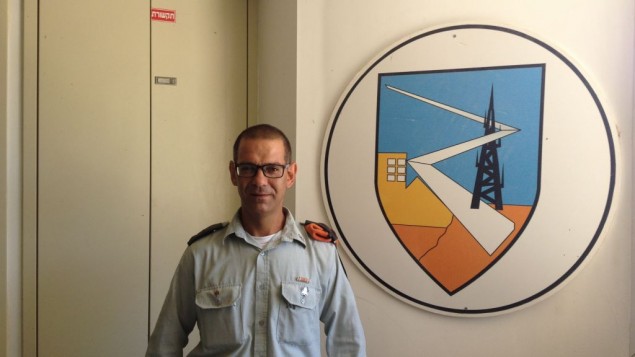
levi-itach-635x357Lt. Col. Levi Itach at IDF Home Front Command headquarters (photo credit: Mitch Ginsburg/ Times of Israel

Then the air force’s electro-optic systems analyze the heat signature of the rocket and the trajectory of the take-off and provide, based on the projected kill capacity of the projectile, the Home Front Command with an initial target area.

Five seconds later, additional radars, tracking the behavior of the projectile, narrow the target area significantly.

This continues throughout the rise of the rocket, Itach said, with the stain on the map diminishing throughout, but with the response time dwindling, too.

“Operationally speaking, where do you cut it off?” he asked. “How much time do you leave the citizen? What’s enough time? A 70-80-90-year old; a five-year-old: realistically speaking, how much time do they need?”

The Grad with the 40-kilometer-range, he said, flies for two minutes. The more exact the warning, the fewer people exposed to the siren, the lesser the impact on the national psyche, the lesser the toll on the economy. In the example he gave, he said, the citizens are given 45 seconds to scurry to shelter.

That’s the automatic response, programmed into the system. During the current conflict, he said, his soldiers, sitting “shoulder to shoulder” with the air force personnel, have the authority to decide in real time whether or not to sound the alarm if, say, the projected target stain just touches the edge of a certain sector or city.

They err, though, on the side of caution: the target area, generated by computer model, is multiplied by three in order to ensure civilian safety.

The notion of sparing undue civilian fright, though, and the capacity to do so, is relatively new. On January 17, 1991, when Saddam Hussein fired missiles from Iraq at Israel, the entire populace was instructed to take cover.

In 2006, during the Second Lebanon War, Israel was split into only 25 different sectors. During Operation Pillar of Defense, in November 2012, there were 127 sectors. Today, as of this month, there are 235.

And yet Itach, who noted the long history of early warning among the Israelites, quoting Ezekiel 33 — “when he seeth the sword come upon the land, he blow the trumpet, and warn the people.” — is far from satisfied. In the future, he said, the country will be partitioned into 36,000 cubes.

Each of those cubes will take a square kilometer. Cellphone data and cable TV converters will send personalized warnings to phones and TVs within each targeted cube.

Up until Operation Pillar of Defense, Israel lost an average of one person per 100 rockets and, during the Second Lebanon War, 200 million shekels per day of warfare. The future demands, he said, are one fatality per 10,000 rockets and only 12 million shekels loss per day of warfare.

Those are incredibly lofty goals. In a larger scale war they may be unattainable. But for now, looking back at the past six days of warfare, he said his soldiers were working very hard but that he, personally, on the cusp of retirement, “is melting” with pride.

There are, of course, the horrors of war, he added, “but the whole business [of early warning] is in tune.


Extension likely for Iran nuclear talks

July 13, 2014

Extension likely for Iran nuclear talks, Al Jazeera, July 13, 2014

July 20 target date seems unrealistic for pact meant to curb programmes that could be used for making atomic weapons.

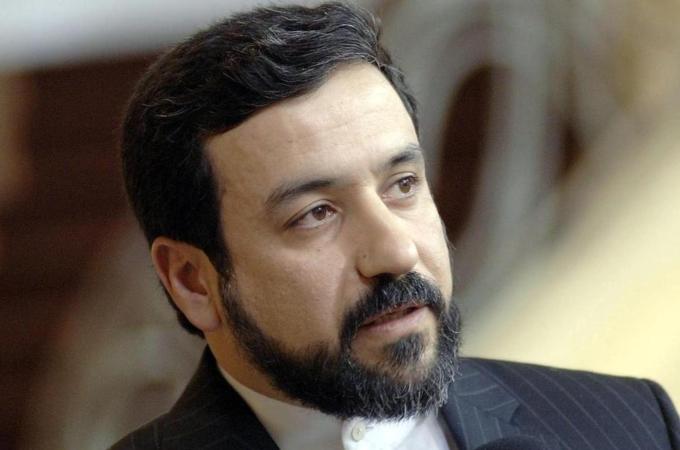
2014713125414112734_20Araghchi spoke of ‘huge and deep’ differences in the positions of Iran and the Western powers [AP]

Nuclear talks between Iran and six world powers appear likely to be extended past their target end date of July 20 because of deep differences separating the two sides, officials with knowledge of the talks say.

John Kerry, US secretary of state, and fellow foreign ministers are meeting in Vienna, Austria, to try and advance the troubled talks with Iran, with a target date only a week away for a pact meant to curb programmes that Iran could turn to for making atomic weapons.

An extension of the talks would give more time to negotiate a deal that would limit the scope of such programmes in exchange for a full lifting of nuclear-related sanctions imposed on Iran.

“Obviously we have some very significant gaps still, so we need to see if we can make some progress,” Kerry said before a meeting with Catherine Ashton, European Union foreign policy chief , who is convening the talks.

“It is vital to make certain that Iran is not going to develop nuclear weapons, that their programme is peaceful. That’s what we are here trying to achieve.”

Laurent Fabius, the French foreign minister, said “positions are still far apart,” and the ministers had come to “try and narrow differences”.

Britain and Germany also sent their foreign ministers to Vienna for talks over the next few days, as has Iran.

But the top diplomats from China and Russia are sending lower-ranking officials instead. That may reflect their view that an extension is unavoidable.

Still, the most important disputes over how deeply Iran must cut its nuclear programme are between the US and Iran, so Kerry’s presence is crucial.

He will be able to talk directly to Mohammad Javad Zarif, Iran’s foreign minister, who is at the Vienna negotiations.

Concessions opposed

Abbas Araghchi, Iran’s deputy foreign minister, spoke on Saturday of “huge and deep” differences. But he told Iranian TV that “if no breakthrough is achieved, it doesn’t mean that [the] talks have failed”.

Discussions centre on imposing long-term restrictions on Iran’s uranium enrichment and against plutonium production materials usable in nuclear warheads. In exchange, the US and other powers would cancel a series of trade and oil sanctions against Iran.

Al Jazeera’s James Bays, reporting from Vienna, said there had been some progress made since an interim deal was made in November, despite the parties’ differences.

“Both sides are saying they’d rather get a deal now and the Iranian deputy foreign minister says that if there was an extension he only wants a matter of days,” Bays said.

In Iran, many powerful politicians oppose almost any concession by President Hassan Rouhani’s government.

And in the US, Republicans and Democrats have threatened to scuttle any emerging agreement because it would allow Iran to maintain some enrichment capacity.

Outside the negotiations, regional rivals of Iran including Israel and Saudi Arabia are sceptical of any arrangement that would, in their view, allow Iran to escape international pressure while moving closer to the nuclear club.

Iran says its programme is solely for peaceful energy production and medical research purposes, though much of the world fears it’s a covert effort toward nuclear weapons capability.

An interim deal in January effectively froze Iran’s programme, with world powers providing sanctions relief to Iran of about $7bn. They two sides also agreed to a six-month extension past July 20 for negotiations to reach a comprehensive deal if necessary.

With many issues left unresolved, officials with knowledge of the talks said an extension was seen as the most likely result.

The sick math of the Gaza war

July 13, 2014

The sick math of the Gaza war, Israel Hayom, Elliot Abrams, July 13, 2014

(Could non-nuke-generated Electromagnetic pulses (EMPs) be used and useful to curtail the rocket attacks from Gaza? If so, they could deprive Hamas et al of their most useful weapon, sick math. — DM)

Israeli Prime Minister Benjamin Netanyahu is clearly reluctant to order a ground ‎incursion into Gaza. This has disappointed some of his critics, who think it’s a sign of ‎lack of courage, or of excessive wavering and hedging, or of thinking about domestic ‎politics.‎

It is not; instead, it’s prudence. For one thing, Netanyahu knows he would be ‎sending some Israeli soldiers to their deaths. But he also knows that in the sick ‎math of the Gaza war, Israel would be blamed for “disproportionate” killing.‎

What that means is simple: Too many Palestinians would die, and “not enough” ‎Israelis — in the view of much of “world opinion.” You would read that calculation in The New York Times and see it on the BBC. In Operation Cast Lead in 2008, about ‎‎1000-1400 Palestinians died, and 13 Israelis. In Operation Pillar of Defense in 2012 ‎it was something like 150 to 6. As of now, in the current conflict there are no Israeli ‎deaths and about 100 Palestinian deaths. Here’s how Time Magazine started its ‎story:‎

“The death toll among Palestinians scrambling under a relentless Israeli air assault in ‎the Gaza Strip passed 80 Thursday and edged close to 100 Friday, including at least ‎‎14 children. … Meanwhile, the barrage of rockets Gaza militants launched toward ‎Israeli cities failed to produce a significant casualty on the third day of Israel’s ‎offensive Thursday. … The Israeli military said it destroyed more buildings in the first ‎‎36 hours of the current campaign than in all of Pillar of Defense. More people are ‎dying too: The 80 fatalities reported so far is, once again, more than half the reported ‎death toll from the longer bombing two years earlier.‎”

Time then discussed exactly this phenomenon: When what “world opinion” sees as ‎‎”too many” Palestinians dying and the balance is “too great” in Israel’s favor — that is, ‎too many Palestinians and not enough Israelis being killed — the calls for a cease-fire ‎will escalate. Moral equivalency between Israel and Hamas will be the order of the ‎day — except for those who elevate Hamas, since after all it is killing fewer people!‎

Netanyahu knows this, because Israel has lived through it in all its past wars with ‎the Palestinians. So does Hamas know it, and Hamas is brutal and vicious enough to ‎hide behind civilians and seek civilian deaths. After all, this was the central theory of ‎the Goldstone report: that Israel was killing civilians and was morally culpable — guilty ‎of war crimes. No doubt we’ll see the same arguments made this time, especially if ‎Israel goes in on the ground.‎

As I write, the Hamas rockets are still flying — unguided missiles aimed toward ‎populated areas in the hope of killing civilians. How long Israel can put off a ground ‎incursion is anyone’s guess. But if that happens, here’s something you can count on: The twisted moralists will be back, comparing the numbers of casualties on both ‎sides and accusing Israel of war crimes for the “disproportionate” use of force.‎

Remember this: In World War II, the United States suffered 416,000 ‎combat deaths, or about 0.32 percent of the population. Germany suffered 4-5 ‎million combat deaths, or about 5 percent of the population. The death ratio was 10 ‎to 1. Did that make the war unjust? Does that mean the United States inflicted ‎‎”disproportionate” numbers of casualties? Unfortunately the Israelis know “world ‎opinion” will never be on their side in these arguments. Let’s just hope the United ‎States is.‎

World powers gather in Vienna over Iran, distracted by Gaza operation

July 13, 2014

World powers gather in Vienna over Iran, distracted by Gaza operation

By MICHAEL WILNERLAST UPDATED: 07/13/2014 19:03

Kerry speaks with Netanyahu by phone and says the US is growing “concerned about escalating tensions on the ground” in Gaza but repeats US support for Israel’s right to defend itself.

via World powers gather in Vienna over Iran, distracted by Gaza operation | JPost | Israel News.

Palais Coburg in Vienna, Austria. Photo: MICHAEL WILNER
 

VIENNA — After the United Nations Security Council agreed to a press statement on Saturday calling for a ceasefire between Israel and Hamas, the foreign ministers of its five permanent members— the United States, United Kingdom, France, Russia and China— gathered in Vienna on Sunday expecting to discuss the crisis.

The United States is growing “concerned about escalating tensions on the ground” in Gaza, US Secretary of State John Kerry told Prime Minister Benyamin Netanyahu by phone on Sunday, as Operation Protective Edge entered its seventh night.

“He described his engagement with leaders in the region to help to stop the rocket fire so calm can be restored and civilian casualties prevented, and underscored the United States’ readiness to facilitate a cessation of hostilities, including a return to the November 2012 ceasefire agreement,” one senior State Department official said.

Kerry did, however, restate the Obama administration’s condemnation of rocket attacks from Gaza against Israel’s citizens, and repeated American support for Israel’s right to defend itself.

In Vienna, at the Palais Coburg, entering meetings with his counterparts, French foreign minister Laurent Fabius said that securing a ceasefire was an “absolute priority” for Paris.

“There are large numbers of victims in Gaza and rockets have been fired at Israel, and with an absolutely disastrous escalation, France— like the United Nations Security Council— asks for a return to the agreement of 2012,” Fabius said, declining to assign culpability when pressed by journalists.
Warren Buffett Tells You How to Turn $40 Into $10 Million
The Motley Fool
The Secret Way to Save Hundreds of Dollars on 5-star Hotels
TravelPony
If We’re At the End of Email, What’s Next?
Work Intelligent.ly
Recommended

The world’s top diplomats have gathered in Austria to determine whether a deal with Iran over its nuclear program is possible to forge in the next week. The deadline for those talks is July 20.

One senior US official told journalists on Saturday evening that the Obama administration considers Iran partially at fault in the Gaza crisis— and that Kerry would make that clear to his Iranian counterpart, Javad Zarif, in a rare one-on-one meeting planned for Sunday afternoon.

The two men have met only once before since rapprochement began between the two nations last September.

“Iran has a longstanding record of supplying weapons, rockets, to various terror groups in Gaza, including Hamas,” the US official said from Vienna. “Those rockets are being used to fire at civilian areas, and Iran has a responsibility to cease and desist from continuing to supply weapons in this conflict.”

The conflation of these crises is not lost on diplomats gathered in the Austrian capital, distracted by a new global crisis nearly every month since the talks began: from the annexation of the Crimea region of Ukraine by Russia, to advances by ISIS through Syria and Iraq.

Nevertheless, a comprehensive nuclear deal with Iran remains the priority of this gathering, another US official insisted, noting that whenever foreign ministers are together, “they discuss whatever is happening in the news and in the day.”

Defying sirens, Jerusalem’s Palestinians are rooting for Gaza

July 13, 2014

Defying sirens, Jerusalem’s Palestinians are rooting for Gaza

The threat of missiles has left Arab residents of the Old City no more sympathetic toward Israel; quite the opposite

By Elhanan Miller July 13, 2014, 5:20 pm

via Defying sirens, Jerusalem’s Palestinians are rooting for Gaza | The Times of Israel.


LD CITY, Jerusalem — The siren on Saturday evening caught ‘Azza ‘Alan and her family preparing for Iftar, the traditional meal breaking the fast of Ramadan.

“I shut my five daughters at home, we didn’t leave,” the 26-year-old housewife told The Times of Israel. “We have no bomb shelters here in the Old City. We have God who protects us.”

The rockets flying over Jerusalem seem to have left Jerusalem’s Palestinians not only more defiant but also much more angry at Israel. Gaza is widely viewed as the victim of perpetual Israeli aggression, Hamas as the champion of the Palestinian cause. While proud of their hardened positions, residents of the Old City remain deeply suspicious of Israeli media, refusing to be photographed and often to use their real names.

The sirens scare the children, admitted ‘Alan, but added that she cheers her children up by saying that they are meant to “scare the Jews.”

“We tell them that the Jews want to take Jerusalem from us, they want to take the Al-Aqsa Mosque,” she said.

Unlike previous Ramadans, where permits were generously granted to Palestinians from the West Bank to pray at the Al-Aqsa Mosque, this year access remains extremely limited even to Jerusalem residents, with worshipers under the age of 50 often denied entry.

Palestinian men on their way to prayer at the al-Aqsa Mosque on the first Friday of Ramadan, the holiest period in the Islamic calendar, September 14, 2007 photo credit: Anna Kaplan/Flash90)
 

Israel’s Home Front command has issued its protection guidelines in Arabic, and — with reported rocket landings in or near the Palestinian cities of Bethlehem, Hebron and Ramallah — the IDF’s Civil Administration has distributed the guidelines throughout the West Bank, Israeli radio has reported.

But shopping for children’s clothes in an Old City alleyway, Um Jumaa, 35, said that even if bomb shelters existed, she wouldn’t use them. When the siren began on Saturday evening she opened her home’s windows and went outside with her family.

“We were very happy. The children were shouting allahu akbar and we were clapping. We explained to them that Jews have attacked children and this is retaliation. They say ‘My God, may they [the rockets] hit the Jews, and may they die, just the way they hit us.’” Even if rockets hit the Old City, she added, she would have no problem because “we are no different from them [in Gaza].”

Abu Hatem, a 65-year-old resident of Kufr Aqab in northeastern Jerusalem, said that in the absence of bomb shelters in his neighborhood, when the sirens sound people stay home and continue watching TV.

“When someone constructs an apartment building, he doesn’t construct bomb shelters, instead he makes parking for cars,” said Abu Hatem, sitting outside a sweets shop.

Sounds of explosion are nothing strange for Palestinian children in Jerusalem, said Abu Hatem, “who grow up hearing gunfire while they’re still in their mothers’ womb.”

For Abu Hatem, Hamas’s rockets are simply self defense. “What power does Hamas have compared to Israel?” he said. “It’s like a small child which gets beaten up as it grows older.”

It was Israel, he opined, which launches a war against Hamas every few years to show its public that it is capable of defending it.

“Abu Mazen [Mahmoud Abbas] said we want negotiations, not shooting, but they [the Israelis] shoot anyway.”

Time and again, passersby in the alleys of the Muslim Quarter boasted their steadfastness in the face of the rockets raining down from Gaza. One man said he was driving past a Jewish neighborhood on his way to the north Jerusalem suburb of Qalandia on Saturday when the siren went off.


A group of schoolchildren take cover in the Jewish Quarter of Jerusalem as sirens are sounded throughout Israel as part of a IDF Home Front Command drill simulating a bomb attack, May 27, 2013 (photo credit: Sarah Schuman/ Flash90)
 

The Jews, the police, the army, everyone got down and lay on the ground, while we continued normally, and my children signaled the victory sign,” he said. “Death is a virtue. A person doesn’t get to live one minute more than God assigns him.”

A shoe salesman, asking to be named Abu Jihad after the famed Fatah leader killed by Israel in 1988, said that Jerusalem children often take to the streets as the sirens blast to identify with the children of Gaza.

“The children love the sound of the siren as though it was a children’s game,” he told The Times of Israel, as he watched a small TV broadcasting images of destroyed buildings in Gaza. “We tell them ‘come inside,’ and they say ‘I don’t want to come in, I want to die like those in Gaza’.”

Footage of destruction and suffering in Gaza only makes Hamas more popular on the Palestinian street, Abu Jihad insisted. “We don’t trust the PA. It is a treacherous authority which coordinates its security with Israel. Only yesterday Abu Mazen [Abbas] said that Hamas is profiteering in war. He’s a war profiteer and a traitor. He should leave the country rather than speak that way.”

“If you’re so powerful,” he said defiantly, addressing the Israeli audience, “enter Gaza by land and then we’ll see. Your soldiers don’t dare enter one centimeter into Gaza.”

Hamas fires rocket at Nahariya, some 170km from Gaza

July 13, 2014

Hamas fires rocket at Nahariya, some 170km from Gaza

Rocket range increases as terror organization launches rocket from Gaza at most northern point so far; earlier 16-year-old was seriously wounded, 50-year-old man lightly hurt in Ashkelon.

YnetnewsLatest Update: 07.13.14, 17:47 / Israel News

via Hamas fires rocket at Nahariya, some 170km from Gaza – Israel News, Ynetnews.


Hamas has managed to fire rockets from the Gaza Strip further than it did so far on Sunday afternoon, when it fired a rocket that hit near Nahariya – some 170km from the Gaza Strip.  Earlier, a 16-year-old boy sustained serious injuries and a 50-year-old man was lightly injured by a rocket blast in Ashkelon.


Shortly after 4:30pm, rocket alert sirens were sounded all across the greater Tel Aviv area, in the Sharon plains and in the Western Galilee. Iron Dome intercepted two rockets that were fired at the Tel Aviv metropolitan area. One rocket likely fell in an uninhabited area near Nahariya. So far, no injuries or damages were reported.

Hamas, that claimed responsibility for the rocket fire, said it launched a Fajr-5 rocket at Rishon LeZion, three M-75 rockets at Tel Aviv and one R-160 rocket.

The rocket alert siren was sounded in the following places, among others: Nahariya, Tel Aviv, Azor, Holon, Bat Yam, Palmachim, Rishon LeZion, Avihayil, Beit Yitzhak, Bitan Aharon, Givat Shapira, Havatzelet HaSharon, Netanya, Hadera, Elyakhin, Emek Hefer, Bat Hefer, Yad Hana, Kfar Yona, Givat Haim, Zemer, Lehavot Haviva, Magal, Netzer, Gan Shmuel, Sha’ar Menashe, Even Yehuda, Udim, Beit Yehoshua, Bnei Zion, Batzra, Ga’ash, Hof Hasharon Regional Council, Qalansawe, Sha’ar Ephraim, Shefayim, Herzliya, Kfar Shmaryahu, Ramat Hasharon, Bnei Brak, Givat Shmuel, Givatayim, Ramat Gan, Ra’anana, Kfar Saba and Petah Tikva.

Code Red sirens wailed across southern Israel, as residents in Ashkelon, Ashdod, and Be’er Sheva rushed to shelters Sunday morning. Two rockets exploded in open areas near Be’er Sheva. The Iron Dome missile battery intercepted one rocket over Ashkelon.

Some one million Israelis woke up to the sound of alarms after 6 am, as Code Red sirens blared in cities across central and southern Israel: Rehovot, Rishon LeZion, Modi’in, Ashdod, Lod, Ashkelon, Ramle, Ben Gurion Airport, and other smaller communities.

The shockwaves from the explosions were heard as far as the Tel Aviv metropolitan area. Four rockets were intercepted during the salvo – three over Lod and one in the skies of Ashdod. The IDF reported that the Israeli Air Force attacked the launchers used for the early morning rocket fire.

The air raid sirens wailed overnight Saturday in the Eshkol, Sha’ar HaNegev, and Sdot HaNegev Regional Councils from midnight until 5 am – a total of 10 rockets landed in open spaces in the Gaza border region. Two of the rockets exploded inside Eshkol, causing light damage to a house and a public structure. No one was injured in the rocket salvo.

According to figures released Saturday night, since the beginning of Operation Protective Edge, 605 rockets fell inside Israel (84 on Saturday) and 143 rockets were intercepted by the Iron Dome missile defense system (at least 6 on Saturday).


First Published: 07.13.14, 10:42

Hevron Arabs Climb Roofs to Watch Tel Aviv ‘Burn’

July 13, 2014

Hevron Arabs Climb the Roofs to Watch Tel Aviv’s Destruction

Hevron residents climbed their roofs Saturday night – but were disappointed when promised Hamas destruction did not rain down on Tel Aviv.

By Yosef BergerFirst Publish: 7/13/2014, 5:43 PM

via Hevron Arabs Climb Roofs to Watch Tel Aviv ‘Burn’ – Defense/Security – News – Arutz Sheva.

Protesters in Hevron (file) Roman Lozovsky
 

As Israelis were preparing for the major rocket attacks on the center of the country Saturday night and Sunday afternoon, with Hamas rockets attacking the Tel Aviv area, residents of Hevron were also preparing – by climbing on rooftops in order to observe the “rain of destruction” on Israeli cities promised by Hamas.

The Saturday night volley, which was fired at around 9 p.m., was closely covered by Palestinian Authority media. PA TV stations rebroadcast live images from Israeli TV, hoping to capture in real time a missile hit of a major Israeli target. To their disappointment, all the rockets fired Hamas either fell harmlessly in open areas, or were shot down by Iron Dome anti-missile rockets.

Despite their disappointment, Hevron residents marched and danced in the streets, calling for the destruction of Tel Aviv. Residents told PA TV how much they hated the Jews and how they wished for the total destruction of Israel.

Ironically, Hevron itself suffered from Hamas rockets. At least one rocket that was fired at Jerusalem missed and fell in a neighborhood in Hevron. No one was reported killed, but several buildings were damaged, residents said. The Iron Dome system was not activated against that missile.

Netanyahu finally speaks his mind

July 13, 2014

Netanyahu finally speaks his mind

At his Friday press conference, the prime minister ruled out full Palestinian sovereignty, derided the US approach to Israeli security, and set out his Middle East overview with unprecedented candor.

His remarks were not widely reported; they should be

By David Horovitz July 13, 2014, 4:22 pm

via Netanyahu finally speaks his mind | The Times of Israel.

Does Prime Minister Benjamin Netanyahu really support a two-state solution, or is his rhetoric to this effect disingenuous? Did he genuinely seek an accommodation with the Palestinians during the nine months of US-brokered negotiations that collapsed in April, or was he just stringing the Americans and the Palestinians along, while his heart is truly with the settlement enterprise?

These are fundamental questions — questions you’d think Israelis and the watching world would long since have been able to answer, especially given that Netanyahu is Israel’s second-longest serving prime minister ever. In fact, though, while many pundits claim to have definitive answers, most Israelis would acknowledge that they’ve never been entirely sure how Netanyahu sees a potential resolution of the Palestinian conflict, which concessions he’s truly ready to make, what his long-term vision looks like.

But now we know.

The uncertainties were swept aside on Friday afternoon, when the prime minister, for the first time in ages, gave a press conference on Day Four of Operation Protective Edge.

He spoke only in Hebrew, and we are in the middle of a mini-war, so his non-directly war-related remarks didn’t get widely reported. But those remarks should not be overlooked even in the midst of a bitter conflict with Gaza’s Islamist rulers; especially in the midst of a bitter conflict with Gaza’s Islamist rulers. The prime minister spoke his mind as rarely, if ever, before. He set out his worldview with the confidence of a leader who sees vindication in the chaos all around. He answered those fundamental questions.

Netanyahu began his appearance, typically, by reading some prepared remarks. But then, most atypically, he took a series of questions. And while he initially stuck to responses tied to the war against Hamas, its goals, and the terms under which it might be halted, he then moved — unasked — into territory he does not usually chart in public, and certainly not with such candor.

For some, his overall outlook will seem bleak and depressing; for others, savvy and pragmatic. One thing’s for sure: Nobody will ever be able to claim in the future that he didn’t tell us what he really thinks.

He made explicitly clear that he could never, ever, countenance a fully sovereign Palestinian state in the West Bank. He indicated that he sees Israel standing almost alone on the frontlines against vicious Islamic radicalism, while the rest of the as-yet free world does its best not to notice the march of extremism. And he more than intimated that he considers the current American, John Kerry-led diplomatic team to be, let’s be polite, naive.

Perhaps most reporters switched off after he’d delivered his headlines, making plain that “no international pressure will prevent us from acting with all force against a terrorist organization (Hamas) that seeks to destroy us,” and that Operation Protective Edge would go on until guaranteed calm was restored to Israel. If they did, they shouldn’t have.

Netanyahu has stressed often in the past that he doesn’t want Israel to become a binational state — implying that he favors some kind of accommodation with and separation from the Palestinians. But on Friday he made explicit that this could not extend to full Palestinian sovereignty. Why? Because, given the march of Islamic extremism across the Middle East, he said, Israel simply cannot afford to give up control over the territory immediately to its east, including the eastern border — that is, the border between Israel and Jordan, and the West Bank and Jordan.

The priority right now, Netanyahu stressed, was to “take care of Hamas.” But the wider lesson of the current escalation was that Israel had to ensure that “we don’t get another Gaza in Judea and Samaria.” Amid the current conflict, he elaborated, “I think the Israeli people understand now what I always say: that there cannot be a situation, under any agreement, in which we relinquish security control of the territory west of the River Jordan.”

Earlier this spring, Defense Minister Moshe Ya’alon sparked a storm in Israel-US ties when he told a private gathering that the US-Kerry-Allen security proposals weren’t worth the paper they were written on. Netanyahu on Friday said the same, and more, in public

Not relinquishing security control west of the Jordan, it should be emphasized, means not giving a Palestinian entity full sovereignty there. It means not acceding to Mahmoud Abbas’s demands, to Barack Obama’s demands, to the international community’s demands. This is not merely demanding a demilitarized Palestine; it is insisting upon ongoing Israeli security oversight inside and at the borders of the West Bank. That sentence, quite simply, spells the end to the notion of Netanyahu consenting to the establishment of a Palestinian state. A less-than-sovereign entity? Maybe, though this will never satisfy the Palestinians or the international community. A fully sovereign Palestine? Out of the question.

He wasn’t saying that he doesn’t support a two-state solution. He was saying that it’s impossible. This was not a new, dramatic change of stance by the prime minister. It was a new, dramatic exposition of his long-held stance.

Naming both US Secretary of State John Kerry and his security adviser Gen. John Allen — who was charged by the secretary to draw up security proposals that the US argued could enable Israel to withdraw from most of the West Bank, including the Jordan Valley — Netanyahu hammered home the point: Never mind what the naive outsiders recommend, “I told John Kerry and General Allen, the Americans’ expert, ‘We live here, I live here, I know what we need to ensure the security of Israel’s people.’”

Earlier this spring, Defense Minister Moshe Ya’alon sparked a storm in Israel-US ties when he told a private gathering that the US-Kerry-Allen security proposals weren’t worth the paper they were written on. Netanyahu on Friday said the same, and more, in public.

Netanyahu didn’t say he was ruling out all territorial compromise, but he did go to some lengths to highlight the danger of relinquishing what he called “adjacent territory.” He scoffed at those many experts who have argued that holding onto territory for security purposes is less critical in the modern technological era, and argued by contrast that the closer your enemies are, physically, to your borders, the more they’ll try to tunnel under those borders and fire rockets over them.

It had been a mistake for Israel to withdraw from Gaza, he added — reminding us that he’d opposed the 2005 disengagement — because Hamas had since established a terrorist bunker in the Strip. And what Hamas had been doing in Gaza — tunneling into and rocketing at the enemy — would be replicated in the West Bank were Israel so foolish as to give the Islamists the opportunity.

“If we were to pull out of Judea and Samaria, like they tell us to,” he said bitterly — leaving it to us to fill in who the many and various foolish “theys” are — “there’d be a possibility of thousands of tunnels” being dug by terrorists to attack Israel, he said. There were 1,200 tunnels dug in the 14-kilometer border strip between Egypt and Gaza alone, he almost wailed, which Egypt had sealed. “At present we have a problem with the territory called Gaza,” the prime minister said. But the West Bank is 20 times the size of Gaza. Israel, he said flatly, was not prepared “to create another 20 Gazas” in the West Bank.

Beyond Israel’s direct current confrontation with Hamas, and the eternal Palestinian conflict, Netanyahu also addressed the rise of Islamic extremism across the Middle East — covering the incapacity of affected states to resist it, and Israel’s unique determination and capacity to stand firm. He said Israel finds itself in a region “that is being seized by Islamic extremism. It is bringing down countries, many countries. It is knocking on our door, in the north and south.”

But while other states were collapsing, said Netanyahu, Israel was not — because of the strength of its leadership, its army and its people. “We will defend ourselves on every front, defensively and offensively,” he vowed.

And in a passage that was primarily directed at Israel’s Islamist enemies, but might equally be internalized by those he plainly regards as Israel’s muddle-headed self-styled friends, he added: “Nobody should mess with us.”

Hamas Fires Major Rocket Volley at Tel Aviv Area

July 13, 2014

Hamas Fires Major Rocket Volley at Tel Aviv Area

More than two dozen Red Color warning sirens sounded in cities in central Israel Sunday afternoon.

By Moshe CohenFirst Publish: 7/13/2014, 4:55 PM

via Hamas Fires Major Rocket Volley at Tel Aviv Area – Defense/Security – News – Arutz Sheva.


Iron Dome employed against Gaza rocketFlash 90
 

More than two dozen Red Color warning sirens sounded in cities in central Israel Sunday afternoon, as Hamas terrorists fired a major volley of rockets at Israel. Rockets were fired at Tel Aviv, Bat Yam, Holon, Rishon Lezion, Raanana, Kfar Sava, Hadera, Netanya, and other communities. At least two rockets were intercepted over the skies of Tel Aviv and Bat Yam by the Iron Dome system, officials said.

In addition to the rockets in the center, Red Color sirens sounded in Haifa and Nahariya, in Israel’s extreme north. Security officials said that the rocket was fired not from Lebanon, but from Gaza. Officials said that they had not been aware that Hamas had such weapons, and were investigating the reports.

Two rockets fell in northern Israel, both in open areas. One fell south of Haifa, and one east of the city. No injuries or damage were reported in those attacks. Hamas sources in Lebanon said that they had not fired the missiles Sunday, and that missiles fired on Saturday night on northern Israel had come from Gaza as well. Three rockets were fired Saturday night at northern Israel. No injuries or damage were reported in those attacks.

Magen David Adom officials said that no one was injured in the latest volley of rockets, although there were numerous reports of individuals suffering from shock. Some damage to buildings was reported, mostly from falling shrapnel, officials said.

In a statement, Hamas said that it had fired five Fajr rockets at Rishon Lezion, and two M75 rockets at Tel Aviv.